AssignmentAssignment
Subject : Breeding Designer Crops (GPB822)Subject : Breeding Designer Crops (GPB822)
Presented by: Mr.Presented by: Mr. IndranilIndranil BhattacharjeeBhattacharjee
Student I.D. No.: 17PHGPB102Student I.D. No.: 17PHGPB102
Presented to : Prof. (Dr.)Presented to : Prof. (Dr.) B.G.SureshB.G.Suresh
SamSam HigginbottomHigginbottom University of Agriculture, Technology & SciencesUniversity of Agriculture, Technology & Sciences
AllahabadAllahabad--211007211007
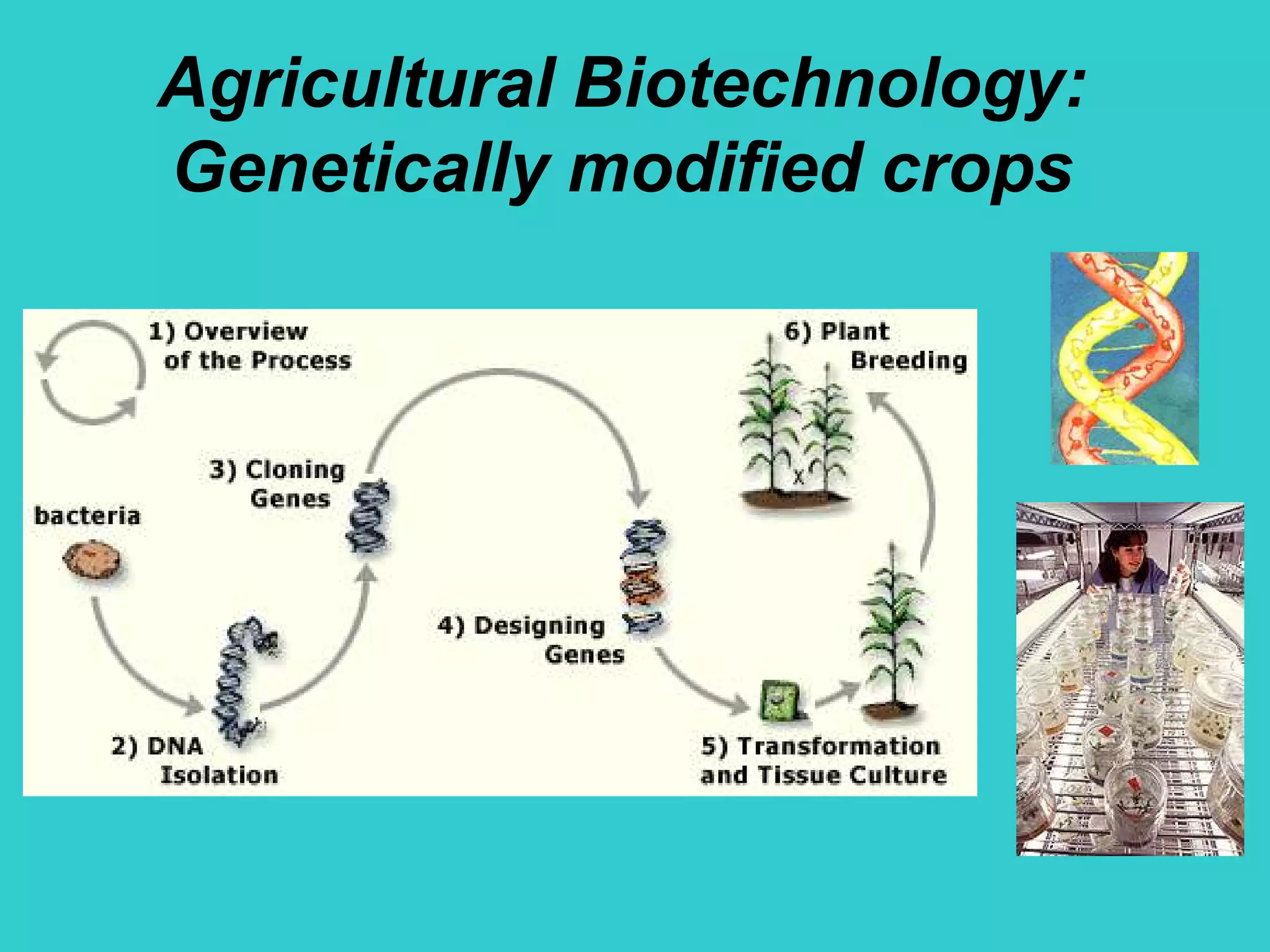
Agricultural Biotechnology:
Genetically modified crops
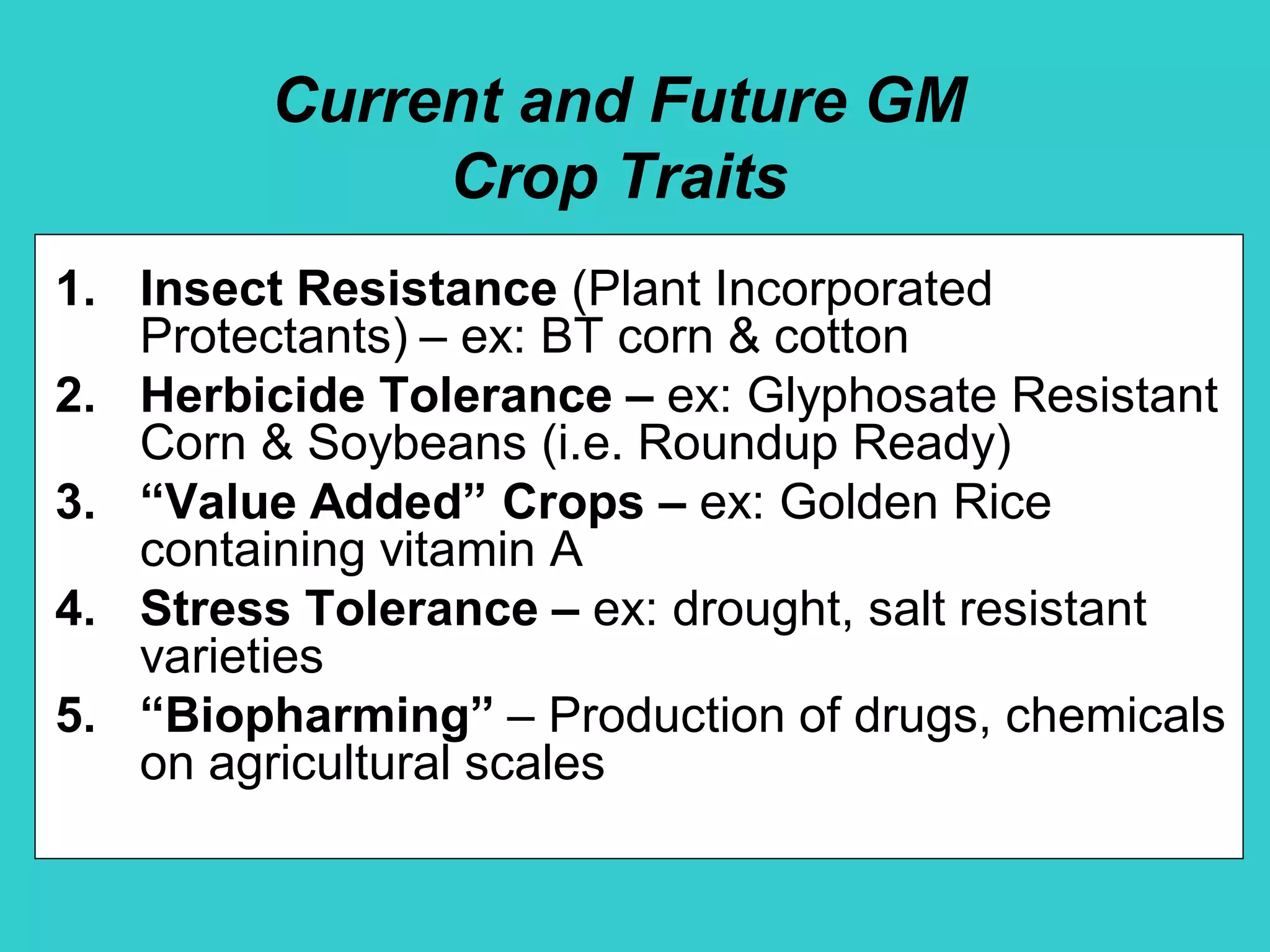
Current and Future GM
Crop Traits
1. Insect Resistance (Plant Incorporated
Protectants) – ex: BT corn & cotton
2. Herbicide Tolerance – ex: Glyphosate Resistant
Corn & Soybeans (i.e. Roundup Ready)
3. “Value Added” Crops – ex: Golden Rice
containing vitamin A
4. Stress Tolerance – ex: drought, salt resistant
varieties
5. “Biopharming” – Production of drugs, chemicals
on agricultural scales
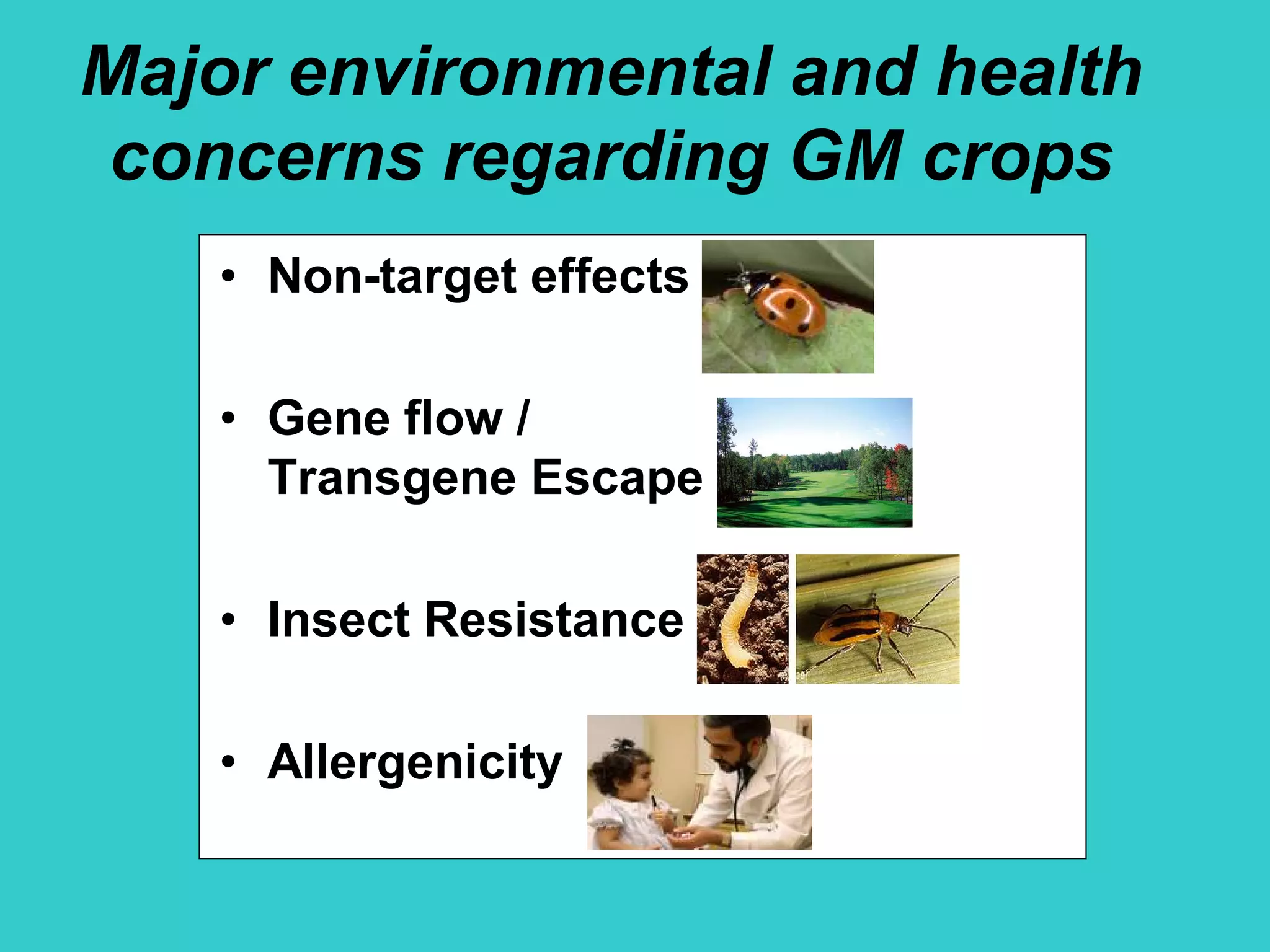
Major environmental and health
concerns regarding GM crops
• Non-target effects
• Gene flow /
Transgene Escape
• Insect Resistance
• Allergenicity
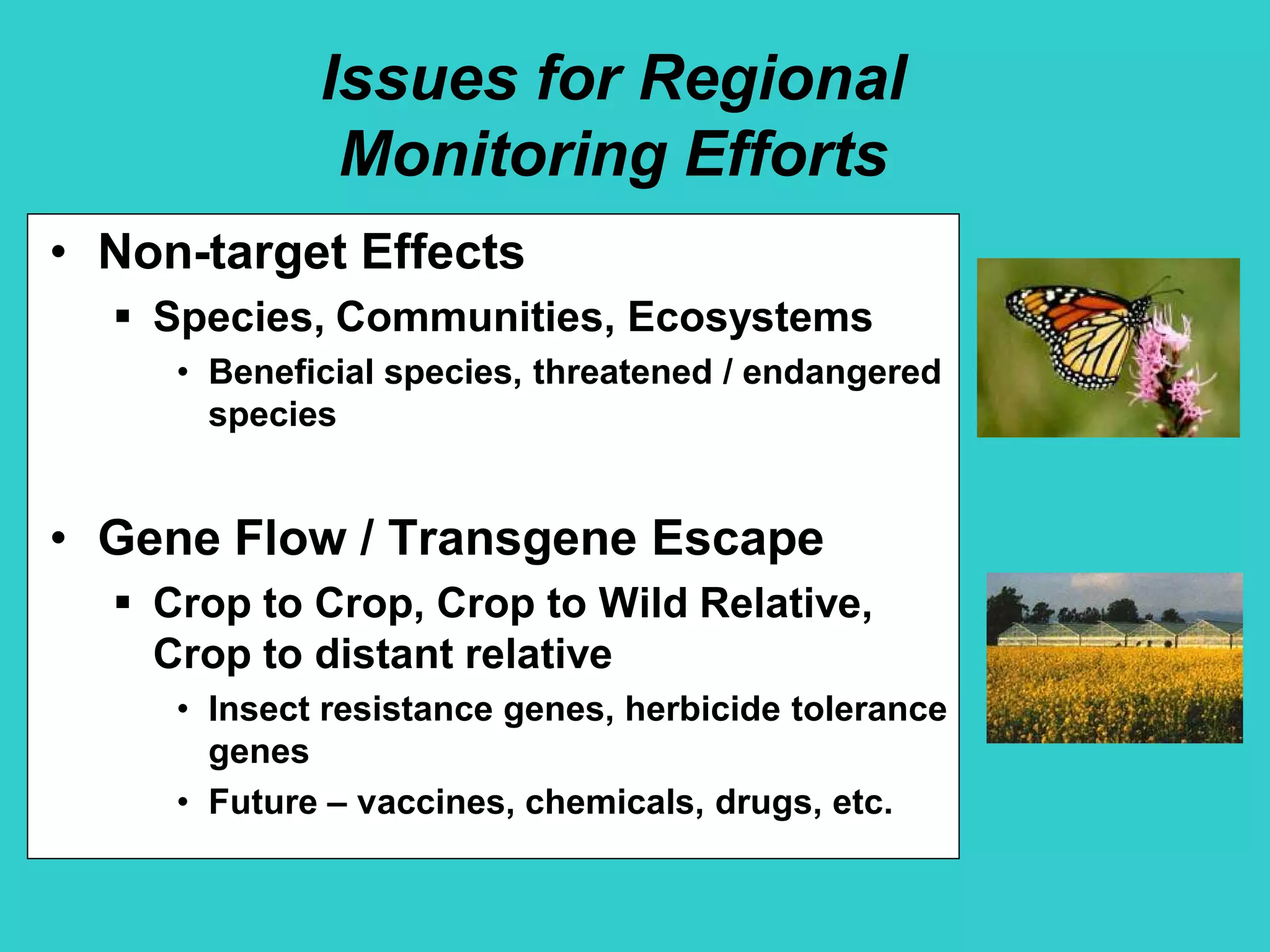
Issues for Regional
Monitoring Efforts
• Non-target Effects
 Species, Communities, Ecosystems
• Beneficial species, threatened / endangered
species
• Gene Flow / Transgene Escape
 Crop to Crop, Crop to Wild Relative,
Crop to distant relative
• Insect resistance genes, herbicide tolerance
genes
• Future – vaccines, chemicals, drugs, etc.
Non-target effects of GM corn
1. Bt corn and non-target effects:
Yieldgard Corn
2. ORD/NERL research approach /
rationale
3. Research progress
4. Monitoring Applications
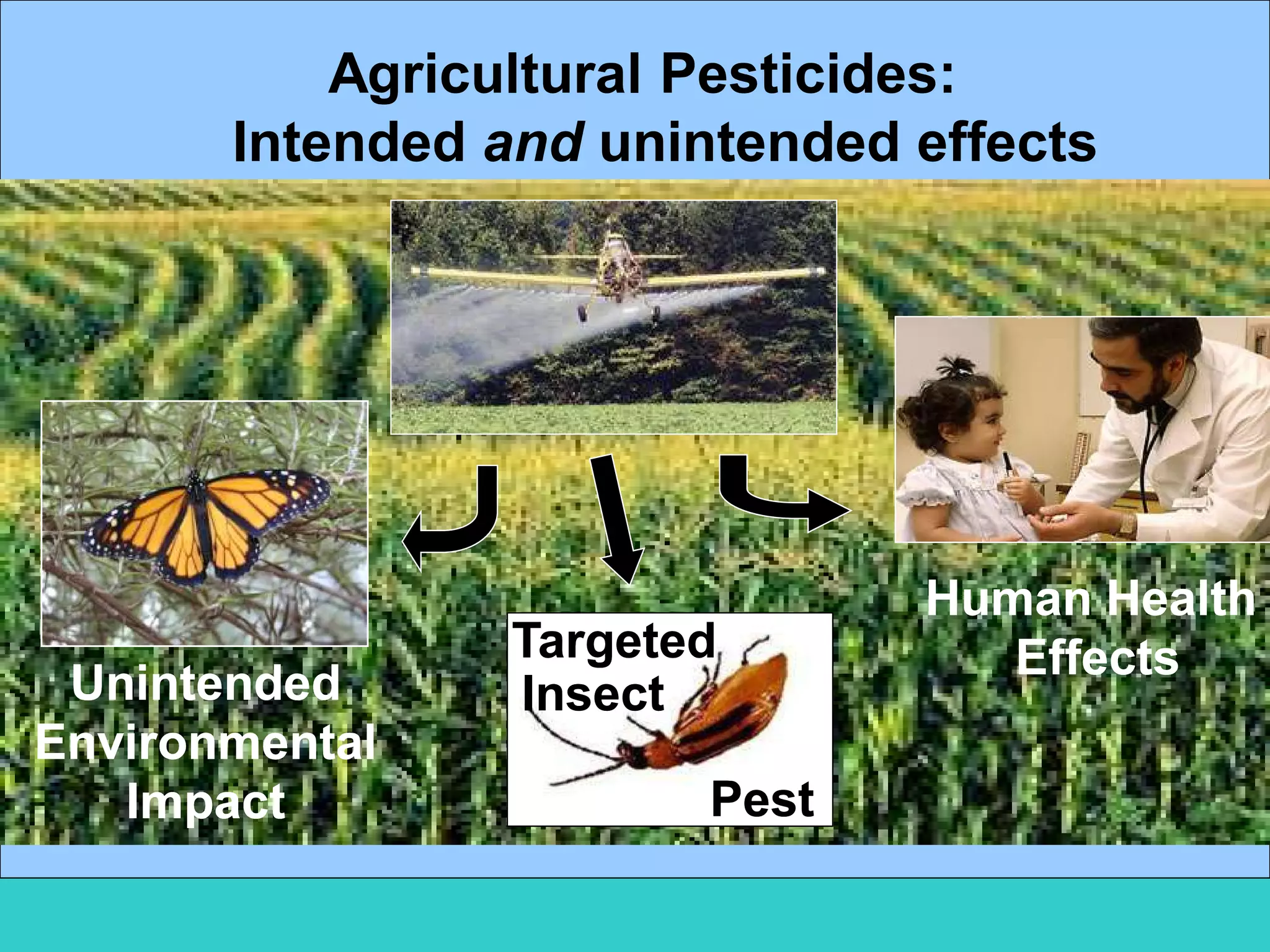
Agricultural Pesticides:
UnintendedUnintended
EnvironmentalEnvironmental
ImpactImpact
Intended and unintended effects
Human HealthHuman Health
EffectsEffectsTargetedTargeted
InsectInsect
PestPest
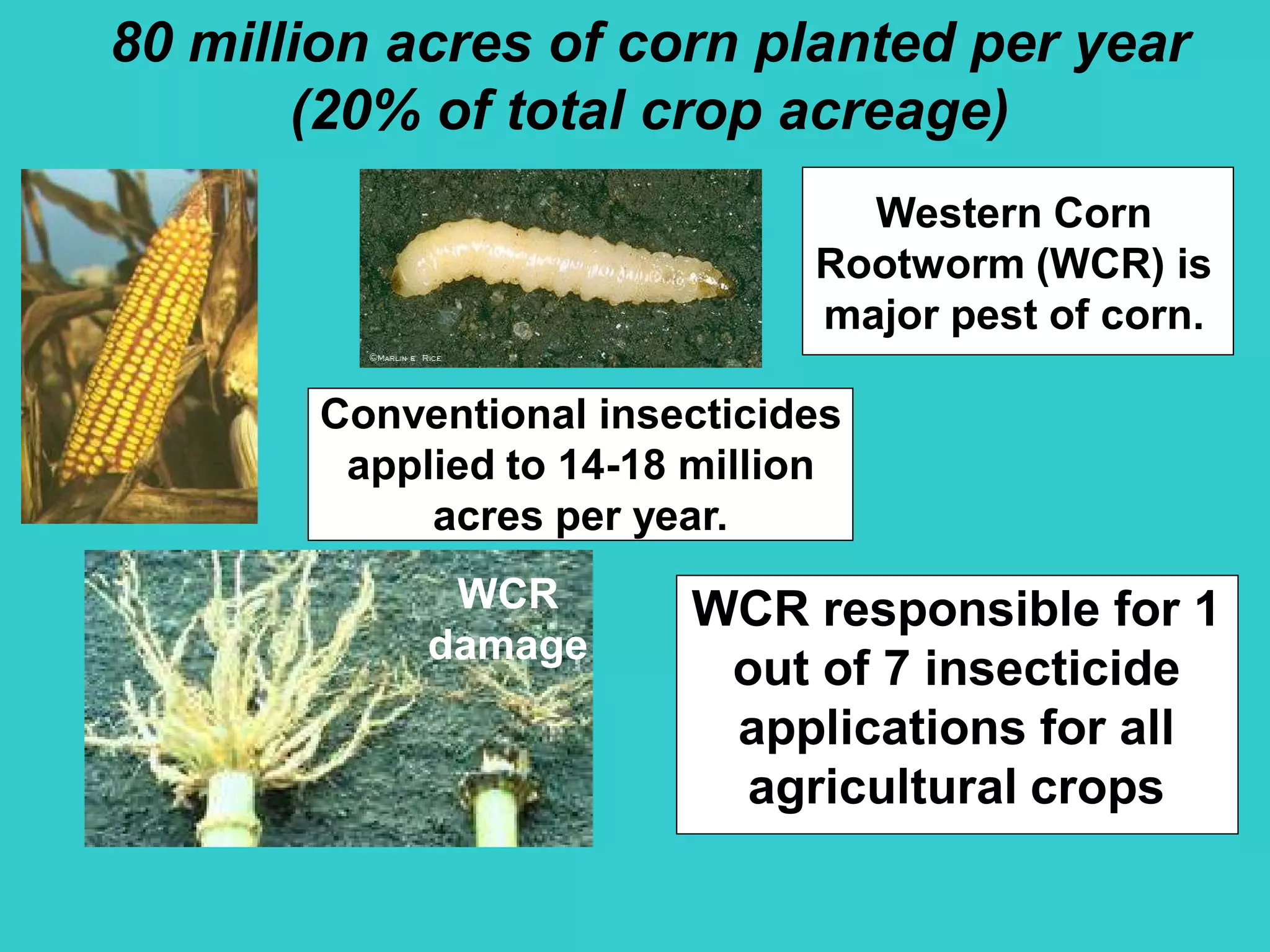
80 million acres of corn planted per year
(20% of total crop acreage)
Western Corn
Rootworm (WCR) is
major pest of corn.
Conventional insecticides
applied to 14-18 million
acres per year.
WCR responsible for 1
out of 7 insecticide
applications for all
agricultural crops
WCRWCR
damagedamage
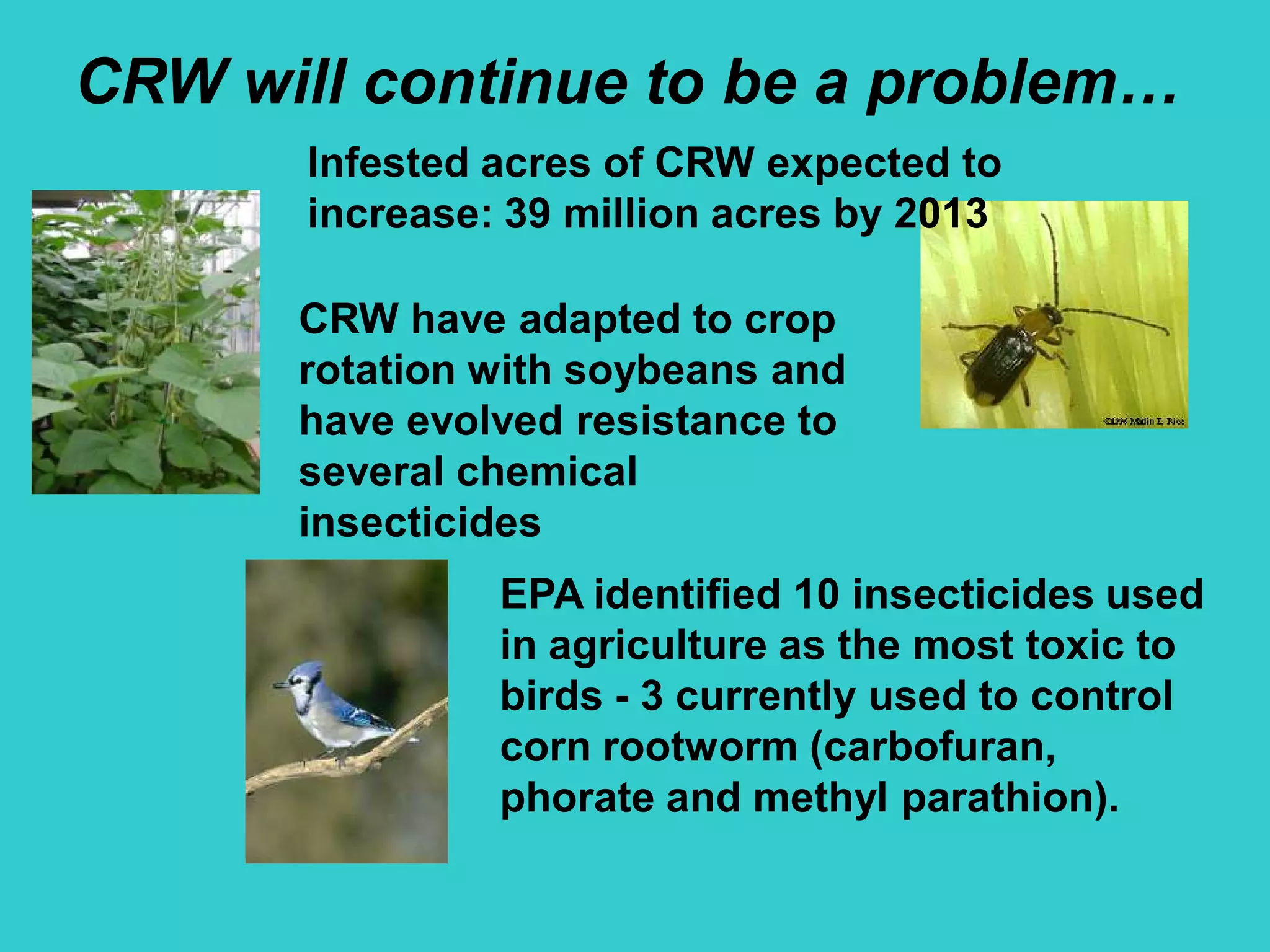
CRW will continue to be a problem…
Infested acres of CRW expected to
increase: 39 million acres by 2013
EPA identified 10 insecticides used
in agriculture as the most toxic to
birds - 3 currently used to control
corn rootworm (carbofuran,
phorate and methyl parathion).
CRW have adapted to crop
rotation with soybeans and
have evolved resistance to
several chemical
insecticides
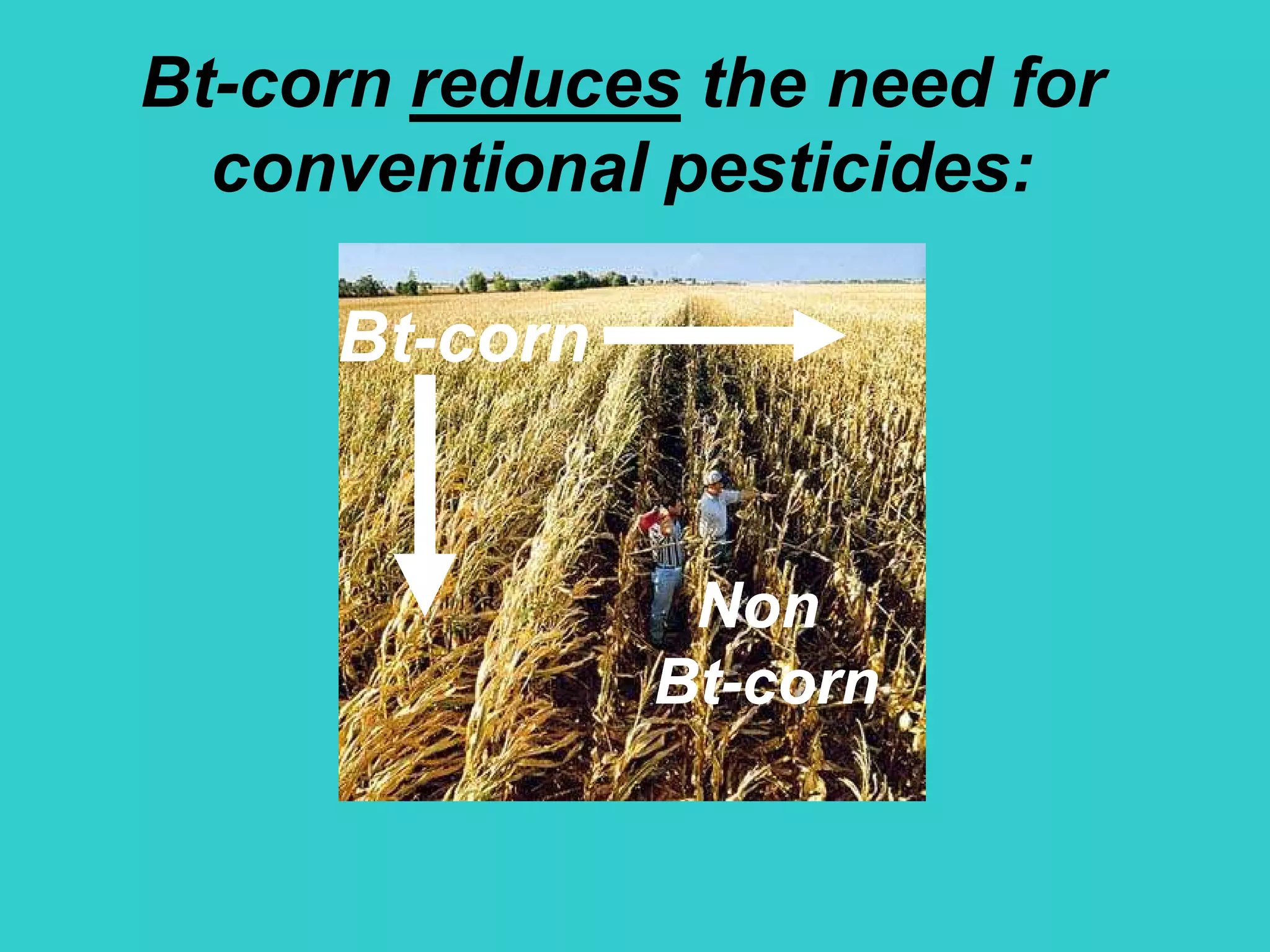
BtBt--corncorn
NonNon
BtBt--corncorn
NonNon
BtBt--corncorn
Bt-corn reduces the need for
conventional pesticides:
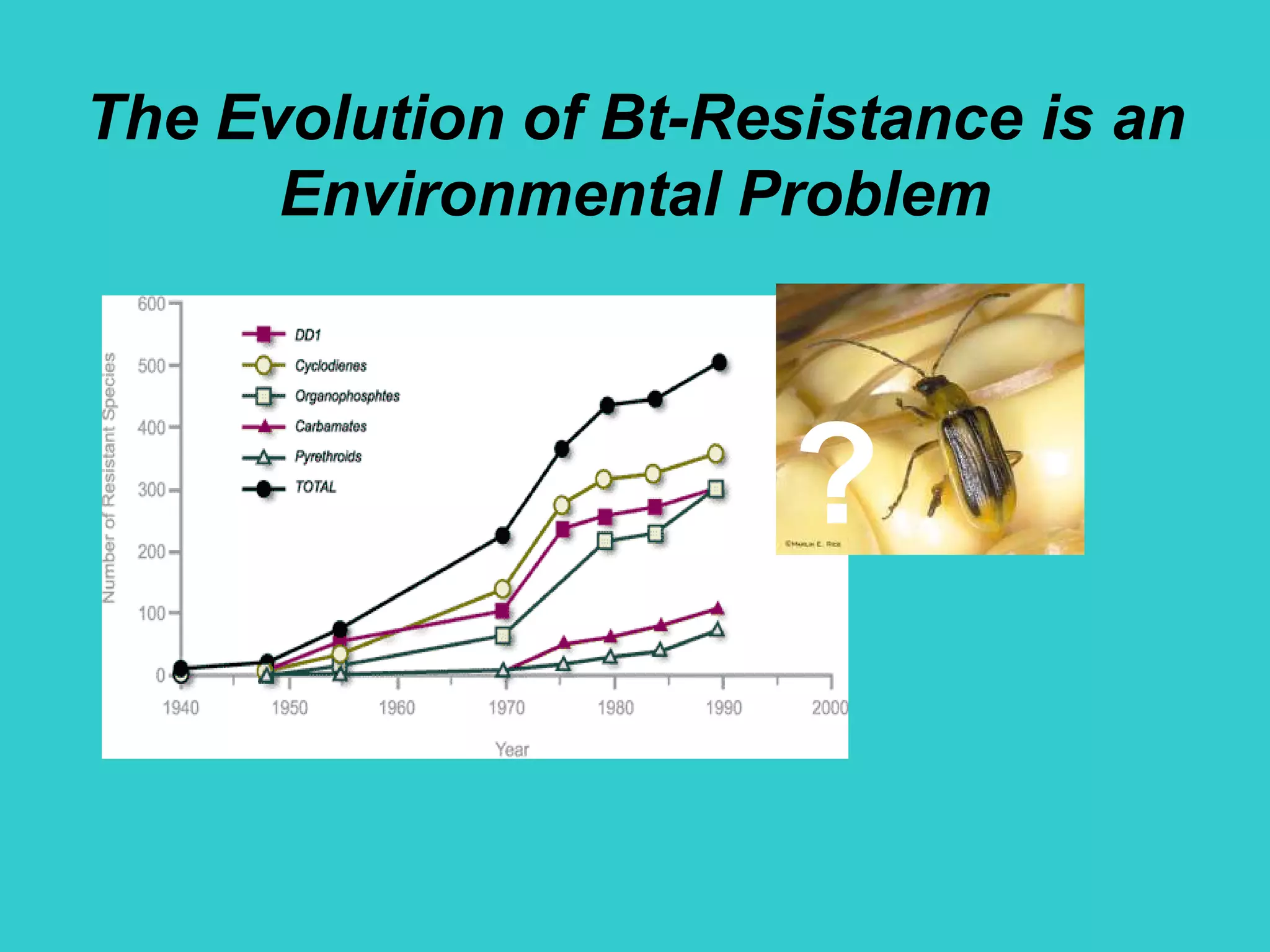
The Evolution of Bt-Resistance is an
Environmental Problem
????
Current Research
• Monitor resistance genes in pest populations
-Identify resistance/tolerance genes
-Develop molecular techniques for rapid and cost
effective screening
• Monitor non-target species for effects of Bt
exposure
-Identify gene expression markers for Bt exposure
in target pests
-Develop assays to test for effects in related non-
targets
Complements ecological monitoring by
adding another level of analysis and
increases the amount of information that
can be gathered about the status and health
of species
Advantages of Genetic Monitoring
Non-Target-Monitoring
• What is a non-target species?
• How do we choose non-targets?
• Molecular genetics to monitor
non-targets
 Gene Expression
• Benefits of molecular genetic
techniques
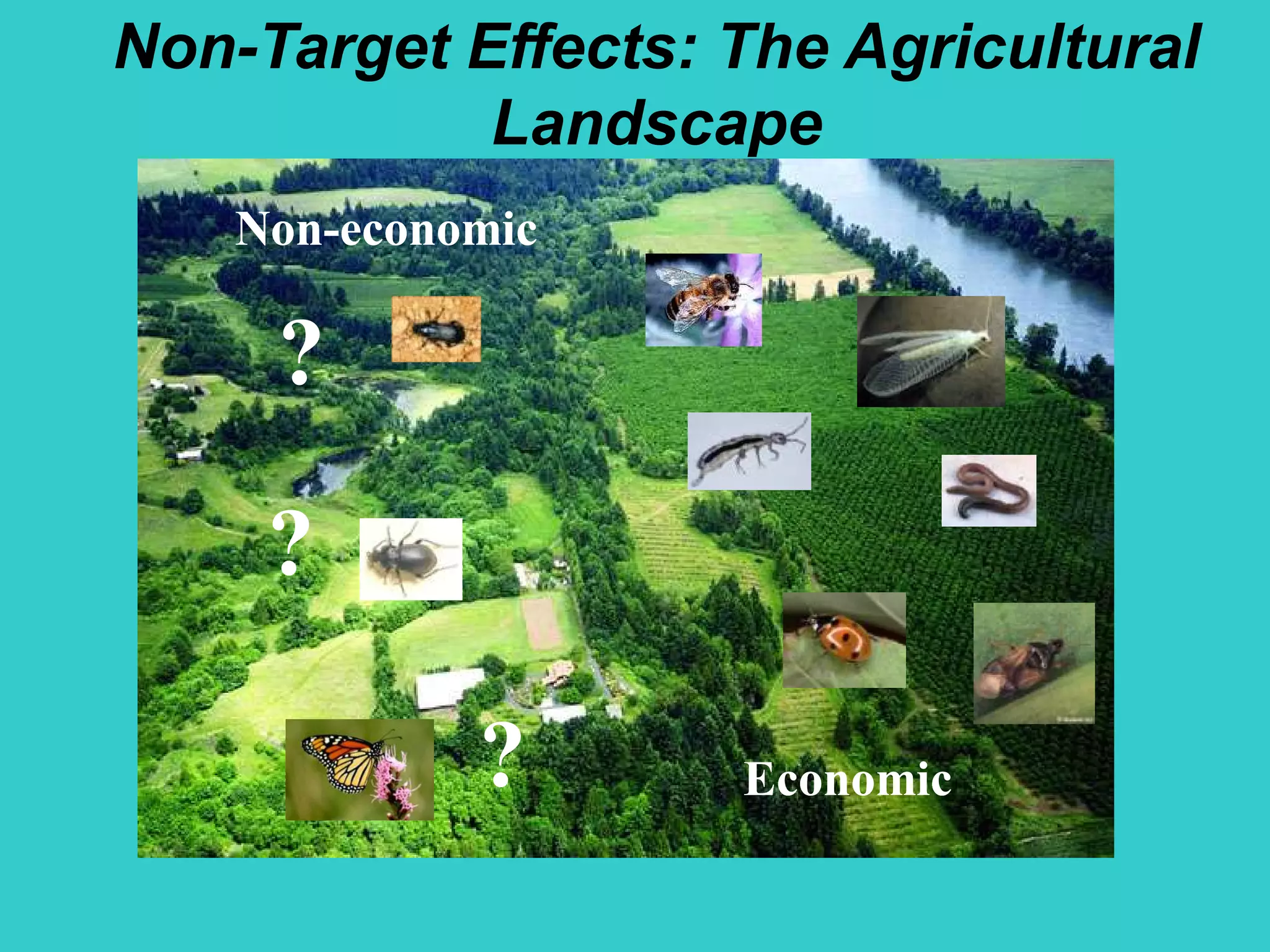
Non-Target Effects: The Agricultural
Landscape
?
?
?
NonNon--economiceconomic
EconomicEconomic
Non-Targets
• Economic non-targets
 Non-target pests
 Beneficial predators
 Other beneficial Insects
• Non-Economic non-targets
 Threatened/endangered species
 Species of public concern
 Species whose primary habitat is not
agricultural
Gene Expression
• Detects exposure to pesticides/PIP
• Detects biologically meaningful exposure
• Detects non-acute effects
• Permits study of non-lab species
• Highly sensitive - ex: EDCs in streams
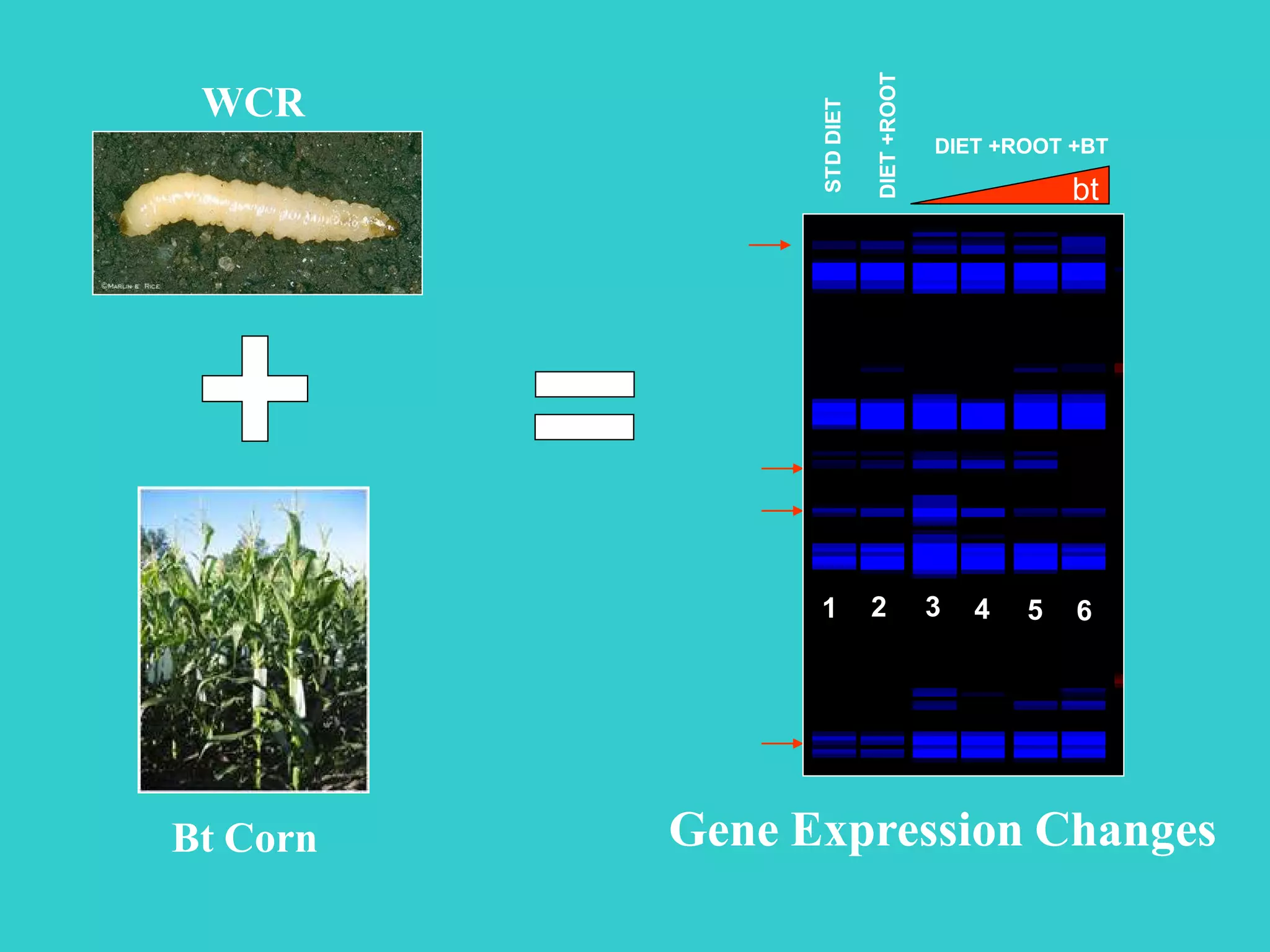
Bt CornBt Corn
WCRWCR
Gene Expression ChangesGene Expression Changes
DIET +ROOT +BTDIET +ROOT +BT
STDDIETSTDDIET
1 3 4 5 62
bt
DIET+ROOTDIET+ROOT
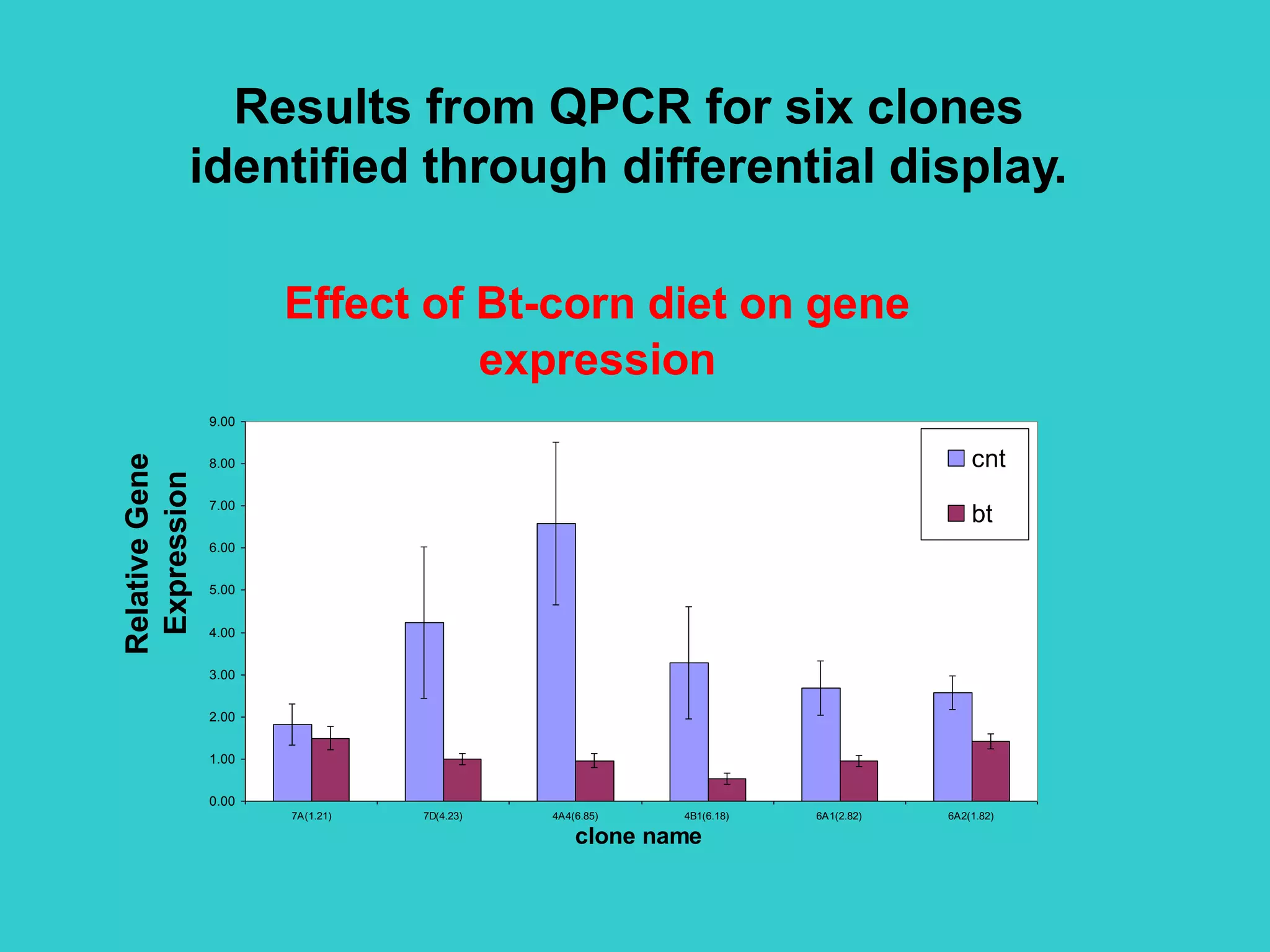
Effect of Bt-corn diet on gene
expression
0.00
1.00
2.00
3.00
4.00
5.00
6.00
7.00
8.00
9.00
7A(1.21) 7D(4.23) 4A4(6.85) 4B1(6.18) 6A1(2.82) 6A2(1.82)
clone name
RelativeGene
Expression
cnt
bt
Results from QPCR for six clones
identified through differential display.
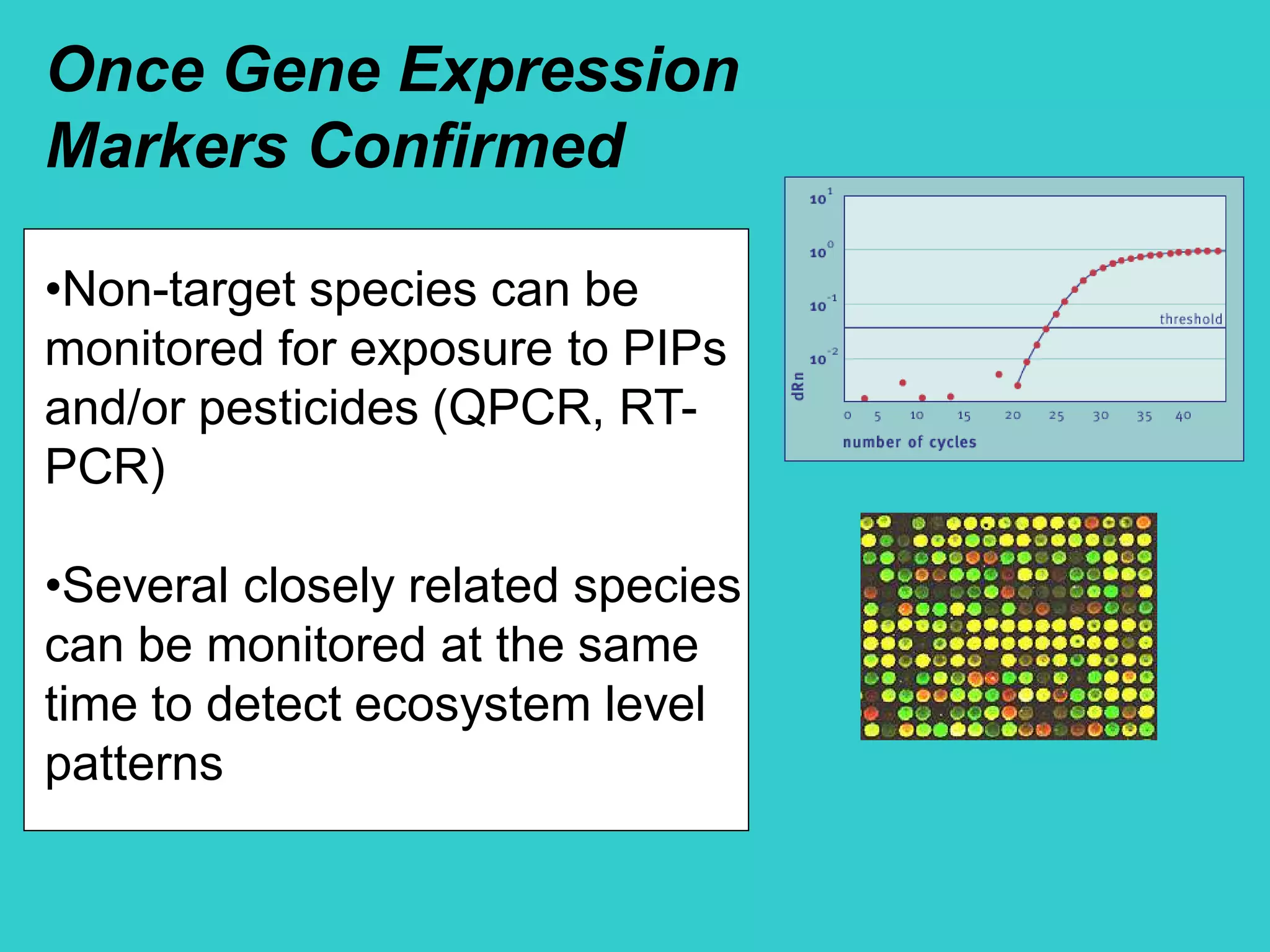
Once Gene Expression
Markers Confirmed
•Non-target species can be
monitored for exposure to PIPs
and/or pesticides (QPCR, RT-
PCR)
•Several closely related species
can be monitored at the same
time to detect ecosystem level
patterns
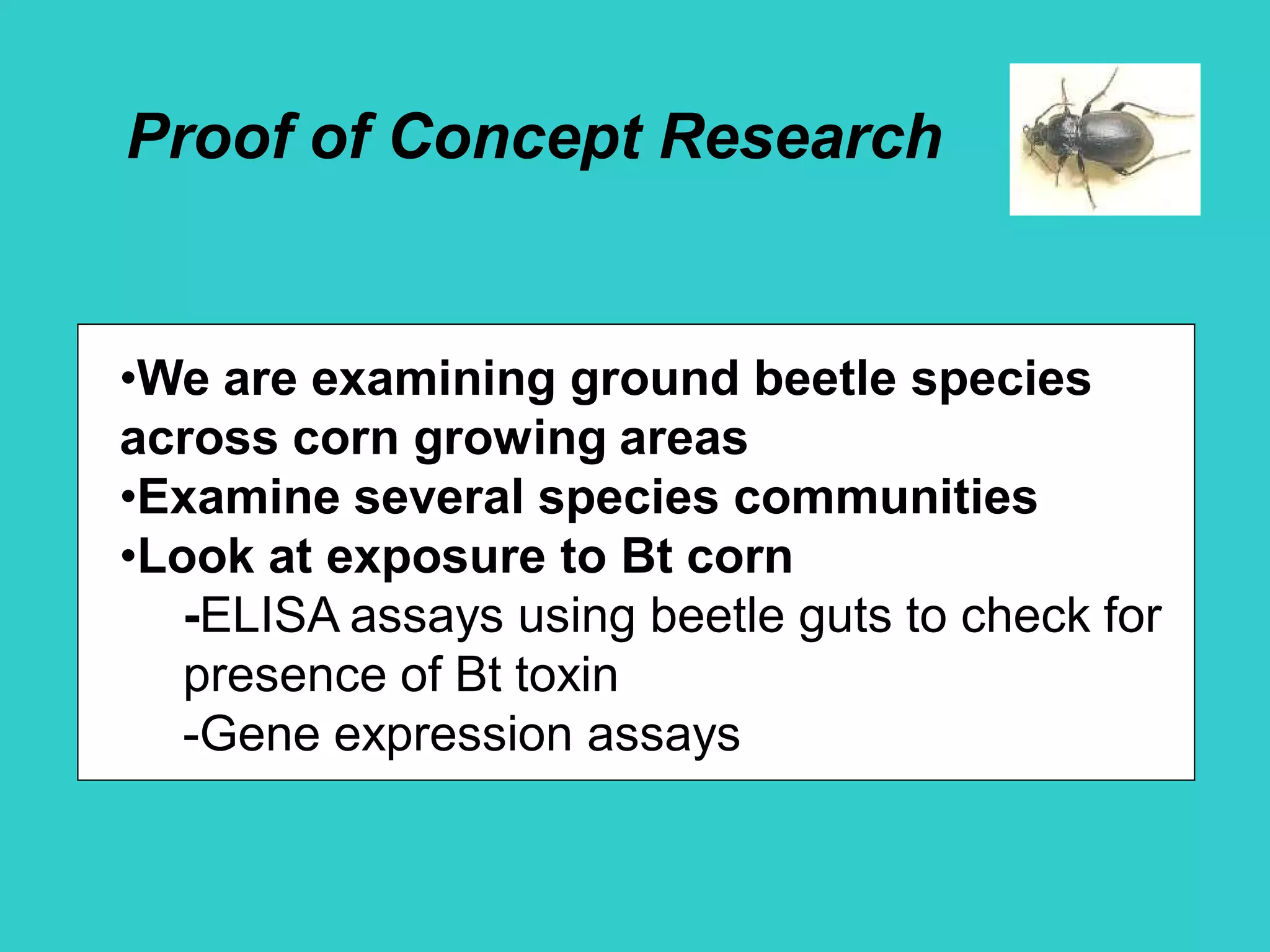
Proof of Concept Research
•We are examining ground beetle species
across corn growing areas
•Examine several species communities
•Look at exposure to Bt corn
-ELISA assays using beetle guts to check for
presence of Bt toxin
-Gene expression assays
Gene Flow / Transgene Escape
Major Issues of Transgene
Escape / Gene Flow
• Contamination of food supply
• Creation of “super-weed” crops
• Transgene escape to native relatives
via hybridization, creation of super-
weeds
• Genetic pollution
Keys to Prevention of
Transgene Flow
• Use GM crops with few wild relatives (ex:
Corn in the USA, Canada, Europe)
• Use GM crops with no weedy relatives (ex:
Sorghum and Johnson Grass)
• Provide sufficient physical and physiological
barriers to gene flow (ex: plant isolated
patches, have appropriate borders, sterility)
• Monitor for the escape and movement of
transgenes
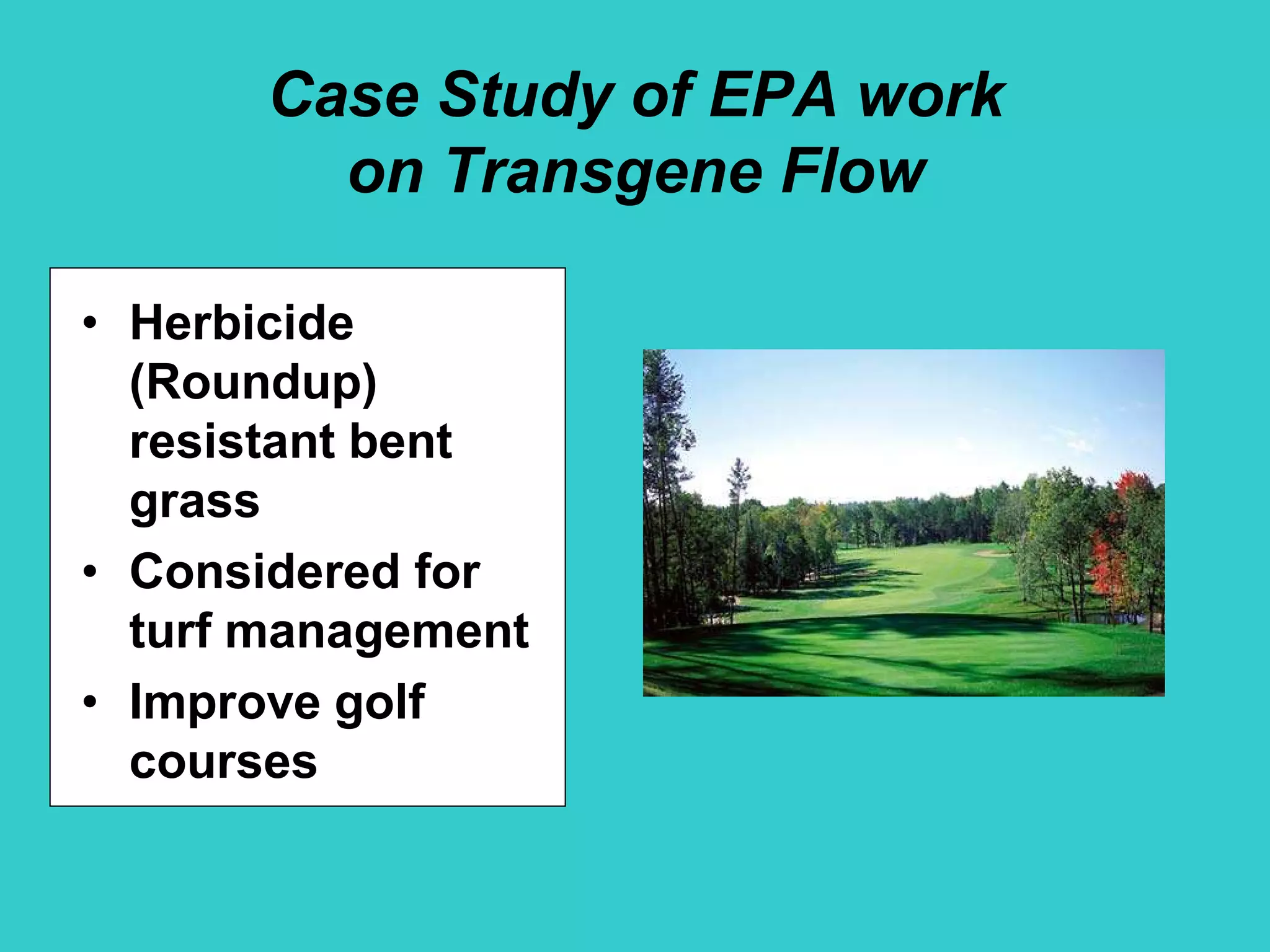
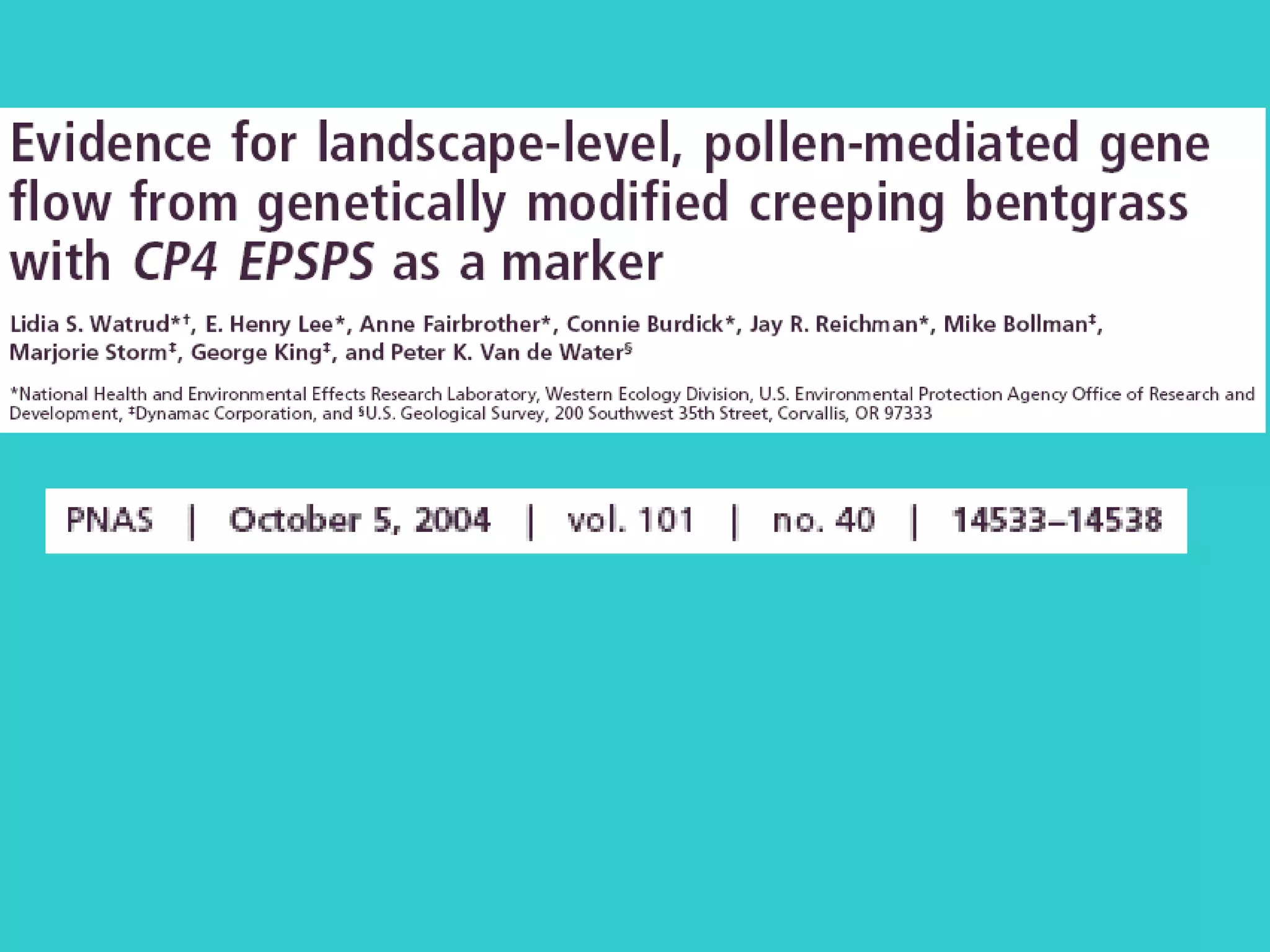
Case Study of EPA work
on Transgene Flow
• Herbicide
(Roundup)
resistant bent
grass
• Considered for
turf management
• Improve golf
courses
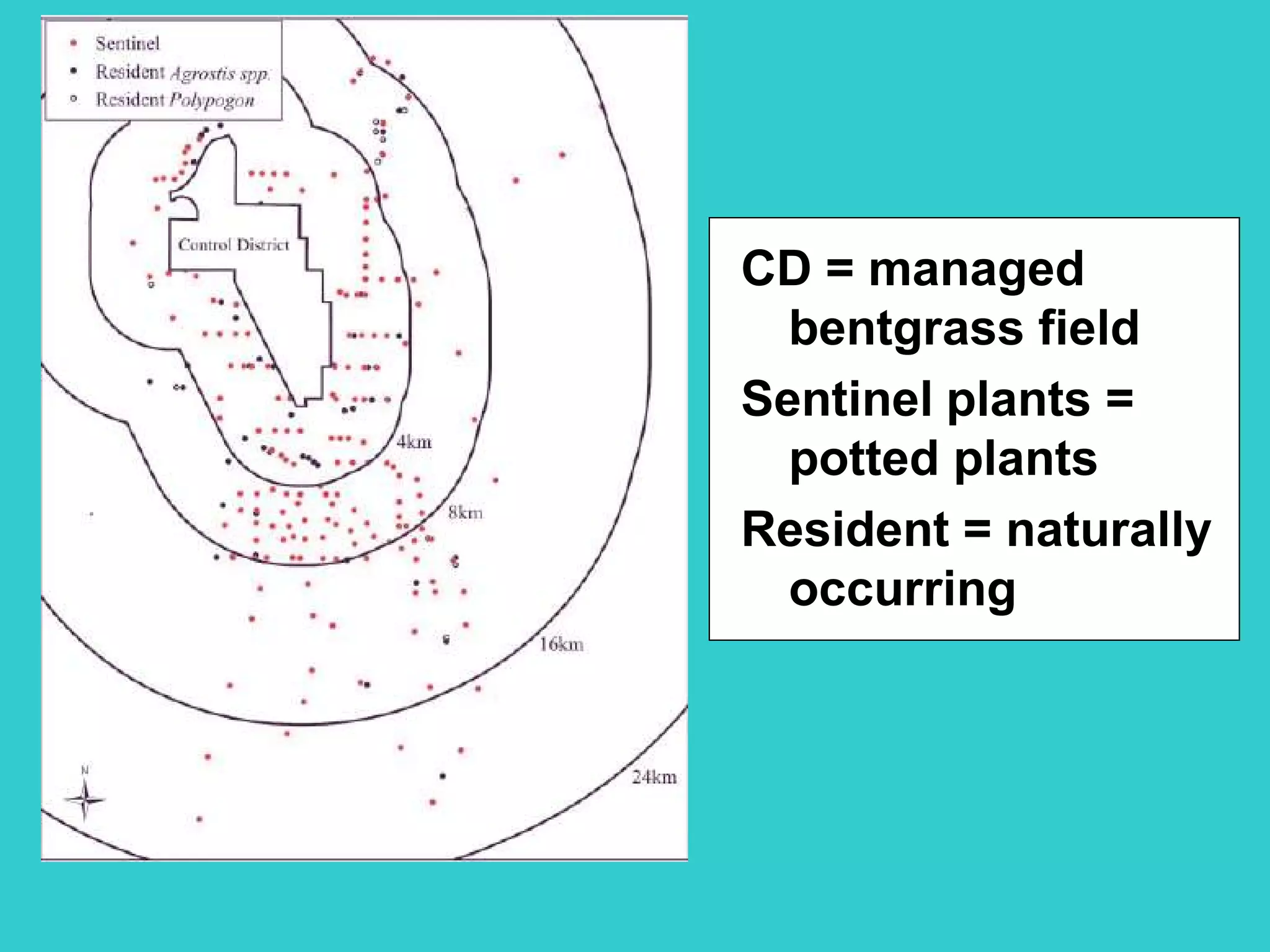
CD = managed
bentgrass field
Sentinel plants =
potted plants
Resident = naturally
occurring
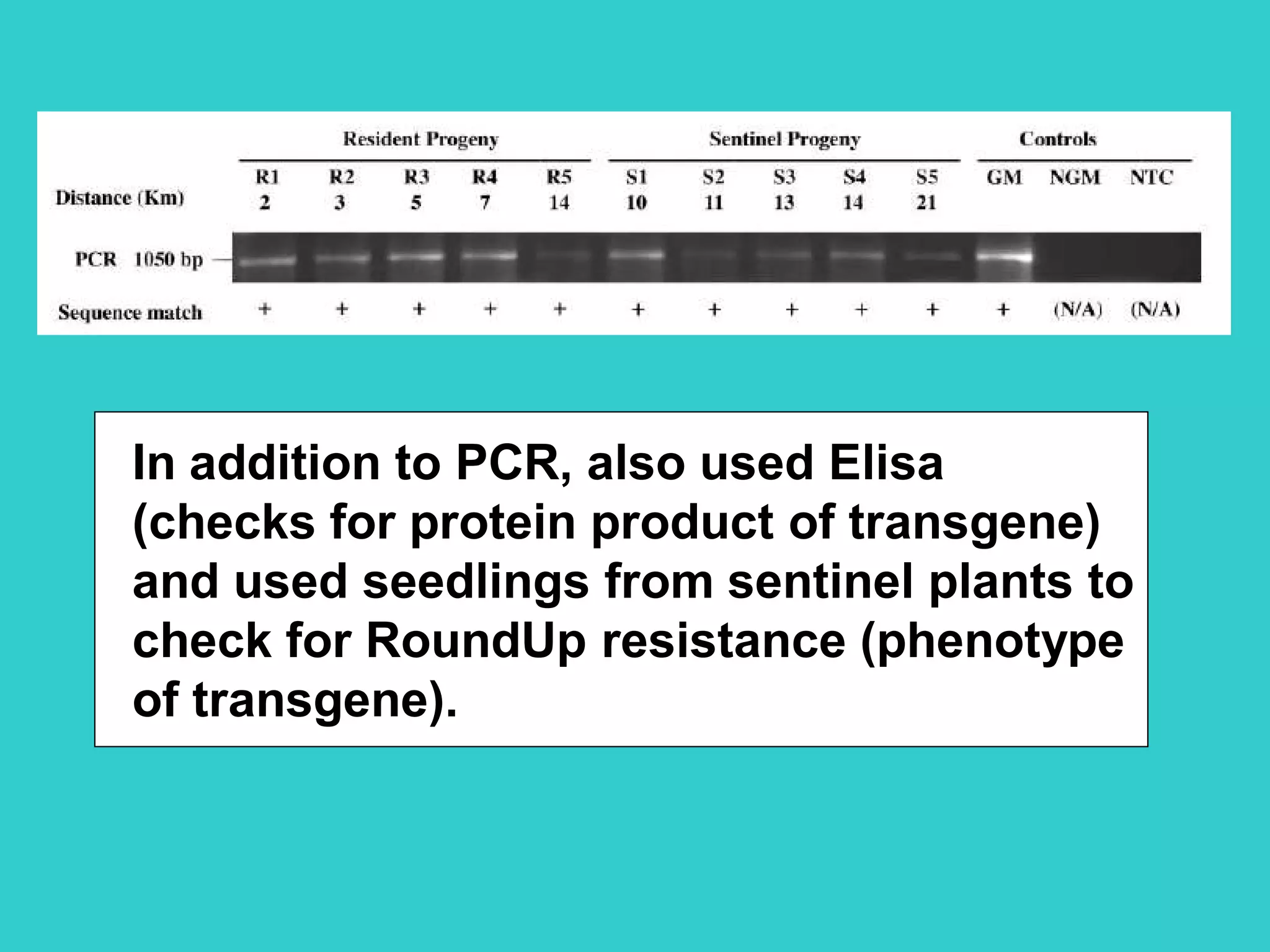
In addition to PCR, also used Elisa
(checks for protein product of transgene)
and used seedlings from sentinel plants to
check for RoundUp resistance (phenotype
of transgene).
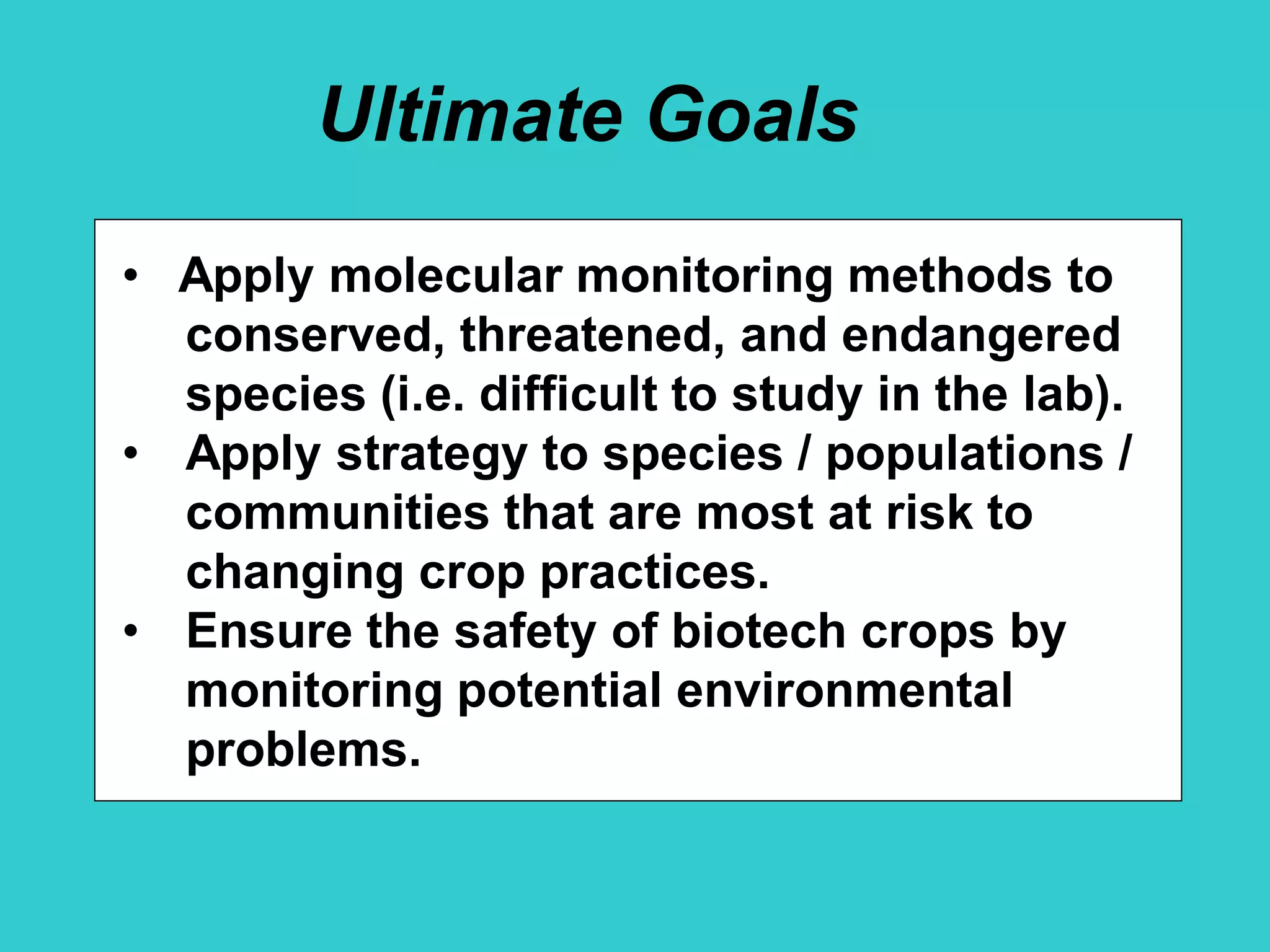
Ultimate Goals
• Apply molecular monitoring methods to
conserved, threatened, and endangered
species (i.e. difficult to study in the lab).
• Apply strategy to species / populations /
communities that are most at risk to
changing crop practices.
• Ensure the safety of biotech crops by
monitoring potential environmental
problems.
11 genomic approaches to monitoring the effects of gmo

11 genomic approaches to monitoring the effects of gmo

  • 1.
    AssignmentAssignment Subject : BreedingDesigner Crops (GPB822)Subject : Breeding Designer Crops (GPB822) Presented by: Mr.Presented by: Mr. IndranilIndranil BhattacharjeeBhattacharjee Student I.D. No.: 17PHGPB102Student I.D. No.: 17PHGPB102 Presented to : Prof. (Dr.)Presented to : Prof. (Dr.) B.G.SureshB.G.Suresh SamSam HigginbottomHigginbottom University of Agriculture, Technology & SciencesUniversity of Agriculture, Technology & Sciences AllahabadAllahabad--211007211007
  • 2.
  • 3.
    Current and FutureGM Crop Traits 1. Insect Resistance (Plant Incorporated Protectants) – ex: BT corn & cotton 2. Herbicide Tolerance – ex: Glyphosate Resistant Corn & Soybeans (i.e. Roundup Ready) 3. “Value Added” Crops – ex: Golden Rice containing vitamin A 4. Stress Tolerance – ex: drought, salt resistant varieties 5. “Biopharming” – Production of drugs, chemicals on agricultural scales
  • 4.
    Major environmental andhealth concerns regarding GM crops • Non-target effects • Gene flow / Transgene Escape • Insect Resistance • Allergenicity
  • 5.
    Issues for Regional MonitoringEfforts • Non-target Effects  Species, Communities, Ecosystems • Beneficial species, threatened / endangered species • Gene Flow / Transgene Escape  Crop to Crop, Crop to Wild Relative, Crop to distant relative • Insect resistance genes, herbicide tolerance genes • Future – vaccines, chemicals, drugs, etc.
  • 6.
    Non-target effects ofGM corn 1. Bt corn and non-target effects: Yieldgard Corn 2. ORD/NERL research approach / rationale 3. Research progress 4. Monitoring Applications
  • 7.
    Agricultural Pesticides: UnintendedUnintended EnvironmentalEnvironmental ImpactImpact Intended andunintended effects Human HealthHuman Health EffectsEffectsTargetedTargeted InsectInsect PestPest
  • 8.
    80 million acresof corn planted per year (20% of total crop acreage) Western Corn Rootworm (WCR) is major pest of corn. Conventional insecticides applied to 14-18 million acres per year. WCR responsible for 1 out of 7 insecticide applications for all agricultural crops WCRWCR damagedamage
  • 9.
    CRW will continueto be a problem… Infested acres of CRW expected to increase: 39 million acres by 2013 EPA identified 10 insecticides used in agriculture as the most toxic to birds - 3 currently used to control corn rootworm (carbofuran, phorate and methyl parathion). CRW have adapted to crop rotation with soybeans and have evolved resistance to several chemical insecticides
  • 10.
  • 11.
    The Evolution ofBt-Resistance is an Environmental Problem ????
  • 12.
    Current Research • Monitorresistance genes in pest populations -Identify resistance/tolerance genes -Develop molecular techniques for rapid and cost effective screening • Monitor non-target species for effects of Bt exposure -Identify gene expression markers for Bt exposure in target pests -Develop assays to test for effects in related non- targets
  • 13.
    Complements ecological monitoringby adding another level of analysis and increases the amount of information that can be gathered about the status and health of species Advantages of Genetic Monitoring
  • 14.
    Non-Target-Monitoring • What isa non-target species? • How do we choose non-targets? • Molecular genetics to monitor non-targets  Gene Expression • Benefits of molecular genetic techniques
  • 15.
    Non-Target Effects: TheAgricultural Landscape ? ? ? NonNon--economiceconomic EconomicEconomic
  • 16.
    Non-Targets • Economic non-targets Non-target pests  Beneficial predators  Other beneficial Insects • Non-Economic non-targets  Threatened/endangered species  Species of public concern  Species whose primary habitat is not agricultural
  • 17.
    Gene Expression • Detectsexposure to pesticides/PIP • Detects biologically meaningful exposure • Detects non-acute effects • Permits study of non-lab species • Highly sensitive - ex: EDCs in streams
  • 18.
    Bt CornBt Corn WCRWCR GeneExpression ChangesGene Expression Changes DIET +ROOT +BTDIET +ROOT +BT STDDIETSTDDIET 1 3 4 5 62 bt DIET+ROOTDIET+ROOT
  • 19.
    Effect of Bt-corndiet on gene expression 0.00 1.00 2.00 3.00 4.00 5.00 6.00 7.00 8.00 9.00 7A(1.21) 7D(4.23) 4A4(6.85) 4B1(6.18) 6A1(2.82) 6A2(1.82) clone name RelativeGene Expression cnt bt Results from QPCR for six clones identified through differential display.
  • 20.
    Once Gene Expression MarkersConfirmed •Non-target species can be monitored for exposure to PIPs and/or pesticides (QPCR, RT- PCR) •Several closely related species can be monitored at the same time to detect ecosystem level patterns
  • 21.
    Proof of ConceptResearch •We are examining ground beetle species across corn growing areas •Examine several species communities •Look at exposure to Bt corn -ELISA assays using beetle guts to check for presence of Bt toxin -Gene expression assays
  • 22.
    Gene Flow /Transgene Escape
  • 23.
    Major Issues ofTransgene Escape / Gene Flow • Contamination of food supply • Creation of “super-weed” crops • Transgene escape to native relatives via hybridization, creation of super- weeds • Genetic pollution
  • 24.
    Keys to Preventionof Transgene Flow • Use GM crops with few wild relatives (ex: Corn in the USA, Canada, Europe) • Use GM crops with no weedy relatives (ex: Sorghum and Johnson Grass) • Provide sufficient physical and physiological barriers to gene flow (ex: plant isolated patches, have appropriate borders, sterility) • Monitor for the escape and movement of transgenes
  • 25.
    Case Study ofEPA work on Transgene Flow • Herbicide (Roundup) resistant bent grass • Considered for turf management • Improve golf courses
  • 27.
    CD = managed bentgrassfield Sentinel plants = potted plants Resident = naturally occurring
  • 28.
    In addition toPCR, also used Elisa (checks for protein product of transgene) and used seedlings from sentinel plants to check for RoundUp resistance (phenotype of transgene).
  • 30.
    Ultimate Goals • Applymolecular monitoring methods to conserved, threatened, and endangered species (i.e. difficult to study in the lab). • Apply strategy to species / populations / communities that are most at risk to changing crop practices. • Ensure the safety of biotech crops by monitoring potential environmental problems.