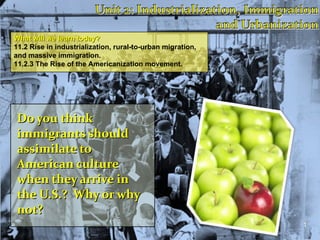
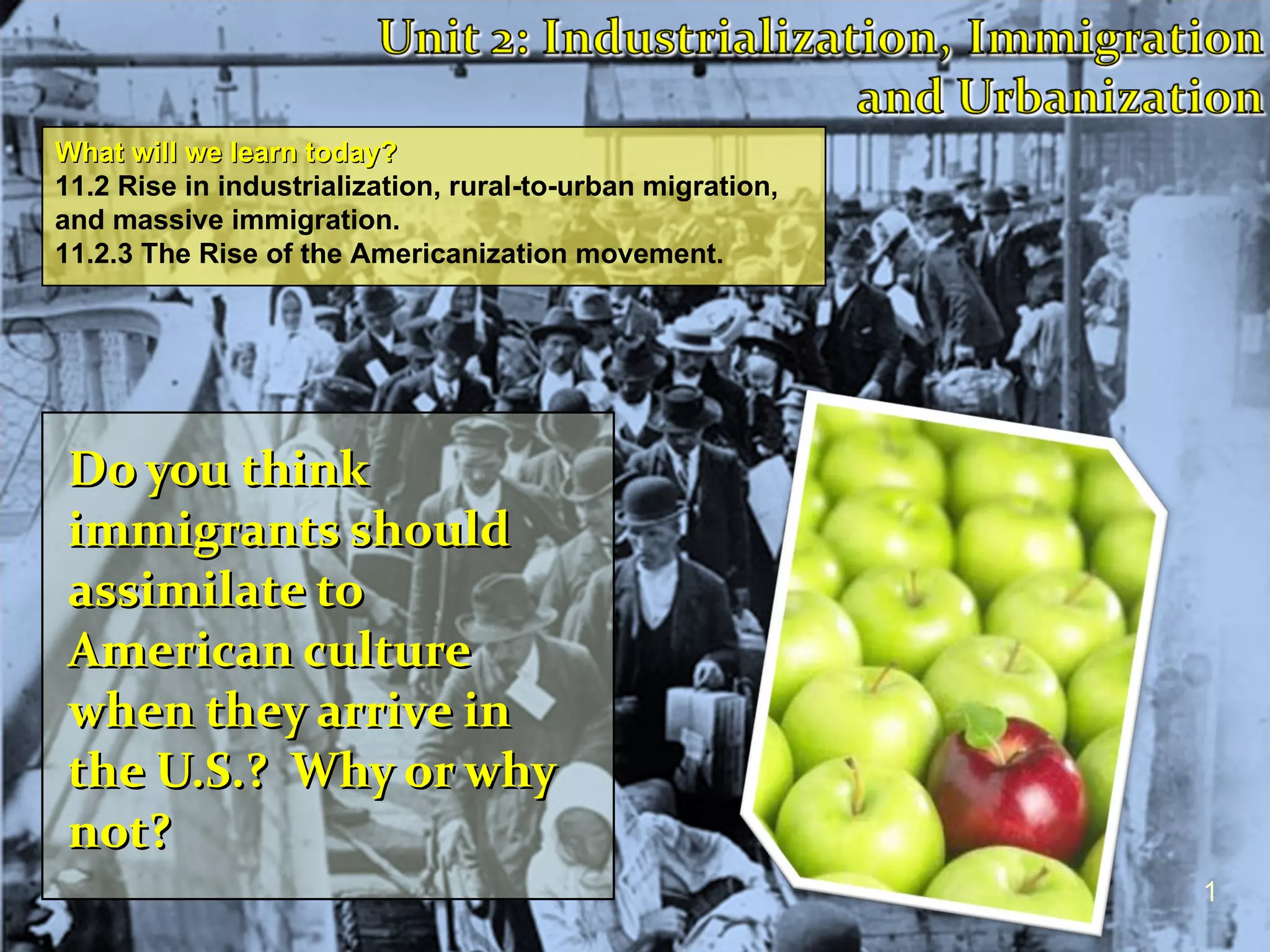
Do you think immigrants should assimilate to American culture when they arrive in the U.S.?  Why or why not? What will we learn today? 11.2 Rise in industrialization, rural-to-urban migration, and massive immigration. 11.2.3 The Rise of the Americanization movement.
Describe the arrival of thousands of European and Asian immigrants to the United States after the Civil War. Explain the impact of immigration and industrialization on the growth of cities.
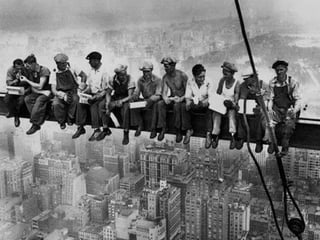
What did an immigrant have to go through to get into America and make a living?
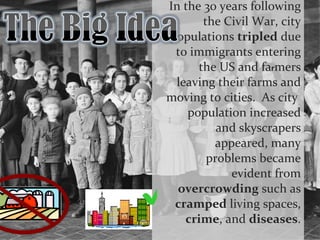
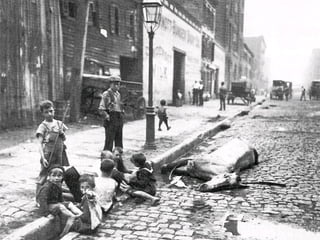
In the 30 years following the Civil War, city populations  tripled  due to immigrants entering the US and fa r mers leaving their farms and moving to cities.  As city  population increased and skyscrapers appeared, many problems became evident from  overcrowding  such as  cramped  living spaces,  crime , and  diseases . âś“
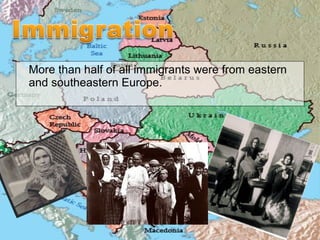
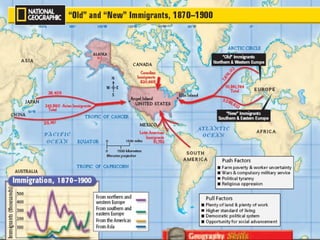
More than half of all immigrants were from eastern and southeastern Europe.
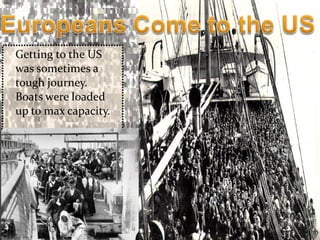
Getting to the US was sometimes a tough journey.  Boats were loaded up to max capacity.
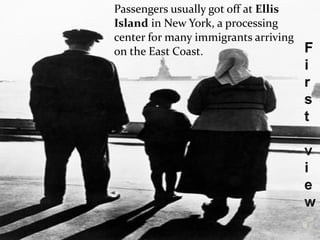
Passengers usually got off at  Ellis Island  in New York, a processing center for many immigrants arriving on the East Coast.
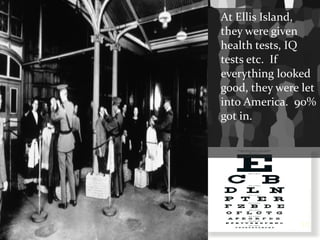
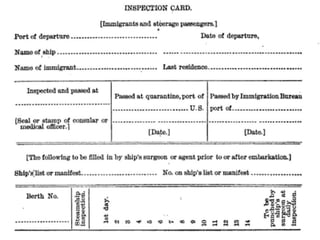
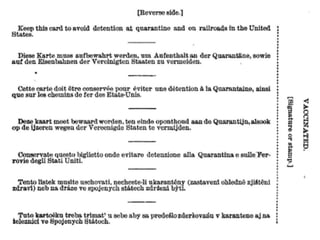
At Ellis Island, they were given health tests, IQ tests etc.  If everything looked good, they were let into America.  90% got in.
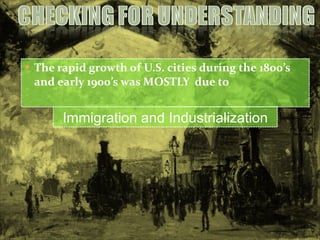
The rapid growth of U.S. cities during the 1800’s and early 1900’s was MOSTLY  due to Immigration and Industrialization
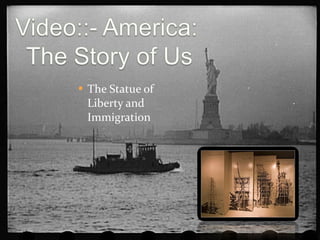
The Statue of Liberty and Immigration
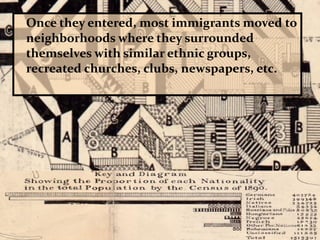
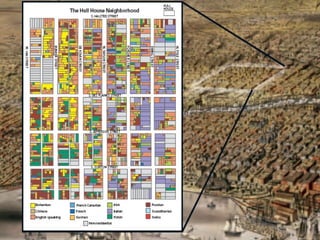
Once they entered, most immigrants moved to neighborhoods where they surrounded themselves with similar ethnic groups, recreated churches, clubs, newspapers, etc.
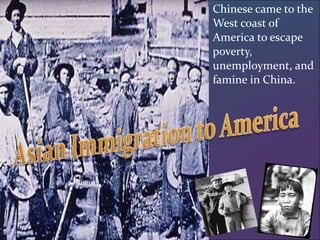
Chinese came to the West coast of America to escape poverty, unemployment, and famine in China.
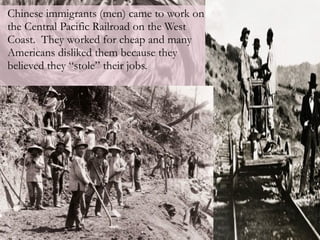
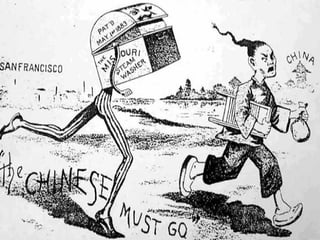
Chinese immigrants (men) came to work on the Central Pacific Railroad on the West Coast.  They worked for cheap and many Americans disliked them because they believed they “stole” their jobs.
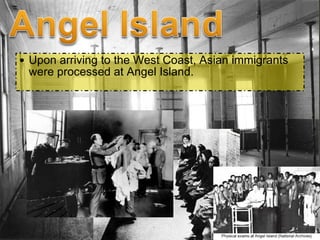
Upon arriving to the West Coast, Asian immigrants were processed at Angel Island.
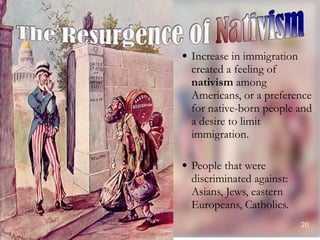
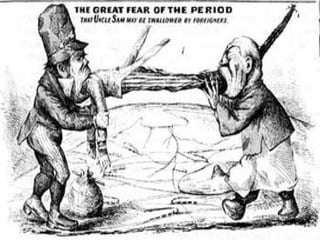
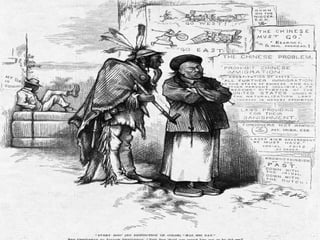
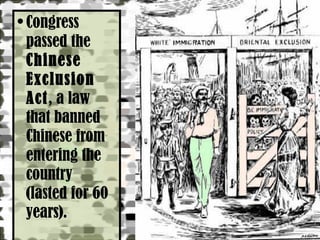
Increase in immigration created a feeling of  nativism  among Americans, or a preference for native-born people and a desire to limit immigration. People that were discriminated against: Asians, Jews, eastern Europeans, Catholics.
European immigrants were processed at ________________, while Asian immigrants were processed at ________________.  Ellis, Angel
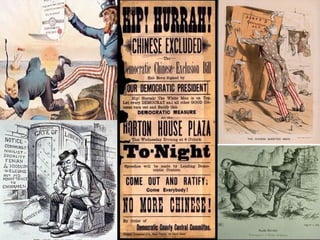
Congress passed the  Chinese Exclusion Act , a law that banned Chinese from entering the country (lasted for 60 years).
In what type of buildings (1) and in what type of neighborhoods (2) did most immigrants live once they were in America?   1.   2. Tenements Neighborhoods arranged by ethnicity
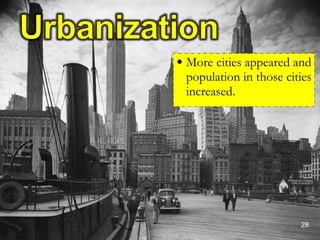
More cities appeared and population in those cities increased.
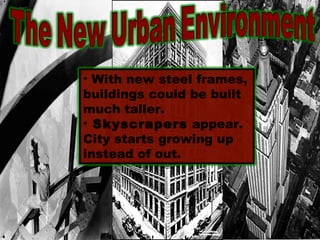
With new steel frames, buildings could be built much taller. Skyscrapers  appear.  City starts growing up instead of out.
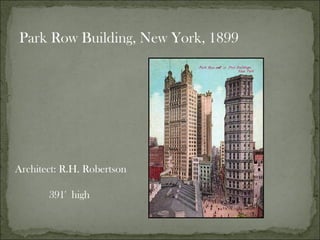
Park Row Building, New York, 1899 Architect: R.H. Robertson  391'  high
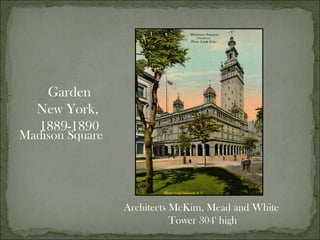
Madison Square Architects McKim, Mead and White Tower 304' high Garden New York,  1889-1890
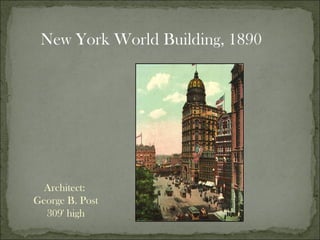
New York World Building, 1890     Architect:  George B. Post 309' high
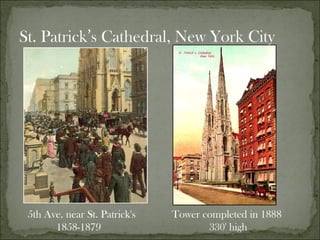
St. Patrick ’ s Cathedral, New York City Tower completed in 1888   330' high   5th Ave. near St. Patrick's   1858-1879
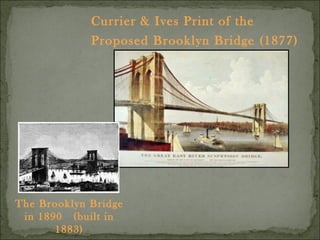
Currier & Ives Print of the Proposed Brooklyn Bridge (1877)   The Brooklyn Bridge in 1890  (built in 1883)
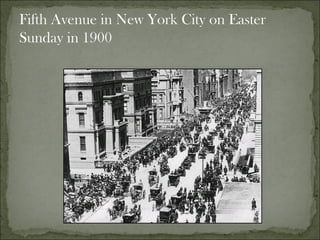
Fifth Avenue in New York City on Easter Sunday in 1900
 
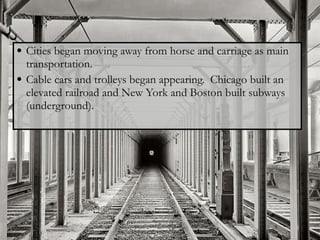
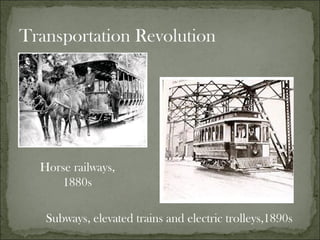
Transportation Revolution , Horse railways, 1880s Subways, elevated trains and electric trolleys,1890s
Cities began moving away from horse and carriage as main transportation.  Cable cars and trolleys began appearing.  Chicago built an elevated railroad and New York and Boston built subways (underground).
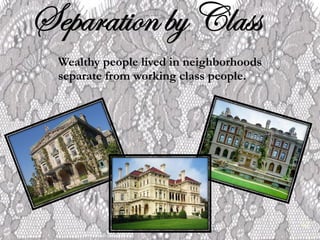
Wealthy people lived in neighborhoods separate from working class people.
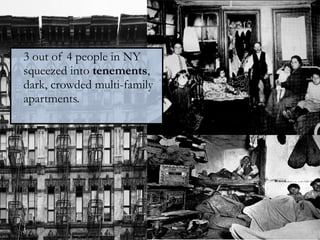
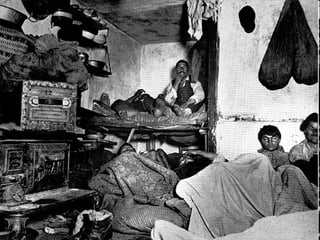
3 out of 4 people in NY squeezed into  tenements , dark, crowded multi-family apartments.
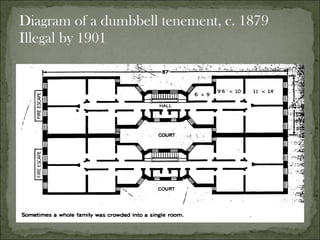
Diagram of a dumbbell tenement, c. 1879 Illegal by 1901
 
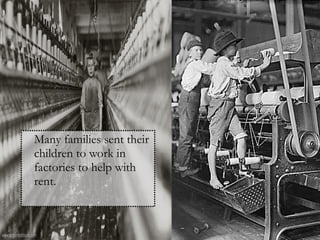
Many families sent their children to work in factories to help with rent.
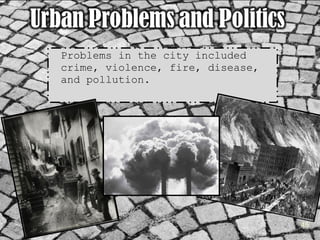
Problems in the city included crime, violence, fire, disease, and pollution.
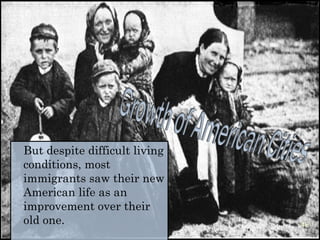
But despite difficult living conditions, most immigrants saw their new American life as an improvement over their old one.
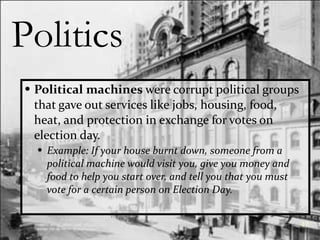
Political machines  were corrupt political groups that gave out services like jobs, housing, food, heat, and protection in exchange for votes on election day.  Example: If your house burnt down, someone from a political machine would visit you, give you money and food to help you start over, and tell you that you must vote for a certain person on Election Day. Politics
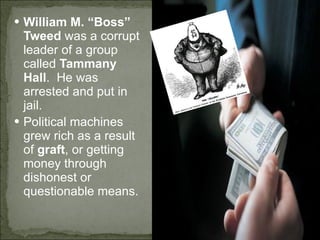
William M. “Boss” Tweed  was a corrupt leader of a group called  Tammany Hall .  He was arrested and put in jail. Political machines grew rich as a result of  graft , or getting money through dishonest or questionable means.
During the late 19 th  and early 20 th  centuries, urban immigrants  were influenced to support local political machines because They provided benefits in exchange for votes
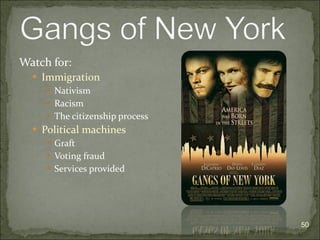
Watch for: Immigration Nativism Racism The citizenship process Political machines Graft Voting fraud Services provided
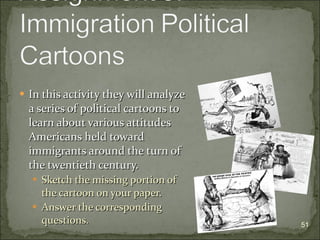
In this activity they will analyze a series of political cartoons to learn about various attitudes Americans held toward immigrants around the turn of the twentieth century. Sketch the missing portion of the cartoon on your paper. Answer the corresponding questions.

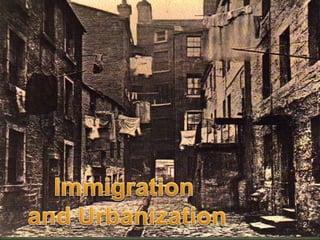
immigration and urbanization

  • 1.
    Do you thinkimmigrants should assimilate to American culture when they arrive in the U.S.? Why or why not? What will we learn today? 11.2 Rise in industrialization, rural-to-urban migration, and massive immigration. 11.2.3 The Rise of the Americanization movement.
  • 3.
    Describe the arrivalof thousands of European and Asian immigrants to the United States after the Civil War. Explain the impact of immigration and industrialization on the growth of cities.
  • 4.
    What did animmigrant have to go through to get into America and make a living?
  • 5.
    In the 30years following the Civil War, city populations tripled due to immigrants entering the US and fa r mers leaving their farms and moving to cities. As city population increased and skyscrapers appeared, many problems became evident from overcrowding such as cramped living spaces, crime , and diseases . âś“
  • 6.
    More than halfof all immigrants were from eastern and southeastern Europe.
  • 8.
    Getting to theUS was sometimes a tough journey. Boats were loaded up to max capacity.
  • 9.
    Passengers usually gotoff at Ellis Island in New York, a processing center for many immigrants arriving on the East Coast.
  • 10.
    At Ellis Island,they were given health tests, IQ tests etc. If everything looked good, they were let into America. 90% got in.
  • 11.
    The rapid growthof U.S. cities during the 1800’s and early 1900’s was MOSTLY due to Immigration and Industrialization
  • 12.
    The Statue ofLiberty and Immigration
  • 15.
    Once they entered,most immigrants moved to neighborhoods where they surrounded themselves with similar ethnic groups, recreated churches, clubs, newspapers, etc.
  • 17.
    Chinese came tothe West coast of America to escape poverty, unemployment, and famine in China.
  • 18.
    Chinese immigrants (men)came to work on the Central Pacific Railroad on the West Coast. They worked for cheap and many Americans disliked them because they believed they “stole” their jobs.
  • 19.
    Upon arriving tothe West Coast, Asian immigrants were processed at Angel Island.
  • 20.
    Increase in immigrationcreated a feeling of nativism among Americans, or a preference for native-born people and a desire to limit immigration. People that were discriminated against: Asians, Jews, eastern Europeans, Catholics.
  • 23.
    European immigrants wereprocessed at ________________, while Asian immigrants were processed at ________________. Ellis, Angel
  • 24.
    Congress passed the Chinese Exclusion Act , a law that banned Chinese from entering the country (lasted for 60 years).
  • 27.
    In what typeof buildings (1) and in what type of neighborhoods (2) did most immigrants live once they were in America?   1.   2. Tenements Neighborhoods arranged by ethnicity
  • 28.
    More cities appearedand population in those cities increased.
  • 29.
    With new steelframes, buildings could be built much taller. Skyscrapers appear. City starts growing up instead of out.
  • 30.
    Park Row Building,New York, 1899 Architect: R.H. Robertson 391' high
  • 31.
    Madison Square ArchitectsMcKim, Mead and White Tower 304' high Garden New York, 1889-1890
  • 32.
    New York WorldBuilding, 1890   Architect: George B. Post 309' high
  • 33.
    St. Patrick ’s Cathedral, New York City Tower completed in 1888  330' high 5th Ave. near St. Patrick's 1858-1879
  • 34.
    Currier & IvesPrint of the Proposed Brooklyn Bridge (1877) The Brooklyn Bridge in 1890 (built in 1883)
  • 35.
    Fifth Avenue inNew York City on Easter Sunday in 1900
  • 37.
  • 38.
    Transportation Revolution ,Horse railways, 1880s Subways, elevated trains and electric trolleys,1890s
  • 39.
    Cities began movingaway from horse and carriage as main transportation. Cable cars and trolleys began appearing. Chicago built an elevated railroad and New York and Boston built subways (underground).
  • 40.
    Wealthy people livedin neighborhoods separate from working class people.
  • 41.
    3 out of4 people in NY squeezed into tenements , dark, crowded multi-family apartments.
  • 42.
    Diagram of adumbbell tenement, c. 1879 Illegal by 1901
  • 43.
  • 44.
    Many families senttheir children to work in factories to help with rent.
  • 45.
    Problems in thecity included crime, violence, fire, disease, and pollution.
  • 46.
    But despite difficultliving conditions, most immigrants saw their new American life as an improvement over their old one.
  • 47.
    Political machines were corrupt political groups that gave out services like jobs, housing, food, heat, and protection in exchange for votes on election day. Example: If your house burnt down, someone from a political machine would visit you, give you money and food to help you start over, and tell you that you must vote for a certain person on Election Day. Politics
  • 48.
    William M. “Boss”Tweed was a corrupt leader of a group called Tammany Hall . He was arrested and put in jail. Political machines grew rich as a result of graft , or getting money through dishonest or questionable means.
  • 49.
    During the late19 th and early 20 th centuries, urban immigrants were influenced to support local political machines because They provided benefits in exchange for votes
  • 50.
    Watch for: ImmigrationNativism Racism The citizenship process Political machines Graft Voting fraud Services provided
  • 51.
    In this activitythey will analyze a series of political cartoons to learn about various attitudes Americans held toward immigrants around the turn of the twentieth century. Sketch the missing portion of the cartoon on your paper. Answer the corresponding questions.