Stimulating
economic
recovery
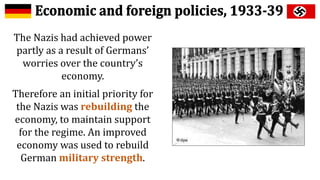
The Nazis had achieved power
partly as a result of Germans’
worries over the country’s
economy.
Therefore an initial priority for
the Nazis was rebuilding the
economy, to maintain support
for the regime. An improved
economy was used to rebuild
German military strength.
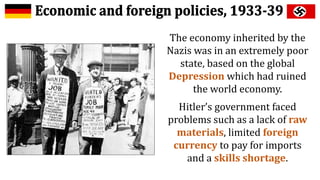
The economy inherited by the
Nazis was in an extremely poor
state, based on the global
Depression which had ruined
the world economy.
Hitler’s government faced
problems such as a lack of raw
materials, limited foreign
currency to pay for imports
and a skills shortage.
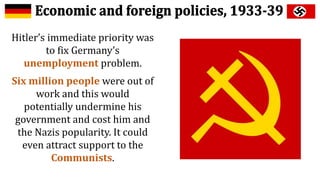
Hitler’s immediate priority was
to fix Germany’s
unemployment problem.
Six million people were out of
work and this would
potentially undermine his
government and cost him and
the Nazis popularity. It could
even attract support to the
Communists.
In reality the economy started
to improve before the Nazis
took power, but Hitler was well
placed to take credit.
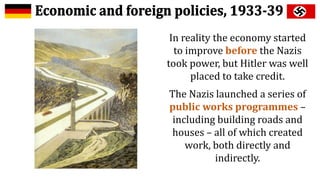
The Nazis launched a series of
public works programmes –
including building roads and
houses – all of which created
work, both directly and
indirectly.
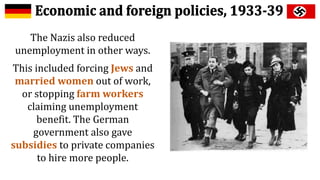
The Nazis also reduced
unemployment in other ways.
This included forcing Jews and
married women out of work,
or stopping farm workers
claiming unemployment
benefit. The German
government also gave
subsidies to private companies
to hire more people.
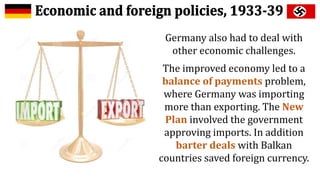
Germany also had to deal with
other economic challenges.
The improved economy led to a
balance of payments problem,
where Germany was importing
more than exporting. The New
Plan involved the government
approving imports. In addition
barter deals with Balkan
countries saved foreign currency.
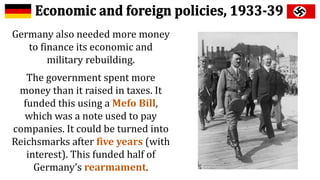
Germany also needed more money
to finance its economic and
military rebuilding.
The government spent more
money than it raised in taxes. It
funded this using a Mefo Bill,
which was a note used to pay
companies. It could be turned into
Reichsmarks after five years (with
interest). This funded half of
Germany’s rearmament.
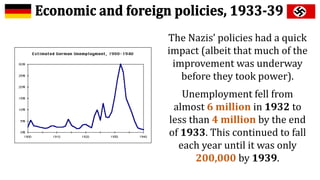
The Nazis’ policies had a quick
impact (albeit that much of the
improvement was underway
before they took power).
Unemployment fell from
almost 6 million in 1932 to
less than 4 million by the end
of 1933. This continued to fall
each year until it was only
200,000 by 1939.
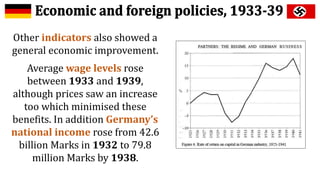
Other indicators also showed a
general economic improvement.
Average wage levels rose
between 1933 and 1939,
although prices saw an increase
too which minimised these
benefits. In addition Germany’s
national income rose from 42.6
billion Marks in 1932 to 79.8
million Marks by 1938.
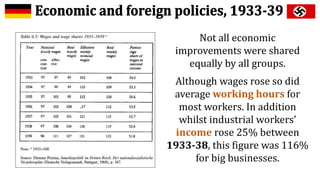
Not all economic
improvements were shared
equally by all groups.
Although wages rose so did
average working hours for
most workers. In addition
whilst industrial workers’
income rose 25% between
1933-38, this figure was 116%
for big businesses.
The Nazis also made other
attempts to improve conditions
for German workers.
The Strength Through Joy
scheme offered them access to
cheap holidays and cars.
In addition the Beauty of Work
programme improved
workplace conditions, such as
ventilation and lighting.
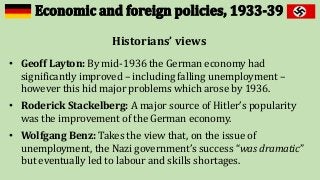
Historians’ views
• Geoff Layton: By mid-1936 the German economy had
significantly improved – including falling unemployment –
however this hid major problems which arose by 1936.
• Roderick Stackelberg: A major source of Hitler’s popularity
was the improvement of the German economy.
• Wolfgang Benz: Takes the view that, on the issue of
unemployment, the Nazi government’s success “was dramatic”
but eventually led to labour and skills shortages.

Nazi Germany - stimulating economic recovery

  • 1.
  • 2.
    The Nazis hadachieved power partly as a result of Germans’ worries over the country’s economy. Therefore an initial priority for the Nazis was rebuilding the economy, to maintain support for the regime. An improved economy was used to rebuild German military strength.
  • 3.
    The economy inheritedby the Nazis was in an extremely poor state, based on the global Depression which had ruined the world economy. Hitler’s government faced problems such as a lack of raw materials, limited foreign currency to pay for imports and a skills shortage.
  • 4.
    Hitler’s immediate prioritywas to fix Germany’s unemployment problem. Six million people were out of work and this would potentially undermine his government and cost him and the Nazis popularity. It could even attract support to the Communists.
  • 5.
    In reality theeconomy started to improve before the Nazis took power, but Hitler was well placed to take credit. The Nazis launched a series of public works programmes – including building roads and houses – all of which created work, both directly and indirectly.
  • 6.
    The Nazis alsoreduced unemployment in other ways. This included forcing Jews and married women out of work, or stopping farm workers claiming unemployment benefit. The German government also gave subsidies to private companies to hire more people.
  • 7.
    Germany also hadto deal with other economic challenges. The improved economy led to a balance of payments problem, where Germany was importing more than exporting. The New Plan involved the government approving imports. In addition barter deals with Balkan countries saved foreign currency.
  • 8.
    Germany also neededmore money to finance its economic and military rebuilding. The government spent more money than it raised in taxes. It funded this using a Mefo Bill, which was a note used to pay companies. It could be turned into Reichsmarks after five years (with interest). This funded half of Germany’s rearmament.
  • 9.
    The Nazis’ policieshad a quick impact (albeit that much of the improvement was underway before they took power). Unemployment fell from almost 6 million in 1932 to less than 4 million by the end of 1933. This continued to fall each year until it was only 200,000 by 1939.
  • 10.
    Other indicators alsoshowed a general economic improvement. Average wage levels rose between 1933 and 1939, although prices saw an increase too which minimised these benefits. In addition Germany’s national income rose from 42.6 billion Marks in 1932 to 79.8 million Marks by 1938.
  • 11.
    Not all economic improvementswere shared equally by all groups. Although wages rose so did average working hours for most workers. In addition whilst industrial workers’ income rose 25% between 1933-38, this figure was 116% for big businesses.
  • 12.
    The Nazis alsomade other attempts to improve conditions for German workers. The Strength Through Joy scheme offered them access to cheap holidays and cars. In addition the Beauty of Work programme improved workplace conditions, such as ventilation and lighting.
  • 13.
    Historians’ views • GeoffLayton: By mid-1936 the German economy had significantly improved – including falling unemployment – however this hid major problems which arose by 1936. • Roderick Stackelberg: A major source of Hitler’s popularity was the improvement of the German economy. • Wolfgang Benz: Takes the view that, on the issue of unemployment, the Nazi government’s success “was dramatic” but eventually led to labour and skills shortages.