Goering and
the Four Year Plan
Under the Nazis, rearmament
was a key feature of Germany’s
economic rebuilding plans.
By 1936 the economy had made
huge progress, shown in the
massive drop in unemployment.
Hjalmar Schacht worried that
too much money was spent on
the military, and wanted to focus
on exports instead.
Schacht’s fears were based on a
growing budget deficit and
balance of payments gap.
However his demands to shift
focus and resources away from
the military angered Hitler.
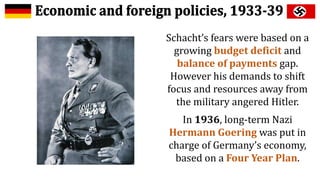
In 1936, long-term Nazi
Hermann Goering was put in
charge of Germany’s economy,
based on a Four Year Plan.
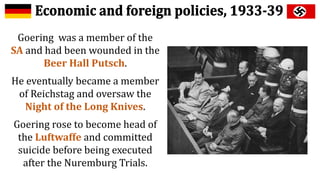
Goering was a member of the
SA and had been wounded in the
Beer Hall Putsch.
He eventually became a member
of Reichstag and oversaw the
Night of the Long Knives.
Goering rose to become head of
the Luftwaffe and committed
suicide before being executed
after the Nuremburg Trials.
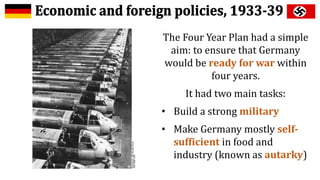
The Four Year Plan had a simple
aim: to ensure that Germany
would be ready for war within
four years.
It had two main tasks:
• Build a strong military
• Make Germany mostly self-
sufficient in food and
industry (known as autarky)
In order to introduce the Four
Year Plan, Goering was given
wide ranging powers.
He headed the new Office of
the Four Year Plan. This
department had influence over
various other government
sections. In addition, it set
targets that private businesses
were expected to meet.
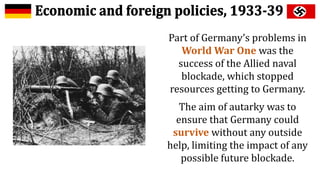
Part of Germany’s problems in
World War One was the
success of the Allied naval
blockade, which stopped
resources getting to Germany.
The aim of autarky was to
ensure that Germany could
survive without any outside
help, limiting the impact of any
possible future blockade.
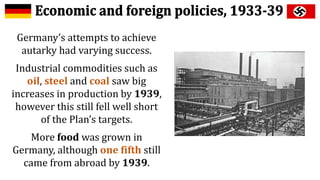
Germany’s attempts to achieve
autarky had varying success.
Industrial commodities such as
oil, steel and coal saw big
increases in production by 1939,
however this still fell well short
of the Plan’s targets.
More food was grown in
Germany, although one fifth still
came from abroad by 1939.
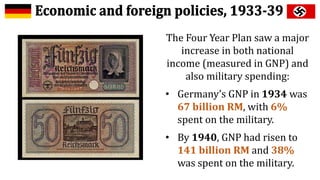
The Four Year Plan saw a major
increase in both national
income (measured in GNP) and
also military spending:
• Germany’s GNP in 1934 was
67 billion RM, with 6%
spent on the military.
• By 1940, GNP had risen to
141 billion RM and 38%
was spent on the military.
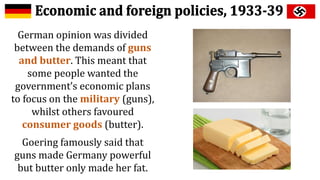
German opinion was divided
between the demands of guns
and butter. This meant that
some people wanted the
government’s economic plans
to focus on the military (guns),
whilst others favoured
consumer goods (butter).
Goering famously said that
guns made Germany powerful
but butter only made her fat.
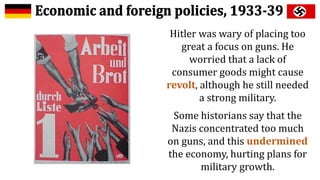
Hitler was wary of placing too
great a focus on guns. He
worried that a lack of
consumer goods might cause
revolt, although he still needed
a strong military.
Some historians say that the
Nazis concentrated too much
on guns, and this undermined
the economy, hurting plans for
military growth.
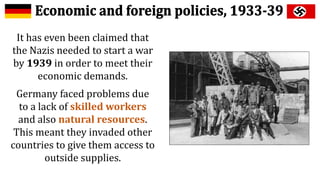
It has even been claimed that
the Nazis needed to start a war
by 1939 in order to meet their
economic demands.
Germany faced problems due
to a lack of skilled workers
and also natural resources.
This meant they invaded other
countries to give them access to
outside supplies.
Historians’ views
• Richard Overy: Hitler needed autarky to ensure that Germans
did not suffer during a war, stopping possible revolts
• Panikos Panayl: The Four Year Plan proved the Nazis’
dominance in Germany, and their control of big business.
• Michael Freeman: At times the Nazis dominated businesses, at
others both sides worked together to benefit each of them.
• Francis Nicosia: Businesses at first cooperated with the Four
Year Plan but eventually were simply given targets to meet.

Nazi Germany - goering and the four year plan

  • 1.
  • 2.
    Under the Nazis,rearmament was a key feature of Germany’s economic rebuilding plans. By 1936 the economy had made huge progress, shown in the massive drop in unemployment. Hjalmar Schacht worried that too much money was spent on the military, and wanted to focus on exports instead.
  • 3.
    Schacht’s fears werebased on a growing budget deficit and balance of payments gap. However his demands to shift focus and resources away from the military angered Hitler. In 1936, long-term Nazi Hermann Goering was put in charge of Germany’s economy, based on a Four Year Plan.
  • 4.
    Goering was amember of the SA and had been wounded in the Beer Hall Putsch. He eventually became a member of Reichstag and oversaw the Night of the Long Knives. Goering rose to become head of the Luftwaffe and committed suicide before being executed after the Nuremburg Trials.
  • 5.
    The Four YearPlan had a simple aim: to ensure that Germany would be ready for war within four years. It had two main tasks: • Build a strong military • Make Germany mostly self- sufficient in food and industry (known as autarky)
  • 6.
    In order tointroduce the Four Year Plan, Goering was given wide ranging powers. He headed the new Office of the Four Year Plan. This department had influence over various other government sections. In addition, it set targets that private businesses were expected to meet.
  • 7.
    Part of Germany’sproblems in World War One was the success of the Allied naval blockade, which stopped resources getting to Germany. The aim of autarky was to ensure that Germany could survive without any outside help, limiting the impact of any possible future blockade.
  • 8.
    Germany’s attempts toachieve autarky had varying success. Industrial commodities such as oil, steel and coal saw big increases in production by 1939, however this still fell well short of the Plan’s targets. More food was grown in Germany, although one fifth still came from abroad by 1939.
  • 9.
    The Four YearPlan saw a major increase in both national income (measured in GNP) and also military spending: • Germany’s GNP in 1934 was 67 billion RM, with 6% spent on the military. • By 1940, GNP had risen to 141 billion RM and 38% was spent on the military.
  • 10.
    German opinion wasdivided between the demands of guns and butter. This meant that some people wanted the government’s economic plans to focus on the military (guns), whilst others favoured consumer goods (butter). Goering famously said that guns made Germany powerful but butter only made her fat.
  • 11.
    Hitler was waryof placing too great a focus on guns. He worried that a lack of consumer goods might cause revolt, although he still needed a strong military. Some historians say that the Nazis concentrated too much on guns, and this undermined the economy, hurting plans for military growth.
  • 12.
    It has evenbeen claimed that the Nazis needed to start a war by 1939 in order to meet their economic demands. Germany faced problems due to a lack of skilled workers and also natural resources. This meant they invaded other countries to give them access to outside supplies.
  • 13.
    Historians’ views • RichardOvery: Hitler needed autarky to ensure that Germans did not suffer during a war, stopping possible revolts • Panikos Panayl: The Four Year Plan proved the Nazis’ dominance in Germany, and their control of big business. • Michael Freeman: At times the Nazis dominated businesses, at others both sides worked together to benefit each of them. • Francis Nicosia: Businesses at first cooperated with the Four Year Plan but eventually were simply given targets to meet.