Changing attitudesChanging attitudes
By the mid-1800s, political
attitudes were beginning to
change.
The previous opinions of
the political classes – that
poorer people could not be
trusted to vote – were
beginning to shift, for
different reasons.
LiberalismLiberalism
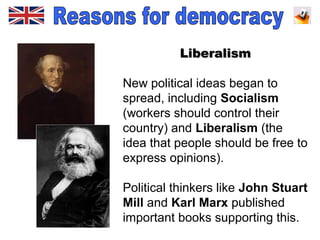
New political ideas began to
spread, including Socialism
(workers should control their
country) and Liberalism (the
idea that people should be free to
express opinions).
Political thinkers like John Stuart
Mill and Karl Marx published
important books supporting this.
ArtisansArtisans
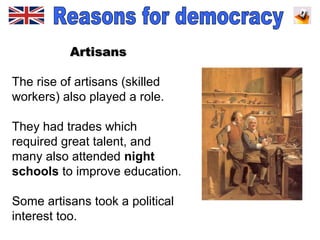
The rise of artisans (skilled
workers) also played a role.
They had trades which
required great talent, and
many also attended night
schools to improve education.
Some artisans took a political
interest too.
Political involvementPolitical involvement
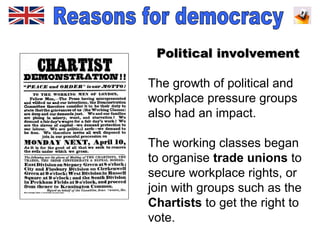
The growth of political and
workplace pressure groups
also had an impact.
The working classes began
to organise trade unions to
secure workplace rights, or
join with groups such as the
Chartists to get the right to
vote.
Changing politicalChanging political
attitudesattitudes
Changing attitudes had a major
impact in on democracy.
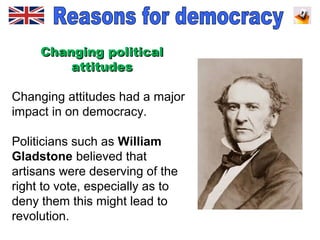
Politicians such as William
Gladstone believed that
artisans were deserving of the
right to vote, especially as to
deny them this might lead to
revolution.
Changing politicalChanging political
attitudesattitudes
The artisans’ interest in
politics persuaded many
politicians that they deserved
the vote.
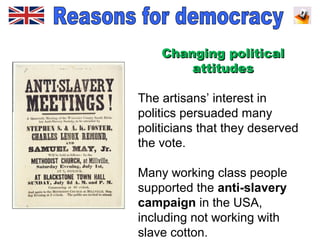
Many working class people
supported the anti-slavery
campaign in the USA,
including not working with
slave cotton.
Changing politicalChanging political
attitudesattitudes
However even though attitudes
were changing, they had not
done so fully.
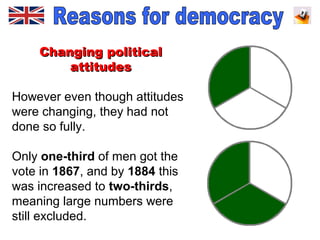
Only one-third of men got the
vote in 1867, and by 1884 this
was increased to two-thirds,
meaning large numbers were
still excluded.
Changing politicalChanging political
attitudesattitudes
Although artisans showed
respectability through skills and
roles in pressure groups, this
was often undermined.
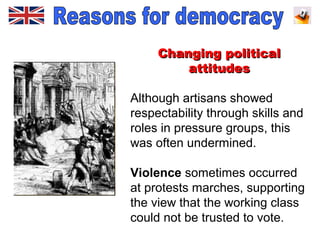
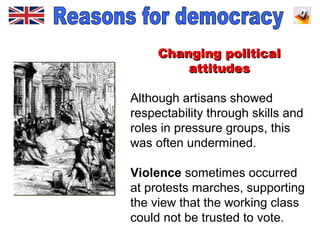
Violence sometimes occurred
at protests marches, supporting
the view that the working class
could not be trusted to vote.
Changing politicalChanging political
attitudesattitudes
Although artisans showed
respectability through skills and
roles in pressure groups, this
was often undermined.
Violence sometimes occurred
at protests marches, supporting
the view that the working class
could not be trusted to vote.

Changing political attitudes

  • 2.
    Changing attitudesChanging attitudes Bythe mid-1800s, political attitudes were beginning to change. The previous opinions of the political classes – that poorer people could not be trusted to vote – were beginning to shift, for different reasons.
  • 3.
    LiberalismLiberalism New political ideasbegan to spread, including Socialism (workers should control their country) and Liberalism (the idea that people should be free to express opinions). Political thinkers like John Stuart Mill and Karl Marx published important books supporting this.
  • 4.
    ArtisansArtisans The rise ofartisans (skilled workers) also played a role. They had trades which required great talent, and many also attended night schools to improve education. Some artisans took a political interest too.
  • 5.
    Political involvementPolitical involvement Thegrowth of political and workplace pressure groups also had an impact. The working classes began to organise trade unions to secure workplace rights, or join with groups such as the Chartists to get the right to vote.
  • 6.
    Changing politicalChanging political attitudesattitudes Changingattitudes had a major impact in on democracy. Politicians such as William Gladstone believed that artisans were deserving of the right to vote, especially as to deny them this might lead to revolution.
  • 7.
    Changing politicalChanging political attitudesattitudes Theartisans’ interest in politics persuaded many politicians that they deserved the vote. Many working class people supported the anti-slavery campaign in the USA, including not working with slave cotton.
  • 8.
    Changing politicalChanging political attitudesattitudes Howevereven though attitudes were changing, they had not done so fully. Only one-third of men got the vote in 1867, and by 1884 this was increased to two-thirds, meaning large numbers were still excluded.
  • 9.
    Changing politicalChanging political attitudesattitudes Althoughartisans showed respectability through skills and roles in pressure groups, this was often undermined. Violence sometimes occurred at protests marches, supporting the view that the working class could not be trusted to vote.
  • 10.
    Changing politicalChanging political attitudesattitudes Althoughartisans showed respectability through skills and roles in pressure groups, this was often undermined. Violence sometimes occurred at protests marches, supporting the view that the working class could not be trusted to vote.