Hitler and Nazi Germany
Nazi control
of Germany
In today’s class, I am learning to:
• Describe the use of fear to control
people in Nazi Germany
• Describe types of propaganda used by
the Nazis
Nazi control of Germany
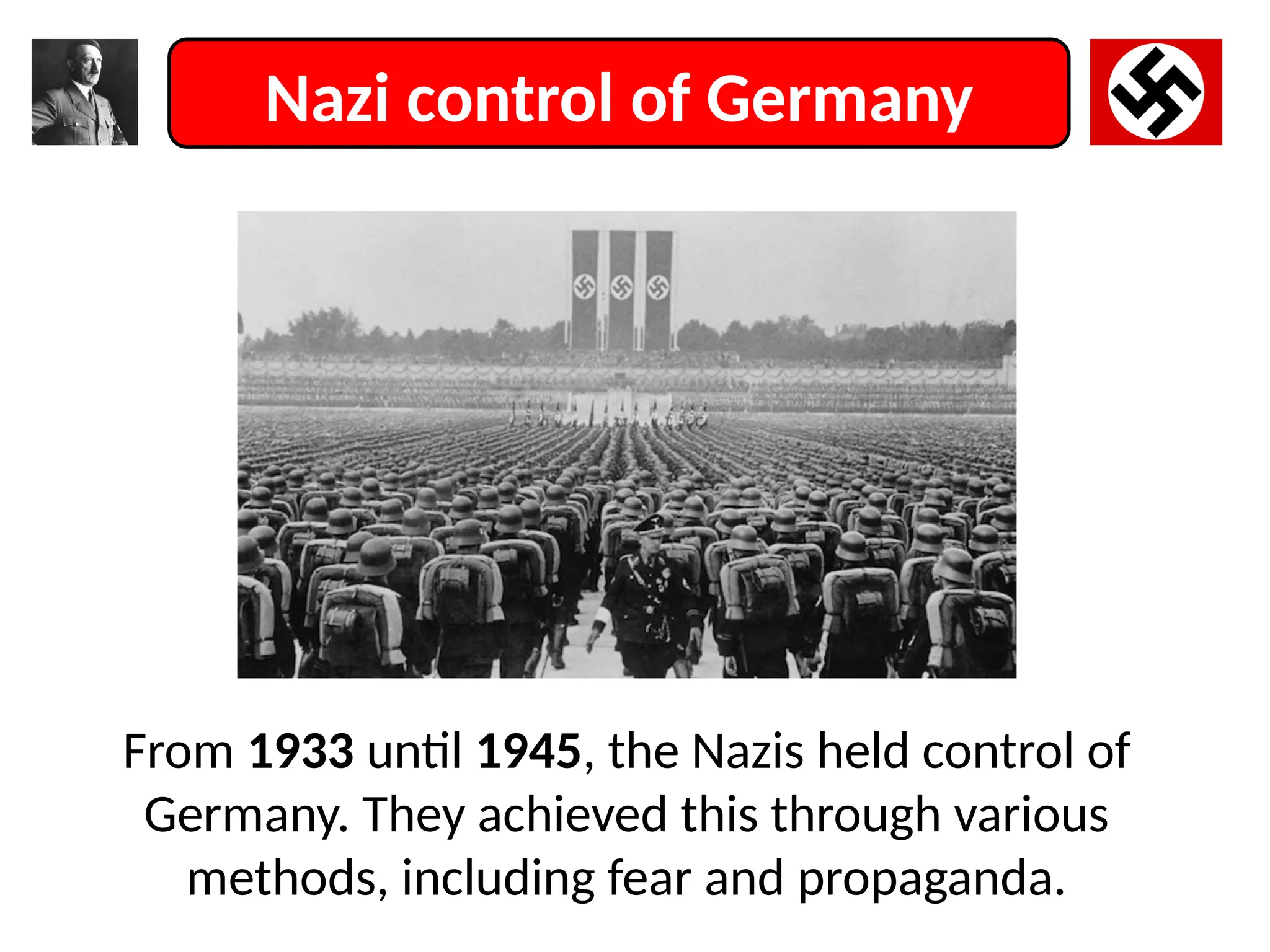
From 1933 until 1945, the Nazis held control of
Germany. They achieved this through various
methods, including fear and propaganda.
Nazi control of Germany
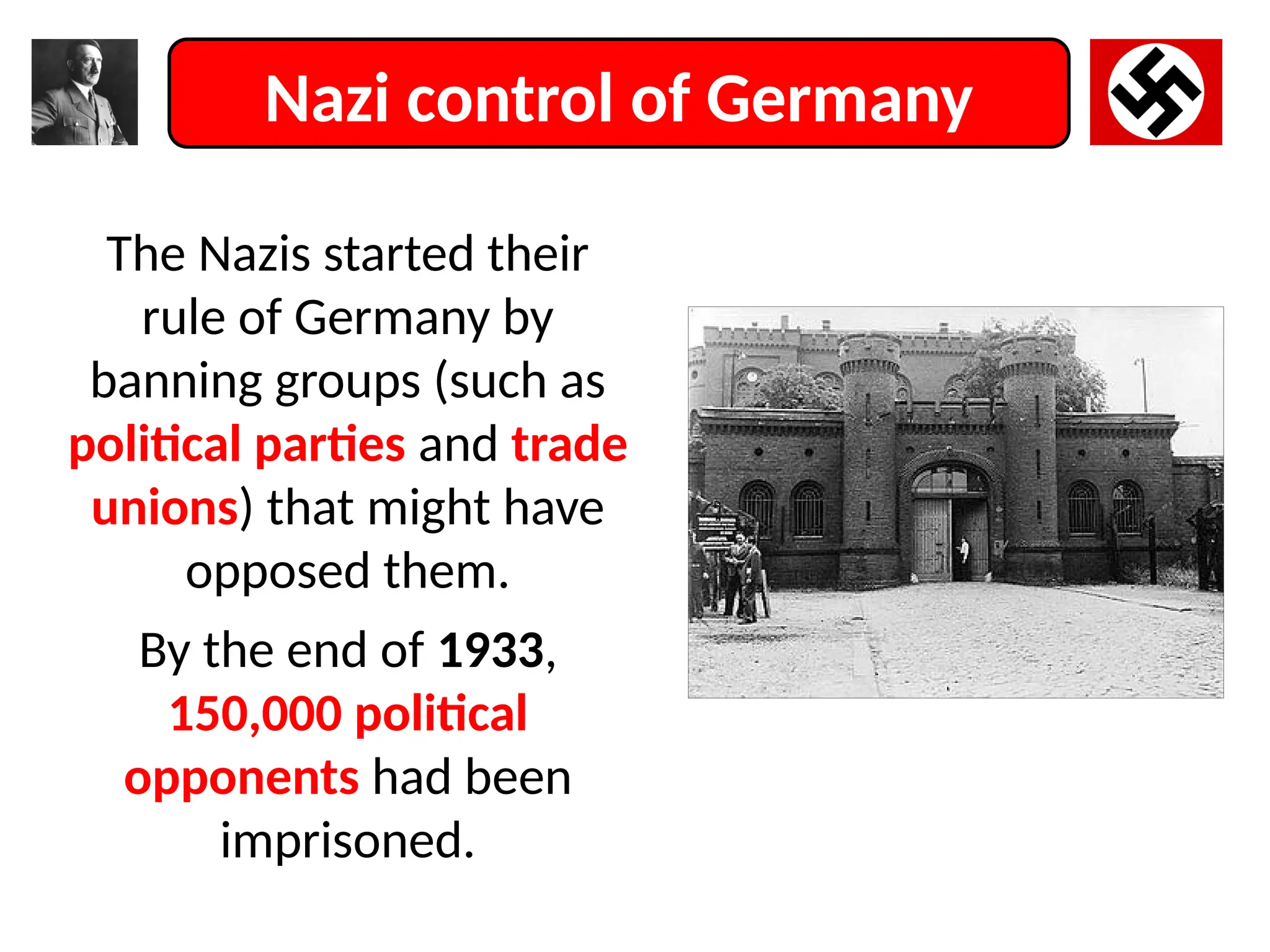
The Nazis started their
rule of Germany by
banning groups (such as
political parties and trade
unions) that might have
opposed them.
By the end of 1933,
150,000 political
opponents had been
imprisoned.
Nazi control of Germany
The Gestapo
The Gestapo were the
Nazis’ secret police.
They would spy on people,
often dressing up in
ordinary clothes.
The Gestapo also relied on
denunciations (members of
the public informing on
people they knew).
Nazi control of Germany
Germans lived in fear of
being arrested by the
Gestapo, who might turn up
early in the morning to take
people away, often then
facing torture or death.
As Germans were not sure
who to trust, it made them
less likely to say anything
that criticised Hitler.
Nazi control of Germany
The SS
The SS were known for their
extreme violence.
The organisation started out
as Hitler’s bodyguards, but
gradually increased their
role and influence.
The SS also continued to be
used to provide protection
for Hitler and other Nazis.
Nazi control of Germany
The SS had a role in running
many aspects of German
society under Hitler’s rule.
They were sometimes used
to arrest political opponents,
including using violence
when doing so.
The SS – often undercover –
engaged in street fights,
including targeting Jews.
Nazi control of Germany
Concentration camps
The SS were also in charge
of concentration camps.
At first people were sent to
these prisons because they
politically opposed the
Nazis. However this soon
changed with people being
sent there for various
reasons.
Nazi control of Germany
Conditions in the
concentration camps were
known to be awful.
Some people were subject
to torture, and living
conditions (such as shelter
and food) were very basic.
Germans lived in fear of
being sent there, so limiting
any anti-Nazi views.
Nazi control of Germany
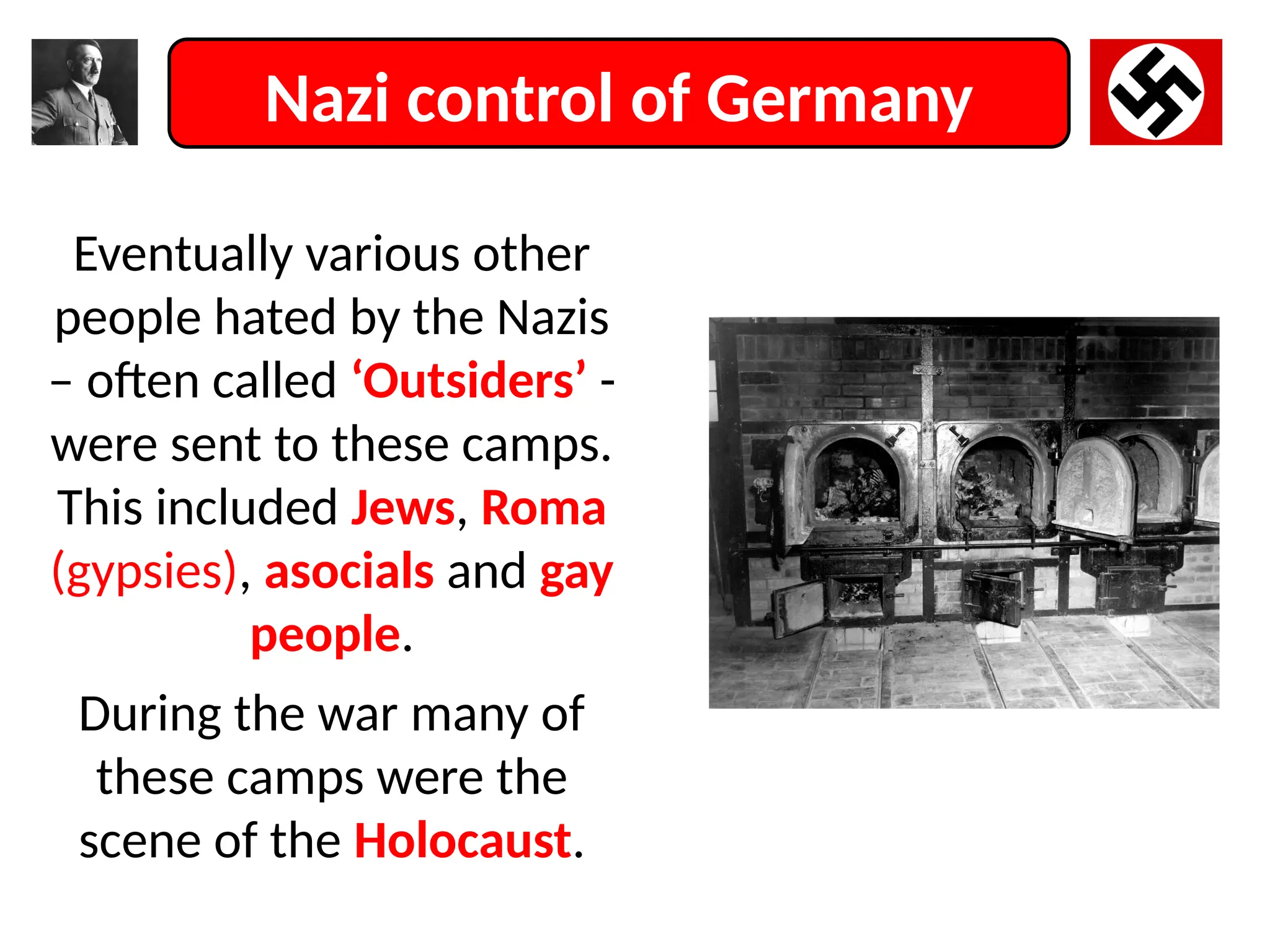
Eventually various other
people hated by the Nazis
– often called ‘Outsiders’ -
were sent to these camps.
This included Jews, Roma
(gypsies), asocials and gay
people.
During the war many of
these camps were the
scene of the Holocaust.
Nazi control of Germany
Propaganda
The Nazis also tried to build
an image of Germany where
everyone completely
supported the Nazis.
This would stop people
opposing Hitler and his party
because they would feel that
they were the only ones that
wanted to do so.
Nazi control of Germany
This included the Nazis
controlling German radio,
broadcasting hours of
Hitler’s speeches or
adverts in cinemas.
Other methods of
propaganda included
posters, controlling
newspapers and mass
public rallies (such as at
Nuremburg)
Nazi control of Germany
Other
Other methods could be
used to scare Germans too.
People’s Courts were courts
that were set up to try Nazi
opponents, often without
allowing any defence.
They did not follow German
law and gave quick verdicts,
including death sentences.
Nazi control of Germany
Germans also worried about
the impact of anti-Nazi
activity on their family or
employment.
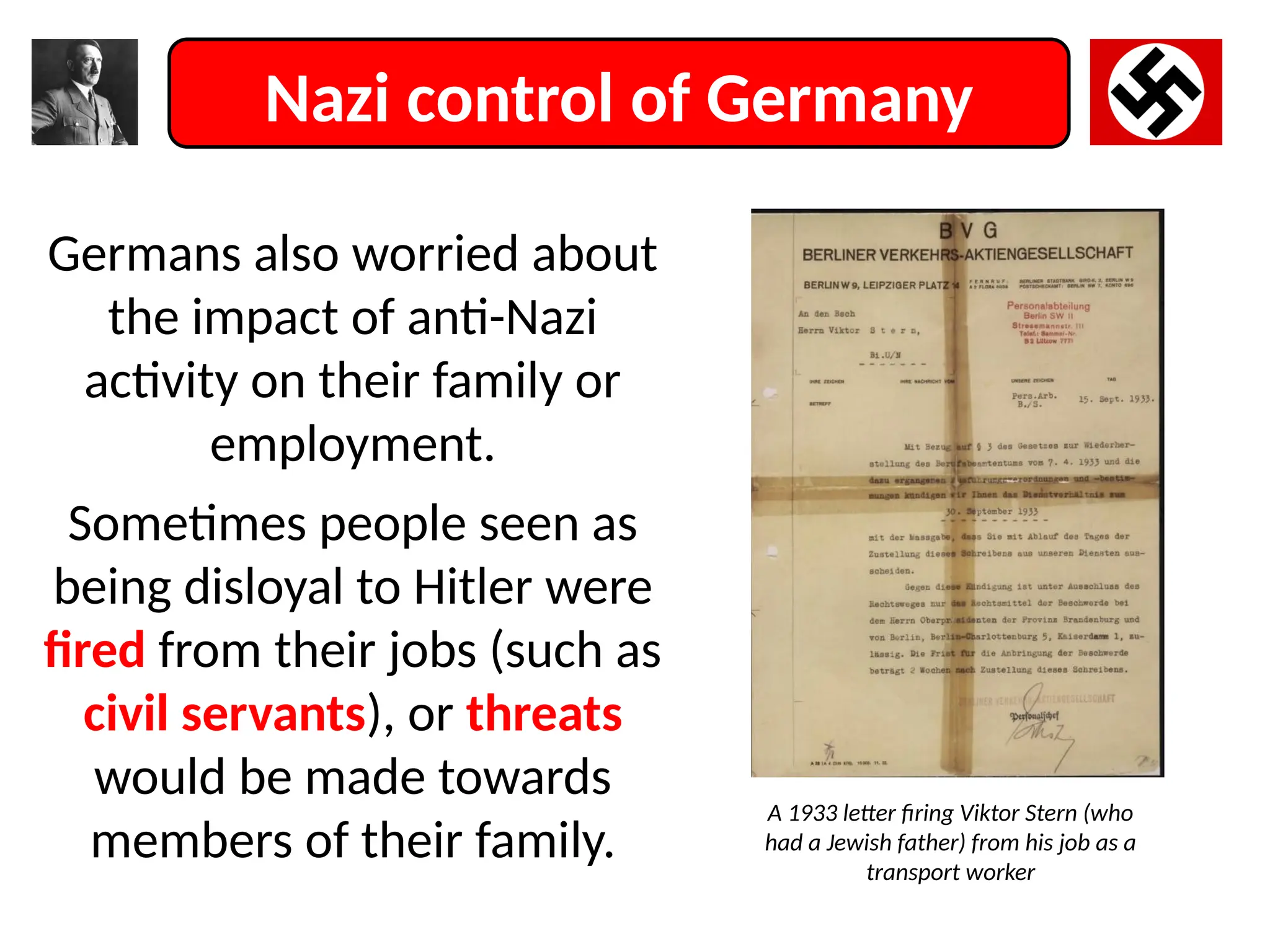
Sometimes people seen as
being disloyal to Hitler were
fired from their jobs (such as
civil servants), or threats
would be made towards
members of their family.
A 1933 letter firing Viktor Stern (who
had a Jewish father) from his job as a
transport worker

Hitler and Nazi Germany - Nazi control of Germany - intimidation

  • 1.
    Hitler and NaziGermany Nazi control of Germany
  • 2.
    In today’s class,I am learning to: • Describe the use of fear to control people in Nazi Germany • Describe types of propaganda used by the Nazis Nazi control of Germany
  • 3.
    From 1933 until1945, the Nazis held control of Germany. They achieved this through various methods, including fear and propaganda. Nazi control of Germany
  • 4.
    Nazi control ofGermany The Nazis started their rule of Germany by banning groups (such as political parties and trade unions) that might have opposed them. By the end of 1933, 150,000 political opponents had been imprisoned.
  • 5.
    Nazi control ofGermany The Gestapo The Gestapo were the Nazis’ secret police. They would spy on people, often dressing up in ordinary clothes. The Gestapo also relied on denunciations (members of the public informing on people they knew).
  • 6.
    Nazi control ofGermany Germans lived in fear of being arrested by the Gestapo, who might turn up early in the morning to take people away, often then facing torture or death. As Germans were not sure who to trust, it made them less likely to say anything that criticised Hitler.
  • 7.
    Nazi control ofGermany The SS The SS were known for their extreme violence. The organisation started out as Hitler’s bodyguards, but gradually increased their role and influence. The SS also continued to be used to provide protection for Hitler and other Nazis.
  • 8.
    Nazi control ofGermany The SS had a role in running many aspects of German society under Hitler’s rule. They were sometimes used to arrest political opponents, including using violence when doing so. The SS – often undercover – engaged in street fights, including targeting Jews.
  • 9.
    Nazi control ofGermany Concentration camps The SS were also in charge of concentration camps. At first people were sent to these prisons because they politically opposed the Nazis. However this soon changed with people being sent there for various reasons.
  • 10.
    Nazi control ofGermany Conditions in the concentration camps were known to be awful. Some people were subject to torture, and living conditions (such as shelter and food) were very basic. Germans lived in fear of being sent there, so limiting any anti-Nazi views.
  • 11.
    Nazi control ofGermany Eventually various other people hated by the Nazis – often called ‘Outsiders’ - were sent to these camps. This included Jews, Roma (gypsies), asocials and gay people. During the war many of these camps were the scene of the Holocaust.
  • 12.
    Nazi control ofGermany Propaganda The Nazis also tried to build an image of Germany where everyone completely supported the Nazis. This would stop people opposing Hitler and his party because they would feel that they were the only ones that wanted to do so.
  • 13.
    Nazi control ofGermany This included the Nazis controlling German radio, broadcasting hours of Hitler’s speeches or adverts in cinemas. Other methods of propaganda included posters, controlling newspapers and mass public rallies (such as at Nuremburg)
  • 14.
    Nazi control ofGermany Other Other methods could be used to scare Germans too. People’s Courts were courts that were set up to try Nazi opponents, often without allowing any defence. They did not follow German law and gave quick verdicts, including death sentences.
  • 15.
    Nazi control ofGermany Germans also worried about the impact of anti-Nazi activity on their family or employment. Sometimes people seen as being disloyal to Hitler were fired from their jobs (such as civil servants), or threats would be made towards members of their family. A 1933 letter firing Viktor Stern (who had a Jewish father) from his job as a transport worker