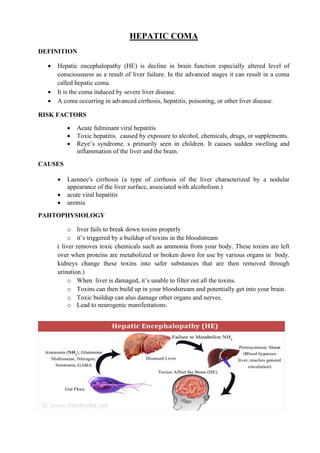
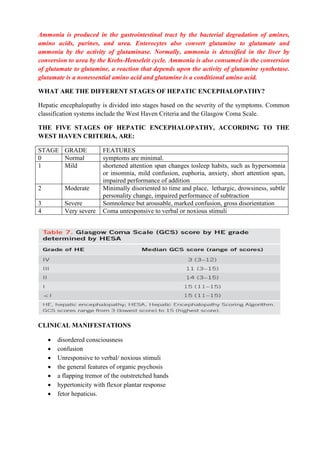
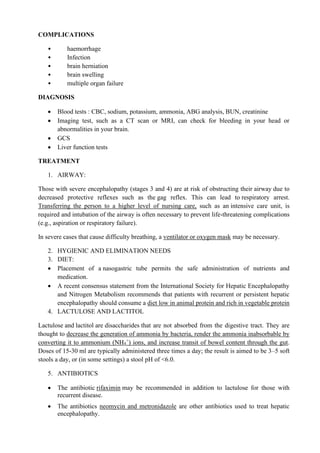
Hepatic coma, also known as hepatic encephalopathy, occurs when the liver fails to remove toxins from the bloodstream, allowing toxin levels to build up and potentially cause brain damage and coma. Risk factors include acute or toxic liver disease from alcohol, drugs, or viruses. Symptoms range from confusion to coma and are classified in stages based on severity. Treatment focuses on airway management if needed, administering lactulose or antibiotics to reduce toxins, and considering a liver transplant for severe cases. Nurses monitor for changes in consciousness, provide skin care to prevent sores, and manage nutrition and other symptoms of liver failure.




![Hepatic encephalopathy [HE]](https://cdn.slidesharecdn.com/ss_thumbnails/hepaticencephalopathy-200612174704-thumbnail.jpg?width=640&height=640&fit=bounds)


