Hepatic Encephalopathy
Dr Biplave Karki
Resident
Internal Medicine
Dhulikhel Hospital
Introduction
 Hepatic encephalopathy (HE)
– A wide spectrum of neuropsychiatric abnormalities
occurring in patients with significant liver dysfunction due to
an as yet uncertain mechanism.
 Theories
– Reduced hepatic production of compounds that maintain
normal central nervous system (CNS) function
– Failure of hepatic detoxification of neuroactive compounds
arising from the gut
 Loss of function or mass of hepatocytes
 Intrahepatic and extrahepatic splanchnic blood bypass of
hepatocytes
Possible mechanisms
1. Direct ammonia neurotoxicity
– not only the simplest hypothesis but has the most supporting
evidences
1. Multiple synergistic neurotoxins:
– ammonia, mercaptans, octanoic acid
1. Synthesis of false neurotransmitters and plasma amino acid
imbalance
2. Alterations in CNS tryptophan metabolites, such as serotonin
3. Excess gamma aminobutyric acid (GABA)
4. Presence of ‘endogenous’ or ‘natural’ benzodiazepines
Types of Hepatic Encephalopathy
 There are 3 major types of HE:
– Type A
 acute liver failure
– Type B
 portosystemic shunts in the absence of liver disease
– Type C
 chronic and end-stage liver disease and portal hypertension
 Type C HE is the most common type
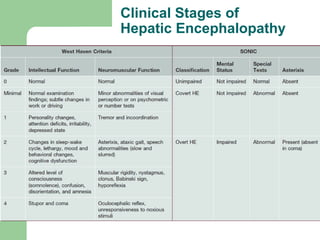
– Historically been graded from 0 to 4
 West Haven criteria
– Divided into 3 categories: unimpaired, covert HE, and overt HE
 SONIC nomenclature
Clinical Stages of
Hepatic Encephalopathy
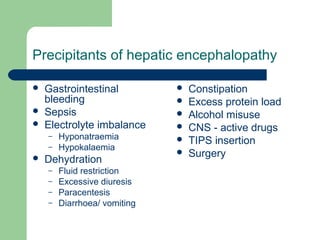
Precipitants of hepatic encephalopathy
 Gastrointestinal
bleeding
 Sepsis
 Electrolyte imbalance
– Hyponatraemia
– Hypokalaemia
 Dehydration
– Fluid restriction
– Excessive diuresis
– Paracentesis
– Diarrhoea/ vomiting
 Constipation
 Excess protein load
 Alcohol misuse
 CNS - active drugs
 TIPS insertion
 Surgery
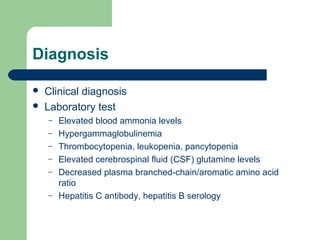
Diagnosis
 Clinical diagnosis
 Laboratory test
– Elevated blood ammonia levels
– Hypergammaglobulinemia
– Thrombocytopenia, leukopenia, pancytopenia
– Elevated cerebrospinal fluid (CSF) glutamine levels
– Decreased plasma branched-chain/aromatic amino acid
ratio
– Hepatitis C antibody, hepatitis B serology
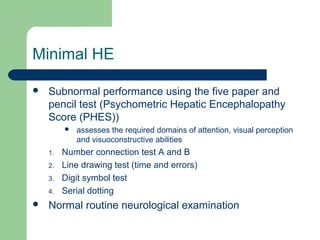
Minimal HE
 Subnormal performance using the five paper and
pencil test (Psychometric Hepatic Encephalopathy
Score (PHES))
 assesses the required domains of attention, visual perception
and visuoconstructive abilities
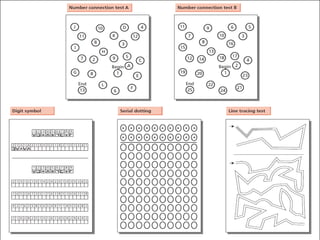
1. Number connection test A and B
2. Line drawing test (time and errors)
3. Digit symbol test
4. Serial dotting
 Normal routine neurological examination
Overt HE
 Alterations in consciousness and generalized
movement disorder with known or suspected
significant liver dysfunction.
Additional diagnostic tests
 Electrophysiological assessment
– Electroencephalography (EEG)
– Evoked potentials
 Sensory or exogenous
 Cognitive or endogenous
 Critical flicker fusion frequency (CFF)
 Smooth pursuit eye movements (SPEM)
EEG changes with neuropsychiatric
status
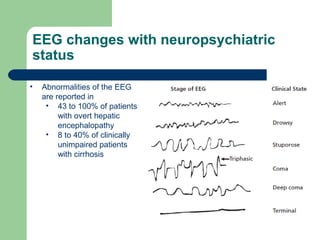
• Abnormalities of the EEG
are reported in
• 43 to 100% of patients
with overt hepatic
encephalopathy
• 8 to 40% of clinically
unimpaired patients
with cirrhosis
Evoked potentials
 Sensory or exogenous evoked potentials (EPs)
– generated by the passive reception of sensory stimuli
triggered by visual, auditory or peripheral nerve
(somatosensory) stimulation
 Cognitive or endogenous EPs
– triggered by cognitive activity
– P300
 triggered when the subject receives an infrequent visual or
auditory stimulus embedded in a series of otherwise irrelevant,
frequent stimuli
 The potential occurs about 300 ms after exposure to the rare
stimulus, hence its name
Critical flicker fusion frequency (CFF)
 A technique that centres on the perception of
light as flickering or fused as its frequency
changes
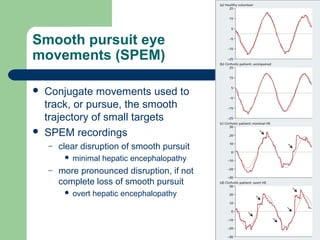
Smooth pursuit eye
movements (SPEM)
 Conjugate movements used to
track, or pursue, the smooth
trajectory of small targets
 SPEM recordings
– clear disruption of smooth pursuit
 minimal hepatic encephalopathy
– more pronounced disruption, if not
complete loss of smooth pursuit
 overt hepatic encephalopathy
Additional diagnostic tests
 Cerebral morphology
– Computed tomography (CT) and magnetic resonance
imaging (MRI)
 Cortical atrophy
– worse in alcoholic liver disease than in other causes of liver
disease
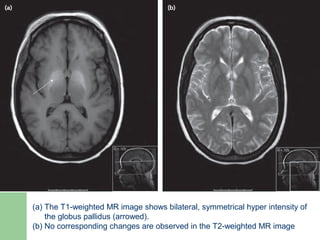
– T1-weighted hyperintensity of basal ganglia on MRI
 commonly seen in cirrhosis
 correlates best with severity of liver disease
 in part related to brain manganese deposition
 reverses after liver transplantation
(a) The T1-weighted MR image shows bilateral, symmetrical hyper intensity of
the globus pallidus (arrowed).
(b) No corresponding changes are observed in the T2-weighted MR image
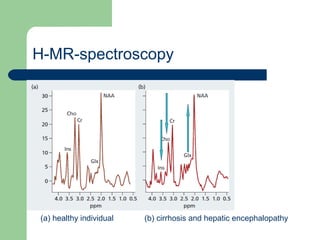
H-MR-spectroscopy
(a) healthy individual (b) cirrhosis and hepatic encephalopathy
Management
 Rule out other causes of encephalopathy
 Identify and treat correctable precipitating
factors of HE
 Initiate empirical treatment
Causes of Encephalopathy
 Sepsis
 Hypoxia
 Hypercapnia
 Acidosis
 Uremia
 Gross electrolyte
changes
 Postictal confusion
 Delirium tremens
 Wernicke–Korsakoff
syndrome
 Intracerebral
hemorrhage
 Cerebral
edema/intracranial
hypertension*
 Hypoglycemia*
 Pancreatic
encephalopathy
 Drug intoxication
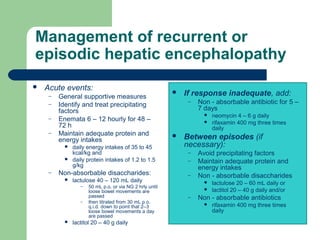
Management of recurrent or
episodic hepatic encephalopathy
 Acute events:
– General supportive measures
– Identify and treat precipitating
factors
– Enemata 6 – 12 hourly for 48 –
72 h
– Maintain adequate protein and
energy intakes
 daily energy intakes of 35 to 45
kcal/kg and
 daily protein intakes of 1.2 to 1.5
g/kg
– Non-absorbable disaccharides:
 lactulose 40 – 120 mL daily
– 50 mL p.o. or via NG 2 hrly until
loose bowel movements are
passed
– then titrated from 30 mL p.o.
q.i.d. down to point that 2–3
loose bowel movements a day
are passed
 lactitol 20 – 40 g daily
 If response inadequate, add:
– Non - absorbable antibiotic for 5 –
7 days
 neomycin 4 – 6 g daily
 rifaxamin 400 mg three times
daily
 Between episodes (if
necessary):
– Avoid precipitating factors
– Maintain adequate protein and
energy intakes
– Non - absorbable disaccharides
 lactulose 20 – 60 mL daily or
 lactitol 20 – 40 g daily and/or
– Non - absorbable antibiotics
 rifaxamin 400 mg three times
daily
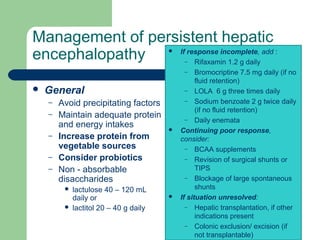
Management of persistent hepatic
encephalopathy
 General
– Avoid precipitating factors
– Maintain adequate protein
and energy intakes
– Increase protein from
vegetable sources
– Consider probiotics
– Non - absorbable
disaccharides
 lactulose 40 – 120 mL
daily or
 lactitol 20 – 40 g daily
 If response incomplete, add :
– Rifaxamin 1.2 g daily
– Bromocriptine 7.5 mg daily (if no
fluid retention)
– LOLA 6 g three times daily
– Sodium benzoate 2 g twice daily
(if no fluid retention)
– Daily enemata
 Continuing poor response,
consider:
– BCAA supplements
– Revision of surgical shunts or
TIPS
– Blockage of large spontaneous
shunts
 If situation unresolved:
– Hepatic transplantation, if other
indications present
– Colonic exclusion/ excision (if
not transplantable)
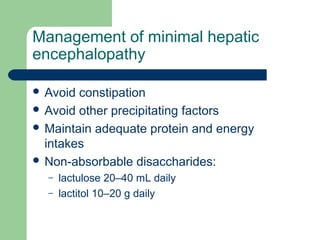
Management of minimal hepatic
encephalopathy
 Avoid constipation
 Avoid other precipitating factors
 Maintain adequate protein and energy
intakes
 Non-absorbable disaccharides:
– lactulose 20–40 mL daily
– lactitol 10–20 g daily
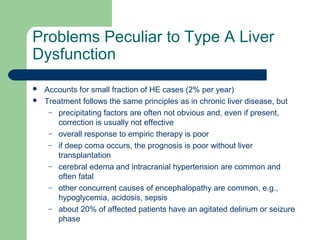
Problems Peculiar to Type A Liver
Dysfunction
 Accounts for small fraction of HE cases (2% per year)
 Treatment follows the same principles as in chronic liver disease, but
– precipitating factors are often not obvious and, even if present,
correction is usually not effective
– overall response to empiric therapy is poor
– if deep coma occurs, the prognosis is poor without liver
transplantation
– cerebral edema and intracranial hypertension are common and
often fatal
– other concurrent causes of encephalopathy are common, e.g.,
hypoglycemia, acidosis, sepsis
– about 20% of affected patients have an agitated delirium or seizure
phase
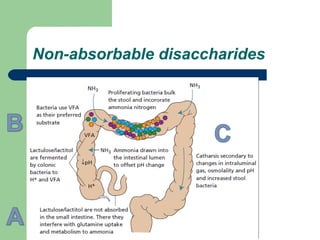
Non-absorbable disaccharides
 Lactulose (β-galactosido-fructose)
– Syrup,15 to 30 mL po two to four times a day
– Two semisoft stools/day
– Aversion to its taste, anorexia, flatulence and abdominal
discomfort (early weeks)
– Profuse diarrhoea, dehydration and even renal failure
– Rectally (250 mL in 750 mL water)
 Lactitol ( β-galactosido-sorbitol)
– Powder
– Better tolerated with fewer side effects
– 10 to 90 g
Antibiotics
 Selectively eliminate urease-producing organisms from the
intestinal tract thus reduces the production of ammonia
 Neomycin
– poorly absorbed aminoglycoside antibiotic
– 4 to 6 g/day
– nephrotoxicity and irreversible ototoxicity
– should not be used for more than a week
 Rifaximin
– a synthetic antibiotic structurally related to rifamycin
– very low rate of systemic absorption (0.4%)
– excellent safety profile
– better tolerated
Bromocriptine
 Dopamine agonist
 Stable, chronic, persistent, hepatic
encephalopathy with prominent extrapyramidal
features, resistant to treatment with other agents
 2.5 mg OD - 5 mg BD
 Ototoxicity
 Reserved for patients with well-compensated
liver disease
– use in patients with ascites has been a/w Syndrome of
inappropriate ADH secretion
l-ornithine l-aspartate (LOLA)
 promotes hepatic removal of ammonia by
stimulating residual hepatic urea cycle activity
 promotes glutamine synthesis (skeletal muscle)
 intravenous LOLA
 oral LOLA, 6 g TDS
– most of the aspartate undergoes transamination in the
intestinal mucosa so its efficacy when given orally
depends largely on the effects of the ornithine moiety
alone
Branched-chain amino acids
(BCAA)
 In patients with cirrhosis
– Plasma branched chain amino acids (BCAA) are reduced
– Plasma aromatic amino acids are increased
– A/w changes in cerebral neurotransmitter balance observed in
hepatic encephalopathy
 Significant increases in cerebral perfusion were observed
 Exact mechanism unknown
 Leucine
– potent stimulator of the production of hepatocyte growth factor
by stellate cells
– stimulate liver regeneration
Probiotics/Symbiotic
 Probiotics
– Populating the colonic lumen with non-urease-
producing bacteria
 Symbiotic
– Probiotic plus fermentable fibre
Sodium benzoate
 Used to treat individuals with urea cycle enzyme
deficiencies
– it metabolically fixes ammonia by utilizing alternative
pathways for waste nitrogen excretion
 it conjugates with glycine and the excess nitrogen is
excreted in the urine as hippurate
 IV 5 g BD
– rarely tolerate more than 2 g BD
 gastrointestinal side effects
 Sodium content is also a concern.
Zinc
 Metallo-enzymes and metal-protein
complexes such as metallo-thionine
 Poor zinc status impairs nitrogen metabolism
by reducing the activity of
– urea cycle enzymes in the liver
– glutamine synthetase in muscle
Flumazenil
 Selective benzodiazepine-receptor
antagonist
 infused iv
– transient, variable but sometimes significant, short
- term improvement in hepatic encephalopathy
with cirrhosis
 No significant effect on overall recovery or
survival
 Not recommended for routine clinical use
Shunt occlusion
 Persistent hepatic encephalopathy
– significant spontaneous portal-systemic shunting
– well-preserved liver function but respond poorly to standard treatment.
 Interventional radiological techniques
– vascular embolization
– vascular plugging with an Amplatzer device
– balloon occlusion
 Laparoscopic disconnection
– particularly suitable for paraumbilical vein shunts
 Reduction or even occlusion of the TIPS may be required
 Shunt occlusion should be considered as a prelude to
transplantation
Liver transplantation
 The Model of End-stage Liver Disease (MELD) system
used to prioritize patients on liver transplant lists does not
include information on neuropsychiatric status.
 Overt hepatic encephalopathy
– usually resolve following liver transplantation
– even in patients with major physical manifestations such as
spastic paraparesis and parkinsonian features resistant to
treatment
 Resolution of the EEG, cerebral MRI, cerebral MRS and
cerebral PET abnormalities have also been reported
 Cognitive function also improves following transplantation
but not necessarily completely
Artificial liver support systems
 Bridge to transplantation
 Molecular Adsorption Recirculating System
(MARS)
– Purifies the blood by removal of both lipophilic
albumin-bound and water-soluble molecules
– Removes circulating ammonia, endotoxin and
inflammatory mediators, and improves cerebral
haemodynamics
 Earlier improvement in mental state than those
treated conventionally but no difference in
survival.
Colectomy / Colonic exclusion
 Surgical approaches to reduce the intestinal
production of ammonia
 Have been used to treat hepatic
encephalopathy refractory to other measures
 The operative morbidity and mortality rates
are high
 Today these patients would be considered
for liver transplantation.
Future Therapies
 L-carnitine
– hyperammonaemia in children with urea cycle enzyme
deficiency
– valproate-induced hyperammonaemia
 The protective effects of L-carnitine are centrally
mediated by activation of metabotropic glutamate
receptors (mGluR) at the level of brain ammonia uptake
and/or mitochondrial energy metabolism
 Preliminary studies have been undertaken in patients with
hepatic encephalopathy but have not been monitored
objectively
Future Therapies
 Rivastigmine
– a reversible cholinesterase inhibitor
– improves psychometric performance in patient with hepatic
encephalopathy when used together with lactulose
 Endocarbinoids
– Neural intoxication in hepatic encephalopathy disrupts cerebral
energy flux
– AMP-activated protein kinase (AMPK) rehabilitates cellular
energy stores in response to metabolic injury; its activity can be
augmented by cannabinoid compounds
– Animal studies have confirmed that pharmacological activation
of AMPK by endocarbinoids confers neuroprotection in hepatic
encephalopathY .
Future Therapies
 Sildenafil
– an inhibitor of the phosphodiesterase
– crosses the blood – brain barrier and modulates
extracellular cGMP concentrations
– restores learning ability in animal models
Future Therapies
 mGluR1 antagonists
– Alterations in glutamatergic neurotransmission in the
substantia-nigra-pars-reticulata may contribute to the
psychomotor slowing and hypokinesia observed in
patients with hepatic encephalopathy.
– Blocking mGluR1 at this site normalizes motor activity
in a rat model of hepatic encephalopathy
 Systemic inflammation
– Modulation of the systemic inflammatory response
with, for example, anti - inflammatory agents, need to
be explored for use in patients with cirrhosis.
REFERENCES
 Handbook of Liver Disease
 Sherlock's Diseases of the Liver and Biliary
System, 12th Edition
 Sleisenger 10 th Edition
 Harrison’s principles of internal medicine 19th
Edition
THANK YOU

Hepatic encephalopathy final

  • 1.
    Hepatic Encephalopathy Dr BiplaveKarki Resident Internal Medicine Dhulikhel Hospital
  • 2.
    Introduction  Hepatic encephalopathy(HE) – A wide spectrum of neuropsychiatric abnormalities occurring in patients with significant liver dysfunction due to an as yet uncertain mechanism.  Theories – Reduced hepatic production of compounds that maintain normal central nervous system (CNS) function – Failure of hepatic detoxification of neuroactive compounds arising from the gut  Loss of function or mass of hepatocytes  Intrahepatic and extrahepatic splanchnic blood bypass of hepatocytes
  • 3.
    Possible mechanisms 1. Directammonia neurotoxicity – not only the simplest hypothesis but has the most supporting evidences 1. Multiple synergistic neurotoxins: – ammonia, mercaptans, octanoic acid 1. Synthesis of false neurotransmitters and plasma amino acid imbalance 2. Alterations in CNS tryptophan metabolites, such as serotonin 3. Excess gamma aminobutyric acid (GABA) 4. Presence of ‘endogenous’ or ‘natural’ benzodiazepines
  • 4.
    Types of HepaticEncephalopathy  There are 3 major types of HE: – Type A  acute liver failure – Type B  portosystemic shunts in the absence of liver disease – Type C  chronic and end-stage liver disease and portal hypertension  Type C HE is the most common type – Historically been graded from 0 to 4  West Haven criteria – Divided into 3 categories: unimpaired, covert HE, and overt HE  SONIC nomenclature
  • 5.
  • 6.
    Precipitants of hepaticencephalopathy  Gastrointestinal bleeding  Sepsis  Electrolyte imbalance – Hyponatraemia – Hypokalaemia  Dehydration – Fluid restriction – Excessive diuresis – Paracentesis – Diarrhoea/ vomiting  Constipation  Excess protein load  Alcohol misuse  CNS - active drugs  TIPS insertion  Surgery
  • 7.
    Diagnosis  Clinical diagnosis Laboratory test – Elevated blood ammonia levels – Hypergammaglobulinemia – Thrombocytopenia, leukopenia, pancytopenia – Elevated cerebrospinal fluid (CSF) glutamine levels – Decreased plasma branched-chain/aromatic amino acid ratio – Hepatitis C antibody, hepatitis B serology
  • 8.
    Minimal HE  Subnormalperformance using the five paper and pencil test (Psychometric Hepatic Encephalopathy Score (PHES))  assesses the required domains of attention, visual perception and visuoconstructive abilities 1. Number connection test A and B 2. Line drawing test (time and errors) 3. Digit symbol test 4. Serial dotting  Normal routine neurological examination
  • 10.
    Overt HE  Alterationsin consciousness and generalized movement disorder with known or suspected significant liver dysfunction.
  • 11.
    Additional diagnostic tests Electrophysiological assessment – Electroencephalography (EEG) – Evoked potentials  Sensory or exogenous  Cognitive or endogenous  Critical flicker fusion frequency (CFF)  Smooth pursuit eye movements (SPEM)
  • 12.
    EEG changes withneuropsychiatric status • Abnormalities of the EEG are reported in • 43 to 100% of patients with overt hepatic encephalopathy • 8 to 40% of clinically unimpaired patients with cirrhosis
  • 13.
    Evoked potentials  Sensoryor exogenous evoked potentials (EPs) – generated by the passive reception of sensory stimuli triggered by visual, auditory or peripheral nerve (somatosensory) stimulation  Cognitive or endogenous EPs – triggered by cognitive activity – P300  triggered when the subject receives an infrequent visual or auditory stimulus embedded in a series of otherwise irrelevant, frequent stimuli  The potential occurs about 300 ms after exposure to the rare stimulus, hence its name
  • 14.
    Critical flicker fusionfrequency (CFF)  A technique that centres on the perception of light as flickering or fused as its frequency changes
  • 15.
    Smooth pursuit eye movements(SPEM)  Conjugate movements used to track, or pursue, the smooth trajectory of small targets  SPEM recordings – clear disruption of smooth pursuit  minimal hepatic encephalopathy – more pronounced disruption, if not complete loss of smooth pursuit  overt hepatic encephalopathy
  • 16.
    Additional diagnostic tests Cerebral morphology – Computed tomography (CT) and magnetic resonance imaging (MRI)  Cortical atrophy – worse in alcoholic liver disease than in other causes of liver disease – T1-weighted hyperintensity of basal ganglia on MRI  commonly seen in cirrhosis  correlates best with severity of liver disease  in part related to brain manganese deposition  reverses after liver transplantation
  • 17.
    (a) The T1-weightedMR image shows bilateral, symmetrical hyper intensity of the globus pallidus (arrowed). (b) No corresponding changes are observed in the T2-weighted MR image
  • 18.
    H-MR-spectroscopy (a) healthy individual(b) cirrhosis and hepatic encephalopathy
  • 19.
    Management  Rule outother causes of encephalopathy  Identify and treat correctable precipitating factors of HE  Initiate empirical treatment
  • 20.
    Causes of Encephalopathy Sepsis  Hypoxia  Hypercapnia  Acidosis  Uremia  Gross electrolyte changes  Postictal confusion  Delirium tremens  Wernicke–Korsakoff syndrome  Intracerebral hemorrhage  Cerebral edema/intracranial hypertension*  Hypoglycemia*  Pancreatic encephalopathy  Drug intoxication
  • 21.
    Management of recurrentor episodic hepatic encephalopathy  Acute events: – General supportive measures – Identify and treat precipitating factors – Enemata 6 – 12 hourly for 48 – 72 h – Maintain adequate protein and energy intakes  daily energy intakes of 35 to 45 kcal/kg and  daily protein intakes of 1.2 to 1.5 g/kg – Non-absorbable disaccharides:  lactulose 40 – 120 mL daily – 50 mL p.o. or via NG 2 hrly until loose bowel movements are passed – then titrated from 30 mL p.o. q.i.d. down to point that 2–3 loose bowel movements a day are passed  lactitol 20 – 40 g daily  If response inadequate, add: – Non - absorbable antibiotic for 5 – 7 days  neomycin 4 – 6 g daily  rifaxamin 400 mg three times daily  Between episodes (if necessary): – Avoid precipitating factors – Maintain adequate protein and energy intakes – Non - absorbable disaccharides  lactulose 20 – 60 mL daily or  lactitol 20 – 40 g daily and/or – Non - absorbable antibiotics  rifaxamin 400 mg three times daily
  • 22.
    Management of persistenthepatic encephalopathy  General – Avoid precipitating factors – Maintain adequate protein and energy intakes – Increase protein from vegetable sources – Consider probiotics – Non - absorbable disaccharides  lactulose 40 – 120 mL daily or  lactitol 20 – 40 g daily  If response incomplete, add : – Rifaxamin 1.2 g daily – Bromocriptine 7.5 mg daily (if no fluid retention) – LOLA 6 g three times daily – Sodium benzoate 2 g twice daily (if no fluid retention) – Daily enemata  Continuing poor response, consider: – BCAA supplements – Revision of surgical shunts or TIPS – Blockage of large spontaneous shunts  If situation unresolved: – Hepatic transplantation, if other indications present – Colonic exclusion/ excision (if not transplantable)
  • 23.
    Management of minimalhepatic encephalopathy  Avoid constipation  Avoid other precipitating factors  Maintain adequate protein and energy intakes  Non-absorbable disaccharides: – lactulose 20–40 mL daily – lactitol 10–20 g daily
  • 24.
    Problems Peculiar toType A Liver Dysfunction  Accounts for small fraction of HE cases (2% per year)  Treatment follows the same principles as in chronic liver disease, but – precipitating factors are often not obvious and, even if present, correction is usually not effective – overall response to empiric therapy is poor – if deep coma occurs, the prognosis is poor without liver transplantation – cerebral edema and intracranial hypertension are common and often fatal – other concurrent causes of encephalopathy are common, e.g., hypoglycemia, acidosis, sepsis – about 20% of affected patients have an agitated delirium or seizure phase
  • 25.
  • 26.
    Non-absorbable disaccharides  Lactulose(β-galactosido-fructose) – Syrup,15 to 30 mL po two to four times a day – Two semisoft stools/day – Aversion to its taste, anorexia, flatulence and abdominal discomfort (early weeks) – Profuse diarrhoea, dehydration and even renal failure – Rectally (250 mL in 750 mL water)  Lactitol ( β-galactosido-sorbitol) – Powder – Better tolerated with fewer side effects – 10 to 90 g
  • 27.
    Antibiotics  Selectively eliminateurease-producing organisms from the intestinal tract thus reduces the production of ammonia  Neomycin – poorly absorbed aminoglycoside antibiotic – 4 to 6 g/day – nephrotoxicity and irreversible ototoxicity – should not be used for more than a week  Rifaximin – a synthetic antibiotic structurally related to rifamycin – very low rate of systemic absorption (0.4%) – excellent safety profile – better tolerated
  • 28.
    Bromocriptine  Dopamine agonist Stable, chronic, persistent, hepatic encephalopathy with prominent extrapyramidal features, resistant to treatment with other agents  2.5 mg OD - 5 mg BD  Ototoxicity  Reserved for patients with well-compensated liver disease – use in patients with ascites has been a/w Syndrome of inappropriate ADH secretion
  • 29.
    l-ornithine l-aspartate (LOLA) promotes hepatic removal of ammonia by stimulating residual hepatic urea cycle activity  promotes glutamine synthesis (skeletal muscle)  intravenous LOLA  oral LOLA, 6 g TDS – most of the aspartate undergoes transamination in the intestinal mucosa so its efficacy when given orally depends largely on the effects of the ornithine moiety alone
  • 30.
    Branched-chain amino acids (BCAA) In patients with cirrhosis – Plasma branched chain amino acids (BCAA) are reduced – Plasma aromatic amino acids are increased – A/w changes in cerebral neurotransmitter balance observed in hepatic encephalopathy  Significant increases in cerebral perfusion were observed  Exact mechanism unknown  Leucine – potent stimulator of the production of hepatocyte growth factor by stellate cells – stimulate liver regeneration
  • 31.
    Probiotics/Symbiotic  Probiotics – Populatingthe colonic lumen with non-urease- producing bacteria  Symbiotic – Probiotic plus fermentable fibre
  • 32.
    Sodium benzoate  Usedto treat individuals with urea cycle enzyme deficiencies – it metabolically fixes ammonia by utilizing alternative pathways for waste nitrogen excretion  it conjugates with glycine and the excess nitrogen is excreted in the urine as hippurate  IV 5 g BD – rarely tolerate more than 2 g BD  gastrointestinal side effects  Sodium content is also a concern.
  • 33.
    Zinc  Metallo-enzymes andmetal-protein complexes such as metallo-thionine  Poor zinc status impairs nitrogen metabolism by reducing the activity of – urea cycle enzymes in the liver – glutamine synthetase in muscle
  • 34.
    Flumazenil  Selective benzodiazepine-receptor antagonist infused iv – transient, variable but sometimes significant, short - term improvement in hepatic encephalopathy with cirrhosis  No significant effect on overall recovery or survival  Not recommended for routine clinical use
  • 35.
    Shunt occlusion  Persistenthepatic encephalopathy – significant spontaneous portal-systemic shunting – well-preserved liver function but respond poorly to standard treatment.  Interventional radiological techniques – vascular embolization – vascular plugging with an Amplatzer device – balloon occlusion  Laparoscopic disconnection – particularly suitable for paraumbilical vein shunts  Reduction or even occlusion of the TIPS may be required  Shunt occlusion should be considered as a prelude to transplantation
  • 36.
    Liver transplantation  TheModel of End-stage Liver Disease (MELD) system used to prioritize patients on liver transplant lists does not include information on neuropsychiatric status.  Overt hepatic encephalopathy – usually resolve following liver transplantation – even in patients with major physical manifestations such as spastic paraparesis and parkinsonian features resistant to treatment  Resolution of the EEG, cerebral MRI, cerebral MRS and cerebral PET abnormalities have also been reported  Cognitive function also improves following transplantation but not necessarily completely
  • 37.
    Artificial liver supportsystems  Bridge to transplantation  Molecular Adsorption Recirculating System (MARS) – Purifies the blood by removal of both lipophilic albumin-bound and water-soluble molecules – Removes circulating ammonia, endotoxin and inflammatory mediators, and improves cerebral haemodynamics  Earlier improvement in mental state than those treated conventionally but no difference in survival.
  • 38.
    Colectomy / Colonicexclusion  Surgical approaches to reduce the intestinal production of ammonia  Have been used to treat hepatic encephalopathy refractory to other measures  The operative morbidity and mortality rates are high  Today these patients would be considered for liver transplantation.
  • 39.
    Future Therapies  L-carnitine –hyperammonaemia in children with urea cycle enzyme deficiency – valproate-induced hyperammonaemia  The protective effects of L-carnitine are centrally mediated by activation of metabotropic glutamate receptors (mGluR) at the level of brain ammonia uptake and/or mitochondrial energy metabolism  Preliminary studies have been undertaken in patients with hepatic encephalopathy but have not been monitored objectively
  • 40.
    Future Therapies  Rivastigmine –a reversible cholinesterase inhibitor – improves psychometric performance in patient with hepatic encephalopathy when used together with lactulose  Endocarbinoids – Neural intoxication in hepatic encephalopathy disrupts cerebral energy flux – AMP-activated protein kinase (AMPK) rehabilitates cellular energy stores in response to metabolic injury; its activity can be augmented by cannabinoid compounds – Animal studies have confirmed that pharmacological activation of AMPK by endocarbinoids confers neuroprotection in hepatic encephalopathY .
  • 41.
    Future Therapies  Sildenafil –an inhibitor of the phosphodiesterase – crosses the blood – brain barrier and modulates extracellular cGMP concentrations – restores learning ability in animal models
  • 42.
    Future Therapies  mGluR1antagonists – Alterations in glutamatergic neurotransmission in the substantia-nigra-pars-reticulata may contribute to the psychomotor slowing and hypokinesia observed in patients with hepatic encephalopathy. – Blocking mGluR1 at this site normalizes motor activity in a rat model of hepatic encephalopathy  Systemic inflammation – Modulation of the systemic inflammatory response with, for example, anti - inflammatory agents, need to be explored for use in patients with cirrhosis.
  • 43.
    REFERENCES  Handbook ofLiver Disease  Sherlock's Diseases of the Liver and Biliary System, 12th Edition  Sleisenger 10 th Edition  Harrison’s principles of internal medicine 19th Edition
  • 44.

Editor's Notes

  • #5 A consensus report in 2011 proposed a new SONIC (Spectrum of Neurocognitive Impairment in Cirrhosis) nomenclature to reflect the wide spectrum of clinical findings and improve the clinical classification of HE for research studies
  • #6 It is caused by impaired inflow of joint and other afferent information to the brainstem reticular formation, resulting in arrhythmic lapses in posture.
  • #8 Clinical….history and physical signs suggestive of significant liver dysfunction
  • #10 Number Connection Tests A and B: Subjects are asked to join the numbers or numbers and letters in sequence as quickly as possible The time taken to complete the task is recorded Digit Symbol Test: Asked to insert symbols in the blank squares below the numbers using the key provided. Number correctly completed in 90 seconds recorded Serial Dotting: Asked to place a dot in the centre of each circle The time taken to complete the task is recorded Line Tracing: Asked to trace a line between the two guidelines as quickly and accurately as possible without moving the paper. The time taken to complete the task and the number of errors made are recorded
  • #12 All of the above methodologies have been studied, particularly as measures of subclinical HE. They are excellent research tools but are still undergoing validation
  • #13 Initial slowing in frequency with increasing amplitude, Amplitude then decreases, Finally there is an absence of rhythmic activity
  • #17 Not synonymous with hepatocerebral atrophy Relationship to HE uncertain No direct bearing on liver transplant suitability
  • #19 Relative reductions in myoinositol and choline resonances Relative increase in the glutamate/ glutamine resonances
  • #23 Vegetable protein is better tolerated than animal protein Food intake is spread evenly through out the waking day to avoid protein loading; six snack - type meals are preferable to three main meals
  • #26 VFA volatile fatty acid
  • #35 Deficits in GABAergic neurotransmission and increases in circulating benzodiazepine-like ligands have been identified in patient with hepatic encephalopathy
  • #37 MELD (creatinine, bilirubin, INR)
  • #41 Acetylcholine levels are considerably reduced in the brains of patients with cirrhosis dying in hepatic coma.
  • #42 Alterations in the function of the glutamate – nitric oxide – cGMP pathway and the subsequent decrease in extracellular cGMP in brain may be responsible for the impairment in learning ability and intellectual function in patients with hepatic encephalopathy