EPISIOTOMIES AND
PERINEAL TEARS
DR. RUKIA (MD)
Introduction.
• DEFINITION.
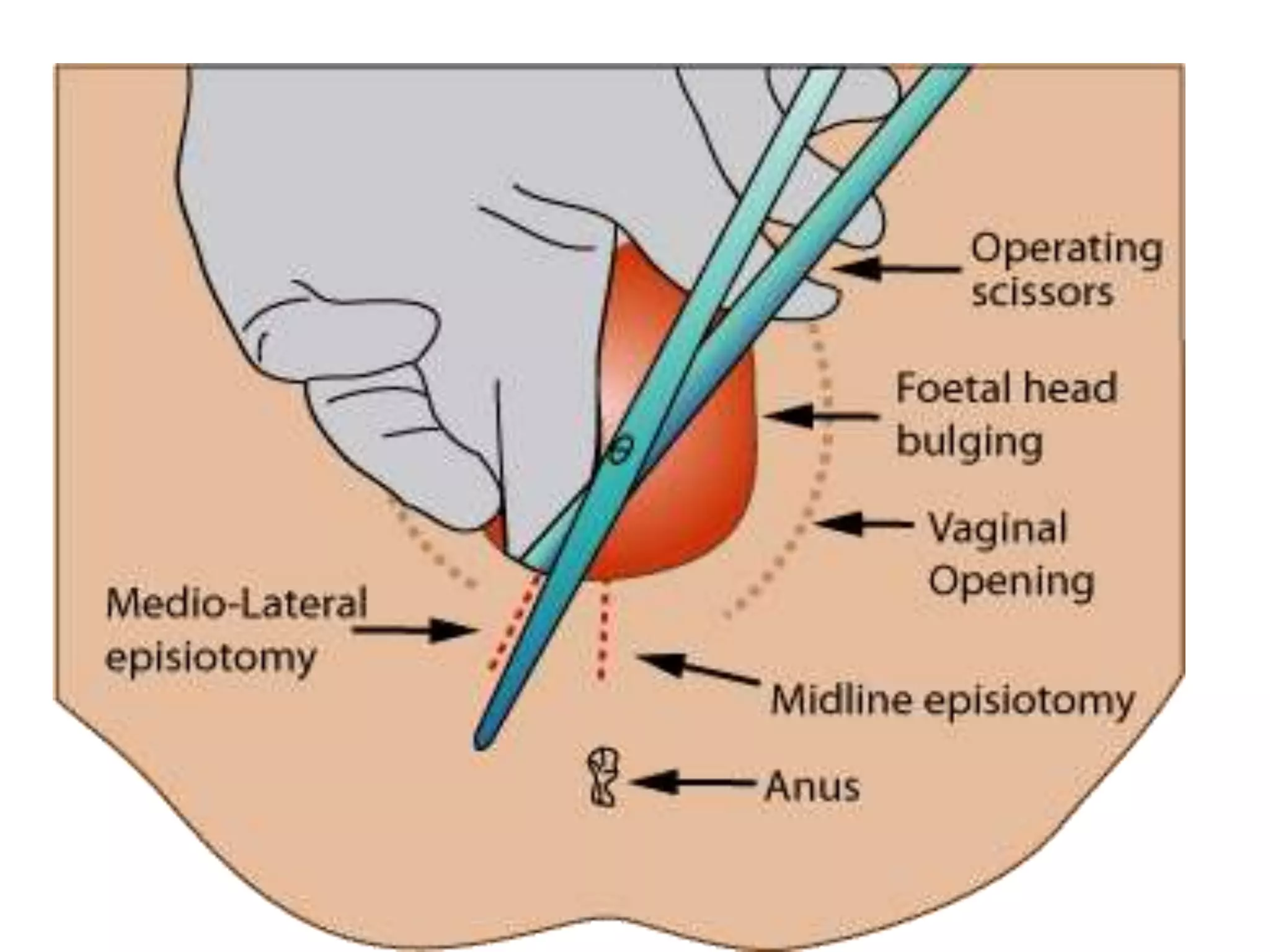
• Surgically planned incision on the perineum
and posterior vaginal wall during second stage
of labor
CONTROVERSY ABOUT COMMON
USAGE
• Routine episiotomies have lost popularity
• WHO recommends an episiotomy rate of 10%
• Associated problems
– Unsatisfactory anatomical results
– PPH
– Dyspareunia
– Perineal pain
1. Midline episiotomy
• Complications
– Spontaneous extension involving injury to the
anal sphincter and/or rectal mucosa.
– Higher incidence of rectovaginal fistulas
• Advantages
– Easy and satisfactory repair
– Blood loss is least
– Repair is easy
– Postoperative comfort is maximum
– Healing is superior
– Dyspareunia is rare
TYPES OF EPISIOTOMIES
2. Mediolateral episiotomy
• Complications
– Poor wound healing
– Long-term pelvic pain
– Dyspareunia.
– Apposition of the tissues is not so good
– Blood loss is little more
– Postoperative discomfort is more
• ADVANTAGES
• Relative safety from rectal involvement from extension
• If necessary, the incision can be extended
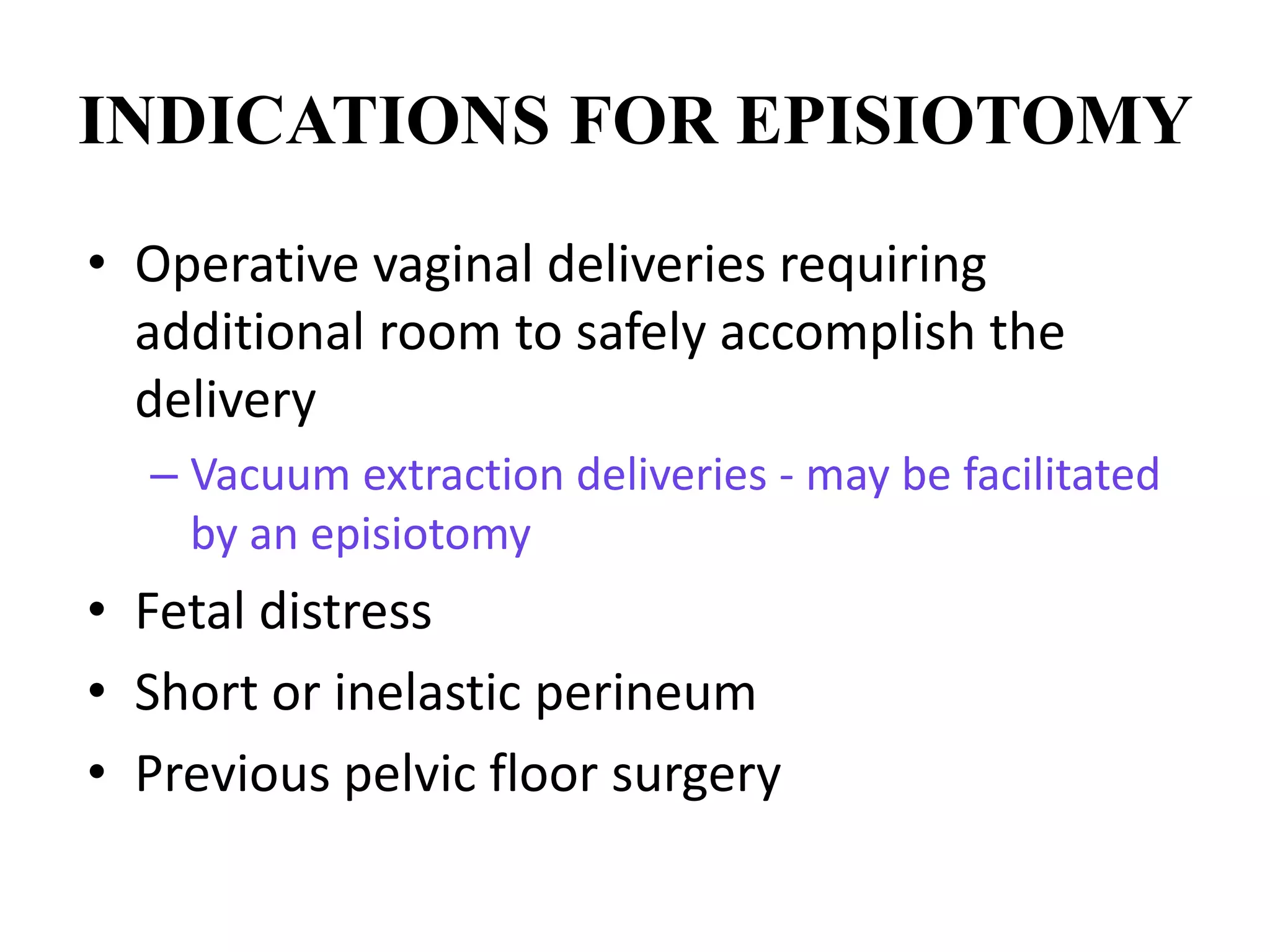
• Operative vaginal deliveries requiring
additional room to safely accomplish the
delivery
– Vacuum extraction deliveries - may be facilitated
by an episiotomy
• Fetal distress
• Short or inelastic perineum
• Previous pelvic floor surgery
INDICATIONS FOR EPISIOTOMY
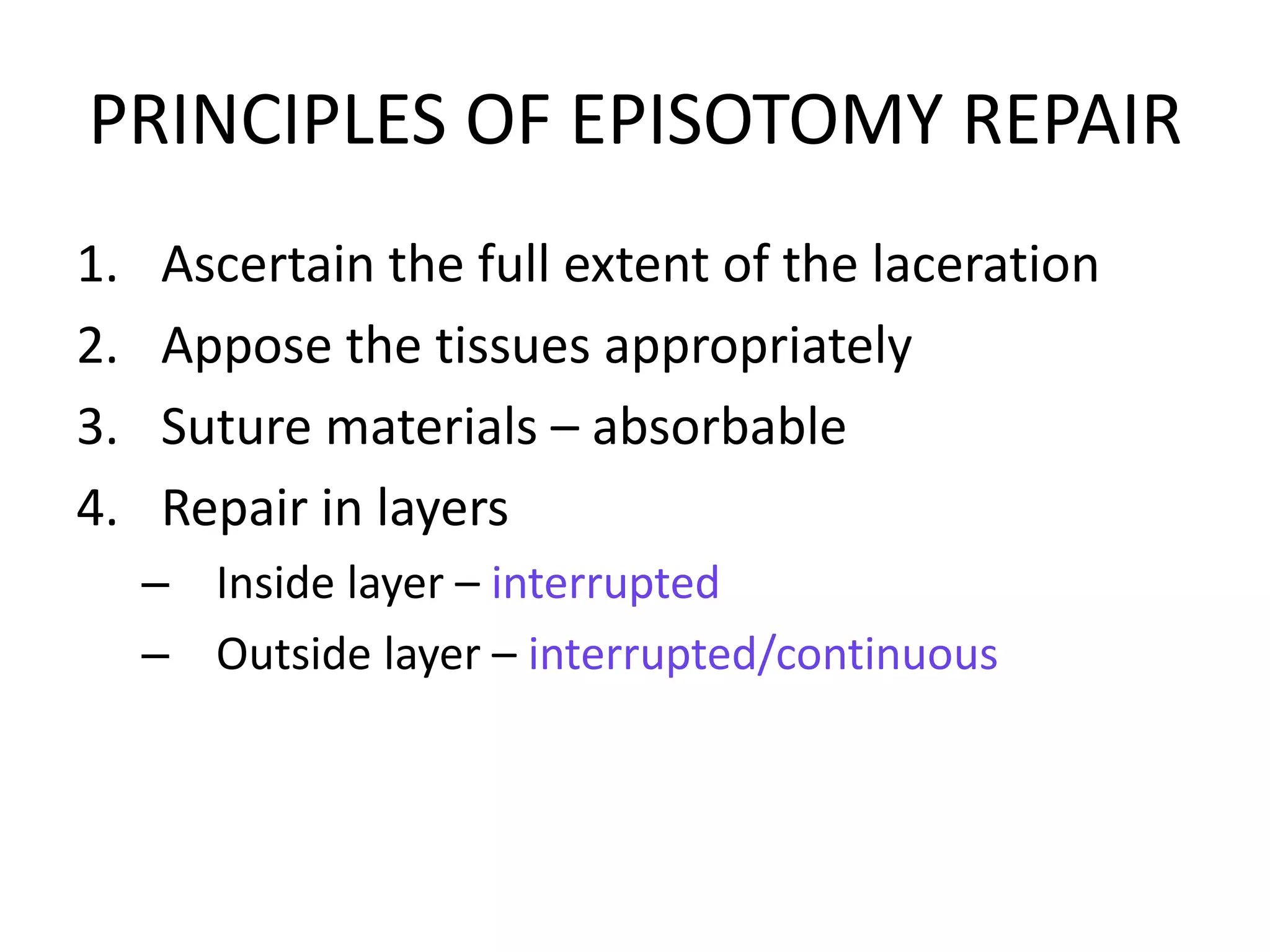
1. Ascertain the full extent of the laceration
2. Appose the tissues appropriately
3. Suture materials – absorbable
4. Repair in layers
– Inside layer – interrupted
– Outside layer – interrupted/continuous
PRINCIPLES OF EPISOTOMY REPAIR
perineal tear
• Definition.
• A perineal tear is a tear in the skin and/or
muscles between the vagina and the rectum.
Perineal tears can range in severity.
Classification.
• First degree: Tear involving the vaginal mucosa
and connective tissue.
• Second degree: Tear involving the perineal
muscles (perineal body) and therefore
includes episiotomy.
• Third degree: Second degree tears with
disruption of the anal sphincter.
• Fourth degree: Third degree tears with tone
anal epithelium or rectal mucosa.
Predisposing Factors
• Rigid perineum.
• Short or inelastic perineum.
• All malpresentations.
• Previous tears.
• Genital mutilations.
• Big baby.
• Episiotomy.
• Operative vaginal deliver
Complication of Perineal Tears
• Postpartum haemorrhage
• Fistula formation.
• Infection (sepsis).
• Dyspareunia.
• Faecal incontinence
Management.
• First and second degree tears:
–Infiltrate the wound with lignocaine 1% .
–Repair the tear by suturing absorbable suture
material.
• Third and fourth degree tears.
– Should be repaired by the experienced
medical personnel
–General anaesthetic or epidural or spinal
anaesthetic is necessary
Post Repair Care
• Sitz bath PPM OR DETOL.
• Personal hygiene.
• Antibiotics.
• Give stool softener for one week (for third and
fourth degree tears)
Prevention
• Remind the woman when to push and when
not to push.
• Perform episiotomy early in patients with
indications. I.e. inelastic perineum, shoulder
dystocia.
• Deliver the head slowly.
• Proper monitor of labour.

1. EPISIOTOMY.ppt

  • 1.
  • 3.
    Introduction. • DEFINITION. • Surgicallyplanned incision on the perineum and posterior vaginal wall during second stage of labor
  • 4.
    CONTROVERSY ABOUT COMMON USAGE •Routine episiotomies have lost popularity • WHO recommends an episiotomy rate of 10% • Associated problems – Unsatisfactory anatomical results – PPH – Dyspareunia – Perineal pain
  • 5.
    1. Midline episiotomy •Complications – Spontaneous extension involving injury to the anal sphincter and/or rectal mucosa. – Higher incidence of rectovaginal fistulas • Advantages – Easy and satisfactory repair – Blood loss is least – Repair is easy – Postoperative comfort is maximum – Healing is superior – Dyspareunia is rare TYPES OF EPISIOTOMIES
  • 6.
    2. Mediolateral episiotomy •Complications – Poor wound healing – Long-term pelvic pain – Dyspareunia. – Apposition of the tissues is not so good – Blood loss is little more – Postoperative discomfort is more • ADVANTAGES • Relative safety from rectal involvement from extension • If necessary, the incision can be extended
  • 7.
    • Operative vaginaldeliveries requiring additional room to safely accomplish the delivery – Vacuum extraction deliveries - may be facilitated by an episiotomy • Fetal distress • Short or inelastic perineum • Previous pelvic floor surgery INDICATIONS FOR EPISIOTOMY
  • 8.
    1. Ascertain thefull extent of the laceration 2. Appose the tissues appropriately 3. Suture materials – absorbable 4. Repair in layers – Inside layer – interrupted – Outside layer – interrupted/continuous PRINCIPLES OF EPISOTOMY REPAIR
  • 9.
    perineal tear • Definition. •A perineal tear is a tear in the skin and/or muscles between the vagina and the rectum. Perineal tears can range in severity.
  • 10.
    Classification. • First degree:Tear involving the vaginal mucosa and connective tissue. • Second degree: Tear involving the perineal muscles (perineal body) and therefore includes episiotomy. • Third degree: Second degree tears with disruption of the anal sphincter. • Fourth degree: Third degree tears with tone anal epithelium or rectal mucosa.
  • 11.
    Predisposing Factors • Rigidperineum. • Short or inelastic perineum. • All malpresentations. • Previous tears. • Genital mutilations. • Big baby. • Episiotomy. • Operative vaginal deliver
  • 12.
    Complication of PerinealTears • Postpartum haemorrhage • Fistula formation. • Infection (sepsis). • Dyspareunia. • Faecal incontinence
  • 13.
    Management. • First andsecond degree tears: –Infiltrate the wound with lignocaine 1% . –Repair the tear by suturing absorbable suture material. • Third and fourth degree tears. – Should be repaired by the experienced medical personnel –General anaesthetic or epidural or spinal anaesthetic is necessary
  • 14.
    Post Repair Care •Sitz bath PPM OR DETOL. • Personal hygiene. • Antibiotics. • Give stool softener for one week (for third and fourth degree tears)
  • 15.
    Prevention • Remind thewoman when to push and when not to push. • Perform episiotomy early in patients with indications. I.e. inelastic perineum, shoulder dystocia. • Deliver the head slowly. • Proper monitor of labour.