HUAWEI BSC6000 Base Station Subsystem
Signaling Analysis Guide                                                            10 Speech Channel Assignment


                          10                 Speech Channel Assignment


About This Chapter

                    The speech channel assignment is the procedure for assigning TCHs to the MS according to the
                    service requests.

                    10.1 Speech Channel Assignment Procedure
                    This topic describes the speech channel assignment procedure.
                    10.2 Channel Mode Modification Procedure
                    This topic describes the channel mode modification procedure.
                    10.3 Internal BSC Signaling Procedure of Speech Channel Assignment
                    This topic describes the internal BSC signaling procedure of speech channel assignment.
                    10.4 Abnormal Speech Channel Assignment Cases
                    This topic describes the abnormal speech channel assignment cases.


Issue 01 (2007-09-05)                            Huawei Technologies Proprietary                              10-1
HUAWEI BSC6000 Base Station Subsystem
10 Speech Channel Assignment                                                          Signaling Analysis Guide


10.1 Speech Channel Assignment Procedure
                  This topic describes the speech channel assignment procedure.

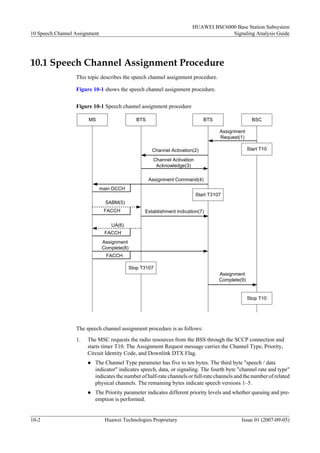
                  Figure 10-1 shows the speech channel assignment procedure.


                  Figure 10-1 Speech channel assignment procedure

                       MS                       BTS                            BTS                    BSC

                                                                                      Assignment
                                                                                      Request(1)

                                                       Channel Activation(2)                        Start T10

                                                       Channel Activation
                                                        Acknowledge(3)

                                                      Assignment Command(4)
                               main DCCH
                                                                            Start T3107
                                 SABM(5)
                                FACCH              Establishment Indication(7)

                                   UA(6)
                                FACCH
                               Assignment
                               Complete(8)
                                 FACCH

                                             Stop T3107
                                                                                      Assignment
                                                                                      Complete(9)


                                                                                                    Stop T10


                  The speech channel assignment procedure is as follows:
                  1.   The MSC requests the radio resources from the BSS through the SCCP connection and
                       starts timer T10. The Assignment Request message carries the Channel Type, Priority,
                       Circuit Identity Code, and Downlink DTX Flag.
                       l   The Channel Type parameter has five to ten bytes. The third byte "speech / data
                           indicator" indicates speech, data, or signaling. The fourth byte "channel rate and type"
                           indicates the number of half-rate channels or full-rate channels and the number of related
                           physical channels. The remaining bytes indicate speech versions 1–5.
                       l   The Priority parameter indicates different priority levels and whether queuing and pre-
                           emption is performed.


10-2                            Huawei Technologies Proprietary                                Issue 01 (2007-09-05)
HUAWEI BSC6000 Base Station Subsystem
Signaling Analysis Guide                                                            10 Speech Channel Assignment

                         l   The Circuit Identity Code parameter is used for the physical connection between the
                             BSC and the MSC.
                         l   The Downlink DTX Flag parameter indicates whether discontinuous transmission is
                             allowed.
                    2.   For details about the Channel Activation message, refer to 4 Immediate Assignment.
                    3.   For details about the Channel Activation Acknowledge message, refer to 4 Immediate
                         Assignment.
                    4.   Upon receiving the Channel Activation Acknowledge message, the BSC sends the MS an
                         Assignment Command message on the SDCCH and starts timer T3107. The Assignment
                         Command message carries the Channel Description, Power Command, and Channel Mode.
                         For details about these parameters, refer to the immediate assignment procedure.
                    5.   Upon receiving the Assignment Command message from the BTS, the MS adjusts the
                         signaling to the TCH and sends the SABM frame on the FACCH. The SABM frame is the
                         first frame during the setup of multi-frame verification mode and does not carry layer 3
                         messages.
                    6.   Upon receiving the SABM frame, the BTS responds to the MS with a UA frame on the
                         FACCH. The UA frame does not carry layer 3 messages.
                    7.   Then the BTS sends the BSC an Establishment Indication message. The Establishment
                         Indication message does not carry layer 3 messages. The system responds with a UA
                         Acknowledgement frame.
                    8.   Upon receiving the UA frame, the MS sends an Assignment Complete message on the
                         FACCH to notify the BSC of the channel assignment completion. Then it stops Timer
                         T3107.
                    9.   The BSC sends the MSC the Assignment Complete message and stops timer T10. The
                         Assinment Complete message carries the Chosen Channel, Circuit Pool, and Speech
                         version. The meanings of the parameters are as follows:
                         l   Chosen Channel
                             Inidicates the type of the assigned channel
                         l   Circuit Pool
                             Indicates the circuit pool information
                         l   Speech Version
                             Indicates the speech coding algorithm


10.2 Channel Mode Modification Procedure
                    This topic describes the channel mode modification procedure.
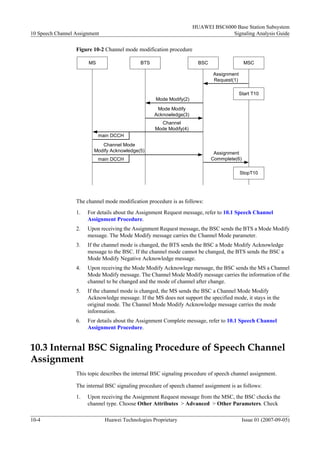
                    Figure 10-2 shows the channel mode modification procedure.


Issue 01 (2007-09-05)                             Huawei Technologies Proprietary                            10-3
HUAWEI BSC6000 Base Station Subsystem
10 Speech Channel Assignment                                                      Signaling Analysis Guide

                  Figure 10-2 Channel mode modification procedure

                       MS                     BTS                      BSC                  MSC

                                                                             Assignment
                                                                             Request(1)

                                                                                          Start T10
                                                    Mode Modify(2)

                                                     Mode Modify
                                                    Acknowledge(3)
                                                      Channel
                                                    Mode Modify(4)
                            main DCCH
                             Channel Mode
                          Modify Acknowledge(5)                               Assignment
                            main DCCH                                        Commplete(6)

                                                                                          StopT10


                  The channel mode modification procedure is as follows:
                  1.   For details about the Assignment Request message, refer to 10.1 Speech Channel
                       Assignment Procedure.
                  2.   Upon receiving the Assignment Request message, the BSC sends the BTS a Mode Modify
                       message. The Mode Modify message carries the Channel Mode parameter.
                  3.   If the channel mode is changed, the BTS sends the BSC a Mode Modify Acknowledge
                       message to the BSC. If the channel mode cannot be changed, the BTS sends the BSC a
                       Mode Modify Negative Acknowledge message.
                  4.   Upon receiving the Mode Modify Acknowlege message, the BSC sends the MS a Channel
                       Mode Modify message. The Channel Mode Modify message carries the information of the
                       channel to be changed and the mode of channel after change.
                  5.   If the channel mode is changed, the MS sends the BSC a Channel Mode Modify
                       Acknowledge message. If the MS does not support the specified mode, it stays in the
                       original mode. The Channel Mode Modify Acknowledge message carries the mode
                       information.
                  6.   For details about the Assignment Complete message, refer to 10.1 Speech Channel
                       Assignment Procedure.


10.3 Internal BSC Signaling Procedure of Speech Channel
Assignment
                  This topic describes the internal BSC signaling procedure of speech channel assignment.

                  The internal BSC signaling procedure of speech channel assignment is as follows:
                  1.   Upon receiving the Assignment Request message from the MSC, the BSC checks the
                       channel type. Choose Other Attributes > Advanced > Other Parameters. Check

10-4                           Huawei Technologies Proprietary                              Issue 01 (2007-09-05)
HUAWEI BSC6000 Base Station Subsystem
Signaling Analysis Guide                                                            10 Speech Channel Assignment

                         whether the data services are supported. If not, the BSC responds with an Assignment
                         Failure message.
                    2.   Based on the CIC in the Assignment Request message, the BSC checks the E1 timeslots
                         on the A interface and confirms the existence of CIC. It also checks whether the circuit
                         pool of the configured CIC, the channel type in the Assignment Request message, and the
                         capacity of the GDPUC are collided. If they are collided, the BSC responds with an
                         Assignment Failure message.
                    3.   Upon receiving the Assignment Complete message from the MS, the BSC complements
                         the message with the A Interface Phase Flag and sends the message to the BSC. You can
                         choose BSC Property > Basic Data to display the A Interface Phase Flag.


10.4 Abnormal Speech Channel Assignment Cases
                    This topic describes the abnormal speech channel assignment cases.

                    10.4.1 BSC Sending an Assignment Failure Message
                    This topic describes the fault, probable causes, and handling suggestions.
                    10.4.2 BSC Receiving a Connection Failure Indication Message
                    This topic describes the fault, probable causes, and handling suggestions.
                    10.4.3 BSC Receiving an Error Indication Message
                    This topic describes the fault, probable causes, and handling suggestions.

10.4.1 BSC Sending an Assignment Failure Message
                    This topic describes the fault, probable causes, and handling suggestions.

Fault
                    Upon receiving the Assignment Request message, the BSC responds with an Assignment Failure
                    message.

Probable Causes
                    The probable causes are as follows:
                    1.   Radio Interface Message Failure
                         The MS fails to access the speech channel. It sends an Assignment Failure message on the
                         signaling channel. Due to the particularity of the transmission on the Um interface, this
                         case happens the most frequently and cannot be solved.
                    2.   Equipment Failure
                         The BSC hardware is faulty.
                    3.   No Radio Resource Available
                         The BSC has no appropriate speech channels for assignment. The possible reason is that
                         all the speech channels are busy or that the speech channels are blocked.
                    4.   Requested Terrestrial Resource Unavailable
                    5.   Requested Transcoding/Rate Adaption Unavailable
                    6.   Terrestrial Resource Already Allocated
                    7.   Invalid Message Contents

Issue 01 (2007-09-05)                             Huawei Technologies Proprietary                            10-5
HUAWEI BSC6000 Base Station Subsystem
10 Speech Channel Assignment                                                       Signaling Analysis Guide

                  8.   Radio Interface Failure - Reversion To Old Channel
                  9.   Requested Speech Version Unavailable
                  10. Timer T3107 expiry

Handling Suggestions
                  The respective handling suggestions are as follows:
                  l    Check the access-related parameters of the antenna system, BTS boards, and BSC data
                       configuration.
                  l    Check the following:
                       –   Communication between modules and subracks in the BSC
                       –   Communication on the A interface, for example, the cable connections between
                           GEIUAs and subracks
                  l    Add TRXs to the BTS, modify the access threshold, and enable the directed retry.
                  l    The circuits on the A interface on the BSC side are abnormal, for example, the CIC in the
                       Assignment Request message is not available. Check the consistency of the A interface
                       data on the MSC and the BSC. Check also the CIC state.
                  l    Check the transmission on the A interface.
                  l    Check whether the CIC configuration on the BSC and the MSC is consistent. If not,
                       manually reset the CIC on the LMT.
                  l    Check whether the message conforms to the protocols.
                  l    Check the environment quality on the Um interface. For example, check the quality of the
                       level.
                  l    Check whether the BSC supports the requested speech version.
                  l    Check whether the timeout value of timer T3107 is appropriate.

10.4.2 BSC Receiving a Connection Failure Indication Message
                  This topic describes the fault, probable causes, and handling suggestions.

Fault
                  During the assignment procedure, the BSC receives a Connection Failure Indication message.

Probable Causes
                  The probable causes are as follows:
                  l    Radio link failure
                  l    Hardware failure


Handling Suggestions
                  The handling suggestions are as follows:
                  l    Check the resources on the Um interface.
                  l    Check the following:
                       –   Communication between subracks

10-6                           Huawei Technologies Proprietary                                 Issue 01 (2007-09-05)
HUAWEI BSC6000 Base Station Subsystem
Signaling Analysis Guide                                                            10 Speech Channel Assignment

                         –   Communication on the A interface, for example, the cable connections between
                             GEIUBs and subracks

10.4.3 BSC Receiving an Error Indication Message
                    This topic describes the fault, probable causes, and handling suggestions.

Fault
                    During the assignment procedure, the BSC receives an Error Indication message.

Probable Causes
                    The probable causes are as follows:
                    l    Protocol disconformity
                    l    Link layer failure
                    l    Timer T200 expiry
                    l    MS failure in receiving a UA frame

Handling Suggestions
                    The respective handling suggestions are as follows:
                    l    Check the contents of the frames at the data link layer.
                    l    Check the status of the data link layer.
                    l    Check the timeout value of timer T200.
                    l    Check the contents of the SABM frame.


Issue 01 (2007-09-05)                             Huawei Technologies Proprietary                           10-7
01 10 speech channel assignment

01 10 speech channel assignment

  • 1.
    HUAWEI BSC6000 BaseStation Subsystem Signaling Analysis Guide 10 Speech Channel Assignment 10 Speech Channel Assignment About This Chapter The speech channel assignment is the procedure for assigning TCHs to the MS according to the service requests. 10.1 Speech Channel Assignment Procedure This topic describes the speech channel assignment procedure. 10.2 Channel Mode Modification Procedure This topic describes the channel mode modification procedure. 10.3 Internal BSC Signaling Procedure of Speech Channel Assignment This topic describes the internal BSC signaling procedure of speech channel assignment. 10.4 Abnormal Speech Channel Assignment Cases This topic describes the abnormal speech channel assignment cases. Issue 01 (2007-09-05) Huawei Technologies Proprietary 10-1
  • 2.
    HUAWEI BSC6000 BaseStation Subsystem 10 Speech Channel Assignment Signaling Analysis Guide 10.1 Speech Channel Assignment Procedure This topic describes the speech channel assignment procedure. Figure 10-1 shows the speech channel assignment procedure. Figure 10-1 Speech channel assignment procedure MS BTS BTS BSC Assignment Request(1) Channel Activation(2) Start T10 Channel Activation Acknowledge(3) Assignment Command(4) main DCCH Start T3107 SABM(5) FACCH Establishment Indication(7) UA(6) FACCH Assignment Complete(8) FACCH Stop T3107 Assignment Complete(9) Stop T10 The speech channel assignment procedure is as follows: 1. The MSC requests the radio resources from the BSS through the SCCP connection and starts timer T10. The Assignment Request message carries the Channel Type, Priority, Circuit Identity Code, and Downlink DTX Flag. l The Channel Type parameter has five to ten bytes. The third byte "speech / data indicator" indicates speech, data, or signaling. The fourth byte "channel rate and type" indicates the number of half-rate channels or full-rate channels and the number of related physical channels. The remaining bytes indicate speech versions 1–5. l The Priority parameter indicates different priority levels and whether queuing and pre- emption is performed. 10-2 Huawei Technologies Proprietary Issue 01 (2007-09-05)
  • 3.
    HUAWEI BSC6000 BaseStation Subsystem Signaling Analysis Guide 10 Speech Channel Assignment l The Circuit Identity Code parameter is used for the physical connection between the BSC and the MSC. l The Downlink DTX Flag parameter indicates whether discontinuous transmission is allowed. 2. For details about the Channel Activation message, refer to 4 Immediate Assignment. 3. For details about the Channel Activation Acknowledge message, refer to 4 Immediate Assignment. 4. Upon receiving the Channel Activation Acknowledge message, the BSC sends the MS an Assignment Command message on the SDCCH and starts timer T3107. The Assignment Command message carries the Channel Description, Power Command, and Channel Mode. For details about these parameters, refer to the immediate assignment procedure. 5. Upon receiving the Assignment Command message from the BTS, the MS adjusts the signaling to the TCH and sends the SABM frame on the FACCH. The SABM frame is the first frame during the setup of multi-frame verification mode and does not carry layer 3 messages. 6. Upon receiving the SABM frame, the BTS responds to the MS with a UA frame on the FACCH. The UA frame does not carry layer 3 messages. 7. Then the BTS sends the BSC an Establishment Indication message. The Establishment Indication message does not carry layer 3 messages. The system responds with a UA Acknowledgement frame. 8. Upon receiving the UA frame, the MS sends an Assignment Complete message on the FACCH to notify the BSC of the channel assignment completion. Then it stops Timer T3107. 9. The BSC sends the MSC the Assignment Complete message and stops timer T10. The Assinment Complete message carries the Chosen Channel, Circuit Pool, and Speech version. The meanings of the parameters are as follows: l Chosen Channel Inidicates the type of the assigned channel l Circuit Pool Indicates the circuit pool information l Speech Version Indicates the speech coding algorithm 10.2 Channel Mode Modification Procedure This topic describes the channel mode modification procedure. Figure 10-2 shows the channel mode modification procedure. Issue 01 (2007-09-05) Huawei Technologies Proprietary 10-3
  • 4.
    HUAWEI BSC6000 BaseStation Subsystem 10 Speech Channel Assignment Signaling Analysis Guide Figure 10-2 Channel mode modification procedure MS BTS BSC MSC Assignment Request(1) Start T10 Mode Modify(2) Mode Modify Acknowledge(3) Channel Mode Modify(4) main DCCH Channel Mode Modify Acknowledge(5) Assignment main DCCH Commplete(6) StopT10 The channel mode modification procedure is as follows: 1. For details about the Assignment Request message, refer to 10.1 Speech Channel Assignment Procedure. 2. Upon receiving the Assignment Request message, the BSC sends the BTS a Mode Modify message. The Mode Modify message carries the Channel Mode parameter. 3. If the channel mode is changed, the BTS sends the BSC a Mode Modify Acknowledge message to the BSC. If the channel mode cannot be changed, the BTS sends the BSC a Mode Modify Negative Acknowledge message. 4. Upon receiving the Mode Modify Acknowlege message, the BSC sends the MS a Channel Mode Modify message. The Channel Mode Modify message carries the information of the channel to be changed and the mode of channel after change. 5. If the channel mode is changed, the MS sends the BSC a Channel Mode Modify Acknowledge message. If the MS does not support the specified mode, it stays in the original mode. The Channel Mode Modify Acknowledge message carries the mode information. 6. For details about the Assignment Complete message, refer to 10.1 Speech Channel Assignment Procedure. 10.3 Internal BSC Signaling Procedure of Speech Channel Assignment This topic describes the internal BSC signaling procedure of speech channel assignment. The internal BSC signaling procedure of speech channel assignment is as follows: 1. Upon receiving the Assignment Request message from the MSC, the BSC checks the channel type. Choose Other Attributes > Advanced > Other Parameters. Check 10-4 Huawei Technologies Proprietary Issue 01 (2007-09-05)
  • 5.
    HUAWEI BSC6000 BaseStation Subsystem Signaling Analysis Guide 10 Speech Channel Assignment whether the data services are supported. If not, the BSC responds with an Assignment Failure message. 2. Based on the CIC in the Assignment Request message, the BSC checks the E1 timeslots on the A interface and confirms the existence of CIC. It also checks whether the circuit pool of the configured CIC, the channel type in the Assignment Request message, and the capacity of the GDPUC are collided. If they are collided, the BSC responds with an Assignment Failure message. 3. Upon receiving the Assignment Complete message from the MS, the BSC complements the message with the A Interface Phase Flag and sends the message to the BSC. You can choose BSC Property > Basic Data to display the A Interface Phase Flag. 10.4 Abnormal Speech Channel Assignment Cases This topic describes the abnormal speech channel assignment cases. 10.4.1 BSC Sending an Assignment Failure Message This topic describes the fault, probable causes, and handling suggestions. 10.4.2 BSC Receiving a Connection Failure Indication Message This topic describes the fault, probable causes, and handling suggestions. 10.4.3 BSC Receiving an Error Indication Message This topic describes the fault, probable causes, and handling suggestions. 10.4.1 BSC Sending an Assignment Failure Message This topic describes the fault, probable causes, and handling suggestions. Fault Upon receiving the Assignment Request message, the BSC responds with an Assignment Failure message. Probable Causes The probable causes are as follows: 1. Radio Interface Message Failure The MS fails to access the speech channel. It sends an Assignment Failure message on the signaling channel. Due to the particularity of the transmission on the Um interface, this case happens the most frequently and cannot be solved. 2. Equipment Failure The BSC hardware is faulty. 3. No Radio Resource Available The BSC has no appropriate speech channels for assignment. The possible reason is that all the speech channels are busy or that the speech channels are blocked. 4. Requested Terrestrial Resource Unavailable 5. Requested Transcoding/Rate Adaption Unavailable 6. Terrestrial Resource Already Allocated 7. Invalid Message Contents Issue 01 (2007-09-05) Huawei Technologies Proprietary 10-5
  • 6.
    HUAWEI BSC6000 BaseStation Subsystem 10 Speech Channel Assignment Signaling Analysis Guide 8. Radio Interface Failure - Reversion To Old Channel 9. Requested Speech Version Unavailable 10. Timer T3107 expiry Handling Suggestions The respective handling suggestions are as follows: l Check the access-related parameters of the antenna system, BTS boards, and BSC data configuration. l Check the following: – Communication between modules and subracks in the BSC – Communication on the A interface, for example, the cable connections between GEIUAs and subracks l Add TRXs to the BTS, modify the access threshold, and enable the directed retry. l The circuits on the A interface on the BSC side are abnormal, for example, the CIC in the Assignment Request message is not available. Check the consistency of the A interface data on the MSC and the BSC. Check also the CIC state. l Check the transmission on the A interface. l Check whether the CIC configuration on the BSC and the MSC is consistent. If not, manually reset the CIC on the LMT. l Check whether the message conforms to the protocols. l Check the environment quality on the Um interface. For example, check the quality of the level. l Check whether the BSC supports the requested speech version. l Check whether the timeout value of timer T3107 is appropriate. 10.4.2 BSC Receiving a Connection Failure Indication Message This topic describes the fault, probable causes, and handling suggestions. Fault During the assignment procedure, the BSC receives a Connection Failure Indication message. Probable Causes The probable causes are as follows: l Radio link failure l Hardware failure Handling Suggestions The handling suggestions are as follows: l Check the resources on the Um interface. l Check the following: – Communication between subracks 10-6 Huawei Technologies Proprietary Issue 01 (2007-09-05)
  • 7.
    HUAWEI BSC6000 BaseStation Subsystem Signaling Analysis Guide 10 Speech Channel Assignment – Communication on the A interface, for example, the cable connections between GEIUBs and subracks 10.4.3 BSC Receiving an Error Indication Message This topic describes the fault, probable causes, and handling suggestions. Fault During the assignment procedure, the BSC receives an Error Indication message. Probable Causes The probable causes are as follows: l Protocol disconformity l Link layer failure l Timer T200 expiry l MS failure in receiving a UA frame Handling Suggestions The respective handling suggestions are as follows: l Check the contents of the frames at the data link layer. l Check the status of the data link layer. l Check the timeout value of timer T200. l Check the contents of the SABM frame. Issue 01 (2007-09-05) Huawei Technologies Proprietary 10-7