BENEFITS
REALIZATION
helpdesk@construction-productivity.co.uk
htt://www.construction-productivity.co.uk
Planning Benefits Realization
Planning
Benefits
Realization
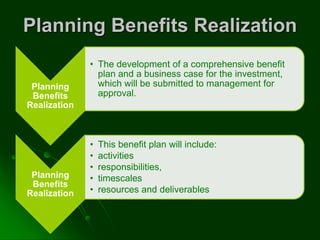
• The development of a comprehensive benefit
plan and a business case for the investment,
which will be submitted to management for
approval.
Planning
Benefits
Realization
• This benefit plan will include:
• activities
• responsibilities,
• timescales
• resources and deliverables
Planning Benefits Realization
Planning
Benefits
Realization
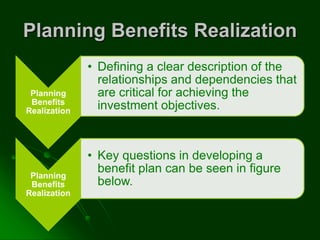
• Defining a clear description of the
relationships and dependencies that
are critical for achieving the
investment objectives.
Planning
Benefits
Realization
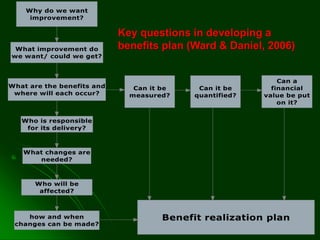
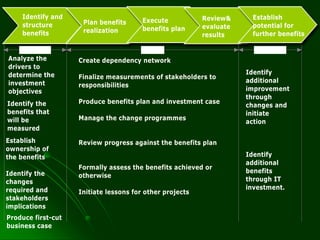
• Key questions in developing a
benefit plan can be seen in figure
below.
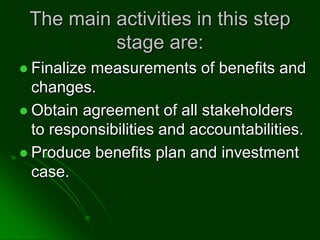
The main activities in this step
stage are:
 Finalize measurements of benefits and
changes.
 Obtain agreement of all stakeholders
to responsibilities and accountabilities.
 Produce benefits plan and investment
case.
Key questions in developing a
benefits plan (Ward & Daniel, 2006)
Planning Benefits Realization
Planning
Benefits
Realization
• After the responsibility are identified and
allocated to stakeholders, the next step is to
determine the changes required for the
delivery of each benefit and how the IS/IT
development will enable these to occur.
Planning
Benefits
Realization
• The main result from this activity is described
as a benefits dependency network and is the
central framework in the benefits
management process.
Executing the benefits Plan
benefits
Plan
• This stage is to carry it out and adjust
it as necessary, as issues and events
affecting its viability occur.
• The main activities in this stage are:
benefits
Plan
• Manage the change programme
• Review progress against the benefits
plan
Planning Benefits Realization
Monitoring progress against the
activities and deliverables of the
benefits plan is just as important
as for the IS/IT development plan.
The two plans are
components of the
overall project plan.
Planning Benefits Realization
It may be necessary to establish interim
targets and measures to evaluate
progress towards milestones or the final
implementation.
Further benefits may also be
identified and equally it may be
apparent that some benefits are
no longer feasible or relevant.
Planning Benefits Realization
It is the business project
manager’s responsibility to
decide, in consultation with the
other relevant business
managers, what action to take in
terms of reviewing the scope and
specification of the system or the
business and enabling changes.
Reviewing and Evaluating the
Results
The purposes of a benefit review involve
both assessment of the investment itself
and organizational learning.
The main activities in this step are:
Formally assess
the benefits
achieved or
otherwise
Initiate action to
gain outstanding
benefits where
feasible
Planning Benefits Realization
Identify lessons for
other projects
There should be a formal review of what has
and has not been achieved after the new
technology, system and business change
has been implemented.
Planning Benefits Realization
The purpose is to
maximize the benefits
gained from the particular
investment and increase
the benefits from future
investments.
Planning Benefits Realization
 The evaluation should focus on what has
been achieved.
 what has not (or not yet) been achieved
and why.
 Identify further action needed to deliver
outstanding benefits, if possible. Another
aspect is also identifying any unexpected
benefits that have.
 arisen and understand how they came out.
Planning Benefits Realization
Some organizations also want
to be able to prove that their IT
investments have been
delivered the expected value
over an extended period, even
after several years.
Evaluating the Results and Establishing
Potential for Further benefits
 The full implementation of the new
IS/IT and business changes, the
achievement of the business case
and benefits plan should be formally
reviewed.
 The purposes of the review include a
detailed assessment of whether each
of the benefits intended have been
achieved or not.
Planning Benefits Realization
If they have not
been achieved
The reasons
for this should
be established
Any remedial
action should
be identified.
Planning Benefits Realization
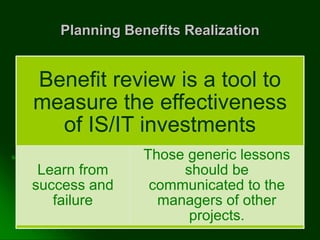
Benefit review is a tool to
measure the effectiveness
of IS/IT investments
Learn from
success and
failure
Those generic lessons
should be
communicated to the
managers of other
projects.
Planning Benefits Realization
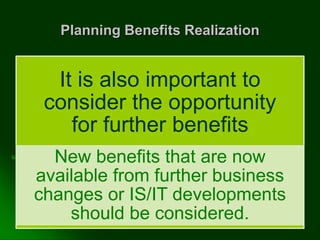
It is also important to
consider the opportunity
for further benefits
New benefits that are now
available from further business
changes or IS/IT developments
should be considered.
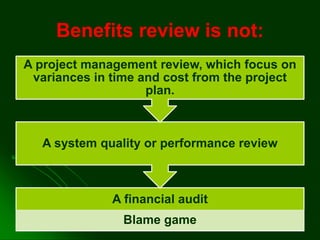
Benefits review is not:
A financial audit
Blame game
A system quality or performance review
A project management review, which focus on
variances in time and cost from the project
plan.
Planning Benefits Realization
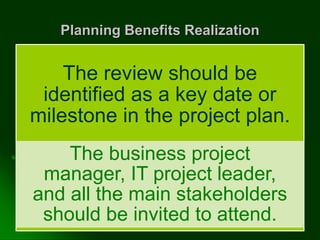
The review should be
identified as a key date or
milestone in the project plan.
The business project
manager, IT project leader,
and all the main stakeholders
should be invited to attend.
Planning Benefits Realization
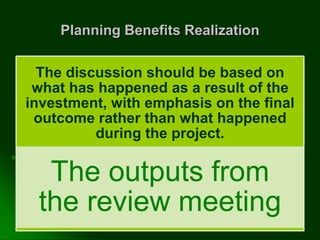
The discussion should be based on
what has happened as a result of the
investment, with emphasis on the final
outcome rather than what happened
during the project.
The outputs from
the review meeting
Planning Benefits Realization
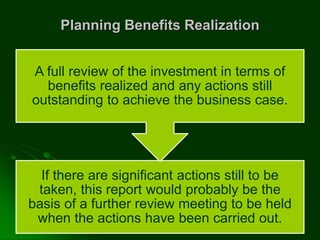
If there are significant actions still to be
taken, this report would probably be the
basis of a further review meeting to be held
when the actions have been carried out.
A full review of the investment in terms of
benefits realized and any actions still
outstanding to achieve the business case.
Planning Benefits Realization
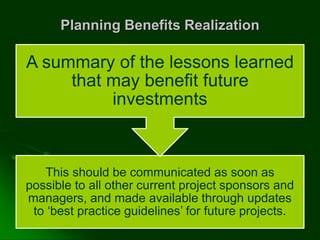
This should be communicated as soon as
possible to all other current project sponsors and
managers, and made available through updates
to ‘best practice guidelines’ for future projects.
A summary of the lessons learned
that may benefit future
investments
Planning Benefits Realization
Planning
Benefits
Realization
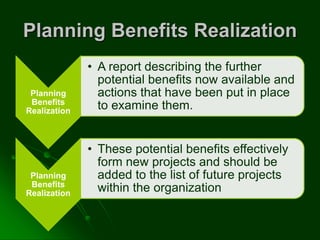
• A report describing the further
potential benefits now available and
actions that have been put in place
to examine them.
Planning
Benefits
Realization
• These potential benefits effectively
form new projects and should be
added to the list of future projects
within the organization
Monitoring the Benefits after
Implementation
The benefit review should be held soon as it is
possible after the implementations.
Management must make assessment, with
sufficient evidence, whether the intended benefits
have been achieved.
Although benefits do occur soon after
implementation, they can ‘decay’ once the
changes have become the normal practices
and people’s enthusiasm for the
improvements has decreased.
009 benefits realization

009 benefits realization

  • 1.
  • 2.
    Planning Benefits Realization Planning Benefits Realization •The development of a comprehensive benefit plan and a business case for the investment, which will be submitted to management for approval. Planning Benefits Realization • This benefit plan will include: • activities • responsibilities, • timescales • resources and deliverables
  • 3.
    Planning Benefits Realization Planning Benefits Realization •Defining a clear description of the relationships and dependencies that are critical for achieving the investment objectives. Planning Benefits Realization • Key questions in developing a benefit plan can be seen in figure below.
  • 4.
    The main activitiesin this step stage are:  Finalize measurements of benefits and changes.  Obtain agreement of all stakeholders to responsibilities and accountabilities.  Produce benefits plan and investment case.
  • 5.
    Key questions indeveloping a benefits plan (Ward & Daniel, 2006)
  • 6.
    Planning Benefits Realization Planning Benefits Realization •After the responsibility are identified and allocated to stakeholders, the next step is to determine the changes required for the delivery of each benefit and how the IS/IT development will enable these to occur. Planning Benefits Realization • The main result from this activity is described as a benefits dependency network and is the central framework in the benefits management process.
  • 7.
    Executing the benefitsPlan benefits Plan • This stage is to carry it out and adjust it as necessary, as issues and events affecting its viability occur. • The main activities in this stage are: benefits Plan • Manage the change programme • Review progress against the benefits plan
  • 8.
    Planning Benefits Realization Monitoringprogress against the activities and deliverables of the benefits plan is just as important as for the IS/IT development plan. The two plans are components of the overall project plan.
  • 9.
    Planning Benefits Realization Itmay be necessary to establish interim targets and measures to evaluate progress towards milestones or the final implementation. Further benefits may also be identified and equally it may be apparent that some benefits are no longer feasible or relevant.
  • 10.
    Planning Benefits Realization Itis the business project manager’s responsibility to decide, in consultation with the other relevant business managers, what action to take in terms of reviewing the scope and specification of the system or the business and enabling changes.
  • 11.
    Reviewing and Evaluatingthe Results The purposes of a benefit review involve both assessment of the investment itself and organizational learning. The main activities in this step are: Formally assess the benefits achieved or otherwise Initiate action to gain outstanding benefits where feasible
  • 12.
    Planning Benefits Realization Identifylessons for other projects There should be a formal review of what has and has not been achieved after the new technology, system and business change has been implemented.
  • 13.
    Planning Benefits Realization Thepurpose is to maximize the benefits gained from the particular investment and increase the benefits from future investments.
  • 14.
    Planning Benefits Realization The evaluation should focus on what has been achieved.  what has not (or not yet) been achieved and why.  Identify further action needed to deliver outstanding benefits, if possible. Another aspect is also identifying any unexpected benefits that have.  arisen and understand how they came out.
  • 15.
    Planning Benefits Realization Someorganizations also want to be able to prove that their IT investments have been delivered the expected value over an extended period, even after several years.
  • 16.
    Evaluating the Resultsand Establishing Potential for Further benefits  The full implementation of the new IS/IT and business changes, the achievement of the business case and benefits plan should be formally reviewed.  The purposes of the review include a detailed assessment of whether each of the benefits intended have been achieved or not.
  • 17.
    Planning Benefits Realization Ifthey have not been achieved The reasons for this should be established Any remedial action should be identified.
  • 18.
    Planning Benefits Realization Benefitreview is a tool to measure the effectiveness of IS/IT investments Learn from success and failure Those generic lessons should be communicated to the managers of other projects.
  • 19.
    Planning Benefits Realization Itis also important to consider the opportunity for further benefits New benefits that are now available from further business changes or IS/IT developments should be considered.
  • 20.
    Benefits review isnot: A financial audit Blame game A system quality or performance review A project management review, which focus on variances in time and cost from the project plan.
  • 21.
    Planning Benefits Realization Thereview should be identified as a key date or milestone in the project plan. The business project manager, IT project leader, and all the main stakeholders should be invited to attend.
  • 22.
    Planning Benefits Realization Thediscussion should be based on what has happened as a result of the investment, with emphasis on the final outcome rather than what happened during the project. The outputs from the review meeting
  • 23.
    Planning Benefits Realization Ifthere are significant actions still to be taken, this report would probably be the basis of a further review meeting to be held when the actions have been carried out. A full review of the investment in terms of benefits realized and any actions still outstanding to achieve the business case.
  • 24.
    Planning Benefits Realization Thisshould be communicated as soon as possible to all other current project sponsors and managers, and made available through updates to ‘best practice guidelines’ for future projects. A summary of the lessons learned that may benefit future investments
  • 25.
    Planning Benefits Realization Planning Benefits Realization •A report describing the further potential benefits now available and actions that have been put in place to examine them. Planning Benefits Realization • These potential benefits effectively form new projects and should be added to the list of future projects within the organization
  • 26.
    Monitoring the Benefitsafter Implementation The benefit review should be held soon as it is possible after the implementations. Management must make assessment, with sufficient evidence, whether the intended benefits have been achieved. Although benefits do occur soon after implementation, they can ‘decay’ once the changes have become the normal practices and people’s enthusiasm for the improvements has decreased.