Enterprise BPM


Sandy Kemsley l www.column2.com l @skemsley
Agenda
   l   BPM definition and benefits
   l   BPM in the enterprise
       l   Use cases
       l   Platform capability and flexibility
       l   Cultural factors

   l   Lessons learned
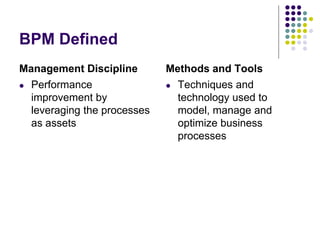
BPM Defined
Management Discipline        Methods and Tools
l Performance                l Techniques and

  improvement by               technology used to
  leveraging the processes     model, manage and
  as assets                    optimize business
                               processes
BPM Benefits
Discipline & Methodology    Technology
l Process orientation       l Efficiency

l End-to-end optimization   l Compliance

l   Business buy-in         l   Agility
                            l   Visibility
Enterprise BPM Goals: Develop
   l   Reusable process components
       l   Build library of process assets
       l   Goal: faster time to build

   l   Orchestration/integration
       l   Integrate multiple complex systems
       l   Goal: automation, efficiency, reduced coding
Enterprise BPM Goals: Execute
   l   Common UI
       l   Provide a single UI to legacy applications
       l   Goal: ease of use

   l   Work Management
       l   Getting the right work to the right person
       l   Goal: worker effectiveness
Enterprise BPM Use Cases


Structured             Structured with ad        Unstructured with          Unstructured
• Automation and       hoc exceptions            pre-defined                • Case management
  integration          • Automation with         fragments                    with no a priori
• e.g., automated        flexible human          • Case management
                                                                              knowledge
  regulatory process     activities                with complex process     • e.g., investigations
                       • e.g., financial back-     snippets
                         office transactions     • e.g., insurance claims
BPM in the Enterprise: Model
    l   Support for all enterprise process use
        cases
    l   Tools for business and IT
        l   Document processes
        l   Shared models for design
BPM in the Enterprise: Develop
    l   Support enterprise technology standards
        l   Development languages
        l   Integration layers

    l   User interface
        l   Branding and customization
        l   Portal integration

    l   Enterprise development best practices
        l   Source code control
        l   Testing
        l   Configuration management
BPM in the Enterprise: Execute
    l   Single sign-on
        l   Coordinate with other applications

    l   High availability
        l   Anytime, anywhere
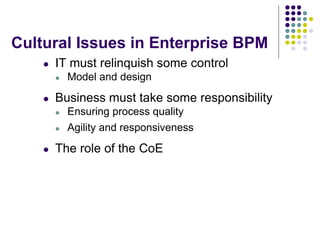
Cultural Issues in Enterprise BPM
    l   IT must relinquish some control
        l   Model and design

    l   Business must take some responsibility
        l   Ensuring process quality
        l   Agility and responsiveness

    l   The role of the CoE
Lessons in Enterprise BPM
   l   Don’t pave the cowpaths, improve them
   l   Get something simple working first, then
       automate and integrate
   l   Don’t try to structure unstructured
       processes
   l   Let the right person for the job do the job
   l   Leverage reusable assets from project to
       program
Thank You


Sandy Kemsley l www.column2.com l @skemsley

Enterprise BPM

  • 1.
    Enterprise BPM Sandy Kemsleyl www.column2.com l @skemsley
  • 2.
    Agenda l BPM definition and benefits l BPM in the enterprise l Use cases l Platform capability and flexibility l Cultural factors l Lessons learned
  • 3.
    BPM Defined Management Discipline Methods and Tools l Performance l Techniques and improvement by technology used to leveraging the processes model, manage and as assets optimize business processes
  • 4.
    BPM Benefits Discipline &Methodology Technology l Process orientation l Efficiency l End-to-end optimization l Compliance l Business buy-in l Agility l Visibility
  • 5.
    Enterprise BPM Goals:Develop l Reusable process components l Build library of process assets l Goal: faster time to build l Orchestration/integration l Integrate multiple complex systems l Goal: automation, efficiency, reduced coding
  • 6.
    Enterprise BPM Goals:Execute l Common UI l Provide a single UI to legacy applications l Goal: ease of use l Work Management l Getting the right work to the right person l Goal: worker effectiveness
  • 7.
    Enterprise BPM UseCases Structured Structured with ad Unstructured with Unstructured • Automation and hoc exceptions pre-defined • Case management integration • Automation with fragments with no a priori • e.g., automated flexible human • Case management knowledge regulatory process activities with complex process • e.g., investigations • e.g., financial back- snippets office transactions • e.g., insurance claims
  • 8.
    BPM in theEnterprise: Model l Support for all enterprise process use cases l Tools for business and IT l Document processes l Shared models for design
  • 9.
    BPM in theEnterprise: Develop l Support enterprise technology standards l Development languages l Integration layers l User interface l Branding and customization l Portal integration l Enterprise development best practices l Source code control l Testing l Configuration management
  • 10.
    BPM in theEnterprise: Execute l Single sign-on l Coordinate with other applications l High availability l Anytime, anywhere
  • 11.
    Cultural Issues inEnterprise BPM l IT must relinquish some control l Model and design l Business must take some responsibility l Ensuring process quality l Agility and responsiveness l The role of the CoE
  • 12.
    Lessons in EnterpriseBPM l Don’t pave the cowpaths, improve them l Get something simple working first, then automate and integrate l Don’t try to structure unstructured processes l Let the right person for the job do the job l Leverage reusable assets from project to program
  • 13.
    Thank You Sandy Kemsleyl www.column2.com l @skemsley