Elastomers
Prepared By :
shoaibahmadbilal1@hotmail.com
Party Paint ink Industry 1
10/04/13 2
Elastomers
 Definition- materials capable of reversible change in
length at operating temperatures, that is, once a load is
removed the material returns to its original dimensions;
 a rubbery compound;
 Generally amorphous thermosets with Tg below room
temperature to allow full chain mobility- the restoring
force in entropic;
 referred to as “memory”
10/04/13 3
Types
 Natural and synthetic rubber-Thiokol, Buna, Neoprene
 Polyurethanes
 Silicone-polysiloxanes
 Natural proteins-elastin
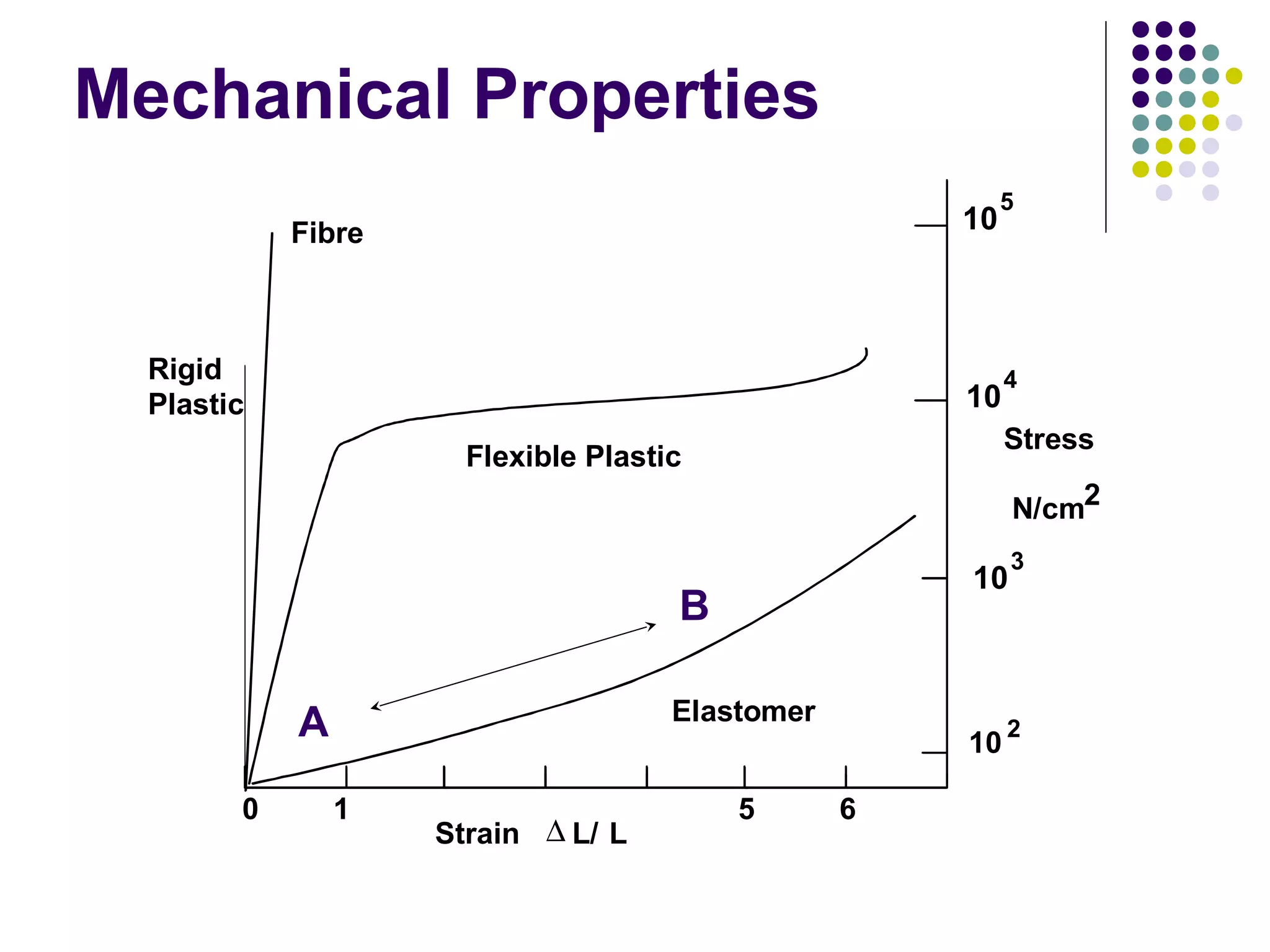
Fibre
Rigid
Plastic
Flexible Plastic
Elastomer
Stress
N/cm2
Strain L/ L∆
10
10
10
10
2
3
4
5
0 1 5 6
Mechanical Properties
A
B
10/04/13 5
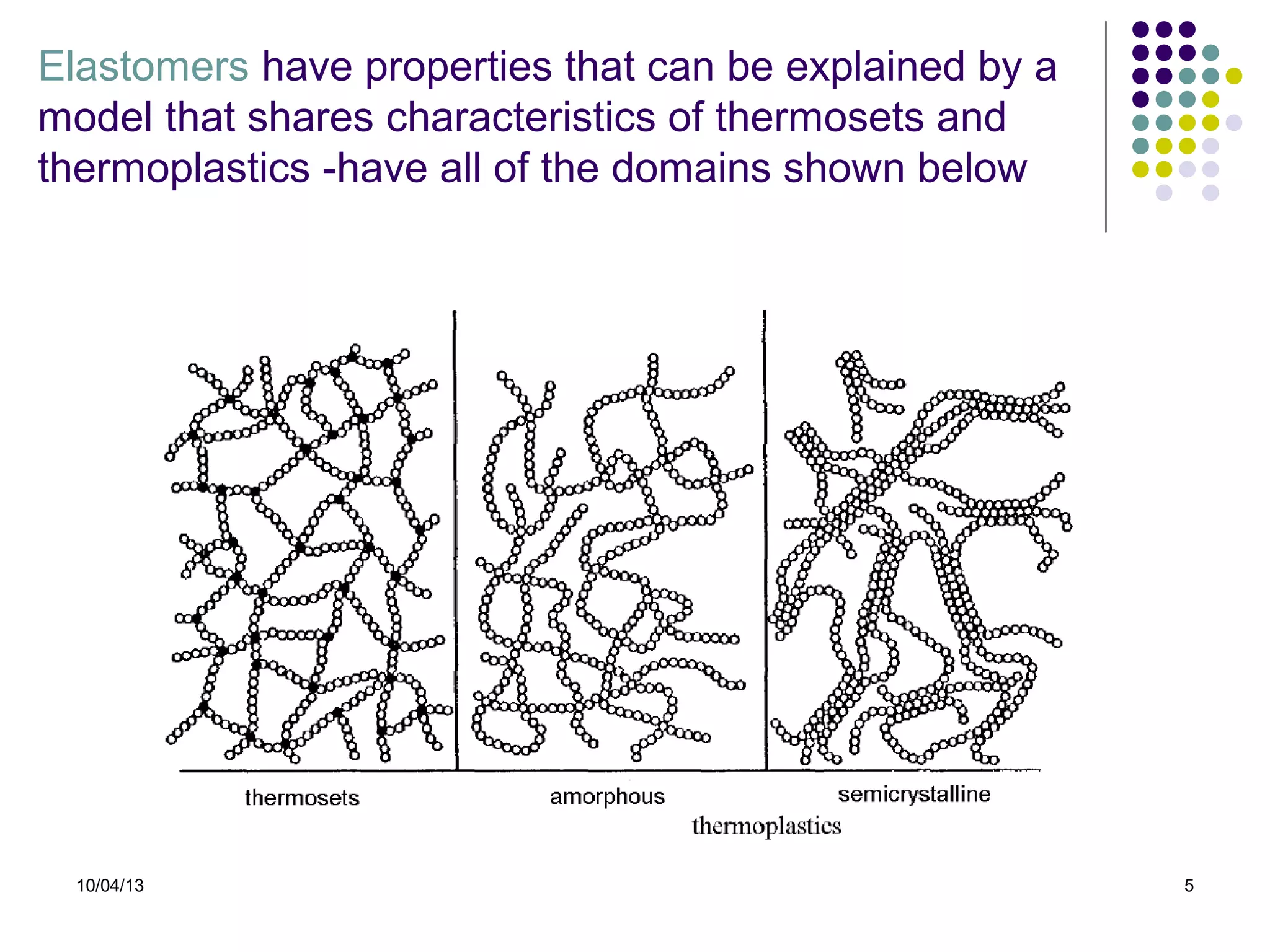
Elastomers have properties that can be explained by a
model that shares characteristics of thermosets and
thermoplastics -have all of the domains shown below
10/04/13 6
Principles of Polyurethane
Chemistry
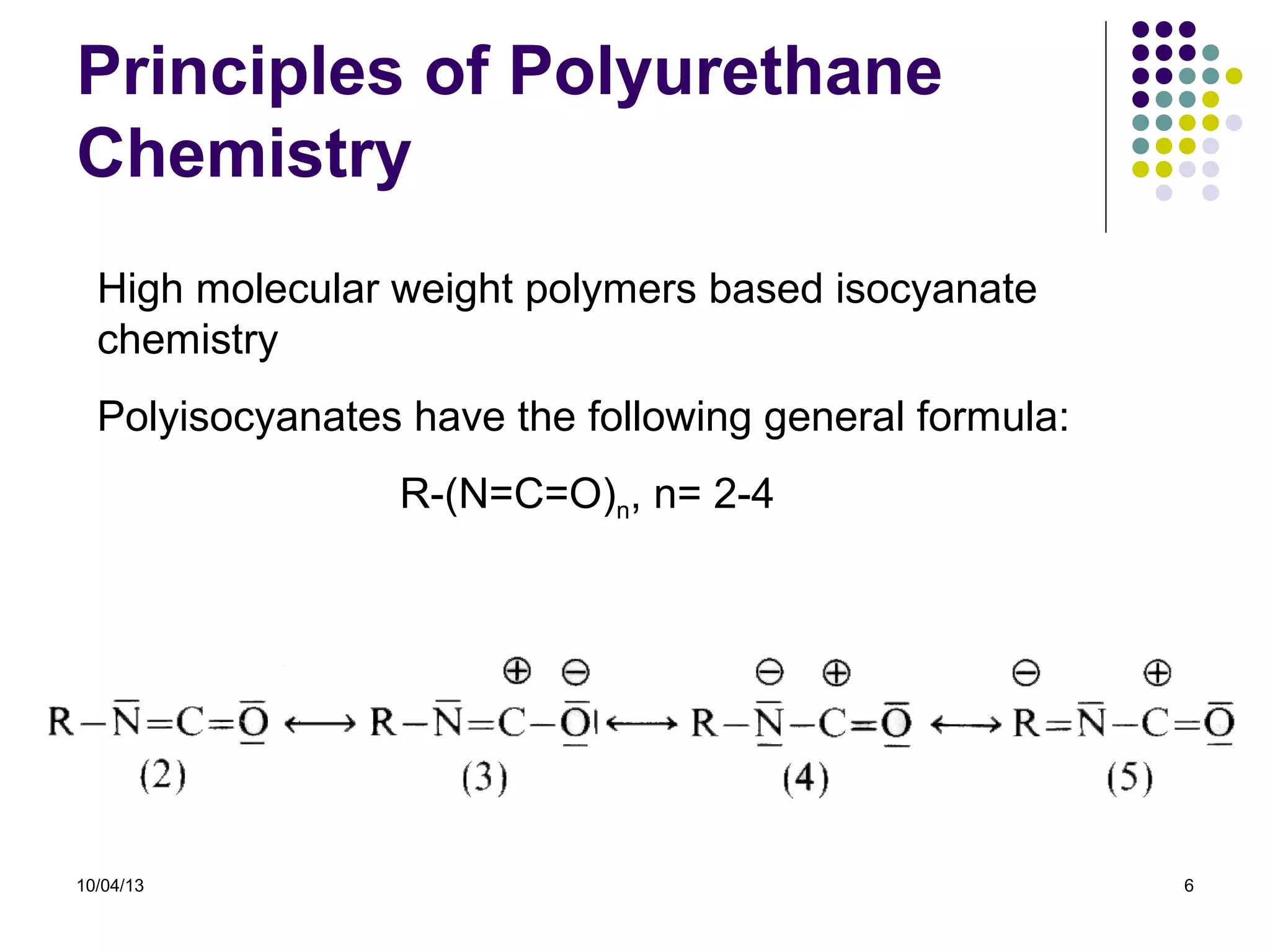
High molecular weight polymers based isocyanate
chemistry
Polyisocyanates have the following general formula:
R-(N=C=O)n, n= 2-4
10/04/13 7
Addition of Nucleophilic
Reactants
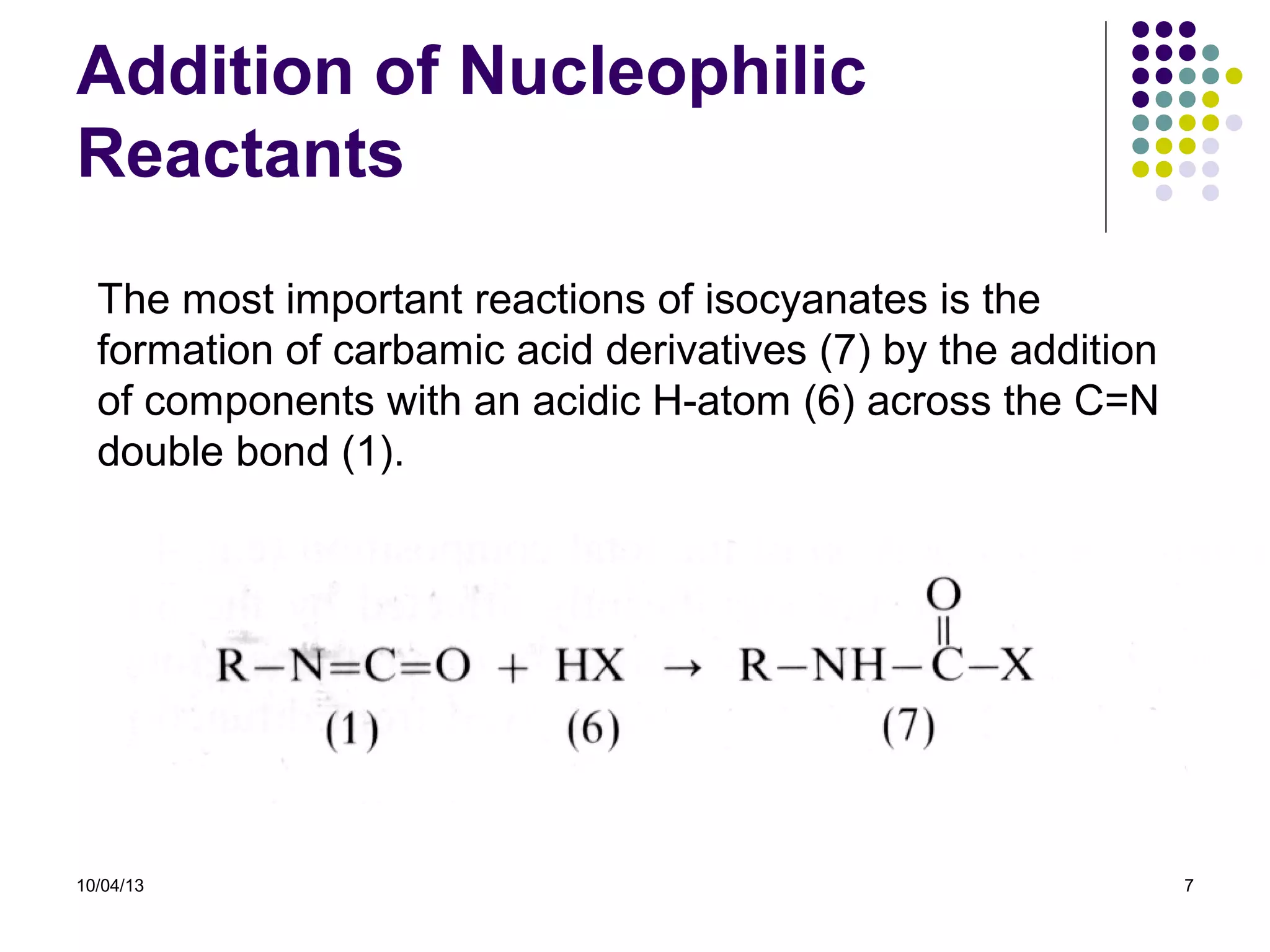
The most important reactions of isocyanates is the
formation of carbamic acid derivatives (7) by the addition
of components with an acidic H-atom (6) across the C=N
double bond (1).
10/04/13 8
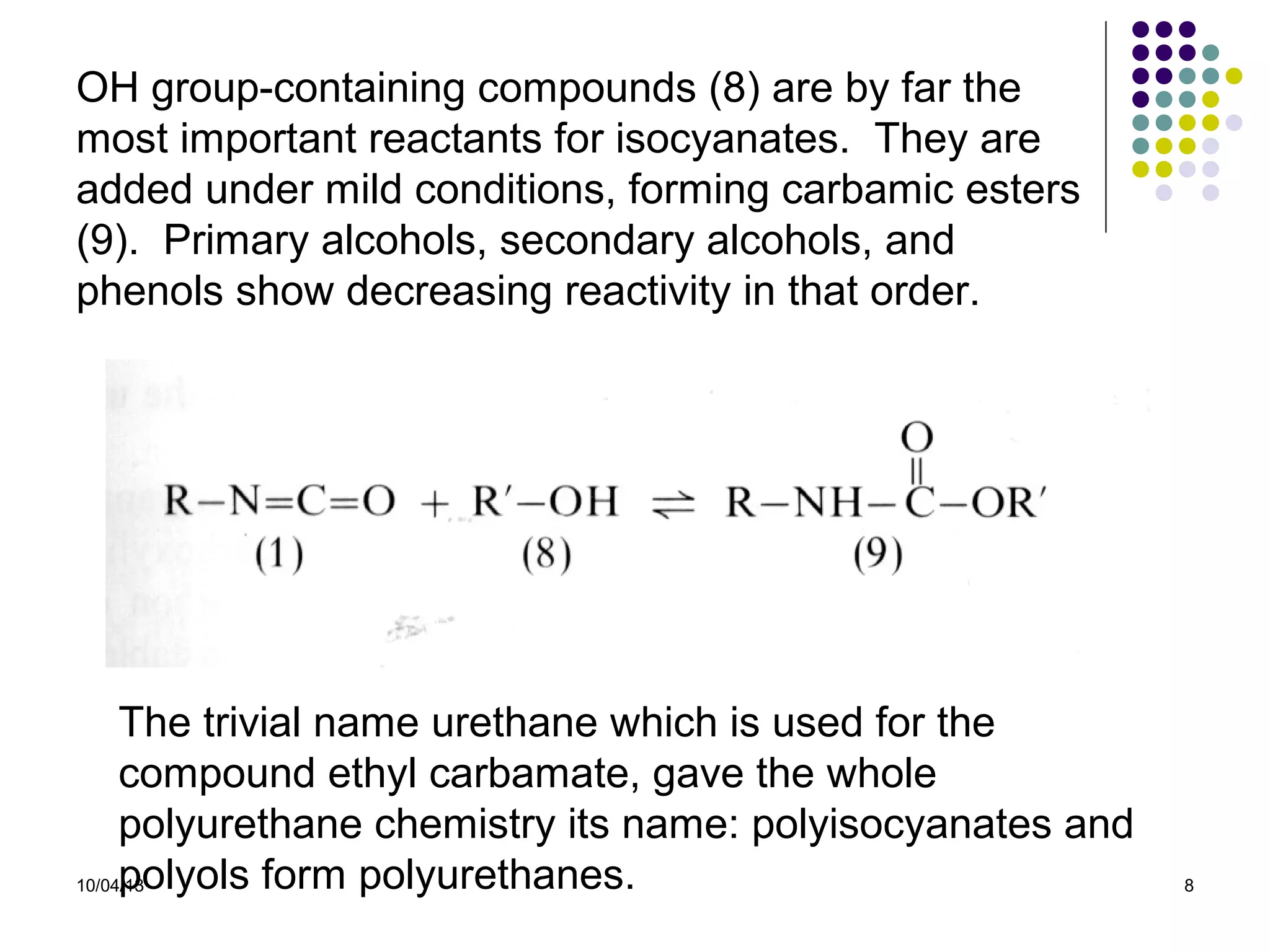
OH group-containing compounds (8) are by far the
most important reactants for isocyanates. They are
added under mild conditions, forming carbamic esters
(9). Primary alcohols, secondary alcohols, and
phenols show decreasing reactivity in that order.
The trivial name urethane which is used for the
compound ethyl carbamate, gave the whole
polyurethane chemistry its name: polyisocyanates and
polyols form polyurethanes.
10/04/13 9
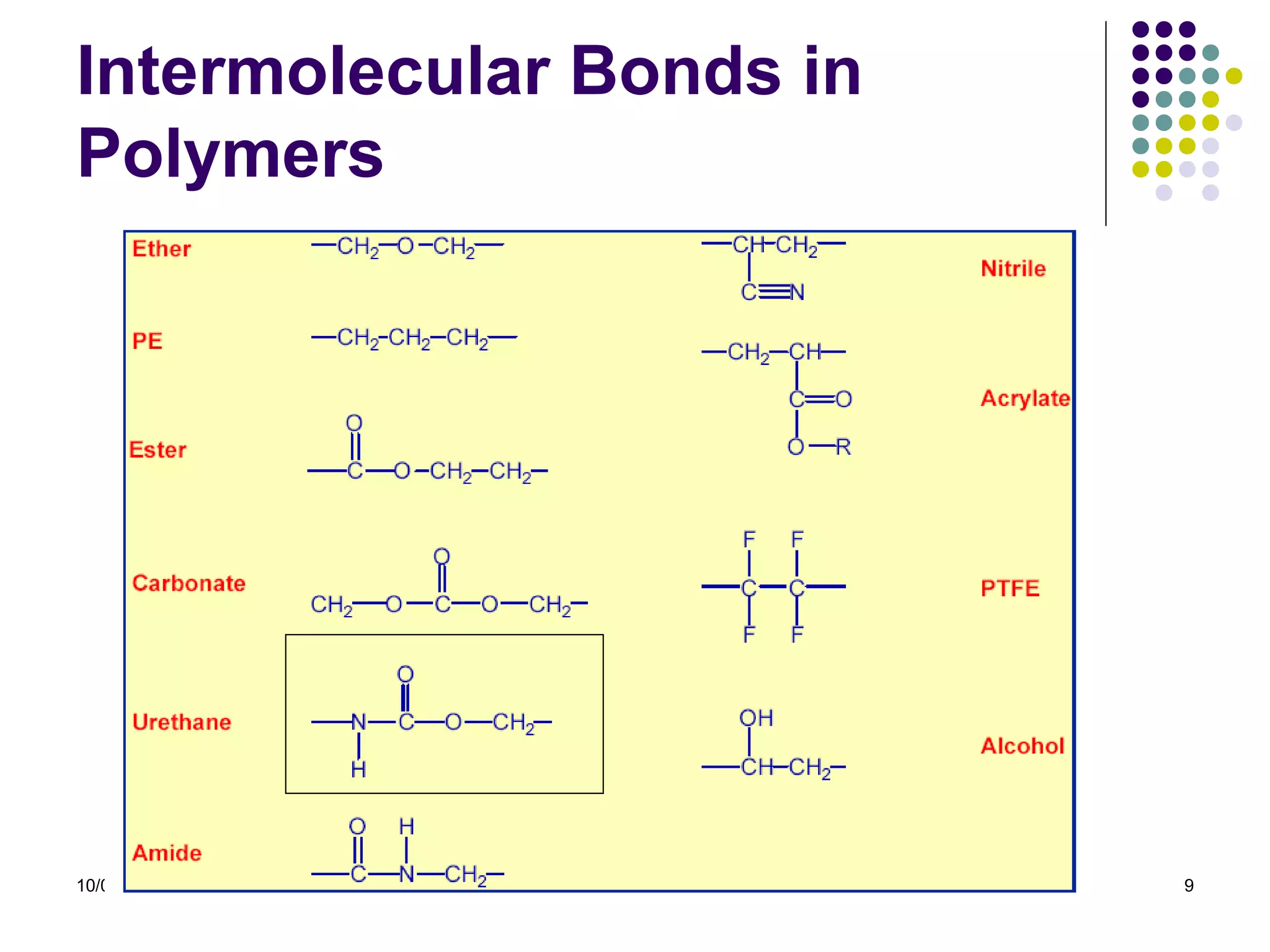
Intermolecular Bonds in
Polymers
10/04/13 10
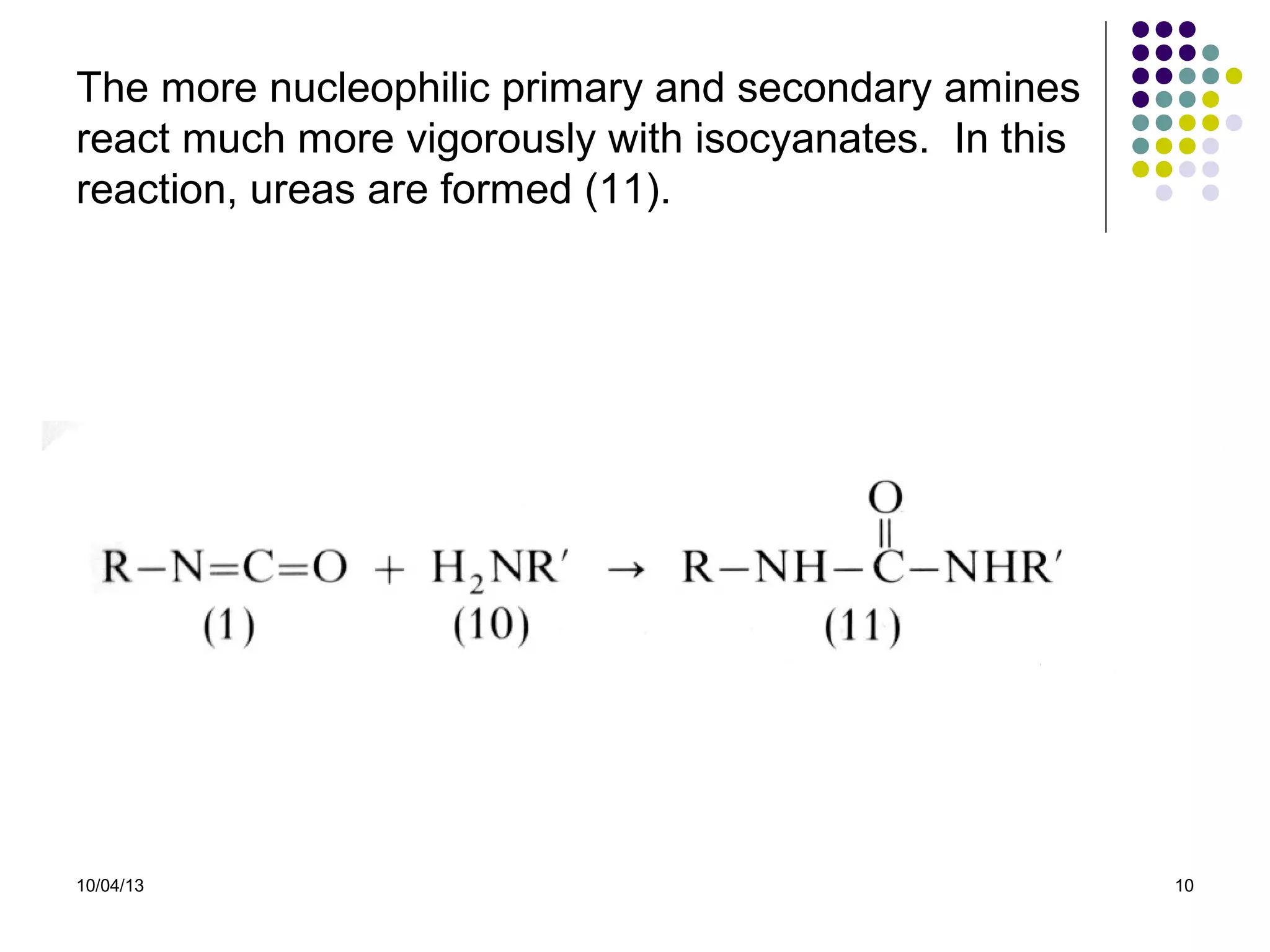
The more nucleophilic primary and secondary amines
react much more vigorously with isocyanates. In this
reaction, ureas are formed (11).
10/04/13 11
Important Building Blocks for
Polyurethanes- Isocyanates
CH2 NCOOCN
NCO
NCO
CH3
OCN NCO
CH3
CH2 NCOOCN
OCN(CH2)6NCO
80% 20%
TDI-80
MDI or aromatic
polyisocyanate
H12MDI
HDI
HO(CH2CH2CH2CH2O)nH
HO(CH2CH2O)nH
HO(CHCH2O)nH
CH3
HO(CH2)x Si O Si (CH2)xOH
CH3
CH3
CH3
CH3
y
PTMO
PEO
PPG
PSX
HO R OC (CH2)x CO R OH
O O
y
Polyols
10/04/13 13
Synthetic Scheme of
Polyurethanes
Typical Chain-extenders
HOCH2CH2OH
HOCH2CHOH
CH3
HO(CH2)4OH
HO(CH2)6OH
CH2 OH
CH OH
CH2 OH
H2N(CH2)2-6NH2
10/04/13 15
10/04/13 16
Polyurethane Structural Model
10/04/13 17
Schematic Model Domain
Sturcture
10/04/13 18
Hard Segment Interactions
affect Mechanical Performance
10/04/13 19
10/04/13 20
10/04/13 21
10/04/13 22
10/04/13 23
Effect of Polyurethane MW on
Mechanical Properties

Elastomers