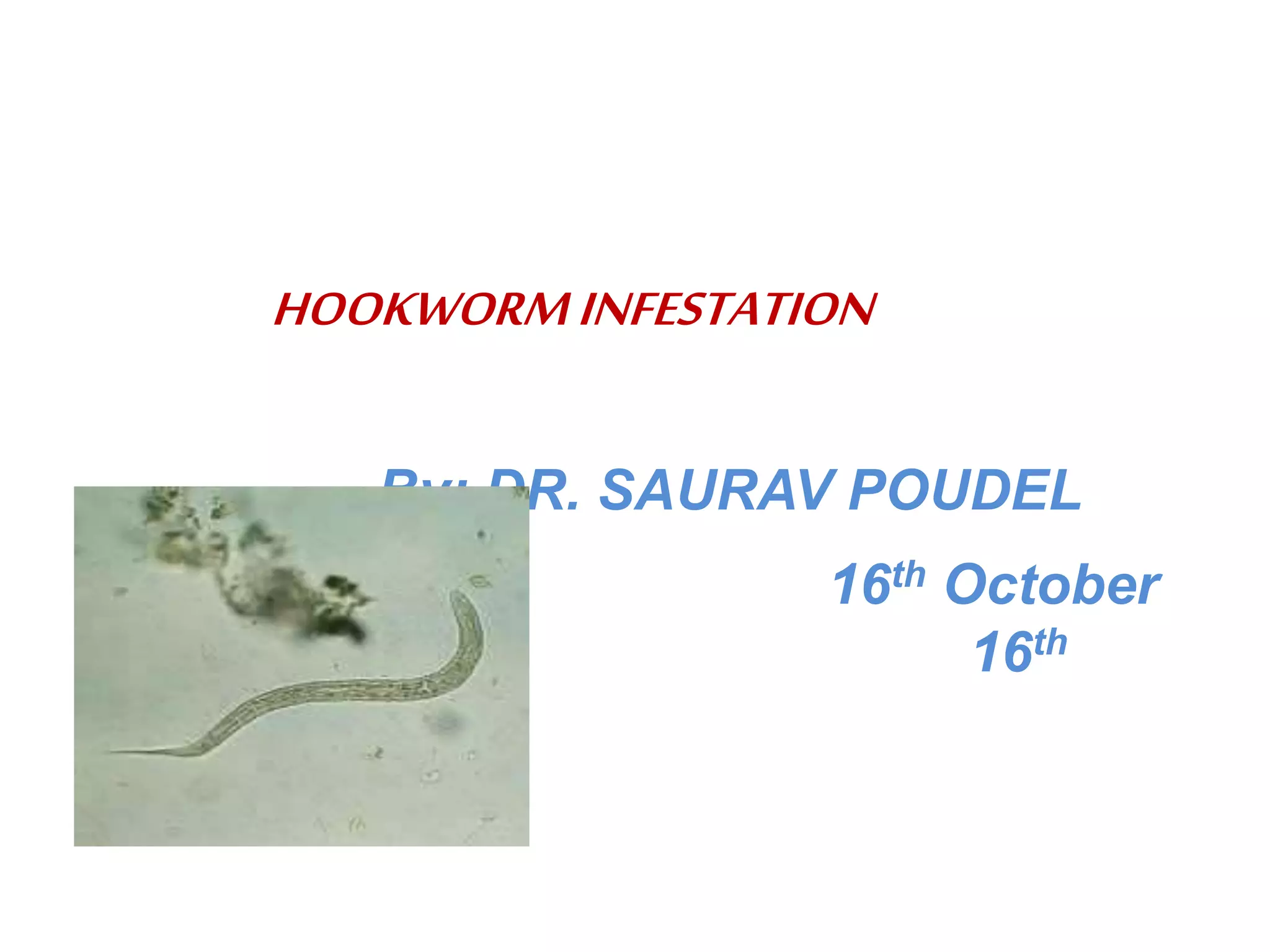
HOOKWORMINFESTATION
By: DR. SAURAV POUDEL
16th October
2016. 16th
October 2016
Prevalence of Hookworm
• Hookworm affects about 576 million people globally
• Predominates in tropic and subtropic regions
• Disease of developing and under-developed world,
disease of the poorest of the poor
• Most vulnerable:
– Children
– Pregnant women
– Persons without shoes or adequate protective clothing
– Agriculturalists
Worldwide Infection
Offending Pathogens
Majority of hookworm infections in humans
caused by
1) Ancylostoma duodenale
(an-cy-CLO-sto-ma doe-AH-den-al)
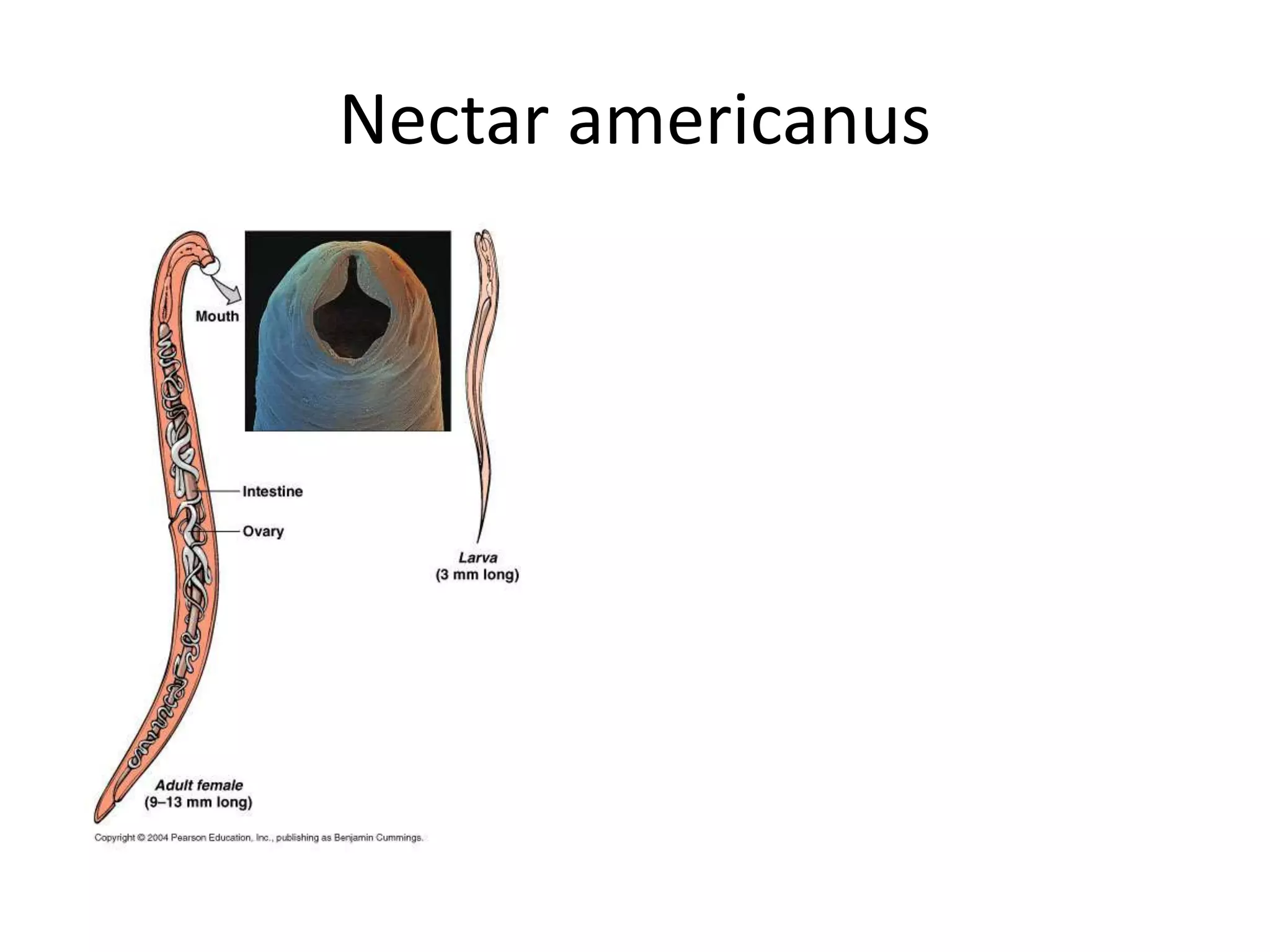
2) Necator americanus
(ne-KAY-tor am-er-i-CON-us)
N. americanus and A. duodenale
• 0.10 mm length, 0.4 mm diameter.
Female > Male
• 9000 eggs/day, eggs have 3-5 yrs
survival
• Buccal capsule set with two
crescent-shaped cutting plates on
ventral side
• Ingests 30 µl blood/day
• 12 mm in length, 0.6 mm in
diameter. Female > Male
• 20,000 eggs/day, eggs have 1 yr
survival
• Buccal capsule set with symmetric
pair of sharp teeth on ventral side.
• Ingests 260 µl blood/day
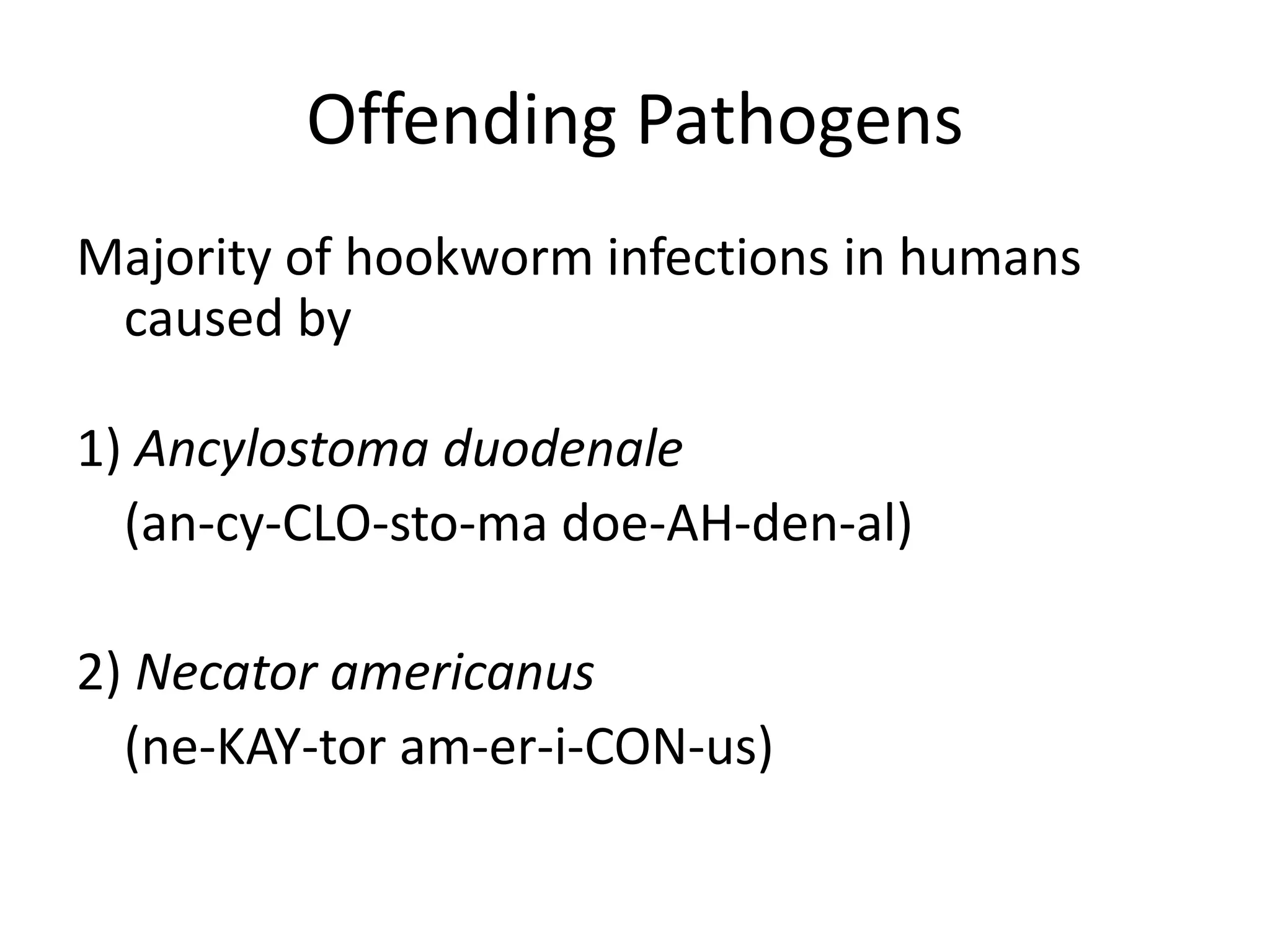
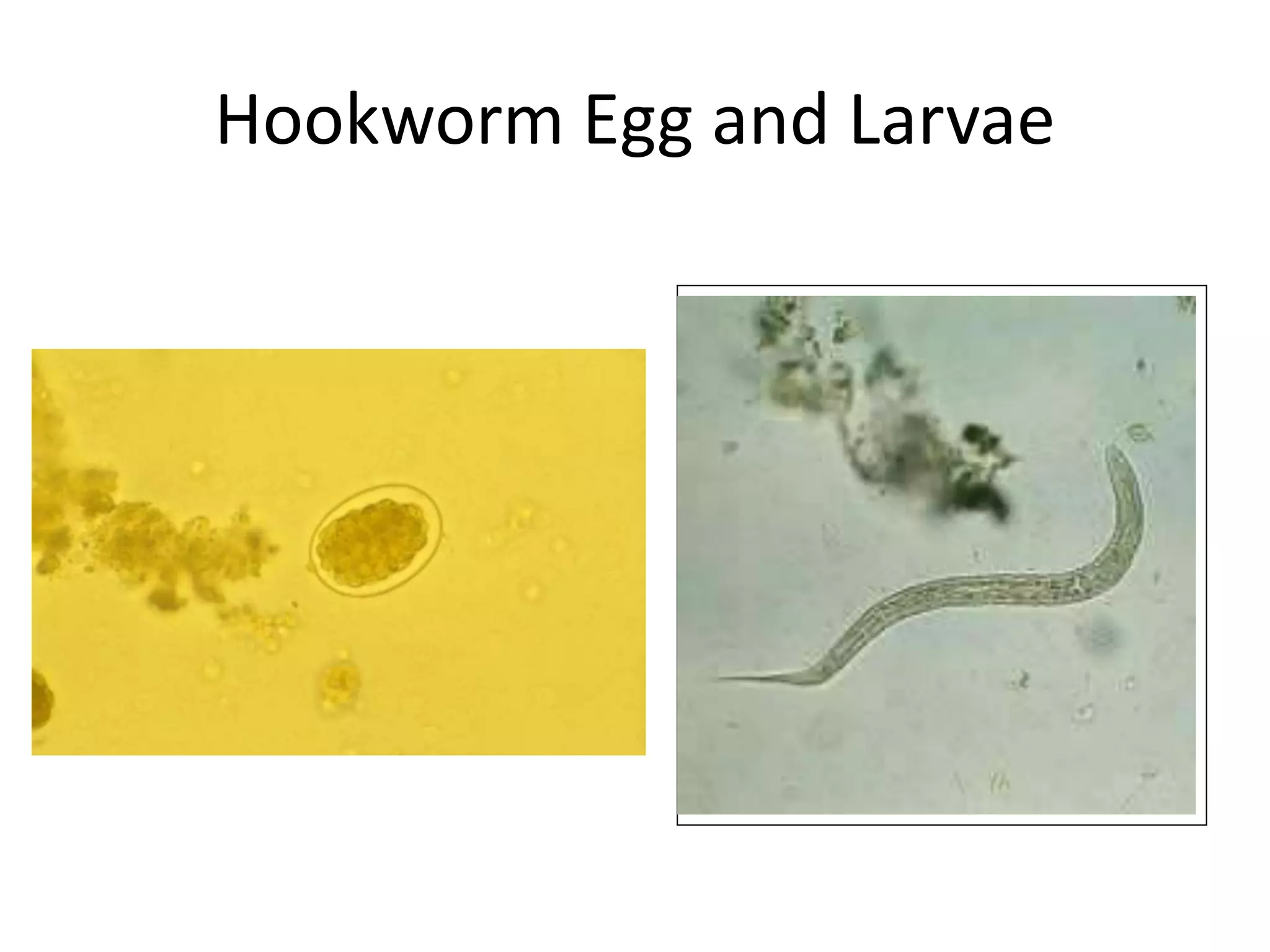
Hookworm Egg and Larvae
Nectar americanus
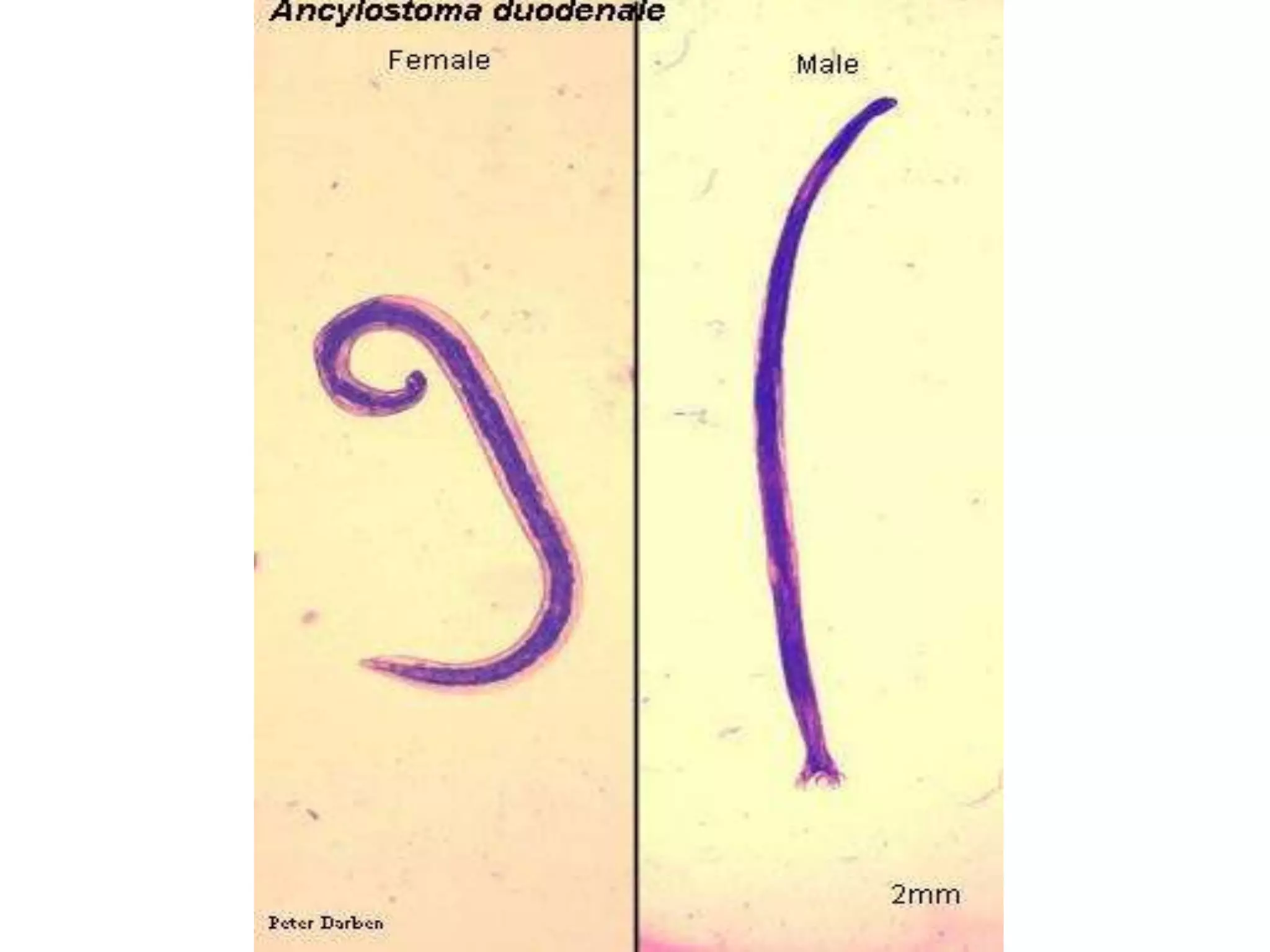
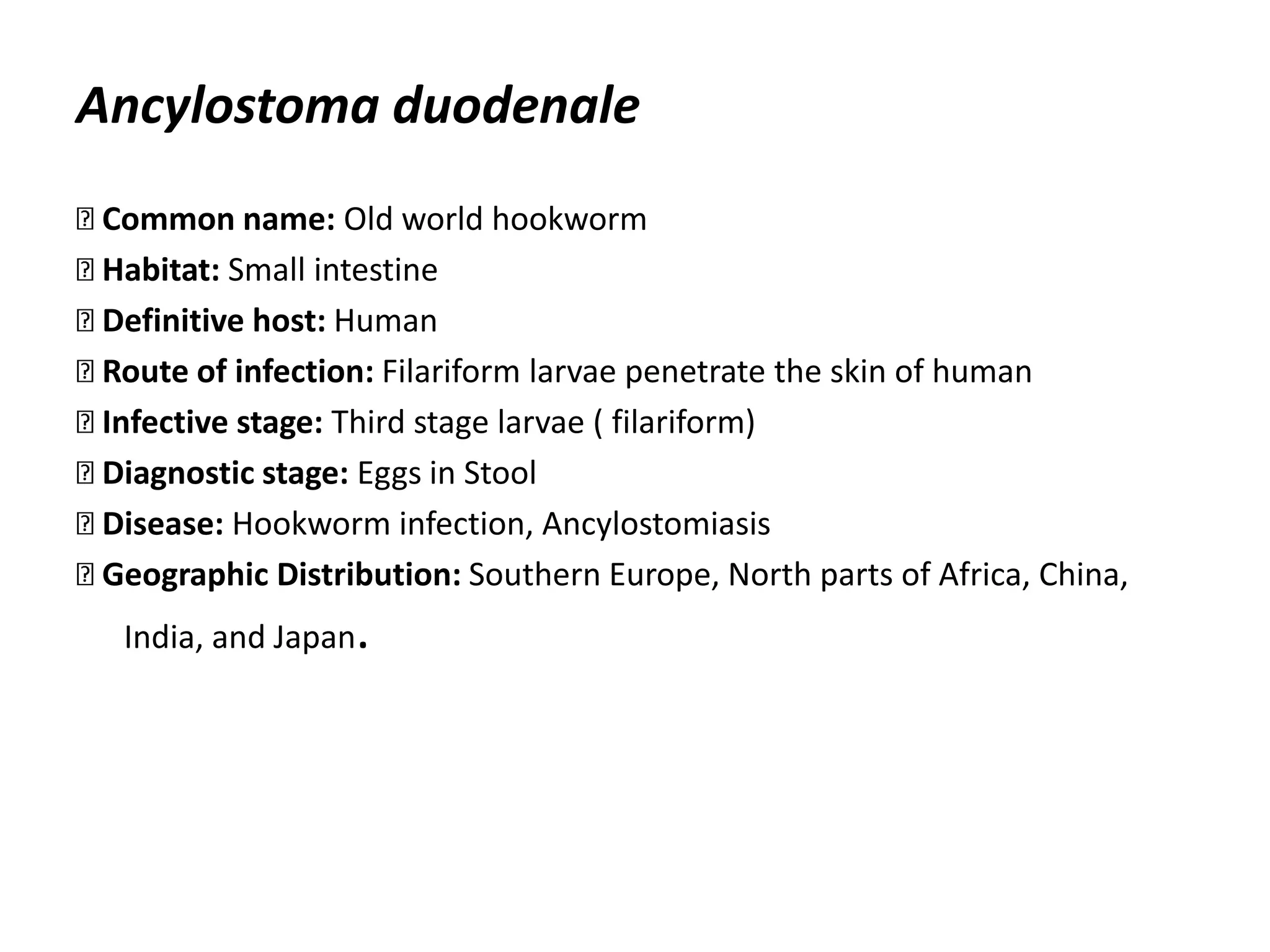
Ancylostoma duodenale
Common name: Old world hookworm
Habitat: Small intestine
Definitive host: Human
Route of infection: Filariform larvae penetrate the skin of human
Infective stage: Third stage larvae ( filariform)
Diagnostic stage: Eggs in Stool
Disease: Hookworm infection, Ancylostomiasis
Geographic Distribution: Southern Europe, North parts of Africa, China,
India, and Japan.
Ancylostoma hooks
Chitinous
teeth plates
Egg
• Shape : oval with an empty space between the shell and content
• Size: 60 x 40 μm
• Shell: thin egg shell
• Color: colorless and transparent
• Content: 4-8 cell unembryonated
• Immature eggs pass in feces (20,000 eggs ⁄ day).
Clinical manifestations:
1-Invasion stage:
The skin, at the site of entry of filariform larva
Maculopapular lesions “ ground itch” or “dew itch”
Itching, edema.
2-Migration stage: passage of the larvae in the lung leads to:
Haemorrhages and pneumonia, cough, fever, eosinophilia.
Ground itch or “dew itch”
3-Intestinal stage:
1) sucking of blood by the worm (iron-dificiency anaemia ),
• Severe anaemia leads to weakness.
• 0.15-0.26 mL of blood may be withdrawn by a Ancylstoma in 24 hour.
• Approximately 50% of the red blood cells are hemolyzed
2) Bleeding at the site of attachment and after movement to a new sites.
3) Toxic substances .
-intestinal ulcers: flatulence, nausea, vomiting ,diarrhea.
Symptoms Associated with Infection
• Skin Infection
– stinging, burning, itching, pruritus, papulovesicular rash -
can last up to 2 wks
• Lung Infection
– pneumonia, cough --rare and mild.
• Ingestion
– throat soreness, hoarseness, nausea, vomiting
• GI Infection
– anemia, bloody stool (from former attachment sites),
abdominal pain
Ancylostoma caninum
Ancylostoma braziliense
Ancylostoma caninum
Dog hookworm
Ancylostoma braziliense
Cat hookworm
Both cause creeping eruptions
Infection
Lab Diagnosis
1. Direct Method:
Examination of stool :
A macroscopic examination of stool is necessary
to find out the adult worms.
A microscopical examination of stool may easily
demonstrate the presence of characterestic
hookworm eggs.
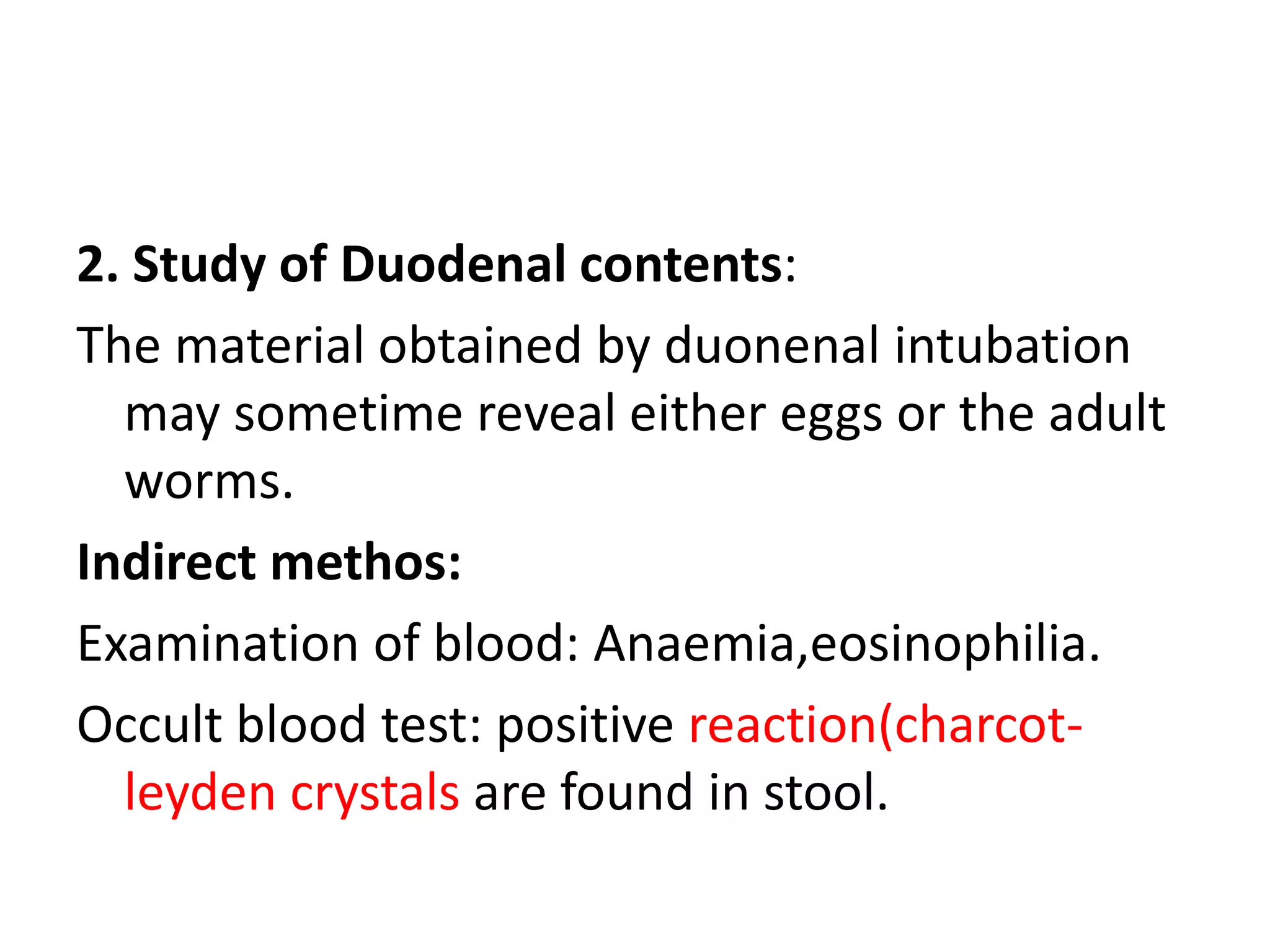
2. Study of Duodenal contents:
The material obtained by duonenal intubation
may sometime reveal either eggs or the adult
worms.
Indirect methos:
Examination of blood: Anaemia,eosinophilia.
Occult blood test: positive reaction(charcot-
leyden crystals are found in stool.
Treatment
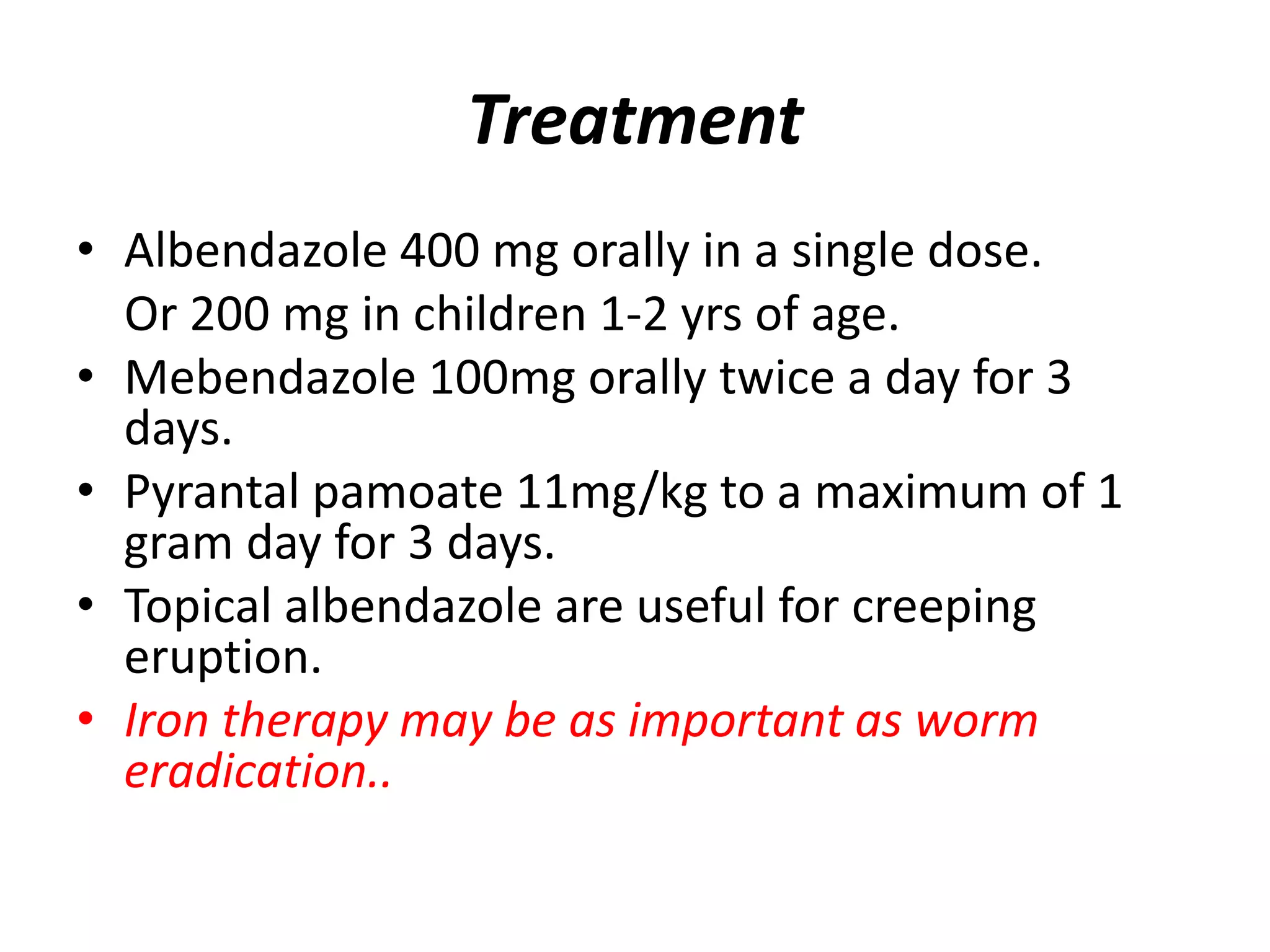
• Albendazole 400 mg orally in a single dose.
Or 200 mg in children 1-2 yrs of age.
• Mebendazole 100mg orally twice a day for 3
days.
• Pyrantal pamoate 11mg/kg to a maximum of 1
gram day for 3 days.
• Topical albendazole are useful for creeping
eruption.
• Iron therapy may be as important as worm
eradication..
Prevention and Control
• Sanitary disposal of human faeces
• Wearing of footwear
• Health education
• Treatment of infected individuals
THANK YOU
From : Dr. Saurav Poudel.
saurav7utd@hotmail.com (if any query).

Hookworm Infestation

  • 1.
    HOOKWORMINFESTATION By: DR. SAURAVPOUDEL 16th October 2016. 16th October 2016
  • 2.
    Prevalence of Hookworm •Hookworm affects about 576 million people globally • Predominates in tropic and subtropic regions • Disease of developing and under-developed world, disease of the poorest of the poor • Most vulnerable: – Children – Pregnant women – Persons without shoes or adequate protective clothing – Agriculturalists
  • 3.
  • 4.
    Offending Pathogens Majority ofhookworm infections in humans caused by 1) Ancylostoma duodenale (an-cy-CLO-sto-ma doe-AH-den-al) 2) Necator americanus (ne-KAY-tor am-er-i-CON-us)
  • 5.
    N. americanus andA. duodenale • 0.10 mm length, 0.4 mm diameter. Female > Male • 9000 eggs/day, eggs have 3-5 yrs survival • Buccal capsule set with two crescent-shaped cutting plates on ventral side • Ingests 30 µl blood/day • 12 mm in length, 0.6 mm in diameter. Female > Male • 20,000 eggs/day, eggs have 1 yr survival • Buccal capsule set with symmetric pair of sharp teeth on ventral side. • Ingests 260 µl blood/day
  • 6.
  • 8.
  • 9.
    Ancylostoma duodenale Common name:Old world hookworm Habitat: Small intestine Definitive host: Human Route of infection: Filariform larvae penetrate the skin of human Infective stage: Third stage larvae ( filariform) Diagnostic stage: Eggs in Stool Disease: Hookworm infection, Ancylostomiasis Geographic Distribution: Southern Europe, North parts of Africa, China, India, and Japan.
  • 10.
  • 11.
    Egg • Shape :oval with an empty space between the shell and content • Size: 60 x 40 μm • Shell: thin egg shell • Color: colorless and transparent • Content: 4-8 cell unembryonated • Immature eggs pass in feces (20,000 eggs ⁄ day).
  • 13.
    Clinical manifestations: 1-Invasion stage: Theskin, at the site of entry of filariform larva Maculopapular lesions “ ground itch” or “dew itch” Itching, edema. 2-Migration stage: passage of the larvae in the lung leads to: Haemorrhages and pneumonia, cough, fever, eosinophilia.
  • 14.
    Ground itch or“dew itch”
  • 15.
    3-Intestinal stage: 1) suckingof blood by the worm (iron-dificiency anaemia ), • Severe anaemia leads to weakness. • 0.15-0.26 mL of blood may be withdrawn by a Ancylstoma in 24 hour. • Approximately 50% of the red blood cells are hemolyzed 2) Bleeding at the site of attachment and after movement to a new sites. 3) Toxic substances . -intestinal ulcers: flatulence, nausea, vomiting ,diarrhea.
  • 16.
    Symptoms Associated withInfection • Skin Infection – stinging, burning, itching, pruritus, papulovesicular rash - can last up to 2 wks • Lung Infection – pneumonia, cough --rare and mild. • Ingestion – throat soreness, hoarseness, nausea, vomiting • GI Infection – anemia, bloody stool (from former attachment sites), abdominal pain
  • 17.
    Ancylostoma caninum Ancylostoma braziliense Ancylostomacaninum Dog hookworm Ancylostoma braziliense Cat hookworm Both cause creeping eruptions
  • 19.
  • 20.
    Lab Diagnosis 1. DirectMethod: Examination of stool : A macroscopic examination of stool is necessary to find out the adult worms. A microscopical examination of stool may easily demonstrate the presence of characterestic hookworm eggs.
  • 21.
    2. Study ofDuodenal contents: The material obtained by duonenal intubation may sometime reveal either eggs or the adult worms. Indirect methos: Examination of blood: Anaemia,eosinophilia. Occult blood test: positive reaction(charcot- leyden crystals are found in stool.
  • 22.
    Treatment • Albendazole 400mg orally in a single dose. Or 200 mg in children 1-2 yrs of age. • Mebendazole 100mg orally twice a day for 3 days. • Pyrantal pamoate 11mg/kg to a maximum of 1 gram day for 3 days. • Topical albendazole are useful for creeping eruption. • Iron therapy may be as important as worm eradication..
  • 23.
    Prevention and Control •Sanitary disposal of human faeces • Wearing of footwear • Health education • Treatment of infected individuals
  • 24.
    THANK YOU From :Dr. Saurav Poudel. saurav7utd@hotmail.com (if any query).