Ancystoma &
Necator
MR. SUBHASH L. KARN
DEPT. OF MICROBIOLOGY
U.C.M.S.
Ancylostoma duodenale
 Old world hookworm
 Ancylostomiasis
 Italian Physician Dubini (1843) - autopsy material
Milanase woman
 Looss (1896) – mode of infection and pathogenesis
Habitat
 Lumen of small intestine ( jejunum and ileum)
 Remain attached to the intestinal wall by their
mouth parts.
MORPHOLOGY
Adult worm
 Cylindrical , greyish white and slightly curved
 The anterior end is bent slightly in the same direction
of the body curve and gives it name hookworm
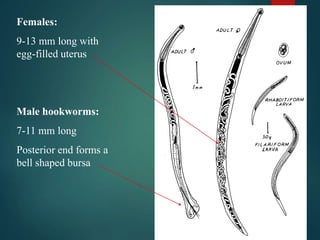
Females:
9-13 mm long with
egg-filled uterus
Male hookworms:
7-11 mm long
Posterior end forms a
bell shaped bursa
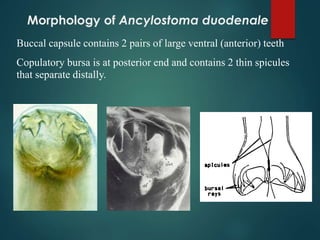
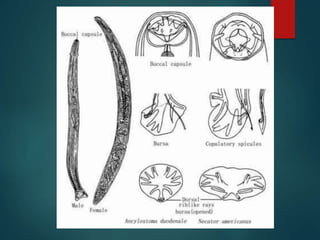
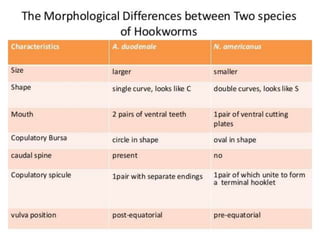
Morphology of Ancylostoma duodenale
Buccal capsule contains 2 pairs of large ventral (anterior) teeth
Copulatory bursa is at posterior end and contains 2 thin spicules
that separate distally.
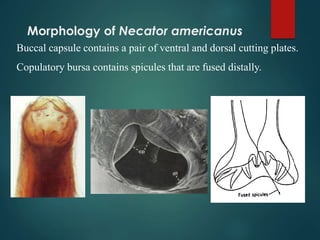
Morphology of Necator americanus
Buccal capsule contains a pair of ventral and dorsal cutting plates.
Copulatory bursa contains spicules that are fused distally.
Male worm
o 8-11mm long, 0.4mm thick
o Posterior end of male is expanded into a copulatory
bursa supported by fleshy rays
o Rays help in differentiating between species
o rectum and genital canal open into Cloaca in the
bursa
o 2 long retractile bristle like copulatory spicules, tips of
which project from the bursa
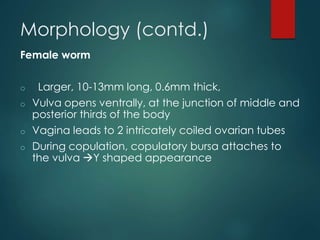
Morphology (contd.)
Female worm
o Larger, 10-13mm long, 0.6mm thick,
o Vulva opens ventrally, at the junction of middle and
posterior thirds of the body
o Vagina leads to 2 intricately coiled ovarian tubes
o During copulation, copulatory bursa attaches to
the vulva Y shaped appearance
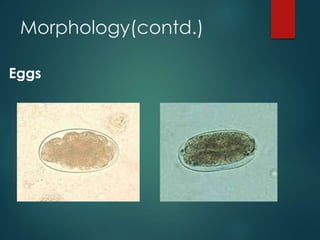
Morphology(contd.)
Eggs
Routes of transmission
 Penetration of skin
 Ingestion of filariform larvae
 Breast milk from mother to infants(
transmammary transmission)
 Transplacental transmission
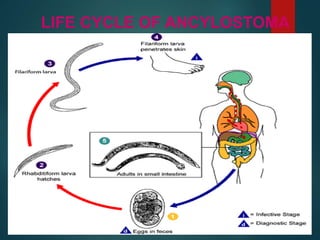
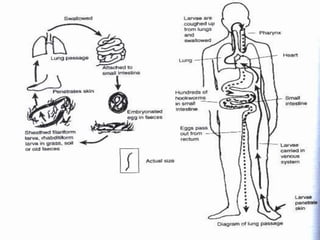
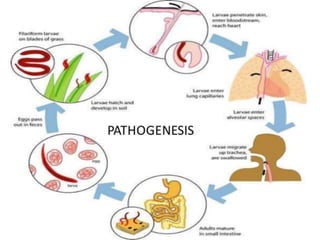
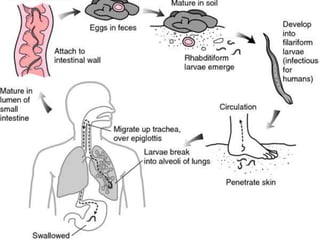
LIFE CYCLE OF ANCYLOSTOMA
Pathogenesis and pathology
 Mainly by presence of adult worms in the
intestine
 Less frequently , by the penetration of , and
migration of infective larvae within skin.
Host immunity
 Hookworm infection may confer immunity and
eliminate hookworms from the gut.
 Repeated infections by the larvae in the circulatory
system and respiratory tract may evoke a strong
immune response.
 Immediate hypersensitivity reactions
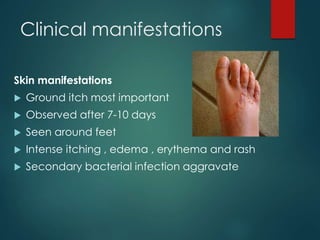
Clinical manifestations
Skin manifestations
 Ground itch most important
 Observed after 7-10 days
 Seen around feet
 Intense itching , edema , erythema and rash
 Secondary bacterial infection aggravate
Respiratory manifestation
 Low grade fever
 Mild cough
 Pharyngitis
 Dyspnoea
 Hemoptysis
 Dyspnoea may be triggered when worms first break
through from venous circulation into lung alveoli.
 Pneumonia with pulmonary consolidation
 Bronchitis
Intestinal manifestation
 Low grade fever
 Anaemia
 Nausea
 Vomiting
 Diarrhea
 Abdominal discomfort
 Iron deficiency anaemia and hypo- albuminaemia
are the major clinical manifestations.
Diagnosis
 Difficult to diagnose clinically
 Eosinophilic leukocytosis and hypochromic
microcytic anaemia may be suggestive of the
condition in the endemic areas.
Laboratory diagnosis
Parasitic diagnosis
Specimen:- Stool
Method of examination
1. Stool microscopy
2. Stool concentration(Kato Katz method)
3. Stool culture( Harda Mori method)
4. Imaging methods
5. Other test( Charcot Leyden crystals and occult
blood)
Treatment
1. Treatment of worm infection by anthelminthic
2. Treatment of iron deficiency anaemia with
replacement iron therapy
Treatment of worm infection by anthelminthic
 Mebendazole (100 mg twice daily for 3 days)
 Pyrantel Pamoate( single dose of 11mh/kg/body wt.,
max 1gm)
 Thiabendazole (25mg/kg body wt. for 2 days)
Treatment contd.
Treatment of anemia
 Carried out by giving a high protein –diet ,
supplemented with oral iron preparations.
 Ferrous sulphate given orally in a dose of 200 mg to
400 mg daily depending on the tolerance of the
person
 Folic acid and vitamin B12
Prevention and control
1. Sanitary disposal of human feces
2. Treatment of infected person
3. Use of sanitary latrines, and use of foot wears and
4. Health education with improved nutrition
supplemented with dietary iron.
THANK YOU

Hook worm

  • 1.
    Ancystoma & Necator MR. SUBHASHL. KARN DEPT. OF MICROBIOLOGY U.C.M.S.
  • 2.
    Ancylostoma duodenale  Oldworld hookworm  Ancylostomiasis  Italian Physician Dubini (1843) - autopsy material Milanase woman  Looss (1896) – mode of infection and pathogenesis
  • 3.
    Habitat  Lumen ofsmall intestine ( jejunum and ileum)  Remain attached to the intestinal wall by their mouth parts.
  • 4.
    MORPHOLOGY Adult worm  Cylindrical, greyish white and slightly curved  The anterior end is bent slightly in the same direction of the body curve and gives it name hookworm
  • 5.
    Females: 9-13 mm longwith egg-filled uterus Male hookworms: 7-11 mm long Posterior end forms a bell shaped bursa
  • 6.
    Morphology of Ancylostomaduodenale Buccal capsule contains 2 pairs of large ventral (anterior) teeth Copulatory bursa is at posterior end and contains 2 thin spicules that separate distally.
  • 7.
    Morphology of Necatoramericanus Buccal capsule contains a pair of ventral and dorsal cutting plates. Copulatory bursa contains spicules that are fused distally.
  • 8.
    Male worm o 8-11mmlong, 0.4mm thick o Posterior end of male is expanded into a copulatory bursa supported by fleshy rays o Rays help in differentiating between species o rectum and genital canal open into Cloaca in the bursa o 2 long retractile bristle like copulatory spicules, tips of which project from the bursa
  • 9.
    Morphology (contd.) Female worm oLarger, 10-13mm long, 0.6mm thick, o Vulva opens ventrally, at the junction of middle and posterior thirds of the body o Vagina leads to 2 intricately coiled ovarian tubes o During copulation, copulatory bursa attaches to the vulva Y shaped appearance
  • 12.
  • 14.
    Routes of transmission Penetration of skin  Ingestion of filariform larvae  Breast milk from mother to infants( transmammary transmission)  Transplacental transmission
  • 15.
    LIFE CYCLE OFANCYLOSTOMA
  • 19.
    Pathogenesis and pathology Mainly by presence of adult worms in the intestine  Less frequently , by the penetration of , and migration of infective larvae within skin.
  • 20.
    Host immunity  Hookworminfection may confer immunity and eliminate hookworms from the gut.  Repeated infections by the larvae in the circulatory system and respiratory tract may evoke a strong immune response.  Immediate hypersensitivity reactions
  • 21.
    Clinical manifestations Skin manifestations Ground itch most important  Observed after 7-10 days  Seen around feet  Intense itching , edema , erythema and rash  Secondary bacterial infection aggravate
  • 22.
    Respiratory manifestation  Lowgrade fever  Mild cough  Pharyngitis  Dyspnoea  Hemoptysis  Dyspnoea may be triggered when worms first break through from venous circulation into lung alveoli.  Pneumonia with pulmonary consolidation  Bronchitis
  • 23.
    Intestinal manifestation  Lowgrade fever  Anaemia  Nausea  Vomiting  Diarrhea  Abdominal discomfort  Iron deficiency anaemia and hypo- albuminaemia are the major clinical manifestations.
  • 24.
    Diagnosis  Difficult todiagnose clinically  Eosinophilic leukocytosis and hypochromic microcytic anaemia may be suggestive of the condition in the endemic areas.
  • 25.
    Laboratory diagnosis Parasitic diagnosis Specimen:-Stool Method of examination 1. Stool microscopy 2. Stool concentration(Kato Katz method) 3. Stool culture( Harda Mori method) 4. Imaging methods 5. Other test( Charcot Leyden crystals and occult blood)
  • 26.
    Treatment 1. Treatment ofworm infection by anthelminthic 2. Treatment of iron deficiency anaemia with replacement iron therapy Treatment of worm infection by anthelminthic  Mebendazole (100 mg twice daily for 3 days)  Pyrantel Pamoate( single dose of 11mh/kg/body wt., max 1gm)  Thiabendazole (25mg/kg body wt. for 2 days)
  • 27.
    Treatment contd. Treatment ofanemia  Carried out by giving a high protein –diet , supplemented with oral iron preparations.  Ferrous sulphate given orally in a dose of 200 mg to 400 mg daily depending on the tolerance of the person  Folic acid and vitamin B12
  • 28.
    Prevention and control 1.Sanitary disposal of human feces 2. Treatment of infected person 3. Use of sanitary latrines, and use of foot wears and 4. Health education with improved nutrition supplemented with dietary iron.
  • 29.