By
SATHISHKUMAR G
(sathishsak111@gmail.com)
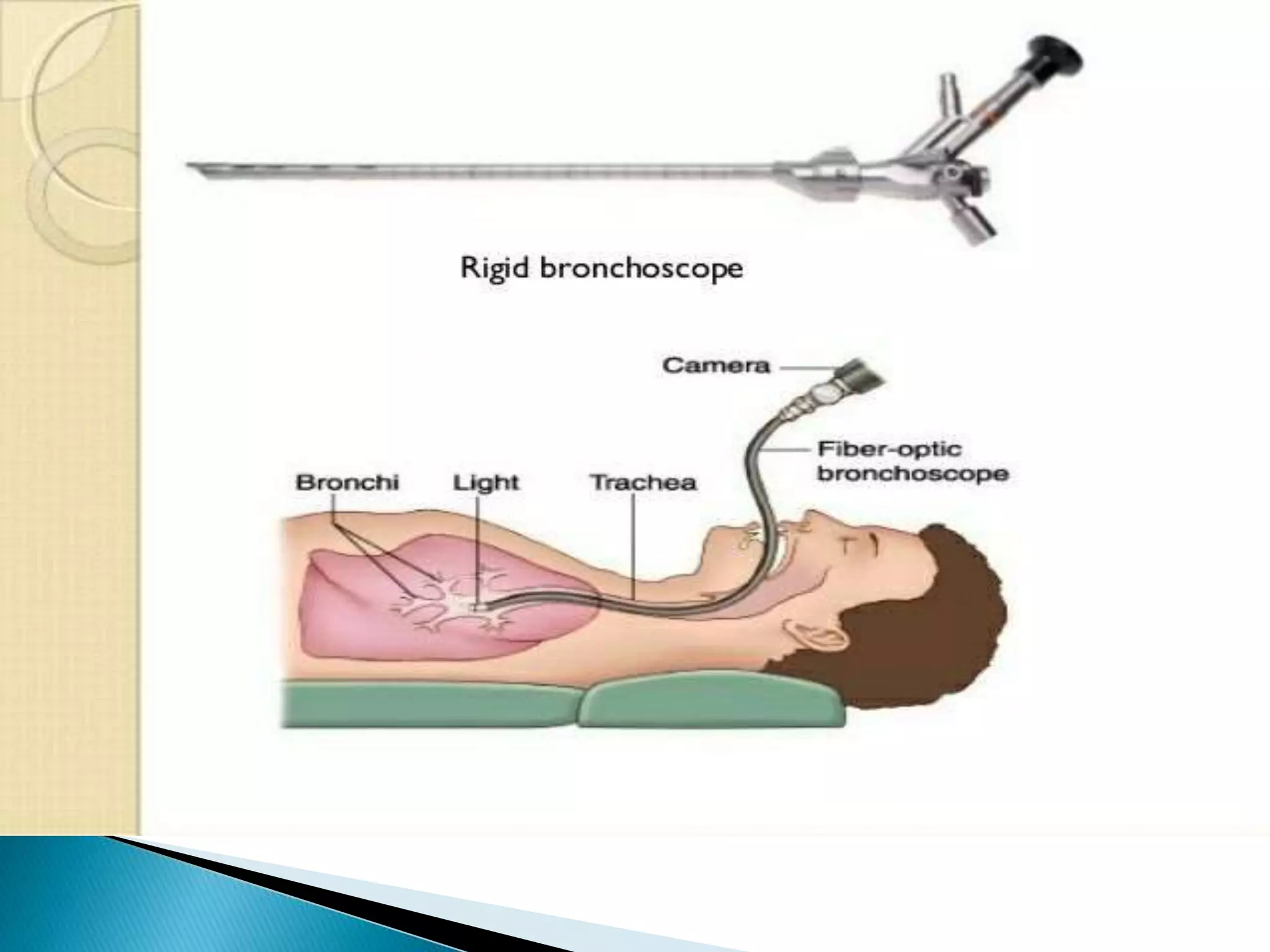
 BRONCHOSCOPY is a procedure in which a
hollow, flexible tube called a bronchoscope is
inserted into the airways through the nose or
mouth to provide a view of the
TRACHEOBRONCHIAL tree.
 It can also be used to collect bronchial
and/or lung secretions and to perform tissue
biopsy.
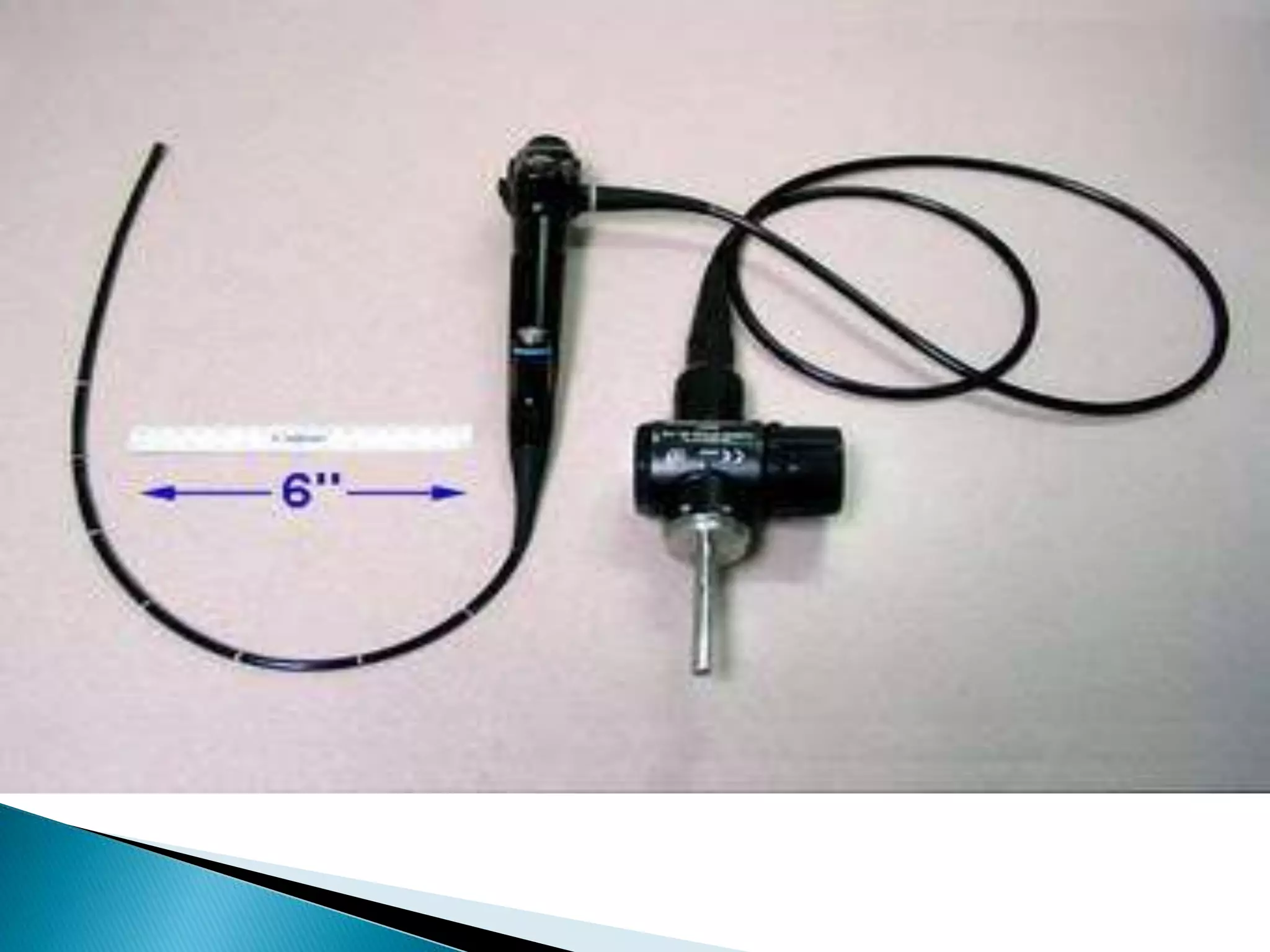
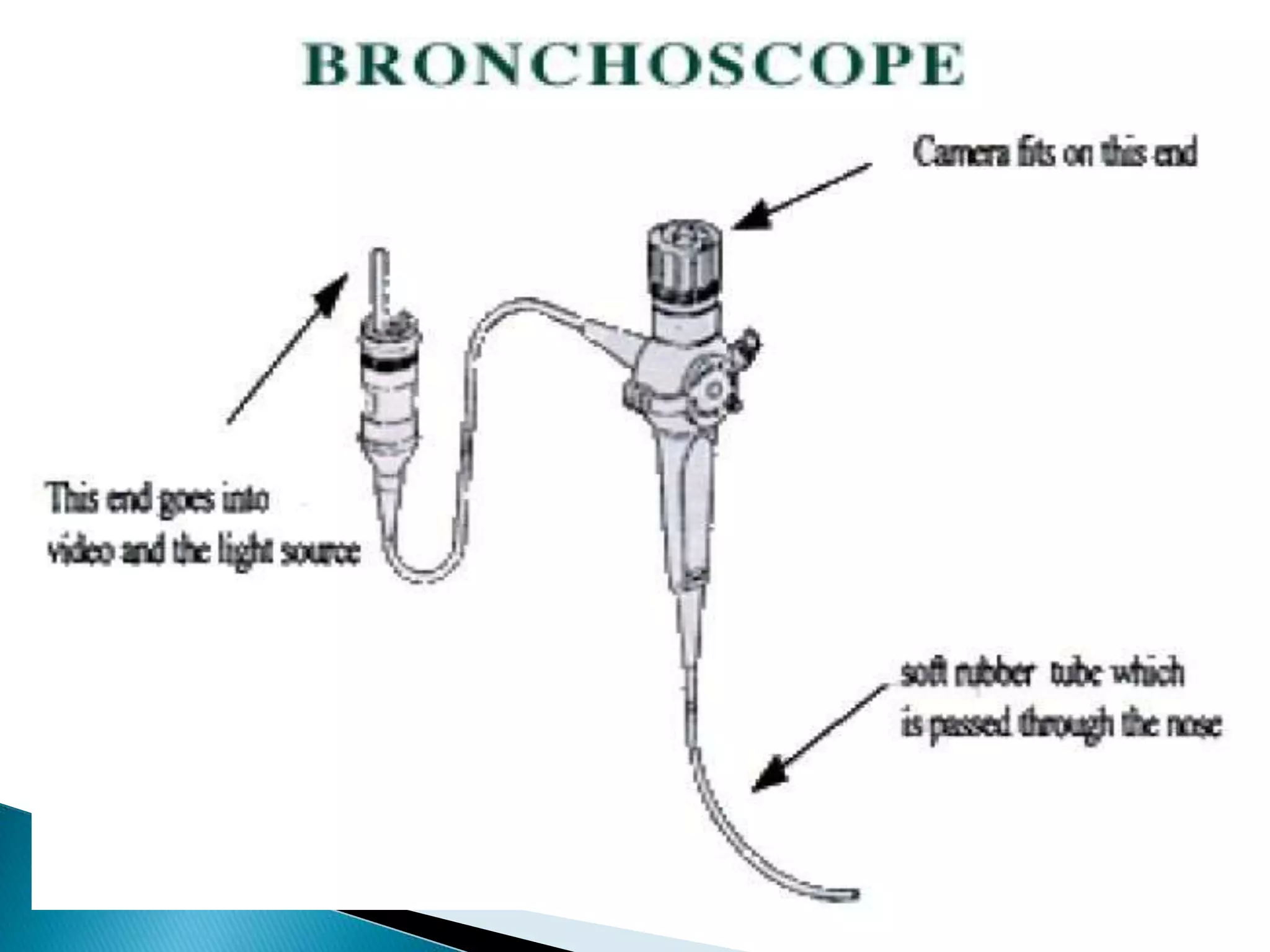
 The instrument used in BRONCHOSCOPY, a
bronchoscope.
 It is a slender, flexible tube less than 0.5 in
(2.5cm) wide and approximately 2ft (0.3cm)
long that uses FIBEROPTIC technology (very fine
filaments that can bend and carry light)
 There are two types of bronchoscope used in
this technique. They are,
.RIGID TUBE
.FIBREOPTIC TUBE
 During a BRONCHOSCOPY, the physician can
visually examine the lower airways, including
the larynx, trachea, bronchi, and bronchioles.
 It is used to examine the mucosal surface of
the airways for abnormalities that might be
associated with a variety of lung diseases.
 Its uses may be diagnostic are therapeutic.
 BRONCHOSCOPY is usually performed in an
endoscopy room, but may also be performed
at the bedside.
 The patient is placed on his back or sits
upright.
 A pulmonologist, a specialist trained to
perform the procedure, sprays an anesthetic
into the patients mouth or throat.
 Then the bronchoscope is inserted into the
patient’s mouth and passed into the throat.
 The patient should fast for 6 to 12 hours
prior to the procedure and refrain from
drinking any liquids the day of the procedure.
 Smoking should be avoided for 24 hours
prior to the procedure
 Patient should also avoid taking any aspirin
or ibuprofen- type medications.
 The BRONCHOSCOPY itself takes about 45-60
minutes.
 After the BRONCHOSCOPY, the vital signs
(heart rate, blood pressure, and breathing)
are monitored.
 No food or drink should be consumed for
about 2 hours after the procedure or until the
anesthesia wears off.
 Stent therapy
 Laser therapy
 Argon beam coagulation
 BRACHYTHERAPY
 Rigid BRONCOSCOPY
 Used to diagnose the disease of the lung,
such as cancer or tuberculosis.
 Congenital deformity of the lungs
 Suspected tumor, obstruction, secretion,
bleeding or foreign body in the airways.
 Airway abnormalities such as tracheal
STENOSES
 Persistent cough, or HEMOPTYSIS, that includes
blood in the sputum
 Used to remove a foreign body in the lungs
 To remove excessive secretions
 Use of bronchoscope mildly irritates the
lining of the airways.
 It results in some swelling and inflammation,
as well as hoarseness caused from abrading
the vocal cords.


BRONCHOSCOPY

  • 1.
  • 2.
     BRONCHOSCOPY isa procedure in which a hollow, flexible tube called a bronchoscope is inserted into the airways through the nose or mouth to provide a view of the TRACHEOBRONCHIAL tree.  It can also be used to collect bronchial and/or lung secretions and to perform tissue biopsy.
  • 3.
     The instrumentused in BRONCHOSCOPY, a bronchoscope.  It is a slender, flexible tube less than 0.5 in (2.5cm) wide and approximately 2ft (0.3cm) long that uses FIBEROPTIC technology (very fine filaments that can bend and carry light)
  • 5.
     There aretwo types of bronchoscope used in this technique. They are, .RIGID TUBE .FIBREOPTIC TUBE
  • 7.
     During aBRONCHOSCOPY, the physician can visually examine the lower airways, including the larynx, trachea, bronchi, and bronchioles.  It is used to examine the mucosal surface of the airways for abnormalities that might be associated with a variety of lung diseases.  Its uses may be diagnostic are therapeutic.
  • 9.
     BRONCHOSCOPY isusually performed in an endoscopy room, but may also be performed at the bedside.  The patient is placed on his back or sits upright.  A pulmonologist, a specialist trained to perform the procedure, sprays an anesthetic into the patients mouth or throat.  Then the bronchoscope is inserted into the patient’s mouth and passed into the throat.
  • 11.
     The patientshould fast for 6 to 12 hours prior to the procedure and refrain from drinking any liquids the day of the procedure.  Smoking should be avoided for 24 hours prior to the procedure  Patient should also avoid taking any aspirin or ibuprofen- type medications.
  • 12.
     The BRONCHOSCOPYitself takes about 45-60 minutes.  After the BRONCHOSCOPY, the vital signs (heart rate, blood pressure, and breathing) are monitored.  No food or drink should be consumed for about 2 hours after the procedure or until the anesthesia wears off.
  • 13.
     Stent therapy Laser therapy  Argon beam coagulation  BRACHYTHERAPY  Rigid BRONCOSCOPY
  • 14.
     Used todiagnose the disease of the lung, such as cancer or tuberculosis.  Congenital deformity of the lungs  Suspected tumor, obstruction, secretion, bleeding or foreign body in the airways.  Airway abnormalities such as tracheal STENOSES  Persistent cough, or HEMOPTYSIS, that includes blood in the sputum
  • 15.
     Used toremove a foreign body in the lungs  To remove excessive secretions
  • 16.
     Use ofbronchoscope mildly irritates the lining of the airways.  It results in some swelling and inflammation, as well as hoarseness caused from abrading the vocal cords.
  • 18.