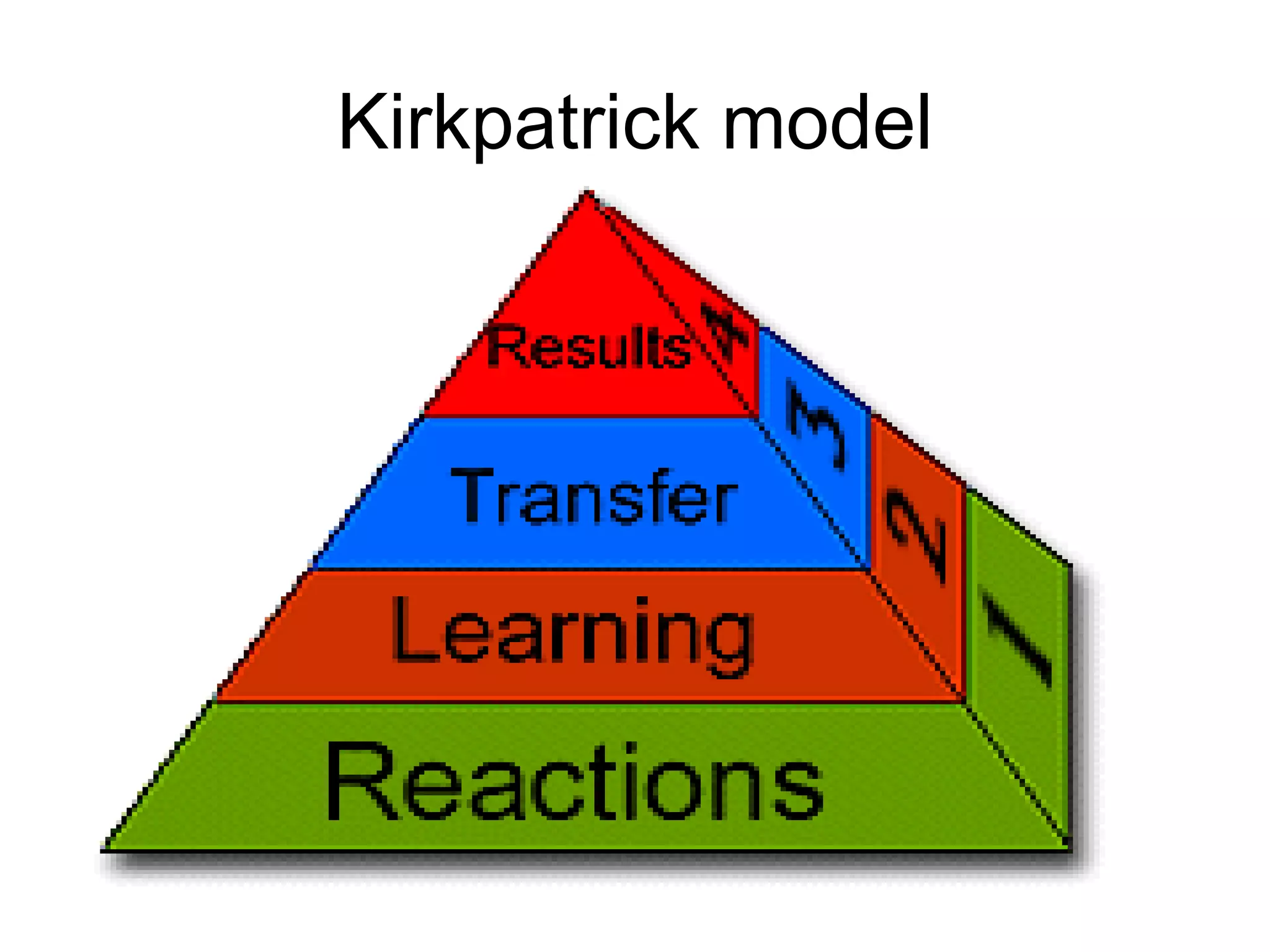
Kirkpatrick model
Kirkpatrick model Participant reaction to program: offer insights into learners’ satisfaction with course How much did participants learn: to which extent learners achieved the objectives
Kirkpatrick model How much of the learning participants retain after a period of time : 6 weeks to 6 months after the course The impact of the training on the bottom line of organization: did we fill the gap ?
Level 1/ Reaction They are often referred to as “smiley sheets” They assess how much participant liked the course They measure the effectiveness of the program & how it can improve
What it can not measure? Learning or ability to apply learning on the job Changes in attitude or believes  Organizational impact Trainer’s knowledge level
Designing level 1 evaluation form Categories: decide what you want to measure & create questions that address it  Format: use a variety of response format (at least 4)
Guidelines to make evaluation form Keep the form brief Create a balance among the various types of information being collected Obtain participant immediate reactions
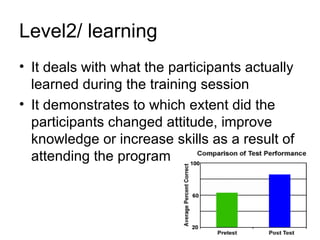
Level2/ learning It deals with what the participants actually learned during the training session It demonstrates to which extent did the participants changed attitude, improve knowledge or increase skills as a result of attending the program
Tests  Consider the type of tests that you want to use, subjective or objective Consider the time needed to grade the test Keep them fairly simple
observation This is where the trainer watch the participation & application of skills, tools & techniques during the session
Level3/ purpose Measure lasting results from training  Identify areas in which trainees show greatest / least improvement
Follow-up methods Prepare participants If the training is not effective... find out why Share follow-up with participants’manager
Other methods Observation:   trainer or another designated observer actually observe the employee back on the job using a checklist of the desired behaviors Interviews:   not only participants but those who are affected by or closely associated with the program participant
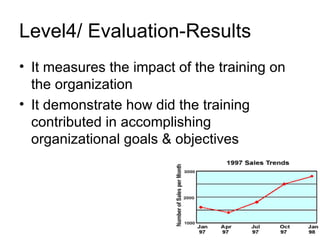
Level4/ Evaluation-Results It measures the impact of the training on the organization It demonstrate how did the training contributed in accomplishing organizational goals & objectives

Kirkpatrick Model

  • 1.
  • 2.
    Kirkpatrick model Participantreaction to program: offer insights into learners’ satisfaction with course How much did participants learn: to which extent learners achieved the objectives
  • 3.
    Kirkpatrick model Howmuch of the learning participants retain after a period of time : 6 weeks to 6 months after the course The impact of the training on the bottom line of organization: did we fill the gap ?
  • 4.
    Level 1/ ReactionThey are often referred to as “smiley sheets” They assess how much participant liked the course They measure the effectiveness of the program & how it can improve
  • 5.
    What it cannot measure? Learning or ability to apply learning on the job Changes in attitude or believes Organizational impact Trainer’s knowledge level
  • 6.
    Designing level 1evaluation form Categories: decide what you want to measure & create questions that address it Format: use a variety of response format (at least 4)
  • 7.
    Guidelines to makeevaluation form Keep the form brief Create a balance among the various types of information being collected Obtain participant immediate reactions
  • 8.
    Level2/ learning Itdeals with what the participants actually learned during the training session It demonstrates to which extent did the participants changed attitude, improve knowledge or increase skills as a result of attending the program
  • 9.
    Tests Considerthe type of tests that you want to use, subjective or objective Consider the time needed to grade the test Keep them fairly simple
  • 10.
    observation This iswhere the trainer watch the participation & application of skills, tools & techniques during the session
  • 11.
    Level3/ purpose Measurelasting results from training Identify areas in which trainees show greatest / least improvement
  • 12.
    Follow-up methods Prepareparticipants If the training is not effective... find out why Share follow-up with participants’manager
  • 13.
    Other methods Observation: trainer or another designated observer actually observe the employee back on the job using a checklist of the desired behaviors Interviews: not only participants but those who are affected by or closely associated with the program participant
  • 14.
    Level4/ Evaluation-Results Itmeasures the impact of the training on the organization It demonstrate how did the training contributed in accomplishing organizational goals & objectives