DRUG TREATMENT OF PSYCHOSIS www.freelivedoctor.com
Psychosis Psychosis is a thought disorder characterized by disturbances of reality and perception, impaired cognitive functioning, and inappropriate or diminished affect (mood). Psychosis denotes many mental disorders. Schizophrenia  is a particular kind of psychosis characterized mainly by a clear sensorium but a marked thinking disturbance. www.freelivedoctor.com
Psychosis Producing Drugs Levodopa CNS stimulants Cocaine  Amphetamines Khat, cathinone, methcathinone  Apomorphine  Phencyclidine www.freelivedoctor.com
Schizophrenia Pathogenesis is unknown. Onset of schizophrenia is in the late teens early twenties. Genetic predisposition -- Familial incidence.  Multiple genes are involved. Afflicts 1% of the population worldwide. May or may not be present with anatomical changes. www.freelivedoctor.com
Schizophrenia It is a thought disorder. The disorder is characterized by a divorcement from reality in the mind of the person (psychosis). It may involved visual and auditory hallucinations, delusions, intense suspicion, feelings of persecution or control by external forces (paranoia), depersonalization, and there is attachment of excessive personal significance to daily events, called “ideas of reference”.  www.freelivedoctor.com
Schizophrenia Positive Symptoms .   Hallucinations, delusions, paranoia, ideas of reference. Negative Symptoms .  Apathy, social withdrawal, anhedonia, emotional blunting, cognitive deficits, extreme inattentiveness or lack of motivation to interact with the environment. These symptoms are progressive and non-responsive to medication . www.freelivedoctor.com
Etiology of Schizophrenia Idiopathic Biological Correlates Genetic Factors Neurodevelopmental abnormalities. Environmental stressors.  www.freelivedoctor.com
Etiology of Schizophrenia Schizophrenia is not characterized by any reproducible neurochemical abnormality.  However, structural and functional abnormalities have been observed in the brains of schizophrenic patients: Enlarge cerebral ventricles. Atrophy of cortical layers. Reduced volume of the basal ganglia. www.freelivedoctor.com
Dopamine Theory of Schizophrenia Many lines of evidence point to the aberrant increased activity of the dopaminergic system as being critical in the symptomatology of schizophrenia. www.freelivedoctor.com
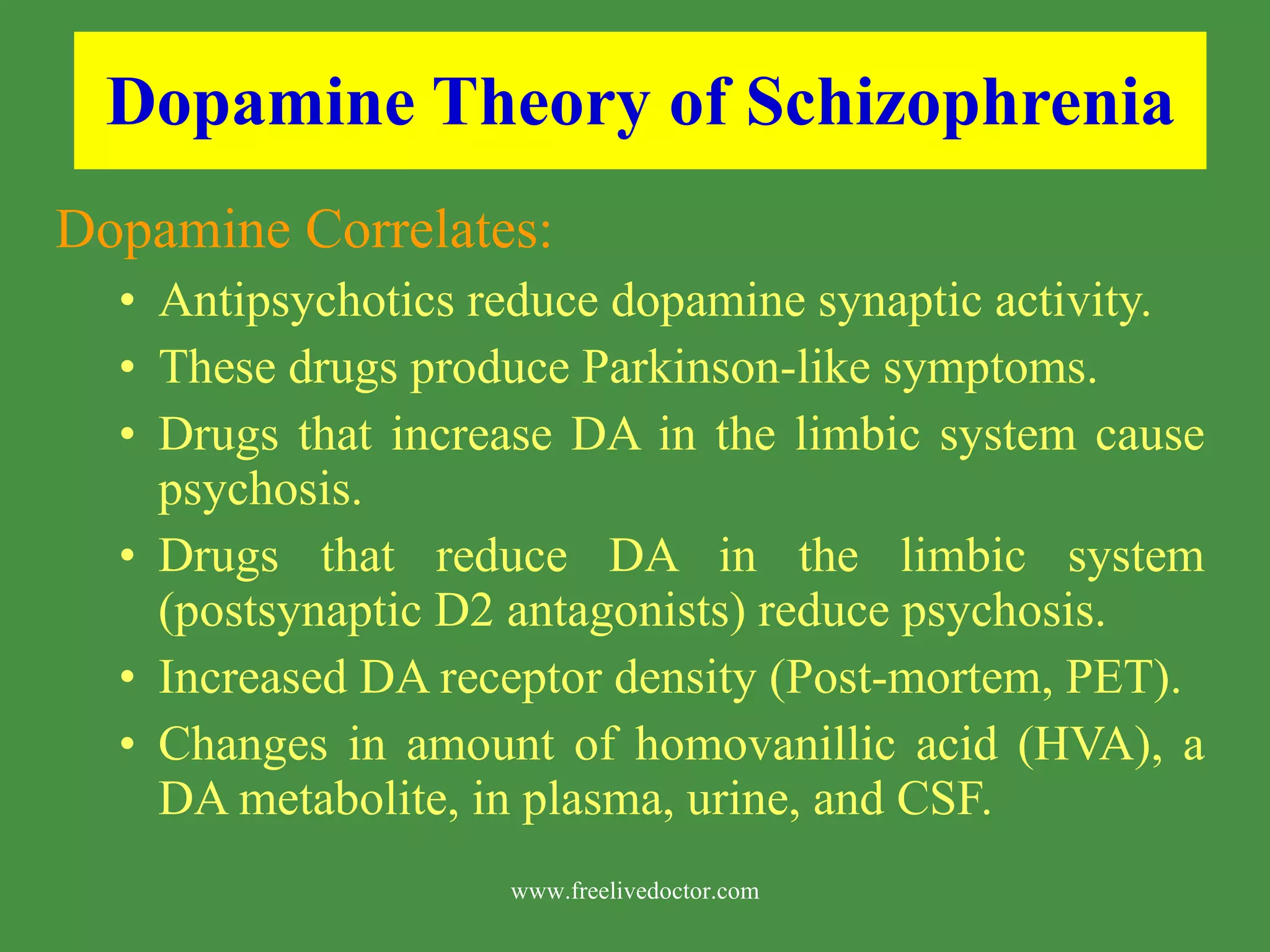
Dopamine Theory of Schizophrenia Dopamine Correlates: Antipsychotics reduce dopamine synaptic activity. These drugs produce Parkinson-like symptoms. Drugs that increase DA in the limbic system cause psychosis. Drugs that reduce DA in the limbic system (postsynaptic D2 antagonists) reduce psychosis. Increased DA receptor density (Post-mortem, PET). Changes in amount of homovanillic acid (HVA), a DA metabolite, in plasma, urine, and CSF.  www.freelivedoctor.com
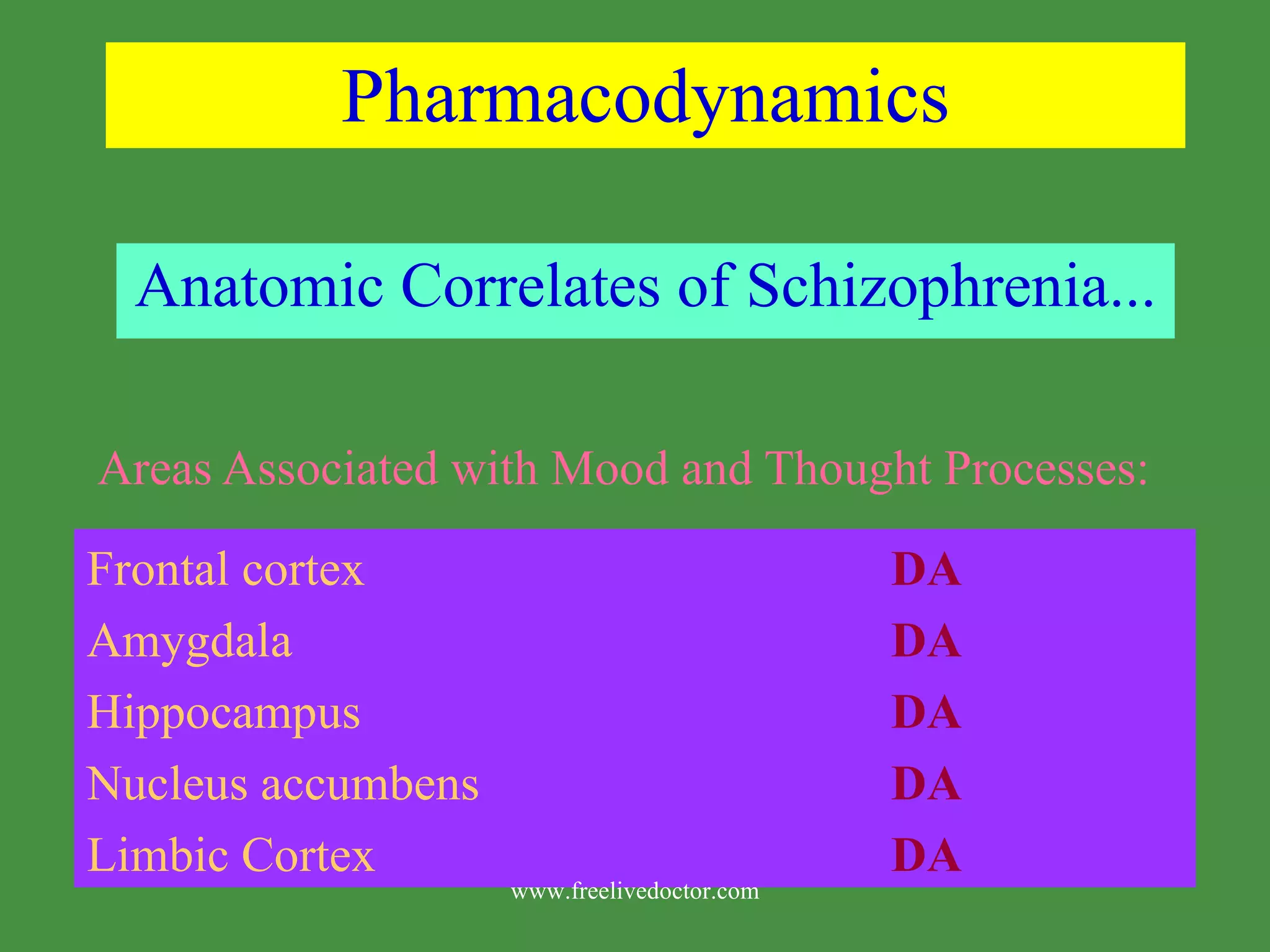
Pharmacodynamics Anatomic Correlates of Schizophrenia... Areas Associated with Mood and Thought Processes: Frontal cortex Amygdala Hippocampus Nucleus accumbens Limbic Cortex DA DA DA DA DA www.freelivedoctor.com
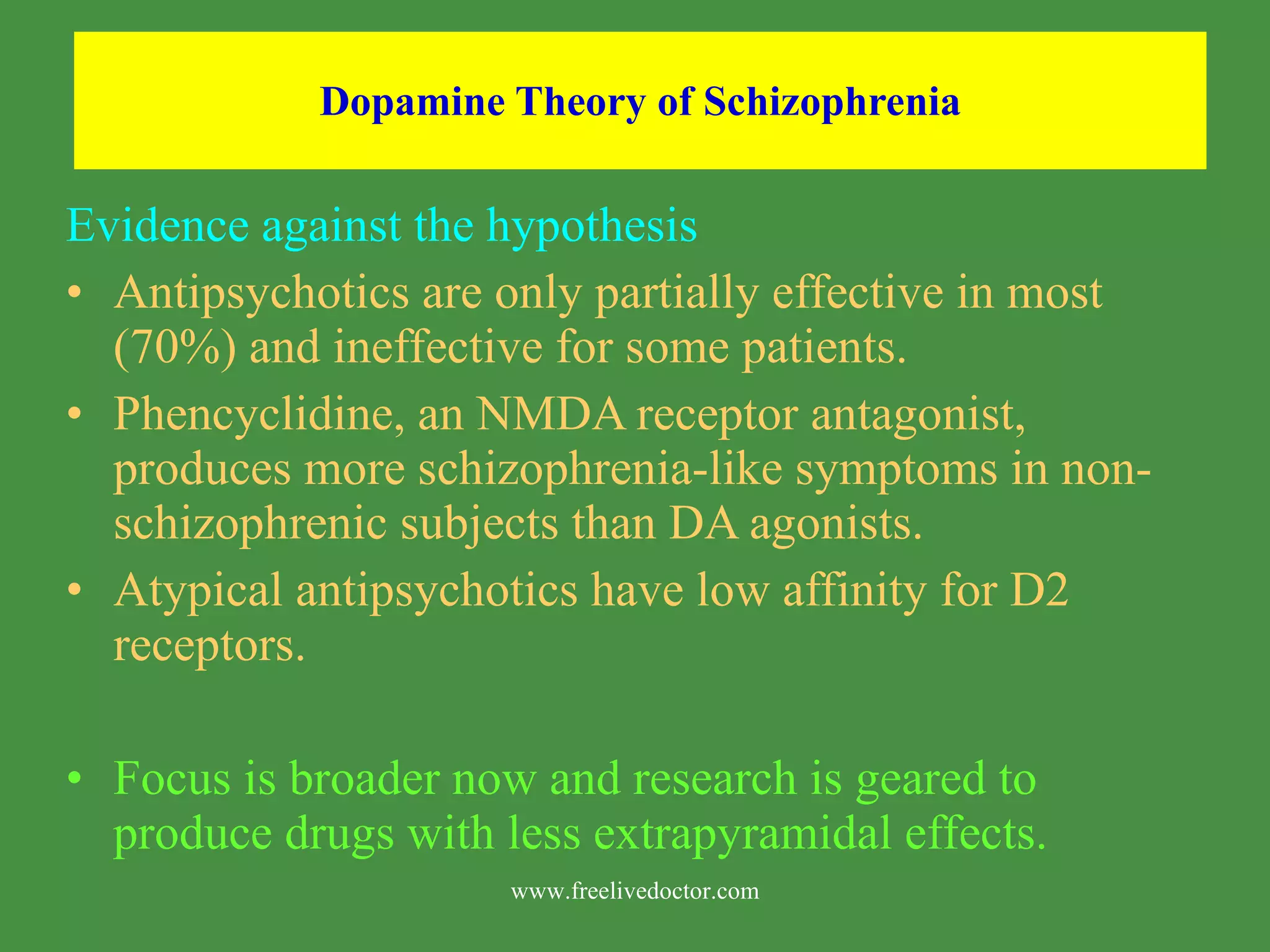
Dopamine Theory of Schizophrenia Evidence against the hypothesis Antipsychotics are only partially effective in most  (70%) and ineffective for some patients. Phencyclidine, an NMDA receptor antagonist, produces more schizophrenia-like symptoms in non-schizophrenic subjects than DA agonists. Atypical antipsychotics have low affinity for D2 receptors. Focus is broader now and research is geared to produce drugs with less extrapyramidal effects. www.freelivedoctor.com
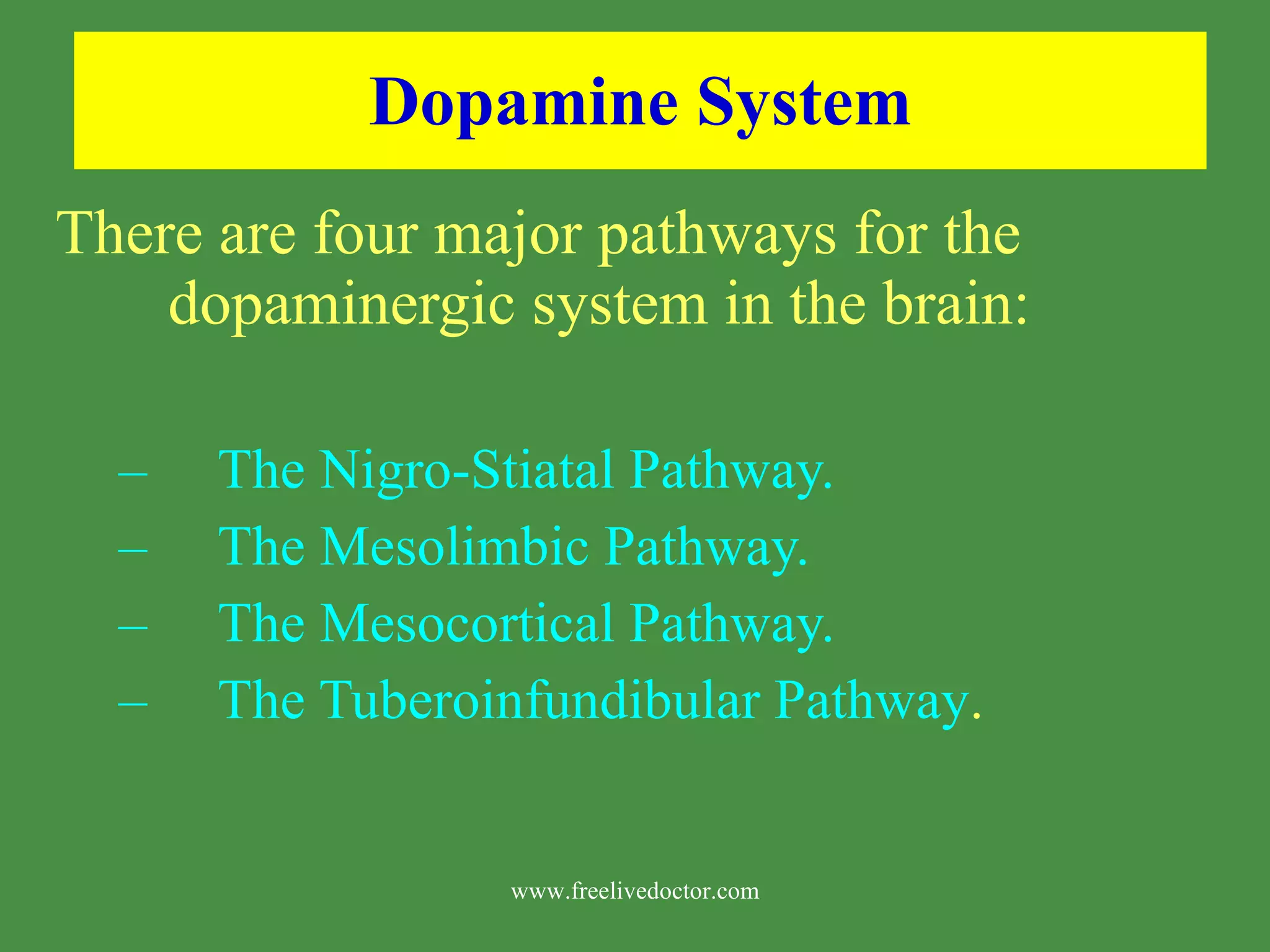
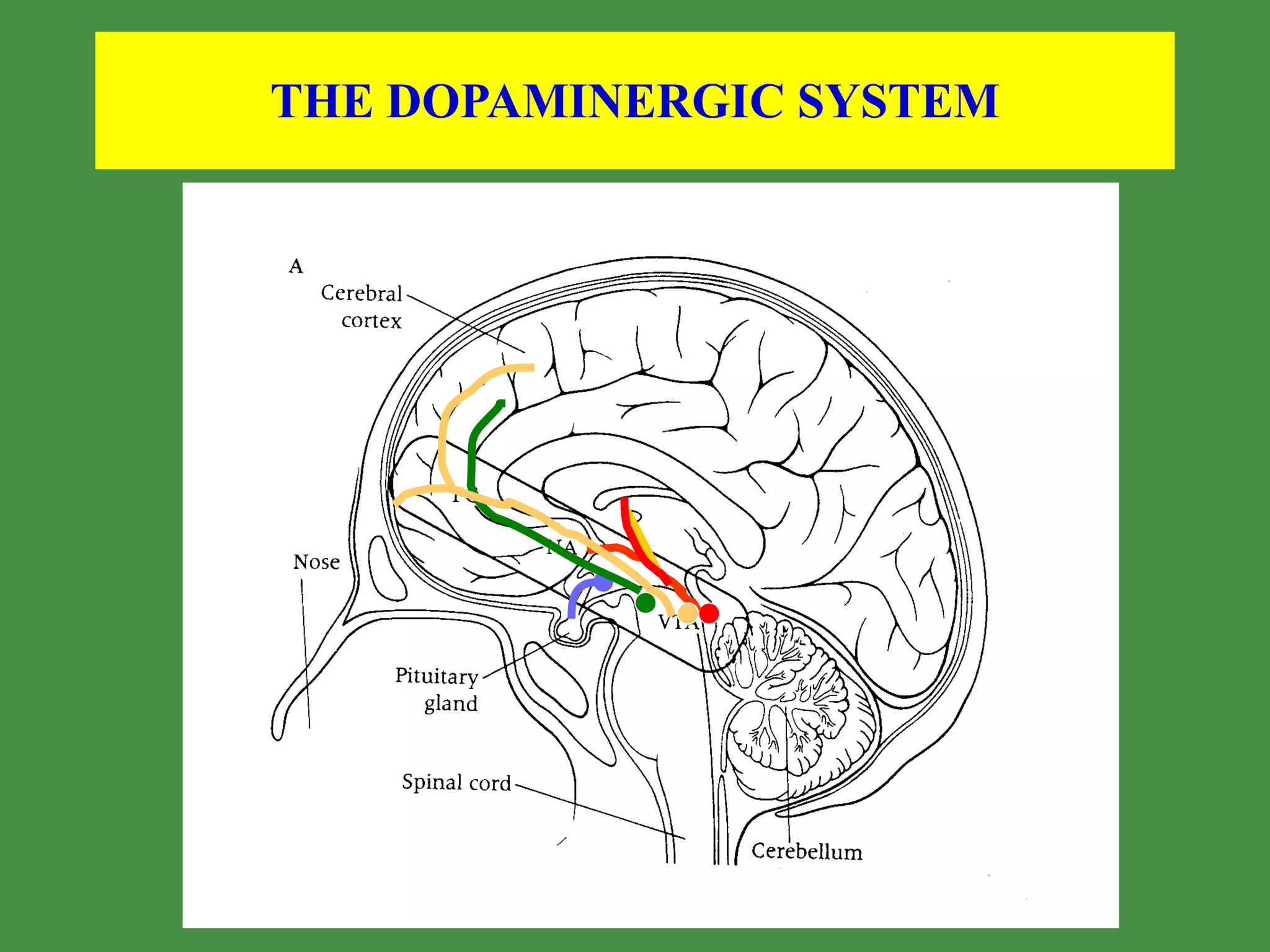
Dopamine System There are four major pathways for the dopaminergic system in the brain: The Nigro-Stiatal Pathway. The Mesolimbic Pathway. The Mesocortical Pathway. The Tuberoinfundibular Pathway . www.freelivedoctor.com
THE DOPAMINERGIC SYSTEM www.freelivedoctor.com
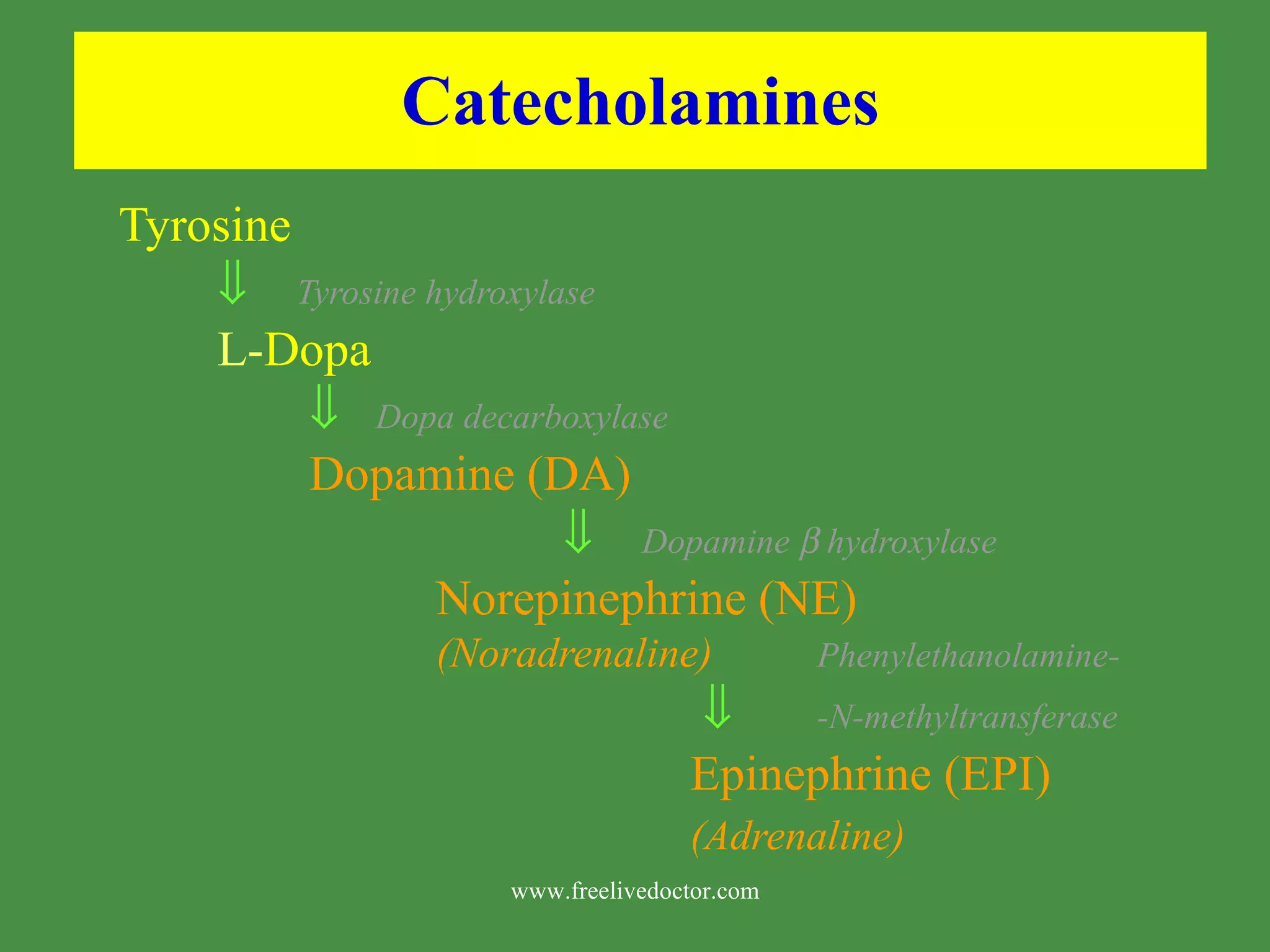
Catecholamines Tyrosine    Tyrosine hydroxylase L- Dopa    Dopa decarboxylase Dopamine (DA)    Dopamine    hydroxylase Norepinephrine (NE) (Noradrenaline) Phenylethanolamine-      -N-methyltransferase Epinephrine (EPI) (Adrenaline) www.freelivedoctor.com
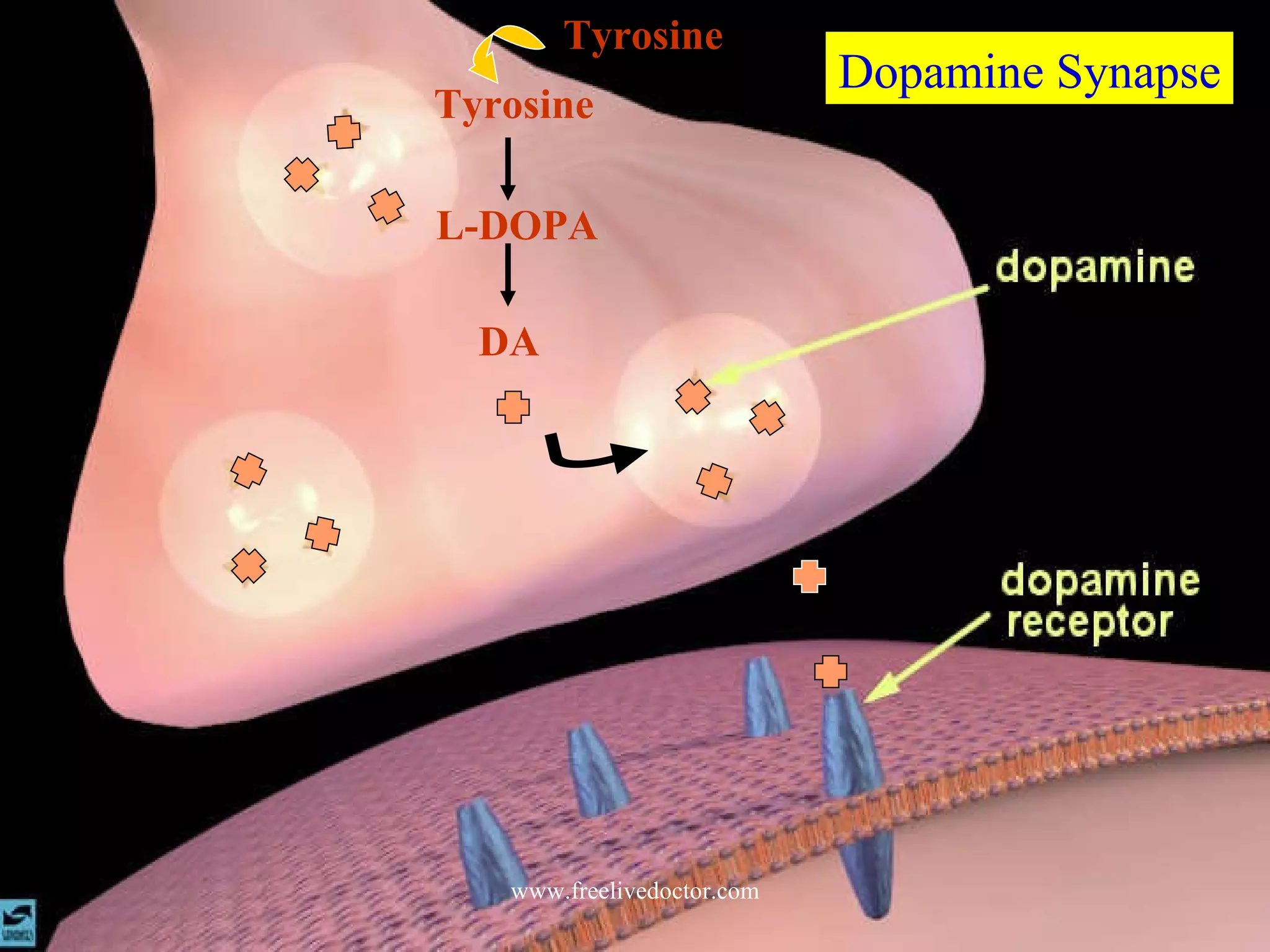
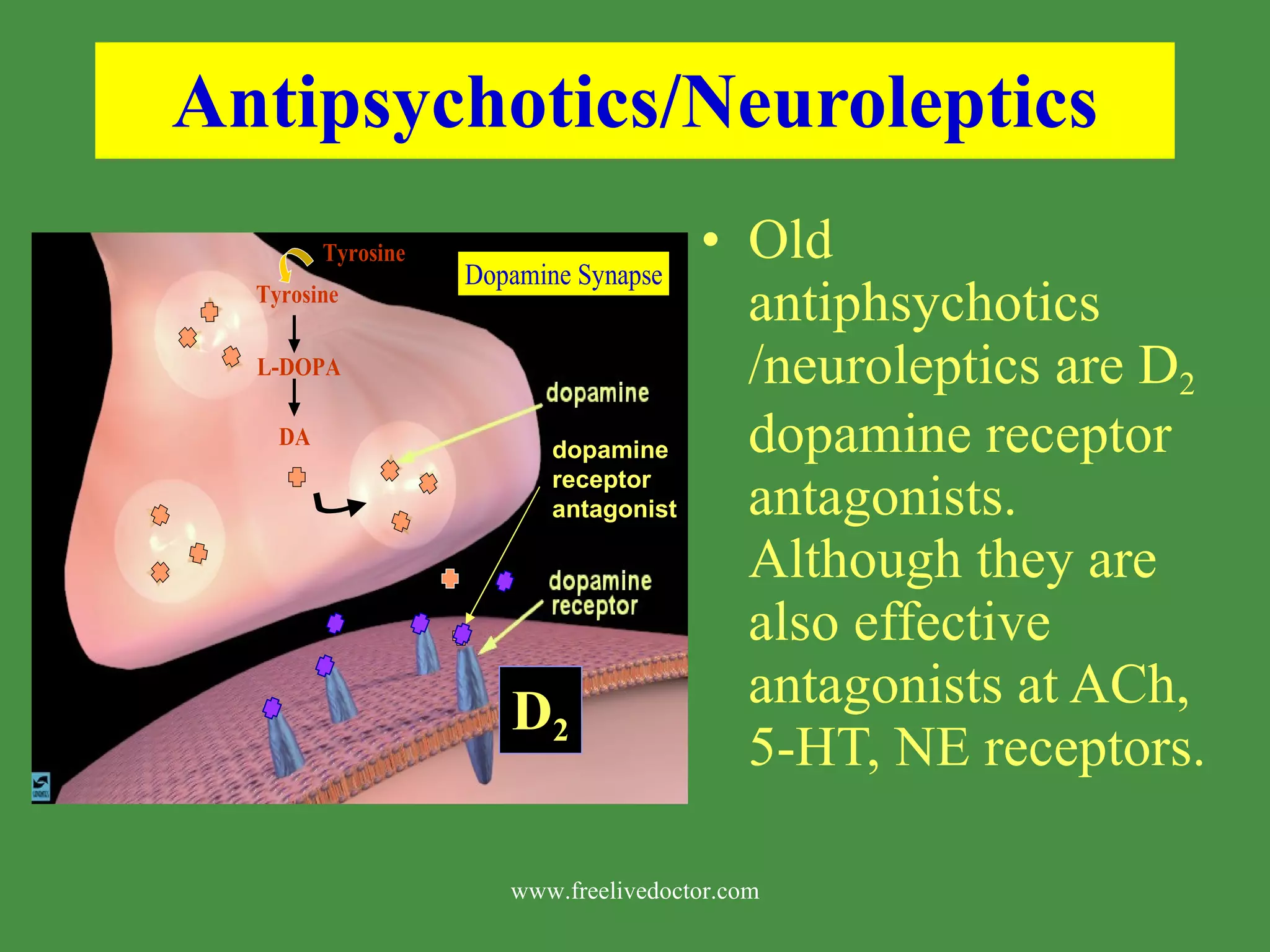
Dopamine Synapse DA L-DOPA Tyrosine Tyrosine www.freelivedoctor.com
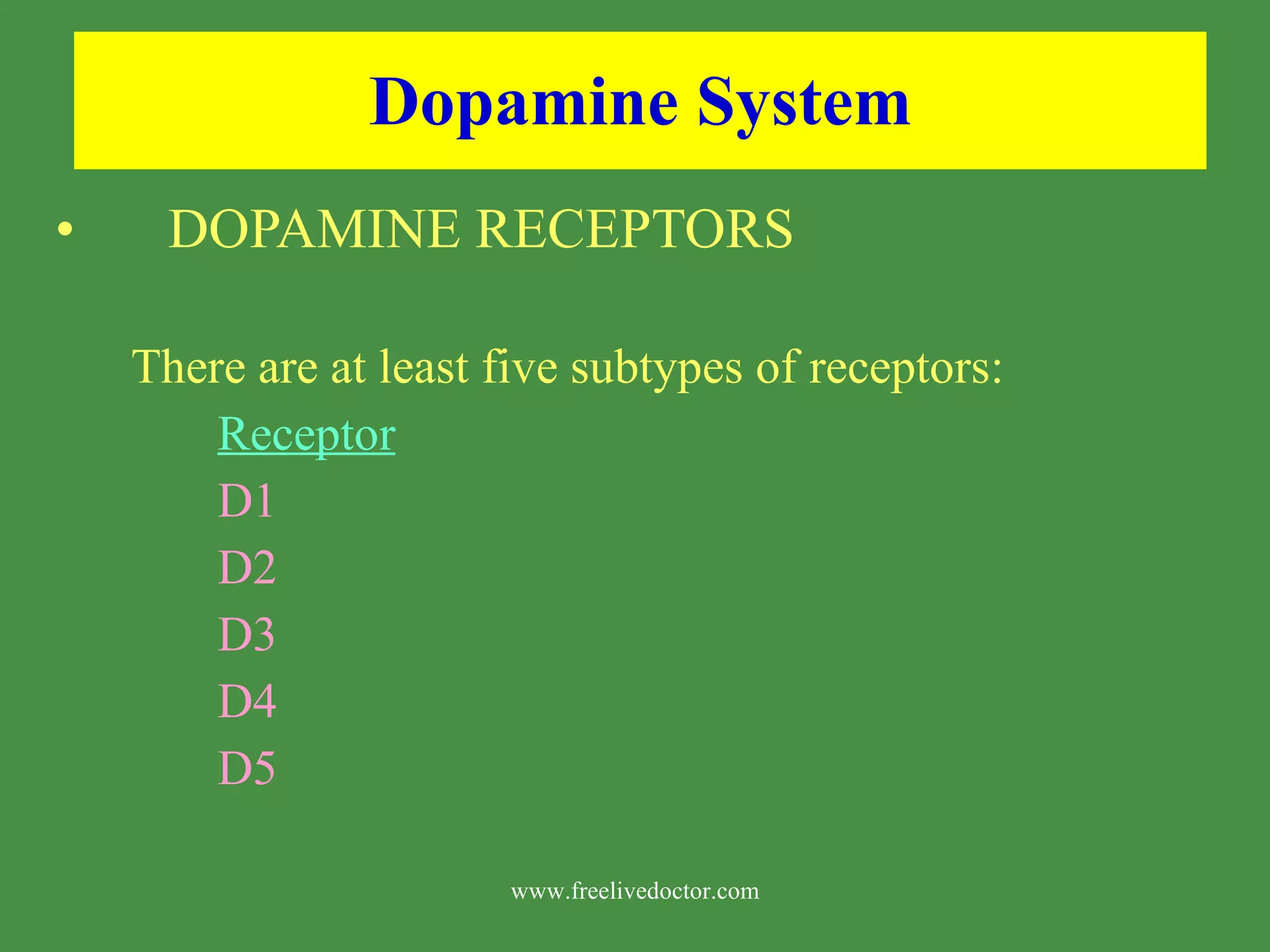
Dopamine System DOPAMINE RECEPTORS There are at least five subtypes of receptors: Receptor D1 D2 D3 D4 D5 www.freelivedoctor.com
www.freelivedoctor.com
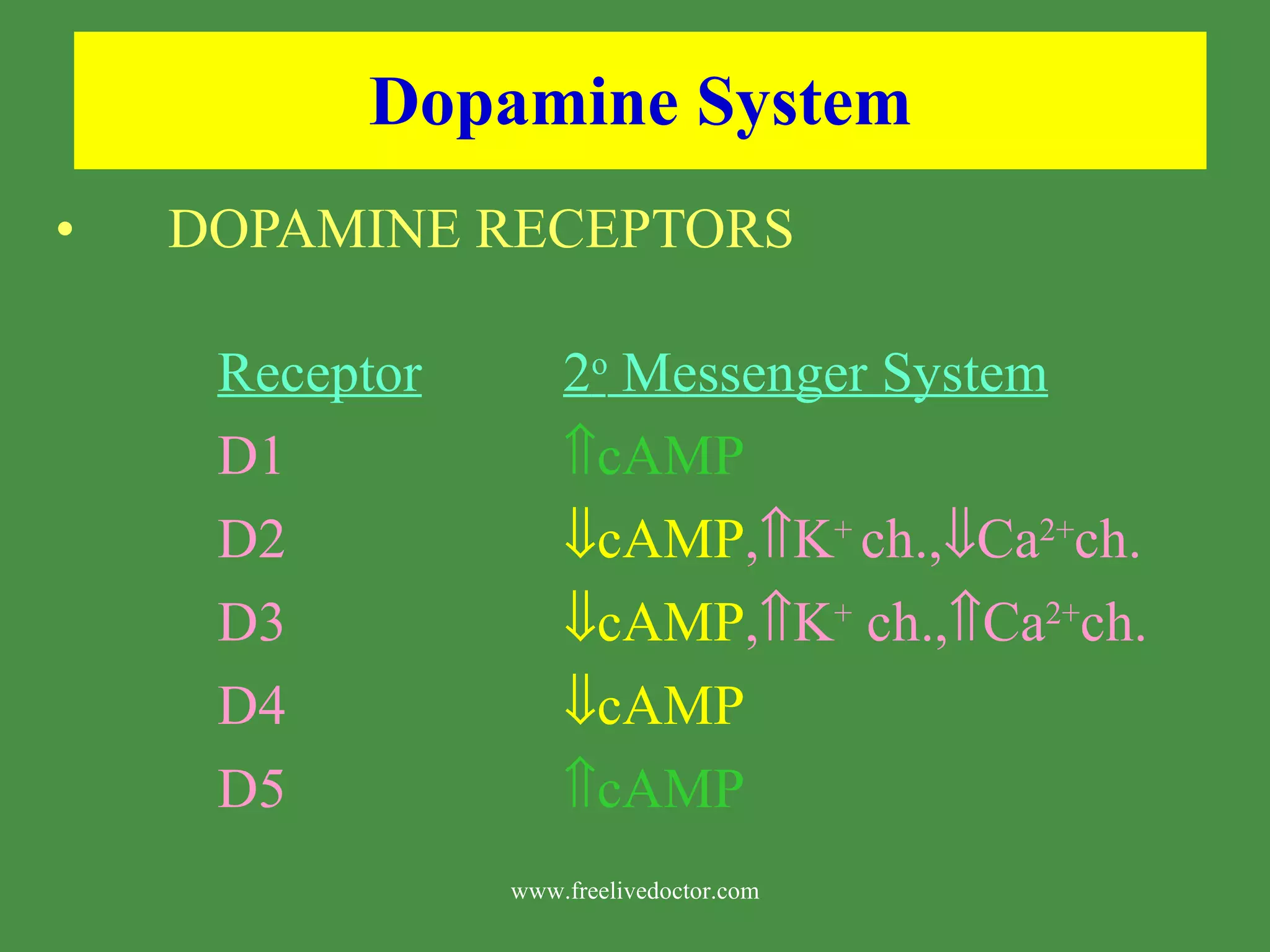
Dopamine System DOPAMINE RECEPTORS Receptor 2 o  Messenger System D1  cAMP   D2  cAMP ,  K +  ch.,  Ca 2+ ch. D3  cAMP ,  K +  ch.,  Ca 2+ ch. D4  cAMP D5  cAMP www.freelivedoctor.com
Dopamine Reuptake System www.freelivedoctor.com
Antipsychotic treatments SCHIZOPHRENIA IS FOR LIFE There is no  remission www.freelivedoctor.com
Antipsychotic treatments Schizophrenia has been around perhaps, since the beginning of humankind,  however, it was not until the last century that it was established as a separate entity amongst other mental disorders.  Many treatments have been devise: Hydrotherapy:  “ The pouring of cold water in a stream, from a height of at least four feet onto the forehead, is one of the most certain means of subsiding violent, maniacal excitement that we have ever seen tried”... wrote an anonymous physician in the early 1800’s. www.freelivedoctor.com
Antipsychotic treatments Lobotomies (Egaz Moniz received the Nobel Prize). In 1940’s Phenothiazenes were isolated and were used as pre-anesthetic medication, but quickly were adopted by psychiatrists to calm down their mental patients. In 1955, chlorpromazine was d eveloped as an antihistaminic agent by Rh ô ne-Pauline Laboratories in France.  In-patients at Mental Hospitals dropped by 1/3. www.freelivedoctor.com
Antipsychotics treatment Antipsychotics/Neuroleptics   Antipsychotics are the drugs currently used in the prevention of psychosis. They have also been termed neuroleptics, because they suppress motor activity  and emotionality. **  These drugs are not a cure  ** Schizophrenics must be treated with medications indefinitely, in as much as the disease in lifelong and it is preferable to prevent the psychotic episodes than to treat them. www.freelivedoctor.com
Antipsychotics/Neuroleptics Although the antipsychotic/neuroleptics are drugs used mainly in the treatment of schizophrenia, they are also used in the treatment of other psychoses associated with depression and manic-depressive illness, and psychosis associated with Alzheimer’s disease.  These conditions are life-long and disabling. www.freelivedoctor.com
Antipsychotics/Neuroleptics NON-compliance  is the major reason for relapse. www.freelivedoctor.com
Antipsychotic/Neuroleptics Three major groups : 1) Phenothiazines 2) Thioxanthines 3) Butyrophenones OLDER DRUGS www.freelivedoctor.com
Antipsychotics/Neuroleptics Old antiphsychotics /neuroleptics are D 2  dopamine receptor antagonists. Although they are also effective antagonists at ACh, 5-HT, NE receptors. dopamine receptor antagonist D 2 www.freelivedoctor.com
Antipsychotics/Neuroleptics It appears that the specific interaction of antipsychotic drugs with D 2  receptors is important to their therapeutic action. The affinities of most older “classical” agents for the D 2  receptors correlate with their clinical potencies as antipsychotics. www.freelivedoctor.com
Antipsychotic/Neuroleptics Correlations between therapeutic potency and affinity for binding D2 receptors. [ 3 H]Haloperidol binding IC 50  (mol/L) Clinical dose of drug [mg d -1 ] haloperidol clozapine thiothixene chlorpromazine promazine spiroperidole www.freelivedoctor.com
Antipsychotics/Neuroleptics Both D1 and D2 receptors are found in high concentrations in the striatum and the nucleus accumbens. Clozapine has a higher affinity for the D 4  receptors than for D 2 . Recently it has been found that most antipsychotic drugs may also bind D 3  receptors (therefore, they are non-selective). www.freelivedoctor.com
Antipsychotics/Neuroleptics Antipsychotics produce catalepsy (reduce motor activity). BLOCKADE OF DOPAMINE RECPTORS IN BASAL GANGLIA. Antipsychotics reverse hyperkinetic behaviors (increased locomotion and stereotyped behavior). BLOCKADE OF DOPAMINE RECPTORS IN LIMBIC AREAS. Antipsychotics prevent the dopamine inhibition of prolactin release from pituitary. BLOCKADE OF DOPAMINE RECEPTORS IN PITUITARY.    hyperprolactinemia www.freelivedoctor.com
Pharmacokinetics Absorption and Distribution Most antipsychotics are readily but incompletely absorbed. Significant first-pass metabolism. Bioavailability is 25-65%. Most are highly lipid soluble. Most are highly protein bound (92-98%). High volumes of distribution (>7 L/Kg). Slow elimination. **Duration of action longer than expected, metabolites are present and relapse occurs, weeks after discontinuation of drug.** www.freelivedoctor.com
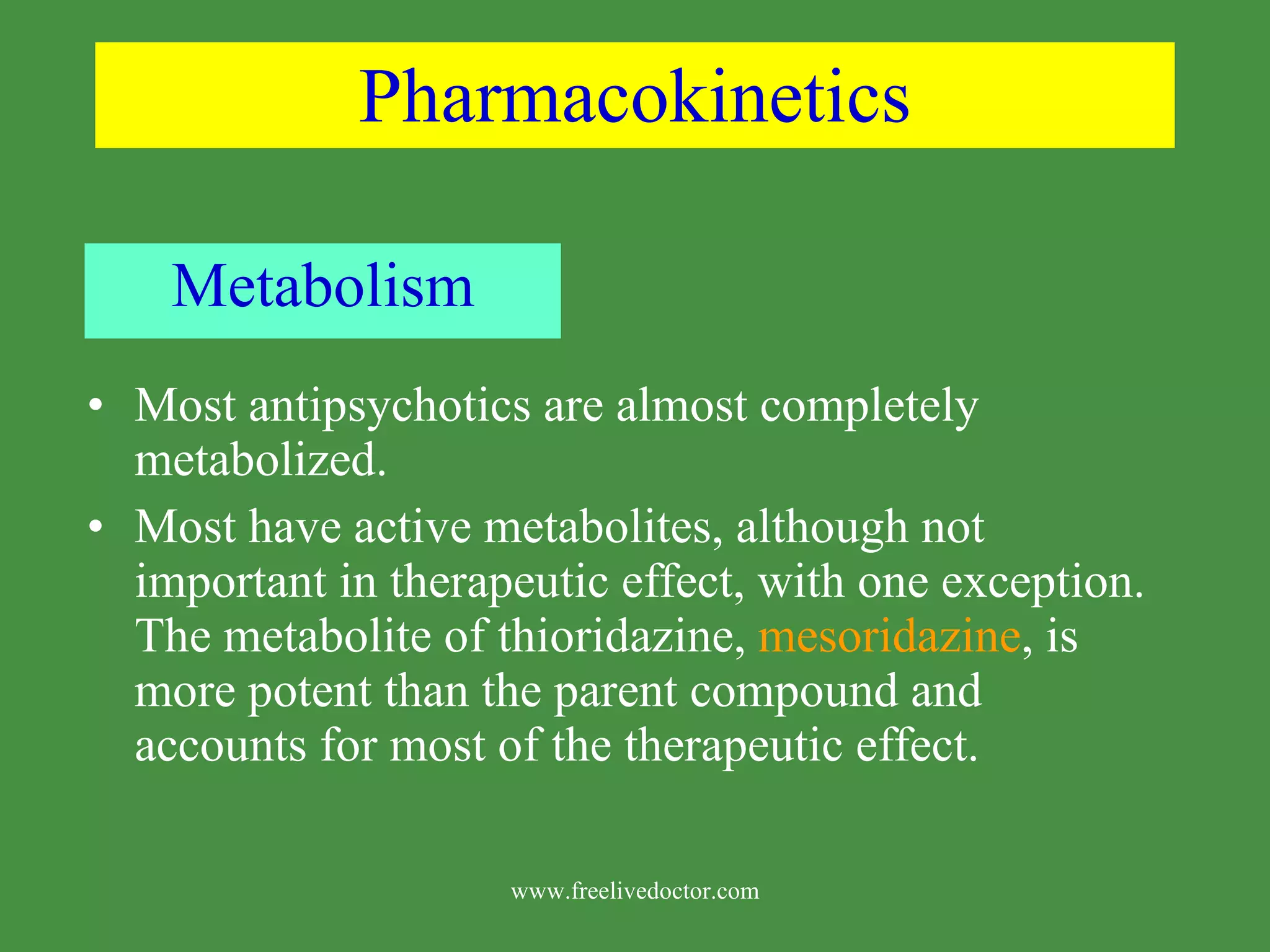
Pharmacokinetics Metabolism Most antipsychotics are almost completely metabolized. Most have active metabolites, although not important in therapeutic effect, with one exception. The metabolite of thioridazine,  mesoridazine , is more potent than the parent compound and accounts for most of the therapeutic effect. www.freelivedoctor.com
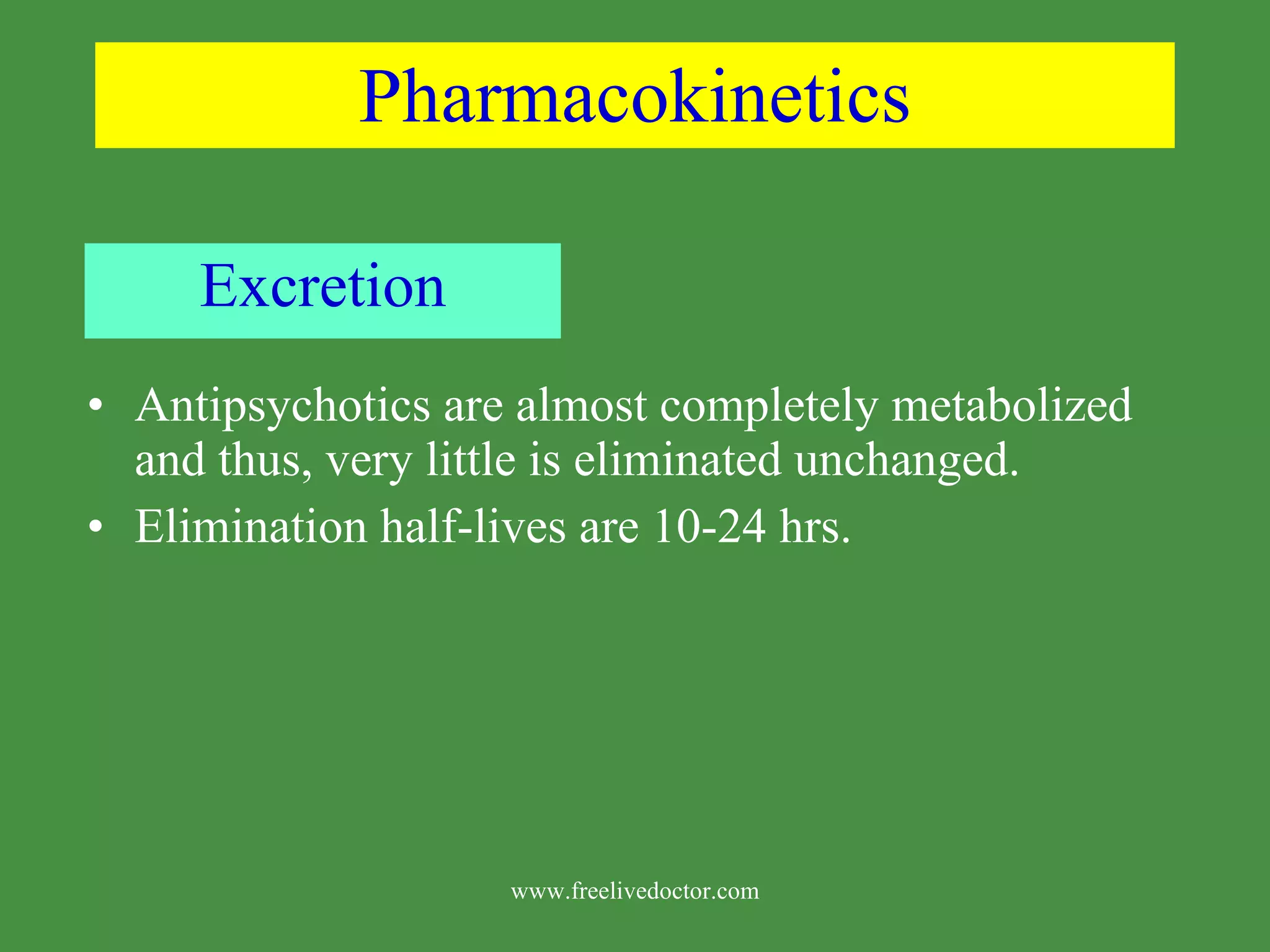
Pharmacokinetics Excretion Antipsychotics are almost completely metabolized and thus, very little is eliminated unchanged. Elimination half-lives are 10-24 hrs. www.freelivedoctor.com
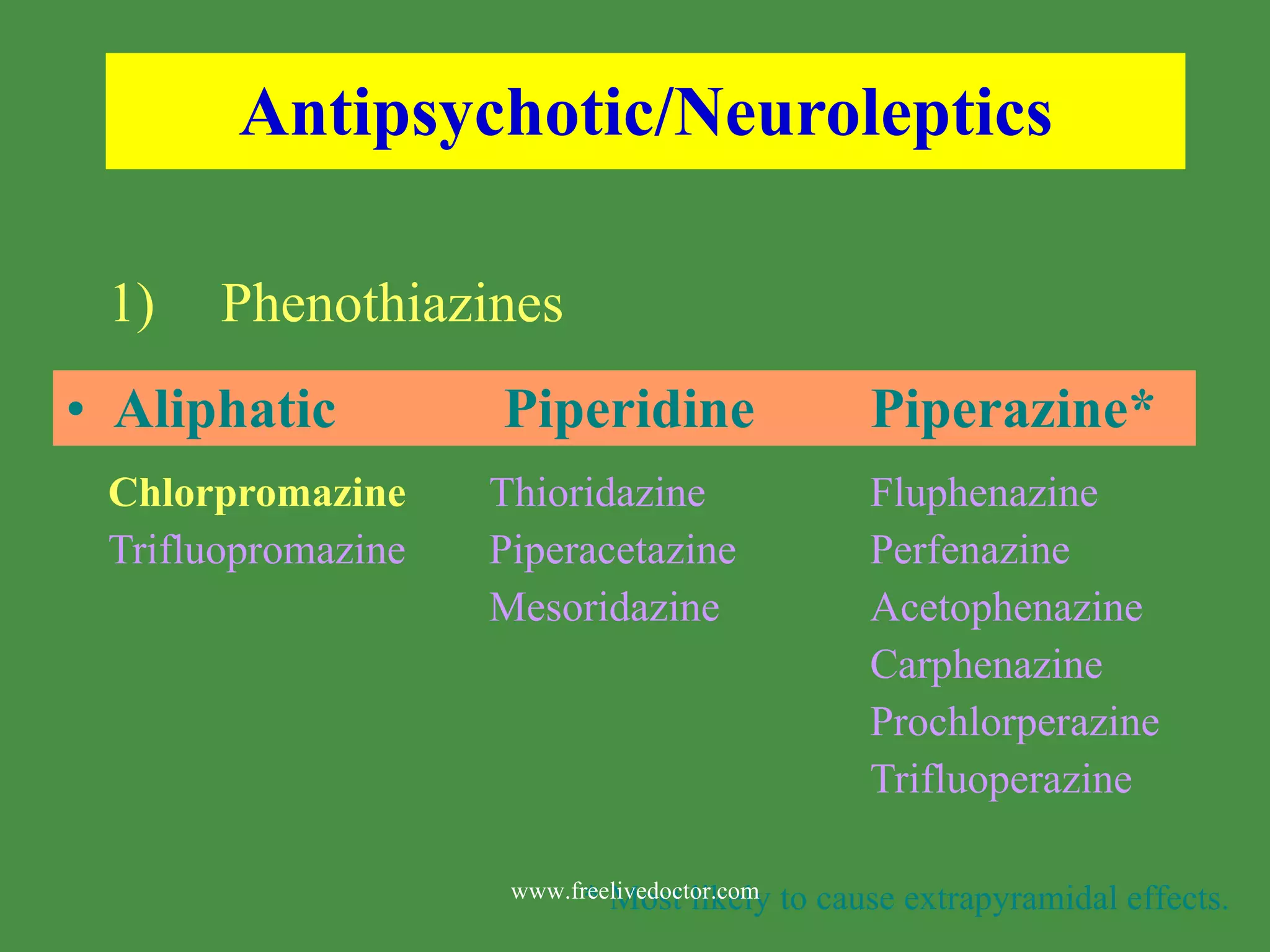
Antipsychotic/Neuroleptics Phenothiazines Chlorpromazine Thioridazine Fluphenazine Trifluopromazine  Piperacetazine Perfenazine   Mesoridazine  Acetophenazine Carphenazine Prochlorperazine Trifluoperazine Aliphatic    Piperidine   Piperazine* * Most likely to cause extrapyramidal effects. www.freelivedoctor.com
Antipsychotic/Neuroleptics [Drug dose] Effect Piperazine Aliphatic Piperidine www.freelivedoctor.com
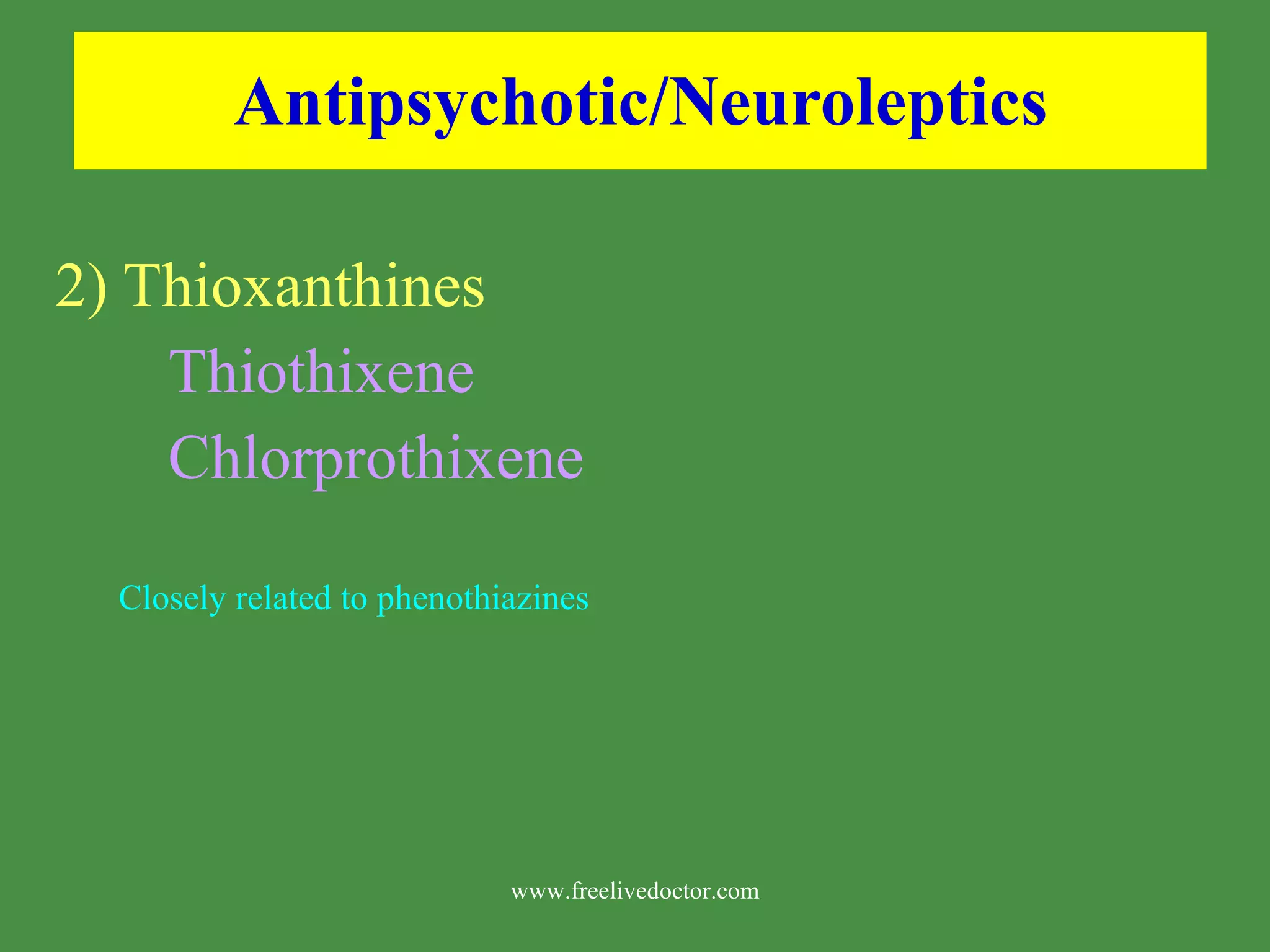
Antipsychotic/Neuroleptics 2) Thioxanthines Thiothixene Chlorprothixene Closely related to phenothiazines www.freelivedoctor.com
Antipsychotic/Neuroleptics 3) Butyrophenones Haloperidol Droperidol* *Not marketed in the USA www.freelivedoctor.com
Antipsychotic/Neuroleptics [Drug dose] Effect Phenothiazine d. Thioxanthene d. Butyrophenone d. www.freelivedoctor.com
Antipsychotics/Neuroleptics Newer drugs have higher affinities for D1, 5-HT or   -AR receptors. NE, GABA, Glycine and Glutamate have also been implicated in schizophrenia. www.freelivedoctor.com
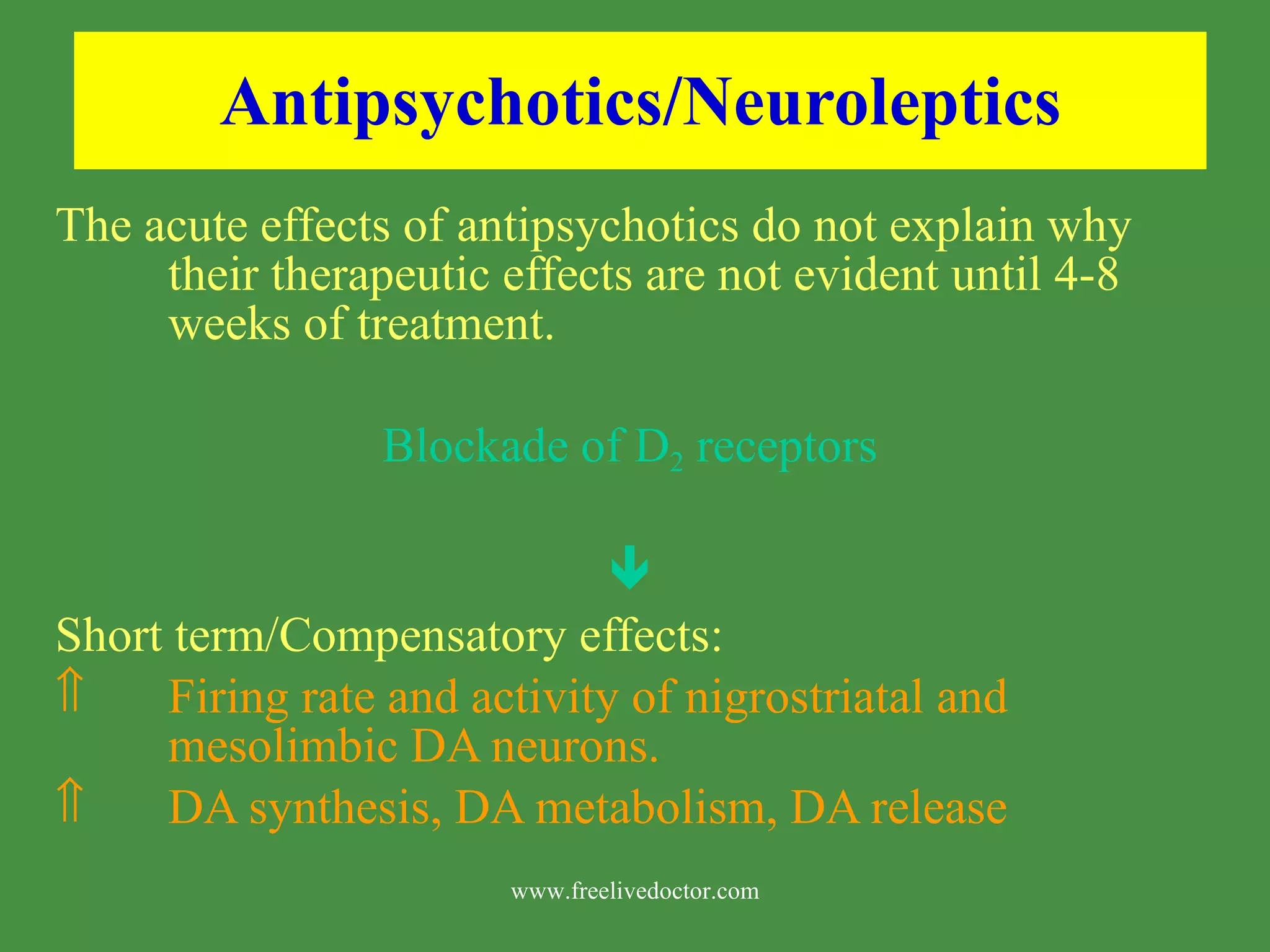
Antipsychotics/Neuroleptics The acute effects of antipsychotics do not explain why their therapeutic effects are not evident until 4-8 weeks of treatment. Blockade of D 2  receptors  Short term/Compensatory effects: Firing rate and activity of nigrostriatal and mesolimbic DA neurons. DA synthesis, DA metabolism, DA release www.freelivedoctor.com
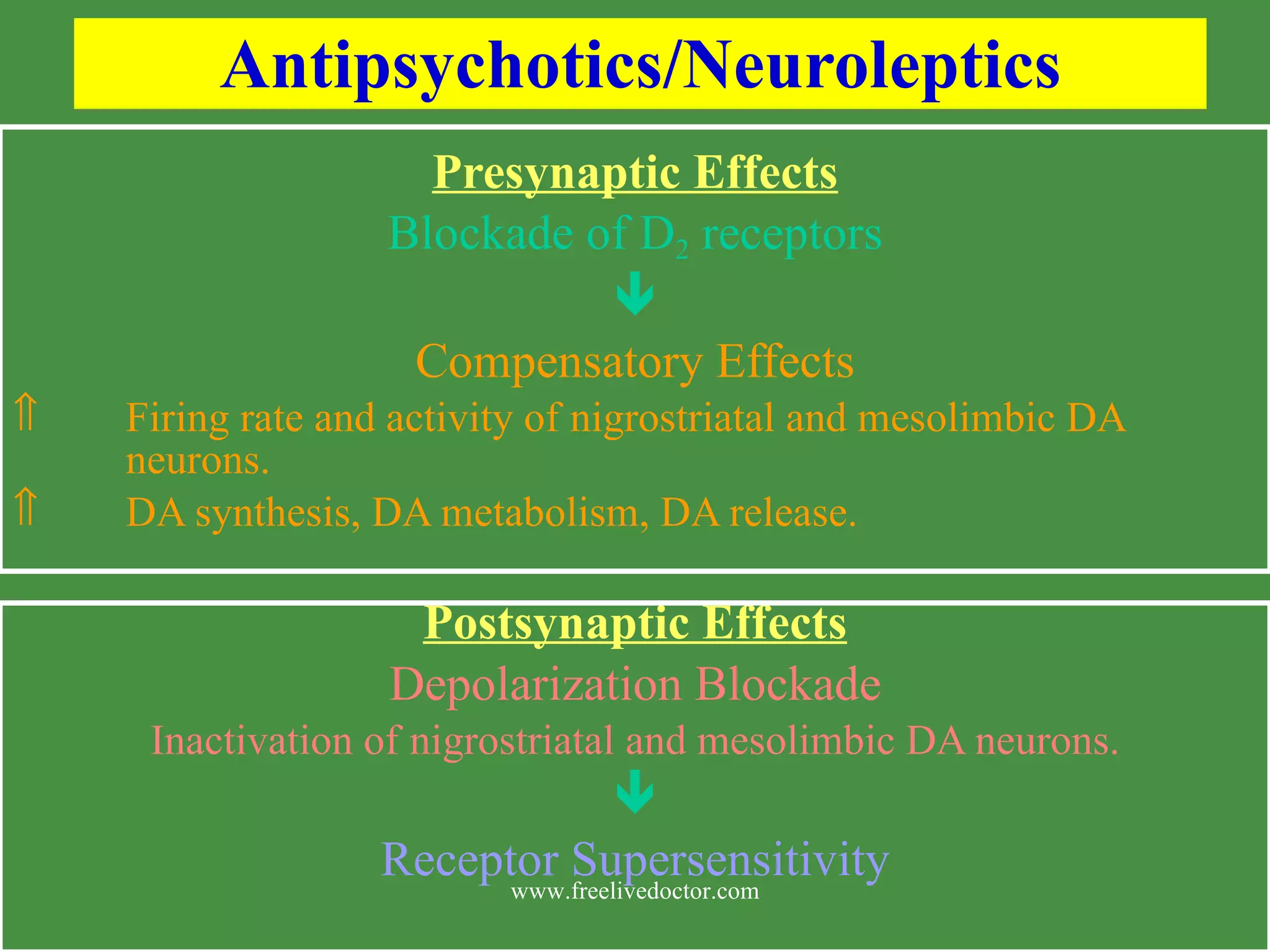
Antipsychotics/Neuroleptics Presynaptic Effects Blockade of D 2  receptors  Compensatory Effects Firing rate and activity of nigrostriatal and mesolimbic DA neurons. DA synthesis, DA metabolism, DA release. Postsynaptic Effects Depolarization Blockade Inactivation of nigrostriatal and mesolimbic DA neurons.  Receptor Supersensitivity www.freelivedoctor.com
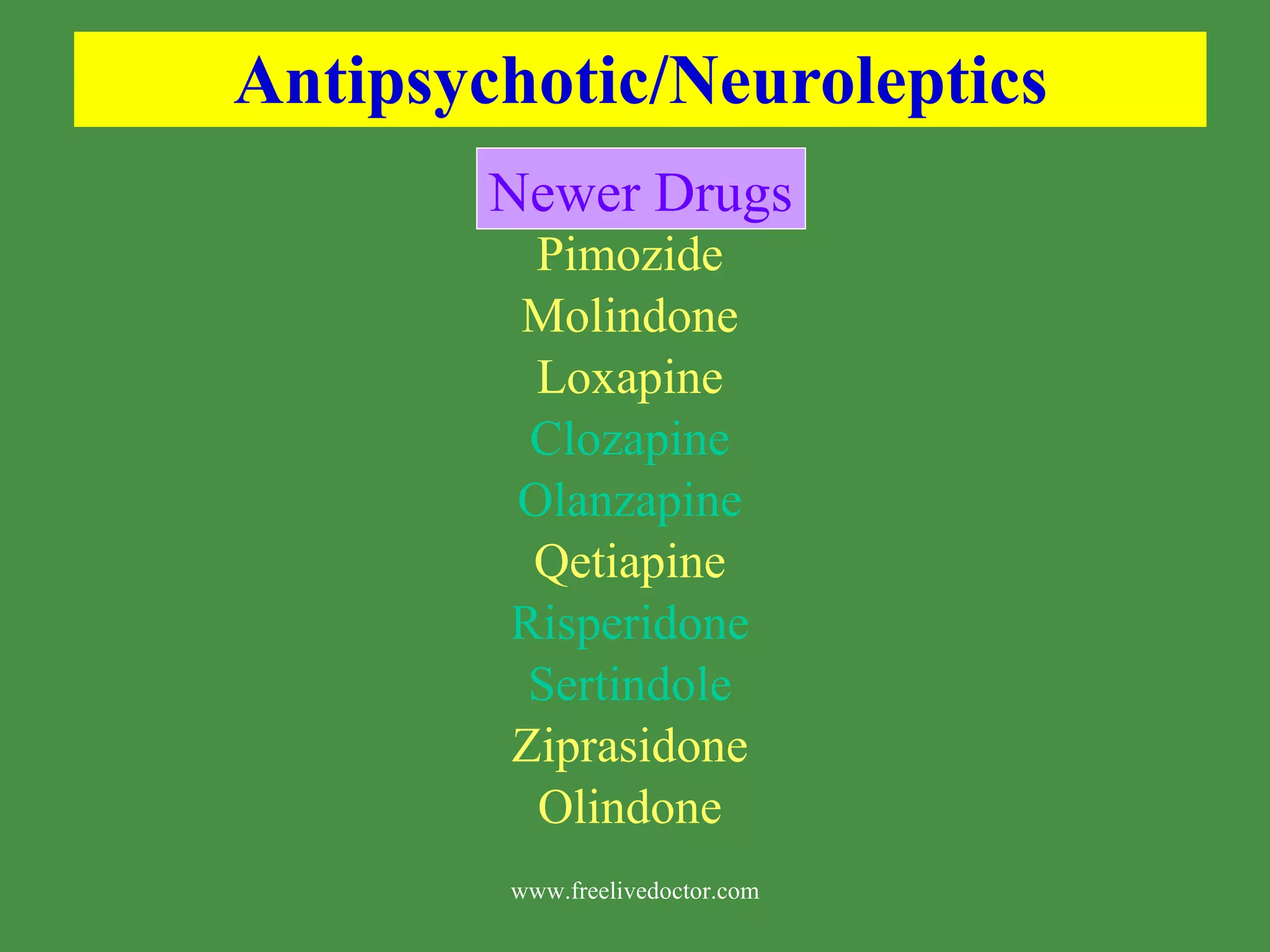
Antipsychotic/Neuroleptics Pimozide Molindone Loxapine Clozapine Olanzapine Qetiapine Risperidone Sertindole Ziprasidone Olindone Newer Drugs www.freelivedoctor.com
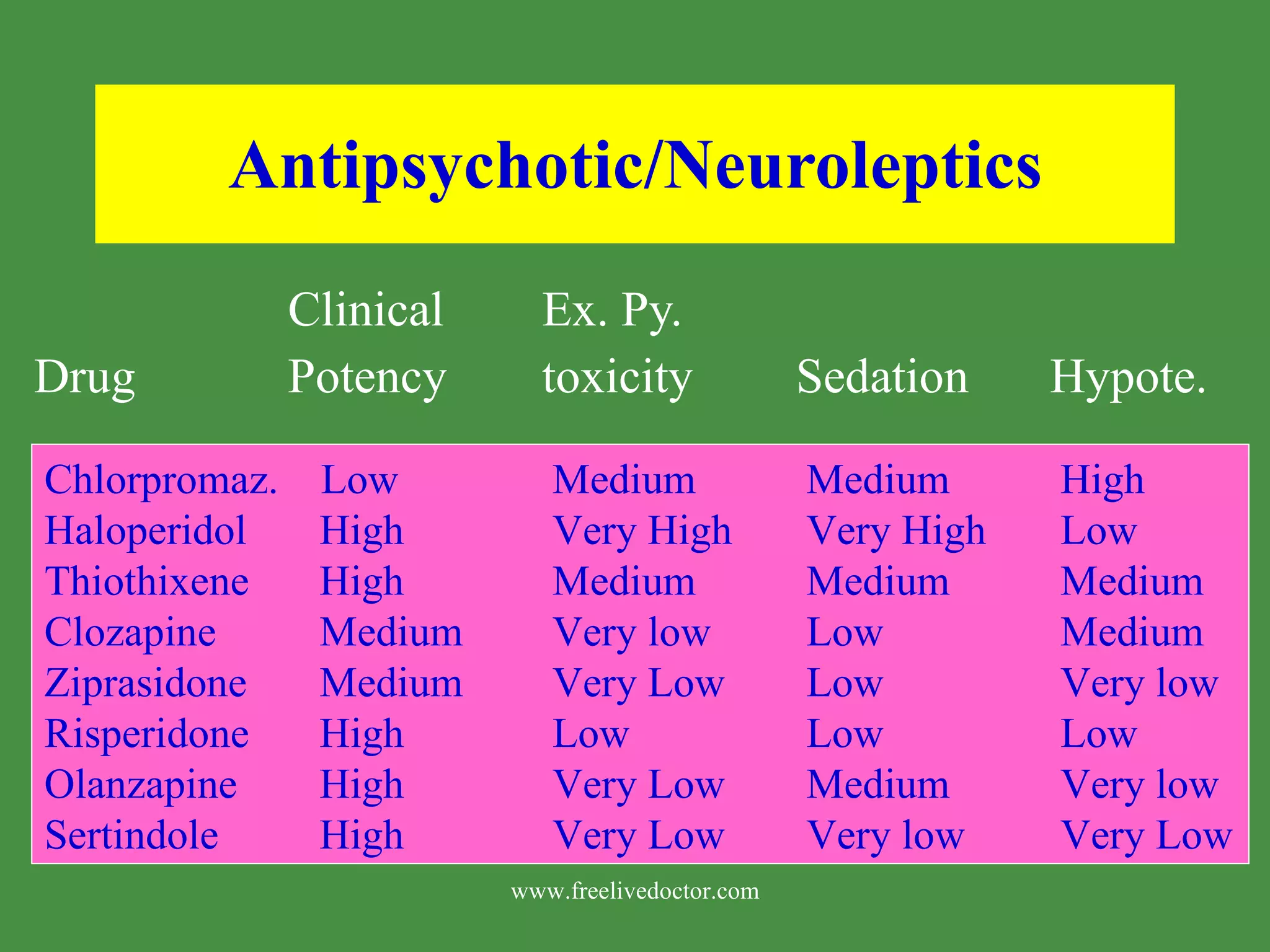
Antipsychotic/Neuroleptics Clinical Ex. Py. Drug  Potency toxicity Sedation Hypote. Chlorpromaz.  Low Medium Medium High Haloperidol   High Very High Very High Low Thiothixene   High Medium Medium Medium Clozapine   Medium Very low Low Medium Ziprasidone   Medium Very Low Low Very low Risperidone   High Low Low Low Olanzapine   High Very Low Medium Very low Sertindole   High Very Low Very low Very Low www.freelivedoctor.com
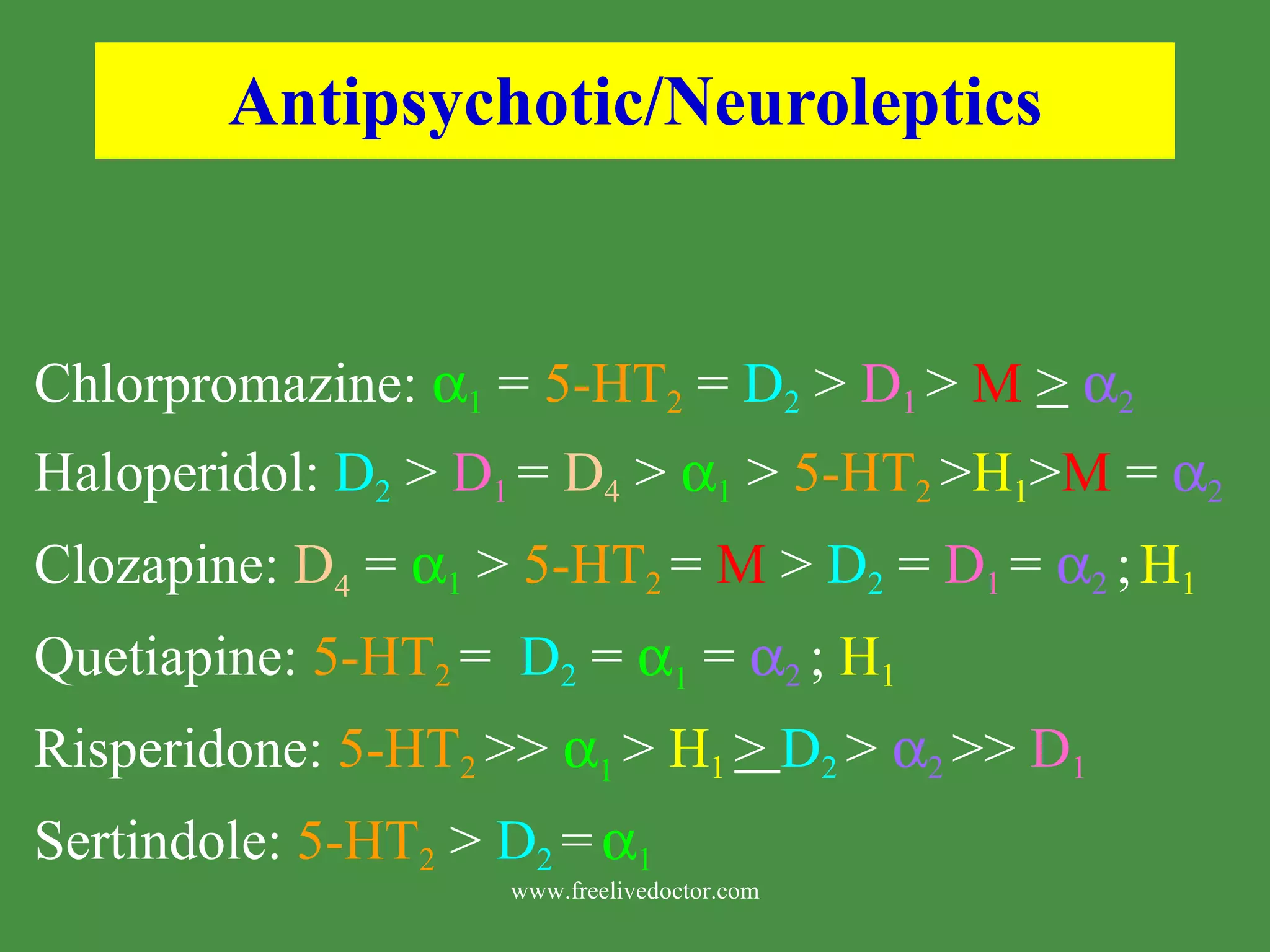
Antipsychotic/Neuroleptics Chlorpromazine:   1  =  5-HT 2  =  D 2  >  D 1  >  M   >    2   Haloperidol:  D 2  >  D 1   =  D 4  >   1  >  5-HT 2  > H 1 > M  =   2   Clozapine:  D 4  =   1  >  5-HT 2  =  M  >  D 2  =  D 1  =   2   ;   H 1 Quetiapine:  5-HT 2   =  D 2  =   1  =   2   ;  H 1 Risperidone:  5-HT 2  >>   1  >  H 1  >  D 2  >   2   >>  D 1 Sertindole:  5-HT 2  >  D 2   =    1   www.freelivedoctor.com
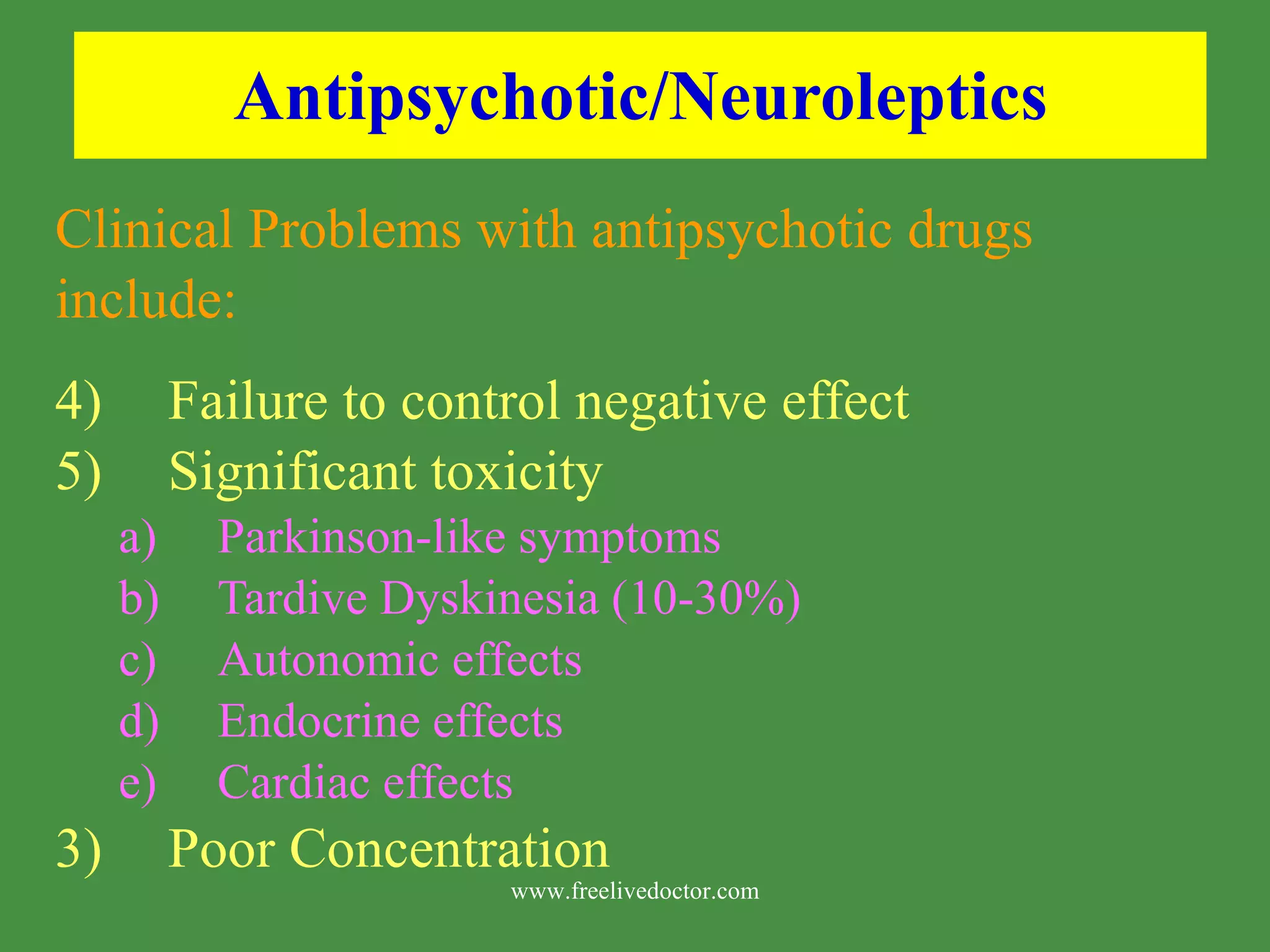
Antipsychotic/Neuroleptics Clinical Problems with antipsychotic drugs include: Failure to control negative effect Significant toxicity Parkinson-like symptoms Tardive Dyskinesia (10-30%) Autonomic effects Endocrine effects Cardiac effects 3)  Poor Concentration www.freelivedoctor.com
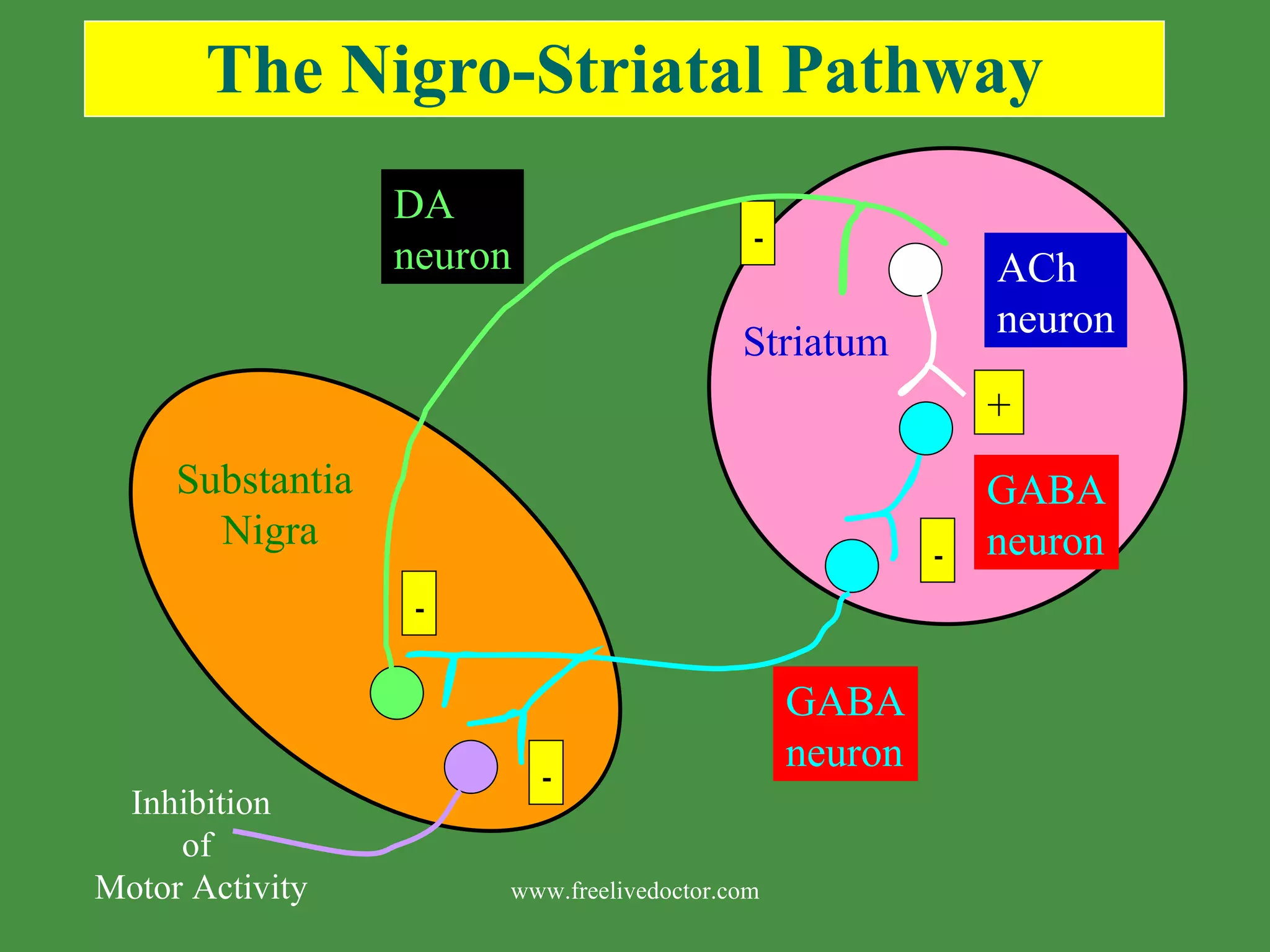
The Nigro-Striatal Pathway www.freelivedoctor.com Inhibition of  Motor Activity DA neuron ACh neuron GABA neuron GABA neuron Substantia Nigra + - - - - Striatum
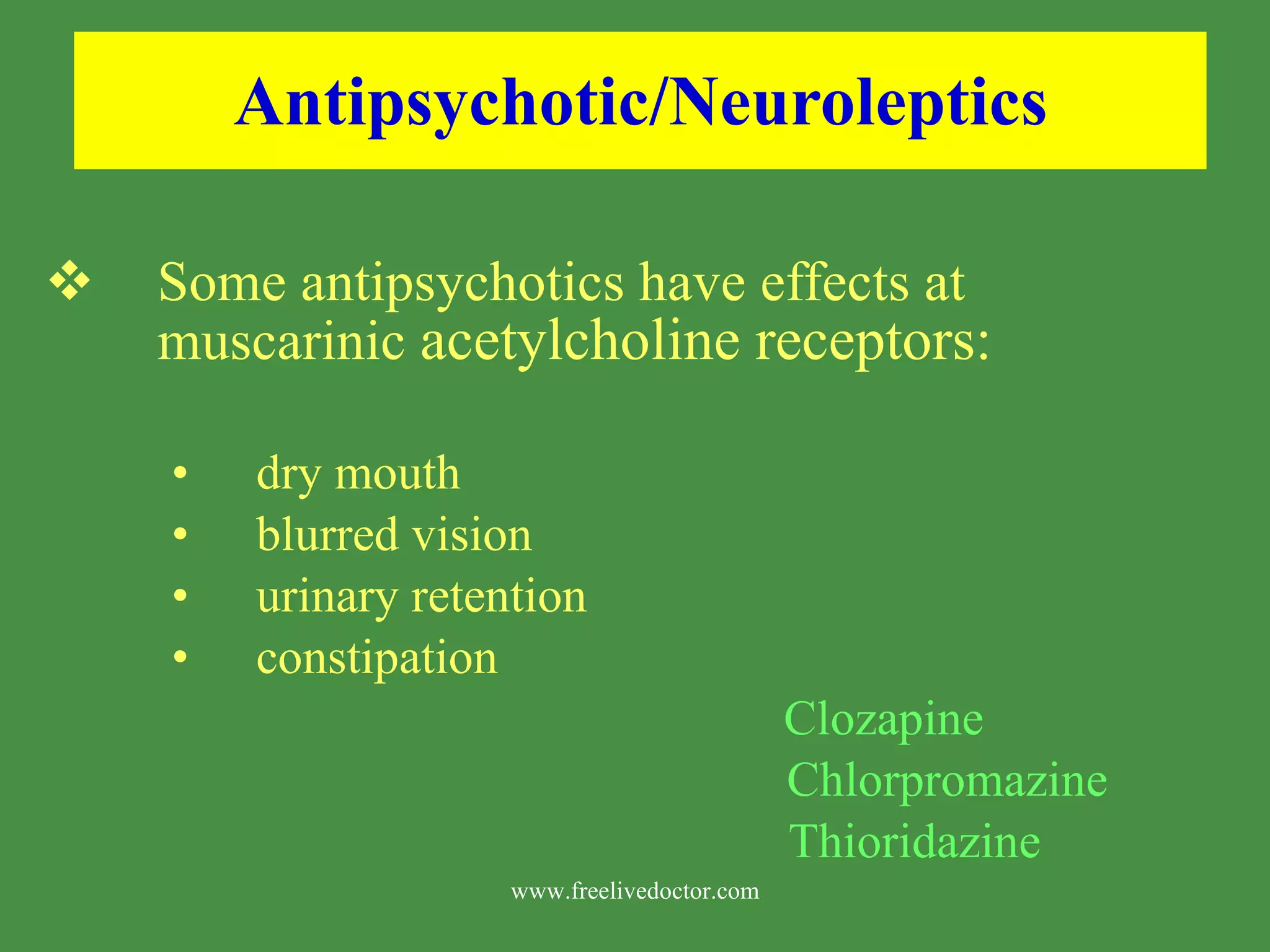
Antipsychotic/Neuroleptics Some antipsychotics have effects at muscarinic  acetylcholine receptors: dry mouth blurred vision urinary retention constipation Clozapine Chlorpromazine   Thioridazine www.freelivedoctor.com
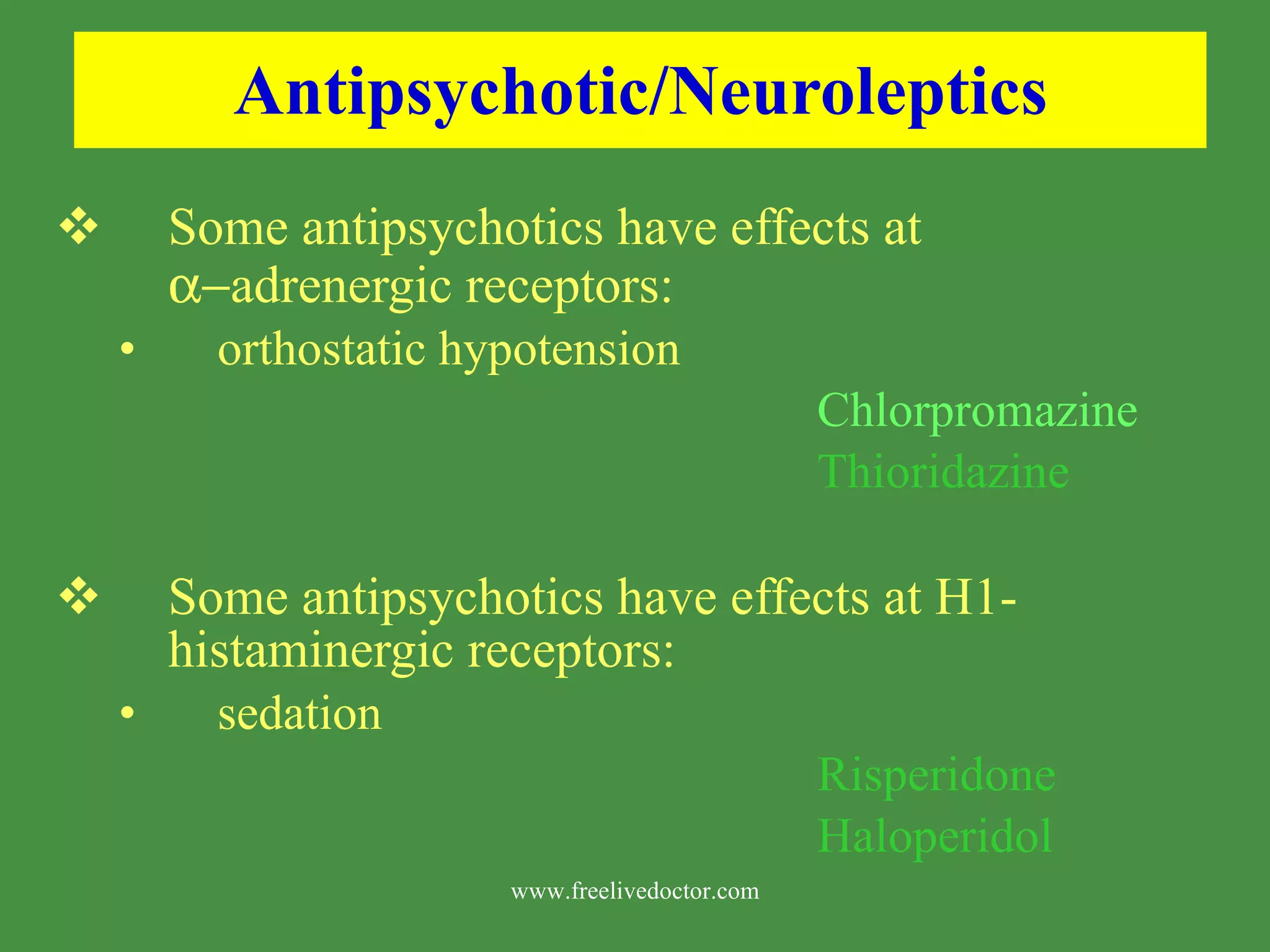
Antipsychotic/Neuroleptics Some antipsychotics have effects at   adrenergic receptors: orthostatic hypotension Chlorpromazine Thioridazine Some antipsychotics have effects at H1-histaminergic receptors: sedation Risperidone Haloperidol www.freelivedoctor.com
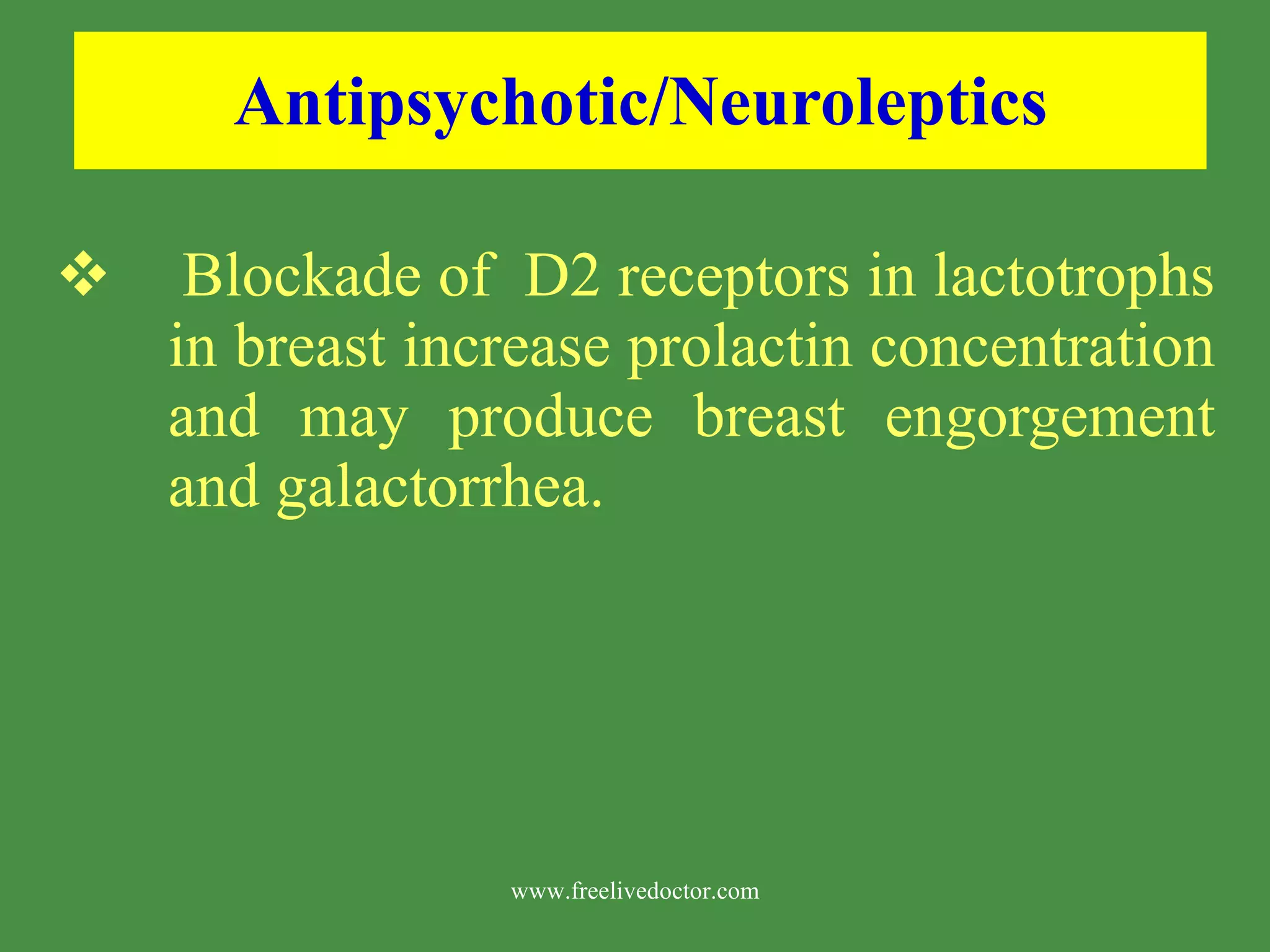
Antipsychotic/Neuroleptics Blockade of  D2 receptors in lactotrophs in breast increase prolactin concentration and may produce breast engorgement and galactorrhea. www.freelivedoctor.com
Antipsychotic/Neuroleptics Neuroleptic Malignant Syndrome Is a rare but serious side effect of neuroleptic (antipsychotic) therapy that can be lethal.  It can arise at any time in the course of treatment and shows no predilection for age, duration of treatment, antipsychotic medication, or dose.  www.freelivedoctor.com
Antipsychotic/Neuroleptics Neuroleptic Malignant Syndrome Occurs in pts. hypersensitive to the Ex.Py. effects of antipsychotics. Due to excessively rapid blockade of postsynaptic dopamine receptors. The syndrome begins with marked muscle rigidity.  If sweating is impaired, a fever may ensue.  The stress leukocytosis and high fever associated with this syndrome may be mistaken for an infection.  Autonomic instability with altered blood pressure and heart rate is another midbrain manifestation. Creatine kinase isozymes are usually elevated, reflecting muscle damage.  www.freelivedoctor.com
Antipsychotic/Neuroleptics Neuroleptic Malignant Syndrome Treatment  Vigorous treatment with antiparkinsonian drugs is recommended as soon as possible. Muscle relaxants such as diazepam, dantrolene or bromocriptine may be helpful. www.freelivedoctor.com
Antipsychotic/Neuroleptics Drug Interactions Additive effects with sedatives. Additive effects with anticholinergics. Additive effects with antihistaminergics. Additive effects with   -AR blocking  drugs. Additive effects with drugs with quinidine-like action (thioridazine). www.freelivedoctor.com

Antipsychotics

  • 1.
    DRUG TREATMENT OFPSYCHOSIS www.freelivedoctor.com
  • 2.
    Psychosis Psychosis isa thought disorder characterized by disturbances of reality and perception, impaired cognitive functioning, and inappropriate or diminished affect (mood). Psychosis denotes many mental disorders. Schizophrenia is a particular kind of psychosis characterized mainly by a clear sensorium but a marked thinking disturbance. www.freelivedoctor.com
  • 3.
    Psychosis Producing DrugsLevodopa CNS stimulants Cocaine Amphetamines Khat, cathinone, methcathinone Apomorphine Phencyclidine www.freelivedoctor.com
  • 4.
    Schizophrenia Pathogenesis isunknown. Onset of schizophrenia is in the late teens early twenties. Genetic predisposition -- Familial incidence. Multiple genes are involved. Afflicts 1% of the population worldwide. May or may not be present with anatomical changes. www.freelivedoctor.com
  • 5.
    Schizophrenia It isa thought disorder. The disorder is characterized by a divorcement from reality in the mind of the person (psychosis). It may involved visual and auditory hallucinations, delusions, intense suspicion, feelings of persecution or control by external forces (paranoia), depersonalization, and there is attachment of excessive personal significance to daily events, called “ideas of reference”. www.freelivedoctor.com
  • 6.
    Schizophrenia Positive Symptoms. Hallucinations, delusions, paranoia, ideas of reference. Negative Symptoms . Apathy, social withdrawal, anhedonia, emotional blunting, cognitive deficits, extreme inattentiveness or lack of motivation to interact with the environment. These symptoms are progressive and non-responsive to medication . www.freelivedoctor.com
  • 7.
    Etiology of SchizophreniaIdiopathic Biological Correlates Genetic Factors Neurodevelopmental abnormalities. Environmental stressors. www.freelivedoctor.com
  • 8.
    Etiology of SchizophreniaSchizophrenia is not characterized by any reproducible neurochemical abnormality. However, structural and functional abnormalities have been observed in the brains of schizophrenic patients: Enlarge cerebral ventricles. Atrophy of cortical layers. Reduced volume of the basal ganglia. www.freelivedoctor.com
  • 9.
    Dopamine Theory ofSchizophrenia Many lines of evidence point to the aberrant increased activity of the dopaminergic system as being critical in the symptomatology of schizophrenia. www.freelivedoctor.com
  • 10.
    Dopamine Theory ofSchizophrenia Dopamine Correlates: Antipsychotics reduce dopamine synaptic activity. These drugs produce Parkinson-like symptoms. Drugs that increase DA in the limbic system cause psychosis. Drugs that reduce DA in the limbic system (postsynaptic D2 antagonists) reduce psychosis. Increased DA receptor density (Post-mortem, PET). Changes in amount of homovanillic acid (HVA), a DA metabolite, in plasma, urine, and CSF. www.freelivedoctor.com
  • 11.
    Pharmacodynamics Anatomic Correlatesof Schizophrenia... Areas Associated with Mood and Thought Processes: Frontal cortex Amygdala Hippocampus Nucleus accumbens Limbic Cortex DA DA DA DA DA www.freelivedoctor.com
  • 12.
    Dopamine Theory ofSchizophrenia Evidence against the hypothesis Antipsychotics are only partially effective in most (70%) and ineffective for some patients. Phencyclidine, an NMDA receptor antagonist, produces more schizophrenia-like symptoms in non-schizophrenic subjects than DA agonists. Atypical antipsychotics have low affinity for D2 receptors. Focus is broader now and research is geared to produce drugs with less extrapyramidal effects. www.freelivedoctor.com
  • 13.
    Dopamine System Thereare four major pathways for the dopaminergic system in the brain: The Nigro-Stiatal Pathway. The Mesolimbic Pathway. The Mesocortical Pathway. The Tuberoinfundibular Pathway . www.freelivedoctor.com
  • 14.
    THE DOPAMINERGIC SYSTEMwww.freelivedoctor.com
  • 15.
    Catecholamines Tyrosine  Tyrosine hydroxylase L- Dopa  Dopa decarboxylase Dopamine (DA)  Dopamine  hydroxylase Norepinephrine (NE) (Noradrenaline) Phenylethanolamine-  -N-methyltransferase Epinephrine (EPI) (Adrenaline) www.freelivedoctor.com
  • 16.
    Dopamine Synapse DAL-DOPA Tyrosine Tyrosine www.freelivedoctor.com
  • 17.
    Dopamine System DOPAMINERECEPTORS There are at least five subtypes of receptors: Receptor D1 D2 D3 D4 D5 www.freelivedoctor.com
  • 18.
  • 19.
    Dopamine System DOPAMINERECEPTORS Receptor 2 o Messenger System D1  cAMP D2  cAMP ,  K + ch.,  Ca 2+ ch. D3  cAMP ,  K + ch.,  Ca 2+ ch. D4  cAMP D5  cAMP www.freelivedoctor.com
  • 20.
    Dopamine Reuptake Systemwww.freelivedoctor.com
  • 21.
    Antipsychotic treatments SCHIZOPHRENIAIS FOR LIFE There is no remission www.freelivedoctor.com
  • 22.
    Antipsychotic treatments Schizophreniahas been around perhaps, since the beginning of humankind, however, it was not until the last century that it was established as a separate entity amongst other mental disorders. Many treatments have been devise: Hydrotherapy: “ The pouring of cold water in a stream, from a height of at least four feet onto the forehead, is one of the most certain means of subsiding violent, maniacal excitement that we have ever seen tried”... wrote an anonymous physician in the early 1800’s. www.freelivedoctor.com
  • 23.
    Antipsychotic treatments Lobotomies(Egaz Moniz received the Nobel Prize). In 1940’s Phenothiazenes were isolated and were used as pre-anesthetic medication, but quickly were adopted by psychiatrists to calm down their mental patients. In 1955, chlorpromazine was d eveloped as an antihistaminic agent by Rh ô ne-Pauline Laboratories in France. In-patients at Mental Hospitals dropped by 1/3. www.freelivedoctor.com
  • 24.
    Antipsychotics treatment Antipsychotics/Neuroleptics Antipsychotics are the drugs currently used in the prevention of psychosis. They have also been termed neuroleptics, because they suppress motor activity and emotionality. ** These drugs are not a cure ** Schizophrenics must be treated with medications indefinitely, in as much as the disease in lifelong and it is preferable to prevent the psychotic episodes than to treat them. www.freelivedoctor.com
  • 25.
    Antipsychotics/Neuroleptics Although theantipsychotic/neuroleptics are drugs used mainly in the treatment of schizophrenia, they are also used in the treatment of other psychoses associated with depression and manic-depressive illness, and psychosis associated with Alzheimer’s disease. These conditions are life-long and disabling. www.freelivedoctor.com
  • 26.
    Antipsychotics/Neuroleptics NON-compliance is the major reason for relapse. www.freelivedoctor.com
  • 27.
    Antipsychotic/Neuroleptics Three majorgroups : 1) Phenothiazines 2) Thioxanthines 3) Butyrophenones OLDER DRUGS www.freelivedoctor.com
  • 28.
    Antipsychotics/Neuroleptics Old antiphsychotics/neuroleptics are D 2 dopamine receptor antagonists. Although they are also effective antagonists at ACh, 5-HT, NE receptors. dopamine receptor antagonist D 2 www.freelivedoctor.com
  • 29.
    Antipsychotics/Neuroleptics It appearsthat the specific interaction of antipsychotic drugs with D 2 receptors is important to their therapeutic action. The affinities of most older “classical” agents for the D 2 receptors correlate with their clinical potencies as antipsychotics. www.freelivedoctor.com
  • 30.
    Antipsychotic/Neuroleptics Correlations betweentherapeutic potency and affinity for binding D2 receptors. [ 3 H]Haloperidol binding IC 50 (mol/L) Clinical dose of drug [mg d -1 ] haloperidol clozapine thiothixene chlorpromazine promazine spiroperidole www.freelivedoctor.com
  • 31.
    Antipsychotics/Neuroleptics Both D1and D2 receptors are found in high concentrations in the striatum and the nucleus accumbens. Clozapine has a higher affinity for the D 4 receptors than for D 2 . Recently it has been found that most antipsychotic drugs may also bind D 3 receptors (therefore, they are non-selective). www.freelivedoctor.com
  • 32.
    Antipsychotics/Neuroleptics Antipsychotics producecatalepsy (reduce motor activity). BLOCKADE OF DOPAMINE RECPTORS IN BASAL GANGLIA. Antipsychotics reverse hyperkinetic behaviors (increased locomotion and stereotyped behavior). BLOCKADE OF DOPAMINE RECPTORS IN LIMBIC AREAS. Antipsychotics prevent the dopamine inhibition of prolactin release from pituitary. BLOCKADE OF DOPAMINE RECEPTORS IN PITUITARY.  hyperprolactinemia www.freelivedoctor.com
  • 33.
    Pharmacokinetics Absorption andDistribution Most antipsychotics are readily but incompletely absorbed. Significant first-pass metabolism. Bioavailability is 25-65%. Most are highly lipid soluble. Most are highly protein bound (92-98%). High volumes of distribution (>7 L/Kg). Slow elimination. **Duration of action longer than expected, metabolites are present and relapse occurs, weeks after discontinuation of drug.** www.freelivedoctor.com
  • 34.
    Pharmacokinetics Metabolism Mostantipsychotics are almost completely metabolized. Most have active metabolites, although not important in therapeutic effect, with one exception. The metabolite of thioridazine, mesoridazine , is more potent than the parent compound and accounts for most of the therapeutic effect. www.freelivedoctor.com
  • 35.
    Pharmacokinetics Excretion Antipsychoticsare almost completely metabolized and thus, very little is eliminated unchanged. Elimination half-lives are 10-24 hrs. www.freelivedoctor.com
  • 36.
    Antipsychotic/Neuroleptics Phenothiazines ChlorpromazineThioridazine Fluphenazine Trifluopromazine Piperacetazine Perfenazine Mesoridazine Acetophenazine Carphenazine Prochlorperazine Trifluoperazine Aliphatic Piperidine Piperazine* * Most likely to cause extrapyramidal effects. www.freelivedoctor.com
  • 37.
    Antipsychotic/Neuroleptics [Drug dose]Effect Piperazine Aliphatic Piperidine www.freelivedoctor.com
  • 38.
    Antipsychotic/Neuroleptics 2) ThioxanthinesThiothixene Chlorprothixene Closely related to phenothiazines www.freelivedoctor.com
  • 39.
    Antipsychotic/Neuroleptics 3) ButyrophenonesHaloperidol Droperidol* *Not marketed in the USA www.freelivedoctor.com
  • 40.
    Antipsychotic/Neuroleptics [Drug dose]Effect Phenothiazine d. Thioxanthene d. Butyrophenone d. www.freelivedoctor.com
  • 41.
    Antipsychotics/Neuroleptics Newer drugshave higher affinities for D1, 5-HT or  -AR receptors. NE, GABA, Glycine and Glutamate have also been implicated in schizophrenia. www.freelivedoctor.com
  • 42.
    Antipsychotics/Neuroleptics The acuteeffects of antipsychotics do not explain why their therapeutic effects are not evident until 4-8 weeks of treatment. Blockade of D 2 receptors  Short term/Compensatory effects: Firing rate and activity of nigrostriatal and mesolimbic DA neurons. DA synthesis, DA metabolism, DA release www.freelivedoctor.com
  • 43.
    Antipsychotics/Neuroleptics Presynaptic EffectsBlockade of D 2 receptors  Compensatory Effects Firing rate and activity of nigrostriatal and mesolimbic DA neurons. DA synthesis, DA metabolism, DA release. Postsynaptic Effects Depolarization Blockade Inactivation of nigrostriatal and mesolimbic DA neurons.  Receptor Supersensitivity www.freelivedoctor.com
  • 44.
    Antipsychotic/Neuroleptics Pimozide MolindoneLoxapine Clozapine Olanzapine Qetiapine Risperidone Sertindole Ziprasidone Olindone Newer Drugs www.freelivedoctor.com
  • 45.
    Antipsychotic/Neuroleptics Clinical Ex.Py. Drug Potency toxicity Sedation Hypote. Chlorpromaz. Low Medium Medium High Haloperidol High Very High Very High Low Thiothixene High Medium Medium Medium Clozapine Medium Very low Low Medium Ziprasidone Medium Very Low Low Very low Risperidone High Low Low Low Olanzapine High Very Low Medium Very low Sertindole High Very Low Very low Very Low www.freelivedoctor.com
  • 46.
    Antipsychotic/Neuroleptics Chlorpromazine:  1 = 5-HT 2 = D 2 > D 1 > M >  2 Haloperidol: D 2 > D 1 = D 4 >  1 > 5-HT 2 > H 1 > M =  2 Clozapine: D 4 =  1 > 5-HT 2 = M > D 2 = D 1 =  2 ; H 1 Quetiapine: 5-HT 2 = D 2 =  1 =  2 ; H 1 Risperidone: 5-HT 2 >>  1 > H 1 > D 2 >  2 >> D 1 Sertindole: 5-HT 2 > D 2 =  1 www.freelivedoctor.com
  • 47.
    Antipsychotic/Neuroleptics Clinical Problemswith antipsychotic drugs include: Failure to control negative effect Significant toxicity Parkinson-like symptoms Tardive Dyskinesia (10-30%) Autonomic effects Endocrine effects Cardiac effects 3) Poor Concentration www.freelivedoctor.com
  • 48.
    The Nigro-Striatal Pathwaywww.freelivedoctor.com Inhibition of Motor Activity DA neuron ACh neuron GABA neuron GABA neuron Substantia Nigra + - - - - Striatum
  • 49.
    Antipsychotic/Neuroleptics Some antipsychoticshave effects at muscarinic acetylcholine receptors: dry mouth blurred vision urinary retention constipation Clozapine Chlorpromazine Thioridazine www.freelivedoctor.com
  • 50.
    Antipsychotic/Neuroleptics Some antipsychoticshave effects at  adrenergic receptors: orthostatic hypotension Chlorpromazine Thioridazine Some antipsychotics have effects at H1-histaminergic receptors: sedation Risperidone Haloperidol www.freelivedoctor.com
  • 51.
    Antipsychotic/Neuroleptics Blockade of D2 receptors in lactotrophs in breast increase prolactin concentration and may produce breast engorgement and galactorrhea. www.freelivedoctor.com
  • 52.
    Antipsychotic/Neuroleptics Neuroleptic MalignantSyndrome Is a rare but serious side effect of neuroleptic (antipsychotic) therapy that can be lethal. It can arise at any time in the course of treatment and shows no predilection for age, duration of treatment, antipsychotic medication, or dose. www.freelivedoctor.com
  • 53.
    Antipsychotic/Neuroleptics Neuroleptic MalignantSyndrome Occurs in pts. hypersensitive to the Ex.Py. effects of antipsychotics. Due to excessively rapid blockade of postsynaptic dopamine receptors. The syndrome begins with marked muscle rigidity. If sweating is impaired, a fever may ensue. The stress leukocytosis and high fever associated with this syndrome may be mistaken for an infection. Autonomic instability with altered blood pressure and heart rate is another midbrain manifestation. Creatine kinase isozymes are usually elevated, reflecting muscle damage. www.freelivedoctor.com
  • 54.
    Antipsychotic/Neuroleptics Neuroleptic MalignantSyndrome Treatment Vigorous treatment with antiparkinsonian drugs is recommended as soon as possible. Muscle relaxants such as diazepam, dantrolene or bromocriptine may be helpful. www.freelivedoctor.com
  • 55.
    Antipsychotic/Neuroleptics Drug InteractionsAdditive effects with sedatives. Additive effects with anticholinergics. Additive effects with antihistaminergics. Additive effects with  -AR blocking drugs. Additive effects with drugs with quinidine-like action (thioridazine). www.freelivedoctor.com

Editor's Notes

  • #17 Slide 4: The synapse and synaptic neurotransmission Describe the synapse and the process of chemical neurotransmission. Indicate how vesicles containing a neurotransmitter, such as dopamine (the stars), move toward the presynaptic membrane as an electrical impulse arrives at the terminal. Describe the process of dopamine release (show how the vesicles fuse with the presynaptic membrane). Once inside the synaptic cleft, the dopamine can bind to specific proteins called dopamine receptors (in blue) on the membrane of a neighboring neuron. Introduce the idea that occupation of receptors by neurotransmitters causes various actions in the cell; activation or inhibition of enzymes, entry or exit of certain ions. State that you will describe how this happens in a few moments.
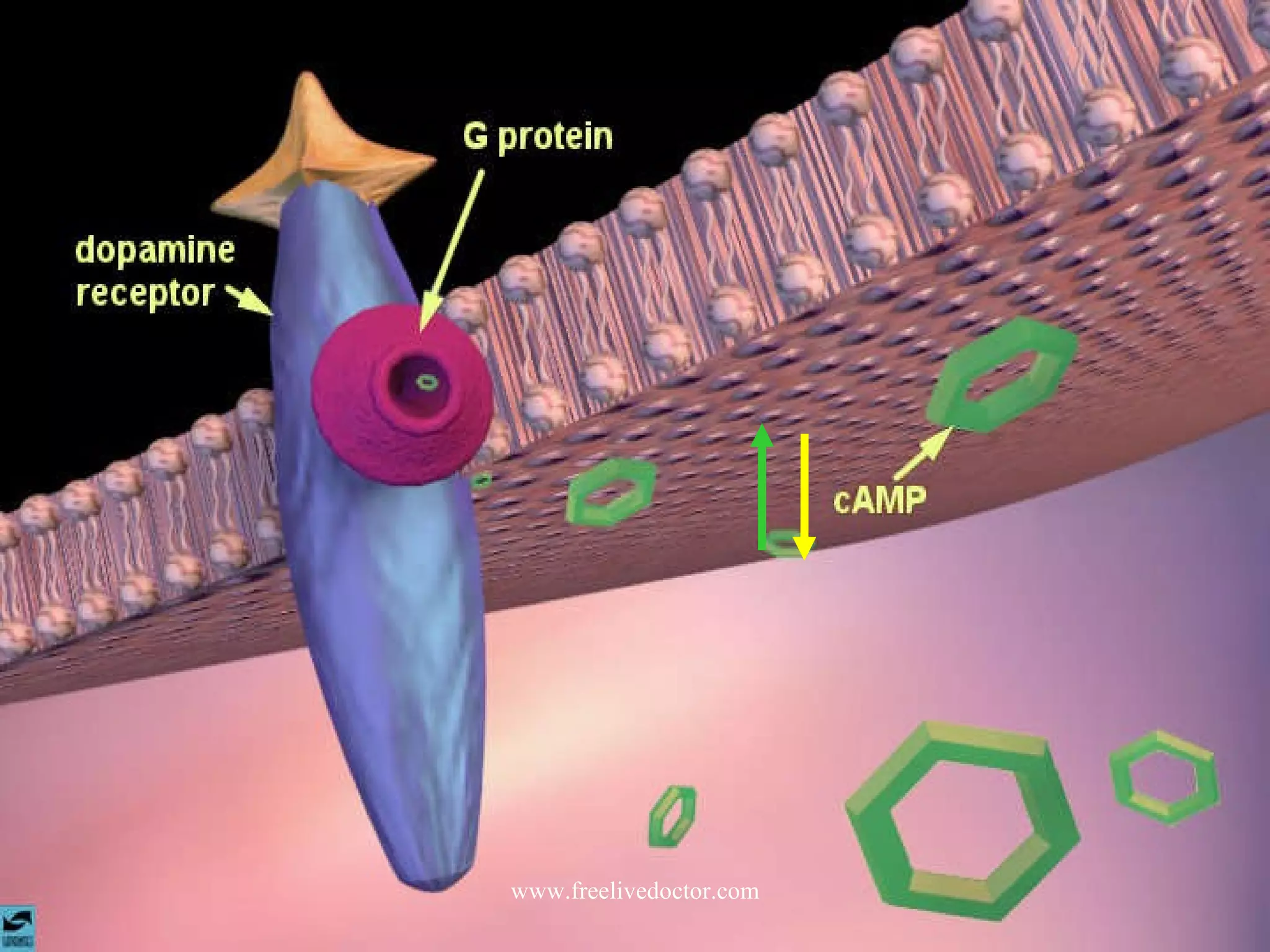
  • #19 Slide 6: Dopamine and the production of cyclic AMP Using the close-up view, explain what happens when dopamine binds to its receptor. When dopamine binds to its receptor, another protein called a G-protein (in pink) moves up close to the dopamine receptor. The G-protein signals an enzyme to produce cyclic adenosine monophosphate (cAMP) molecules (in green) inside the cell. [Sometimes the signal can decrease production of cAMP, depending on the kind of dopamine receptor and G-protein present.] Point to the dopamine receptor-G-protein/adenylate cyclase complex, and show how cAMP is generated when dopamine binds to its receptor. Indicate that cAMP (point to the cyclic-looking structures) controls many important functions in the cell including the ability of the cell to generate electrical impulses.
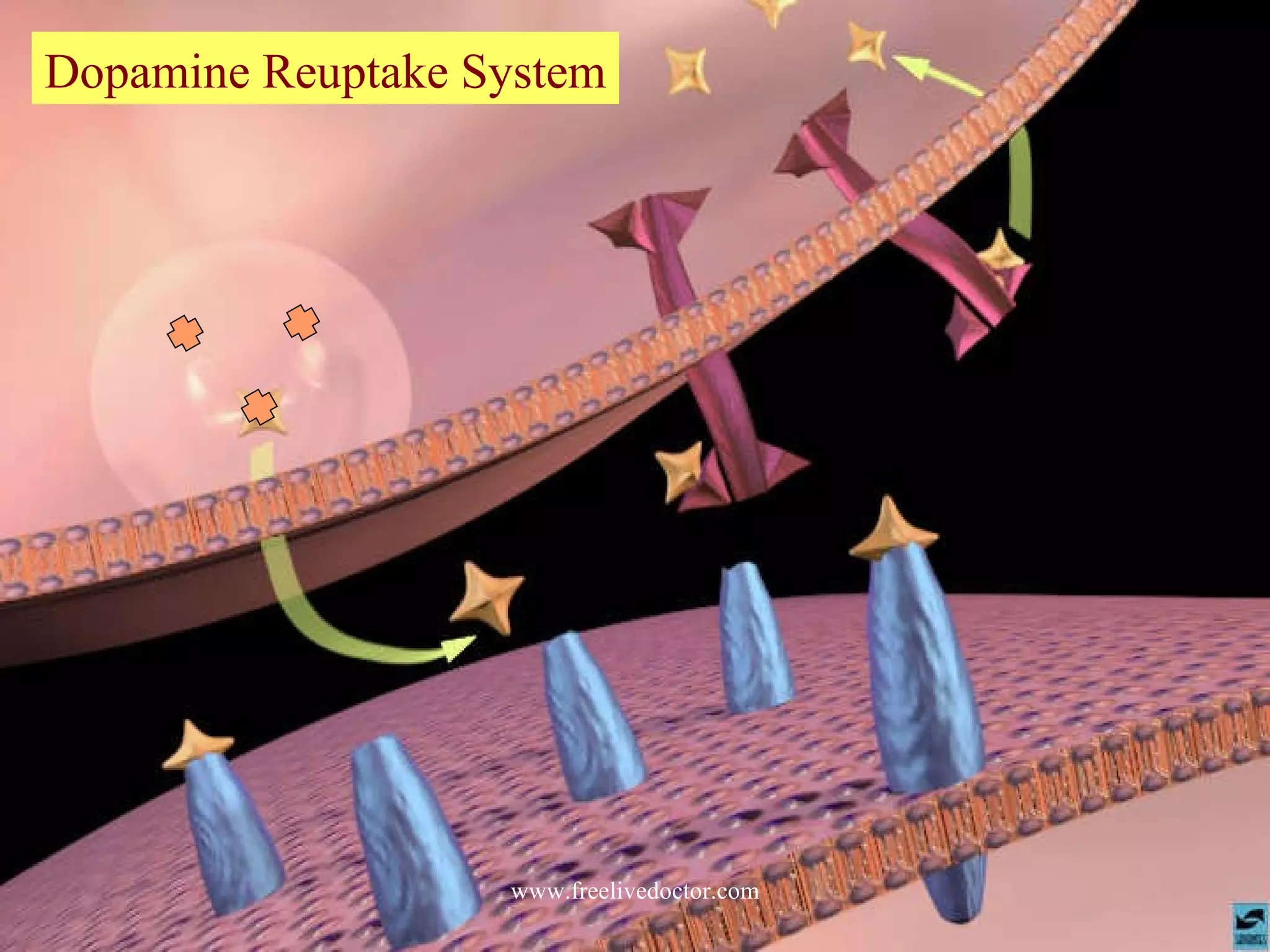
  • #21 Slide 12: Dopamine binding to receptors and uptake pumps in the nucleus accumbens Explain that cocaine concentrates in areas of the brain that are rich in dopamine synapses. Review dopamine transmission in the nucleus accumbens. Point to dopamine in the synapse and to dopamine bound to dopamine receptors and to uptake pumps on the terminal.