NEUROLEPTICS (ANTIPSYCHOTICS)
Mohsin Aziz
1
ANTIPSYCHOTICS /
NEUROLEPTICS
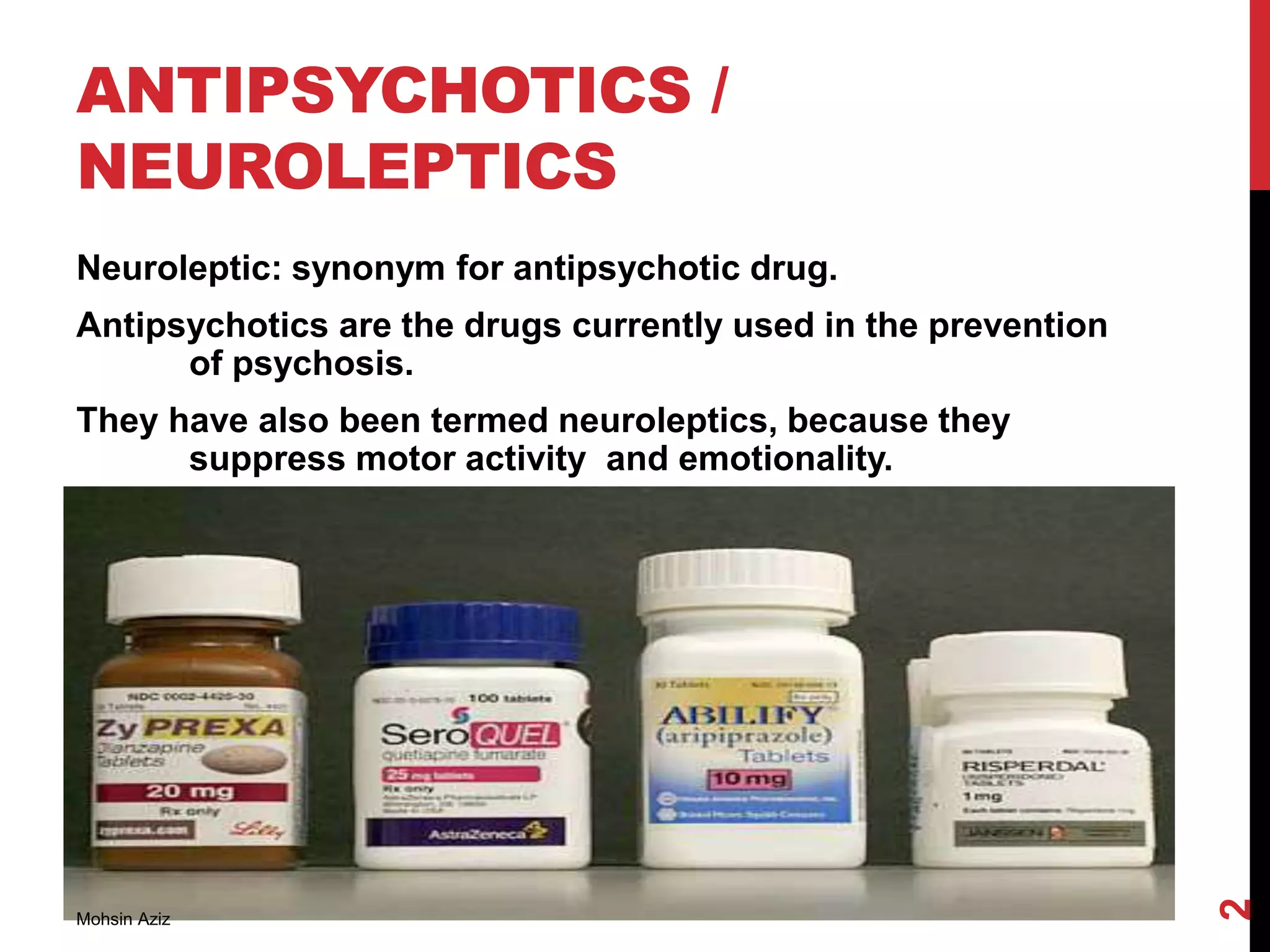
Neuroleptic: synonym for antipsychotic drug.
Antipsychotics are the drugs currently used in the prevention
of psychosis.
They have also been termed neuroleptics, because they
suppress motor activity and emotionality.
Mohsin Aziz
2
WHAT IS
PSYCHOSIS……….????
Mohsin Aziz
3
PSYCHOSIS
Psychosis (from the Greek , psyche, "mind/soul", and -osis,
"abnormal condition or derangement") refers to an abnormal
condition of the mind.
A syndrome of chronic disordered thinking and disturbed
behavior (schizophrenia, mania, depression)
The most important types of psychosis are:
• Schizophrenia
• Affective disorders (e.g. depression, mania)
• Organic psychoses (mental disturbances caused by head
injury, alcoholism, or other kinds of organic disease).
Mohsin Aziz
4
Mohsin Aziz
5
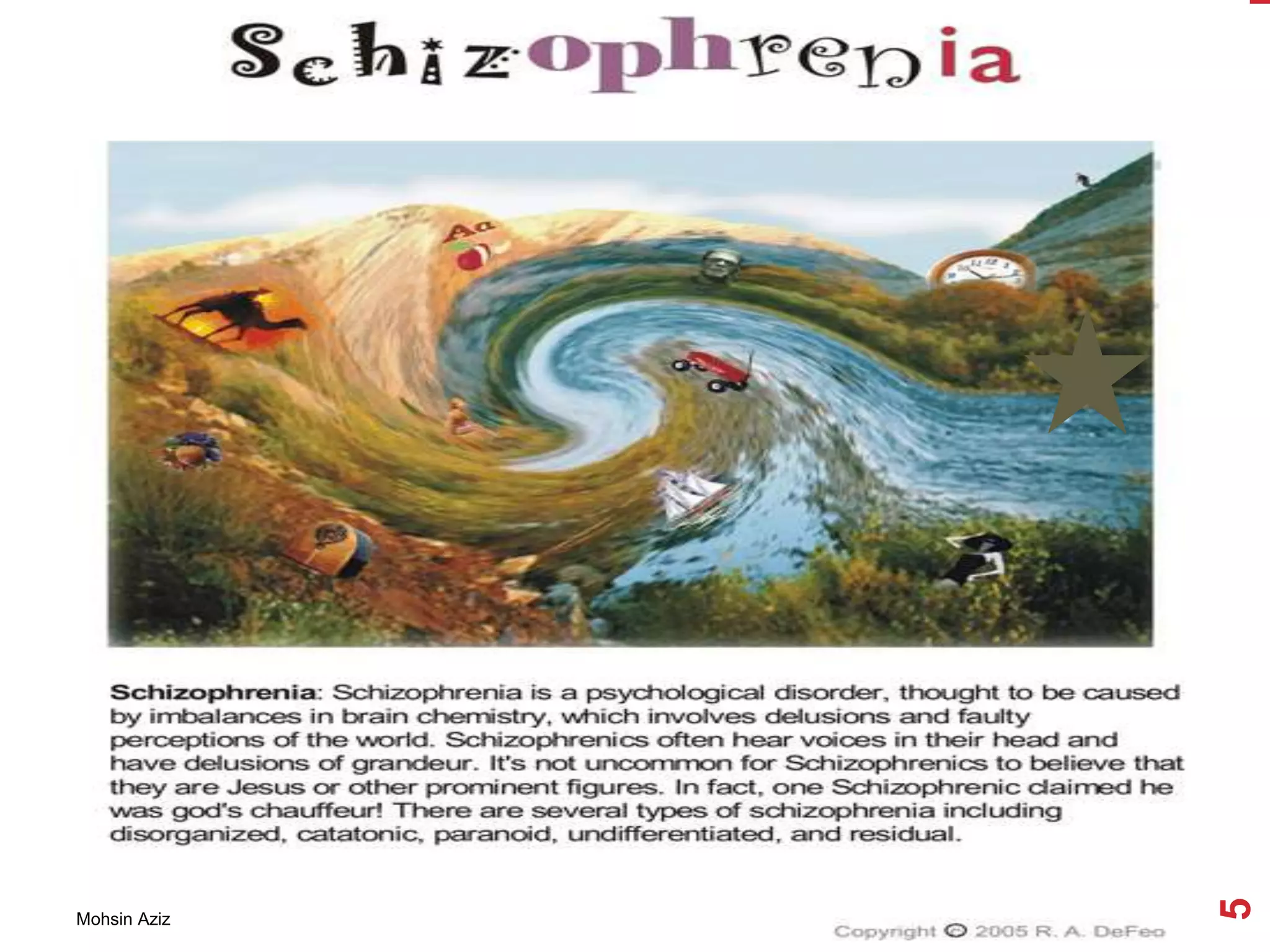
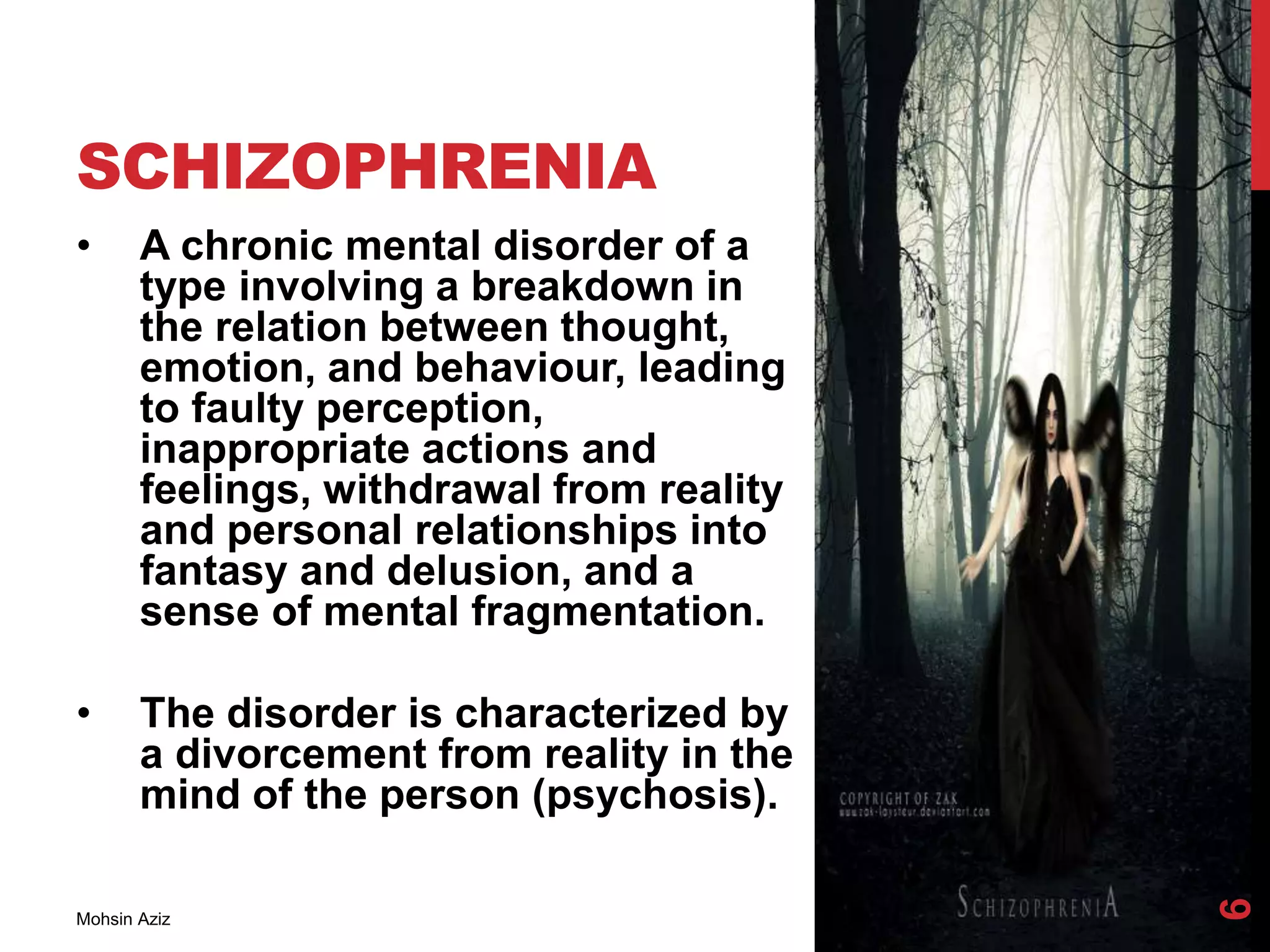
SCHIZOPHRENIA
• A chronic mental disorder of a
type involving a breakdown in
the relation between thought,
emotion, and behaviour, leading
to faulty perception,
inappropriate actions and
feelings, withdrawal from reality
and personal relationships into
fantasy and delusion, and a
sense of mental fragmentation.
• The disorder is characterized by
a divorcement from reality in the
mind of the person (psychosis).
Mohsin Aziz
6
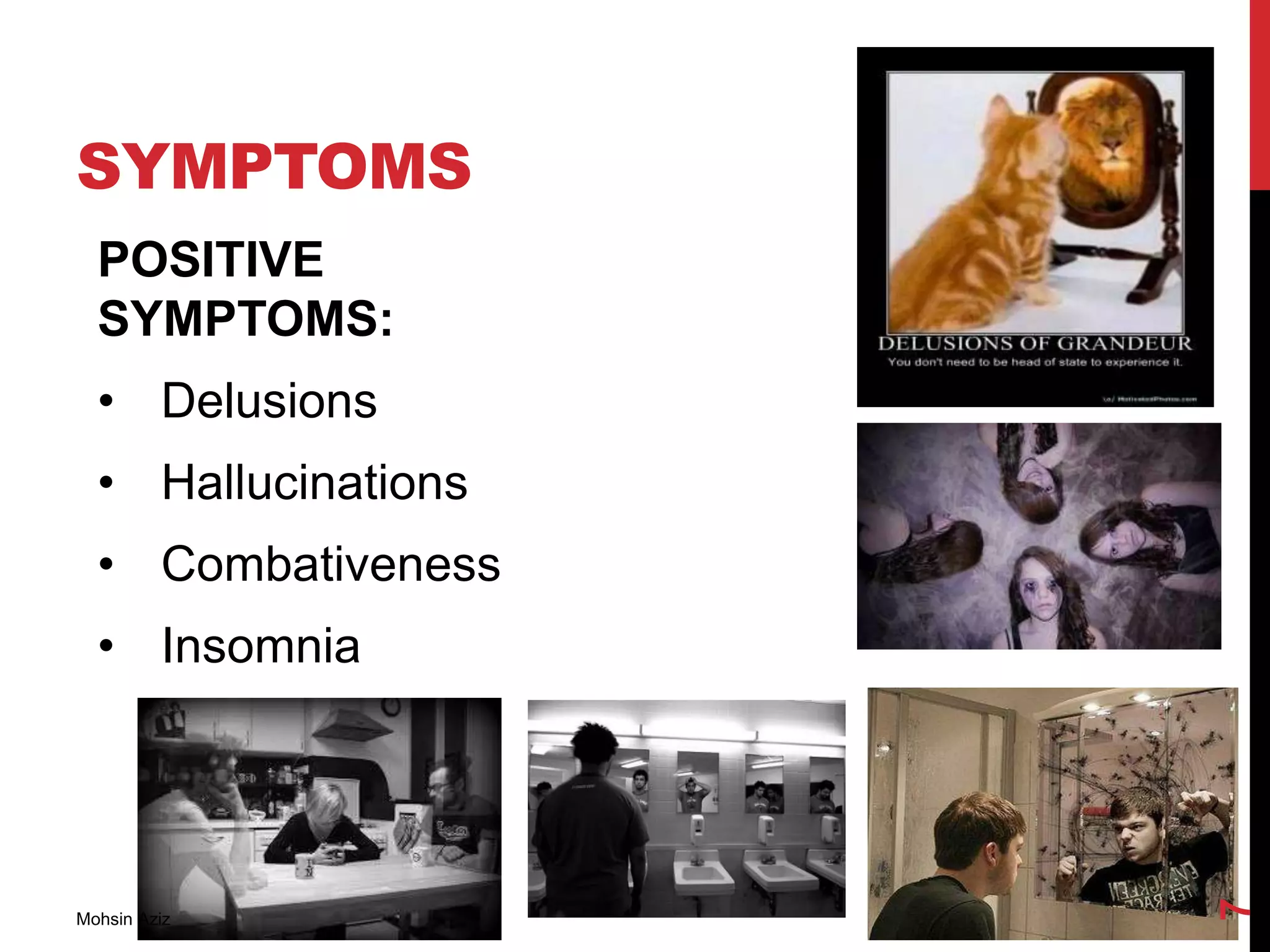
SYMPTOMS
POSITIVE
SYMPTOMS:
• Delusions
• Hallucinations
• Combativeness
• Insomnia
Mohsin Aziz
7
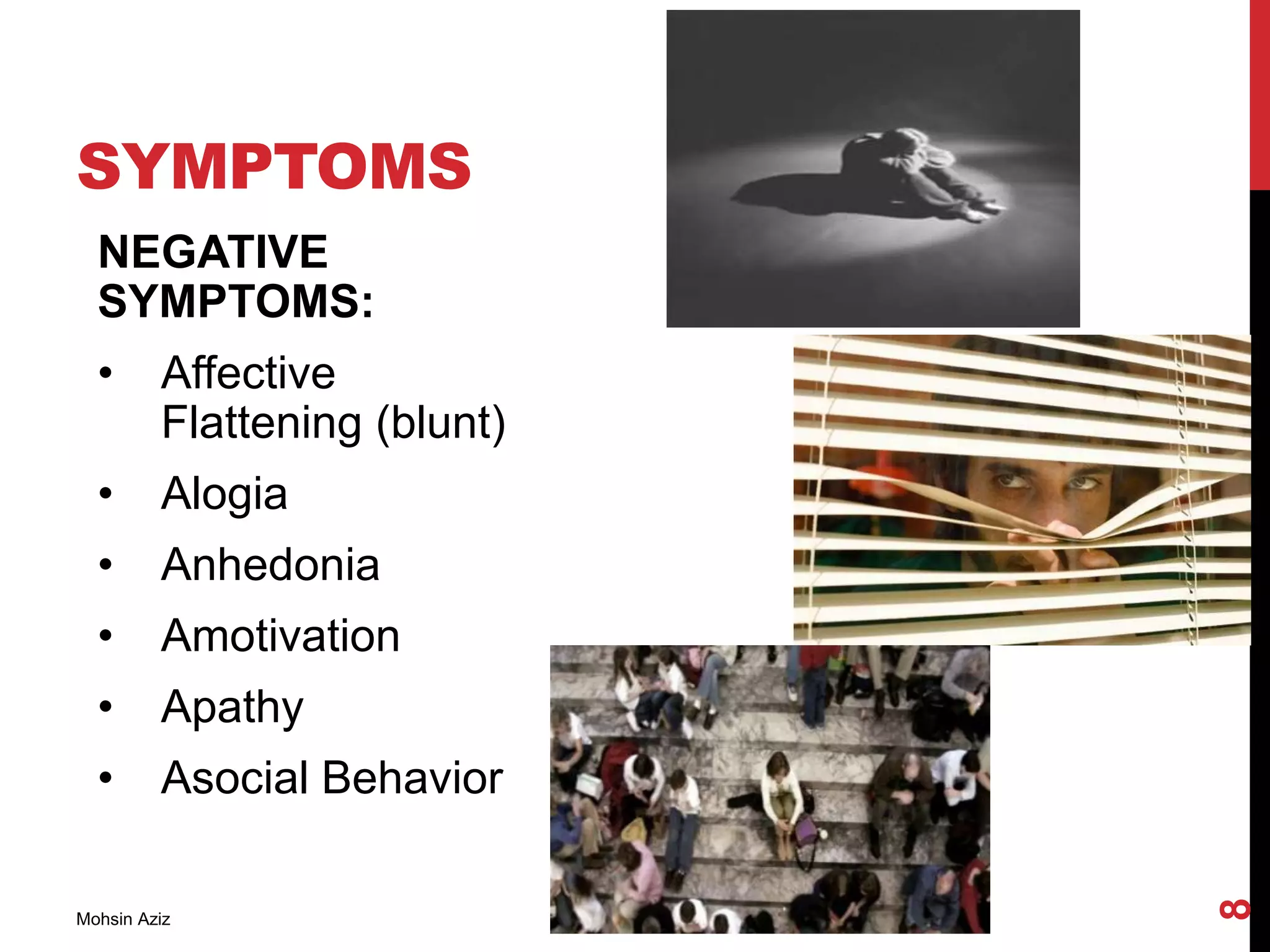
SYMPTOMS
NEGATIVE
SYMPTOMS:
• Affective
Flattening (blunt)
• Alogia
• Anhedonia
• Amotivation
• Apathy
• Asocial Behavior
Mohsin Aziz
8
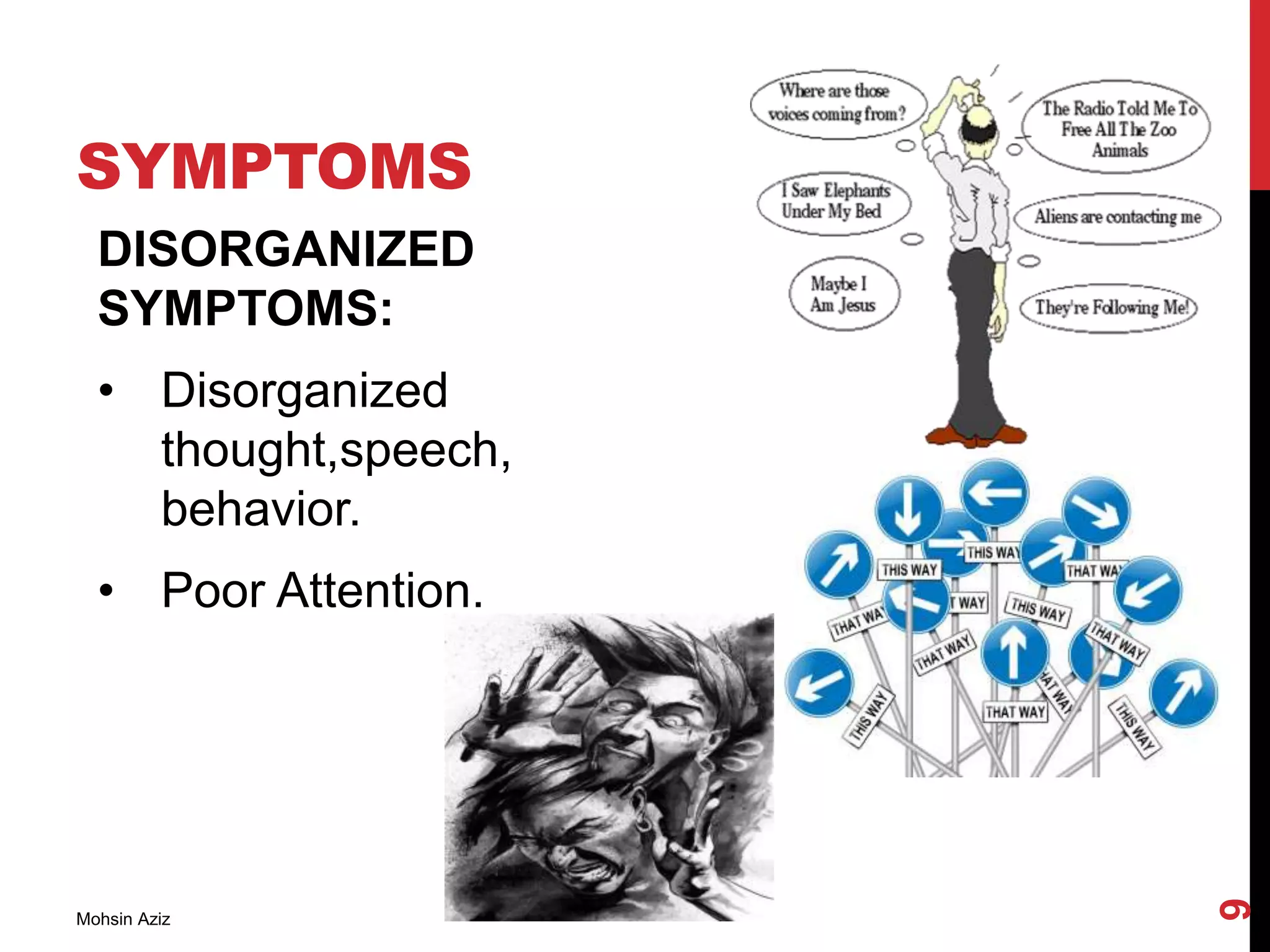
SYMPTOMS
DISORGANIZED
SYMPTOMS:
• Disorganized
thought,speech,
behavior.
• Poor Attention.
Mohsin Aziz
9
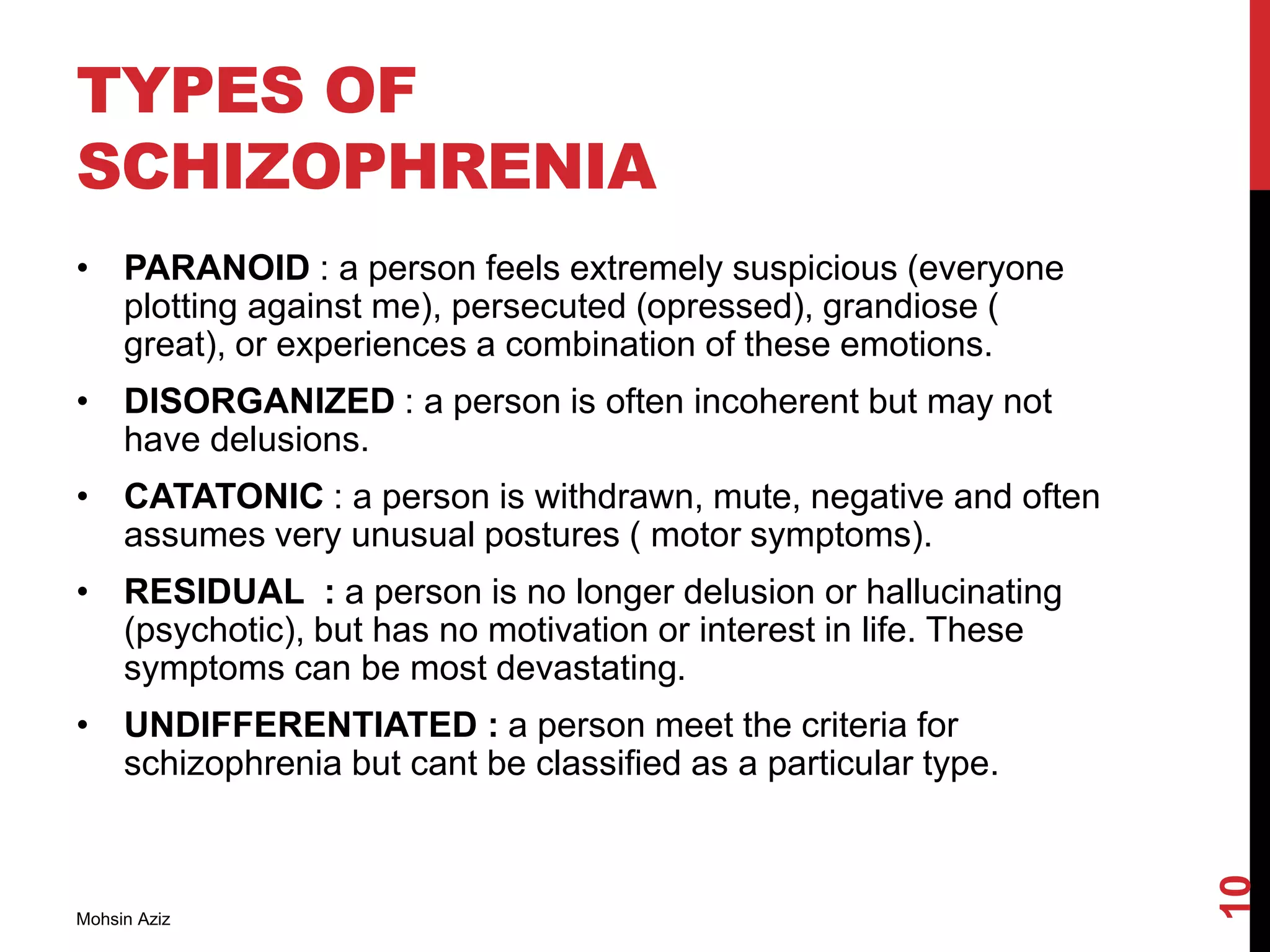
TYPES OF
SCHIZOPHRENIA
• PARANOID : a person feels extremely suspicious (everyone
plotting against me), persecuted (opressed), grandiose (
great), or experiences a combination of these emotions.
• DISORGANIZED : a person is often incoherent but may not
have delusions.
• CATATONIC : a person is withdrawn, mute, negative and often
assumes very unusual postures ( motor symptoms).
• RESIDUAL : a person is no longer delusion or hallucinating
(psychotic), but has no motivation or interest in life. These
symptoms can be most devastating.
• UNDIFFERENTIATED : a person meet the criteria for
schizophrenia but cant be classified as a particular type.
Mohsin Aziz
10
SCHIZOPHRENIA
Mohsin Aziz
11
Mohsin Aziz
12
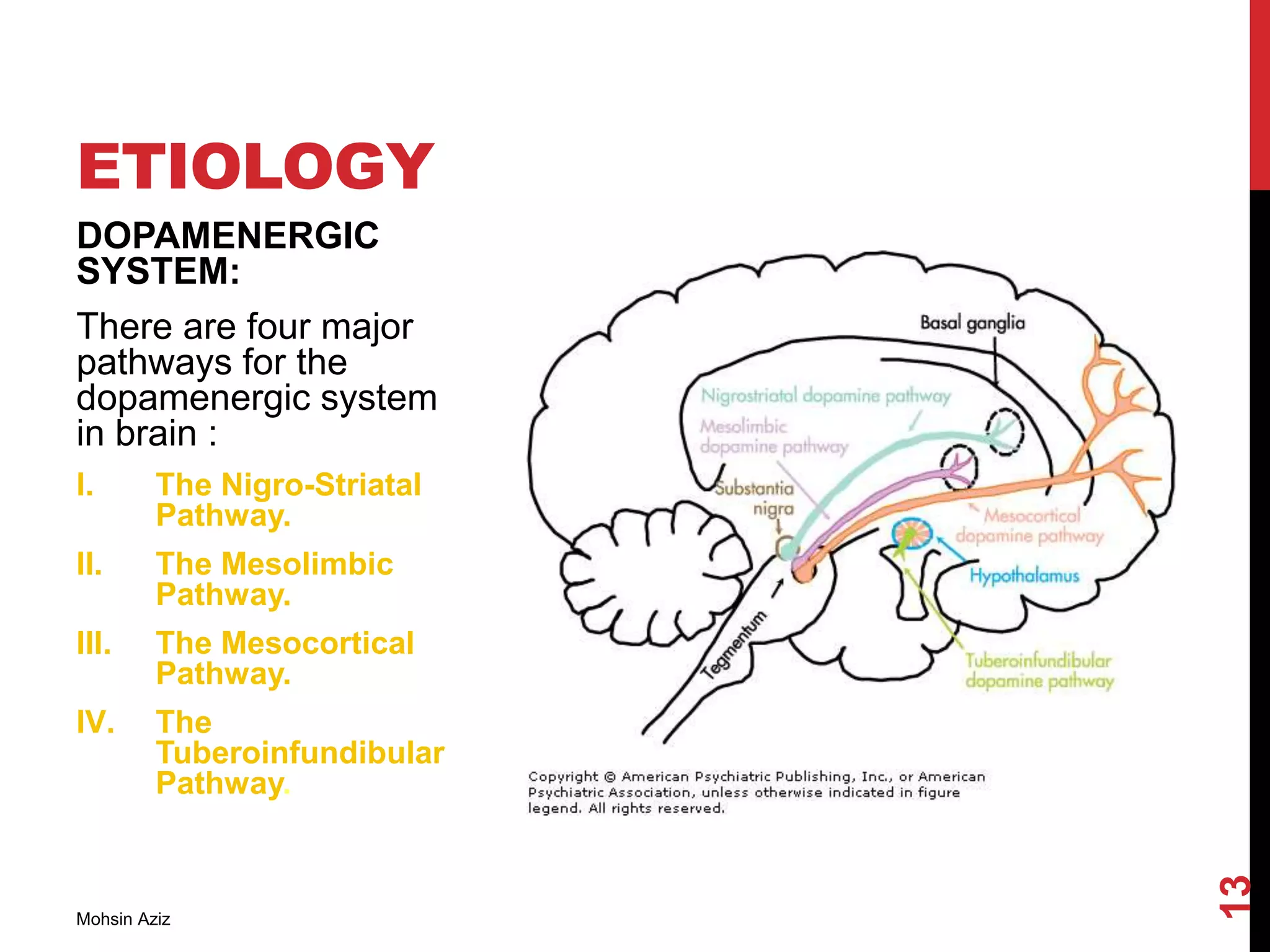
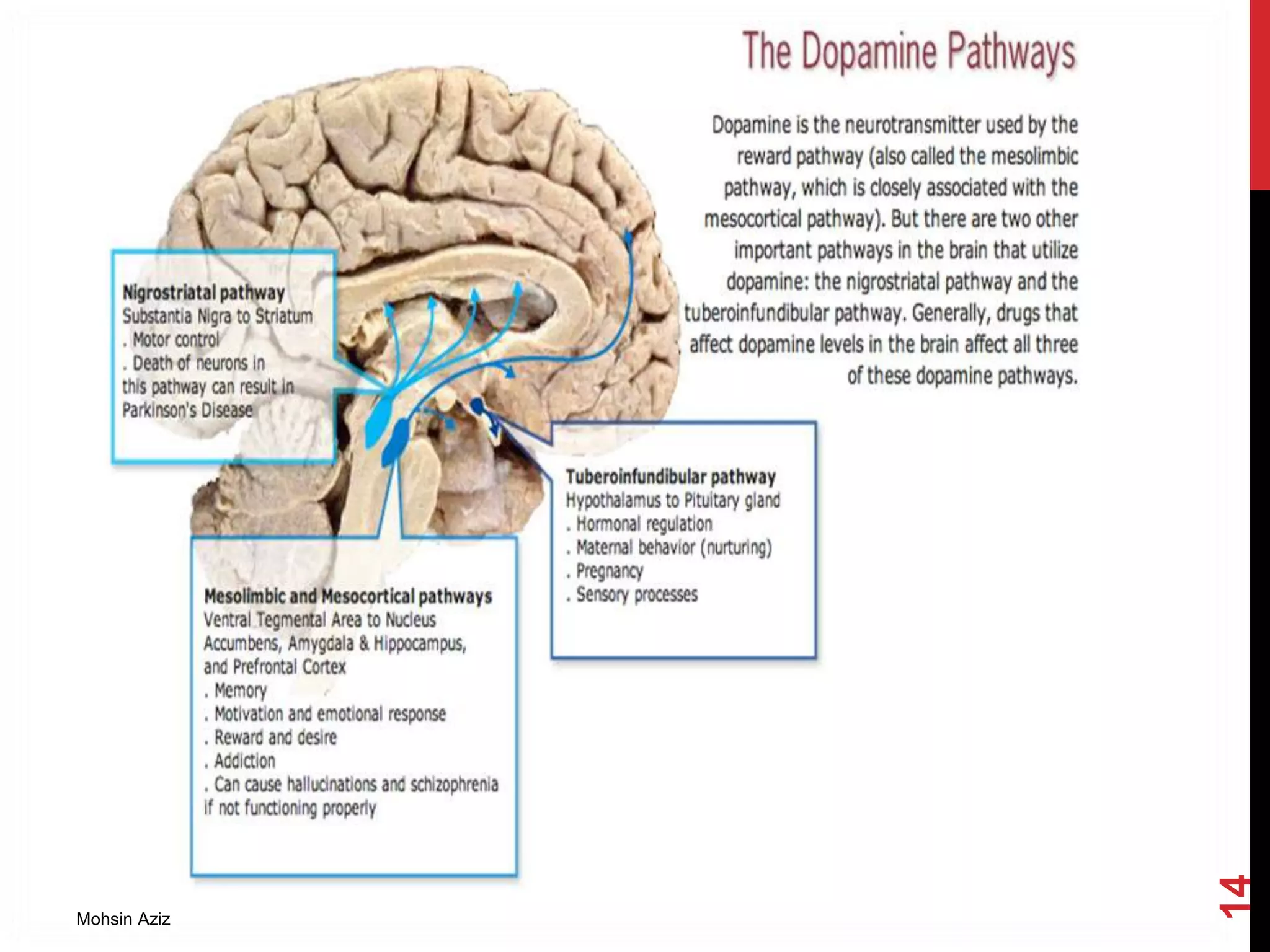
DOPAMENERGIC
SYSTEM:
There are four major
pathways for the
dopamenergic system
in brain :
I. The Nigro-Striatal
Pathway.
II. The Mesolimbic
Pathway.
III. The Mesocortical
Pathway.
IV. The
Tuberoinfundibular
Pathway.
ETIOLOGY
Mohsin Aziz
13
Mohsin Aziz
14
THE DOPAMINE
HYPOTHESIS
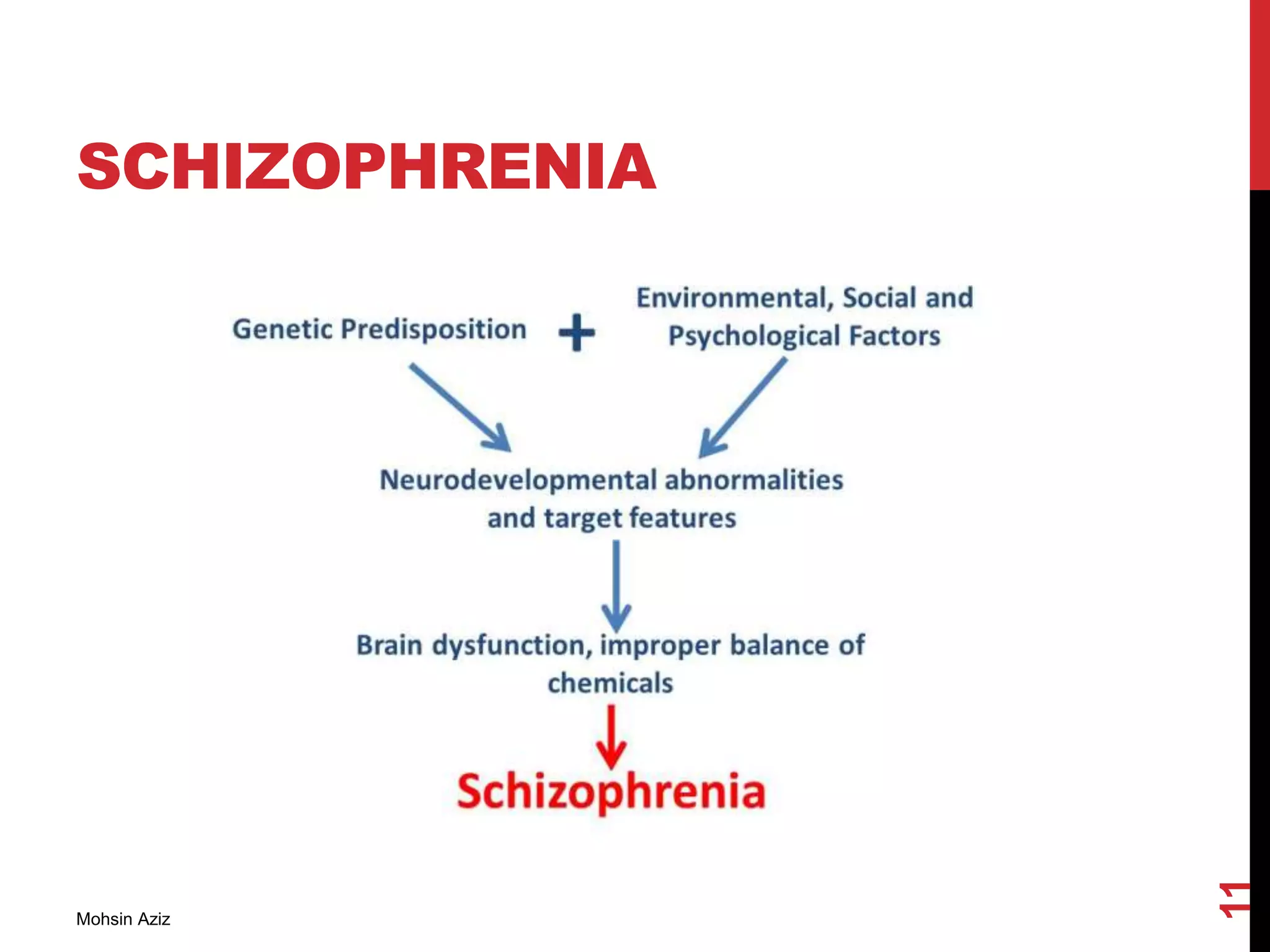
Schizophrenia results from excess activity of dopamine
neurotransmission in Mesolimbic and Mesocortical Pathways
because:
 All antipsychotic drugs block dopamine receptors.
 Stimulant drugs which act through dopamine can produce schizophrenic-
like behaviors (eg.amphetamines).
 Levodopa, a dopamine precursor, can exacerbate schizophrenic
symptoms, or occasionally elicit them in non-schizophrenic patients.
 Higher levels of dopamine receptors measured in brains of schizophrenics
by PET.
 Brain [DA] increases during psychotic episodes but not during remissions.
Mohsin Aziz
15
THE DOPAMINE
HYPOTHESIS
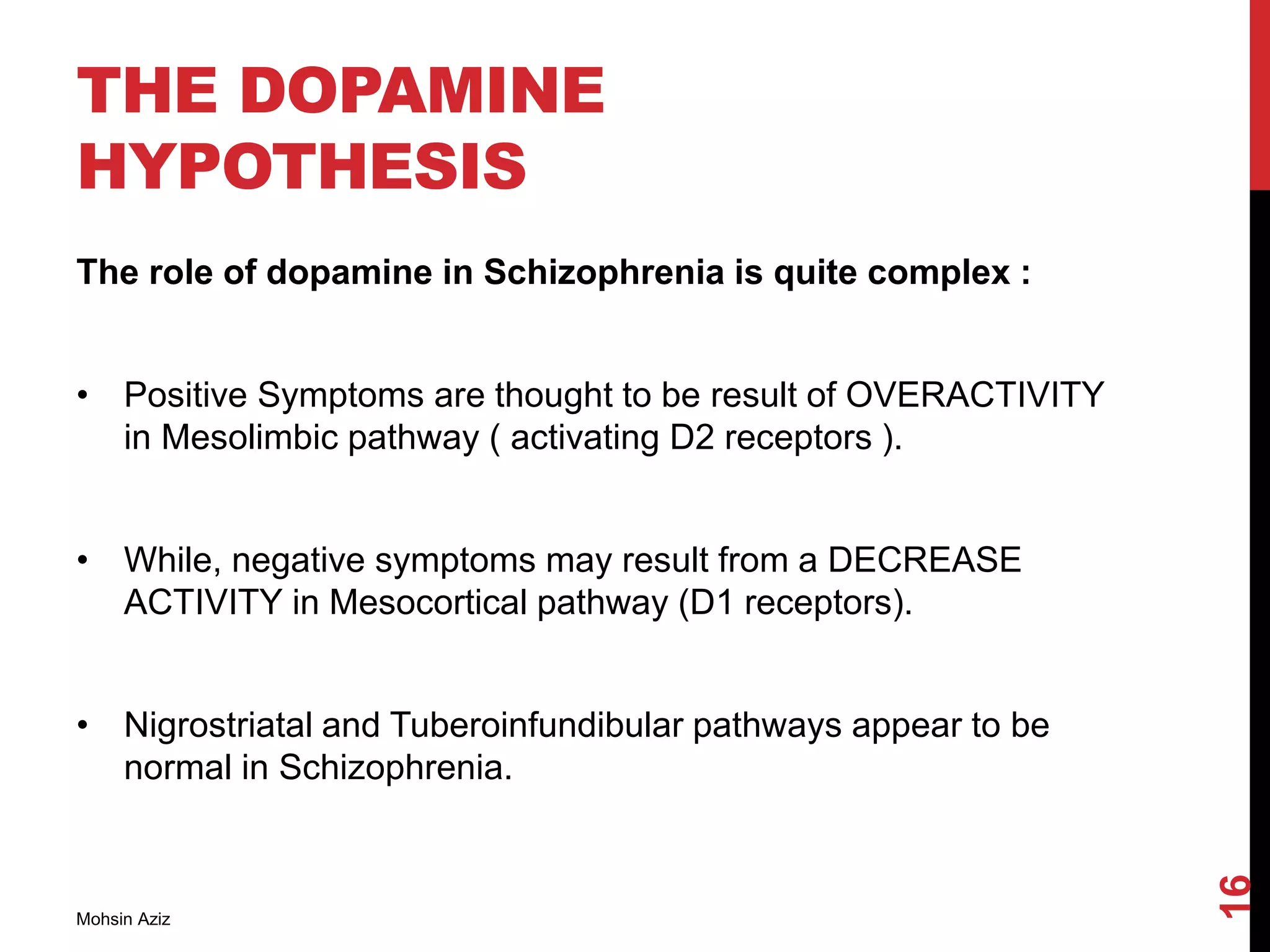
The role of dopamine in Schizophrenia is quite complex :
• Positive Symptoms are thought to be result of OVERACTIVITY
in Mesolimbic pathway ( activating D2 receptors ).
• While, negative symptoms may result from a DECREASE
ACTIVITY in Mesocortical pathway (D1 receptors).
• Nigrostriatal and Tuberoinfundibular pathways appear to be
normal in Schizophrenia.
Mohsin Aziz
16
GLUTAMATE
HYPOTHESIS
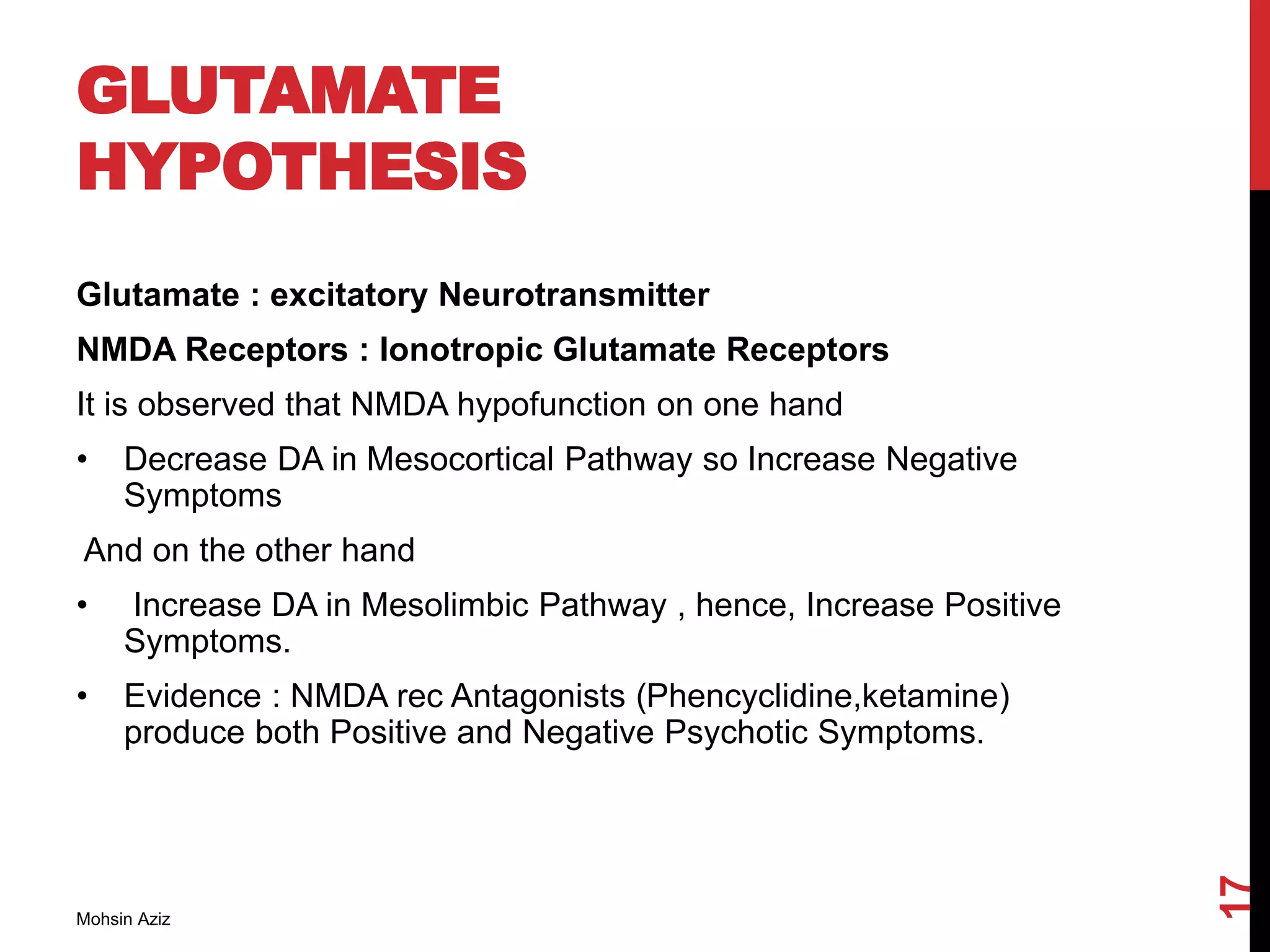
Glutamate : excitatory Neurotransmitter
NMDA Receptors : Ionotropic Glutamate Receptors
It is observed that NMDA hypofunction on one hand
• Decrease DA in Mesocortical Pathway so Increase Negative
Symptoms
And on the other hand
• Increase DA in Mesolimbic Pathway , hence, Increase Positive
Symptoms.
• Evidence : NMDA rec Antagonists (Phencyclidine,ketamine)
produce both Positive and Negative Psychotic Symptoms.
Mohsin Aziz
17
SEROTONINE
HYPOTHESIS
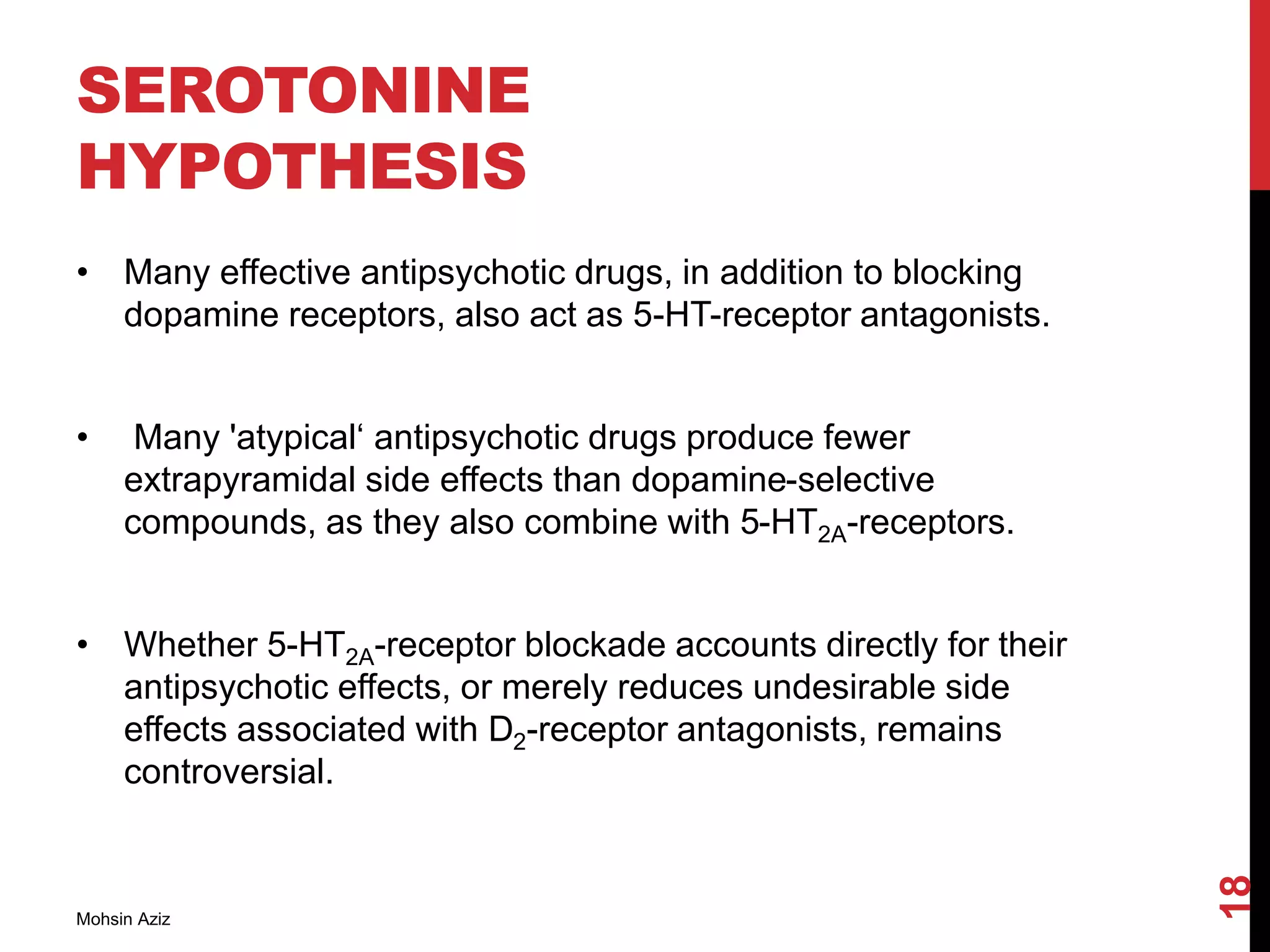
• Many effective antipsychotic drugs, in addition to blocking
dopamine receptors, also act as 5-HT-receptor antagonists.
• Many 'atypical‘ antipsychotic drugs produce fewer
extrapyramidal side effects than dopamine-selective
compounds, as they also combine with 5-HT2A-receptors.
• Whether 5-HT2A-receptor blockade accounts directly for their
antipsychotic effects, or merely reduces undesirable side
effects associated with D2-receptor antagonists, remains
controversial.
Mohsin Aziz
18
CLASSIFICATION OF
ANTIPSYCHOTIC DRUGS
Typical antipsychotics
• Phenothiazines
• e.g. chlorpromazine,
fluphenazine,
thioridazine
• Butyrophenones
• e.g. haloperidol,
droperidol
• Thioxanthines
• e.g. chlorprotixen,
thiothixene
Atypical antipsychotics
• Clozapine
• Risperidone
• Sulpiride
• Sertindole
• Seroquel
• Olanzapine
• Quetiapine.
Mohsin Aziz
19
CLASSIFICATION
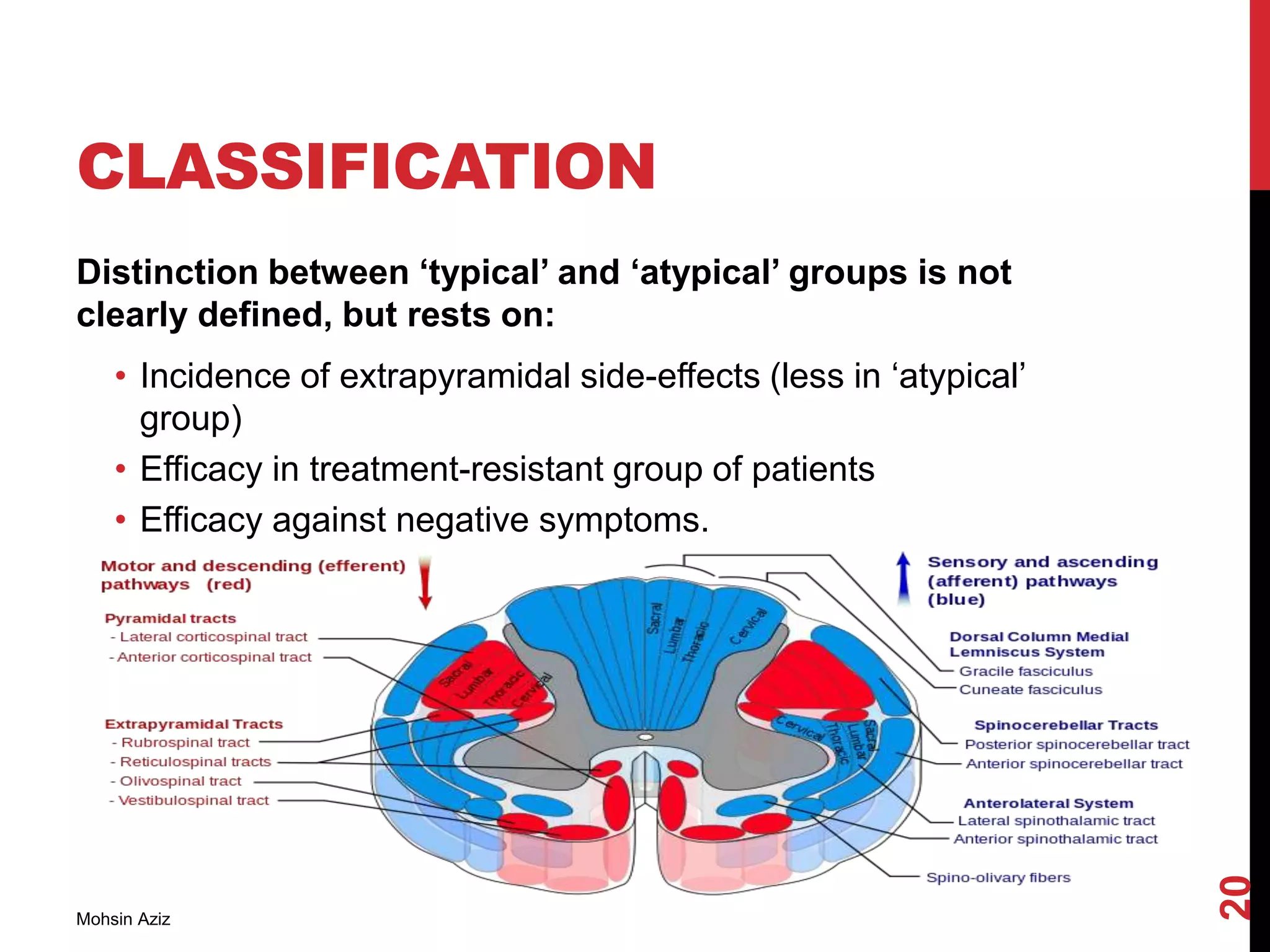
Distinction between ‘typical’ and ‘atypical’ groups is not
clearly defined, but rests on:
• Incidence of extrapyramidal side-effects (less in ‘atypical’
group)
• Efficacy in treatment-resistant group of patients
• Efficacy against negative symptoms.
Mohsin Aziz
20
DRUG TARGETS
Dopamine receptors: D1,
D2, D3, D4, D5
Serotonin receptors: 5-
HT-1A, 2A, 3, 6, 7
Norepinephrine: -1 & -
2
Muscarinic acetylcholine:
mACh-1 & 4
Histamine: H-1 & 2
Dopamine,
norepinephrine &
serotonin transporters
NMDA-glutamate
receptor
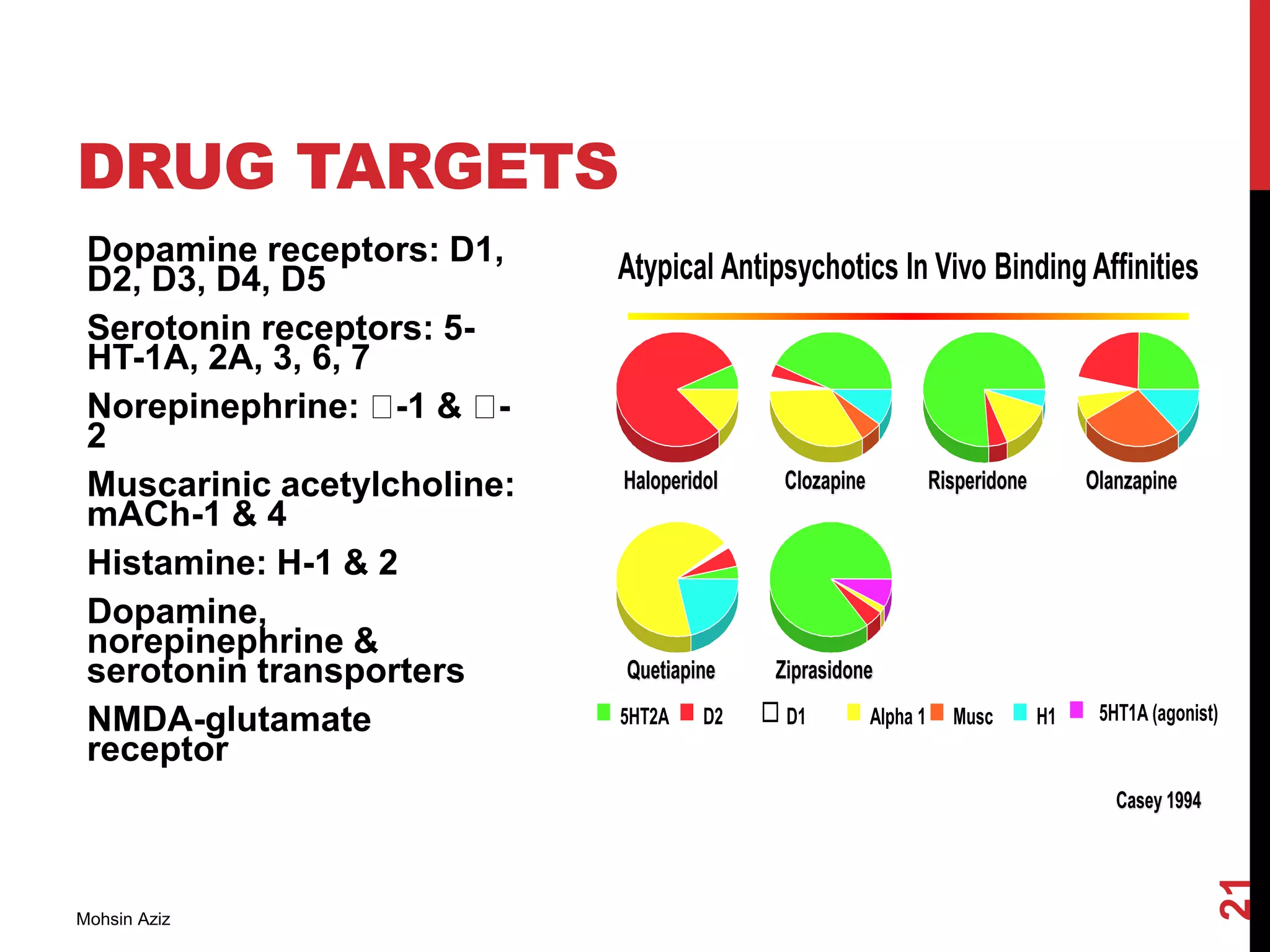
Haloperidol Clozapine Risperidone Olanzapine
Quetiapine Ziprasidone
5HT2A D2 D1 Alpha 1 Musc H1 5HT1A (agonist)
Casey 1994
Atypical Antipsychotics In Vivo Binding Affinities
Mohsin Aziz
21
MECHANISM OF ACTION
• There are many type of DA-receptors (see upper).
• The antipsychotic drugs probably owe their therapeutic effects mainly
to blockade of D2 receptors.
• The main groups, phenothiazines, thioxanthines and
butyrophenones, show preference for D2 over D1 receptors; some
newer agents (e.g. remoxipride) are highly selective for D2
receptors, whereas clozapine is relatively non-selective between D1
and D2, but has high affinity for D4.
• Most striatal neurons have D1 responses and most accumbens
neurons have D2 responses.
Mohsin Aziz
22
MECHANISM OF ACTION
• Daily treatment with neuroleptics for several weeks produces a
reversible cessation of firing of midbrain DA neurons. These
inactivated neurons are said to be in a state of “depolarization
block”.
• The time antipsychotics take for the clinical response to be
manifested is thought to correlate with this delayed induction of
depolarization blockade of mesolimbic DA neurons.
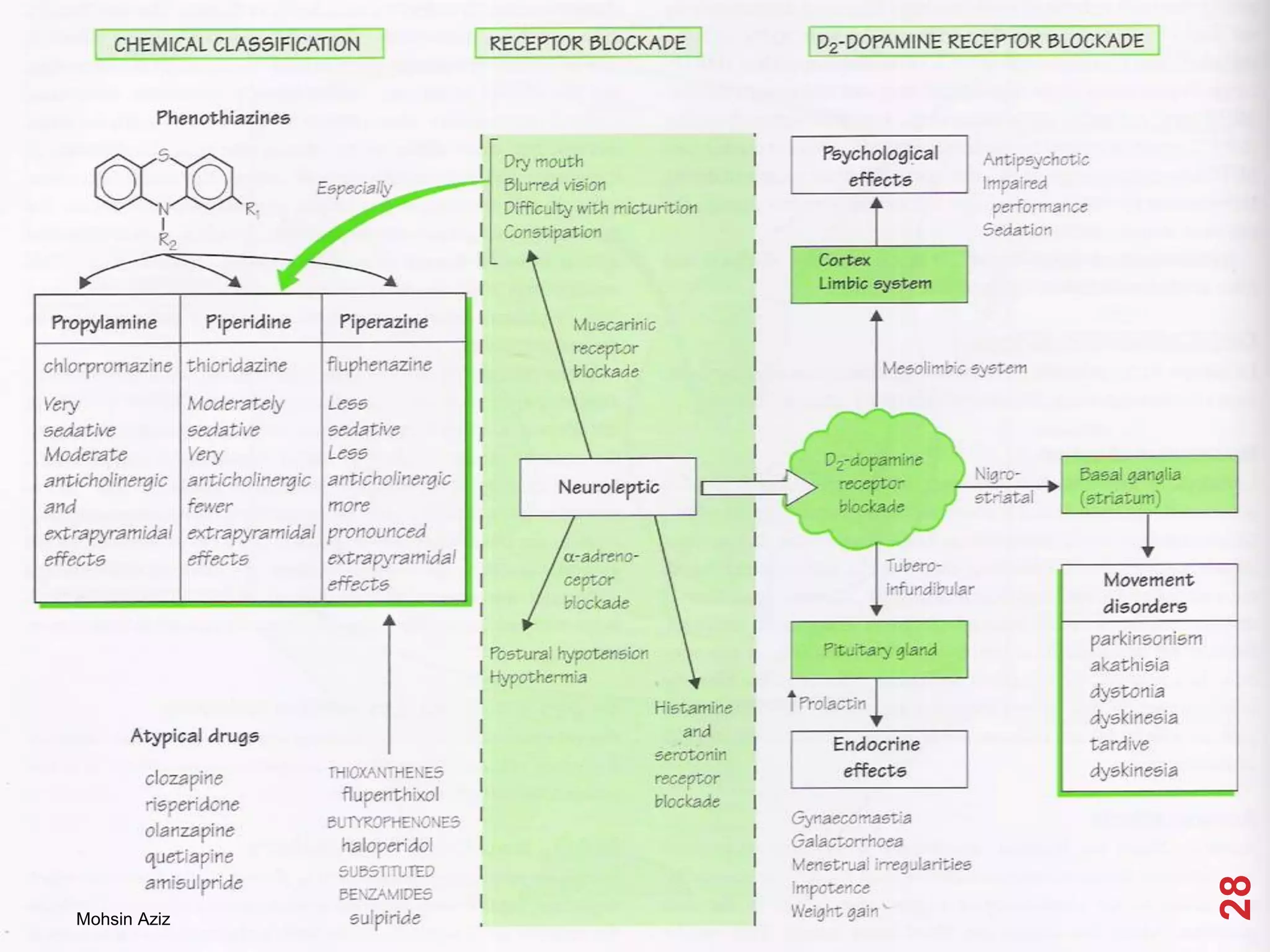
• DA-ergic blockade in basal ganglia (nigrostristal pathway) appears to
cause the extrapyramidal symptoms, while that in tubero-
hypophyseal pathway induces endocrine disorders, and in central
trigger zone - is responsible for antiemetic action.
Mohsin Aziz
23
EFFECTS OF
ANTIPSYCHOPTIC
DRUGS
1.Central Nervous System :
• In a psychotic patients they reduce irrational behaviour, agitation and
aggressiveness and controls psychotic symptoms. Disturbed thought
and behaviour are gradually normalised, anxiety is relieved.
Hyperactivity, hallucinations and delusions are suppressed.
• All phenothiazines, thioxanthenes and butyrophenones have the
same antipsychotic efficacy, but potency differs .
• Chlorpromazine, triflupromazine, thioridazine have low potency,
produce more sedation and cause greater potentiation of hypnotics,
opioids etc.
• The sedative effect is produced immediately while antipsychotic effect
takes weeks to develop. Moreover, tolerance develops to the sedative
but not to the antipsychotic effect.
Mohsin Aziz
24
EFFECTS OF
ANTIPSYCHOPTIC
DRUGS
• antiemetic effect : inhibit chemoreceptor trigger zone or directly
depress the medullary vomiting center.
• temperature-regulating effect : produce hypothermia
2. Autonomic Nervous System :
Neuroleptics have varying degrees of
• α--adrenergic blocking activity
clorpromazine=triflupromazine>thioridazine>
fluphenazine>haloperidol>trifluoperazine>clozapine>pimozide.
• anticholinergic property of neurolrptics is weak and may be graded
as
thiridazine>chlorpromazine>triflupromazine>trifluoperazine=haloperido
l
• The phenothiazines have weak H1- antihistaminic and anti-5-HT
action as well.
Mohsin Aziz
25
EFFECTS OF
ANTIPSYCHOPTIC
DRUGS
3.Local anaesthetic
• Chlorpromazine : potent a local anaesthetic.
• However, not used because of its irritant action.
4.Cerebrovascular system
• Produce hypotension (primarily postural) by α-adrenergic blocked.
• High doses of chlorpromazine : produce ECG changes – QT
prolongation and suppression of T wave.
5.Endocrine system
• Increase prolactin : which may result in galactorrhea and
gynecomastia. They reduce gonadotropin secretion but amenorrhea
and infertility occur only occasionally.
• ACTH release in response to stress is diminish.
• Decreased release of ADH may result in an increase in urine volume.
Mohsin Aziz
26
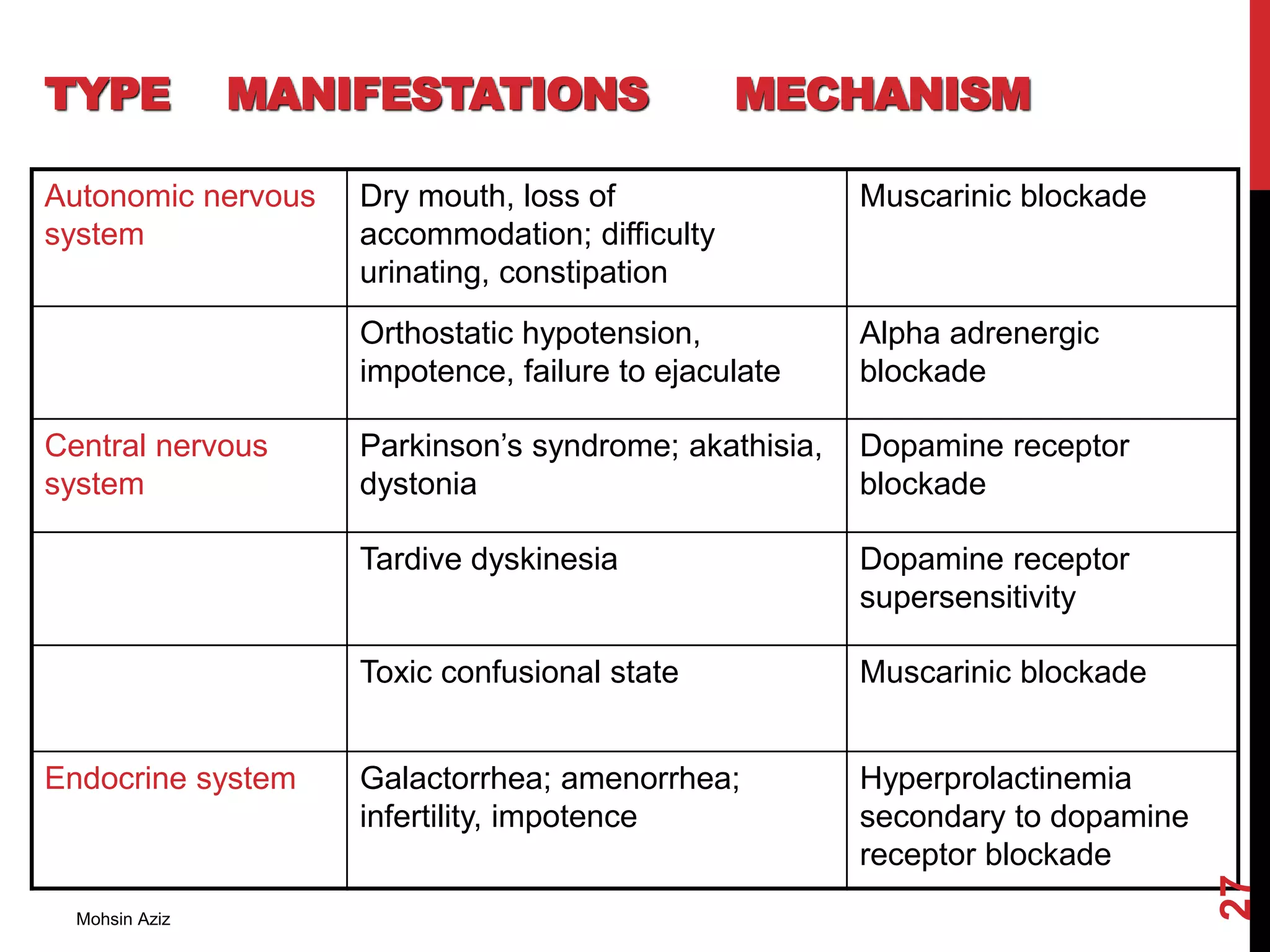
TYPE MANIFESTATIONS MECHANISM
Autonomic nervous
system
Dry mouth, loss of
accommodation; difficulty
urinating, constipation
Muscarinic blockade
Orthostatic hypotension,
impotence, failure to ejaculate
Alpha adrenergic
blockade
Central nervous
system
Parkinson’s syndrome; akathisia,
dystonia
Dopamine receptor
blockade
Tardive dyskinesia Dopamine receptor
supersensitivity
Toxic confusional state Muscarinic blockade
Endocrine system Galactorrhea; amenorrhea;
infertility, impotence
Hyperprolactinemia
secondary to dopamine
receptor blockade
Mohsin Aziz
27
Mohsin Aziz
28
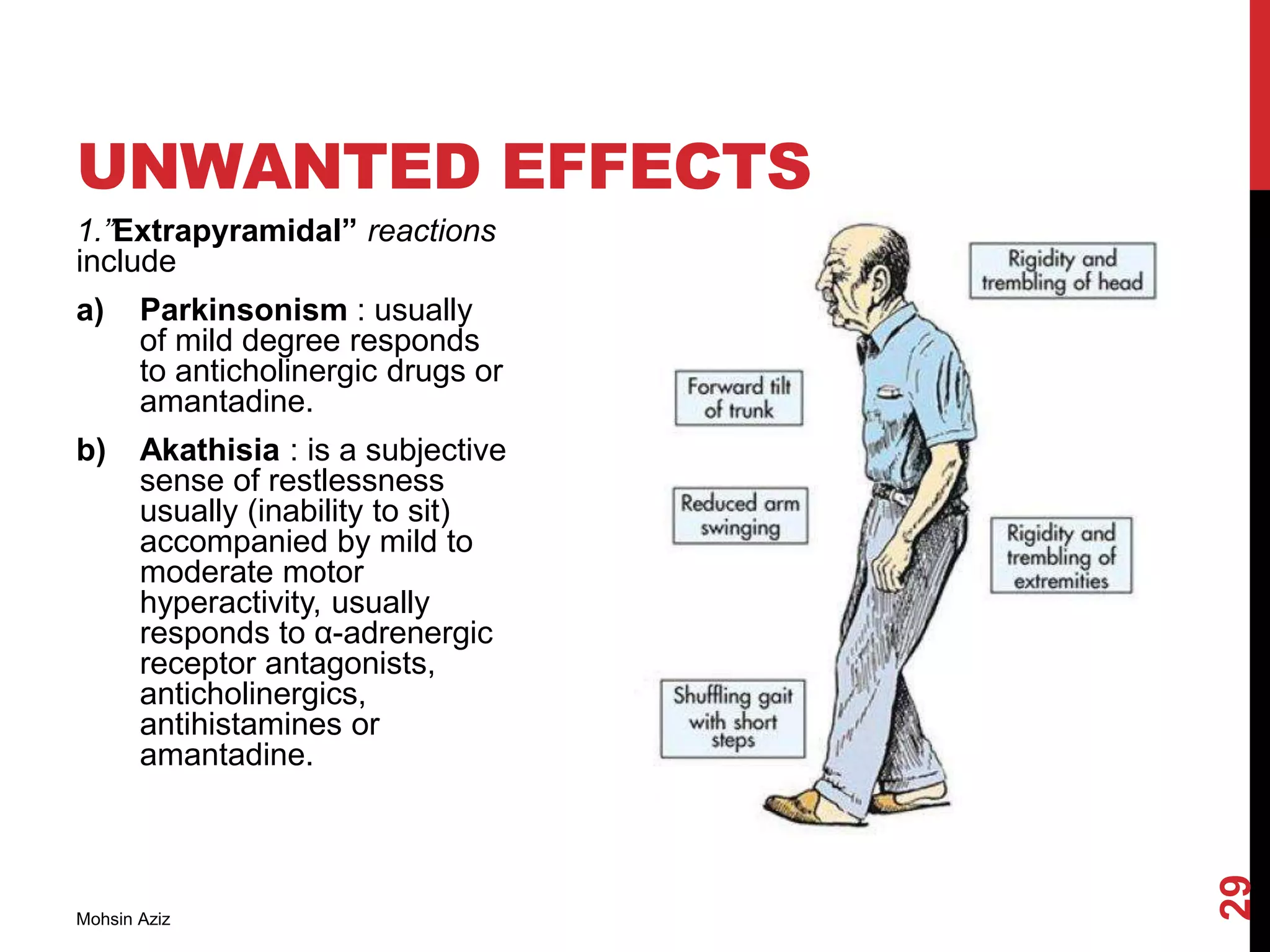
UNWANTED EFFECTS
1.”Extrapyramidal” reactions
include
a) Parkinsonism : usually
of mild degree responds
to anticholinergic drugs or
amantadine.
b) Akathisia : is a subjective
sense of restlessness
usually (inability to sit)
accompanied by mild to
moderate motor
hyperactivity, usually
responds to α-adrenergic
receptor antagonists,
anticholinergics,
antihistamines or
amantadine.
Mohsin Aziz
29
UNWANTED EFFECTS
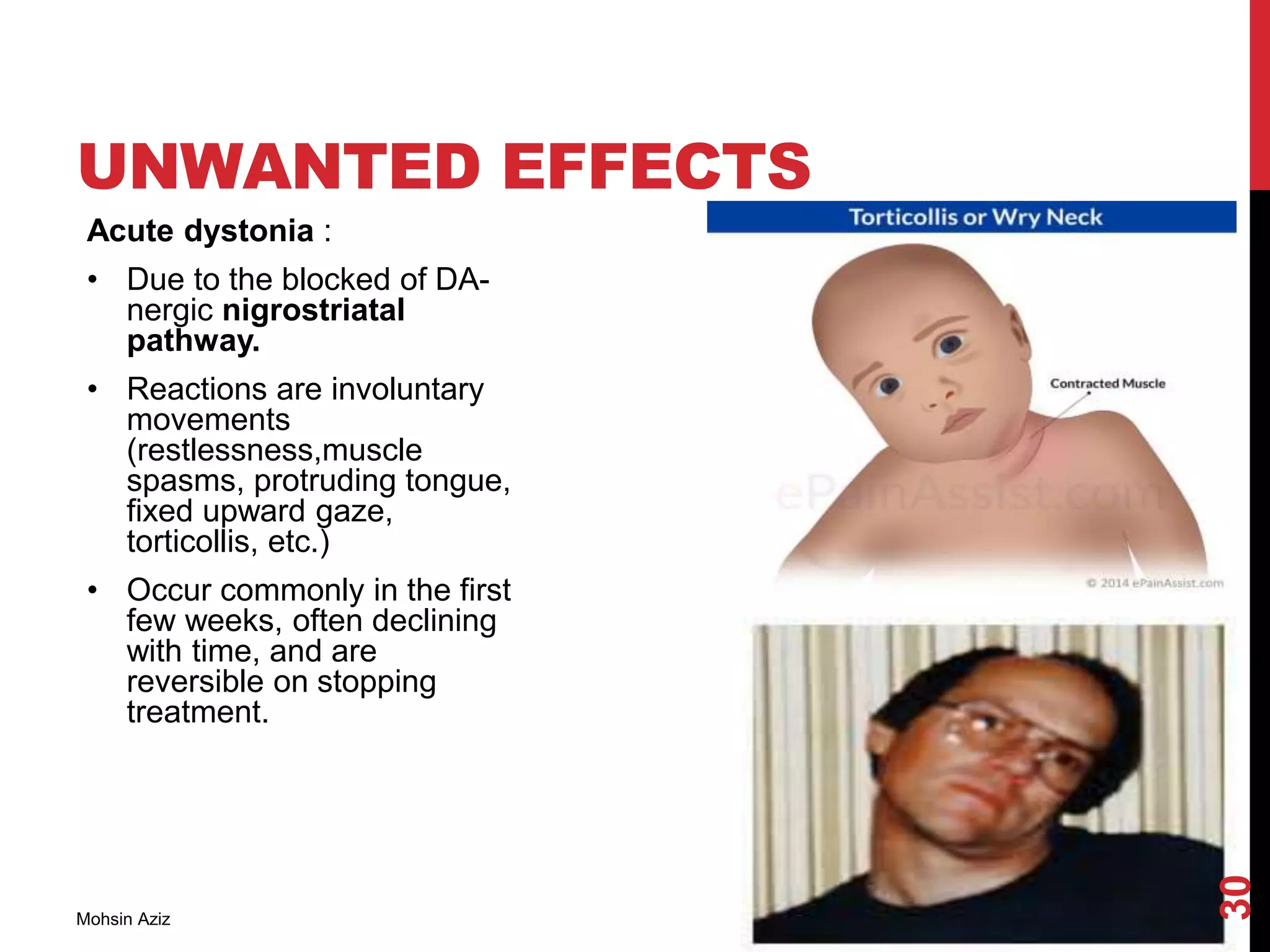
Acute dystonia :
• Due to the blocked of DA-
nergic nigrostriatal
pathway.
• Reactions are involuntary
movements
(restlessness,muscle
spasms, protruding tongue,
fixed upward gaze,
torticollis, etc.)
• Occur commonly in the first
few weeks, often declining
with time, and are
reversible on stopping
treatment.
Mohsin Aziz
30
UNWANTED EFFECTS
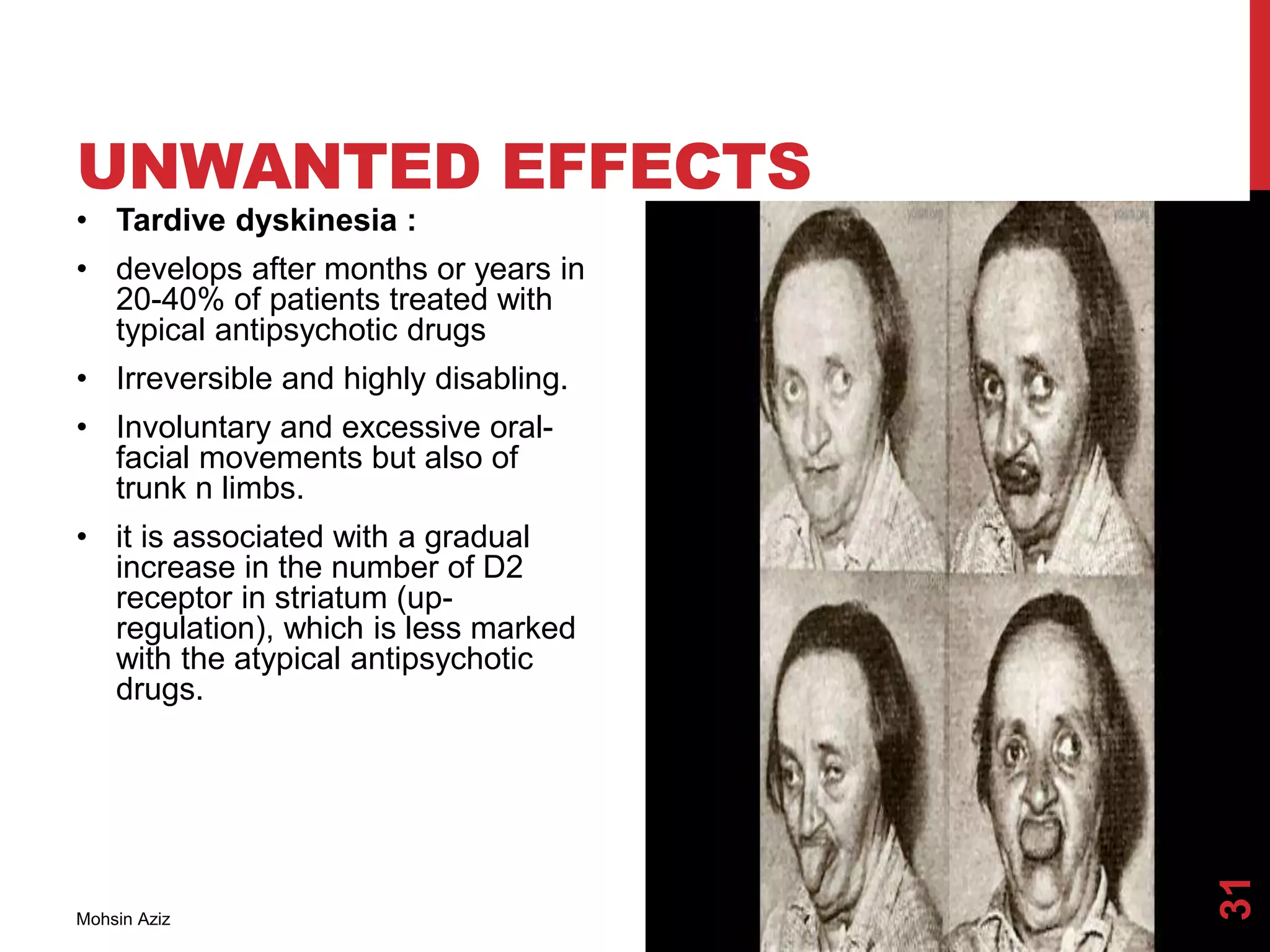
• Tardive dyskinesia :
• develops after months or years in
20-40% of patients treated with
typical antipsychotic drugs
• Irreversible and highly disabling.
• Involuntary and excessive oral-
facial movements but also of
trunk n limbs.
• it is associated with a gradual
increase in the number of D2
receptor in striatum (up-
regulation), which is less marked
with the atypical antipsychotic
drugs.
Mohsin Aziz
31
UNWANTED EFFECTS
2.Endocrine effects
• DA released by neurons of the tuberoinfundibular pathway acts via D2
receptors as an inhibitor of prolactin.Thus blocking D2 receptors
therefore increases the plasma prolactin concentration, resulting
breast swelling, pain and lactation, which can occur in men as well as
women.
3. Neuroleptic malignant syndrom :
• Rare but serious complication.
• It occurs in 1% to 2% of patients and is fatal in almost 10% of those
affected.
• This is observed early in treatment and is characterized by a near
complete collapse of the autonomic nervous system, causing, for
example, fever, muscle rigidity, diaphoresis, mental confusion and
cardiovascular instability.
• Immediate medical intervention with bromcriptine (DA agonist) and
dantrolene is nessesary.
Mohsin Aziz
32
UNWANTED EFFECTS
4. Sedation:
• Tends to decrease with continued use. Antihistaminic (H1) property of
phenothiazines contributes to their sedative and antiemetic properties.
5.Peripheral effects.
• Blocking muscarinic receptors : produce blurring of vision and
increased intraocular pressure, dry mouth and eyes, constipation and
urinary retention.
• Blocking α-adrenoreceptors : orthostatic hypotension.
• Weight gain is a common and troublesome side-effect, probably
related to 5-HT antagonism.
Mohsin Aziz
33
UNWANTED EFFECTS
6.Idiosyncratic and hypersensitivity Reactions :
• Jaundice:
• with older phenothizines, such as chlorpromazine.
• usually mild,obstructive and reversible
• Leukopenia and agranulocytosis :
• rare, but potentially fatal, and occur in the first few weeks.
• The incidence of leukopenia (usually reversible) is higher (1-2%) with
clozapine,provided the drug is stopped at the first sign of leukopenia or
anemia, the effect is reversible.
• Olanzapine appears to be free of this disadvantage.
• Urticarial skin reactions are common but usually mild. Excessive
sensitivity to ultraviolet light may also occur.
Mohsin Aziz
34
CLINICAL USES
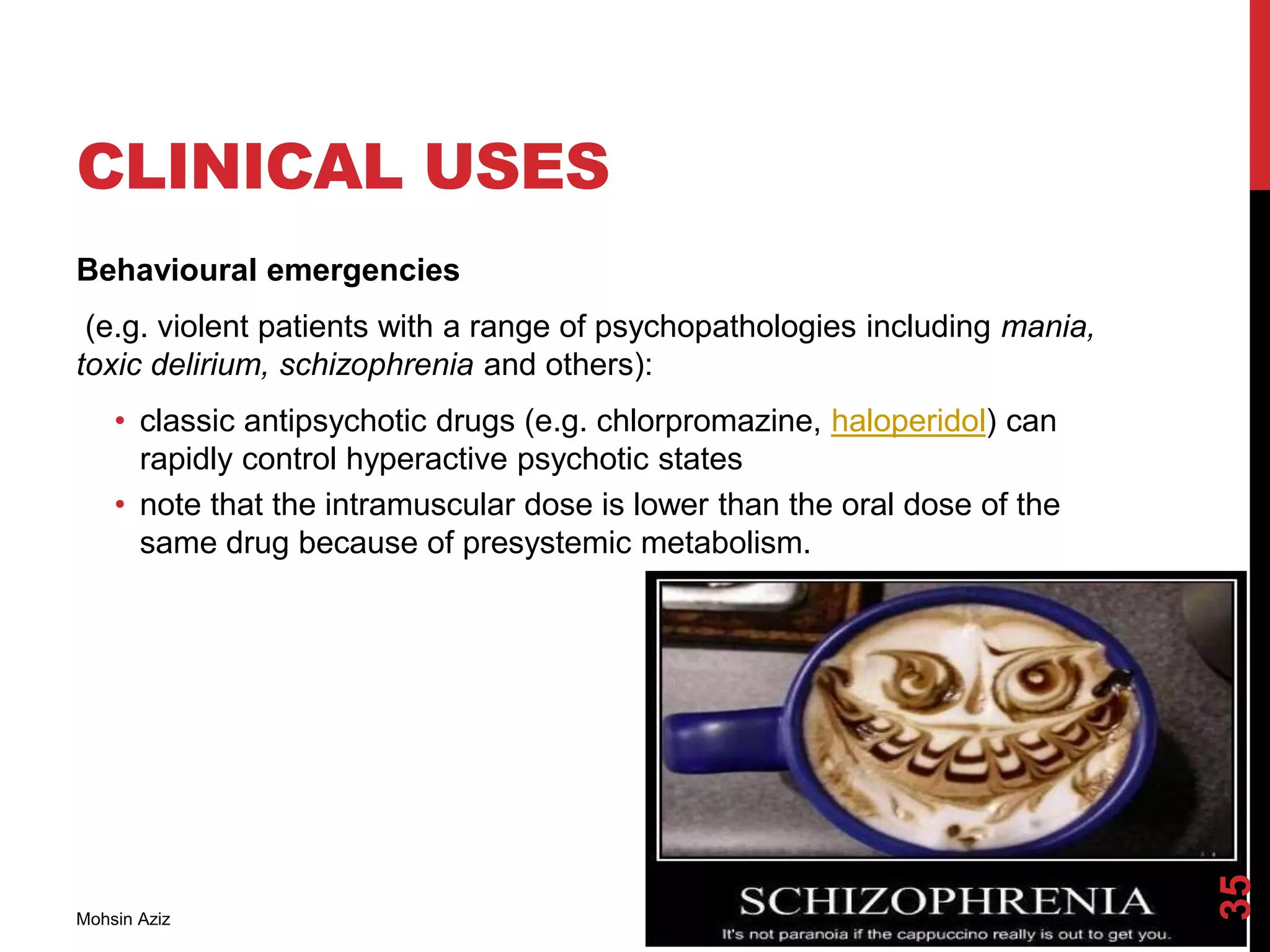
Behavioural emergencies
(e.g. violent patients with a range of psychopathologies including mania,
toxic delirium, schizophrenia and others):
• classic antipsychotic drugs (e.g. chlorpromazine, haloperidol) can
rapidly control hyperactive psychotic states
• note that the intramuscular dose is lower than the oral dose of the
same drug because of presystemic metabolism.
Mohsin Aziz
35
CLINICAL USES
Schizophrenia
• The major use of antipsychotic drugs
is in the treatment of schizophrenia
and other psychotic disorders .
• The traditional neuroleptics are most
effective in treating positive
symptoms of schizophrenia
(delusions, hallucination and thought
disorders).
• The newer agents with 5-HT blocking
activity (e.g.sulpirid ) are effective in
many patients resistant to the
traditional agent, especially in
treating negative symptoms of
schizophrenia and depression.
Mohsin Aziz
36
CLINCAL USES
• Nausea and Vomiting :
• The neuroleptics (most commonly prochlor-perazine), are useful in
treatment of drug induced nausea.
• Other uses :
• Neuroleptics are used in combination with narcotic analgetics for
treatment of chronic pain with severe anxiety.
• Chlorpromazine is used to treat intractable hiccups.
• Droperidol is a component of neuroleptanesthesia.
• Prometathazine is not a good antipsychotic drug, but the agent is
used in treating pruritus because of its antihistaminic properties.
Mohsin Aziz
37
Mohsin Aziz
38

Neuroleptics (antipsychotics)

  • 1.
  • 2.
    ANTIPSYCHOTICS / NEUROLEPTICS Neuroleptic: synonymfor antipsychotic drug. Antipsychotics are the drugs currently used in the prevention of psychosis. They have also been termed neuroleptics, because they suppress motor activity and emotionality. Mohsin Aziz 2
  • 3.
  • 4.
    PSYCHOSIS Psychosis (from theGreek , psyche, "mind/soul", and -osis, "abnormal condition or derangement") refers to an abnormal condition of the mind. A syndrome of chronic disordered thinking and disturbed behavior (schizophrenia, mania, depression) The most important types of psychosis are: • Schizophrenia • Affective disorders (e.g. depression, mania) • Organic psychoses (mental disturbances caused by head injury, alcoholism, or other kinds of organic disease). Mohsin Aziz 4
  • 5.
  • 6.
    SCHIZOPHRENIA • A chronicmental disorder of a type involving a breakdown in the relation between thought, emotion, and behaviour, leading to faulty perception, inappropriate actions and feelings, withdrawal from reality and personal relationships into fantasy and delusion, and a sense of mental fragmentation. • The disorder is characterized by a divorcement from reality in the mind of the person (psychosis). Mohsin Aziz 6
  • 7.
  • 8.
    SYMPTOMS NEGATIVE SYMPTOMS: • Affective Flattening (blunt) •Alogia • Anhedonia • Amotivation • Apathy • Asocial Behavior Mohsin Aziz 8
  • 9.
  • 10.
    TYPES OF SCHIZOPHRENIA • PARANOID: a person feels extremely suspicious (everyone plotting against me), persecuted (opressed), grandiose ( great), or experiences a combination of these emotions. • DISORGANIZED : a person is often incoherent but may not have delusions. • CATATONIC : a person is withdrawn, mute, negative and often assumes very unusual postures ( motor symptoms). • RESIDUAL : a person is no longer delusion or hallucinating (psychotic), but has no motivation or interest in life. These symptoms can be most devastating. • UNDIFFERENTIATED : a person meet the criteria for schizophrenia but cant be classified as a particular type. Mohsin Aziz 10
  • 11.
  • 12.
  • 13.
    DOPAMENERGIC SYSTEM: There are fourmajor pathways for the dopamenergic system in brain : I. The Nigro-Striatal Pathway. II. The Mesolimbic Pathway. III. The Mesocortical Pathway. IV. The Tuberoinfundibular Pathway. ETIOLOGY Mohsin Aziz 13
  • 14.
  • 15.
    THE DOPAMINE HYPOTHESIS Schizophrenia resultsfrom excess activity of dopamine neurotransmission in Mesolimbic and Mesocortical Pathways because:  All antipsychotic drugs block dopamine receptors.  Stimulant drugs which act through dopamine can produce schizophrenic- like behaviors (eg.amphetamines).  Levodopa, a dopamine precursor, can exacerbate schizophrenic symptoms, or occasionally elicit them in non-schizophrenic patients.  Higher levels of dopamine receptors measured in brains of schizophrenics by PET.  Brain [DA] increases during psychotic episodes but not during remissions. Mohsin Aziz 15
  • 16.
    THE DOPAMINE HYPOTHESIS The roleof dopamine in Schizophrenia is quite complex : • Positive Symptoms are thought to be result of OVERACTIVITY in Mesolimbic pathway ( activating D2 receptors ). • While, negative symptoms may result from a DECREASE ACTIVITY in Mesocortical pathway (D1 receptors). • Nigrostriatal and Tuberoinfundibular pathways appear to be normal in Schizophrenia. Mohsin Aziz 16
  • 17.
    GLUTAMATE HYPOTHESIS Glutamate : excitatoryNeurotransmitter NMDA Receptors : Ionotropic Glutamate Receptors It is observed that NMDA hypofunction on one hand • Decrease DA in Mesocortical Pathway so Increase Negative Symptoms And on the other hand • Increase DA in Mesolimbic Pathway , hence, Increase Positive Symptoms. • Evidence : NMDA rec Antagonists (Phencyclidine,ketamine) produce both Positive and Negative Psychotic Symptoms. Mohsin Aziz 17
  • 18.
    SEROTONINE HYPOTHESIS • Many effectiveantipsychotic drugs, in addition to blocking dopamine receptors, also act as 5-HT-receptor antagonists. • Many 'atypical‘ antipsychotic drugs produce fewer extrapyramidal side effects than dopamine-selective compounds, as they also combine with 5-HT2A-receptors. • Whether 5-HT2A-receptor blockade accounts directly for their antipsychotic effects, or merely reduces undesirable side effects associated with D2-receptor antagonists, remains controversial. Mohsin Aziz 18
  • 19.
    CLASSIFICATION OF ANTIPSYCHOTIC DRUGS Typicalantipsychotics • Phenothiazines • e.g. chlorpromazine, fluphenazine, thioridazine • Butyrophenones • e.g. haloperidol, droperidol • Thioxanthines • e.g. chlorprotixen, thiothixene Atypical antipsychotics • Clozapine • Risperidone • Sulpiride • Sertindole • Seroquel • Olanzapine • Quetiapine. Mohsin Aziz 19
  • 20.
    CLASSIFICATION Distinction between ‘typical’and ‘atypical’ groups is not clearly defined, but rests on: • Incidence of extrapyramidal side-effects (less in ‘atypical’ group) • Efficacy in treatment-resistant group of patients • Efficacy against negative symptoms. Mohsin Aziz 20
  • 21.
    DRUG TARGETS Dopamine receptors:D1, D2, D3, D4, D5 Serotonin receptors: 5- HT-1A, 2A, 3, 6, 7 Norepinephrine: -1 & - 2 Muscarinic acetylcholine: mACh-1 & 4 Histamine: H-1 & 2 Dopamine, norepinephrine & serotonin transporters NMDA-glutamate receptor Haloperidol Clozapine Risperidone Olanzapine Quetiapine Ziprasidone 5HT2A D2 D1 Alpha 1 Musc H1 5HT1A (agonist) Casey 1994 Atypical Antipsychotics In Vivo Binding Affinities Mohsin Aziz 21
  • 22.
    MECHANISM OF ACTION •There are many type of DA-receptors (see upper). • The antipsychotic drugs probably owe their therapeutic effects mainly to blockade of D2 receptors. • The main groups, phenothiazines, thioxanthines and butyrophenones, show preference for D2 over D1 receptors; some newer agents (e.g. remoxipride) are highly selective for D2 receptors, whereas clozapine is relatively non-selective between D1 and D2, but has high affinity for D4. • Most striatal neurons have D1 responses and most accumbens neurons have D2 responses. Mohsin Aziz 22
  • 23.
    MECHANISM OF ACTION •Daily treatment with neuroleptics for several weeks produces a reversible cessation of firing of midbrain DA neurons. These inactivated neurons are said to be in a state of “depolarization block”. • The time antipsychotics take for the clinical response to be manifested is thought to correlate with this delayed induction of depolarization blockade of mesolimbic DA neurons. • DA-ergic blockade in basal ganglia (nigrostristal pathway) appears to cause the extrapyramidal symptoms, while that in tubero- hypophyseal pathway induces endocrine disorders, and in central trigger zone - is responsible for antiemetic action. Mohsin Aziz 23
  • 24.
    EFFECTS OF ANTIPSYCHOPTIC DRUGS 1.Central NervousSystem : • In a psychotic patients they reduce irrational behaviour, agitation and aggressiveness and controls psychotic symptoms. Disturbed thought and behaviour are gradually normalised, anxiety is relieved. Hyperactivity, hallucinations and delusions are suppressed. • All phenothiazines, thioxanthenes and butyrophenones have the same antipsychotic efficacy, but potency differs . • Chlorpromazine, triflupromazine, thioridazine have low potency, produce more sedation and cause greater potentiation of hypnotics, opioids etc. • The sedative effect is produced immediately while antipsychotic effect takes weeks to develop. Moreover, tolerance develops to the sedative but not to the antipsychotic effect. Mohsin Aziz 24
  • 25.
    EFFECTS OF ANTIPSYCHOPTIC DRUGS • antiemeticeffect : inhibit chemoreceptor trigger zone or directly depress the medullary vomiting center. • temperature-regulating effect : produce hypothermia 2. Autonomic Nervous System : Neuroleptics have varying degrees of • α--adrenergic blocking activity clorpromazine=triflupromazine>thioridazine> fluphenazine>haloperidol>trifluoperazine>clozapine>pimozide. • anticholinergic property of neurolrptics is weak and may be graded as thiridazine>chlorpromazine>triflupromazine>trifluoperazine=haloperido l • The phenothiazines have weak H1- antihistaminic and anti-5-HT action as well. Mohsin Aziz 25
  • 26.
    EFFECTS OF ANTIPSYCHOPTIC DRUGS 3.Local anaesthetic •Chlorpromazine : potent a local anaesthetic. • However, not used because of its irritant action. 4.Cerebrovascular system • Produce hypotension (primarily postural) by α-adrenergic blocked. • High doses of chlorpromazine : produce ECG changes – QT prolongation and suppression of T wave. 5.Endocrine system • Increase prolactin : which may result in galactorrhea and gynecomastia. They reduce gonadotropin secretion but amenorrhea and infertility occur only occasionally. • ACTH release in response to stress is diminish. • Decreased release of ADH may result in an increase in urine volume. Mohsin Aziz 26
  • 27.
    TYPE MANIFESTATIONS MECHANISM Autonomicnervous system Dry mouth, loss of accommodation; difficulty urinating, constipation Muscarinic blockade Orthostatic hypotension, impotence, failure to ejaculate Alpha adrenergic blockade Central nervous system Parkinson’s syndrome; akathisia, dystonia Dopamine receptor blockade Tardive dyskinesia Dopamine receptor supersensitivity Toxic confusional state Muscarinic blockade Endocrine system Galactorrhea; amenorrhea; infertility, impotence Hyperprolactinemia secondary to dopamine receptor blockade Mohsin Aziz 27
  • 28.
  • 29.
    UNWANTED EFFECTS 1.”Extrapyramidal” reactions include a)Parkinsonism : usually of mild degree responds to anticholinergic drugs or amantadine. b) Akathisia : is a subjective sense of restlessness usually (inability to sit) accompanied by mild to moderate motor hyperactivity, usually responds to α-adrenergic receptor antagonists, anticholinergics, antihistamines or amantadine. Mohsin Aziz 29
  • 30.
    UNWANTED EFFECTS Acute dystonia: • Due to the blocked of DA- nergic nigrostriatal pathway. • Reactions are involuntary movements (restlessness,muscle spasms, protruding tongue, fixed upward gaze, torticollis, etc.) • Occur commonly in the first few weeks, often declining with time, and are reversible on stopping treatment. Mohsin Aziz 30
  • 31.
    UNWANTED EFFECTS • Tardivedyskinesia : • develops after months or years in 20-40% of patients treated with typical antipsychotic drugs • Irreversible and highly disabling. • Involuntary and excessive oral- facial movements but also of trunk n limbs. • it is associated with a gradual increase in the number of D2 receptor in striatum (up- regulation), which is less marked with the atypical antipsychotic drugs. Mohsin Aziz 31
  • 32.
    UNWANTED EFFECTS 2.Endocrine effects •DA released by neurons of the tuberoinfundibular pathway acts via D2 receptors as an inhibitor of prolactin.Thus blocking D2 receptors therefore increases the plasma prolactin concentration, resulting breast swelling, pain and lactation, which can occur in men as well as women. 3. Neuroleptic malignant syndrom : • Rare but serious complication. • It occurs in 1% to 2% of patients and is fatal in almost 10% of those affected. • This is observed early in treatment and is characterized by a near complete collapse of the autonomic nervous system, causing, for example, fever, muscle rigidity, diaphoresis, mental confusion and cardiovascular instability. • Immediate medical intervention with bromcriptine (DA agonist) and dantrolene is nessesary. Mohsin Aziz 32
  • 33.
    UNWANTED EFFECTS 4. Sedation: •Tends to decrease with continued use. Antihistaminic (H1) property of phenothiazines contributes to their sedative and antiemetic properties. 5.Peripheral effects. • Blocking muscarinic receptors : produce blurring of vision and increased intraocular pressure, dry mouth and eyes, constipation and urinary retention. • Blocking α-adrenoreceptors : orthostatic hypotension. • Weight gain is a common and troublesome side-effect, probably related to 5-HT antagonism. Mohsin Aziz 33
  • 34.
    UNWANTED EFFECTS 6.Idiosyncratic andhypersensitivity Reactions : • Jaundice: • with older phenothizines, such as chlorpromazine. • usually mild,obstructive and reversible • Leukopenia and agranulocytosis : • rare, but potentially fatal, and occur in the first few weeks. • The incidence of leukopenia (usually reversible) is higher (1-2%) with clozapine,provided the drug is stopped at the first sign of leukopenia or anemia, the effect is reversible. • Olanzapine appears to be free of this disadvantage. • Urticarial skin reactions are common but usually mild. Excessive sensitivity to ultraviolet light may also occur. Mohsin Aziz 34
  • 35.
    CLINICAL USES Behavioural emergencies (e.g.violent patients with a range of psychopathologies including mania, toxic delirium, schizophrenia and others): • classic antipsychotic drugs (e.g. chlorpromazine, haloperidol) can rapidly control hyperactive psychotic states • note that the intramuscular dose is lower than the oral dose of the same drug because of presystemic metabolism. Mohsin Aziz 35
  • 36.
    CLINICAL USES Schizophrenia • Themajor use of antipsychotic drugs is in the treatment of schizophrenia and other psychotic disorders . • The traditional neuroleptics are most effective in treating positive symptoms of schizophrenia (delusions, hallucination and thought disorders). • The newer agents with 5-HT blocking activity (e.g.sulpirid ) are effective in many patients resistant to the traditional agent, especially in treating negative symptoms of schizophrenia and depression. Mohsin Aziz 36
  • 37.
    CLINCAL USES • Nauseaand Vomiting : • The neuroleptics (most commonly prochlor-perazine), are useful in treatment of drug induced nausea. • Other uses : • Neuroleptics are used in combination with narcotic analgetics for treatment of chronic pain with severe anxiety. • Chlorpromazine is used to treat intractable hiccups. • Droperidol is a component of neuroleptanesthesia. • Prometathazine is not a good antipsychotic drug, but the agent is used in treating pruritus because of its antihistaminic properties. Mohsin Aziz 37
  • 38.