PRESENTED BY:
A.PRIYADHARSHINI M.Sc(N),
DEPT. OF PAEDIATRIC NURSING,
JAI INSTITUTE OF NURSING AND
RESEARCH,
GWALIOR.
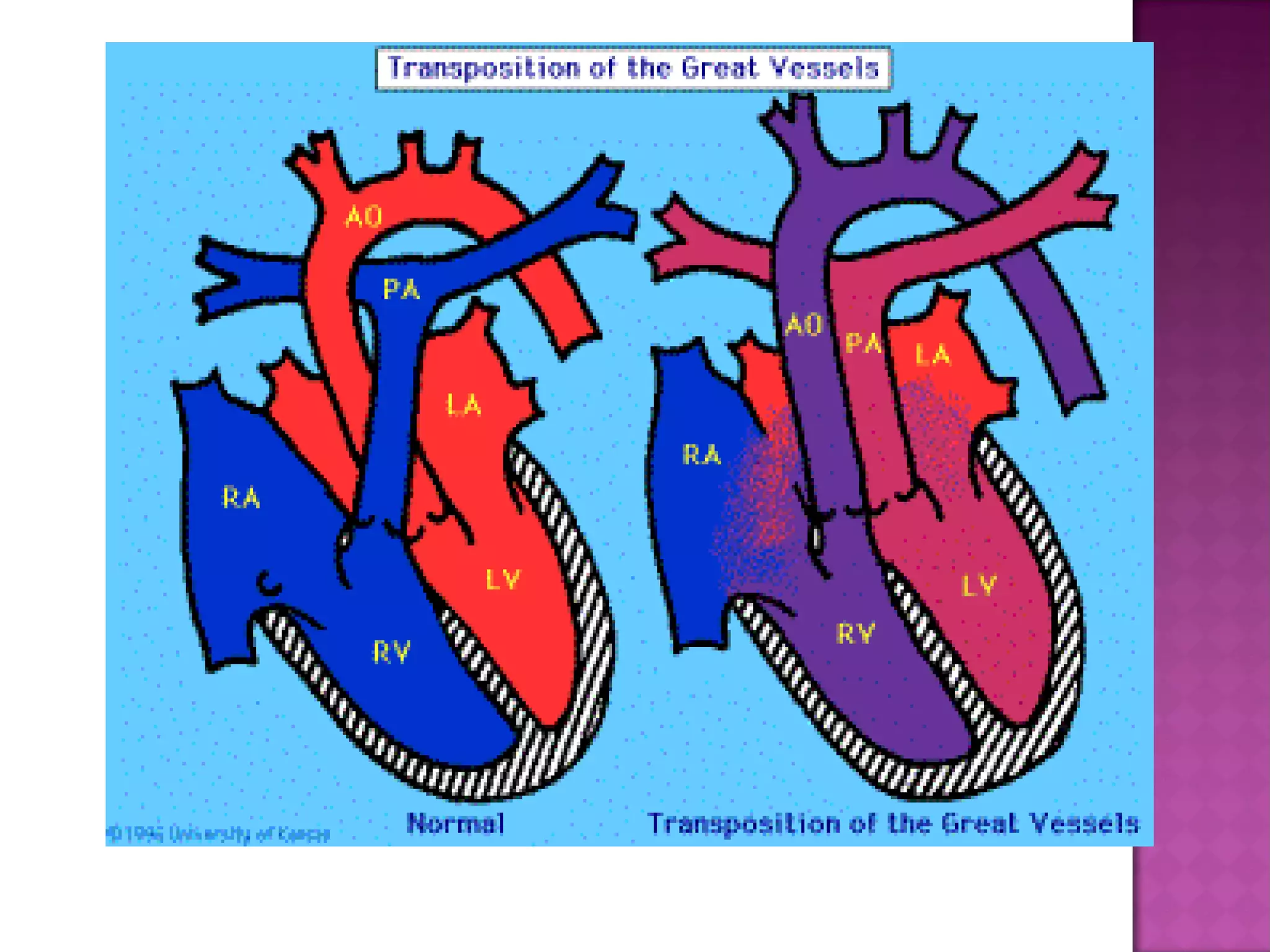
The transposition of the great arteries
is ventriculo arterial discordance, in which
the aorta arises from the morphologic right
ventricle and the pulmonary artery arises
from the morphologic left ventricle.
   Transposition of the great arteries (TGA) is
    the most common cyanotic congenital heart
    lesion that presents in neonates.
    
     This lesion presents in 5-7% of all patients
    with congenital heart disease.
   The overall annual incidence is 20-30 per
    100,000 live births.
   Etiology for transposition of the great
    arteries is unknown and is presumed to be
    multifactorial.
   This congenital heart defect is more common
    in infants of diabetic mothers.
(The pulmonary and systemic circulations
 function in parallel, rather than in series)
                     Causes

     Transposition of great arteries

Oxygenated pulmonary venous blood returns to
 the left atrium and left ventricle

  Recirculated to the pulmonary vascular bed
 via the abnormal pulmonary arterial
 connection to the left ventricle.
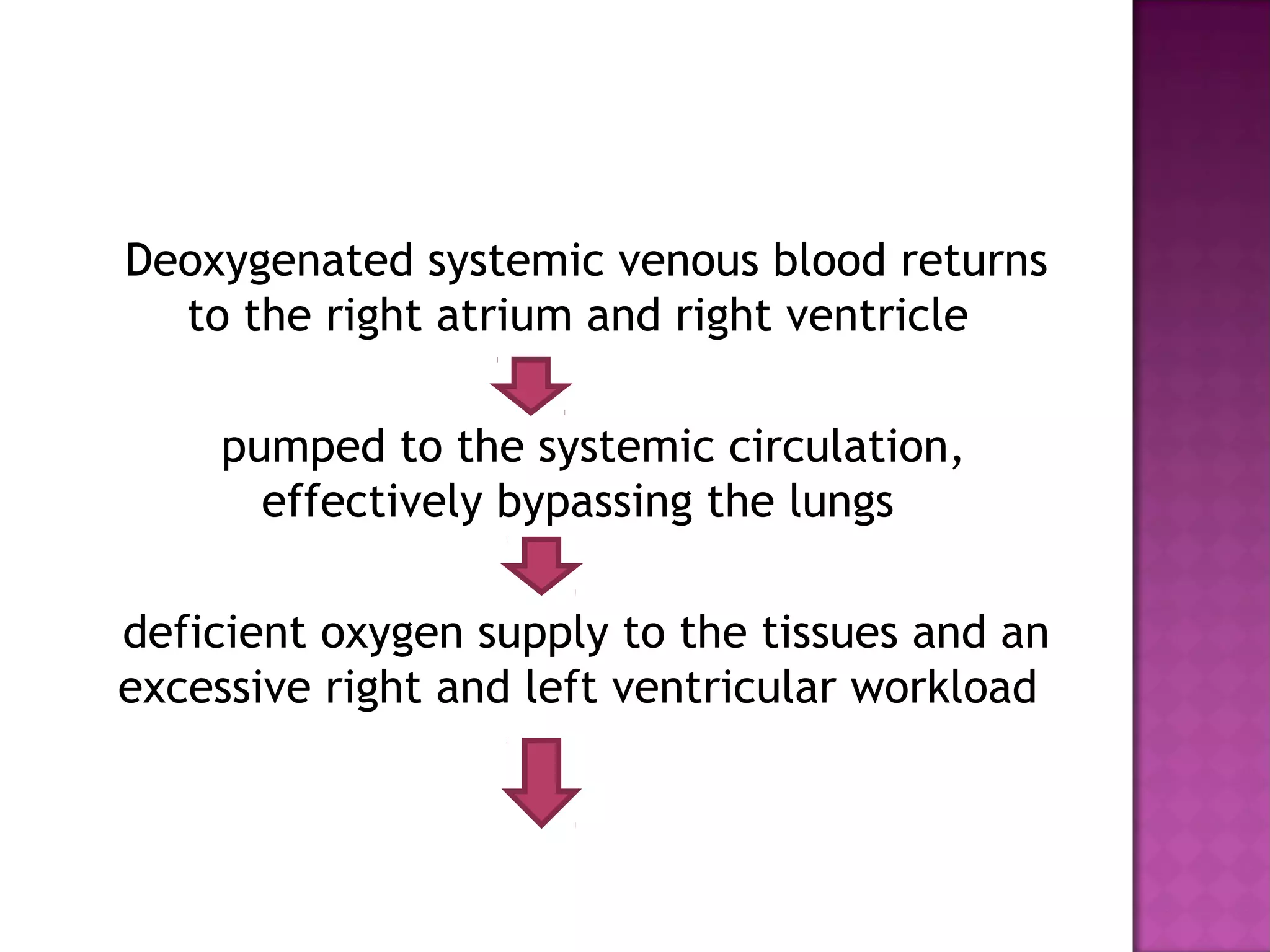
Deoxygenated systemic venous blood returns
  to the right atrium and right ventricle

    pumped to the systemic circulation,
      effectively bypassing the lungs

deficient oxygen supply to the tissues and an
excessive right and left ventricular workload
It is incompatible with prolonged survival
    unless     mixing   of    oxygenated    and
    deoxygenated blood occurs at some anatomic
    level like
   ASD
   VSD
   PDA
   Prominent and progressive cyanosis within
    the first 24 hours of life is the usual finding
    in infants.
   Tachypnea
   Tachycardia
   Diaphoresis
   Failure to gain weight
   A single or narrowly split, diminished second
    heart sound
   Systolic ejection murmur may be present. 
   History collection
   Physical examination
   ABG analysis
   Echocardiography
   Cardiac catheterization
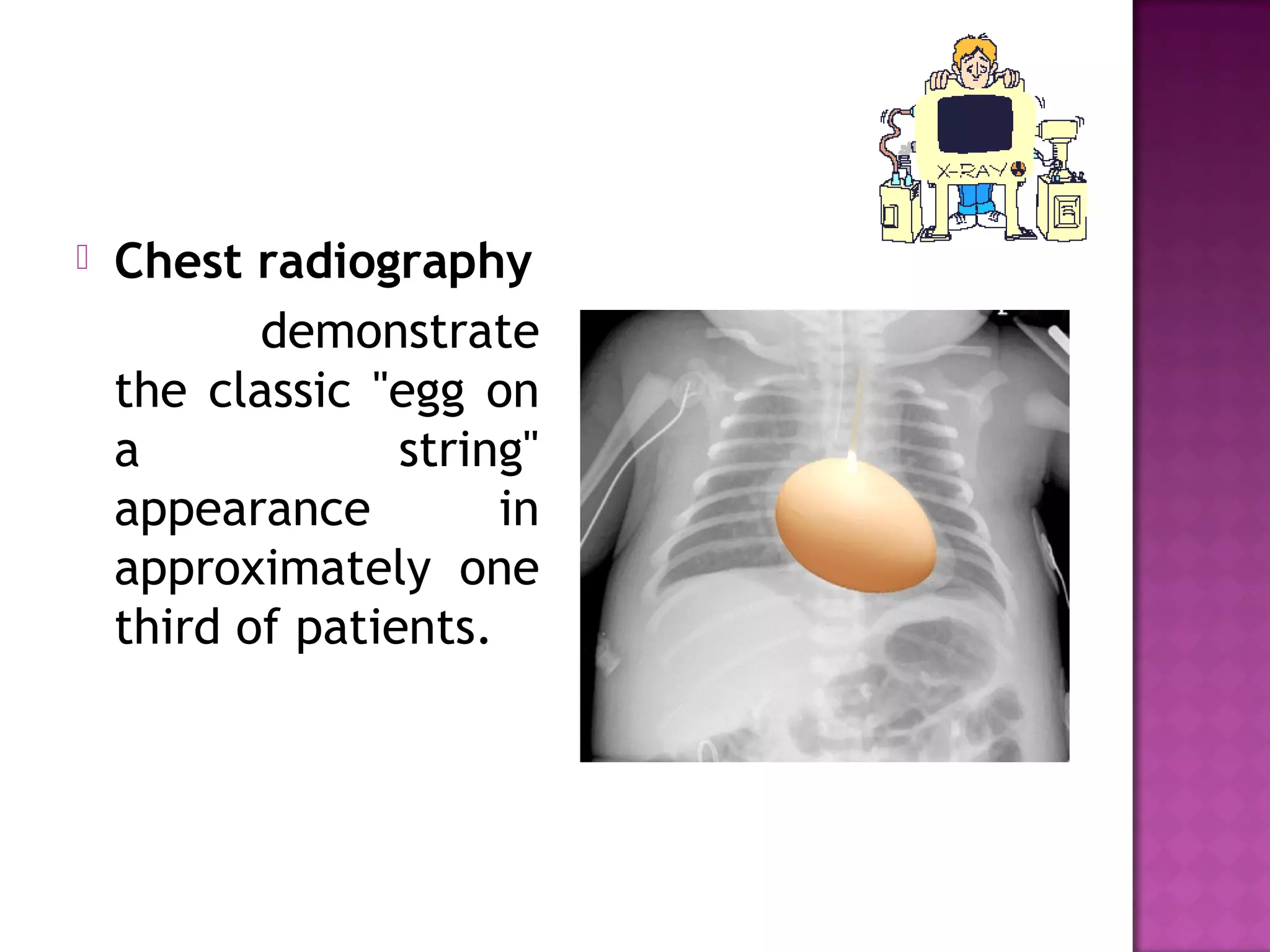
   Chest radiography
           demonstrate
    the classic "egg on
    a             string"
    appearance         in
    approximately one
    third of patients.
   Initial treatment consists of maintaining
    ductal patency with continuous intravenous
    (IV) prostaglandin E1 infusion to promote
    pulmonary blood flow.
   Antibiotic Prophylactic Regimens for
    Endocarditis.
    Fluid replacement
    Bicarbonate administration- Acidosis
   Mechanical ventilation
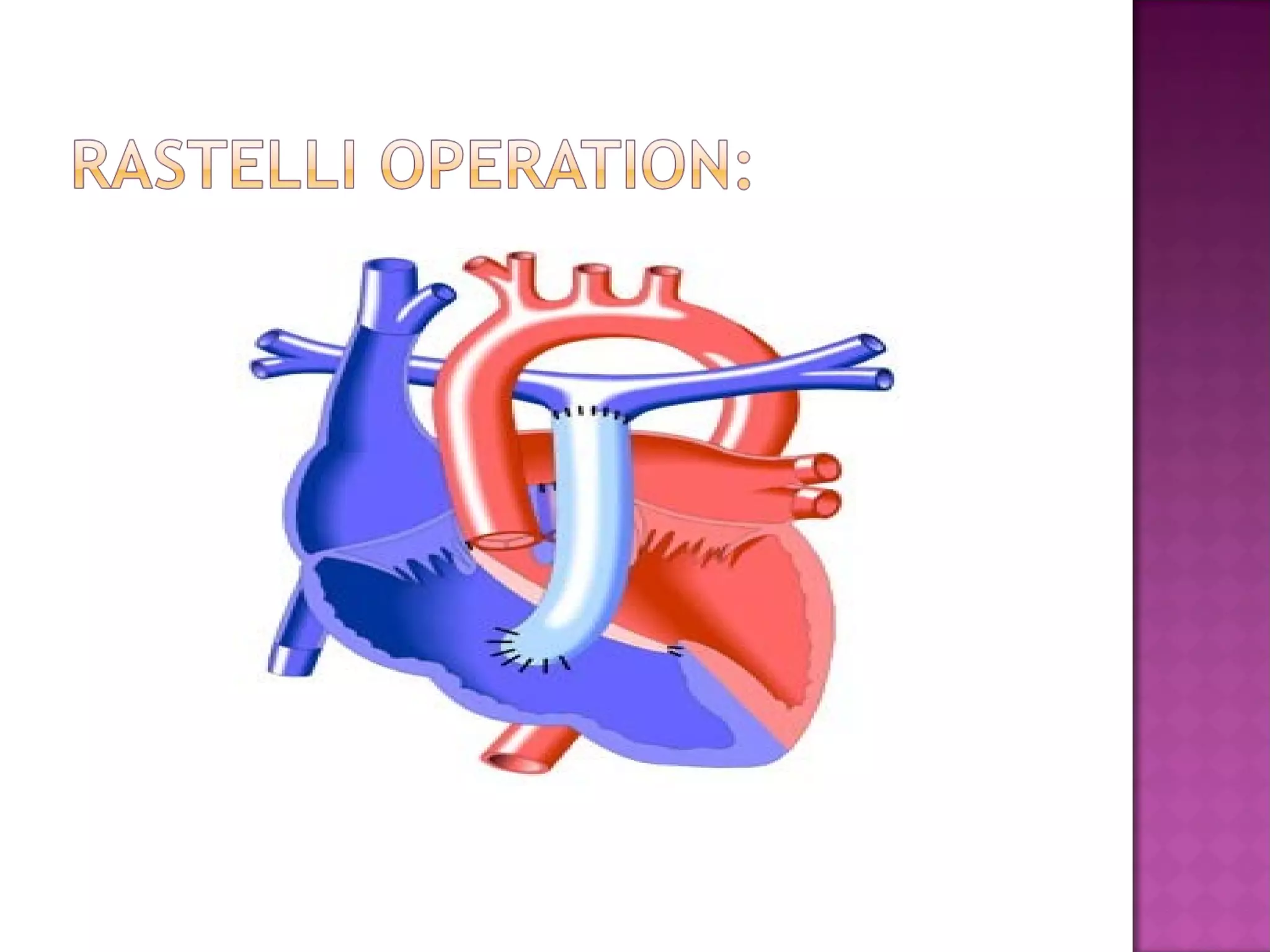
   Rastelli-type procedure-ligate the main
    pulmonary       artery   and     place   an
    aortopulmonary shunt during the newborn
    period to restrict pulmonary blood flow.
   Arterial switch procedure
   Congestive heart failure
   Arrhythmia
   Eisenmenger syndrome (irreversible and
    progressive pulmonary vascular obstructive
    disease)
   The overall survival rate following arterial
    switch operation is 90%.
   The overall mortality rate following an atrial
    level switch is low; however, long-term
    morbidity associated with systemic (right)
    ventricular dilatation and failure, systemic
    atrioventricular (tricuspid) valve
    regurgitation, and atrial bradyarrhythmias
    and tachyarrhythmias is significant.
THANK YOU

Transposition of great arteries

  • 1.
    PRESENTED BY: A.PRIYADHARSHINI M.Sc(N), DEPT.OF PAEDIATRIC NURSING, JAI INSTITUTE OF NURSING AND RESEARCH, GWALIOR.
  • 2.
    The transposition ofthe great arteries is ventriculo arterial discordance, in which the aorta arises from the morphologic right ventricle and the pulmonary artery arises from the morphologic left ventricle.
  • 4.
    Transposition of the great arteries (TGA) is the most common cyanotic congenital heart lesion that presents in neonates.    This lesion presents in 5-7% of all patients with congenital heart disease.  The overall annual incidence is 20-30 per 100,000 live births.
  • 5.
    Etiology for transposition of the great arteries is unknown and is presumed to be multifactorial.  This congenital heart defect is more common in infants of diabetic mothers.
  • 6.
    (The pulmonary andsystemic circulations function in parallel, rather than in series) Causes Transposition of great arteries Oxygenated pulmonary venous blood returns to the left atrium and left ventricle Recirculated to the pulmonary vascular bed via the abnormal pulmonary arterial connection to the left ventricle.
  • 7.
    Deoxygenated systemic venousblood returns to the right atrium and right ventricle pumped to the systemic circulation, effectively bypassing the lungs deficient oxygen supply to the tissues and an excessive right and left ventricular workload
  • 8.
    It is incompatiblewith prolonged survival unless mixing of oxygenated and deoxygenated blood occurs at some anatomic level like  ASD  VSD  PDA
  • 9.
    Prominent and progressive cyanosis within the first 24 hours of life is the usual finding in infants.  Tachypnea  Tachycardia  Diaphoresis  Failure to gain weight
  • 10.
    A single or narrowly split, diminished second heart sound  Systolic ejection murmur may be present. 
  • 11.
    History collection  Physical examination  ABG analysis  Echocardiography  Cardiac catheterization
  • 12.
    Chest radiography demonstrate the classic "egg on a string" appearance in approximately one third of patients.
  • 13.
    Initial treatment consists of maintaining ductal patency with continuous intravenous (IV) prostaglandin E1 infusion to promote pulmonary blood flow.  Antibiotic Prophylactic Regimens for Endocarditis.   Fluid replacement  Bicarbonate administration- Acidosis  Mechanical ventilation
  • 14.
    Rastelli-type procedure-ligate the main pulmonary artery and place an aortopulmonary shunt during the newborn period to restrict pulmonary blood flow.  Arterial switch procedure
  • 17.
    Congestive heart failure  Arrhythmia  Eisenmenger syndrome (irreversible and progressive pulmonary vascular obstructive disease)
  • 18.
    The overall survival rate following arterial switch operation is 90%.  The overall mortality rate following an atrial level switch is low; however, long-term morbidity associated with systemic (right) ventricular dilatation and failure, systemic atrioventricular (tricuspid) valve regurgitation, and atrial bradyarrhythmias and tachyarrhythmias is significant.
  • 19.