Dr.Elamaran.E
Senior Resident Dept. of CTVS,JIPMER
o Congenital cardiac anomaly
o Atrioventricular concordance and Ventriculo
arterial discordance.
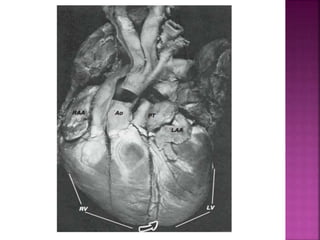
o Aorta arises from the morphologic right
ventricle and the pulmonary artery arises
from the morphologic left ventricle.
 Morphologic description of TGA –Baillie(1797)
 Transposition of the aorta and pulmonary
artery was coined - Farre (1814)
 Surgery for TGA
 Atrial septectomy - Blalock and Hanlon(1950)
 Balloon atrial septostomy - Rashkind and
Miller - (1966)
 Partial physiological correction – Lillehei
(1953)
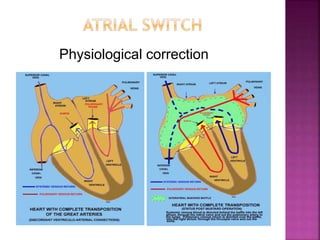
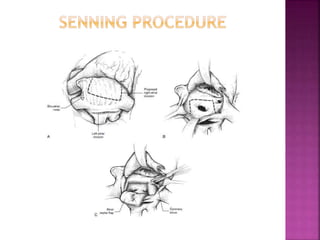
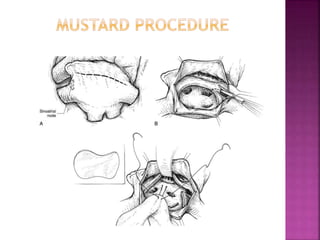
 Physiologic correction at the atrial level –
Senning(1959) and Mustard(1963)
 Arterial switch procedure –Jatene (1975)
 Etiology for transposition of the great
arteries is unknown and is presumed to be
multifactorial.
 Common association in infants of diabetic
mothers.
 Persistence of sub Aortic conus and
absorption of sub pulmonary conus
 Failure of the Truncus Arteriosus to septate
normally
 Transposition of the great arteries (TGA) is
the most common cyanotic congenital heart
lesion that presents in neonates.
 This lesion presents in 5-7% of all patients
with congenital heart disease.
 Male-to-female ratio is 2:1.
Male predominance increases to 3.3 : 1
(ventricular septum is intact)
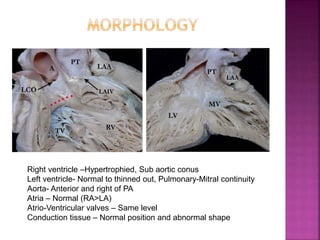
Right ventricle –Hypertrophied, Sub aortic conus
Left ventricle- Normal to thinned out, Pulmonary-Mitral continuity
Aorta- Anterior and right of PA
Atria – Normal (RA>LA)
Atrio-Ventricular valves – Same level
Conduction tissue – Normal position and abnormal shape
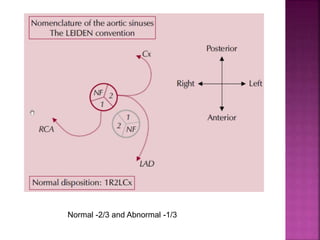
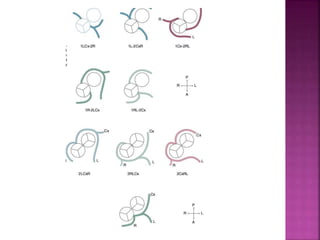
Normal -2/3 and Abnormal -1/3
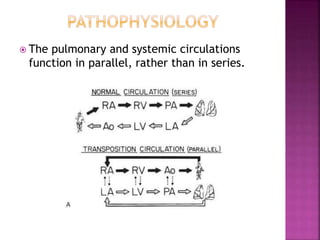
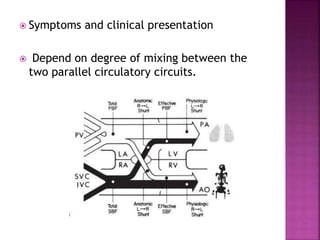
 The pulmonary and systemic circulations
function in parallel, rather than in series.
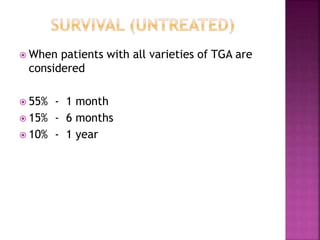
 When patients with all varieties of TGA are
considered
 55% - 1 month
 15% - 6 months
 10% - 1 year
 Transposition of the great arteries with intact
ventricular septum – Hypoxia
 Transposition of the great arteries with
ventricular septal defect –cardiac failure
 Transposition of the great arteries with
ventricular septal defect and left ventricular
outflow tract obstruction- Hypoxia
 Aggressive medical and surgical management
in the neonate has around 90% early and
midterm survival
1. TGA with intact ventricular septum
2. TGA with VSD
3. TGA with VSD and LVOTO
4. TGA with VSD and pulmonary vascular
obstructive disease.
 Patent foramen ovale or Atrial septal defect-
75%
 Ventricular septal defect- 25% -40%
 Patent ductus Arteriosus-functionally closes
by 1 month
 Left ventricular outflow obstruction-5%
 Mitral valve-cleft leaflet/accessory chordal
tissue
 Tricuspid valve – regurgitation/dysplasia
 Symptoms and clinical presentation
 Depend on degree of mixing between the
two parallel circulatory circuits.
 TGA with intact ventricular septum –
Cyanosis within 24 hours
 TGA with VSD– congestive heart failure (2 to
4 months)
 TGA with VSD and LVOTO- similar to TOF
 TGA with VSD and PVOD – develop Hypoxia
after 6 months
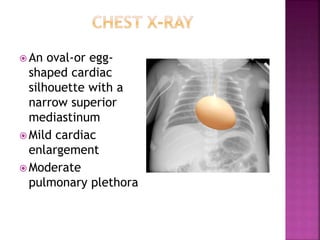
 An oval-or egg-
shaped cardiac
silhouette with a
narrow superior
mediastinum
 Mild cardiac
enlargement
 Moderate
pulmonary plethora
 Simple TGA – Neonates- Arterial switch within
1 month
 Simple TGA – after 30 days
 Pulmonary artery banding- Arterial switch
after 2 weeks
 Atrial switch
 TGA with VSD- Arterial switch within few
weeks
 TGA with VSD and LVOTO – repair - 6 months
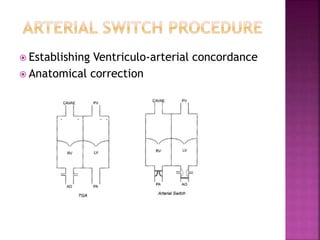
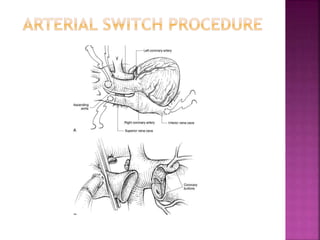
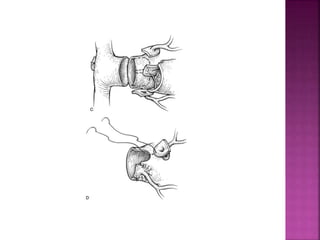
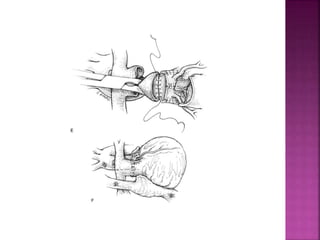
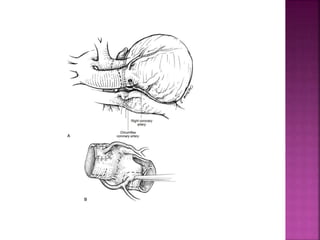
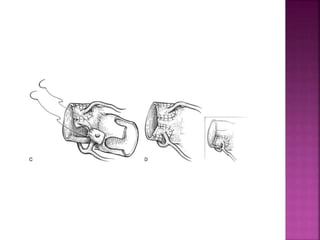
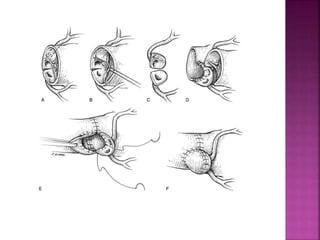
 Establishing Ventriculo-arterial concordance
 Anatomical correction
 Coronary artery lesions
 Neo Aortic valve regurgitation
 RVOTO and LVOTO obstruction
 Cardiac failure- Secondary to severe LV
dysfunction(imperfect coronary artery
transfer to Neoaorta)
 RV dysfunction – Progressive pulmonary
vascular disease (1%)
 Coronary events
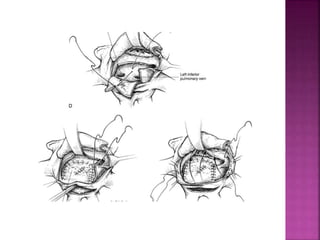
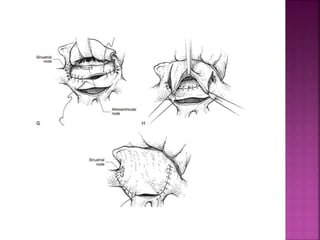
Physiological correction
 Baffle obstruction and leak
 Rhythm disturbances
 Severe Tricuspid regurgitation
 Right ventricle failure
 Low output – early post op period
 Systemic RV failure
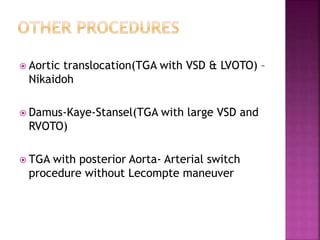
 Aortic translocation(TGA with VSD & LVOTO) –
Nikaidoh
 Damus-Kaye-Stansel(TGA with large VSD and
RVOTO)
 TGA with posterior Aorta- Arterial switch
procedure without Lecompte maneuver
Thank You

TGA-Dr.Elamaran

  • 1.
  • 2.
    o Congenital cardiacanomaly o Atrioventricular concordance and Ventriculo arterial discordance. o Aorta arises from the morphologic right ventricle and the pulmonary artery arises from the morphologic left ventricle.
  • 4.
     Morphologic descriptionof TGA –Baillie(1797)  Transposition of the aorta and pulmonary artery was coined - Farre (1814)  Surgery for TGA  Atrial septectomy - Blalock and Hanlon(1950)  Balloon atrial septostomy - Rashkind and Miller - (1966)
  • 5.
     Partial physiologicalcorrection – Lillehei (1953)  Physiologic correction at the atrial level – Senning(1959) and Mustard(1963)  Arterial switch procedure –Jatene (1975)
  • 6.
     Etiology fortransposition of the great arteries is unknown and is presumed to be multifactorial.  Common association in infants of diabetic mothers.
  • 7.
     Persistence ofsub Aortic conus and absorption of sub pulmonary conus  Failure of the Truncus Arteriosus to septate normally
  • 8.
     Transposition ofthe great arteries (TGA) is the most common cyanotic congenital heart lesion that presents in neonates.  This lesion presents in 5-7% of all patients with congenital heart disease.  Male-to-female ratio is 2:1. Male predominance increases to 3.3 : 1 (ventricular septum is intact)
  • 9.
    Right ventricle –Hypertrophied,Sub aortic conus Left ventricle- Normal to thinned out, Pulmonary-Mitral continuity Aorta- Anterior and right of PA Atria – Normal (RA>LA) Atrio-Ventricular valves – Same level Conduction tissue – Normal position and abnormal shape
  • 10.
    Normal -2/3 andAbnormal -1/3
  • 12.
     The pulmonaryand systemic circulations function in parallel, rather than in series.
  • 13.
     When patientswith all varieties of TGA are considered  55% - 1 month  15% - 6 months  10% - 1 year
  • 14.
     Transposition ofthe great arteries with intact ventricular septum – Hypoxia  Transposition of the great arteries with ventricular septal defect –cardiac failure  Transposition of the great arteries with ventricular septal defect and left ventricular outflow tract obstruction- Hypoxia
  • 15.
     Aggressive medicaland surgical management in the neonate has around 90% early and midterm survival
  • 16.
    1. TGA withintact ventricular septum 2. TGA with VSD 3. TGA with VSD and LVOTO 4. TGA with VSD and pulmonary vascular obstructive disease.
  • 17.
     Patent foramenovale or Atrial septal defect- 75%  Ventricular septal defect- 25% -40%  Patent ductus Arteriosus-functionally closes by 1 month  Left ventricular outflow obstruction-5%  Mitral valve-cleft leaflet/accessory chordal tissue  Tricuspid valve – regurgitation/dysplasia
  • 18.
     Symptoms andclinical presentation  Depend on degree of mixing between the two parallel circulatory circuits.
  • 19.
     TGA withintact ventricular septum – Cyanosis within 24 hours  TGA with VSD– congestive heart failure (2 to 4 months)  TGA with VSD and LVOTO- similar to TOF  TGA with VSD and PVOD – develop Hypoxia after 6 months
  • 20.
     An oval-oregg- shaped cardiac silhouette with a narrow superior mediastinum  Mild cardiac enlargement  Moderate pulmonary plethora
  • 22.
     Simple TGA– Neonates- Arterial switch within 1 month  Simple TGA – after 30 days  Pulmonary artery banding- Arterial switch after 2 weeks  Atrial switch  TGA with VSD- Arterial switch within few weeks  TGA with VSD and LVOTO – repair - 6 months
  • 23.
     Establishing Ventriculo-arterialconcordance  Anatomical correction
  • 30.
     Coronary arterylesions  Neo Aortic valve regurgitation  RVOTO and LVOTO obstruction
  • 31.
     Cardiac failure-Secondary to severe LV dysfunction(imperfect coronary artery transfer to Neoaorta)  RV dysfunction – Progressive pulmonary vascular disease (1%)  Coronary events
  • 32.
  • 38.
     Baffle obstructionand leak  Rhythm disturbances  Severe Tricuspid regurgitation  Right ventricle failure
  • 39.
     Low output– early post op period  Systemic RV failure
  • 42.
     Aortic translocation(TGAwith VSD & LVOTO) – Nikaidoh  Damus-Kaye-Stansel(TGA with large VSD and RVOTO)  TGA with posterior Aorta- Arterial switch procedure without Lecompte maneuver
  • 43.