Seminartopic:
EVOLUTION OF REPTILES THROUGHAGES
Seminar Content
• Introduction - EVOLUTION
• Representing vertebrate evolution
• Labyrinthodonts
• Amniotic egg
• Classification of reptiles
• Skull
• Vertebral Column
• Limbs and Skin
• Mass extinction
• Conclusion
• References
INTRODUCTION
•Evolution is the change in the inherited characteristics of
biological populations over successive generations.
• Evolutionary processes give rise to diversity at every level
of biological organization, including species, individual
organisms and molecules such as DNA and proteins
• A Reptile is any amniote (tetra pod that can lay eggs on
land) that is neither a mammal nor a bird.
• Unlike mammals, birds, and certain extinct reptiles, living
reptiles have Scales or scutes (rather than fur or feathers)
and are cold blooded.
BODY
FINSFINS
BODY
BODY
BODY
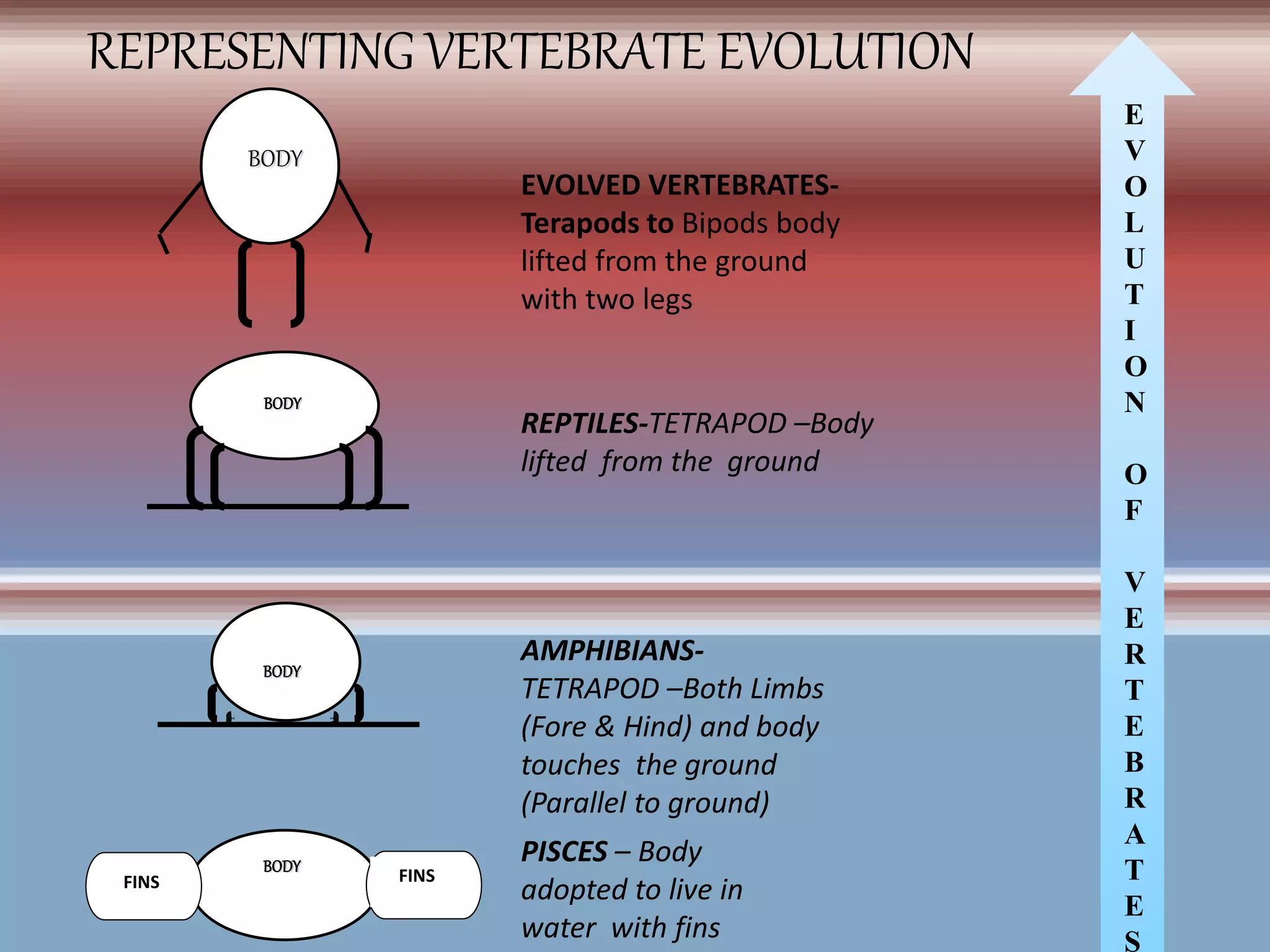
EVOLVED VERTEBRATES-
Terapods to Bipods body
lifted from the ground
with two legs
REPTILES-TETRAPOD –Body
lifted from the ground
AMPHIBIANS-
TETRAPOD –Both Limbs
(Fore & Hind) and body
touches the ground
(Parallel to ground)
PISCES – Body
adopted to live in
water with fins
E
V
O
L
U
T
I
O
N
O
F
V
E
R
T
E
B
R
A
T
E
S
REPRESENTING VERTEBRATE EVOLUTION
LABYRINTHODONTS
• The reptiles were derived from the amphibians, specifically
from certain Labyrinthodonts
• Transition from amphibian to reptile took place during the
Carboniferous period of the earth history
• Of course the final crossing from the amphibians to the reptiles
occurred with the perfection of Amniote Egg
• The oldest known fossil amniote egg is from Lower Permian
sediments in North America
• The appearance of the lower jaw or the migration of the
backboned animals from the water on to the land paved a way
for the success of reptiles on the earth
Amniote Egg
The egg mainly consists of:
Amnion : consists of
amniotic liquid
and embryo
Yolk : provides nutrients
to the embryo
Allantois: receives the waste
products produced
by the fetus
Chorion : encloses Amnion, Allantois, yolk and yolk sac
Shell : It is both tough and porous to protect and
exchange O2 and CO2 respectively.
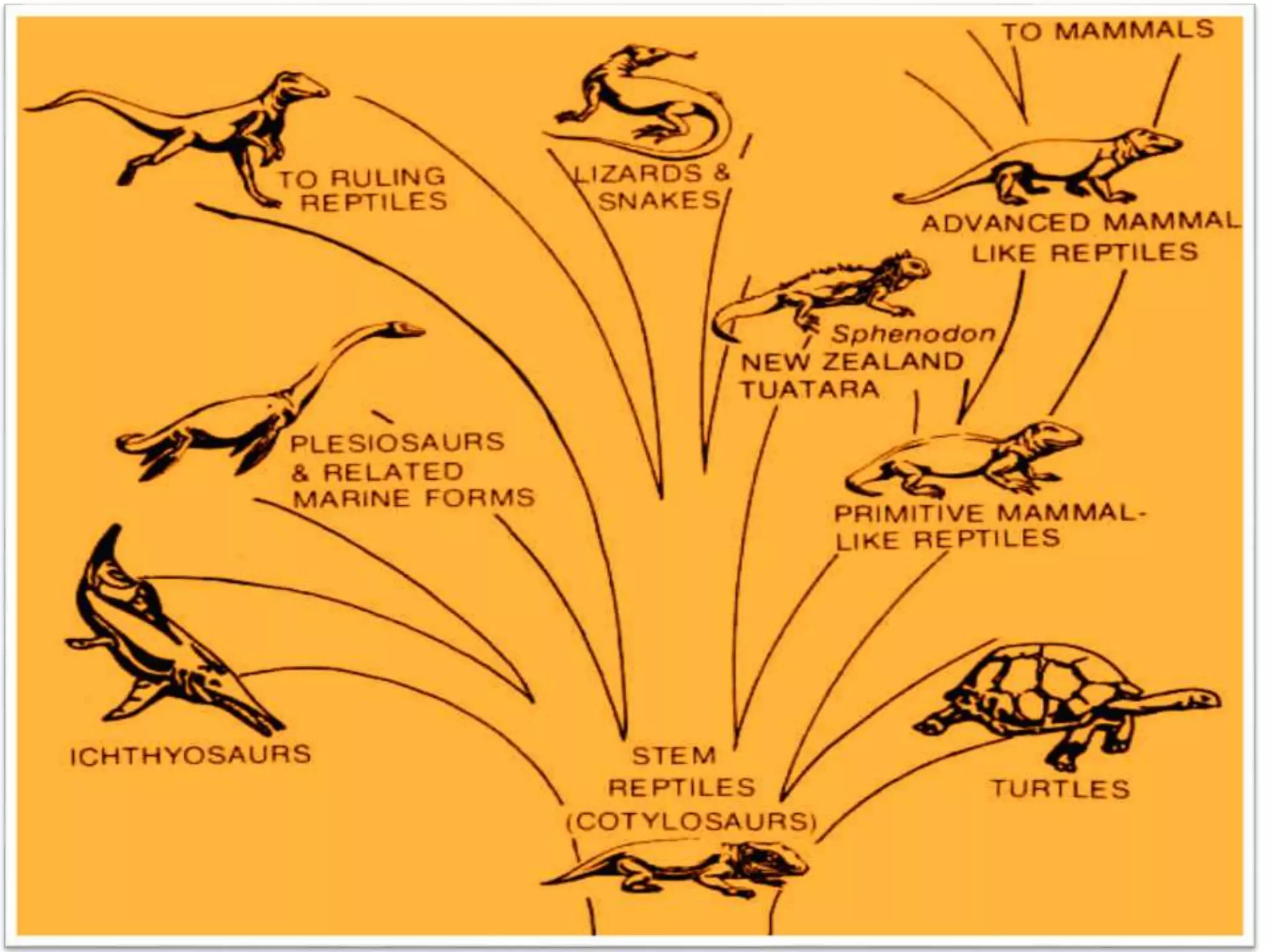
CLASSIFICATION OF REPTILES:
Subclasses:
Anapsida-
Proto reptiles which include turtle
Diapsida-
majority of the reptiles, progenitor of birds
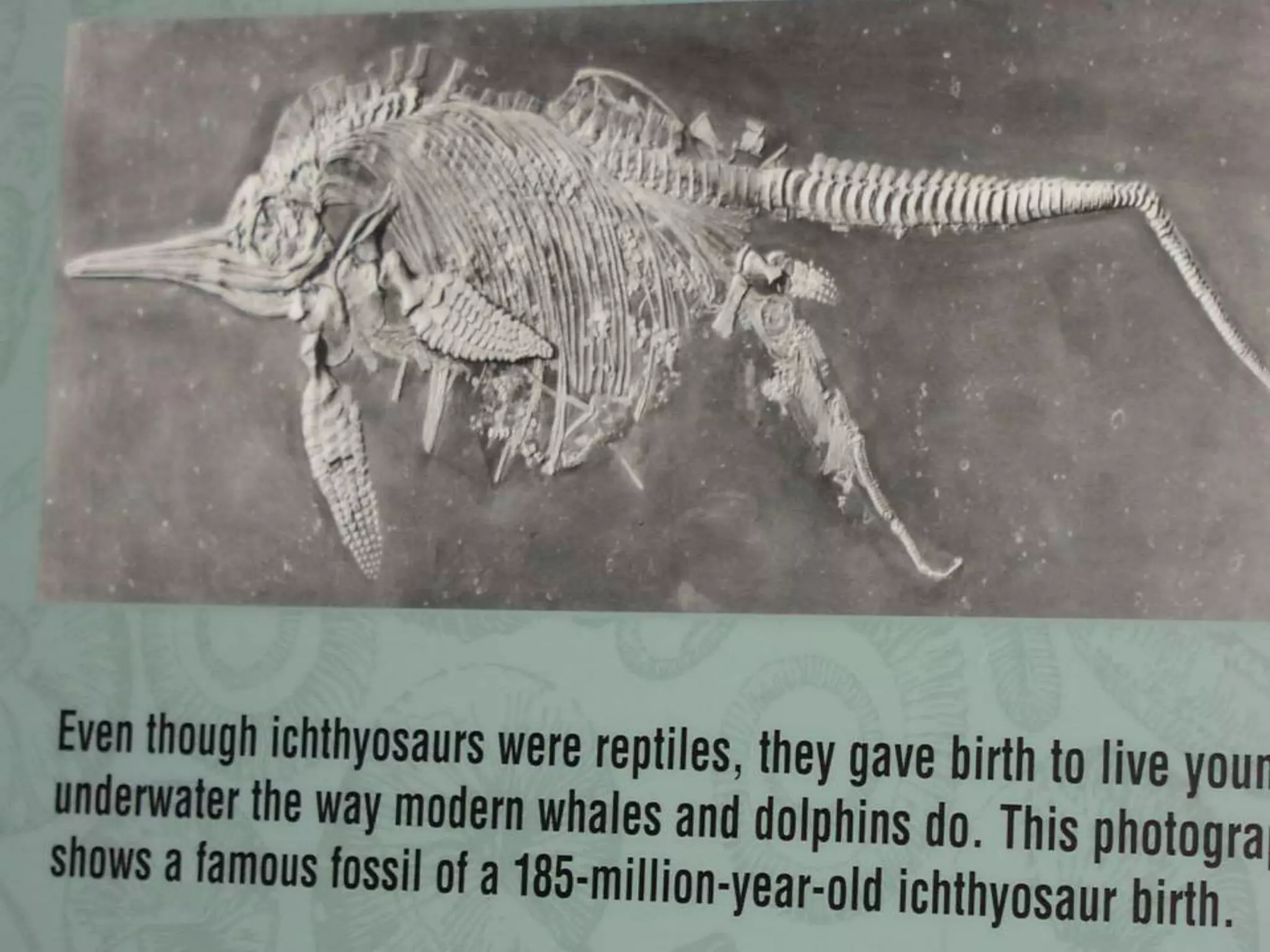
Euryapsida-
Plesiosaurs, Placodonts and Ichthyosaurs
Synapsida-
mammal like reptiles, progenitors of
mammals
CLASSIFICATION OF REPTILES
PICTURE
SHOWING
PTEROSAURS
WHICH HAD
GLIDER WINGS
•Pineal foramen, characteristic
of labyrinthodonts persists in
the early reptiles but disappears
with the advancement
• Pterygoid bone of the palate
are prominent in reptiles and in
primitive forms, these bones
carry well developed teeth
•Skull in reptiles is rather deep,
in contrast to the flattened skull
of the Labyrinthodonts
• Primitive otic notch is
suppressed
SKULL
• The occipital condyle is single in
most of the reptiles, a character
that is fore shadowed in the
Anthracosaurs
VERTEBRAL COLUMN OF A TYPICAL REPTILE
• The clavicle(collar bone) and the inter clavical bone is present in the
reptilian shoulder girdle which is much reduced as compared with these
elements in the Labyrinthodonts
• Among the primitive reptiles, the ribs form a continuous and generally
similar series from the skull to the pelvis
• Primitive reptiles have two sacral vertebrae wherein amphibians have
only one
• Ilium will be attached to the sacrum
Clavicle
Sacrum
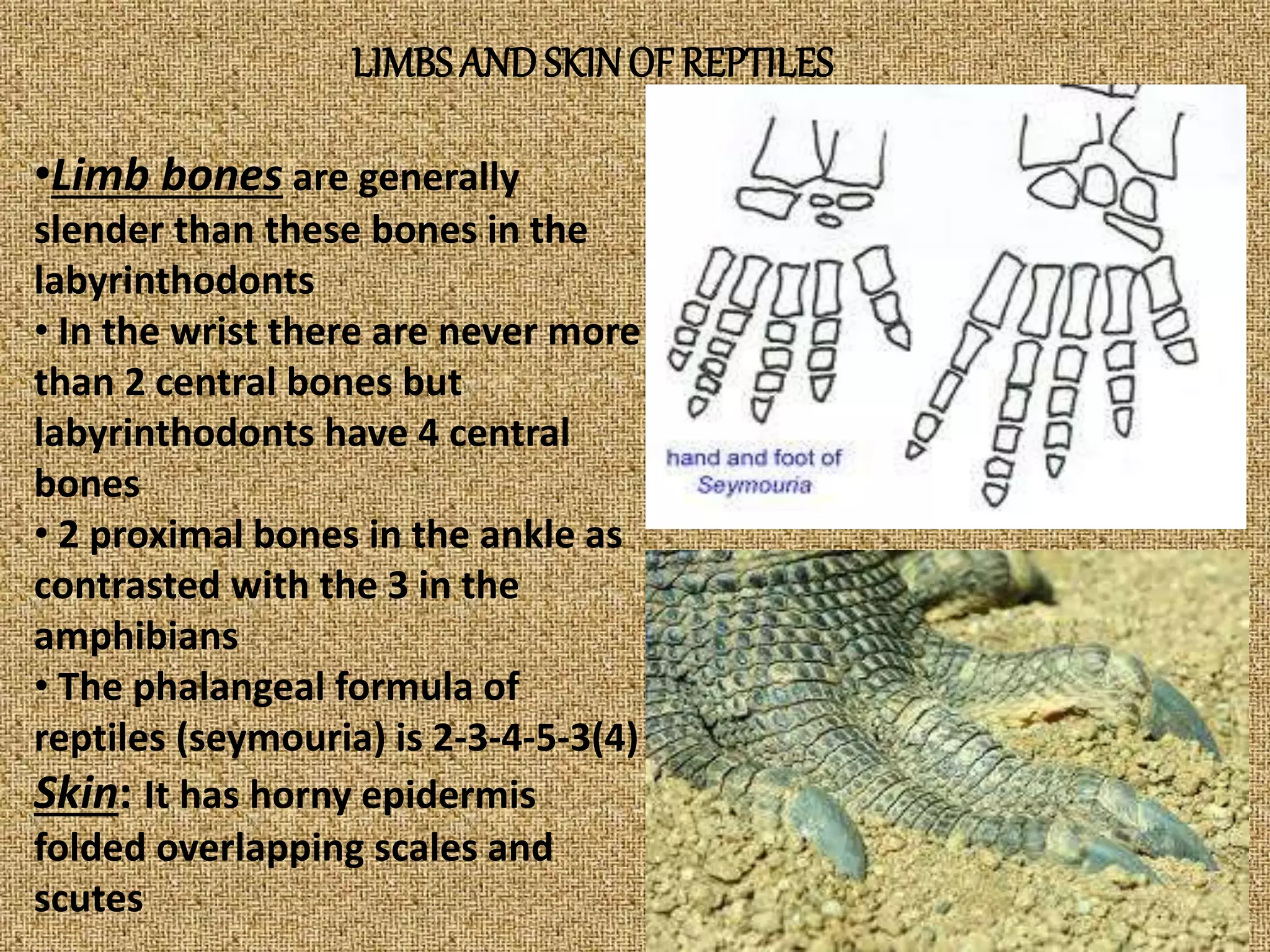
LIMBSAND SKINOF REPTILES
•Limb bones are generally
slender than these bones in the
labyrinthodonts
• In the wrist there are never more
than 2 central bones but
labyrinthodonts have 4 central
bones
• 2 proximal bones in the ankle as
contrasted with the 3 in the
amphibians
• The phalangeal formula of
reptiles (seymouria) is 2-3-4-5-3(4)
Skin: It has horny epidermis
folded overlapping scales and
scutes
MASS EXTINCTION:
Evolution of reptiles has
been marked by three mass
extinction as shown in the
right.
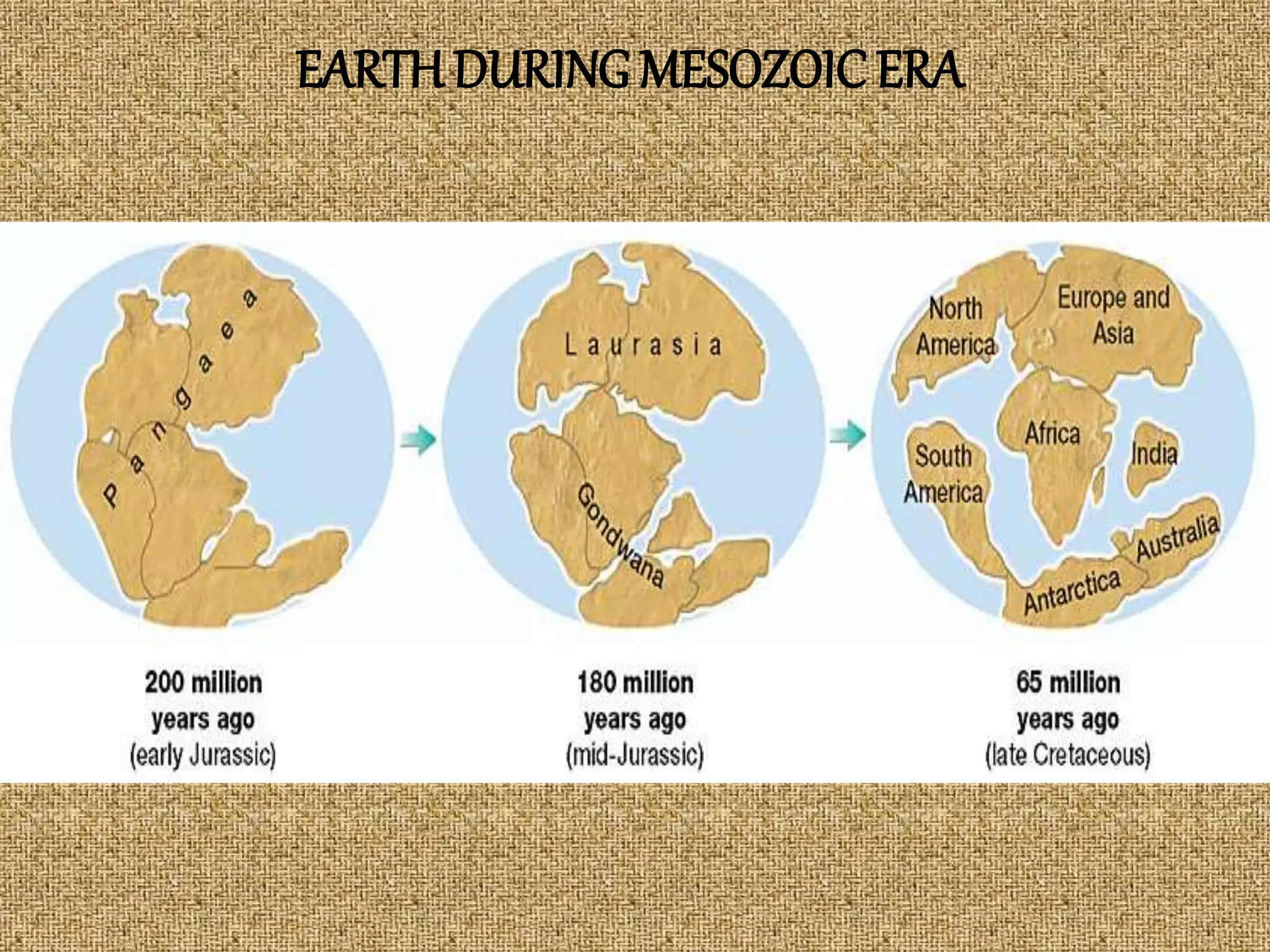
MESOZOIC ERA
is known as the
age of reptiles.
EARTHDURING MESOZOICERA
C O N C L U S I O N
• Evolution is the fundamental property of life.
• Evolution of life through ages throw a light on
palaeobiosphere of the past.
• Evolution in all groups of life help in the reconstruction
of the historical geology. In particular the history of the
earth.
• Reptiles will bridge the connection between aquatic
and terrestrial vertebrates. This is the stage where we
can see all the modification.
• Some evolutionary aspects will remain unchanged
even today.
• Reptile evolution can be seen in all the forms of
nature i.e., air, water and on land.
•Edwin H Colbert (1969) Evolution of
Vertebrates- Publ. V.R. Damodaran for
Wiley Eastern limited- Second edition- Pp-
110 – 126.
• www.google.com/images
•en.wikipedia.org/wiki/Evolution_of_reptiles
Evolution of reptiles

Evolution of reptiles

  • 1.
  • 2.
    Seminar Content • Introduction- EVOLUTION • Representing vertebrate evolution • Labyrinthodonts • Amniotic egg • Classification of reptiles • Skull • Vertebral Column • Limbs and Skin • Mass extinction • Conclusion • References
  • 3.
    INTRODUCTION •Evolution is thechange in the inherited characteristics of biological populations over successive generations. • Evolutionary processes give rise to diversity at every level of biological organization, including species, individual organisms and molecules such as DNA and proteins • A Reptile is any amniote (tetra pod that can lay eggs on land) that is neither a mammal nor a bird. • Unlike mammals, birds, and certain extinct reptiles, living reptiles have Scales or scutes (rather than fur or feathers) and are cold blooded.
  • 4.
    BODY FINSFINS BODY BODY BODY EVOLVED VERTEBRATES- Terapods toBipods body lifted from the ground with two legs REPTILES-TETRAPOD –Body lifted from the ground AMPHIBIANS- TETRAPOD –Both Limbs (Fore & Hind) and body touches the ground (Parallel to ground) PISCES – Body adopted to live in water with fins E V O L U T I O N O F V E R T E B R A T E S REPRESENTING VERTEBRATE EVOLUTION
  • 5.
    LABYRINTHODONTS • The reptileswere derived from the amphibians, specifically from certain Labyrinthodonts • Transition from amphibian to reptile took place during the Carboniferous period of the earth history • Of course the final crossing from the amphibians to the reptiles occurred with the perfection of Amniote Egg • The oldest known fossil amniote egg is from Lower Permian sediments in North America • The appearance of the lower jaw or the migration of the backboned animals from the water on to the land paved a way for the success of reptiles on the earth
  • 6.
    Amniote Egg The eggmainly consists of: Amnion : consists of amniotic liquid and embryo Yolk : provides nutrients to the embryo Allantois: receives the waste products produced by the fetus Chorion : encloses Amnion, Allantois, yolk and yolk sac Shell : It is both tough and porous to protect and exchange O2 and CO2 respectively.
  • 7.
    CLASSIFICATION OF REPTILES: Subclasses: Anapsida- Protoreptiles which include turtle Diapsida- majority of the reptiles, progenitor of birds Euryapsida- Plesiosaurs, Placodonts and Ichthyosaurs Synapsida- mammal like reptiles, progenitors of mammals
  • 9.
  • 11.
  • 12.
    •Pineal foramen, characteristic oflabyrinthodonts persists in the early reptiles but disappears with the advancement • Pterygoid bone of the palate are prominent in reptiles and in primitive forms, these bones carry well developed teeth •Skull in reptiles is rather deep, in contrast to the flattened skull of the Labyrinthodonts • Primitive otic notch is suppressed SKULL • The occipital condyle is single in most of the reptiles, a character that is fore shadowed in the Anthracosaurs
  • 13.
    VERTEBRAL COLUMN OFA TYPICAL REPTILE • The clavicle(collar bone) and the inter clavical bone is present in the reptilian shoulder girdle which is much reduced as compared with these elements in the Labyrinthodonts • Among the primitive reptiles, the ribs form a continuous and generally similar series from the skull to the pelvis • Primitive reptiles have two sacral vertebrae wherein amphibians have only one • Ilium will be attached to the sacrum Clavicle Sacrum
  • 14.
    LIMBSAND SKINOF REPTILES •Limbbones are generally slender than these bones in the labyrinthodonts • In the wrist there are never more than 2 central bones but labyrinthodonts have 4 central bones • 2 proximal bones in the ankle as contrasted with the 3 in the amphibians • The phalangeal formula of reptiles (seymouria) is 2-3-4-5-3(4) Skin: It has horny epidermis folded overlapping scales and scutes
  • 15.
    MASS EXTINCTION: Evolution ofreptiles has been marked by three mass extinction as shown in the right. MESOZOIC ERA is known as the age of reptiles.
  • 16.
  • 17.
    C O NC L U S I O N • Evolution is the fundamental property of life. • Evolution of life through ages throw a light on palaeobiosphere of the past. • Evolution in all groups of life help in the reconstruction of the historical geology. In particular the history of the earth. • Reptiles will bridge the connection between aquatic and terrestrial vertebrates. This is the stage where we can see all the modification. • Some evolutionary aspects will remain unchanged even today. • Reptile evolution can be seen in all the forms of nature i.e., air, water and on land.
  • 18.
    •Edwin H Colbert(1969) Evolution of Vertebrates- Publ. V.R. Damodaran for Wiley Eastern limited- Second edition- Pp- 110 – 126. • www.google.com/images •en.wikipedia.org/wiki/Evolution_of_reptiles