PHOSPHORESCENCE
By: Inés Vanhille, Inés Mili & Paula
Escobosa
INDEX
• Definition
• Historical background
• How phosphorescence works
• Photoluminescence: fluorescence and phosphorescence
• Chemiluminescence
• Materials used
• Phosphorescence is sea creatures
DEFINITION
• Phosphorescence is luminosity that is caused by the
absorption of radiations.
• In simple terms, phosphorescence is a process in
which energy absorbed by a substance is released in
the form of light.
HISTORICAL BACKGROUND
• The term ‘phosphor’ has been used since the Middle
Ages
• Phosphorescence was first observed in the 17th
century but was not studied scientifically until the
19th century.
• The study of phosphorescent materials led to the
discovery of radioactivity in 1896.
HOW PHOSPHORESCENCE WORKS
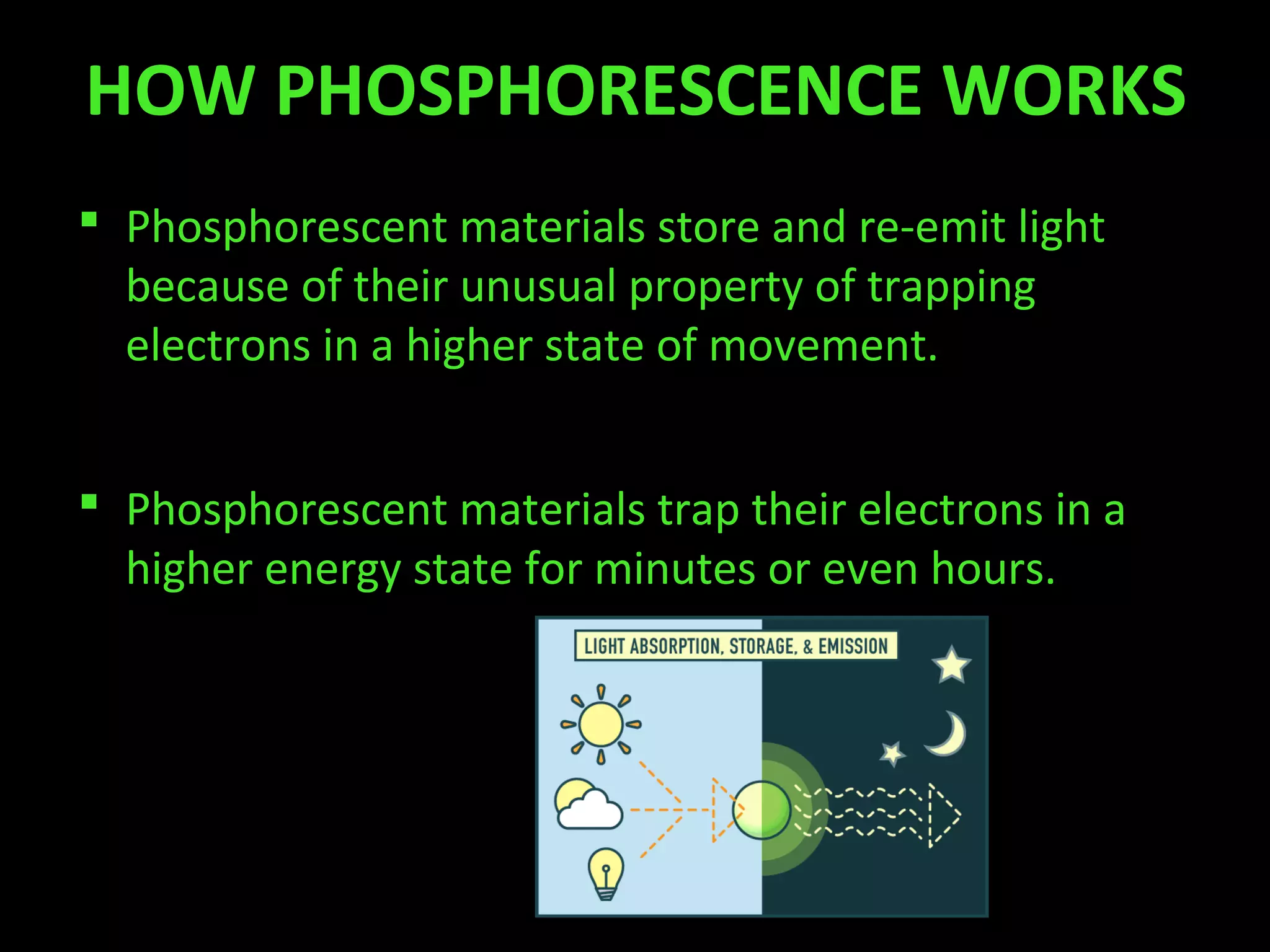
 Phosphorescent materials store and re-emit light
because of their unusual property of trapping
electrons in a higher state of movement.
 Phosphorescent materials trap their electrons in a
higher energy state for minutes or even hours.
PHOTOLUMINESCENCE: FLUORESCENCE &
PHOSPHORESCENCE
 Fluorescence and phosphorescence
are two forms of
photoluminescence.
Photoluminescence is the emission
of light arising from excited
electronic states following
absorption of light
 Many important applications based
on photoluminescence have been
developed
CHEMILUMINESCENCE
• It is a process which is commonly mistaken for
phosphorescence.
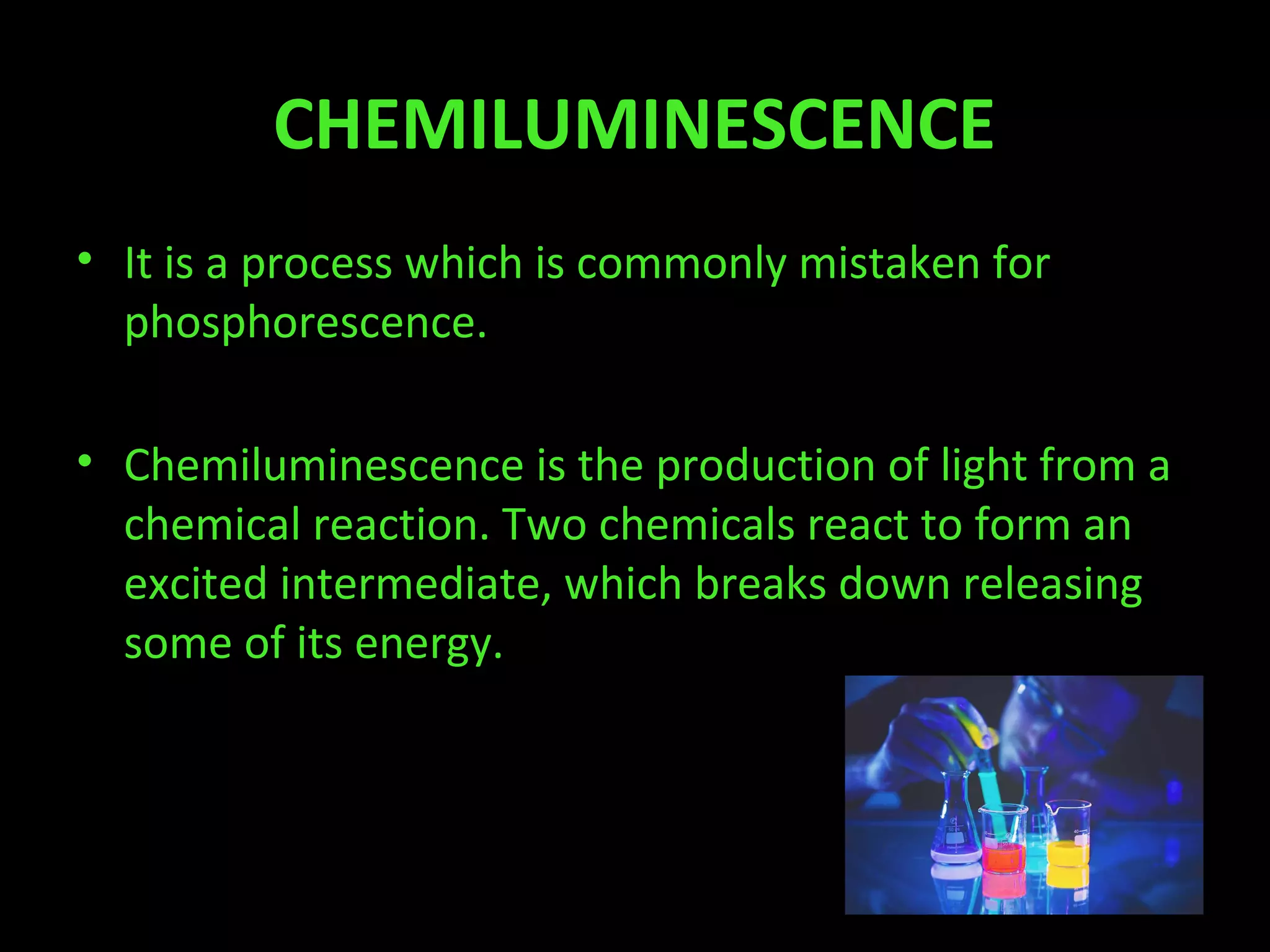
• Chemiluminescence is the production of light from a
chemical reaction. Two chemicals react to form an
excited intermediate, which breaks down releasing
some of its energy.
MATERIALS USED
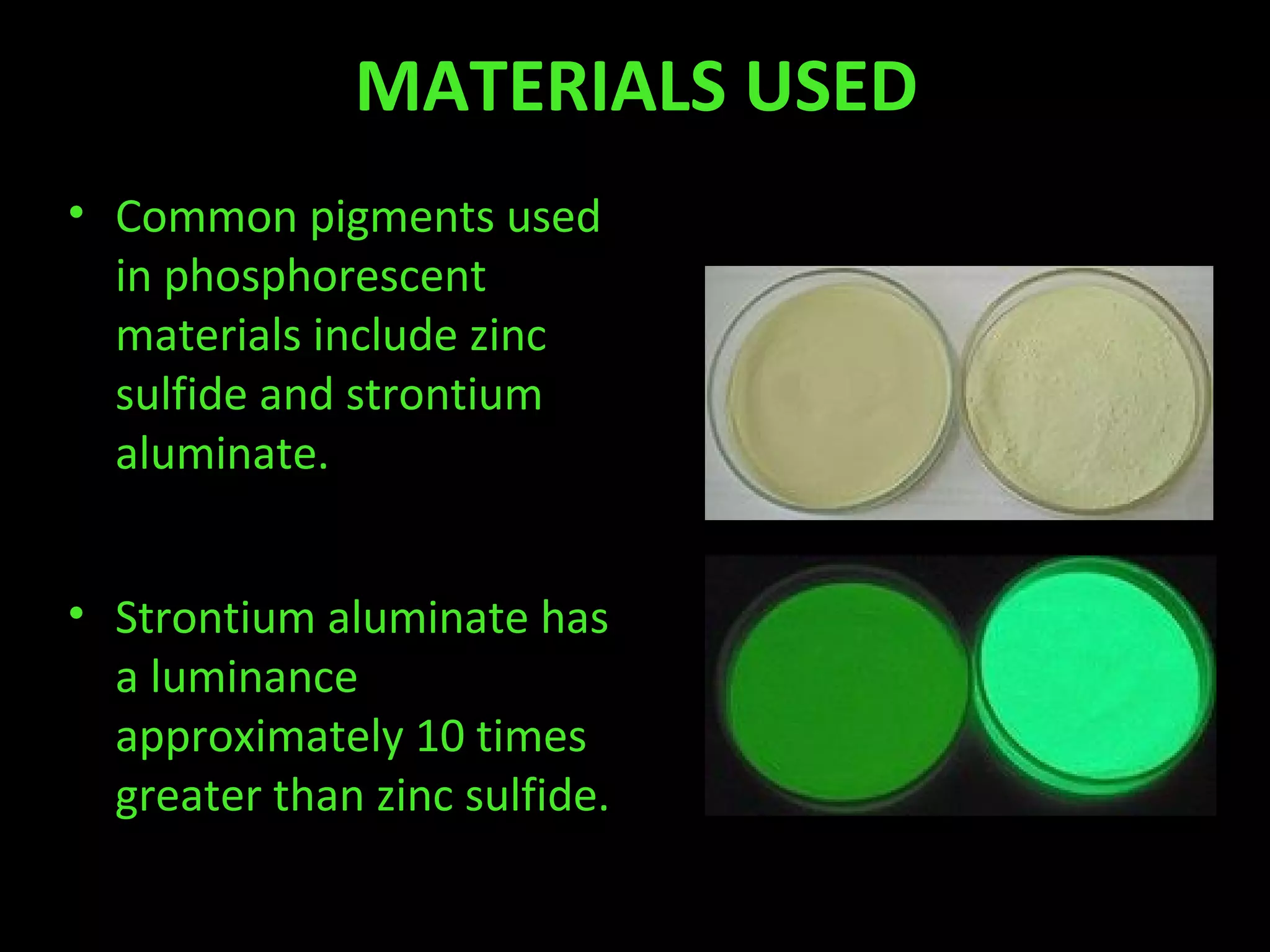
• Common pigments used
in phosphorescent
materials include zinc
sulfide and strontium
aluminate.
• Strontium aluminate has
a luminance
approximately 10 times
greater than zinc sulfide.
PHOSPHORESCENCE IN SEA CREATURES
• Jellyfish, as well as various species of worms, shrimp,
and squid, all produce their own light through
phosphorescence.
LUMINOSITY IN WATCHES
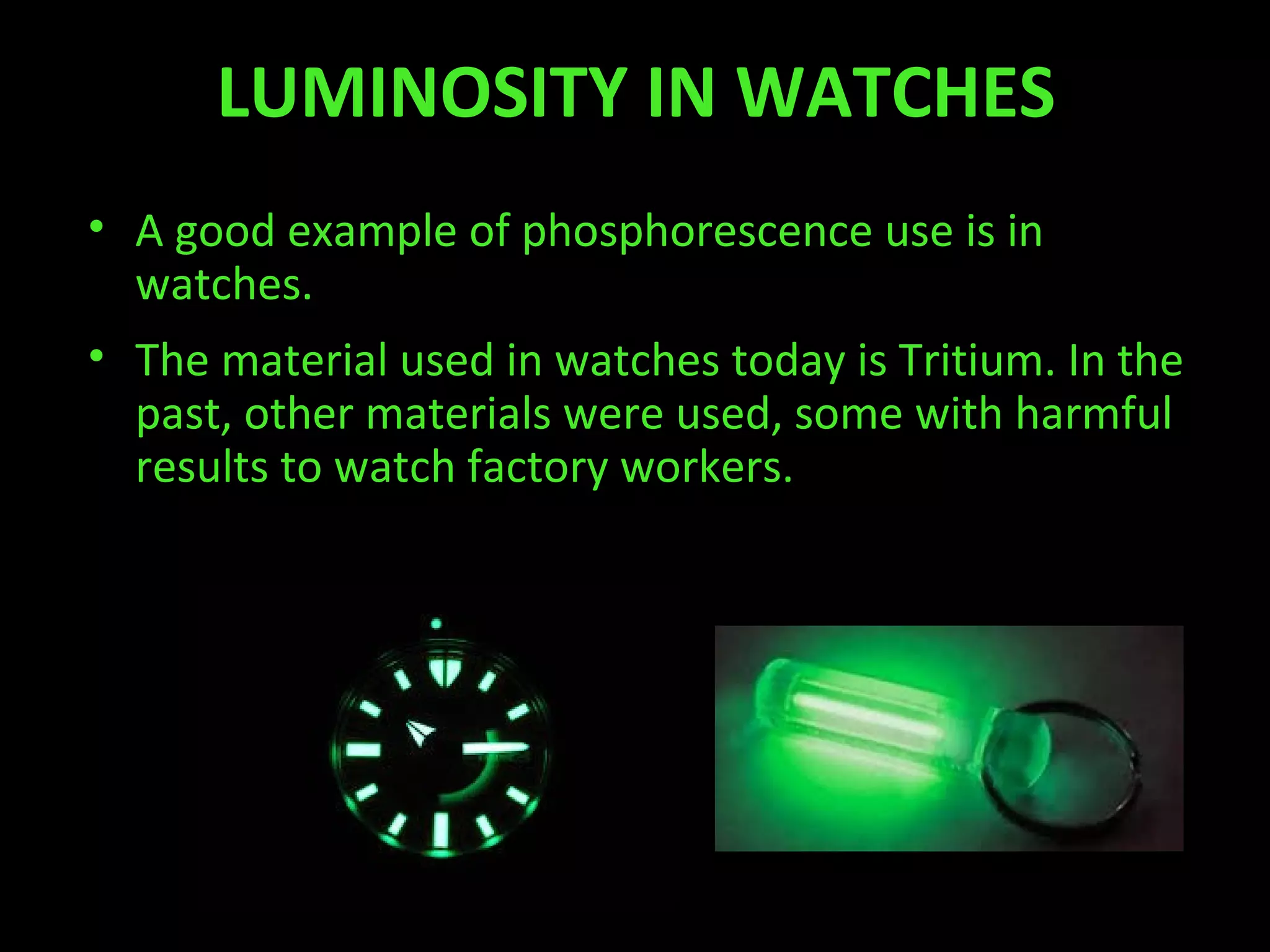
• A good example of phosphorescence use is in
watches.
• The material used in watches today is Tritium. In the
past, other materials were used, some with harmful
results to watch factory workers.
Phosphorescence

Phosphorescence

  • 1.
    PHOSPHORESCENCE By: Inés Vanhille,Inés Mili & Paula Escobosa
  • 2.
    INDEX • Definition • Historicalbackground • How phosphorescence works • Photoluminescence: fluorescence and phosphorescence • Chemiluminescence • Materials used • Phosphorescence is sea creatures
  • 3.
    DEFINITION • Phosphorescence isluminosity that is caused by the absorption of radiations. • In simple terms, phosphorescence is a process in which energy absorbed by a substance is released in the form of light.
  • 4.
    HISTORICAL BACKGROUND • Theterm ‘phosphor’ has been used since the Middle Ages • Phosphorescence was first observed in the 17th century but was not studied scientifically until the 19th century. • The study of phosphorescent materials led to the discovery of radioactivity in 1896.
  • 5.
    HOW PHOSPHORESCENCE WORKS Phosphorescent materials store and re-emit light because of their unusual property of trapping electrons in a higher state of movement.  Phosphorescent materials trap their electrons in a higher energy state for minutes or even hours.
  • 6.
    PHOTOLUMINESCENCE: FLUORESCENCE & PHOSPHORESCENCE Fluorescence and phosphorescence are two forms of photoluminescence. Photoluminescence is the emission of light arising from excited electronic states following absorption of light  Many important applications based on photoluminescence have been developed
  • 7.
    CHEMILUMINESCENCE • It isa process which is commonly mistaken for phosphorescence. • Chemiluminescence is the production of light from a chemical reaction. Two chemicals react to form an excited intermediate, which breaks down releasing some of its energy.
  • 8.
    MATERIALS USED • Commonpigments used in phosphorescent materials include zinc sulfide and strontium aluminate. • Strontium aluminate has a luminance approximately 10 times greater than zinc sulfide.
  • 9.
    PHOSPHORESCENCE IN SEACREATURES • Jellyfish, as well as various species of worms, shrimp, and squid, all produce their own light through phosphorescence.
  • 10.
    LUMINOSITY IN WATCHES •A good example of phosphorescence use is in watches. • The material used in watches today is Tritium. In the past, other materials were used, some with harmful results to watch factory workers.