Classification and Purpose of Production and Operations Management
The document discusses operations management topics including:
1) The definition, history, and importance of operations management.
2) Key factors that affect productivity and ways to improve it.
3) How operations management relates to competitiveness and the importance of operational strategy.
4) An overview of different types of manufacturing and service systems.
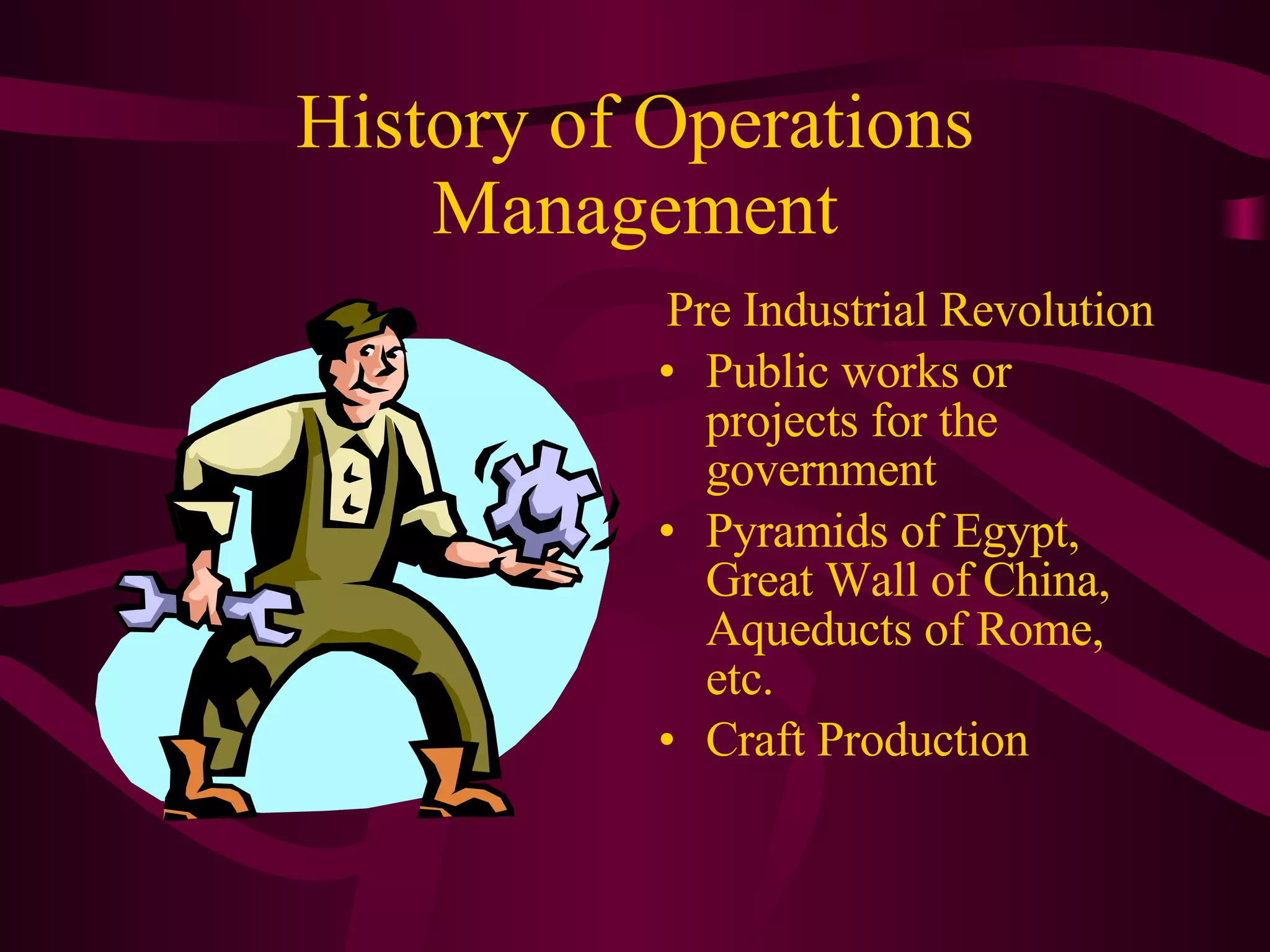
History of OperationsManagement Pre Industrial Revolution Public works or projects for the government Pyramids of Egypt, Great Wall of China, Aqueducts of Rome, etc. Craft Production
6.
History of OperationsManagement Industrial Revolution 1770s in England Replaced manpower with machine power Invention of machines Steam engine Standardization of gauges
7.
History of OperationsManagement Scientific Management Focused on observation, measurement, analysis & improvement of work design Replaced craft production by mass production Low skilled workers replaced highly skilled workers
8.
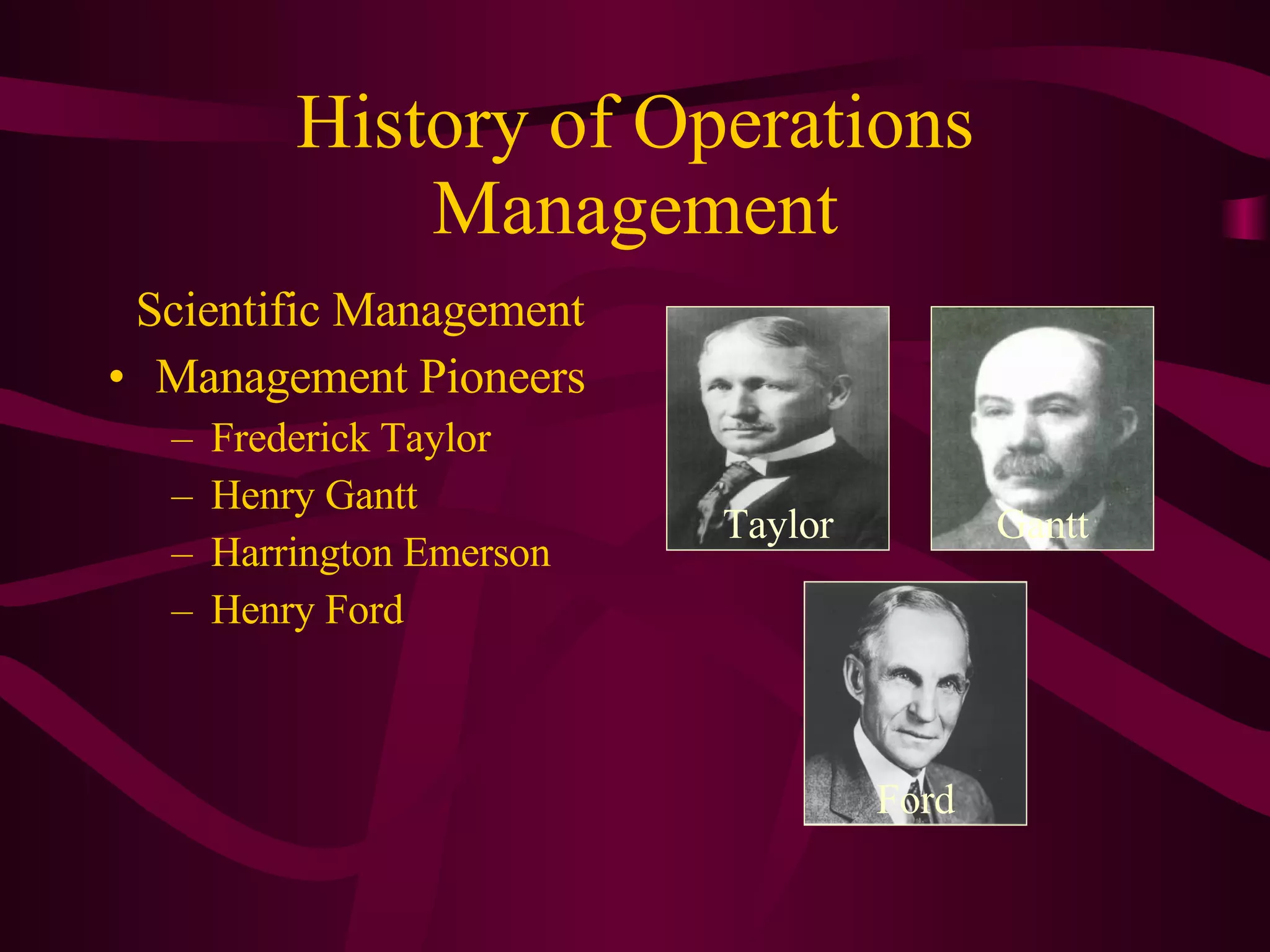
History of OperationsManagement Scientific Management Management Pioneers Frederick Taylor Henry Gantt Harrington Emerson Henry Ford Taylor Gantt Ford
9.
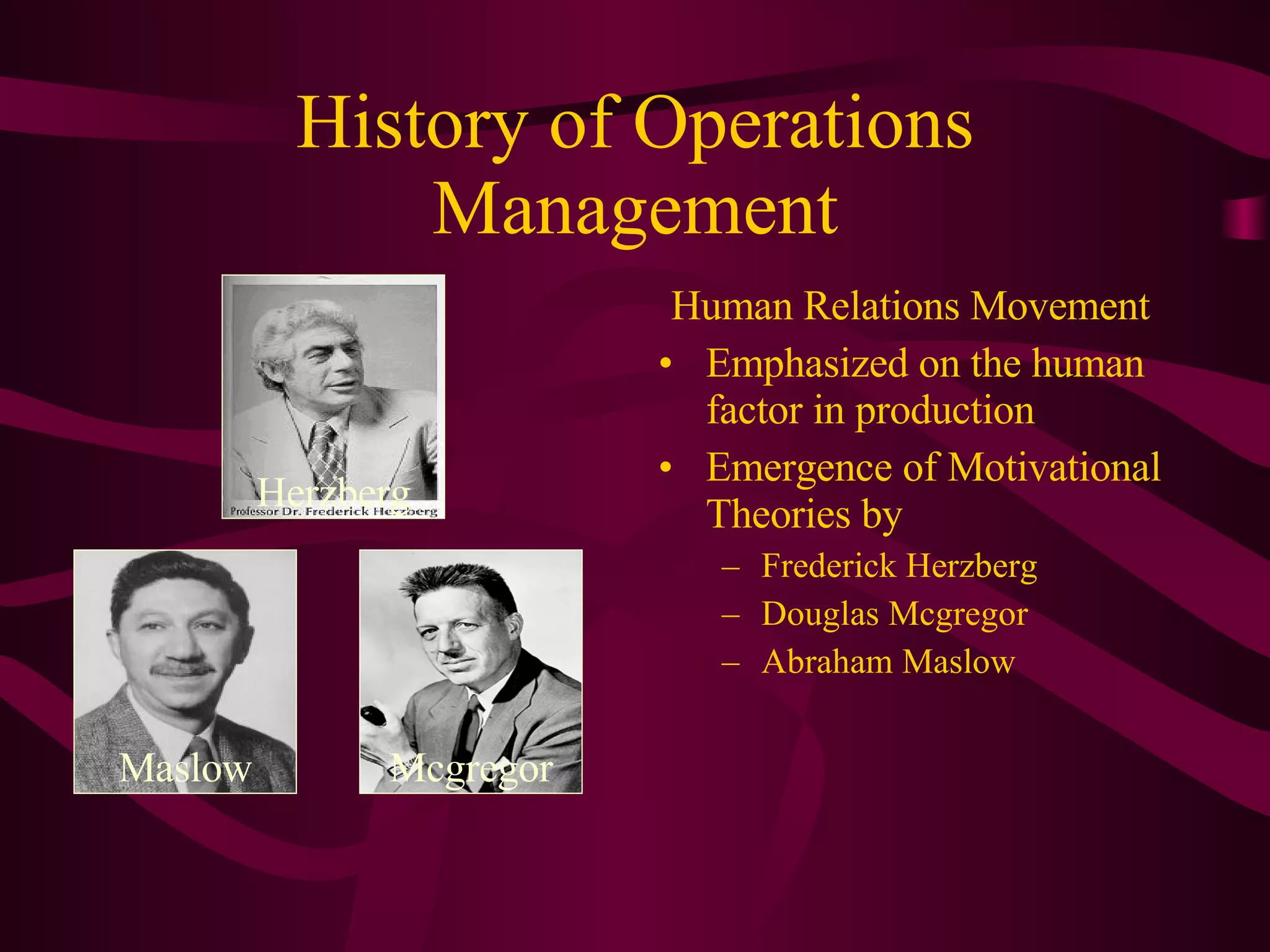
Human Relations MovementEmphasized on the human factor in production Emergence of Motivational Theories by Frederick Herzberg Douglas Mcgregor Abraham Maslow History of Operations Management Herzberg Maslow Mcgregor
10.
History of OperationsManagement Japanese Influences Developed and refined existing management practices Introduced the concept of quality, continual improvement, and time based management
11.
History of OperationsManagement Recent Trends Internet & Electronic Business Supply Chain Management Supply chain is a sequence of activities and organizations involved in producing a good or a service
12.
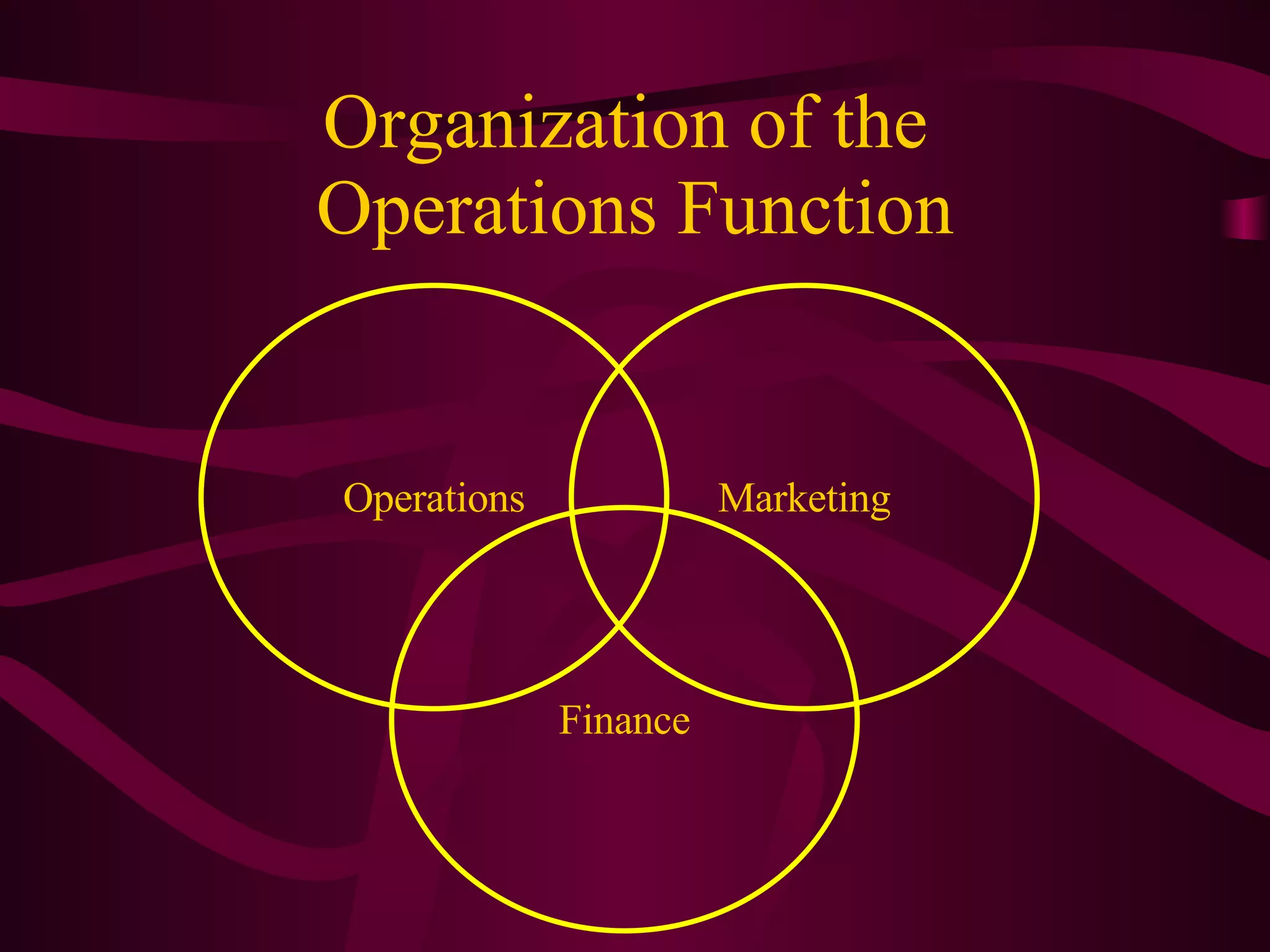
Importance of OperationsManagement Operations activity is the core of all business organizations A large percentage of jobs are in the field of operations All activities in the other areas of business are interrelated with operations management Responsible for a large portion of the company’s assets It has a major impact on quality & is the face of the company to its customers
13.
Productivity An indexmeasure that measures output (goods & services) relative to input (labor, materials, energy, and other resources)
14.
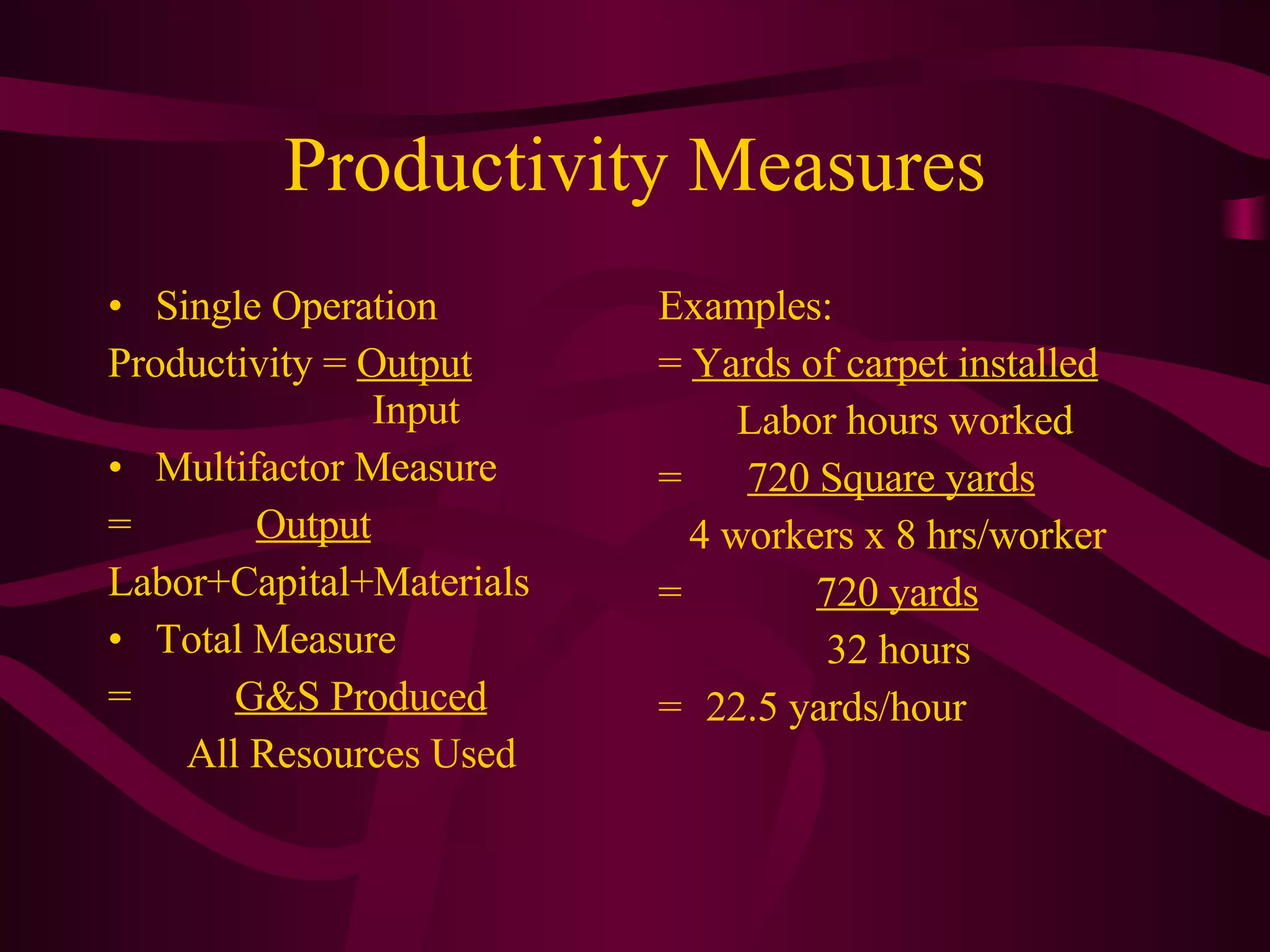
Productivity Measures SingleOperation Productivity = Output Input Multifactor Measure = Output Labor+Capital+Materials Total Measure = G&S Produced All Resources Used Examples: = Yards of carpet installed Labor hours worked = 720 Square yards 4 workers x 8 hrs/worker = 720 yards 32 hours = 22.5 yards/hour
15.
Factors that AffectProductivity Capital Methods Quality Technology Management
16.
Steps to ImproveProductivity Develop Productivity Measures Look at the system as a whole and determine which operations are critical Develop methods for achieving productivity improvements Establish reasonable goals Consider Incentives Measure improvements & publicize them Do not confuse productivity with efficiency
17.
Competitiveness How effectivelyan organization meets the needs of customers relative to others that offer similar goods or services
18.
Ways to remaincompetitive through Operations Price Quality Product / Service Differentiation Flexibility Time Service Management & Workers
19.
Operational Strategy Strategyis a plan for achieving goals Organizational strategy provides for the overall direction for the organization. It is very broad and covers the entire organization Operations strategy deals only with the operations aspect of the organization
20.
Things to considerin Strategy Formulation External Scanning Economic Conditions Political Conditions Legal Environment Technology Competition Markets Internal Scanning Human Resources Facilities & Equipment Financial Resources Customers Products/Services Technology Suppliers Others External Factors
21.
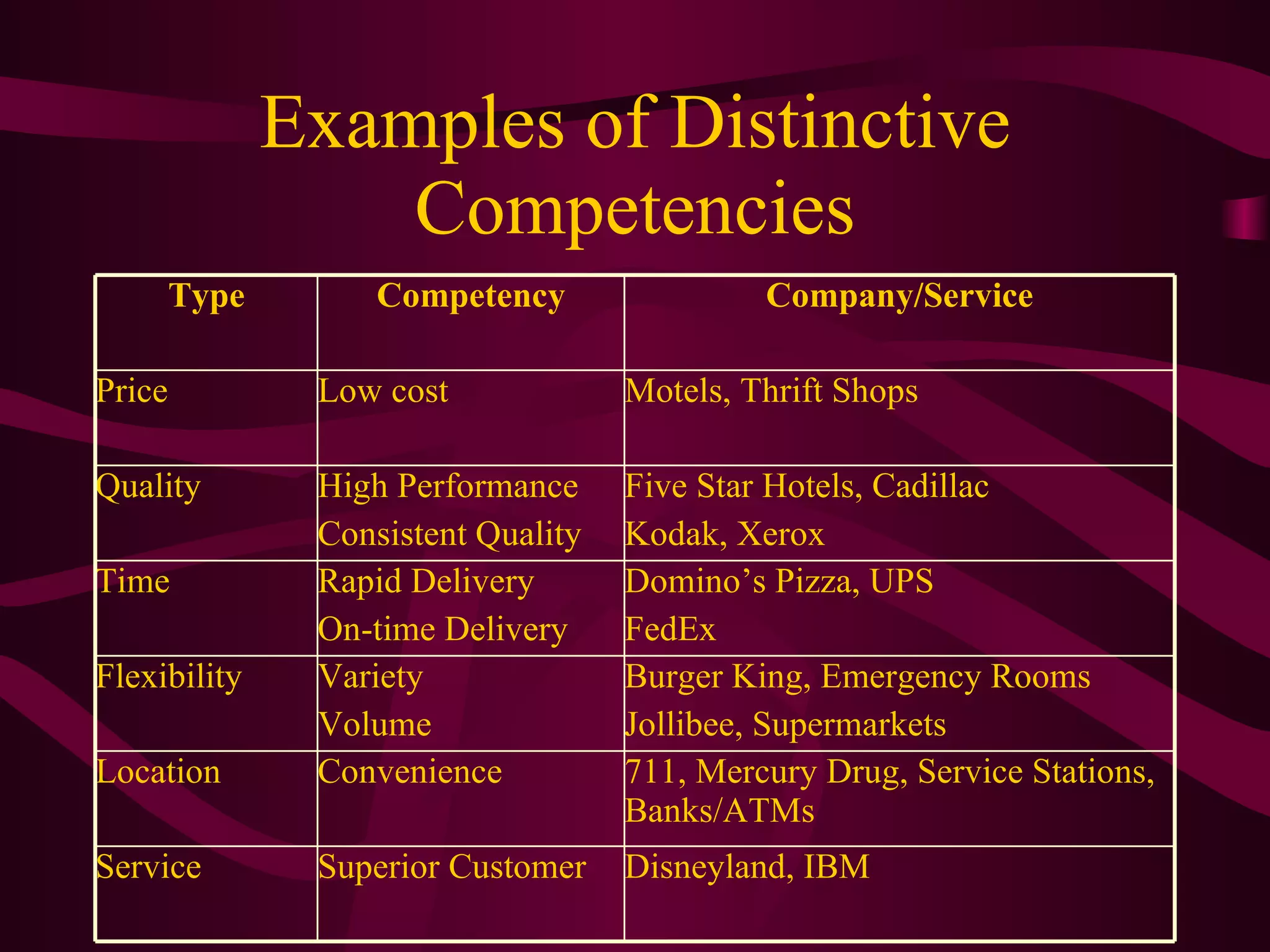
Things to considerin Strategy Formulation Distinctive Competency Cost Quality Time Flexibility Customer service Location
22.
Examples of DistinctiveCompetencies 711, Mercury Drug, Service Stations, Banks/ATMs Convenience Location Disneyland, IBM Superior Customer Service Burger King, Emergency Rooms Jollibee, Supermarkets Variety Volume Flexibility Domino’s Pizza, UPS FedEx Rapid Delivery On-time Delivery Time Five Star Hotels, Cadillac Kodak, Xerox High Performance Consistent Quality Quality Motels, Thrift Shops Low cost Price Company/Service Competency Type
23.
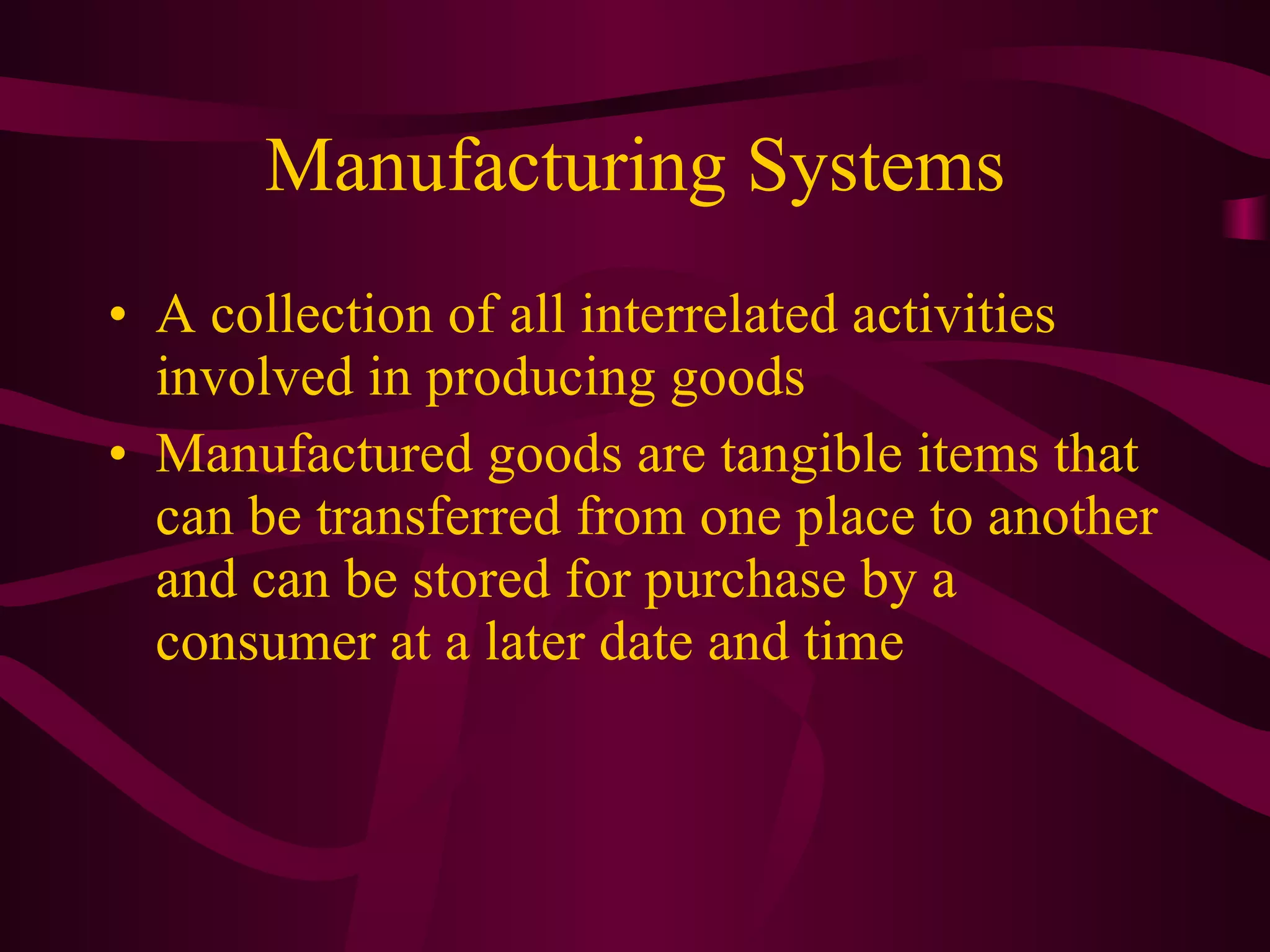
Manufacturing Systems Acollection of all interrelated activities involved in producing goods Manufactured goods are tangible items that can be transferred from one place to another and can be stored for purchase by a consumer at a later date and time
24.
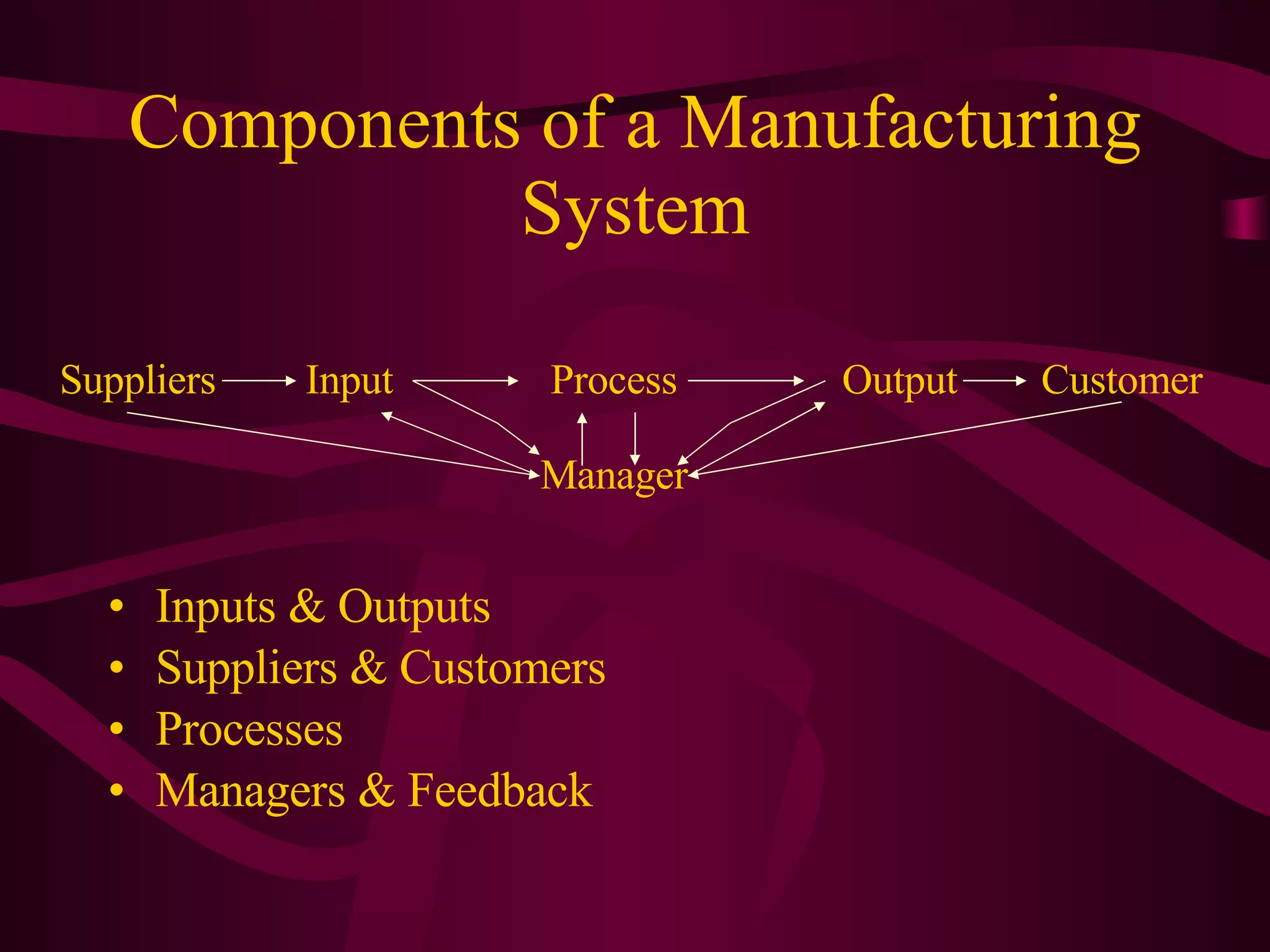
Components of aManufacturing System Inputs & Outputs Suppliers & Customers Processes Managers & Feedback Suppliers Customer Input Output Process Manager
25.
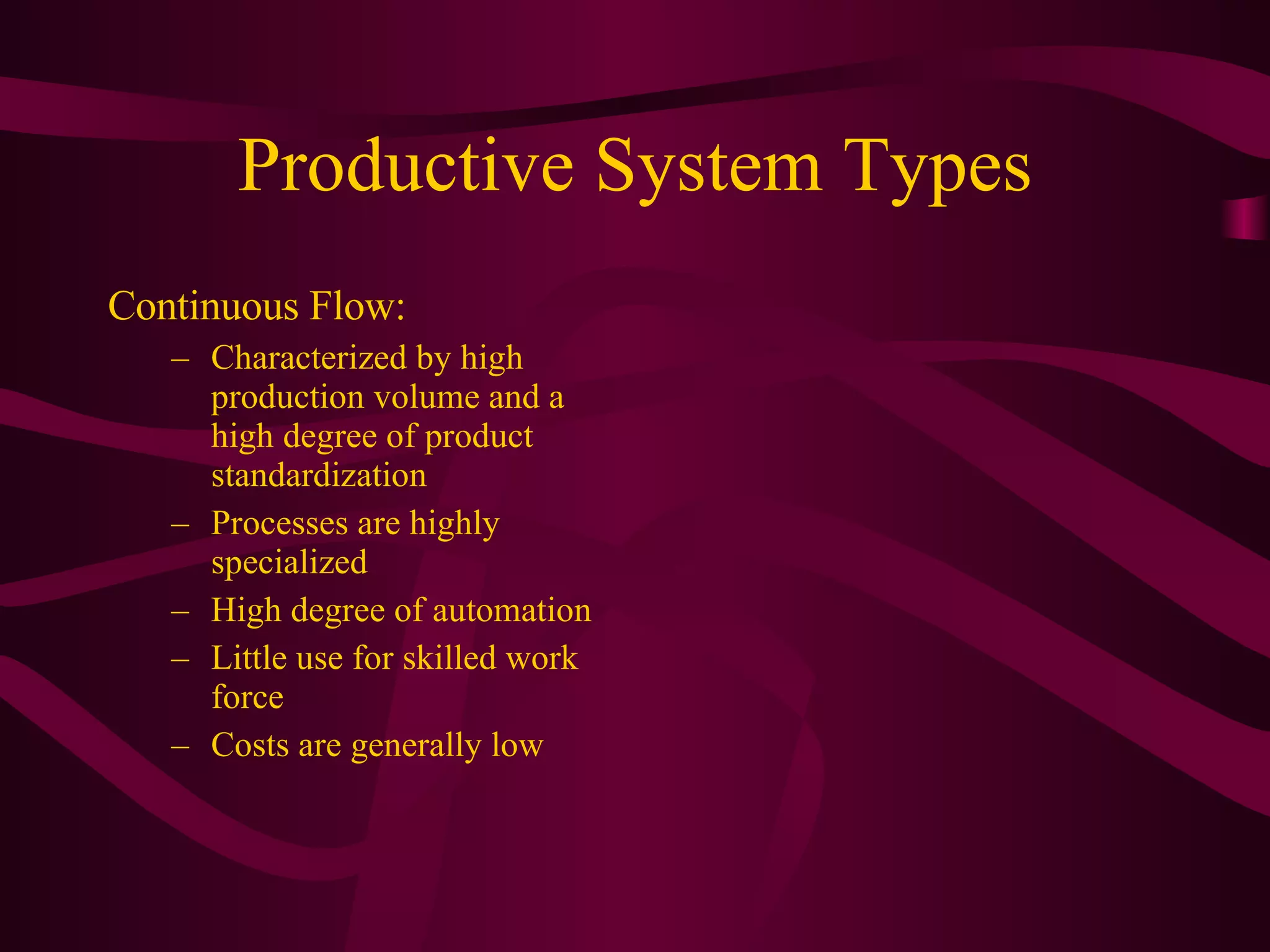
Productive System TypesContinuous Flow: Characterized by high production volume and a high degree of product standardization Processes are highly specialized High degree of automation Little use for skilled work force Costs are generally low
26.
Productive System TypesMass or Assembly line: High production volume Small variety of different products Labor skill requirements are low
27.
Productive System TypesBatch or Intermittent: Used for producing small lots of similar products Products are made in batches with short production runs Differs from mass production in the materials used, machine setups, & layout
28.
Productive System TypesJob Shop: Produce a wide variety of small quantity of specialized products Products are customized May be produced by different sequences of operations General purpose equipment is used Labor force must be highly skilled
29.
Productive System TypesProject: One in which unique and unusually large and complex items are produced Products are assembled at a fixed location Components and subassemblies must be brought to the location
30.
Service Systems Acollection of all interrelated activities involved in producing services Non-manufactured goods are intangible items that cannot be transferred from one place to another and is usually consumed by the consumer at the point of sale
31.
Distinctive Features of Service Systems Customer Contact Uniformity if Input Labor content of jobs Uniformity of Output Labor content of jobs Measurement of productivity Simultaneous production and delivery Quality assurance
32.
Service Strategy Identificationof a target market Development of a service concept to address targeted customers’ needs Design of an operating strategy to support the service concept Design of a service delivery system to support the service concept