Downloaded 11 times
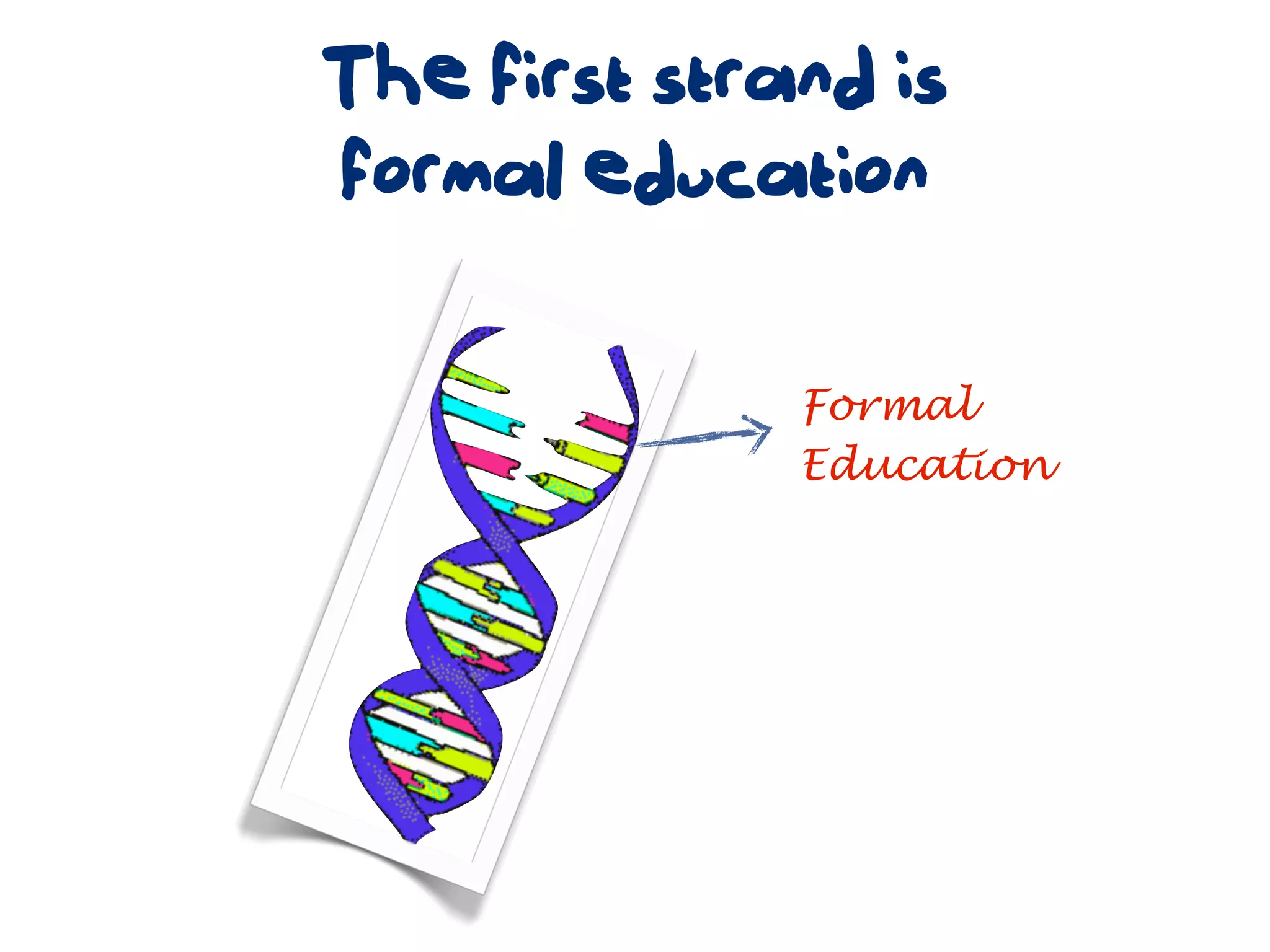
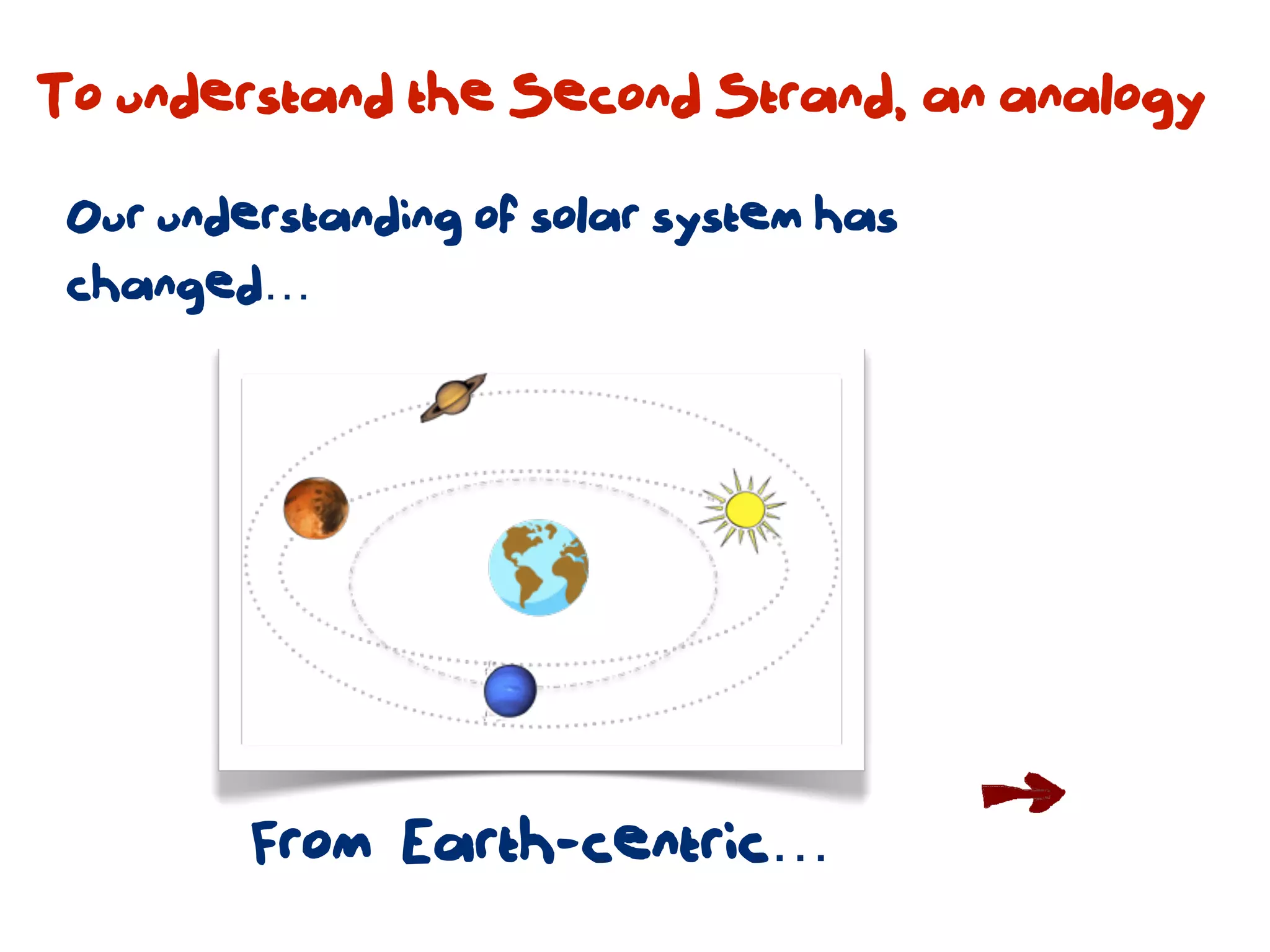
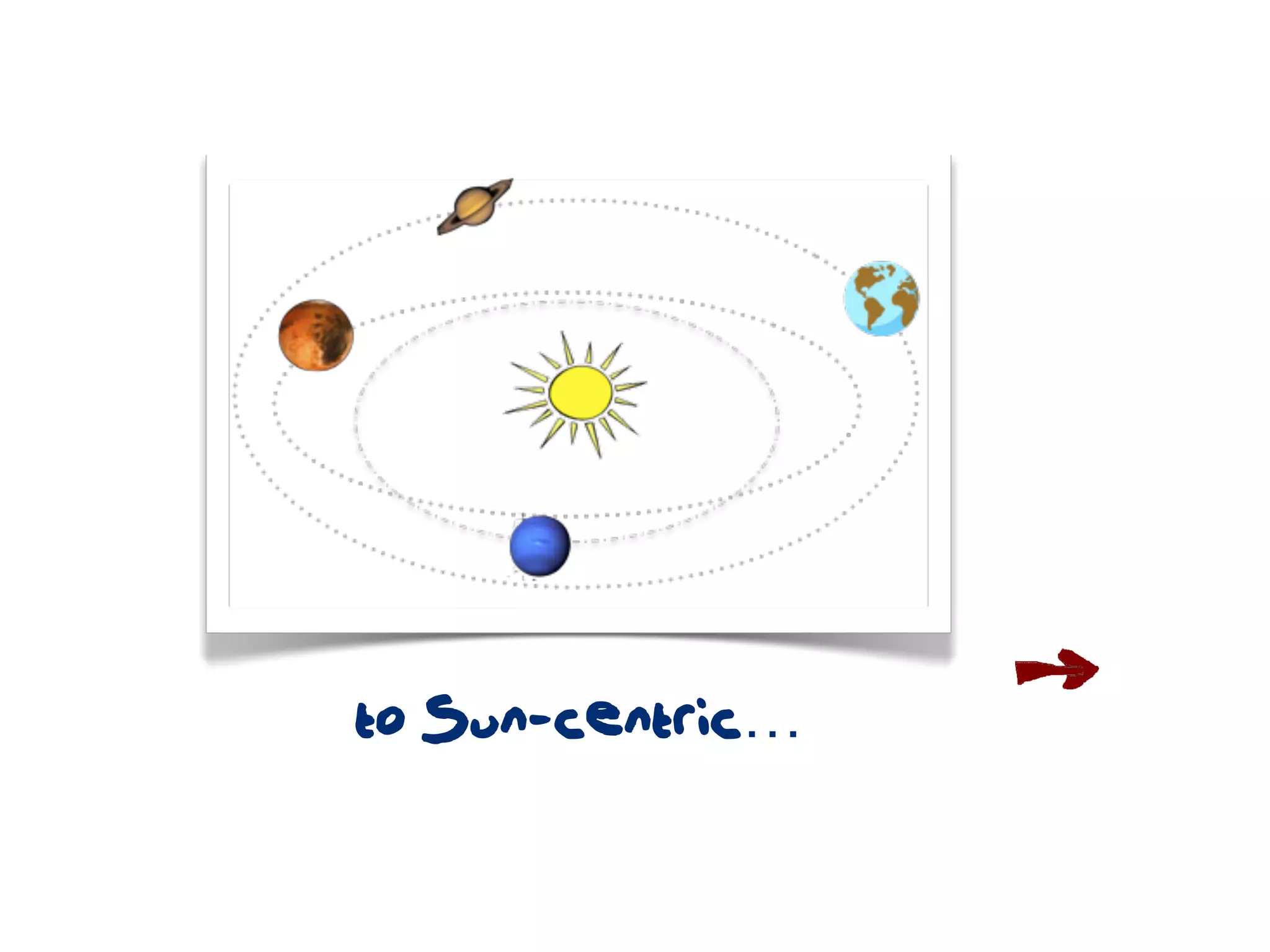
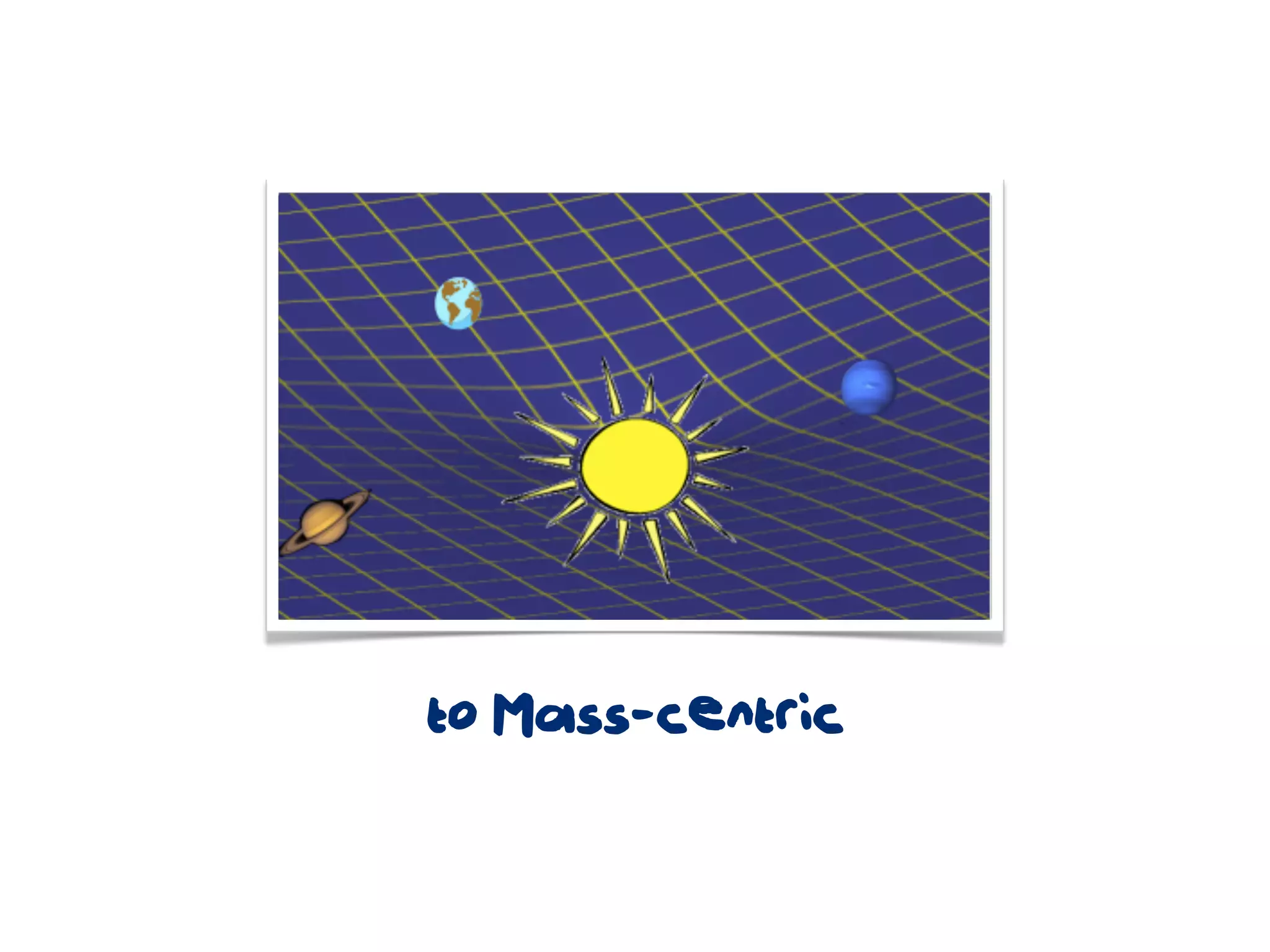
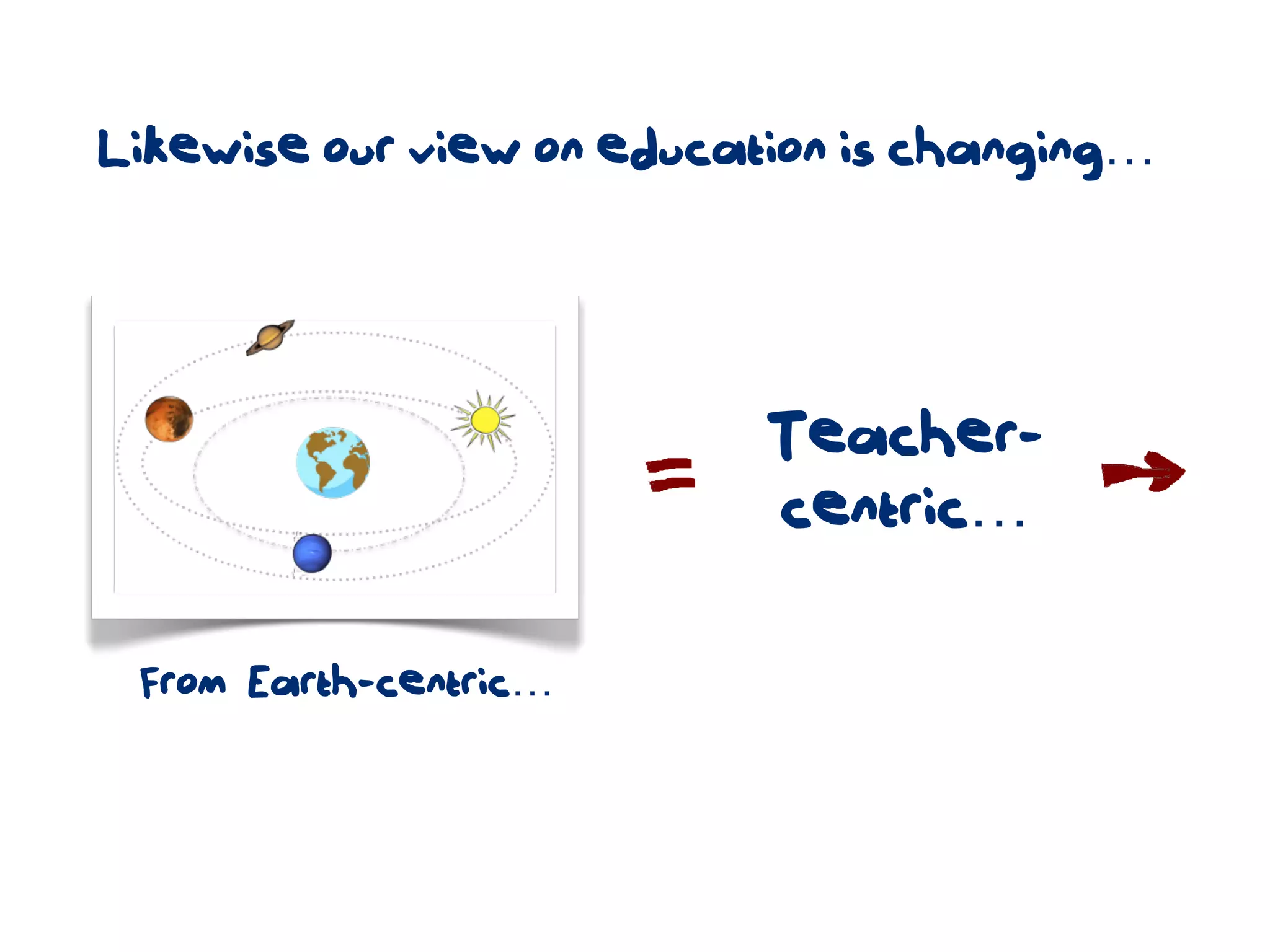
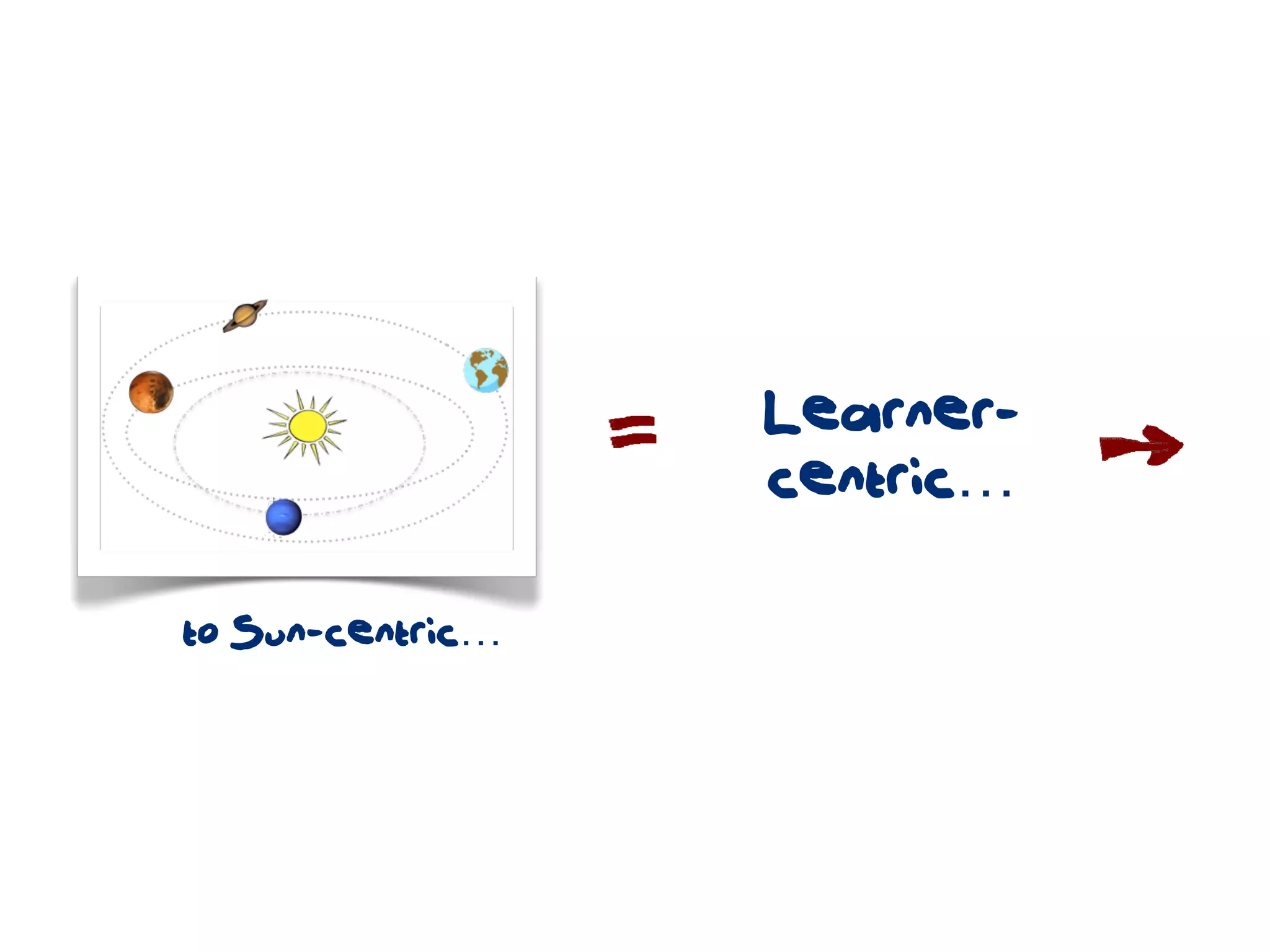
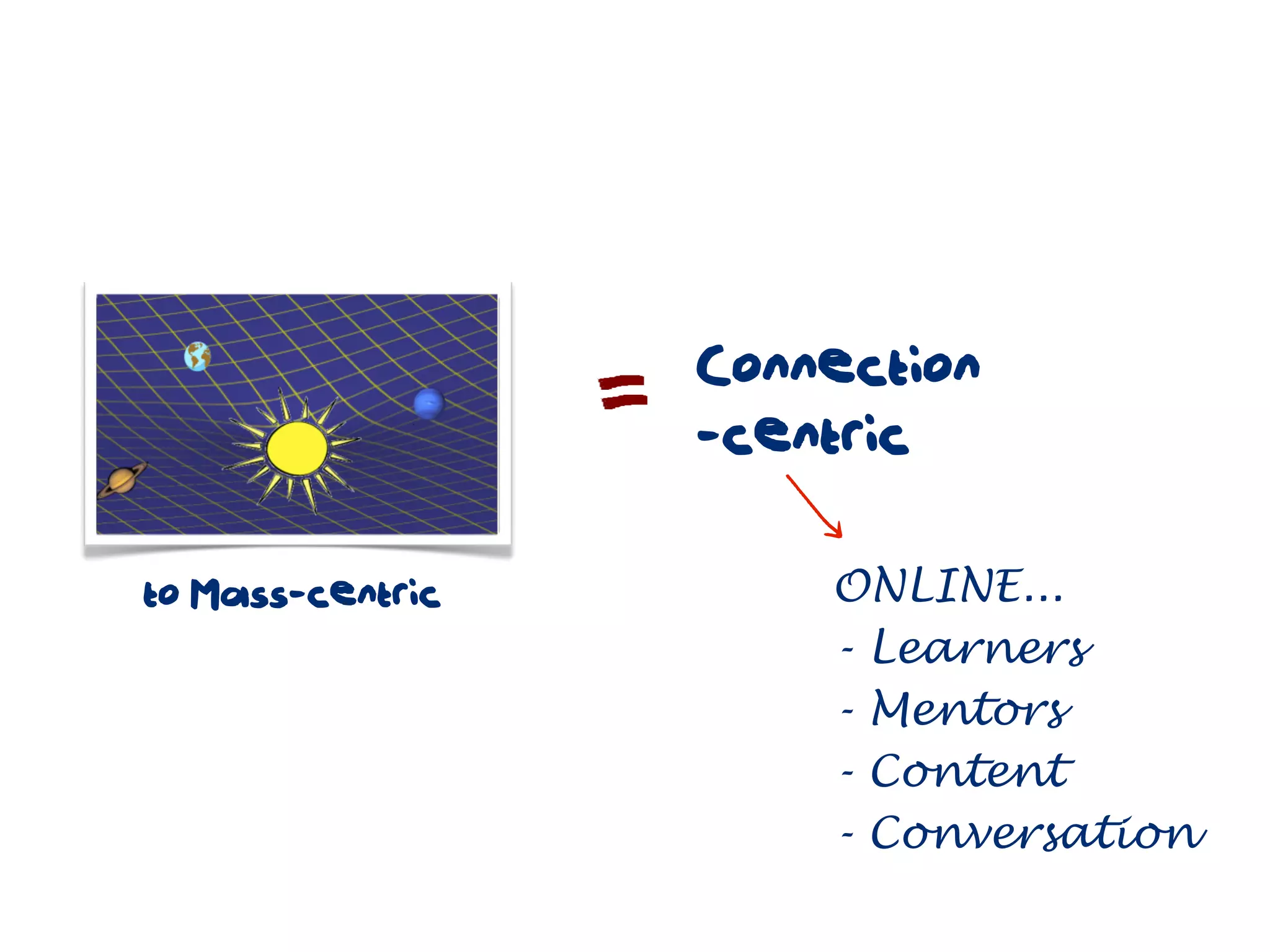
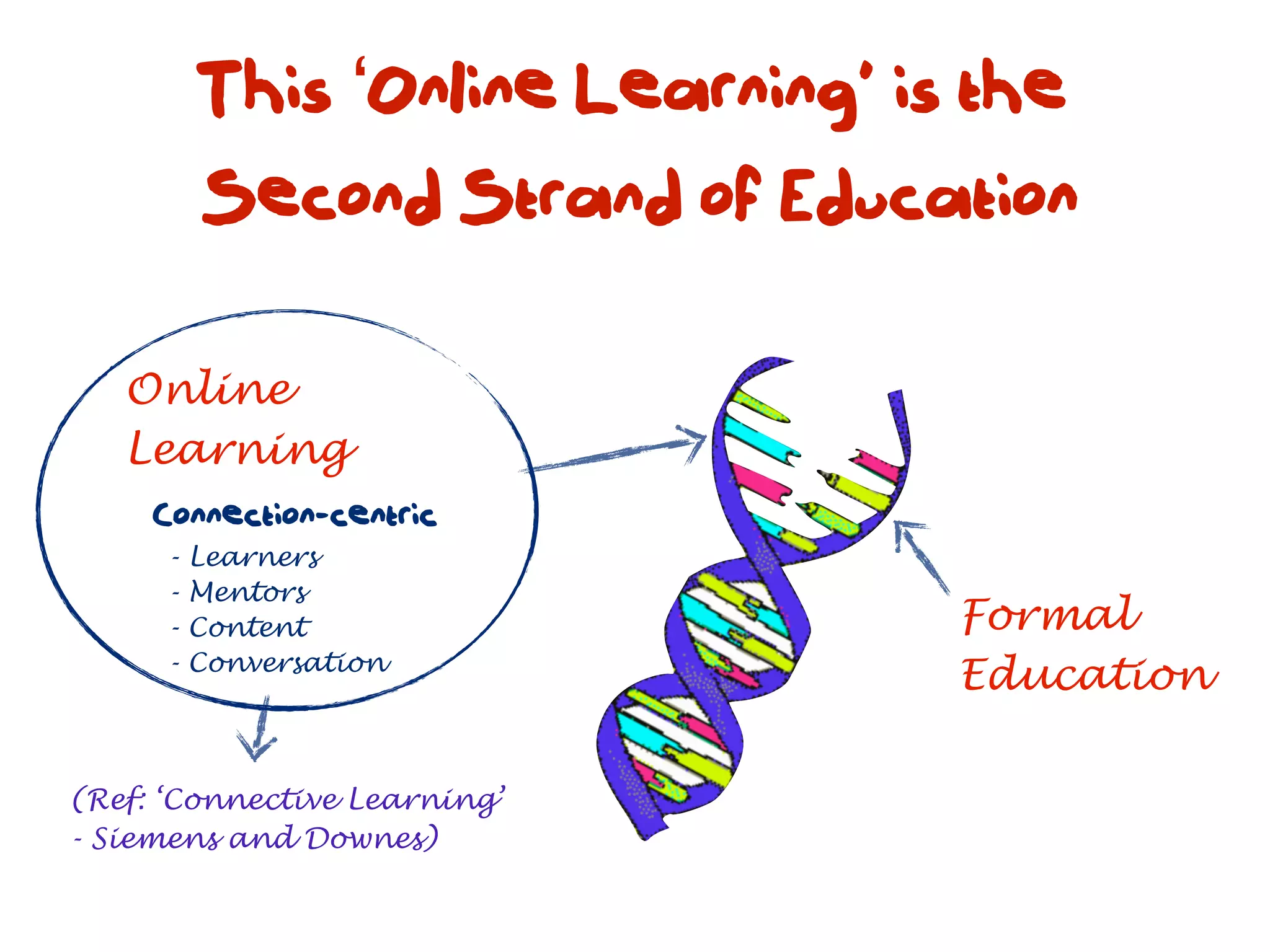
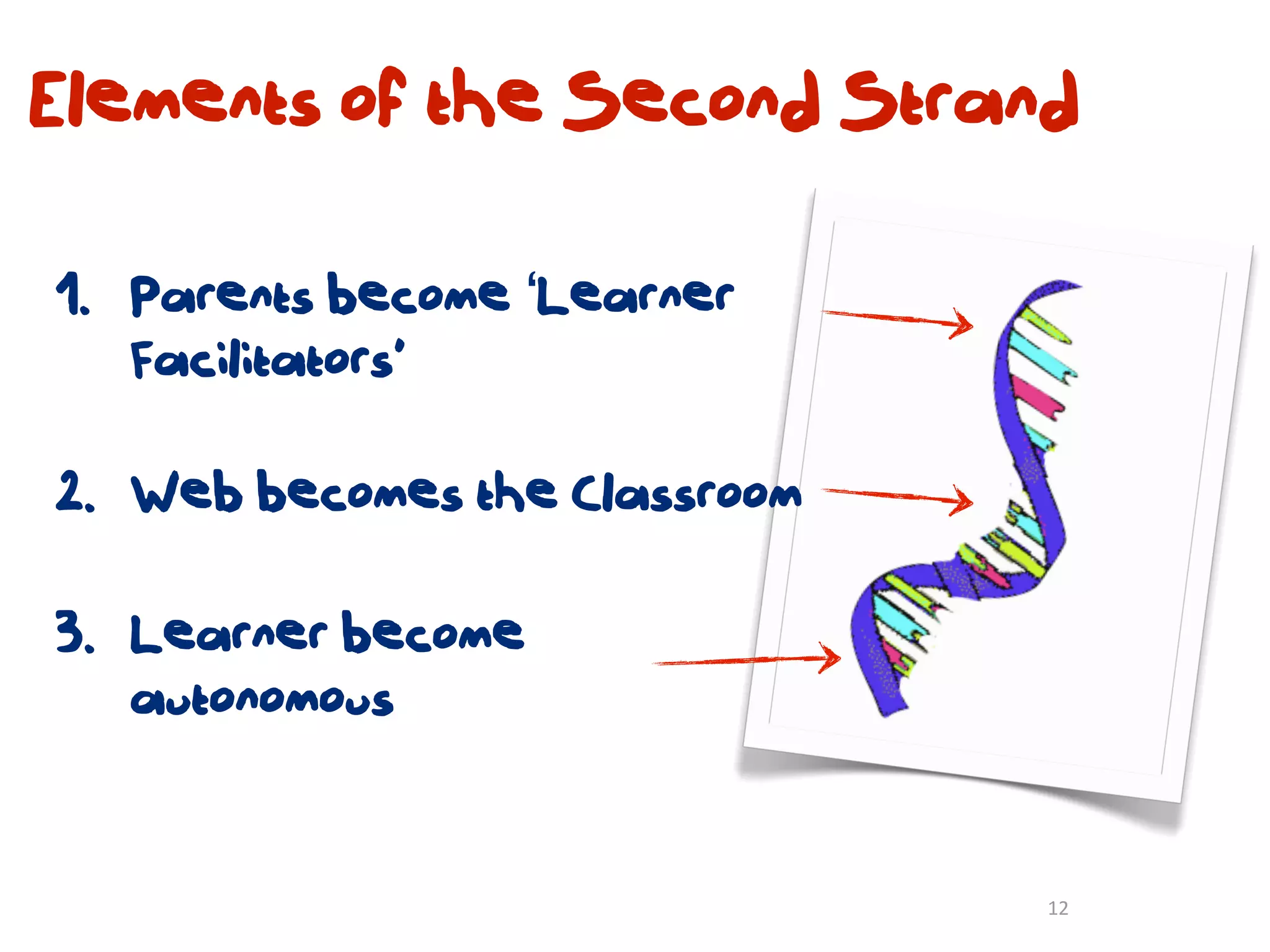
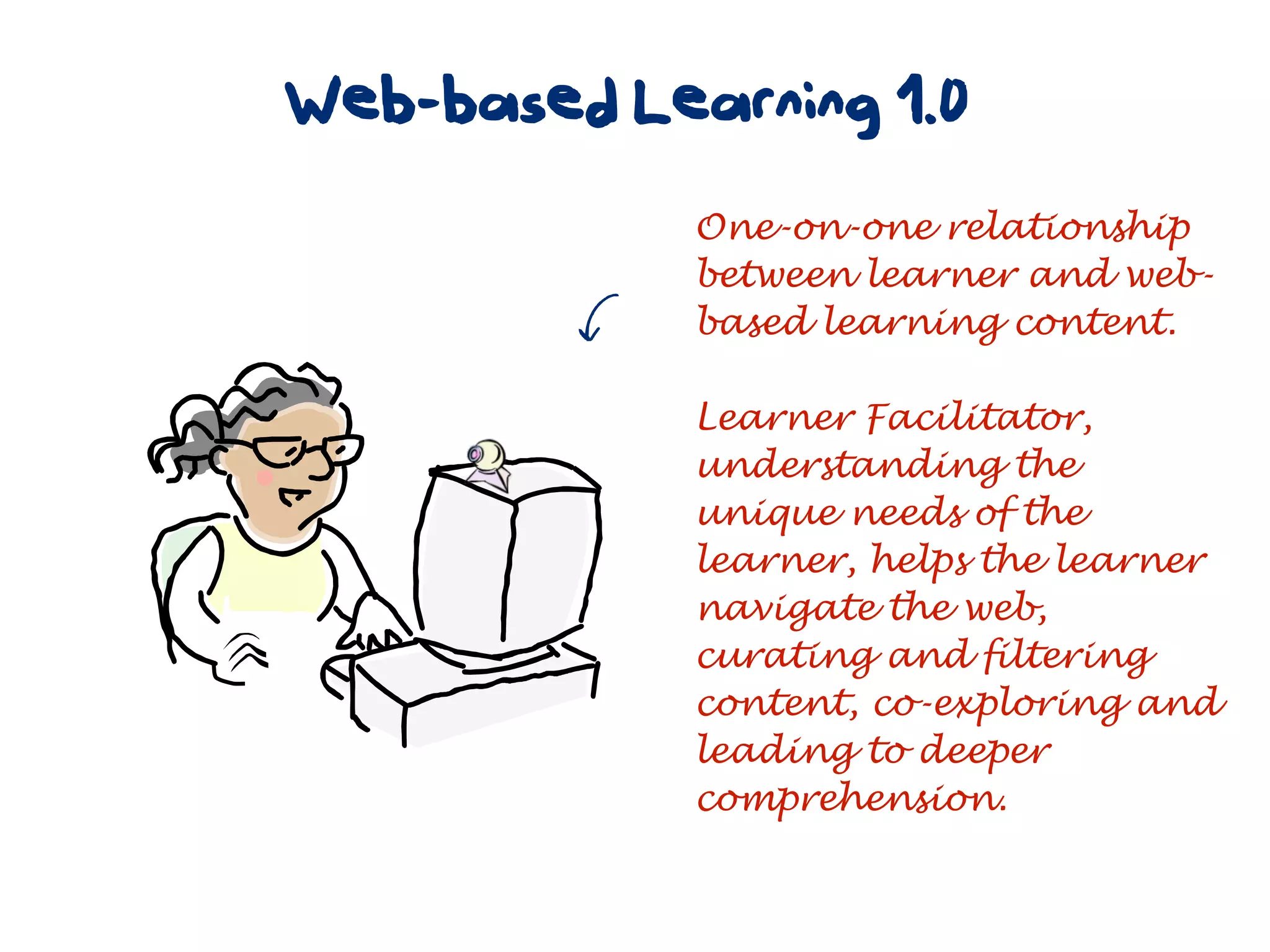
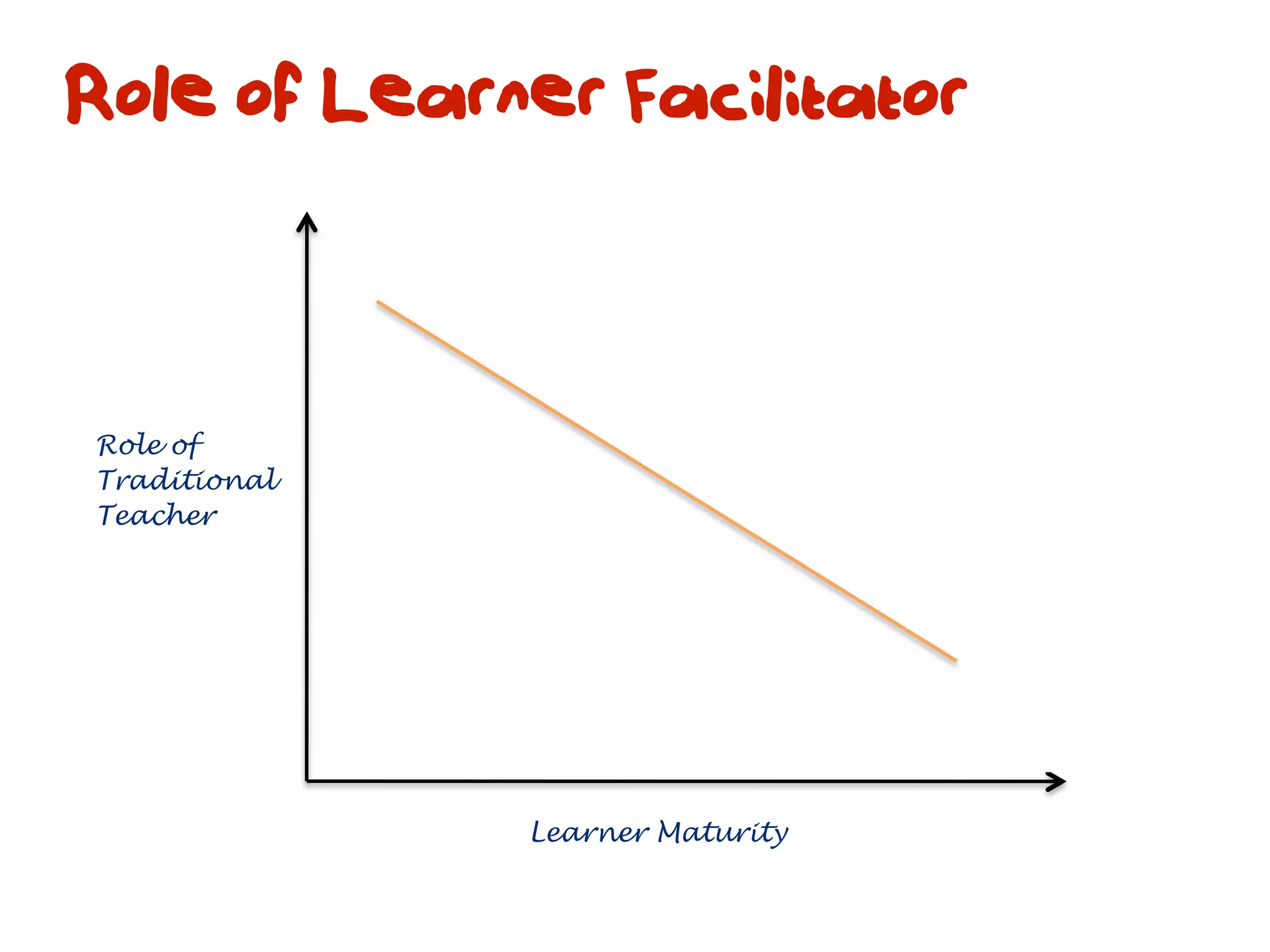
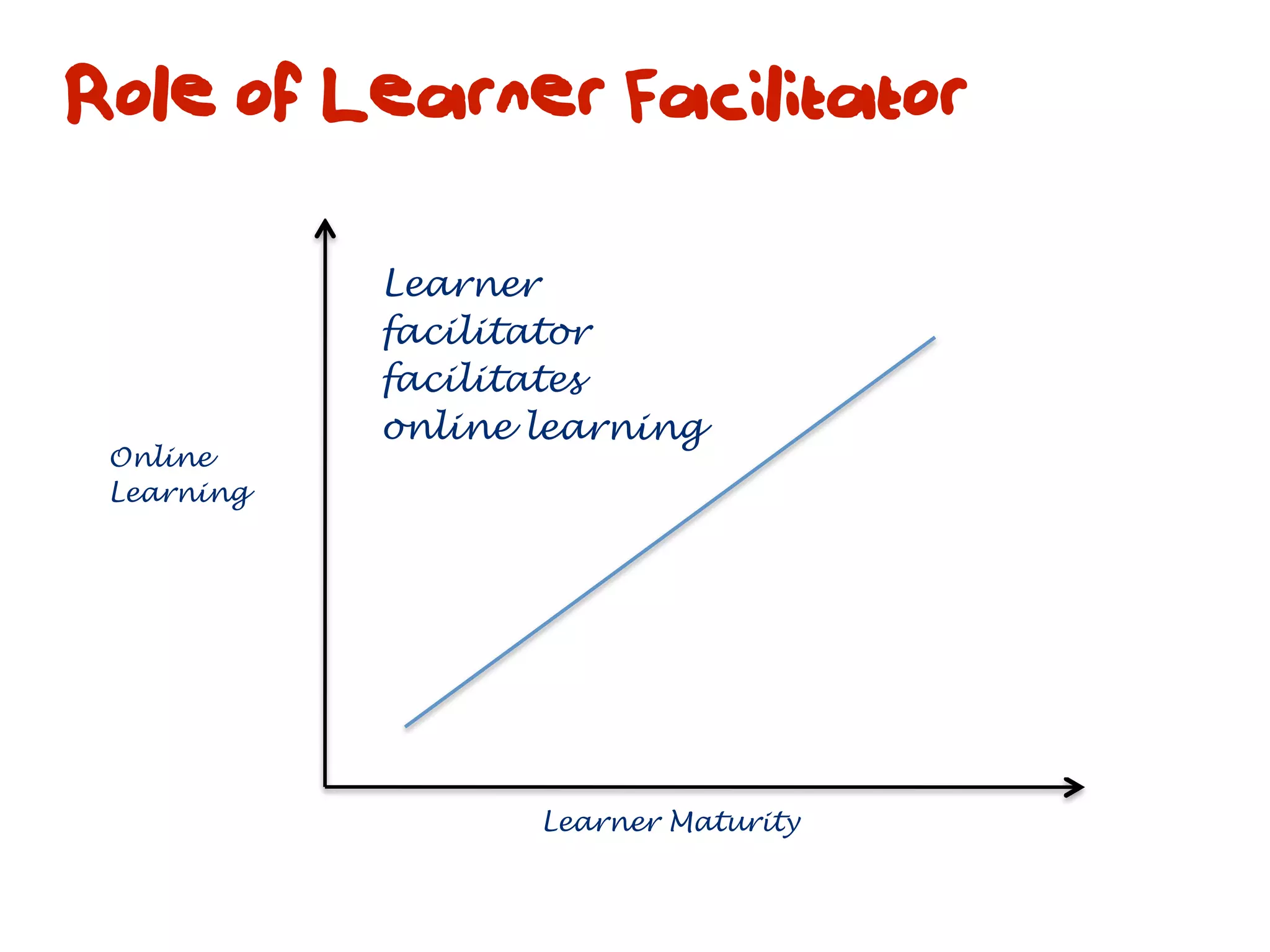
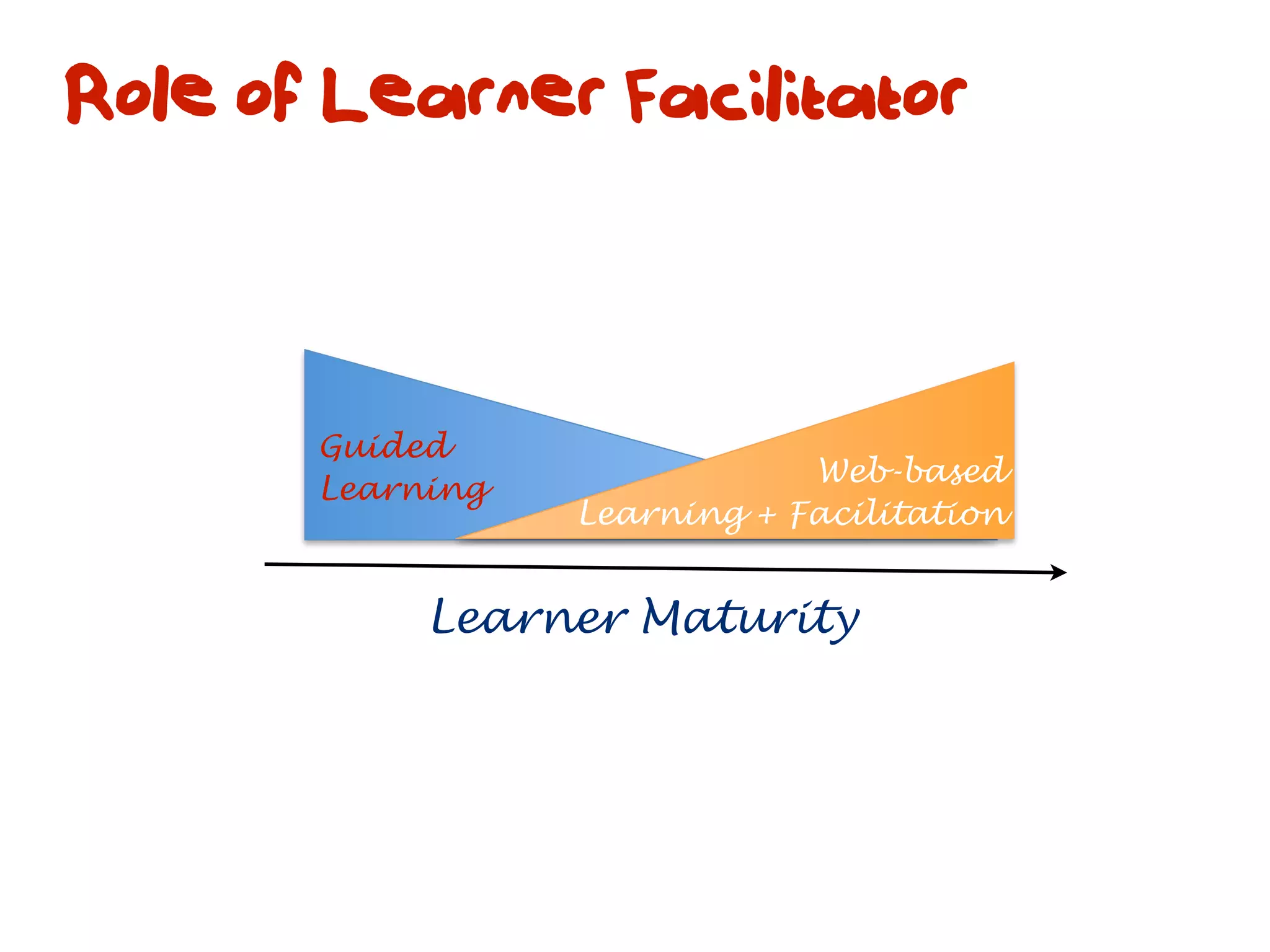
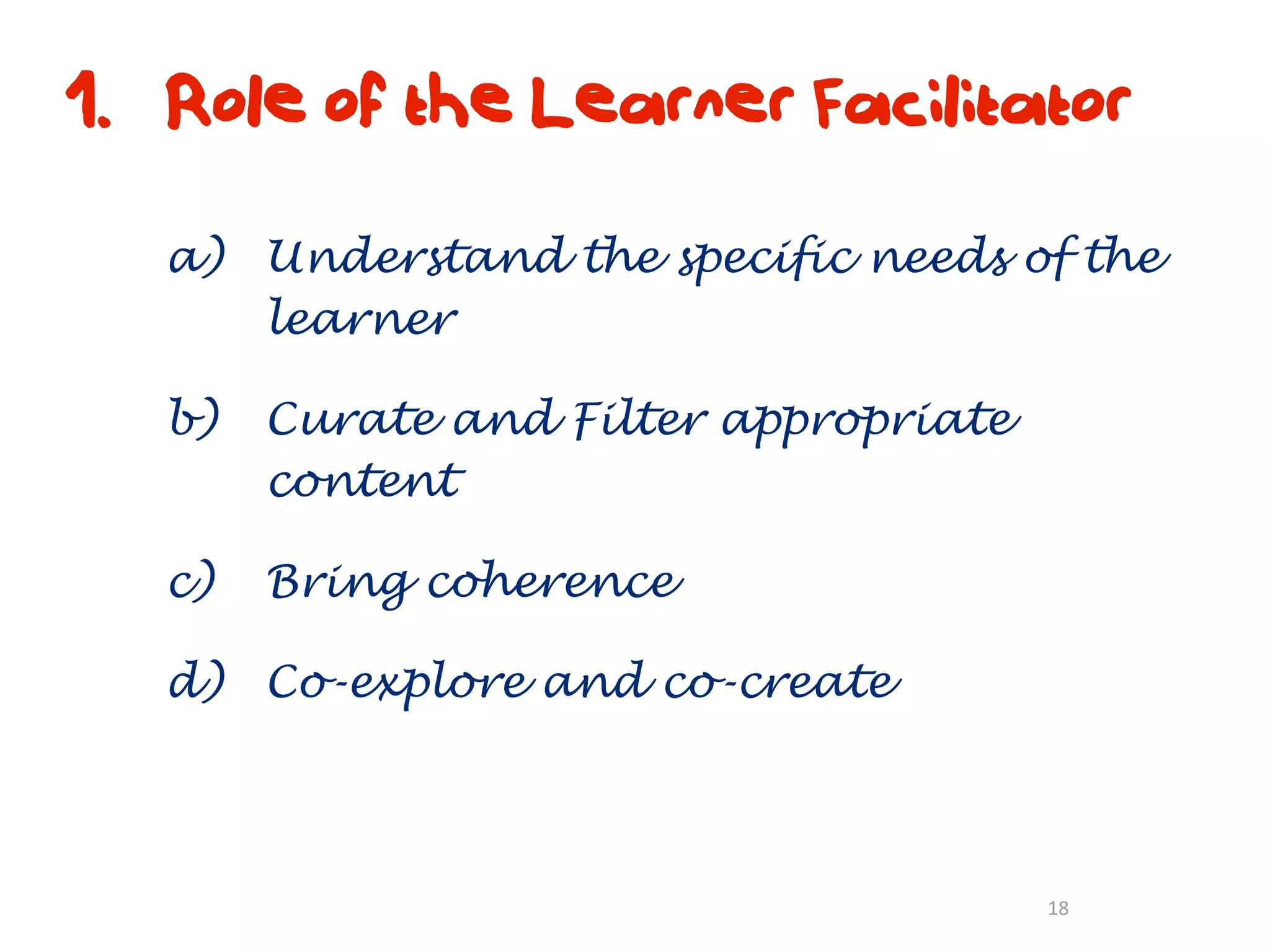
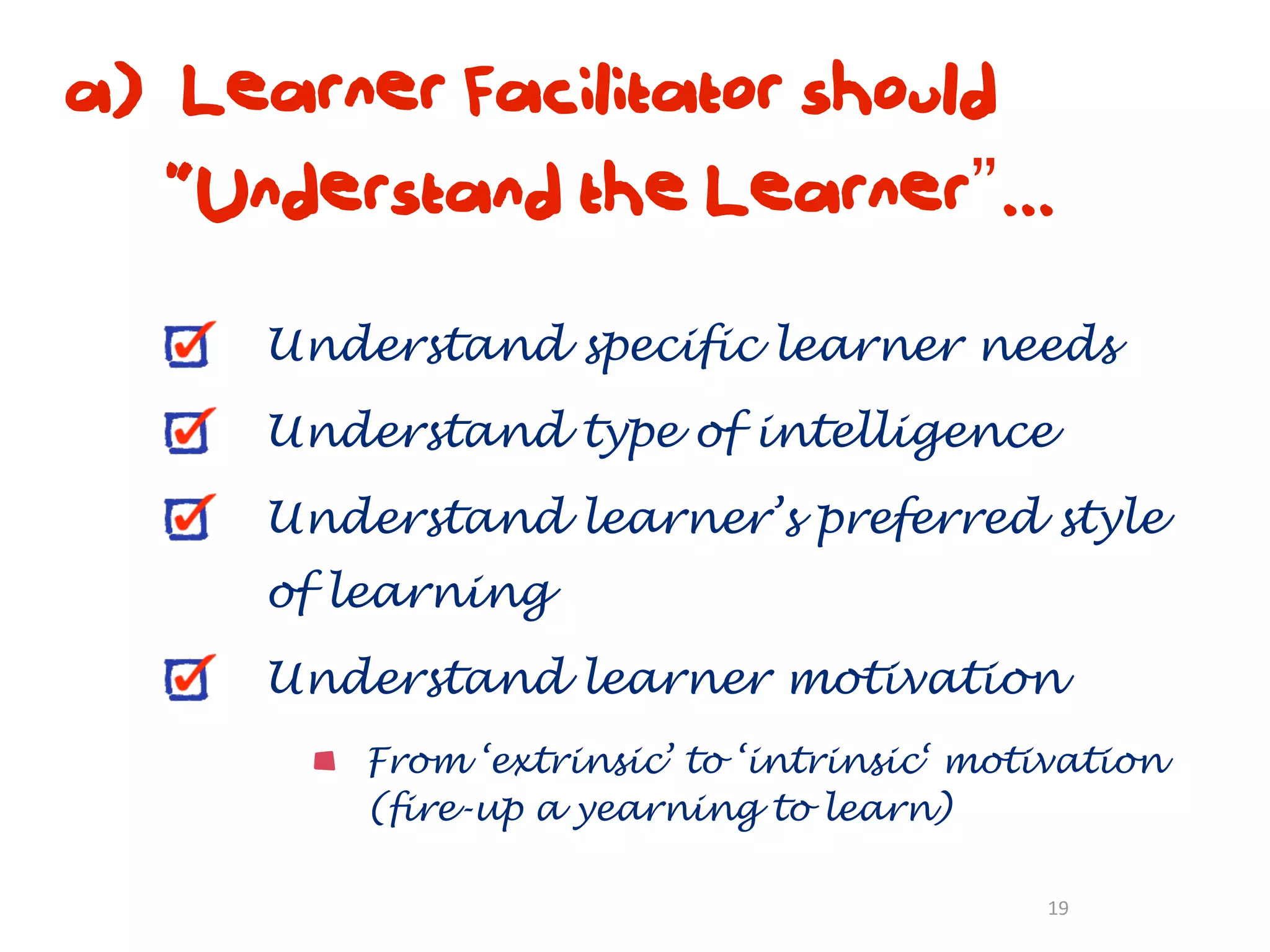
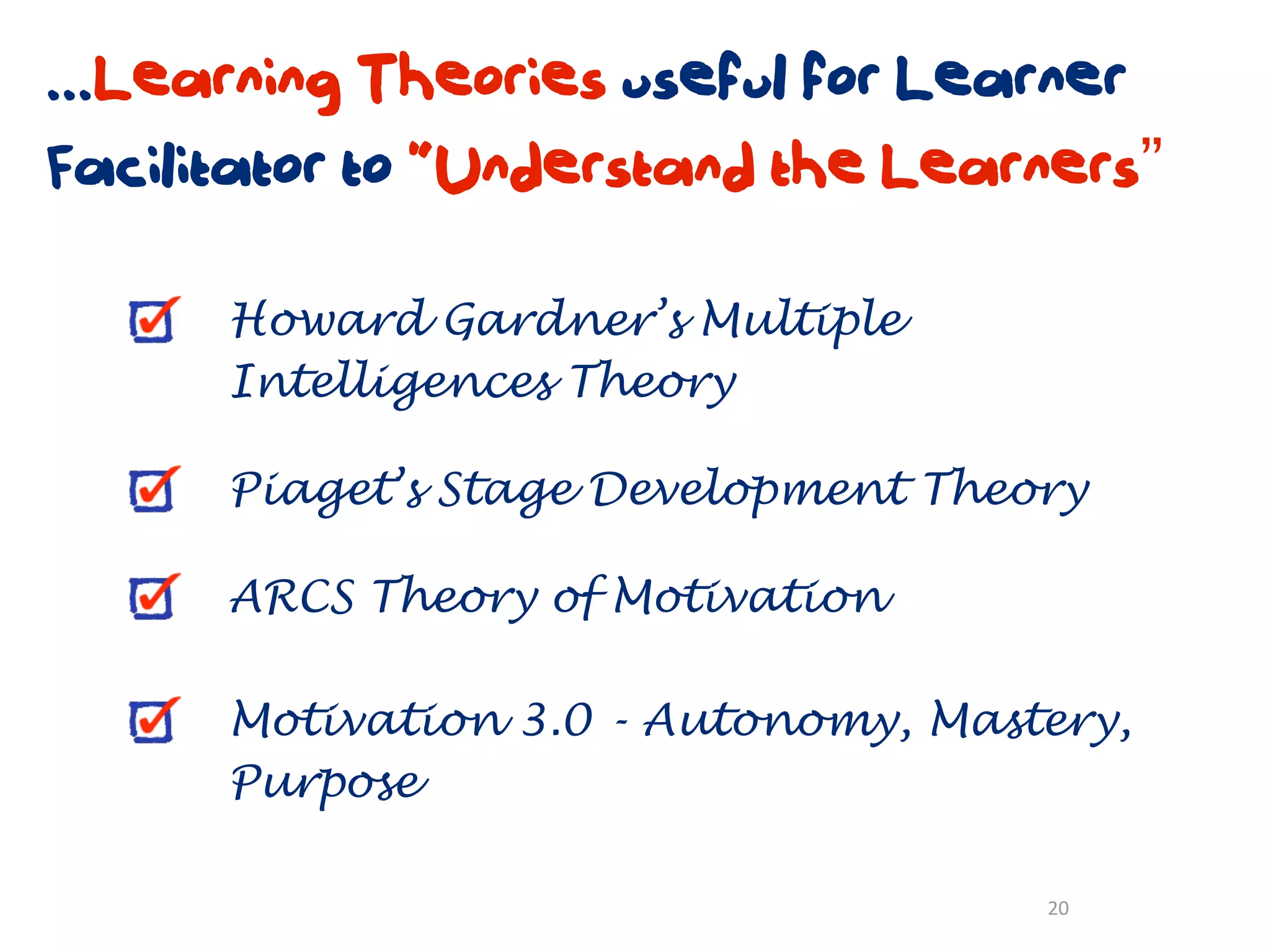
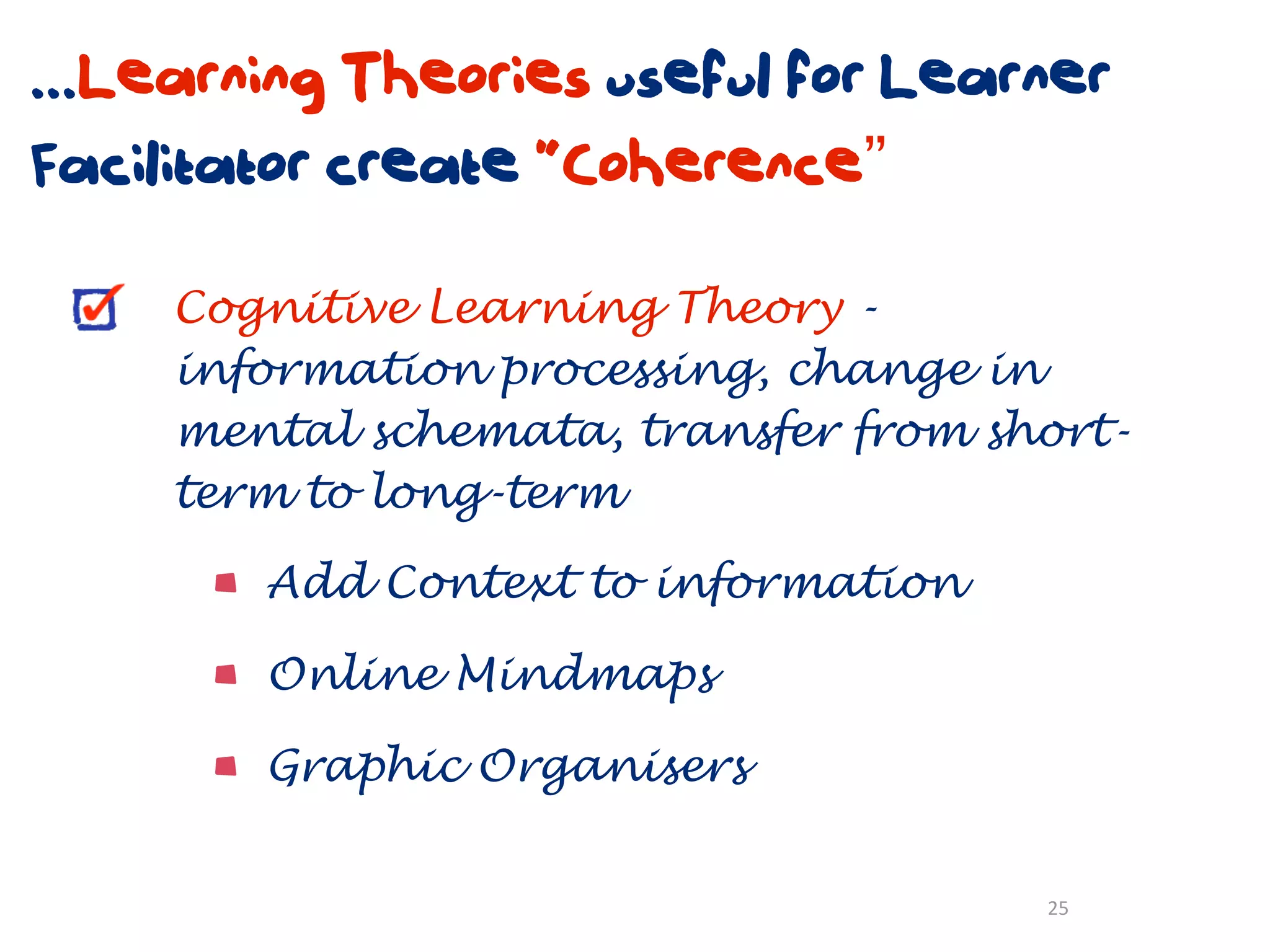
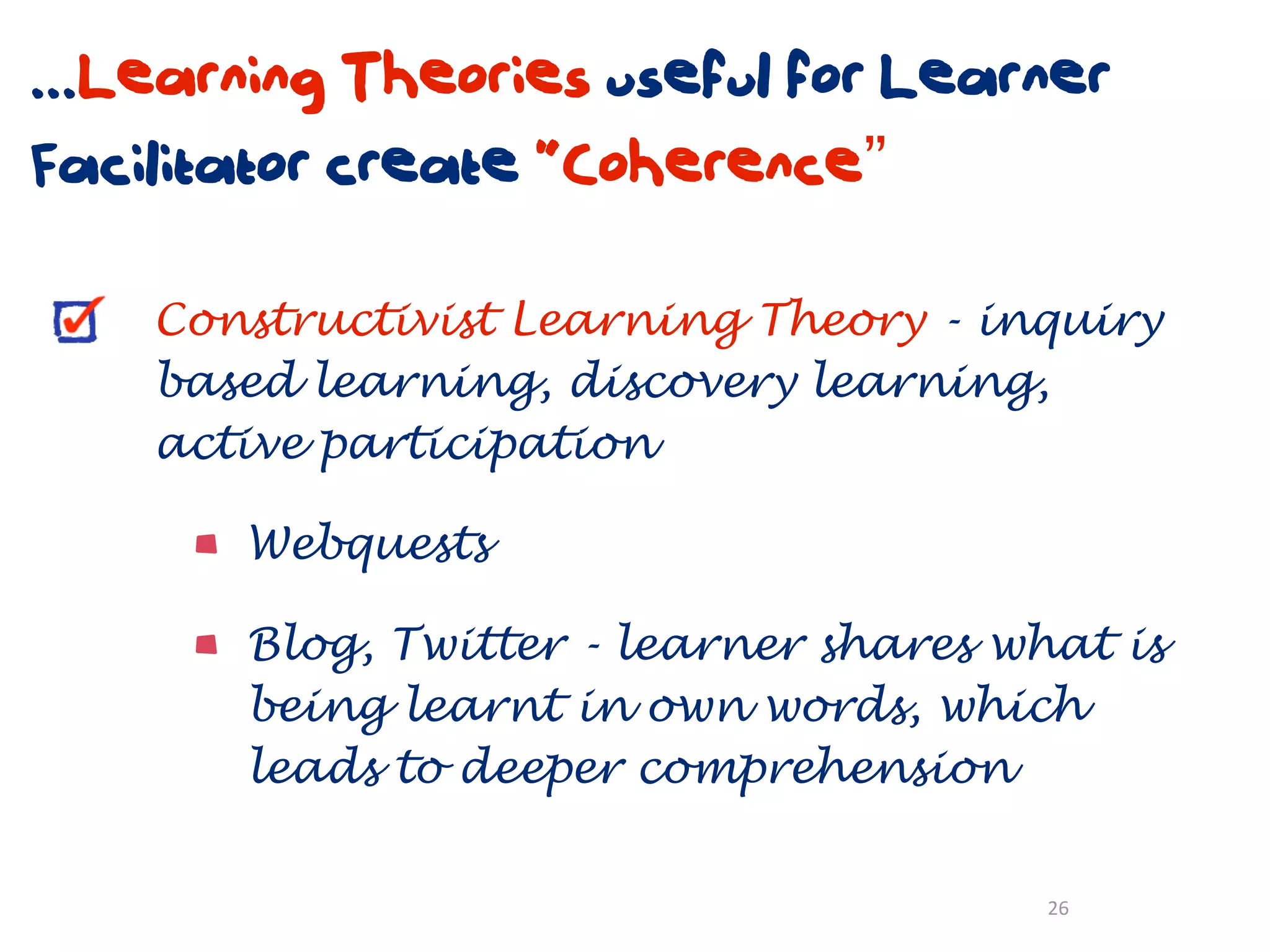
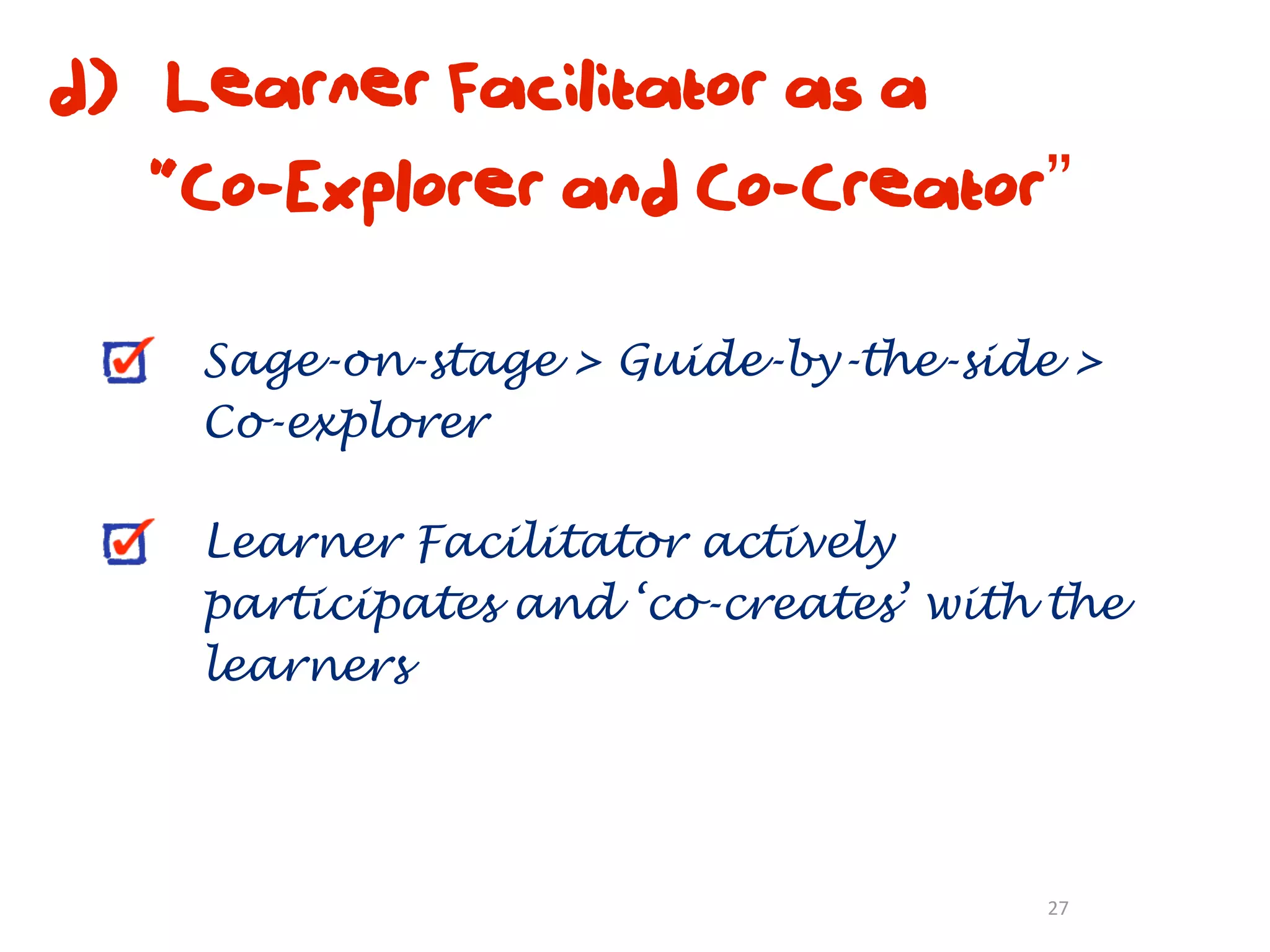
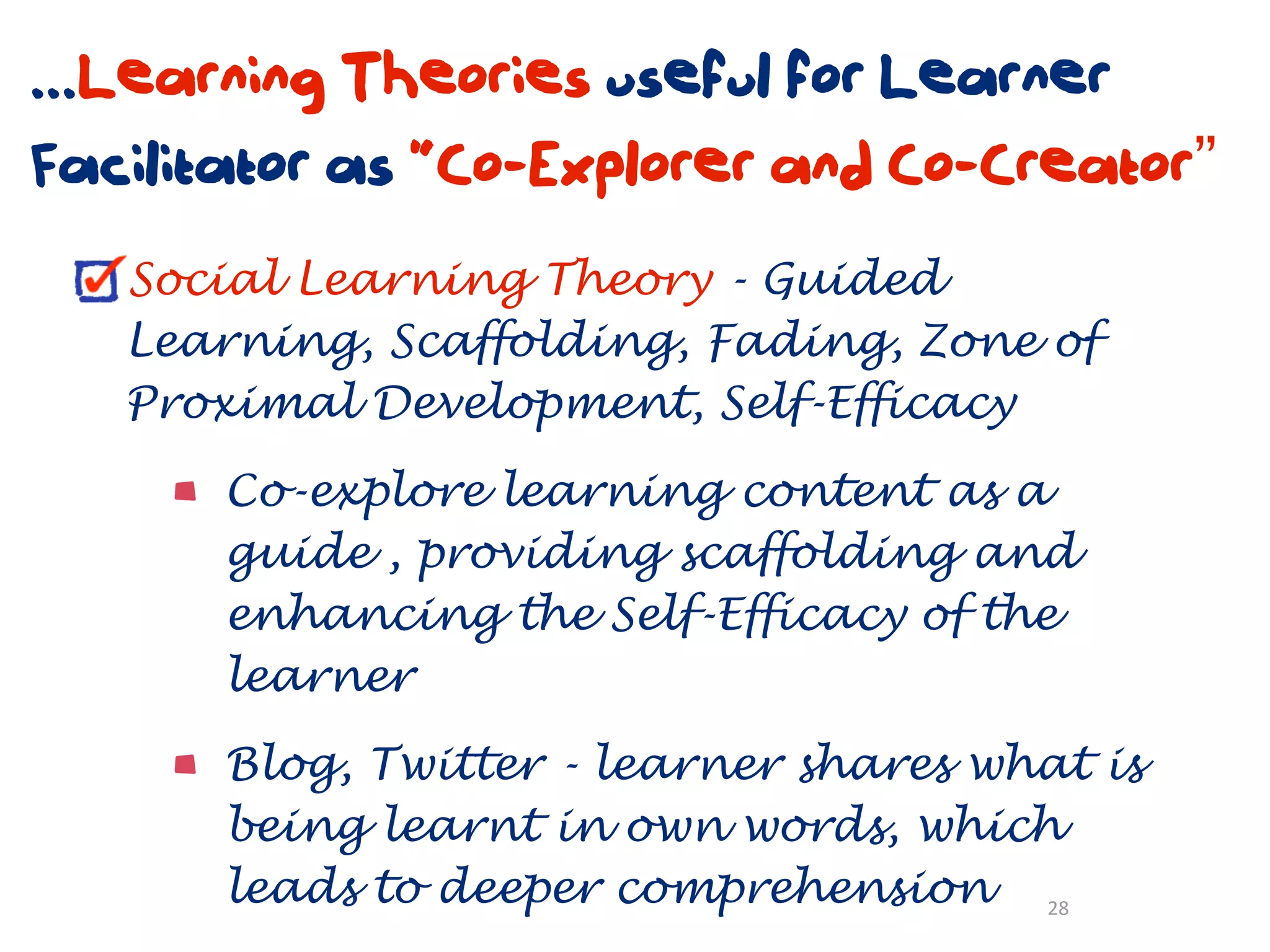
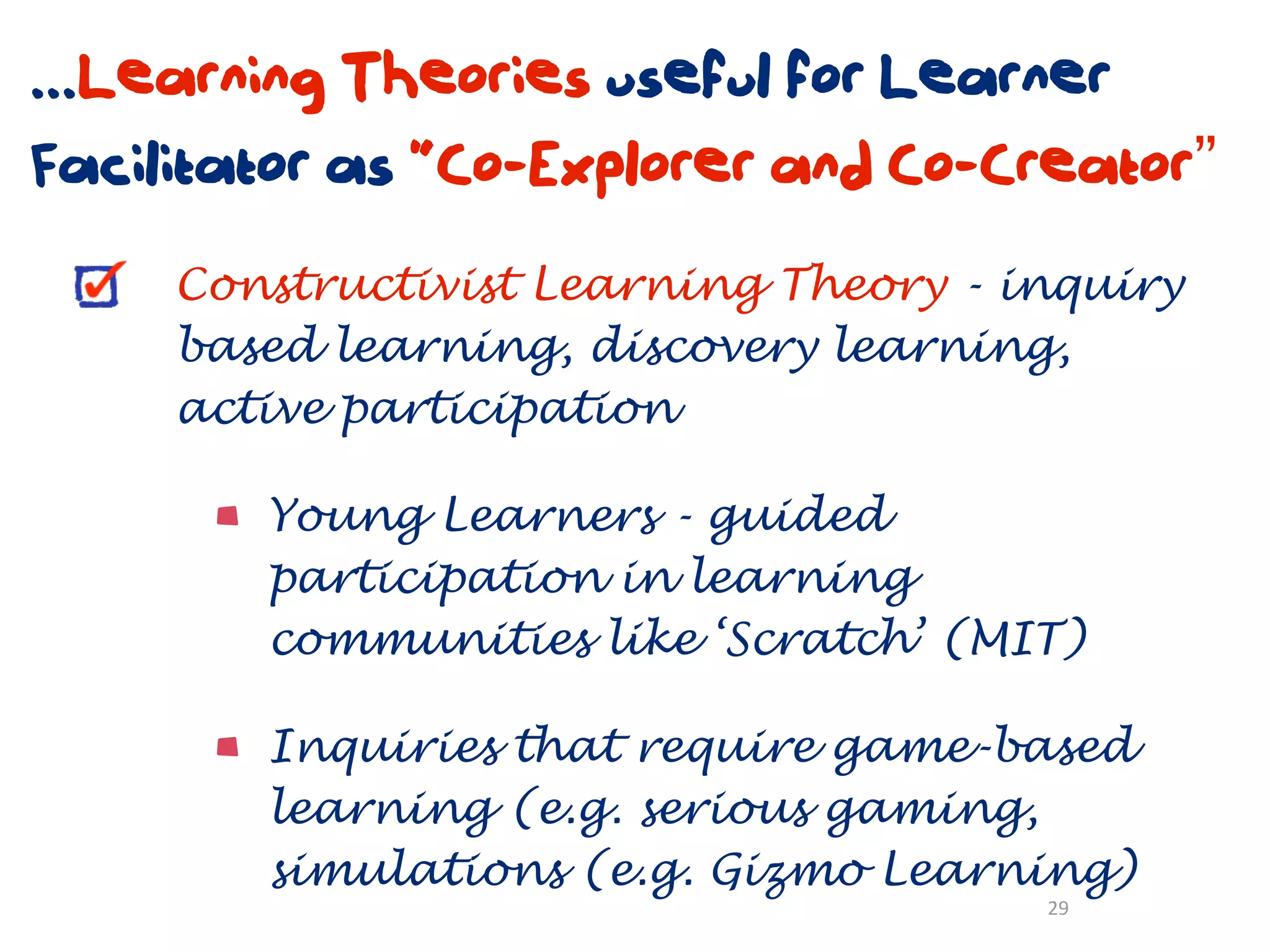
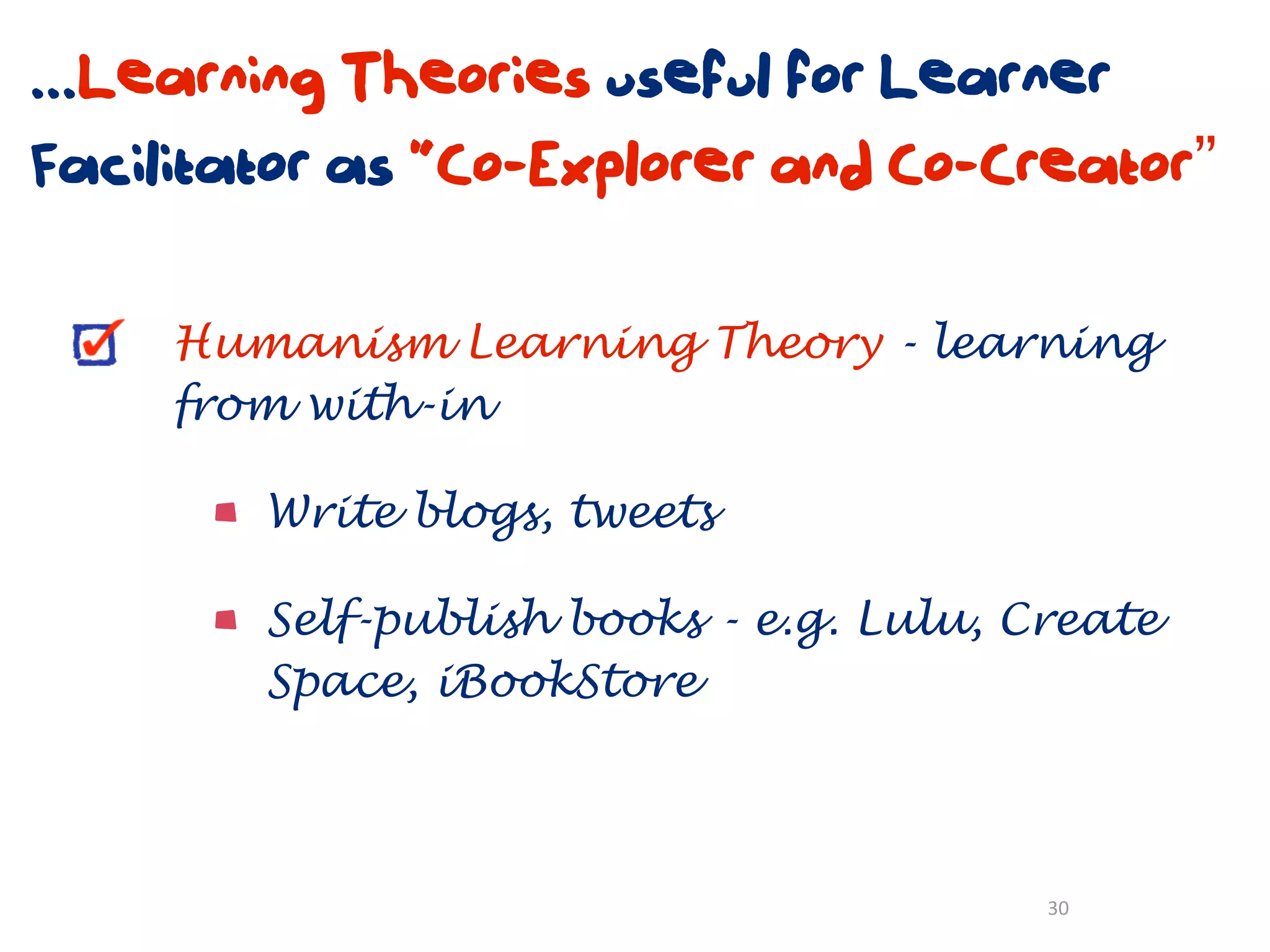
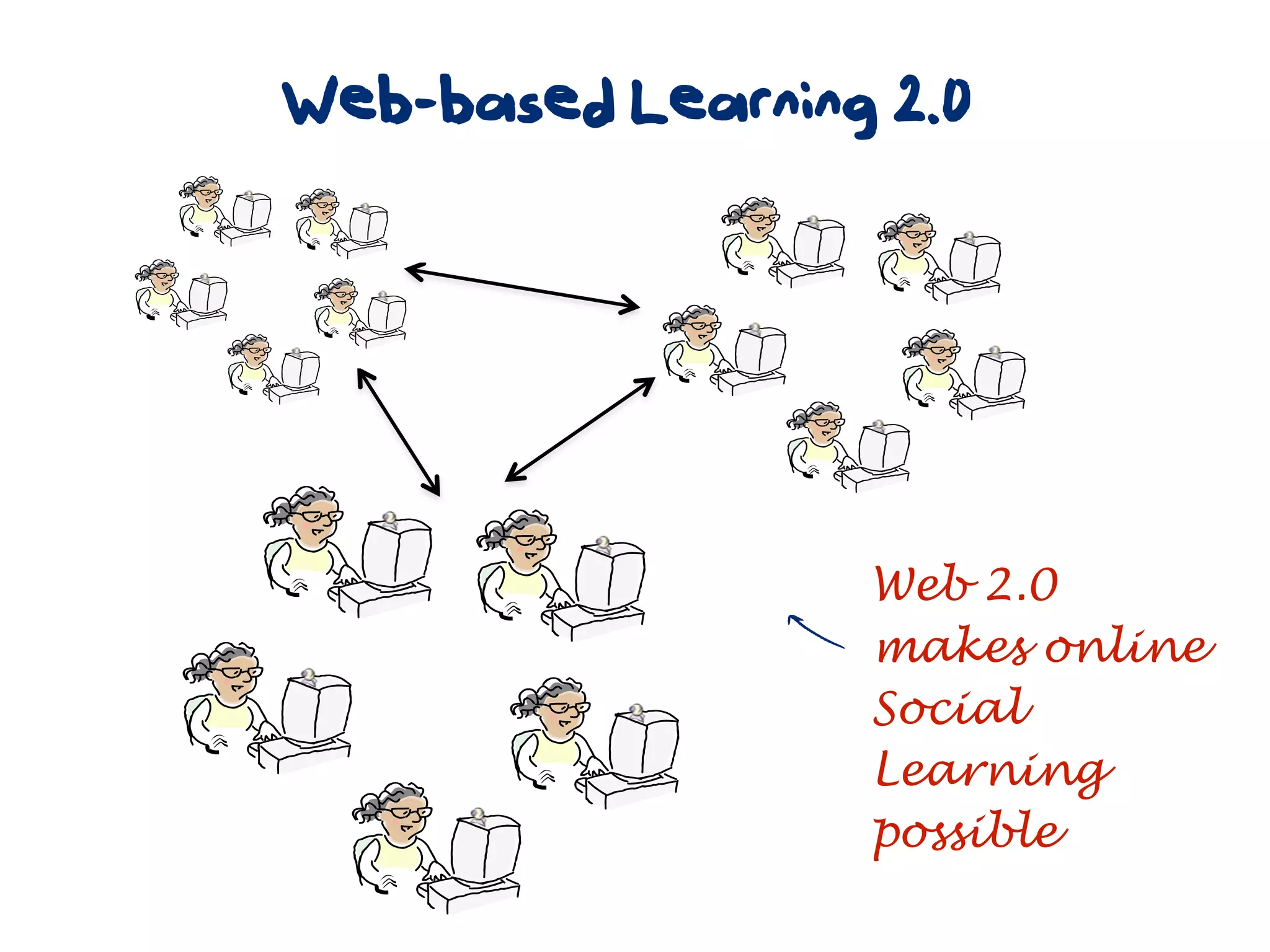
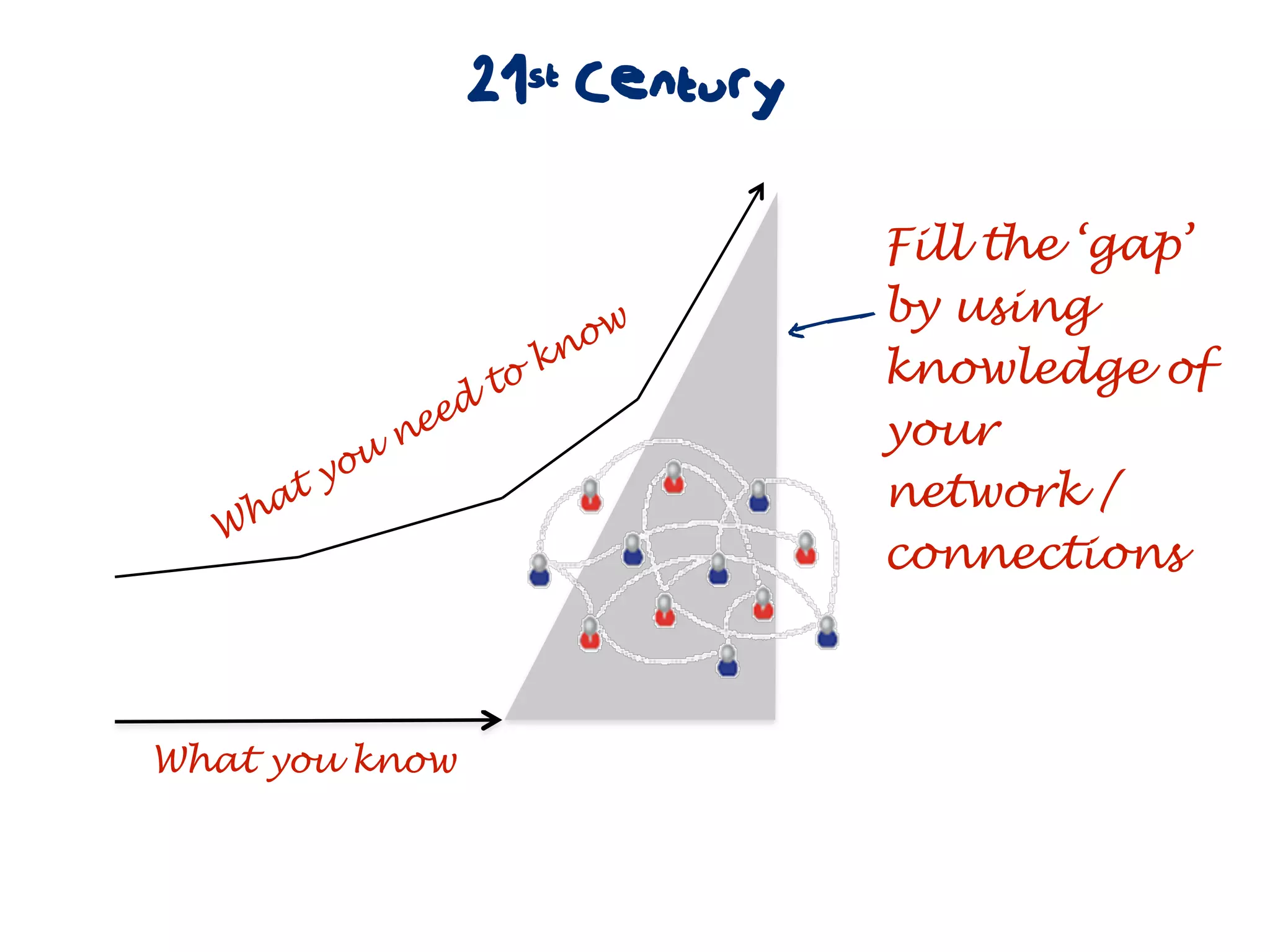
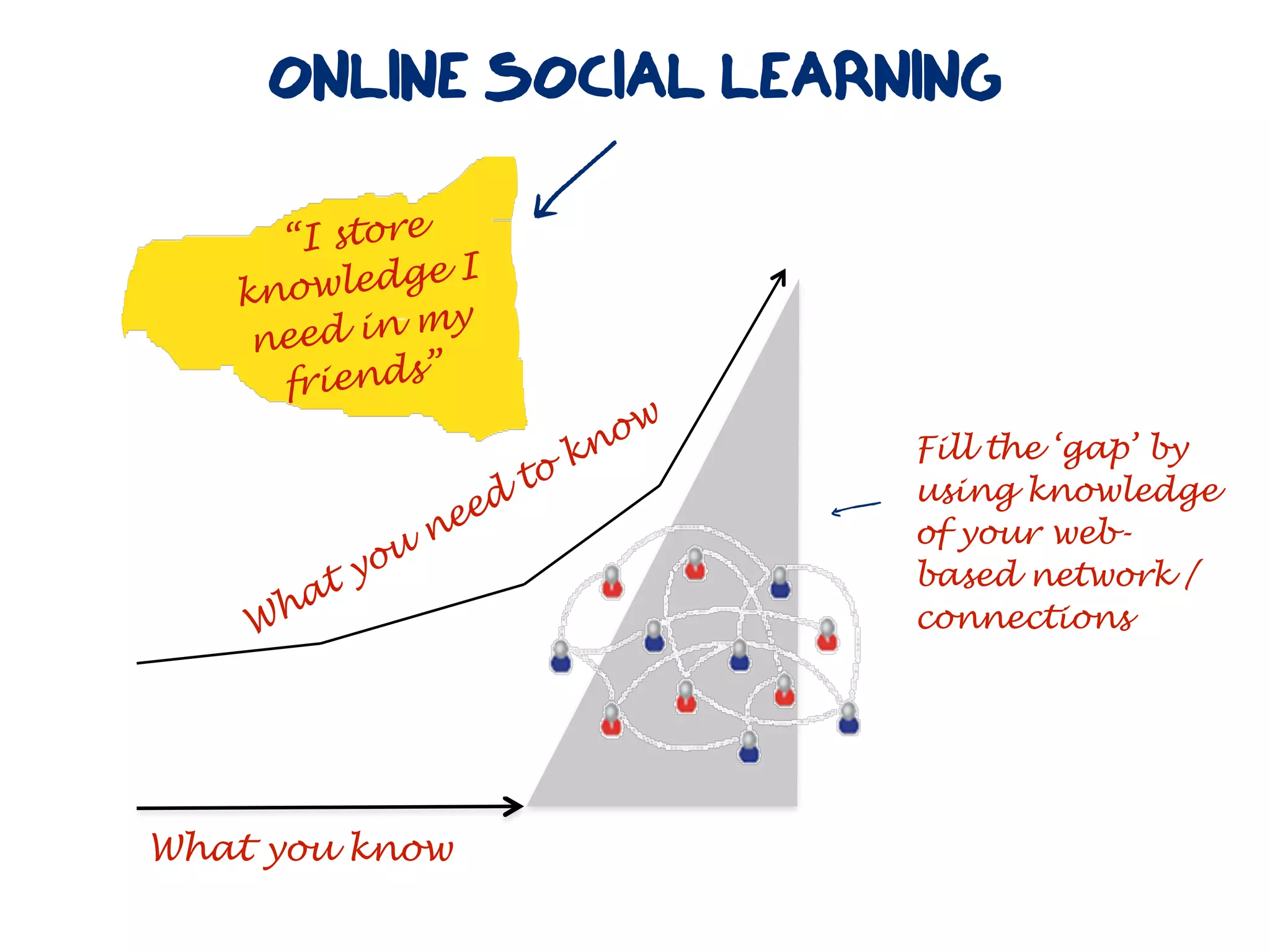
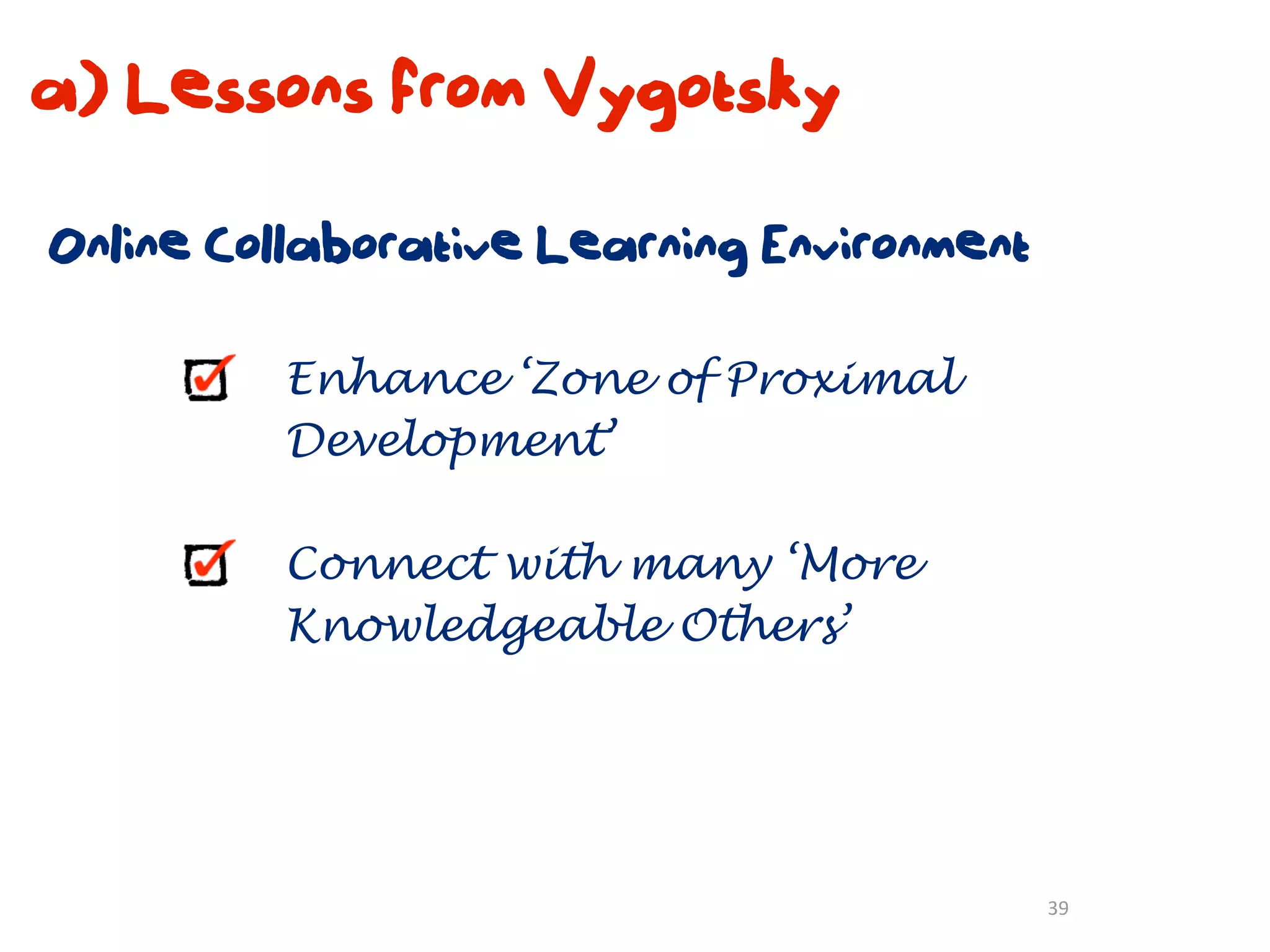
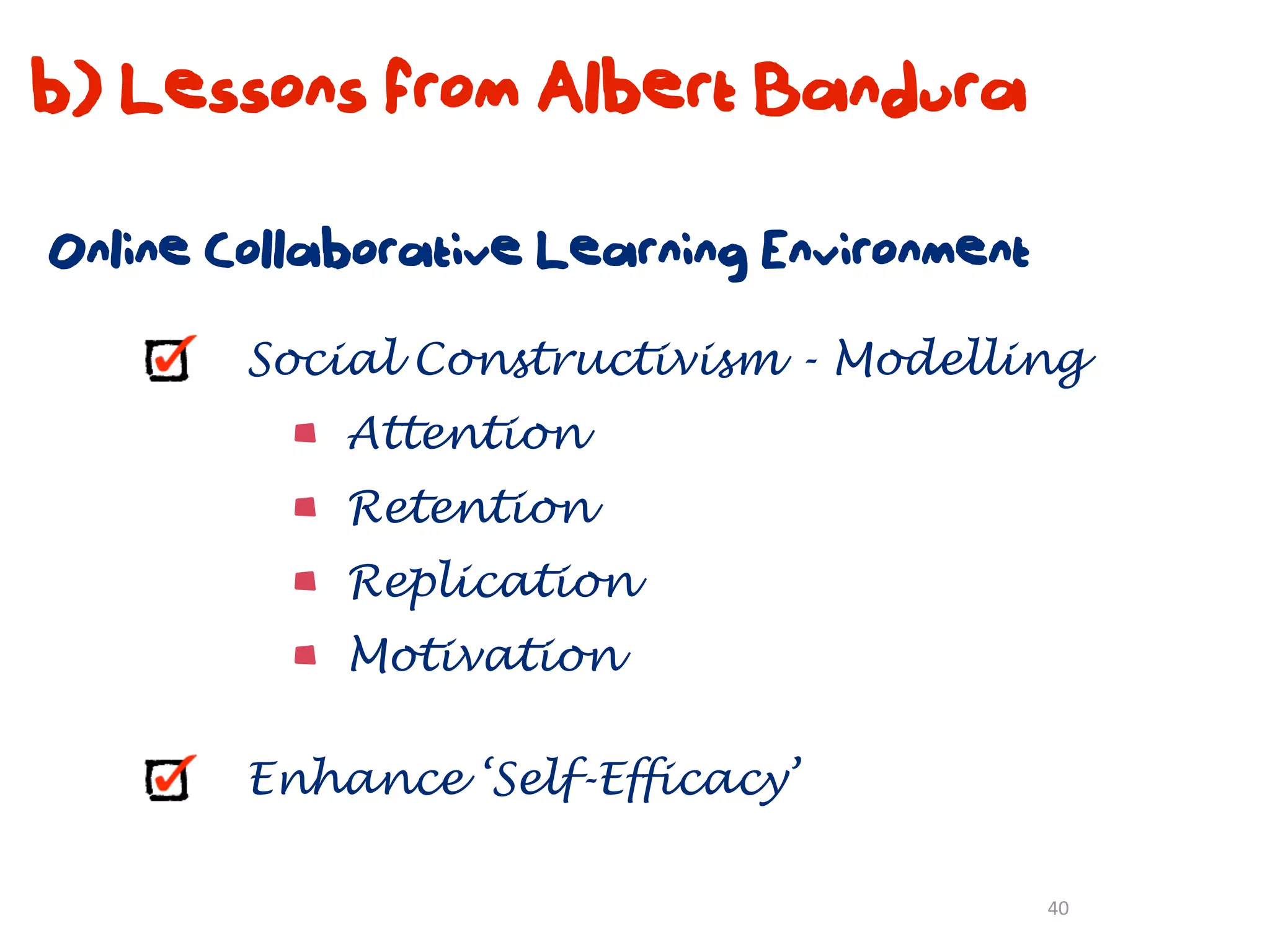
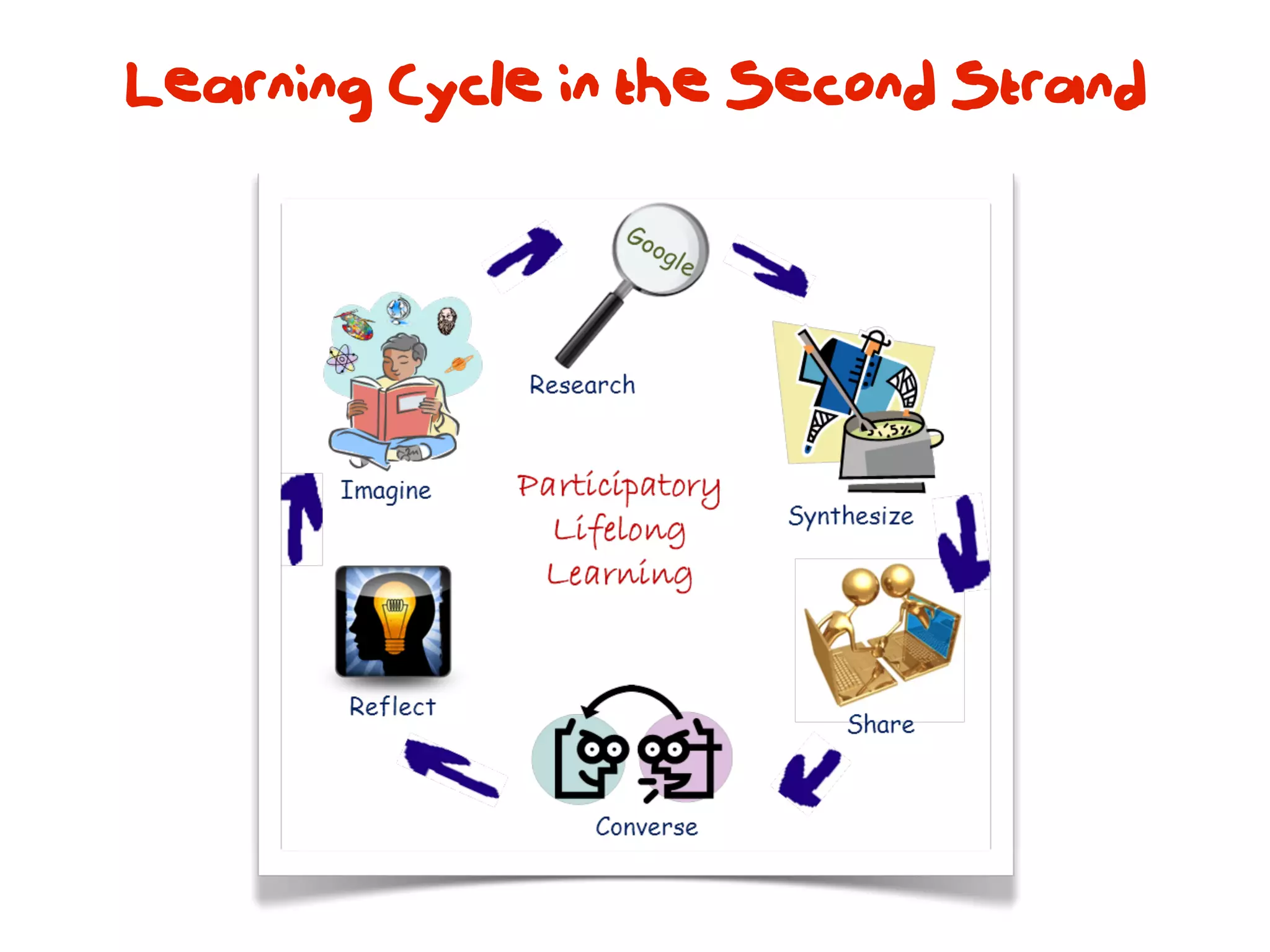
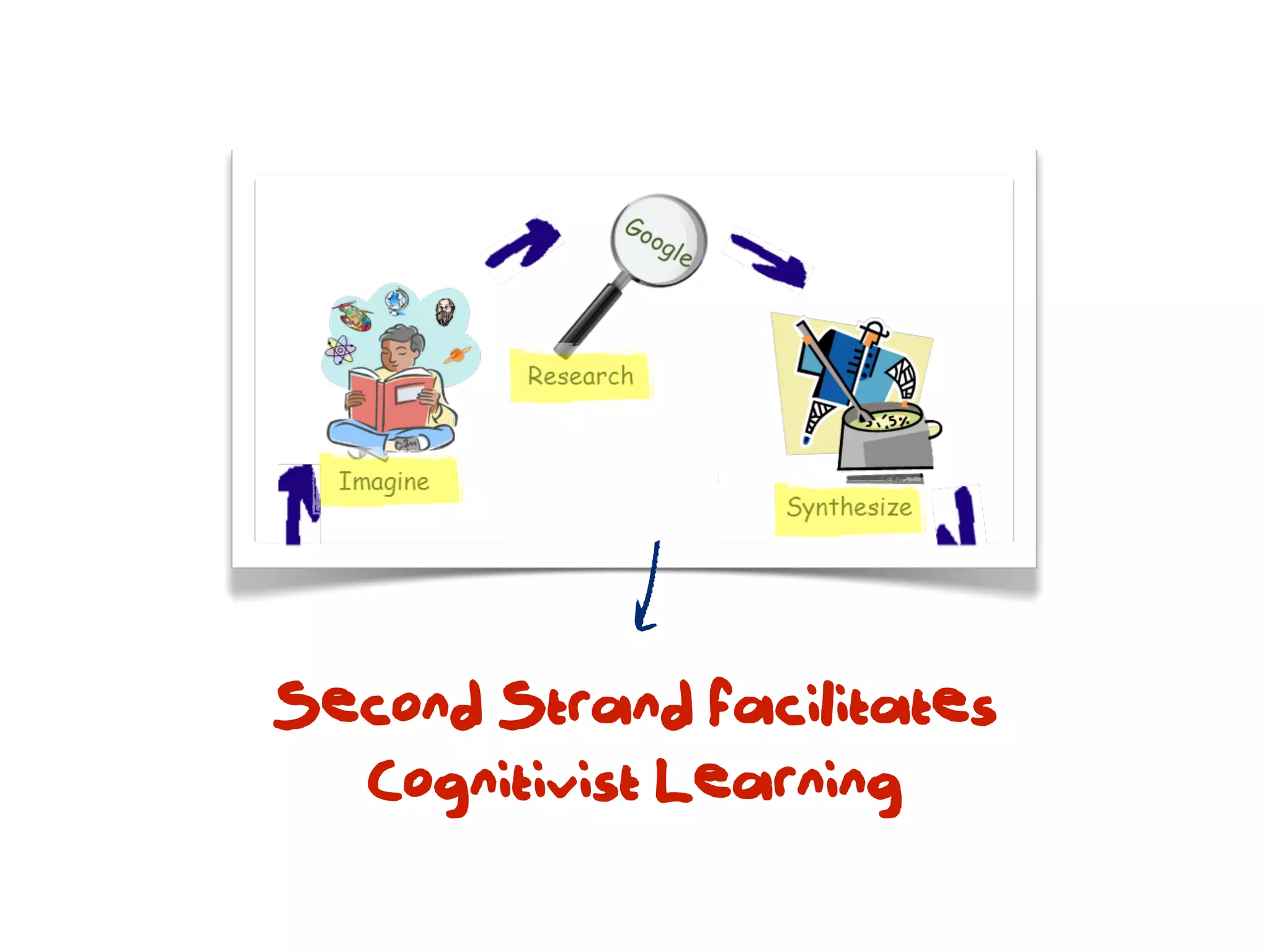
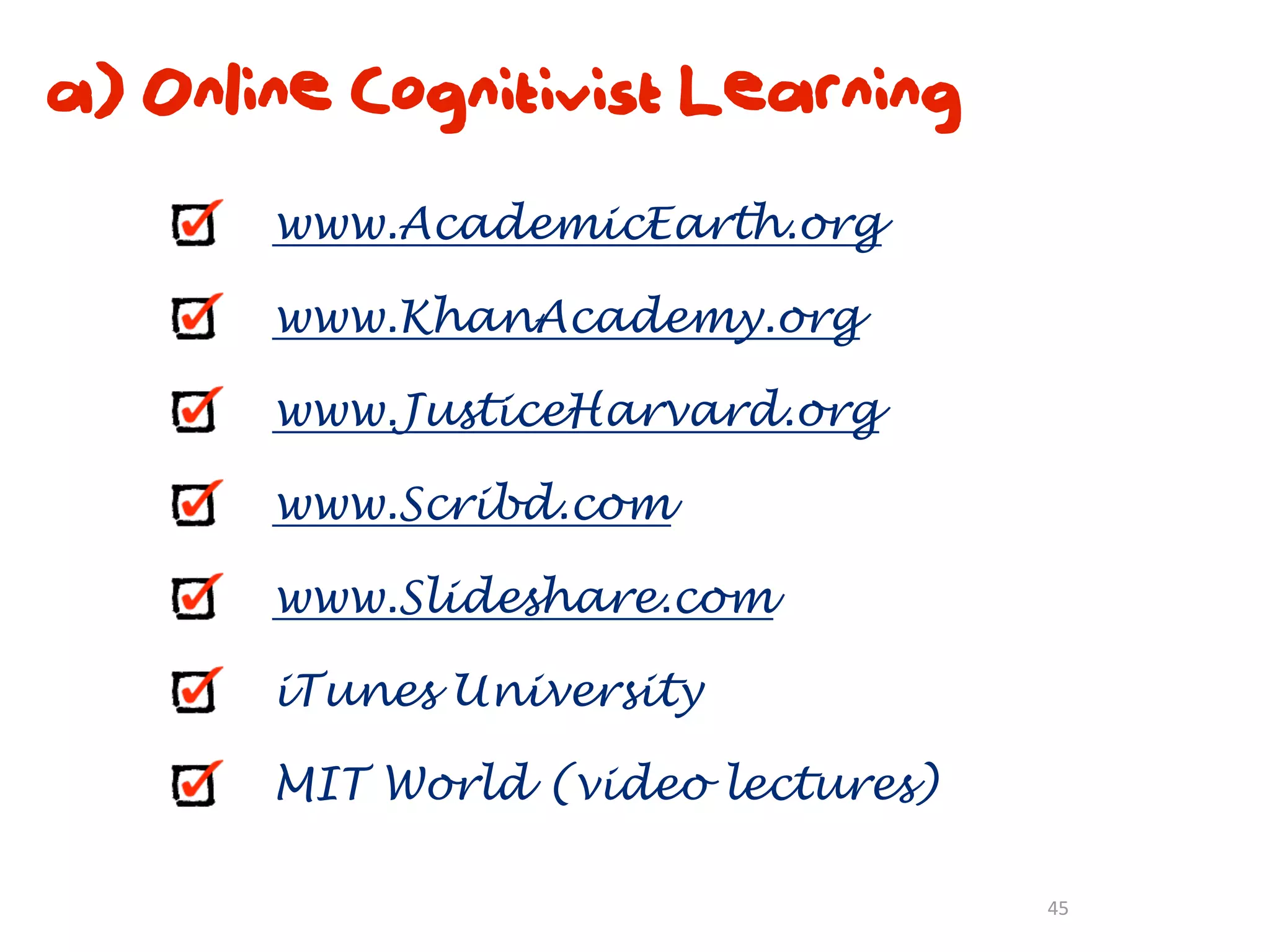
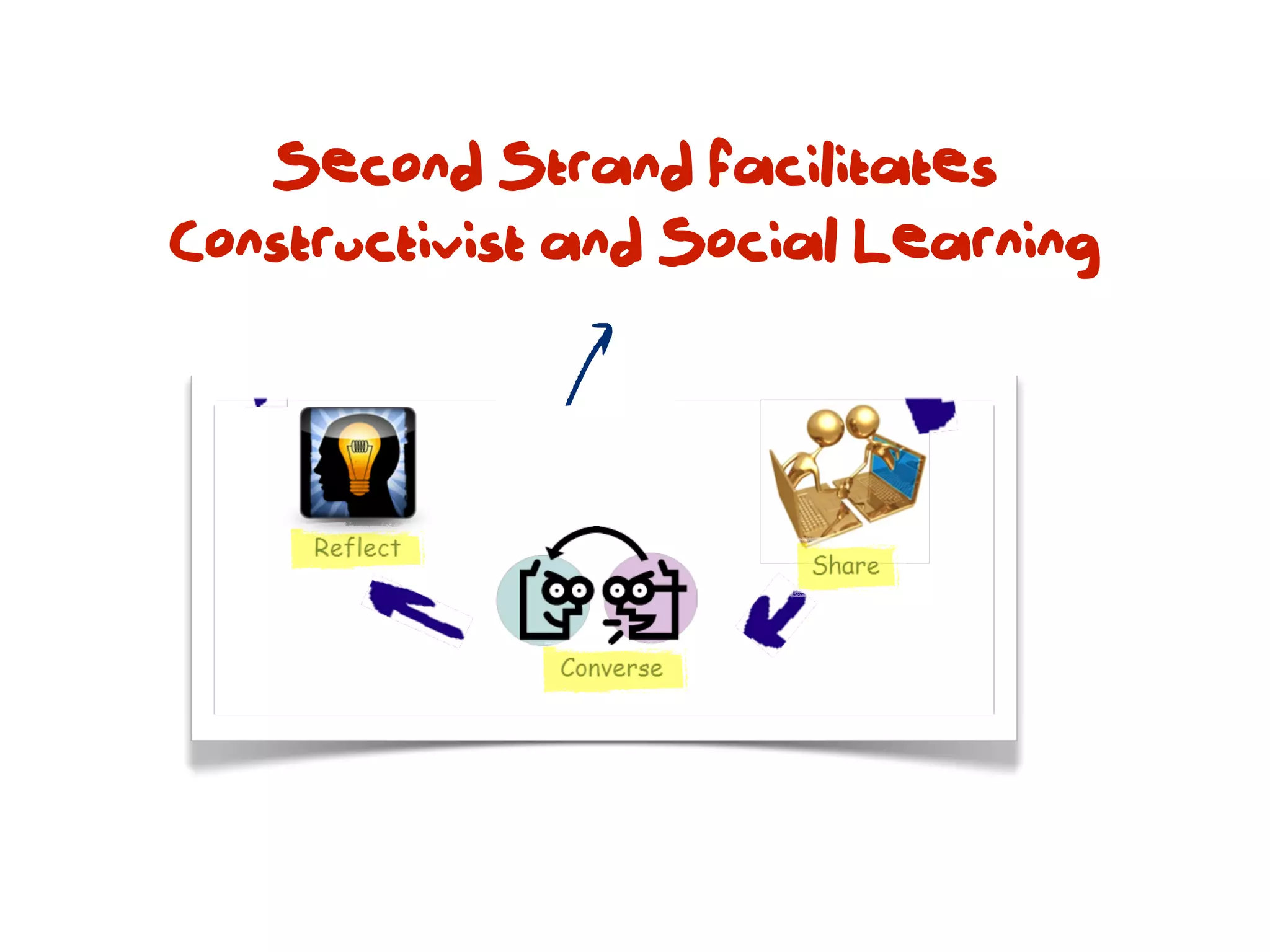
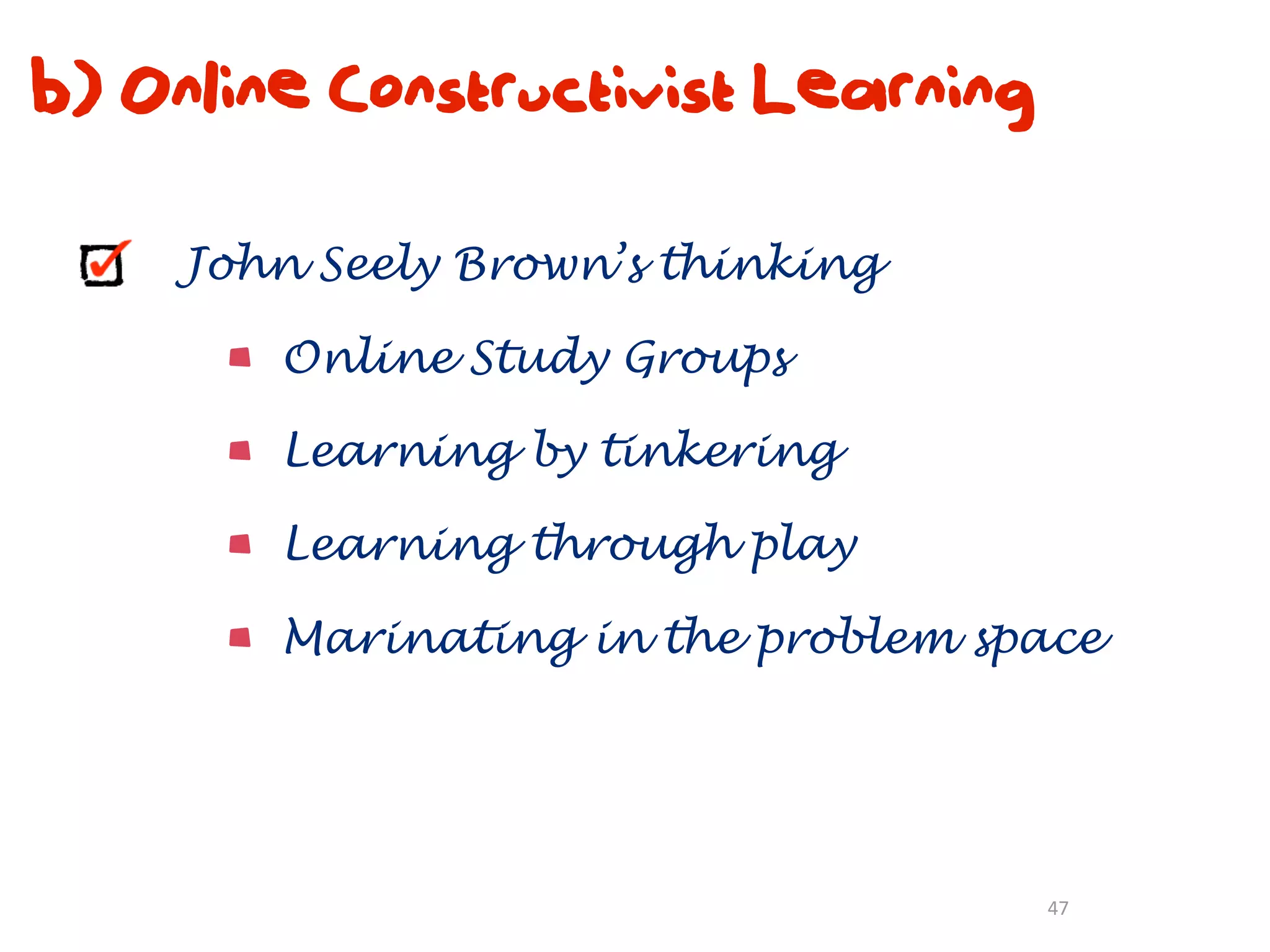
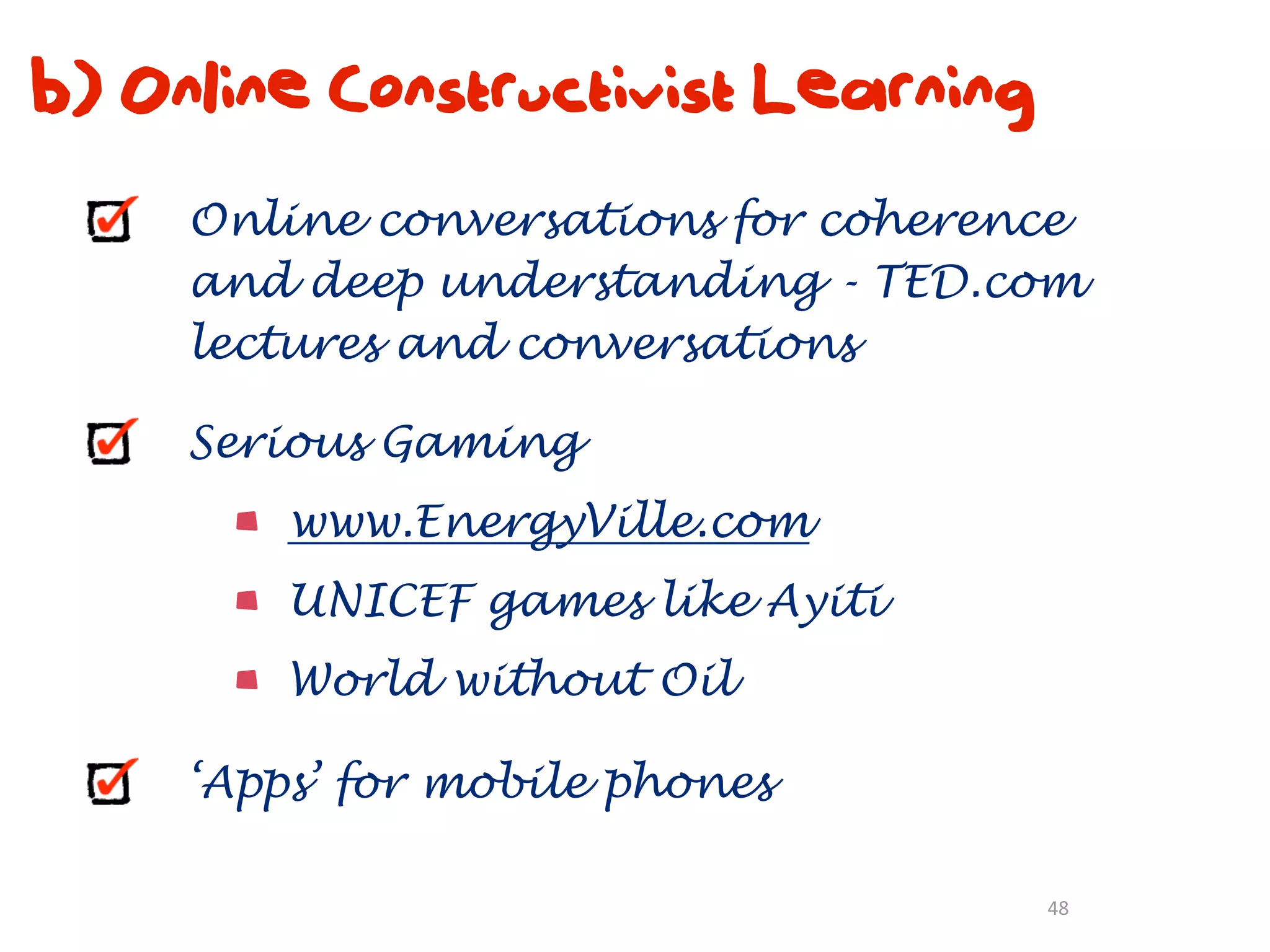

This document discusses the concept of a "second strand" of education that utilizes online and connection-centric learning. It argues that our view of education is changing from teacher-centric to learner-centric. The second strand consists of online learning where learners, mentors, content, and conversation are connected. In this model, parents become "learner facilitators" who help their children navigate online resources and the web becomes the classroom. Learner autonomy is emphasized. The roles of learner facilitators are discussed, including understanding learners' needs, curating appropriate content, bringing coherence to learning, and co-exploring as guides. Social learning theories support this facilitation approach. Web 2.0 enables online social learning by connecting learn


