
A Learning Theory
Framework for the
   Digital Age
            for
    - enlightened Parents
  - enthusiastic Teachers
   - autonomous Learners
Web-based Learning
The Second Strand of Education

 The world has changed and become more
  networked... What is needed is not a new
theory for the digital age, but a model that
integrates the different theories to guide the
    design of online learning materials.

                    - Dr. Mohamed Ally at Athabasca University
Summary
What is the Second Strand of Education?

Elements of the Second Strand

   Learner Facilitator:
     Understand the learner, Curate & Filter
     content, Bring Coherence, Co-explore & Co-
     create

   Web as a Classroom
   Role of the Learner
     What learning theories apply

Cautions
What is the
Second Strand of Education?
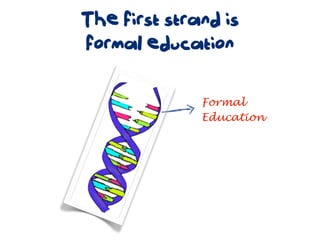
The first strand is
formal education

              Formal
              Education
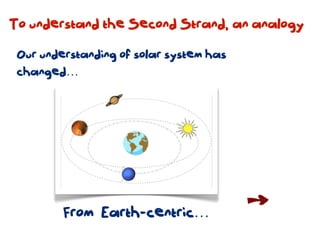
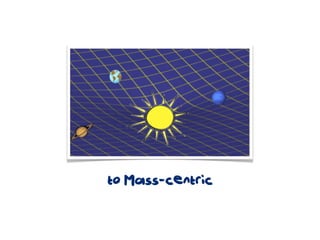
To understand the Second Strand, an analogy

 Our understanding of solar system has
 changed…


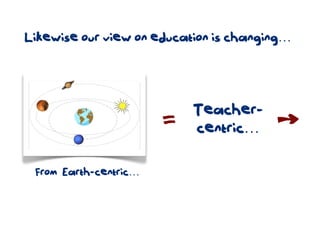
         From Earth-centric…
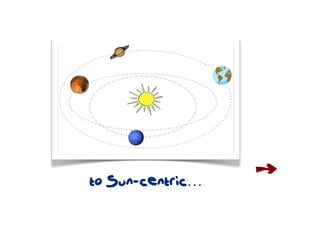
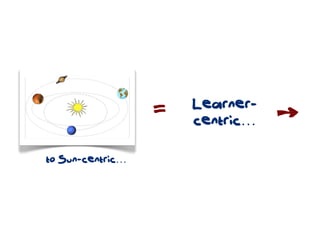
to Sun-centric…
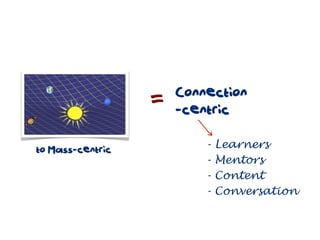
to Mass-centric
Likewise our view on education is changing…


                           Teacher-
                           centric…

 From Earth-centric…
Learner-
                  centric…

to Sun-centric…
Connection
                  -centric


                    l
to Mass-centric       -   Learners
                      -   Mentors
                      -   Content
                      -   Conversation
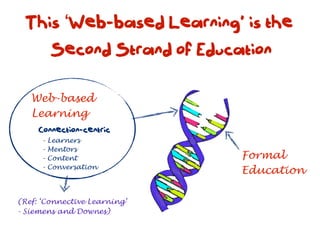
This ‘Web-based Learning’ is the
          Second Strand of Education

   Web-based
   Learning
     Connection-centric
      -   Learners
      -   Mentors
      -   Content               Formal
      -   Conversation
                                Education

(Ref: ‘Connective Learning’
- Siemens and Downes)
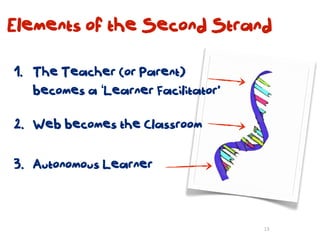
Elements of the Second Strand

1. The Teacher (or Parent)
   becomes a ‘Learner Facilitator’

2. Web becomes the Classroom


3. Autonomous Learner


                                     13
1. Role of Learner Facilitator
   in the Second Strand of
           Education
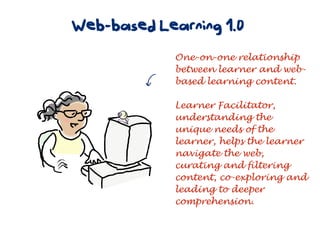
Web-based Learning 1.0
             One-on-one relationship
             between learner and web-
         y   based learning content.

             Learner Facilitator,
             understanding the
             unique needs of the
             learner, helps the learner
             navigate the web,
             curating and filtering
             content, co-exploring and
             leading to deeper
             comprehension.
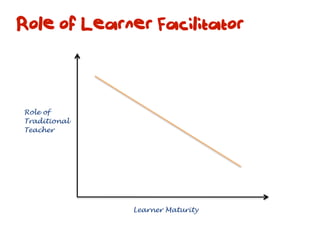
Role of Learner Facilitator


Role of
Traditional
Teacher


              Learner Maturity
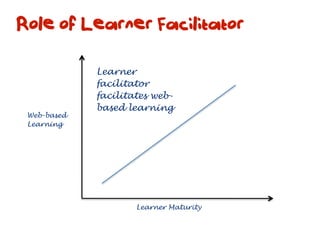
Role of Learner Facilitator

             Learner
             facilitator
             facilitates web-
             based learning
 Web-based
 Learning


                     Learner Maturity
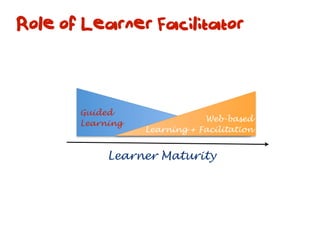
Role of Learner Facilitator


       Guided
                              Web-based
       Learning
                  Learning + Facilitation


            Learner Maturity
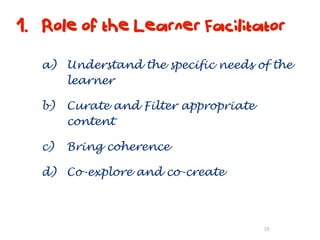
1. Role of the Learner Facilitator

   a) Understand the specific needs of the
      learner

   b)   Curate and Filter appropriate
        content

   c)   Bring coherence

   d) Co-explore and co-create


                                        19
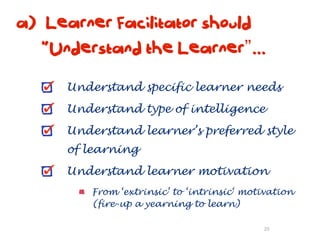
a) Learner Facilitator should
   “Understand the Learner”...

      Understand specific learner needs
      Understand type of intelligence
      Understand learner’s preferred style
      of learning
      Understand learner motivation
          From ‘extrinsic’ to ‘intrinsic‘ motivation
          (fire-up a yearning to learn)

                                             20
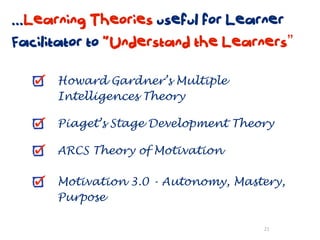
...Learning Theories useful for Learner
Facilitator to “Understand the Learners”

      Howard Gardner’s Multiple
      Intelligences Theory

      Piaget’s Stage Development Theory

      ARCS Theory of Motivation

      Motivation 3.0 - Autonomy, Mastery,
      Purpose

                                     21
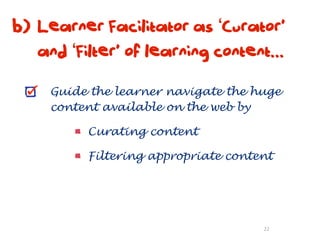
b) Learner Facilitator as ‘Curator’
   and ‘Filter’ of learning content...

     Guide the learner navigate the huge
     content available on the web by

          Curating content

          Filtering appropriate content


                                     22
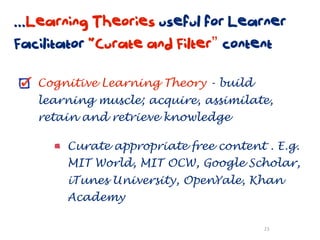
...Learning Theories useful for Learner
Facilitator “Curate and Filter” content

   Cognitive Learning Theory - build
   learning muscle; acquire, assimilate,
   retain and retrieve knowledge

       Curate appropriate free content . E.g.
       MIT World, MIT OCW, Google Scholar,
       iTunes University, OpenYale, Khan
       Academy

                                       23
...Learning Theories useful for Learner
Facilitator “Curate and Filter” content

   Social Learning Theory - ‘more
   knowledgeable other’ (MKO)

     Filter content using - Wisdom of the
     Crowd (e.g. Amazon - people who read
     this also read), Rating of content,
     Social Bookmarking (Digg, Reddit)


                                       24
c) Learner Facilitator should help
   “Gain Coherence”...
   Knowledge on the web is highly
   fragmented, learner facilitator should
   help the learner make sense and gain
   coherence

   Facilitate the Learner gain deeper
   understanding - from knowledge to
   application

                                        25
...Learning Theories useful for Learner
Facilitator create “Coherence”

     Cognitive Learning Theory -
     information processing, change in
     mental schemata, transfer from short-
     term to long-term

        Add Context to information

        Online Mindmaps

        Graphic Organisers


                                      26
...Learning Theories useful for Learner
Facilitator create “Coherence”

    Constructivist Learning Theory - inquiry
    based learning, discovery learning,
    active participation

       Webquests

       Blog, Twitter - learner shares what is
       being learnt in own words, which
       leads to deeper comprehension

                                        27
d) Learner Facilitator as a
   “Co-Explorer and Co-Creator”

    Sage-on-stage > Guide-by-the-side >
    Co-explorer

    Learner Facilitator actively
    participates and ‘co-creates’ with the
    learners


                                      28
...Learning Theories useful for Learner
Facilitator as “Co-Explorer and Co-Creator”
   Social Learning Theory - Guided
   Learning, Scaffolding, Fading, Zone of
   Proximal Development, Self-Efficacy

       Co-explore learning content as a
       guide , providing scaffolding and
       enhancing the Self-Efficacy of the
       learner

       Blog, Twitter - learner shares what is
       being learnt in own words, which
       leads to deeper comprehension 29
...Learning Theories useful for Learner
Facilitator as “Co-Explorer and Co-Creator”
     Constructivist Learning Theory - inquiry
     based learning, discovery learning,
     active participation

        Young Learners - guided
        participation in learning
        communities like ‘Scratch’ (MIT)

        Inquiries that require game-based
        learning (e.g. serious gaming,
        simulations (e.g. Gizmo Learning)
                                       30
...Learning Theories useful for Learner
Facilitator as “Co-Explorer and Co-Creator”

     Humanism Learning Theory - learning
     from with-in

        Write blogs, tweets

        Self-publish books - e.g. Lulu, Create
        Space, iBookStore


                                         31
2. Web as a Classroom
in the Second Strand of
        Education
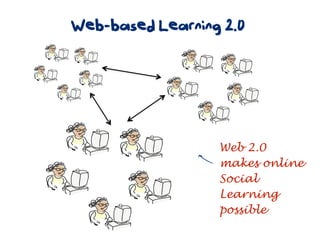
Web-based Learning 2.0


                  Web 2.0
                h makes online
                  Social
                  Learning
                  possible
Importance of
Online Social Learning
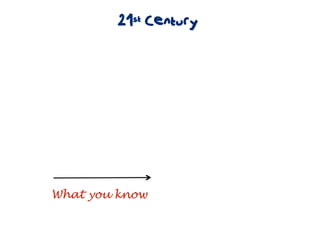
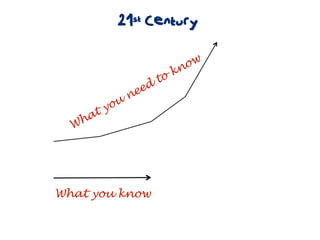
21st Century


What you know
21st Century


                             n ow
                         t ok
                     d
                 n ee
          y ou
     at
  Wh


What you know
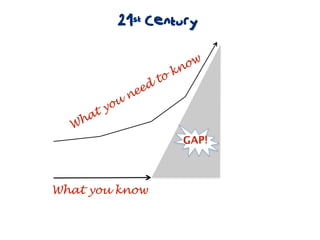
21st Century


                             n ow
                         t ok
                     d
                 n ee
          y ou
     at
  Wh
                                GAP!


What you know
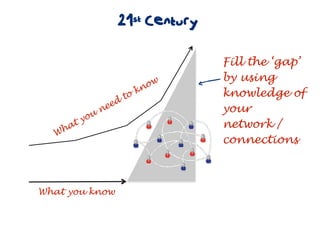
21st Century

                                     Fill the ‘gap’
                                     by using
                             kn
                               ow   cknowledge of
                        to
                    d
                 nee                 your
           you
    h at                             network /
  W
                                     connections


What you know
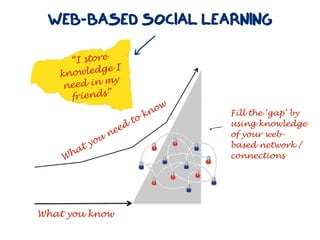
WEB-BASED SOCIAL LEARNING
                         l
      “I store
               I
   kn owledge
               y
    n eed in m
      friends”
                                   w
                              k no       Fill the ‘gap’ by
                         to              using knowledge
                     d
                n ee                   c of your web-
           ou
        ty                               based network /
    W ha                                 connections


What you know
a) Lessons from Vygotsky

Online Collaborative Learning Environment

         Enhance ‘Zone of Proximal
         Development’

         Connect with many ‘More
         Knowledgeable Others’


                                            40
b) Lessons from Albert Bandura

Online Collaborative Learning Environment

        Social Constructivism - Modelling
            Attention
            Retention
            Replication
            Motivation

        Enhance ‘Self-Efficacy’

                                            41
c) Lessons from Lave and Wenger
Online Collaborative Learning Environment

        Situated Learning

            Contextual Learning

            Legitimate Peripheral
            Participation


                                            42
3. Role of Autonomous Learner
  in the Second Strand of
          Education
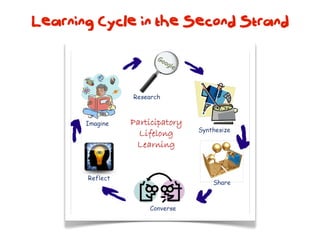
Learning Cycle in the Second Strand
h
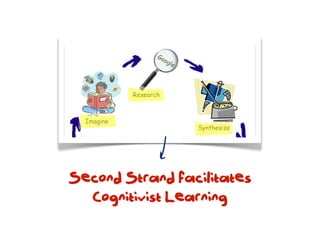
Second Strand facilitates
  Cognitivist Learning
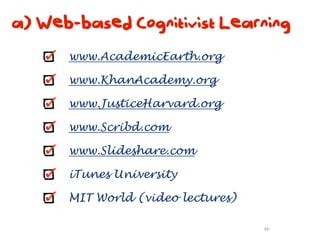
a) Web-based Cognitivist Learning
      www.AcademicEarth.org

      www.KhanAcademy.org

      www.JusticeHarvard.org

      www.Scribd.com

      www.Slideshare.com

      iTunes University

      MIT World (video lectures)

                                   46
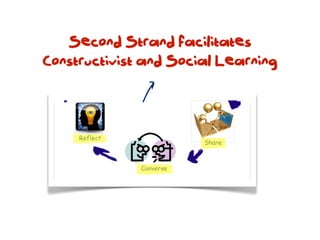
Second Strand facilitates
Constructivist and Social Learning


           h
b) Web-based Constructivist Learning

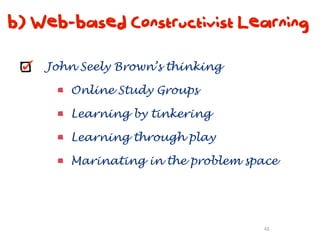
    John Seely Brown’s thinking

       Online Study Groups

       Learning by tinkering

       Learning through play

       Marinating in the problem space


                                   48
b) Web-based Constructivist Learning
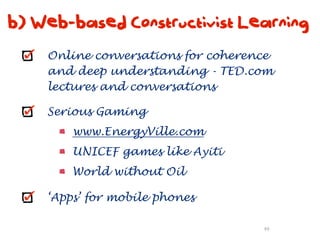
    Online conversations for coherence
    and deep understanding - TED.com
    lectures and conversations

    Serious Gaming
        www.EnergyVille.com
        UNICEF games like Ayiti
        World without Oil

    ‘Apps’ for mobile phones

                                    49
Web-based Learning - CAUTIONS!
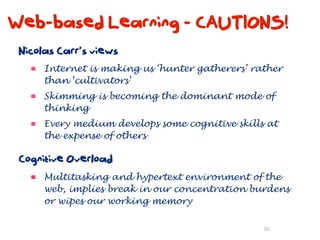
 Nicolas Carr’s views
      Internet is making us ‘hunter gatherers’ rather
      than ‘cultivators’
      Skimming is becoming the dominant mode of
      thinking
      Every medium develops some cognitive skills at
      the expense of others

 Cognitive Overload
      Multitasking and hypertext environment of the
      web, implies break in our concentration burdens
      or wipes our working memory

                                                 50
Good Reads and References
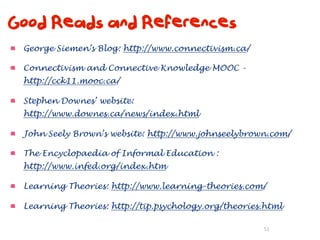
 George Siemen’s Blog: http://www.connectivism.ca/

 Connectivism and Connective Knowledge MOOC -
 http://cck11.mooc.ca/

 Stephen Downes’ website:
 http://www.downes.ca/news/index.html

 John Seely Brown’s website: http://www.johnseelybrown.com/

 The Encyclopaedia of Informal Education :
 http://www.infed.org/index.htm

 Learning Theories: http://www.learning-theories.com/

 Learning Theories: http://tip.psychology.org/theories.html

                                                      51
Author: Atul Pant
Email: atul.pant@timelesslifeskills.co.uk

A Learning Framework for the Digital Age

  • 1.
    A Learning Theory Frameworkfor the Digital Age for - enlightened Parents - enthusiastic Teachers - autonomous Learners
  • 2.
    Web-based Learning The SecondStrand of Education The world has changed and become more networked... What is needed is not a new theory for the digital age, but a model that integrates the different theories to guide the design of online learning materials. - Dr. Mohamed Ally at Athabasca University
  • 3.
    Summary What is theSecond Strand of Education? Elements of the Second Strand Learner Facilitator: Understand the learner, Curate & Filter content, Bring Coherence, Co-explore & Co- create Web as a Classroom Role of the Learner What learning theories apply Cautions
  • 4.
    What is the SecondStrand of Education?
  • 5.
    The first strandis formal education Formal Education
  • 6.
    To understand theSecond Strand, an analogy Our understanding of solar system has changed… From Earth-centric…
  • 7.
  • 8.
  • 9.
    Likewise our viewon education is changing… Teacher- centric… From Earth-centric…
  • 10.
    Learner- centric… to Sun-centric…
  • 11.
    Connection -centric l to Mass-centric - Learners - Mentors - Content - Conversation
  • 12.
    This ‘Web-based Learning’is the Second Strand of Education Web-based Learning Connection-centric - Learners - Mentors - Content Formal - Conversation Education (Ref: ‘Connective Learning’ - Siemens and Downes)
  • 13.
    Elements of theSecond Strand 1. The Teacher (or Parent) becomes a ‘Learner Facilitator’ 2. Web becomes the Classroom 3. Autonomous Learner 13
  • 14.
    1. Role ofLearner Facilitator in the Second Strand of Education
  • 15.
    Web-based Learning 1.0 One-on-one relationship between learner and web- y based learning content. Learner Facilitator, understanding the unique needs of the learner, helps the learner navigate the web, curating and filtering content, co-exploring and leading to deeper comprehension.
  • 16.
    Role of LearnerFacilitator Role of Traditional Teacher Learner Maturity
  • 17.
    Role of LearnerFacilitator Learner facilitator facilitates web- based learning Web-based Learning Learner Maturity
  • 18.
    Role of LearnerFacilitator Guided Web-based Learning Learning + Facilitation Learner Maturity
  • 19.
    1. Role ofthe Learner Facilitator a) Understand the specific needs of the learner b) Curate and Filter appropriate content c) Bring coherence d) Co-explore and co-create 19
  • 20.
    a) Learner Facilitatorshould “Understand the Learner”... Understand specific learner needs Understand type of intelligence Understand learner’s preferred style of learning Understand learner motivation From ‘extrinsic’ to ‘intrinsic‘ motivation (fire-up a yearning to learn) 20
  • 21.
    ...Learning Theories usefulfor Learner Facilitator to “Understand the Learners” Howard Gardner’s Multiple Intelligences Theory Piaget’s Stage Development Theory ARCS Theory of Motivation Motivation 3.0 - Autonomy, Mastery, Purpose 21
  • 22.
    b) Learner Facilitatoras ‘Curator’ and ‘Filter’ of learning content... Guide the learner navigate the huge content available on the web by Curating content Filtering appropriate content 22
  • 23.
    ...Learning Theories usefulfor Learner Facilitator “Curate and Filter” content Cognitive Learning Theory - build learning muscle; acquire, assimilate, retain and retrieve knowledge Curate appropriate free content . E.g. MIT World, MIT OCW, Google Scholar, iTunes University, OpenYale, Khan Academy 23
  • 24.
    ...Learning Theories usefulfor Learner Facilitator “Curate and Filter” content Social Learning Theory - ‘more knowledgeable other’ (MKO) Filter content using - Wisdom of the Crowd (e.g. Amazon - people who read this also read), Rating of content, Social Bookmarking (Digg, Reddit) 24
  • 25.
    c) Learner Facilitatorshould help “Gain Coherence”... Knowledge on the web is highly fragmented, learner facilitator should help the learner make sense and gain coherence Facilitate the Learner gain deeper understanding - from knowledge to application 25
  • 26.
    ...Learning Theories usefulfor Learner Facilitator create “Coherence” Cognitive Learning Theory - information processing, change in mental schemata, transfer from short- term to long-term Add Context to information Online Mindmaps Graphic Organisers 26
  • 27.
    ...Learning Theories usefulfor Learner Facilitator create “Coherence” Constructivist Learning Theory - inquiry based learning, discovery learning, active participation Webquests Blog, Twitter - learner shares what is being learnt in own words, which leads to deeper comprehension 27
  • 28.
    d) Learner Facilitatoras a “Co-Explorer and Co-Creator” Sage-on-stage > Guide-by-the-side > Co-explorer Learner Facilitator actively participates and ‘co-creates’ with the learners 28
  • 29.
    ...Learning Theories usefulfor Learner Facilitator as “Co-Explorer and Co-Creator” Social Learning Theory - Guided Learning, Scaffolding, Fading, Zone of Proximal Development, Self-Efficacy Co-explore learning content as a guide , providing scaffolding and enhancing the Self-Efficacy of the learner Blog, Twitter - learner shares what is being learnt in own words, which leads to deeper comprehension 29
  • 30.
    ...Learning Theories usefulfor Learner Facilitator as “Co-Explorer and Co-Creator” Constructivist Learning Theory - inquiry based learning, discovery learning, active participation Young Learners - guided participation in learning communities like ‘Scratch’ (MIT) Inquiries that require game-based learning (e.g. serious gaming, simulations (e.g. Gizmo Learning) 30
  • 31.
    ...Learning Theories usefulfor Learner Facilitator as “Co-Explorer and Co-Creator” Humanism Learning Theory - learning from with-in Write blogs, tweets Self-publish books - e.g. Lulu, Create Space, iBookStore 31
  • 32.
    2. Web asa Classroom in the Second Strand of Education
  • 33.
    Web-based Learning 2.0 Web 2.0 h makes online Social Learning possible
  • 34.
  • 35.
  • 36.
    21st Century n ow t ok d n ee y ou at Wh What you know
  • 37.
    21st Century n ow t ok d n ee y ou at Wh GAP! What you know
  • 38.
    21st Century Fill the ‘gap’ by using kn ow cknowledge of to d nee your you h at network / W connections What you know
  • 39.
    WEB-BASED SOCIAL LEARNING l “I store I kn owledge y n eed in m friends” w k no Fill the ‘gap’ by to using knowledge d n ee c of your web- ou ty based network / W ha connections What you know
  • 40.
    a) Lessons fromVygotsky Online Collaborative Learning Environment Enhance ‘Zone of Proximal Development’ Connect with many ‘More Knowledgeable Others’ 40
  • 41.
    b) Lessons fromAlbert Bandura Online Collaborative Learning Environment Social Constructivism - Modelling Attention Retention Replication Motivation Enhance ‘Self-Efficacy’ 41
  • 42.
    c) Lessons fromLave and Wenger Online Collaborative Learning Environment Situated Learning Contextual Learning Legitimate Peripheral Participation 42
  • 43.
    3. Role ofAutonomous Learner in the Second Strand of Education
  • 44.
    Learning Cycle inthe Second Strand
  • 45.
    h Second Strand facilitates Cognitivist Learning
  • 46.
    a) Web-based CognitivistLearning www.AcademicEarth.org www.KhanAcademy.org www.JusticeHarvard.org www.Scribd.com www.Slideshare.com iTunes University MIT World (video lectures) 46
  • 47.
  • 48.
    b) Web-based ConstructivistLearning John Seely Brown’s thinking Online Study Groups Learning by tinkering Learning through play Marinating in the problem space 48
  • 49.
    b) Web-based ConstructivistLearning Online conversations for coherence and deep understanding - TED.com lectures and conversations Serious Gaming www.EnergyVille.com UNICEF games like Ayiti World without Oil ‘Apps’ for mobile phones 49
  • 50.
    Web-based Learning -CAUTIONS! Nicolas Carr’s views Internet is making us ‘hunter gatherers’ rather than ‘cultivators’ Skimming is becoming the dominant mode of thinking Every medium develops some cognitive skills at the expense of others Cognitive Overload Multitasking and hypertext environment of the web, implies break in our concentration burdens or wipes our working memory 50
  • 51.
    Good Reads andReferences George Siemen’s Blog: http://www.connectivism.ca/ Connectivism and Connective Knowledge MOOC - http://cck11.mooc.ca/ Stephen Downes’ website: http://www.downes.ca/news/index.html John Seely Brown’s website: http://www.johnseelybrown.com/ The Encyclopaedia of Informal Education : http://www.infed.org/index.htm Learning Theories: http://www.learning-theories.com/ Learning Theories: http://tip.psychology.org/theories.html 51
  • 52.
    Author: Atul Pant Email:atul.pant@timelesslifeskills.co.uk