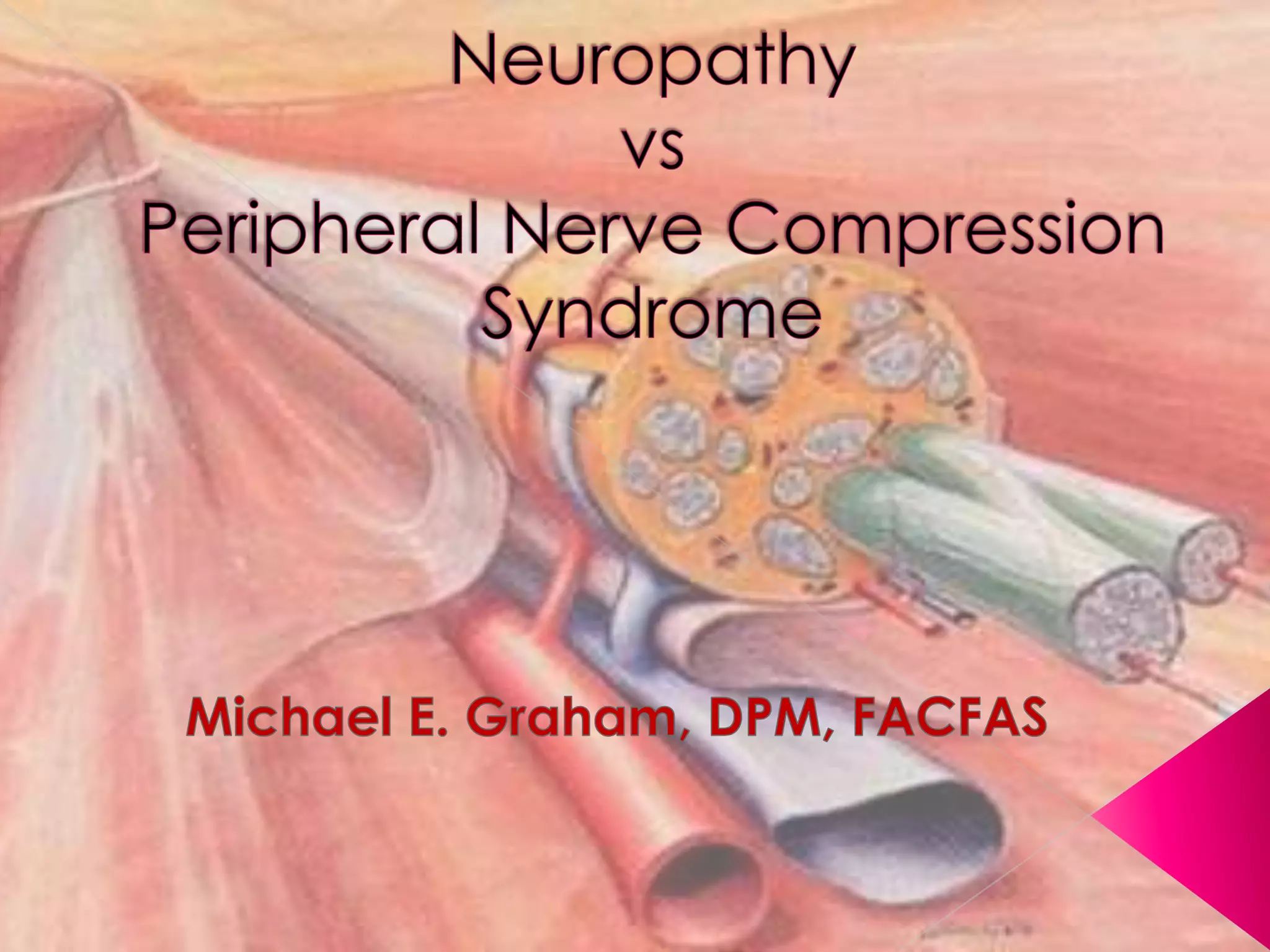
NeuropathyvsPeripheral Nerve Compression SyndromeMichael E. Graham, DPM, FACFAS
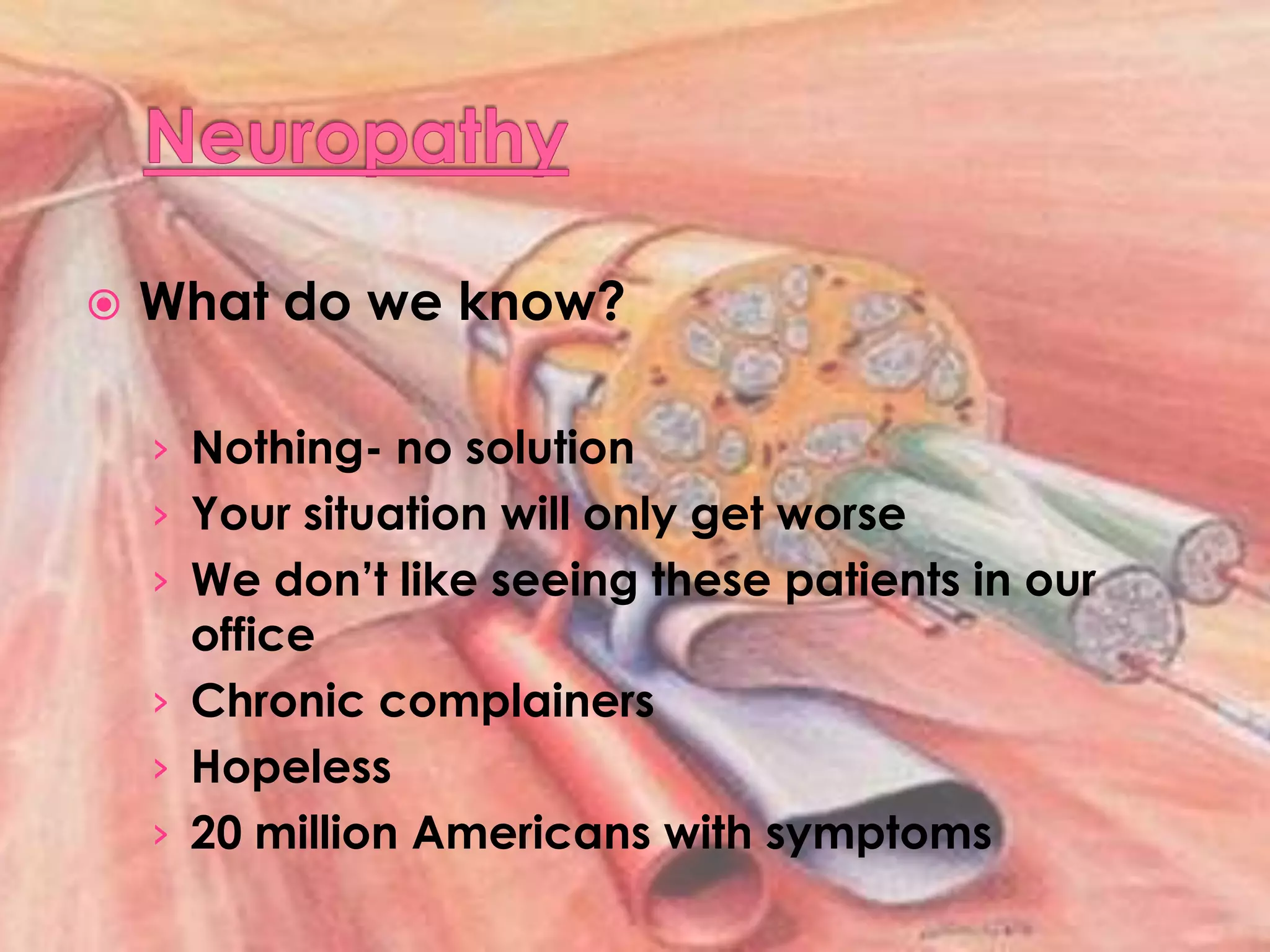
NeuropathyWhat do we know?Nothing- no solutionYour situation will only get worseWe don’t like seeing these patients in our office Chronic complainersHopeless20 million Americans with symptoms
Peripheral NeuropathyWhat is the etiology?Over 100 etiologies of peripheral neuropathyDiabetes ?Alcohol ?Chemotherapy ?Heavy Metal Poisoning ?Hereditary ?Idiopathic ?WE REALLY DON’T KNOW
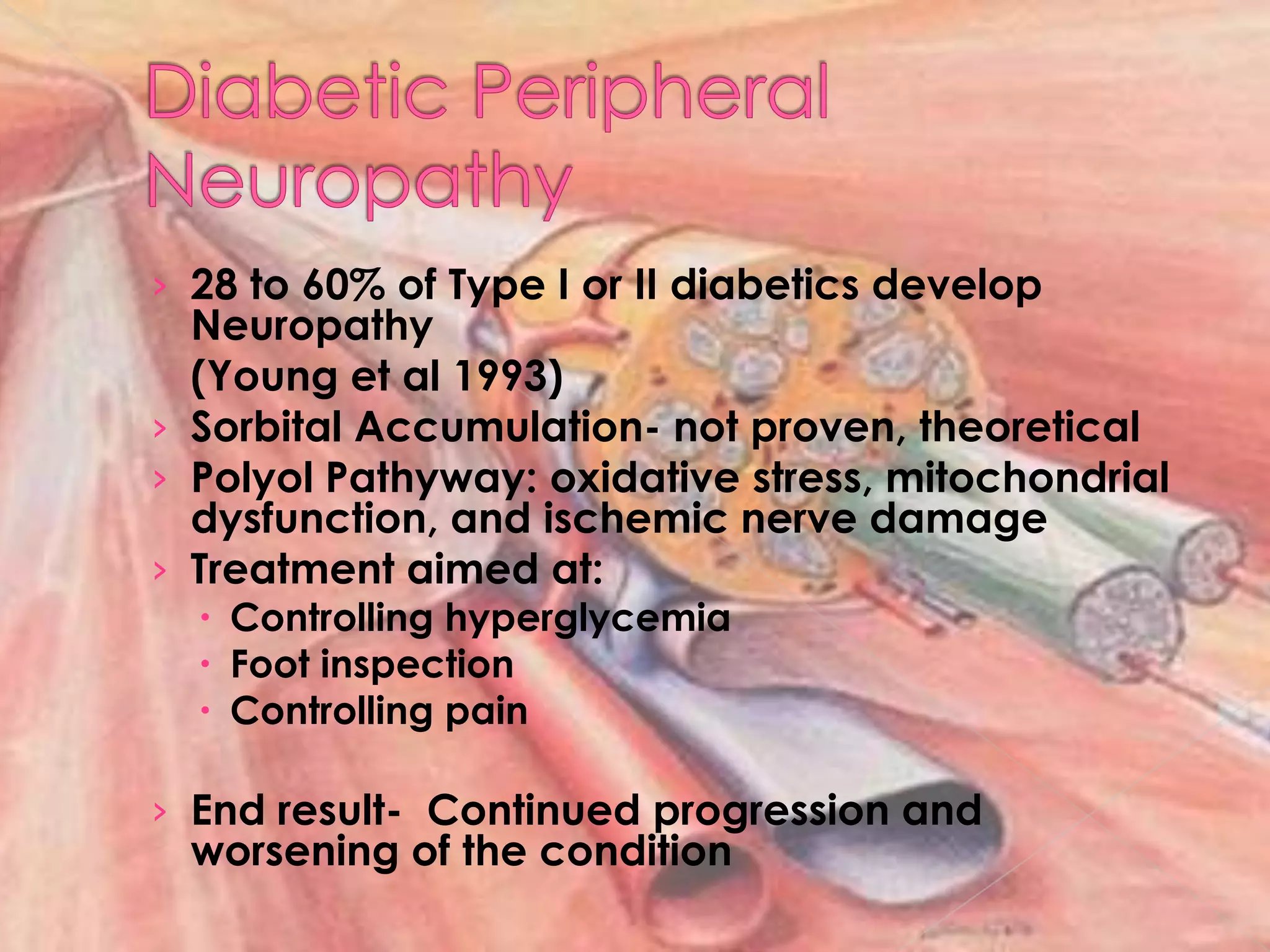
Diabetic Peripheral Neuropathy28 to 60% of Type I or II diabetics develop Neuropathy		(Young et al 1993)Sorbital Accumulation- not proven, theoreticalPolyolPathyway: oxidative stress, mitochondrial dysfunction, and ischemic nerve damageTreatment aimed at:Controlling hyperglycemiaFoot inspectionControlling painEnd result-  Continued progression and worsening of the condition
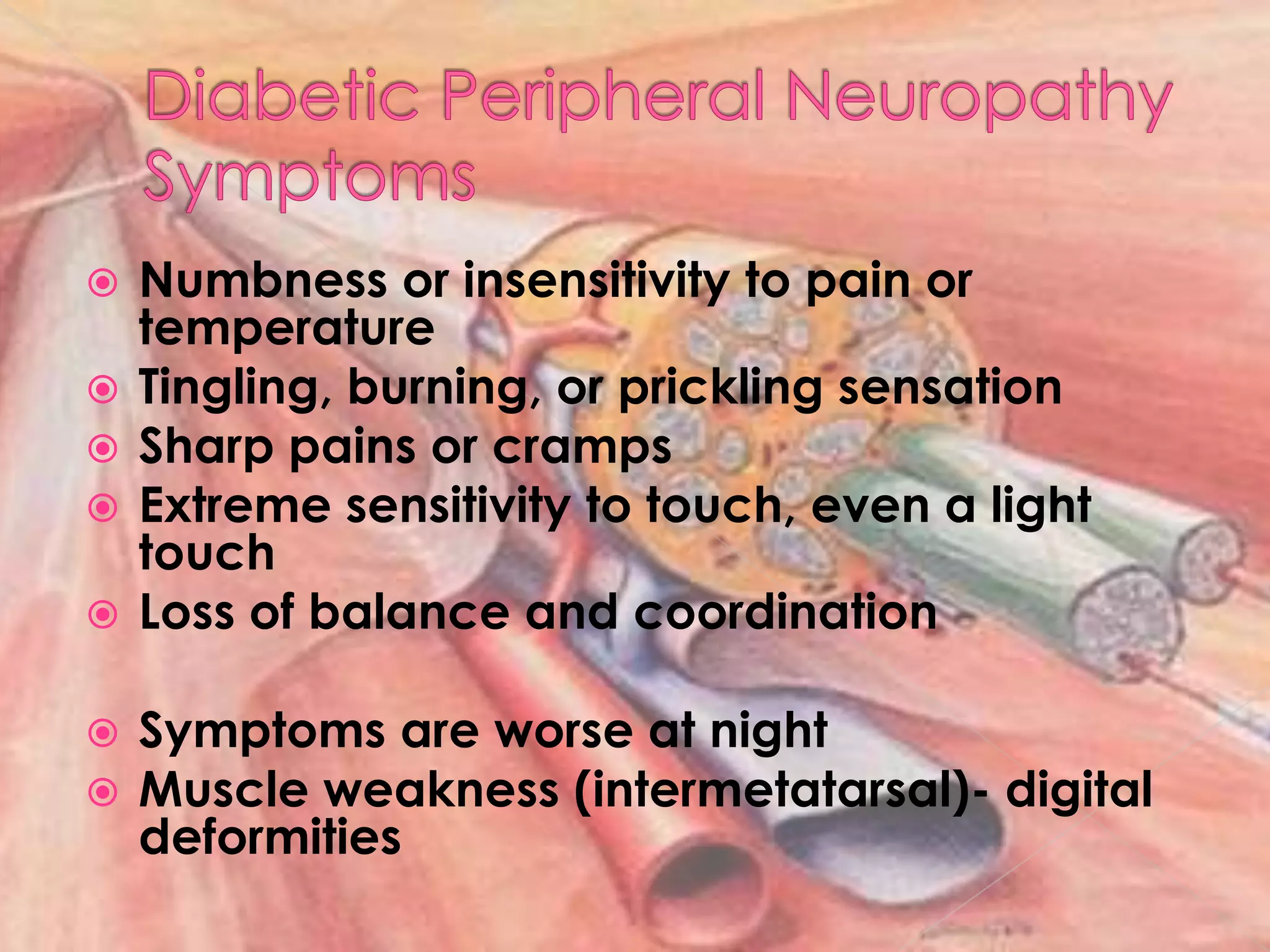
Diabetic Peripheral NeuropathySymptomsNumbness or insensitivity to pain or temperatureTingling, burning, or prickling sensationSharp pains or crampsExtreme sensitivity to touch, even a light touchLoss of balance and coordinationSymptoms are worse at nightMuscle weakness (intermetatarsal)- digital deformities
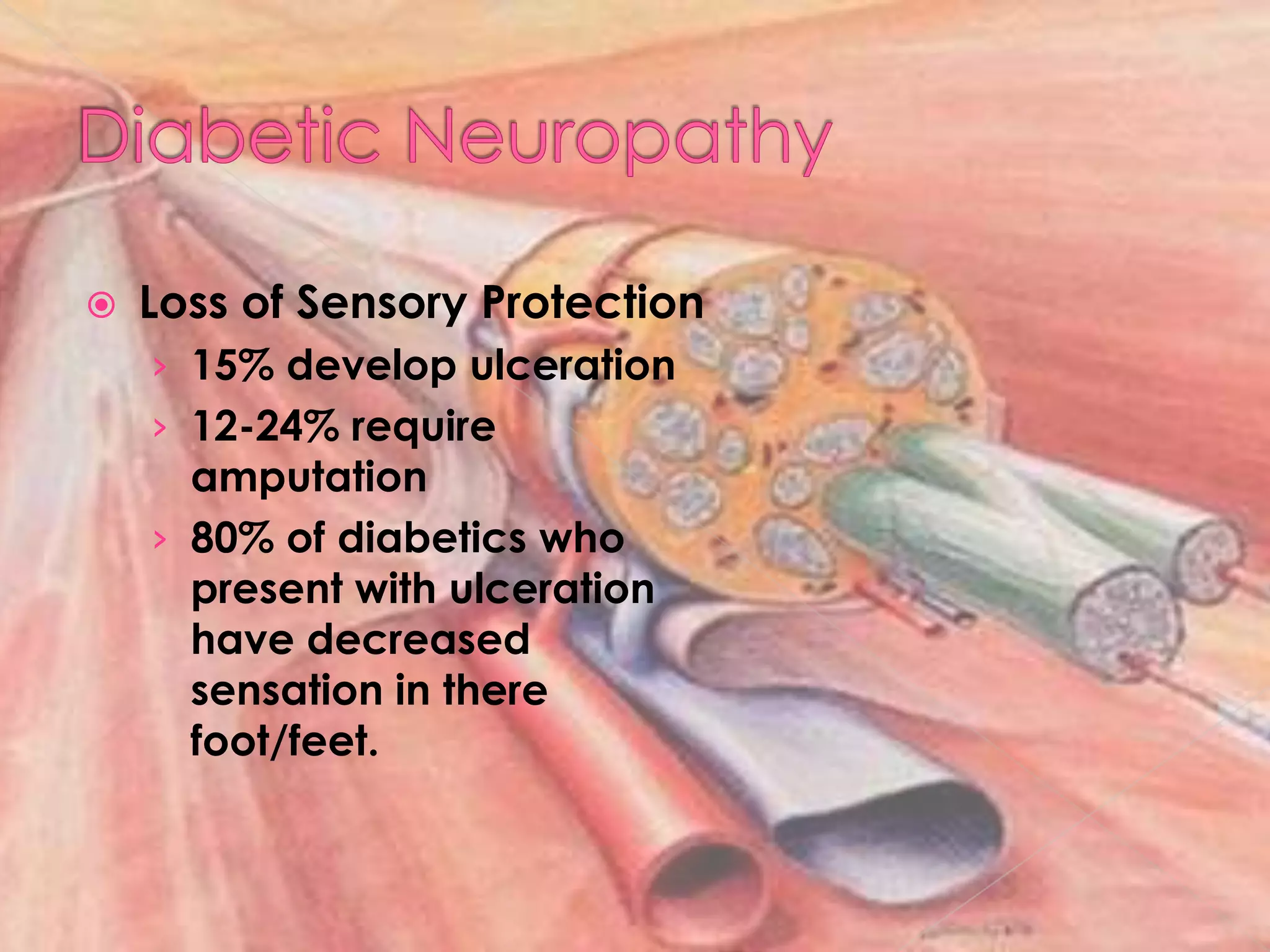
Diabetic NeuropathyLoss of Sensory Protection15% develop ulceration12-24% require amputation80% of diabetics who present with ulceration have decreased sensation in there foot/feet.
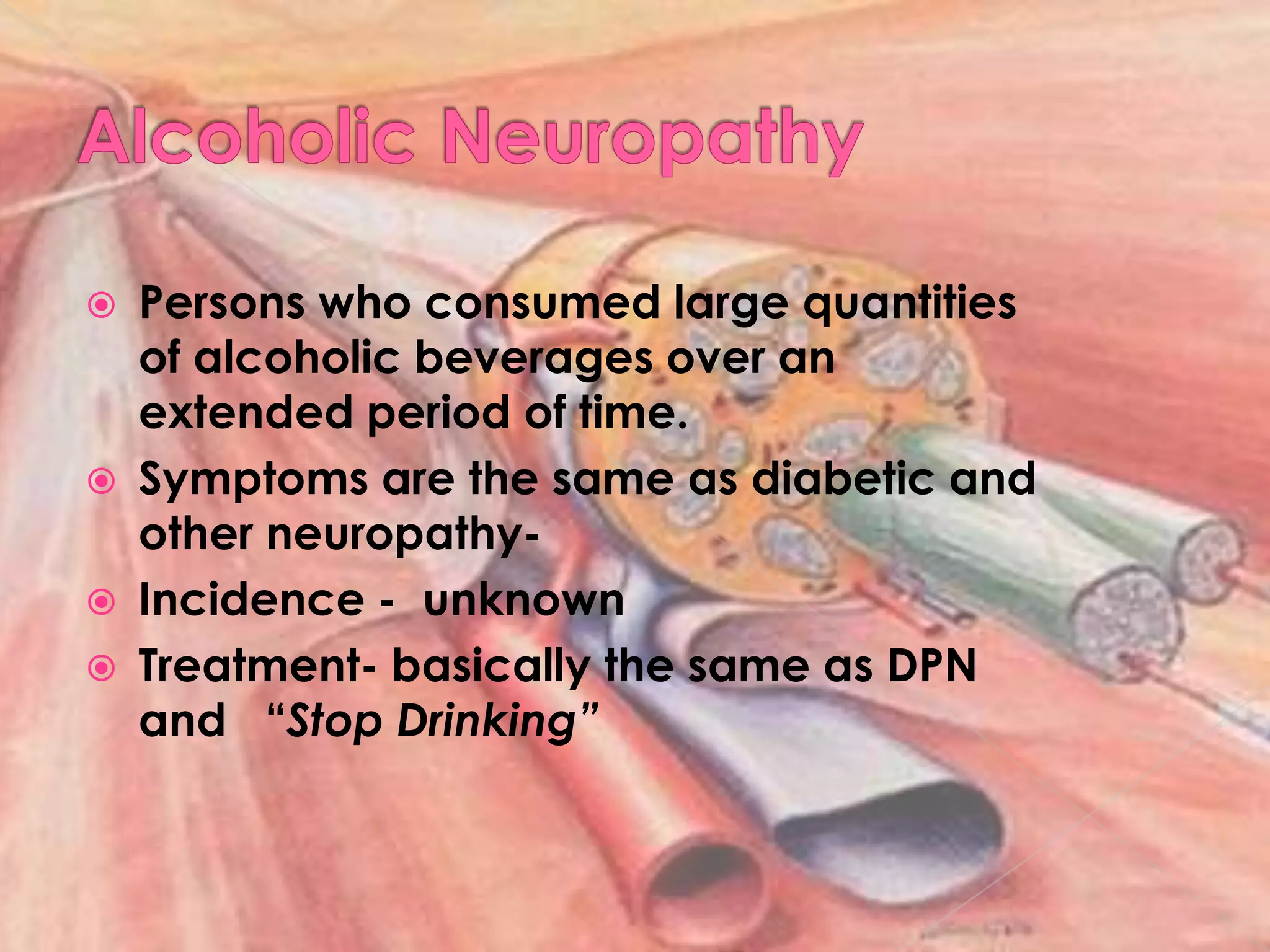
Alcoholic NeuropathyPersons who consumed large quantities of alcoholic beverages over an extended period of time.Symptoms are the same as diabetic and other neuropathy-Incidence -  unknownTreatment- basically the same as DPN and   “Stop Drinking”
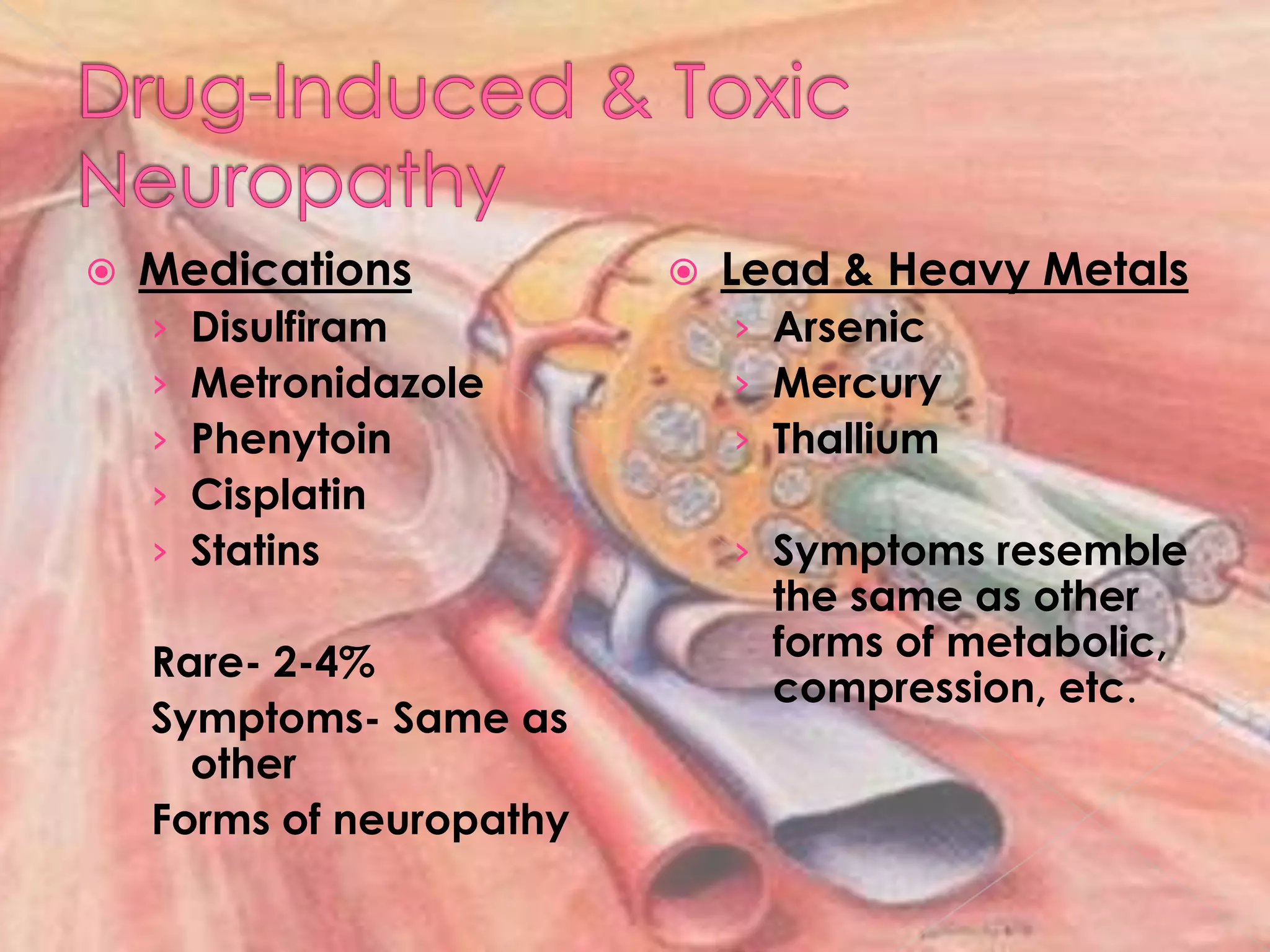
Drug-Induced & Toxic NeuropathyMedicationsDisulfiramMetronidazolePhenytoinCisplatinStatinsRare- 2-4%Symptoms- Same as otherForms of neuropathyLead & Heavy Metals ArsenicMercuryThalliumSymptoms resemble the same as other forms of metabolic, compression, etc.
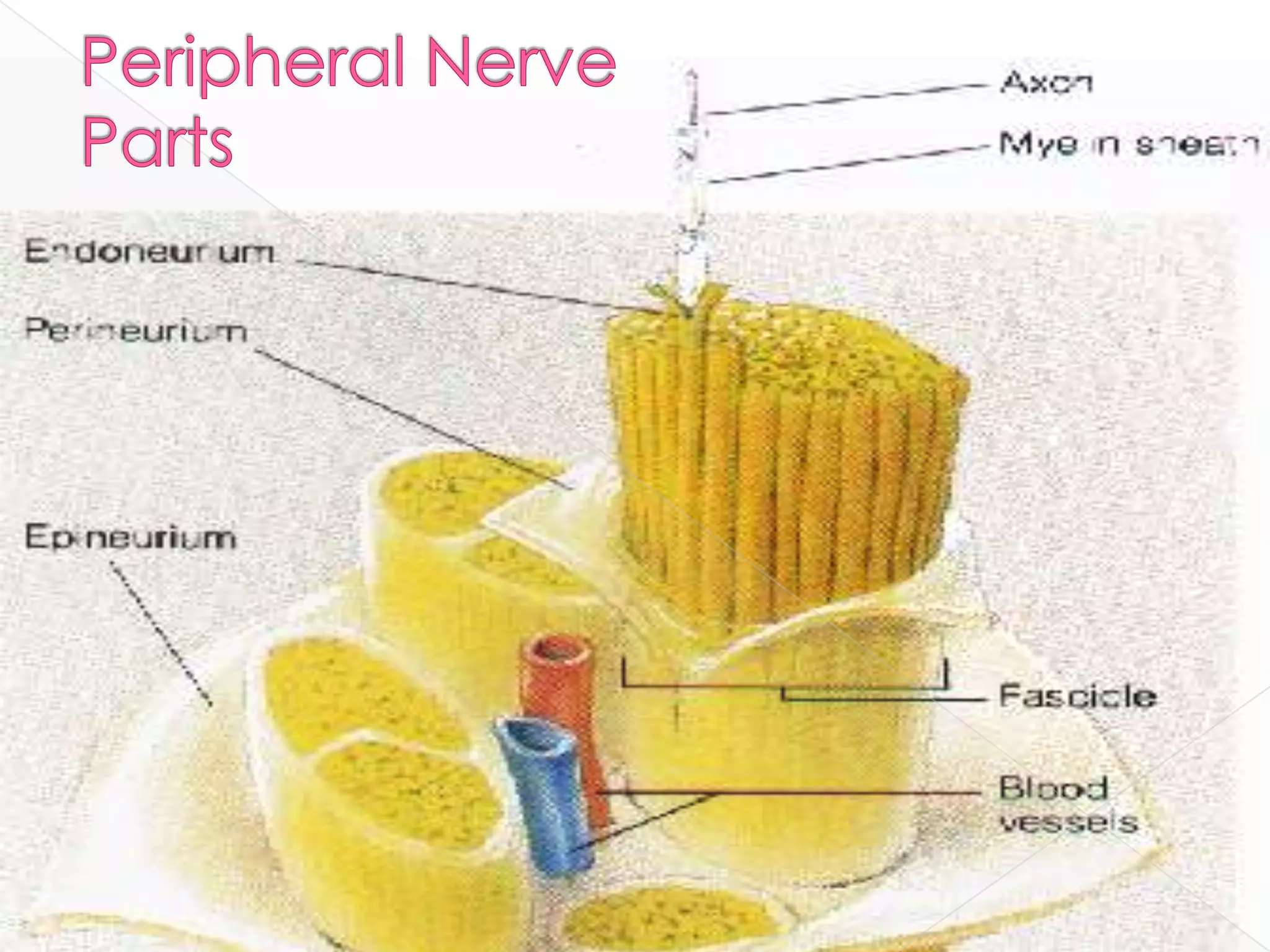
What Do We Know?Damaged microvasculatureDecreased oxygen to specific parts of the nerveAreas of chronic flatteningSigns of chronic inflammationPerineurial swellingSites of specific nerve damageSites of nerve repair
What IF….A Patient presents with heel pain.Diagnosis of Plantar FasciitisWhat if they also a history of:DiabeticAlcoholichad a family member with a history of plantar fasciitis worked with heavy metal had chemotherapy.What difference does it make?
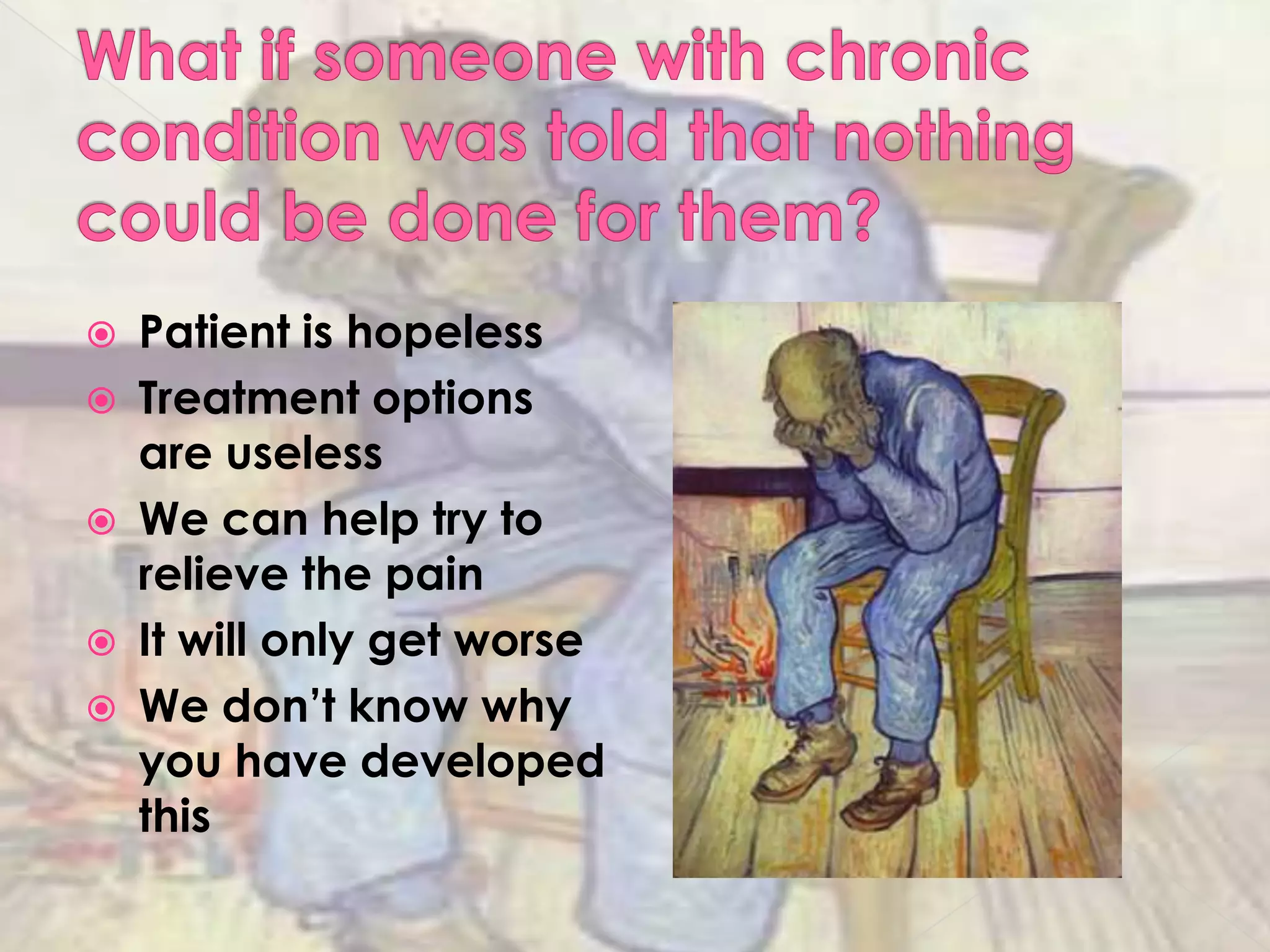
What if someone with chronic condition was told that nothing could be done for them?Patient is hopelessTreatment options are uselessWe can help try to relieve the painIt will only get worse We don’t know why you have developed this
Let’s rethink the situation
Peripheral Nerve CompressionSyndrome I think that this is going to make a lot of senseLet’s change the way we think about neuropathy!
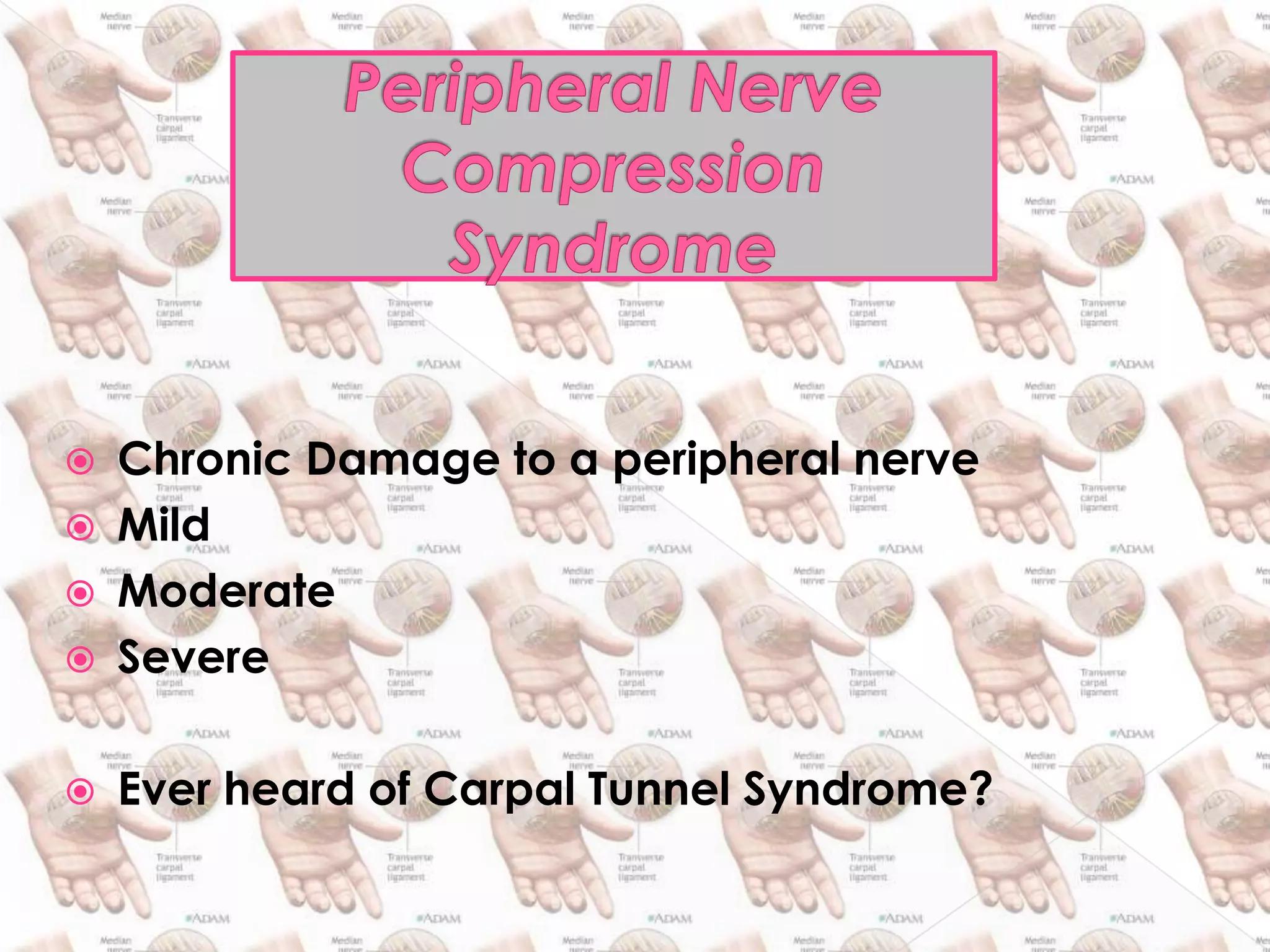
Peripheral Nerve CompressionSyndromeChronic Damage to a peripheral nerveMildModerateSevereEver heard of Carpal Tunnel Syndrome?
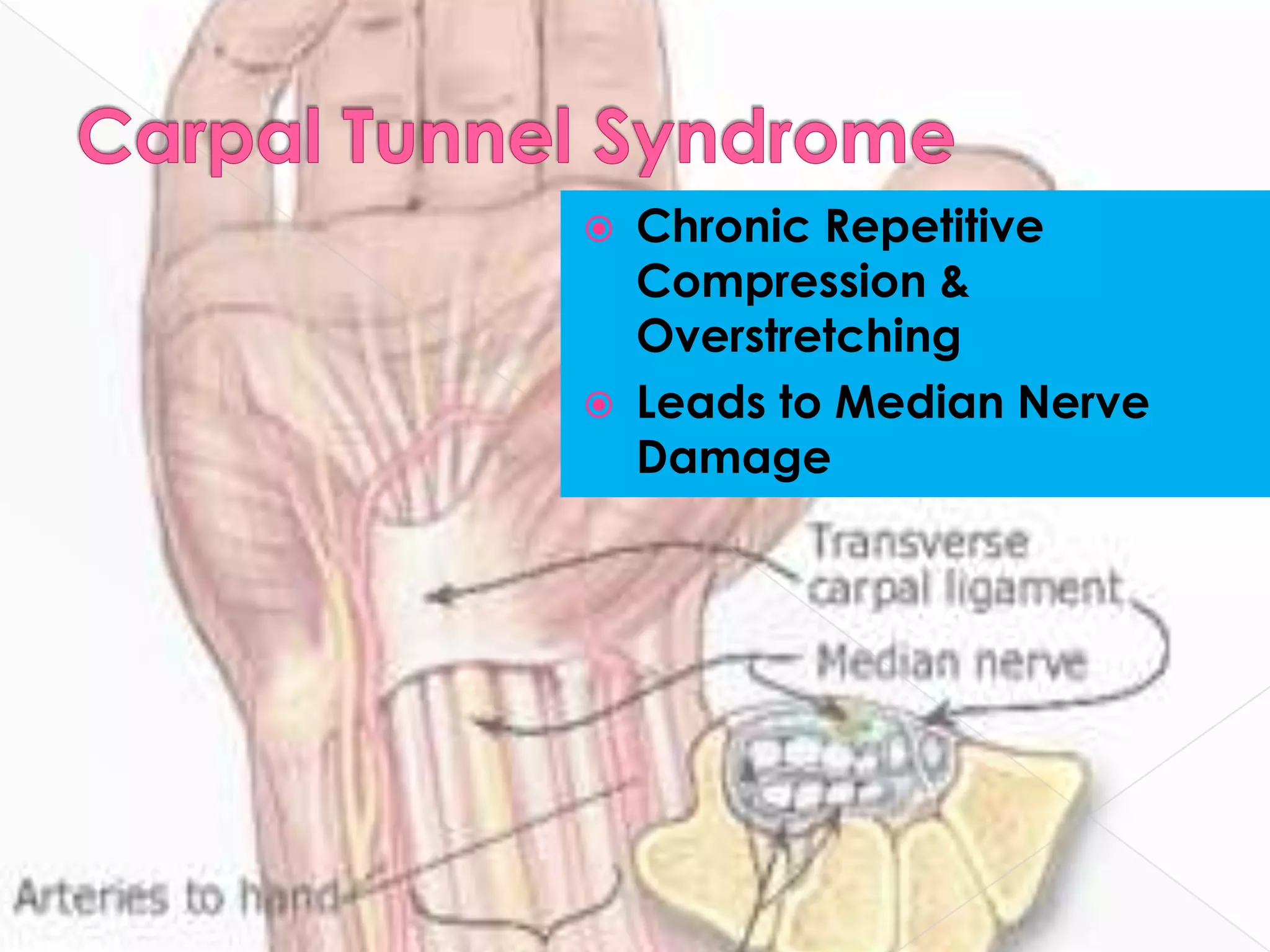
Carpal Tunnel SyndromeChronic Repetitive Compression & OverstretchingLeads to Median Nerve Damage
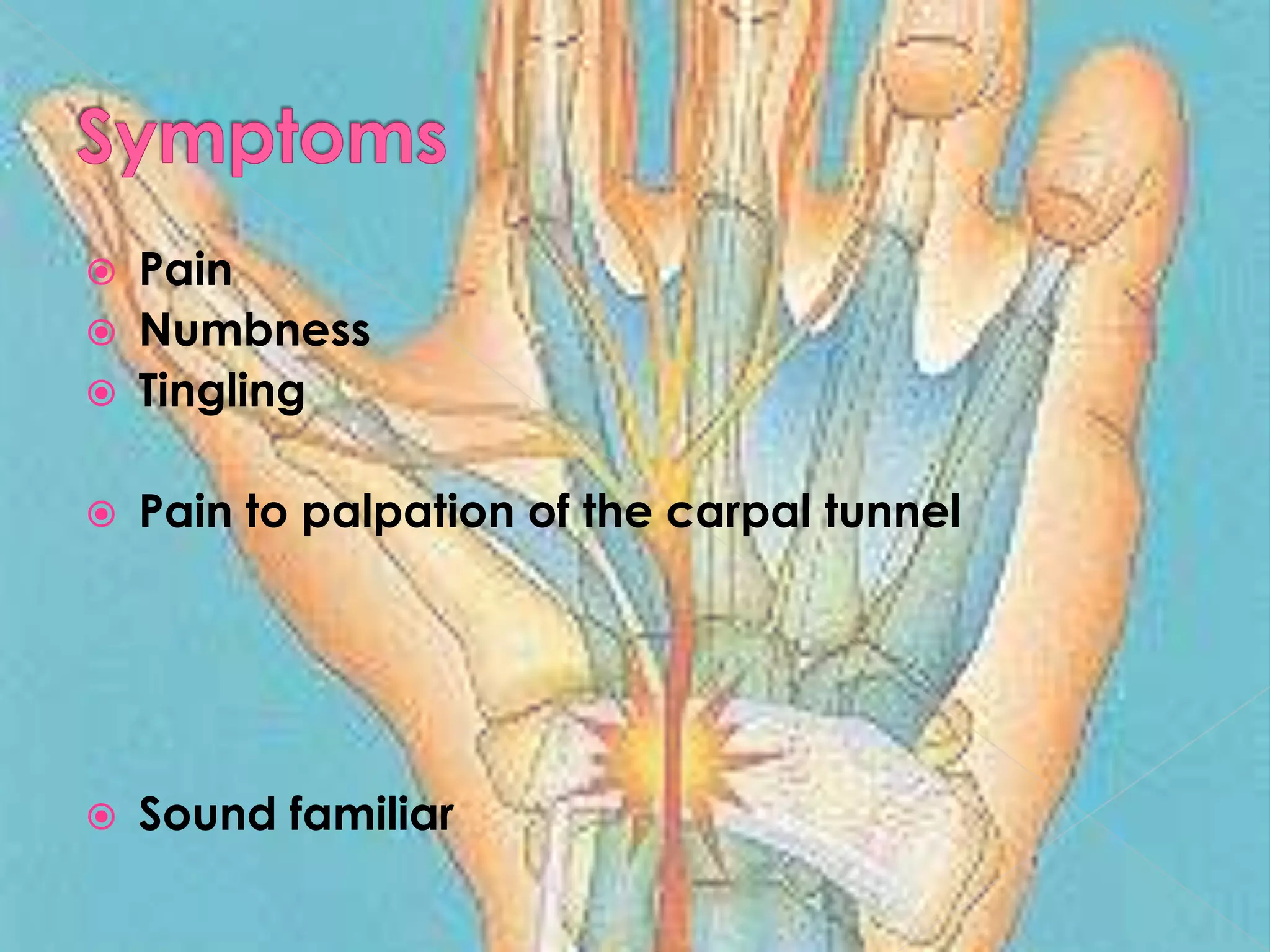
SymptomsPainNumbnessTinglingPain to palpation of the carpal tunnelSound familiar
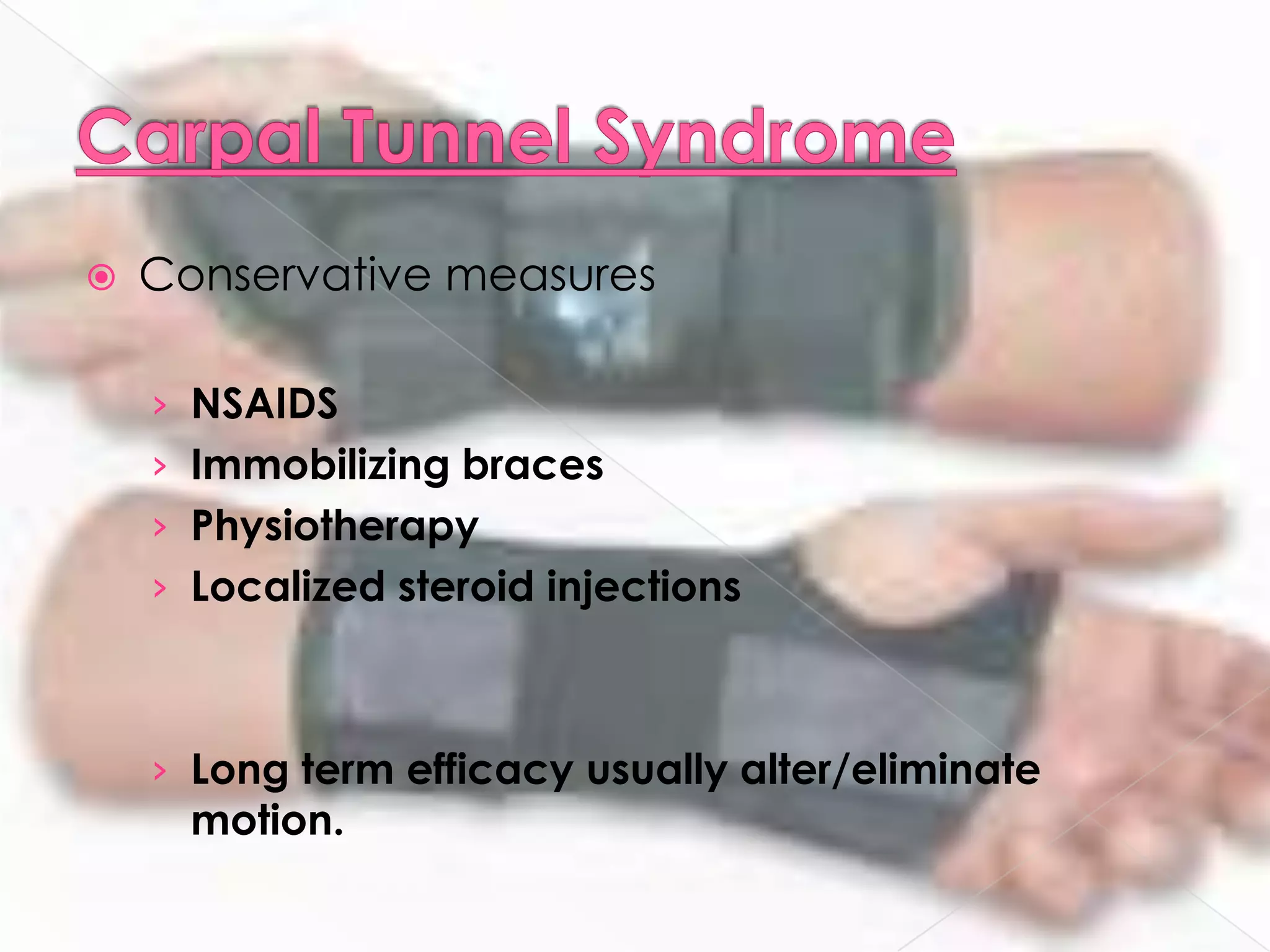
Carpal Tunnel SyndromeConservative measuresNSAIDSImmobilizing bracesPhysiotherapyLocalized steroid injectionsLong term efficacy usually alter/eliminate motion.
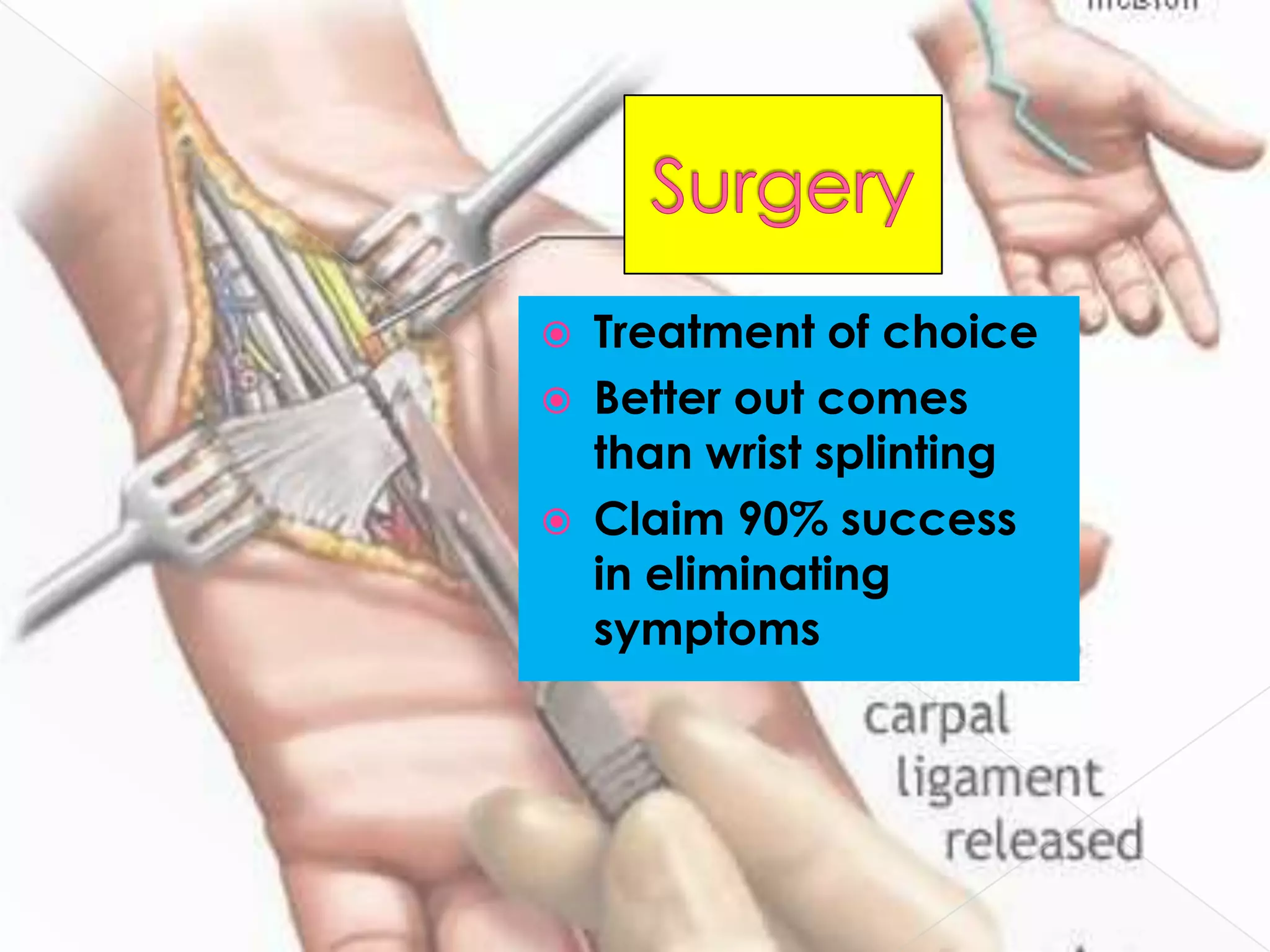
SurgeryTreatment of choiceBetter out comes than wrist splintingClaim 90% success in eliminating symptoms
What are the Patient’s Symptoms?Feet feel best in the morningAs the day goes on they get worse“The more active I am the worse the symptoms”At night when I go to bed they really start acting upNumbness/burning in my toes/ball of footTravels into my arch and up my legTop of the foot feels fine, no problems thereUsed to happen after walking on the treadmill/mall but would stop after resting.
Typical PatientUsually has been to many other doctors first. (even though it is a foot symptom).Has had many expensive tests with or without abnormal findingsFrustratedVery fearfulMiddle aged or olderHave a history of excessive walking/standingHouse wifePostal workerEtc.
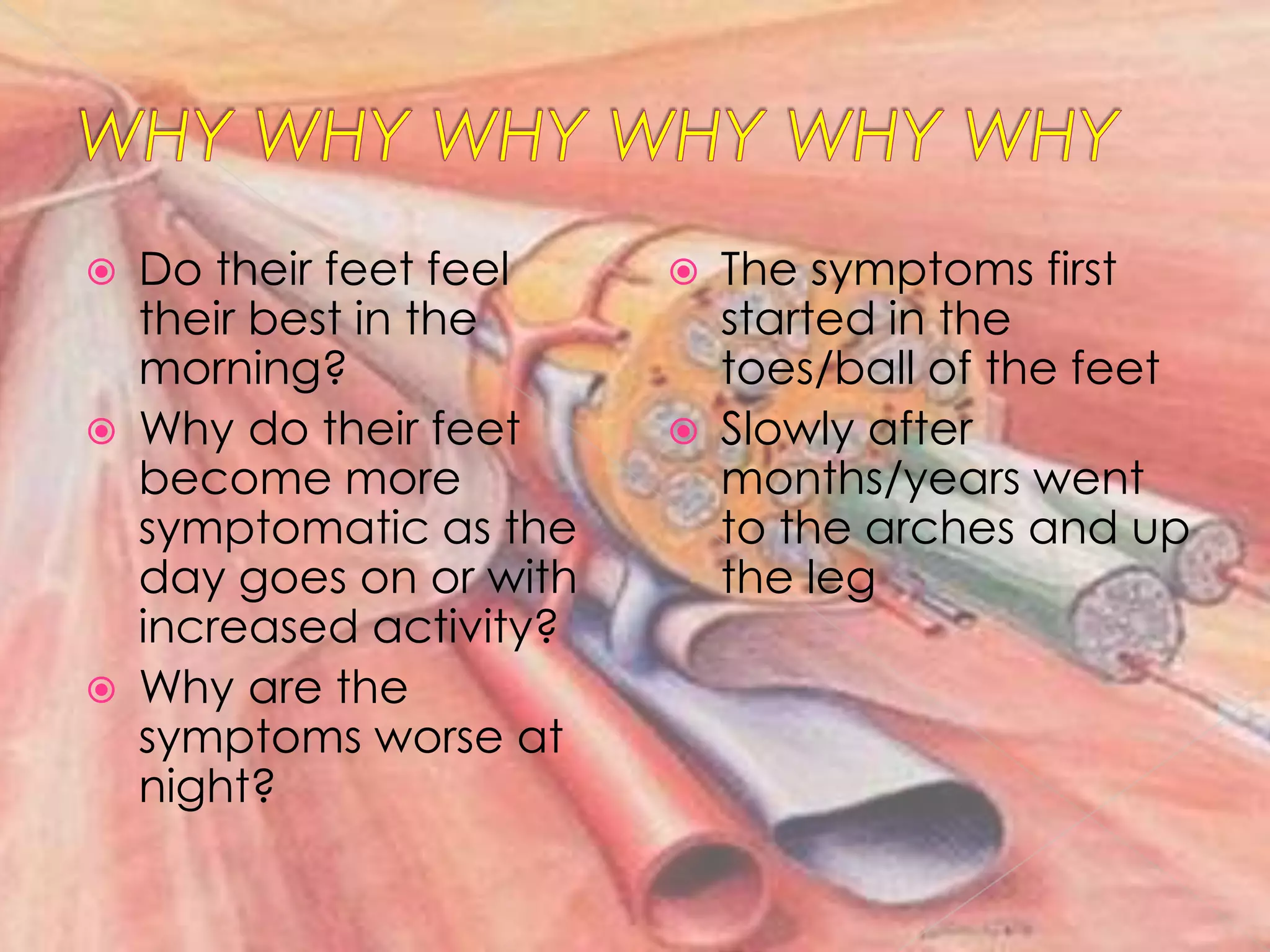
WHY WHYWHYWHYWHYWHYDo their feet feel their best in the morning?Why do their feet become more symptomatic as the day goes on or with increased activity?Why are the symptoms worse at night?Thesymptoms first started in the toes/ball of the feetSlowly after months/years went to the arches and up the leg
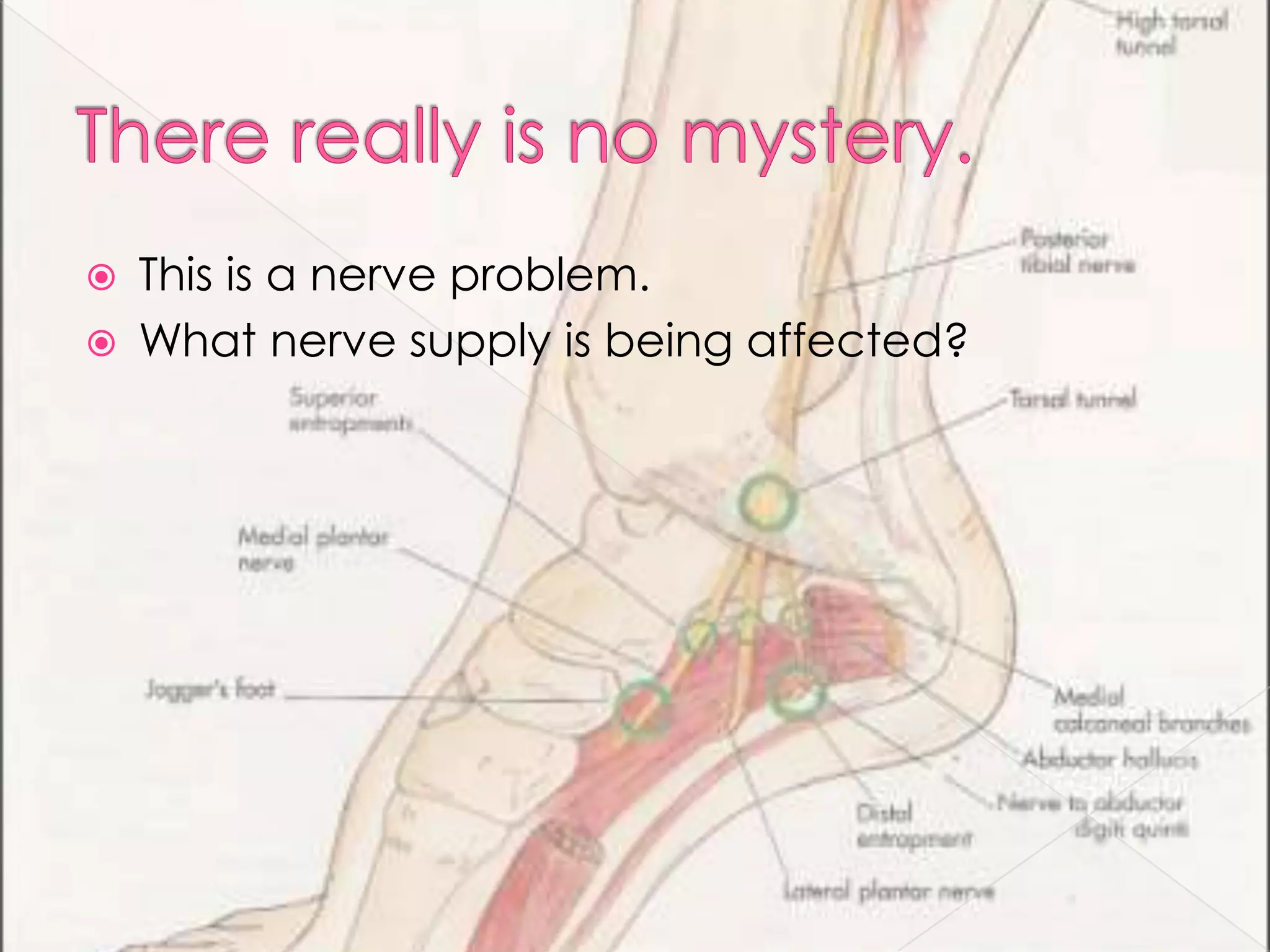
There really is no mystery.This is a nerve problem.What nerve supply is being affected?
Do you ever have these patients stand or walk?
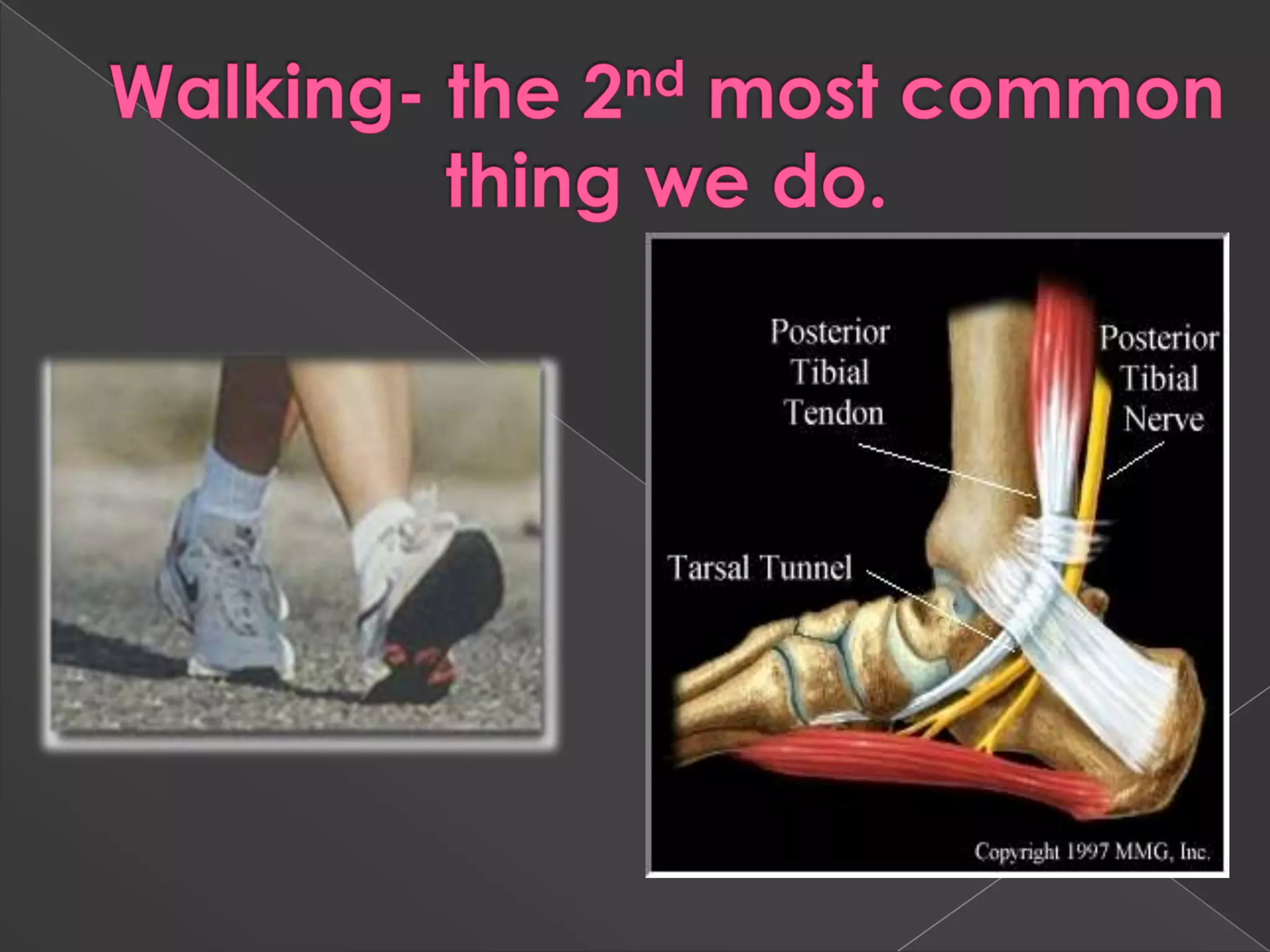
Walking- the 2nd most common thing we do.
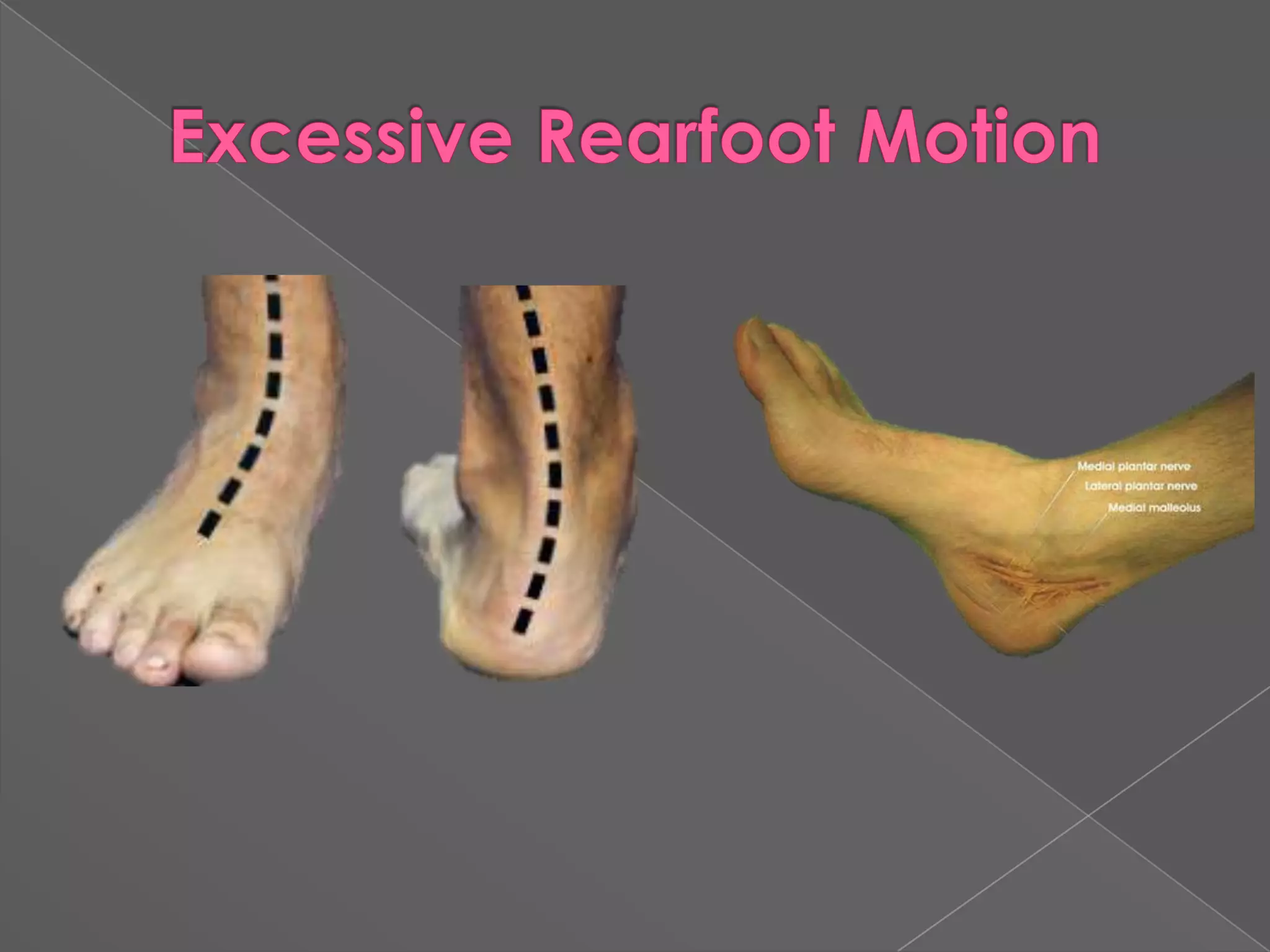
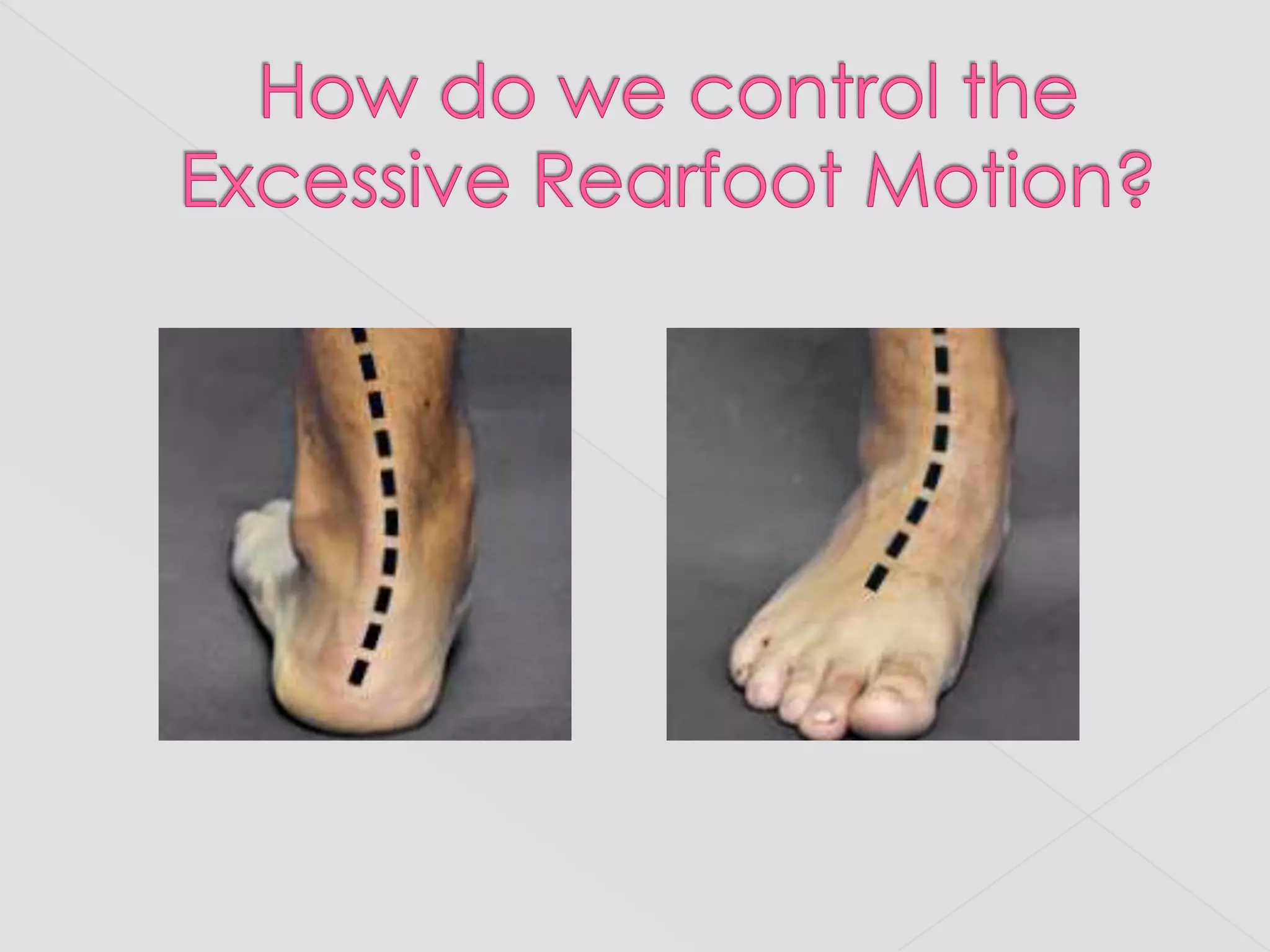
Excessive Rearfoot Motion
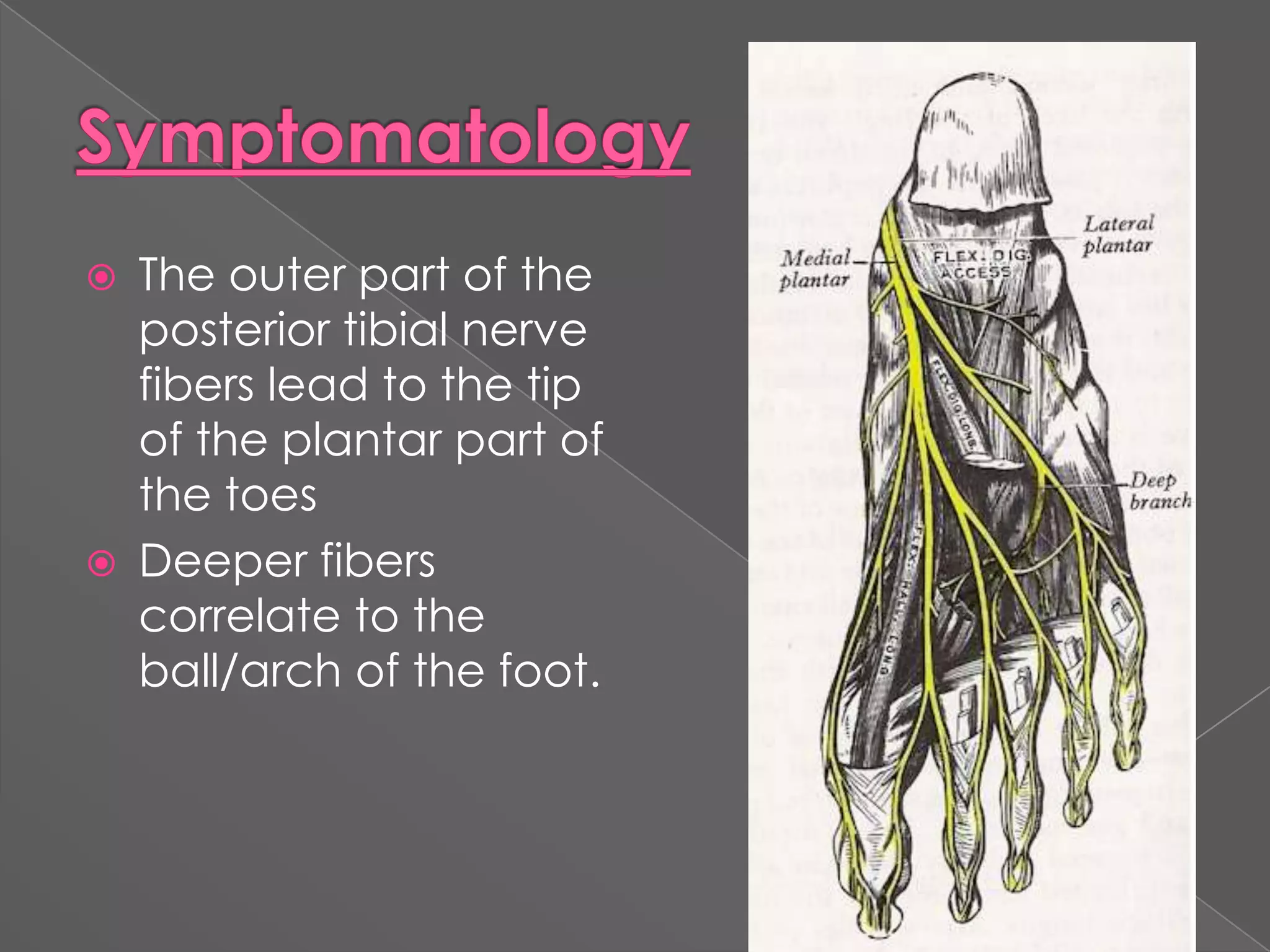
SymptomatologyThe outer part of the posterior tibial nerve fibers lead to the tip of the plantar part of the toesDeeper fibers correlate to the ball/arch of the foot.
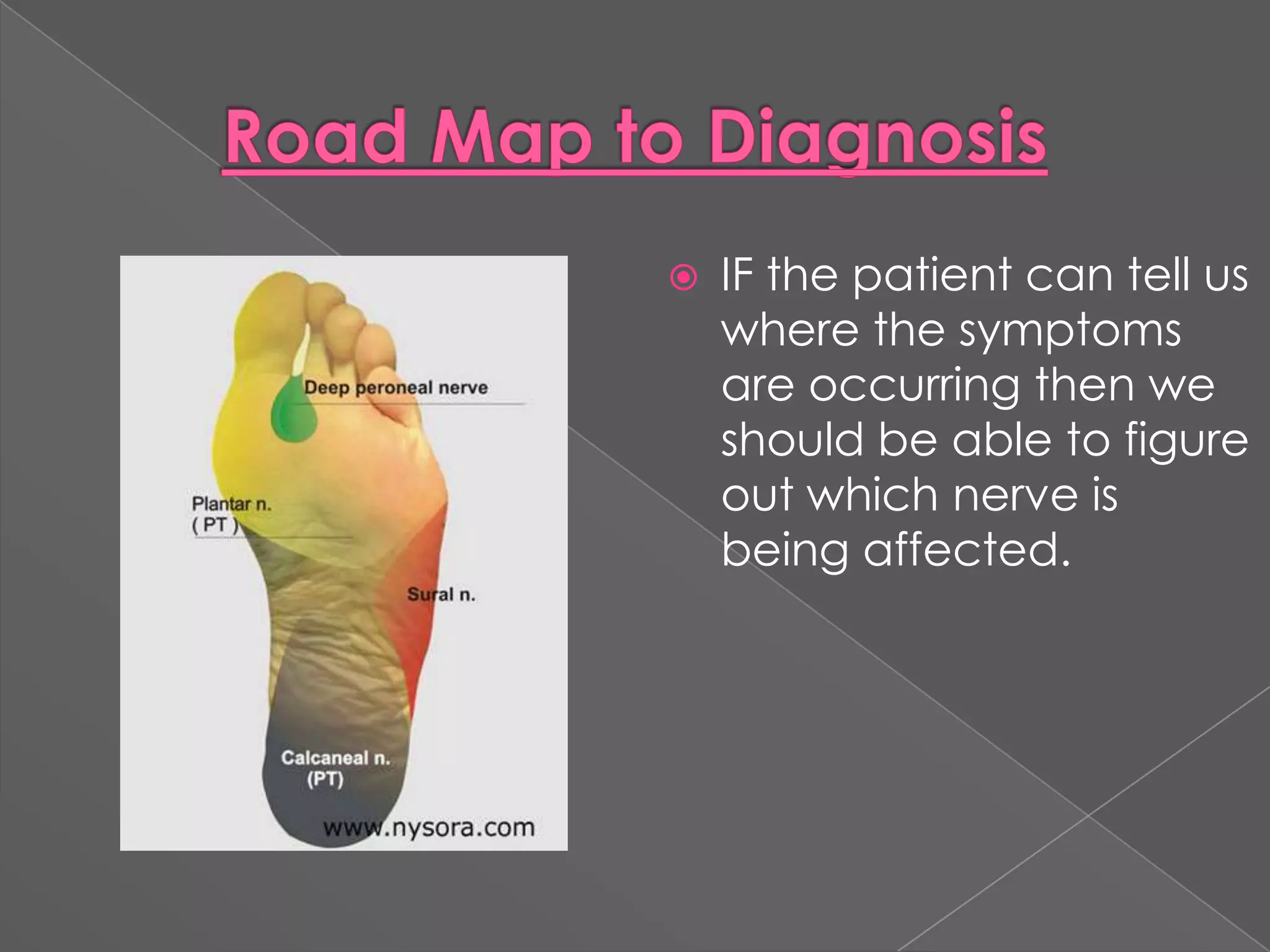
Road Map to DiagnosisIF the patient can tell us where the symptoms are occurring then we should be able to figure out which nerve is being affected.
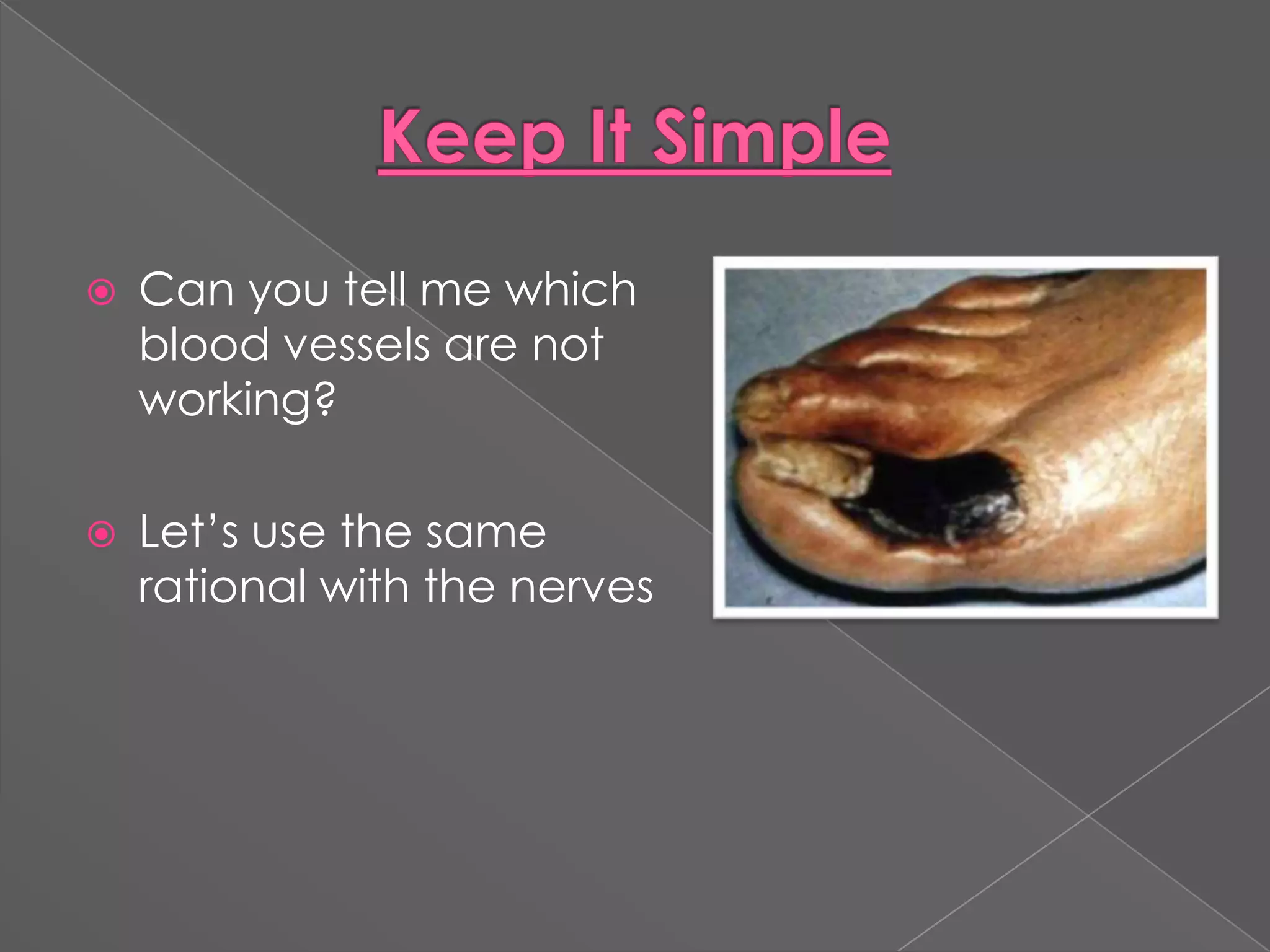
Keep It SimpleCan you tell me which blood vessels are not working?Let’s use the same rational with the nerves
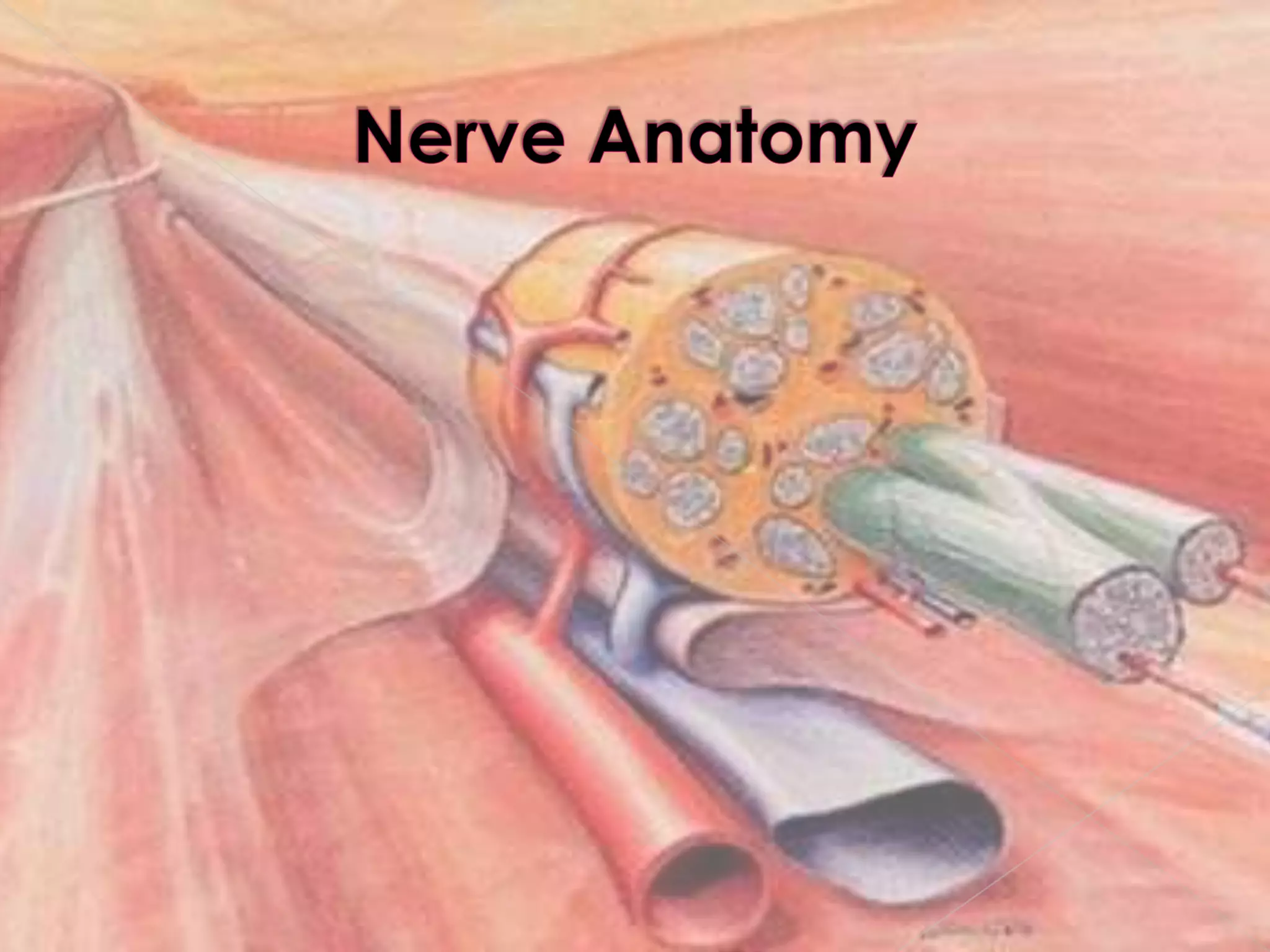
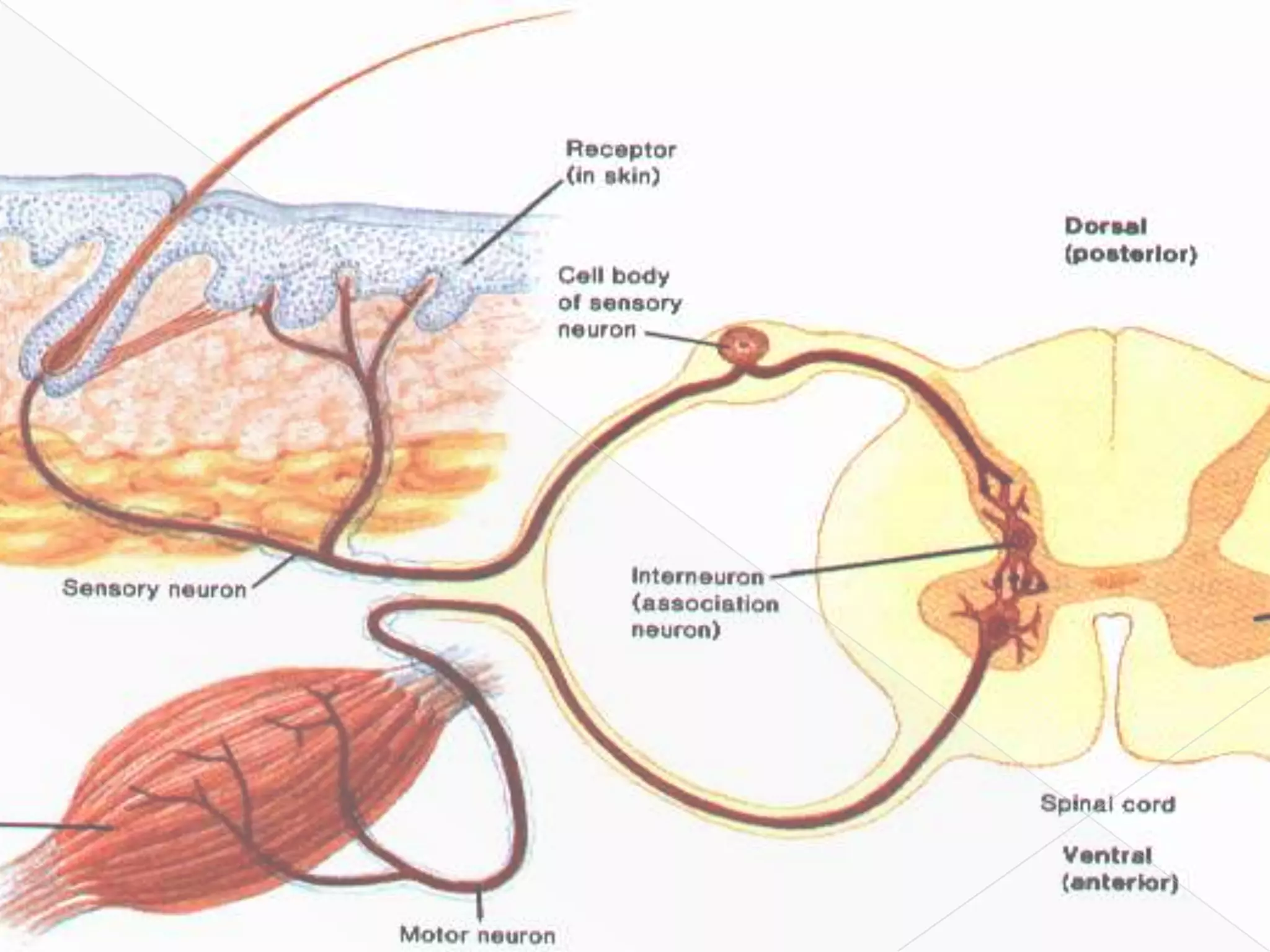
Nerve Anatomy
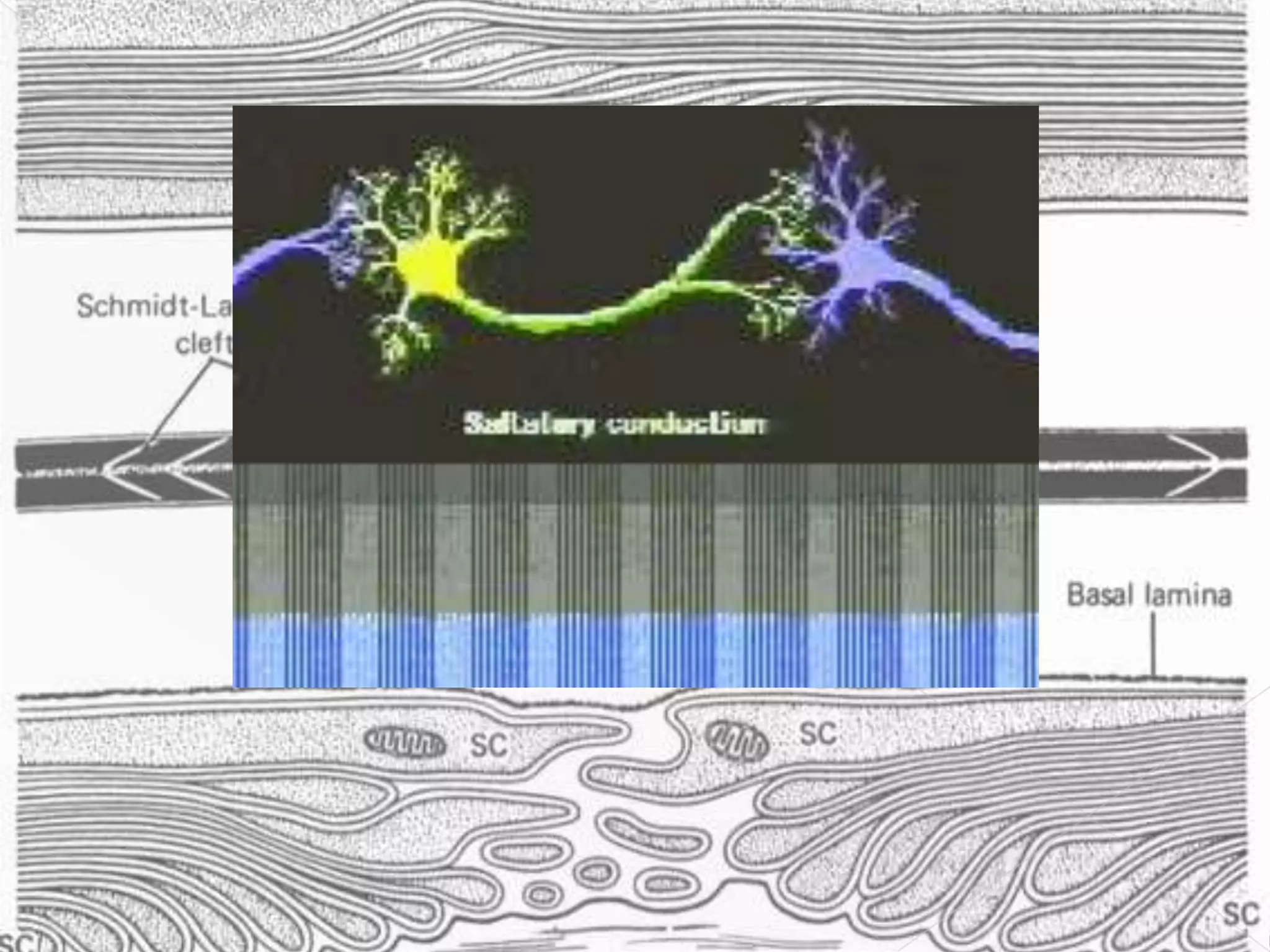
Peripheral Nerve Parts
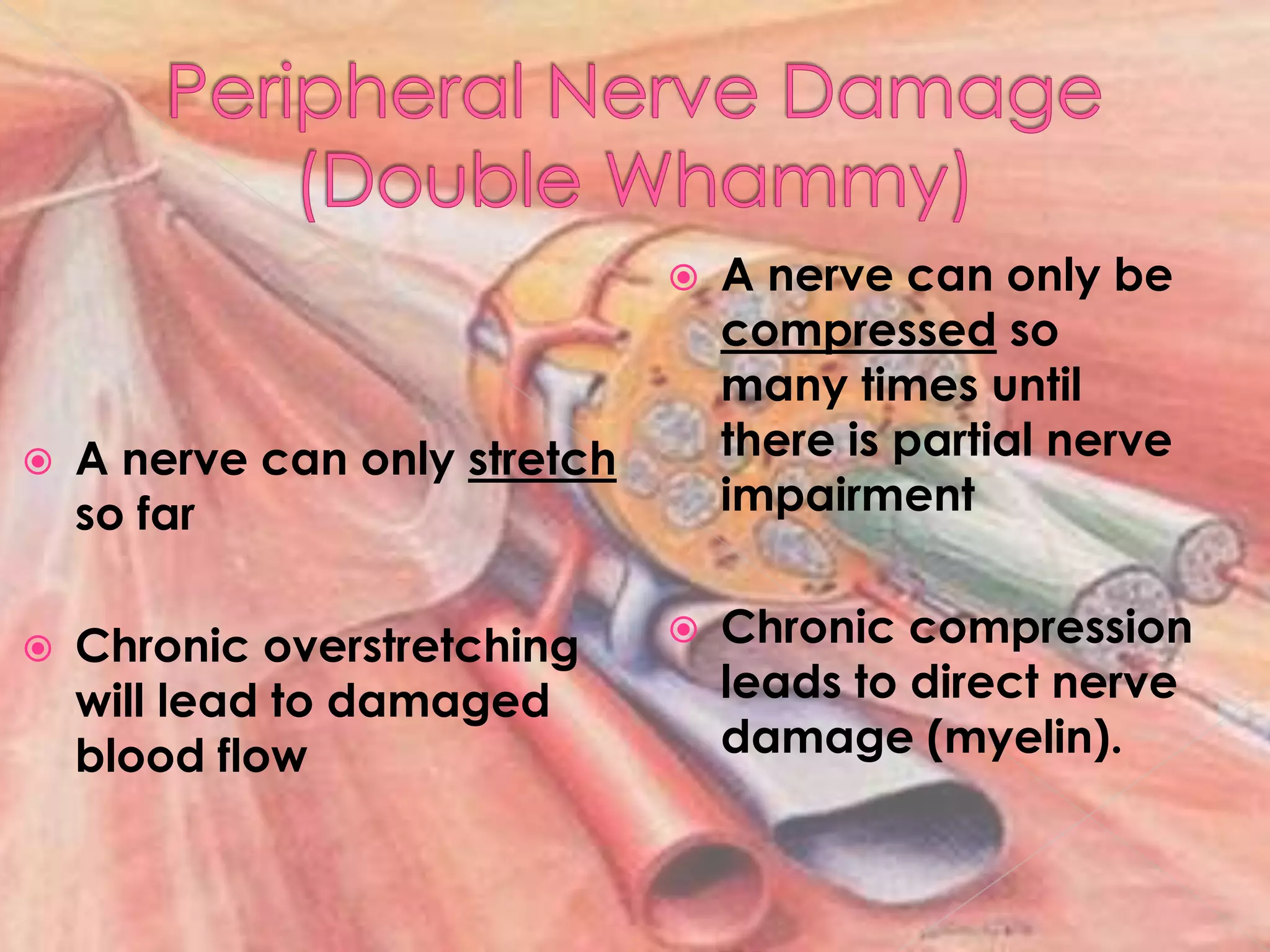
Peripheral Nerve Damage(Double Whammy)A nerve can only stretch so farChronic overstretching will lead to damaged blood flowA nerve can only be compressed so many times until there is partial nerve impairmentChronic compression leads to direct nerve damage (myelin).
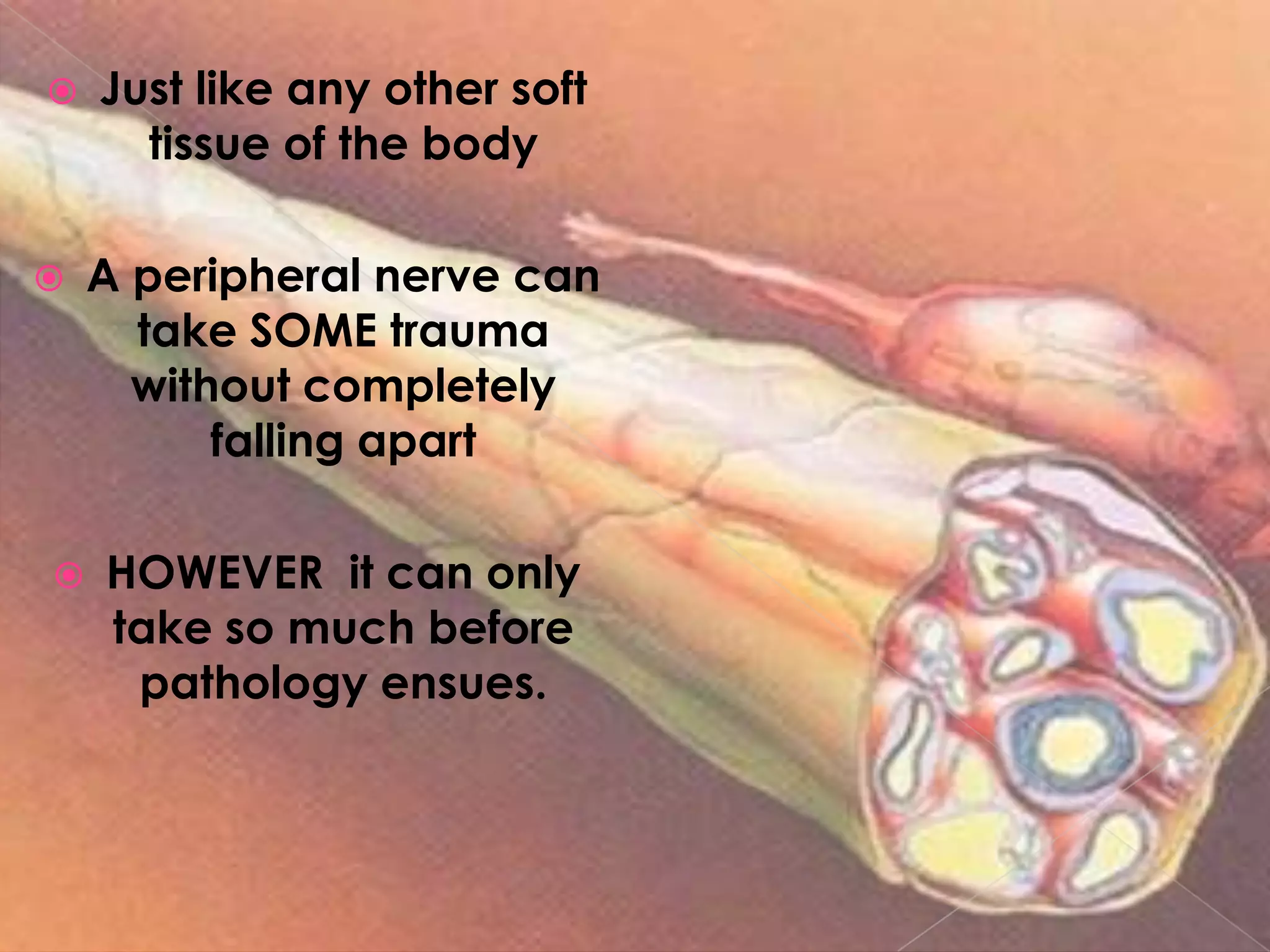
Just like any other soft tissue of the body A peripheral nerve can take SOME trauma without completely falling apartHOWEVER  it can only take so much before pathology ensues.
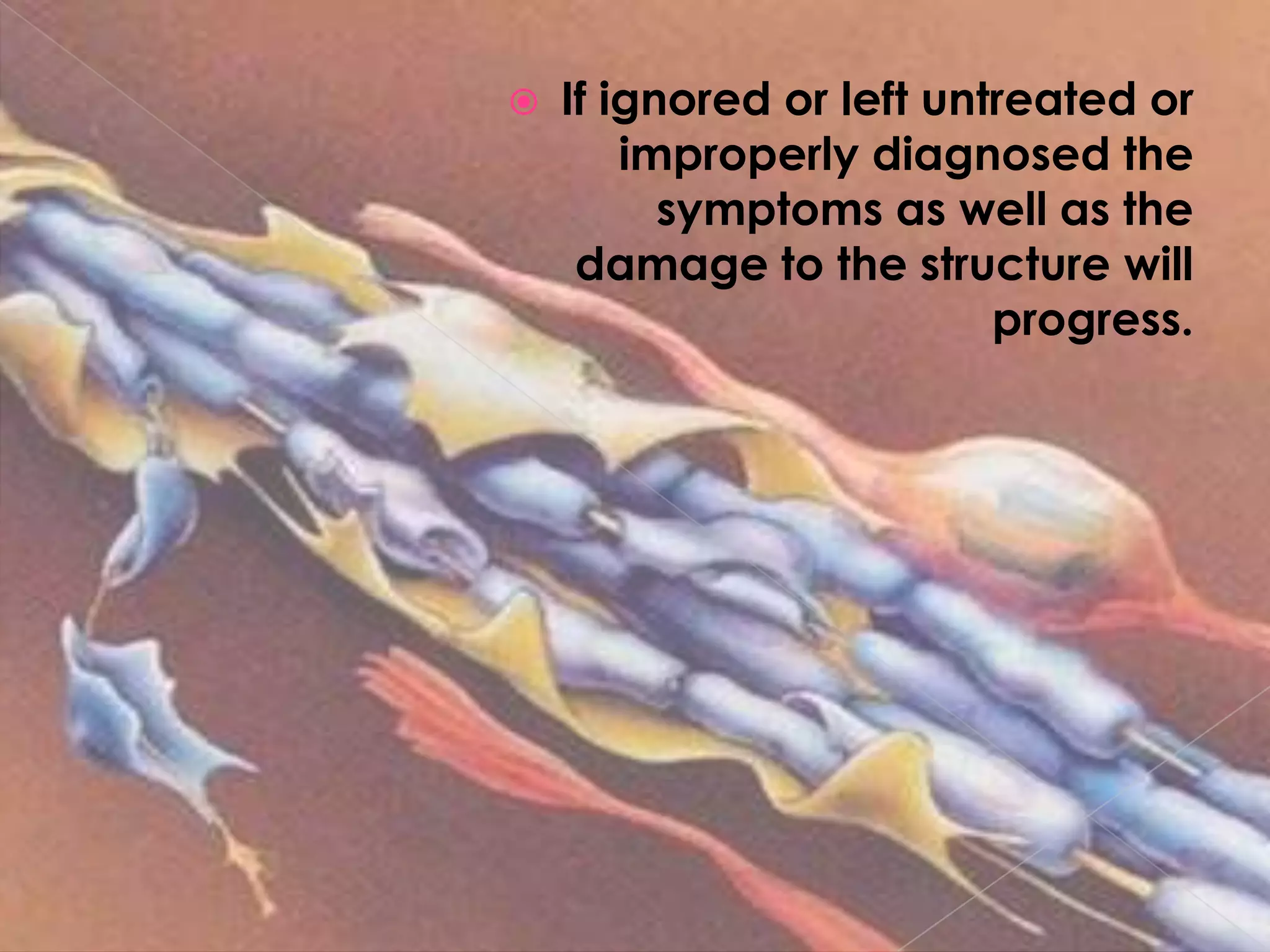
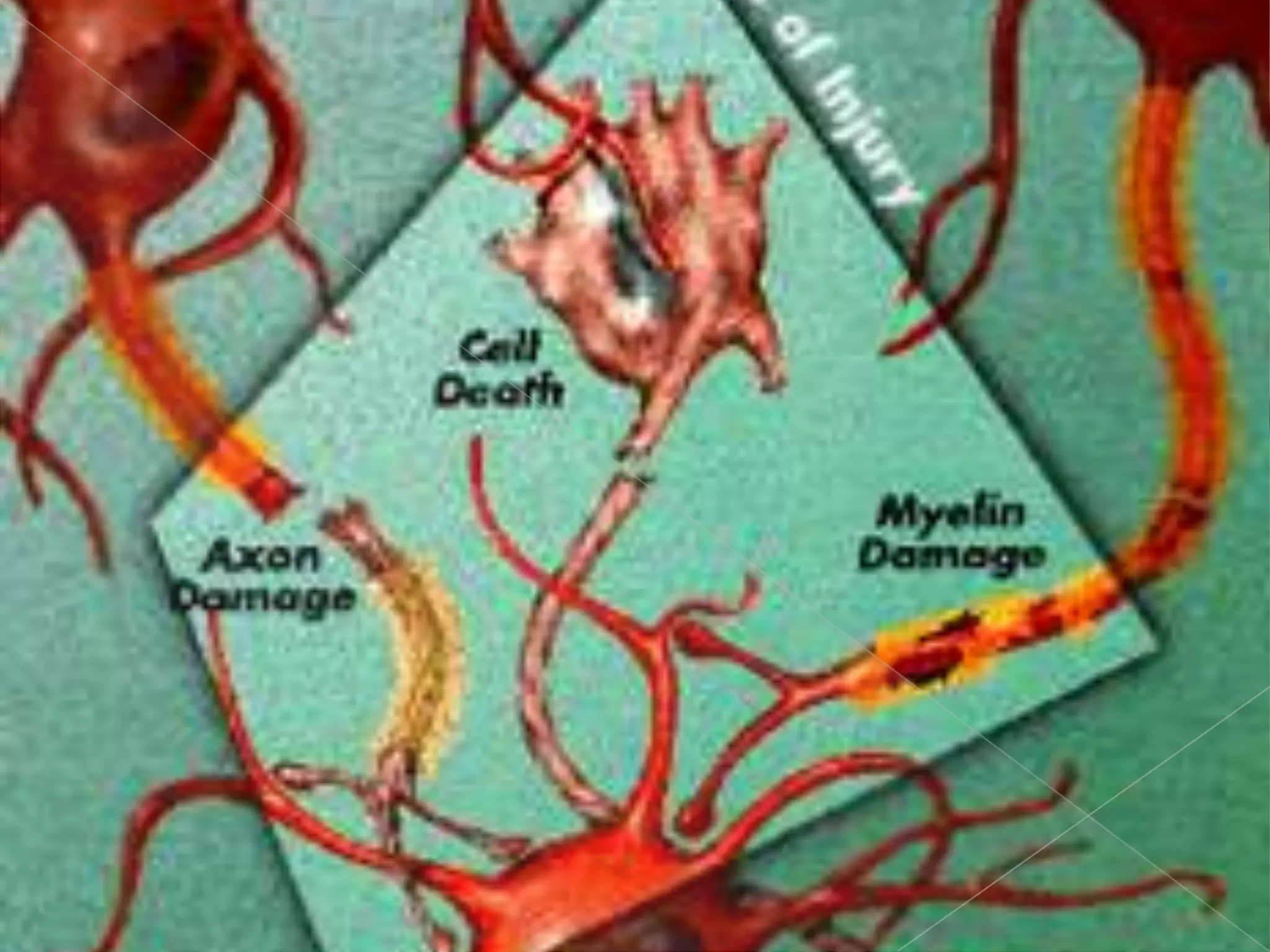
If ignored or left untreated or improperly diagnosed the symptoms as well as the damage to the structure will progress.
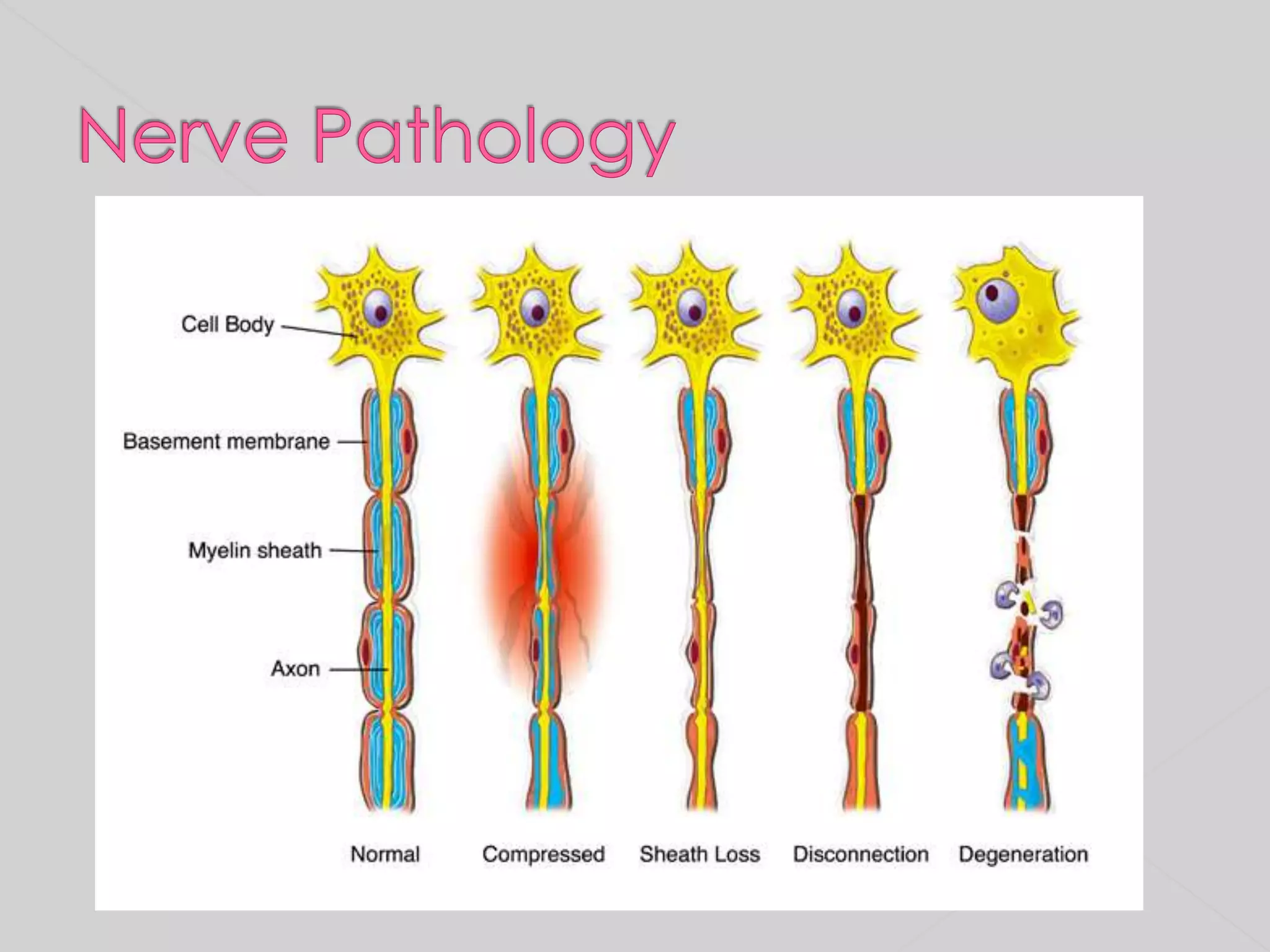
Nerve Pathology
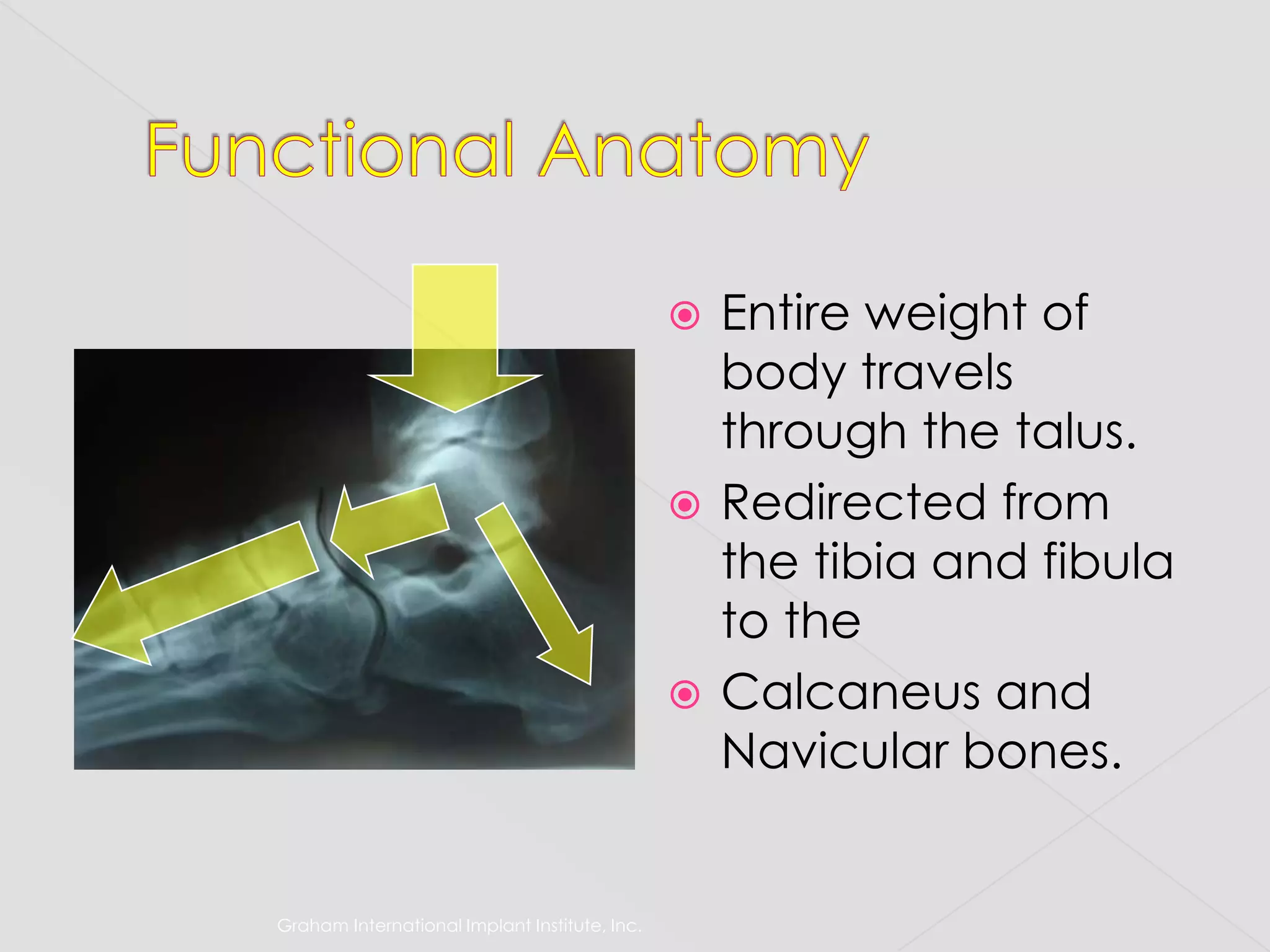
Graham International Implant Institute, Inc.Functional AnatomyEntire weight of body travels through the talus.Redirected from the tibia and fibula to theCalcaneus and Navicular bones.
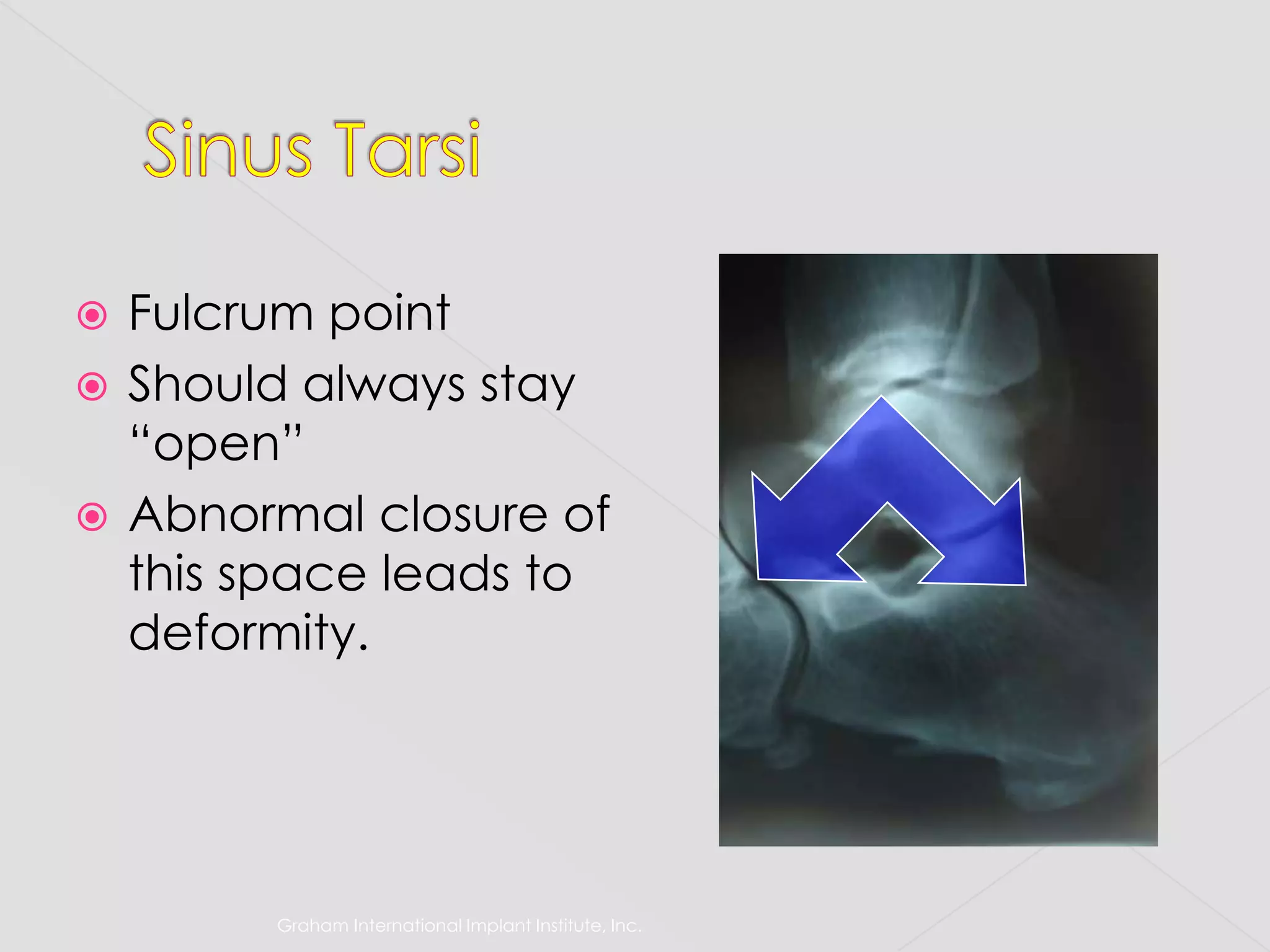
Graham International Implant Institute, Inc.Sinus TarsiFulcrum point Should always stay “open”Abnormal closure of this space leads to deformity.
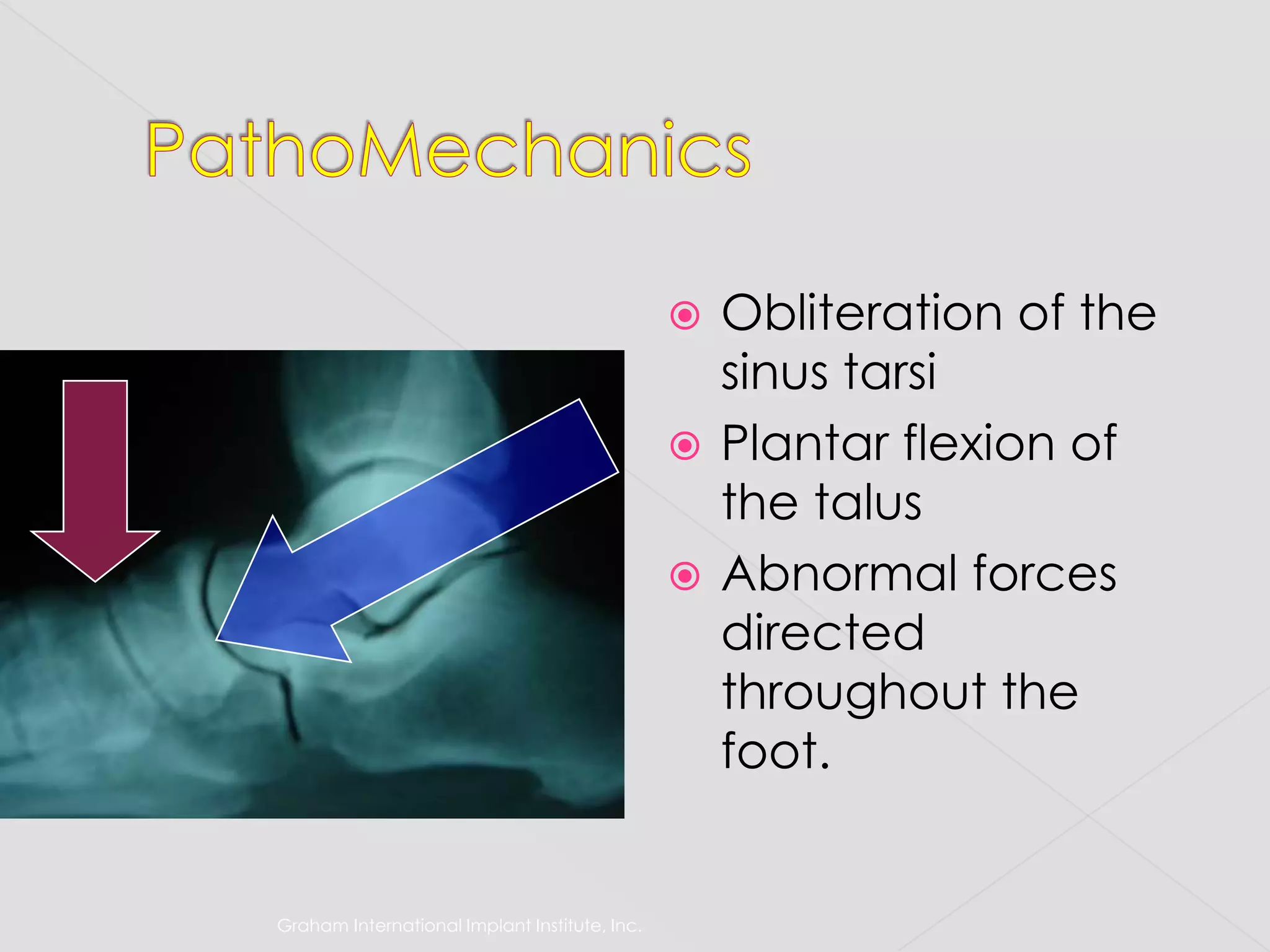
Graham International Implant Institute, Inc.PathoMechanicsObliteration of the sinus tarsiPlantar flexion of the talusAbnormal forces directed throughout the foot.
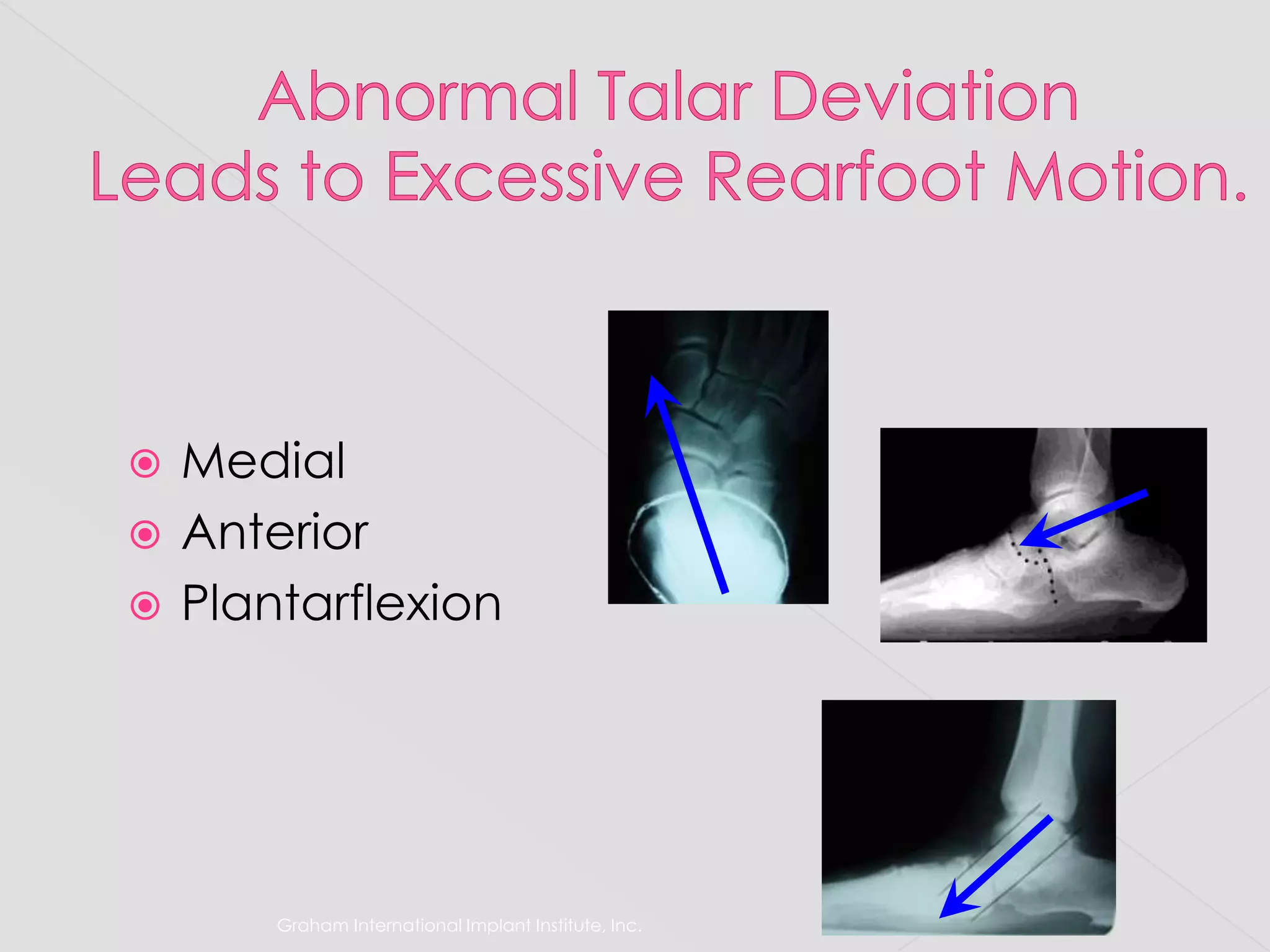
Graham International Implant Institute, Inc.Abnormal Talar DeviationLeads to Excessive Rearfoot Motion.MedialAnteriorPlantarflexion
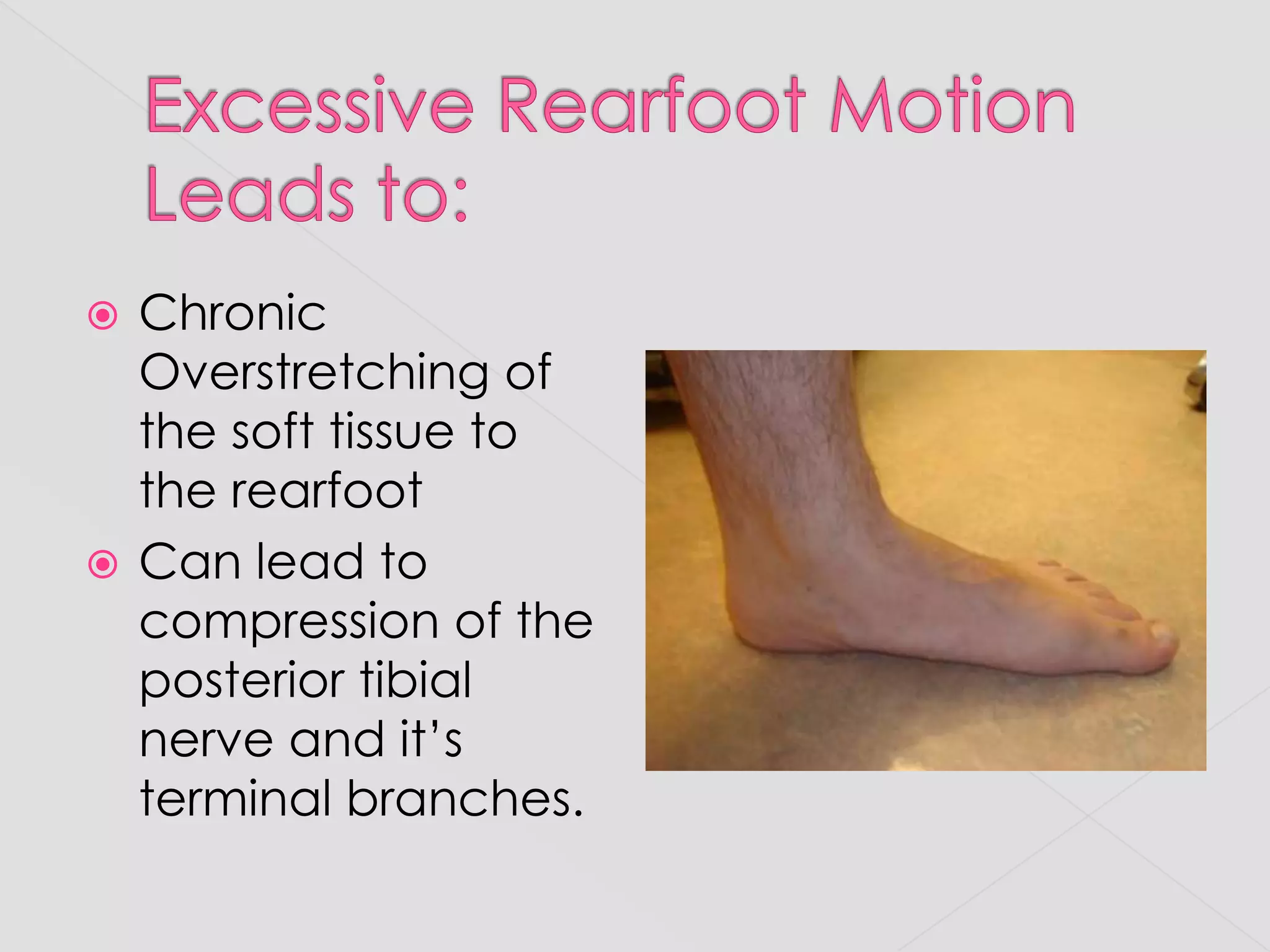
Excessive Rearfoot MotionLeads to:Chronic Overstretching of the soft tissue to the rearfootCan lead to compression of the posterior tibial nerve and it’s terminal branches.
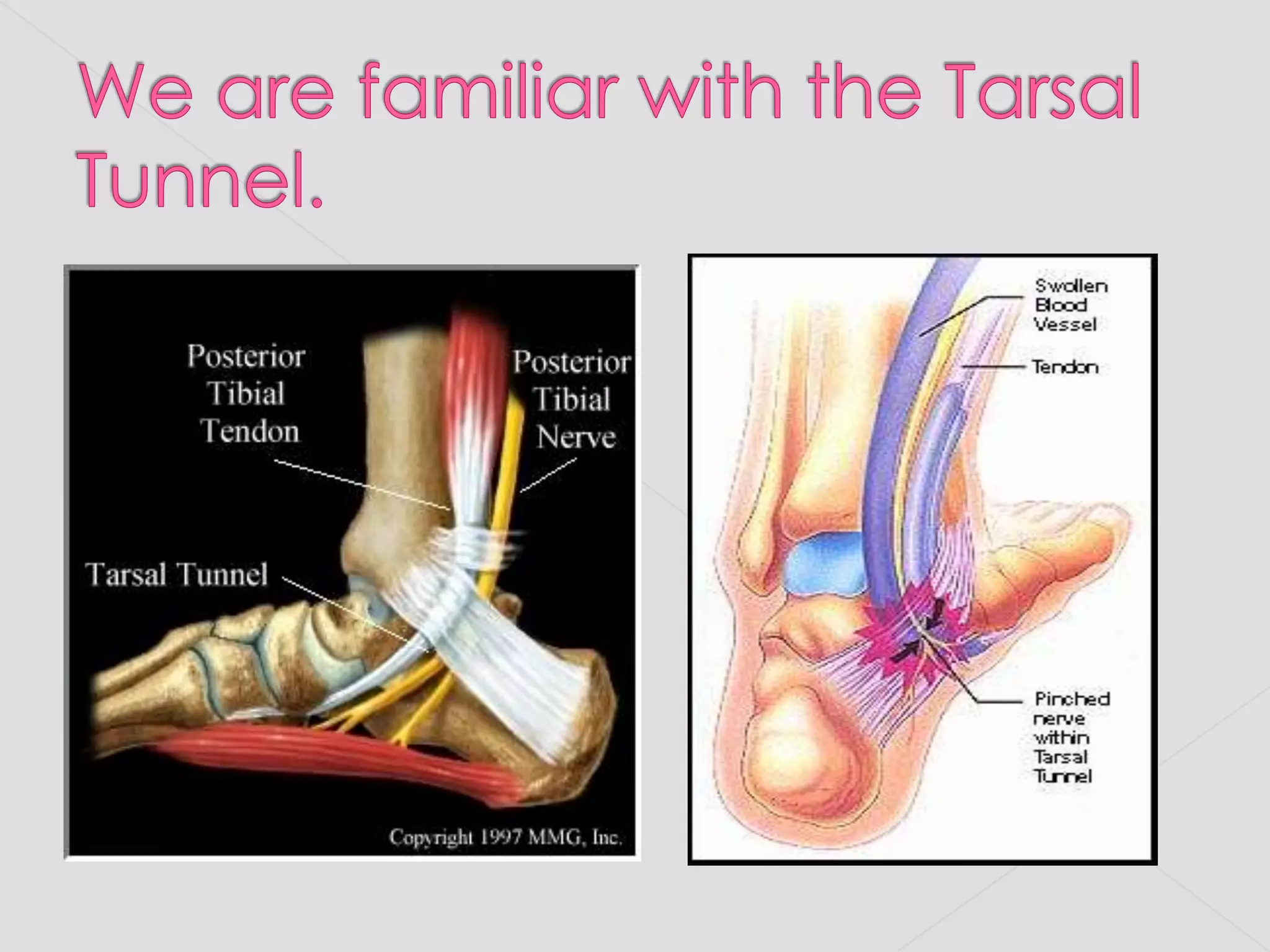
We are familiar with the Tarsal Tunnel.
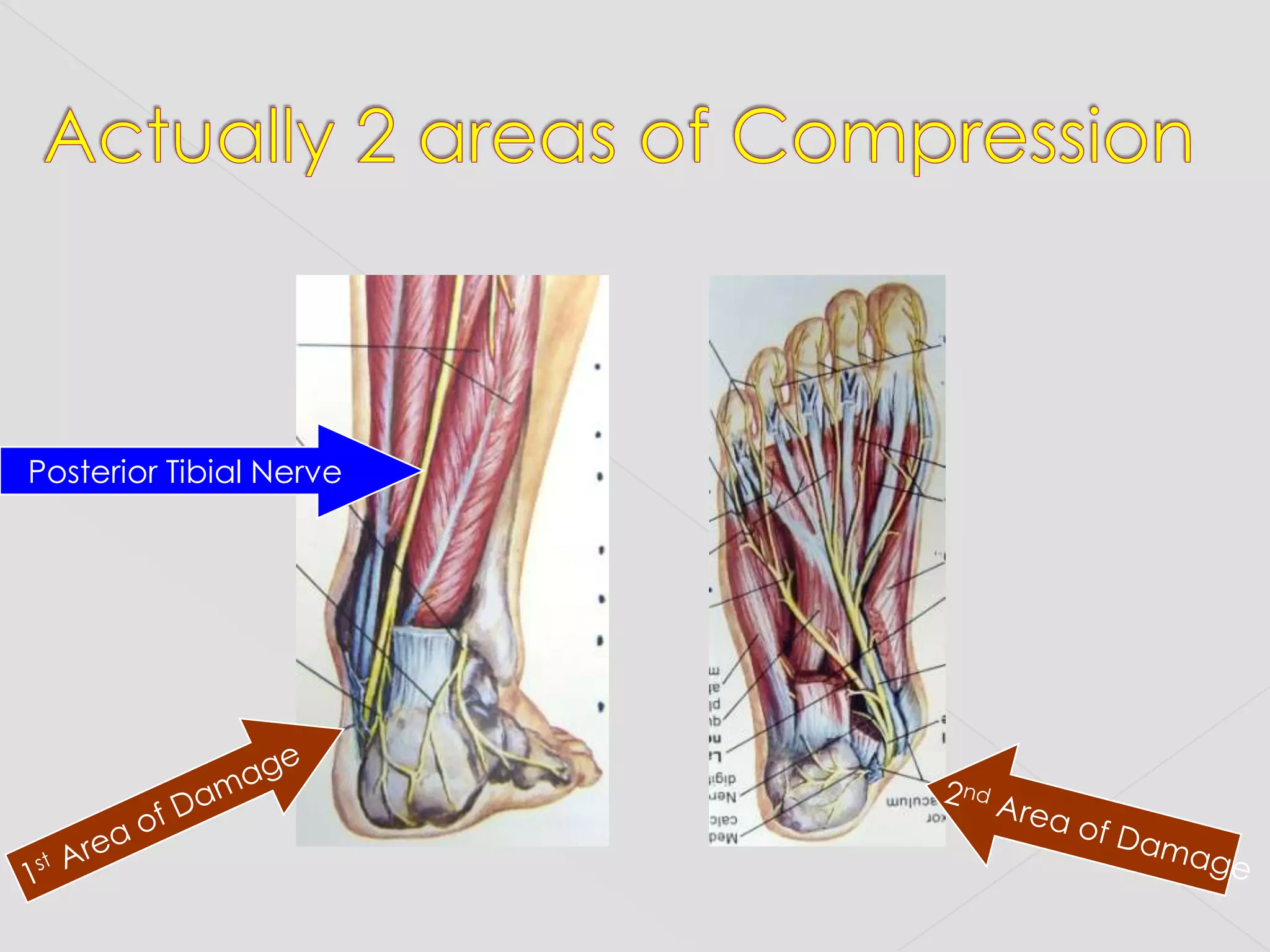
Actually 2 areas of CompressionPosterior Tibial Nerve1st Area of Damage2nd Area of Damage
So what’s the Good Newsis there any hope left.
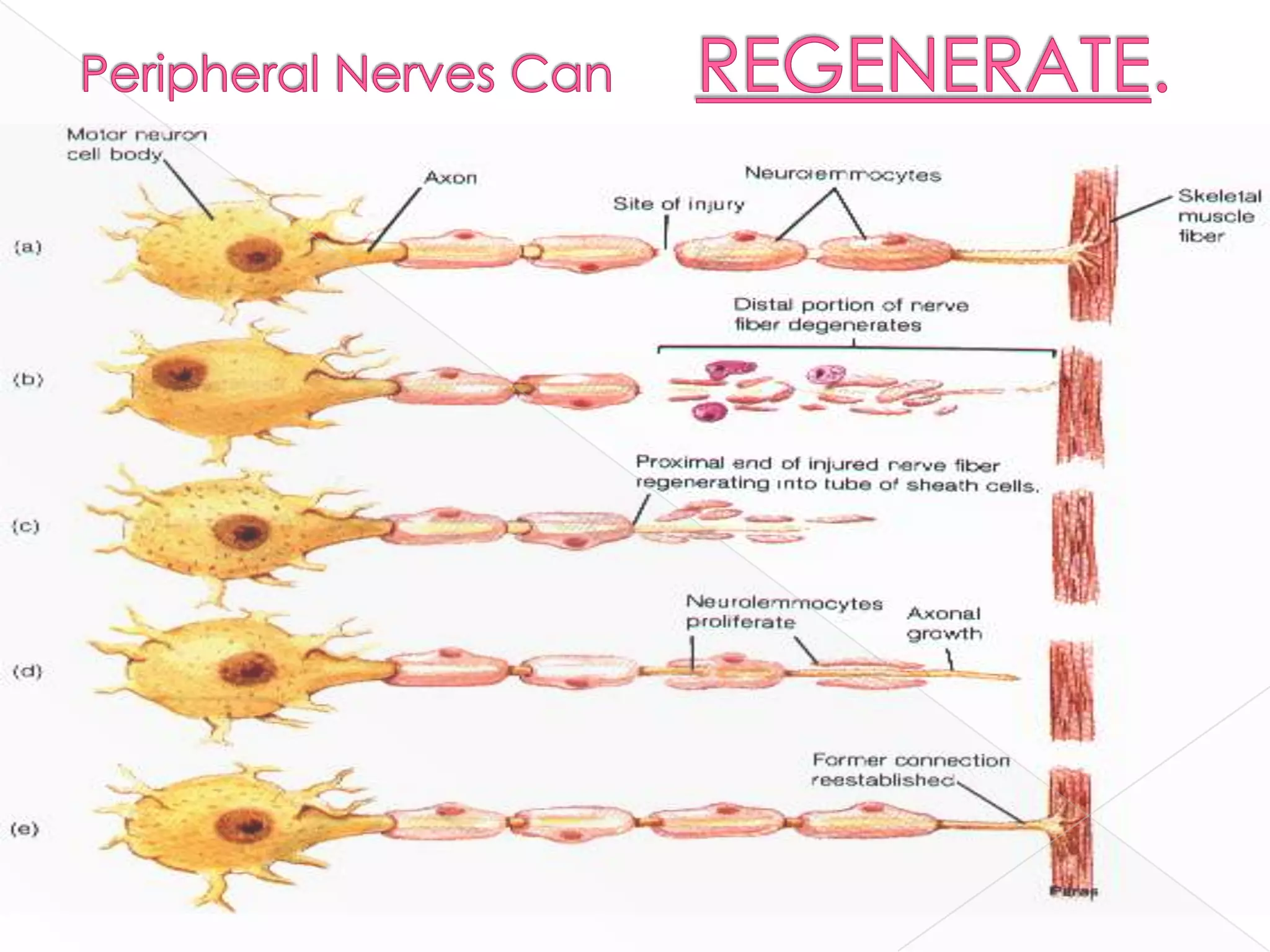
Peripheral Nerves Can      REGENERATE.
Putting the whole puzzle together
Nerve Damage CycleThe most common thing we do besides breathing is walkingExcessive rearfoot motion leads to chronic overstretching and compression of the posterior tibial nerve and its terminal brancesBy 50 years of age we have taken 180,000,000 steps
PN Damage- continuedThis is a gradual onset problemIf left untreated will continue to develop more nerve damageExercise/walking/standing leads to further damageAt night we are not traumatizing the nerves which is why these patients symptoms are not as bad when they get out of bed in the morning
As the day progresses, more damage is caused to the nerve due to increased activity until….nerve goes numbAt night when going to be the patient stops traumatizing the nerves and the “wake-up” with a vengeance.  Some patients have to get out of bed and find if they walk for a while the pain subsides.                Why? They are “re-numbing” their nerves.
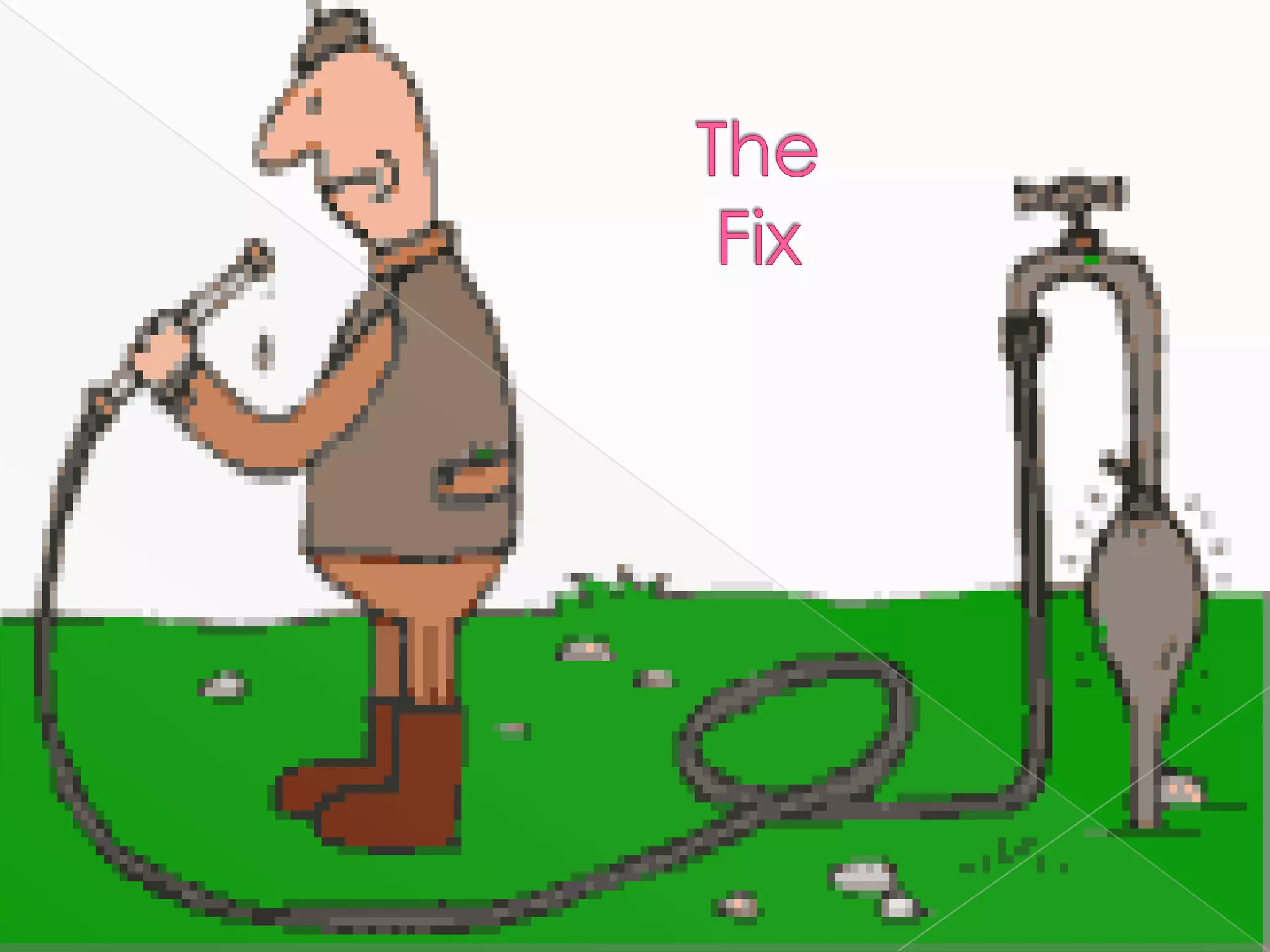
The Fix
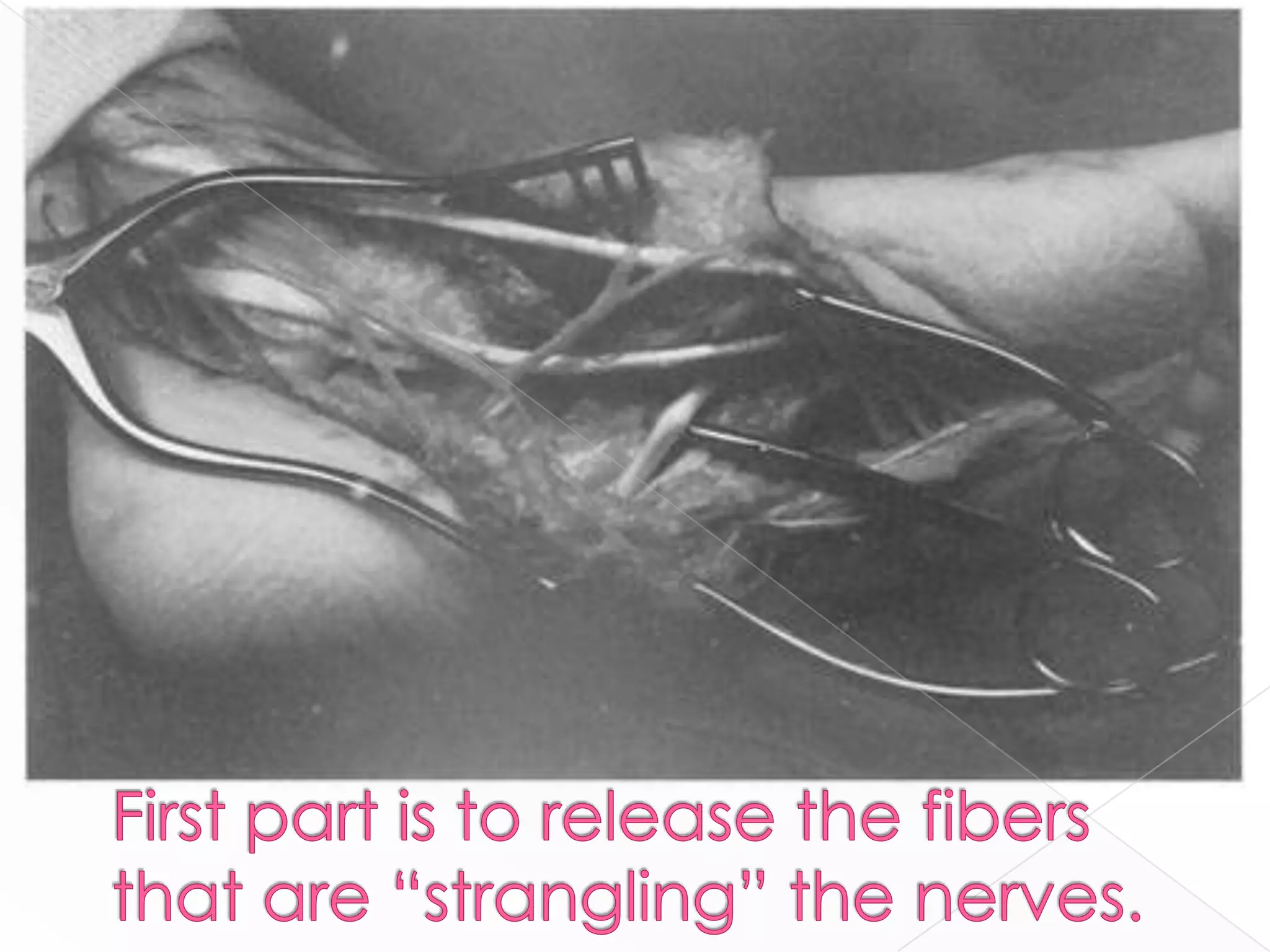
First part is to release the fibers that are “strangling” the nerves.
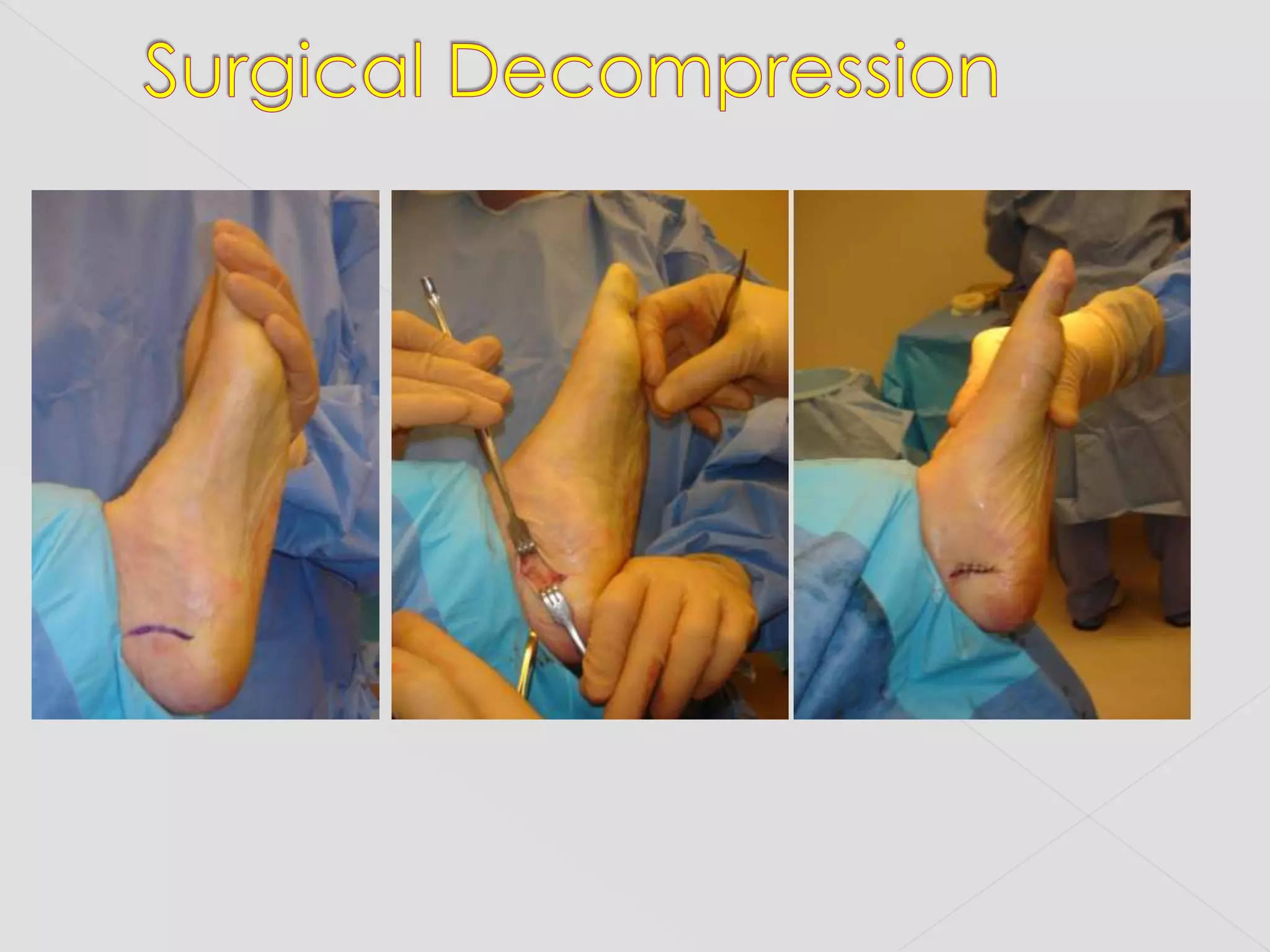
Surgical Decompression
Soft Tissue DecompressionPart OneRelease the Lacinent Ligament-Proximal to Distal, start in the middle and work out from there.  Use your pinkieDo not need to necessarily work your way to dissect the PTN and its terminal branches.
Surgical DecompressionPart Two Go distal through the portapedis.Usually have to create an opening, I use tenotomy scissors.  Stick your pinkie into the portapedis.  To show what effect hyperpronation has maximally pronate the foot with your pinkie in the portapedis- carefully(I am not responsible for crushed pinkies!)
I feel that it isn’t essential to go in and dissect out the nerves.  As long as we “free-up” the neurovascular bundle the nerves will no long be crushed.  If we perform too much dissection around the nerve it is possible to form scar tissueIf we don’t do enough dissection it is possible to miss some of the fibers that are destroying the nerves.
How do we control the Excessive Rearfoot Motion?
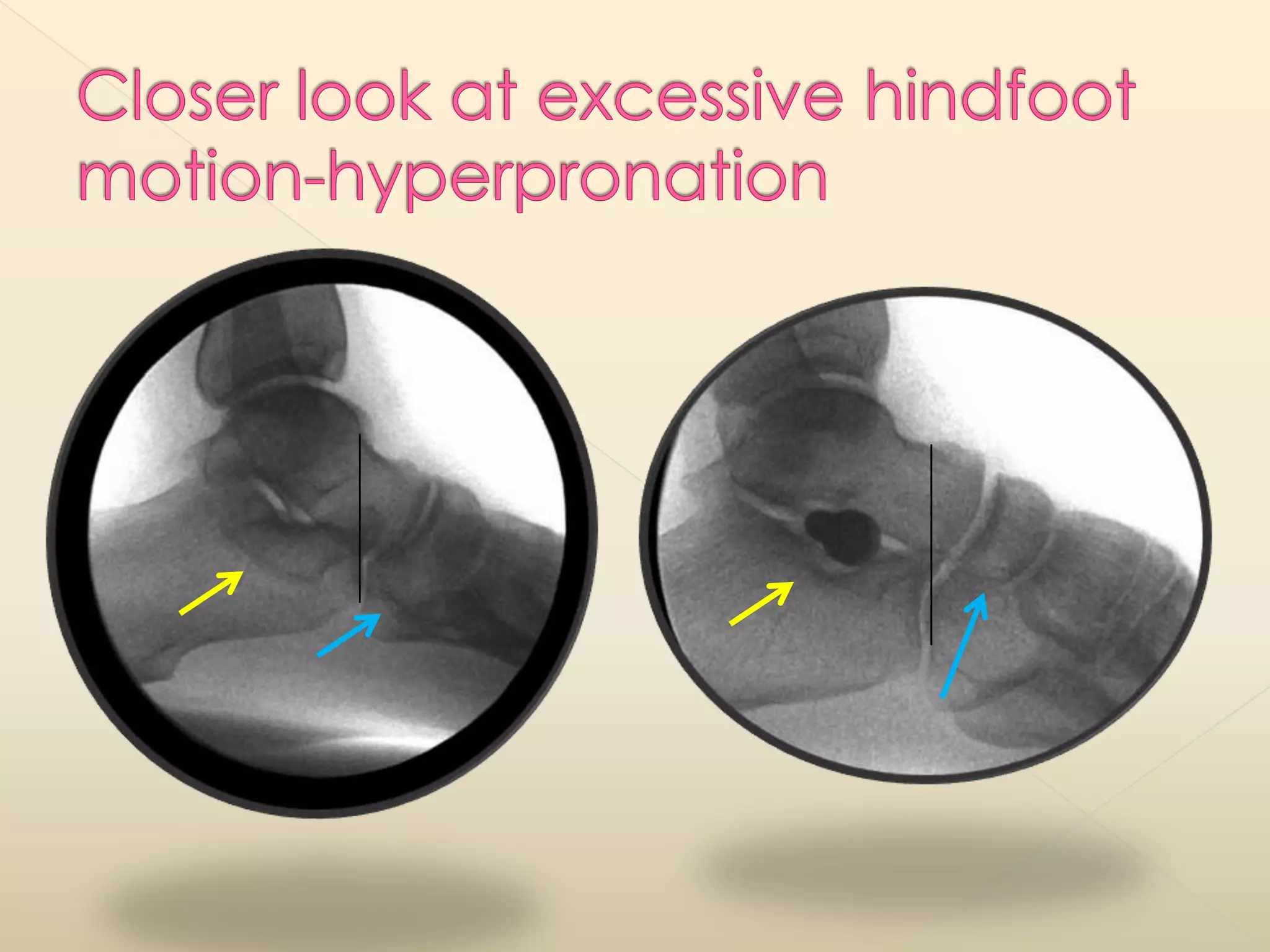
Closer look at excessive hindfoot motion-hyperpronation
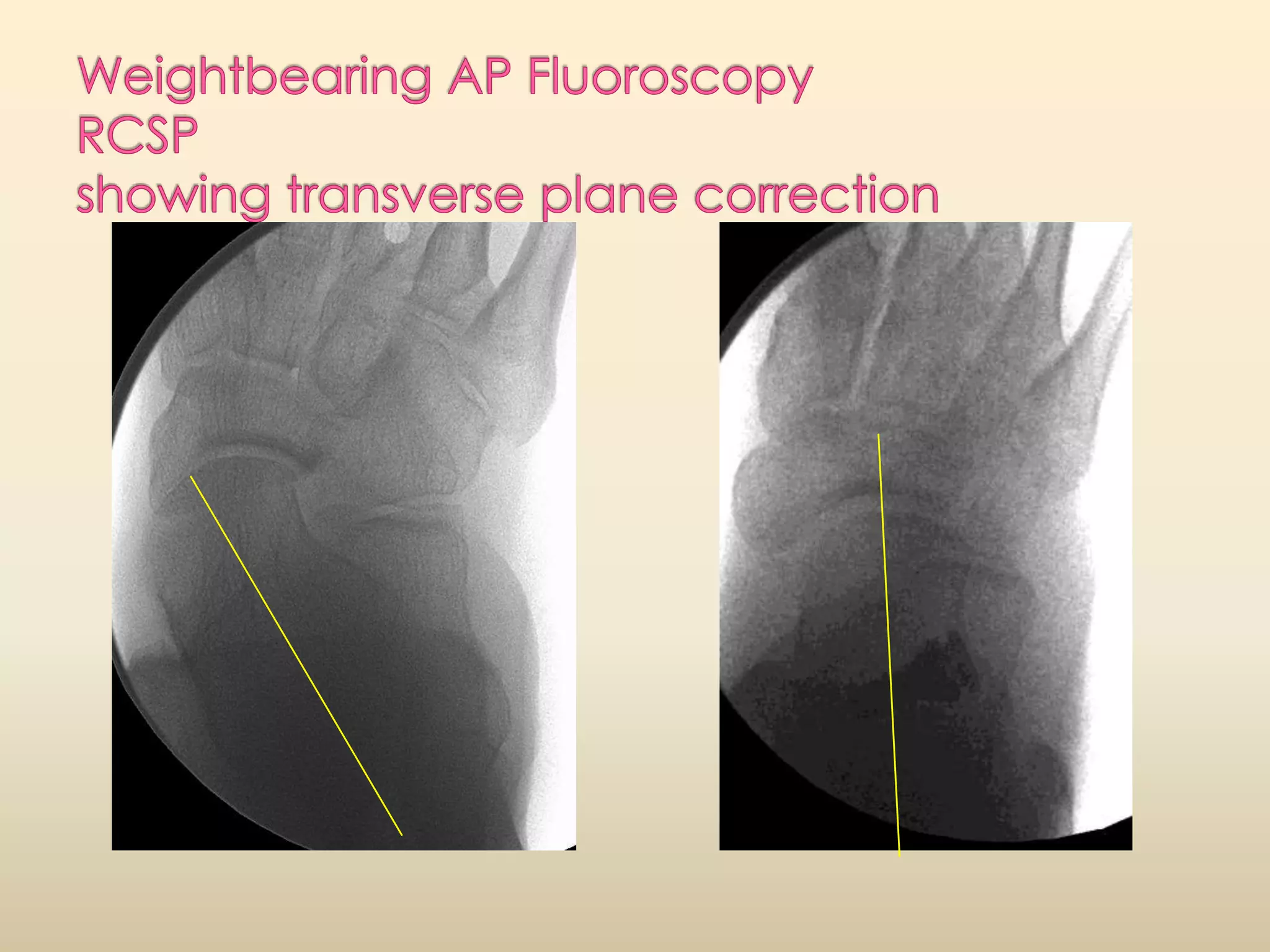
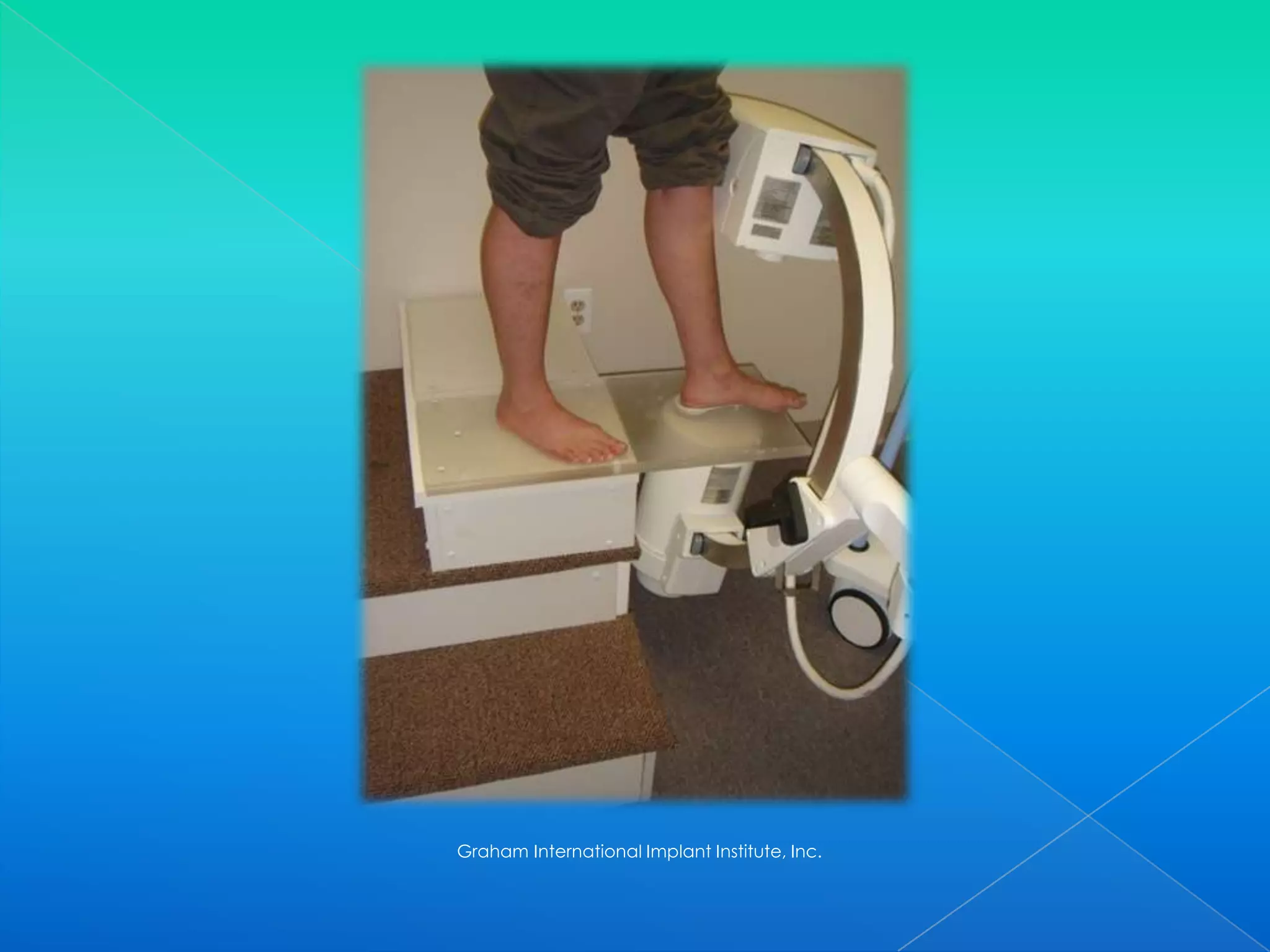
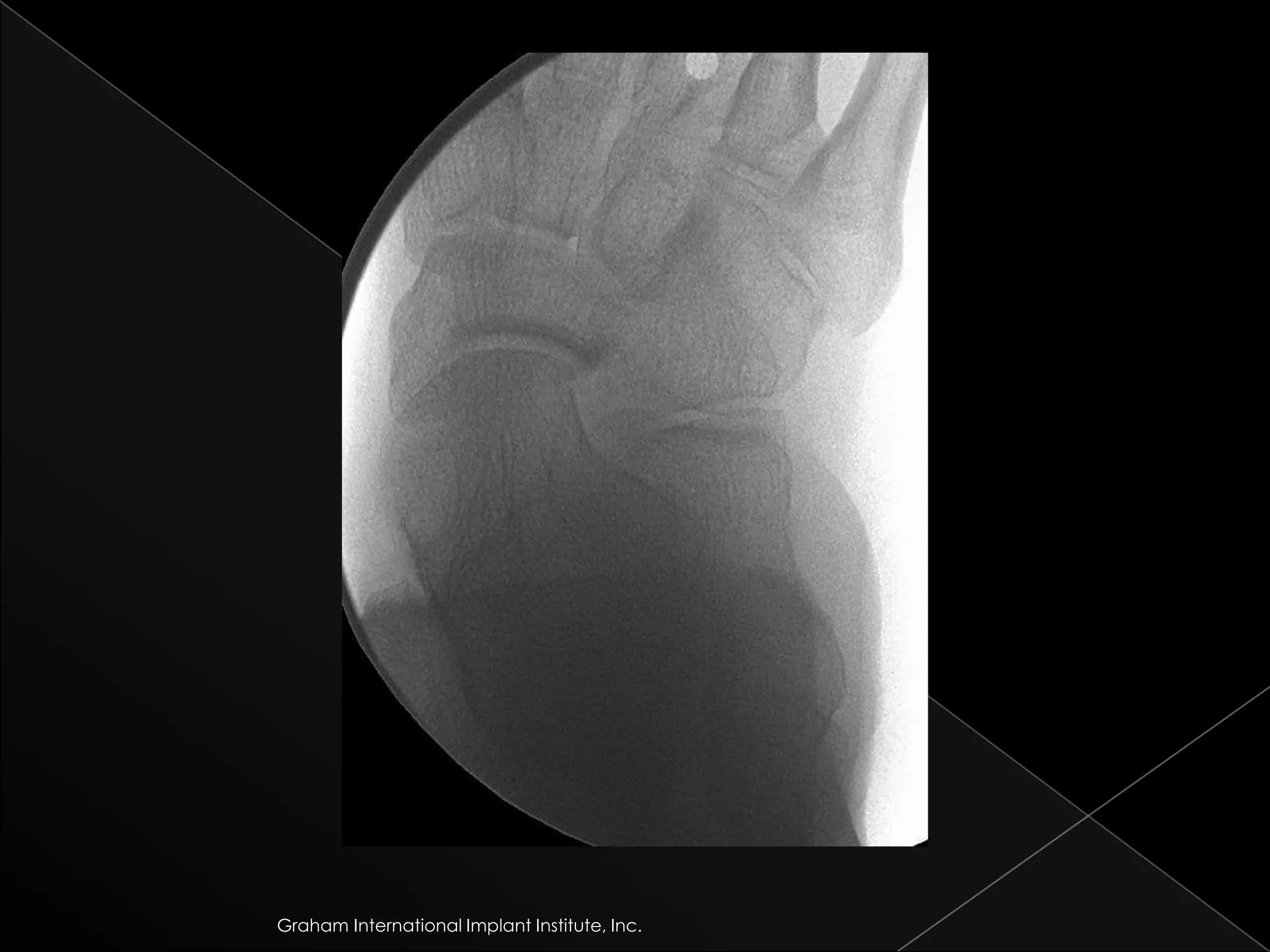
Weightbearing AP FluoroscopyRCSP showing transverse plane correction
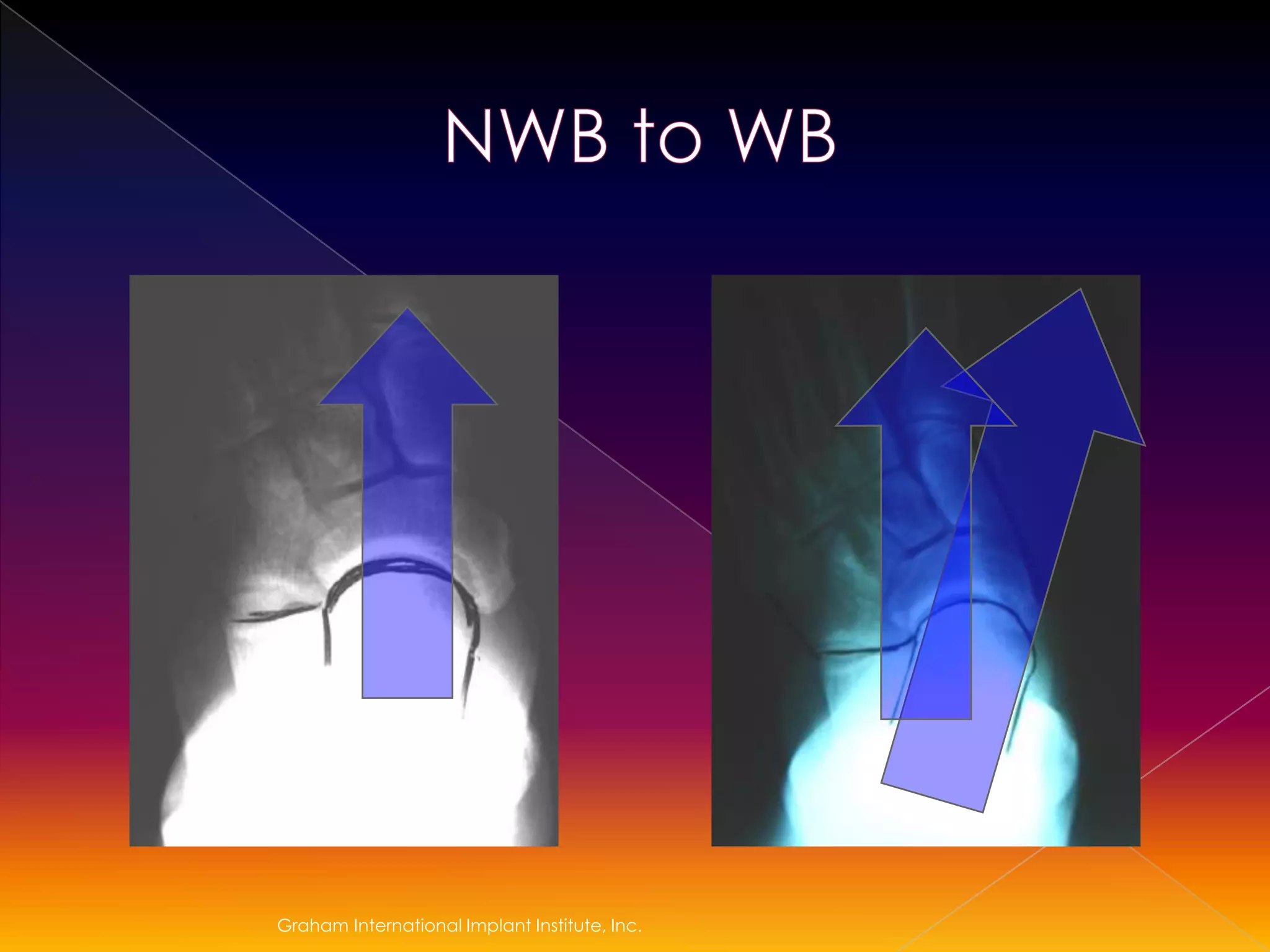
Graham International Implant Institute, Inc.NWB to WB
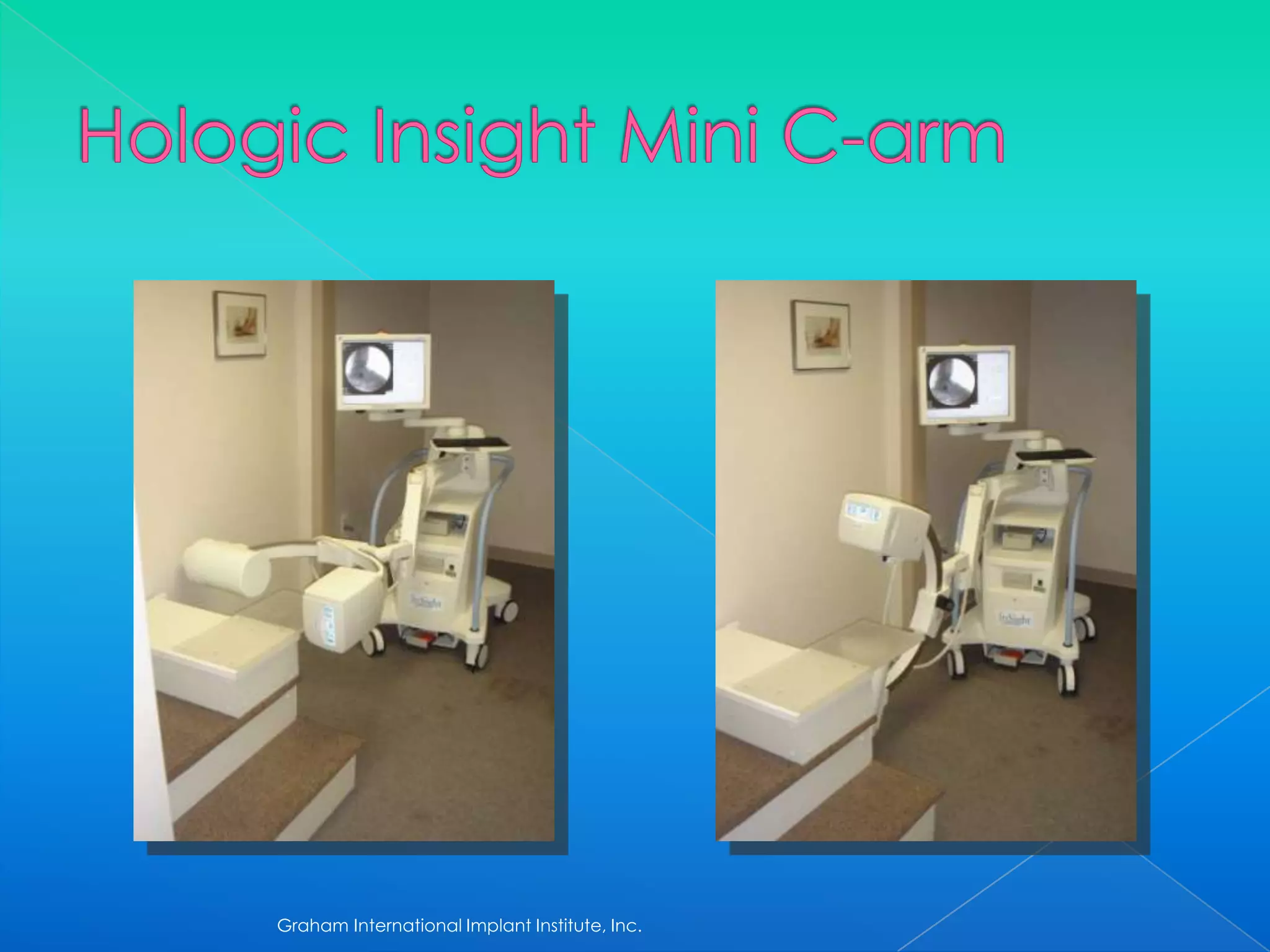
Hologic Insight Mini C-armGraham International Implant Institute, Inc.
Graham International Implant Institute, Inc.
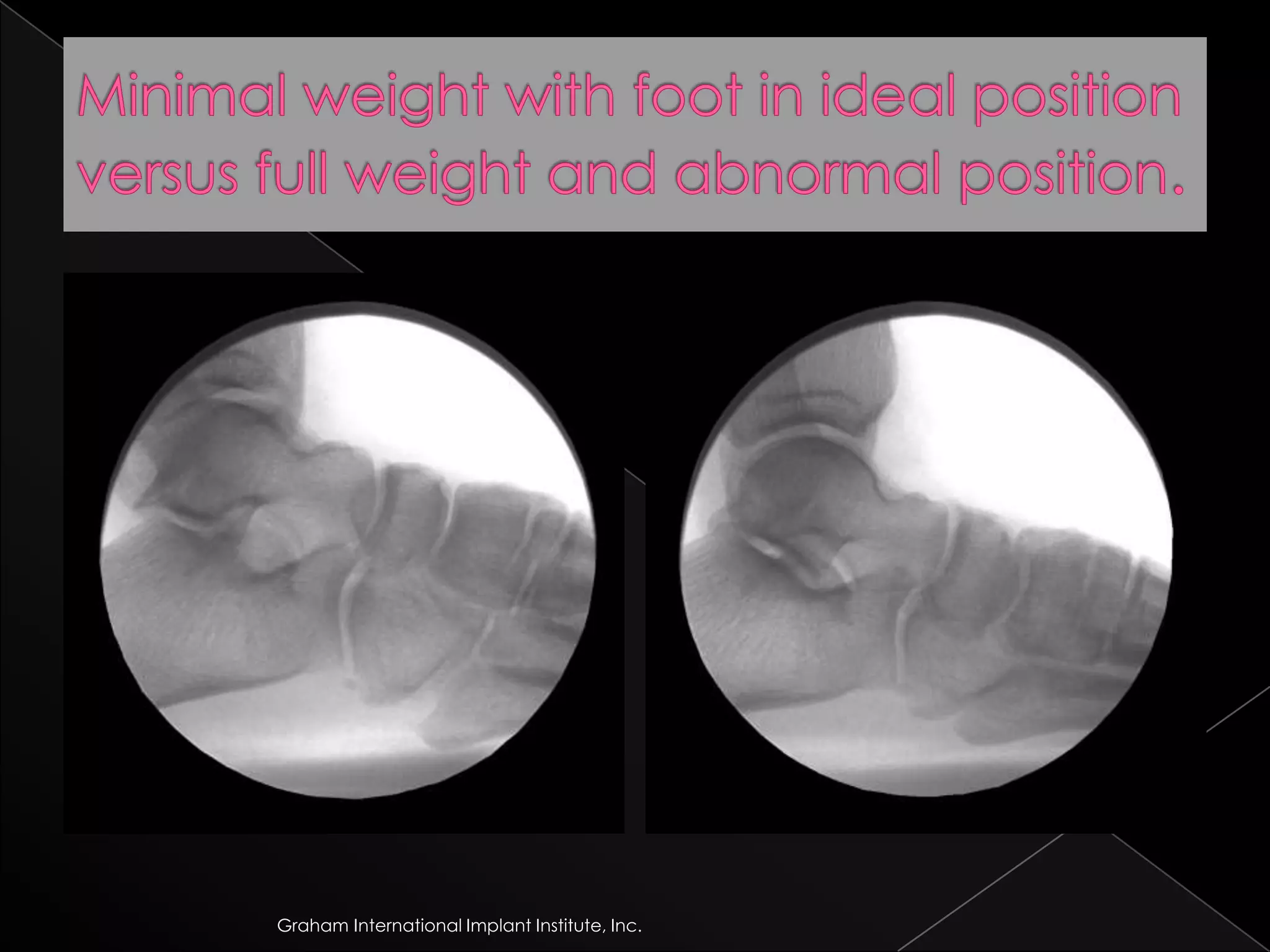
Minimal weight with foot in ideal position versus full weight and abnormal position.Graham International Implant Institute, Inc.
Graham International Implant Institute, Inc.
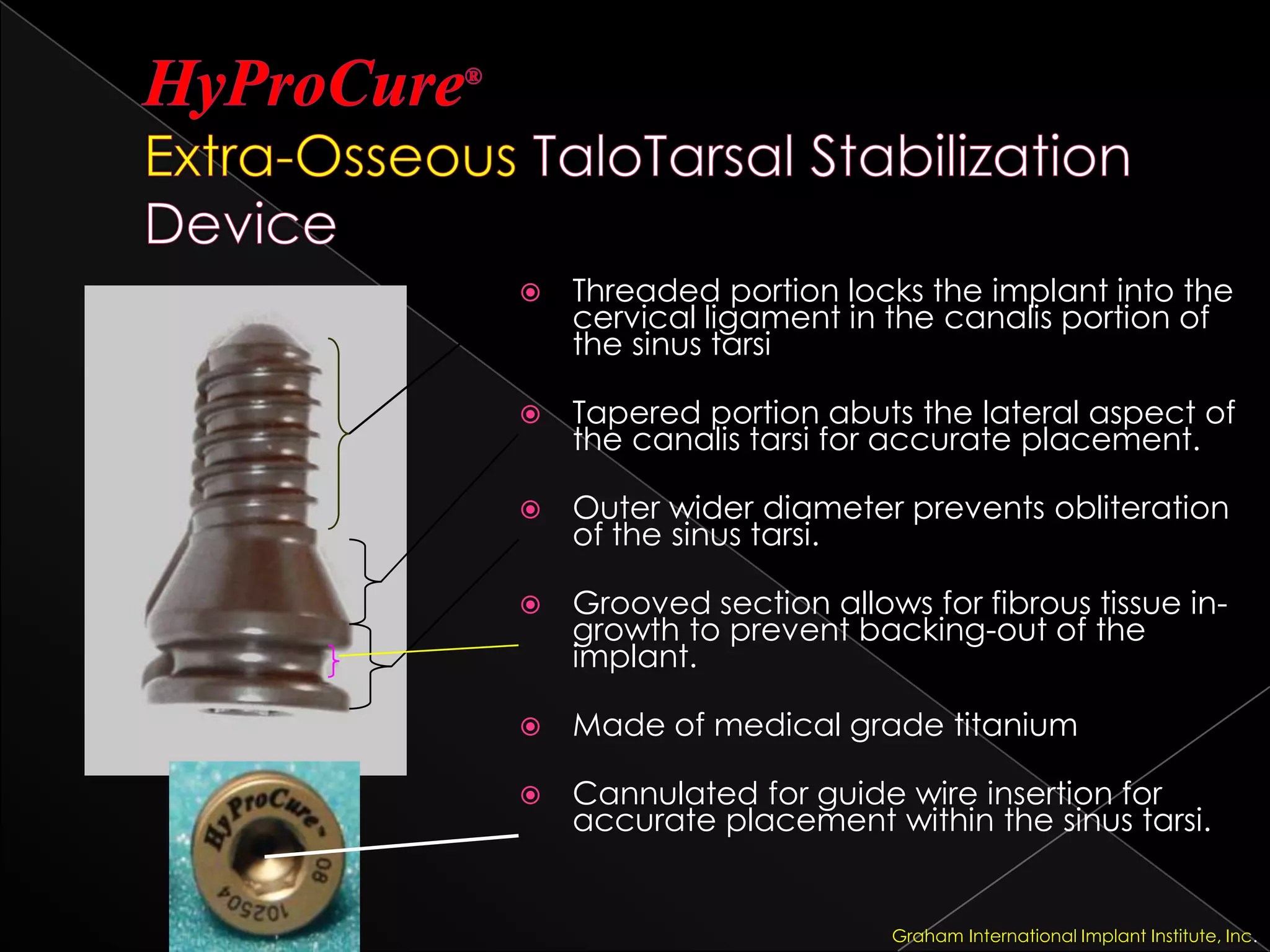
HyProCure®Extra-Osseous TaloTarsal Stabilization DeviceThreaded portion locks the implant into the cervical ligament in the canalis portion of the sinus tarsiTapered portion abuts the lateral aspect of the canalis tarsi for accurate placement.Outer wider diameter prevents obliteration of the sinus tarsi.Grooved section allows for fibrous tissue in-growth to prevent backing-out of the implant.Made of medical grade titaniumCannulated for guide wire insertion for accurate placement within the sinus tarsi.Graham International Implant Institute, Inc.
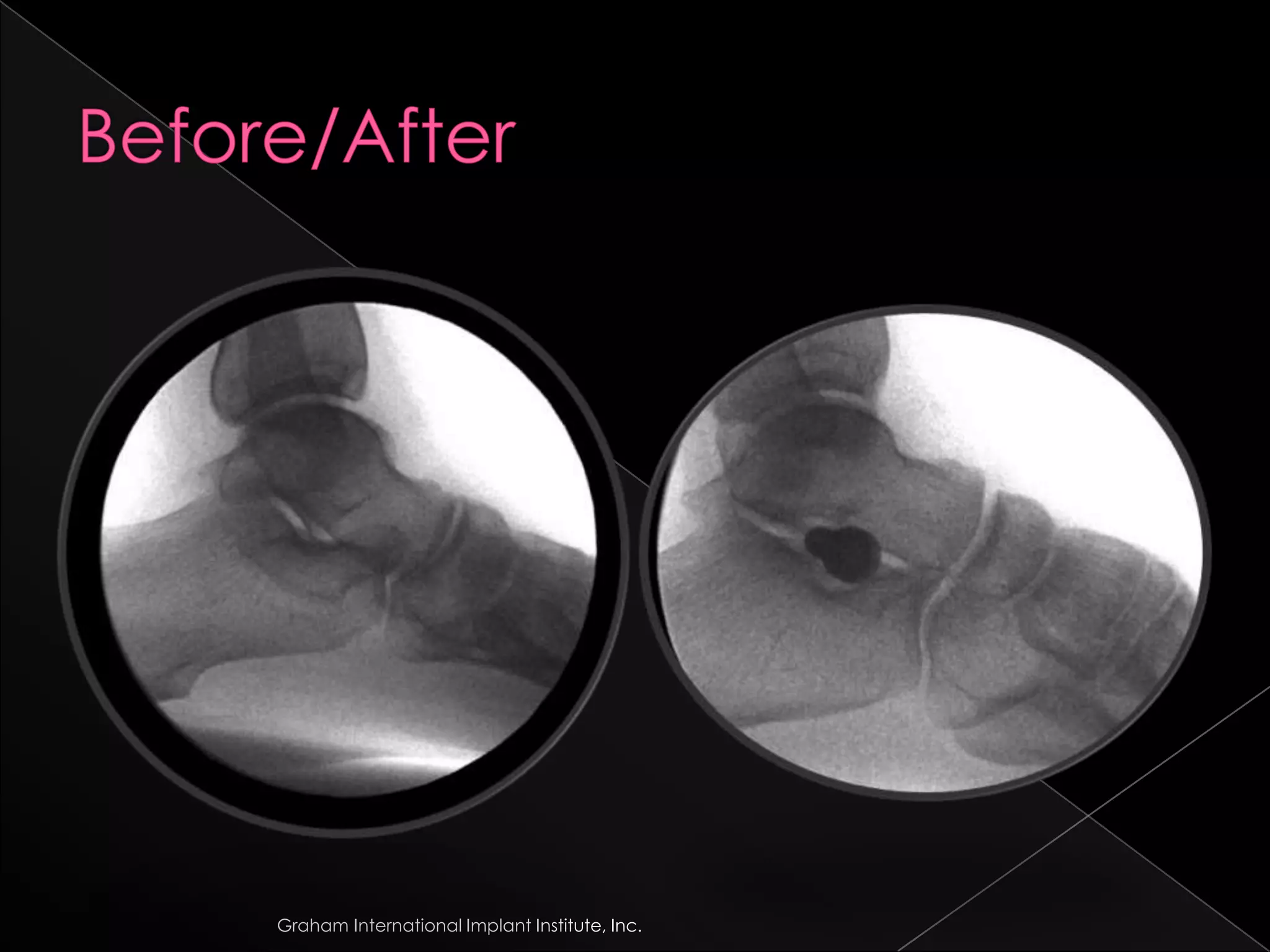
Before/AfterGraham International Implant Institute, Inc.
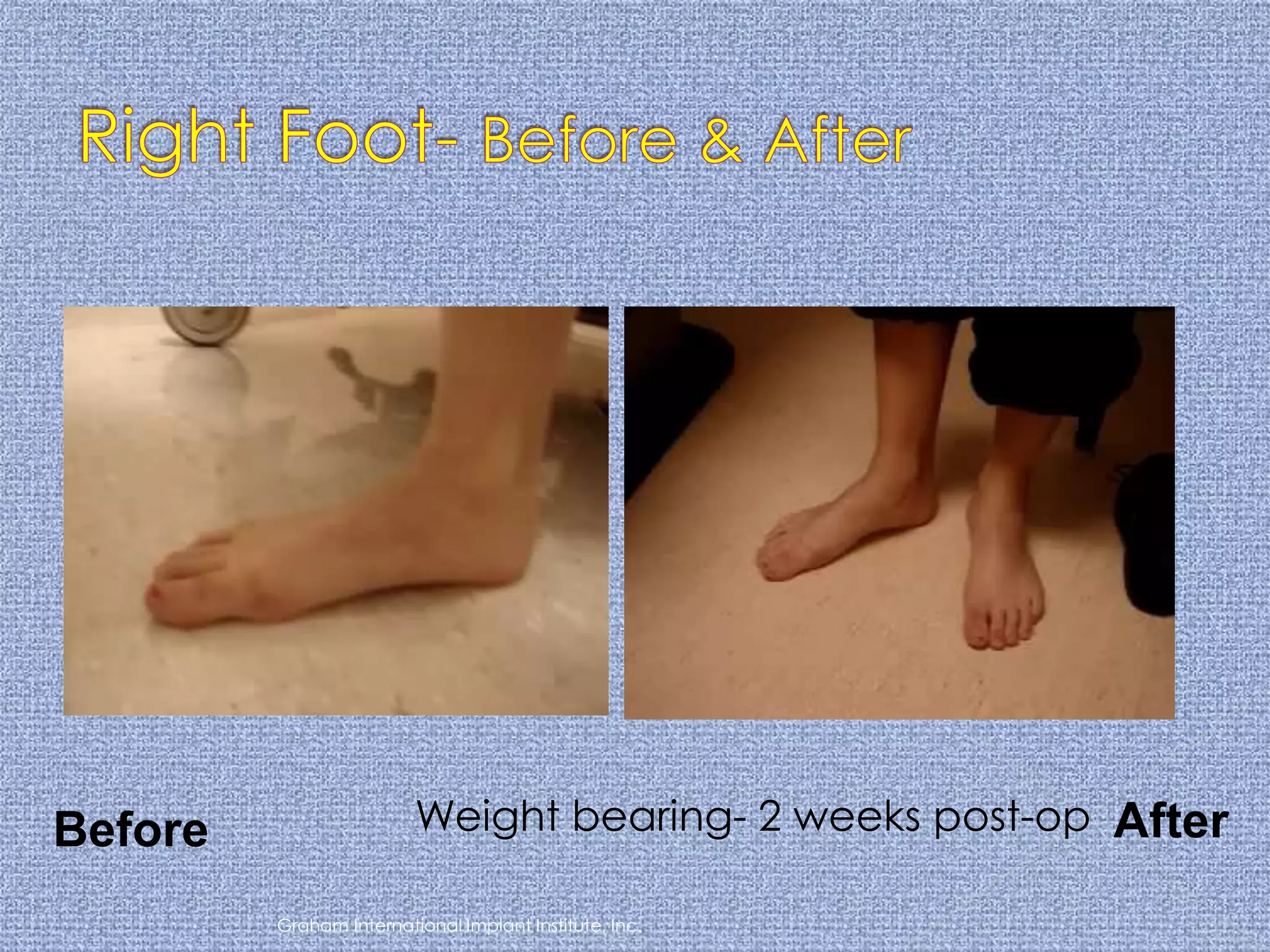
Graham International Implant Institute, Inc.Right Foot- Before & AfterWeight bearing- 2 weeks post-opAfterBefore
Extra-Osseous TaloTarsal Stabilization with HyProCureTarsal Tunnel Decompression, Neurolysis of Posterior Tibial Nerve, Neurolysis of the Calcaneal Nerve, Neurolysis of the Lateral Plantar NerveNeurolysis of the Medial Plantar Nerve
SurgeryTaloTarsal Stabilization with HyProCureTake about 10 minutes to performTakes about 10 – 15 stents placements before you really get comfortableTarsal Tunnel Decompression/NeurolysisTake about 20 minShould use loupsTakes about 25 before you really feel comfortable in this areaTake your time
Apply a tourniquet to the ankleI do not inflate the tourniquet unless there is excessive bleeding Use 10 cc’s of 1:1 mix of 0.5% marcaine with and without epi with 1 cc of dex. PhosphateClose skin only
The Results Depends on which fibers are being affectedHow damaged the nerves areHow compliant the patients areHow good of job YOU did on decompressing the nervesHow much scar tissue the patient forms after surgery
Results- continuedPain is almost immediately alleviated.Restoration of sensation- will take the longest to returnResults may be felt in the recovery roomOr may takes months to yearsNo  matter, instead of the patient’s condition getting worse and worse, it will potentially get better and better.
Cross Over EffectThis is real not imaginary.The damaged nerves of one foot affect the opposite foot.Scenarios:Good-Bad-Ugly-
Cross Over Effect - GoodBy decompressing one foot not only is there is improvement on that side there is also improvement in the contra-lateral limb.IF sensation/symptoms are restored to the contra-lateral limb there is not need for tarsal tunnel decompression or neurolysis of the nerves
Cross Over Effect - BadSurgery to the foot yield minimal results with no change in the contra-lateral limbThe opposite limb is the dominate nerve pathology and once that side is also decompressed there should be an additional effect on both feet.Must warn patients about this prior to surgery.
Cross Over Effect - UglyNerve decompressions are performed on both feet (one at a time) and no results are felt.Don’t take the patient’s word for it.  Must perform nerve testing prior to surgery and routinely post-op.Their nerves may be so severely damaged that it was too late.No matter how severe I will still attempt.It just may takes years for the results to be felt.
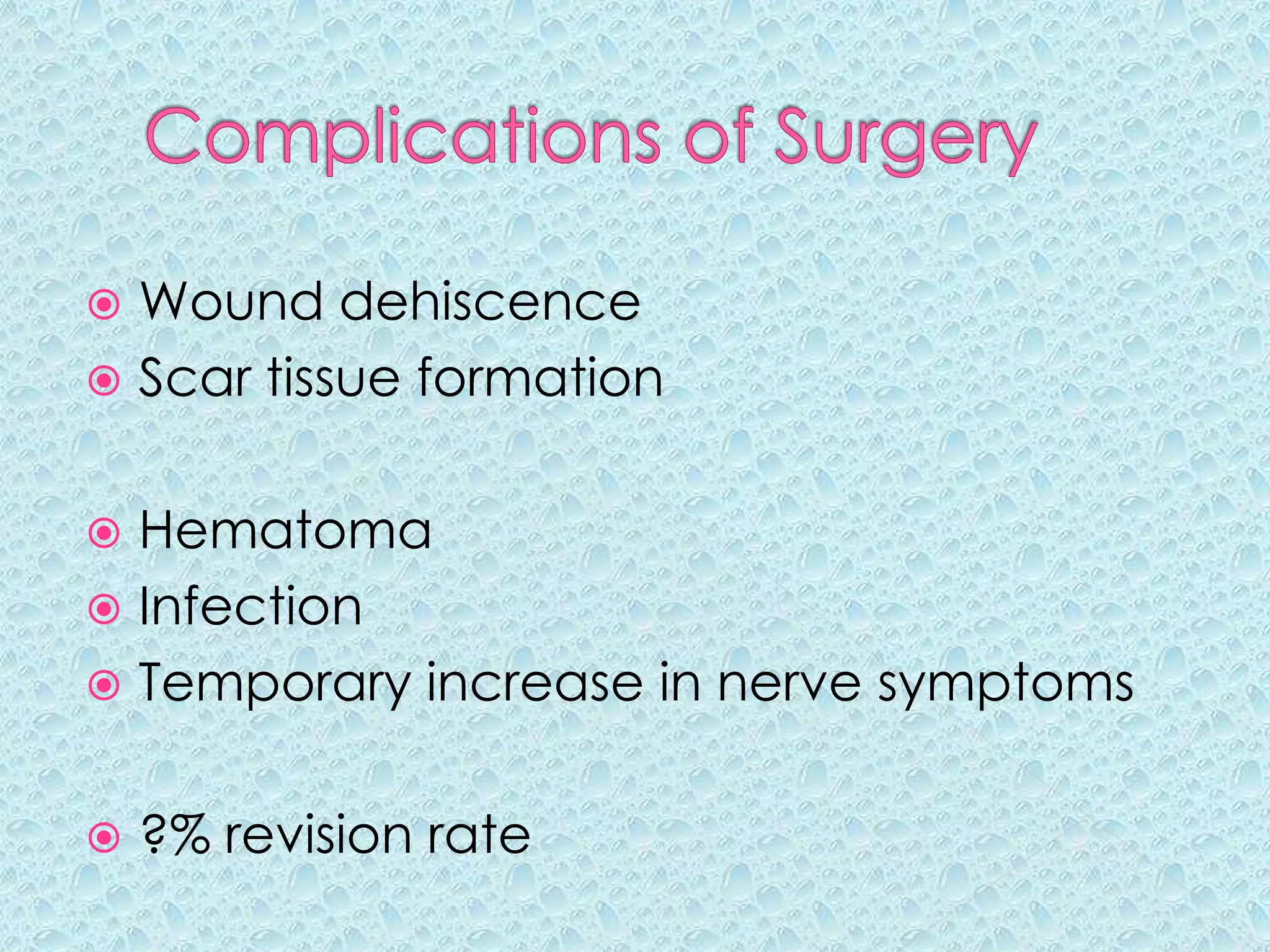
Complications of SurgeryWound dehiscenceScar tissue formationHematomaInfectionTemporary increase in nerve symptoms?% revision rate
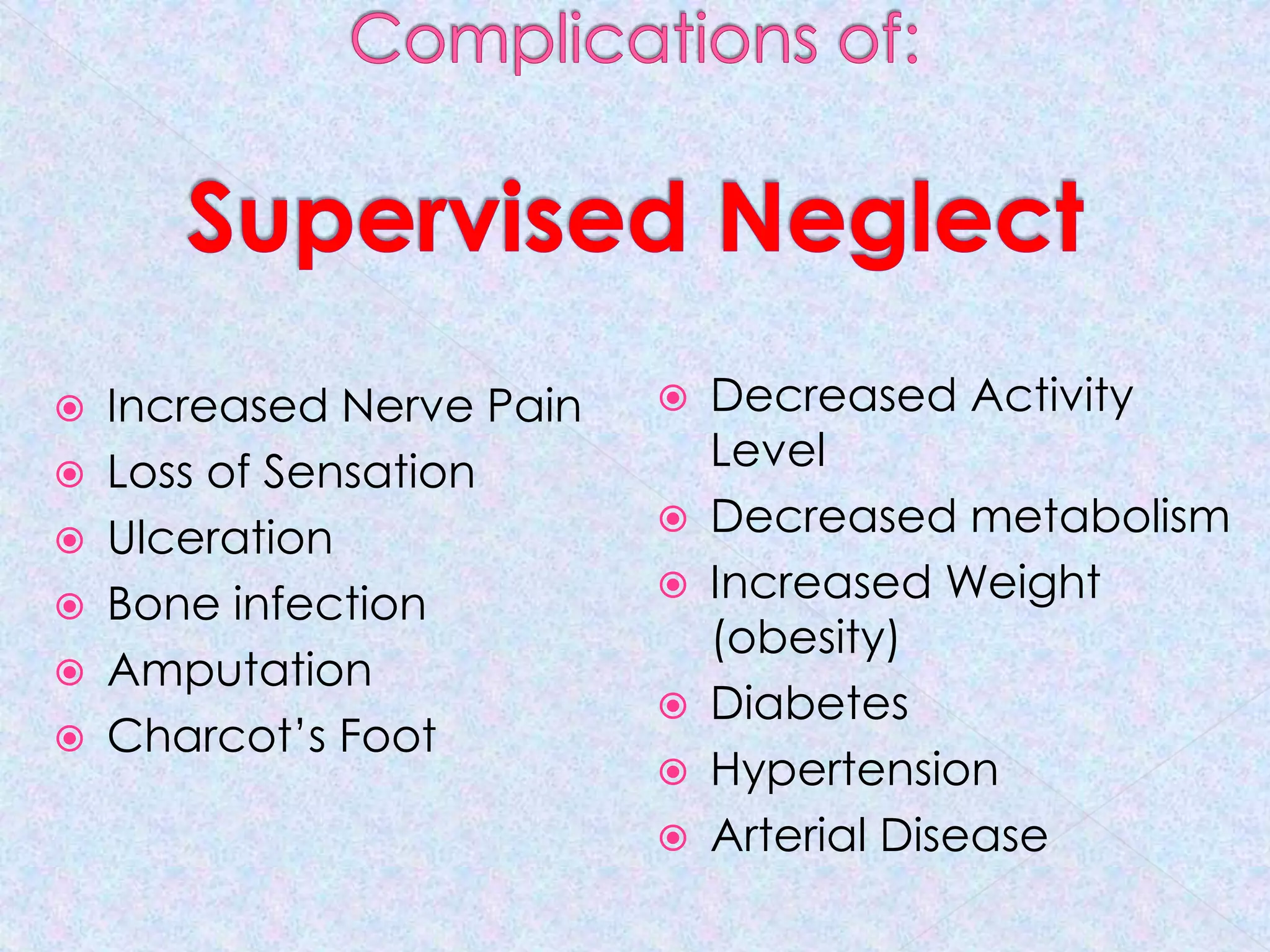
Complications of:Supervised NeglectDecreased Activity LevelDecreased metabolismIncreased Weight (obesity)DiabetesHypertensionArterial DiseaseIncreased Nerve PainLoss of SensationUlcerationBone infectionAmputationCharcot’s Foot
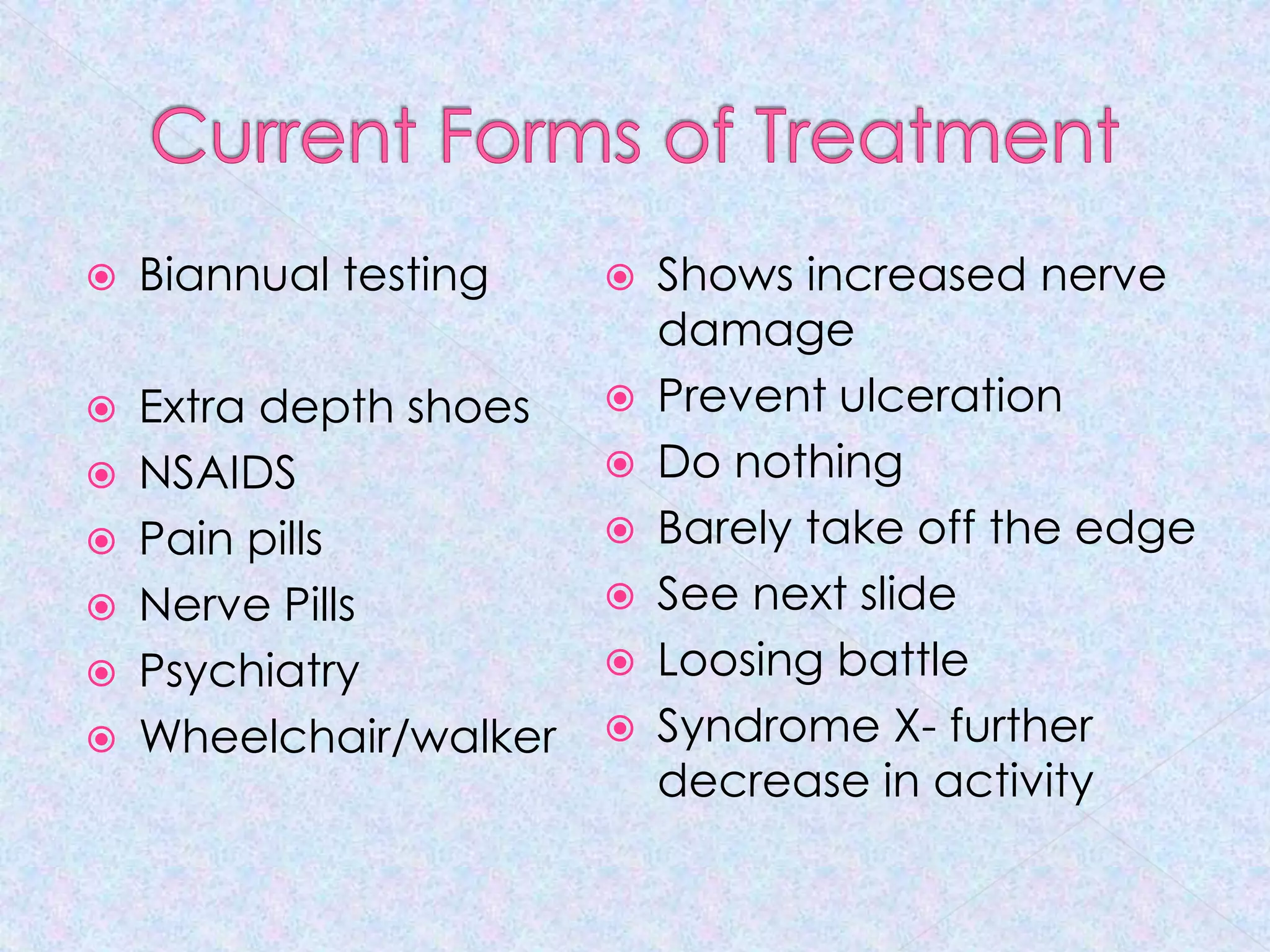
Current Forms of TreatmentBiannual testingExtra depth shoesNSAIDSPain pillsNerve PillsPsychiatryWheelchair/walkerShows increased nerve damagePrevent ulcerationDo nothingBarely take off the edgeSee next slideLoosing battleSyndrome X- further decrease in activity
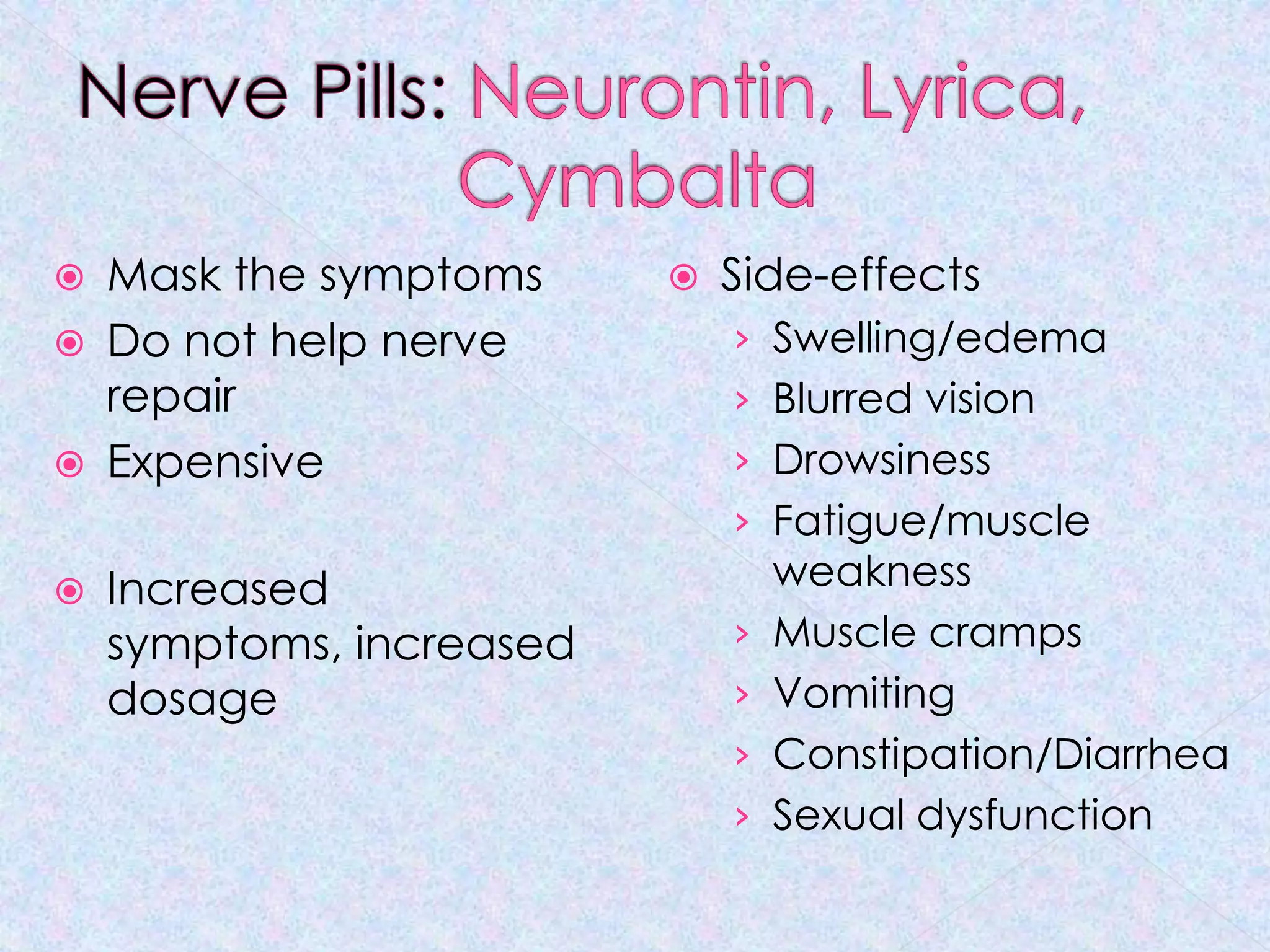
Nerve Pills: Neurontin, Lyrica, 			CymbaltaMask the symptomsDo not help nerve repairExpensiveIncreased symptoms, increased dosageSide-effectsSwelling/edemaBlurred visionDrowsinessFatigue/muscle weaknessMuscle crampsVomitingConstipation/DiarrheaSexual dysfunction
Autonomic NeuropathyManifests after years of peripheral nerve symptomsWe really don’t knowWhyWhowhenOnly get worseReally no helpOrthostatic hypotensionBladder dysfunctionGI ProblemsBlurred visionMuscle weaknessSexual dysfunction
Comparison of Symptoms of Side effects from Nerve Pills and Autonomic Neuropathy.Orthostatic hypotensionBladder dysfunctionGI ProblemsBlurred visionMuscle weaknessSexual dysfunctionOrthostatic hypotensionBladder dysfunctionGI ProblemsBlurred visionMuscle weaknessSexual dysfunction
My ResultsClaim 80% effective within a year20% will either just take > 1 year are the nerves are just too severely damaged.
ConclusionDoing nothing leads to progressionComplications of proposed surgical treatment options have a better outcome than supervised neglectI hope that I have open some eyes so that we can change our thinking on this extremely serious condition
For Further Information/Trainingwww.grahamiii.com
“Changing Lives, One Step at a Time”www.hyprocure.comView our on-line trainingwww.hyprocuredoctors.com
Peripheral Nerve Compression Syndrome

Peripheral Nerve Compression Syndrome

  • 1.
    NeuropathyvsPeripheral Nerve CompressionSyndromeMichael E. Graham, DPM, FACFAS
  • 2.
    NeuropathyWhat do weknow?Nothing- no solutionYour situation will only get worseWe don’t like seeing these patients in our office Chronic complainersHopeless20 million Americans with symptoms
  • 3.
    Peripheral NeuropathyWhat isthe etiology?Over 100 etiologies of peripheral neuropathyDiabetes ?Alcohol ?Chemotherapy ?Heavy Metal Poisoning ?Hereditary ?Idiopathic ?WE REALLY DON’T KNOW
  • 4.
    Diabetic Peripheral Neuropathy28to 60% of Type I or II diabetics develop Neuropathy (Young et al 1993)Sorbital Accumulation- not proven, theoreticalPolyolPathyway: oxidative stress, mitochondrial dysfunction, and ischemic nerve damageTreatment aimed at:Controlling hyperglycemiaFoot inspectionControlling painEnd result- Continued progression and worsening of the condition
  • 5.
    Diabetic Peripheral NeuropathySymptomsNumbnessor insensitivity to pain or temperatureTingling, burning, or prickling sensationSharp pains or crampsExtreme sensitivity to touch, even a light touchLoss of balance and coordinationSymptoms are worse at nightMuscle weakness (intermetatarsal)- digital deformities
  • 6.
    Diabetic NeuropathyLoss ofSensory Protection15% develop ulceration12-24% require amputation80% of diabetics who present with ulceration have decreased sensation in there foot/feet.
  • 7.
    Alcoholic NeuropathyPersons whoconsumed large quantities of alcoholic beverages over an extended period of time.Symptoms are the same as diabetic and other neuropathy-Incidence - unknownTreatment- basically the same as DPN and “Stop Drinking”
  • 8.
    Drug-Induced & ToxicNeuropathyMedicationsDisulfiramMetronidazolePhenytoinCisplatinStatinsRare- 2-4%Symptoms- Same as otherForms of neuropathyLead & Heavy Metals ArsenicMercuryThalliumSymptoms resemble the same as other forms of metabolic, compression, etc.
  • 10.
    What Do WeKnow?Damaged microvasculatureDecreased oxygen to specific parts of the nerveAreas of chronic flatteningSigns of chronic inflammationPerineurial swellingSites of specific nerve damageSites of nerve repair
  • 11.
    What IF….A Patientpresents with heel pain.Diagnosis of Plantar FasciitisWhat if they also a history of:DiabeticAlcoholichad a family member with a history of plantar fasciitis worked with heavy metal had chemotherapy.What difference does it make?
  • 12.
    What if someonewith chronic condition was told that nothing could be done for them?Patient is hopelessTreatment options are uselessWe can help try to relieve the painIt will only get worse We don’t know why you have developed this
  • 13.
  • 14.
    Peripheral Nerve CompressionSyndromeI think that this is going to make a lot of senseLet’s change the way we think about neuropathy!
  • 15.
    Peripheral Nerve CompressionSyndromeChronicDamage to a peripheral nerveMildModerateSevereEver heard of Carpal Tunnel Syndrome?
  • 16.
    Carpal Tunnel SyndromeChronicRepetitive Compression & OverstretchingLeads to Median Nerve Damage
  • 17.
    SymptomsPainNumbnessTinglingPain to palpationof the carpal tunnelSound familiar
  • 18.
    Carpal Tunnel SyndromeConservativemeasuresNSAIDSImmobilizing bracesPhysiotherapyLocalized steroid injectionsLong term efficacy usually alter/eliminate motion.
  • 19.
    SurgeryTreatment of choiceBetterout comes than wrist splintingClaim 90% success in eliminating symptoms
  • 20.
    What are thePatient’s Symptoms?Feet feel best in the morningAs the day goes on they get worse“The more active I am the worse the symptoms”At night when I go to bed they really start acting upNumbness/burning in my toes/ball of footTravels into my arch and up my legTop of the foot feels fine, no problems thereUsed to happen after walking on the treadmill/mall but would stop after resting.
  • 21.
    Typical PatientUsually hasbeen to many other doctors first. (even though it is a foot symptom).Has had many expensive tests with or without abnormal findingsFrustratedVery fearfulMiddle aged or olderHave a history of excessive walking/standingHouse wifePostal workerEtc.
  • 22.
    WHY WHYWHYWHYWHYWHYDo theirfeet feel their best in the morning?Why do their feet become more symptomatic as the day goes on or with increased activity?Why are the symptoms worse at night?Thesymptoms first started in the toes/ball of the feetSlowly after months/years went to the arches and up the leg
  • 23.
    There really isno mystery.This is a nerve problem.What nerve supply is being affected?
  • 24.
    Do you everhave these patients stand or walk?
  • 25.
    Walking- the 2ndmost common thing we do.
  • 26.
  • 27.
    SymptomatologyThe outer partof the posterior tibial nerve fibers lead to the tip of the plantar part of the toesDeeper fibers correlate to the ball/arch of the foot.
  • 28.
    Road Map toDiagnosisIF the patient can tell us where the symptoms are occurring then we should be able to figure out which nerve is being affected.
  • 29.
    Keep It SimpleCanyou tell me which blood vessels are not working?Let’s use the same rational with the nerves
  • 30.
  • 31.
  • 35.
    Peripheral Nerve Damage(DoubleWhammy)A nerve can only stretch so farChronic overstretching will lead to damaged blood flowA nerve can only be compressed so many times until there is partial nerve impairmentChronic compression leads to direct nerve damage (myelin).
  • 36.
    Just like anyother soft tissue of the body A peripheral nerve can take SOME trauma without completely falling apartHOWEVER it can only take so much before pathology ensues.
  • 37.
    If ignored orleft untreated or improperly diagnosed the symptoms as well as the damage to the structure will progress.
  • 38.
  • 40.
    Graham International ImplantInstitute, Inc.Functional AnatomyEntire weight of body travels through the talus.Redirected from the tibia and fibula to theCalcaneus and Navicular bones.
  • 41.
    Graham International ImplantInstitute, Inc.Sinus TarsiFulcrum point Should always stay “open”Abnormal closure of this space leads to deformity.
  • 42.
    Graham International ImplantInstitute, Inc.PathoMechanicsObliteration of the sinus tarsiPlantar flexion of the talusAbnormal forces directed throughout the foot.
  • 43.
    Graham International ImplantInstitute, Inc.Abnormal Talar DeviationLeads to Excessive Rearfoot Motion.MedialAnteriorPlantarflexion
  • 44.
    Excessive Rearfoot MotionLeadsto:Chronic Overstretching of the soft tissue to the rearfootCan lead to compression of the posterior tibial nerve and it’s terminal branches.
  • 45.
    We are familiarwith the Tarsal Tunnel.
  • 46.
    Actually 2 areasof CompressionPosterior Tibial Nerve1st Area of Damage2nd Area of Damage
  • 47.
    So what’s theGood Newsis there any hope left.
  • 48.
  • 49.
    Putting the wholepuzzle together
  • 50.
    Nerve Damage CycleThemost common thing we do besides breathing is walkingExcessive rearfoot motion leads to chronic overstretching and compression of the posterior tibial nerve and its terminal brancesBy 50 years of age we have taken 180,000,000 steps
  • 51.
    PN Damage- continuedThisis a gradual onset problemIf left untreated will continue to develop more nerve damageExercise/walking/standing leads to further damageAt night we are not traumatizing the nerves which is why these patients symptoms are not as bad when they get out of bed in the morning
  • 52.
    As the dayprogresses, more damage is caused to the nerve due to increased activity until….nerve goes numbAt night when going to be the patient stops traumatizing the nerves and the “wake-up” with a vengeance. Some patients have to get out of bed and find if they walk for a while the pain subsides. Why? They are “re-numbing” their nerves.
  • 53.
  • 54.
    First part isto release the fibers that are “strangling” the nerves.
  • 55.
  • 56.
    Soft Tissue DecompressionPartOneRelease the Lacinent Ligament-Proximal to Distal, start in the middle and work out from there. Use your pinkieDo not need to necessarily work your way to dissect the PTN and its terminal branches.
  • 57.
    Surgical DecompressionPart TwoGo distal through the portapedis.Usually have to create an opening, I use tenotomy scissors. Stick your pinkie into the portapedis. To show what effect hyperpronation has maximally pronate the foot with your pinkie in the portapedis- carefully(I am not responsible for crushed pinkies!)
  • 58.
    I feel thatit isn’t essential to go in and dissect out the nerves. As long as we “free-up” the neurovascular bundle the nerves will no long be crushed. If we perform too much dissection around the nerve it is possible to form scar tissueIf we don’t do enough dissection it is possible to miss some of the fibers that are destroying the nerves.
  • 59.
    How do wecontrol the Excessive Rearfoot Motion?
  • 60.
    Closer look atexcessive hindfoot motion-hyperpronation
  • 61.
    Weightbearing AP FluoroscopyRCSPshowing transverse plane correction
  • 62.
    Graham International ImplantInstitute, Inc.NWB to WB
  • 63.
    Hologic Insight MiniC-armGraham International Implant Institute, Inc.
  • 64.
  • 65.
    Minimal weight withfoot in ideal position versus full weight and abnormal position.Graham International Implant Institute, Inc.
  • 66.
  • 67.
    HyProCure®Extra-Osseous TaloTarsal StabilizationDeviceThreaded portion locks the implant into the cervical ligament in the canalis portion of the sinus tarsiTapered portion abuts the lateral aspect of the canalis tarsi for accurate placement.Outer wider diameter prevents obliteration of the sinus tarsi.Grooved section allows for fibrous tissue in-growth to prevent backing-out of the implant.Made of medical grade titaniumCannulated for guide wire insertion for accurate placement within the sinus tarsi.Graham International Implant Institute, Inc.
  • 68.
  • 69.
    Graham International ImplantInstitute, Inc.Right Foot- Before & AfterWeight bearing- 2 weeks post-opAfterBefore
  • 70.
    Extra-Osseous TaloTarsal Stabilizationwith HyProCureTarsal Tunnel Decompression, Neurolysis of Posterior Tibial Nerve, Neurolysis of the Calcaneal Nerve, Neurolysis of the Lateral Plantar NerveNeurolysis of the Medial Plantar Nerve
  • 71.
    SurgeryTaloTarsal Stabilization withHyProCureTake about 10 minutes to performTakes about 10 – 15 stents placements before you really get comfortableTarsal Tunnel Decompression/NeurolysisTake about 20 minShould use loupsTakes about 25 before you really feel comfortable in this areaTake your time
  • 72.
    Apply a tourniquetto the ankleI do not inflate the tourniquet unless there is excessive bleeding Use 10 cc’s of 1:1 mix of 0.5% marcaine with and without epi with 1 cc of dex. PhosphateClose skin only
  • 73.
    The Results Dependson which fibers are being affectedHow damaged the nerves areHow compliant the patients areHow good of job YOU did on decompressing the nervesHow much scar tissue the patient forms after surgery
  • 74.
    Results- continuedPain isalmost immediately alleviated.Restoration of sensation- will take the longest to returnResults may be felt in the recovery roomOr may takes months to yearsNo matter, instead of the patient’s condition getting worse and worse, it will potentially get better and better.
  • 75.
    Cross Over EffectThisis real not imaginary.The damaged nerves of one foot affect the opposite foot.Scenarios:Good-Bad-Ugly-
  • 76.
    Cross Over Effect- GoodBy decompressing one foot not only is there is improvement on that side there is also improvement in the contra-lateral limb.IF sensation/symptoms are restored to the contra-lateral limb there is not need for tarsal tunnel decompression or neurolysis of the nerves
  • 77.
    Cross Over Effect- BadSurgery to the foot yield minimal results with no change in the contra-lateral limbThe opposite limb is the dominate nerve pathology and once that side is also decompressed there should be an additional effect on both feet.Must warn patients about this prior to surgery.
  • 78.
    Cross Over Effect- UglyNerve decompressions are performed on both feet (one at a time) and no results are felt.Don’t take the patient’s word for it. Must perform nerve testing prior to surgery and routinely post-op.Their nerves may be so severely damaged that it was too late.No matter how severe I will still attempt.It just may takes years for the results to be felt.
  • 79.
    Complications of SurgeryWounddehiscenceScar tissue formationHematomaInfectionTemporary increase in nerve symptoms?% revision rate
  • 80.
    Complications of:Supervised NeglectDecreasedActivity LevelDecreased metabolismIncreased Weight (obesity)DiabetesHypertensionArterial DiseaseIncreased Nerve PainLoss of SensationUlcerationBone infectionAmputationCharcot’s Foot
  • 81.
    Current Forms ofTreatmentBiannual testingExtra depth shoesNSAIDSPain pillsNerve PillsPsychiatryWheelchair/walkerShows increased nerve damagePrevent ulcerationDo nothingBarely take off the edgeSee next slideLoosing battleSyndrome X- further decrease in activity
  • 82.
    Nerve Pills: Neurontin,Lyrica, CymbaltaMask the symptomsDo not help nerve repairExpensiveIncreased symptoms, increased dosageSide-effectsSwelling/edemaBlurred visionDrowsinessFatigue/muscle weaknessMuscle crampsVomitingConstipation/DiarrheaSexual dysfunction
  • 83.
    Autonomic NeuropathyManifests afteryears of peripheral nerve symptomsWe really don’t knowWhyWhowhenOnly get worseReally no helpOrthostatic hypotensionBladder dysfunctionGI ProblemsBlurred visionMuscle weaknessSexual dysfunction
  • 84.
    Comparison of Symptomsof Side effects from Nerve Pills and Autonomic Neuropathy.Orthostatic hypotensionBladder dysfunctionGI ProblemsBlurred visionMuscle weaknessSexual dysfunctionOrthostatic hypotensionBladder dysfunctionGI ProblemsBlurred visionMuscle weaknessSexual dysfunction
  • 85.
    My ResultsClaim 80%effective within a year20% will either just take > 1 year are the nerves are just too severely damaged.
  • 86.
    ConclusionDoing nothing leadsto progressionComplications of proposed surgical treatment options have a better outcome than supervised neglectI hope that I have open some eyes so that we can change our thinking on this extremely serious condition
  • 87.
  • 88.
    “Changing Lives, OneStep at a Time”www.hyprocure.comView our on-line trainingwww.hyprocuredoctors.com