Predicting Products of
      Reactions
Single and Double Replacement
           Reactions
Single Replacement Reactions
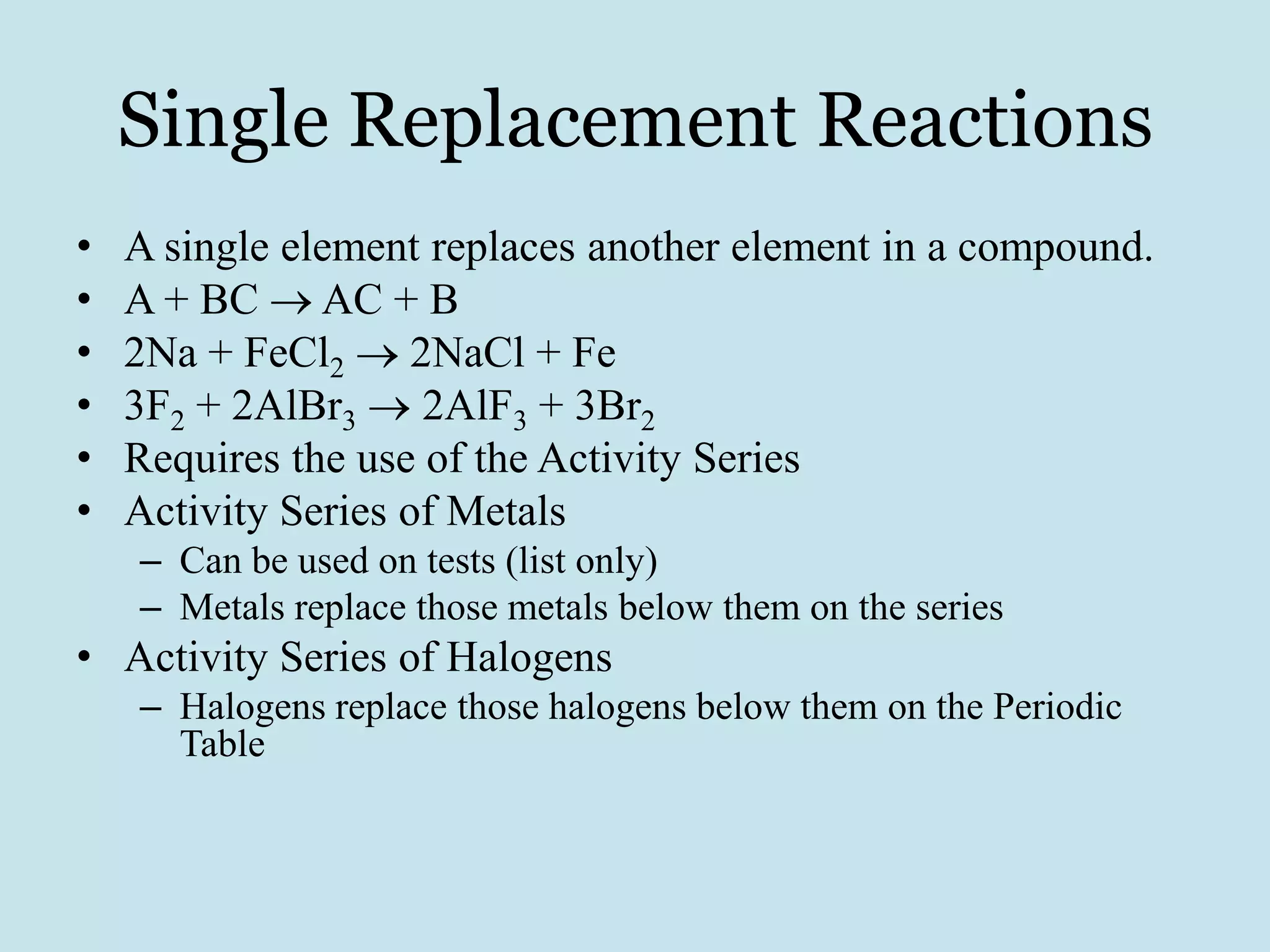
•   A single element replaces another element in a compound.
•   A + BC AC + B
•   2Na + FeCl2 2NaCl + Fe
•   3F2 + 2AlBr3 2AlF3 + 3Br2
•   Requires the use of the Activity Series
•   Activity Series of Metals
    – Can be used on tests (list only)
    – Metals replace those metals below them on the series
• Activity Series of Halogens
    – Halogens replace those halogens below them on the Periodic
      Table
Activity Series
       lithium
     potassium
     strontium
       calcium
       sodium
     magnesium
     aluminum
          zinc
     chromium
          iron
      cadmium
        cobalt
        nickel
           tin
          lead
     Hydrogen
      antimony
       arsenic
       bismuth
        copper
       mercury
         silver
      paladium
      platinum
          gold
•   Each element on the list replaces from a compound any of the elements below it. The
    larger the interval between elements, the more vigorous the reaction.

•   The first five elements (lithium - sodium) are known as very active metals and they
    react with cold water to produce the hydroxide and hydrogen gas.

•   The next four metals (magnesium - chromium) are considered active metals and they
    will react with very hot water or steam to form the oxide and hydrogen gas.

•   The oxides of all of these first metals resist reduction by H2.

•   The next six metals (iron - lead) replace hydrogen from HCl and dilute sulfuric and
    nitric acids. Their oxides undergo reduction by heating with H2, carbon, and carbon
    monoxide.

•   The metals lithium - copper, can combine directly with oxygen to form the oxide.

•   The last five metals (mercury - gold) are often found free in nature, their oxides
    decompose wit mild heating, and they form oxides only indirectly.
Double Replacement Reactions
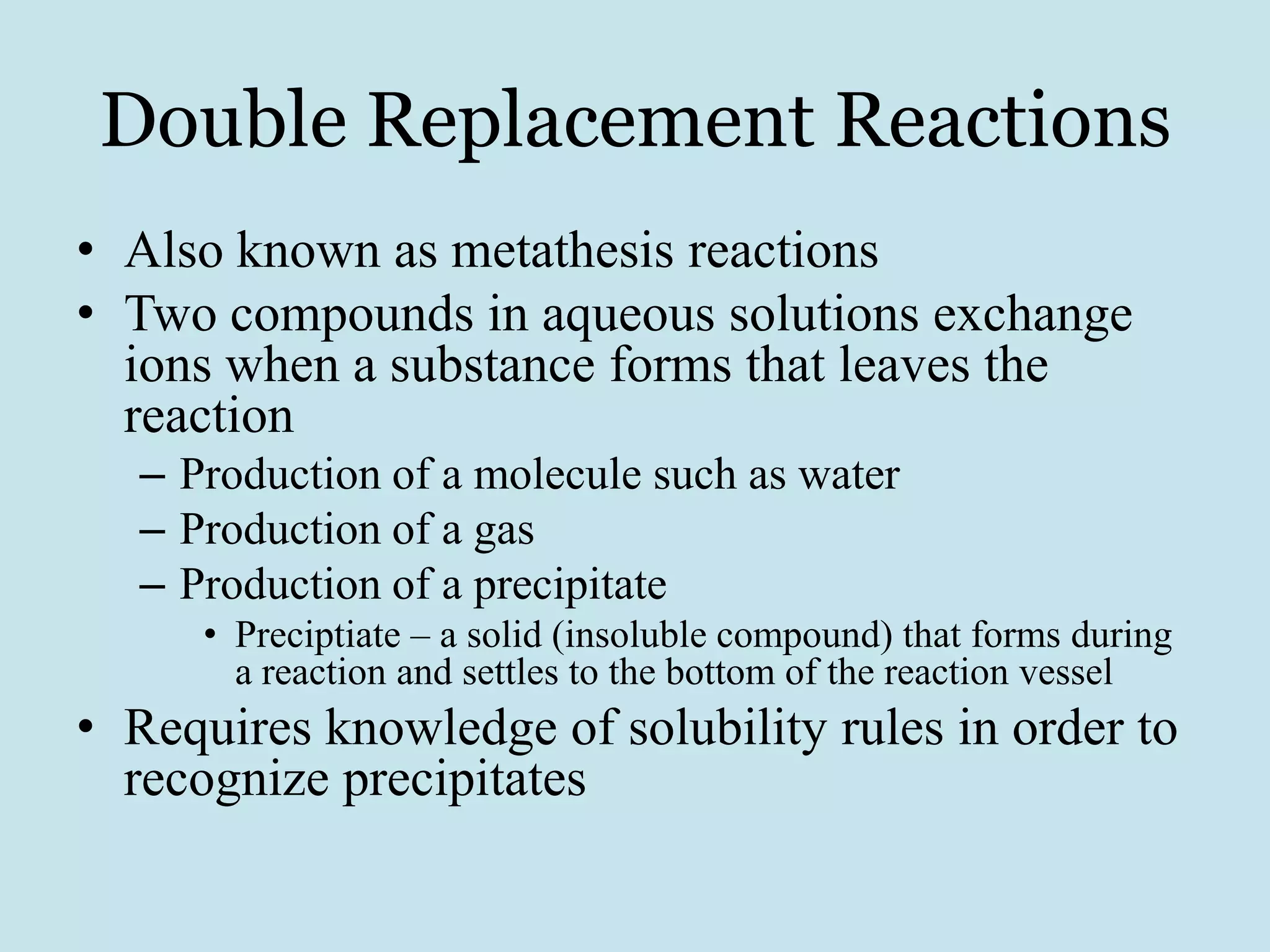
• Also known as metathesis reactions
• Two compounds in aqueous solutions exchange
  ions when a substance forms that leaves the
  reaction
  – Production of a molecule such as water
  – Production of a gas
  – Production of a precipitate
     • Preciptiate – a solid (insoluble compound) that forms during
       a reaction and settles to the bottom of the reaction vessel
• Requires knowledge of solubility rules in order to
  recognize precipitates

Single & double replacement reactions

  • 1.
    Predicting Products of Reactions Single and Double Replacement Reactions
  • 2.
    Single Replacement Reactions • A single element replaces another element in a compound. • A + BC AC + B • 2Na + FeCl2 2NaCl + Fe • 3F2 + 2AlBr3 2AlF3 + 3Br2 • Requires the use of the Activity Series • Activity Series of Metals – Can be used on tests (list only) – Metals replace those metals below them on the series • Activity Series of Halogens – Halogens replace those halogens below them on the Periodic Table
  • 3.
    Activity Series lithium potassium strontium calcium sodium magnesium aluminum zinc chromium iron cadmium cobalt nickel tin lead Hydrogen antimony arsenic bismuth copper mercury silver paladium platinum gold
  • 4.
    Each element on the list replaces from a compound any of the elements below it. The larger the interval between elements, the more vigorous the reaction. • The first five elements (lithium - sodium) are known as very active metals and they react with cold water to produce the hydroxide and hydrogen gas. • The next four metals (magnesium - chromium) are considered active metals and they will react with very hot water or steam to form the oxide and hydrogen gas. • The oxides of all of these first metals resist reduction by H2. • The next six metals (iron - lead) replace hydrogen from HCl and dilute sulfuric and nitric acids. Their oxides undergo reduction by heating with H2, carbon, and carbon monoxide. • The metals lithium - copper, can combine directly with oxygen to form the oxide. • The last five metals (mercury - gold) are often found free in nature, their oxides decompose wit mild heating, and they form oxides only indirectly.
  • 5.
    Double Replacement Reactions •Also known as metathesis reactions • Two compounds in aqueous solutions exchange ions when a substance forms that leaves the reaction – Production of a molecule such as water – Production of a gas – Production of a precipitate • Preciptiate – a solid (insoluble compound) that forms during a reaction and settles to the bottom of the reaction vessel • Requires knowledge of solubility rules in order to recognize precipitates