PROCESS
RECORDING
DR. MAHESWARI JAIKUMAR.
maheswarijaikumar2103@gmail.com
PROCESS RECORDING
EARLIER DAYS
RECORDING-MORDEN AGE
DEFINITION
• “A process recording is a
method in which students record
all the communications, both
verbal and non verbal, spoken
and observed through an
interview. CHRIS JORDAN
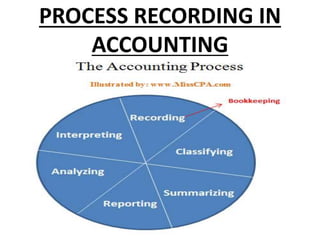
PROCESS RECORDING IN
ACCOUNTING
TYPES
• 1. VERBATIM DIALOGUE.
• 2. FEELINGS AND REACTIONS.
• 3. OBSERVATIONS AND
ANALYSIS.
• 4. FINAL COMMENTS.
PHASES OF PROCESS
RECORDING
VERBATIM DIALOGUE
• Provides a clear picture of the
exchange between the student nurse
and the patient.
• The dialogue gives the clinical
instructor and the student nurse an
opportunity to review the client’s
response to the students lead.
• It enumerates the role played by
the students in the interaction.
• This factual, objective exchange
is then available to review for
patterns, themes, helpful
information etc.
FEELINGS & REACTIONS
• Demonstrates the students
feelings and reactions.
• It enumerates the students
affective responses to the
interactions made.
OBSEVATION & ANALYSIS
• Records the critical thinking of
students about the patient’s
words and affect.
• It s the space where the students
can make reference or make
interpretations about critical
thinking behaviour.
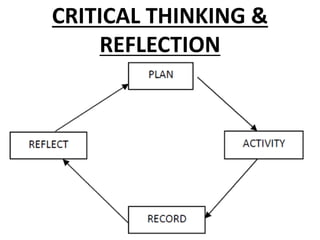
CRITICAL THINKING &
REFLECTION
• The student should record his /
her critical thinking about one’s
own behaviour and motives
while in the session.
FINAL COMMENTS
• The Clinical Instructor provides
feedback and support for the
learning process.
• Comments are written about the
specific interaction or feeling.
PURPOSE
• To help the students to
conceptualize and organize
ongoing activities with patient
system.
• To improve written expression.
• To clarify the purpose of
interview or intervention.
• To identify strength and
weakness.
• To improve self awareness.
• To separate facts from self judgment.
• To explore the interplay of values
operating between the student and
patient system through an analysis of
the filtering process used in
recording the session.
ADVANTAGES
• Process recording helps in
differentiating thoughts and
feelings.
• Helps to clarify the purpose of
the interview or intervention.
• Helps to improve written
expression.
• Helps in identifying strengths
and weakness.
• Helps to improve self awareness.
• Helps to separate facts from
judgments.
• Helps to explore the interplay of
values operating between the
student and the patient system
through an analysis of the
filtering process used in
recording the session.
DISADVANTAGES
• It is more time consuming as the
clinical instructor may take more
time to make an evaluation about
an individual student.
• Technical problems are frequent
and become a source of
frustration.
• The process is laborious because
it requires actual observation
and subsequent participation by
the clinical instructor during
student – patient interviews.
THANKYOU

Process Recording

  • 1.
  • 2.
  • 3.
  • 4.
    DEFINITION • “A processrecording is a method in which students record all the communications, both verbal and non verbal, spoken and observed through an interview. CHRIS JORDAN
  • 5.
  • 6.
    TYPES • 1. VERBATIMDIALOGUE. • 2. FEELINGS AND REACTIONS. • 3. OBSERVATIONS AND ANALYSIS. • 4. FINAL COMMENTS.
  • 7.
  • 8.
    VERBATIM DIALOGUE • Providesa clear picture of the exchange between the student nurse and the patient. • The dialogue gives the clinical instructor and the student nurse an opportunity to review the client’s response to the students lead.
  • 9.
    • It enumeratesthe role played by the students in the interaction. • This factual, objective exchange is then available to review for patterns, themes, helpful information etc.
  • 10.
    FEELINGS & REACTIONS •Demonstrates the students feelings and reactions. • It enumerates the students affective responses to the interactions made.
  • 11.
    OBSEVATION & ANALYSIS •Records the critical thinking of students about the patient’s words and affect. • It s the space where the students can make reference or make interpretations about critical thinking behaviour.
  • 12.
  • 13.
    • The studentshould record his / her critical thinking about one’s own behaviour and motives while in the session.
  • 14.
    FINAL COMMENTS • TheClinical Instructor provides feedback and support for the learning process. • Comments are written about the specific interaction or feeling.
  • 15.
    PURPOSE • To helpthe students to conceptualize and organize ongoing activities with patient system. • To improve written expression.
  • 16.
    • To clarifythe purpose of interview or intervention. • To identify strength and weakness.
  • 17.
    • To improveself awareness. • To separate facts from self judgment. • To explore the interplay of values operating between the student and patient system through an analysis of the filtering process used in recording the session.
  • 18.
    ADVANTAGES • Process recordinghelps in differentiating thoughts and feelings. • Helps to clarify the purpose of the interview or intervention.
  • 19.
    • Helps toimprove written expression. • Helps in identifying strengths and weakness. • Helps to improve self awareness.
  • 20.
    • Helps toseparate facts from judgments. • Helps to explore the interplay of values operating between the student and the patient system through an analysis of the filtering process used in recording the session.
  • 21.
    DISADVANTAGES • It ismore time consuming as the clinical instructor may take more time to make an evaluation about an individual student. • Technical problems are frequent and become a source of frustration.
  • 22.
    • The processis laborious because it requires actual observation and subsequent participation by the clinical instructor during student – patient interviews.
  • 23.