Learning Objectives
At the end of this session learners will be able to :
1. Explain the utility of assessment
2. Differentiate between the types of assessment
3. Elaborate the principles of a good assessment
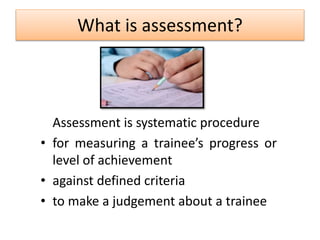
What is assessment?
Assessment is systematic procedure
• for measuring a trainee’s progress or
level of achievement
• against defined criteria
• to make a judgement about a trainee
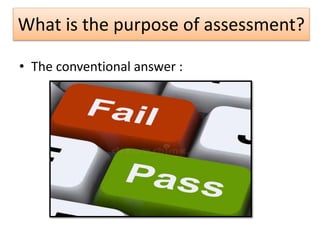
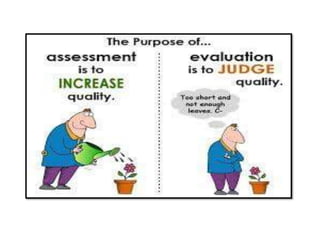
What is the purpose of assessment?
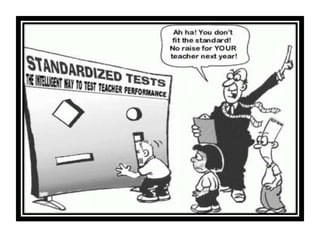
• The conventional answer :
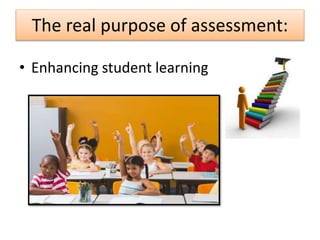
The real purpose of assessment:
• Enhancing student learning
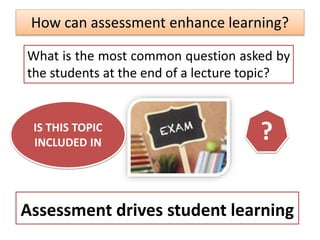
How can assessment enhance learning?
Assessment drives student learning
What is the most common question asked by
the students at the end of a lecture topic?
IS THIS TOPIC
INCLUDED IN
?
Assessment gives the FEEDBACK
To the teacher:
To assess whether the educational objectives
are achieved or not
To adjust their teaching strategies
To the students
To assess their learning
To improve their performance
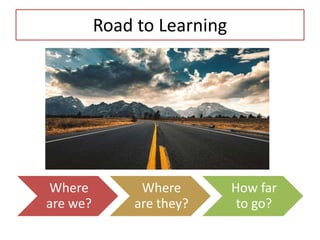
Road to Learning
Where
are we?
Where
are they?
How far
to go?
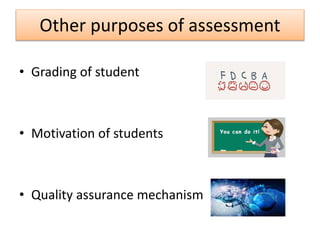
Other purposes of assessment
• Grading of student
• Motivation of students
• Quality assurance mechanism
Why do we need to assess medical
students?
• We are certifying students fit for dealing with
human lives
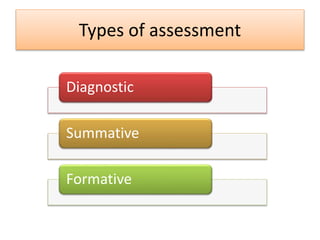
Types of assessment
Diagnostic
Summative
Formative
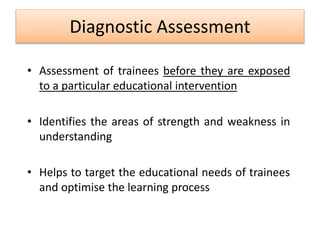
Diagnostic Assessment
• Assessment of trainees before they are exposed
to a particular educational intervention
• Identifies the areas of strength and weakness in
understanding
• Helps to target the educational needs of trainees
and optimise the learning process
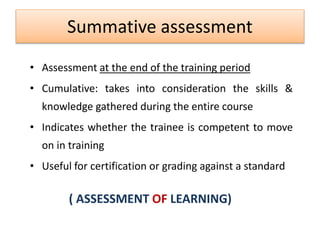
Summative assessment
• Assessment at the end of the training period
• Cumulative: takes into consideration the skills &
knowledge gathered during the entire course
• Indicates whether the trainee is competent to move
on in training
• Useful for certification or grading against a standard
( ASSESSMENT OF LEARNING)
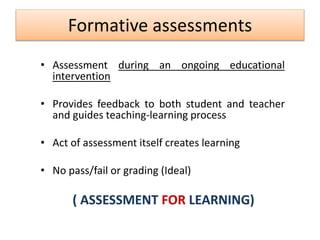
Formative assessments
• Assessment during an ongoing educational
intervention
• Provides feedback to both student and teacher
and guides teaching-learning process
• Act of assessment itself creates learning
• No pass/fail or grading (Ideal)
( ASSESSMENT FOR LEARNING)
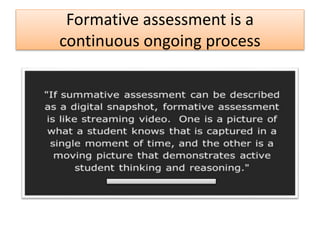
Formative assessment is a
continuous ongoing process
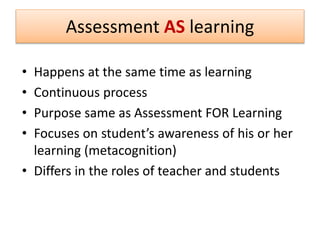
• Happens at the same time as learning
• Continuous process
• Purpose same as Assessment FOR Learning
• Focuses on student’s awareness of his or her
learning (metacognition)
• Differs in the roles of teacher and students
Assessment AS learning
FOR AS OF
FORMATIVE SUMMATIVE
What is the type of assessment?
1. Second professional university examination
2. Pre-class quiz
3. Part completion in Anatomy department
4. Project work on Biological waste management
5. Internal assessment examination
6. NEET PG
7. A case study on Cystic fibrosis given to the
students as homework and asked to solve by
themselves.
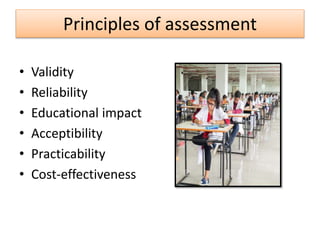
Principles of assessment
• Validity
• Reliability
• Educational impact
• Acceptibility
• Practicability
• Cost-effectiveness
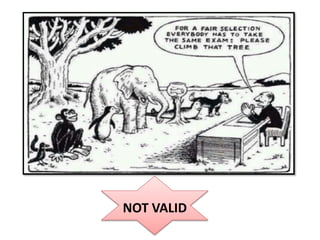
NOT VALID
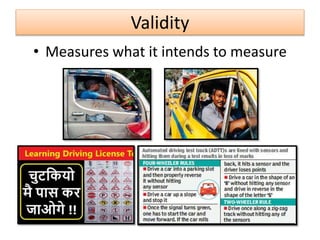
Validity
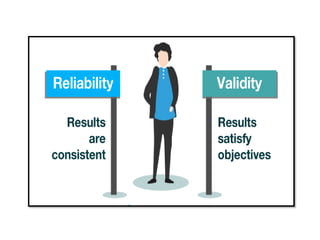
• Measures what it intends to measure
Validity (contd)
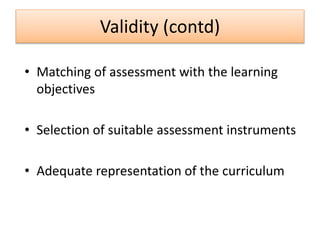
• Matching of assessment with the learning
objectives
• Selection of suitable assessment instruments
• Adequate representation of the curriculum
Reliability
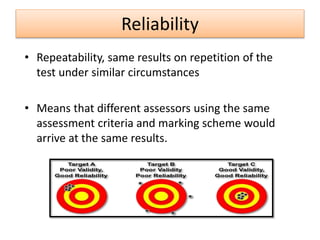
• Repeatability, same results on repetition of the
test under similar circumstances
• Means that different assessors using the same
assessment criteria and marking scheme would
arrive at the same results.
Reliability (contd)
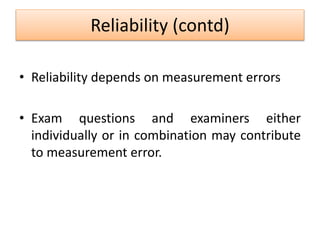
• Reliability depends on measurement errors
• Exam questions and examiners either
individually or in combination may contribute
to measurement error.
Educational Impact
“assessment programme has
tremendous impact on learners
and students do whatever they
are tested on and are not likely
to do what they are not tested
on”.
-- van der Vleuten
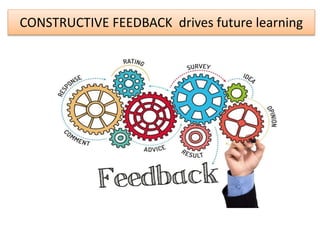
CONSTRUCTIVE FEEDBACK drives future learning
Practicability/ Feasibility
• Assessments must be practical, realistic and
achievable in the given infrastructure
• Feasibility issues: the cost, availability of equipment,
time, recruitment of patients and assessors, and
manpower necessary to develop infrastructure
• The scheduling of assignments and the amount of
assessed work required should be achievable
without overloading staff or students.
Acceptibility
• A test may be acceptable to
some of those dealing with
it and not to others
• Depends on the beliefs,
opinions and attitudes of
both examiners and
examinee
Acceptibility (contd)
• Students should know what criteria will be applied in
assessment : transparency
• Evidence suggests that students underperform in
assessment because of failure to grasp the
requirement
• Also implies that all stakeholders involved in
assessment should receive clear, accurate, consistent
and timely information on the assessment tasks and
procedures.
Cost-effectiveness
“investing in assessment is
investing in teaching and
learning, as assessment drives
learning”
• the cost-effectiveness of assessment, i.e,
evaluating the benefits of a particular
assessment against its cost, seems more
important than the cost alone.
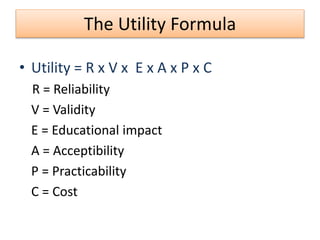
The Utility Formula
• Utility = R x V x E x A x P x C
R = Reliability
V = Validity
E = Educational impact
A = Acceptibility
P = Practicability
C = Cost
Take Home Messages
• Assessment drives learning in the direction of
desired outcome
• Assessment provides important feedback to both
learner and facilitator
• Assessment can be diagnostic/ formative /
summative in nature
• Assessment tools must be selected carefully by
striking a balance between validity, reliability,
educational impact on one hand while acceptibility,
feasibility and cost-effectiveness on the other
THANK YOU

Introduction to assessment

  • 2.
    Learning Objectives At theend of this session learners will be able to : 1. Explain the utility of assessment 2. Differentiate between the types of assessment 3. Elaborate the principles of a good assessment
  • 3.
    What is assessment? Assessmentis systematic procedure • for measuring a trainee’s progress or level of achievement • against defined criteria • to make a judgement about a trainee
  • 4.
    What is thepurpose of assessment? • The conventional answer :
  • 5.
    The real purposeof assessment: • Enhancing student learning
  • 7.
    How can assessmentenhance learning? Assessment drives student learning What is the most common question asked by the students at the end of a lecture topic? IS THIS TOPIC INCLUDED IN ?
  • 8.
    Assessment gives theFEEDBACK To the teacher: To assess whether the educational objectives are achieved or not To adjust their teaching strategies To the students To assess their learning To improve their performance
  • 9.
    Road to Learning Where arewe? Where are they? How far to go?
  • 10.
    Other purposes ofassessment • Grading of student • Motivation of students • Quality assurance mechanism
  • 11.
    Why do weneed to assess medical students? • We are certifying students fit for dealing with human lives
  • 12.
  • 13.
    Diagnostic Assessment • Assessmentof trainees before they are exposed to a particular educational intervention • Identifies the areas of strength and weakness in understanding • Helps to target the educational needs of trainees and optimise the learning process
  • 14.
    Summative assessment • Assessmentat the end of the training period • Cumulative: takes into consideration the skills & knowledge gathered during the entire course • Indicates whether the trainee is competent to move on in training • Useful for certification or grading against a standard ( ASSESSMENT OF LEARNING)
  • 15.
    Formative assessments • Assessmentduring an ongoing educational intervention • Provides feedback to both student and teacher and guides teaching-learning process • Act of assessment itself creates learning • No pass/fail or grading (Ideal) ( ASSESSMENT FOR LEARNING)
  • 16.
    Formative assessment isa continuous ongoing process
  • 18.
    • Happens atthe same time as learning • Continuous process • Purpose same as Assessment FOR Learning • Focuses on student’s awareness of his or her learning (metacognition) • Differs in the roles of teacher and students Assessment AS learning
  • 19.
  • 20.
    What is thetype of assessment? 1. Second professional university examination 2. Pre-class quiz 3. Part completion in Anatomy department 4. Project work on Biological waste management 5. Internal assessment examination 6. NEET PG 7. A case study on Cystic fibrosis given to the students as homework and asked to solve by themselves.
  • 21.
    Principles of assessment •Validity • Reliability • Educational impact • Acceptibility • Practicability • Cost-effectiveness
  • 22.
  • 23.
    Validity • Measures whatit intends to measure
  • 24.
    Validity (contd) • Matchingof assessment with the learning objectives • Selection of suitable assessment instruments • Adequate representation of the curriculum
  • 25.
    Reliability • Repeatability, sameresults on repetition of the test under similar circumstances • Means that different assessors using the same assessment criteria and marking scheme would arrive at the same results.
  • 26.
    Reliability (contd) • Reliabilitydepends on measurement errors • Exam questions and examiners either individually or in combination may contribute to measurement error.
  • 28.
    Educational Impact “assessment programmehas tremendous impact on learners and students do whatever they are tested on and are not likely to do what they are not tested on”. -- van der Vleuten
  • 29.
  • 30.
    Practicability/ Feasibility • Assessmentsmust be practical, realistic and achievable in the given infrastructure • Feasibility issues: the cost, availability of equipment, time, recruitment of patients and assessors, and manpower necessary to develop infrastructure • The scheduling of assignments and the amount of assessed work required should be achievable without overloading staff or students.
  • 31.
    Acceptibility • A testmay be acceptable to some of those dealing with it and not to others • Depends on the beliefs, opinions and attitudes of both examiners and examinee
  • 32.
    Acceptibility (contd) • Studentsshould know what criteria will be applied in assessment : transparency • Evidence suggests that students underperform in assessment because of failure to grasp the requirement • Also implies that all stakeholders involved in assessment should receive clear, accurate, consistent and timely information on the assessment tasks and procedures.
  • 33.
    Cost-effectiveness “investing in assessmentis investing in teaching and learning, as assessment drives learning” • the cost-effectiveness of assessment, i.e, evaluating the benefits of a particular assessment against its cost, seems more important than the cost alone.
  • 34.
    The Utility Formula •Utility = R x V x E x A x P x C R = Reliability V = Validity E = Educational impact A = Acceptibility P = Practicability C = Cost
  • 35.
    Take Home Messages •Assessment drives learning in the direction of desired outcome • Assessment provides important feedback to both learner and facilitator • Assessment can be diagnostic/ formative / summative in nature • Assessment tools must be selected carefully by striking a balance between validity, reliability, educational impact on one hand while acceptibility, feasibility and cost-effectiveness on the other
  • 37.

Editor's Notes

  • #12 The ultimate aim of undergraduate, postgraduate and continuing medical education is to improve the health and the health care of the population. The outcomes of all medical education programmes, in general, are focused on this aim. Assessments should accurately measure the students’ or trainees’ progress towards or achievement of these outcomes at different levels of their training
  • #14  Eg. Pretest questionnaire
  • #15 Whether learnt what he was meant to Eg. The University Professional examinations
  • #16 Eg. Items , DOPS
  • #17 CBME …formative assessment ??
  • #18 Maaer mutton tasting
  • #19 In Assessments AS Learning, students are active assessors of their learning while in Assessments FOR Learning  although students are involved in the assessment process, teachers are the active assessors of student’s learning This purpose of assessment centers on students and their practice of metacognition to improve their learning.  Students need to reflect and assess their learning so they can come up with strategies to improve their learning. By engaging in self-assessment students learn how to come up with their own understanding of the learning outcomes.
  • #26 .  If the grader of an assessment is sensitive to external factors, their given grades may reflect this sensitivity, therefore making the results unreliable. 
  • #27 if your scale is off by 5 lbs, it reads your weight every day with an excess of 5lbs.  The scale is reliable because it consistently reports the same weight every day, but it is not valid because it adds 5lbs to your true weight.  It is not a valid measure of your weight
  • #29 Although more time is allocated for learning clinical skills in wards, if students are assessed on recalling facts using a MCQ examination, they have a propensity to read books and notes in a library. Conversely, they will learn clinical skills, spending more time in clinical skills centres or wards, if their clinical skills are assessed using an OSCE.25 Therefore
  • #30 Assessment must encourage & motivate learners by emphasizing their progress and achievement rather than failure Assessment without feedback serves no purpose…
  • #31 Valid and reliable assessment might not always be feasible. Example: Phaeochromocytoma case might not be available mini CEX … replace it with a problem based card Online assessments : one to one viva for 250 students by just 5 teachers for every topic might not be feasible Use of OSCE to assess skills with as many observer and cases as possible may not be feasible.
  • #32 strongly structured assessments may not be acceptable to examiners, as the examiners have little opportunity to exploit their expertise to vary questioning from candidate to candidate.1 Therefore, a compromise between an acceptable degree of freedom for such issues and the exam structure enhances the sustainability of the assessment system.1 For example, in an OSCE, a checklist can be used together with a global rating where the examiners can express their overall judgment on candidates, enhancing both psychometric proper
  • #33 Students Teachers External examiners
  • #34 For example, a one-from-five MCQ test may be the cheapest mode of valid and reliable assessment of ‘knows’ and ‘knows how’ levels of Millers pyramid.17 However, it is not suitable for assessing competence or performance. A portfolio assessment, which is costly compared to a MCQ test, may be the cost-effective method of assessing performance credibly.
  • #37 Assessment not only measures the success of the student, it also measures the success of the teacher or facilitator.. It shows how far his endeavours were successful in enhancing student learning… a successful student implies a successful teacher.