Fluid and electrolytes
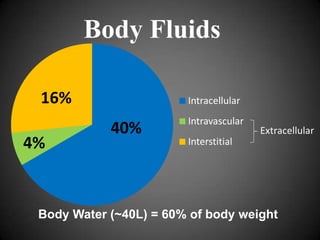
Body Fluids16%40%4%Body Water (~40L) = 60% of body weight
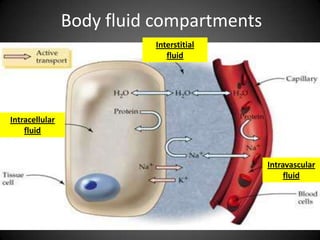
Body fluid compartmentsInterstitialfluidsIntracellular fluidIntravascularfluid
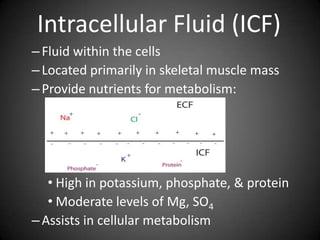
Intracellular Fluid (ICF)Fluid within the cellsLocated primarily in skeletal muscle massProvide nutrients for metabolism:High in potassium, phosphate, & proteinModerate levels of Mg, SO4Assists in cellular metabolism
Extracellular fluid (ECF)Intravascular- plasma (half of total blood volume)Interstitial- surround all cells (eg. lymph)*	Some interstitial fluid is TRANSCELLULARor under the influence of metabolic activity	- respiratory fluid 		- pericardial fluid 	- GI digestive fluid		- peritoneal fluid 	  		- CSF				- intraocular fluid 	- pleural fluid			- synovial fluid	- gland secretions (sweat, enzymes)
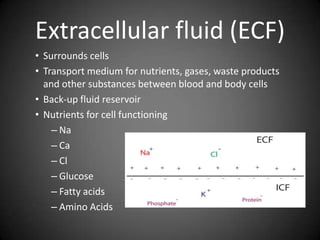
Extracellular fluid (ECF)Surrounds cells Transport medium for nutrients, gases, waste products and other substances between blood and body cellsBack-up fluid reservoir	Nutrients for cell functioningNaCaClGlucoseFatty acidsAmino Acids
Fluid MovementFluid movement is constant and is influenced by:1. membrane permeabilityActive : require energy to transport eg. Na/K pumpPassive : osmosis, diffusion, hydrostatic force2. colloid osmotic pressure (plasma proteins)3. hydrostatic pressure (cap. bed pressure)Mechanical force of water pushing against membraneForces H2O, Na, glucose to go across membrane to interstitial fluid
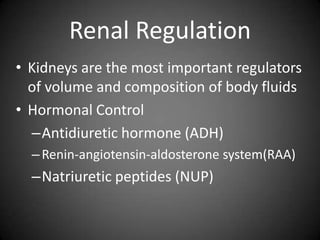
Renal RegulationKidneys are the most important regulators of volume and composition of body fluidsHormonal ControlAntidiuretic hormone (ADH)Renin-angiotensin-aldosterone system(RAA)Natriuretic peptides (NUP)
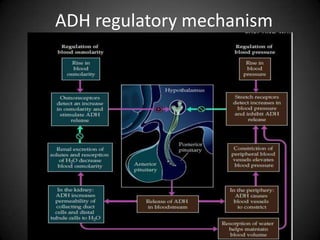
ADH regulatory mechanism
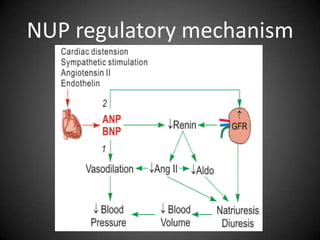
NUP regulatory mechanism
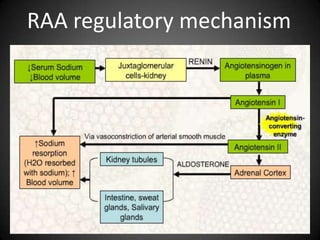
RAA regulatory mechanism
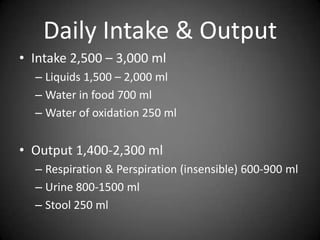
Daily Intake & Output Intake 2,500 – 3,000 mlLiquids 1,500 – 2,000 mlWater in food 700 mlWater of oxidation 250 mlOutput 1,400-2,300 mlRespiration & Perspiration (insensible) 600-900 ml Urine 800-1500 mlStool 250 ml
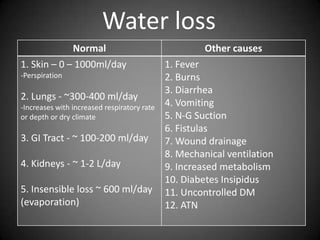
Water loss
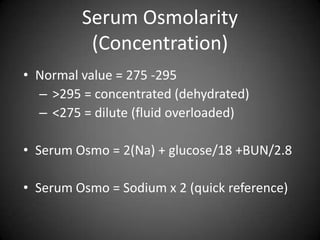
Serum Osmolarity (Concentration)Normal value = 275 -295 >295 = concentrated (dehydrated) <275 = dilute (fluid overloaded)Serum Osmo = 2(Na) + glucose/18 +BUN/2.8Serum Osmo = Sodium x 2 (quick reference)
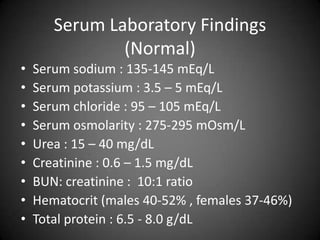
Serum Laboratory Findings (Normal)Serum sodium : 135-145 mEq/L Serum potassium : 3.5 – 5 mEq/LSerum chloride : 95 – 105 mEq/LSerum osmolarity : 275-295 mOsm/L Urea : 15 – 40 mg/dLCreatinine : 0.6 – 1.5 mg/dLBUN: creatinine :  10:1 ratioHematocrit (males 40-52% , females 37-46%)Total protein : 6.5 - 8.0 g/dL
Fluid volume deficitOutput > Intake -> Water extracted from ECFECF hypertonic (water moves out of cell -> cell dehydration) + osmotic pressure increased (stimulates thirst receptor in hypothalamus)ICF hypotonic with decreased osmotic pressure -> posterior pituitary secretes more ADHDecreased ECF volume -> adrenal glands secrete AldosteroneLabIncreased HCTIncreased BUN out of proportion to CrHigh serum osmolarityIncreased urine osmolarityIncreased specific gravityDecreased urine volume, dark color
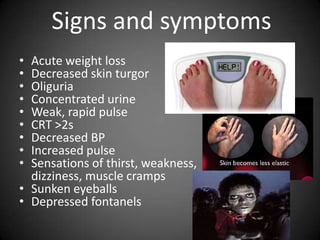
Signs and symptomsAcute weight lossDecreased skin turgorOliguriaConcentrated urineWeak, rapid pulseCRT >2sDecreased BPIncreased pulseSensations of thirst, weakness, 	dizziness, muscle crampsSunken eyeballsDepressed fontanels
ManagementMajor goal : correction and prevention of ARFEncourage oral fluidsIV fluidsIsotonic solutions (0.9% NS or Hartmann) until BP back to normal, then hypotonic (0.45% NS)Monitor I & O, urine specific gravity, daily weightsMonitor skin turgorMonitor VS and mental statusEvaluationNormal skin turgor, increased UOP with normal specific gravity, normal VS, alert and conscious, good oral intake of fluids
Fluid volume excessHypervolemiaIsotonic expansion of ECF caused by abnormal retention of water and sodium Fluid moves out of ECF into cells and cells swellCausesCardiovascular – Heart failureUrinary – Renal failureHepatic – Liver failure, cirrhosisOther – Cancer, thrombus, PVD, drug therapy (i.e., corticosteriods), high sodium intake, protein malnutrition
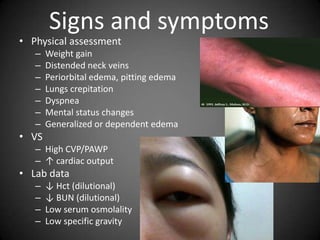
Signs and symptomsPhysical assessmentWeight gainDistended neck veinsPeriorbital edema, pitting edemaLungs crepitationDyspneaMental status changesGeneralized or dependent edemaVSHigh CVP/PAWP↑ cardiac outputLab data↓ Hct (dilutional)↓ BUN (dilutional)Low serum osmolalityLow specific gravity
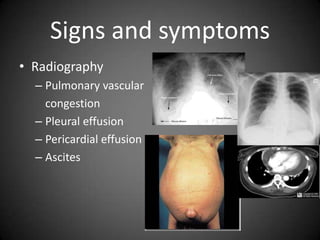
Signs and symptomsRadiographyPulmonary vascular 	congestionPleural effusionPericardial effusionAscites
ManagementSodium restriction (foods/water high in sodium)Fluid restriction, if necessaryClosely monitor IVFIf dyspnea or orthopnea > Semi-Fowler’sStrict I & O, lung sounds, daily weight, degree of edema, reposition q 2 hr Promote rest and diuresis
IV fluids
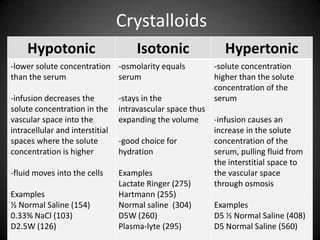
Crystalloids
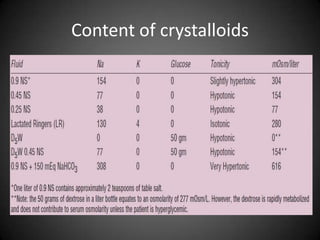
Content of crystalloids
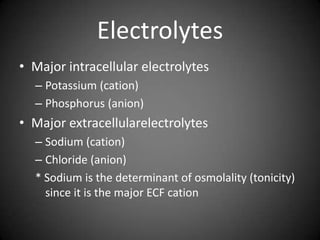
ElectrolytesMajor intracellular electrolytesPotassium (cation)Phosphorus (anion)Major extracellularelectrolytesSodium (cation)Chloride (anion)* Sodium is the determinant of osmolality (tonicity) since it is the major ECF cation
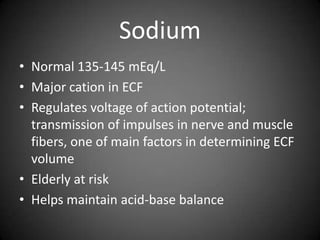
SodiumNormal 135-145 mEq/LMajor cation in ECFRegulates voltage of action potential; transmission of impulses in nerve and muscle fibers, one of main factors in determining ECF volumeElderly at riskHelps maintain acid-base balance
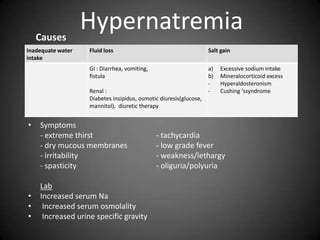
HypernatremiaCausesSymptoms	- extreme thirst		- tachycardia	- dry mucous membranes	- low grade fever	- irritability			- weakness/lethargy	- spasticity			- oliguria/polyuriaLabIncreased serum Na Increased serum osmolality Increased urine specific gravity
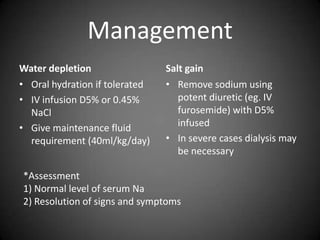
ManagementWater depletionOral hydration if toleratedIV infusion D5% or 0.45% NaClGive maintenance fluid requirement (40ml/kg/day)Salt gainRemove sodium using potent diuretic (eg. IV furosemide) with D5% infusedIn severe cases dialysis may be necessary*Assessment1) Normal level of serum Na2) Resolution of signs and symptoms
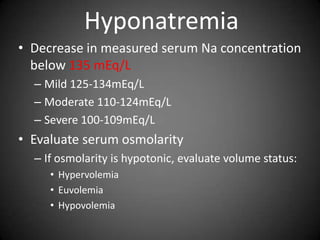
HyponatremiaDecrease in measured serum Na concentration below 135 mEq/LMild 125-134mEq/LModerate 110-124mEq/LSevere 100-109mEq/LEvaluate serum osmolarityIf osmolarity is hypotonic, evaluate volume status:HypervolemiaEuvolemiaHypovolemia
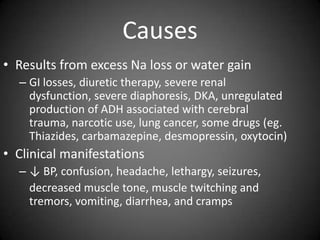
CausesResults from excess Na loss or water gainGI losses, diuretic therapy, severe renal dysfunction, severe diaphoresis, DKA, unregulated production of ADH associated with cerebral trauma, narcotic use, lung cancer, some drugs (eg. Thiazides, carbamazepine, desmopressin, oxytocin)Clinical manifestations↓ BP, confusion, headache, lethargy, seizures, 	decreased muscle tone, muscle twitching and tremors, vomiting, diarrhea, and cramps
Lab & ManagementLab investigationIncreased HCT, KDecreased Na, Cl, Bicarbonate, UOP with low Na and Cl concentrationUrine specific gravity ↓ 1.010ManagementMildWater restriction if water retention problem Increase Na in foods if  loss of NaModerateIV 0.9% NS,  0.45% NS, HartmannSevere3% NS – short-term therapy in ICU setting
PotassiumNormal 3.5-5.5 mEq/LMajor ICF cationVital in maintaining normal cardiac and neuromuscular function, influences nerve impulse conduction, important in carbohydrate(CHO) metabolism, helps maintain acid-base balance, control fluid movement in and out of cells by osmosis
HypokalemiaSerum potassium level below 3.5 mEq/LCausesLoss of GI secretions (diarrhea, vomiting, villous adenoma, ileostomy or uterosigmoidostomy, fistula)Excessive renal excretion of potassium (diuretics, increased aldosterone secretion, renal tubular damage etc)Movement of K into the cells (insulin therapy)Prolonged fluid administration without K supplementationDiuretics (thiazide, loop, mannitol)
Signs and symptomsSkeletal muscle weakness, ↓ smooth muscle function, ↓ DTR’s↓ BP, heart block, AF, VT, VFECG changes (small/inverted T, prominent U, ST depression, prolonged PR intervals)Constipation, ileusMetabolic alkalosisMental depression and confusion
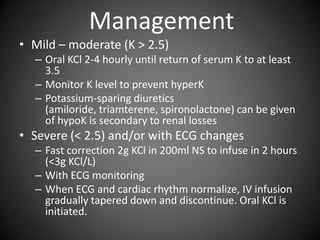
ManagementMild – moderate (K > 2.5)Oral KCl 2-4 hourly until return of serum K to at least 3.5Monitor K level to prevent hyperKPotassium-sparing diuretics (amiloride, triamterene, spironolactone) can be given of hypoK is secondary to renal lossesSevere (< 2.5) and/or with ECG changesFast correction 2g KCl in 200ml NS to infuse in 2 hours (<3g KCl/L)With ECG monitoringWhen ECG and cardiac rhythm normalize, IV infusion gradually tapered down and discontinue. Oral KCl is initiated.
HyperkalemiaSerum potassium level above 5.3 mEq/LCausesExcessive K intake (IV or PO) especially in renal failureTissue traumaAcidosisCatabolic state Signs and symptomsECG changes – tachycardia to bradycardia to possible cardiac arrestTall, tented T wavesCardiac arrhythmiasMuscle weakness, paralysis, paresthesia of tongue, face, hands, and feet, N/V, cramping, diarrhea, metabolic acidosis
ManagementStop K supplements and avoid K in foods, fluids, salt substitutesLytic IV cocktailCalcium gluconate 10% 10ml in 10 minutesInsulin 10U in D50 50ml  in 30-60min, then maintain on D5Sodium bicarbonate 100-200mmol/L over 30minKalimate 5-10g tds/Resonium A 15-30 tds/qid PO or PR (cation exchange solution)Beta agonist therapyIV salbutamol 0.5mg in 15min or 10mg nebulization
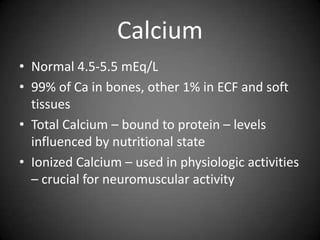
CalciumNormal 4.5-5.5 mEq/L99% of Ca in bones, other 1% in ECF and soft tissuesTotal Calcium – bound to protein – levels influenced by nutritional state Ionized Calcium – used in physiologic activities – crucial for neuromuscular activity
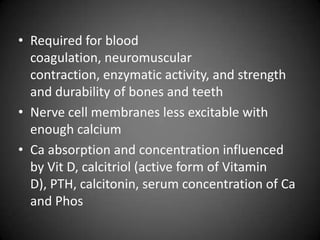
Required for blood coagulation, neuromuscular contraction, enzymatic activity, and strength and durability of bones and teethNerve cell membranes less excitable with enough calciumCa absorption and concentration influenced by Vit D, calcitriol (active form of Vitamin D), PTH, calcitonin, serum concentration of Ca and Phos
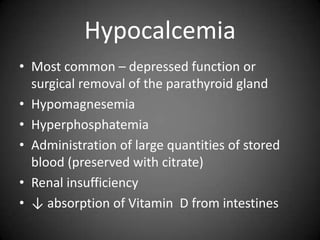
HypocalcemiaMost common – depressed function or surgical removal of the parathyroid glandHypomagnesemiaHyperphosphatemiaAdministration of large quantities of stored blood (preserved with citrate)Renal insufficiency↓ absorption of Vitamin  D from intestines
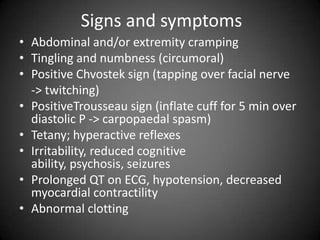
Signs and symptomsAbdominal and/or extremity crampingTingling and numbness (circumoral)Positive Chvostek sign (tapping over facial nerve 	-> twitching) PositiveTrousseau sign (inflate cuff for 5 min over diastolic P -> carpopaedal spasm)Tetany; hyperactive reflexesIrritability, reduced cognitive ability, psychosis, seizuresProlonged QT on ECG, hypotension, decreased myocardial contractilityAbnormal clotting
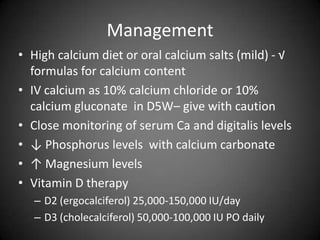
ManagementHigh calcium diet or oral calcium salts (mild) - √ formulas for calcium content IV calcium as 10% calcium chloride or 10% calcium gluconate  in D5W– give with cautionClose monitoring of serum Ca and digitalis levels↓ Phosphorus levels  with calcium carbonate↑ Magnesium levels Vitamin D therapyD2 (ergocalciferol) 25,000-150,000 IU/dayD3 (cholecalciferol) 50,000-100,000 IU PO daily
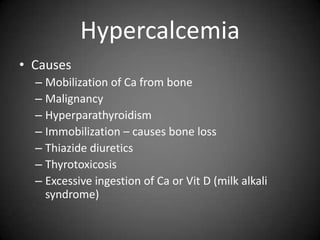
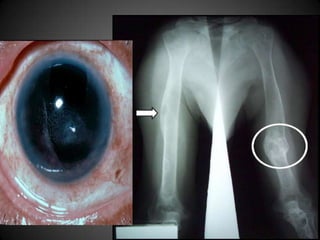
HypercalcemiaCausesMobilization of Ca from boneMalignancyHyperparathyroidismImmobilization – causes bone lossThiazide diureticsThyrotoxicosisExcessive ingestion of Ca or Vit D (milk alkali syndrome)
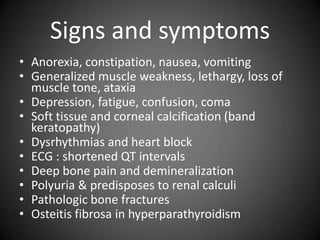
Signs and symptomsAnorexia, constipation, nausea, vomitingGeneralized muscle weakness, lethargy, loss of muscle tone, ataxiaDepression, fatigue, confusion, comaSoft tissue and corneal calcification (band keratopathy)Dysrhythmias and heart blockECG : shortened QT intervalsDeep bone pain and demineralizationPolyuria & predisposes to renal calculiPathologic bone fractures Osteitisfibrosa in hyperparathyroidism
Hypercalcemic crisisEmergency – level of 8-9 mEq/LIntractable nausea, dehydration, stupor, coma, azotemia, hypokalemia, hypomagnesemia, hypernatremiaHigh mortality rate from cardiac arrest
TreatmentNS IV – match infusion rate to amount of UOPI&O hourlyLoop diureticsCorticosteroids and Mithramycin in cancer clients to inhibit osteolytic bone resorptionBiphosphonates and/or calcitonin to inhibit bone resorption and increase renal Ca excretionOral phosphate 1-3g/dayEncourage fluidsDialysis
MagnesiumCauses vasodilatation Decreases peripheral vascular resistance Balance - closely related to K and Ca balanceIntracellular compartment electrolyteHypomagnesemia - < 1.5 mEq/LHypermagnesemia - > 2.5 mEq/L
HypomagnesemiaCausesDecreased intake or decreased absorption or excessive loss through urinary or bowel eliminationAcute pancreatitis, starvation, malabsorption syndrome, chronic alcoholism, burns, prolonged hyperalimentation without adequate MgHypoparathyroidism with hypocalcemiaDiuretic therapy
Signs and symptomsTremors, tetany, ↑ reflexes, paresthesias of feet and legs, convulsionsPositive Babinski, Chvostek and Trousseau signsPersonality changes with agitation, depression or confusion, hallucinationsECG changes (PVC’S, V-tach and V-fib)TreatmentMildDiet – Best sources are unprocessed cereal grains, nuts, legumes, green leafy vegetables, dairy products, dried fruits, meat, fishMagnesium saltsMore severeMgSO4 IM MgSO4 IV slowly Monitor Mg q 12 hrMonitor VS, knee reflexesPrecautions for seizures/confusionCheck swallow reflex
HypermagnesemiaMost common cause is renal failure, especially if taking large amounts of Mg-containing antacids or cathartics; DKA with severe water lossSigns and symptomsHypotension, drowsiness, absent deep tendon reflex, respiratory depression, coma, cardiac arrestECG – Bradycardia, complete HB, cardiac arrest, tall T waves TreatmentWithhold Mg-containing productsCalcium chloride or gluconate IV for acute symptomsIV hydration and diureticsMonitor VS, LOCCheck patellar reflexes
PhosphorusNormal 2.5-4.5 mg/dLIntracellular mineralEssential to tissue oxygenation, normal CNS function and movement of glucose into cells, assists in regulation of Ca and maintenance of acid-base balanceInfluenced by parathyroid hormone and has inverse relationship to Calcium
HypophosphotemiaCauses	- Malnutrition	- Hyperparathyroidism	- Certain renal tubular defects	- Metabolic acidosis (esp. DKA)	- Disorders causing hypercalcemiaSigns and symptomsImpaired cardiac functionPoor tissue oxygenationMuscle fatigue and weaknessN/V, anorexiaDisorientation, seizures, coma Treatment of moderate to severe deficiency Oral or IV phosphate (do not exceed rate of 10 mEq/h)Identify patients at risk for disorder and monitorPrevent infectionsMonitor levels during treatment
HyperphosphotemiaCausesChronic renal failure (most common)Hyperthyroidism, hypoparathyroidismSevere catabolic statesConditions causing hypocalcemiaSigns and symptomsMuscle cramping and weakness↑ HRDiarrhea, abdominal cramping, and nauseaTreatmentPrevention is the goal Restrict phosphate-containing foodsAdminister phosphate-binding agents DiureticsTreat causeTreatment may need to focus on correcting calcium levels
Thank you for your attention

Fluid and electrolytes kochi full

  • 1.
  • 2.
    Body Fluids16%40%4%Body Water(~40L) = 60% of body weight
  • 3.
  • 4.
    Intracellular Fluid (ICF)Fluidwithin the cellsLocated primarily in skeletal muscle massProvide nutrients for metabolism:High in potassium, phosphate, & proteinModerate levels of Mg, SO4Assists in cellular metabolism
  • 5.
    Extracellular fluid (ECF)Intravascular-plasma (half of total blood volume)Interstitial- surround all cells (eg. lymph)* Some interstitial fluid is TRANSCELLULARor under the influence of metabolic activity - respiratory fluid - pericardial fluid - GI digestive fluid - peritoneal fluid - CSF - intraocular fluid - pleural fluid - synovial fluid - gland secretions (sweat, enzymes)
  • 6.
    Extracellular fluid (ECF)Surroundscells Transport medium for nutrients, gases, waste products and other substances between blood and body cellsBack-up fluid reservoir Nutrients for cell functioningNaCaClGlucoseFatty acidsAmino Acids
  • 7.
    Fluid MovementFluid movementis constant and is influenced by:1. membrane permeabilityActive : require energy to transport eg. Na/K pumpPassive : osmosis, diffusion, hydrostatic force2. colloid osmotic pressure (plasma proteins)3. hydrostatic pressure (cap. bed pressure)Mechanical force of water pushing against membraneForces H2O, Na, glucose to go across membrane to interstitial fluid
  • 8.
    Renal RegulationKidneys arethe most important regulators of volume and composition of body fluidsHormonal ControlAntidiuretic hormone (ADH)Renin-angiotensin-aldosterone system(RAA)Natriuretic peptides (NUP)
  • 9.
  • 10.
  • 11.
  • 12.
    Daily Intake &Output Intake 2,500 – 3,000 mlLiquids 1,500 – 2,000 mlWater in food 700 mlWater of oxidation 250 mlOutput 1,400-2,300 mlRespiration & Perspiration (insensible) 600-900 ml Urine 800-1500 mlStool 250 ml
  • 13.
  • 14.
    Serum Osmolarity (Concentration)Normalvalue = 275 -295 >295 = concentrated (dehydrated) <275 = dilute (fluid overloaded)Serum Osmo = 2(Na) + glucose/18 +BUN/2.8Serum Osmo = Sodium x 2 (quick reference)
  • 15.
    Serum Laboratory Findings(Normal)Serum sodium : 135-145 mEq/L Serum potassium : 3.5 – 5 mEq/LSerum chloride : 95 – 105 mEq/LSerum osmolarity : 275-295 mOsm/L Urea : 15 – 40 mg/dLCreatinine : 0.6 – 1.5 mg/dLBUN: creatinine : 10:1 ratioHematocrit (males 40-52% , females 37-46%)Total protein : 6.5 - 8.0 g/dL
  • 16.
    Fluid volume deficitOutput> Intake -> Water extracted from ECFECF hypertonic (water moves out of cell -> cell dehydration) + osmotic pressure increased (stimulates thirst receptor in hypothalamus)ICF hypotonic with decreased osmotic pressure -> posterior pituitary secretes more ADHDecreased ECF volume -> adrenal glands secrete AldosteroneLabIncreased HCTIncreased BUN out of proportion to CrHigh serum osmolarityIncreased urine osmolarityIncreased specific gravityDecreased urine volume, dark color
  • 17.
    Signs and symptomsAcuteweight lossDecreased skin turgorOliguriaConcentrated urineWeak, rapid pulseCRT >2sDecreased BPIncreased pulseSensations of thirst, weakness, dizziness, muscle crampsSunken eyeballsDepressed fontanels
  • 18.
    ManagementMajor goal :correction and prevention of ARFEncourage oral fluidsIV fluidsIsotonic solutions (0.9% NS or Hartmann) until BP back to normal, then hypotonic (0.45% NS)Monitor I & O, urine specific gravity, daily weightsMonitor skin turgorMonitor VS and mental statusEvaluationNormal skin turgor, increased UOP with normal specific gravity, normal VS, alert and conscious, good oral intake of fluids
  • 19.
    Fluid volume excessHypervolemiaIsotonicexpansion of ECF caused by abnormal retention of water and sodium Fluid moves out of ECF into cells and cells swellCausesCardiovascular – Heart failureUrinary – Renal failureHepatic – Liver failure, cirrhosisOther – Cancer, thrombus, PVD, drug therapy (i.e., corticosteriods), high sodium intake, protein malnutrition
  • 20.
    Signs and symptomsPhysicalassessmentWeight gainDistended neck veinsPeriorbital edema, pitting edemaLungs crepitationDyspneaMental status changesGeneralized or dependent edemaVSHigh CVP/PAWP↑ cardiac outputLab data↓ Hct (dilutional)↓ BUN (dilutional)Low serum osmolalityLow specific gravity
  • 21.
    Signs and symptomsRadiographyPulmonaryvascular congestionPleural effusionPericardial effusionAscites
  • 22.
    ManagementSodium restriction (foods/waterhigh in sodium)Fluid restriction, if necessaryClosely monitor IVFIf dyspnea or orthopnea > Semi-Fowler’sStrict I & O, lung sounds, daily weight, degree of edema, reposition q 2 hr Promote rest and diuresis
  • 23.
  • 24.
  • 25.
  • 26.
    ElectrolytesMajor intracellular electrolytesPotassium(cation)Phosphorus (anion)Major extracellularelectrolytesSodium (cation)Chloride (anion)* Sodium is the determinant of osmolality (tonicity) since it is the major ECF cation
  • 27.
    SodiumNormal 135-145 mEq/LMajorcation in ECFRegulates voltage of action potential; transmission of impulses in nerve and muscle fibers, one of main factors in determining ECF volumeElderly at riskHelps maintain acid-base balance
  • 28.
    HypernatremiaCausesSymptoms - extreme thirst -tachycardia - dry mucous membranes - low grade fever - irritability - weakness/lethargy - spasticity - oliguria/polyuriaLabIncreased serum Na Increased serum osmolality Increased urine specific gravity
  • 29.
    ManagementWater depletionOral hydrationif toleratedIV infusion D5% or 0.45% NaClGive maintenance fluid requirement (40ml/kg/day)Salt gainRemove sodium using potent diuretic (eg. IV furosemide) with D5% infusedIn severe cases dialysis may be necessary*Assessment1) Normal level of serum Na2) Resolution of signs and symptoms
  • 30.
    HyponatremiaDecrease in measuredserum Na concentration below 135 mEq/LMild 125-134mEq/LModerate 110-124mEq/LSevere 100-109mEq/LEvaluate serum osmolarityIf osmolarity is hypotonic, evaluate volume status:HypervolemiaEuvolemiaHypovolemia
  • 31.
    CausesResults from excessNa loss or water gainGI losses, diuretic therapy, severe renal dysfunction, severe diaphoresis, DKA, unregulated production of ADH associated with cerebral trauma, narcotic use, lung cancer, some drugs (eg. Thiazides, carbamazepine, desmopressin, oxytocin)Clinical manifestations↓ BP, confusion, headache, lethargy, seizures, decreased muscle tone, muscle twitching and tremors, vomiting, diarrhea, and cramps
  • 32.
    Lab & ManagementLabinvestigationIncreased HCT, KDecreased Na, Cl, Bicarbonate, UOP with low Na and Cl concentrationUrine specific gravity ↓ 1.010ManagementMildWater restriction if water retention problem Increase Na in foods if loss of NaModerateIV 0.9% NS, 0.45% NS, HartmannSevere3% NS – short-term therapy in ICU setting
  • 33.
    PotassiumNormal 3.5-5.5 mEq/LMajorICF cationVital in maintaining normal cardiac and neuromuscular function, influences nerve impulse conduction, important in carbohydrate(CHO) metabolism, helps maintain acid-base balance, control fluid movement in and out of cells by osmosis
  • 34.
    HypokalemiaSerum potassium levelbelow 3.5 mEq/LCausesLoss of GI secretions (diarrhea, vomiting, villous adenoma, ileostomy or uterosigmoidostomy, fistula)Excessive renal excretion of potassium (diuretics, increased aldosterone secretion, renal tubular damage etc)Movement of K into the cells (insulin therapy)Prolonged fluid administration without K supplementationDiuretics (thiazide, loop, mannitol)
  • 35.
    Signs and symptomsSkeletalmuscle weakness, ↓ smooth muscle function, ↓ DTR’s↓ BP, heart block, AF, VT, VFECG changes (small/inverted T, prominent U, ST depression, prolonged PR intervals)Constipation, ileusMetabolic alkalosisMental depression and confusion
  • 36.
    ManagementMild – moderate(K > 2.5)Oral KCl 2-4 hourly until return of serum K to at least 3.5Monitor K level to prevent hyperKPotassium-sparing diuretics (amiloride, triamterene, spironolactone) can be given of hypoK is secondary to renal lossesSevere (< 2.5) and/or with ECG changesFast correction 2g KCl in 200ml NS to infuse in 2 hours (<3g KCl/L)With ECG monitoringWhen ECG and cardiac rhythm normalize, IV infusion gradually tapered down and discontinue. Oral KCl is initiated.
  • 37.
    HyperkalemiaSerum potassium levelabove 5.3 mEq/LCausesExcessive K intake (IV or PO) especially in renal failureTissue traumaAcidosisCatabolic state Signs and symptomsECG changes – tachycardia to bradycardia to possible cardiac arrestTall, tented T wavesCardiac arrhythmiasMuscle weakness, paralysis, paresthesia of tongue, face, hands, and feet, N/V, cramping, diarrhea, metabolic acidosis
  • 38.
    ManagementStop K supplementsand avoid K in foods, fluids, salt substitutesLytic IV cocktailCalcium gluconate 10% 10ml in 10 minutesInsulin 10U in D50 50ml in 30-60min, then maintain on D5Sodium bicarbonate 100-200mmol/L over 30minKalimate 5-10g tds/Resonium A 15-30 tds/qid PO or PR (cation exchange solution)Beta agonist therapyIV salbutamol 0.5mg in 15min or 10mg nebulization
  • 39.
    CalciumNormal 4.5-5.5 mEq/L99%of Ca in bones, other 1% in ECF and soft tissuesTotal Calcium – bound to protein – levels influenced by nutritional state Ionized Calcium – used in physiologic activities – crucial for neuromuscular activity
  • 40.
    Required for bloodcoagulation, neuromuscular contraction, enzymatic activity, and strength and durability of bones and teethNerve cell membranes less excitable with enough calciumCa absorption and concentration influenced by Vit D, calcitriol (active form of Vitamin D), PTH, calcitonin, serum concentration of Ca and Phos
  • 41.
    HypocalcemiaMost common –depressed function or surgical removal of the parathyroid glandHypomagnesemiaHyperphosphatemiaAdministration of large quantities of stored blood (preserved with citrate)Renal insufficiency↓ absorption of Vitamin D from intestines
  • 42.
    Signs and symptomsAbdominaland/or extremity crampingTingling and numbness (circumoral)Positive Chvostek sign (tapping over facial nerve -> twitching) PositiveTrousseau sign (inflate cuff for 5 min over diastolic P -> carpopaedal spasm)Tetany; hyperactive reflexesIrritability, reduced cognitive ability, psychosis, seizuresProlonged QT on ECG, hypotension, decreased myocardial contractilityAbnormal clotting
  • 43.
    ManagementHigh calcium dietor oral calcium salts (mild) - √ formulas for calcium content IV calcium as 10% calcium chloride or 10% calcium gluconate in D5W– give with cautionClose monitoring of serum Ca and digitalis levels↓ Phosphorus levels with calcium carbonate↑ Magnesium levels Vitamin D therapyD2 (ergocalciferol) 25,000-150,000 IU/dayD3 (cholecalciferol) 50,000-100,000 IU PO daily
  • 44.
    HypercalcemiaCausesMobilization of Cafrom boneMalignancyHyperparathyroidismImmobilization – causes bone lossThiazide diureticsThyrotoxicosisExcessive ingestion of Ca or Vit D (milk alkali syndrome)
  • 45.
    Signs and symptomsAnorexia,constipation, nausea, vomitingGeneralized muscle weakness, lethargy, loss of muscle tone, ataxiaDepression, fatigue, confusion, comaSoft tissue and corneal calcification (band keratopathy)Dysrhythmias and heart blockECG : shortened QT intervalsDeep bone pain and demineralizationPolyuria & predisposes to renal calculiPathologic bone fractures Osteitisfibrosa in hyperparathyroidism
  • 47.
    Hypercalcemic crisisEmergency –level of 8-9 mEq/LIntractable nausea, dehydration, stupor, coma, azotemia, hypokalemia, hypomagnesemia, hypernatremiaHigh mortality rate from cardiac arrest
  • 48.
    TreatmentNS IV –match infusion rate to amount of UOPI&O hourlyLoop diureticsCorticosteroids and Mithramycin in cancer clients to inhibit osteolytic bone resorptionBiphosphonates and/or calcitonin to inhibit bone resorption and increase renal Ca excretionOral phosphate 1-3g/dayEncourage fluidsDialysis
  • 49.
    MagnesiumCauses vasodilatation Decreasesperipheral vascular resistance Balance - closely related to K and Ca balanceIntracellular compartment electrolyteHypomagnesemia - < 1.5 mEq/LHypermagnesemia - > 2.5 mEq/L
  • 50.
    HypomagnesemiaCausesDecreased intake ordecreased absorption or excessive loss through urinary or bowel eliminationAcute pancreatitis, starvation, malabsorption syndrome, chronic alcoholism, burns, prolonged hyperalimentation without adequate MgHypoparathyroidism with hypocalcemiaDiuretic therapy
  • 51.
    Signs and symptomsTremors,tetany, ↑ reflexes, paresthesias of feet and legs, convulsionsPositive Babinski, Chvostek and Trousseau signsPersonality changes with agitation, depression or confusion, hallucinationsECG changes (PVC’S, V-tach and V-fib)TreatmentMildDiet – Best sources are unprocessed cereal grains, nuts, legumes, green leafy vegetables, dairy products, dried fruits, meat, fishMagnesium saltsMore severeMgSO4 IM MgSO4 IV slowly Monitor Mg q 12 hrMonitor VS, knee reflexesPrecautions for seizures/confusionCheck swallow reflex
  • 52.
    HypermagnesemiaMost common causeis renal failure, especially if taking large amounts of Mg-containing antacids or cathartics; DKA with severe water lossSigns and symptomsHypotension, drowsiness, absent deep tendon reflex, respiratory depression, coma, cardiac arrestECG – Bradycardia, complete HB, cardiac arrest, tall T waves TreatmentWithhold Mg-containing productsCalcium chloride or gluconate IV for acute symptomsIV hydration and diureticsMonitor VS, LOCCheck patellar reflexes
  • 53.
    PhosphorusNormal 2.5-4.5 mg/dLIntracellularmineralEssential to tissue oxygenation, normal CNS function and movement of glucose into cells, assists in regulation of Ca and maintenance of acid-base balanceInfluenced by parathyroid hormone and has inverse relationship to Calcium
  • 54.
    HypophosphotemiaCauses - Malnutrition - Hyperparathyroidism -Certain renal tubular defects - Metabolic acidosis (esp. DKA) - Disorders causing hypercalcemiaSigns and symptomsImpaired cardiac functionPoor tissue oxygenationMuscle fatigue and weaknessN/V, anorexiaDisorientation, seizures, coma Treatment of moderate to severe deficiency Oral or IV phosphate (do not exceed rate of 10 mEq/h)Identify patients at risk for disorder and monitorPrevent infectionsMonitor levels during treatment
  • 55.
    HyperphosphotemiaCausesChronic renal failure(most common)Hyperthyroidism, hypoparathyroidismSevere catabolic statesConditions causing hypocalcemiaSigns and symptomsMuscle cramping and weakness↑ HRDiarrhea, abdominal cramping, and nauseaTreatmentPrevention is the goal Restrict phosphate-containing foodsAdminister phosphate-binding agents DiureticsTreat causeTreatment may need to focus on correcting calcium levels
  • 56.
    Thank you foryour attention

Editor's Notes

  • #8 Fluid normally shifts between the ICF and ECF compartment each and every day, to help keep our bodies in homeostasis. The principles involved in this shifting are osmosis, diffusion, and filtration.Osmosis is movement of water from low solute concentration to high solute concentration. Passive process.Diffusion – high to lowOsmosisLow to highWater potentialDiffusionHigh to lowMovement of particlesBoth can occur at the same timeHydrostatic Pressure (capillary bed pressure)is the mechanical force of water pushing against a membrane. In the intravascular space, it is the pumping action of the heart that generates this force. at the arterial end of the capillary, hydrostatic pressure forces water, sodium and glucose across the membrane into the interstitial space
  • #11 NUP released due to cardiac distension caused by increase BP or increase in blood volume.Effects : reduce thirst, block ADH release, inhibit RAA system.
  • #39 When conservative Mx fail/irreversible.persistenthyperK, hemodialysis or peritoneal dialysis is required