Dr. N.K. Agrawal
Professor,
JNMC, Sawangi
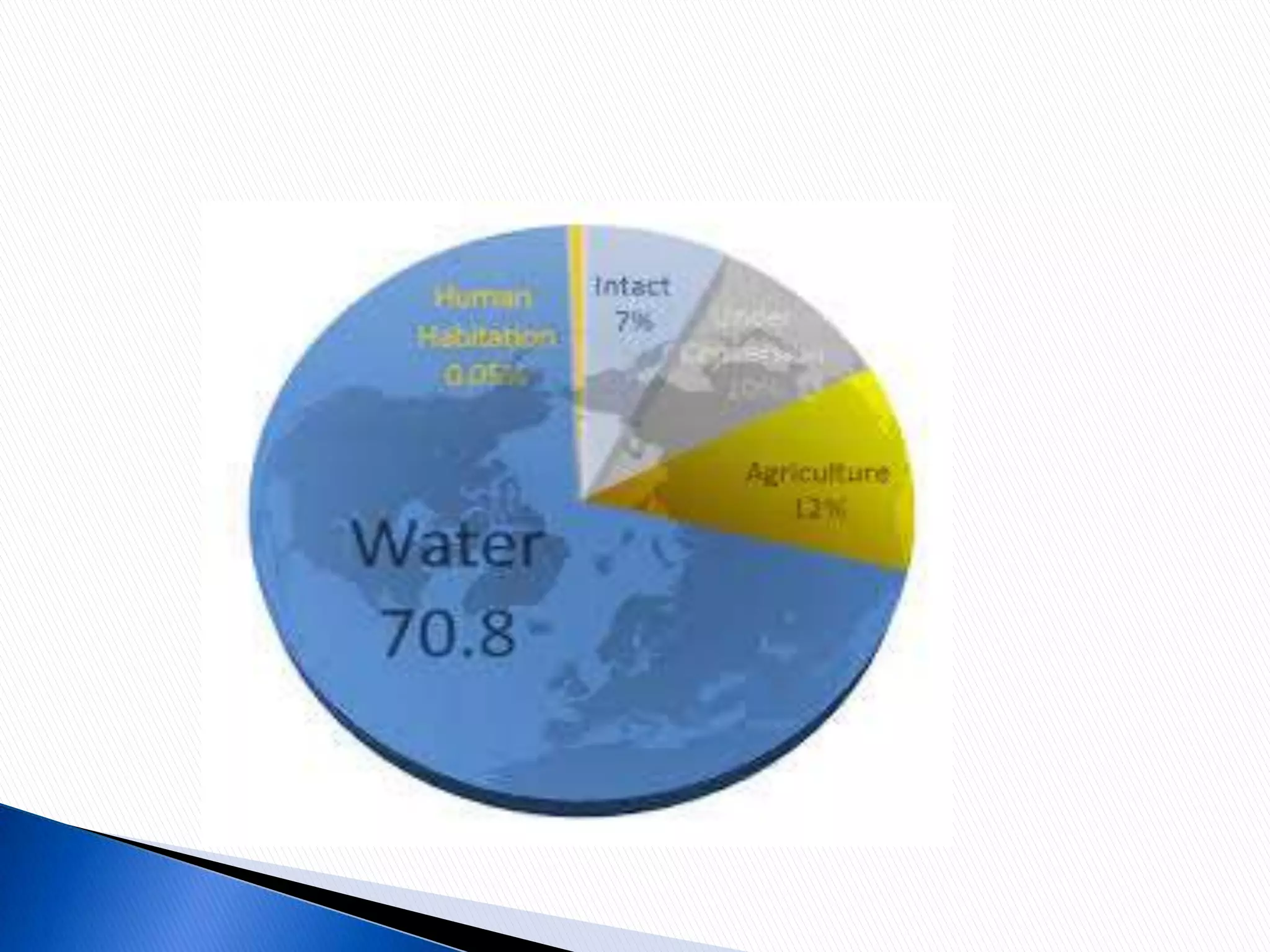
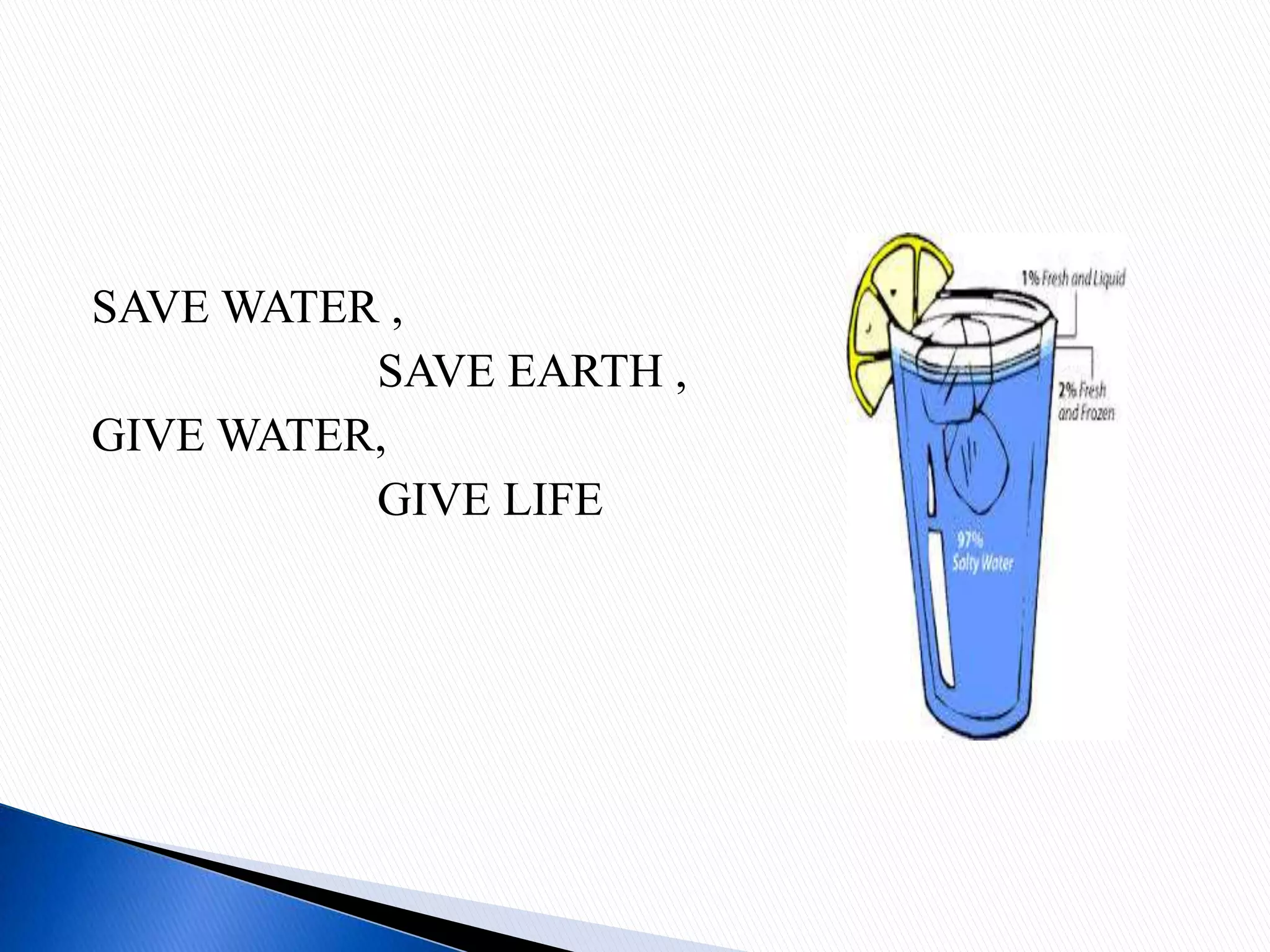
 HOW MUCH IS WATER ON EARTH?
 HOW IS COMPOSITION OF FLUID IN HUMAN
BODY?
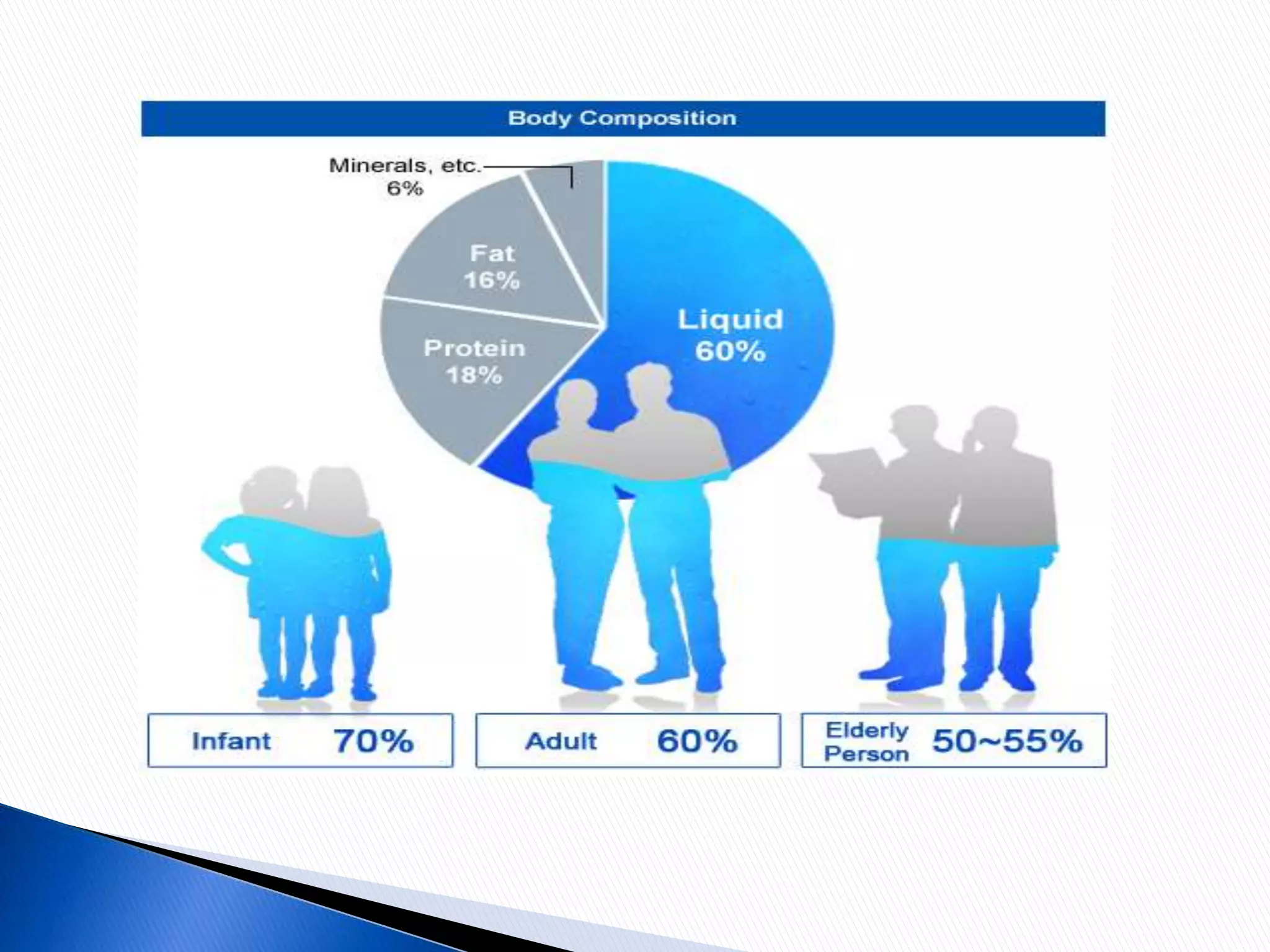
60% of the body is FLUID
40% of the body is SOLID
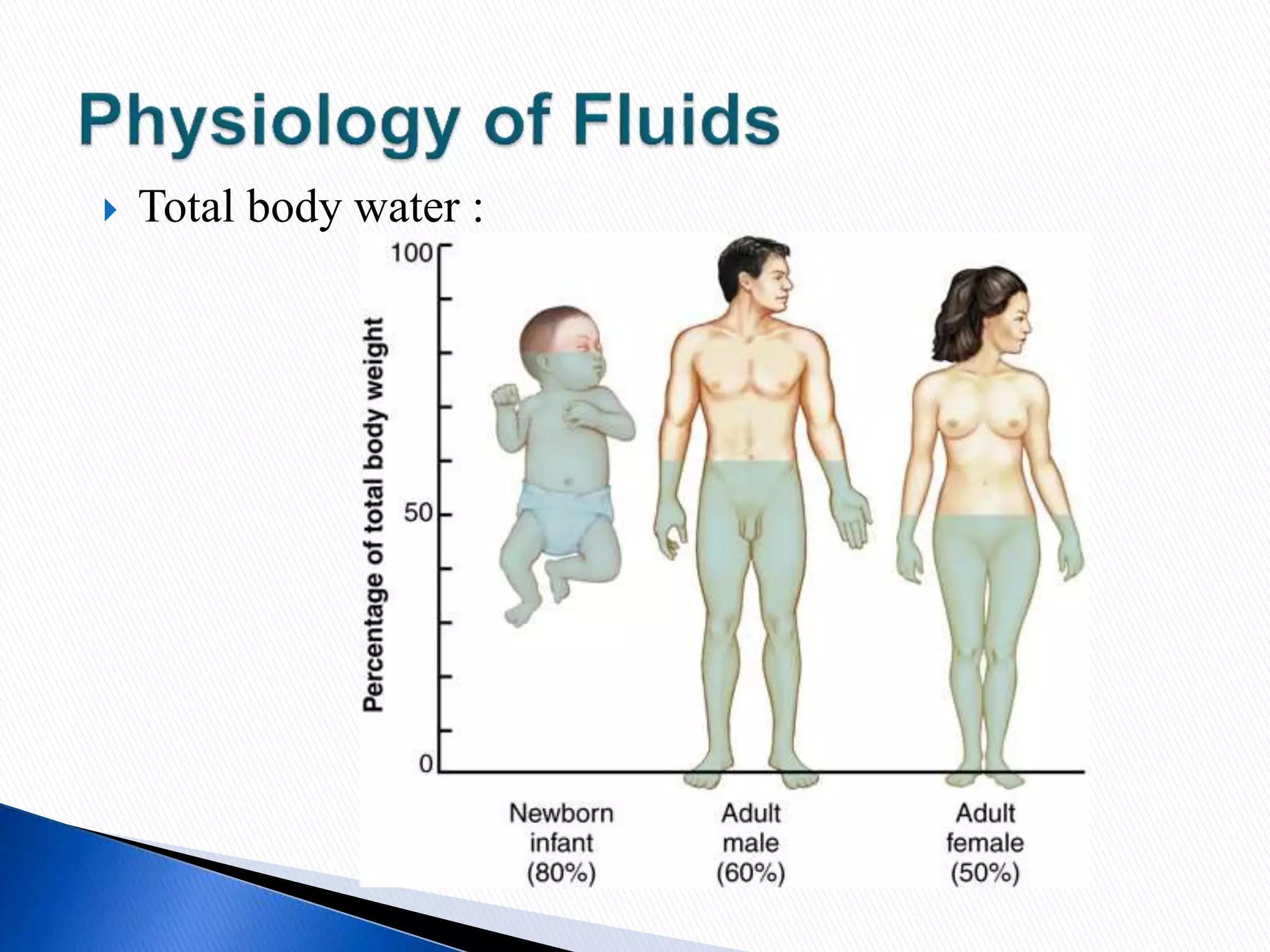
HOW IT VARIES WITH SEX AND AGE?
 Total body water :
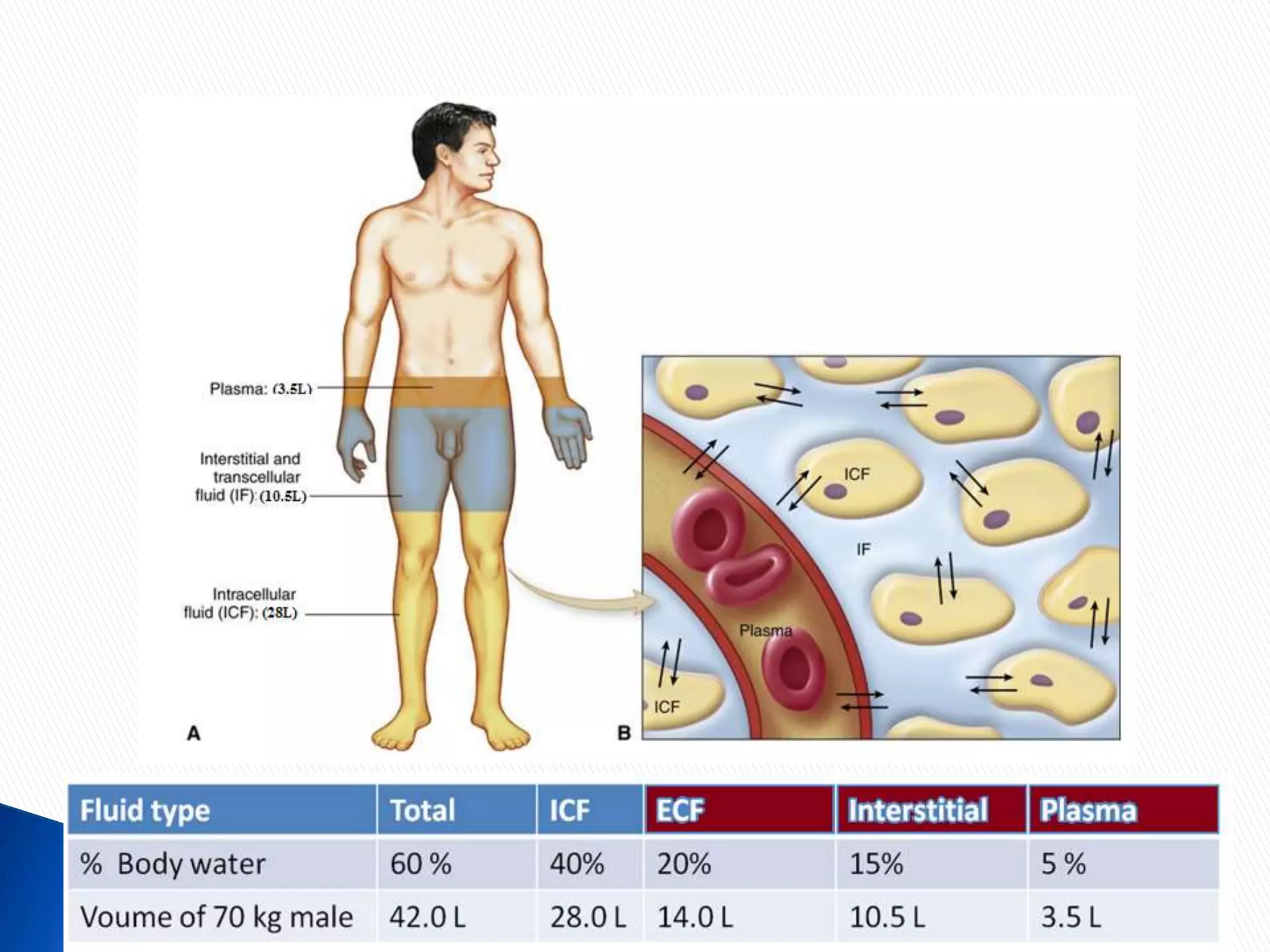
HOW THE FLUID IS DISTRIBUTED IN BODY?
 The body fluid is mainly having
 Intra cellular compartment (ICF)
 Extra cellular compartment (ECF)
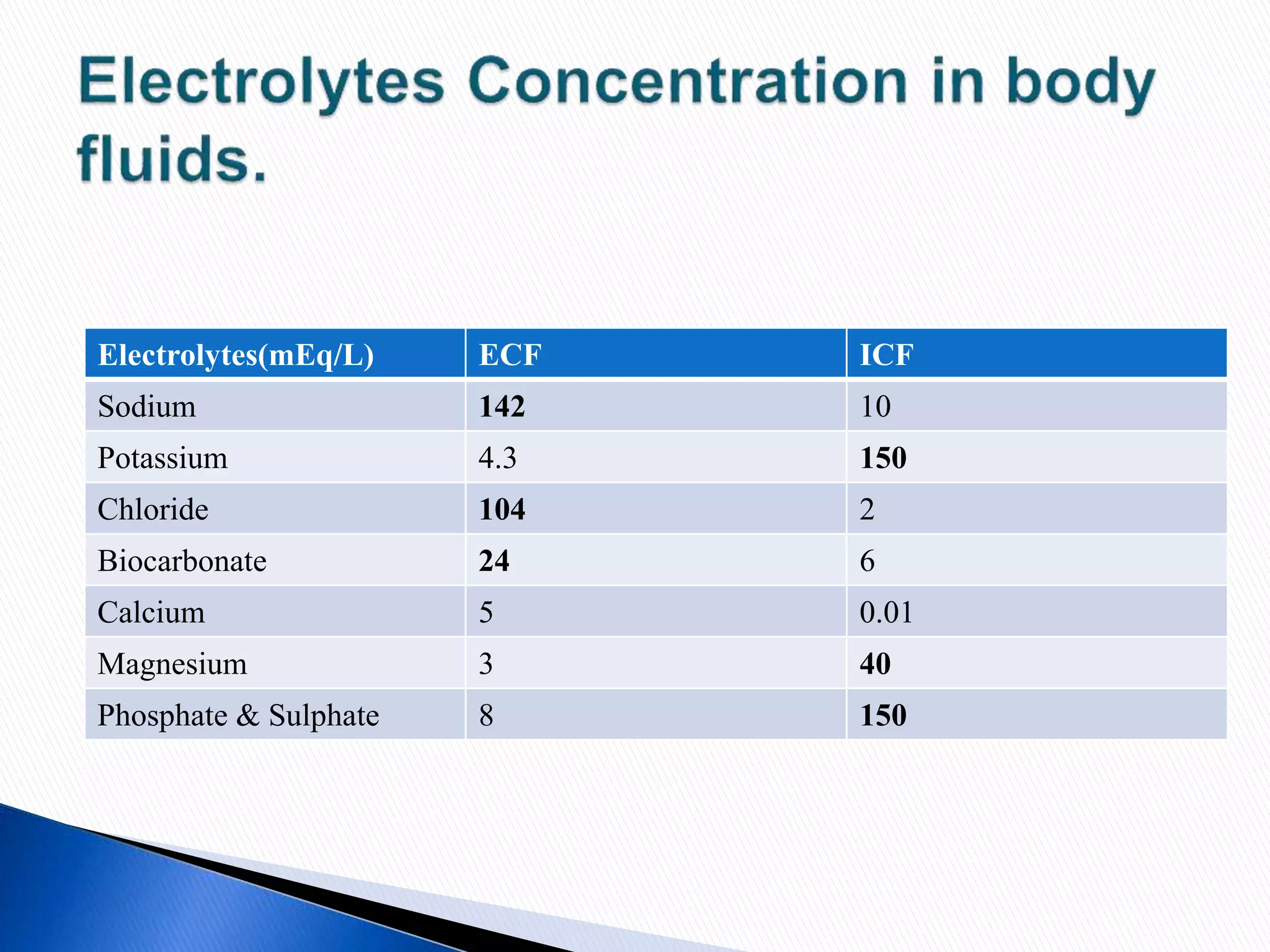
Electrolytes(mEq/L) ECF ICF
Sodium 142 10
Potassium 4.3 150
Chloride 104 2
Biocarbonate 24 6
Calcium 5 0.01
Magnesium 3 40
Phosphate & Sulphate 8 150
 HOW THE BODY LOOSES WATER?
INSENSIBLE
AND
SENSIBLE loss of water
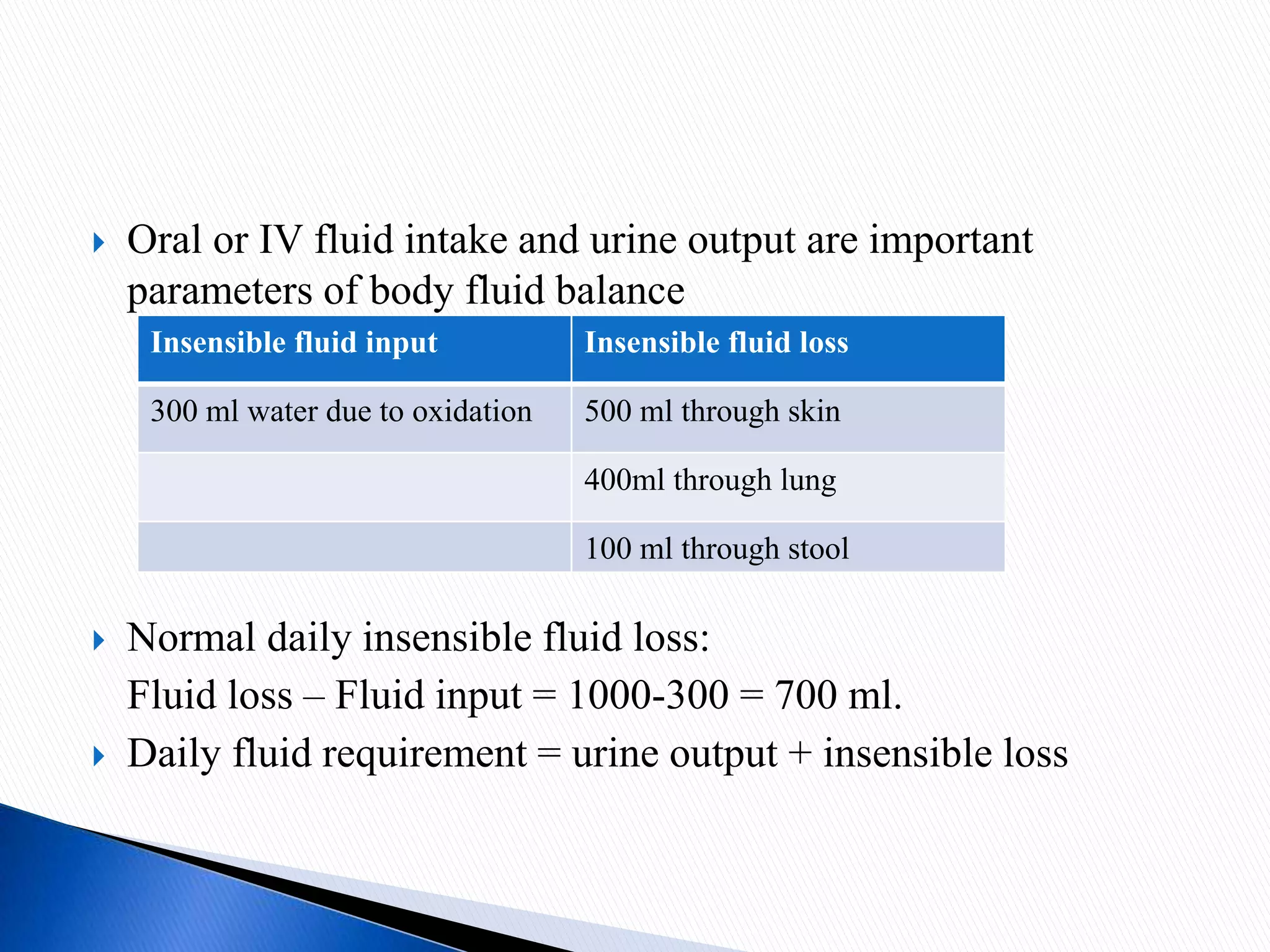
 Oral or IV fluid intake and urine output are important
parameters of body fluid balance
 Normal daily insensible fluid loss:
Fluid loss – Fluid input = 1000-300 = 700 ml.
 Daily fluid requirement = urine output + insensible loss
Insensible fluid input Insensible fluid loss
300 ml water due to oxidation 500 ml through skin
400ml through lung
100 ml through stool
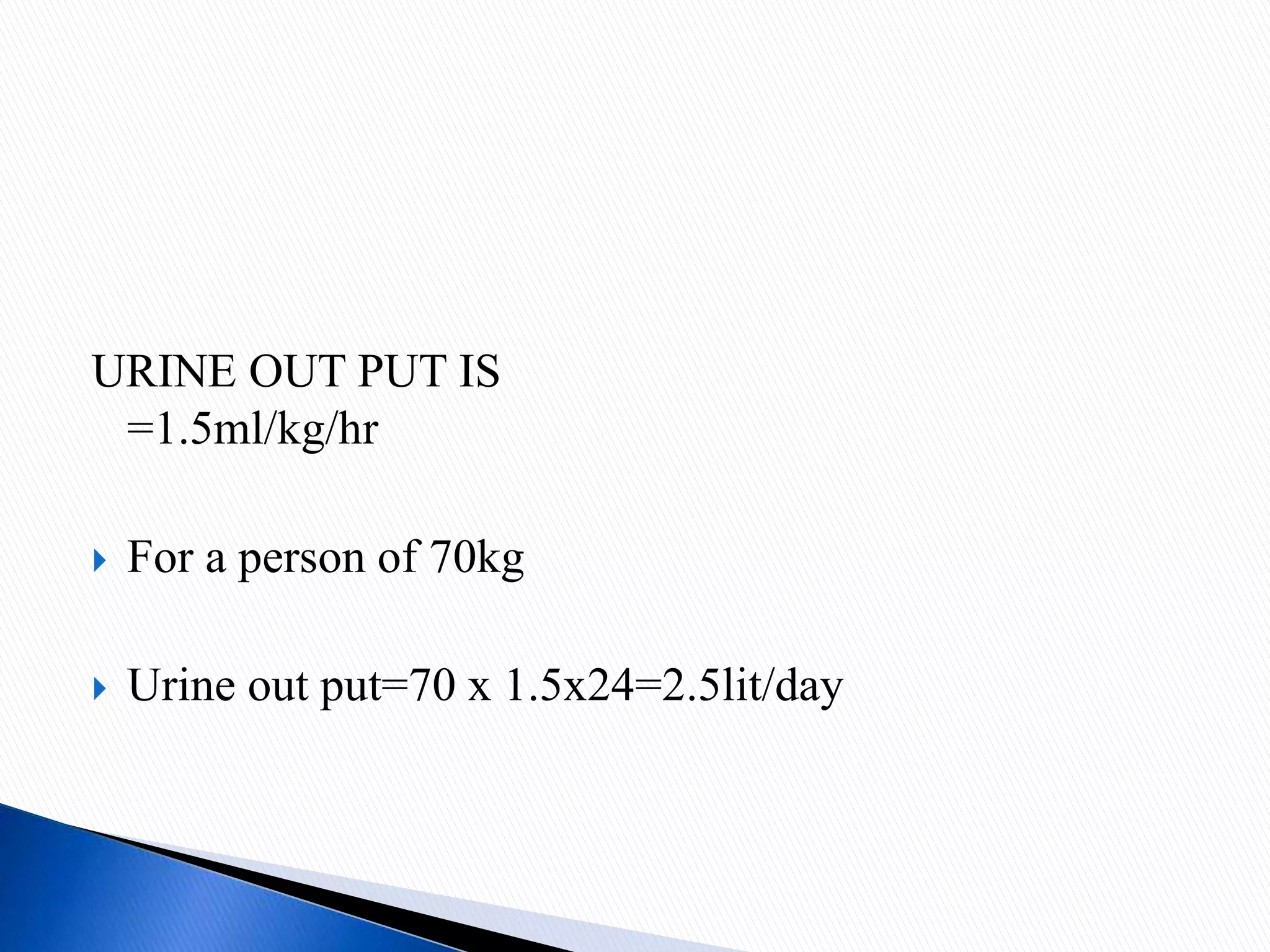
URINE OUT PUT IS
=1.5ml/kg/hr
 For a person of 70kg
 Urine out put=70 x 1.5x24=2.5lit/day
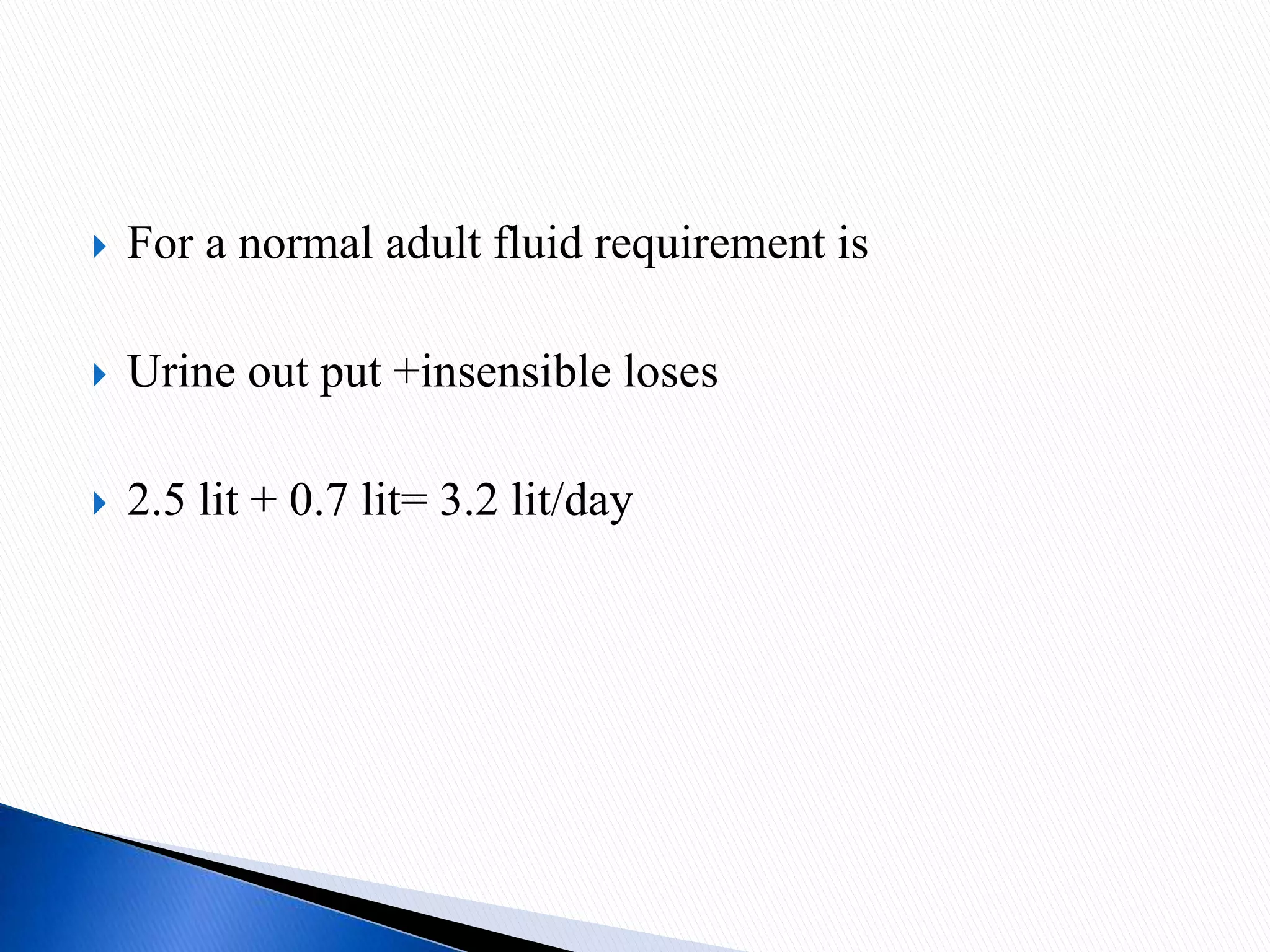
 For a normal adult fluid requirement is
 Urine out put +insensible loses
 2.5 lit + 0.7 lit= 3.2 lit/day
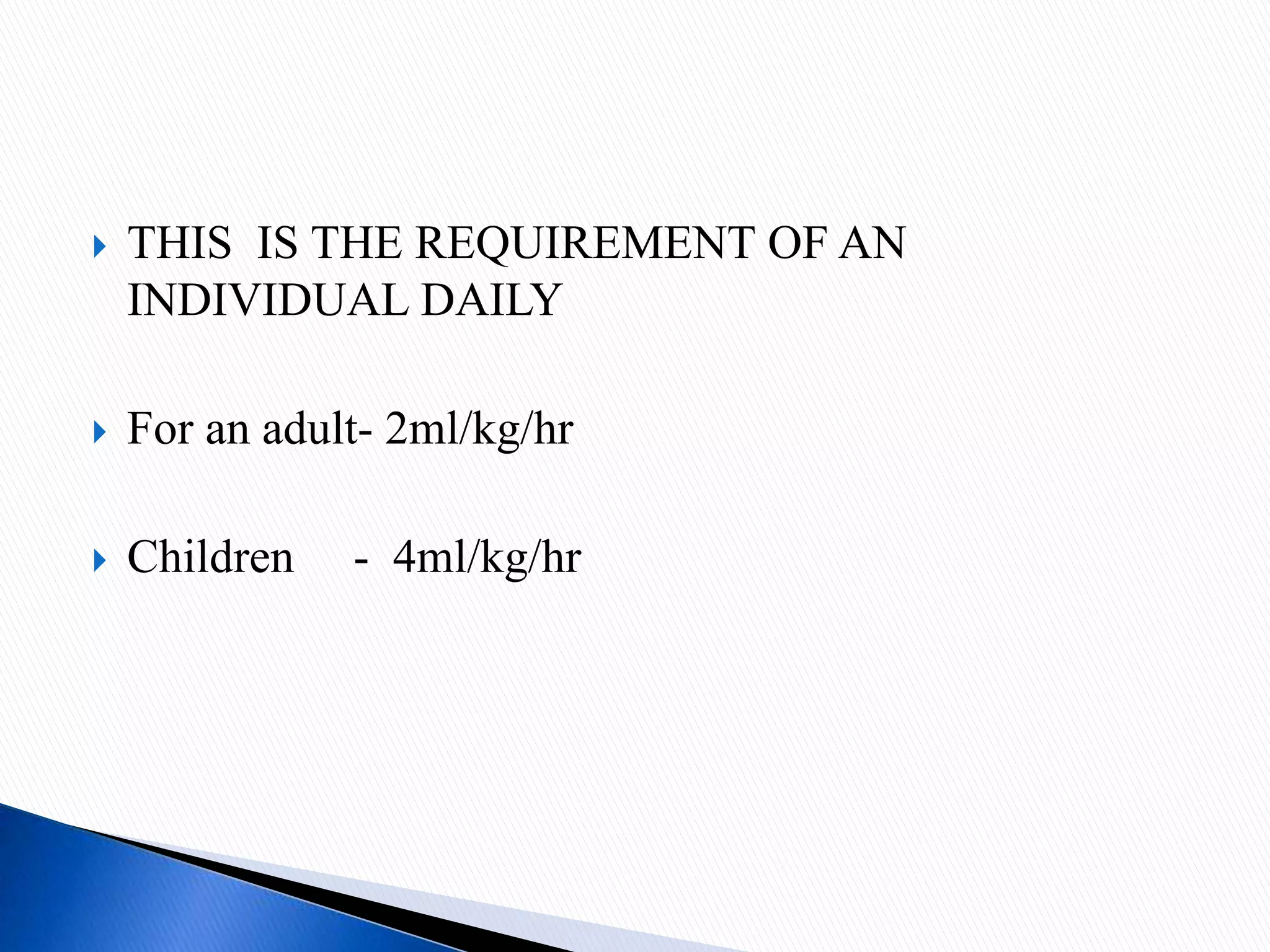
 THIS IS THE REQUIREMENT OF AN
INDIVIDUAL DAILY
 For an adult- 2ml/kg/hr
 Children - 4ml/kg/hr
 To maintain normal body fluid balance one must take
this much minimum water
 Whether a person is fasting or for surgery
 One must be given fluid to keep the fluid compartment
hydrated this is—
 Maintenance fluid therapy
 Osmolarity is determined by amount of solute
dissolved in a solvent measured in volume(lt).
 Osmolality of any solution is measured by measurment
of its freezing point.
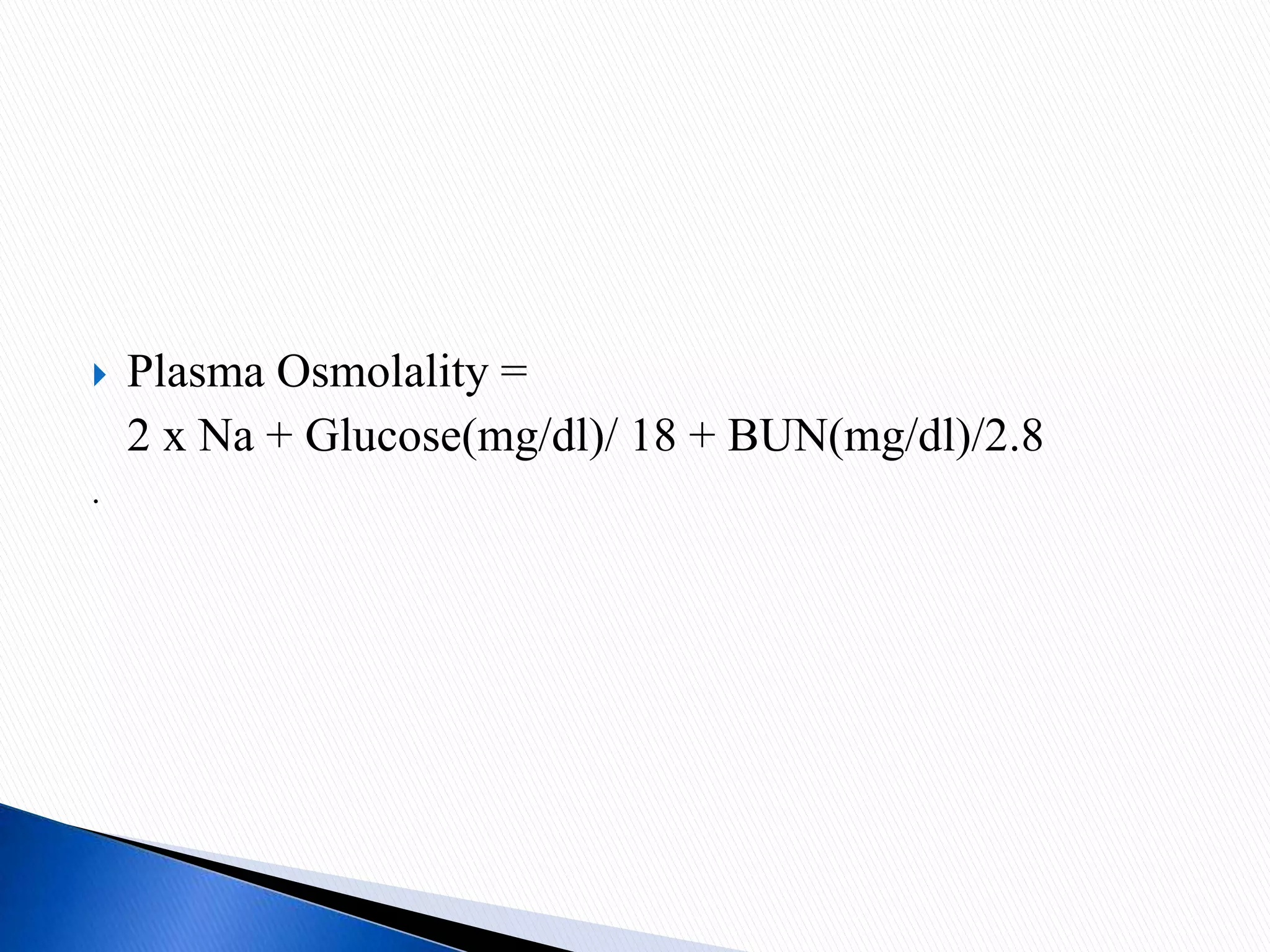
 Plasma Osmolality =
2 x Na + Glucose(mg/dl)/ 18 + BUN(mg/dl)/2.8
.
 A VERY IMPORTANT ASPECT
 ONE ML OF FLUID CONTAIN HOW MANY
DROPS?
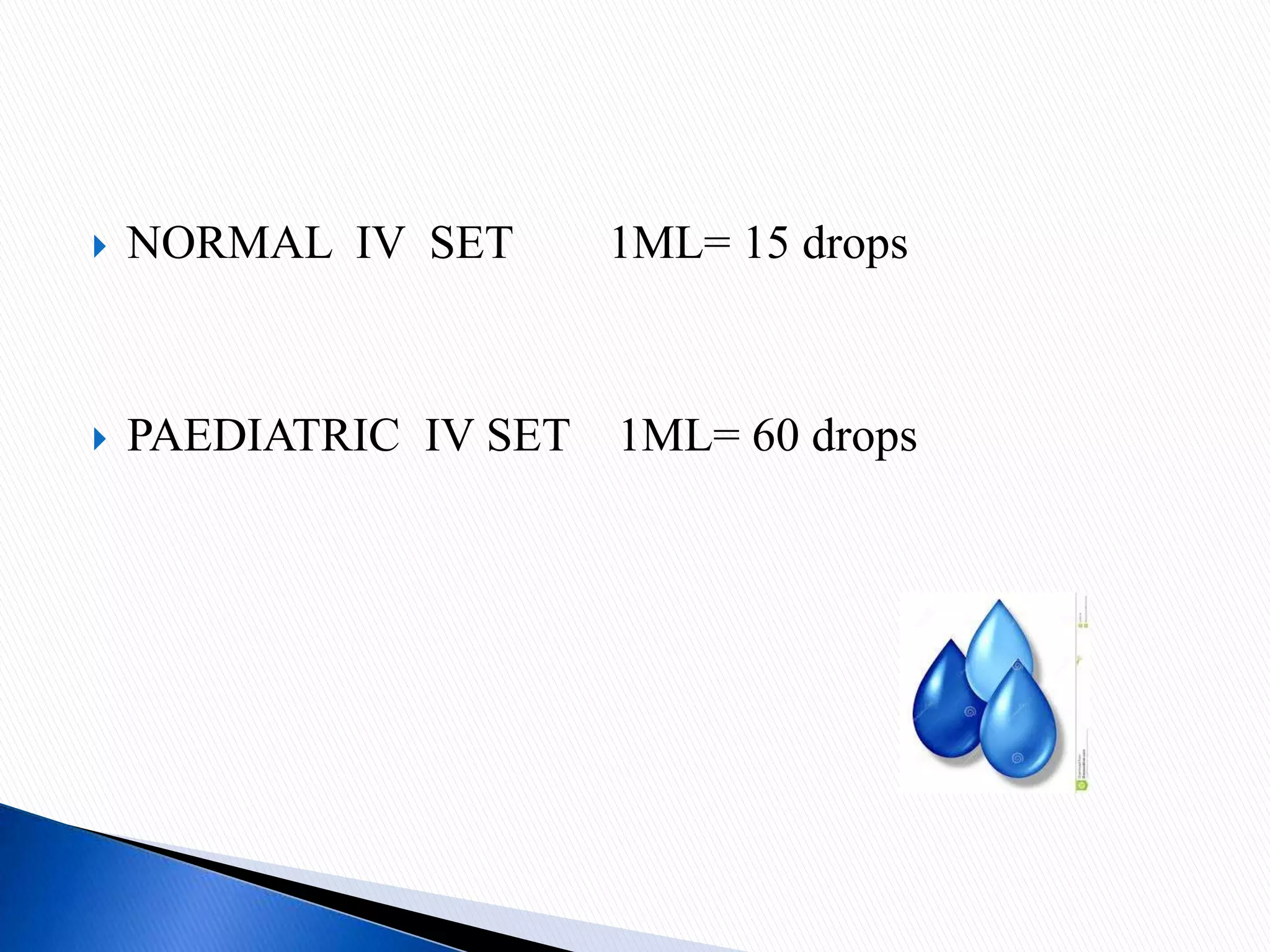
 NORMAL IV SET 1ML= 15 drops
 PAEDIATRIC IV SET 1ML= 60 drops
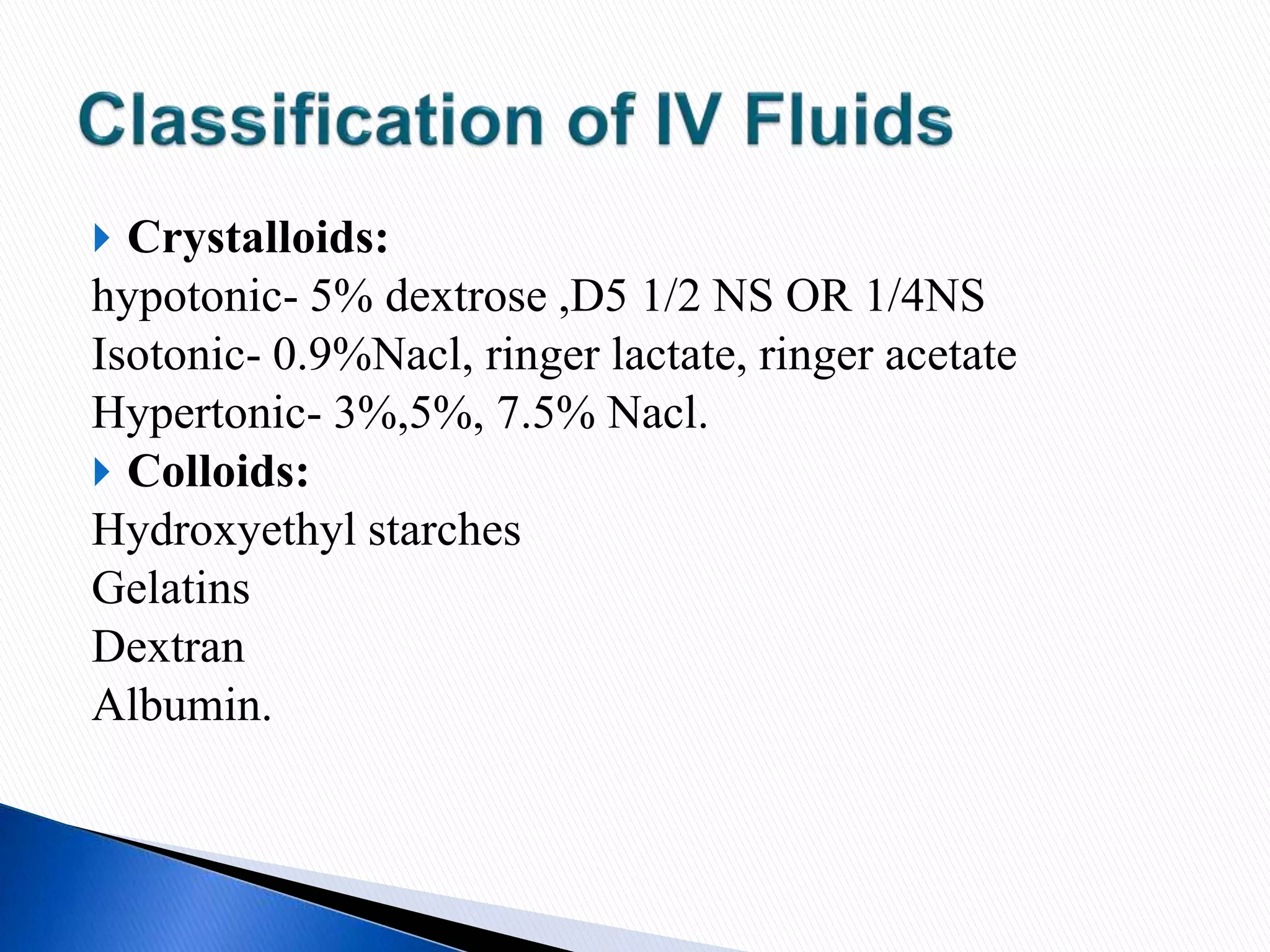
 Crystalloids:
hypotonic- 5% dextrose ,D5 1/2 NS OR 1/4NS
Isotonic- 0.9%Nacl, ringer lactate, ringer acetate
Hypertonic- 3%,5%, 7.5% Nacl.
 Colloids:
Hydroxyethyl starches
Gelatins
Dextran
Albumin.
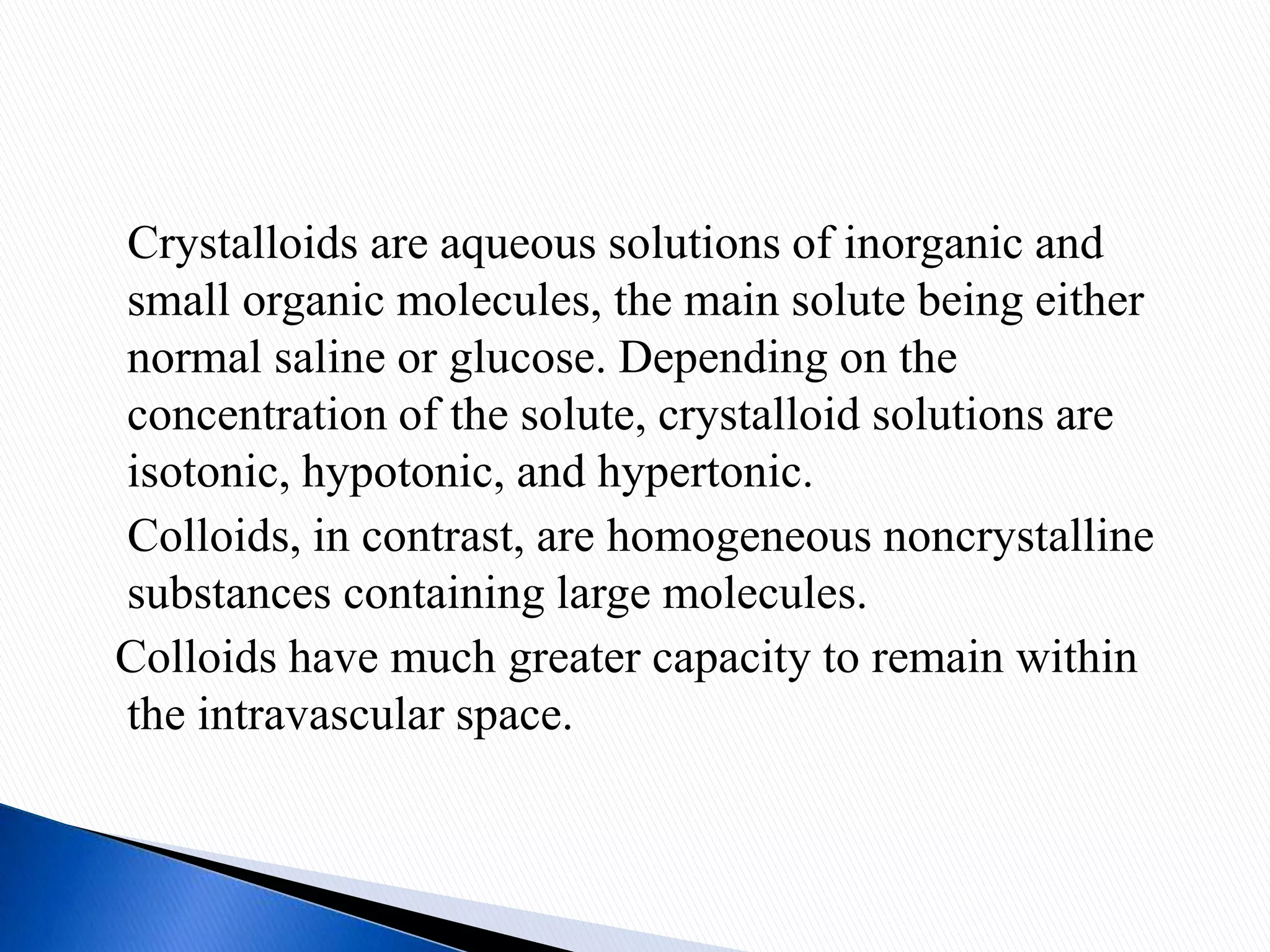
Crystalloids are aqueous solutions of inorganic and
small organic molecules, the main solute being either
normal saline or glucose. Depending on the
concentration of the solute, crystalloid solutions are
isotonic, hypotonic, and hypertonic.
Colloids, in contrast, are homogeneous noncrystalline
substances containing large molecules.
Colloids have much greater capacity to remain within
the intravascular space.
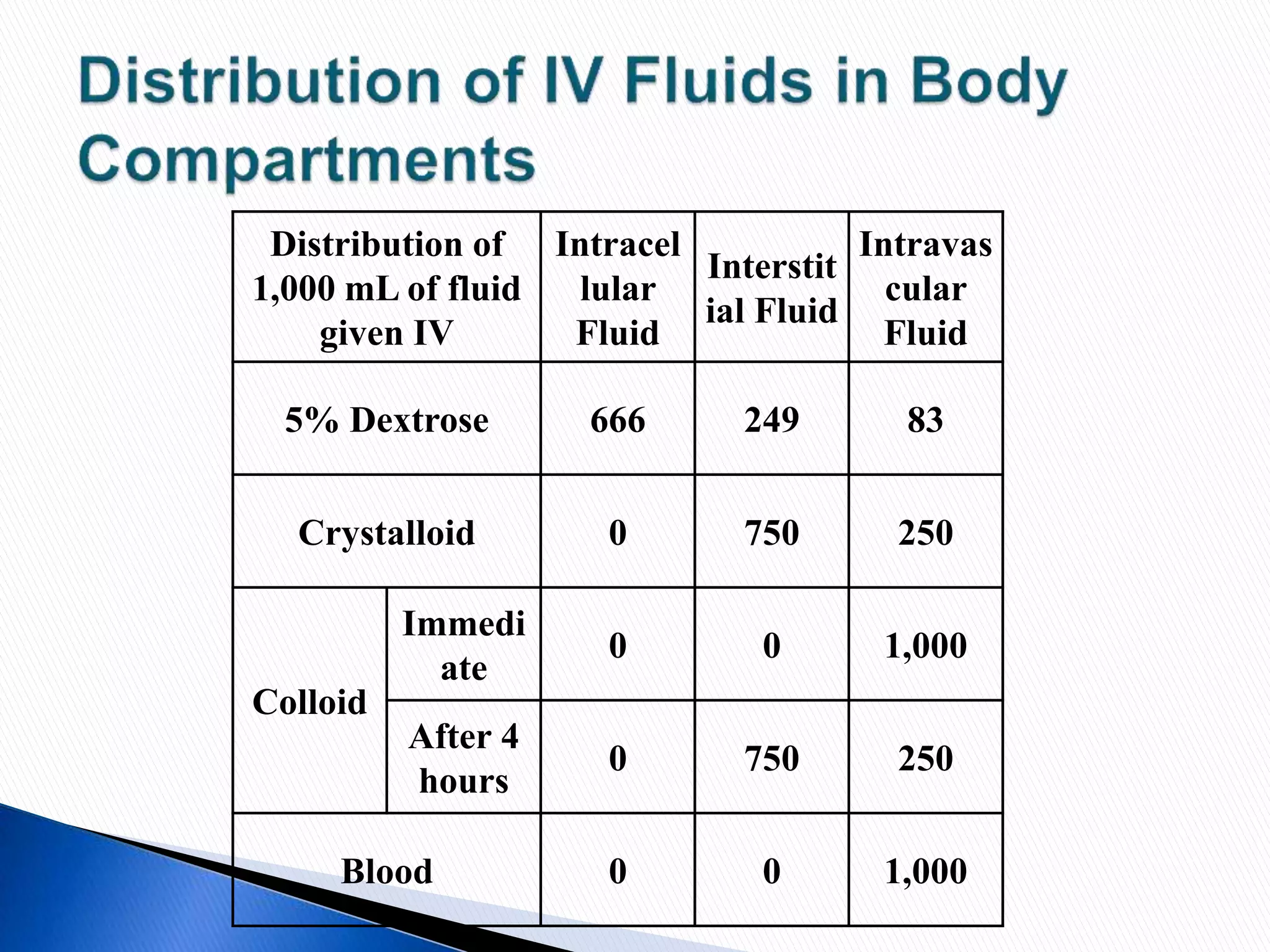
Distribution of
1,000 mL of fluid
given IV
Intracel
lular
Fluid
Interstit
ial Fluid
Intravas
cular
Fluid
5% Dextrose 666 249 83
Crystalloid 0 750 250
Colloid
Immedi
ate
0 0 1,000
After 4
hours
0 750 250
Blood 0 0 1,000
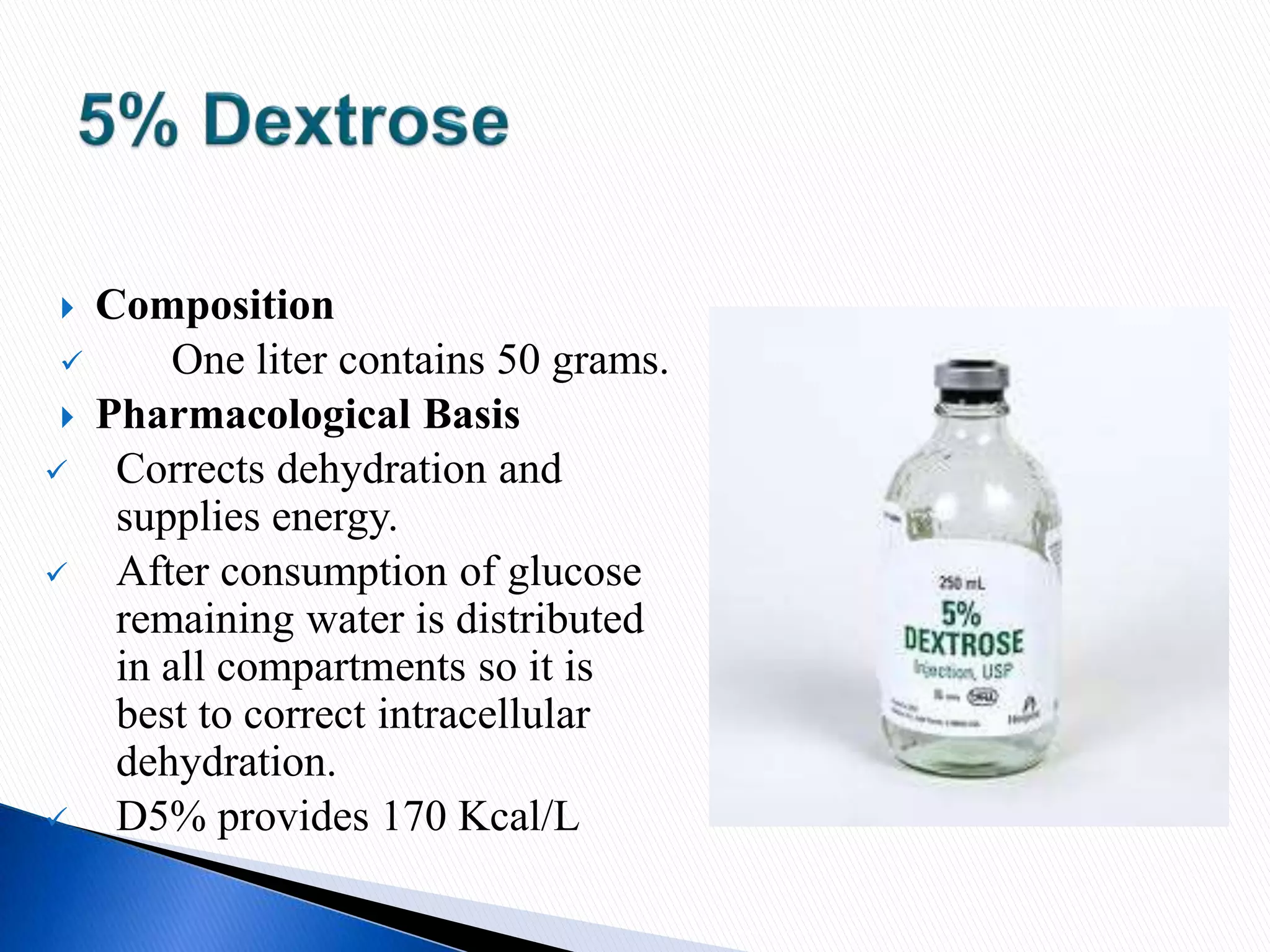
 Composition
 One liter contains 50 grams.
 Pharmacological Basis
 Corrects dehydration and
supplies energy.
 After consumption of glucose
remaining water is distributed
in all compartments so it is
best to correct intracellular
dehydration.
 D5% provides 170 Kcal/L
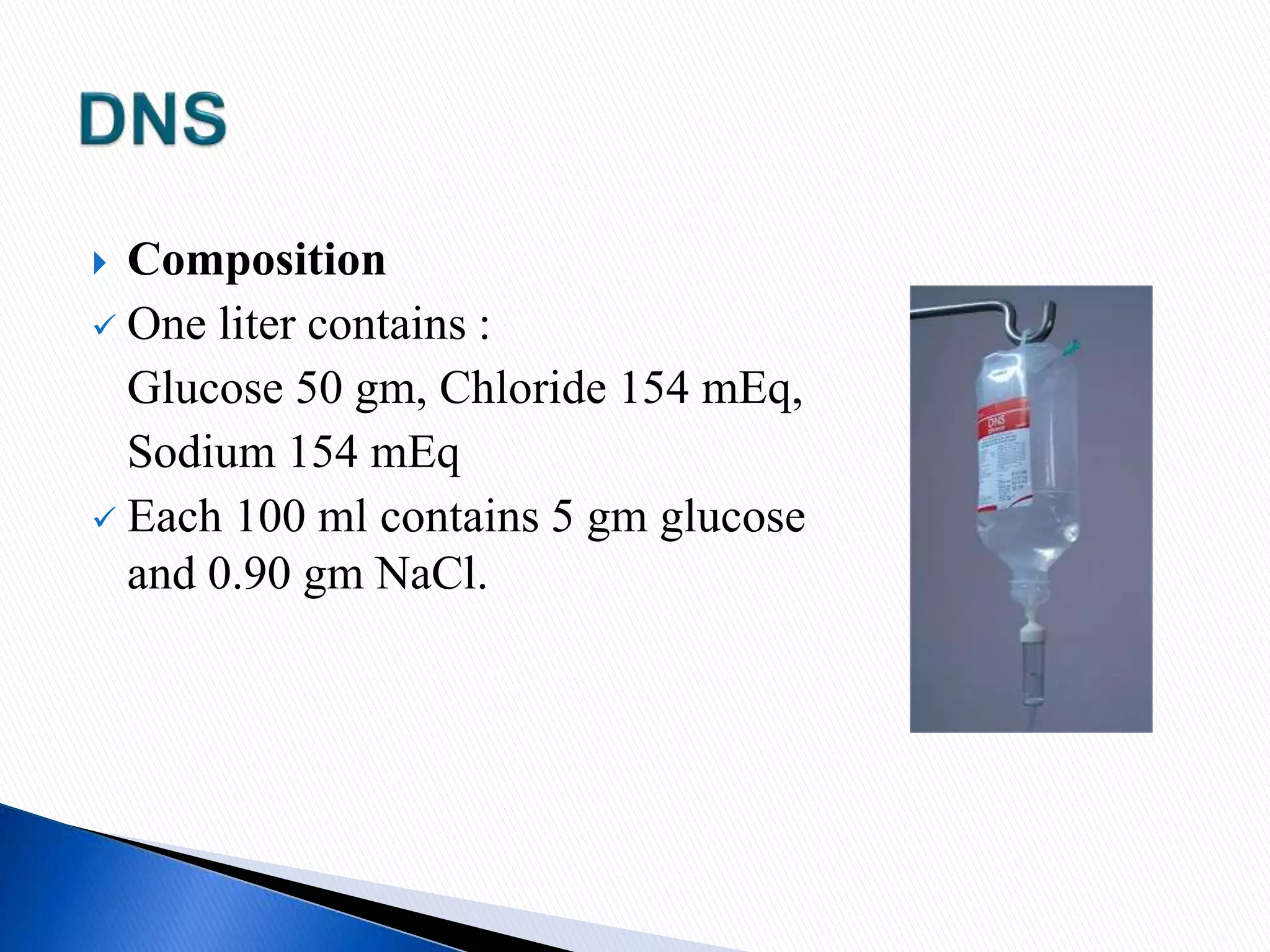
 Composition
 One liter contains :
Glucose 50 gm, Chloride 154 mEq,
Sodium 154 mEq
 Each 100 ml contains 5 gm glucose
and 0.90 gm NaCl.
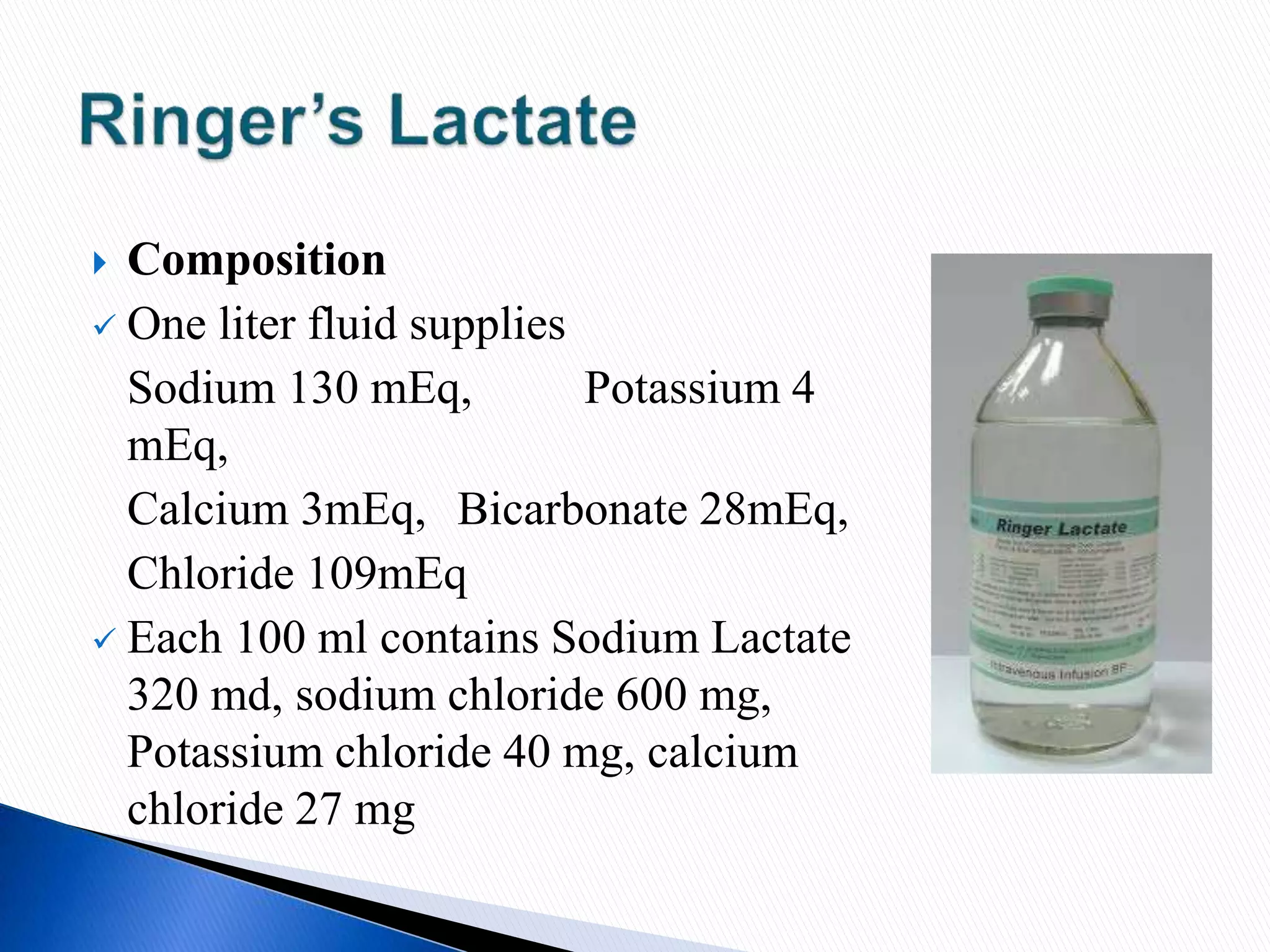
 Composition
 One liter fluid supplies
Sodium 130 mEq, Potassium 4
mEq,
Calcium 3mEq, Bicarbonate 28mEq,
Chloride 109mEq
 Each 100 ml contains Sodium Lactate
320 md, sodium chloride 600 mg,
Potassium chloride 40 mg, calcium
chloride 27 mg
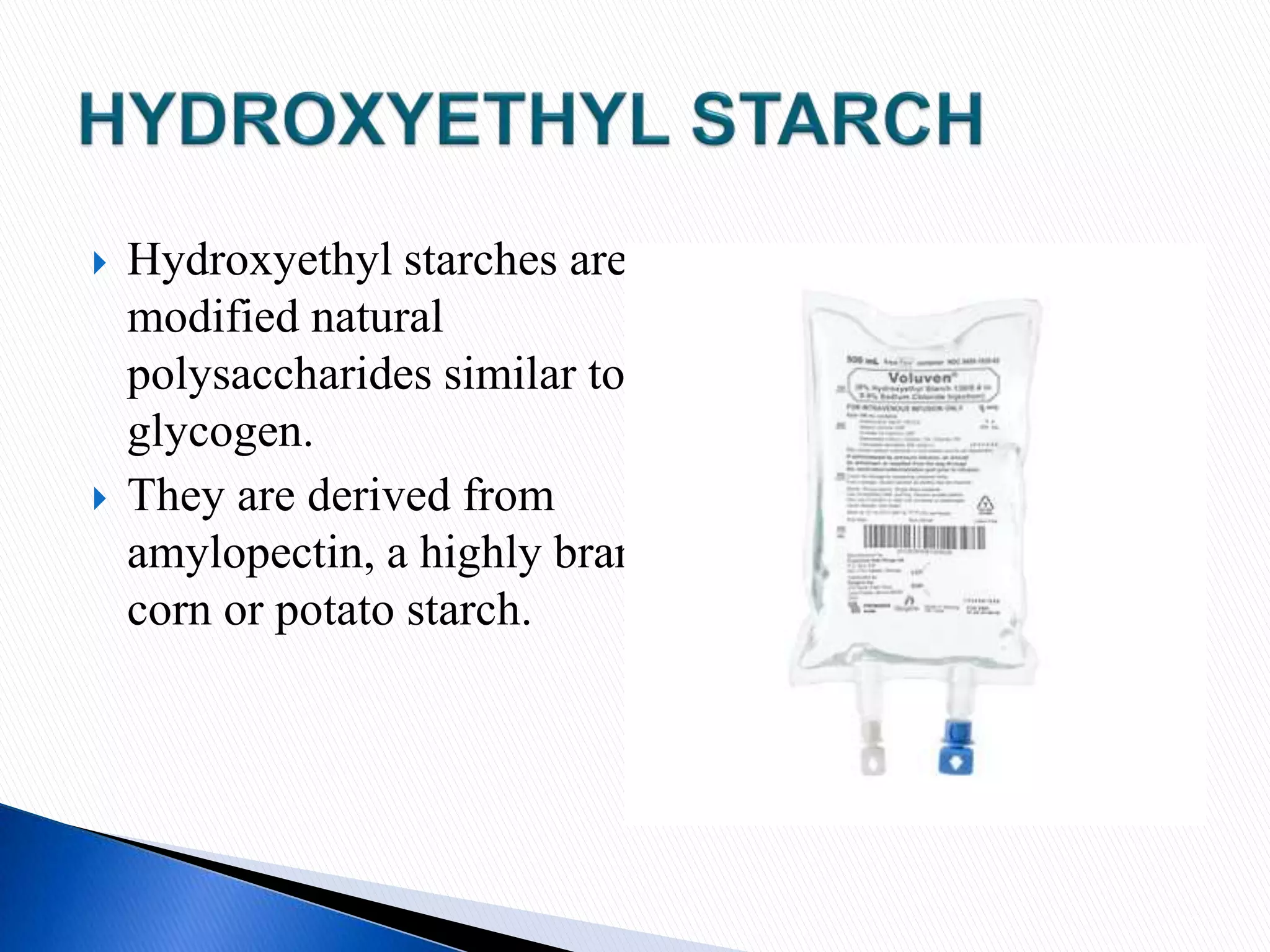
 Hydroxyethyl starches are
modified natural
polysaccharides similar to
glycogen.
 They are derived from
amylopectin, a highly branched
corn or potato starch.
 Produced by degradation of bovine collagen and
chemical modifications, gelatins are polydispersed
colloidal solutions.
 Three types
1. oxy-crosslinked,
2. urea-crosslinked,
3. and succinylated gelatins.
Molecular weight (average 30-35 kD), concentrations
(3.5%-5.5%) and volume-restoring efficacy (volume
effect 70%-100%).
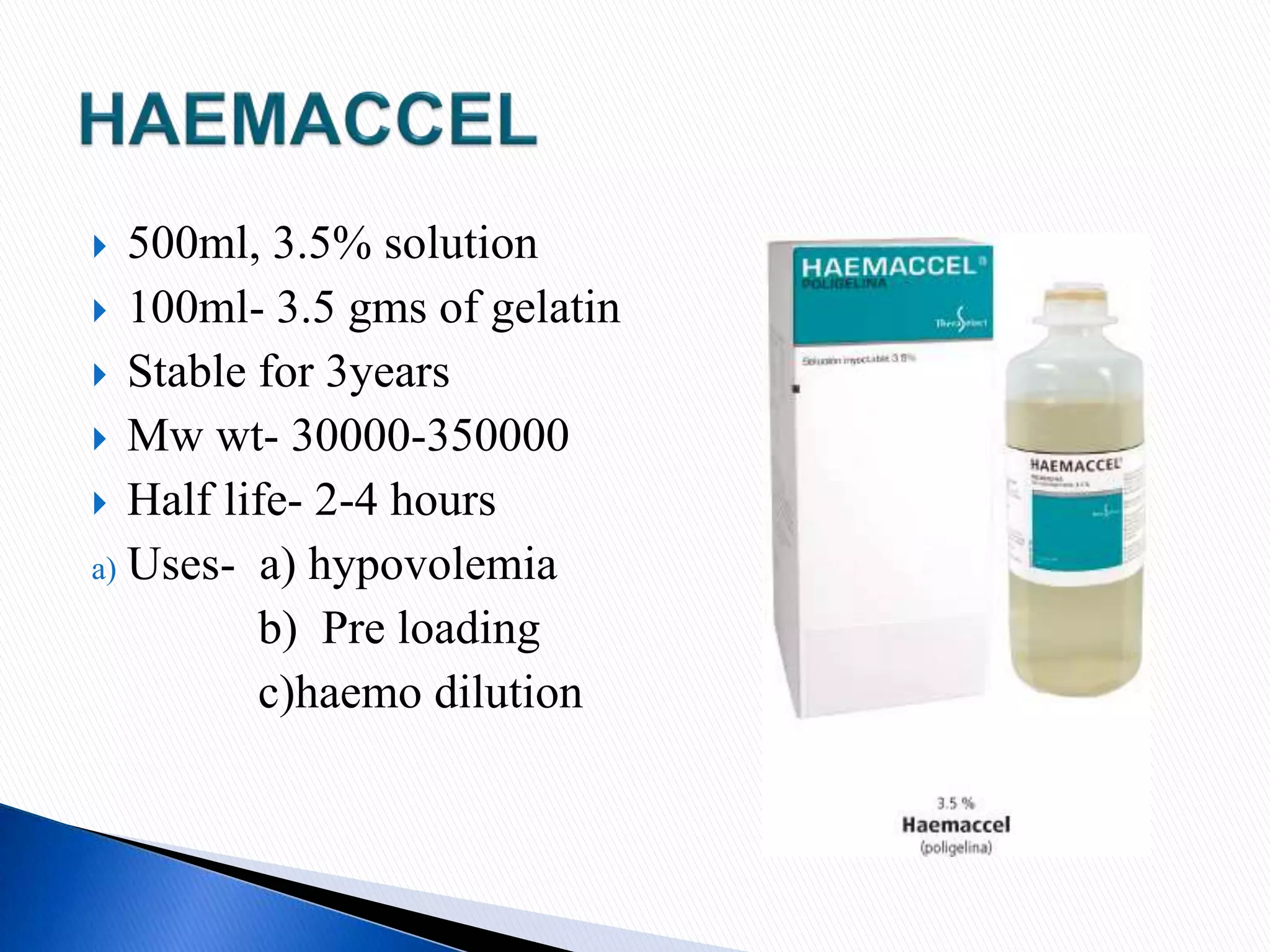
 500ml, 3.5% solution
 100ml- 3.5 gms of gelatin
 Stable for 3years
 Mw wt- 30000-350000
 Half life- 2-4 hours
a) Uses- a) hypovolemia
b) Pre loading
c)haemo dilution
 Dextrans are polydispersed colloids -synthesized from
sucrose by the bacterium Leuconostoc mesenteroides.
 The formulations most frequently selected are dextran
40 and dextran 70, with molecular weights of 40 and
70 kD, respectively.
 After intravenous administration, small dextran
molecules less than 50 kD are rapidly eliminated by the
kidneys (filtration). All other molecules are being
metabolized to carbon dioxide and water by cell-bound
enzymes in the kidneys, liver, and spleen.
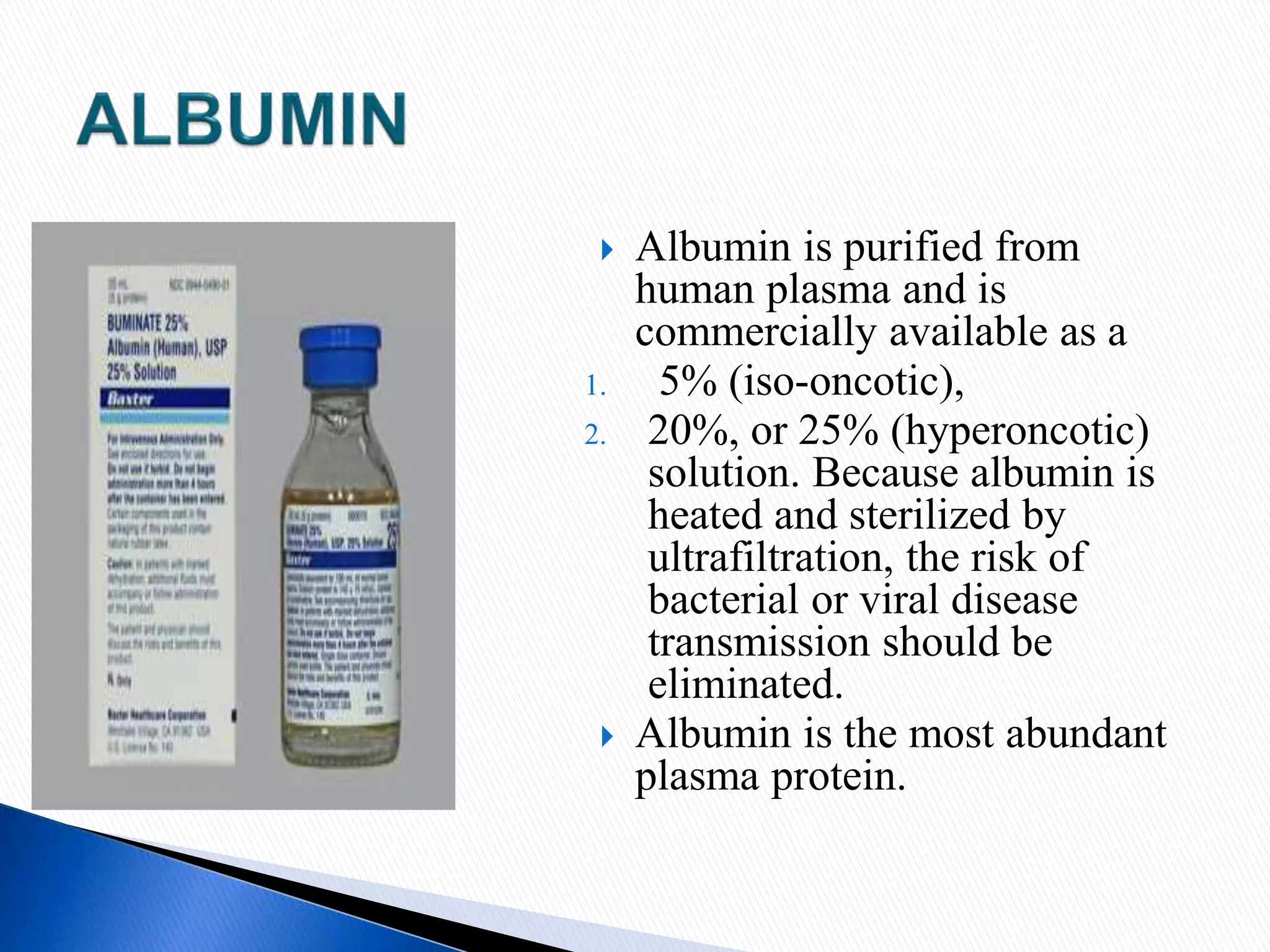
 Albumin is purified from
human plasma and is
commercially available as a
1. 5% (iso-oncotic),
2. 20%, or 25% (hyperoncotic)
solution. Because albumin is
heated and sterilized by
ultrafiltration, the risk of
bacterial or viral disease
transmission should be
eliminated.
 Albumin is the most abundant
plasma protein.
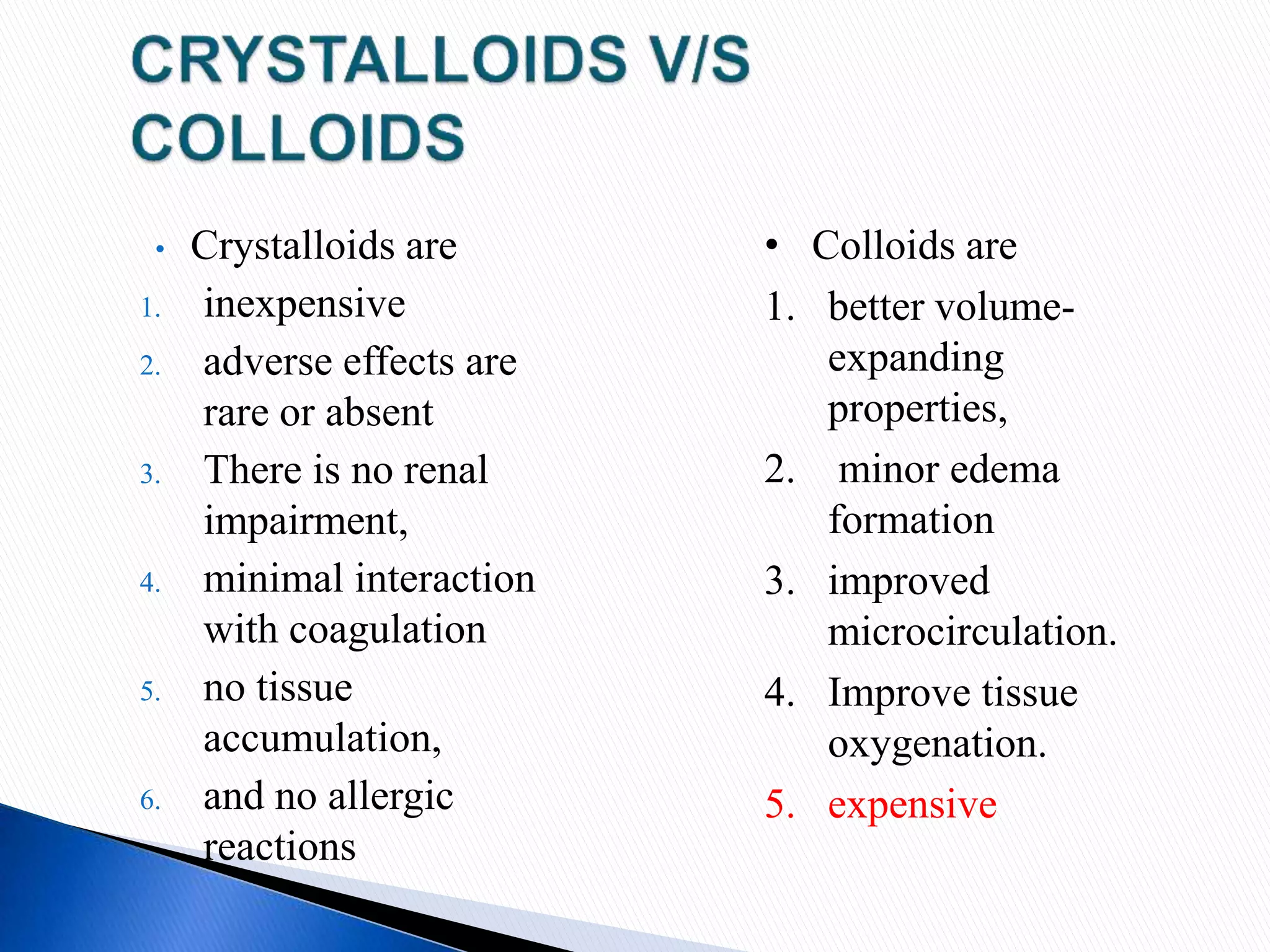
• Crystalloids are
1. inexpensive
2. adverse effects are
rare or absent
3. There is no renal
impairment,
4. minimal interaction
with coagulation
5. no tissue
accumulation,
6. and no allergic
reactions
• Colloids are
1. better volume-
expanding
properties,
2. minor edema
formation
3. improved
microcirculation.
4. Improve tissue
oxygenation.
5. expensive
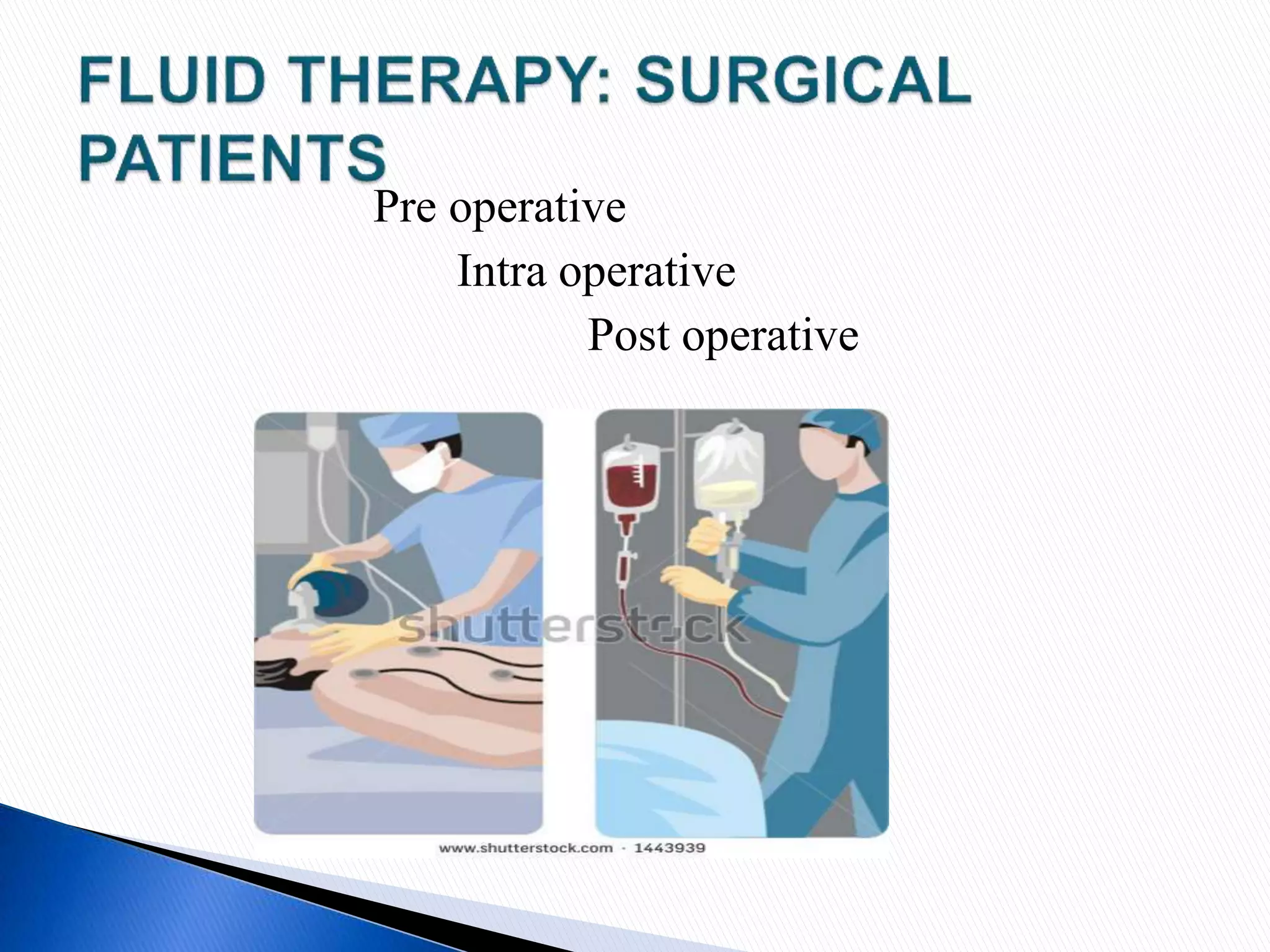
Pre operative
Intra operative
Post operative
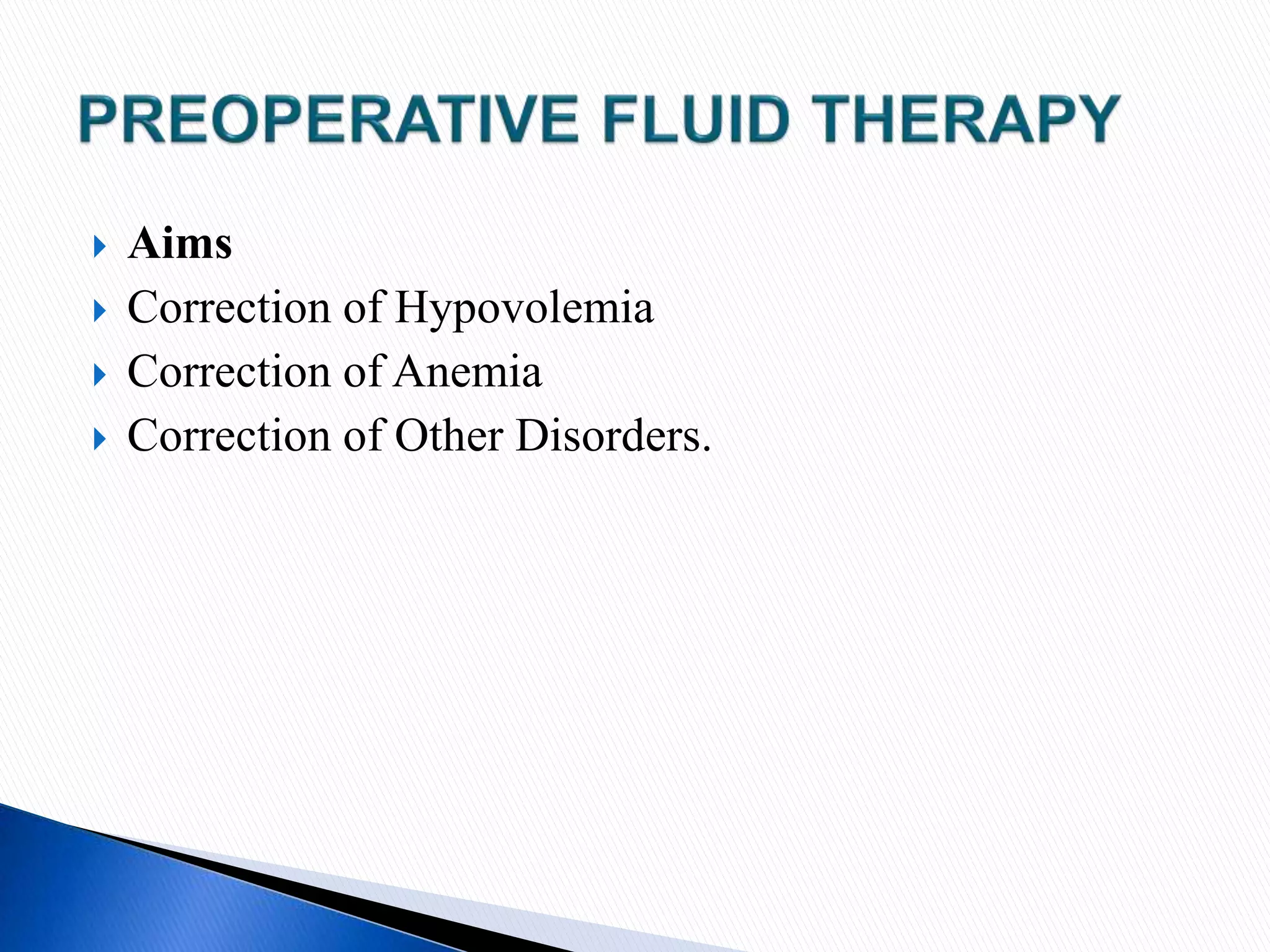
 Aims
 Correction of Hypovolemia
 Correction of Anemia
 Correction of Other Disorders.
 Hypovolemia jeopardizes O2 transport and increase the
risk of hypoxia & development of organ failure.
 Uncorrected hypovolemia is compensated by increased
vascular resistance and heart rate due to normal
baroreceptor reflex but these are lost during induction
of anesthesia.
 Causes : vomiting, nasogastric suction, blood loss, third
space loss, diuretic therapy etc
 Estimation severity of dehydration.
 Mild= 4% body weight fluid deficit.
 Moderate = 6-8 % body weight fluid deficit.
 Severe = 10 % body weight fluid deficit.
 Choice of fluid depends on nature of loss and
haemodynamic status,compositional abnormality.
 NS, RL , colloids & Whole blood are most widely used
fluids
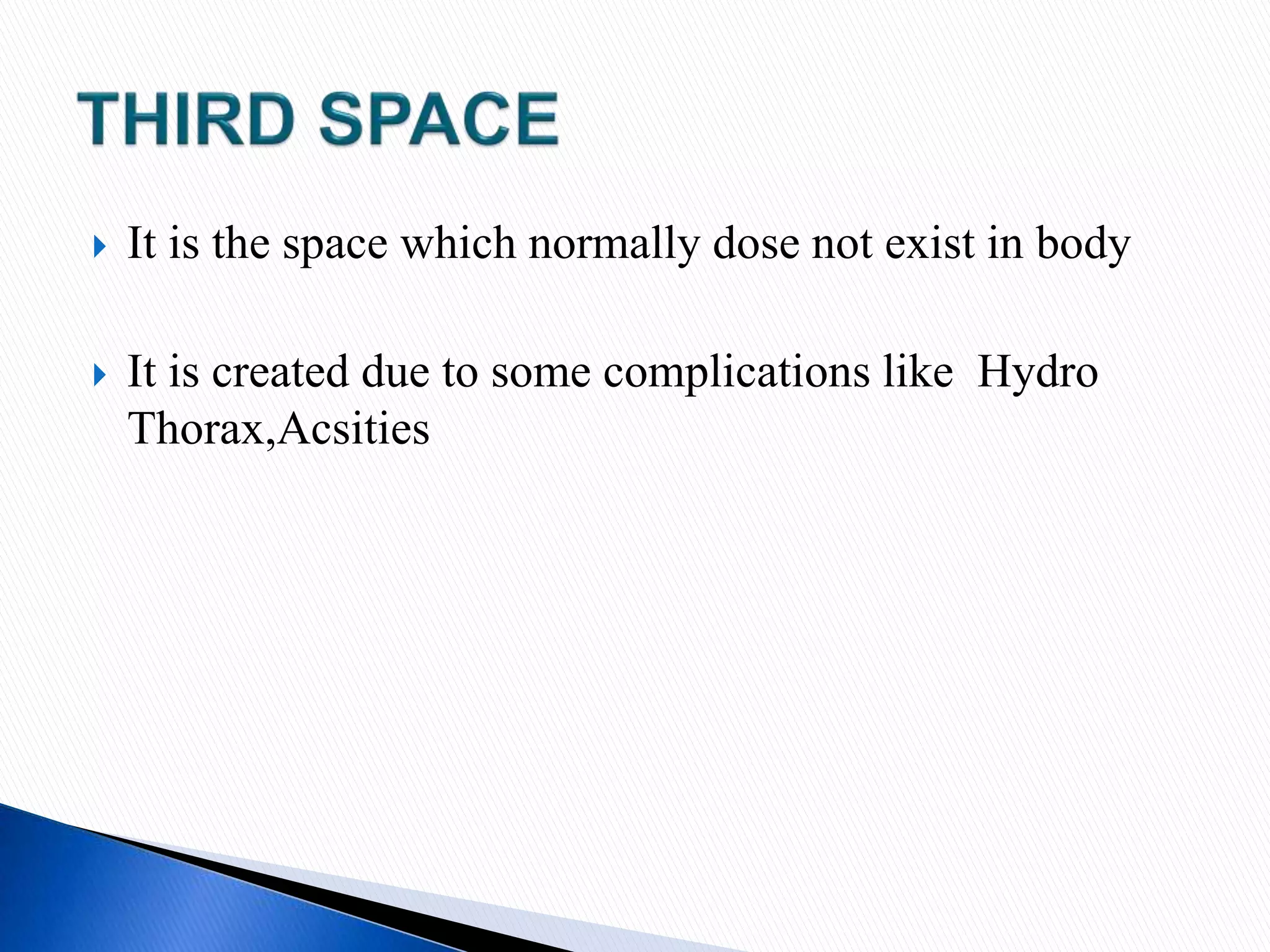
 It is the space which normally dose not exist in body
 It is created due to some complications like Hydro
Thorax,Acsities
 Rate of fluid administration varies depending on
severity of fluid disturbance, presence of continuing
losses and haemodynamic and cardiac status.
 In severe deficit FT may be started at 1000ml/hr
,gradually reducing the rate as the fluid status
improves.
 Elderly require slow and careful correction.
 Monitoring :Improvement in tachycardia and blood
pressure, absence of orthostatic hypotension and
achieving urine output of > 30-50 ml/hr (in absence of
diuretics) suggests correction of fluid deficit.
 Intraoperative volume can be calculated as-
1. MAINTANACE-Correction of fluid deficit due to
fasting
2. REPLACEMENT- Replace the lost components
3. SPECIFIC-Loss due to tissue dissection/ hemorrhage
 Volume to be replaced for starvation=
Duration of starvation(hrs) x2ml/kg body weight
 1st hour = 50%
 2nd hour = 25%
 3rd hour = 25%
 Maintenance volume for intra-op: 2ml/kg/hours
 (fasting should never be more than 4-6 hrs, if so we
recommend to start iv fluids pre operatively)
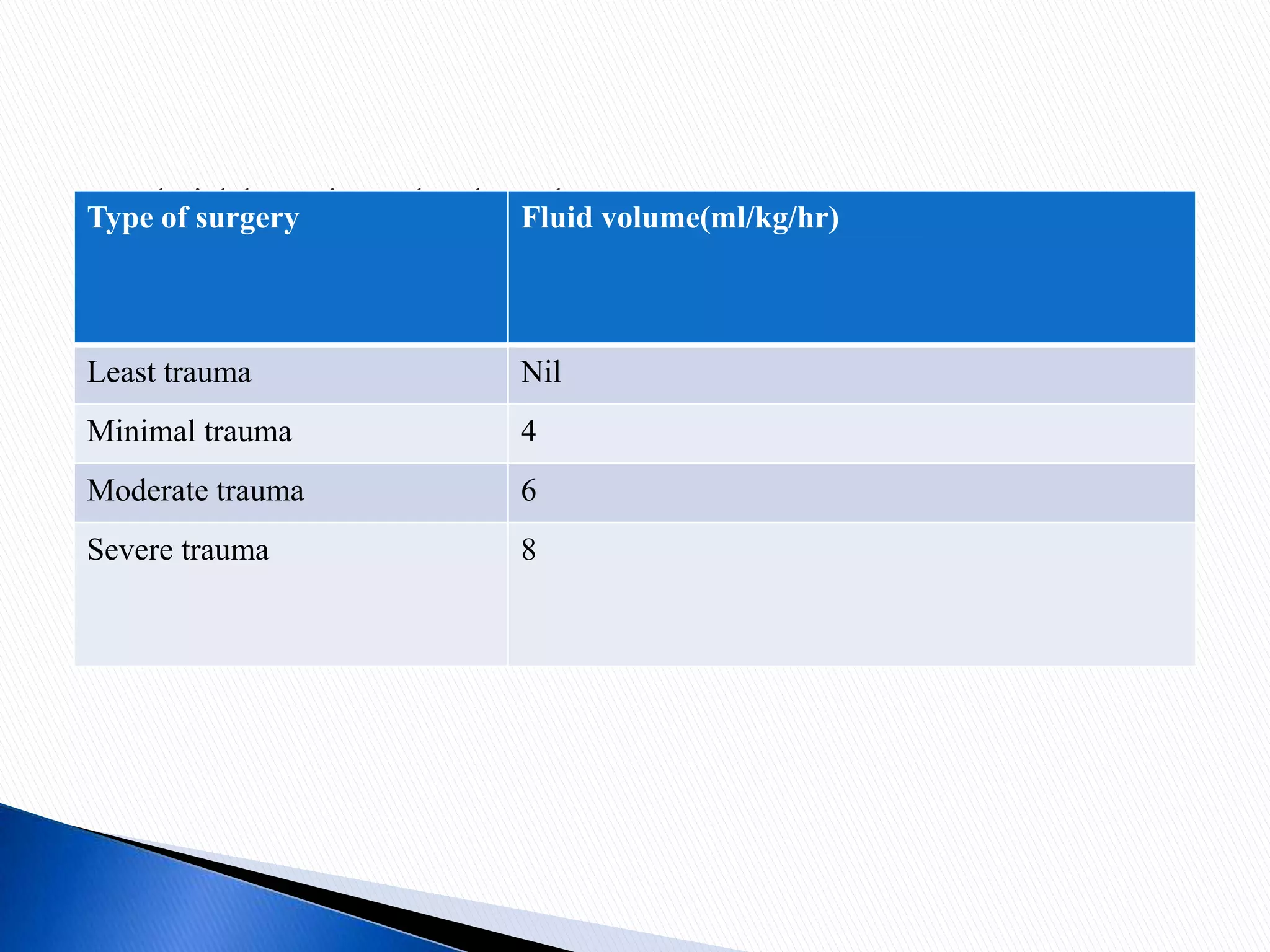
 Fluid loss is calculated as-Type of surgery Fluid volume(ml/kg/hr)
Least trauma Nil
Minimal trauma 4
Moderate trauma 6
Severe trauma 8
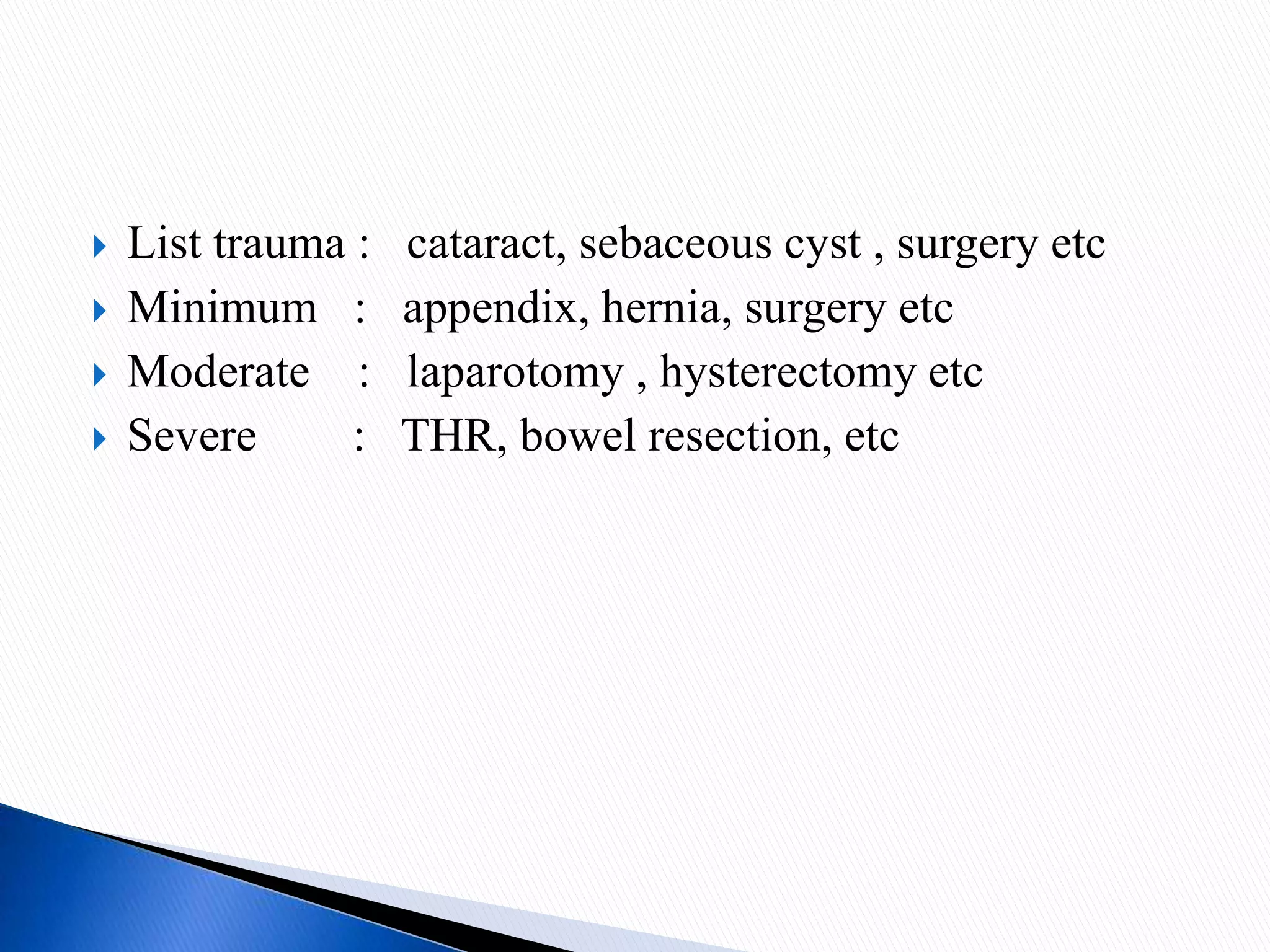
 List trauma : cataract, sebaceous cyst , surgery etc
 Minimum : appendix, hernia, surgery etc
 Moderate : laparotomy , hysterectomy etc
 Severe : THR, bowel resection, etc
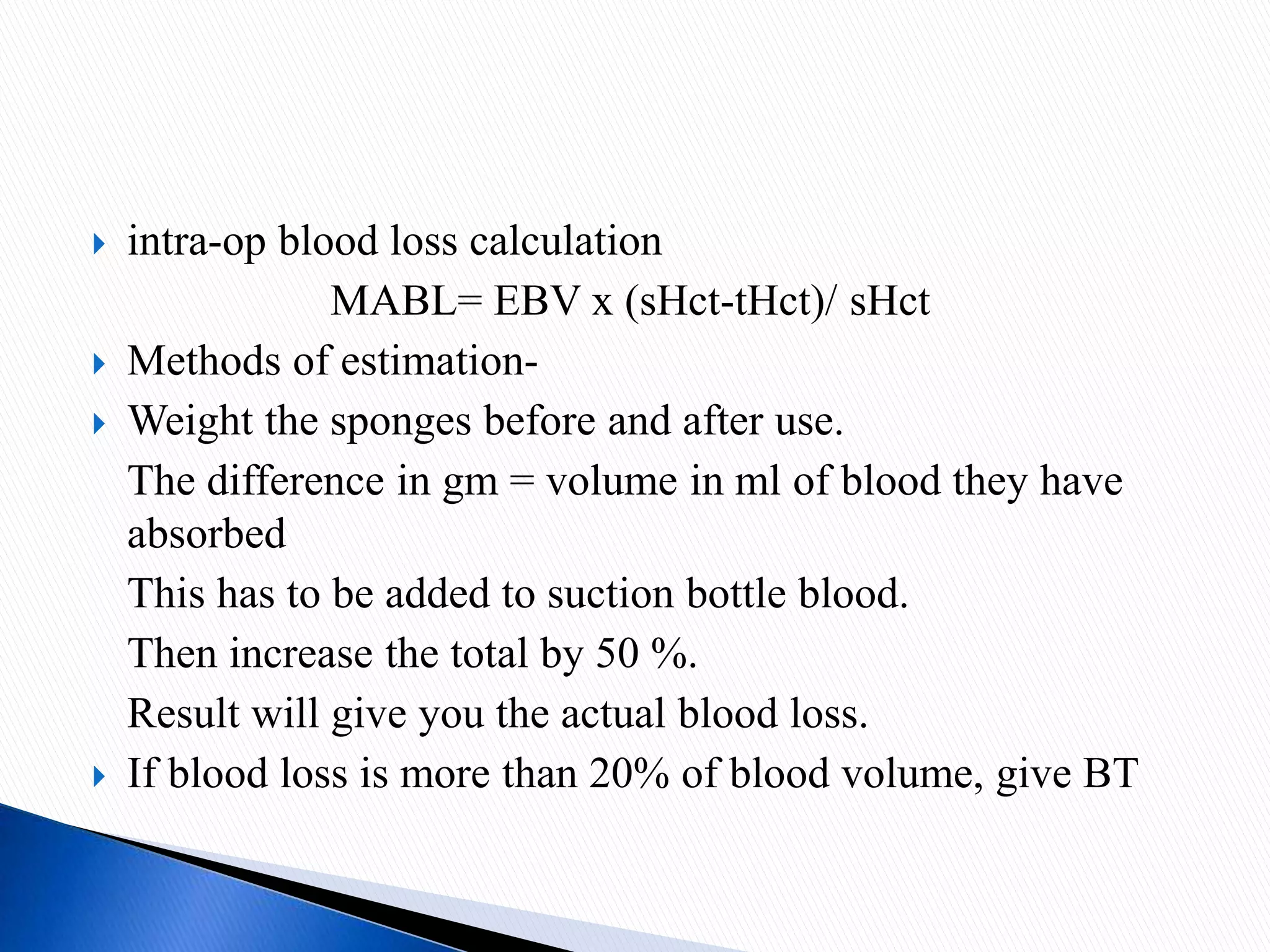
 intra-op blood loss calculation
MABL= EBV x (sHct-tHct)/ sHct
 Methods of estimation-
 Weight the sponges before and after use.
The difference in gm = volume in ml of blood they have
absorbed
This has to be added to suction bottle blood.
Then increase the total by 50 %.
Result will give you the actual blood loss.
 If blood loss is more than 20% of blood volume, give BT
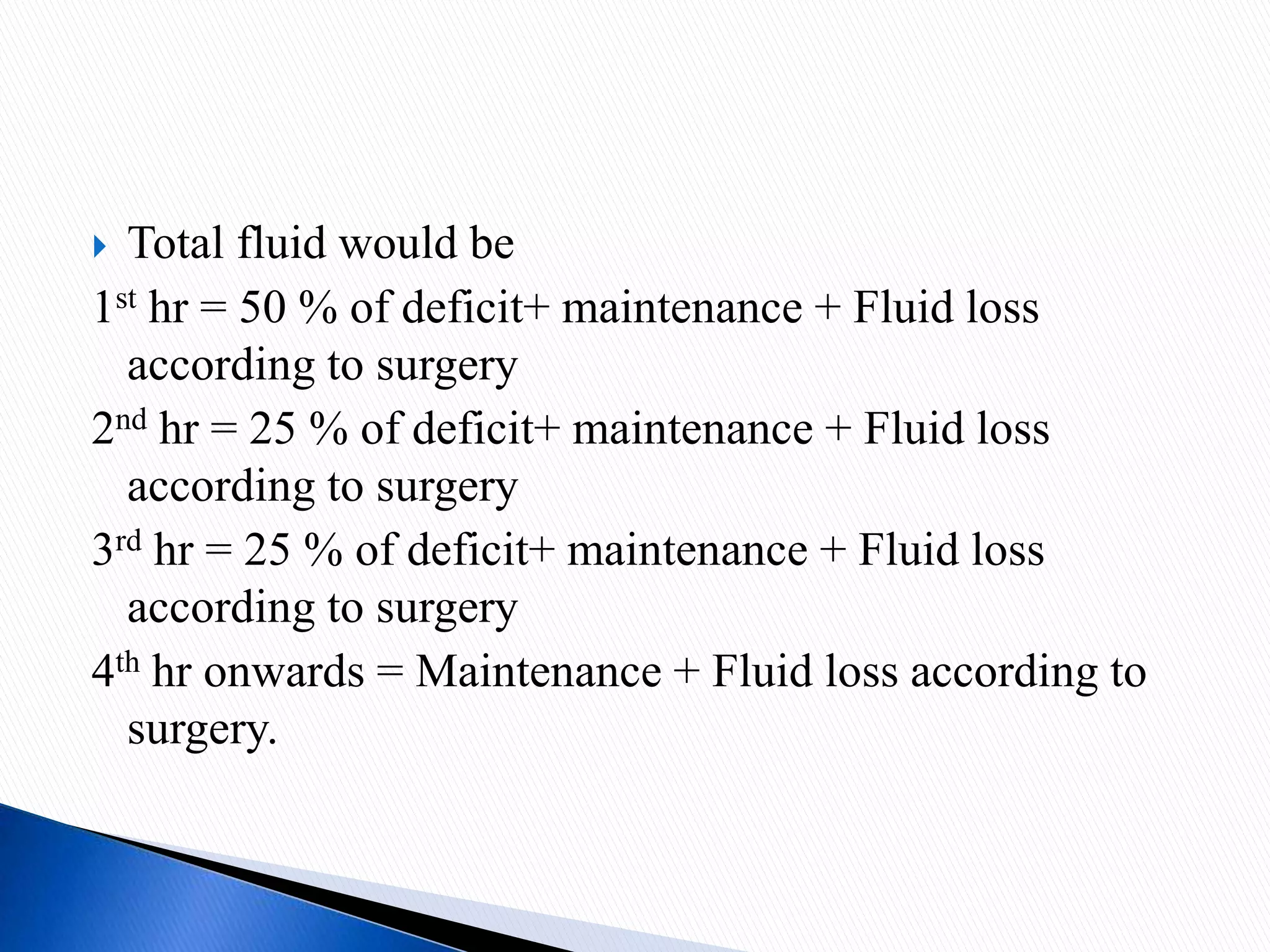
 Total fluid would be
1st hr = 50 % of deficit+ maintenance + Fluid loss
according to surgery
2nd hr = 25 % of deficit+ maintenance + Fluid loss
according to surgery
3rd hr = 25 % of deficit+ maintenance + Fluid loss
according to surgery
4th hr onwards = Maintenance + Fluid loss according to
surgery.
 AIM
 BP > 100/70 mm of Hg or MAP >60 mm Hg
 HR < 120/min
 Urine output = 0.5 -1 ml/kg/hr along with normal
temperature , warm skin , normal respiration and
senses.
 How long to give fluids?--- it depends upon the type
and nature of surgery.
 If minor surgery - maintain fluid till NBM period
 Major surgery- fluids can be required till 24-48hrs.
 Fluid requirement = 2ml/kg/hr with isotonic
crystalloids
 Take into consideration Blood loss , urine output, blood
glucose levels, insensible fluid loss and titrate fluid
intake accordingly.
 Avoid glucose containing solutions in neurosurgical
patients, severely dehydrated patients & cautious use in
diabetic patients.
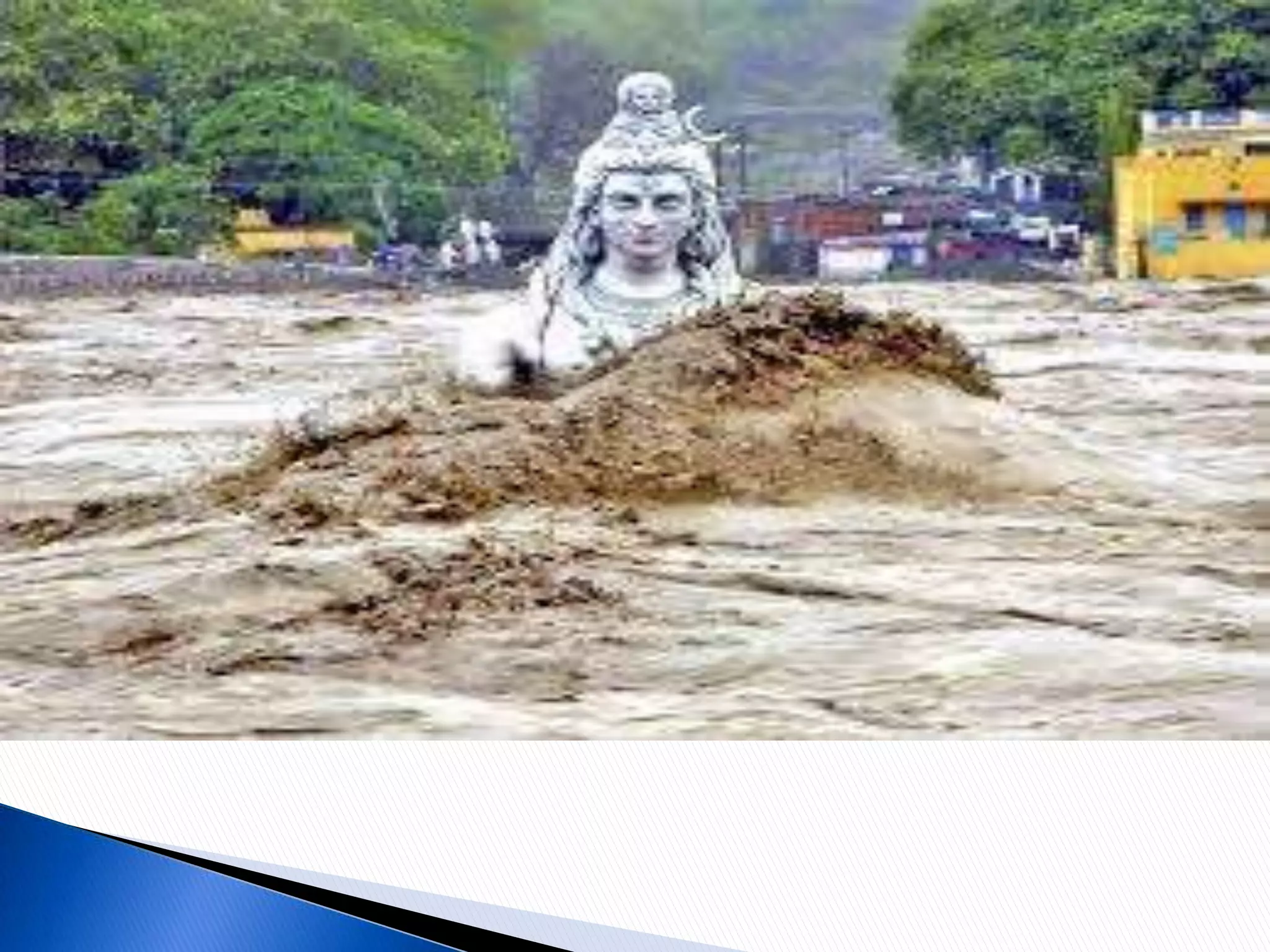
 WHAT HAPPENS IF FLUID IS EXCESS?
 So to avoid complications
we have to monitor FLUID
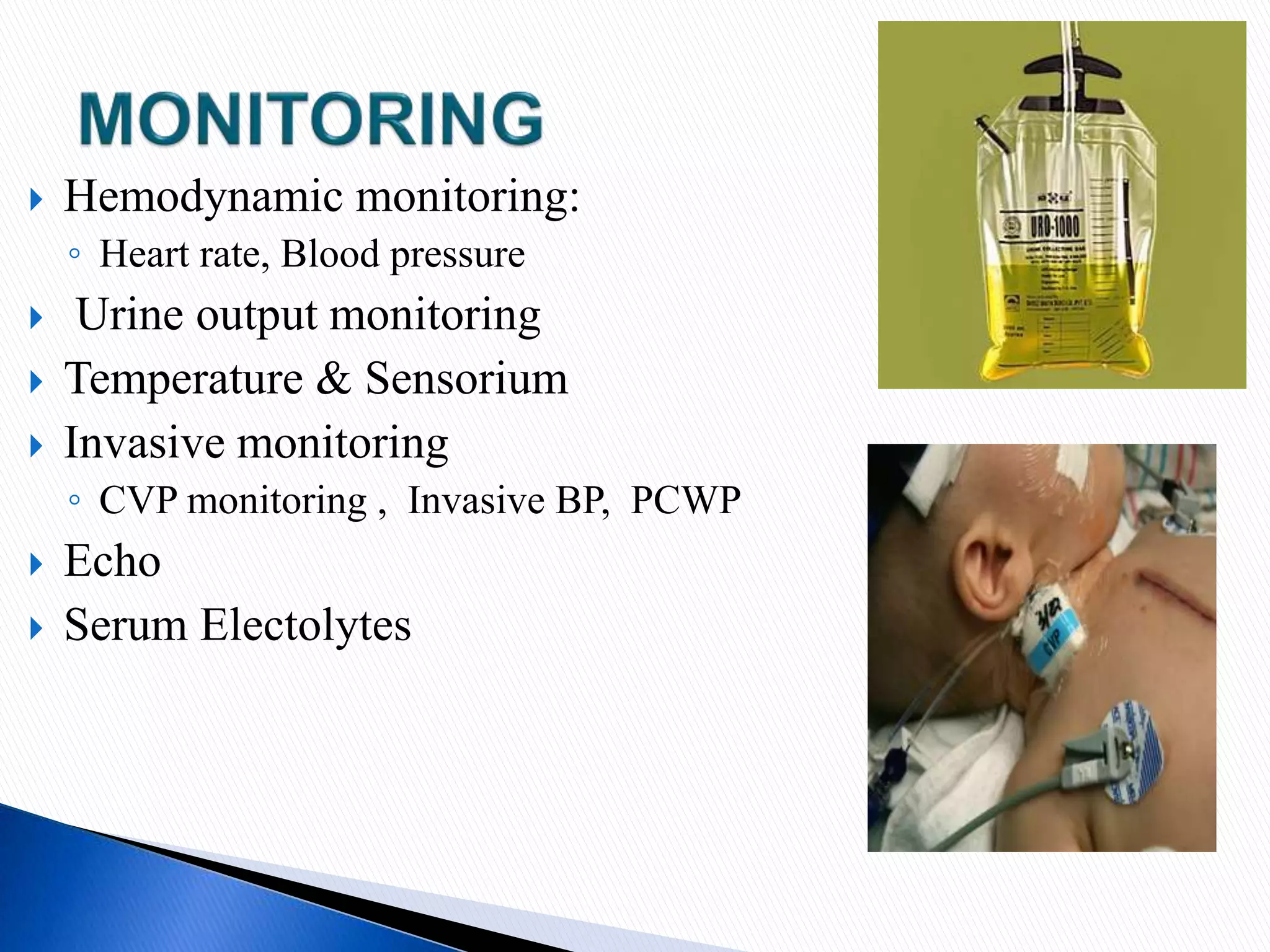
 Hemodynamic monitoring:
◦ Heart rate, Blood pressure
 Urine output monitoring
 Temperature & Sensorium
 Invasive monitoring
◦ CVP monitoring , Invasive BP, PCWP
 Echo
 Serum Electolytes
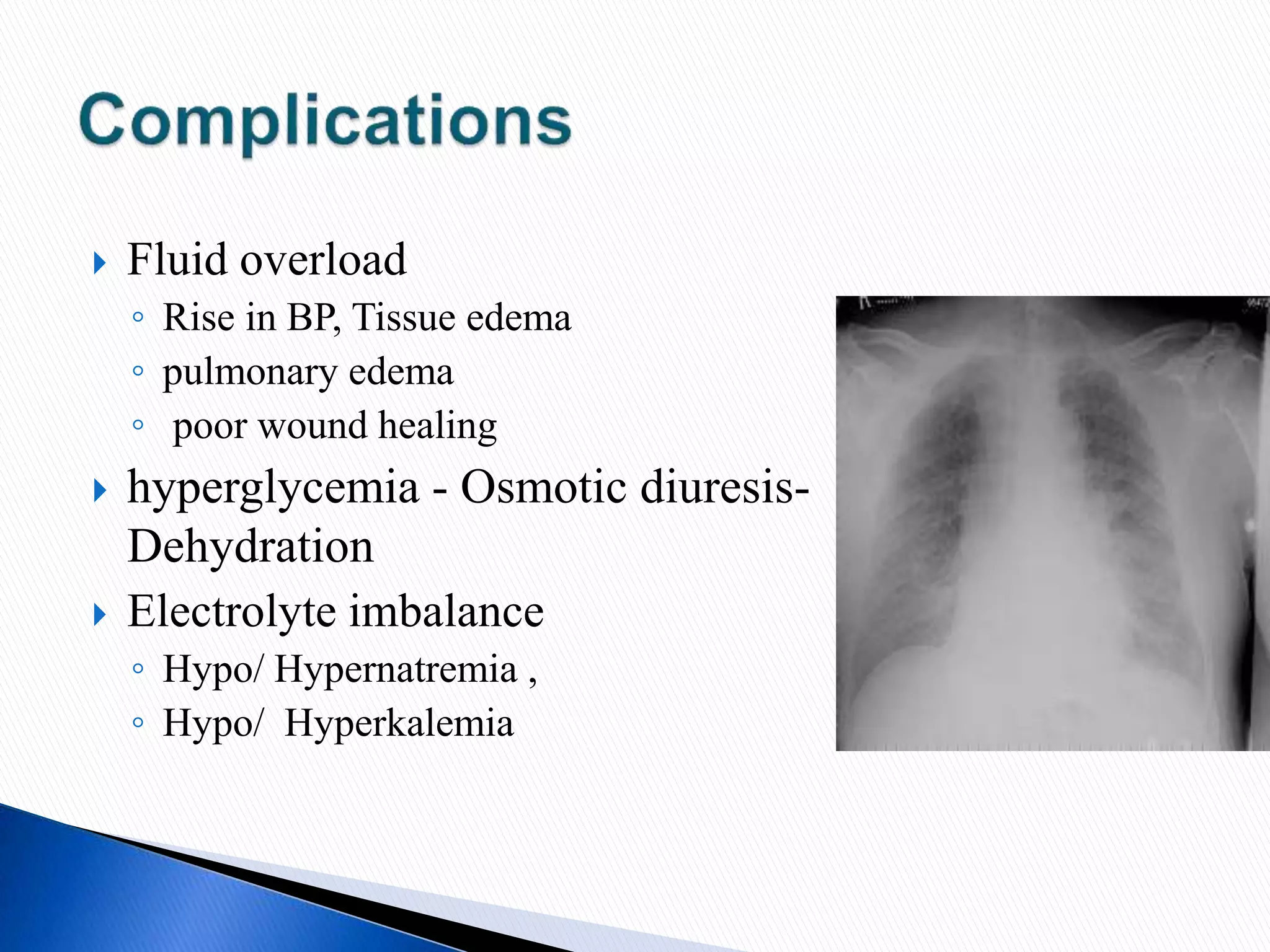
 Fluid overload
◦ Rise in BP, Tissue edema
◦ pulmonary edema
◦ poor wound healing
 hyperglycemia - Osmotic diuresis-
Dehydration
 Electrolyte imbalance
◦ Hypo/ Hypernatremia ,
◦ Hypo/ Hyperkalemia
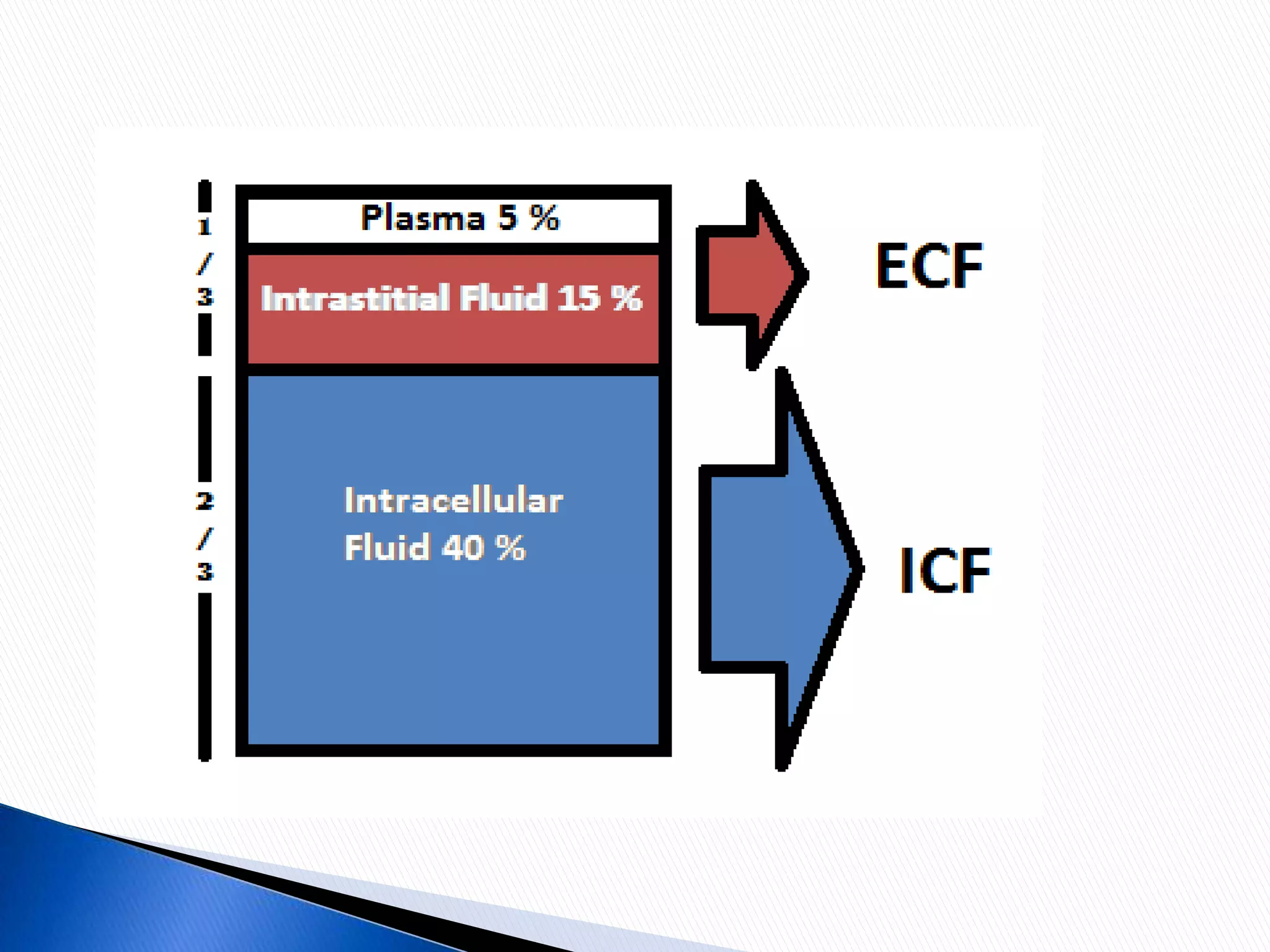
 60% body weight is fluid
 40% is ICF,15% intertitial,5% intra vascular
 One requires 2ml/kg/hr water daily
 Intra operative 4ml,6ml,8ml /kg/hr as per type of
surgery
 Always consider total circulating volume
 1ml have 15 or 60 drops
 Never over infuse
SAVE WATER ,
SAVE EARTH ,
GIVE WATER,
GIVE LIFE
INTRA VENOUS FLUID THERAPY

INTRA VENOUS FLUID THERAPY

  • 1.
  • 2.
     HOW MUCHIS WATER ON EARTH?
  • 4.
     HOW ISCOMPOSITION OF FLUID IN HUMAN BODY?
  • 6.
    60% of thebody is FLUID 40% of the body is SOLID
  • 7.
    HOW IT VARIESWITH SEX AND AGE?
  • 8.
  • 9.
    HOW THE FLUIDIS DISTRIBUTED IN BODY?
  • 10.
     The bodyfluid is mainly having  Intra cellular compartment (ICF)  Extra cellular compartment (ECF)
  • 13.
    Electrolytes(mEq/L) ECF ICF Sodium142 10 Potassium 4.3 150 Chloride 104 2 Biocarbonate 24 6 Calcium 5 0.01 Magnesium 3 40 Phosphate & Sulphate 8 150
  • 14.
     HOW THEBODY LOOSES WATER? INSENSIBLE AND SENSIBLE loss of water
  • 15.
     Oral orIV fluid intake and urine output are important parameters of body fluid balance  Normal daily insensible fluid loss: Fluid loss – Fluid input = 1000-300 = 700 ml.  Daily fluid requirement = urine output + insensible loss Insensible fluid input Insensible fluid loss 300 ml water due to oxidation 500 ml through skin 400ml through lung 100 ml through stool
  • 16.
    URINE OUT PUTIS =1.5ml/kg/hr  For a person of 70kg  Urine out put=70 x 1.5x24=2.5lit/day
  • 17.
     For anormal adult fluid requirement is  Urine out put +insensible loses  2.5 lit + 0.7 lit= 3.2 lit/day
  • 18.
     THIS ISTHE REQUIREMENT OF AN INDIVIDUAL DAILY  For an adult- 2ml/kg/hr  Children - 4ml/kg/hr
  • 19.
     To maintainnormal body fluid balance one must take this much minimum water  Whether a person is fasting or for surgery  One must be given fluid to keep the fluid compartment hydrated this is—  Maintenance fluid therapy
  • 20.
     Osmolarity isdetermined by amount of solute dissolved in a solvent measured in volume(lt).  Osmolality of any solution is measured by measurment of its freezing point.
  • 21.
     Plasma Osmolality= 2 x Na + Glucose(mg/dl)/ 18 + BUN(mg/dl)/2.8 .
  • 22.
     A VERYIMPORTANT ASPECT  ONE ML OF FLUID CONTAIN HOW MANY DROPS?
  • 23.
     NORMAL IVSET 1ML= 15 drops  PAEDIATRIC IV SET 1ML= 60 drops
  • 24.
     Crystalloids: hypotonic- 5%dextrose ,D5 1/2 NS OR 1/4NS Isotonic- 0.9%Nacl, ringer lactate, ringer acetate Hypertonic- 3%,5%, 7.5% Nacl.  Colloids: Hydroxyethyl starches Gelatins Dextran Albumin.
  • 25.
    Crystalloids are aqueoussolutions of inorganic and small organic molecules, the main solute being either normal saline or glucose. Depending on the concentration of the solute, crystalloid solutions are isotonic, hypotonic, and hypertonic. Colloids, in contrast, are homogeneous noncrystalline substances containing large molecules. Colloids have much greater capacity to remain within the intravascular space.
  • 26.
    Distribution of 1,000 mLof fluid given IV Intracel lular Fluid Interstit ial Fluid Intravas cular Fluid 5% Dextrose 666 249 83 Crystalloid 0 750 250 Colloid Immedi ate 0 0 1,000 After 4 hours 0 750 250 Blood 0 0 1,000
  • 27.
     Composition  Oneliter contains 50 grams.  Pharmacological Basis  Corrects dehydration and supplies energy.  After consumption of glucose remaining water is distributed in all compartments so it is best to correct intracellular dehydration.  D5% provides 170 Kcal/L
  • 28.
     Composition  Oneliter contains : Glucose 50 gm, Chloride 154 mEq, Sodium 154 mEq  Each 100 ml contains 5 gm glucose and 0.90 gm NaCl.
  • 29.
     Composition  Oneliter fluid supplies Sodium 130 mEq, Potassium 4 mEq, Calcium 3mEq, Bicarbonate 28mEq, Chloride 109mEq  Each 100 ml contains Sodium Lactate 320 md, sodium chloride 600 mg, Potassium chloride 40 mg, calcium chloride 27 mg
  • 30.
     Hydroxyethyl starchesare modified natural polysaccharides similar to glycogen.  They are derived from amylopectin, a highly branched corn or potato starch.
  • 31.
     Produced bydegradation of bovine collagen and chemical modifications, gelatins are polydispersed colloidal solutions.  Three types 1. oxy-crosslinked, 2. urea-crosslinked, 3. and succinylated gelatins. Molecular weight (average 30-35 kD), concentrations (3.5%-5.5%) and volume-restoring efficacy (volume effect 70%-100%).
  • 32.
     500ml, 3.5%solution  100ml- 3.5 gms of gelatin  Stable for 3years  Mw wt- 30000-350000  Half life- 2-4 hours a) Uses- a) hypovolemia b) Pre loading c)haemo dilution
  • 33.
     Dextrans arepolydispersed colloids -synthesized from sucrose by the bacterium Leuconostoc mesenteroides.  The formulations most frequently selected are dextran 40 and dextran 70, with molecular weights of 40 and 70 kD, respectively.  After intravenous administration, small dextran molecules less than 50 kD are rapidly eliminated by the kidneys (filtration). All other molecules are being metabolized to carbon dioxide and water by cell-bound enzymes in the kidneys, liver, and spleen.
  • 34.
     Albumin ispurified from human plasma and is commercially available as a 1. 5% (iso-oncotic), 2. 20%, or 25% (hyperoncotic) solution. Because albumin is heated and sterilized by ultrafiltration, the risk of bacterial or viral disease transmission should be eliminated.  Albumin is the most abundant plasma protein.
  • 35.
    • Crystalloids are 1.inexpensive 2. adverse effects are rare or absent 3. There is no renal impairment, 4. minimal interaction with coagulation 5. no tissue accumulation, 6. and no allergic reactions • Colloids are 1. better volume- expanding properties, 2. minor edema formation 3. improved microcirculation. 4. Improve tissue oxygenation. 5. expensive
  • 36.
  • 37.
     Aims  Correctionof Hypovolemia  Correction of Anemia  Correction of Other Disorders.
  • 38.
     Hypovolemia jeopardizesO2 transport and increase the risk of hypoxia & development of organ failure.  Uncorrected hypovolemia is compensated by increased vascular resistance and heart rate due to normal baroreceptor reflex but these are lost during induction of anesthesia.  Causes : vomiting, nasogastric suction, blood loss, third space loss, diuretic therapy etc
  • 39.
     Estimation severityof dehydration.  Mild= 4% body weight fluid deficit.  Moderate = 6-8 % body weight fluid deficit.  Severe = 10 % body weight fluid deficit.  Choice of fluid depends on nature of loss and haemodynamic status,compositional abnormality.  NS, RL , colloids & Whole blood are most widely used fluids
  • 40.
     It isthe space which normally dose not exist in body  It is created due to some complications like Hydro Thorax,Acsities
  • 41.
     Rate offluid administration varies depending on severity of fluid disturbance, presence of continuing losses and haemodynamic and cardiac status.  In severe deficit FT may be started at 1000ml/hr ,gradually reducing the rate as the fluid status improves.  Elderly require slow and careful correction.
  • 42.
     Monitoring :Improvementin tachycardia and blood pressure, absence of orthostatic hypotension and achieving urine output of > 30-50 ml/hr (in absence of diuretics) suggests correction of fluid deficit.
  • 43.
     Intraoperative volumecan be calculated as- 1. MAINTANACE-Correction of fluid deficit due to fasting 2. REPLACEMENT- Replace the lost components 3. SPECIFIC-Loss due to tissue dissection/ hemorrhage
  • 44.
     Volume tobe replaced for starvation= Duration of starvation(hrs) x2ml/kg body weight  1st hour = 50%  2nd hour = 25%  3rd hour = 25%  Maintenance volume for intra-op: 2ml/kg/hours  (fasting should never be more than 4-6 hrs, if so we recommend to start iv fluids pre operatively)
  • 45.
     Fluid lossis calculated as-Type of surgery Fluid volume(ml/kg/hr) Least trauma Nil Minimal trauma 4 Moderate trauma 6 Severe trauma 8
  • 46.
     List trauma: cataract, sebaceous cyst , surgery etc  Minimum : appendix, hernia, surgery etc  Moderate : laparotomy , hysterectomy etc  Severe : THR, bowel resection, etc
  • 47.
     intra-op bloodloss calculation MABL= EBV x (sHct-tHct)/ sHct  Methods of estimation-  Weight the sponges before and after use. The difference in gm = volume in ml of blood they have absorbed This has to be added to suction bottle blood. Then increase the total by 50 %. Result will give you the actual blood loss.  If blood loss is more than 20% of blood volume, give BT
  • 48.
     Total fluidwould be 1st hr = 50 % of deficit+ maintenance + Fluid loss according to surgery 2nd hr = 25 % of deficit+ maintenance + Fluid loss according to surgery 3rd hr = 25 % of deficit+ maintenance + Fluid loss according to surgery 4th hr onwards = Maintenance + Fluid loss according to surgery.
  • 49.
     AIM  BP> 100/70 mm of Hg or MAP >60 mm Hg  HR < 120/min  Urine output = 0.5 -1 ml/kg/hr along with normal temperature , warm skin , normal respiration and senses.  How long to give fluids?--- it depends upon the type and nature of surgery.
  • 50.
     If minorsurgery - maintain fluid till NBM period  Major surgery- fluids can be required till 24-48hrs.  Fluid requirement = 2ml/kg/hr with isotonic crystalloids  Take into consideration Blood loss , urine output, blood glucose levels, insensible fluid loss and titrate fluid intake accordingly.  Avoid glucose containing solutions in neurosurgical patients, severely dehydrated patients & cautious use in diabetic patients.
  • 51.
     WHAT HAPPENSIF FLUID IS EXCESS?
  • 53.
     So toavoid complications we have to monitor FLUID
  • 54.
     Hemodynamic monitoring: ◦Heart rate, Blood pressure  Urine output monitoring  Temperature & Sensorium  Invasive monitoring ◦ CVP monitoring , Invasive BP, PCWP  Echo  Serum Electolytes
  • 55.
     Fluid overload ◦Rise in BP, Tissue edema ◦ pulmonary edema ◦ poor wound healing  hyperglycemia - Osmotic diuresis- Dehydration  Electrolyte imbalance ◦ Hypo/ Hypernatremia , ◦ Hypo/ Hyperkalemia
  • 56.
     60% bodyweight is fluid  40% is ICF,15% intertitial,5% intra vascular  One requires 2ml/kg/hr water daily  Intra operative 4ml,6ml,8ml /kg/hr as per type of surgery  Always consider total circulating volume  1ml have 15 or 60 drops  Never over infuse
  • 57.
    SAVE WATER , SAVEEARTH , GIVE WATER, GIVE LIFE