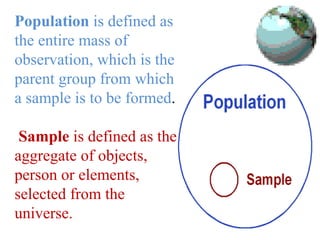
Population is defined as 
the entire mass of 
observation, which is the 
parent group from which 
a sample is to be formed. 
Sample is defined as the 
aggregate of objects, 
person or elements, 
selected from the 
universe.
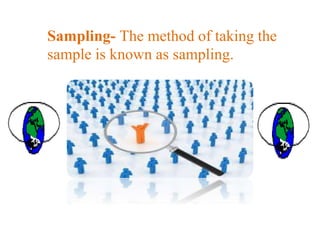
Sampling- The method of taking the 
sample is known as sampling.
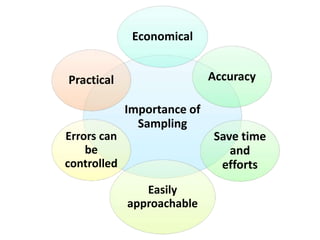
Economical 
Importance of 
Sampling 
Accuracy 
Save time 
and 
efforts 
Easily 
approachable 
Practical 
Errors can 
be 
controlled
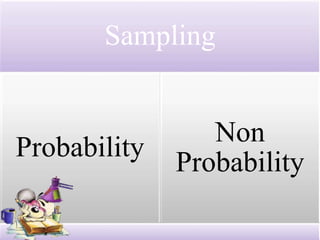
Sampling 
Probability 
Non 
Probability
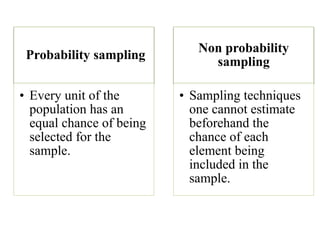
Probability sampling 
• Every unit of the 
population has an 
equal chance of being 
selected for the 
sample. 
Non probability 
sampling 
• Sampling techniques 
one cannot estimate 
beforehand the 
chance of each 
element being 
included in the 
sample.
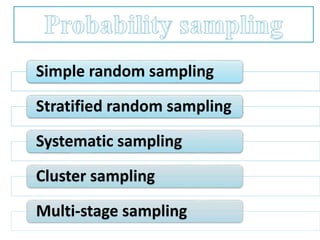
Simple random sampling 
Stratified random sampling 
Systematic sampling 
Cluster sampling 
Multi-stage sampling
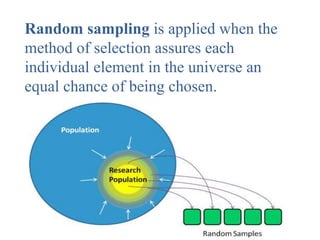
Random sampling is applied when the 
method of selection assures each 
individual element in the universe an 
equal chance of being chosen.
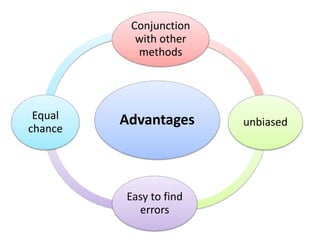
Conjunction 
with other 
methods 
Advantages 
unbiased 
Easy to find 
errors 
Equal 
chance
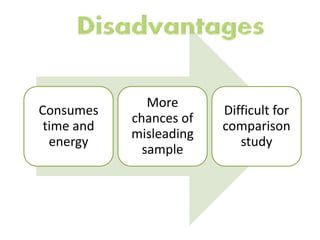
Consumes 
time and 
energy 
More 
chances of 
misleading 
sample 
Difficult for 
comparison 
study
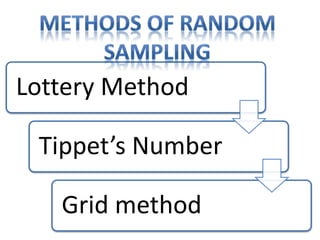
Lottery Method 
Tippet’s Number 
Grid method
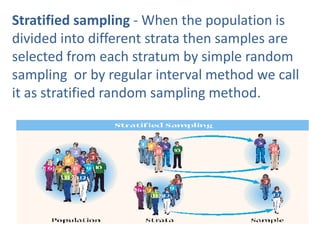
Stratified sampling - When the population is 
divided into different strata then samples are 
selected from each stratum by simple random 
sampling or by regular interval method we call 
it as stratified random sampling method.
Advantages 
•Comparing sub-categories 
•Save time, money 
and energy 
•Can represent 
various group
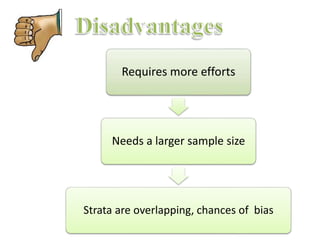
Requires more efforts 
Needs a larger sample size 
Strata are overlapping, chances of bias
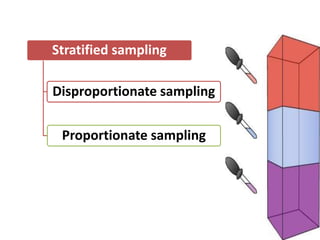
Stratified sampling 
Disproportionate sampling 
Proportionate sampling
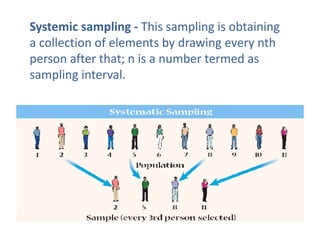
Systemic sampling - This sampling is obtaining 
a collection of elements by drawing every nth 
person after that; n is a number termed as 
sampling interval.
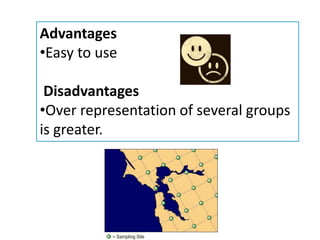
Advantages 
•Easy to use 
Disadvantages 
•Over representation of several groups 
is greater.
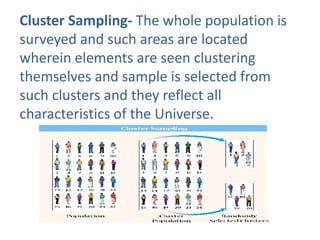
Cluster Sampling- The whole population is 
surveyed and such areas are located 
wherein elements are seen clustering 
themselves and sample is selected from 
such clusters and they reflect all 
characteristics of the Universe.
Advantages 
Easier to apply larger Geographical area 
Save time of travelling
Disadvantages 
Not good representative of the 
population 
Sampling error 
Same individual can belong to 
two clusters and studied twice
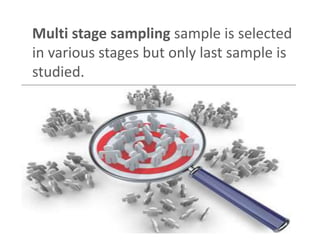
Multi stage sampling sample is selected 
in various stages but only last sample is 
studied.
Advantages 
•Good representative of population 
•Improvement of other sampling methods 
Disadvantages 
•Difficult and complex method
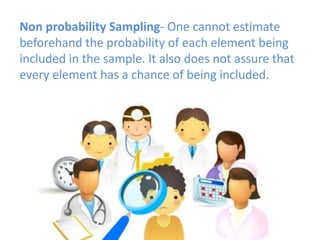
Non probability Sampling- One cannot estimate 
beforehand the probability of each element being 
included in the sample. It also does not assure that 
every element has a chance of being included.

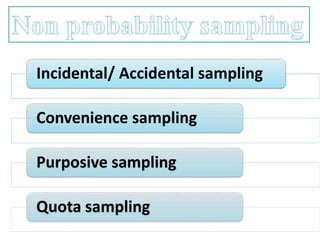
Incidental/ Accidental sampling 
Convenience sampling 
Purposive sampling 
Quota sampling
Incidental or 
Accidental sampling 
means selecting the 
units on basis of easy 
approaches.
Advantages 
• Easy and quick results 
• Saves time, money and 
energy 
Disadvantages 
• Not representative of 
population 
• Cannot produce reliable 
results
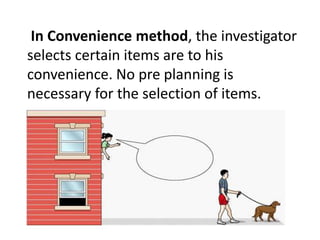
In Convenience method, the investigator 
selects certain items are to his 
convenience. No pre planning is 
necessary for the selection of items.
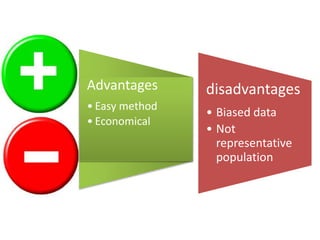
disadvantages 
• Biased data 
• Not 
representative 
population 
Advantages 
• Easy method 
• Economical
Purposive sampling- The selection 
of elements is based upon the 
judgement of the researcher, the 
purposive sampling is called 
judgement sample
Advantages 
•Control on variable 
Disadvantages 
•Reliability of criterion 
is questionable
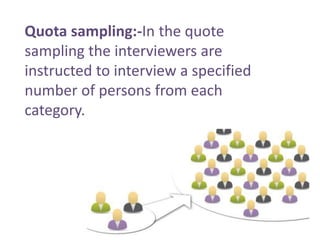
Quota sampling:-In the quote 
sampling the interviewers are 
instructed to interview a specified 
number of persons from each 
category.
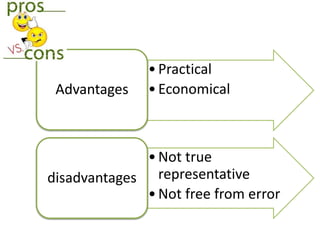
• Practical 
Advantages • Economical 
• Not true 
representative 
• Not free from error 
disadvantages
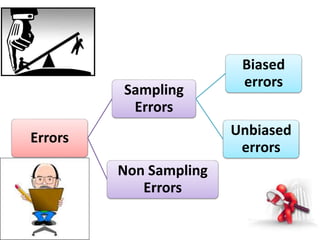
Errors 
Sampling 
Errors 
Biased 
errors 
Unbiased 
errors 
Non Sampling 
Errors
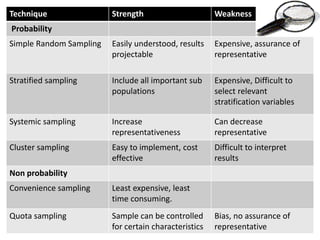
Technique Strength Weakness 
Probability 
Simple Random Sampling Easily understood, results 
projectable 
Expensive, assurance of 
representative 
Stratified sampling Include all important sub 
populations 
Expensive, Difficult to 
select relevant 
stratification variables 
Systemic sampling Increase 
representativeness 
Can decrease 
representative 
Cluster sampling Easy to implement, cost 
effective 
Difficult to interpret 
results 
Non probability 
Convenience sampling Least expensive, least 
time consuming. 
Quota sampling Sample can be controlled 
for certain characteristics 
Bias, no assurance of 
representative
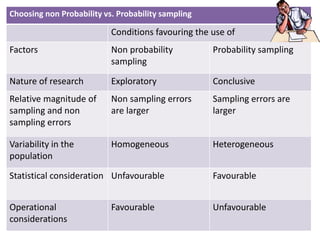
Choosing non Probability vs. Probability sampling 
Conditions favouring the use of 
Factors Non probability 
sampling 
Probability sampling 
Nature of research Exploratory Conclusive 
Relative magnitude of 
Non sampling errors 
sampling and non 
are larger 
sampling errors 
Sampling errors are 
larger 
Variability in the 
population 
Homogeneous Heterogeneous 
Statistical consideration Unfavourable Favourable 
Operational 
considerations 
Favourable Unfavourable
sampling techniques used in research

sampling techniques used in research

  • 2.
    Population is definedas the entire mass of observation, which is the parent group from which a sample is to be formed. Sample is defined as the aggregate of objects, person or elements, selected from the universe.
  • 3.
    Sampling- The methodof taking the sample is known as sampling.
  • 4.
    Economical Importance of Sampling Accuracy Save time and efforts Easily approachable Practical Errors can be controlled
  • 5.
  • 6.
    Probability sampling •Every unit of the population has an equal chance of being selected for the sample. Non probability sampling • Sampling techniques one cannot estimate beforehand the chance of each element being included in the sample.
  • 7.
    Simple random sampling Stratified random sampling Systematic sampling Cluster sampling Multi-stage sampling
  • 8.
    Random sampling isapplied when the method of selection assures each individual element in the universe an equal chance of being chosen.
  • 9.
    Conjunction with other methods Advantages unbiased Easy to find errors Equal chance
  • 10.
    Consumes time and energy More chances of misleading sample Difficult for comparison study
  • 11.
    Lottery Method Tippet’sNumber Grid method
  • 12.
    Stratified sampling -When the population is divided into different strata then samples are selected from each stratum by simple random sampling or by regular interval method we call it as stratified random sampling method.
  • 13.
    Advantages •Comparing sub-categories •Save time, money and energy •Can represent various group
  • 14.
    Requires more efforts Needs a larger sample size Strata are overlapping, chances of bias
  • 15.
    Stratified sampling Disproportionatesampling Proportionate sampling
  • 16.
    Systemic sampling -This sampling is obtaining a collection of elements by drawing every nth person after that; n is a number termed as sampling interval.
  • 17.
    Advantages •Easy touse Disadvantages •Over representation of several groups is greater.
  • 18.
    Cluster Sampling- Thewhole population is surveyed and such areas are located wherein elements are seen clustering themselves and sample is selected from such clusters and they reflect all characteristics of the Universe.
  • 19.
    Advantages Easier toapply larger Geographical area Save time of travelling
  • 20.
    Disadvantages Not goodrepresentative of the population Sampling error Same individual can belong to two clusters and studied twice
  • 21.
    Multi stage samplingsample is selected in various stages but only last sample is studied.
  • 22.
    Advantages •Good representativeof population •Improvement of other sampling methods Disadvantages •Difficult and complex method
  • 23.
    Non probability Sampling-One cannot estimate beforehand the probability of each element being included in the sample. It also does not assure that every element has a chance of being included.
  • 24.
    Incidental/ Accidental sampling Convenience sampling Purposive sampling Quota sampling
  • 25.
    Incidental or Accidentalsampling means selecting the units on basis of easy approaches.
  • 26.
    Advantages • Easyand quick results • Saves time, money and energy Disadvantages • Not representative of population • Cannot produce reliable results
  • 27.
    In Convenience method,the investigator selects certain items are to his convenience. No pre planning is necessary for the selection of items.
  • 28.
    disadvantages • Biaseddata • Not representative population Advantages • Easy method • Economical
  • 29.
    Purposive sampling- Theselection of elements is based upon the judgement of the researcher, the purposive sampling is called judgement sample
  • 30.
    Advantages •Control onvariable Disadvantages •Reliability of criterion is questionable
  • 31.
    Quota sampling:-In thequote sampling the interviewers are instructed to interview a specified number of persons from each category.
  • 32.
    • Practical Advantages• Economical • Not true representative • Not free from error disadvantages
  • 33.
    Errors Sampling Errors Biased errors Unbiased errors Non Sampling Errors
  • 34.
    Technique Strength Weakness Probability Simple Random Sampling Easily understood, results projectable Expensive, assurance of representative Stratified sampling Include all important sub populations Expensive, Difficult to select relevant stratification variables Systemic sampling Increase representativeness Can decrease representative Cluster sampling Easy to implement, cost effective Difficult to interpret results Non probability Convenience sampling Least expensive, least time consuming. Quota sampling Sample can be controlled for certain characteristics Bias, no assurance of representative
  • 35.
    Choosing non Probabilityvs. Probability sampling Conditions favouring the use of Factors Non probability sampling Probability sampling Nature of research Exploratory Conclusive Relative magnitude of Non sampling errors sampling and non are larger sampling errors Sampling errors are larger Variability in the population Homogeneous Heterogeneous Statistical consideration Unfavourable Favourable Operational considerations Favourable Unfavourable