SOFTWARE PROJECT
MANAGEMENT
Prof. Kanchana Devi V
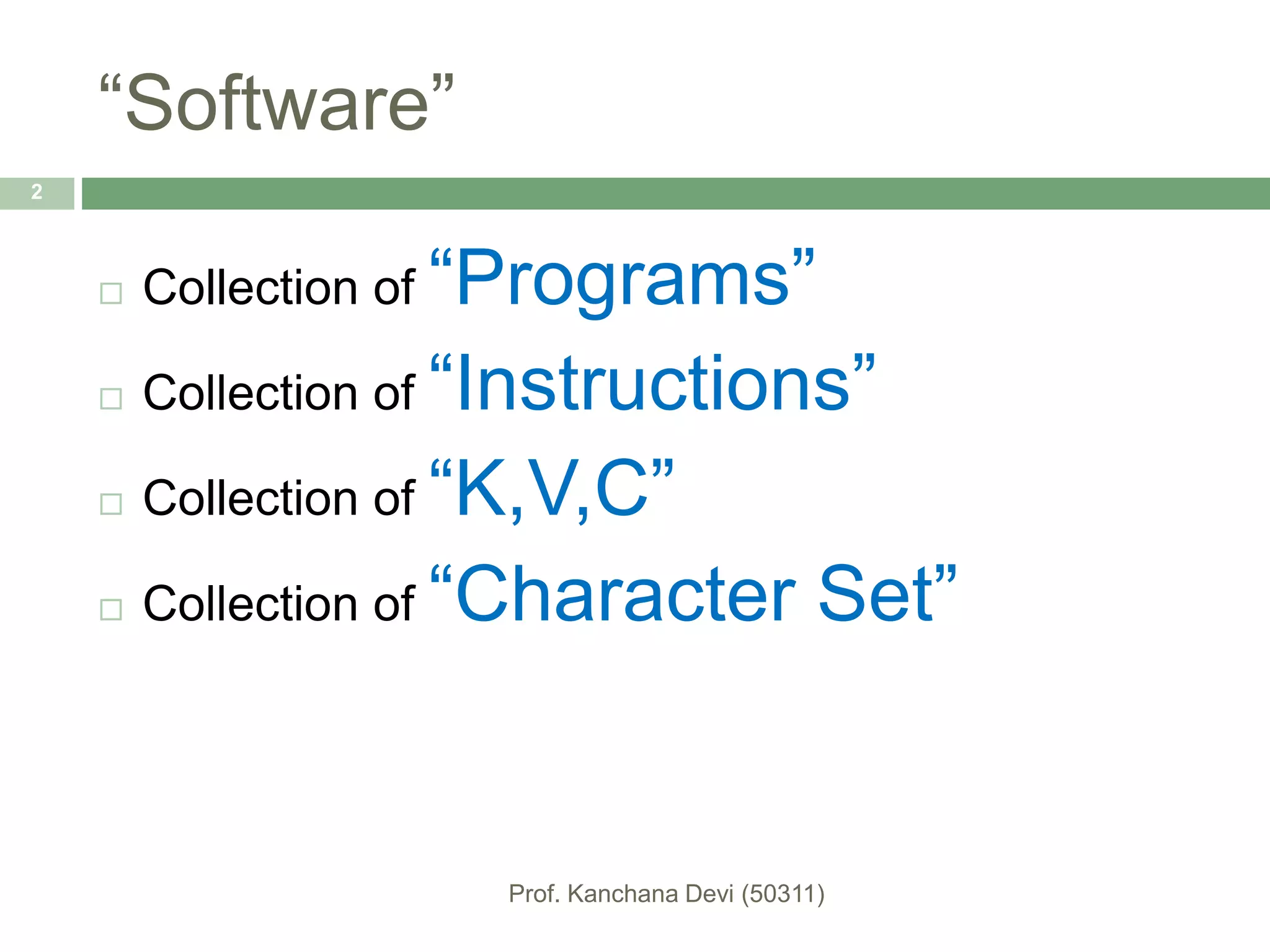
“Software”
 Collection of “Programs”
 Collection of “Instructions”
 Collection of “K,V,C”
 Collection of “Character Set”
2
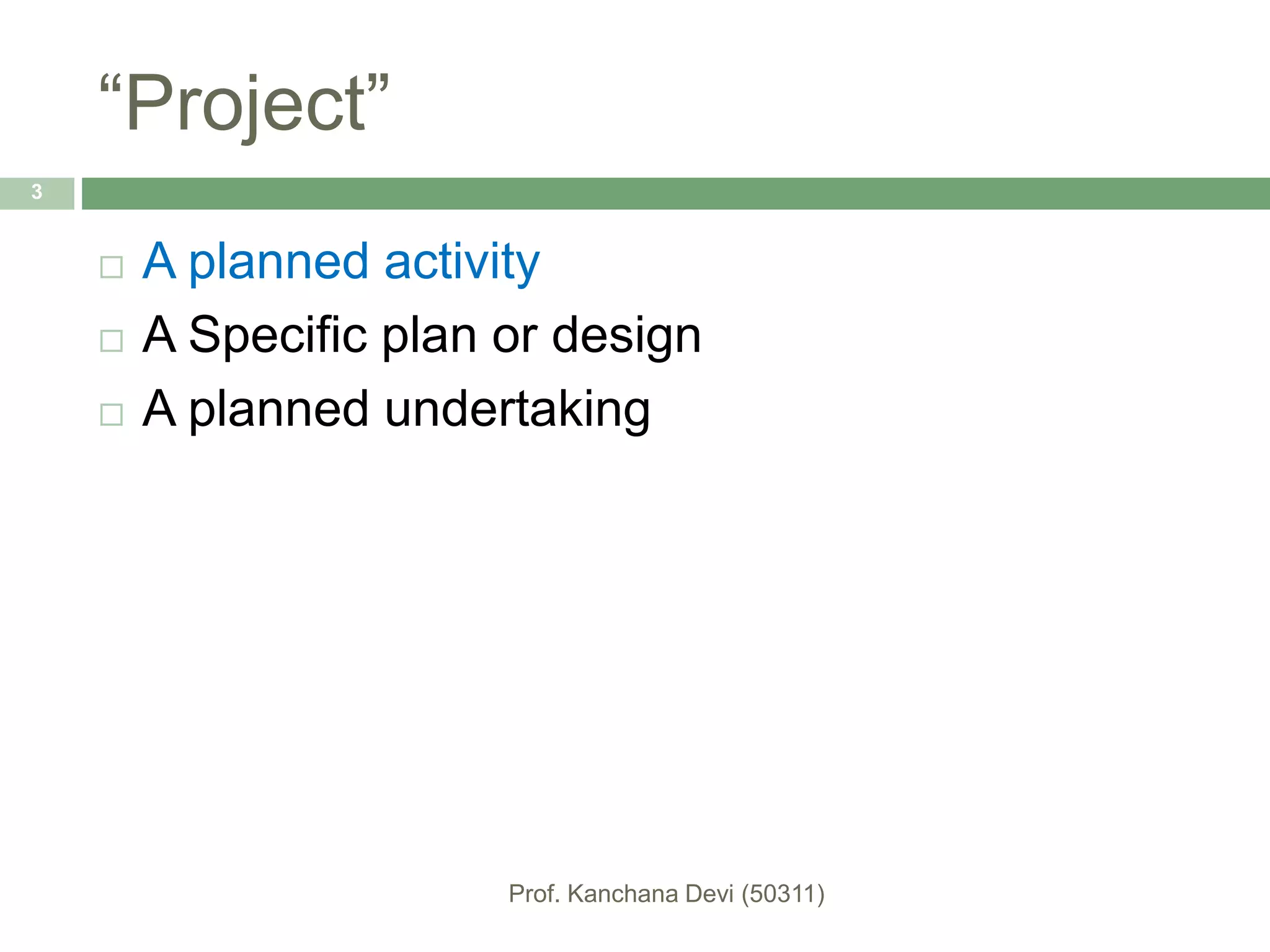
“Project”
 A planned activity
 A Specific plan or design
 A planned undertaking
3
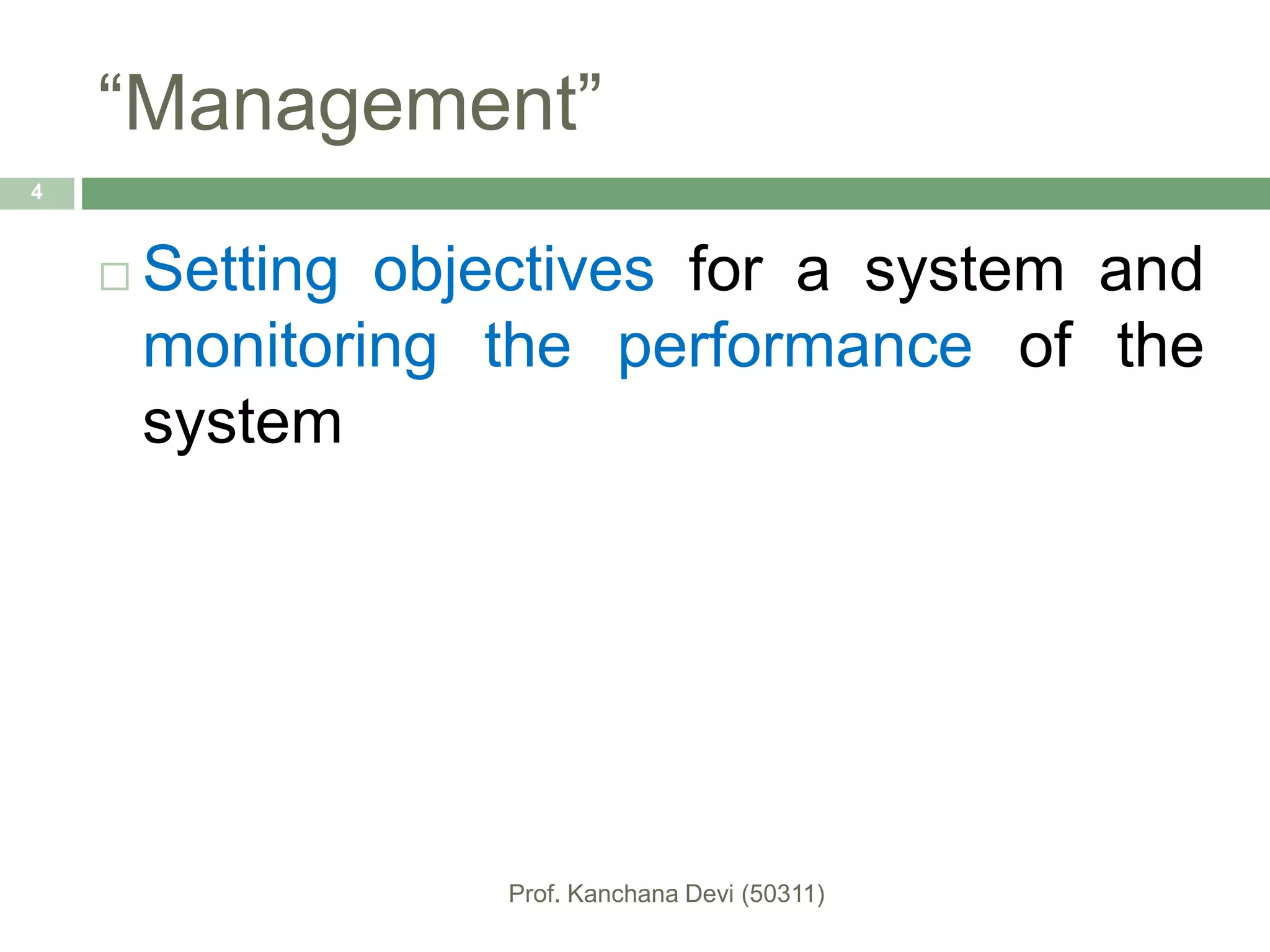
“Management”
 Setting objectives for a system and
monitoring the performance of the
system
4
Introduction
 The key idea of “Software project
Management” is Planning, Monitoring and
Control of software projects
 A Software project must satisfy real needs
 In order to meet this needs project
stakeholders and their objectives must be
identified
5
Importance of SPM
 A survey in USA, 2003 published that
 82% of project were late
 43% exceeded their budget
 Reason is management of project
 Lack of skills and proven approach to project
management and risk management
6
What is a Project?
 A dictionary definition: “ A Planned Activity”
 i. e. How to carryout a task before starting.
 “Planning”: Thinking Carefully about something
before doing it.
 Other activities of planning are routine
maintenance performed so many times, and
documented – helps newcomers.
7
Characteristics of projects are:
 Non-routine tasks are involved
 Planning is required
 Specific objectives are to be met
 The project has a predetermined time span
 Work is carried out in several phases
 The resources are constrained
 The project is large or complex.
8
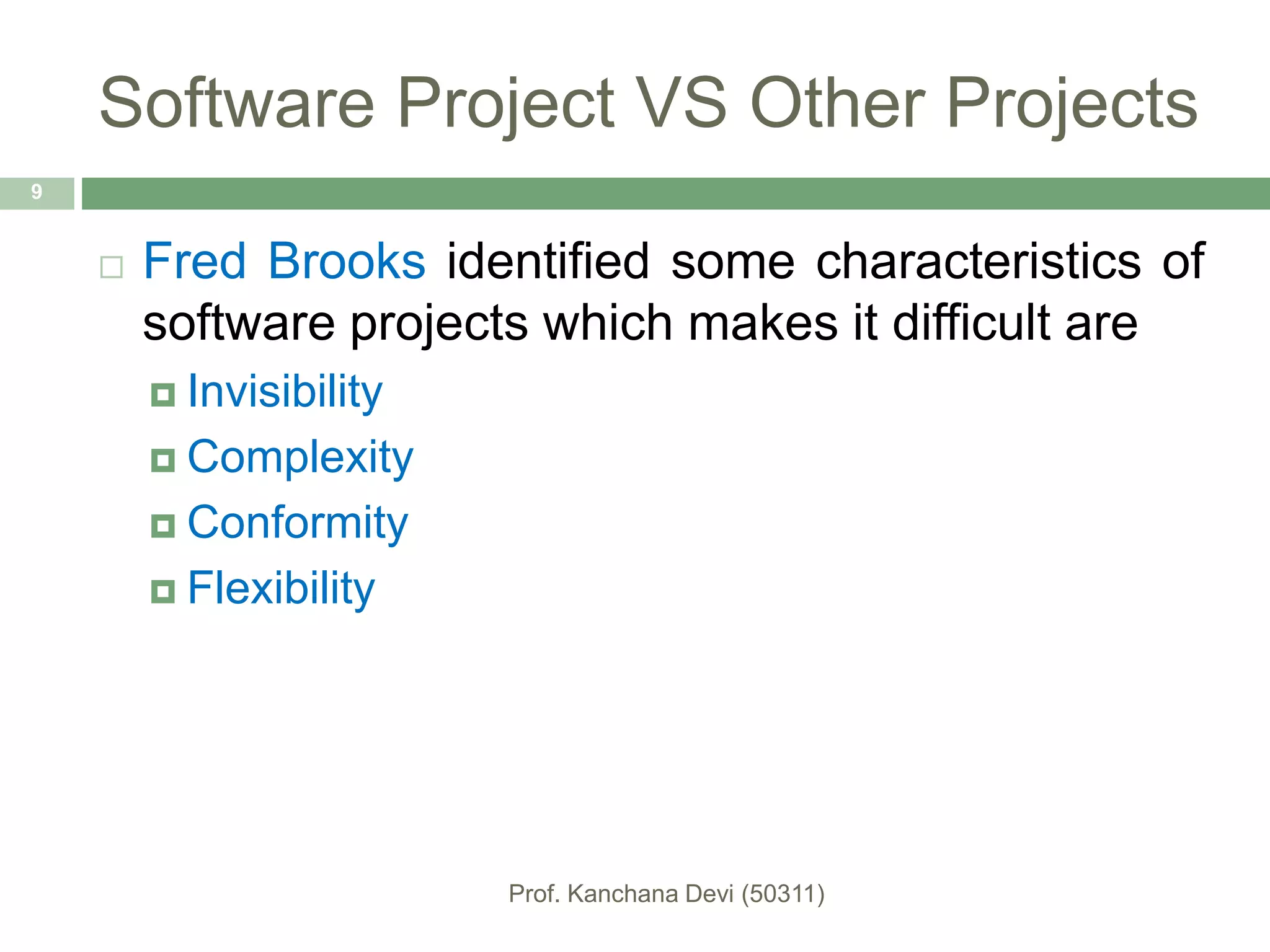
Software Project VS Other Projects
 Fred Brooks identified some characteristics of
software projects which makes it difficult are
 Invisibility
 Complexity
 Conformity
 Flexibility
9
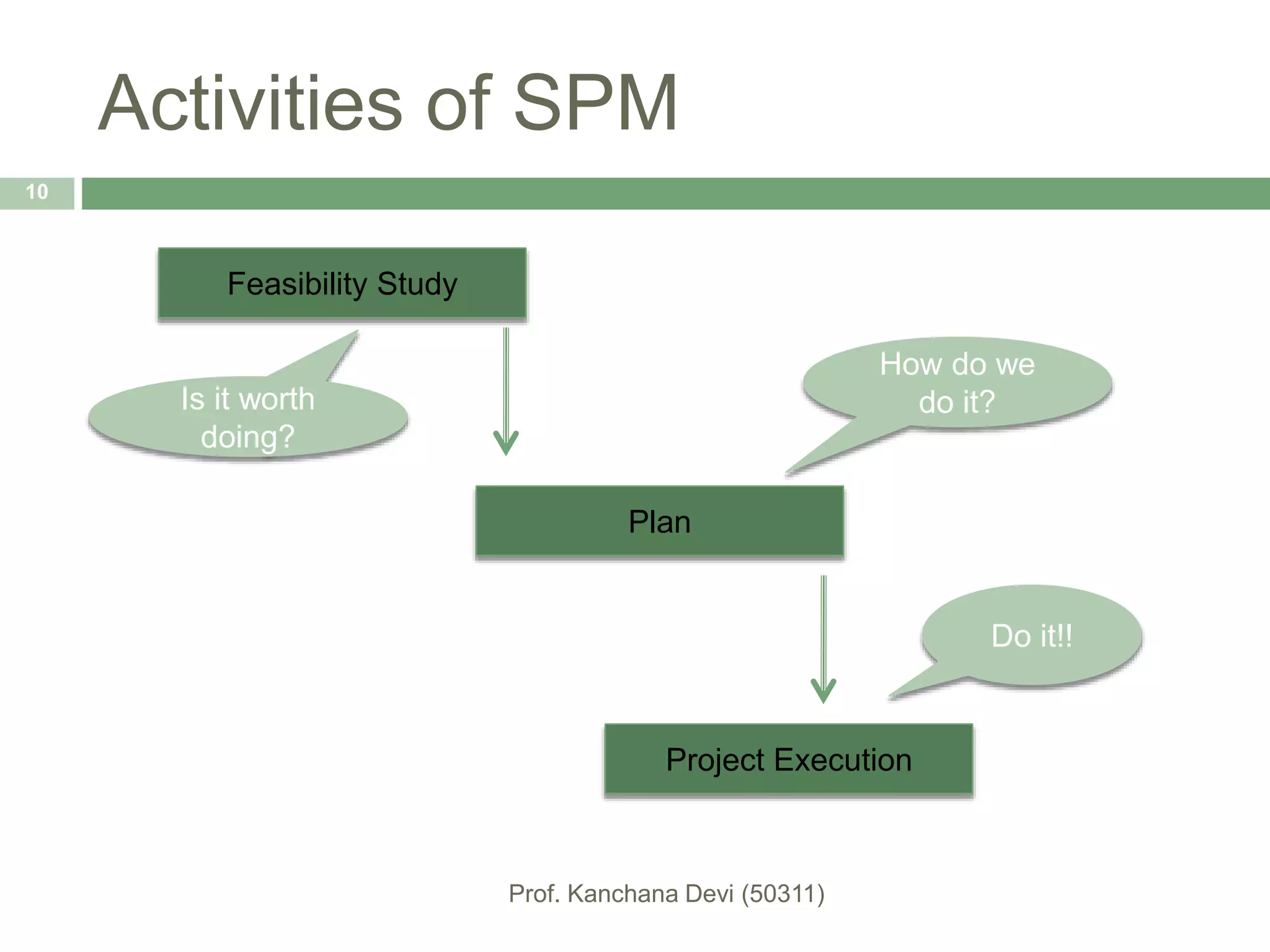
Activities of SPM
Feasibility Study
Plan
Project Execution
Is it worth
doing?
How do we
do it?
Do it!!
10
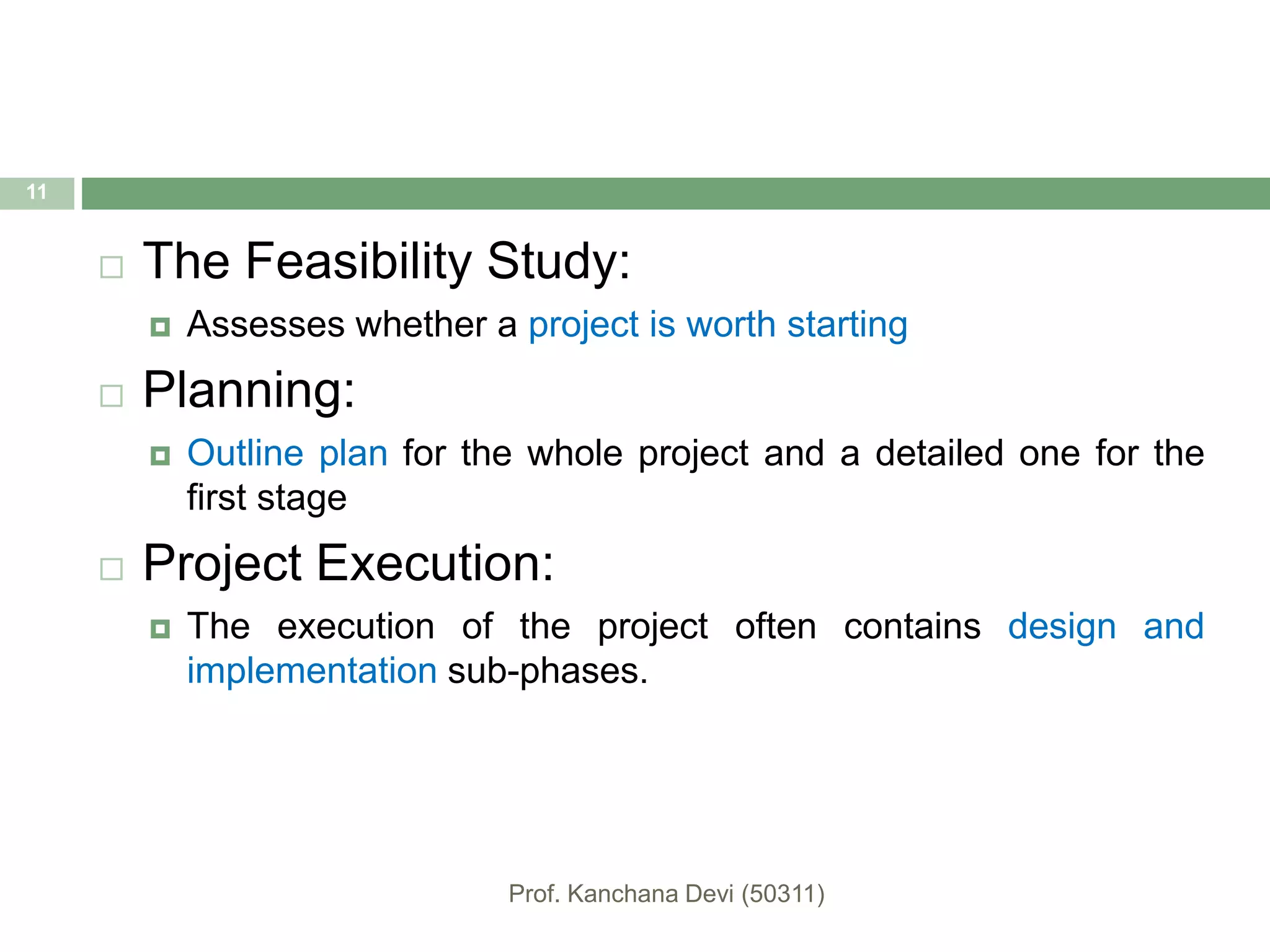
 The Feasibility Study:
 Assesses whether a project is worth starting
 Planning:
 Outline plan for the whole project and a detailed one for the
first stage
 Project Execution:
 The execution of the project often contains design and
implementation sub-phases.
11
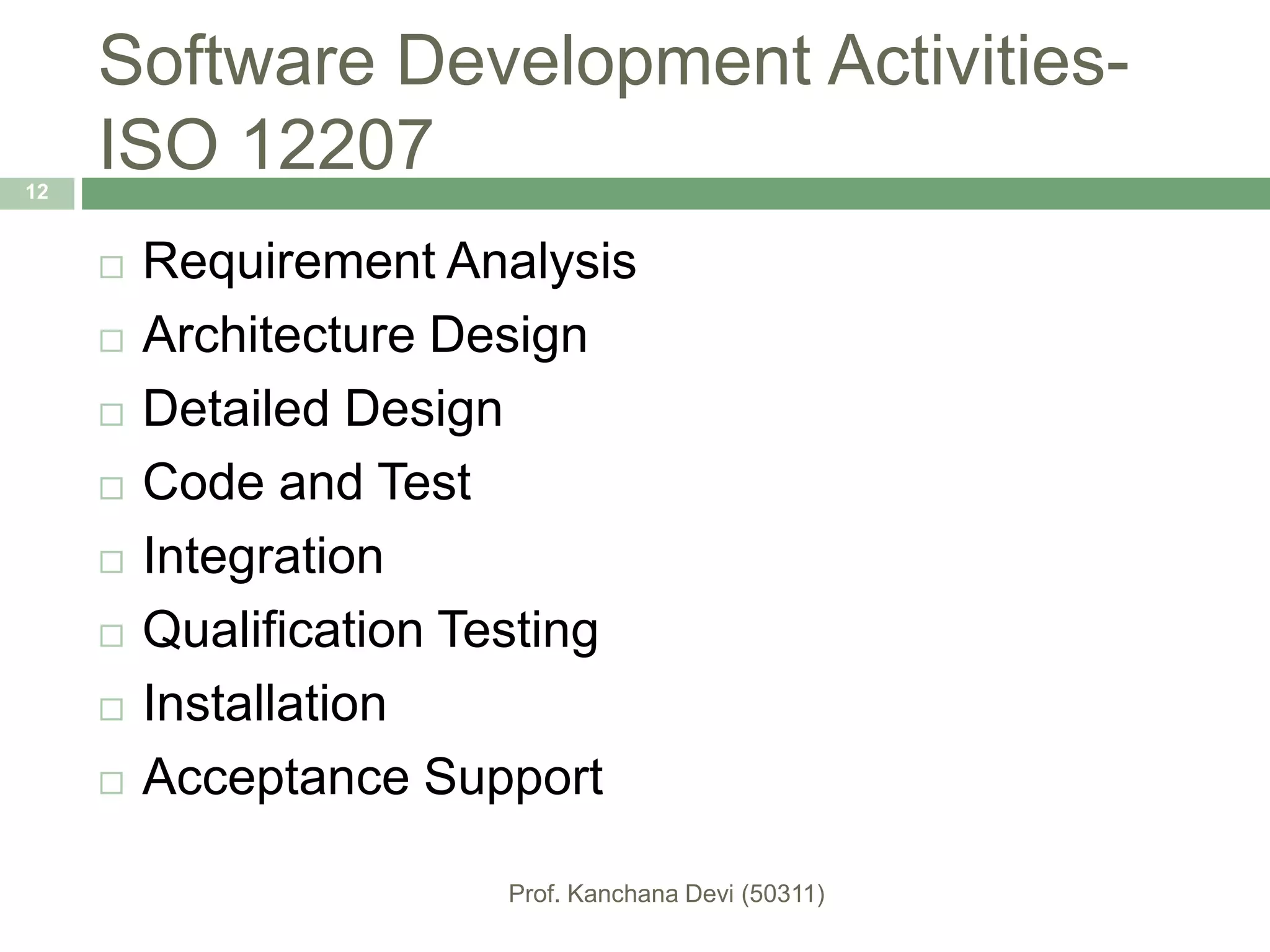
Software Development Activities-
ISO 12207
 Requirement Analysis
 Architecture Design
 Detailed Design
 Code and Test
 Integration
 Qualification Testing
 Installation
 Acceptance Support
12
Plans, Methods and Methodologies
 A plan for an activity must be based on some idea of a
method of a work.
 Analyze the requirements for the software
 Devise and write test cases
 Create test scripts
 Compare the actual results and the expected results
 A Method relates to a type of activity in general, a plan that
takes that method and converts it to real activities
 Its start and end dates
 who will carry out
 What tools and materials
 The output from one method might be the input to another.
Group of methods or techniques are often grouped into
methodologies such as object-oriented design
13
Some ways of categorizing
Software Projects
 Compulsory Versus Voluntary users
 Eg. Moodle – Games,Google
 Information systems versus embedded systems
 Eg. Stock Information – Air Conditioning Equipment
 Outsourced projects
 Giving some parts of its work to other companies
 Objective- driven development
 Identifying the need for a new software system
14
Stakeholders
 These are people who have a stake or interest
in the project.
 Stakeholders can be categorized as:
 Internal to the project team
 External to the project team but within the same
organization
 External to both the project team and the
organization
15
Setting Objectives
 Stakeholders are those who actually own the
project.
 They control the financing of the project.
 They set the objectives of the project.
 The objectives should define what the project
team must achieve for project success.
16
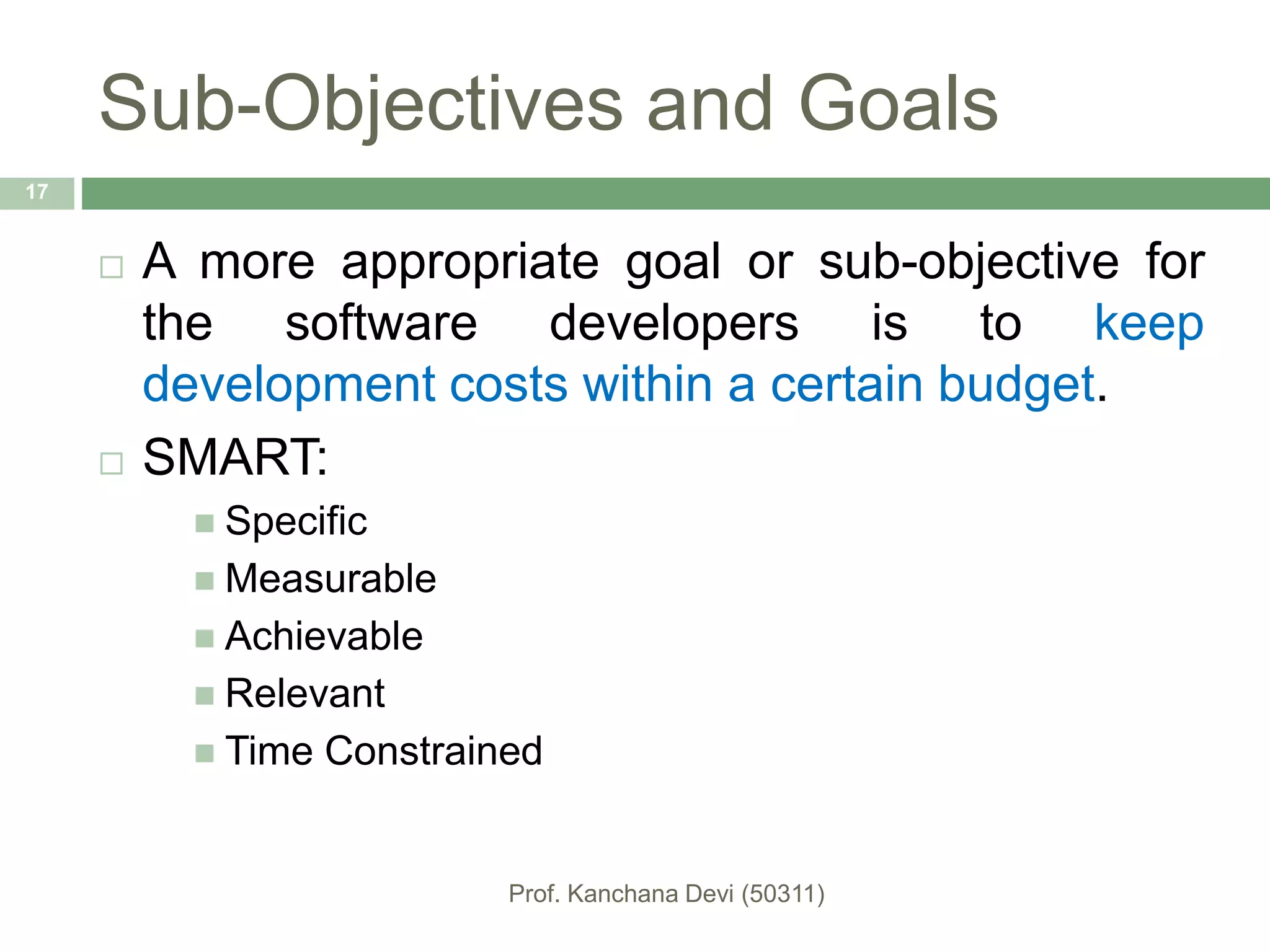
Sub-Objectives and Goals
 A more appropriate goal or sub-objective for
the software developers is to keep
development costs within a certain budget.
 SMART:
 Specific
 Measurable
 Achievable
 Relevant
 Time Constrained
17
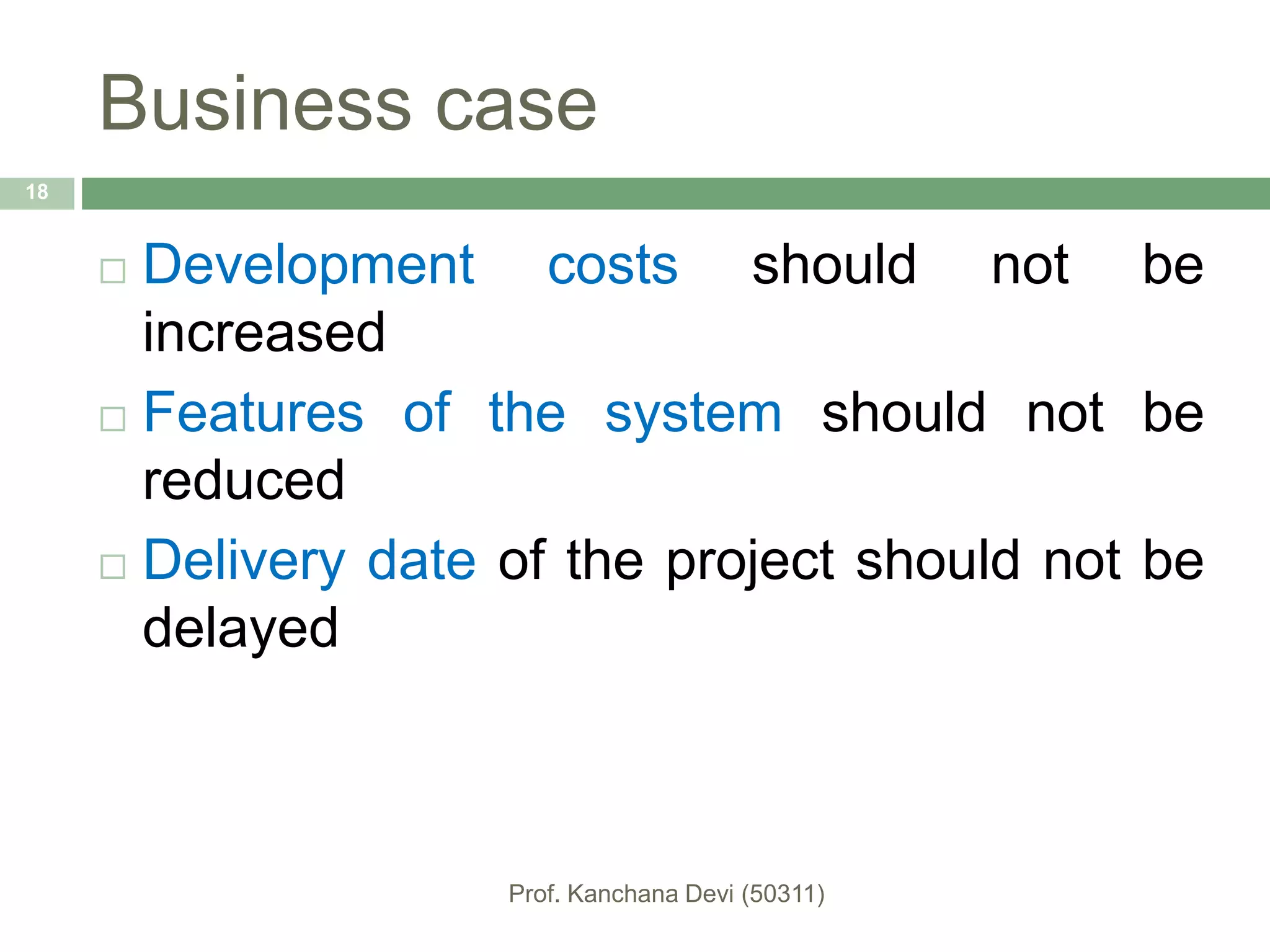
Business case
18
 Development costs should not be
increased
 Features of the system should not be
reduced
 Delivery date of the project should not be
delayed
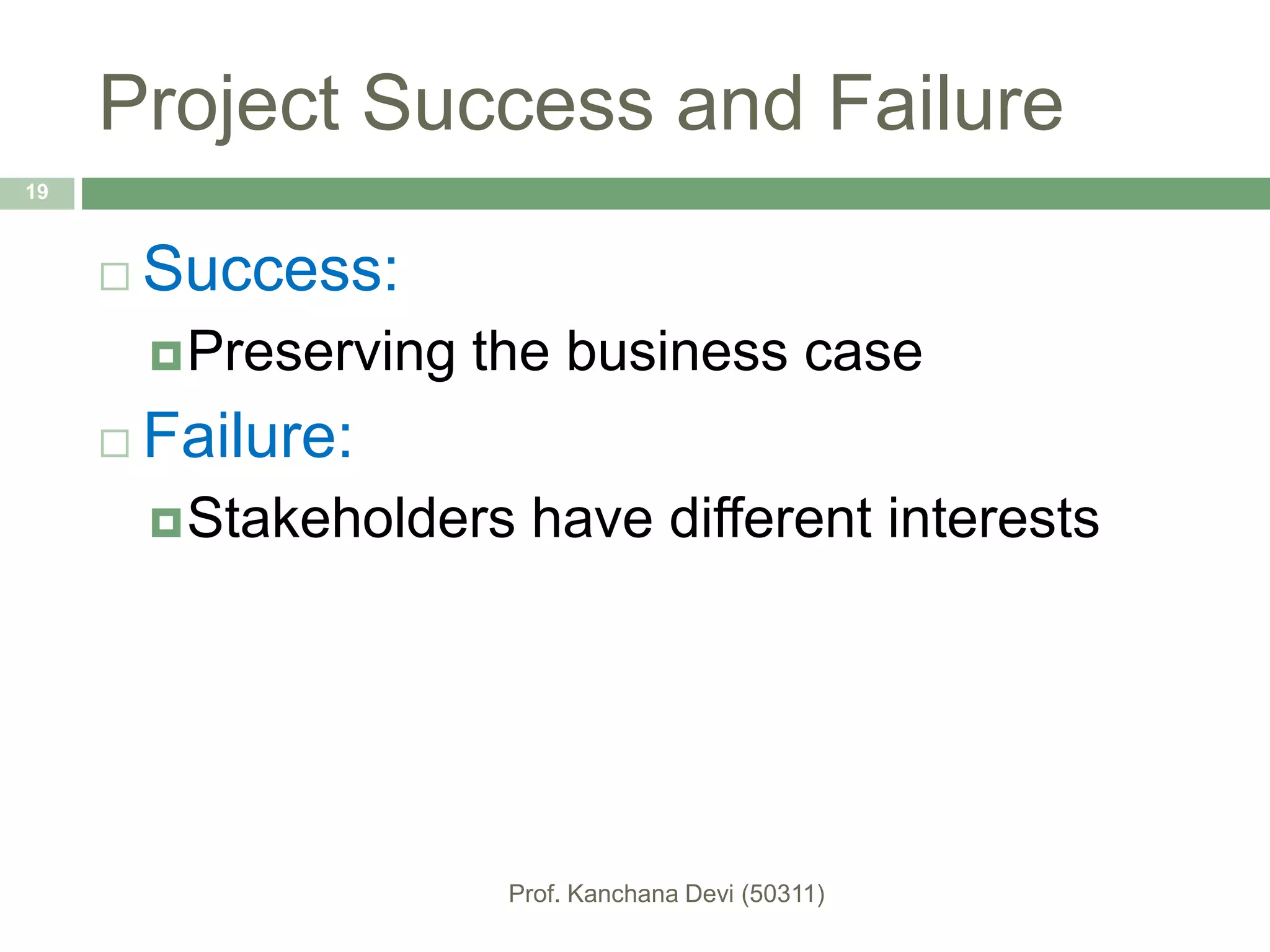
Project Success and Failure
 Success:
Preserving the business case
 Failure:
Stakeholders have different interests
19
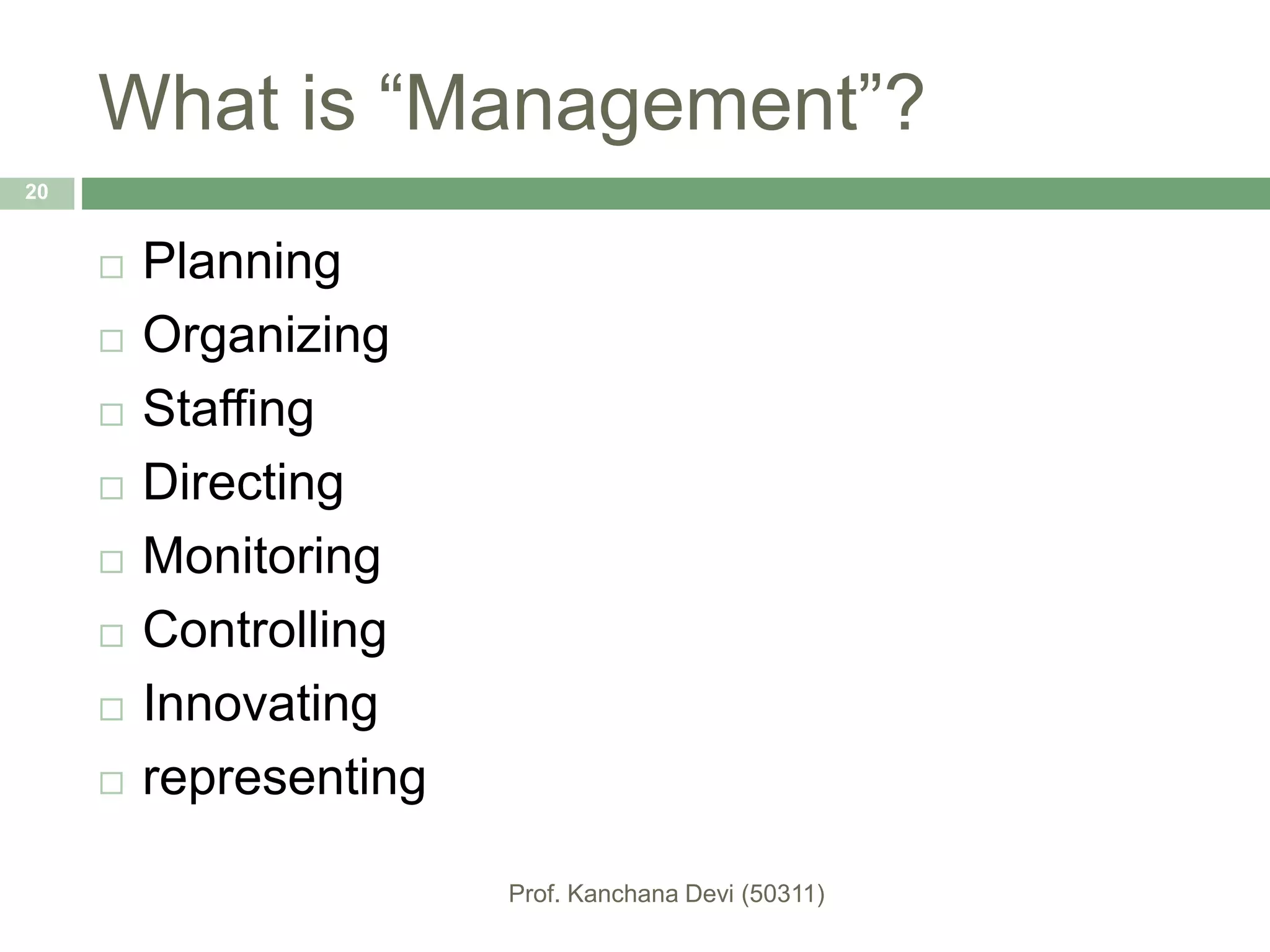
What is “Management”?
20
 Planning
 Organizing
 Staffing
 Directing
 Monitoring
 Controlling
 Innovating
 representing
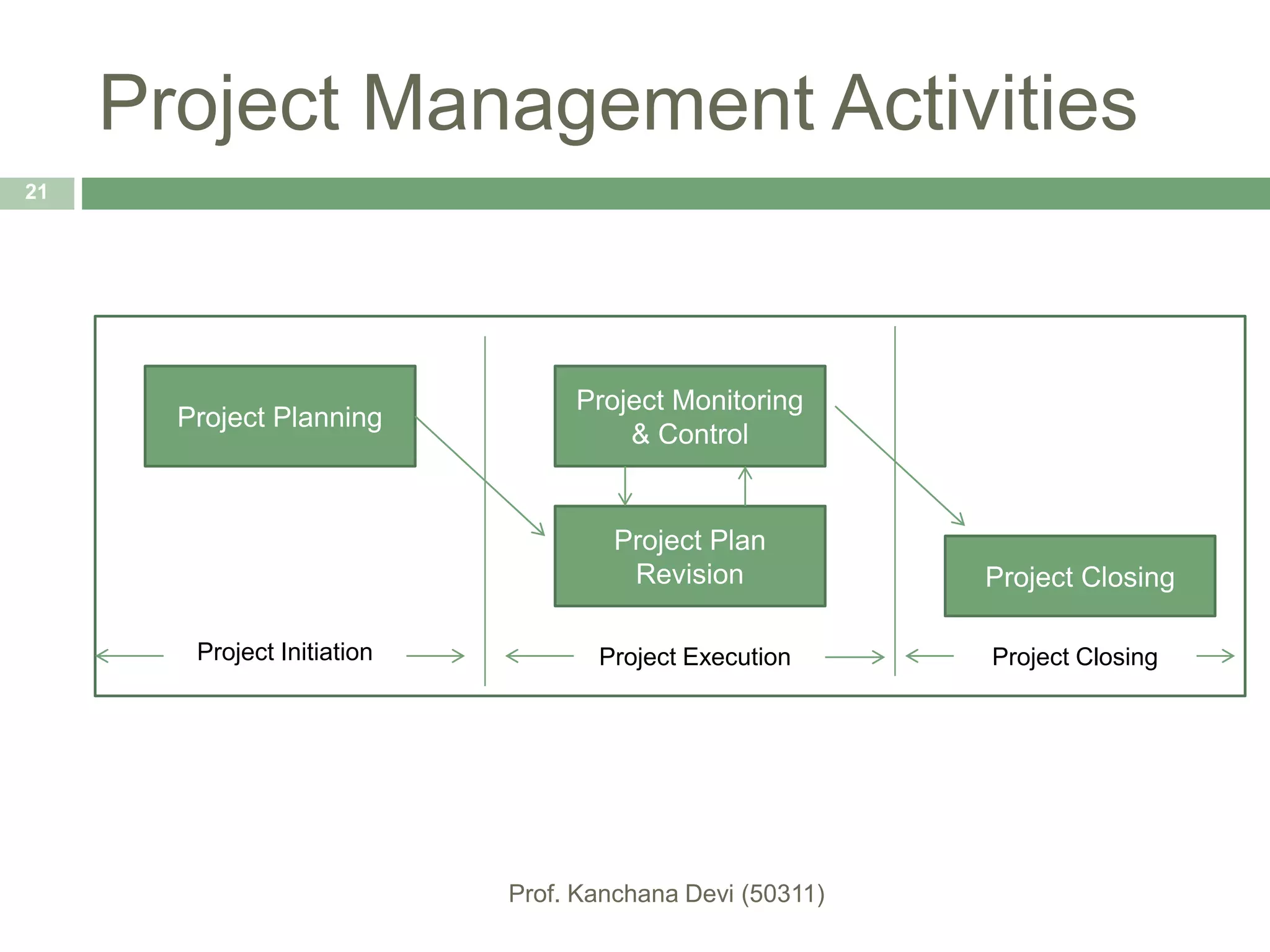
Project Management Activities
21
Project Planning
Project Monitoring
& Control
Project Plan
Revision Project Closing
Project Initiation Project ClosingProject Execution
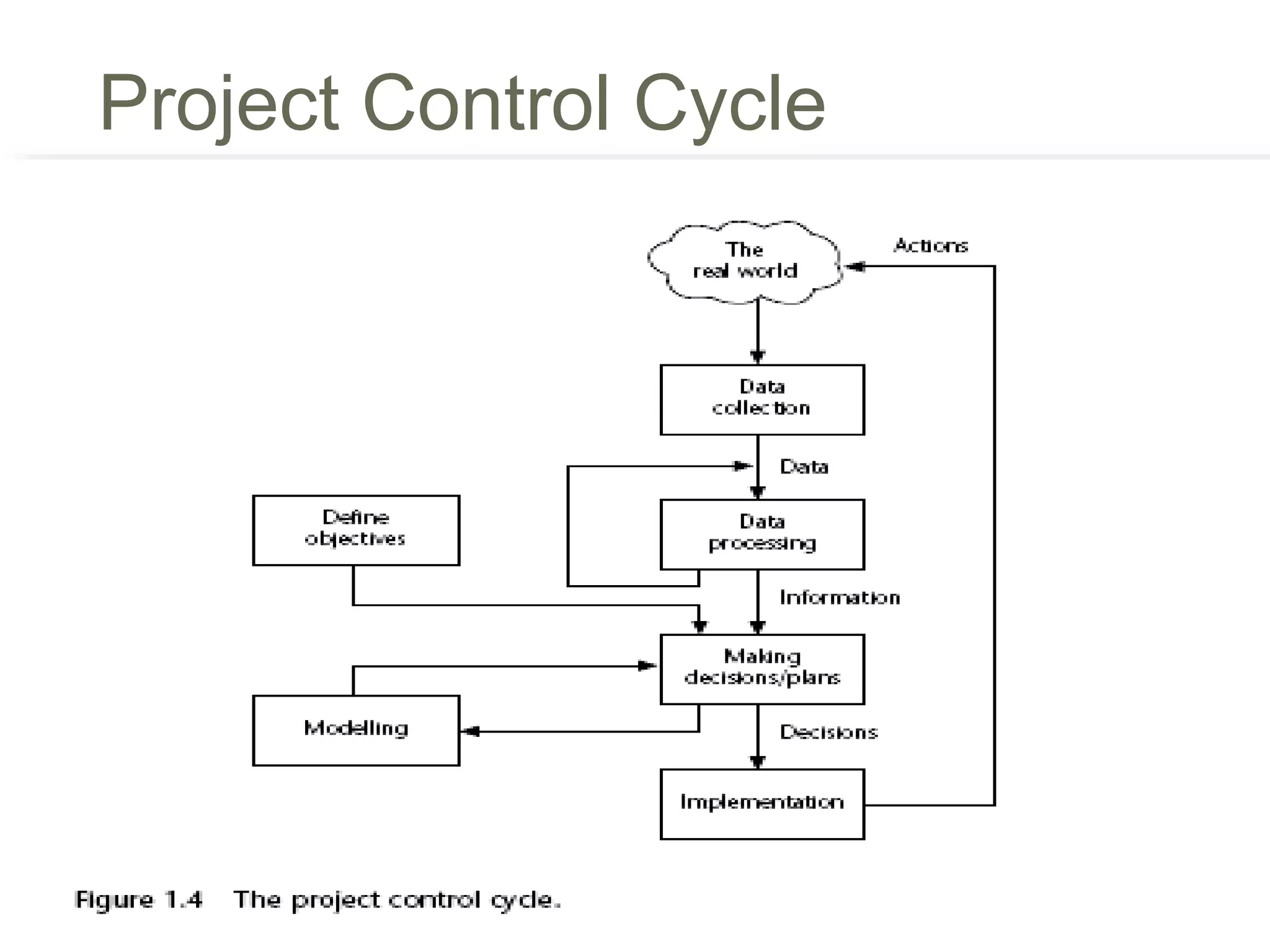
Project Control Cycle
22
Thank you!!!
23

Software project management introduction

  • 1.
  • 2.
    “Software”  Collection of“Programs”  Collection of “Instructions”  Collection of “K,V,C”  Collection of “Character Set” 2
  • 3.
    “Project”  A plannedactivity  A Specific plan or design  A planned undertaking 3
  • 4.
    “Management”  Setting objectivesfor a system and monitoring the performance of the system 4
  • 5.
    Introduction  The keyidea of “Software project Management” is Planning, Monitoring and Control of software projects  A Software project must satisfy real needs  In order to meet this needs project stakeholders and their objectives must be identified 5
  • 6.
    Importance of SPM A survey in USA, 2003 published that  82% of project were late  43% exceeded their budget  Reason is management of project  Lack of skills and proven approach to project management and risk management 6
  • 7.
    What is aProject?  A dictionary definition: “ A Planned Activity”  i. e. How to carryout a task before starting.  “Planning”: Thinking Carefully about something before doing it.  Other activities of planning are routine maintenance performed so many times, and documented – helps newcomers. 7
  • 8.
    Characteristics of projectsare:  Non-routine tasks are involved  Planning is required  Specific objectives are to be met  The project has a predetermined time span  Work is carried out in several phases  The resources are constrained  The project is large or complex. 8
  • 9.
    Software Project VSOther Projects  Fred Brooks identified some characteristics of software projects which makes it difficult are  Invisibility  Complexity  Conformity  Flexibility 9
  • 10.
    Activities of SPM FeasibilityStudy Plan Project Execution Is it worth doing? How do we do it? Do it!! 10
  • 11.
     The FeasibilityStudy:  Assesses whether a project is worth starting  Planning:  Outline plan for the whole project and a detailed one for the first stage  Project Execution:  The execution of the project often contains design and implementation sub-phases. 11
  • 12.
    Software Development Activities- ISO12207  Requirement Analysis  Architecture Design  Detailed Design  Code and Test  Integration  Qualification Testing  Installation  Acceptance Support 12
  • 13.
    Plans, Methods andMethodologies  A plan for an activity must be based on some idea of a method of a work.  Analyze the requirements for the software  Devise and write test cases  Create test scripts  Compare the actual results and the expected results  A Method relates to a type of activity in general, a plan that takes that method and converts it to real activities  Its start and end dates  who will carry out  What tools and materials  The output from one method might be the input to another. Group of methods or techniques are often grouped into methodologies such as object-oriented design 13
  • 14.
    Some ways ofcategorizing Software Projects  Compulsory Versus Voluntary users  Eg. Moodle – Games,Google  Information systems versus embedded systems  Eg. Stock Information – Air Conditioning Equipment  Outsourced projects  Giving some parts of its work to other companies  Objective- driven development  Identifying the need for a new software system 14
  • 15.
    Stakeholders  These arepeople who have a stake or interest in the project.  Stakeholders can be categorized as:  Internal to the project team  External to the project team but within the same organization  External to both the project team and the organization 15
  • 16.
    Setting Objectives  Stakeholdersare those who actually own the project.  They control the financing of the project.  They set the objectives of the project.  The objectives should define what the project team must achieve for project success. 16
  • 17.
    Sub-Objectives and Goals A more appropriate goal or sub-objective for the software developers is to keep development costs within a certain budget.  SMART:  Specific  Measurable  Achievable  Relevant  Time Constrained 17
  • 18.
    Business case 18  Developmentcosts should not be increased  Features of the system should not be reduced  Delivery date of the project should not be delayed
  • 19.
    Project Success andFailure  Success: Preserving the business case  Failure: Stakeholders have different interests 19
  • 20.
    What is “Management”? 20 Planning  Organizing  Staffing  Directing  Monitoring  Controlling  Innovating  representing
  • 21.
    Project Management Activities 21 ProjectPlanning Project Monitoring & Control Project Plan Revision Project Closing Project Initiation Project ClosingProject Execution
  • 22.
  • 23.