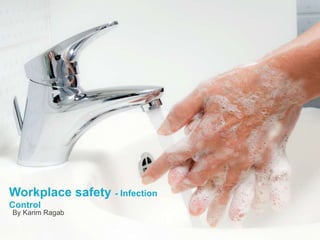
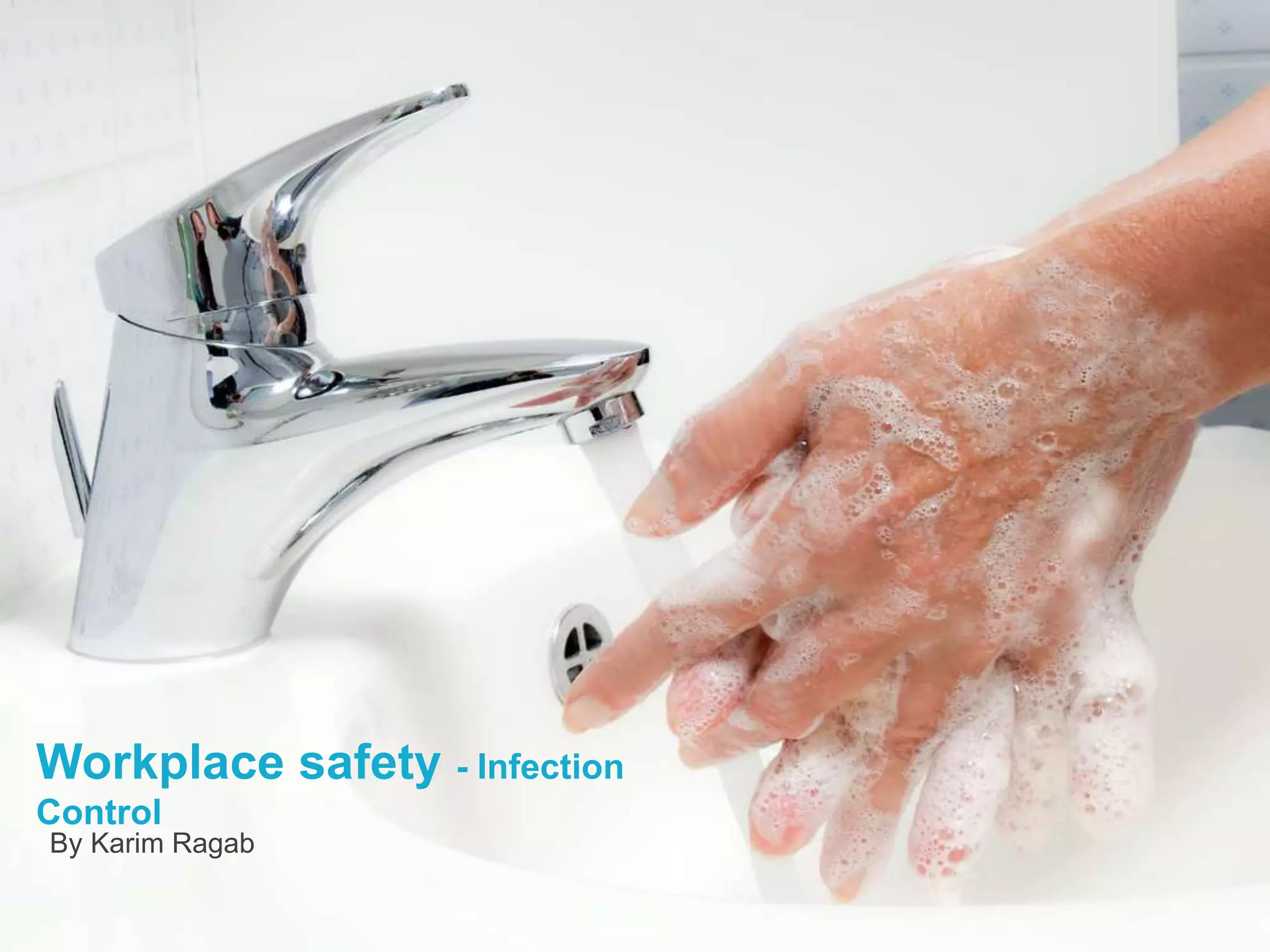
Workplace safety - Infection
Control
By Karim Ragab
Infection is caused by pathogens ('bugs') such as bacteria, viruses, protozoa
or fungi getting into or onto the body.
It can take some time before the microbes multiply enough to trigger
symptoms of illness, which means an infected person may unwittingly be
spreading the disease during this incubation period.
Infection control in the workplace aims to prevent pathogens from coming
into contact with a person in the first place.
Employers are obliged under the Occupational Health and Safety Act (2004)
to provide a safe workplace for their employees, including the provision of
adequate infection control procedures and the right equipment and training.
Summary
Source : http://www.betterhealth.vic.gov.au/bhcv2/bhcarticles.nsf/pages/Workplace_safety_-_infection_control
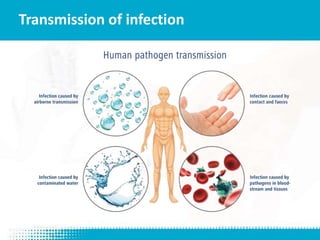
Infectious agents can be spread in a variety of ways, including:
 Airborne - coughs or sneezes release airborne pathogens, which are then
inhaled by others.
 Contaminated objects or food - the pathogens in a person's faeces may be
spread to food or other objects, if their hands are dirty.
 Skin-to-skin contact - the transfer of some pathogens can occur through
touch, or by sharing personal items, clothing or objects.
 Contact with body fluids - pathogens in saliva, urine, faeces or blood can
be passed to another person's body via cuts or abrasions, or through the
mucus membranes of the mouth and eyes
Transmission of infection
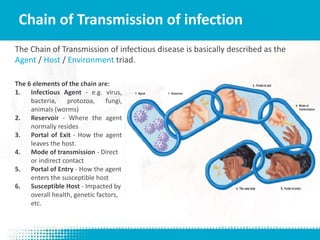
Chain of Transmission of infection
The 6 elements of the chain are:
1. Infectious Agent - e.g. virus,
bacteria, protozoa, fungi,
animals (worms)
2. Reservoir - Where the agent
normally resides
3. Portal of Exit - How the agent
leaves the host.
4. Mode of transmission - Direct
or indirect contact
5. Portal of Entry - How the agent
enters the susceptible host
6. Susceptible Host - Impacted by
overall health, genetic factors,
etc.
The Chain of Transmission of infectious disease is basically described as the
Agent / Host / Environment triad.
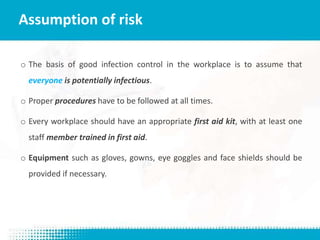
o The basis of good infection control in the workplace is to assume that
everyone is potentially infectious.
o Proper procedures have to be followed at all times.
o Every workplace should have an appropriate first aid kit, with at least one
staff member trained in first aid.
o Equipment such as gloves, gowns, eye goggles and face shields should be
provided if necessary.
Assumption of risk
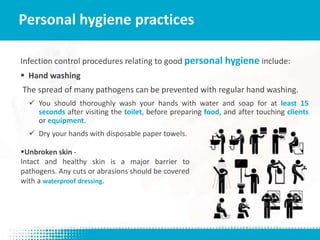
Infection control procedures relating to good personal hygiene include:
 Hand washing
The spread of many pathogens can be prevented with regular hand washing.
 You should thoroughly wash your hands with water and soap for at least 15
seconds after visiting the toilet, before preparing food, and after touching clients
or equipment.
 Dry your hands with disposable paper towels.
Personal hygiene practices
Unbroken skin -
Intact and healthy skin is a major barrier to
pathogens. Any cuts or abrasions should be covered
with a waterproof dressing.
 Gloves
Wear gloves if you are handling body fluids or equipment containing body
fluids, if you are touching someone else's broken skin or mucus membrane, or
performing any other invasive procedure.
 Wash your hands between each client and use fresh gloves for each client where
necessary.
 Personal items
Don't share towels, clothing, razors, toothbrushes, shavers or other personal
items.
Personal hygiene practices
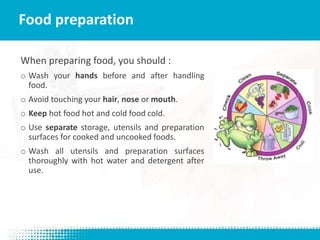
When preparing food, you should :
o Wash your hands before and after handling
food.
o Avoid touching your hair, nose or mouth.
o Keep hot food hot and cold food cold.
o Use separate storage, utensils and preparation
surfaces for cooked and uncooked foods.
o Wash all utensils and preparation surfaces
thoroughly with hot water and detergent after
use.
Food preparation
Infection control procedures relating to cleanliness in the
workplace include:
 Regularly wash the floors, bathrooms and surfaces - such as tables and
bench tops - with hot water and detergent.
 Wash - walls and ceilings periodically.
Cleanliness in the workplace
 Mops, brushes and cloths should be thoroughly
washed and dried after every use. Drying mops and
cloths is particularly important, since many
pathogens rely on moisture to thrive.
 Use disinfectants to clean up blood and other spills
of bodily fluids.
 When using disinfectants - always wear gloves,
clean the surfaces before using the disinfectant, and
always follow the manufacturer's instructions
exactly.
Examples of body fluids include blood, saliva, urine and faeces.
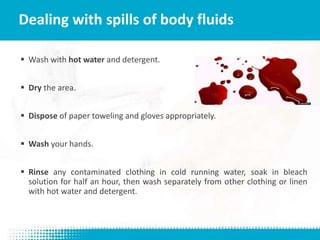
When dealing with spills of body fluids, infection control procedures
should be followed carefully. You should always:
 Isolate the area.
 Wear gloves, a plastic apron and eye protection, such as goggles.
 Soak up the fluid with disposable paper towels, or cover the spill with a
granular chlorine releasing agent for a minimum of 10 minutes. Scoop up
granules and waste using a piece of cardboard (or similar), place in a plastic
bag and dispose of appropriately.
 Mix one part bleach to 10 parts water and apply to the area for 10 minutes.
Dealing with spills of body fluids
 Wash with hot water and detergent.
 Dry the area.
 Dispose of paper toweling and gloves appropriately.
 Wash your hands.
 Rinse any contaminated clothing in cold running water, soak in bleach
solution for half an hour, then wash separately from other clothing or linen
with hot water and detergent.
Dealing with spills of body fluids
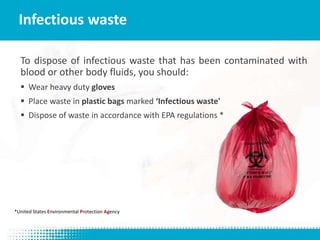
To dispose of infectious waste that has been contaminated with
blood or other body fluids, you should:
 Wear heavy duty gloves
 Place waste in plastic bags marked ‘Infectious waste'
 Dispose of waste in accordance with EPA regulations *
Infectious waste
*United States Environmental Protection Agency
If you come in contact with blood or body fluids, you should:
 Flush the area with running water.
 Wash the area with plenty of warm water and soap.
 Report the incident to the appropriate staff member.
 Record the incident via the Disease/injury/near miss/accident (DINMA)
reporting procedure.
 Seek medical advice.
Employers and occupational health and safety representatives
should investigate all incidents involving contact with blood or
body fluids, and take action to prevent a similar incident from
happening again.
Occupational exposure
 Infection control in the workplace aims to prevent pathogens
being passed from one person to another.
 The foundation of good infection control is to assume that
everyone is potentially infectious.
 Basic infection control procedures include hand washing and
keeping the workplace clean.
Things to remember
Thank You

Workplace safety infection control

  • 1.
    Workplace safety -Infection Control By Karim Ragab
  • 2.
    Infection is causedby pathogens ('bugs') such as bacteria, viruses, protozoa or fungi getting into or onto the body. It can take some time before the microbes multiply enough to trigger symptoms of illness, which means an infected person may unwittingly be spreading the disease during this incubation period. Infection control in the workplace aims to prevent pathogens from coming into contact with a person in the first place. Employers are obliged under the Occupational Health and Safety Act (2004) to provide a safe workplace for their employees, including the provision of adequate infection control procedures and the right equipment and training. Summary Source : http://www.betterhealth.vic.gov.au/bhcv2/bhcarticles.nsf/pages/Workplace_safety_-_infection_control
  • 3.
    Infectious agents canbe spread in a variety of ways, including:  Airborne - coughs or sneezes release airborne pathogens, which are then inhaled by others.  Contaminated objects or food - the pathogens in a person's faeces may be spread to food or other objects, if their hands are dirty.  Skin-to-skin contact - the transfer of some pathogens can occur through touch, or by sharing personal items, clothing or objects.  Contact with body fluids - pathogens in saliva, urine, faeces or blood can be passed to another person's body via cuts or abrasions, or through the mucus membranes of the mouth and eyes Transmission of infection
  • 4.
  • 5.
    Chain of Transmissionof infection The 6 elements of the chain are: 1. Infectious Agent - e.g. virus, bacteria, protozoa, fungi, animals (worms) 2. Reservoir - Where the agent normally resides 3. Portal of Exit - How the agent leaves the host. 4. Mode of transmission - Direct or indirect contact 5. Portal of Entry - How the agent enters the susceptible host 6. Susceptible Host - Impacted by overall health, genetic factors, etc. The Chain of Transmission of infectious disease is basically described as the Agent / Host / Environment triad.
  • 6.
    o The basisof good infection control in the workplace is to assume that everyone is potentially infectious. o Proper procedures have to be followed at all times. o Every workplace should have an appropriate first aid kit, with at least one staff member trained in first aid. o Equipment such as gloves, gowns, eye goggles and face shields should be provided if necessary. Assumption of risk
  • 7.
    Infection control proceduresrelating to good personal hygiene include:  Hand washing The spread of many pathogens can be prevented with regular hand washing.  You should thoroughly wash your hands with water and soap for at least 15 seconds after visiting the toilet, before preparing food, and after touching clients or equipment.  Dry your hands with disposable paper towels. Personal hygiene practices Unbroken skin - Intact and healthy skin is a major barrier to pathogens. Any cuts or abrasions should be covered with a waterproof dressing.
  • 8.
     Gloves Wear glovesif you are handling body fluids or equipment containing body fluids, if you are touching someone else's broken skin or mucus membrane, or performing any other invasive procedure.  Wash your hands between each client and use fresh gloves for each client where necessary.  Personal items Don't share towels, clothing, razors, toothbrushes, shavers or other personal items. Personal hygiene practices
  • 9.
    When preparing food,you should : o Wash your hands before and after handling food. o Avoid touching your hair, nose or mouth. o Keep hot food hot and cold food cold. o Use separate storage, utensils and preparation surfaces for cooked and uncooked foods. o Wash all utensils and preparation surfaces thoroughly with hot water and detergent after use. Food preparation
  • 10.
    Infection control proceduresrelating to cleanliness in the workplace include:  Regularly wash the floors, bathrooms and surfaces - such as tables and bench tops - with hot water and detergent.  Wash - walls and ceilings periodically. Cleanliness in the workplace  Mops, brushes and cloths should be thoroughly washed and dried after every use. Drying mops and cloths is particularly important, since many pathogens rely on moisture to thrive.  Use disinfectants to clean up blood and other spills of bodily fluids.  When using disinfectants - always wear gloves, clean the surfaces before using the disinfectant, and always follow the manufacturer's instructions exactly.
  • 11.
    Examples of bodyfluids include blood, saliva, urine and faeces. When dealing with spills of body fluids, infection control procedures should be followed carefully. You should always:  Isolate the area.  Wear gloves, a plastic apron and eye protection, such as goggles.  Soak up the fluid with disposable paper towels, or cover the spill with a granular chlorine releasing agent for a minimum of 10 minutes. Scoop up granules and waste using a piece of cardboard (or similar), place in a plastic bag and dispose of appropriately.  Mix one part bleach to 10 parts water and apply to the area for 10 minutes. Dealing with spills of body fluids
  • 12.
     Wash withhot water and detergent.  Dry the area.  Dispose of paper toweling and gloves appropriately.  Wash your hands.  Rinse any contaminated clothing in cold running water, soak in bleach solution for half an hour, then wash separately from other clothing or linen with hot water and detergent. Dealing with spills of body fluids
  • 13.
    To dispose ofinfectious waste that has been contaminated with blood or other body fluids, you should:  Wear heavy duty gloves  Place waste in plastic bags marked ‘Infectious waste'  Dispose of waste in accordance with EPA regulations * Infectious waste *United States Environmental Protection Agency
  • 14.
    If you comein contact with blood or body fluids, you should:  Flush the area with running water.  Wash the area with plenty of warm water and soap.  Report the incident to the appropriate staff member.  Record the incident via the Disease/injury/near miss/accident (DINMA) reporting procedure.  Seek medical advice. Employers and occupational health and safety representatives should investigate all incidents involving contact with blood or body fluids, and take action to prevent a similar incident from happening again. Occupational exposure
  • 15.
     Infection controlin the workplace aims to prevent pathogens being passed from one person to another.  The foundation of good infection control is to assume that everyone is potentially infectious.  Basic infection control procedures include hand washing and keeping the workplace clean. Things to remember
  • 16.