S
Types of Type
Unit 39 Typefaces & Letter Forms
Learning outcomes
S On completion of this unit a learner should:
S Understand historical and contemporary developments of
typefaces and letter forms
S Know how typeface styles and letter forms communicate a
message
S Know correct terminology for typefaces and letter forms
S Be able to create design work that explores typefaces and
letter forms.
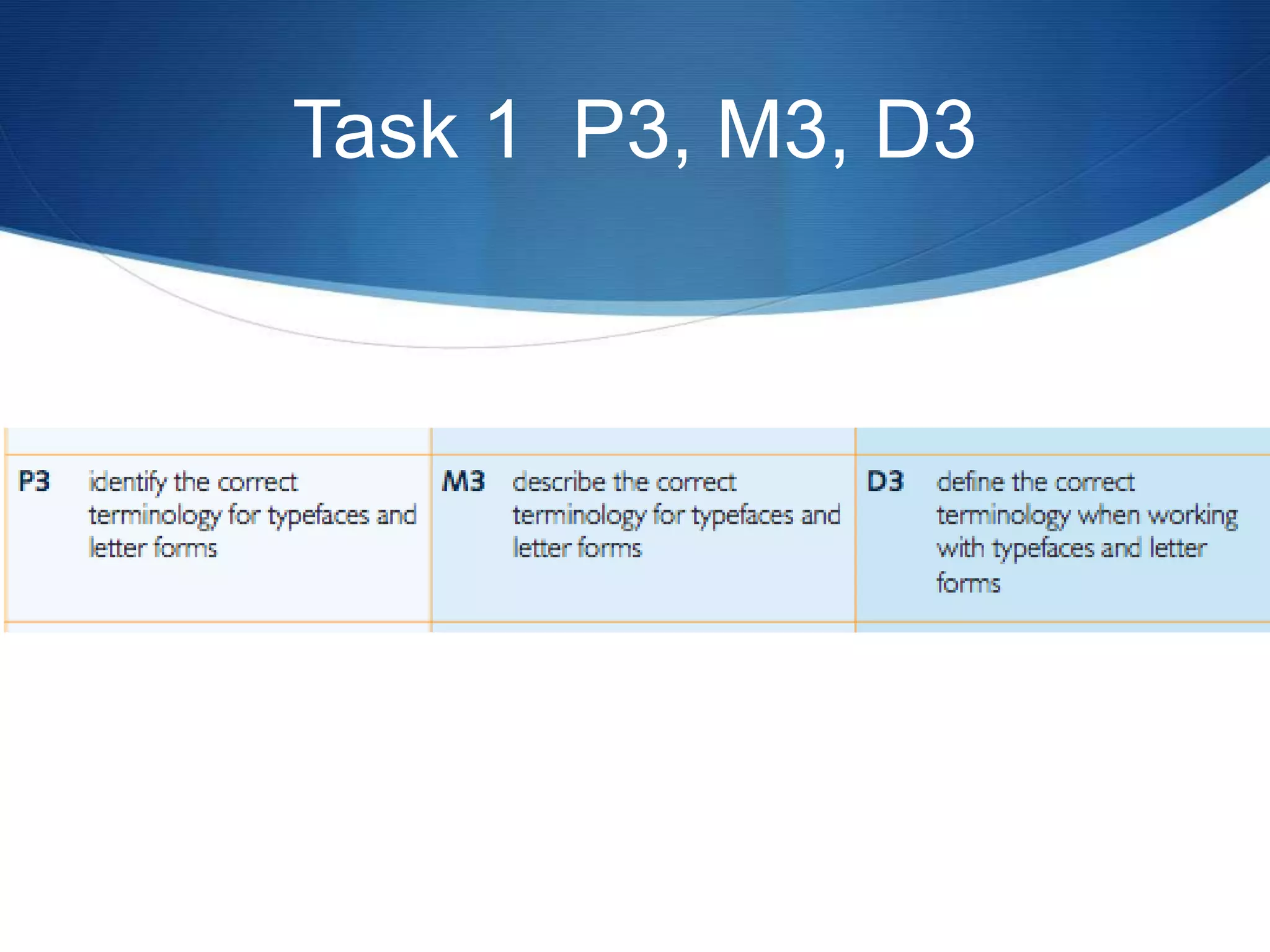
Task 1 P3, M3, D3
Describe the different types of type….
Include examples both of different
types and find an example when it is
used on a book cover….
Serif
S Serif is a type classification which is evident by the short lines
attached to the end of the stroke in a letter. Typography
sources often calls this type as ‘Roman’, due to the fact that the
origin of serif comes from inscription all writing carved into
stone during the Roman period. The short lines are not added
decoration – they were created to neaten the ends of the lines
as the letters were chiseled into stone.
S Some examples of serif-type fonts are: Georgia, Baskerville,
and Times New Roman. These fonts appear as easily
readable, yet elegant. Serif-type fonts are mainly seen in books
(including e-book readers), newspaper columns, and
magazines.
Sans Serif
S Sans Serif, also known as ‘Gothic’, is the opposite of serif – it is
a type classification which does not have the short line on the
end of the stroke in a letter. The term comes from the French
word ‘sans’, meaning ‘without’. This type of font originates from
as early as 5 B.C., which can be found in Greek and Latin
inscriptions.
S Some examples of sans serif-type fonts are: Arial, Helvetica,
and Verdana. Sans serif-type fonts are used for the display of
text on computer screens as lower resolution displays are able
to clearly show the text whereas serif-type fonts may disappear.
It is also used for newspaper headlines due to its typical
blacker colour, and are seldom used in body text.
Decorative
S Decorative type, also known as ‘Display’ or ‘Ornamental’, is a
type classification which is identified by its decorative style and
use of ornaments. These type fonts became popular in the 19th
Century during the Victorian era, as well as the time during the
Art Noveau movement. Evident by its name, decorative-type
fonts should only be used for decorative purposes and should
not be used for body text.
S Some examples of decorative-type fonts are: Party LET,
Broadway, and Jokerman. This type classification is used in
many advertisements and posters due to its eye-catching and
artistic designs.
Script
S Script typefaces are based on handwriting, particularly
the cursive style. The fonts of this type classification are
based on the letterforms of 17th and 18th century writing
masters such as George Shelley and George Bickham.
These typefaces began appearing in the 19th century
which were used for formal matters such as invitations
and diplomas as the fonts presented an elegant and
elevated look.
S Some examples of script-type fonts are: Zapfino, Bradley
Hand, and Snell Roundhand.
Task 2
Book Cover Research
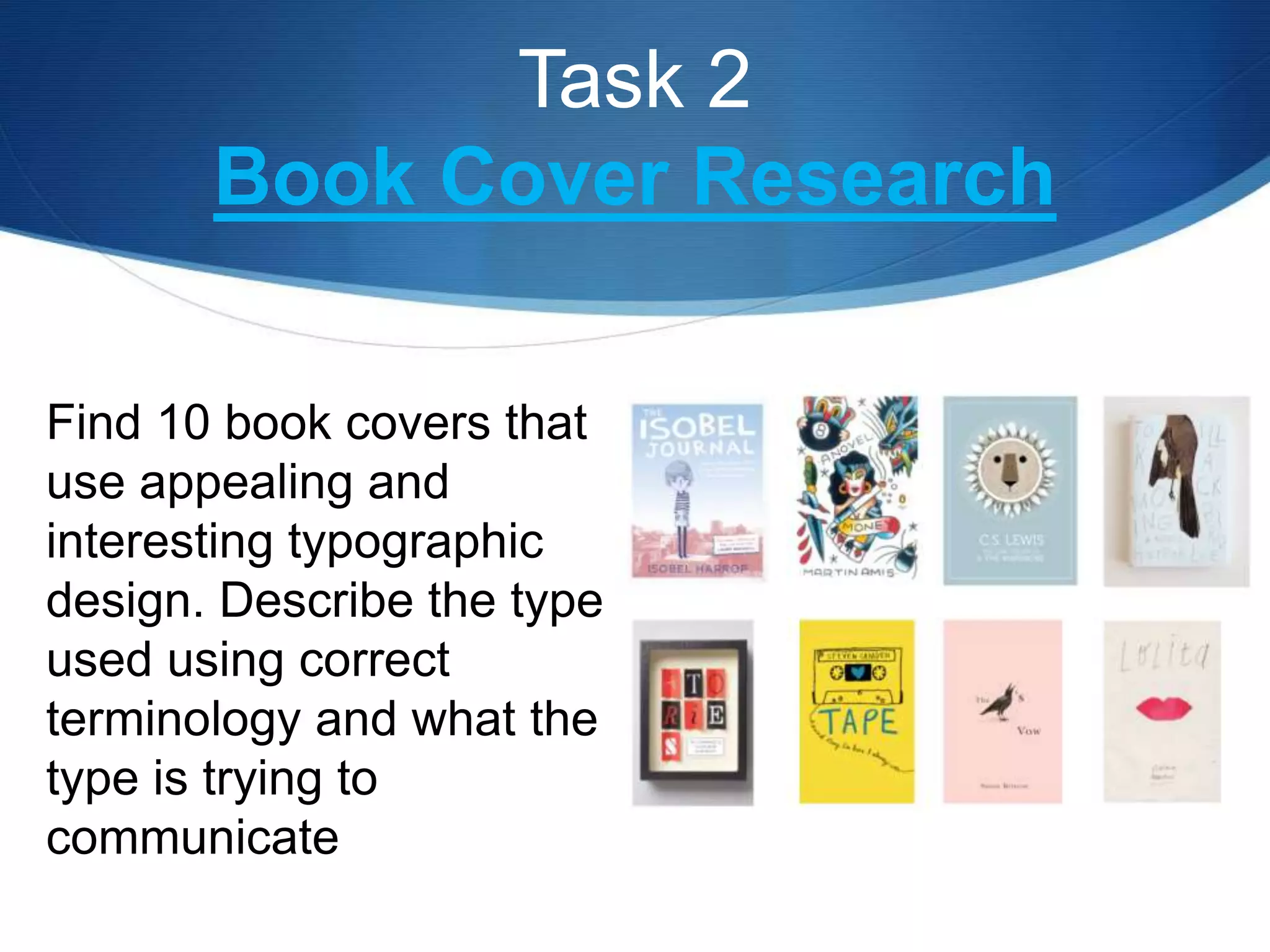
Find 10 book covers that
use appealing and
interesting typographic
design. Describe the type
used using correct
terminology and what the
type is trying to
communicate
Task 3
Choose your favorite book
or one you studies at
school – you need to know
the story.
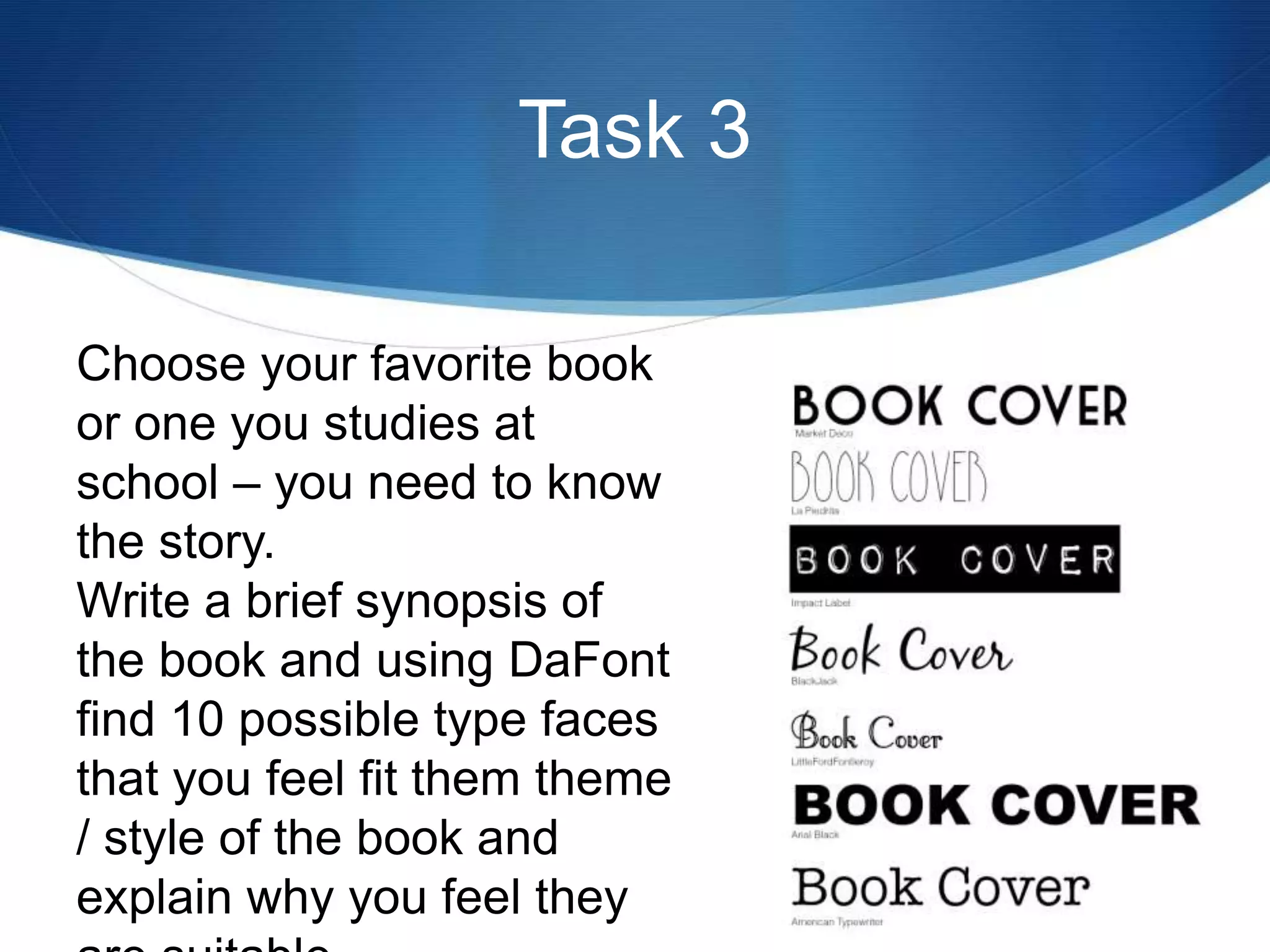
Write a brief synopsis of
the book and using DaFont
find 10 possible type faces
that you feel fit them theme
/ style of the book and
explain why you feel they
Choose your favourite 3 song lyrics and
produce a typographic design using
illustrator
Type faces
Type faces

Type faces

  • 1.
    S Types of Type Unit39 Typefaces & Letter Forms
  • 2.
    Learning outcomes S Oncompletion of this unit a learner should: S Understand historical and contemporary developments of typefaces and letter forms S Know how typeface styles and letter forms communicate a message S Know correct terminology for typefaces and letter forms S Be able to create design work that explores typefaces and letter forms.
  • 3.
    Task 1 P3,M3, D3
  • 4.
    Describe the differenttypes of type…. Include examples both of different types and find an example when it is used on a book cover….
  • 6.
    Serif S Serif isa type classification which is evident by the short lines attached to the end of the stroke in a letter. Typography sources often calls this type as ‘Roman’, due to the fact that the origin of serif comes from inscription all writing carved into stone during the Roman period. The short lines are not added decoration – they were created to neaten the ends of the lines as the letters were chiseled into stone. S Some examples of serif-type fonts are: Georgia, Baskerville, and Times New Roman. These fonts appear as easily readable, yet elegant. Serif-type fonts are mainly seen in books (including e-book readers), newspaper columns, and magazines.
  • 7.
    Sans Serif S SansSerif, also known as ‘Gothic’, is the opposite of serif – it is a type classification which does not have the short line on the end of the stroke in a letter. The term comes from the French word ‘sans’, meaning ‘without’. This type of font originates from as early as 5 B.C., which can be found in Greek and Latin inscriptions. S Some examples of sans serif-type fonts are: Arial, Helvetica, and Verdana. Sans serif-type fonts are used for the display of text on computer screens as lower resolution displays are able to clearly show the text whereas serif-type fonts may disappear. It is also used for newspaper headlines due to its typical blacker colour, and are seldom used in body text.
  • 8.
    Decorative S Decorative type,also known as ‘Display’ or ‘Ornamental’, is a type classification which is identified by its decorative style and use of ornaments. These type fonts became popular in the 19th Century during the Victorian era, as well as the time during the Art Noveau movement. Evident by its name, decorative-type fonts should only be used for decorative purposes and should not be used for body text. S Some examples of decorative-type fonts are: Party LET, Broadway, and Jokerman. This type classification is used in many advertisements and posters due to its eye-catching and artistic designs.
  • 9.
    Script S Script typefacesare based on handwriting, particularly the cursive style. The fonts of this type classification are based on the letterforms of 17th and 18th century writing masters such as George Shelley and George Bickham. These typefaces began appearing in the 19th century which were used for formal matters such as invitations and diplomas as the fonts presented an elegant and elevated look. S Some examples of script-type fonts are: Zapfino, Bradley Hand, and Snell Roundhand.
  • 10.
    Task 2 Book CoverResearch Find 10 book covers that use appealing and interesting typographic design. Describe the type used using correct terminology and what the type is trying to communicate
  • 12.
    Task 3 Choose yourfavorite book or one you studies at school – you need to know the story. Write a brief synopsis of the book and using DaFont find 10 possible type faces that you feel fit them theme / style of the book and explain why you feel they
  • 13.
    Choose your favourite3 song lyrics and produce a typographic design using illustrator