MOTION MEDIA AND INFORMATION (PT.1)
LEARNERS WILL BE ABLE TO:
• Describe the different dimension of
motion information media (MIL11/12MIM-
IVef15)
• Define Motion Media and Information
• Explain the Basic steps involved in
producing motion media
LEARNERS WILL BE ABLE TO:
• Classify motion media according to
their format, purpose, methods, types,
sources and audinces.
• Comprehend How motion media and
information is/are formally and
informally produced, organized and
diseeminated (MIL11/12MIM-IVef16)
LEARNERS WILL BE ABLE TO:
• Evaluate the reliability/effectiveness and
validity/appropriateness of motion
media and information (MIL11/12MIM-
IVef17)
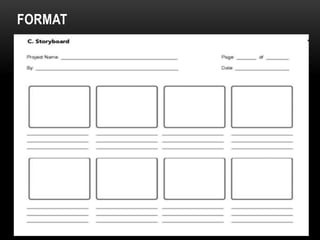
• Design a story board for motion media
and information
TOPIC OUTLINE:
I. Motion media and information
a. Definition: MOTION MEDIA
Production of motion media
Flipbook
Classification, format, purpose, methods,
types and source
b. Activity: Mini Project dscrpt:
Script and Story Board
VIDEO PRESENTATION
Capture Motion Media - Video
Production _ Script
Writing _ Consulting
Retrieve:youtube.com
VIDEO PRESENTATION:
• Care to Click Infographic Animation
(Motion Graphics)
Retrieve:youtube.com
VIDEO PRESENTATION
•Paper Motion Animation
Retrieved: youtube.com
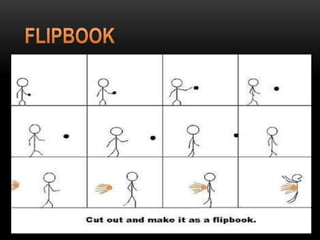
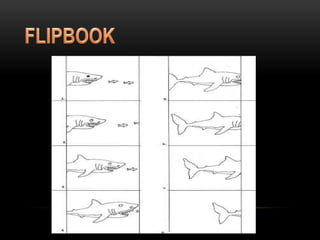
• Created by drawing a picture a
picture on each page of a pad
paper
FLIPBOOK
The Gold Winning Flip (book) with
Simone Biles (2016 Olympics)
Retrieved.via: youtube.com
• Create your own version of flipbook
• Present the ff output
• A visual media that gives the
appearance of a movement
• Can be a collection of videos,
footage, videos. It is combined with
audio, text and/or interactive
content to create a multimedia
• Motion is created by rendering or
showing consecutively several frames
per seconds.
• SERIES of graphics or images follow a
story a sequence to create a story, often
called storyboard w/c shows a set of
components (audio,visual, videos etc)
changing time to create a story or
message.
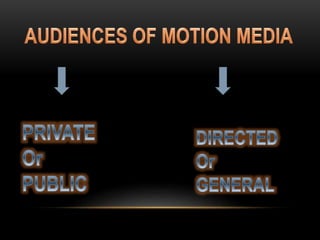
1.Informal – created by individuals
often for personal use.
2.Formal – created by professional
who follows industry standards
in creating, editing and
producing motion in media
• Writing a Story
• Script is written and dialogue is
recorded
• Animators sketch major scenes; in
betweeners fill in the gaps
• Background music and background
details are added
• Drawings are rendered
ANIMATION
• Animated GIF (Graphic
Interchange Format)
• Flash
• Shockwave
• Dynamic HTML
VIDEO FORMAT/CODECS
• MP4
• DivX
• MPG
• 3gp
• AVI
• MKV
•Education
•Entertainment
•Advertising
•Personal
•Social Media
•Media Companies
FORMATIVE ASSESSMENT
1.What are the best 3 motion media
that you have seen?
2.What makes these motion media
memorable?
• Validity of information – is it
peer reviwed or verifiable?
• Source – primary or
secondaary? Does the video
capture the actual event or does
it simple present information
learned about an event?
• Relationship of the author to the
event- does he have firsthand
knowledge
• Smoothness of video
Often detected when movement
are not smooth; when action
positioned to jump from one
position to another, as if some
action was missing.
• Lightning coverage matches
One way to detect matches is to
look at the shadows; the source of
light determines the size and
direction of the shadows.
• Scale and size consistent
Scales refers to how the size of
objects in reference to one another are
near the real thing. If the picture is
reduced or enlarge by a certain percent
then all of the objects should be resized
by that percent. Objects that are far away
are usually smaller than objects that are
nearer.
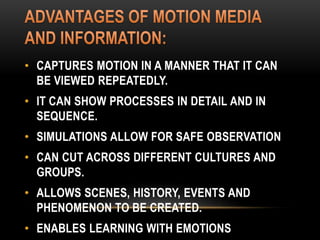
• CAPTURES MOTION IN A MANNER THAT IT CAN
BE VIEWED REPEATEDLY.
• IT CAN SHOW PROCESSES IN DETAIL AND IN
SEQUENCE.
• SIMULATIONS ALLOW FOR SAFE OBSERVATION
• CAN CUT ACROSS DIFFERENT CULTURES AND
GROUPS.
• ALLOWS SCENES, HISTORY, EVENTS AND
PHENOMENON TO BE CREATED.
• ENABLES LEARNING WITH EMOTIONS
• Viewers cannot interrupt the
presentation
• Often time more costly than other
forms of visual media
• Other data may be presented best
using still images.
(graph/diagram/maps)
• It is subject to misinterpretation
PERFORMANCE TASK:
Project: Short Film
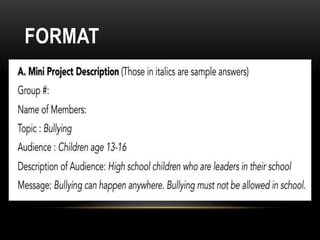
Mini Project Description;Story Concept and
Storyboard
CLASS ACTIVITY
• Groupings
• Choose motion media and evaluate it
using Media and information Design
Framework
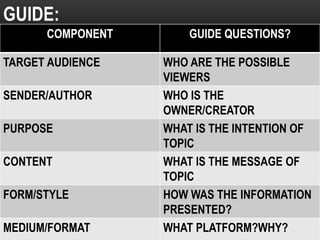
COMPONENT GUIDE QUESTIONS?
TARGET AUDIENCE WHO ARE THE POSSIBLE
VIEWERS
SENDER/AUTHOR WHO IS THE
OWNER/CREATOR
PURPOSE WHAT IS THE INTENTION OF
TOPIC
CONTENT WHAT IS THE MESSAGE OF
TOPIC
FORM/STYLE HOW WAS THE INFORMATION
PRESENTED?
MEDIUM/FORMAT WHAT PLATFORM?WHY?
GUIDE:
CLASS ACTIVITY
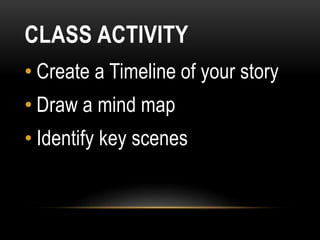
• Create a Timeline of your story
• Draw a mind map
• Identify key scenes
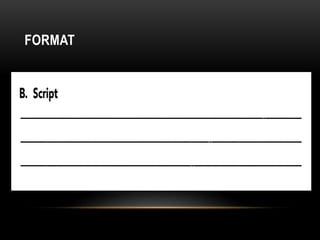
FORMAT
FORMAT
FORMAT
RUBRICS
REFERENCES
• Media and information literacy TG for Senior High School
• Videos retrieved via: www.youtube.com
• Images: www.google.com
Motor o Ako?
Ang Bago o ang Dati?
Mahal ko o Mahal Ako?
Pamilya o Bisyo?

MOTION MEDIA AND INFORMATION Presentation2024.pptx

  • 1.
    MOTION MEDIA ANDINFORMATION (PT.1)
  • 2.
    LEARNERS WILL BEABLE TO: • Describe the different dimension of motion information media (MIL11/12MIM- IVef15) • Define Motion Media and Information • Explain the Basic steps involved in producing motion media
  • 3.
    LEARNERS WILL BEABLE TO: • Classify motion media according to their format, purpose, methods, types, sources and audinces. • Comprehend How motion media and information is/are formally and informally produced, organized and diseeminated (MIL11/12MIM-IVef16)
  • 4.
    LEARNERS WILL BEABLE TO: • Evaluate the reliability/effectiveness and validity/appropriateness of motion media and information (MIL11/12MIM- IVef17) • Design a story board for motion media and information
  • 5.
    TOPIC OUTLINE: I. Motionmedia and information a. Definition: MOTION MEDIA Production of motion media Flipbook Classification, format, purpose, methods, types and source b. Activity: Mini Project dscrpt: Script and Story Board
  • 6.
    VIDEO PRESENTATION Capture MotionMedia - Video Production _ Script Writing _ Consulting Retrieve:youtube.com
  • 7.
    VIDEO PRESENTATION: • Careto Click Infographic Animation (Motion Graphics) Retrieve:youtube.com
  • 8.
    VIDEO PRESENTATION •Paper MotionAnimation Retrieved: youtube.com
  • 9.
    • Created bydrawing a picture a picture on each page of a pad paper
  • 12.
    FLIPBOOK The Gold WinningFlip (book) with Simone Biles (2016 Olympics) Retrieved.via: youtube.com
  • 13.
    • Create yourown version of flipbook • Present the ff output
  • 14.
    • A visualmedia that gives the appearance of a movement • Can be a collection of videos, footage, videos. It is combined with audio, text and/or interactive content to create a multimedia
  • 15.
    • Motion iscreated by rendering or showing consecutively several frames per seconds. • SERIES of graphics or images follow a story a sequence to create a story, often called storyboard w/c shows a set of components (audio,visual, videos etc) changing time to create a story or message.
  • 16.
    1.Informal – createdby individuals often for personal use. 2.Formal – created by professional who follows industry standards in creating, editing and producing motion in media
  • 17.
    • Writing aStory • Script is written and dialogue is recorded • Animators sketch major scenes; in betweeners fill in the gaps • Background music and background details are added • Drawings are rendered
  • 18.
    ANIMATION • Animated GIF(Graphic Interchange Format) • Flash • Shockwave • Dynamic HTML
  • 19.
    VIDEO FORMAT/CODECS • MP4 •DivX • MPG • 3gp • AVI • MKV
  • 20.
  • 21.
  • 23.
    FORMATIVE ASSESSMENT 1.What arethe best 3 motion media that you have seen? 2.What makes these motion media memorable?
  • 24.
    • Validity ofinformation – is it peer reviwed or verifiable?
  • 25.
    • Source –primary or secondaary? Does the video capture the actual event or does it simple present information learned about an event?
  • 26.
    • Relationship ofthe author to the event- does he have firsthand knowledge
  • 27.
    • Smoothness ofvideo Often detected when movement are not smooth; when action positioned to jump from one position to another, as if some action was missing.
  • 28.
    • Lightning coveragematches One way to detect matches is to look at the shadows; the source of light determines the size and direction of the shadows.
  • 29.
    • Scale andsize consistent Scales refers to how the size of objects in reference to one another are near the real thing. If the picture is reduced or enlarge by a certain percent then all of the objects should be resized by that percent. Objects that are far away are usually smaller than objects that are nearer.
  • 30.
    • CAPTURES MOTIONIN A MANNER THAT IT CAN BE VIEWED REPEATEDLY. • IT CAN SHOW PROCESSES IN DETAIL AND IN SEQUENCE. • SIMULATIONS ALLOW FOR SAFE OBSERVATION • CAN CUT ACROSS DIFFERENT CULTURES AND GROUPS. • ALLOWS SCENES, HISTORY, EVENTS AND PHENOMENON TO BE CREATED. • ENABLES LEARNING WITH EMOTIONS
  • 31.
    • Viewers cannotinterrupt the presentation • Often time more costly than other forms of visual media • Other data may be presented best using still images. (graph/diagram/maps) • It is subject to misinterpretation
  • 32.
    PERFORMANCE TASK: Project: ShortFilm Mini Project Description;Story Concept and Storyboard
  • 33.
    CLASS ACTIVITY • Groupings •Choose motion media and evaluate it using Media and information Design Framework
  • 34.
    COMPONENT GUIDE QUESTIONS? TARGETAUDIENCE WHO ARE THE POSSIBLE VIEWERS SENDER/AUTHOR WHO IS THE OWNER/CREATOR PURPOSE WHAT IS THE INTENTION OF TOPIC CONTENT WHAT IS THE MESSAGE OF TOPIC FORM/STYLE HOW WAS THE INFORMATION PRESENTED? MEDIUM/FORMAT WHAT PLATFORM?WHY? GUIDE:
  • 35.
    CLASS ACTIVITY • Createa Timeline of your story • Draw a mind map • Identify key scenes
  • 36.
  • 37.
  • 38.
  • 39.
  • 40.
    REFERENCES • Media andinformation literacy TG for Senior High School • Videos retrieved via: www.youtube.com • Images: www.google.com
  • 41.
    Motor o Ako? AngBago o ang Dati? Mahal ko o Mahal Ako? Pamilya o Bisyo?