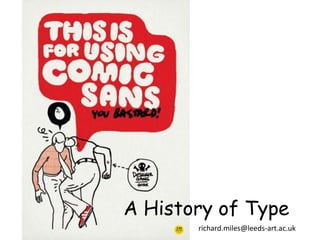
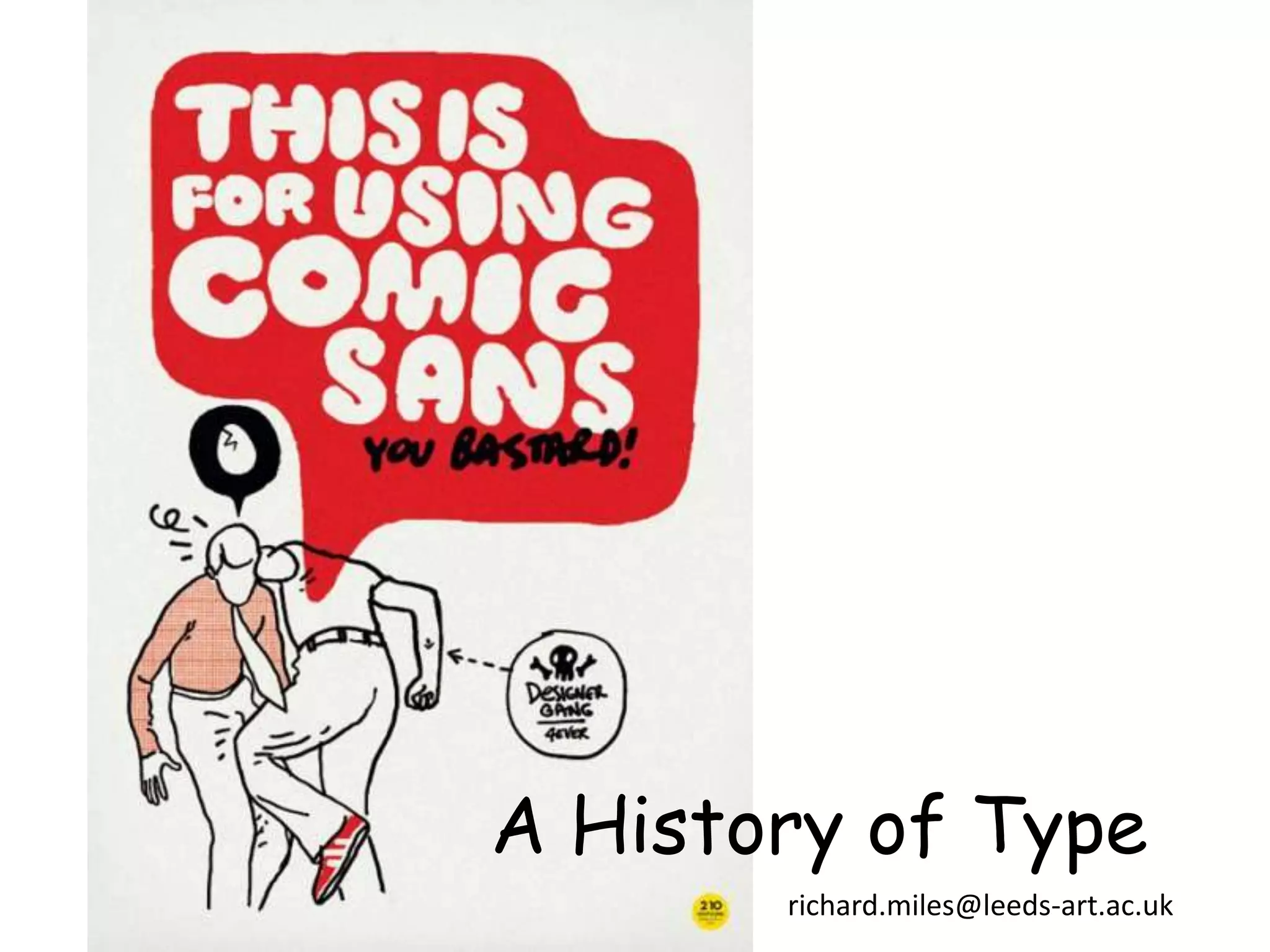
A History of Type
       richard.miles@leeds-art.ac.uk
A History of Type


               richard.miles@leeds-art.ac.uk
AIMS
• Give a simple introduction the history of
  typography
• Introduce the six main classifications of type
• Introduce some famous type faces and their
  related connotations
• Introduce the metalinguistic function of
  typography
• Bore everyone to death talking about kerning
  and x-heights
AIMS
• Give a simple introduction the history of
  typography
• Introduce the six main classifications of
  type
• Introduce some famous type faces and
  their related connotations
• Introduce the metalinguistic function of
  typography
• Bore everyone to death talking about
  kerning and x-heights
AIMS
• Give a simple introduction the history of
  typography
• Introduce the six main classifications of
  type
• Introduce some famous type faces and
  their related connotations
• Introduce the metalinguistic function of
  typography
• Bore everyone to death talking about
  kerning and x-heights
AIMS
• Give a simple introduction the history of
  typography
• Introduce the six main classifications of type
• Introduce some famous type faces and their
  related connotations
• Introduce the metalinguistic function of
  typography
• Bore everyone to death talking about kerning
  and x-heights
AIMS
• Give a simple introduction the history of
  typography
• Introduce the six main classifications of
  type
• Introduce some famous type faces and
  their related connotations
• Introduce the metalinguistic function of
  typography
• Bore everyone to death talking about
  kerning and x-heights
AIMS
• Give a simple introduction the history of
  typography
• Introduce the six main classifications of
  type
• Introduce some famous type faces and
  their related connotations
• Introduce the metalinguistic function of
  typography
• Bore everyone to death talking about
  kerning and x-heights
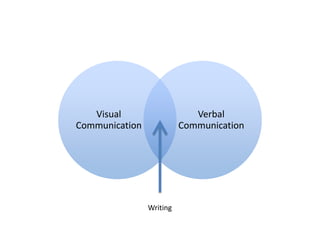
Visual                    Verbal
Communication             Communication


                Writing
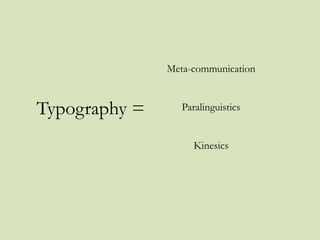
Meta-communication


Typography =      Paralinguistics


                     Kinesics
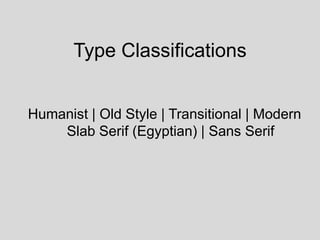
Type Classifications


Humanist | Old Style | Transitional | Modern
    Slab Serif (Egyptian) | Sans Serif
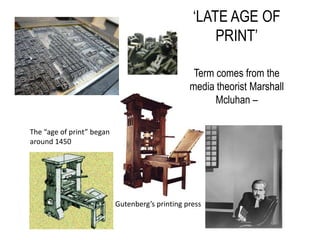
‘LATE AGE OF
                                                      PRINT’

                                                  Term comes from the
                                                 media theorist Marshall
                                                       Mcluhan –

The “age of print” began
around 1450


                           Gutenberg’s printing press
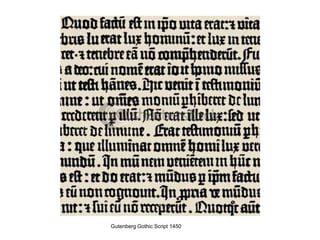
Gutenberg Gothic Script 1450
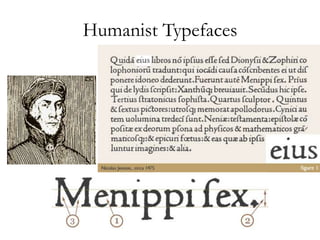
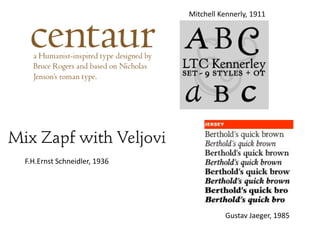
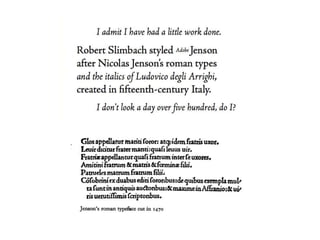
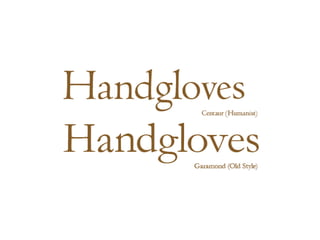
Humanist Typefaces
Mitchell Kennerly, 1911


F.H.Ernst Schneidler, 1936


                                       Gustav Jaeger, 1985
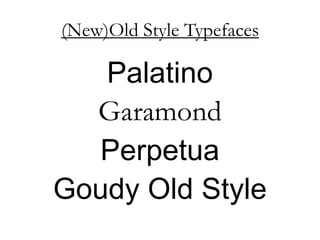
(New)Old Style Typefaces

   Palatino
  Garamond
   Perpetua
Goudy Old Style
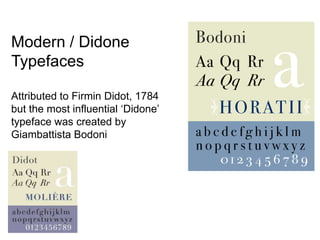
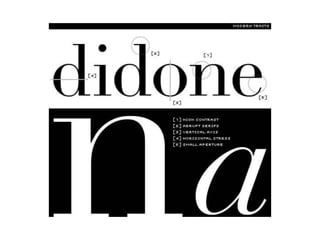
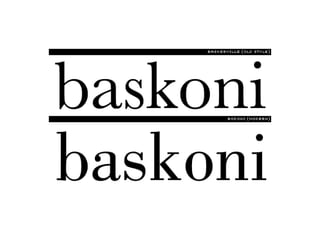
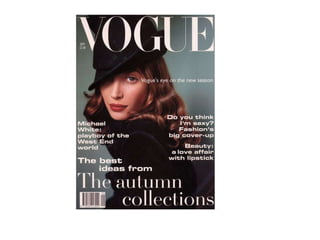
Modern / Didone
Typefaces

Attributed to Firmin Didot, 1784
but the most influential ‘Didone’
typeface was created by
Giambattista Bodoni
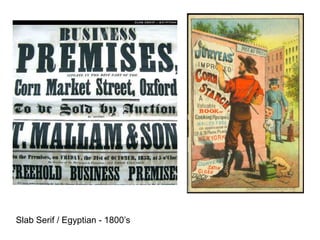
Slab Serif / Egyptian - 1800’s
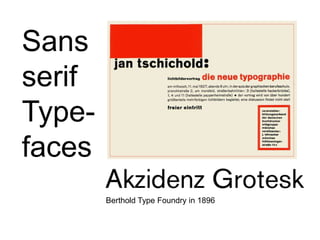
Sans
serif
Type-
faces
        Berthold Type Foundry in 1896
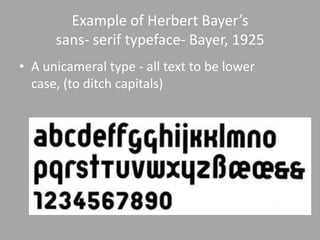
Example of Herbert Bayer’s
      sans- serif typeface- Bayer, 1925
• A unicameral type - all text to be lower
  case, (to ditch capitals)
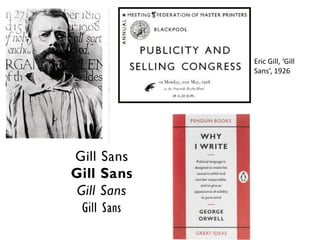
Eric Gill, ‘Gill
Sans’, 1926
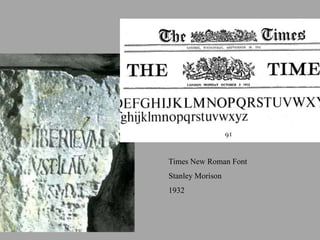
Times New Roman Font
Stanley Morison
1932
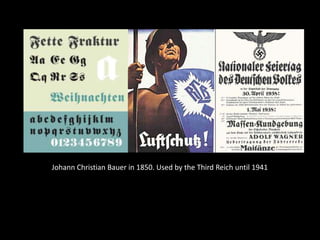
Johann Christian Bauer in 1850. Used by the Third Reich until 1941
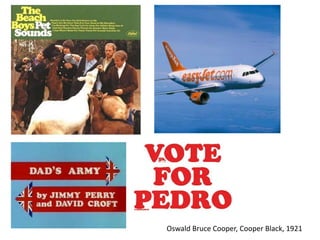
Oswald Bruce Cooper, Cooper Black, 1921
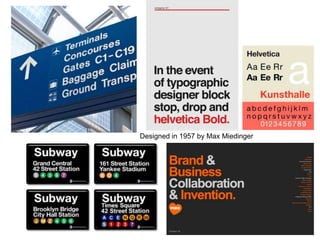
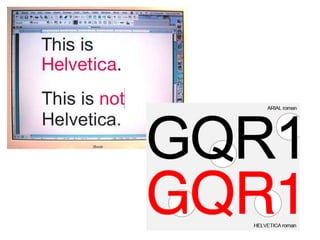
Designed in 1957 by Max Miedinger
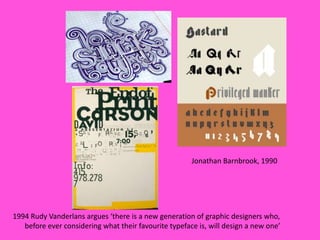
Jonathan Barnbrook, 1990


1994 Rudy Vanderlans argues ‘there is a new generation of graphic designers who,
   before ever considering what their favourite typeface is, will design a new one’
Conclusion
• Different Type families to explore –
  Humanist / Old Style / Transitional /
  Modern / Slab Serif / Sans Serif
• Remember that type communicates
  visually and is not just a vehicle for
  content
• There is nothing more satisfying than a
  beautifully tight kern

Type lecture

  • 1.
    A History ofType richard.miles@leeds-art.ac.uk
  • 2.
    A History ofType richard.miles@leeds-art.ac.uk
  • 3.
    AIMS • Give asimple introduction the history of typography • Introduce the six main classifications of type • Introduce some famous type faces and their related connotations • Introduce the metalinguistic function of typography • Bore everyone to death talking about kerning and x-heights
  • 4.
    AIMS • Give asimple introduction the history of typography • Introduce the six main classifications of type • Introduce some famous type faces and their related connotations • Introduce the metalinguistic function of typography • Bore everyone to death talking about kerning and x-heights
  • 5.
    AIMS • Give asimple introduction the history of typography • Introduce the six main classifications of type • Introduce some famous type faces and their related connotations • Introduce the metalinguistic function of typography • Bore everyone to death talking about kerning and x-heights
  • 6.
    AIMS • Give asimple introduction the history of typography • Introduce the six main classifications of type • Introduce some famous type faces and their related connotations • Introduce the metalinguistic function of typography • Bore everyone to death talking about kerning and x-heights
  • 7.
    AIMS • Give asimple introduction the history of typography • Introduce the six main classifications of type • Introduce some famous type faces and their related connotations • Introduce the metalinguistic function of typography • Bore everyone to death talking about kerning and x-heights
  • 8.
    AIMS • Give asimple introduction the history of typography • Introduce the six main classifications of type • Introduce some famous type faces and their related connotations • Introduce the metalinguistic function of typography • Bore everyone to death talking about kerning and x-heights
  • 9.
    Visual Verbal Communication Communication Writing
  • 10.
    Meta-communication Typography = Paralinguistics Kinesics
  • 15.
    Type Classifications Humanist |Old Style | Transitional | Modern Slab Serif (Egyptian) | Sans Serif
  • 16.
    ‘LATE AGE OF PRINT’ Term comes from the media theorist Marshall Mcluhan – The “age of print” began around 1450 Gutenberg’s printing press
  • 18.
  • 19.
  • 21.
    Mitchell Kennerly, 1911 F.H.ErnstSchneidler, 1936 Gustav Jaeger, 1985
  • 24.
    (New)Old Style Typefaces Palatino Garamond Perpetua Goudy Old Style
  • 31.
    Modern / Didone Typefaces Attributedto Firmin Didot, 1784 but the most influential ‘Didone’ typeface was created by Giambattista Bodoni
  • 35.
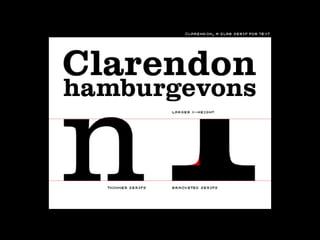
    Slab Serif /Egyptian - 1800’s
  • 39.
    Sans serif Type- faces Berthold Type Foundry in 1896
  • 40.
    Example of HerbertBayer’s sans- serif typeface- Bayer, 1925 • A unicameral type - all text to be lower case, (to ditch capitals)
  • 41.
  • 42.
    Times New RomanFont Stanley Morison 1932
  • 43.
    Johann Christian Bauerin 1850. Used by the Third Reich until 1941
  • 44.
    Oswald Bruce Cooper,Cooper Black, 1921
  • 45.
    Designed in 1957by Max Miedinger
  • 47.
    Jonathan Barnbrook, 1990 1994Rudy Vanderlans argues ‘there is a new generation of graphic designers who, before ever considering what their favourite typeface is, will design a new one’
  • 49.
    Conclusion • Different Typefamilies to explore – Humanist / Old Style / Transitional / Modern / Slab Serif / Sans Serif • Remember that type communicates visually and is not just a vehicle for content • There is nothing more satisfying than a beautifully tight kern

Editor's Notes

  • #10 Writing is where Visual Communication and Spoken Language meet.
  • #19 Moveable Type invented 1450AD