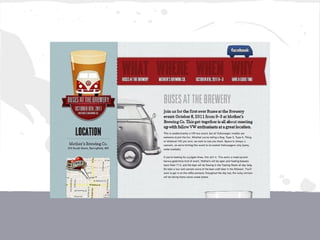
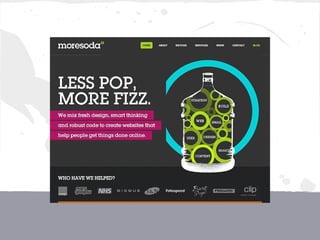
Typography
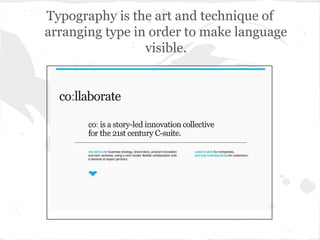
Typography is the art and technique of
arranging type in order to make language
                 visible.
Typeface and Font
Typeface:
  "Set of characters that share common design features"


It’s the letters, numbers, and other characters that let us
   put words on paper (or screen).


Font:
 "A complete character set within a typeface, of a particular
                        style and size"


For eg. a set of characters of "Verdana" size 9 point and in
Typeface Types
• Roman typeface
• Blackletter typeface
• Gaelic typeface
• Monospaced typeface
• Symbol typeface
• Display type
Roman Typeface
• Serif
• Sans-Serif
• Script
• Ornamental
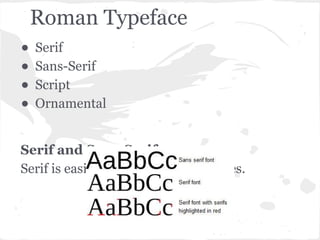
Serif and Sans-Serif:
Serif is easier to read in long passages.
Roman Typeface

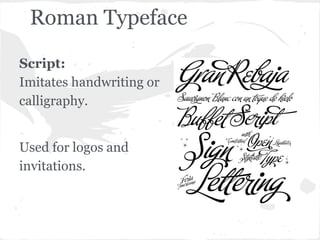
Script:
Imitates handwriting or
calligraphy.


Used for logos and
invitations.
Roman Typeface
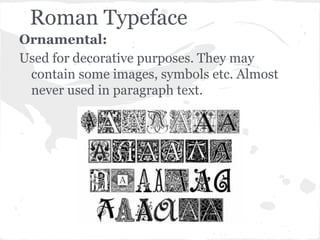
Ornamental:
Used for decorative purposes. They may
 contain some images, symbols etc. Almost
 never used in paragraph text.
Blackletter Typeface
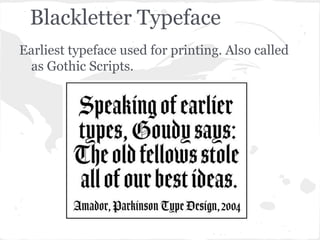
Earliest typeface used for printing. Also called
 as Gothic Scripts.
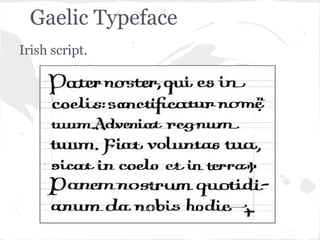
Gaelic Typeface
Irish script.
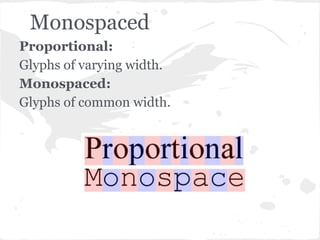
Monospaced
Proportional:
Glyphs of varying width.
Monospaced:
Glyphs of common width.
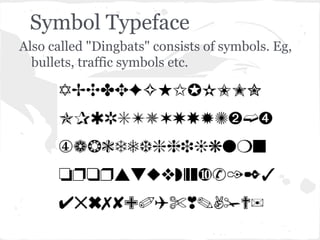
Symbol Typeface
Also called "Dingbats" consists of symbols. Eg,
  bullets, traffic symbols etc.
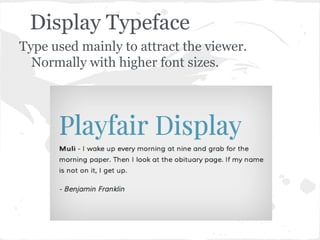
Display Typeface
Type used mainly to attract the viewer.
  Normally with higher font sizes.
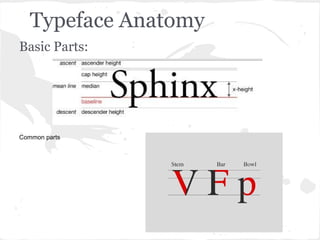
Typeface Anatomy
Basic Parts:


Common parts
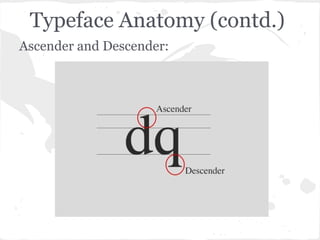
Typeface Anatomy (contd.)
Ascender and Descender:
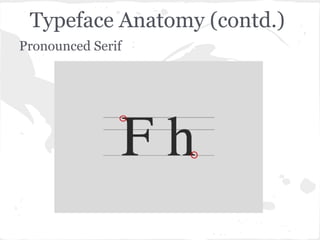
Typeface Anatomy (contd.)
Pronounced Serif
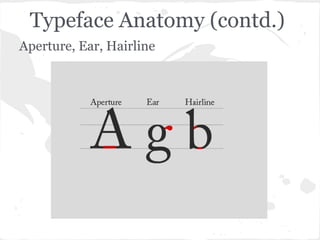
Typeface Anatomy (contd.)
Aperture, Ear, Hairline
Typeface Anatomy (contd.)
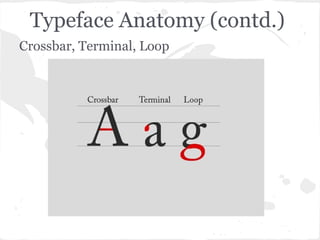
Crossbar, Terminal, Loop
Typeface Anatomy (contd.)
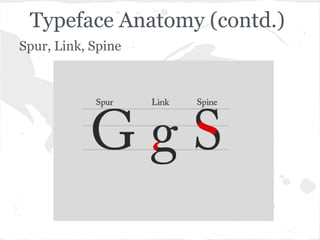
Spur, Link, Spine
Typeface Anatomy (contd.)
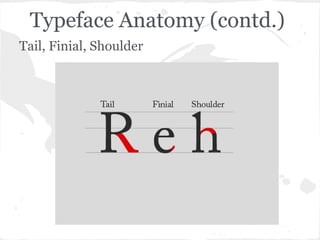
Tail, Finial, Shoulder
Typography
Typography
Typography

Typography