Alphabet of
Lines
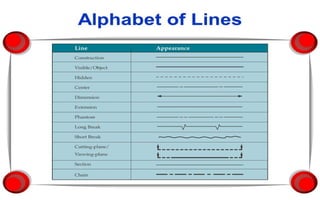
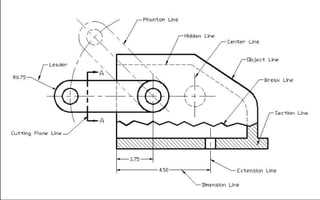
ALPHABET OF LINES
 Lines are the critical component of
sketching
 Lines have different types,
thickness and shape has its own
meaning
 Alphabet of Lines are also known as
“Line symbols”
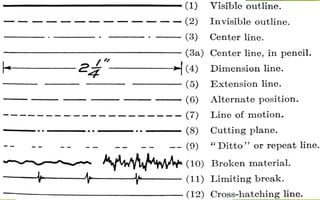
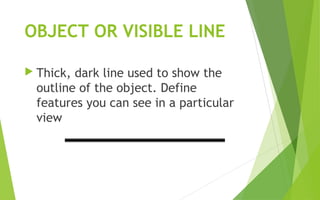
OBJECT OR VISIBLE LINE
 Thick, dark line used to show the
outline of the object. Define
features you can see in a particular
view
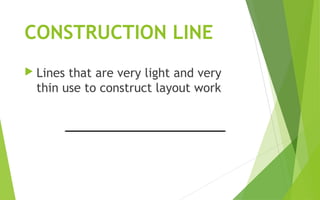
CONSTRUCTION LINE
 Lines that are very light and very
thin use to construct layout work
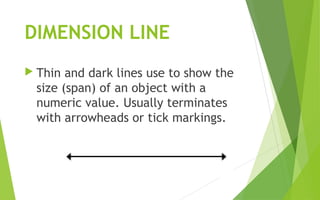
DIMENSION LINE
 Thin and dark lines use to show the
size (span) of an object with a
numeric value. Usually terminates
with arrowheads or tick markings.
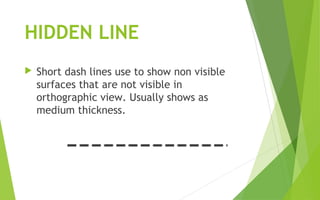
HIDDEN LINE
 Short dash lines use to show non visible
surfaces that are not visible in
orthographic view. Usually shows as
medium thickness.
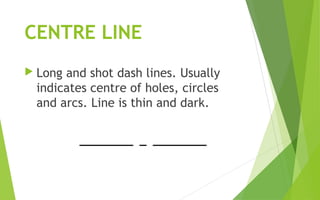
CENTRE LINE
 Long and shot dash lines. Usually
indicates centre of holes, circles
and arcs. Line is thin and dark.
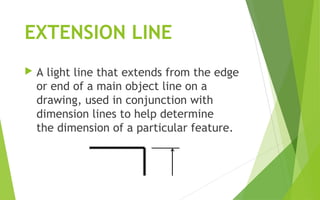
EXTENSION LINE
 A light line that extends from the edge
or end of a main object line on a
drawing, used in conjunction with
dimension lines to help determine
the dimension of a particular feature.
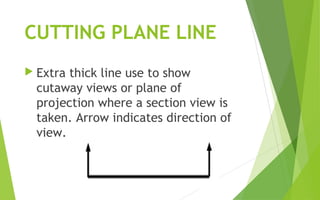
CUTTING PLANE LINE
 Extra thick line use to show
cutaway views or plane of
projection where a section view is
taken. Arrow indicates direction of
view.
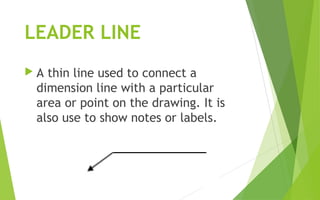
LEADER LINE
 A thin line used to connect a
dimension line with a particular
area or point on the drawing. It is
also use to show notes or labels.
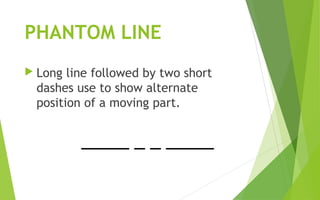
PHANTOM LINE
 Long line followed by two short
dashes use to show alternate
position of a moving part.
SHORT-BREAK LINE
 Thick wavy line that is used to
break the edge of a surface of a
part for clarity on a hidden surface
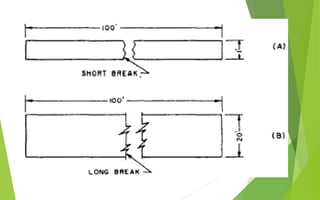
LONG-BREAK LINE
 Long, thin lines that is used to show
that the middle section of an object
has been removed so it can be
drawn on a smaller piece of paper
TLE 9 (Technical Drafting) - Alphabet of Lines

TLE 9 (Technical Drafting) - Alphabet of Lines

  • 1.
  • 2.
    ALPHABET OF LINES Lines are the critical component of sketching  Lines have different types, thickness and shape has its own meaning  Alphabet of Lines are also known as “Line symbols”
  • 6.
    OBJECT OR VISIBLELINE  Thick, dark line used to show the outline of the object. Define features you can see in a particular view
  • 7.
    CONSTRUCTION LINE  Linesthat are very light and very thin use to construct layout work
  • 8.
    DIMENSION LINE  Thinand dark lines use to show the size (span) of an object with a numeric value. Usually terminates with arrowheads or tick markings.
  • 9.
    HIDDEN LINE  Shortdash lines use to show non visible surfaces that are not visible in orthographic view. Usually shows as medium thickness.
  • 10.
    CENTRE LINE  Longand shot dash lines. Usually indicates centre of holes, circles and arcs. Line is thin and dark.
  • 11.
    EXTENSION LINE  Alight line that extends from the edge or end of a main object line on a drawing, used in conjunction with dimension lines to help determine the dimension of a particular feature.
  • 12.
    CUTTING PLANE LINE Extra thick line use to show cutaway views or plane of projection where a section view is taken. Arrow indicates direction of view.
  • 13.
    LEADER LINE  Athin line used to connect a dimension line with a particular area or point on the drawing. It is also use to show notes or labels.
  • 14.
    PHANTOM LINE  Longline followed by two short dashes use to show alternate position of a moving part.
  • 15.
    SHORT-BREAK LINE  Thickwavy line that is used to break the edge of a surface of a part for clarity on a hidden surface
  • 16.
    LONG-BREAK LINE  Long,thin lines that is used to show that the middle section of an object has been removed so it can be drawn on a smaller piece of paper