Introduction to Drafting and Design
 Developed by theAmerican Society of
Mechanical Engineers (ASME).
 TheAlphabet of Lines is used to make a
drawing neater and clearer to understand.
 Different lines represent different aspects of
a drawing.
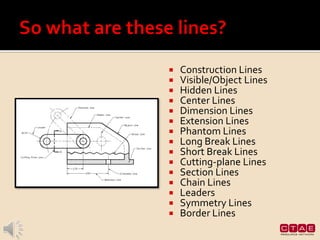
 Construction Lines
 Visible/Object Lines
 Hidden Lines
 Center Lines
 Dimension Lines
 Extension Lines
 Phantom Lines
 Long Break Lines
 Short Break Lines
 Cutting-plane Lines
 Section Lines
 Chain Lines
 Leaders
 Symmetry Lines
 Border Lines
 Used to initially lay out a drawings.
 Used for guidelines for lettering.
 Drawn very light and thin so that they are
barely visible.
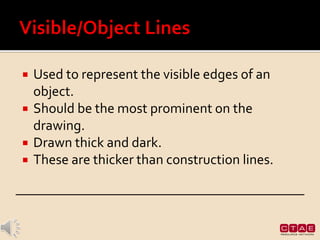
 Used to represent the visible edges of an
object.
 Should be the most prominent on the
drawing.
 Drawn thick and dark.
 These are thicker than construction lines.
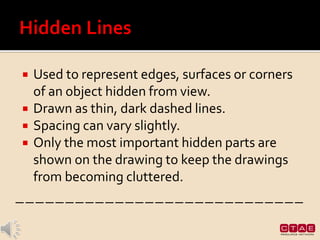
 Used to represent edges, surfaces or corners
of an object hidden from view.
 Drawn as thin, dark dashed lines.
 Spacing can vary slightly.
 Only the most important hidden parts are
shown on the drawing to keep the drawings
from becoming cluttered.
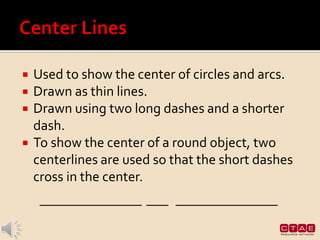
 Used to show the center of circles and arcs.
 Drawn as thin lines.
 Drawn using two long dashes and a shorter
dash.
 To show the center of a round object, two
centerlines are used so that the short dashes
cross in the center.
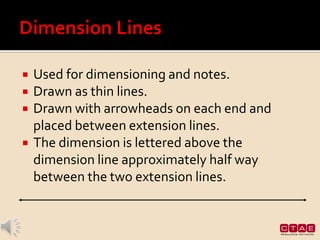
 Used for dimensioning and notes.
 Drawn as thin lines.
 Drawn with arrowheads on each end and
placed between extension lines.
 The dimension is lettered above the
dimension line approximately half way
between the two extension lines.
 Used to extend dimensions from the related
objects.
 Drawn as thin lines.
 Drawn with a short space between the object
and line.
 Extend about 3 mm beyond the dimension
line.
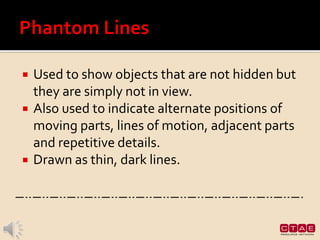
 Used to show objects that are not hidden but
they are simply not in view.
 Also used to indicate alternate positions of
moving parts, lines of motion, adjacent parts
and repetitive details.
 Drawn as thin, dark lines.
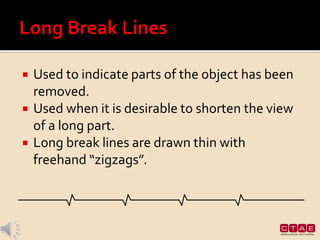
 Used to indicate parts of the object has been
removed.
 Used when it is desirable to shorten the view
of a long part.
 Long break lines are drawn thin with
freehand “zigzags”.
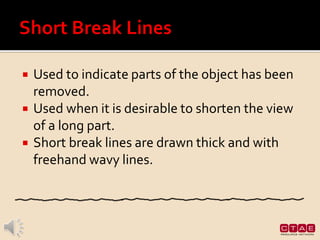
 Used to indicate parts of the object has been
removed.
 Used when it is desirable to shorten the view
of a long part.
 Short break lines are drawn thick and with
freehand wavy lines.
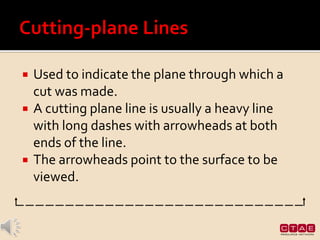
 Used to indicate the plane through which a
cut was made.
 A cutting plane line is usually a heavy line
with long dashes with arrowheads at both
ends of the line.
 The arrowheads point to the surface to be
viewed.
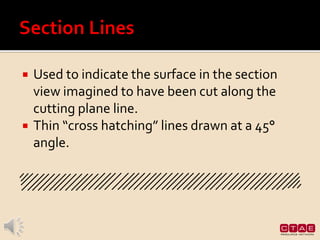
 Used to indicate the surface in the section
view imagined to have been cut along the
cutting plane line.
 Thin “cross hatching” lines drawn at a 45°
angle.
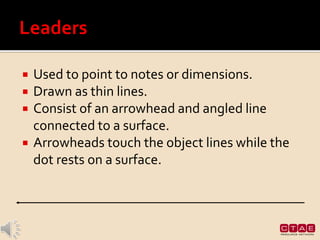
 Used to point to notes or dimensions.
 Drawn as thin lines.
 Consist of an arrowhead and angled line
connected to a surface.
 Arrowheads touch the object lines while the
dot rests on a surface.
 Used to outline the entire drawing.
 They are a continuous thick line on the outer
rim of the paper.
 If lines happen to overlap, then there is a
hierarchy to which the lines show up.
 The hierarchy of lines is as follows:
 Object or visible line
 Hidden line
 Cutting Plane line
 Center line
 Break line
 Dimension and extension lines
 Sectioning lines

alphabet_of_lines TECHNOLOGY AND LIVELIHOOD E GRADE 8

  • 1.
  • 2.
     Developed bytheAmerican Society of Mechanical Engineers (ASME).  TheAlphabet of Lines is used to make a drawing neater and clearer to understand.  Different lines represent different aspects of a drawing.
  • 3.
     Construction Lines Visible/Object Lines  Hidden Lines  Center Lines  Dimension Lines  Extension Lines  Phantom Lines  Long Break Lines  Short Break Lines  Cutting-plane Lines  Section Lines  Chain Lines  Leaders  Symmetry Lines  Border Lines
  • 4.
     Used toinitially lay out a drawings.  Used for guidelines for lettering.  Drawn very light and thin so that they are barely visible.
  • 5.
     Used torepresent the visible edges of an object.  Should be the most prominent on the drawing.  Drawn thick and dark.  These are thicker than construction lines.
  • 6.
     Used torepresent edges, surfaces or corners of an object hidden from view.  Drawn as thin, dark dashed lines.  Spacing can vary slightly.  Only the most important hidden parts are shown on the drawing to keep the drawings from becoming cluttered.
  • 7.
     Used toshow the center of circles and arcs.  Drawn as thin lines.  Drawn using two long dashes and a shorter dash.  To show the center of a round object, two centerlines are used so that the short dashes cross in the center.
  • 8.
     Used fordimensioning and notes.  Drawn as thin lines.  Drawn with arrowheads on each end and placed between extension lines.  The dimension is lettered above the dimension line approximately half way between the two extension lines.
  • 9.
     Used toextend dimensions from the related objects.  Drawn as thin lines.  Drawn with a short space between the object and line.  Extend about 3 mm beyond the dimension line.
  • 10.
     Used toshow objects that are not hidden but they are simply not in view.  Also used to indicate alternate positions of moving parts, lines of motion, adjacent parts and repetitive details.  Drawn as thin, dark lines.
  • 11.
     Used toindicate parts of the object has been removed.  Used when it is desirable to shorten the view of a long part.  Long break lines are drawn thin with freehand “zigzags”.
  • 12.
     Used toindicate parts of the object has been removed.  Used when it is desirable to shorten the view of a long part.  Short break lines are drawn thick and with freehand wavy lines.
  • 13.
     Used toindicate the plane through which a cut was made.  A cutting plane line is usually a heavy line with long dashes with arrowheads at both ends of the line.  The arrowheads point to the surface to be viewed.
  • 14.
     Used toindicate the surface in the section view imagined to have been cut along the cutting plane line.  Thin “cross hatching” lines drawn at a 45° angle.
  • 15.
     Used topoint to notes or dimensions.  Drawn as thin lines.  Consist of an arrowhead and angled line connected to a surface.  Arrowheads touch the object lines while the dot rests on a surface.
  • 16.
     Used tooutline the entire drawing.  They are a continuous thick line on the outer rim of the paper.
  • 18.
     If lineshappen to overlap, then there is a hierarchy to which the lines show up.  The hierarchy of lines is as follows:  Object or visible line  Hidden line  Cutting Plane line  Center line  Break line  Dimension and extension lines  Sectioning lines