© Boardworks Ltd 2001 
THE TRANSITION 
METALS
N O 
He 
F Ne 
Ar 
© Boardworks Ltd 2001 
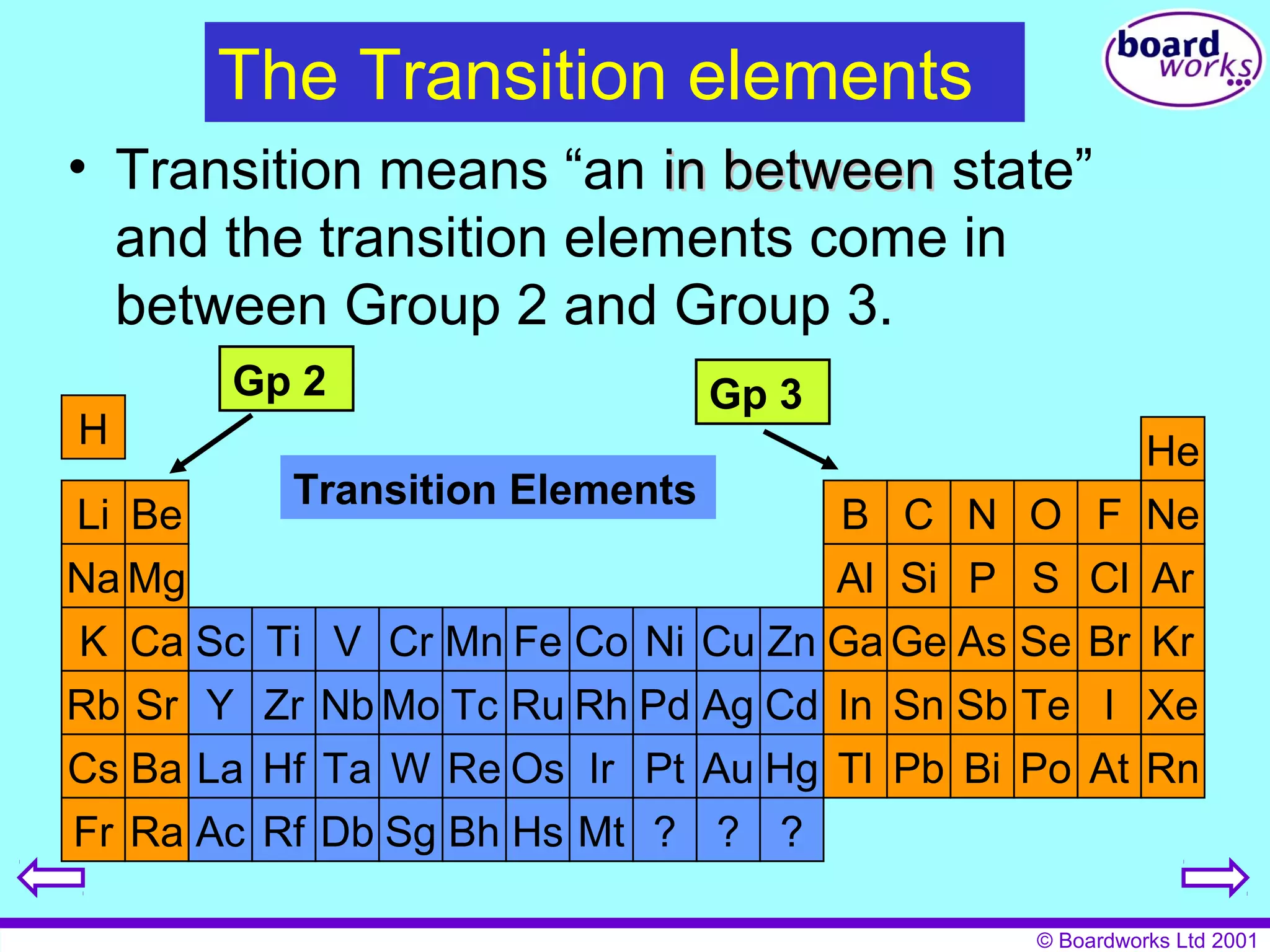
The Transition elements 
• Transition means “an iinn bbeettwweeeenn state” 
and the transition elements come in 
between Group 2 and Group 3. 
Sc Ti V Cr Mn Fe Co Ni Cu Zn 
Y Zr NbMo Tc Ru Rh Pd Ag Cd 
La Hf Ta W Re Os Ir Pt Au Hg 
Ac Rf Db Sg Bh Hs Mt ? ? ? 
H 
Li 
Na 
K 
Rb 
Cs 
Fr 
Be 
Mg 
Al P 
S Cl 
Ca GaGe Se Br Kr 
Sr In Sn Sb Te 
Ba Tl Pb Bi Po At 
Ra 
Rn 
I 
Si 
Xe 
B C 
As 
Gp 2 Gp 3 
Transition Elements
© Boardworks Ltd 2001 
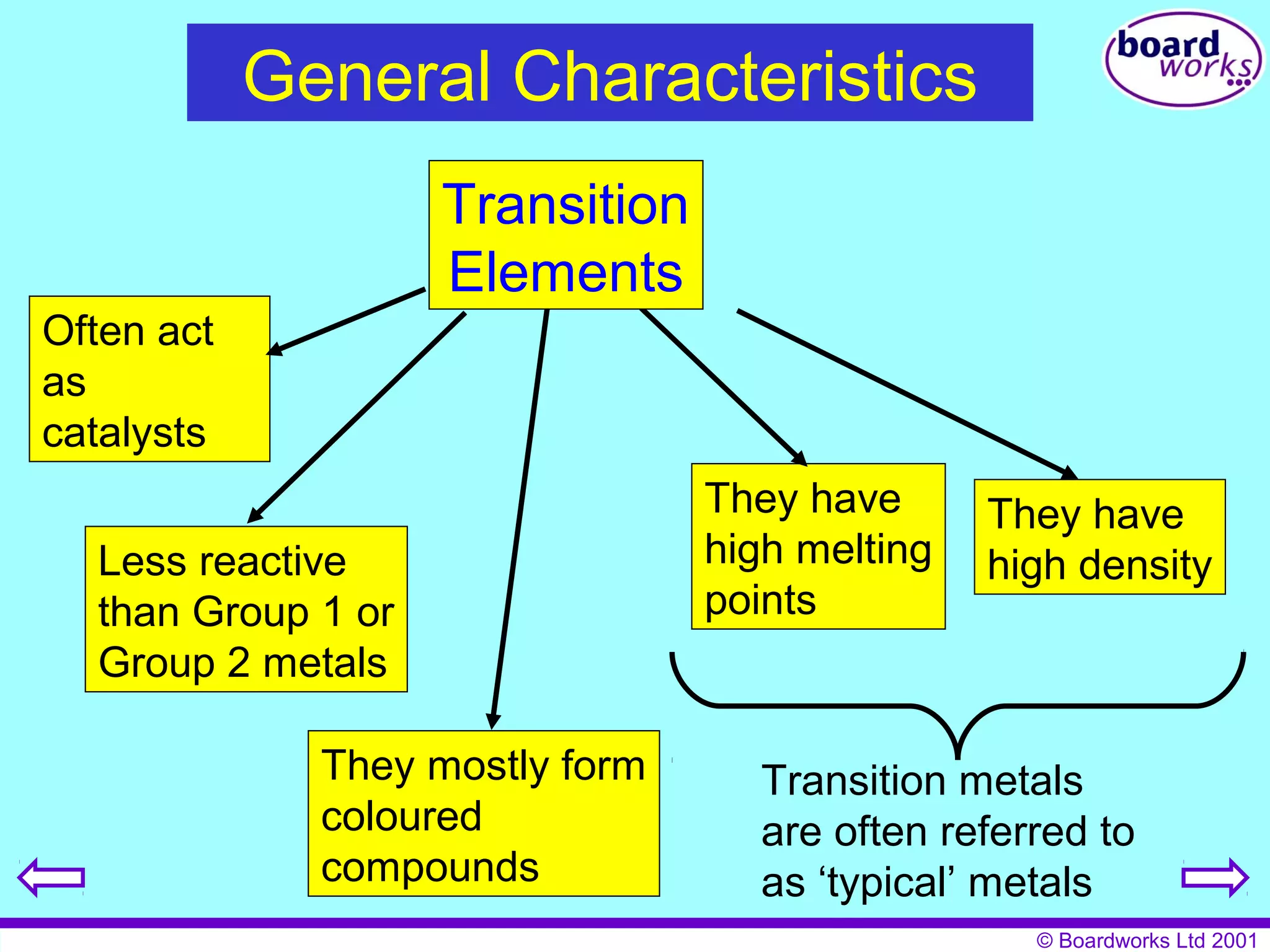
General Characteristics 
Less reactive 
than Group 1 or 
Group 2 metals 
They mostly form 
coloured 
compounds 
They have 
high melting 
points 
They have 
high density 
Transition metals 
are often referred to 
as ‘typical’ metals 
Transition 
Elements 
Often act 
as 
catalysts
© Boardworks Ltd 2001 
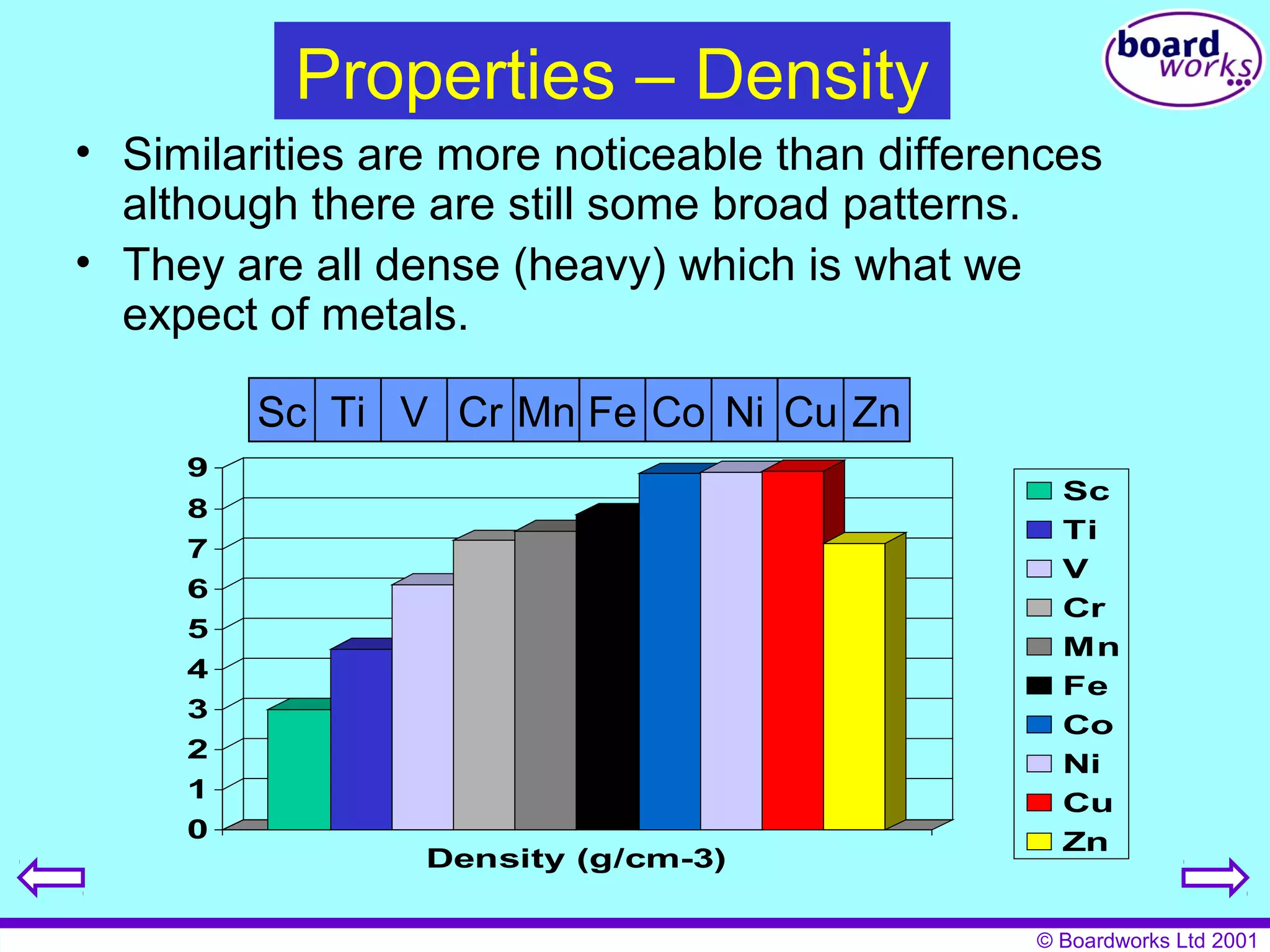
Properties – Density 
• Similarities are more noticeable than differences 
although there are still some broad patterns. 
• They are all dense (heavy) which is what we 
expect of metals. 
9 
8 
7 
6 
5 
4 
3 
2 
1 
0 
Density (g/cm-3) 
Sc 
Ti 
V 
Cr 
Mn 
Fe 
Co 
Ni 
Cu 
Zn 
Sc Ti V Cr Mn Fe Co Ni Cu Zn
© Boardworks Ltd 2001 
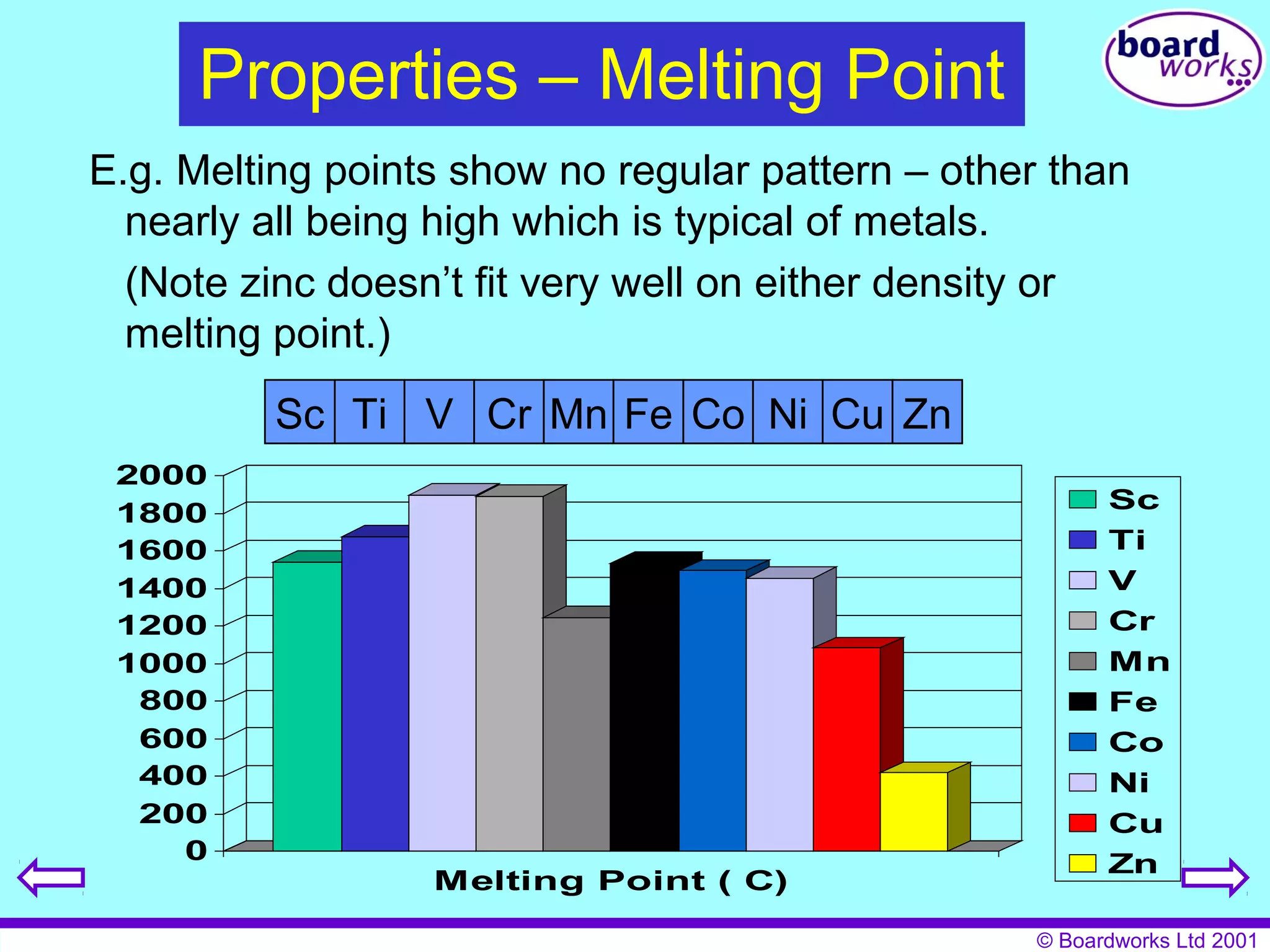
Properties – Melting Point 
E.g. Melting points show no regular pattern – other than 
nearly all being high which is typical of metals. 
(Note zinc doesn’t fit very well on either density or 
melting point.) 
2000 
1800 
1600 
1400 
1200 
1000 
800 
600 
400 
200 
0 
Melting Point ( C) 
Sc 
Ti 
V 
Cr 
Mn 
Fe 
Co 
Ni 
Cu 
Zn 
Sc Ti V Cr Mn Fe Co Ni Cu Zn
© Boardworks Ltd 2001 
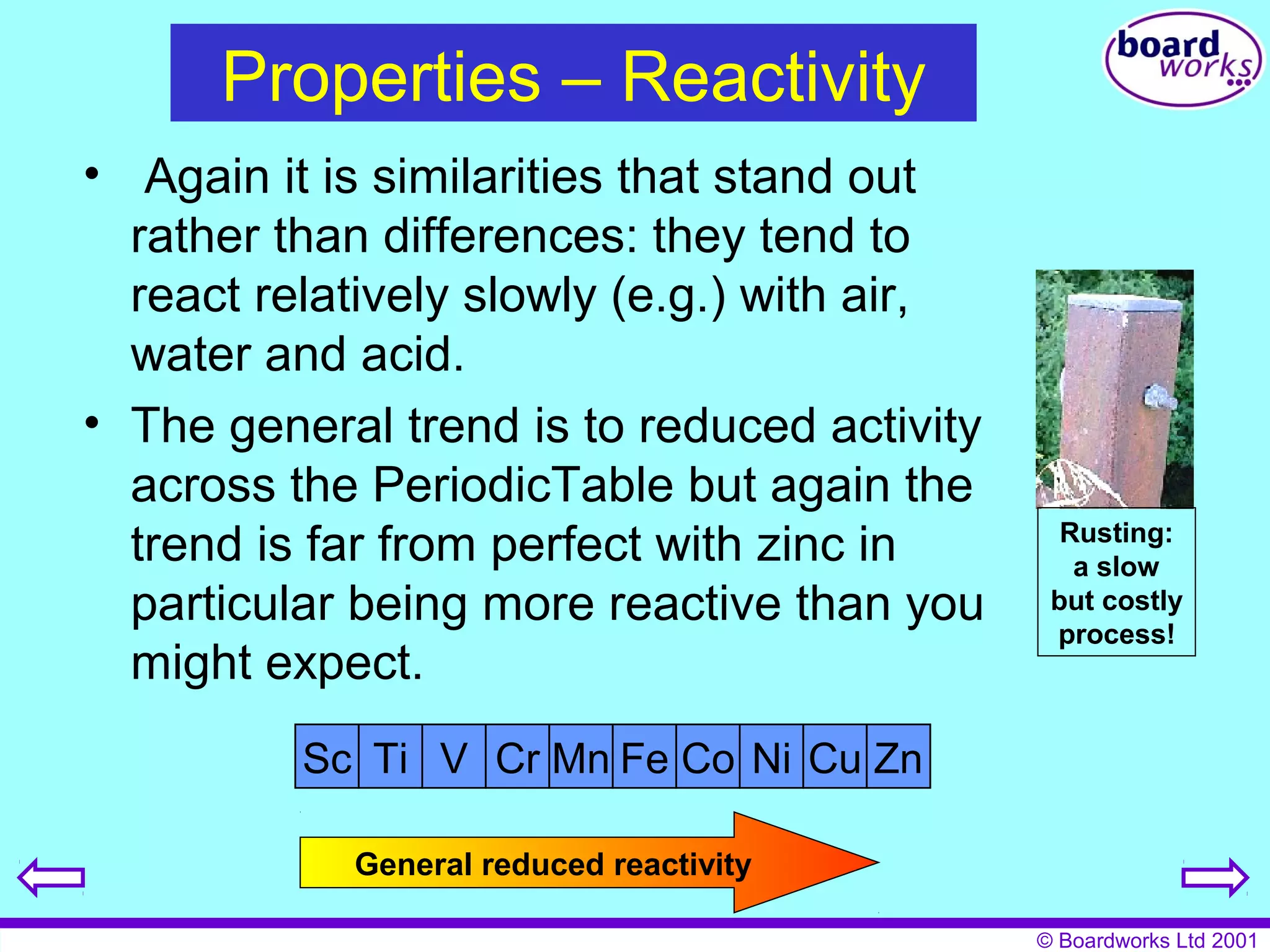
Properties – Reactivity 
• Again it is similarities that stand out 
rather than differences: they tend to 
react relatively slowly (e.g.) with air, 
water and acid. 
• The general trend is to reduced activity 
across the PeriodicTable but again the 
trend is far from perfect with zinc in 
particular being more reactive than you 
might expect. 
Sc Ti V Cr Mn Fe Co Ni Cu Zn 
General reduced reactivity 
Rusting: 
a slow 
but costly 
process!
© Boardworks Ltd 2001 
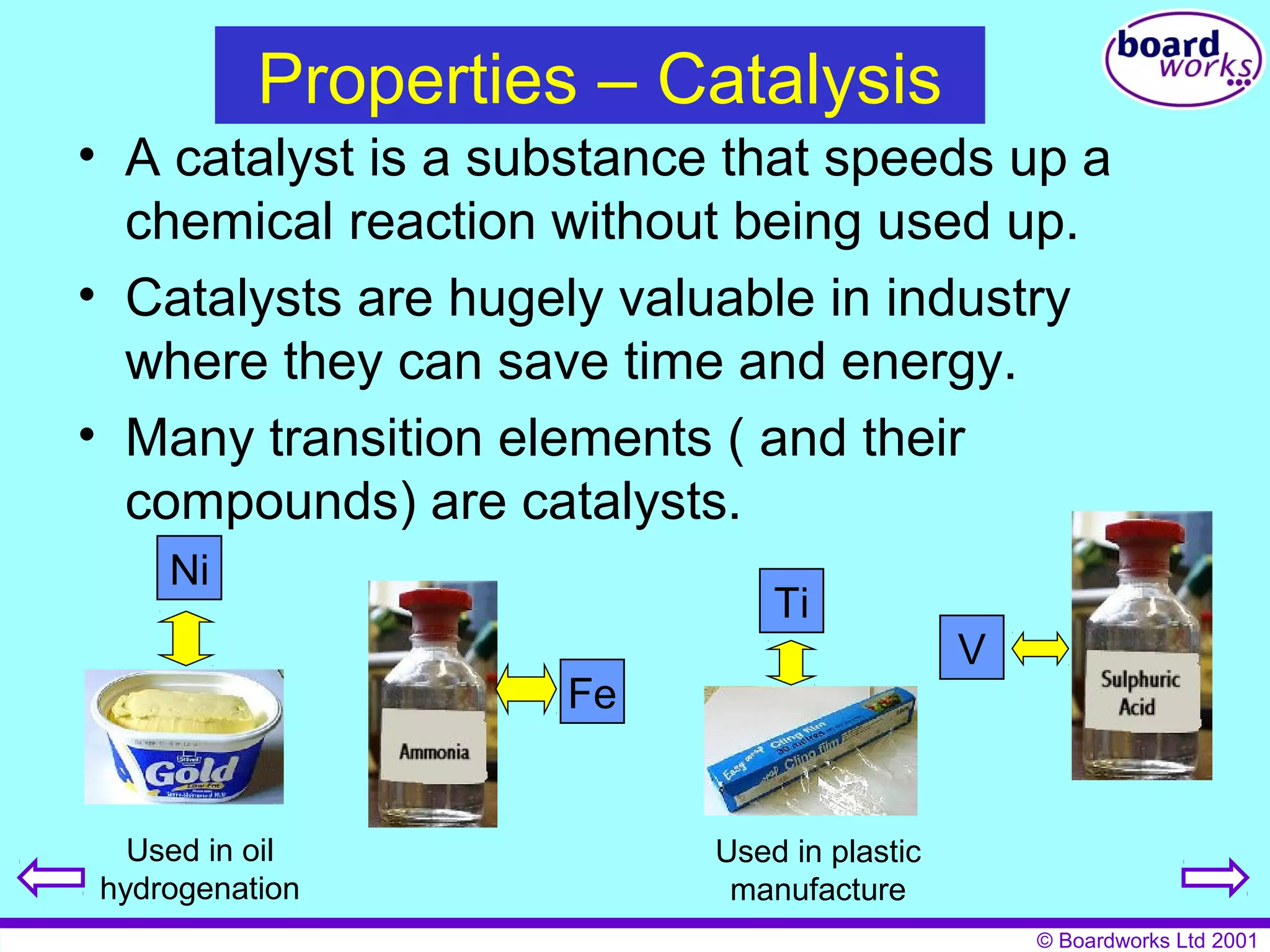
Properties – Catalysis 
• A catalyst is a substance that speeds up a 
chemical reaction without being used up. 
• Catalysts are hugely valuable in industry 
where they can save time and energy. 
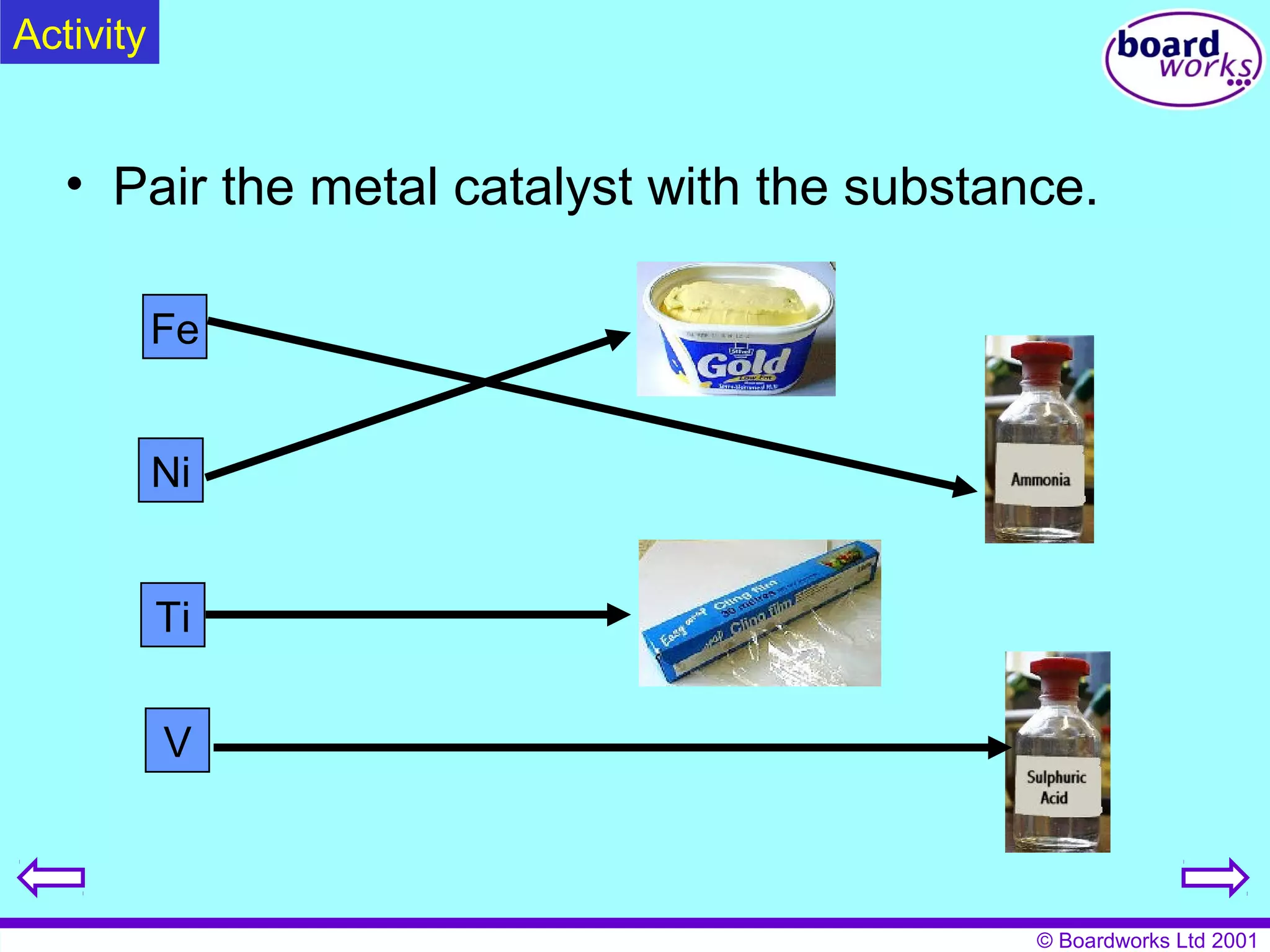
• Many transition elements ( and their 
compounds) are catalysts. 
V 
Ti 
Used in plastic 
manufacture 
Fe 
Ni 
Used in oil 
hydrogenation
© Boardworks Ltd 2001 
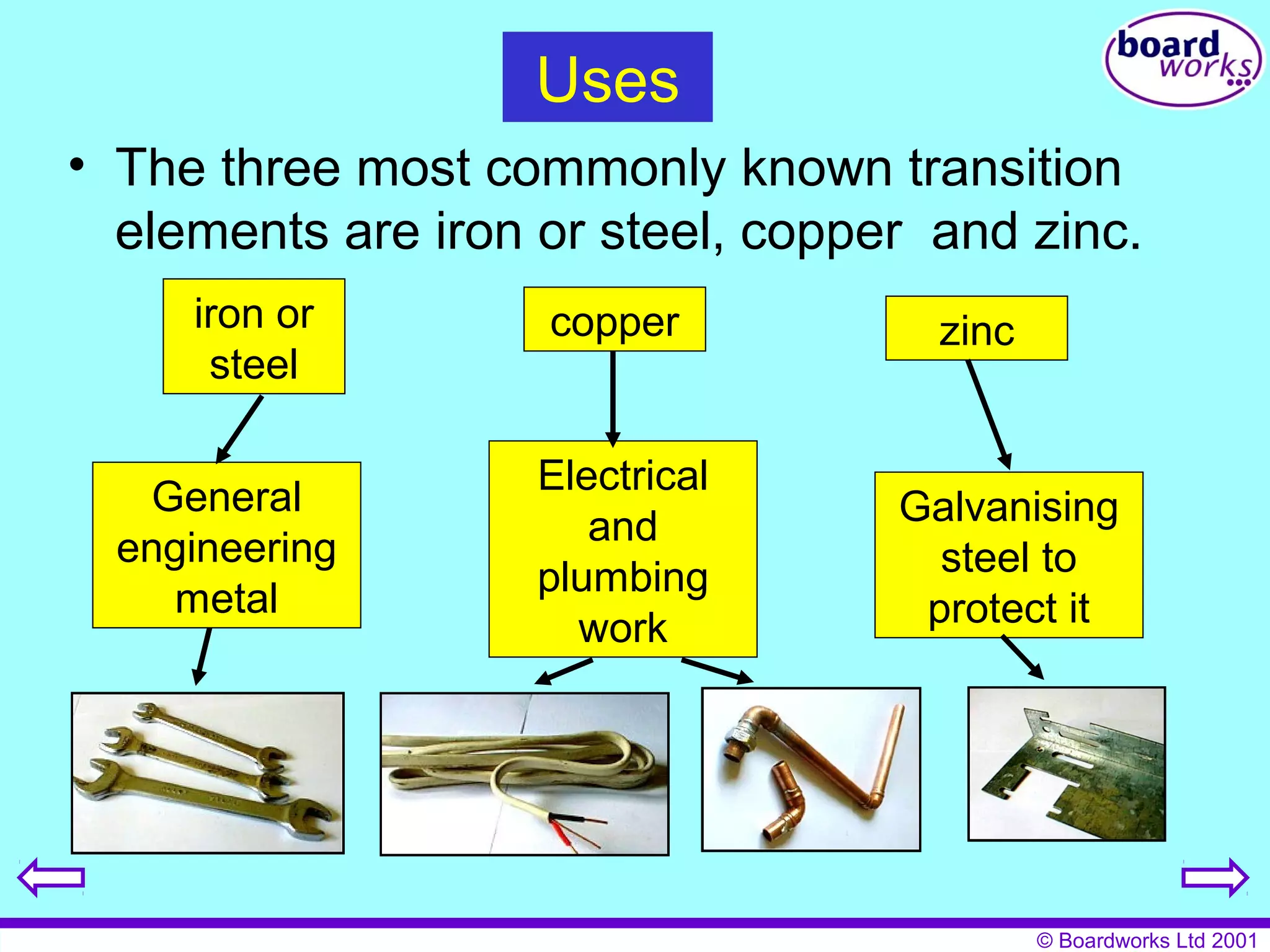
Uses 
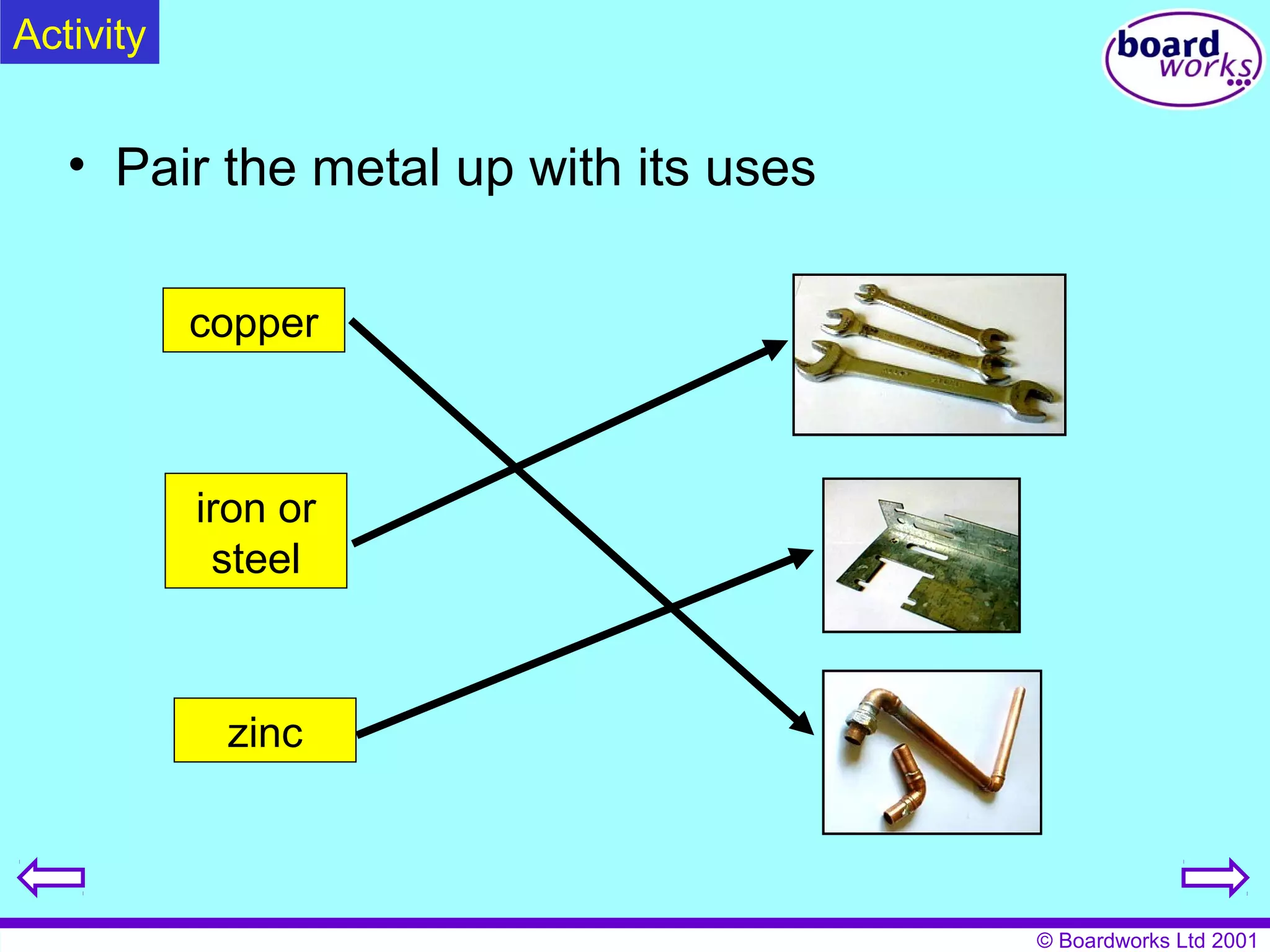
• The three most commonly known transition 
elements are iron or steel, copper and zinc. 
iron or 
steel 
General 
engineering 
metal 
copper 
Electrical 
and 
plumbing 
work 
zinc 
Galvanising 
steel to 
protect it
© Boardworks Ltd 2001 
• Pair the metal up with its uses 
copper 
iron or 
steel 
zinc 
Activity
• Pair the metal catalyst with the substance. 
© Boardworks Ltd 2001 
Fe 
Ni 
Ti 
V 
Activity
© Boardworks Ltd 2001 
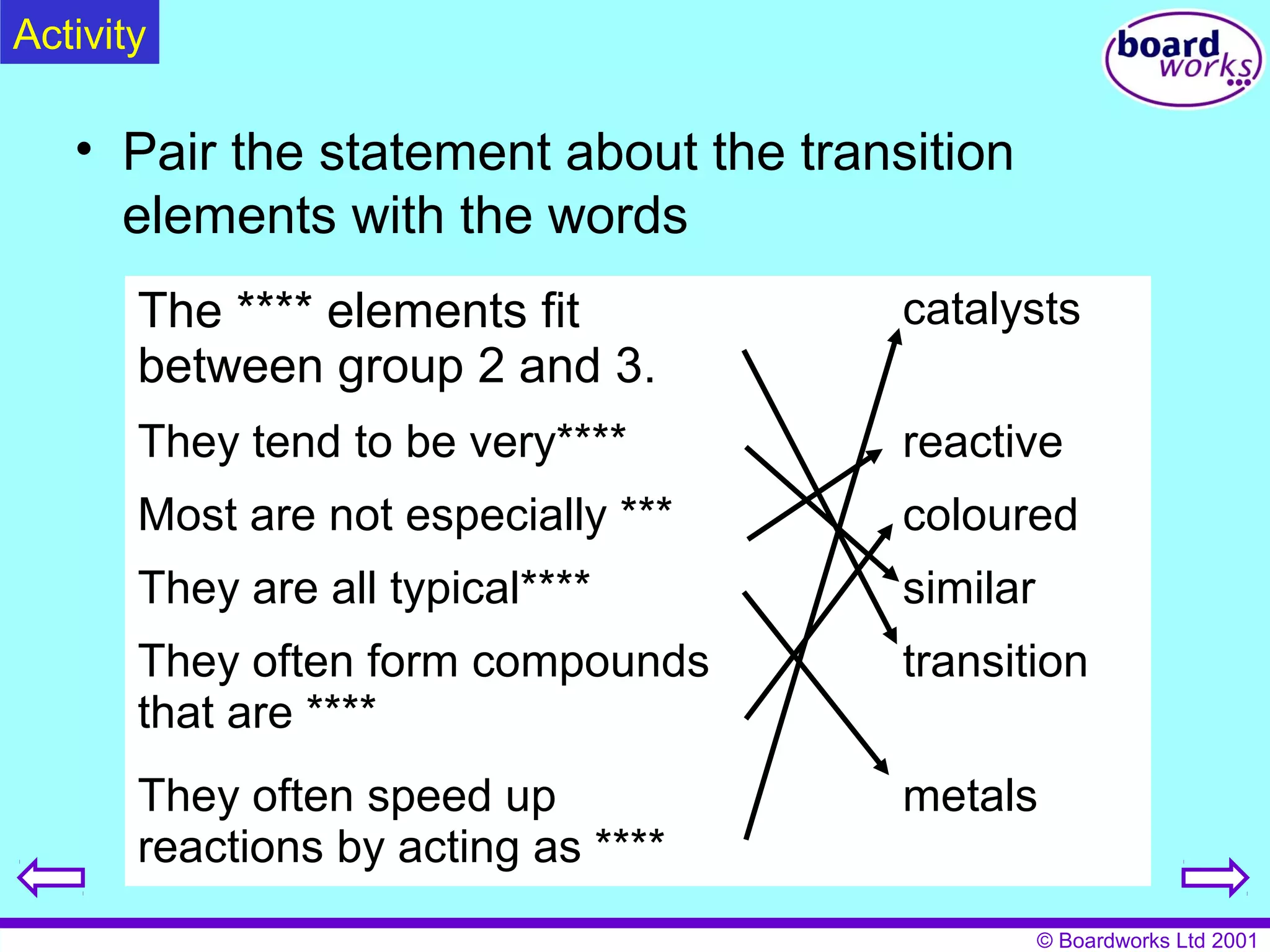
• Pair the statement about the transition 
elements with the words 
The **** elements fit 
between group 2 and 3. 
catalysts 
They tend to be very**** reactive 
Most are not especially *** coloured 
They are all typical**** similar 
They often form compounds 
that are **** 
transition 
They often speed up 
reactions by acting as **** 
metals 
Activity
© Boardworks Ltd 2001 
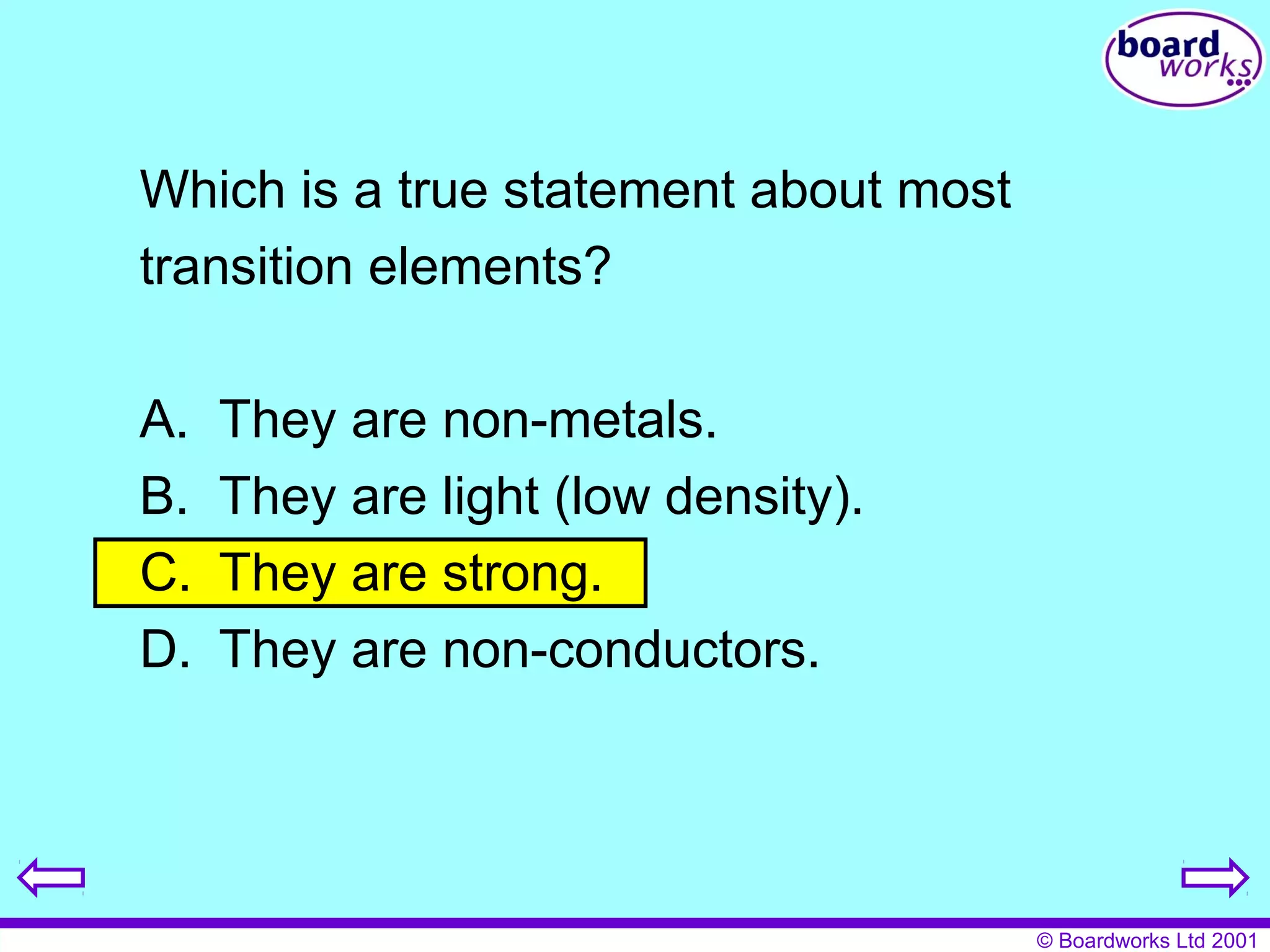
Which is a true statement about most 
transition elements? 
A. They are non-metals. 
B. They are light (low density). 
C. They are strong. 
D. They are non-conductors.
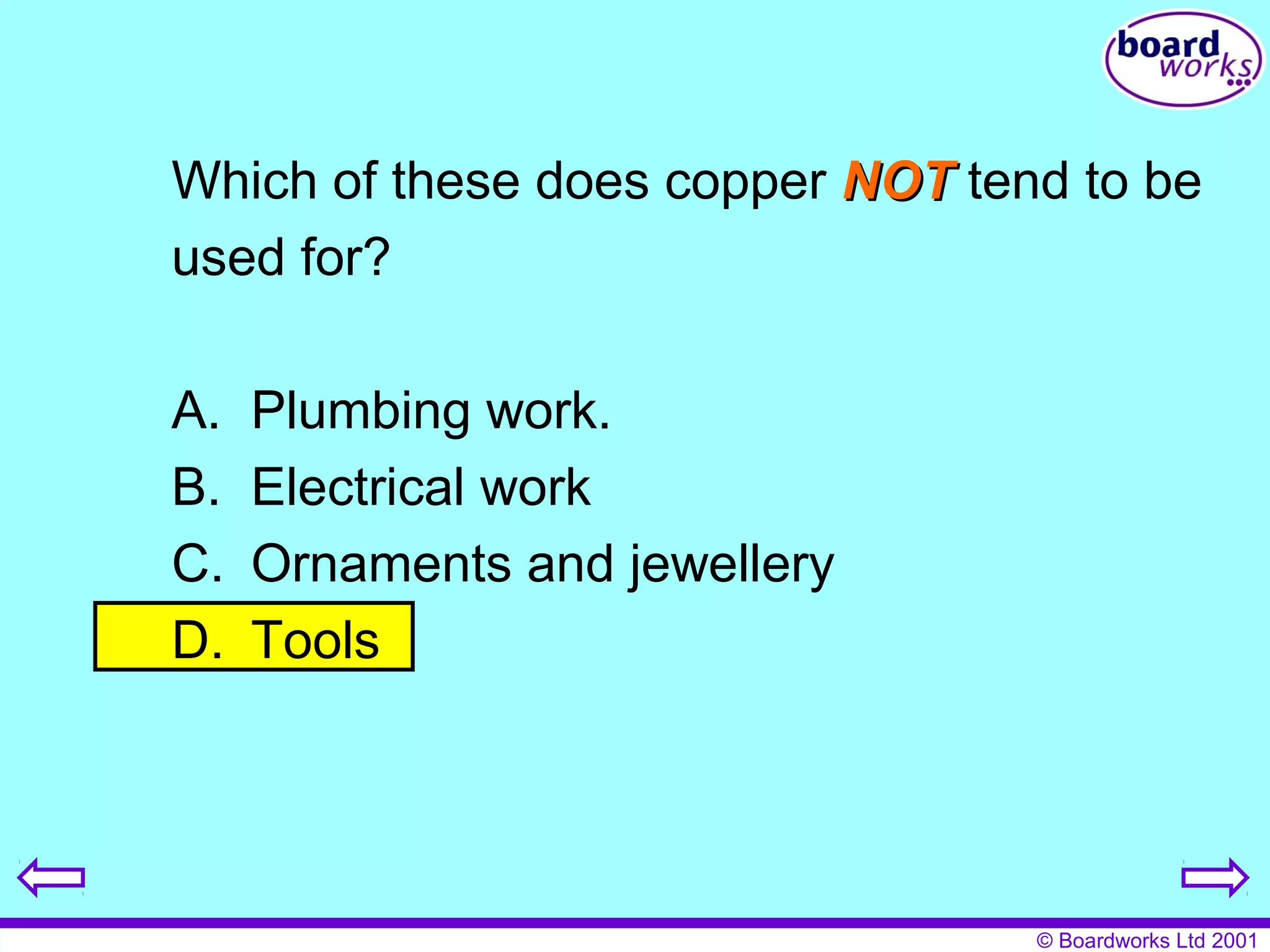
Which of these does copper NNOOTT tend to be 
used for? 
© Boardworks Ltd 2001 
A. Plumbing work. 
B. Electrical work 
C. Ornaments and jewellery 
D. Tools
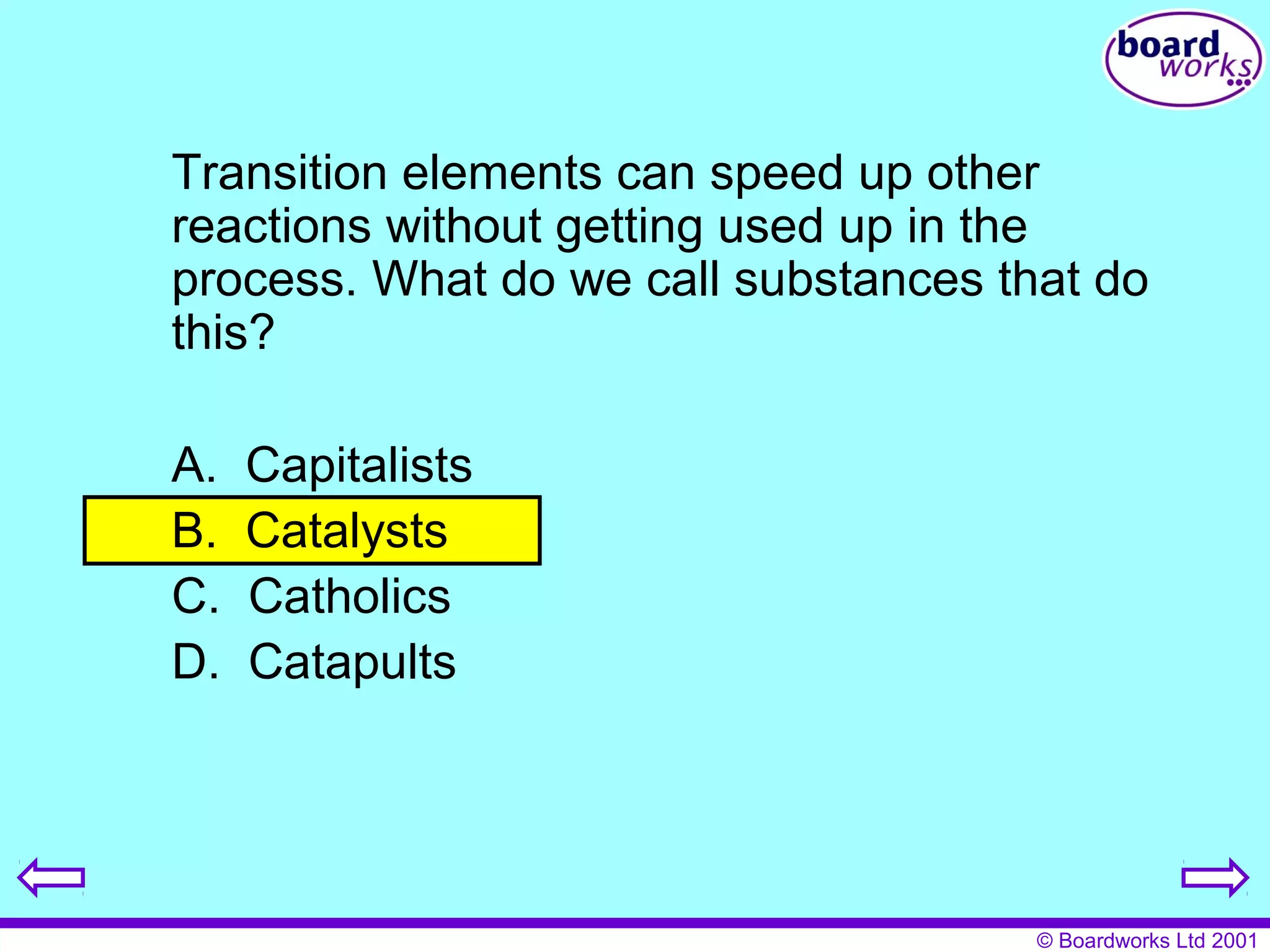
Transition elements can speed up other 
reactions without getting used up in the 
process. What do we call substances that do 
this? 
A. Capitalists 
B. Catalysts 
C. Catholics 
D. Catapults 
© Boardworks Ltd 2001
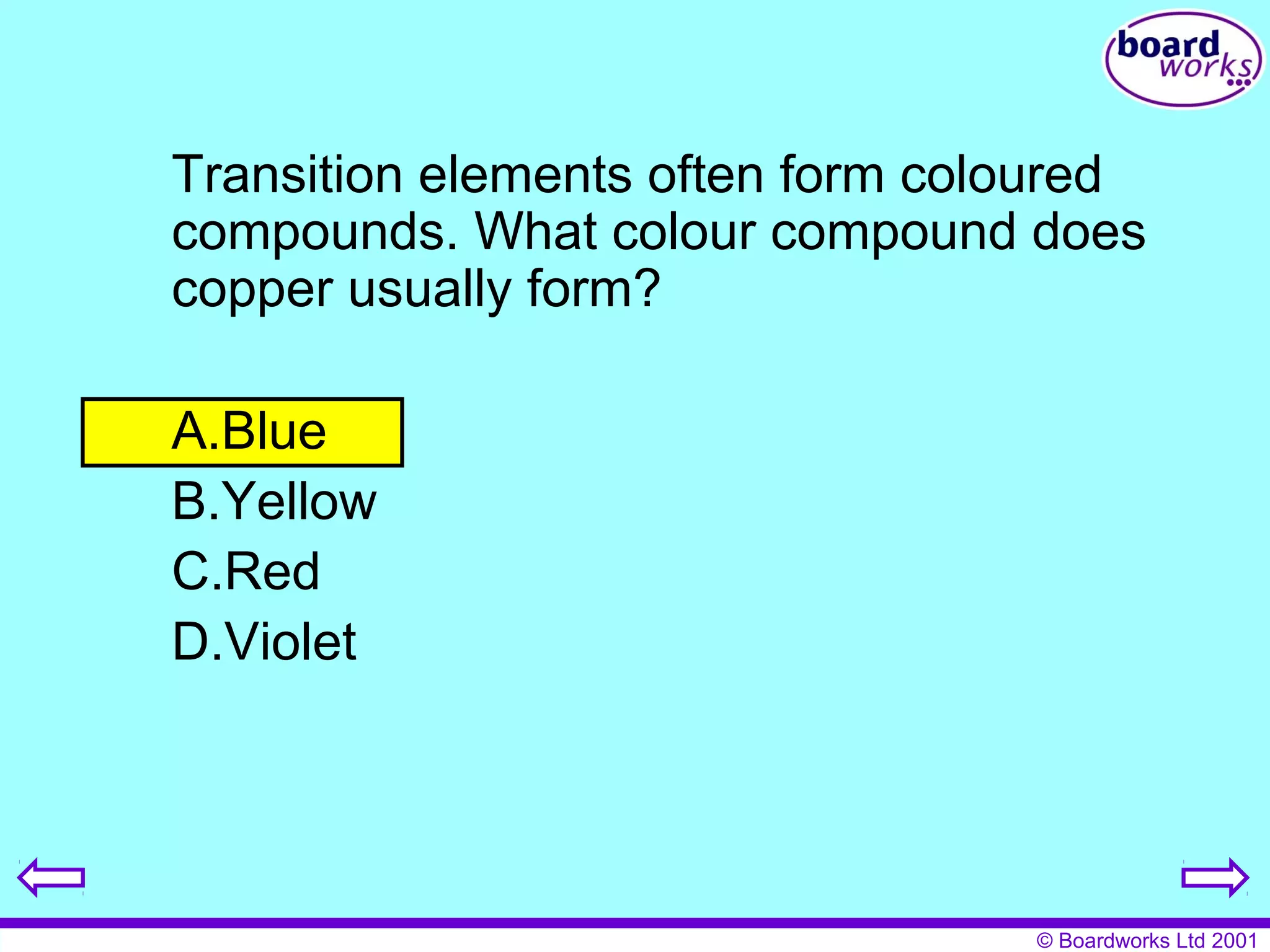
Transition elements often form coloured 
compounds. What colour compound does 
copper usually form? 
A.Blue 
B.Yellow 
C.Red 
D.Violet 
© Boardworks Ltd 2001
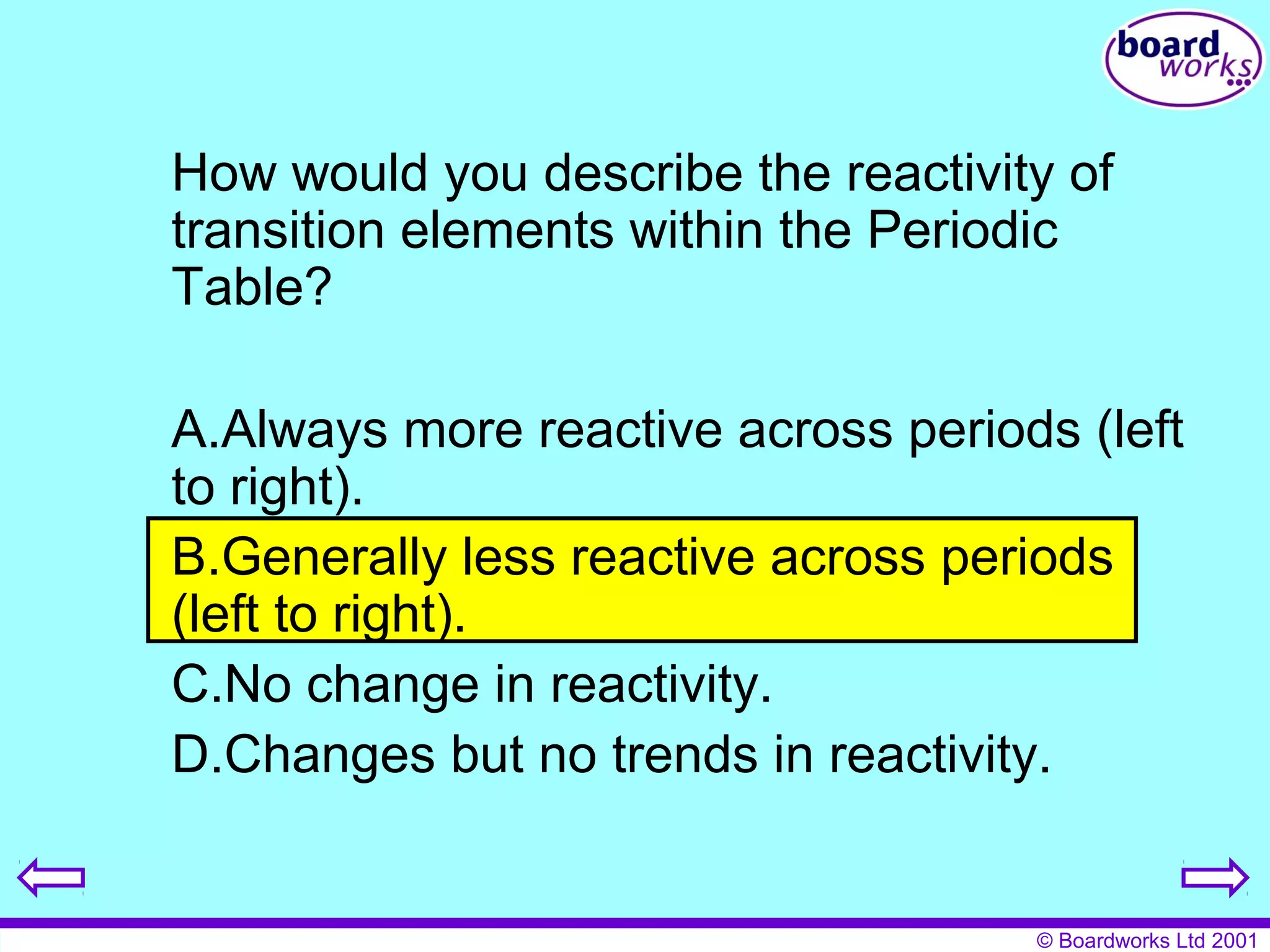
How would you describe the reactivity of 
transition elements within the Periodic 
Table? 
A.Always more reactive across periods (left 
to right). 
B.Generally less reactive across periods 
(left to right). 
C.No change in reactivity. 
D.Changes but no trends in reactivity. 
© Boardworks Ltd 2001

The transition metals.com[6]

  • 1.
    © Boardworks Ltd2001 THE TRANSITION METALS
  • 2.
    N O He F Ne Ar © Boardworks Ltd 2001 The Transition elements • Transition means “an iinn bbeettwweeeenn state” and the transition elements come in between Group 2 and Group 3. Sc Ti V Cr Mn Fe Co Ni Cu Zn Y Zr NbMo Tc Ru Rh Pd Ag Cd La Hf Ta W Re Os Ir Pt Au Hg Ac Rf Db Sg Bh Hs Mt ? ? ? H Li Na K Rb Cs Fr Be Mg Al P S Cl Ca GaGe Se Br Kr Sr In Sn Sb Te Ba Tl Pb Bi Po At Ra Rn I Si Xe B C As Gp 2 Gp 3 Transition Elements
  • 3.
    © Boardworks Ltd2001 General Characteristics Less reactive than Group 1 or Group 2 metals They mostly form coloured compounds They have high melting points They have high density Transition metals are often referred to as ‘typical’ metals Transition Elements Often act as catalysts
  • 4.
    © Boardworks Ltd2001 Properties – Density • Similarities are more noticeable than differences although there are still some broad patterns. • They are all dense (heavy) which is what we expect of metals. 9 8 7 6 5 4 3 2 1 0 Density (g/cm-3) Sc Ti V Cr Mn Fe Co Ni Cu Zn Sc Ti V Cr Mn Fe Co Ni Cu Zn
  • 5.
    © Boardworks Ltd2001 Properties – Melting Point E.g. Melting points show no regular pattern – other than nearly all being high which is typical of metals. (Note zinc doesn’t fit very well on either density or melting point.) 2000 1800 1600 1400 1200 1000 800 600 400 200 0 Melting Point ( C) Sc Ti V Cr Mn Fe Co Ni Cu Zn Sc Ti V Cr Mn Fe Co Ni Cu Zn
  • 6.
    © Boardworks Ltd2001 Properties – Reactivity • Again it is similarities that stand out rather than differences: they tend to react relatively slowly (e.g.) with air, water and acid. • The general trend is to reduced activity across the PeriodicTable but again the trend is far from perfect with zinc in particular being more reactive than you might expect. Sc Ti V Cr Mn Fe Co Ni Cu Zn General reduced reactivity Rusting: a slow but costly process!
  • 7.
    © Boardworks Ltd2001 Properties – Catalysis • A catalyst is a substance that speeds up a chemical reaction without being used up. • Catalysts are hugely valuable in industry where they can save time and energy. • Many transition elements ( and their compounds) are catalysts. V Ti Used in plastic manufacture Fe Ni Used in oil hydrogenation
  • 8.
    © Boardworks Ltd2001 Uses • The three most commonly known transition elements are iron or steel, copper and zinc. iron or steel General engineering metal copper Electrical and plumbing work zinc Galvanising steel to protect it
  • 9.
    © Boardworks Ltd2001 • Pair the metal up with its uses copper iron or steel zinc Activity
  • 10.
    • Pair themetal catalyst with the substance. © Boardworks Ltd 2001 Fe Ni Ti V Activity
  • 11.
    © Boardworks Ltd2001 • Pair the statement about the transition elements with the words The **** elements fit between group 2 and 3. catalysts They tend to be very**** reactive Most are not especially *** coloured They are all typical**** similar They often form compounds that are **** transition They often speed up reactions by acting as **** metals Activity
  • 12.
    © Boardworks Ltd2001 Which is a true statement about most transition elements? A. They are non-metals. B. They are light (low density). C. They are strong. D. They are non-conductors.
  • 13.
    Which of thesedoes copper NNOOTT tend to be used for? © Boardworks Ltd 2001 A. Plumbing work. B. Electrical work C. Ornaments and jewellery D. Tools
  • 14.
    Transition elements canspeed up other reactions without getting used up in the process. What do we call substances that do this? A. Capitalists B. Catalysts C. Catholics D. Catapults © Boardworks Ltd 2001
  • 15.
    Transition elements oftenform coloured compounds. What colour compound does copper usually form? A.Blue B.Yellow C.Red D.Violet © Boardworks Ltd 2001
  • 16.
    How would youdescribe the reactivity of transition elements within the Periodic Table? A.Always more reactive across periods (left to right). B.Generally less reactive across periods (left to right). C.No change in reactivity. D.Changes but no trends in reactivity. © Boardworks Ltd 2001