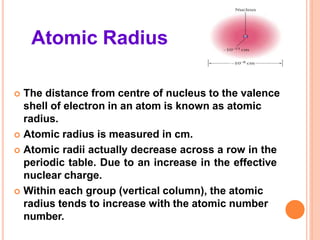
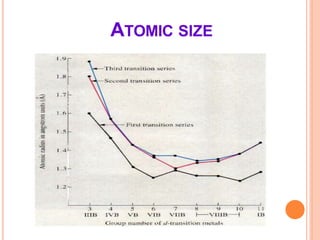
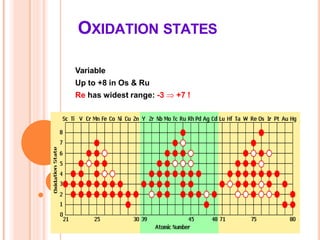
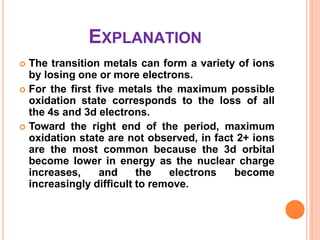
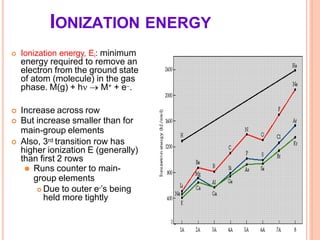
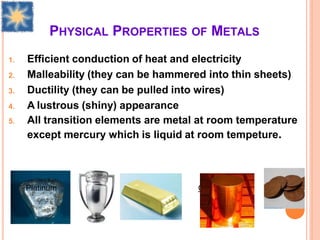
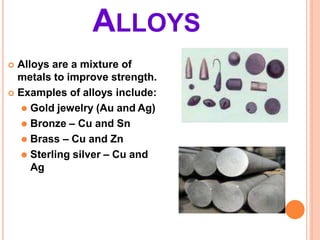
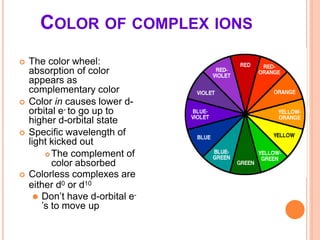
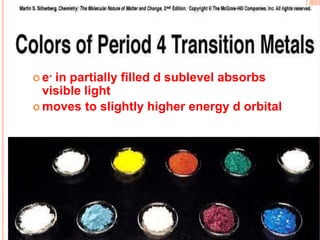
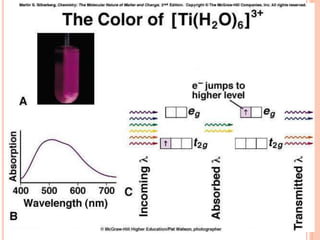
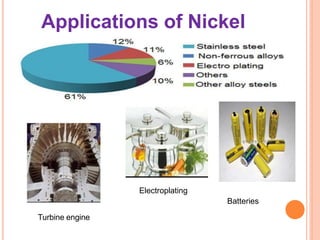
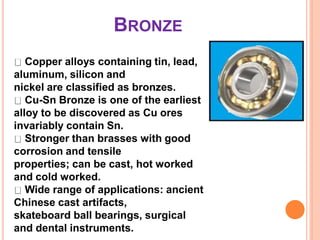
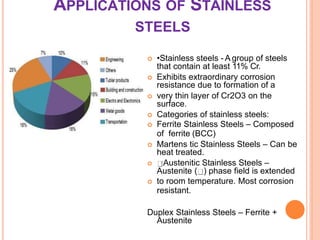
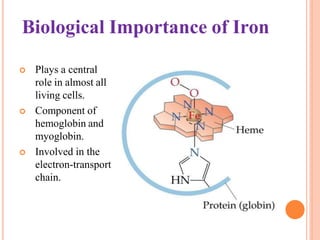
This document discusses transition elements and their properties. It describes how transition elements have electrons that fill the d-orbital of the next inner shell. Their atomic radii tend to decrease across periods but increase down groups. Transition elements can exist in multiple oxidation states, sometimes ranging from -3 to +8. They are metallic conductors of heat and electricity but can be alloyed to improve strength for applications like jewelry, construction materials, batteries, and turbines.