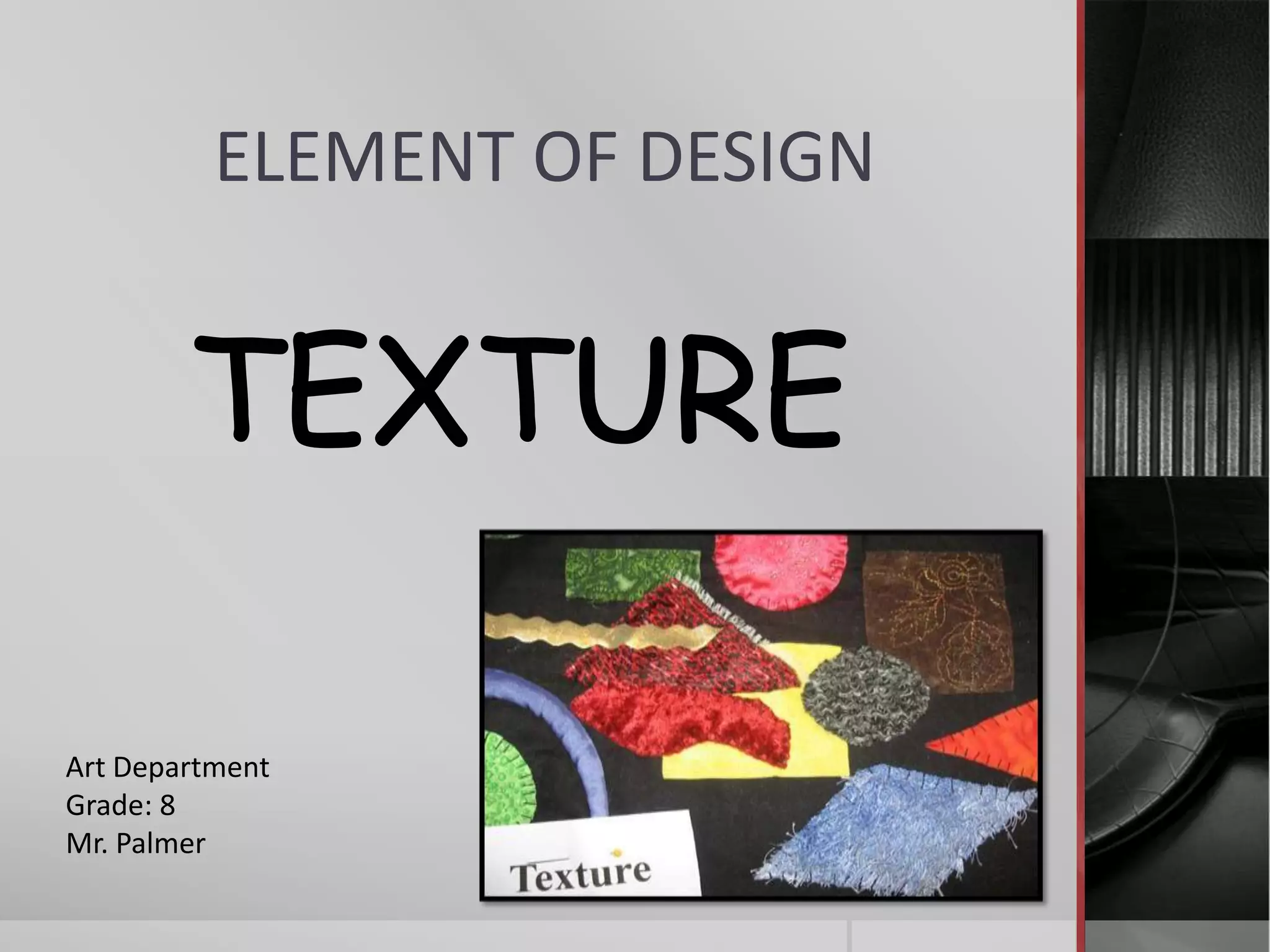
ELEMENT OF DESIGN


Art Department
Grade: 8
Mr. Palmer
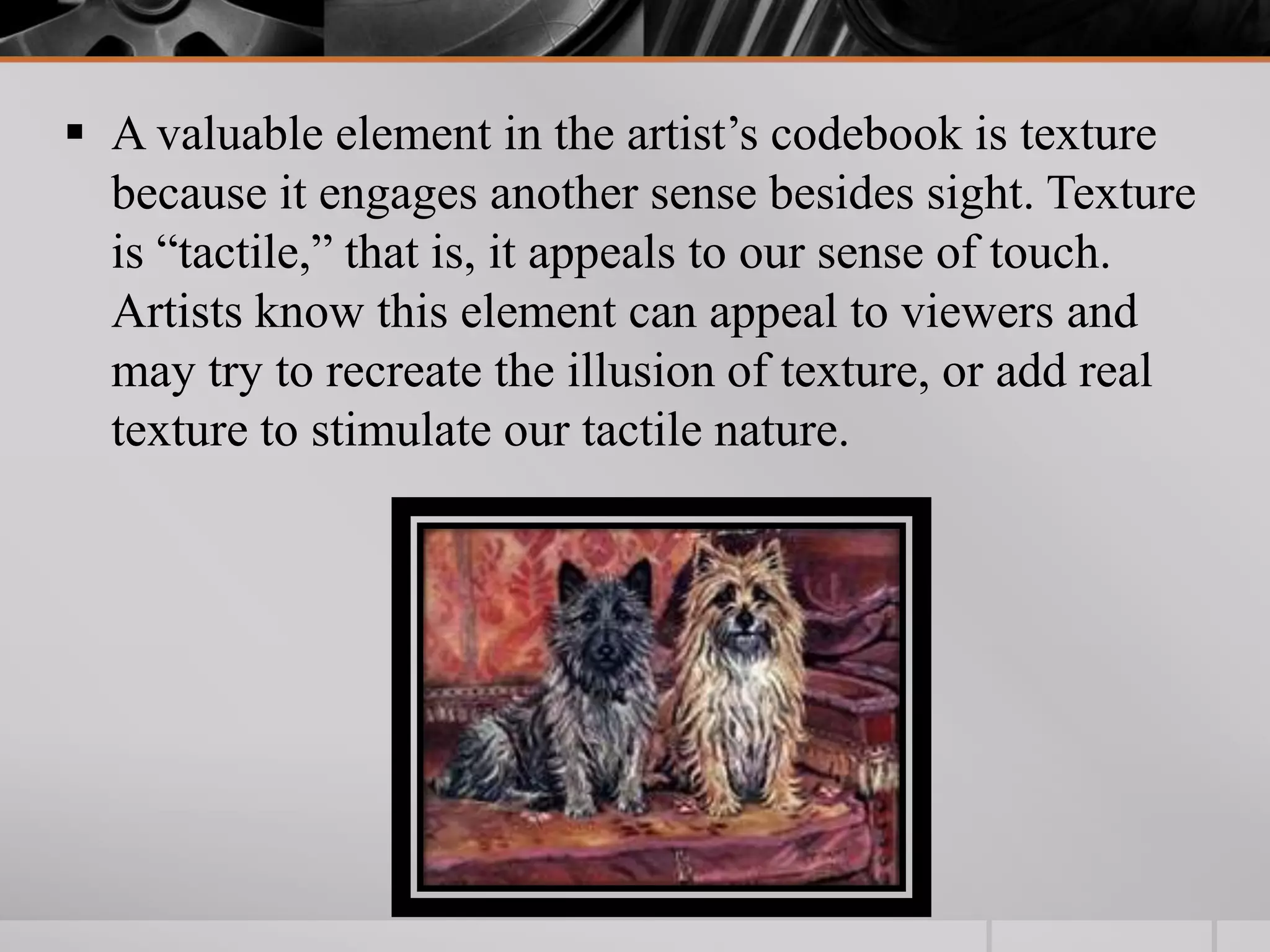
 A valuable element in the artist’s codebook is texture
  because it engages another sense besides sight. Texture
  is “tactile,” that is, it appeals to our sense of touch.
  Artists know this element can appeal to viewers and
  may try to recreate the illusion of texture, or add real
  texture to stimulate our tactile nature.
 Texture is a powerful art element because it can
  quickly evoke memories and emotions. Start becoming
  more aware of textures all around you—the carpet, in
  the clothes you’re wearing, and the fur on your cat.
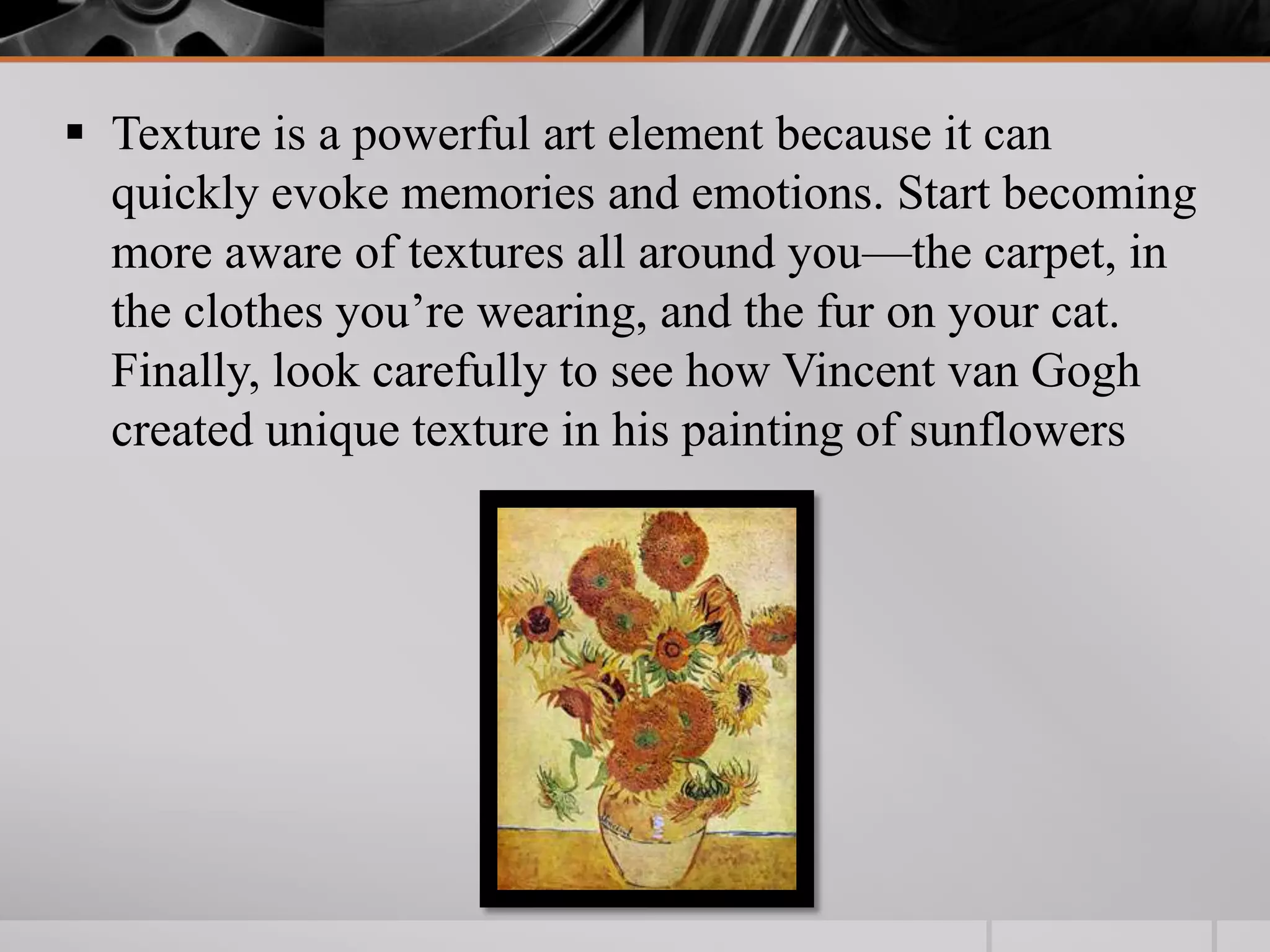
  Finally, look carefully to see how Vincent van Gogh
  created unique texture in his painting of sunflowers
Definition of Texture
I.   Texture, is described as the way a three-dimensional
     work actually feels when touched, or the visual "feel"
     of a two-dimensional work
II. Texture is the surface quality of an object. A rock
    may be rough and jagged. A piece of silk may be soft
    and smooth and your desk may feel hard and smooth.
Adjectives used to Describe Texture
Adjectives that describe soft textures
 Examples of adjectives that can be used to describe
  textures that are soft to the touch are cottony, downy,
  fuzzy, feathery, fluffy, furry, hairy, puffy, silky, soft,
  woollen and velvety.
Adjectives that describe hard textures
 Examples of adjectives that can be used to describe
  textures that are hard to the touch are bony, hard,
  wooden, metallic, glassy, rigid, smooth, steely, stiff,
  tough and unyielding.
Adjectives that describe resilient textures
 Examples of adjectives that can be used to describe
  textures that are resilient to the touch are bloated,
  flabby, flexible, rubbery, resilient, spongy, squashy,
  squishy and yielding.
Adjectives that describe mixed textures
 Examples of adjectives that can be used to describe
  textures that are mixed to the touch are abrasive,
  bumpy, coarse, grainy, grooved, gritty, jagged, lumpy,
  pitted, pockmarked, ragged, rough, rugged, scratchy,
  stubbly, uneven and wavy.
Categories of
  Texture
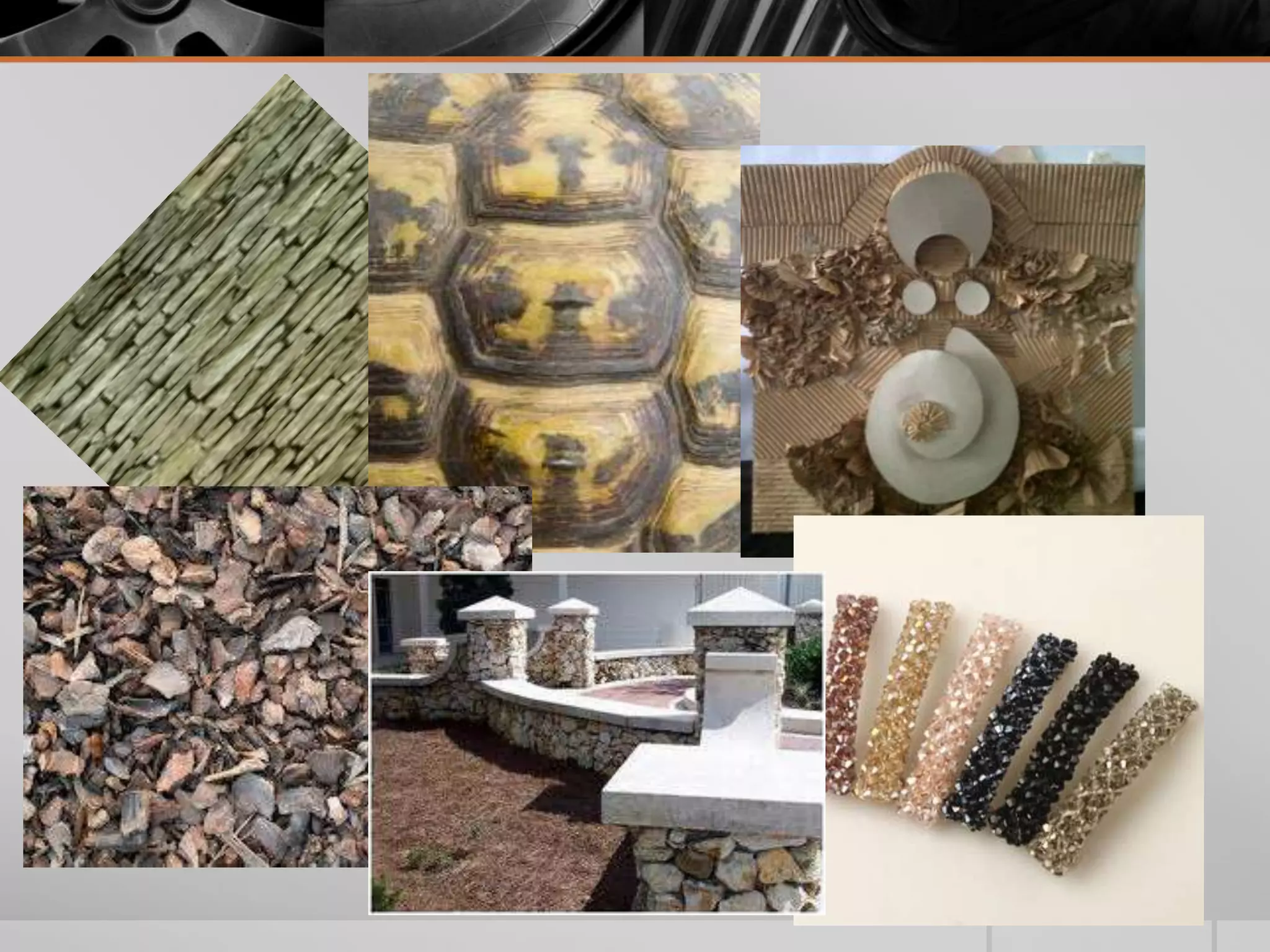
Actual Texture
 The application of textured objects to the surface of an
  artwork, or the creation of art from textured materials
 Texture can be created by carving, incising or
  scratching into a surface
 The creation of visible texture in an artwork from the
  application of found or manipulated textured materials.
  For example, the application of rows of shells to a
  headdress to create the illusion of hair texture.
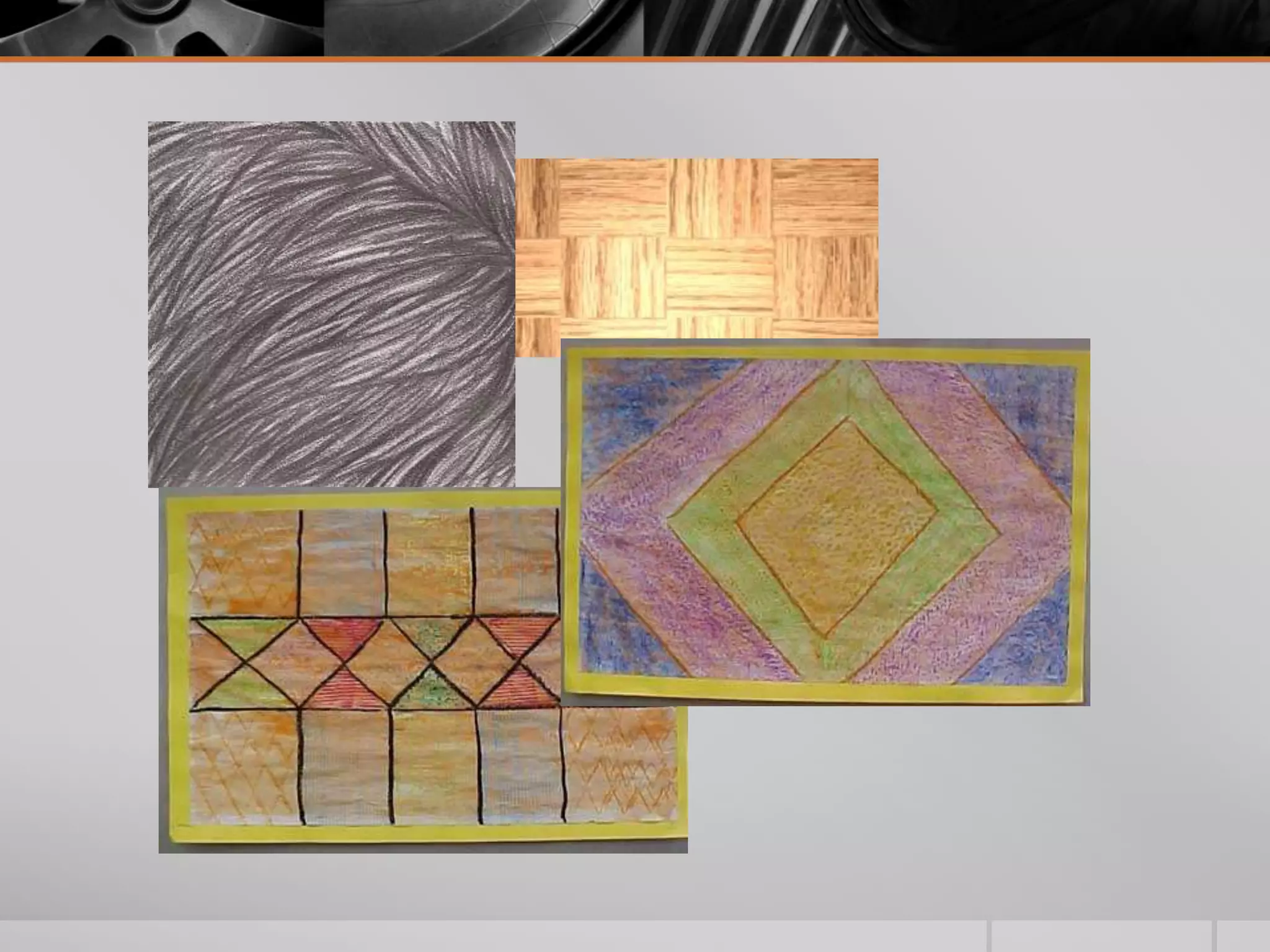
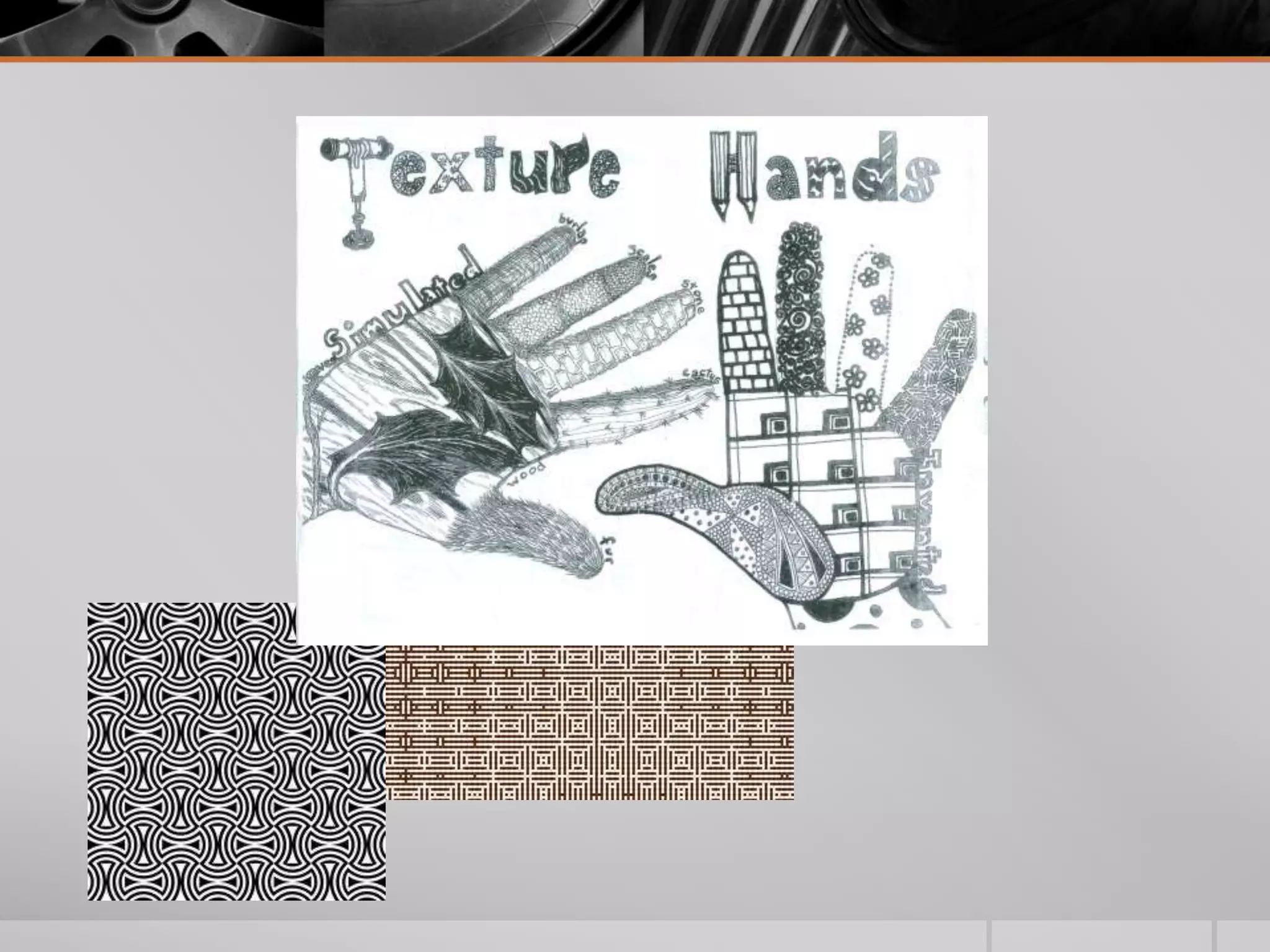
Visual /Simulated Texture
 Visual texture so realistic that it fools the eye into
  believing it is reality.
 The visual sensation of texture on a non-textured
  surface. Simulated textures are created by the
  manipulation of lights and shadows, line, rhythm and
  other visual elements.
 Simulated texture can be achieved using a variety of
  media such as pencil, pen, paint, photography and
  computer generated imagery
Invented Textures
 Invented textures are the creation of the artist/designer.
  They are made up for expressive or decorative
  purposes and are not the representation of or
  abstractions from actual textures.
Assignment
 Students should create rubbings of a variety of
  everyday surfaces such as clothing, walls, trees. Use
  several colours when making rubbings. This collection
  of rubbings will be their texture references.
 Draw or trace the an animal shape on blank piece
  of paper. Alternately, they can make larger line
  drawings of animals. Consider domestic animal shapes
  like cats, dogs, guinea pigs and rabbits, as well as wild
  animals like tigers, cheetahs, giraffes and birds.
 Decide what colours to use for your animal of
  choice..
 Using another blank sheet of paper, the students can
  make a textured background setting for their animal.
 • Place the animals in their setting. Cut and paste
  into position. Consider adding pieces of foam core to
  the back of the animal before gluing in place. Cut
  small half-inch or smaller pieces of foam core. Use a
  glue stick to adhere the back of the cut out animal.
  This will give the picture a 3D effect.

Element of design texture

  • 1.
    ELEMENT OF DESIGN ArtDepartment Grade: 8 Mr. Palmer
  • 2.
     A valuableelement in the artist’s codebook is texture because it engages another sense besides sight. Texture is “tactile,” that is, it appeals to our sense of touch. Artists know this element can appeal to viewers and may try to recreate the illusion of texture, or add real texture to stimulate our tactile nature.
  • 3.
     Texture isa powerful art element because it can quickly evoke memories and emotions. Start becoming more aware of textures all around you—the carpet, in the clothes you’re wearing, and the fur on your cat. Finally, look carefully to see how Vincent van Gogh created unique texture in his painting of sunflowers
  • 4.
    Definition of Texture I. Texture, is described as the way a three-dimensional work actually feels when touched, or the visual "feel" of a two-dimensional work II. Texture is the surface quality of an object. A rock may be rough and jagged. A piece of silk may be soft and smooth and your desk may feel hard and smooth.
  • 5.
    Adjectives used toDescribe Texture Adjectives that describe soft textures  Examples of adjectives that can be used to describe textures that are soft to the touch are cottony, downy, fuzzy, feathery, fluffy, furry, hairy, puffy, silky, soft, woollen and velvety. Adjectives that describe hard textures  Examples of adjectives that can be used to describe textures that are hard to the touch are bony, hard, wooden, metallic, glassy, rigid, smooth, steely, stiff, tough and unyielding.
  • 6.
    Adjectives that describeresilient textures  Examples of adjectives that can be used to describe textures that are resilient to the touch are bloated, flabby, flexible, rubbery, resilient, spongy, squashy, squishy and yielding. Adjectives that describe mixed textures  Examples of adjectives that can be used to describe textures that are mixed to the touch are abrasive, bumpy, coarse, grainy, grooved, gritty, jagged, lumpy, pitted, pockmarked, ragged, rough, rugged, scratchy, stubbly, uneven and wavy.
  • 7.
  • 8.
    Actual Texture  Theapplication of textured objects to the surface of an artwork, or the creation of art from textured materials  Texture can be created by carving, incising or scratching into a surface  The creation of visible texture in an artwork from the application of found or manipulated textured materials. For example, the application of rows of shells to a headdress to create the illusion of hair texture.
  • 10.
    Visual /Simulated Texture Visual texture so realistic that it fools the eye into believing it is reality.  The visual sensation of texture on a non-textured surface. Simulated textures are created by the manipulation of lights and shadows, line, rhythm and other visual elements.  Simulated texture can be achieved using a variety of media such as pencil, pen, paint, photography and computer generated imagery
  • 12.
    Invented Textures  Inventedtextures are the creation of the artist/designer. They are made up for expressive or decorative purposes and are not the representation of or abstractions from actual textures.
  • 14.
    Assignment  Students shouldcreate rubbings of a variety of everyday surfaces such as clothing, walls, trees. Use several colours when making rubbings. This collection of rubbings will be their texture references.  Draw or trace the an animal shape on blank piece of paper. Alternately, they can make larger line drawings of animals. Consider domestic animal shapes like cats, dogs, guinea pigs and rabbits, as well as wild animals like tigers, cheetahs, giraffes and birds.
  • 15.
     Decide whatcolours to use for your animal of choice..  Using another blank sheet of paper, the students can make a textured background setting for their animal.  • Place the animals in their setting. Cut and paste into position. Consider adding pieces of foam core to the back of the animal before gluing in place. Cut small half-inch or smaller pieces of foam core. Use a glue stick to adhere the back of the cut out animal. This will give the picture a 3D effect.