t
e
x
t
u
r
e
s
1º ESO
Beatriz de la Calle Escudero
What is the texture?
We identify texture as the external appearance of
the materials, objects or things that surround us. We
can discover textures in tree barks, fruit peels,
stones, walls, walls, metals, furniture ...
Especially striking are those of the skins of some animals
because of their shape and color. They transmit softness
(mink, ermine) or hardness (crocodile, elephant ...). We
discover texture ourselves when we feel skin, hair or clothing.
According to their origin or as we perceive them (touch-sight)
The textures, by their ORIGIN can be natural or artificial.
Each in turn can be smooth or rough.
Visual and tactile textures
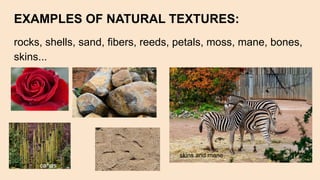
EXAMPLES OF NATURAL TEXTURES:
rocks, shells, sand, fibers, reeds, petals, moss, mane, bones,
skins...
skins and mane
cañas
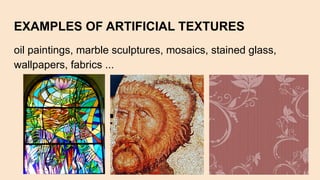
EXAMPLES OF ARTIFICIAL TEXTURES
oil paintings, marble sculptures, mosaics, stained glass,
wallpapers, fabrics ...
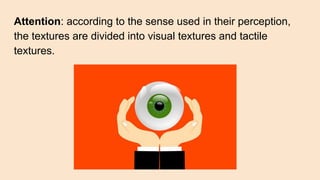
Attention: according to the sense used in their perception,
the textures are divided into visual textures and tactile
textures.
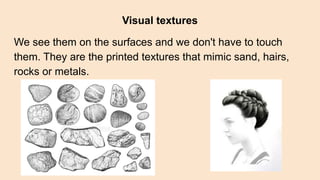
Visual textures
We see them on the surfaces and we don't have to touch
them. They are the printed textures that mimic sand, hairs,
rocks or metals.
Tactile textures
They are those that can be perceived through touch. The
analysis performed by the eye on perception is reaffirmed
through touch.
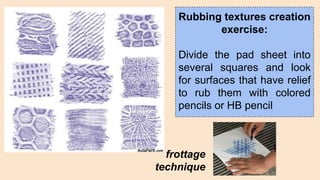
Rubbing textures creation
exercise:
Divide the pad sheet into
several squares and look
for surfaces that have relief
to rub them with colored
pencils or HB pencil
frottage
technique
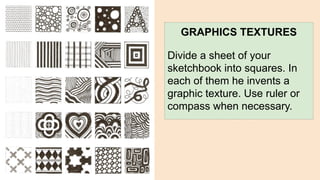
GRAPHICS TEXTURES
Divide a sheet of your
sketchbook into squares. In
each of them he invents a
graphic texture. Use ruler or
compass when necessary.

Textures 1ºeso

  • 1.
  • 2.
    What is thetexture? We identify texture as the external appearance of the materials, objects or things that surround us. We can discover textures in tree barks, fruit peels, stones, walls, walls, metals, furniture ...
  • 3.
    Especially striking arethose of the skins of some animals because of their shape and color. They transmit softness (mink, ermine) or hardness (crocodile, elephant ...). We discover texture ourselves when we feel skin, hair or clothing.
  • 4.
    According to theirorigin or as we perceive them (touch-sight) The textures, by their ORIGIN can be natural or artificial. Each in turn can be smooth or rough. Visual and tactile textures
  • 5.
    EXAMPLES OF NATURALTEXTURES: rocks, shells, sand, fibers, reeds, petals, moss, mane, bones, skins... skins and mane cañas
  • 6.
    EXAMPLES OF ARTIFICIALTEXTURES oil paintings, marble sculptures, mosaics, stained glass, wallpapers, fabrics ...
  • 7.
    Attention: according tothe sense used in their perception, the textures are divided into visual textures and tactile textures.
  • 8.
    Visual textures We seethem on the surfaces and we don't have to touch them. They are the printed textures that mimic sand, hairs, rocks or metals.
  • 9.
    Tactile textures They arethose that can be perceived through touch. The analysis performed by the eye on perception is reaffirmed through touch.
  • 10.
    Rubbing textures creation exercise: Dividethe pad sheet into several squares and look for surfaces that have relief to rub them with colored pencils or HB pencil frottage technique
  • 11.
    GRAPHICS TEXTURES Divide asheet of your sketchbook into squares. In each of them he invents a graphic texture. Use ruler or compass when necessary.