DESIGN
AND
COLOR CONCEPT
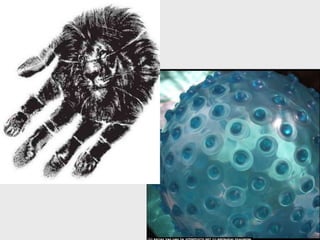
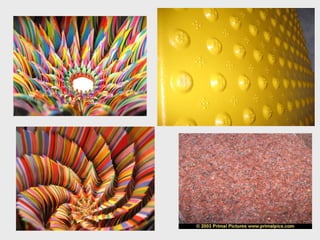
TEXTURE
VISUAL EFFECTS OF TEXTURE
• Textures create visual illusions that affect the
appearance of the figure.
• Coarse and bulky textures have an enlarging
effect.
• Bold checks, wide wale corduroy, thick pile on
fur and fluffy surfaces conceal the surface and
make the area look larger.
• Light use of textures always help in highlighting
the space in more effective way.
• Smooth plain surfaces tend to require more
construction and trimming detail to add
interest to the design.
• Dull textures are slimming because they
absorb light.
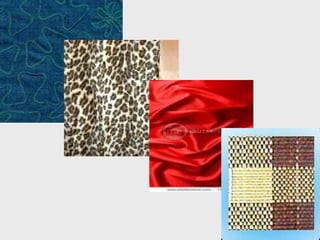
• Smooth, shiny surfaces like satin seem to
advance and endorse the figure. They also
make the color seem brighter than do matt
surfaces e.g. Red satin is brighter and more
noticeable than red cotton.
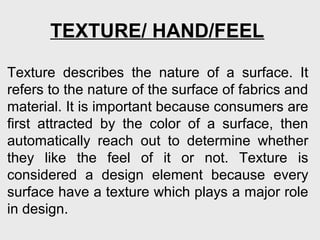
TEXTURE/ HAND/FEEL
Texture describes the nature of a surface. It
refers to the nature of the surface of fabrics and
material. It is important because consumers are
first attracted by the color of a surface, then
automatically reach out to determine whether
they like the feel of it or not. Texture is
considered a design element because every
surface have a texture which plays a major role
in design.
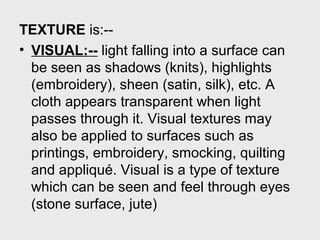
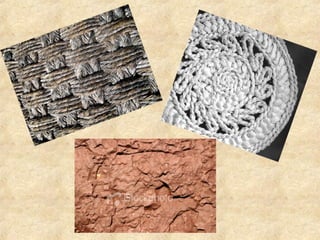
TEXTURE is:-• VISUAL:-- light falling into a surface can
be seen as shadows (knits), highlights
(embroidery), sheen (satin, silk), etc. A
cloth appears transparent when light
passes through it. Visual textures may
also be applied to surfaces such as
printings, embroidery, smocking, quilting
and appliqué. Visual is a type of texture
which can be seen and feel through eyes
(stone surface, jute)
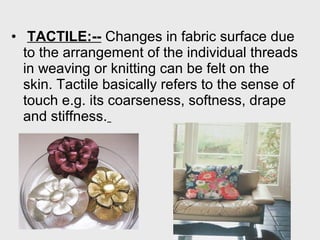
• TACTILE:-- Changes in fabric surface due
to the arrangement of the individual threads
in weaving or knitting can be felt on the
skin. Tactile basically refers to the sense of
touch e.g. its coarseness, softness, drape
and stiffness.
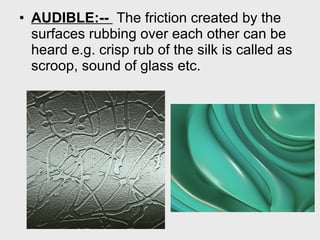
• AUDIBLE:-- The friction created by the
surfaces rubbing over each other can be
heard e.g. crisp rub of the silk is called as
scroop, sound of glass etc.
CATEGORIES OF TEXTURES
• ROUGH/MATT:-- These are sporty, casual and
comforting. Soft and fluffy textures such as fur
and lambs wool seem to offer coziness and
comfort, (floor treatment) while the coarser
textures of jute, hand knits and corduroys
suggest warmth and protection in casual,
outdoor environments.
• ROUGH/GLOSSY:-Rich, luxurious and
glamorous fabrics such as brocades, sequins,
dupion silk seem to reflect the right lights. Rich
paints with egg shine finish etc
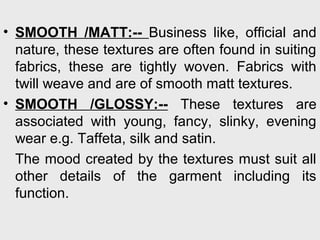
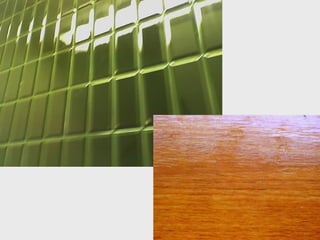
• SMOOTH /MATT:-- Business like, official and
nature, these textures are often found in suiting
fabrics, these are tightly woven. Fabrics with
twill weave and are of smooth matt textures.
• SMOOTH /GLOSSY:-- These textures are
associated with young, fancy, slinky, evening
wear e.g. Taffeta, silk and satin.
The mood created by the textures must suit all
other details of the garment including its
function.
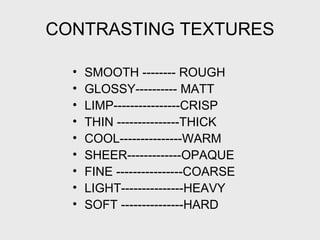
CONTRASTING TEXTURES
•
•
•
•
•
•
•
•
•

SMOOTH -------- ROUGH
GLOSSY---------- MATT
LIMP----------------CRISP
THIN ---------------THICK
COOL---------------WARM
SHEER-------------OPAQUE
FINE ----------------COARSE
LIGHT---------------HEAVY
SOFT ---------------HARD
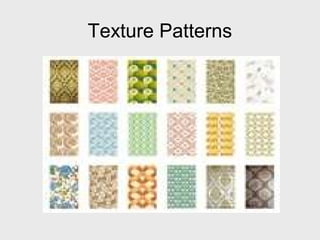
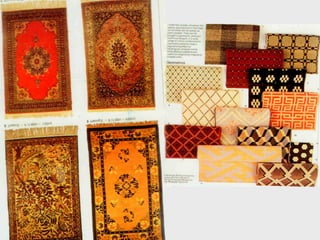
Texture Patterns
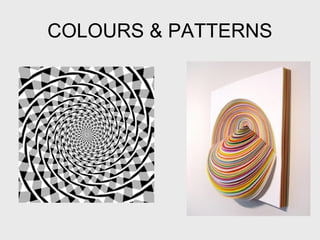
COLOURS & PATTERNS
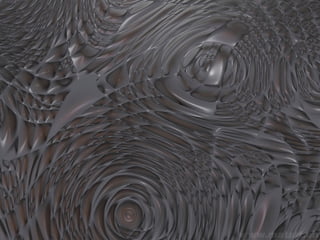
visual and tectile textures

visual and tectile textures

  • 2.
  • 3.
    VISUAL EFFECTS OFTEXTURE • Textures create visual illusions that affect the appearance of the figure. • Coarse and bulky textures have an enlarging effect. • Bold checks, wide wale corduroy, thick pile on fur and fluffy surfaces conceal the surface and make the area look larger. • Light use of textures always help in highlighting the space in more effective way.
  • 4.
    • Smooth plainsurfaces tend to require more construction and trimming detail to add interest to the design. • Dull textures are slimming because they absorb light. • Smooth, shiny surfaces like satin seem to advance and endorse the figure. They also make the color seem brighter than do matt surfaces e.g. Red satin is brighter and more noticeable than red cotton.
  • 5.
    TEXTURE/ HAND/FEEL Texture describesthe nature of a surface. It refers to the nature of the surface of fabrics and material. It is important because consumers are first attracted by the color of a surface, then automatically reach out to determine whether they like the feel of it or not. Texture is considered a design element because every surface have a texture which plays a major role in design.
  • 6.
    TEXTURE is:-• VISUAL:--light falling into a surface can be seen as shadows (knits), highlights (embroidery), sheen (satin, silk), etc. A cloth appears transparent when light passes through it. Visual textures may also be applied to surfaces such as printings, embroidery, smocking, quilting and appliqué. Visual is a type of texture which can be seen and feel through eyes (stone surface, jute)
  • 9.
    • TACTILE:-- Changesin fabric surface due to the arrangement of the individual threads in weaving or knitting can be felt on the skin. Tactile basically refers to the sense of touch e.g. its coarseness, softness, drape and stiffness.
  • 11.
    • AUDIBLE:-- Thefriction created by the surfaces rubbing over each other can be heard e.g. crisp rub of the silk is called as scroop, sound of glass etc.
  • 12.
    CATEGORIES OF TEXTURES •ROUGH/MATT:-- These are sporty, casual and comforting. Soft and fluffy textures such as fur and lambs wool seem to offer coziness and comfort, (floor treatment) while the coarser textures of jute, hand knits and corduroys suggest warmth and protection in casual, outdoor environments. • ROUGH/GLOSSY:-Rich, luxurious and glamorous fabrics such as brocades, sequins, dupion silk seem to reflect the right lights. Rich paints with egg shine finish etc
  • 13.
    • SMOOTH /MATT:--Business like, official and nature, these textures are often found in suiting fabrics, these are tightly woven. Fabrics with twill weave and are of smooth matt textures. • SMOOTH /GLOSSY:-- These textures are associated with young, fancy, slinky, evening wear e.g. Taffeta, silk and satin. The mood created by the textures must suit all other details of the garment including its function.
  • 17.
    CONTRASTING TEXTURES • • • • • • • • • SMOOTH --------ROUGH GLOSSY---------- MATT LIMP----------------CRISP THIN ---------------THICK COOL---------------WARM SHEER-------------OPAQUE FINE ----------------COARSE LIGHT---------------HEAVY SOFT ---------------HARD
  • 18.
  • 20.