
T0pic:
Texture

Presented By:
Rabiya Saeed

301
TEXTURE
WHAT IS TEXTURE
 Look of an object
 Feel of an object

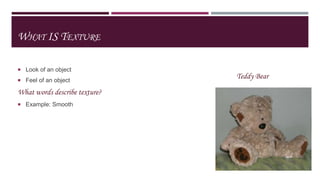
What words describe texture?
 Example: Smooth

Teddy Bear
WHAT IS TEXTURE
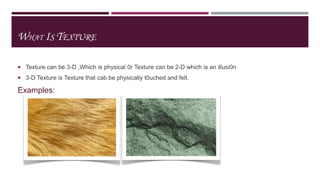
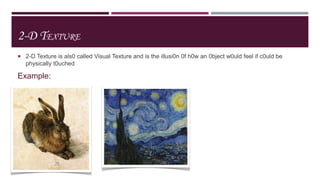
 Texture can be 3-D ,Which is physical 0r Texture can be 2-D which is an illusi0n
 3-D Texture is Texture that cab be physically t0uched and felt.

Examples:
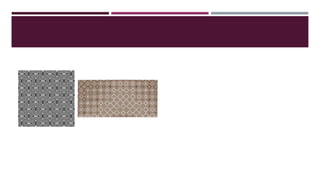
2-D TEXTURE
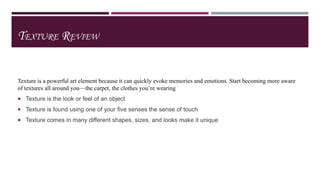
 2-D Texture is als0 called Visual Texture and is the illusi0n 0f h0w an 0bject w0uld feel if c0uld be

physically t0uched

Example:
TEXTURE REVIEW

Texture is a powerful art element because it can quickly evoke memories and emotions. Start becoming more aware
of textures all around you—the carpet, the clothes you’re wearing
 Texture is the look or feel of an object

 Texture is found using one of your five senses the sense of touch
 Texture comes in many different shapes, sizes, and looks make it unique
DEFINITI0N 0F TEXTURE

I.

Texture, is described as the way a three-dimensional work actually feels when touched, or the visual "feel" of a
two-dimensional work

II.

Texture is the surface quality of an object. A piece of silk may be soft and smooth and your desk may feel hard
and smooth.
ADJECTIVES USED TO DESCRIBE TEXTURE
Adjectives that describe soft textures
 Examples of adjectives that can be used to describe textures that are soft to the touch are

cottony, downy, fuzzy, feathery, fluffy, furry, hairy, puffy, silky, soft, woollen and velvety.
Adjectives that describe hard textures
 Examples of adjectives that can be used to describe textures that are hard to the touch are

bony, hard, wooden, metallic, glassy, smooth, steely, stiff, tough and unyielding.
ADJECTIVES USED TO DESCRIBE TEXTURE

Adjectives that describe mixed textures
 Examples of adjectives that can be used to describe textures that are mixed to the touch are

abrasive, grainy, rough, scratchy, uneven and wavy.
CATEG0RIES 0F TEXTURE
ACTUAL TEXTURE

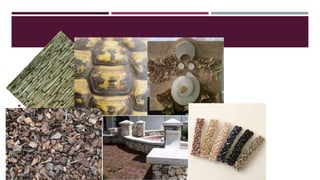
 The application of textured objects to the surface of an artwork, or the creation of art from textured materials
 Texture can be created by carving, incising or scratching into a surface

 The creation of visible texture in an artwork from the application of found or manipulated textured materials. For

example, the application of rows of shells to a headdress to create the illusion of hair texture
 S
VISUAL/SIMULATED TEXTURE

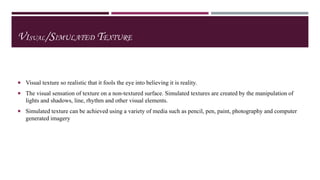
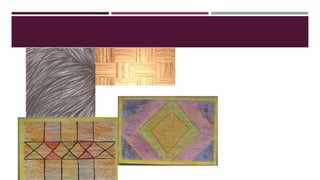
 Visual texture so realistic that it fools the eye into believing it is reality.
 The visual sensation of texture on a non-textured surface. Simulated textures are created by the manipulation of

lights and shadows, line, rhythm and other visual elements.
 Simulated texture can be achieved using a variety of media such as pencil, pen, paint, photography and computer

generated imagery
INVENTED TEXTURE

 Invented textures are the creation of the artist/designer. They are made up for expressive or decorative

purposes and are not the representation of or abstractions from actual textures
 F
“Education is a better safeguard of liberty than a standing army.”

THANKS F0R Y0UR TIME

Texture (DIP)

  • 1.
  • 2.
  • 3.
    WHAT IS TEXTURE Look of an object  Feel of an object What words describe texture?  Example: Smooth Teddy Bear
  • 4.
    WHAT IS TEXTURE Texture can be 3-D ,Which is physical 0r Texture can be 2-D which is an illusi0n  3-D Texture is Texture that cab be physically t0uched and felt. Examples:
  • 5.
    2-D TEXTURE  2-DTexture is als0 called Visual Texture and is the illusi0n 0f h0w an 0bject w0uld feel if c0uld be physically t0uched Example:
  • 6.
    TEXTURE REVIEW Texture isa powerful art element because it can quickly evoke memories and emotions. Start becoming more aware of textures all around you—the carpet, the clothes you’re wearing  Texture is the look or feel of an object  Texture is found using one of your five senses the sense of touch  Texture comes in many different shapes, sizes, and looks make it unique
  • 7.
    DEFINITI0N 0F TEXTURE I. Texture,is described as the way a three-dimensional work actually feels when touched, or the visual "feel" of a two-dimensional work II. Texture is the surface quality of an object. A piece of silk may be soft and smooth and your desk may feel hard and smooth.
  • 8.
    ADJECTIVES USED TODESCRIBE TEXTURE Adjectives that describe soft textures  Examples of adjectives that can be used to describe textures that are soft to the touch are cottony, downy, fuzzy, feathery, fluffy, furry, hairy, puffy, silky, soft, woollen and velvety. Adjectives that describe hard textures  Examples of adjectives that can be used to describe textures that are hard to the touch are bony, hard, wooden, metallic, glassy, smooth, steely, stiff, tough and unyielding.
  • 9.
    ADJECTIVES USED TODESCRIBE TEXTURE Adjectives that describe mixed textures  Examples of adjectives that can be used to describe textures that are mixed to the touch are abrasive, grainy, rough, scratchy, uneven and wavy.
  • 10.
  • 11.
    ACTUAL TEXTURE  Theapplication of textured objects to the surface of an artwork, or the creation of art from textured materials  Texture can be created by carving, incising or scratching into a surface  The creation of visible texture in an artwork from the application of found or manipulated textured materials. For example, the application of rows of shells to a headdress to create the illusion of hair texture
  • 12.
  • 13.
    VISUAL/SIMULATED TEXTURE  Visualtexture so realistic that it fools the eye into believing it is reality.  The visual sensation of texture on a non-textured surface. Simulated textures are created by the manipulation of lights and shadows, line, rhythm and other visual elements.  Simulated texture can be achieved using a variety of media such as pencil, pen, paint, photography and computer generated imagery
  • 15.
    INVENTED TEXTURE  Inventedtextures are the creation of the artist/designer. They are made up for expressive or decorative purposes and are not the representation of or abstractions from actual textures
  • 16.
  • 17.
    “Education is abetter safeguard of liberty than a standing army.” THANKS F0R Y0UR TIME