Line
“Line is a rich metaphor for the artist. It denotes not only boundary, edge
 or contour, but is an agent for location, energy, and growth. It is literally
             movement and change - life itself.” - Lance Esplund
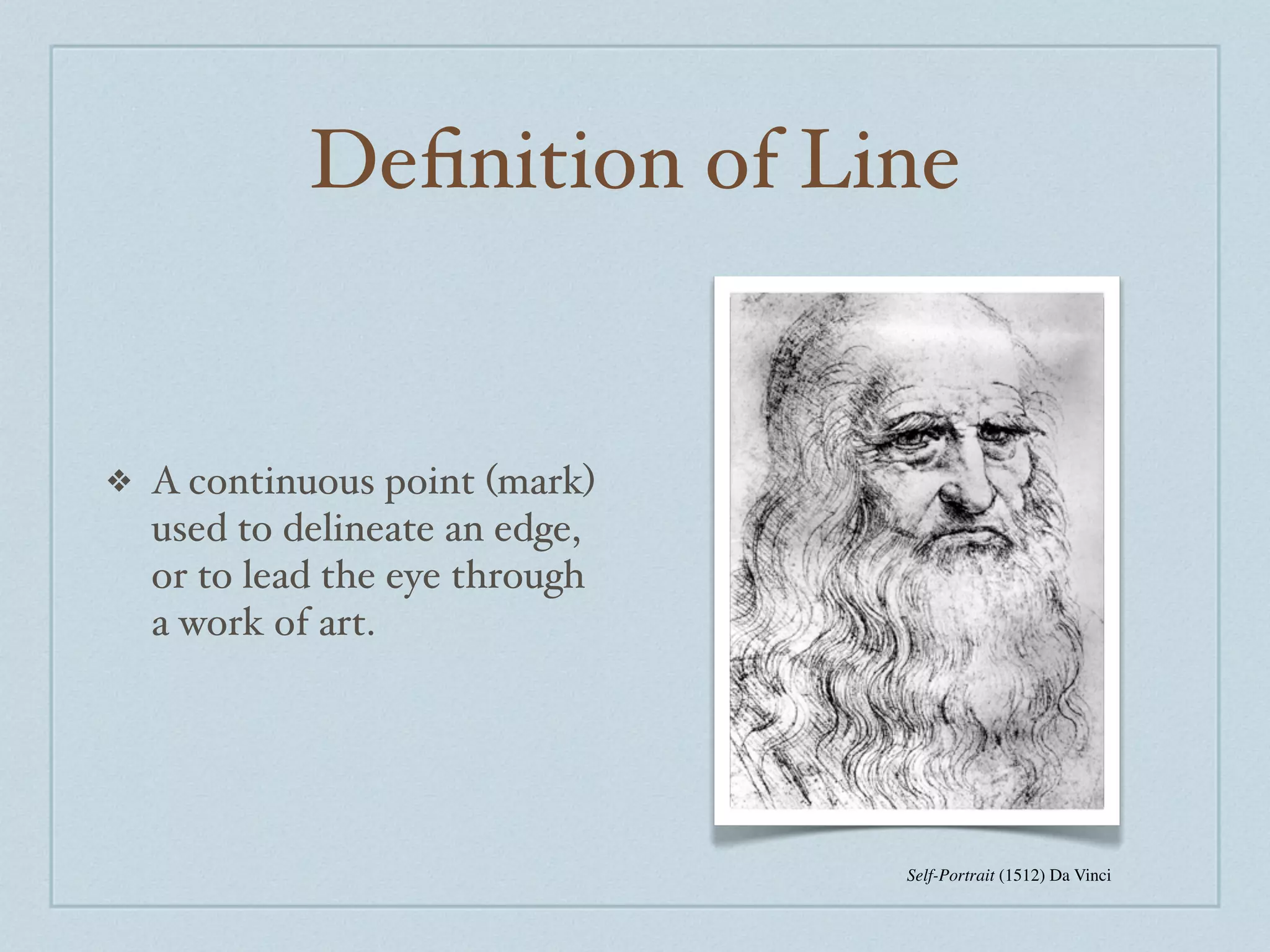
Definition of Line


❖   A continuous point (mark)
    used to delineate an edge,
    or to lead the eye through
    a work of art.


                                 Self-Portrait (1512) Da Vinci
The Basics
Horizontal      Vertical   Diagonal
Thick vs. Thin Lines


❖   Thick Lines                  ❖   Thin Lines

    ❖   Used in the foreground       ❖   Used in the background

    ❖   Used on whatever is          ❖   Used on objects that are
        important.                       not as important.
Types of Lines

❖   Implied

❖   Contour

❖   Gesture

❖   Structural

❖   Calligraphic


                                The Starry Night (1889) van Gough
Implied Lines
Lines created by the edges of shapes, forms, or color.
Contour Line


                                   ❖   B. The outline of an object
❖   A. The outline of an object.       and the interior details.
Silhouette
A contour drawing filled in with a color
Cross-Contour Drawing
 When lines flow over the forms of the object.
Gesture Drawing
❖   Quick line sketch.

    ❖   Usually of people.

    ❖   Captures basic forms and
        shapes, and movement,
        direction, or fluidity.

    ❖   Flowing and interesting
        in their shapes.

    ❖   Not always accurate.
Structural Lines
Lines necessary to hold the design together and make
        up the basic shapes in a work of art.
Calligraphic
❖   Elegant or
    decorative lines in
    a piece of art.

❖   A good
    calligraphic line
    will vary in width.

❖   Often found in
    Chinese and
    Japanese ink
    artwork.
                                    The Great Wave (1829-1832) Hokusai
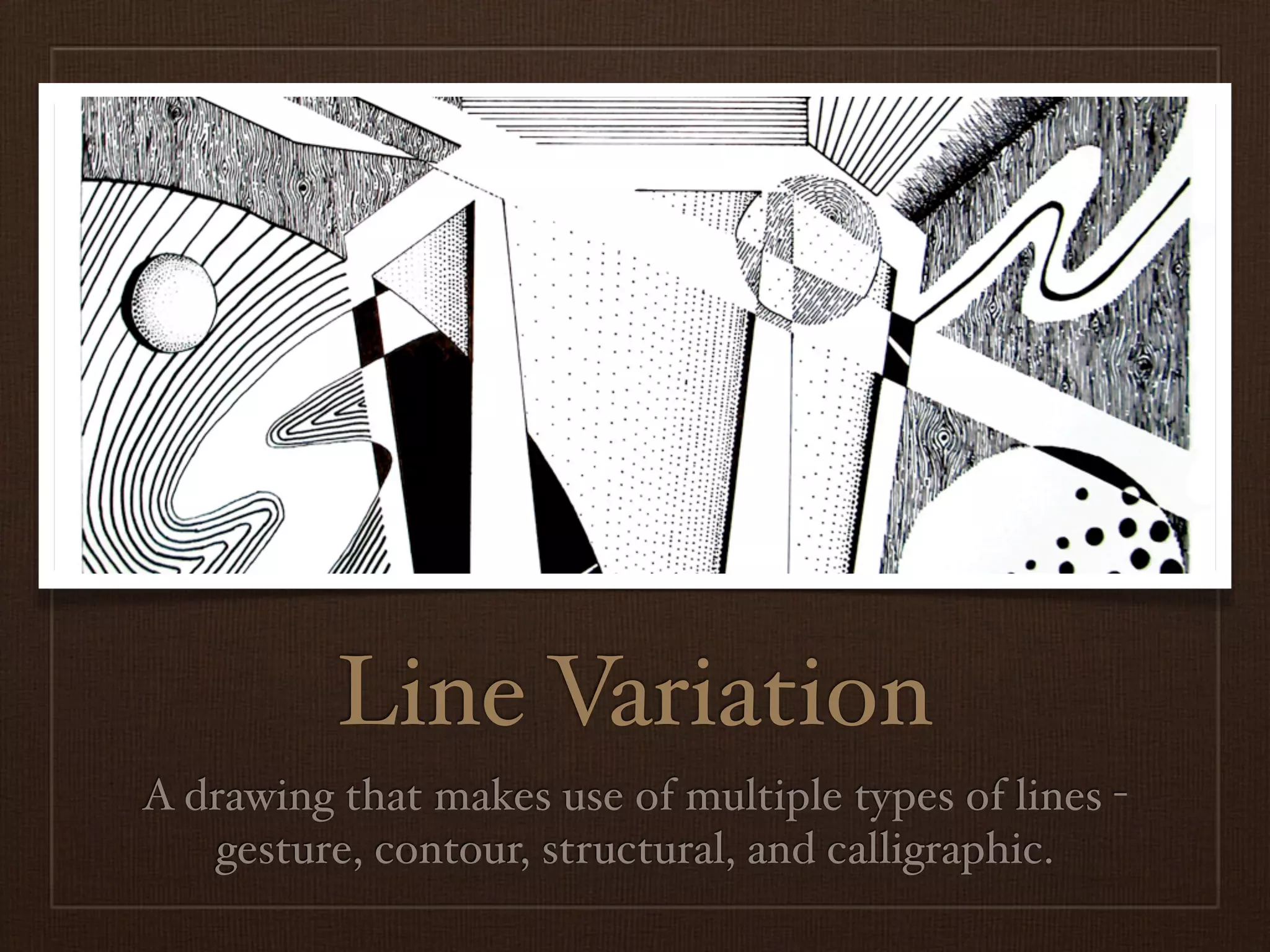
Line Variation
A drawing that makes use of multiple types of lines -
   gesture, contour, structural, and calligraphic.
Using Lines to Create Value

❖   There are three ways to use lines to create value:

    ❖   Stippling

    ❖   Hatching

    ❖   Cross-Hatching
Stippling


❖   Dots closer together make
    darker values.

❖   Dots further apart make
    lighter values.
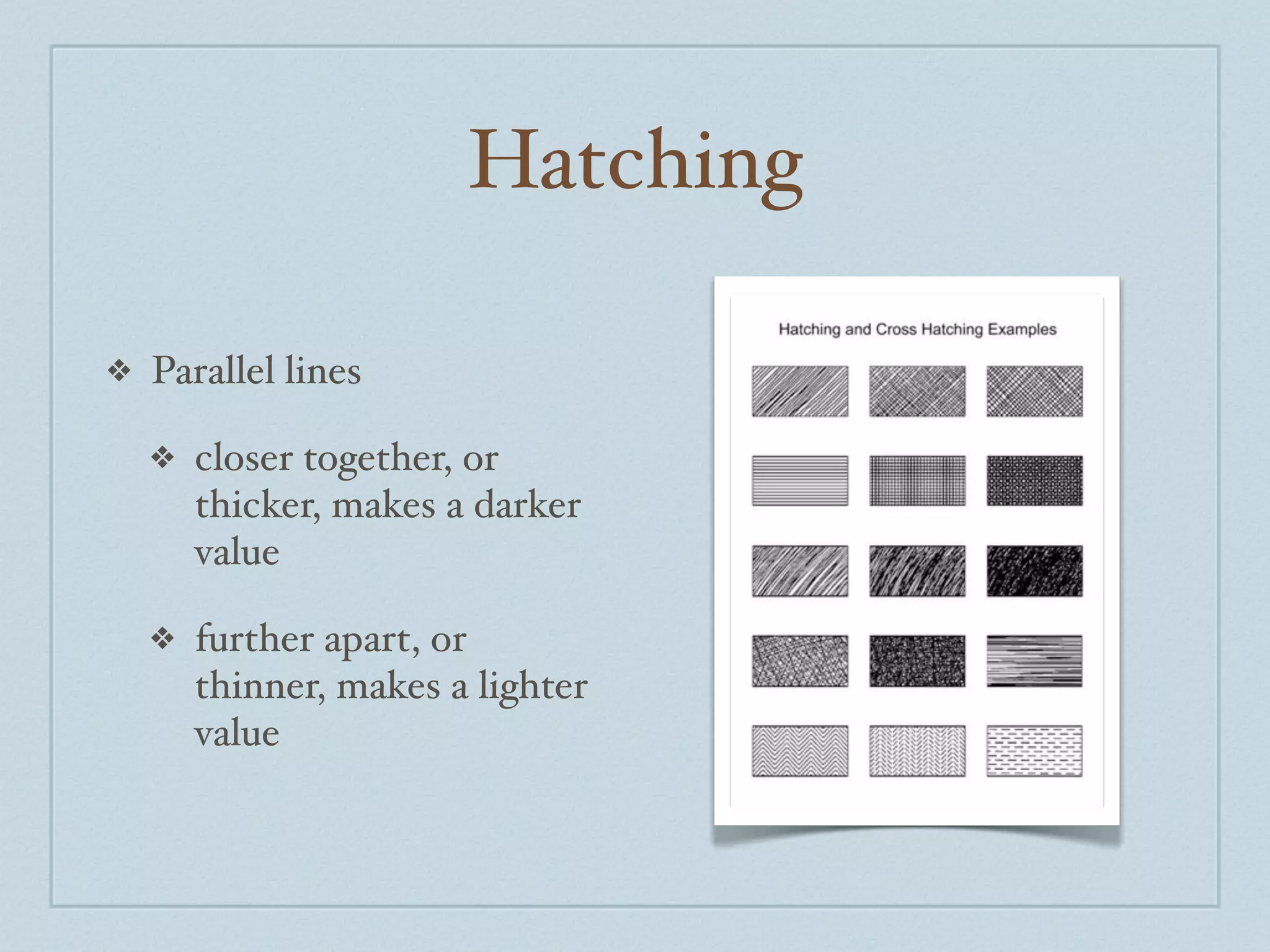
Hatching

❖   Parallel lines

    ❖   closer together, or
        thicker, makes a darker
        value

    ❖   further apart, or
        thinner, makes a lighter
        value
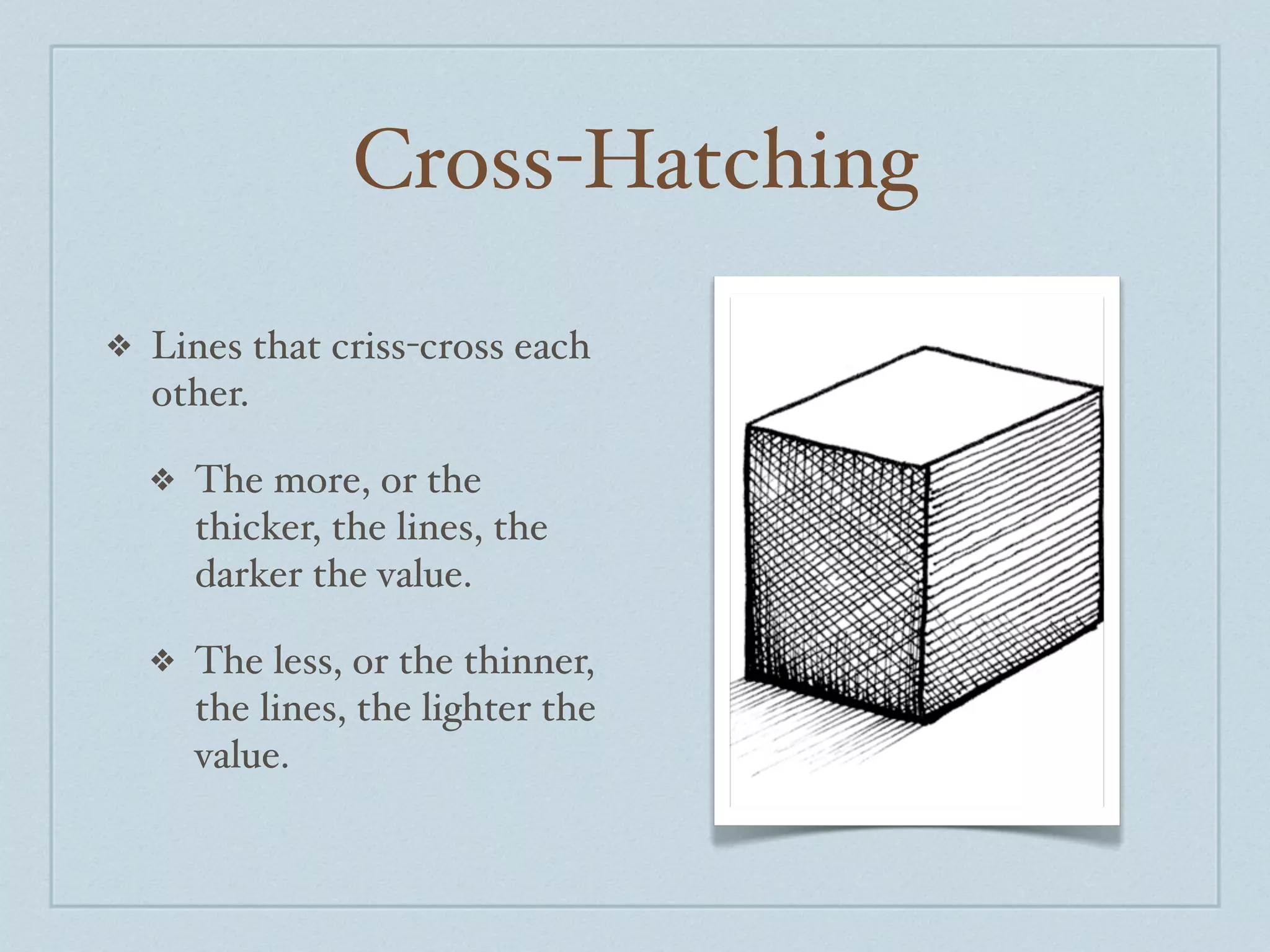
Cross-Hatching

❖   Lines that criss-cross each
    other.

    ❖   The more, or the
        thicker, the lines, the
        darker the value.

    ❖   The less, or the thinner,
        the lines, the lighter the
        value.
Self Portrait with a Cap, openmouthed (1630) Rembrandt
Line Quality
❖   Refers to the type of line you use, and describes the ways
    the lines look.

    ❖   Type of Lines
        ❖ Contour
        ❖ Gesture
        ❖ Structural
        ❖ Calligraphic

    ❖   Use of Lines
        ❖ Stippling
        ❖ Hatching
        ❖ Cross-Hatching
Practical Exercise
❖   In your sketchbook describe the types of lines you see and
    how they are used, in the drawing below.

❖   Type of Lines
    ❖ Contour
    ❖ Gesture
    ❖ Structural
    ❖ Calligraphic

❖   Use of Lines
    ❖ Stippling
    ❖ Hatching
    ❖ Cross-Hatching


                                                     Bedroom At Arles (1992) Lichtenstein

Line

  • 1.
    Line “Line is arich metaphor for the artist. It denotes not only boundary, edge or contour, but is an agent for location, energy, and growth. It is literally movement and change - life itself.” - Lance Esplund
  • 2.
    Definition of Line ❖ A continuous point (mark) used to delineate an edge, or to lead the eye through a work of art. Self-Portrait (1512) Da Vinci
  • 3.
    The Basics Horizontal Vertical Diagonal
  • 4.
    Thick vs. ThinLines ❖ Thick Lines ❖ Thin Lines ❖ Used in the foreground ❖ Used in the background ❖ Used on whatever is ❖ Used on objects that are important. not as important.
  • 5.
    Types of Lines ❖ Implied ❖ Contour ❖ Gesture ❖ Structural ❖ Calligraphic The Starry Night (1889) van Gough
  • 6.
    Implied Lines Lines createdby the edges of shapes, forms, or color.
  • 7.
    Contour Line ❖ B. The outline of an object ❖ A. The outline of an object. and the interior details.
  • 8.
    Silhouette A contour drawingfilled in with a color
  • 9.
    Cross-Contour Drawing Whenlines flow over the forms of the object.
  • 10.
    Gesture Drawing ❖ Quick line sketch. ❖ Usually of people. ❖ Captures basic forms and shapes, and movement, direction, or fluidity. ❖ Flowing and interesting in their shapes. ❖ Not always accurate.
  • 11.
    Structural Lines Lines necessaryto hold the design together and make up the basic shapes in a work of art.
  • 12.
    Calligraphic ❖ Elegant or decorative lines in a piece of art. ❖ A good calligraphic line will vary in width. ❖ Often found in Chinese and Japanese ink artwork. The Great Wave (1829-1832) Hokusai
  • 13.
    Line Variation A drawingthat makes use of multiple types of lines - gesture, contour, structural, and calligraphic.
  • 14.
    Using Lines toCreate Value ❖ There are three ways to use lines to create value: ❖ Stippling ❖ Hatching ❖ Cross-Hatching
  • 15.
    Stippling ❖ Dots closer together make darker values. ❖ Dots further apart make lighter values.
  • 17.
    Hatching ❖ Parallel lines ❖ closer together, or thicker, makes a darker value ❖ further apart, or thinner, makes a lighter value
  • 18.
    Cross-Hatching ❖ Lines that criss-cross each other. ❖ The more, or the thicker, the lines, the darker the value. ❖ The less, or the thinner, the lines, the lighter the value.
  • 19.
    Self Portrait witha Cap, openmouthed (1630) Rembrandt
  • 20.
    Line Quality ❖ Refers to the type of line you use, and describes the ways the lines look. ❖ Type of Lines ❖ Contour ❖ Gesture ❖ Structural ❖ Calligraphic ❖ Use of Lines ❖ Stippling ❖ Hatching ❖ Cross-Hatching
  • 21.
    Practical Exercise ❖ In your sketchbook describe the types of lines you see and how they are used, in the drawing below. ❖ Type of Lines ❖ Contour ❖ Gesture ❖ Structural ❖ Calligraphic ❖ Use of Lines ❖ Stippling ❖ Hatching ❖ Cross-Hatching Bedroom At Arles (1992) Lichtenstein