COLOURS FOR INTERIOR
DECORATION
Dr. Bhavya Khamesra
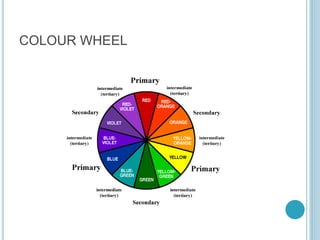
COLOUR WHEEL
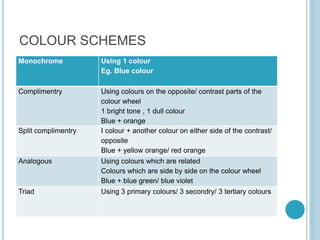
COLOUR SCHEMES
Monochrome Using 1 colour
Eg. Blue colour
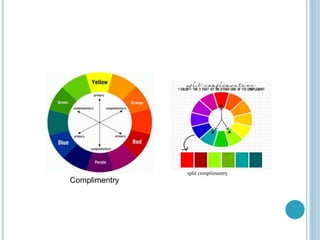
Complimentry Using colours on the opposite/ contrast parts of the
colour wheel
1 bright tone , 1 dull colour
Blue + orange
Split complimentry I colour + another colour on either side of the contrast/
opposite
Blue + yellow orange/ red orange
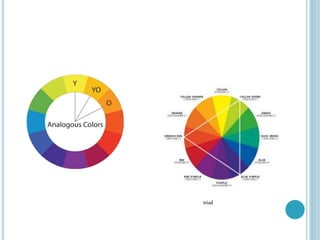
Analogous Using colours which are related
Colours which are side by side on the colour wheel
Blue + blue green/ blue violet
Triad Using 3 primary colours/ 3 secondry/ 3 tertiary colours
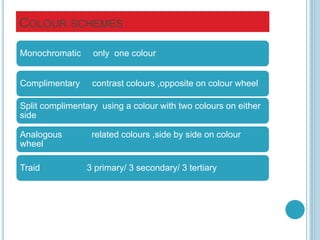
COLOUR SCHEMES
Monochromatic only one colour
Complimentary contrast colours ,opposite on colour wheel
Split complimentary using a colour with two colours on either
side
Analogous related colours ,side by side on colour
wheel
Traid 3 primary/ 3 secondary/ 3 tertiary
Complimentry
split complimentry
triad
EMOTIONAL EFFECTS OF COLOUR
 Bright colours –
Red ,yellow, brown and darker shades are warm
and advancing colours. They may shorten the
length of the room if used on wall or shorten the
height if used on ceiling
 Cool colours-
pale green, blue and other lighter shades tend to
make a small room larger.
 Red, orange, yellow – warm and stimulating
 Pastel shade - cooler and restful
 Green - cool, soothing, pleasing effect
 Pale blue - fresh and cool
 Purple - richness
 Brown/ dark shades - comfort
 White- hygienic, peace but cold in appearance
COLOUR SCHEMES ACCORDING TO THE FUNCTION/
USE OF THE AREA
 Rooms-
peace in room, use light colours , cream colours on
walls. Bright colours may be used on the soft
furnishings
 Restaurant
relaxed atmosphere, go with the theme of the area
 Lobby/ entrance -
should look inviting, bright colours are used
 Bathroom
clean and hygienic
COLOURS UNITE THE AREA BUT IT IS
AFFECTED BY
 The amount of light falling in that area
 Curtains appear darker in the day when sunlight
falls from beside , but in night appears lighter
 The type of surface
 Rough surface appears darker then smooth
surfaces
 The surrounding colours
 Strong colours may imbalance colours

Colours For Interior Decoration

  • 1.
  • 2.
  • 3.
    COLOUR SCHEMES Monochrome Using1 colour Eg. Blue colour Complimentry Using colours on the opposite/ contrast parts of the colour wheel 1 bright tone , 1 dull colour Blue + orange Split complimentry I colour + another colour on either side of the contrast/ opposite Blue + yellow orange/ red orange Analogous Using colours which are related Colours which are side by side on the colour wheel Blue + blue green/ blue violet Triad Using 3 primary colours/ 3 secondry/ 3 tertiary colours
  • 4.
    COLOUR SCHEMES Monochromatic onlyone colour Complimentary contrast colours ,opposite on colour wheel Split complimentary using a colour with two colours on either side Analogous related colours ,side by side on colour wheel Traid 3 primary/ 3 secondary/ 3 tertiary
  • 5.
  • 6.
  • 7.
    EMOTIONAL EFFECTS OFCOLOUR  Bright colours – Red ,yellow, brown and darker shades are warm and advancing colours. They may shorten the length of the room if used on wall or shorten the height if used on ceiling  Cool colours- pale green, blue and other lighter shades tend to make a small room larger.
  • 8.
     Red, orange,yellow – warm and stimulating  Pastel shade - cooler and restful  Green - cool, soothing, pleasing effect  Pale blue - fresh and cool  Purple - richness  Brown/ dark shades - comfort  White- hygienic, peace but cold in appearance
  • 9.
    COLOUR SCHEMES ACCORDINGTO THE FUNCTION/ USE OF THE AREA  Rooms- peace in room, use light colours , cream colours on walls. Bright colours may be used on the soft furnishings  Restaurant relaxed atmosphere, go with the theme of the area  Lobby/ entrance - should look inviting, bright colours are used  Bathroom clean and hygienic
  • 10.
    COLOURS UNITE THEAREA BUT IT IS AFFECTED BY  The amount of light falling in that area  Curtains appear darker in the day when sunlight falls from beside , but in night appears lighter  The type of surface  Rough surface appears darker then smooth surfaces  The surrounding colours  Strong colours may imbalance colours