Common Gynecological Surgical Procedures
Associate Clinical Professor Dr Aisha M Elbareg, MD, PhD
Senior Consultant Obstetrician & Gynecologist
Faculty of Medicine, MisurataUniversity, Libya
aishaelbareg@med.misuratau.edu.ly
Aim of this Lecture
 Become aware of the principles of common
gynecologic surgical procedures.
 Become familial with the instruments that used
in these procedures.
 Be aware of the indications, complications and
it’s management of each procedure.
Reminder!Introduction: Anatomy
Anatomy Reminder!
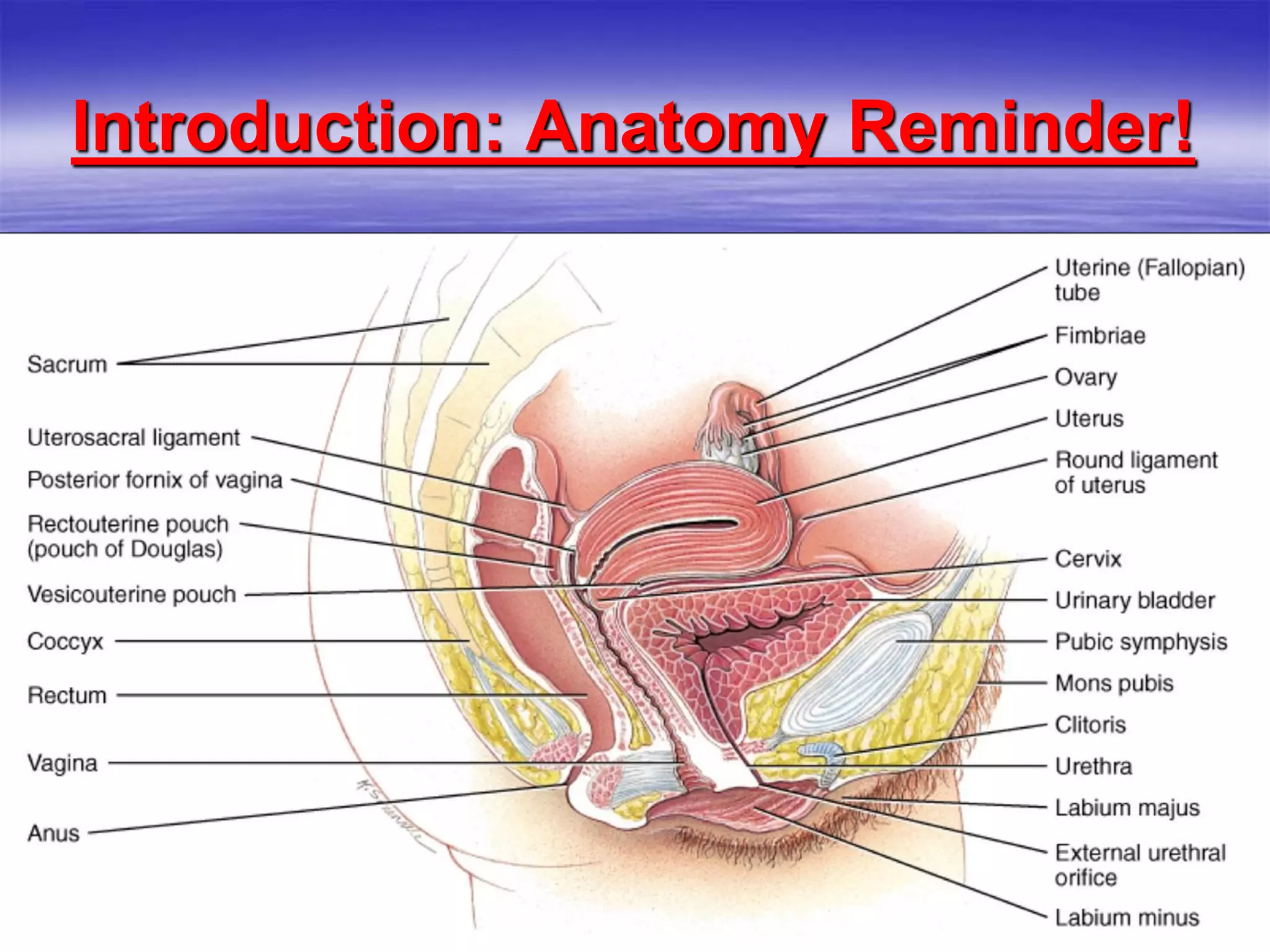
 Female Reproductive System:
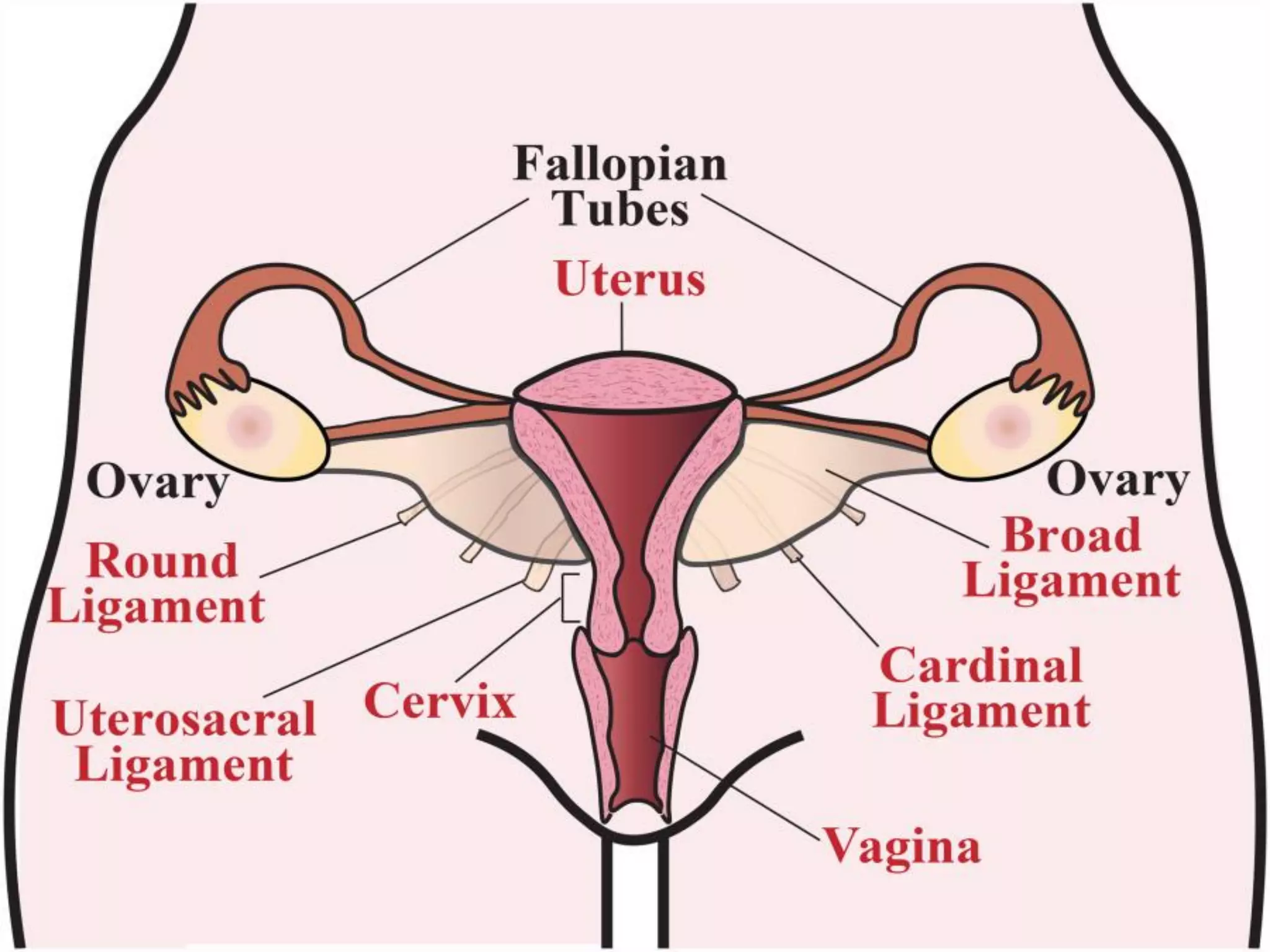
 Uterus: thick, muscular organ of (3 segments: fundus, lower
segment and cervix & 3 layers: serosa, myometrium and
endometrium), derived from fusion of müllerian ducts which
also form the upper 2/3 of the vagina and the fallopian tubes).
 Vagina: between bladder & rectum, Wall consists of three
coats, upper end of the vagina surrounding the cervix (fornix).
 Fallopian tubes: 10-14 cm in length &<1 cm in diameter.
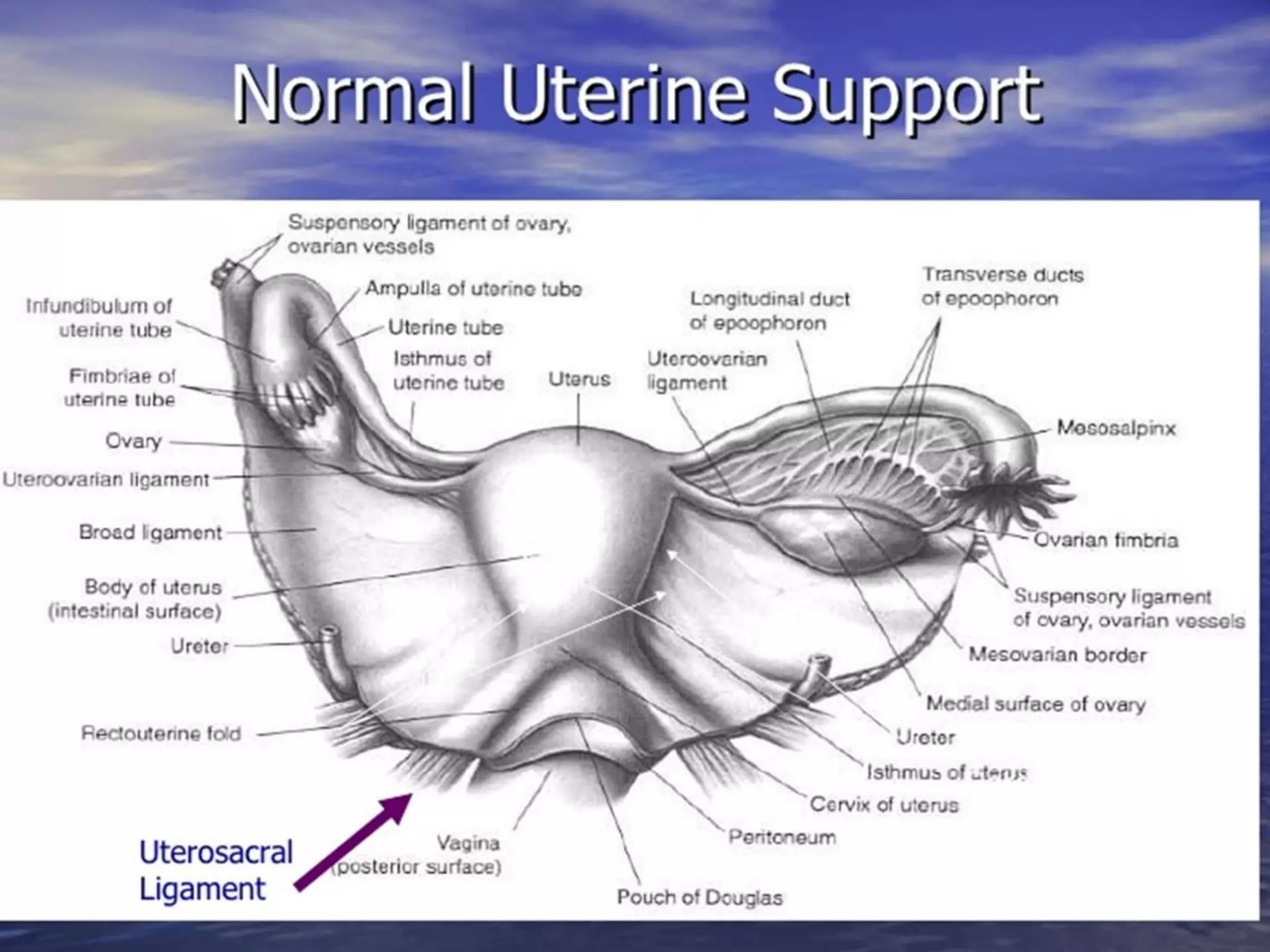
 Ligamentous Support: Round Ligament (Fibrous and muscle
tissue), Broad Ligament (Double reflection of the peritoneum),
Cardinal Ligament (at the base of the broad ligament),
Uterosacral Ligaments (minor cervical support, attach to the
1st - 5th sacral vertebrae).
Anatomy Reminder!
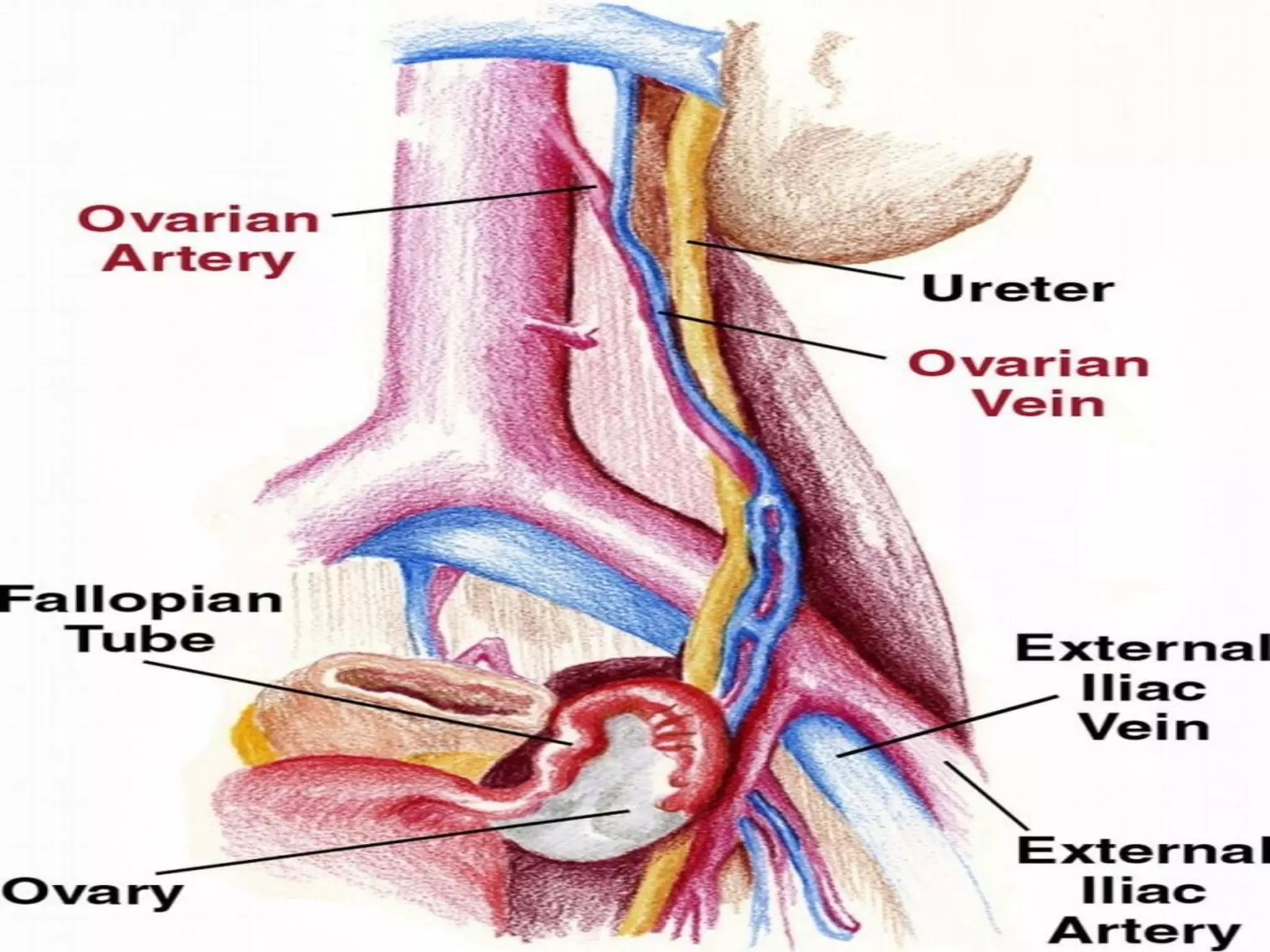
 Ovaries: adjacent to the iliac vessels and the ureters,
supported by: the ovarian ligaments (attaching to the
posteriolateral aspect of the uterus) & the infundibulo-pelvic
ligament (reflections of the broad ligament) attaching them to
the lateral pelvis.
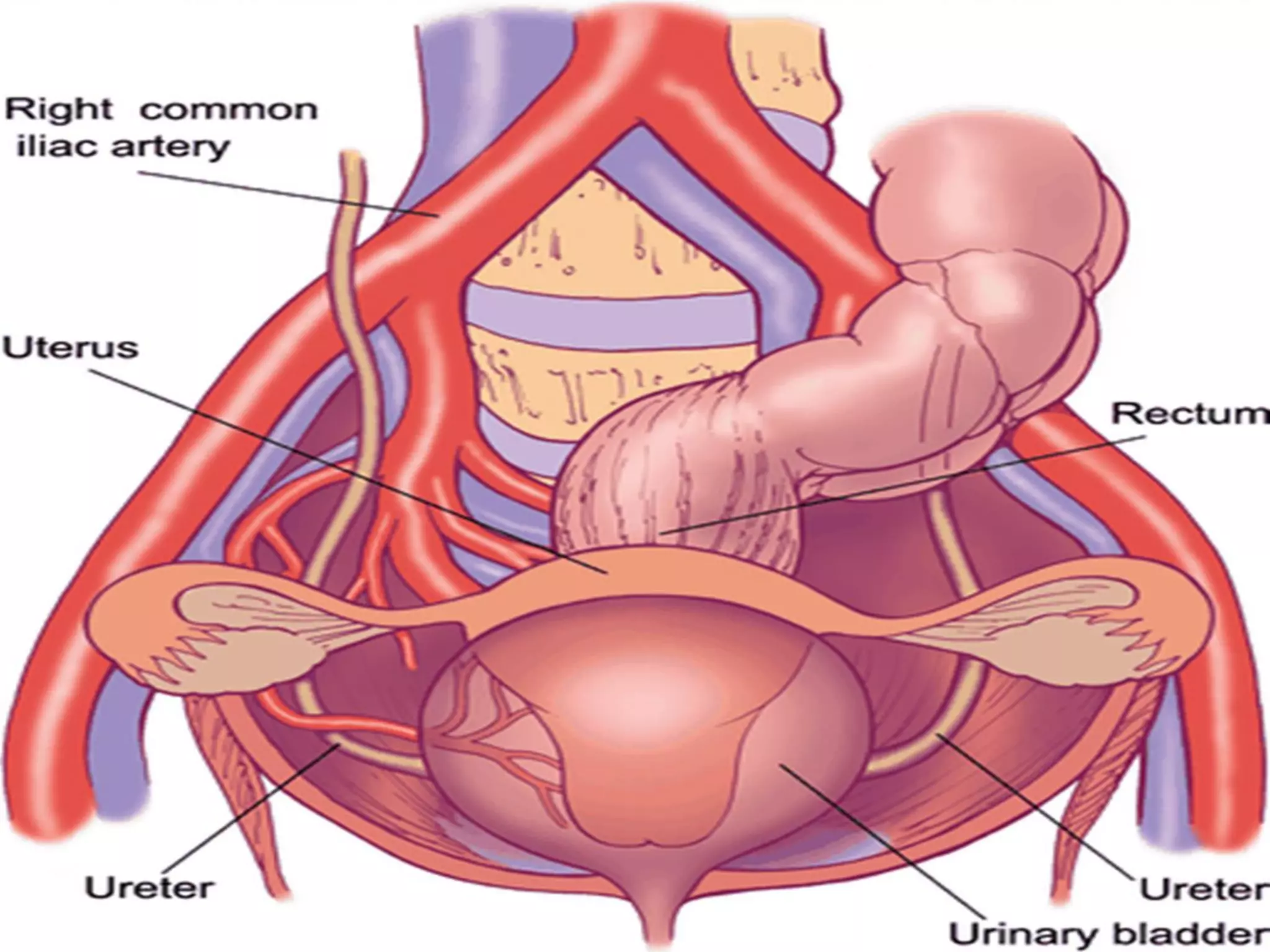
 Bladder and Rectum: (Bladder is anterior to the uterus,
ureters insert in to the inferior bladder at the trigone, path in
the pelvis is essential for dissection in gynecologic
surgery).Rectum, Lies posterior to the uterus following the
curvature of the sacrum.
Anatomy Reminder!
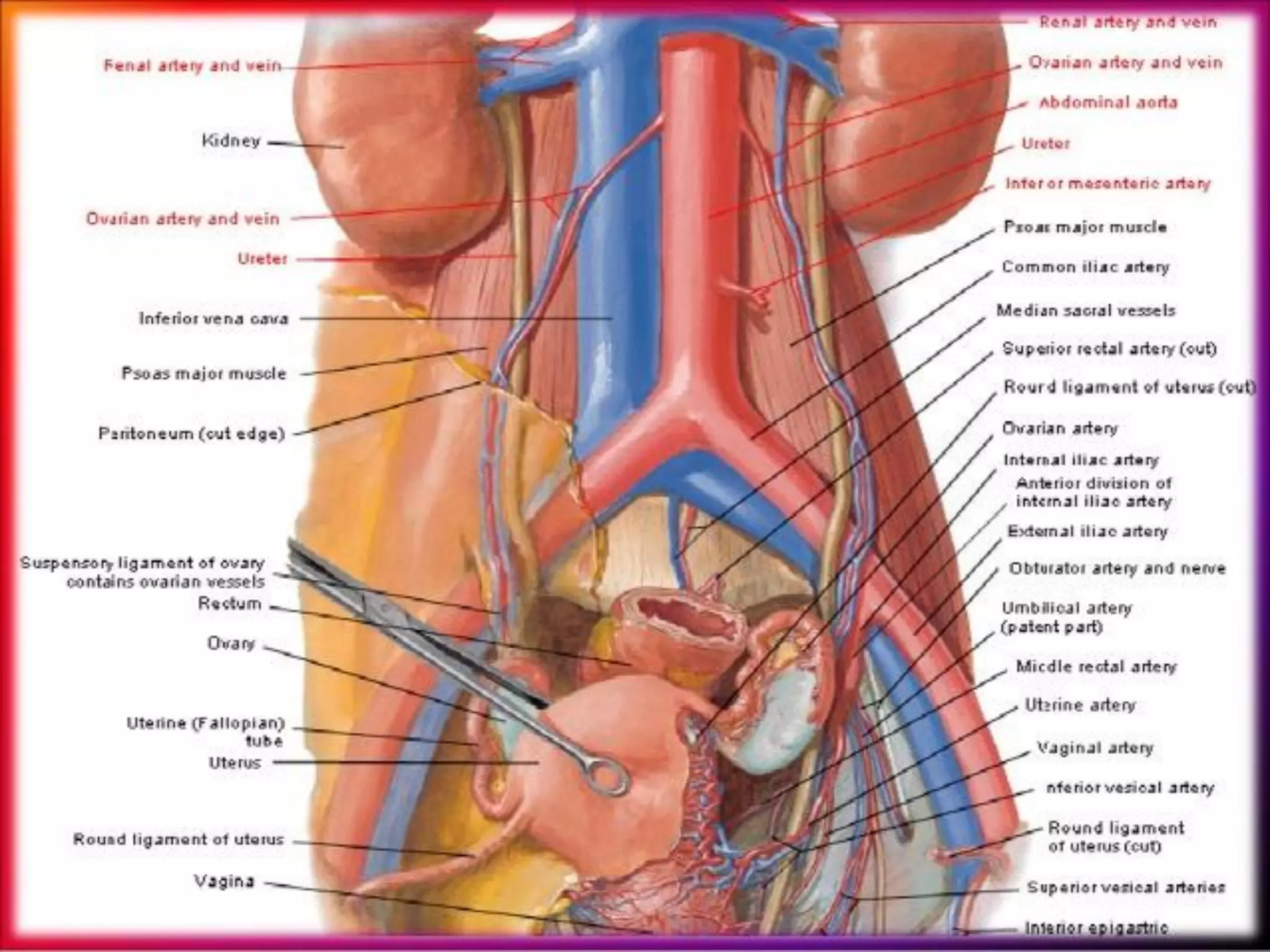
 Ureter: In the pelvis runs medial to and parallel with the
internal iliac artery. Uterine artery crosses over the ureter
(water under the bridge), remaining 2-3cm passes through the
cardinal ligament into the bladder.
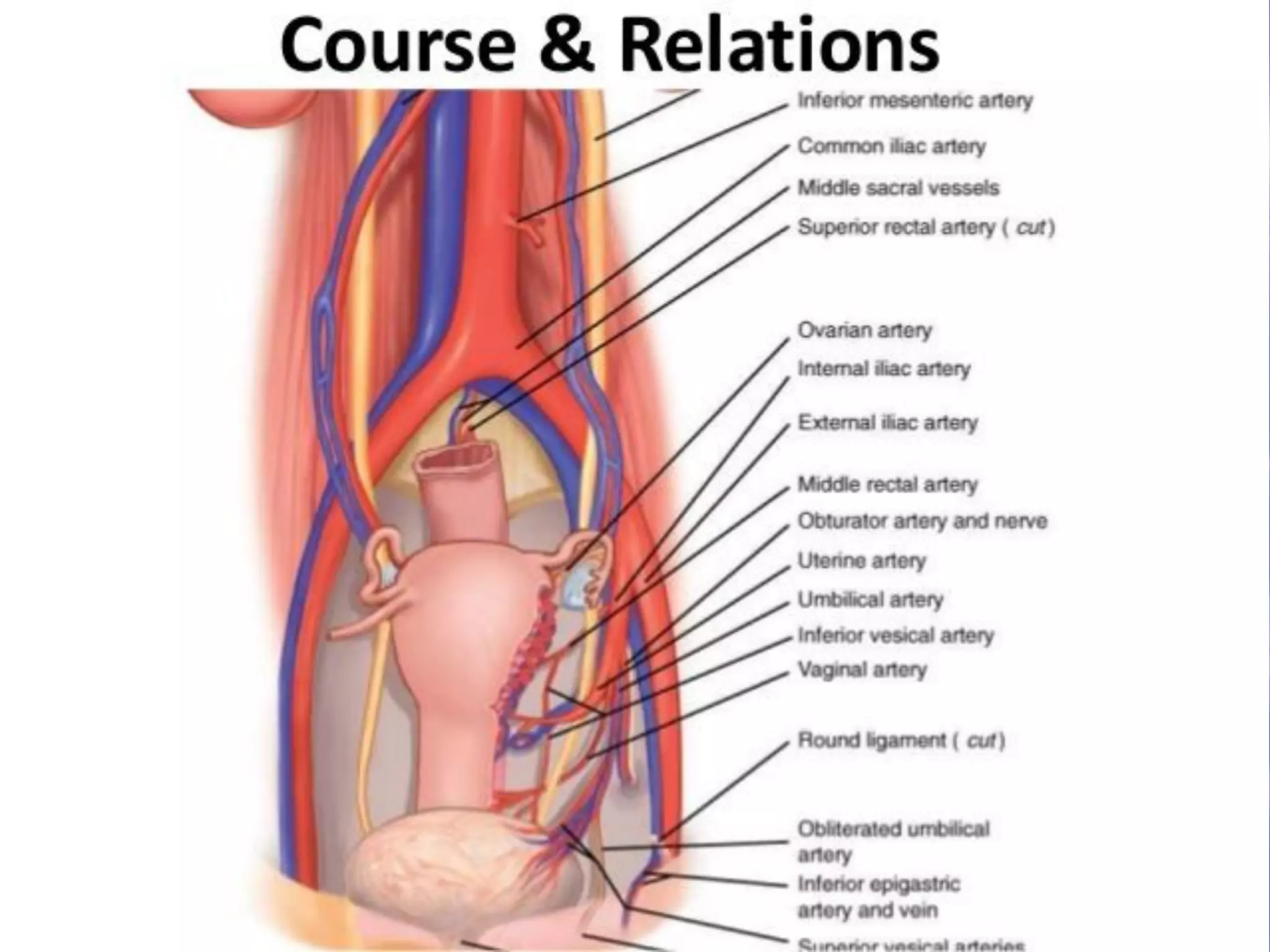
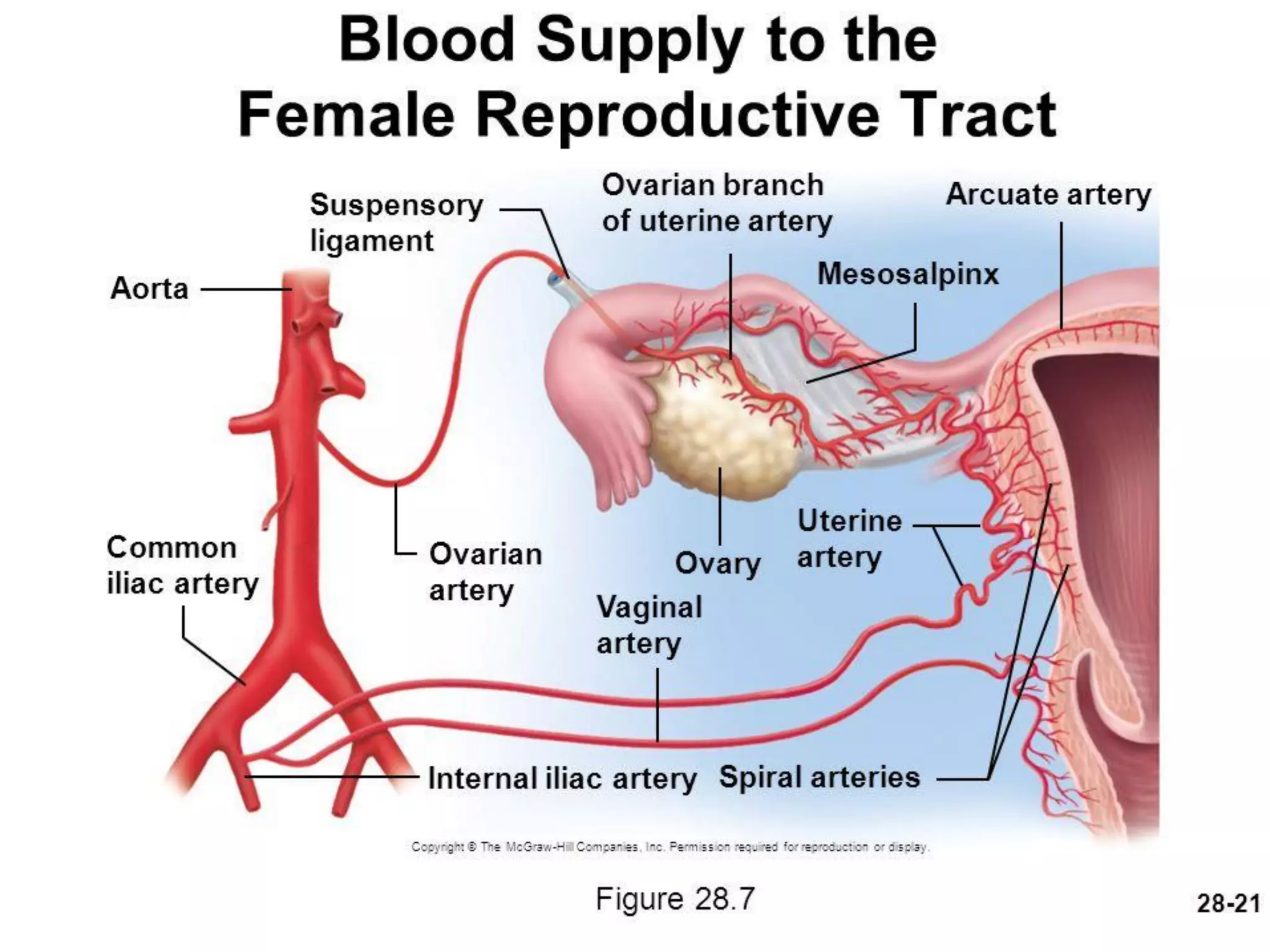
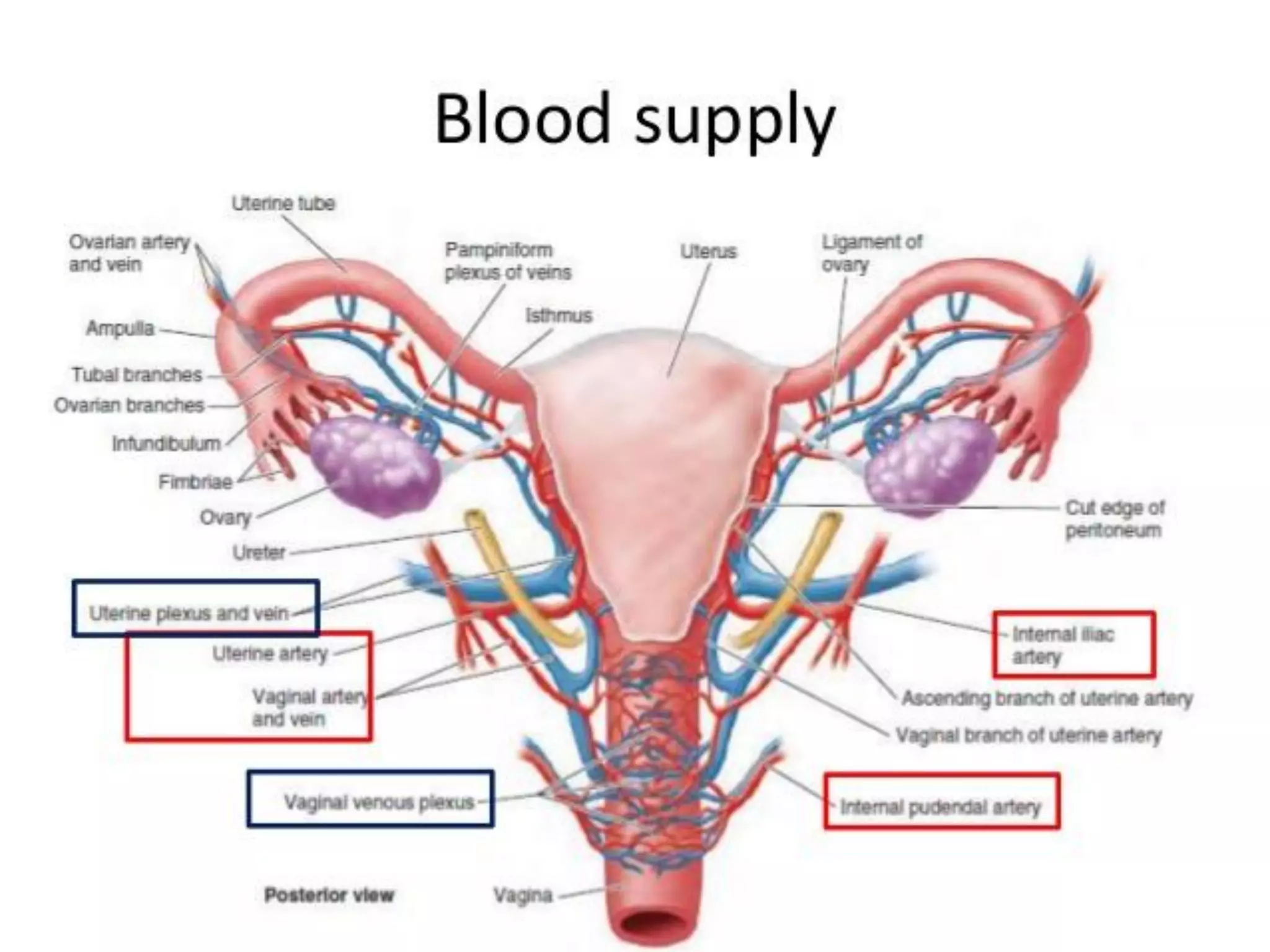
 Blood Supply: mainly from the internal iliac artery (branch
from the common iliac), additional supply : ovarian arteries,
the inferior mesenteric artery, and the external iliac artery.
Internal iliac --> anterior and posterior divisions, the later rarely
seen in pelvic surgery
Anatomy Reminder!
 Anterior division: Uterine, Vaginal, Superior, Middle, and
Inferior Vesicals, Middle and Inferior Rectal, Obturator, Inferior
gluteal, Internal Pudendal, Obliterated umbilical arteries.
 During retroperitoneal surgery the primary branches
identified are : Superior vesical artery, Uterine artery,
Obturator artery.
 Ovarian arteries: originate directly from the aorta, inferior to
the renal arteries.
 Ovarian veins: Left drains into the left renal vein, Right
drains directly into the inferior vena cava
Anatomy Reminder!
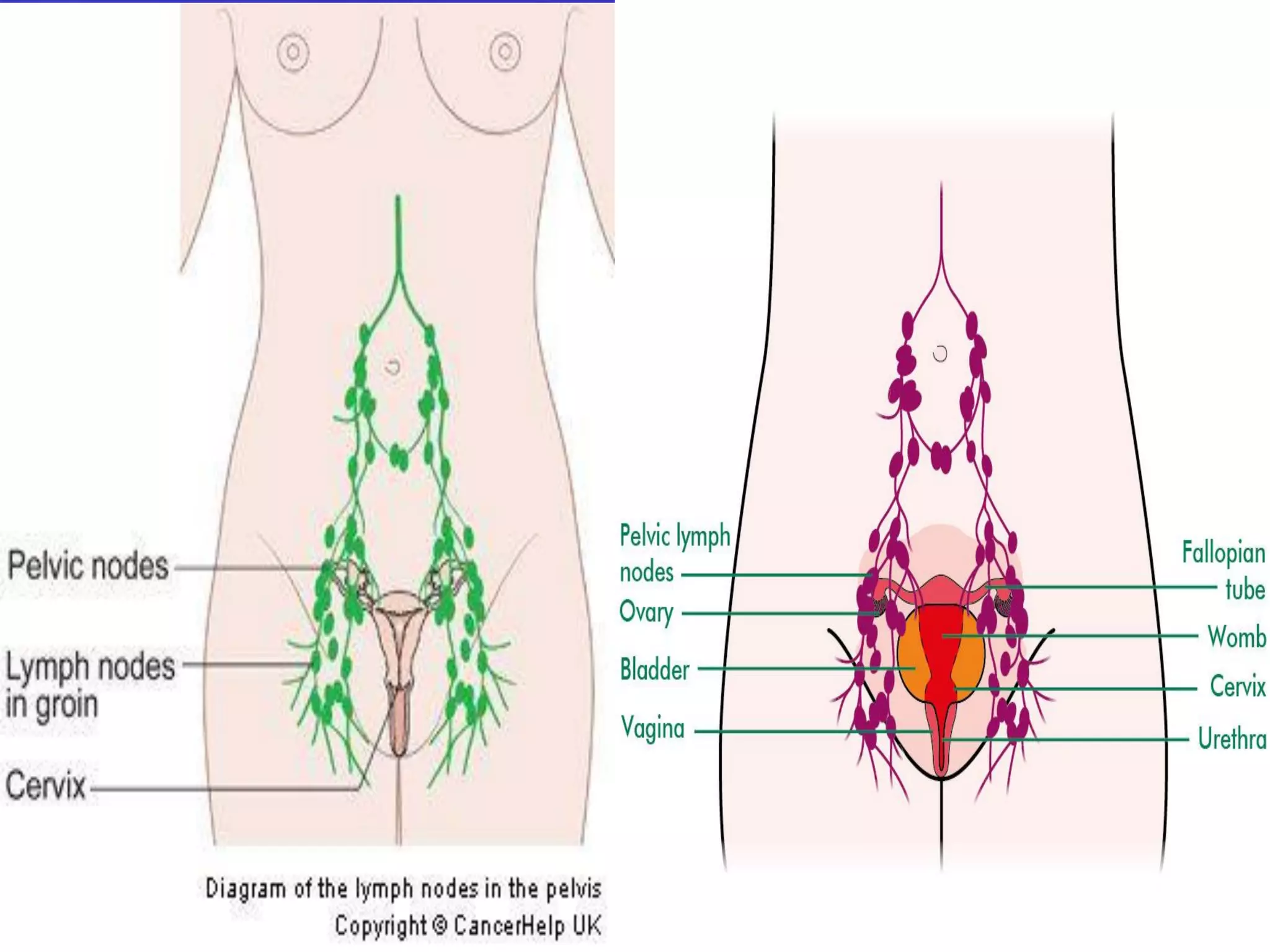
Lymph Drainage:
 Cervical Cancer: drains 1st to the parametrial nodes-->
obturator nodes --> pelvic nodes --> para-aortic.
 Uterine Cancer: drains 1st to the pelvic nodes or para-aortic.
 Ovarian Cancer: can metastasize to either the pelvic or para-
aortic nodes.
 Pelvic Support: pelvic diaphragm is retroperitoneal and
supports all the viscera, composed of (Levator ani group:
puborectalis, pubococcygeus, and ileococcygeus), Coccygeous
muscles
Anatomy Reminder!
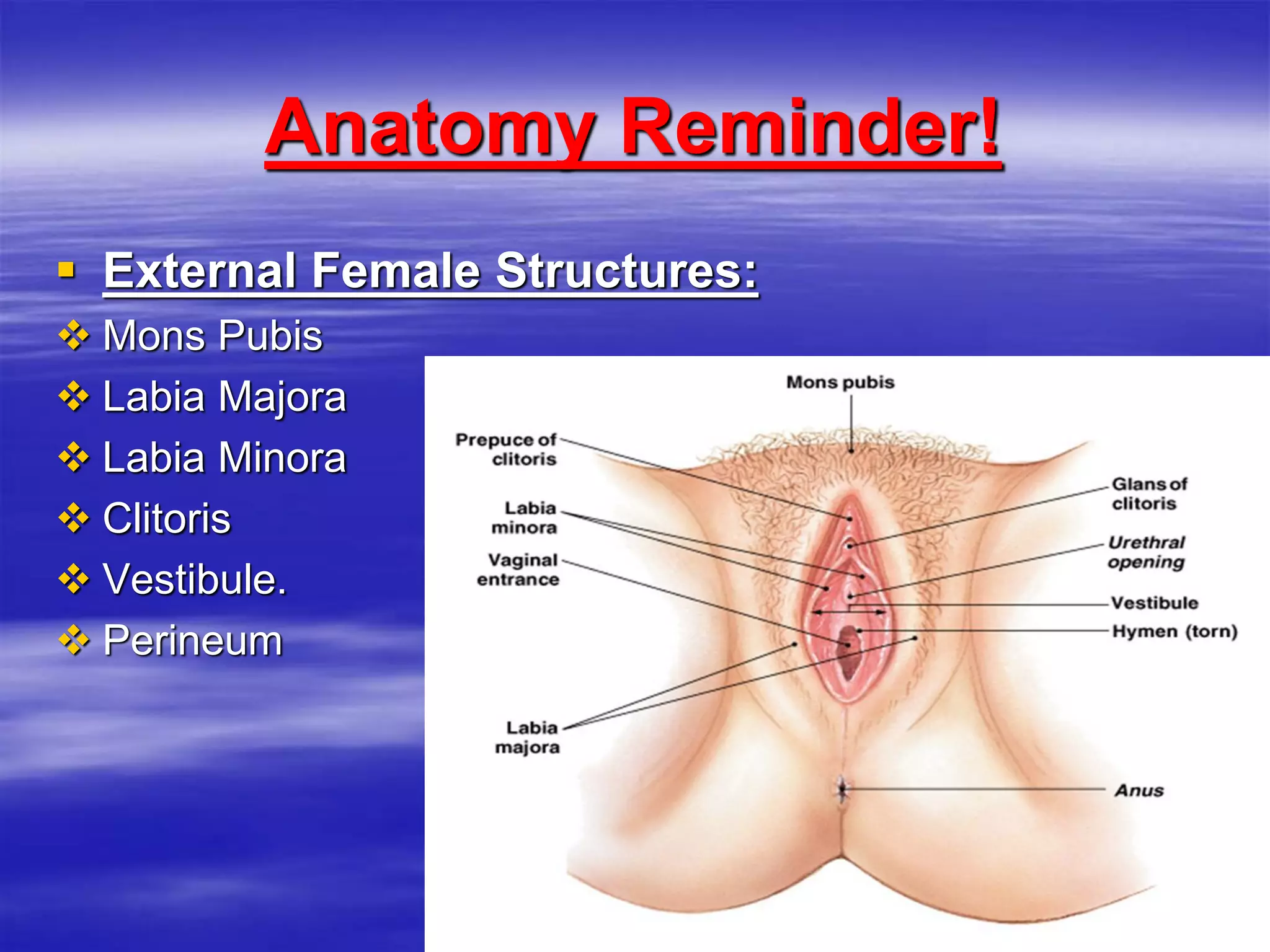
 External Female Structures:
 Mons Pubis
 Labia Majora
 Labia Minora
 Clitoris
 Vestibule.
 Perineum
List of Gynaecological Operations
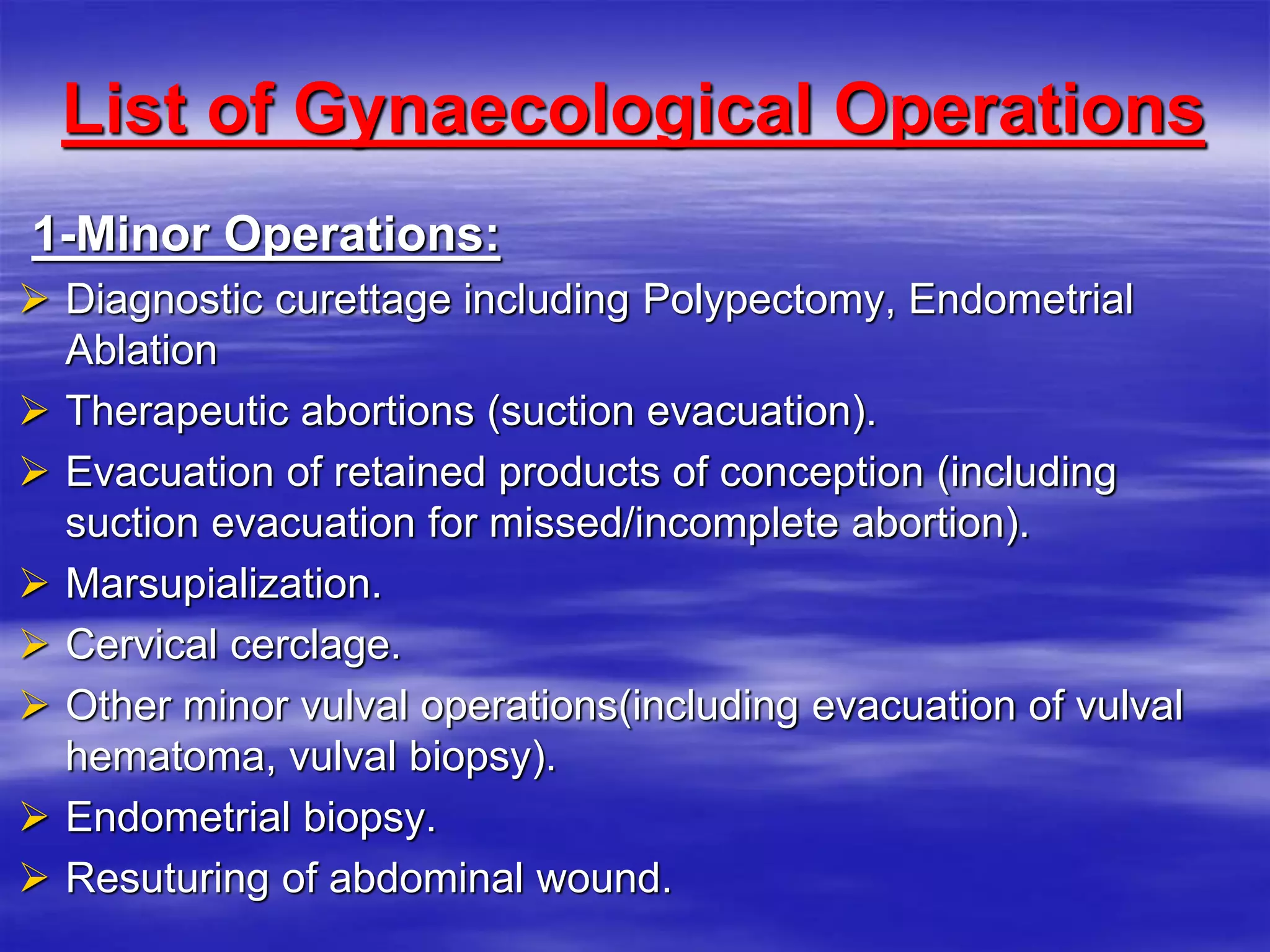
1-Minor Operations:
 Diagnostic curettage including Polypectomy, Endometrial
Ablation
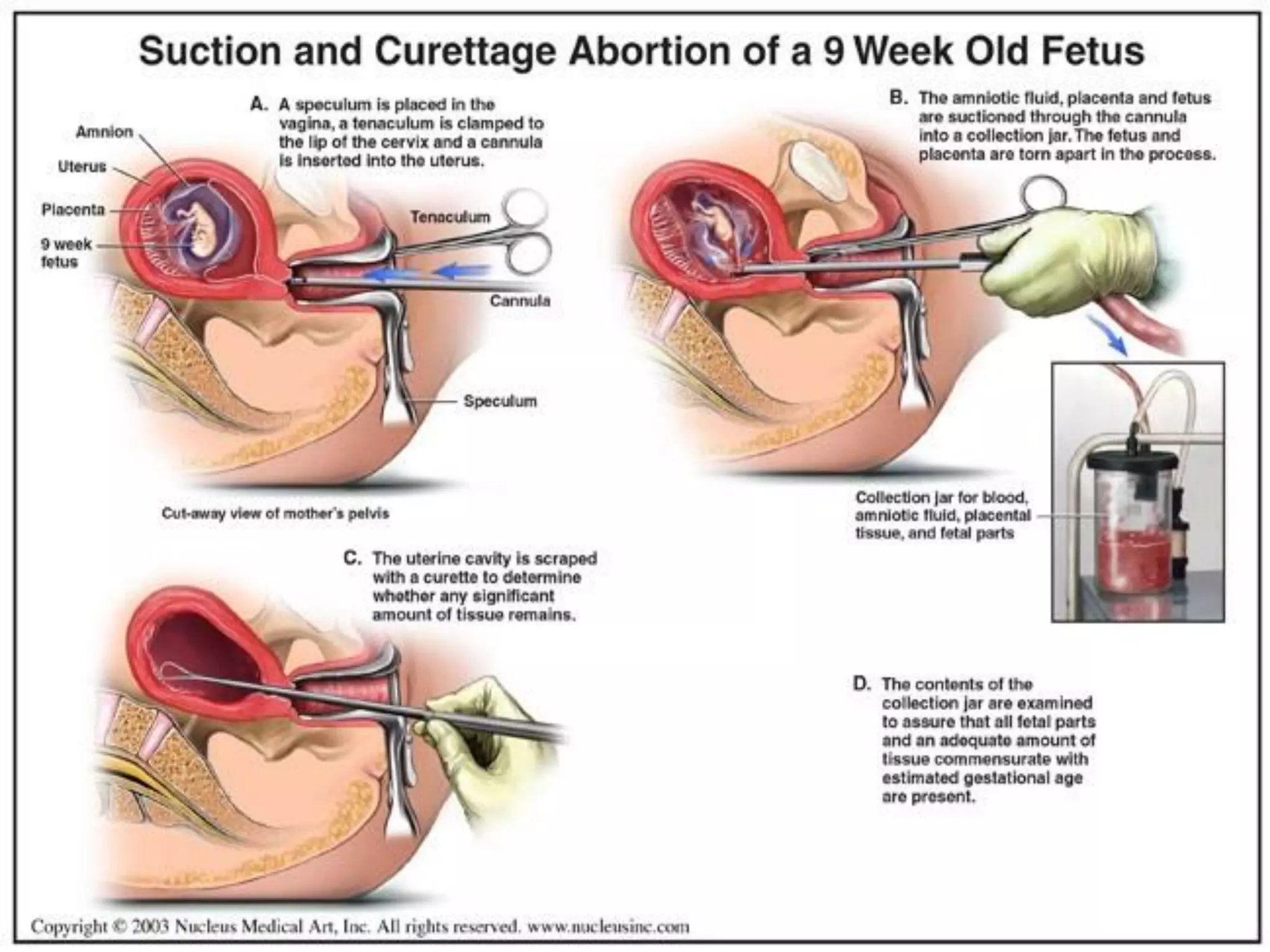
 Therapeutic abortions (suction evacuation).
 Evacuation of retained products of conception (including
suction evacuation for missed/incomplete abortion).
 Marsupialization.
 Cervical cerclage.
 Other minor vulval operations(including evacuation of vulval
hematoma, vulval biopsy).
 Endometrial biopsy.
 Resuturing of abdominal wound.
List of Gynaecological Operations
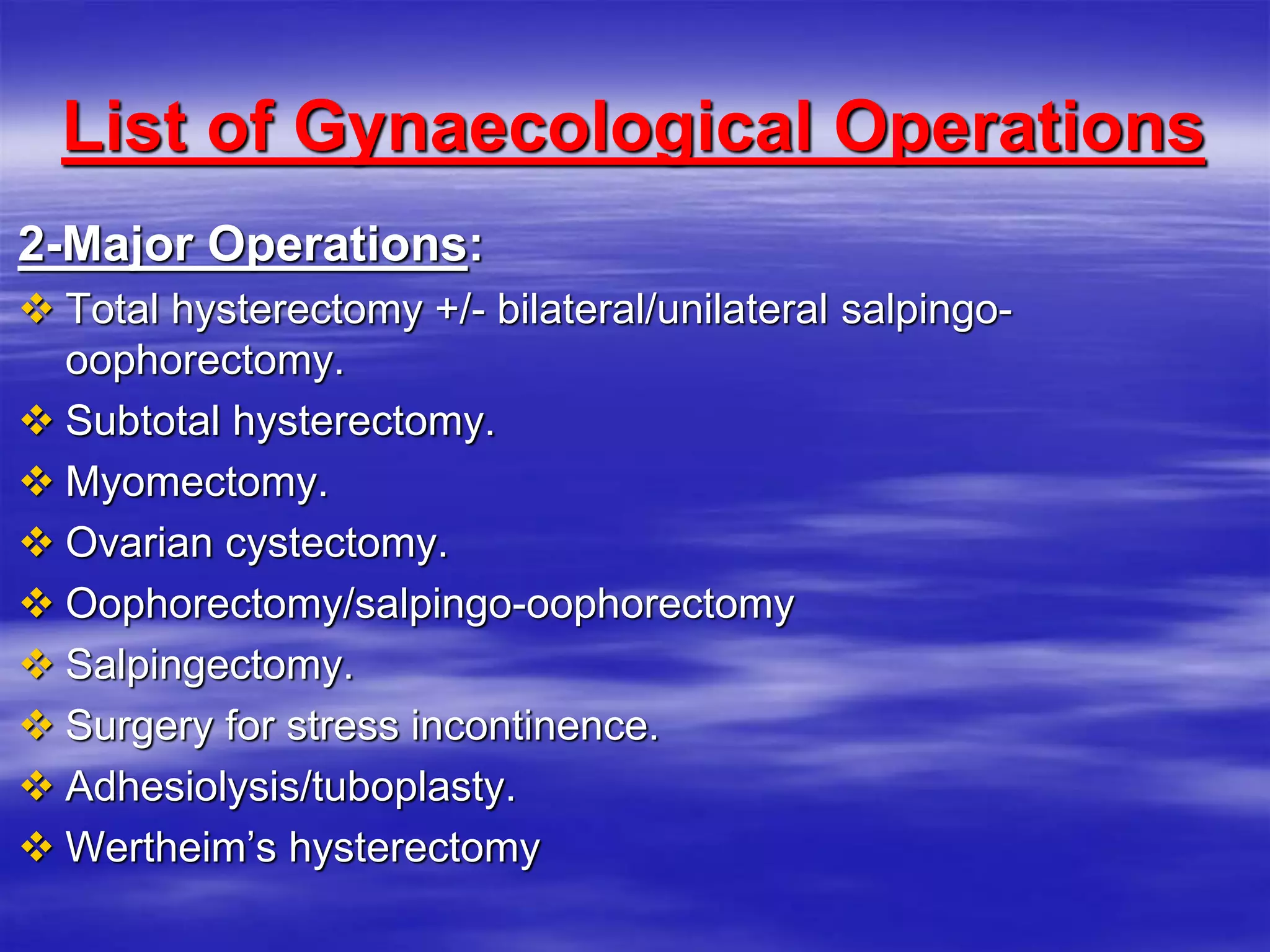
2-Major Operations:
 Total hysterectomy +/- bilateral/unilateral salpingo-
oophorectomy.
 Subtotal hysterectomy.
 Myomectomy.
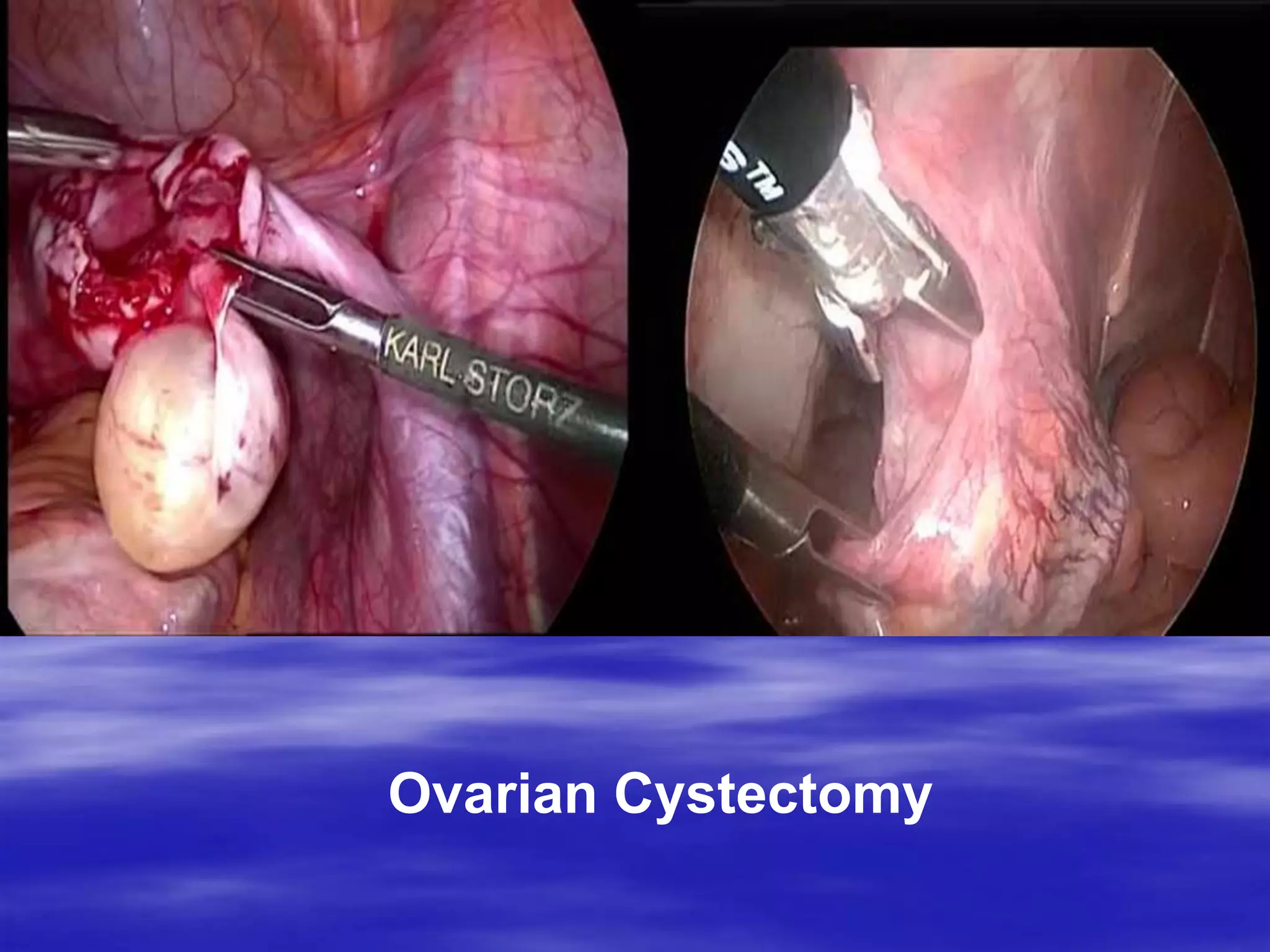
 Ovarian cystectomy.
 Oophorectomy/salpingo-oophorectomy
 Salpingectomy.
 Surgery for stress incontinence.
 Adhesiolysis/tuboplasty.
 Wertheim’s hysterectomy
List of Gynaecological Operations
 Vaginal hysterectomy.
 Repair of prolapse.
 Vulvectomy.
List of Gynaecological Operations
3-Endoscopic Procedures: Diagnostic laparoscopy,
Laparoscopic sterilization, Other laparoscopic procedures,
Diagnostic hysteroscopy, Endometrial resection, hysteroscopic
Polypectomy.
4-Colposcopy Related Procedures.
5-Assisted Reproduction Procedures.
Preoperative Care
 Purpose of Preoperative Care:
 To make the correct diagnosis.
 To decide on the need of surgery and its correct selection.
 Investigations to: confirm the diagnosis, fitness for anaesthesia
and surgery.
 Preoperative Investigations:
 BP check up.
 Complete blood count. Hb should be at least 10 g .
 Urinalysis.
 Fasting and post-prandial blood sugar estimations.
 Kidney function tests.
 Liver function tests.
Preoperative Care
 Preoperative Investigations:
 Serum electrolytes.
 Viral Screen.
 X-ray chest.
 ECG and stress test whenever indicated.
 Intravenous pyelography (IVP) in case of cancer cervix and
urinary fistulae.
 Blood group and Rh factor.
 Bleeding time and clotting time.
 Confirmation of clinical diagnosis by ultrasound, CT and MRI.
 Thyroid function tests if required.
Preoperative Care
 Preoperative Preparation:
 The woman should not take any food or liquid at least 12 hrs
before surgery.
 Woman on any drug needs counselling. Oral contraceptive pills
should be stopped 4 weeks before surgery. These can cause
thromboembolism. Aspirin is also best avoided as it can cause
bleeding.
 Smoking and alcohol should be stopped few days before.
 Prophylactic heparin in a high-risk pt. for thromboembolism.
 Bowel preparation.
 Proper counselling and informed consent should be obtained
in writing.
 Prophylactic Antibiotics.
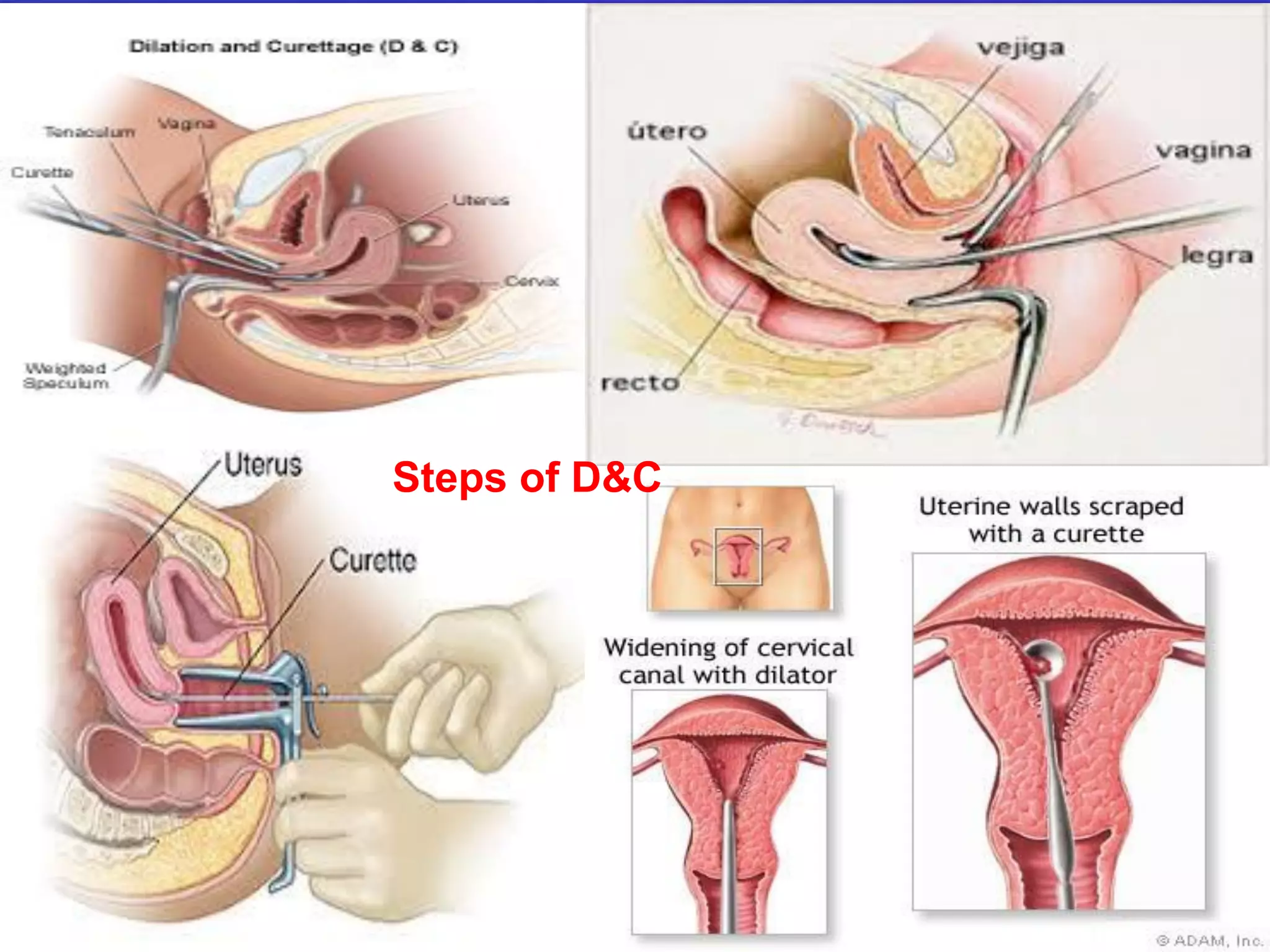
1-( Dilatation & Curettage) D & C:
 It is the most common minor gynecologic surgical procedure,
used as diagnostic or therapeutic.(Dilatation of the cervix :
preliminary to curettage, Prior to hysteroscopy, Insertion of IUD
in stenotic cervix).
Indications:
1. Abnormal uterine bleeding.
2. Postmenopausal bleeding.
3-Endometrial hyperplasia with heavy bleeding .
4. Removal of endometrial polyps or small pedunculated
myomas.
5. Dilatation & evacuation in inevitable and missed abortion.
4. Removal of missed intrauterine IUCD.
5.To detect ovulation & its defects in infertility
Indications:
6. Cervical stenosis.
7. Spasmodic dysmenorrhea.
8. Drainage of pyometra or haematometra.
9. Fractional curettage.
10.Molar pregnancy.
11.Postabortive or postpartum bleeding.
12.Insertion of IUD in stenotic cervix.
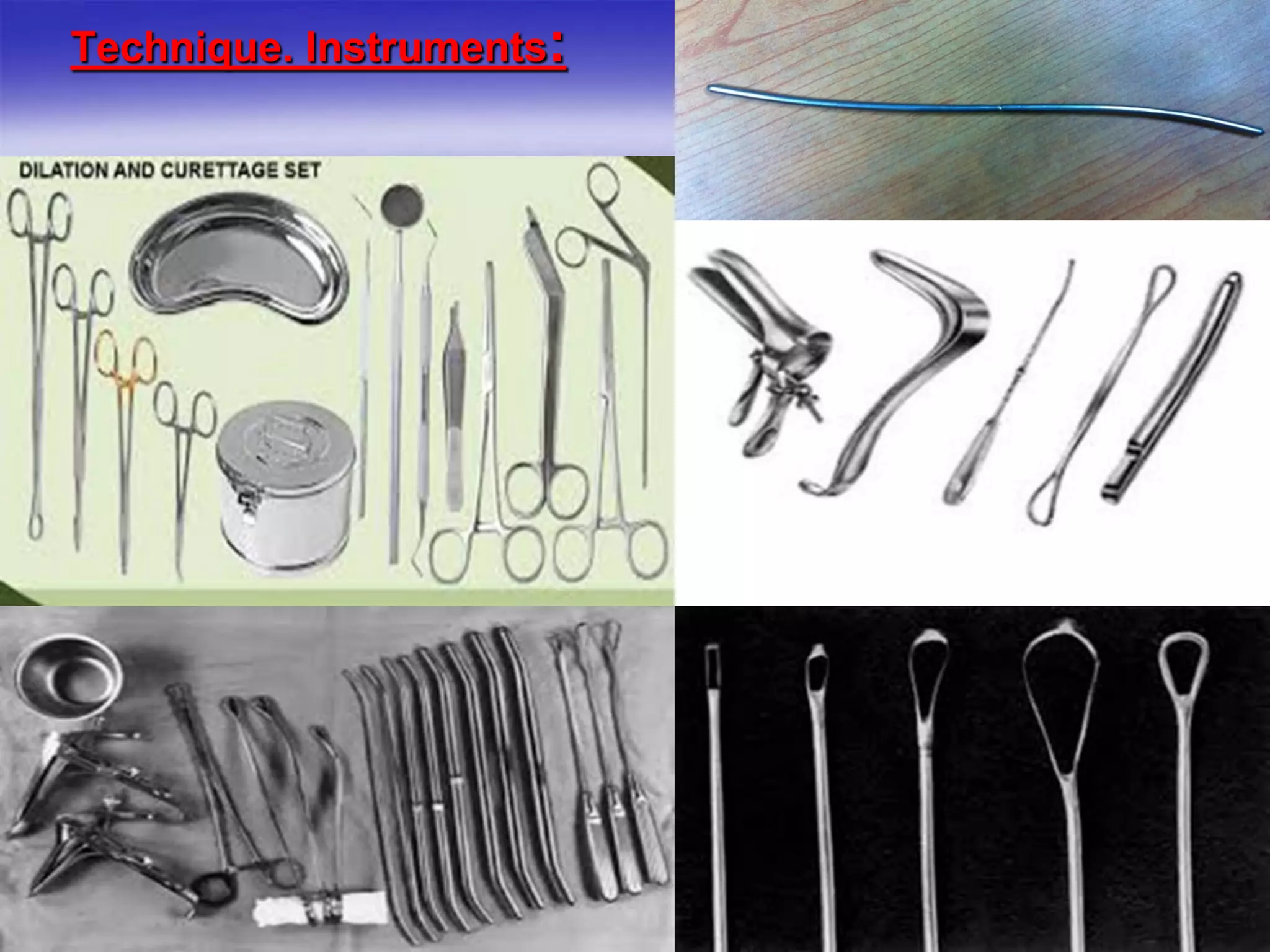
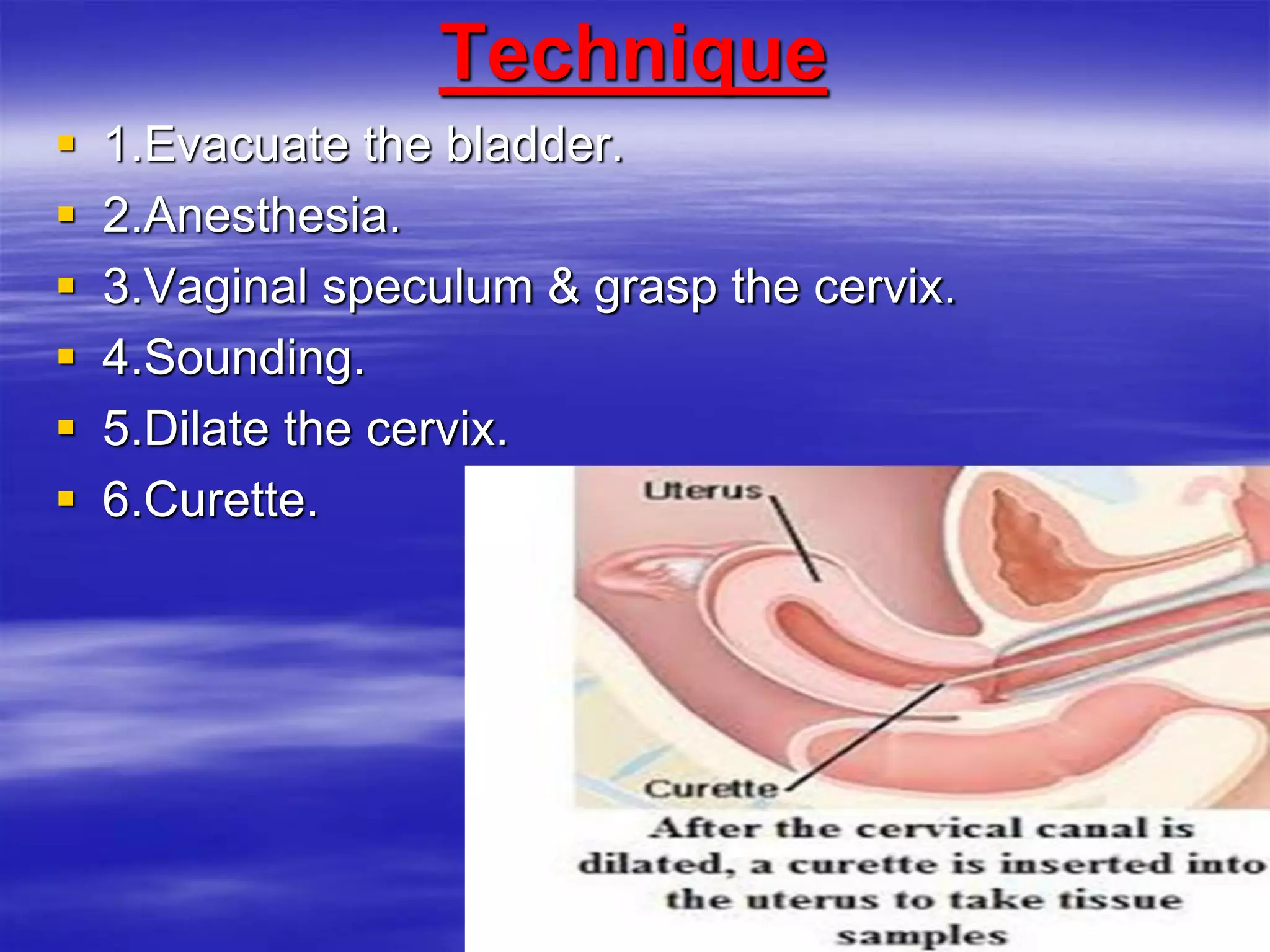
Technique. Instruments:
Technique
 1.Evacuate the bladder.
 2.Anesthesia.
 3.Vaginal speculum & grasp the cervix.
 4.Sounding.
 5.Dilate the cervix.
 6.Curette.
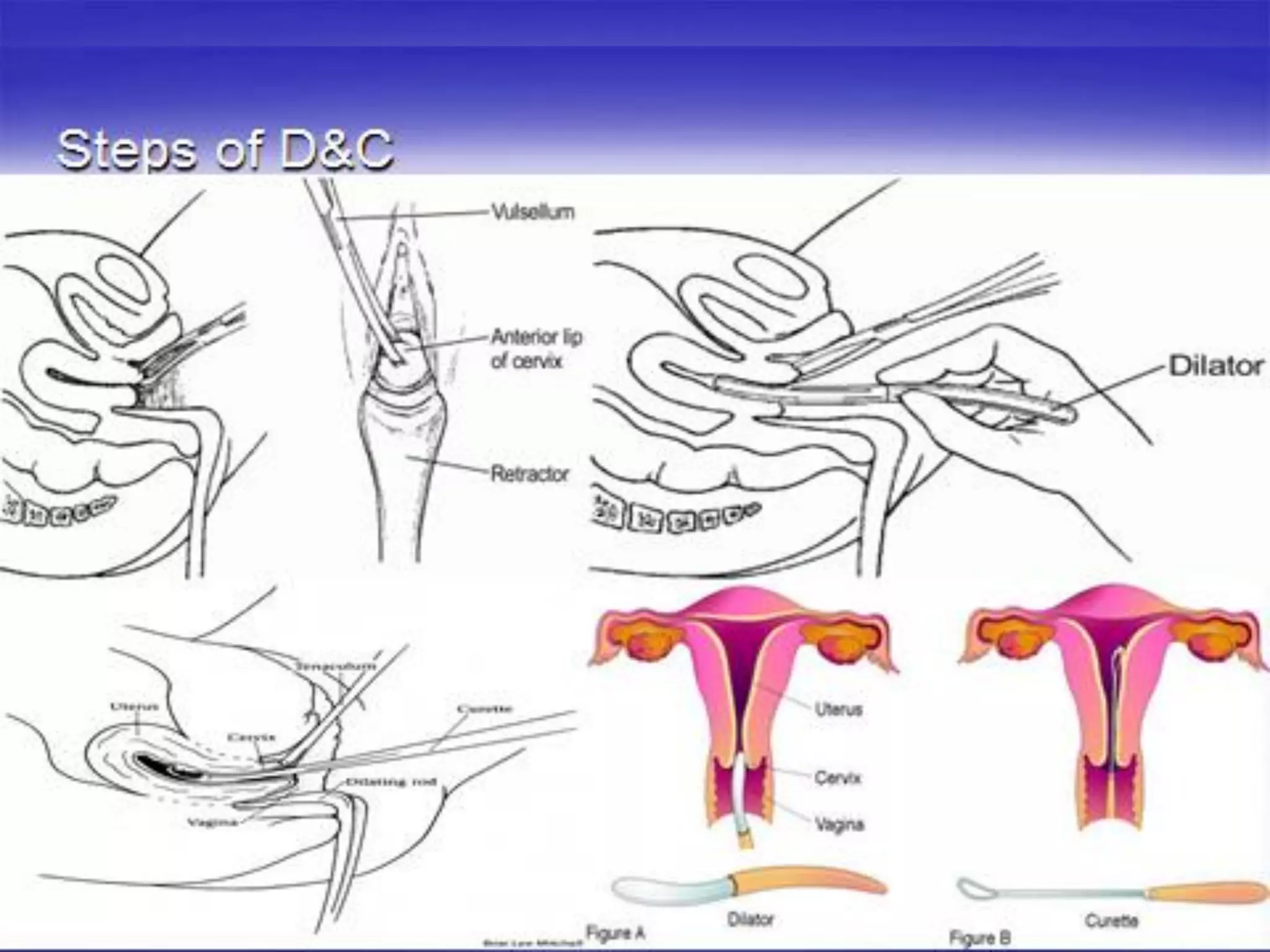
Steps of D&C
Complications:
 1.Cervical laceration.
 2.Cervical incompetence.
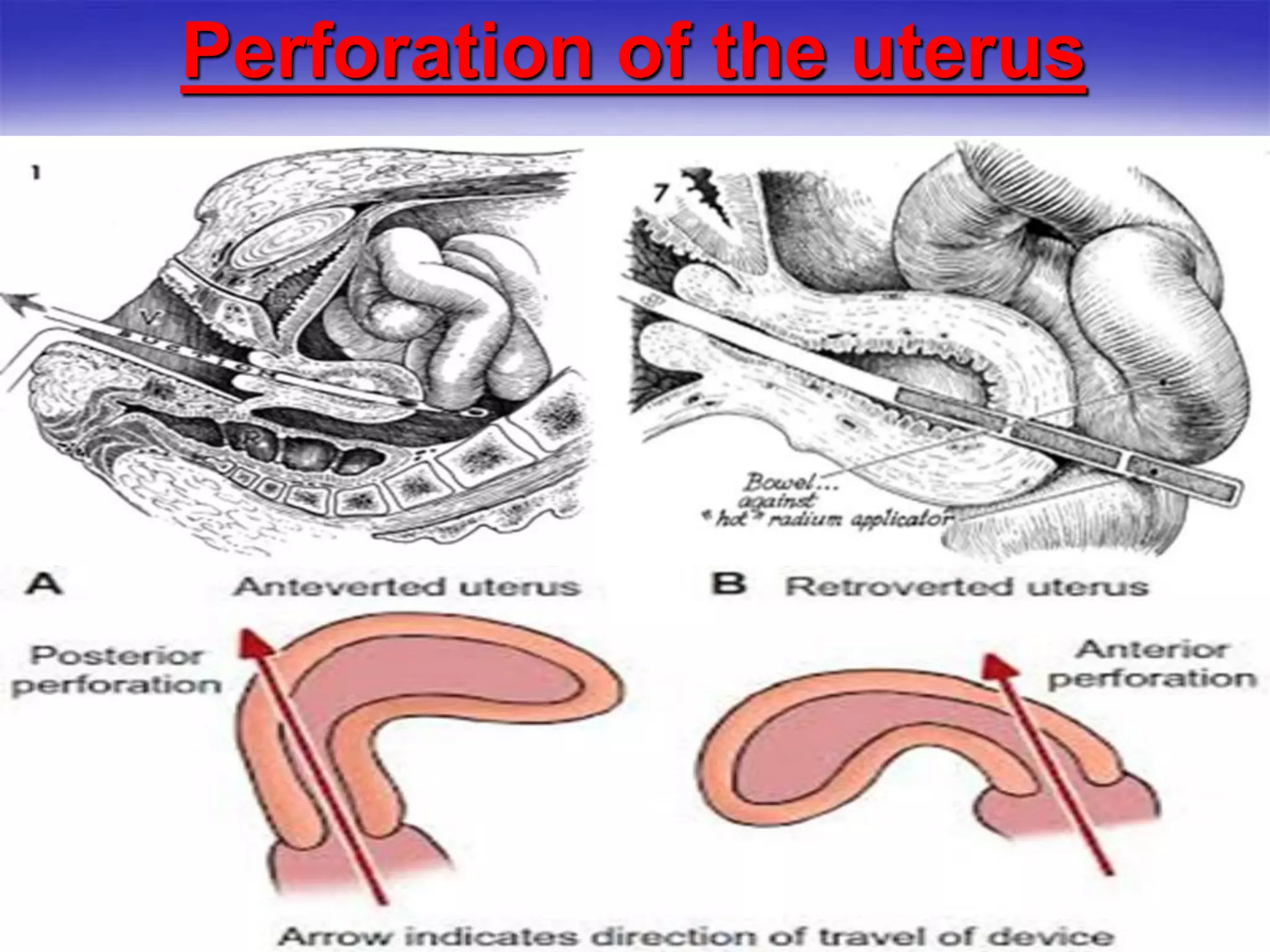
 3.Perforation of the uterus: it is not uncommon complication, it
occurs in:
* RVF uterus.
* pregnancy.
* postmenopausal with endometrial carcinoma.
 4.Spread of infection.
 5. Asherman's syndrome.
 6.Persistence of bleeding: missing of an endometrial polyp or
remnants of conception.
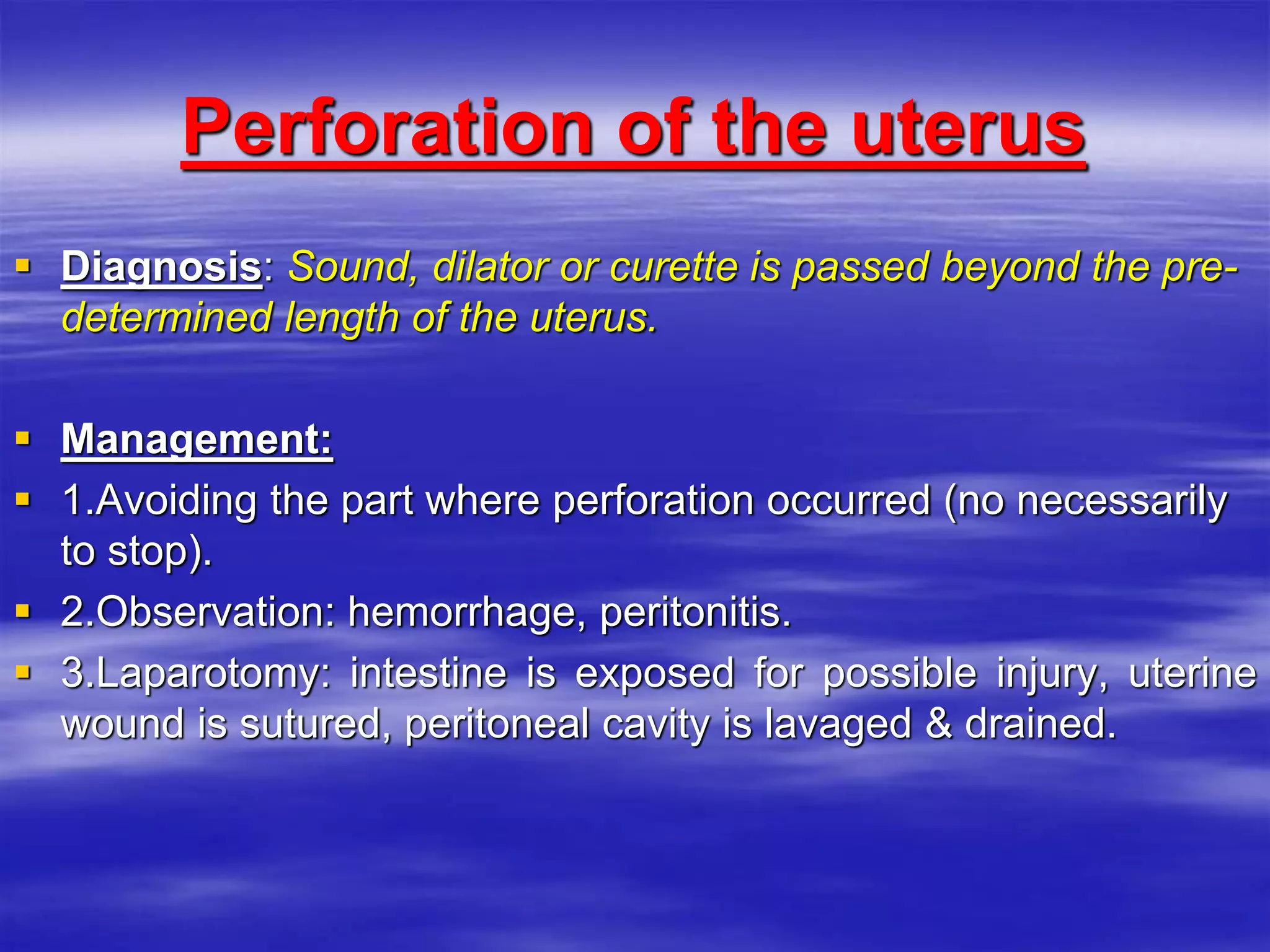
Perforation of the uterus
 Diagnosis: Sound, dilator or curette is passed beyond the pre-
determined length of the uterus.
 Management:
 1.Avoiding the part where perforation occurred (no necessarily
to stop).
 2.Observation: hemorrhage, peritonitis.
 3.Laparotomy: intestine is exposed for possible injury, uterine
wound is sutured, peritoneal cavity is lavaged & drained.
Perforation of the uterus
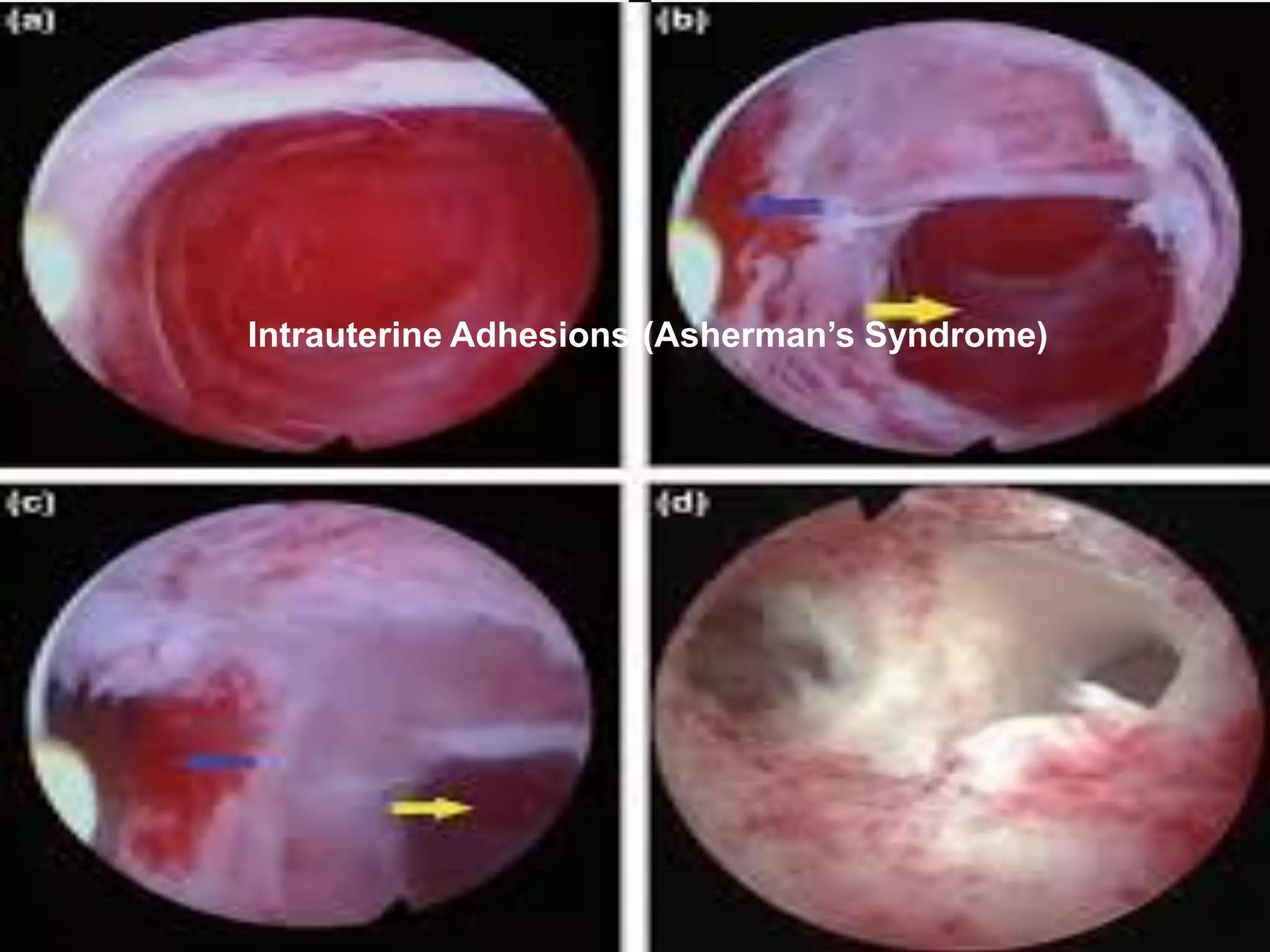
Asherman's syndrome (Uterine synechiae)
 First case of intrauterine adhesion was published in1894 by
Heinrich Fritsch.
 In 1948 , a full description of this syndrome was carried out by
Joseph Asherman's ( journal of obstetric and gynecology of the
British Empire).
 Characterized by the bands of fibrous tissue (scar tissue)
inside the uterine cavity and/or endocervix.
 Usually secondary to intrauterine surgery or infection.
 incidence significantly influenced by the number of abortions
performed, (miscarriage curettage: 66.7%), (Postpartum
curettage: 21.5%).
Asherman's syndrome (Uterine synechiae)
 Associated with high rate of infertility, Recurrent miscarriage,
poor implantation following in vitro fertilization, preterm labour ,
and abnormal placentation (placenta previa , placenta accreta).
 Diagnosis by Hysteroscopy, sonohysterography (SHG) with
2D or 3D sonar and HSG.
 Prevention by avoiding unnecessarily intrauterine
instrumentation and application of IUCD, Uterine balloon stent,
Foley’s catheter, or Anti-adhesion barriers following intrauterine
surgery.
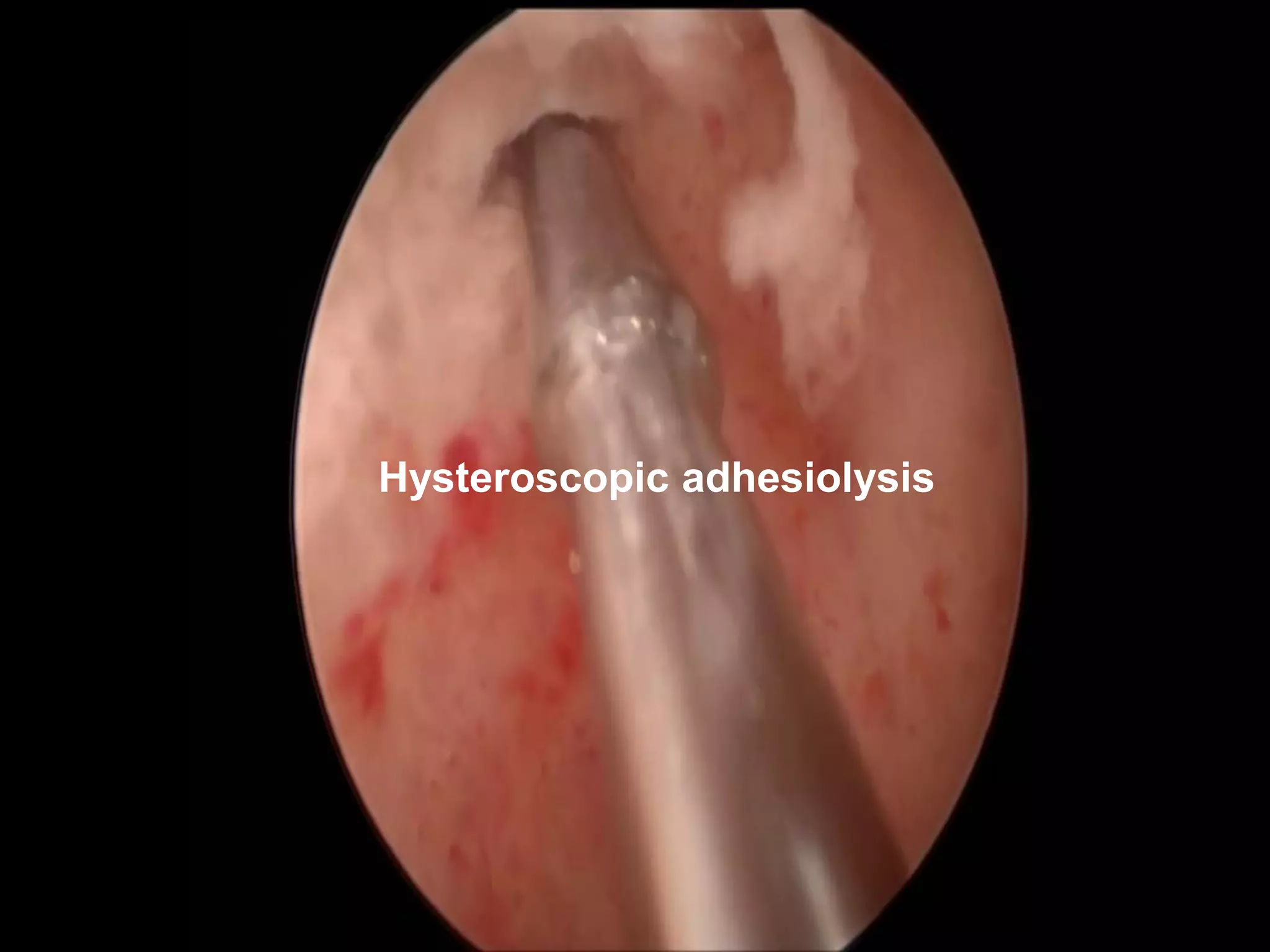
 Treatment: Hysteroscopic Surgery.
Asherman's syndrome (Uterine synechiae)
Intrauterine Adhesions(Asherman’s Syndrome)
Intrauterine Adhesions((Asherman’s Syndrome)
Hysteroscopic adhesiolysis
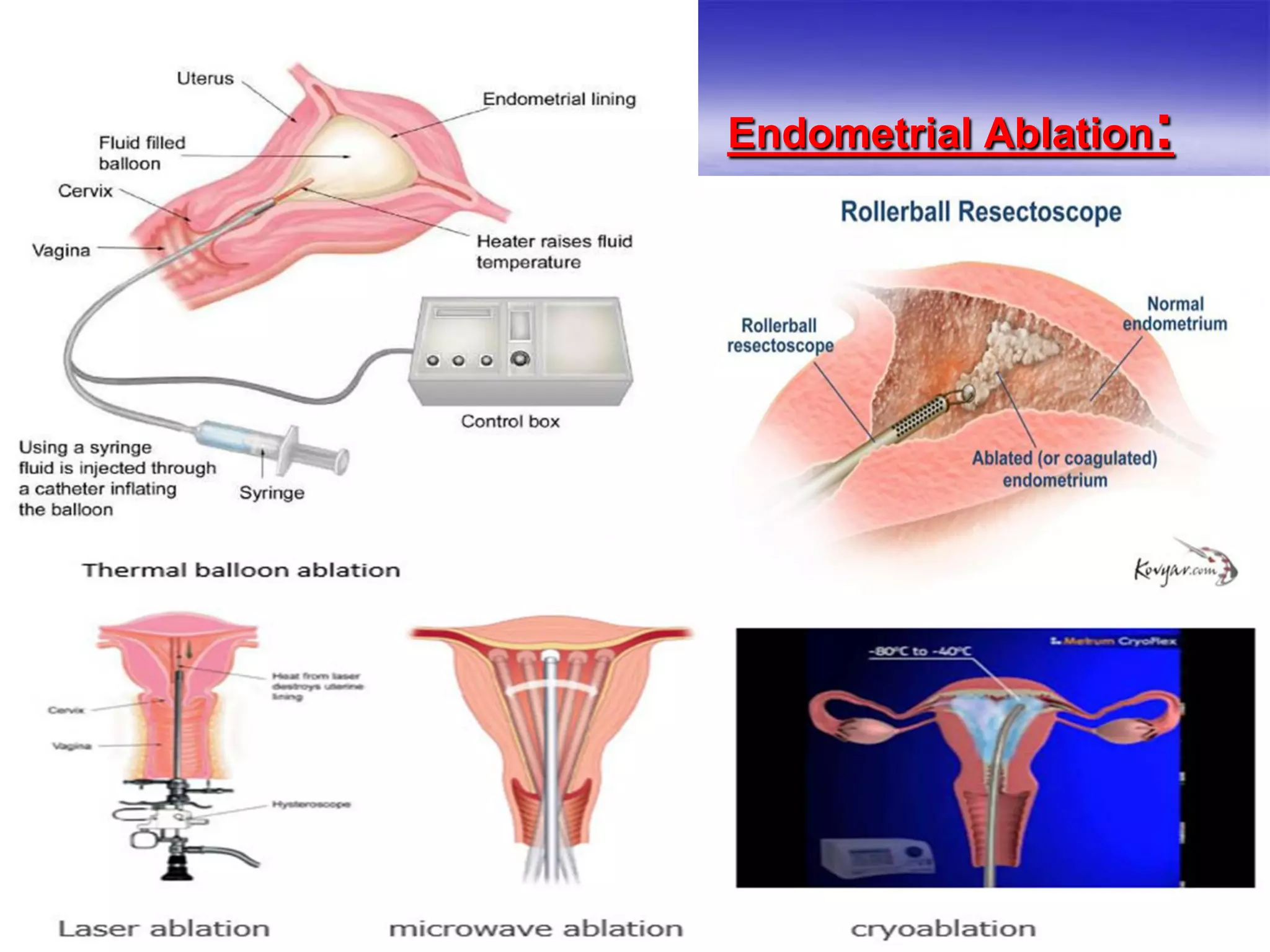
Endometrial Ablation
 Endometrial ablation is primarily designed for the treatment of
abnormal or dysfunctional uterine bleeding (AUB/DUB).
 As a day case or outpatient procedure. It is the complete
destruction of the endometrium down to the basal layer,
resulting in fibrosis of the uterine cavity and amenorrhea(30%),
patient satisfaction rates are over 70%.
 Indicated in women who have heavy menstrual bleeding
that is impacting her life or benign lesions as small submucous
myomas or endometrial polyps and without other problems that
require hysterectomy.
 Performed with a resectoscope (a hysteroscope with built in
loop using a high frequency electric current to cut or coagulate
tissues, involving the use of fluid for distention and
irrigation).
Advantages of Endometrial ablation compared to
hysterectomy:
 Shorter time (30 min).
 Can be done under local anesthesia- cervical block +/-
sedation which also allow office setting.
 Day case procedure, no hospital stay.
 Lower cost.
 Lower morbidity, Back to regular activities next day.
Endometrial Ablation – contraindications:
 Pregnancy or desire to future pregnancy.
 Active urogenital or pelvic infection.
 Suspected or documented premalignant or malignant condition
of the uterus.
Others:
 Large uterine cavity > 12 cm, hydrosalpnix.
 History of classical cesarean section.
 History of a transmural myomectomy.
 Uterine anomalies.
:Endometrial Ablation
 Endometrial preparation:
 A preoperative treatment of GnRH agonists can be given to
prepare (thinning) the endometrium.
 Progesterone can also be used.
 Curettage or aspiration of the endometrium before surgery if
not possible to submit the patient to an appropriate
pharmacological therapy.
 Endometrial suppression treatment course is useful even in
the postoperative phase.
Failure of endometrial ablation:
 Adenomyosis.
 Bulky uterus: >12mm.
 Curettage, immediately prior to ablation.
 No preoperative endometrial suppression.
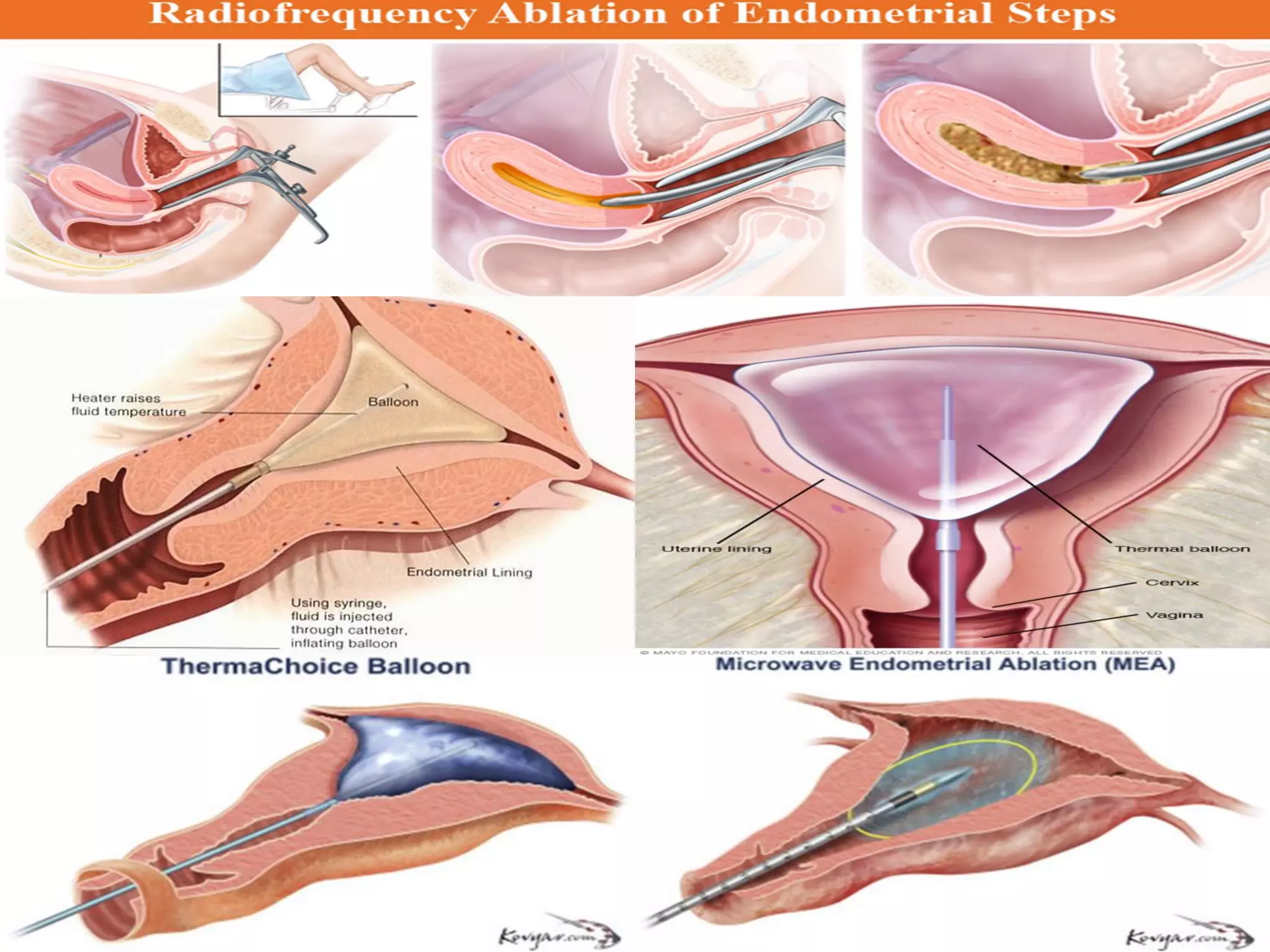
Non-hysteroscopic Global Endometrial Ablation (GEA):
 Balloon ablation.
 Cavaterm thermal balloon ablation.
 Radio frequency probe.
 Unipolar electrodes.
 Bipolar electrodes.
 Microwave endometrial ablation (MEA).
 Hydrothermal ablation (HTA) microsulis.
 Diode laser photodynamic therapy.
 Photodynamic therapy.
 Cryo surgery.
ThermaChoice Balloon Ablation:
 Young women with uterus of normal size and heavy bleeding.
 Can be offered to mentally disabled, bed ridden, paralysis,
medically unfit like too obese, hypertensive, diabetes, renal
failure, terminal cancer patient.
 The procedure can be done under local anaesthesia or short
general anaesthesia can be used in apprehensive patient.
No need for cervical dilation prior to insertion of the catheter. .
:Endometrial Ablation
Complications of Endometrial
Ablation:
 Uterine perforation.
 Hemorrhage. Vault and wound hematoma. Cyclical pain.
 Infections as endometritis & PID.
 Bowel or urinary tract injury. urinary retention
 Cervical lacerations & stenosis.
 Distention medium hazards as:
-gas embolism.
- fluid overload.
- anaphylactic shock.
 Treatment failure.
 long term: Recurrence of symptoms, Pregnancy, Cancer.
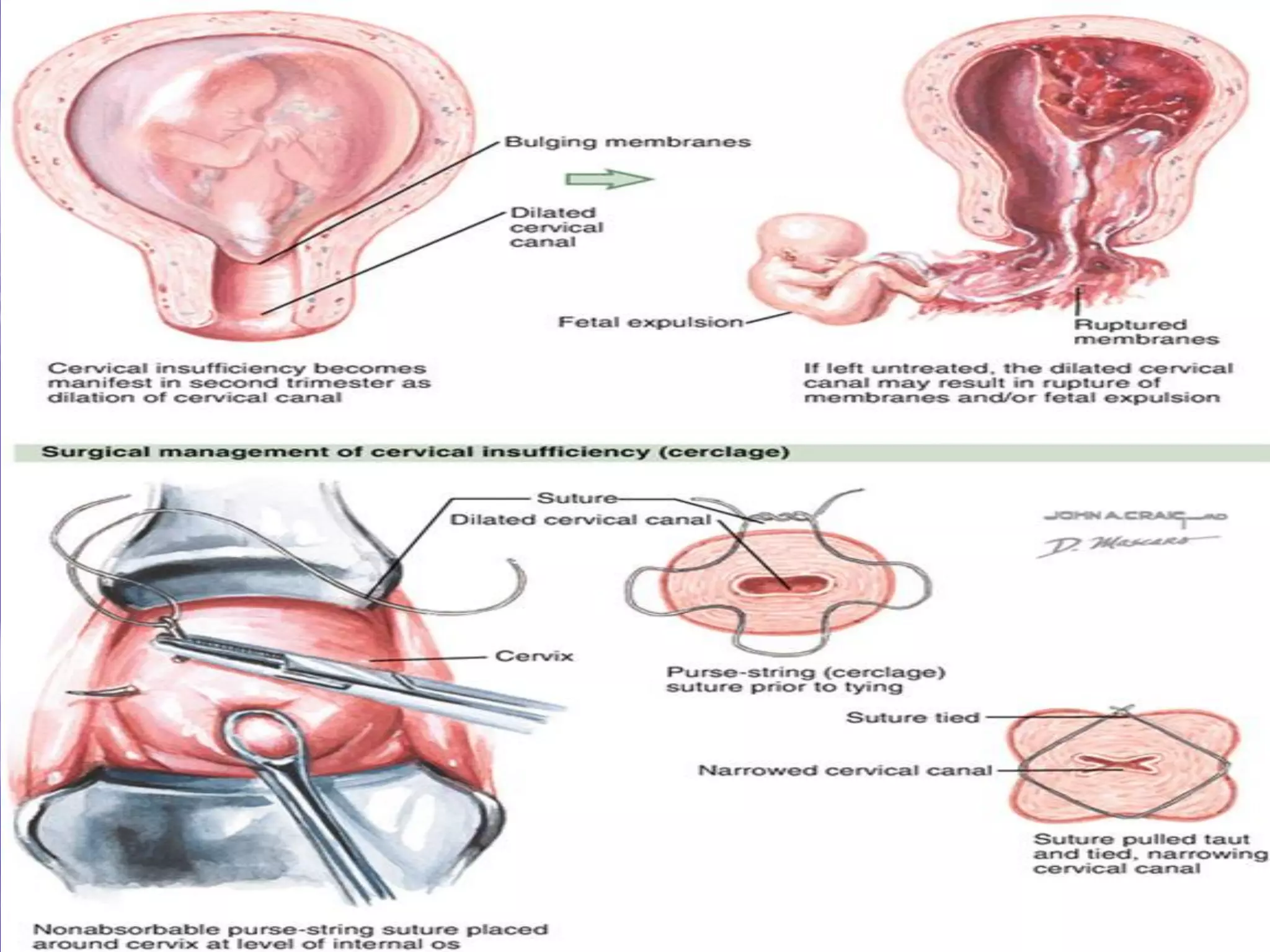
Cervical cerclage:
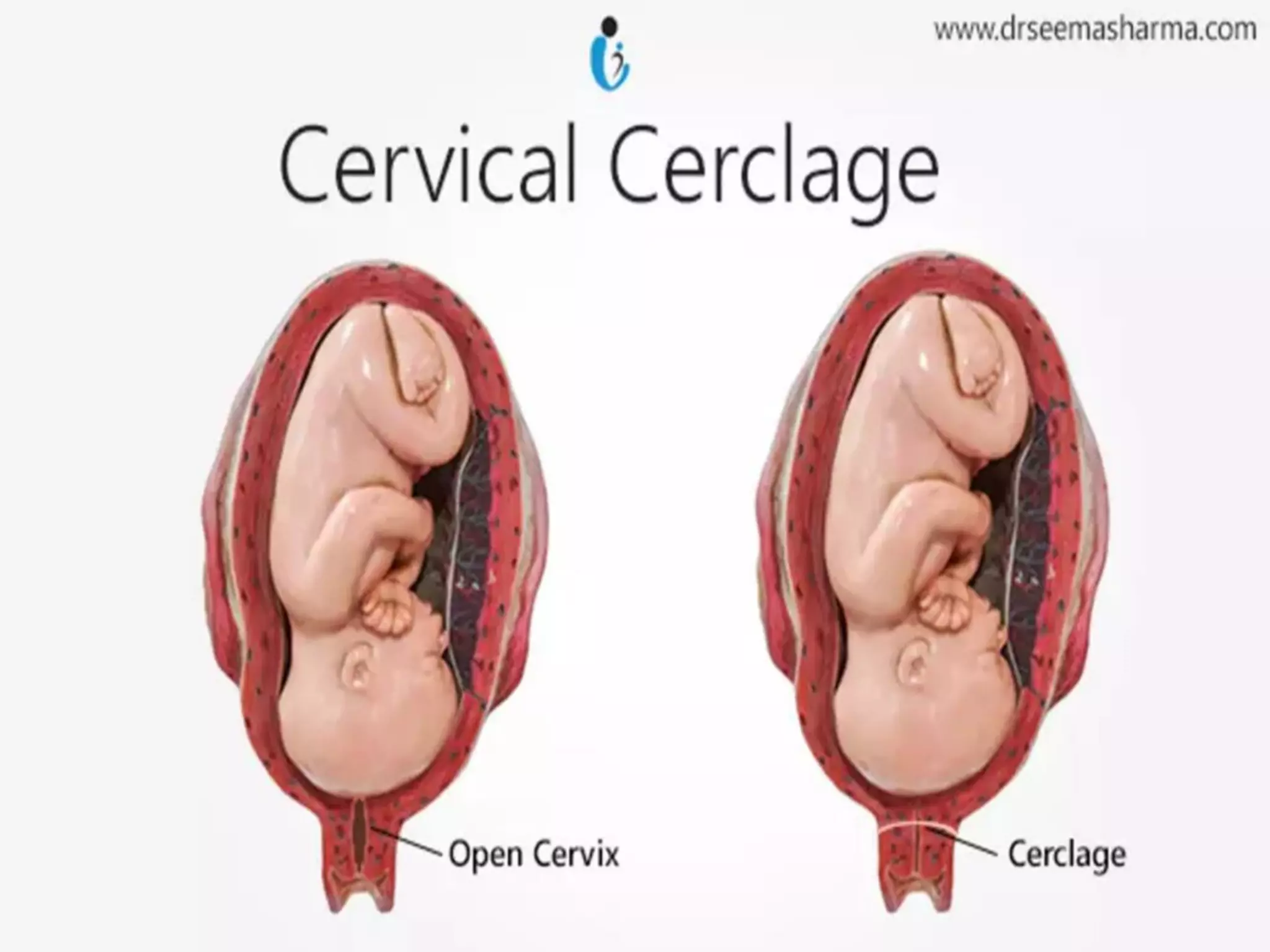
 Cervical Incompetence painless mid-trimester loss of
apparently normal fetuses occurs recurrently and the cervix
accepts a 8-9 mm dilator without resistance in the non-
pregnant interval, that could be treated by prophylactic
cervical cerclage
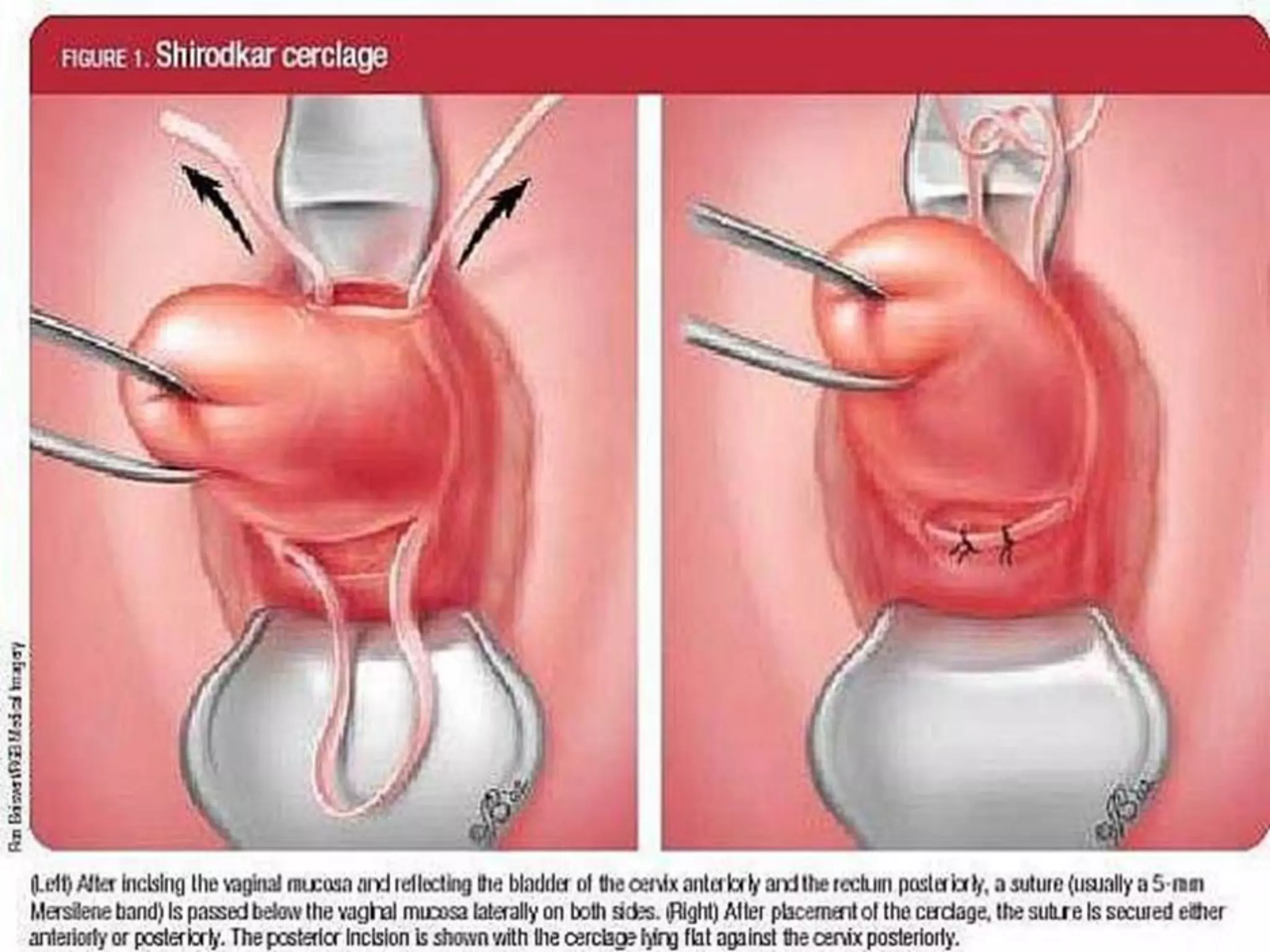
 History: 1-1955 Shirodkar – an operation for recurrent
miscarriage that restores the internal cervical sphincter,
performed at 14w, bladder dissection & Mersilene tape,
removed at 37w.
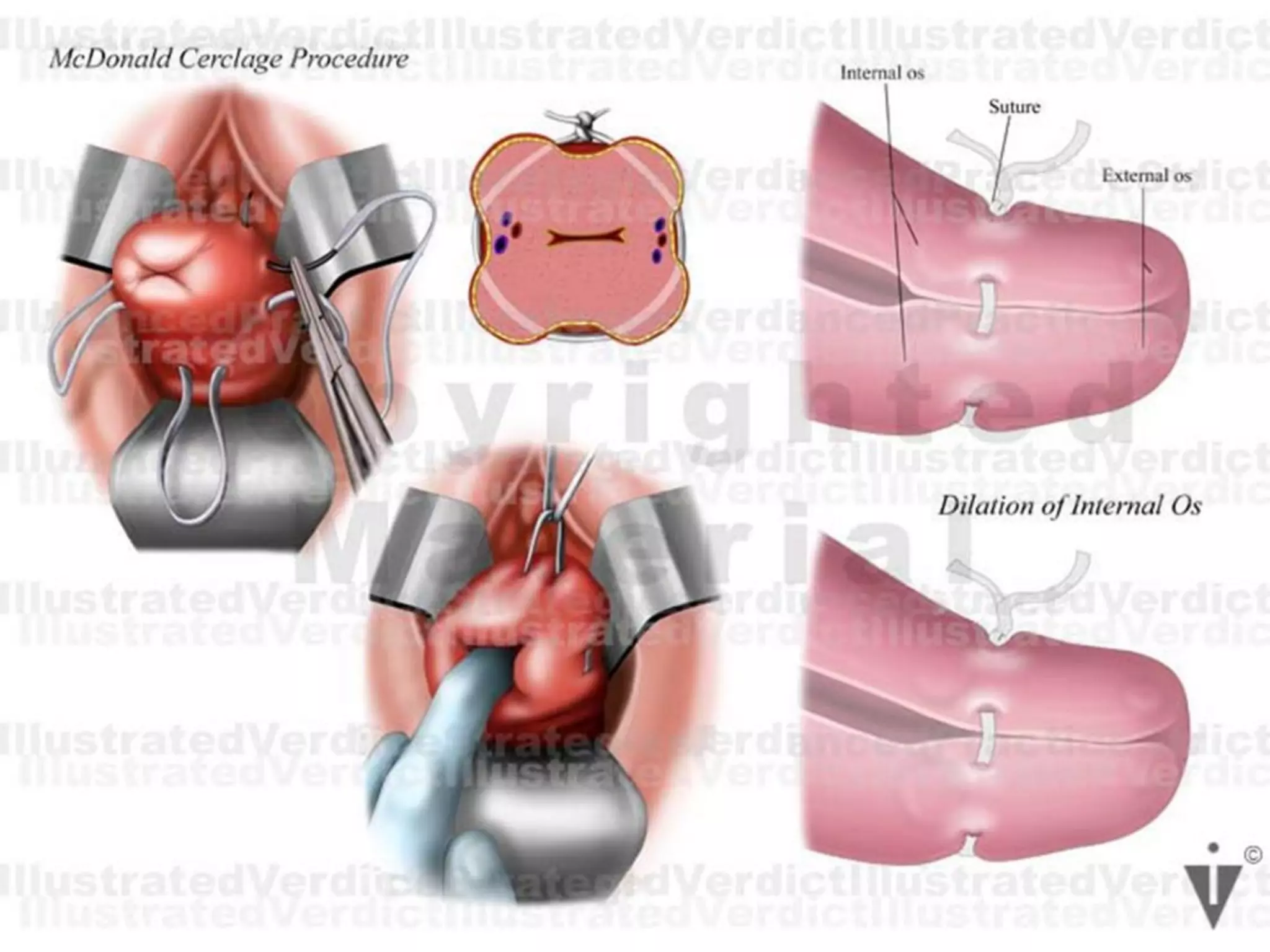
2-1957 McDonald – No bladder dissection, cervix is closed
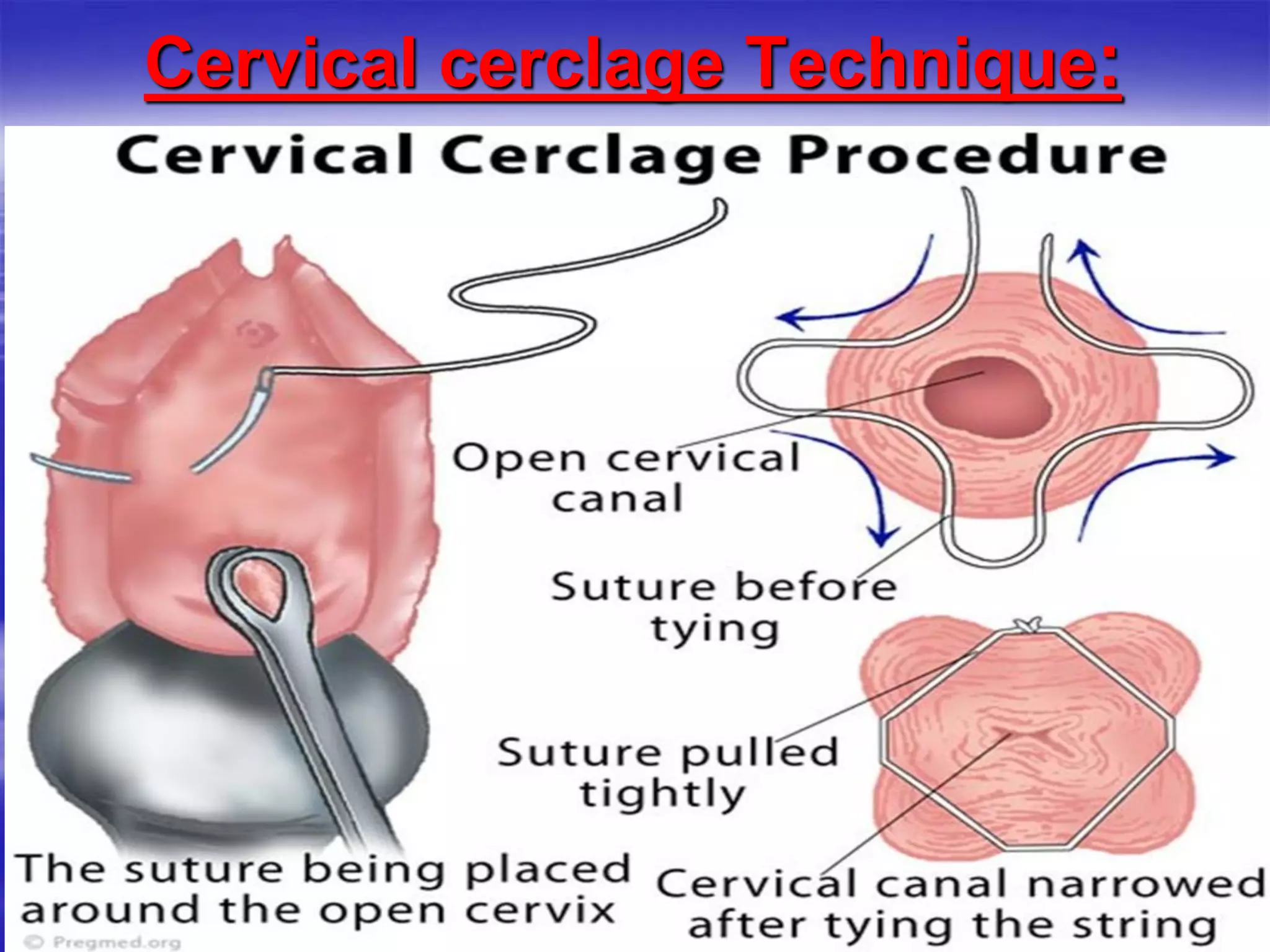
using 3 or 4 bites with the needle to create a purse string around
the cervix with nylon or any similar monofilament suture.
Cervical cerclage:
 Indications:
 Prophylactic (elective): Suspected cervical incompetence,
Cerclage at 14 weeks, removed around 37 weeks.
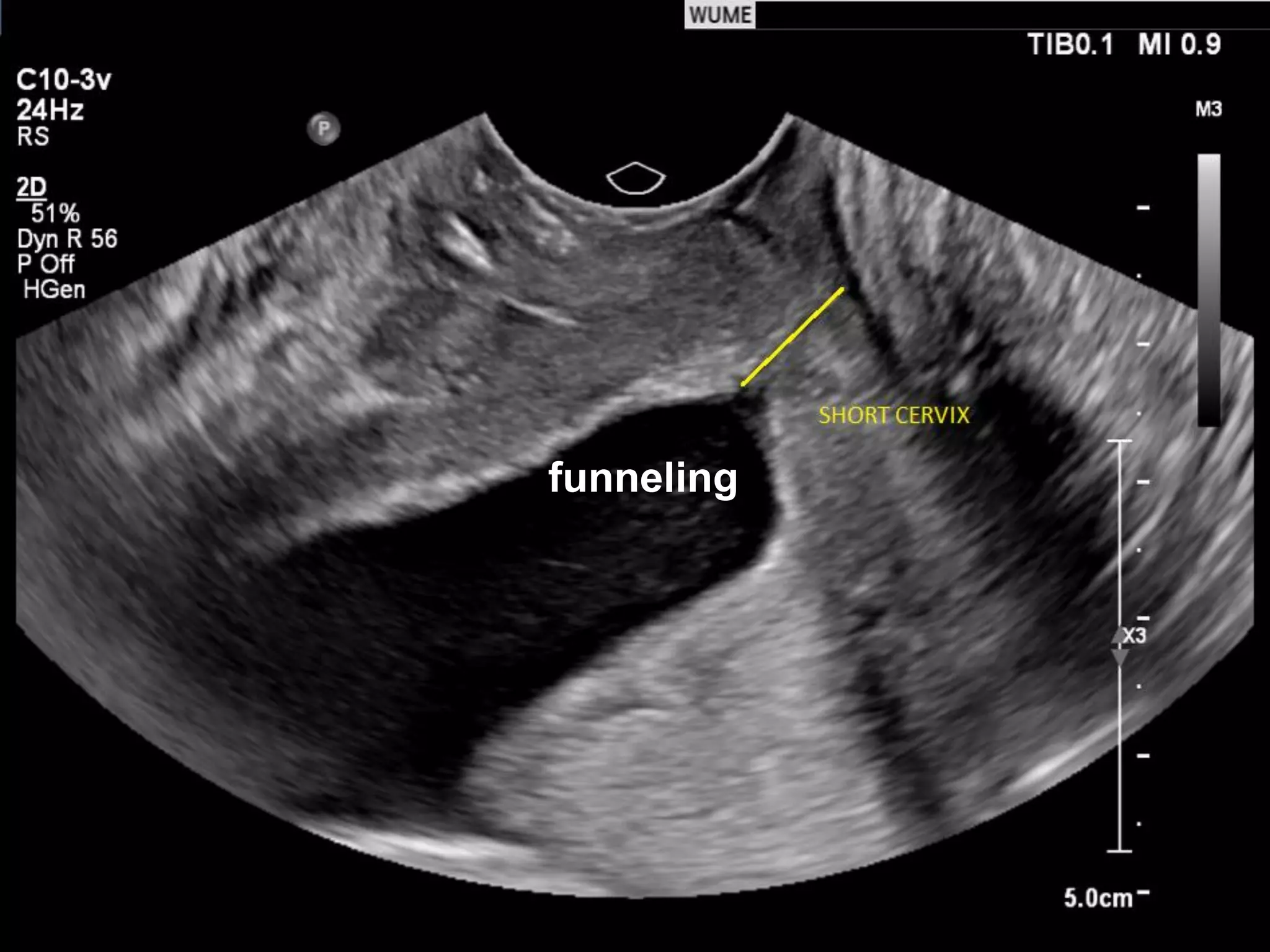
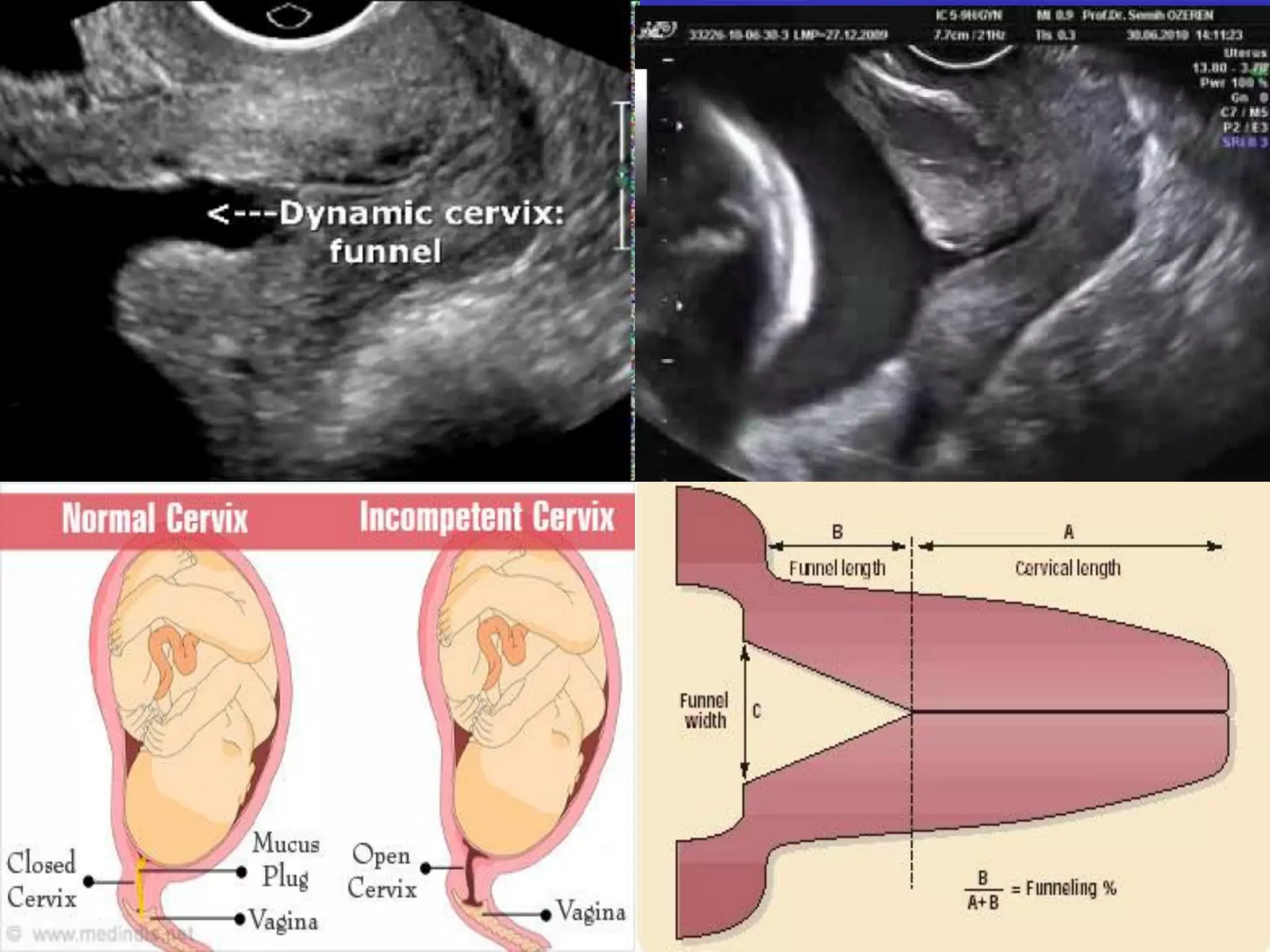
 Urgent (therapeutic):Asymptomatic women with sonographic
evidence of cervical shortening and/or funneling may also
benefit from cervical cerclage.
 Emergency (salvage) cervical (prior to 28 weeks)
 Contraindications:
1.Uterine contractions.
2.Uterine bleeding.
3.Chorioamnionitis.
4.Premature rupture of membranes.
5.Fetal anomaly incompatible with life.
funneling
Cervical cerclage:
 Preoperative evaluation:
 Cerclage should generally be delayed until 14 weeks so that
early abortions due to other factors will be completed.
 Obvious cervical infection should be treated, cultures for
gonorrhea, chlamydia, and group B streptococci are
recommended.
 Sonography to confirm a living fetus and to exclude major
fetal anomalies.
 For at least a week before and after surgery no sexual
intercourse.
 In advanced pregnancy, more likely surgical intervention
will stimulate preterm labor or membrane rupture.
Cervical cerclage Technique:
:
Cervical cerclage:
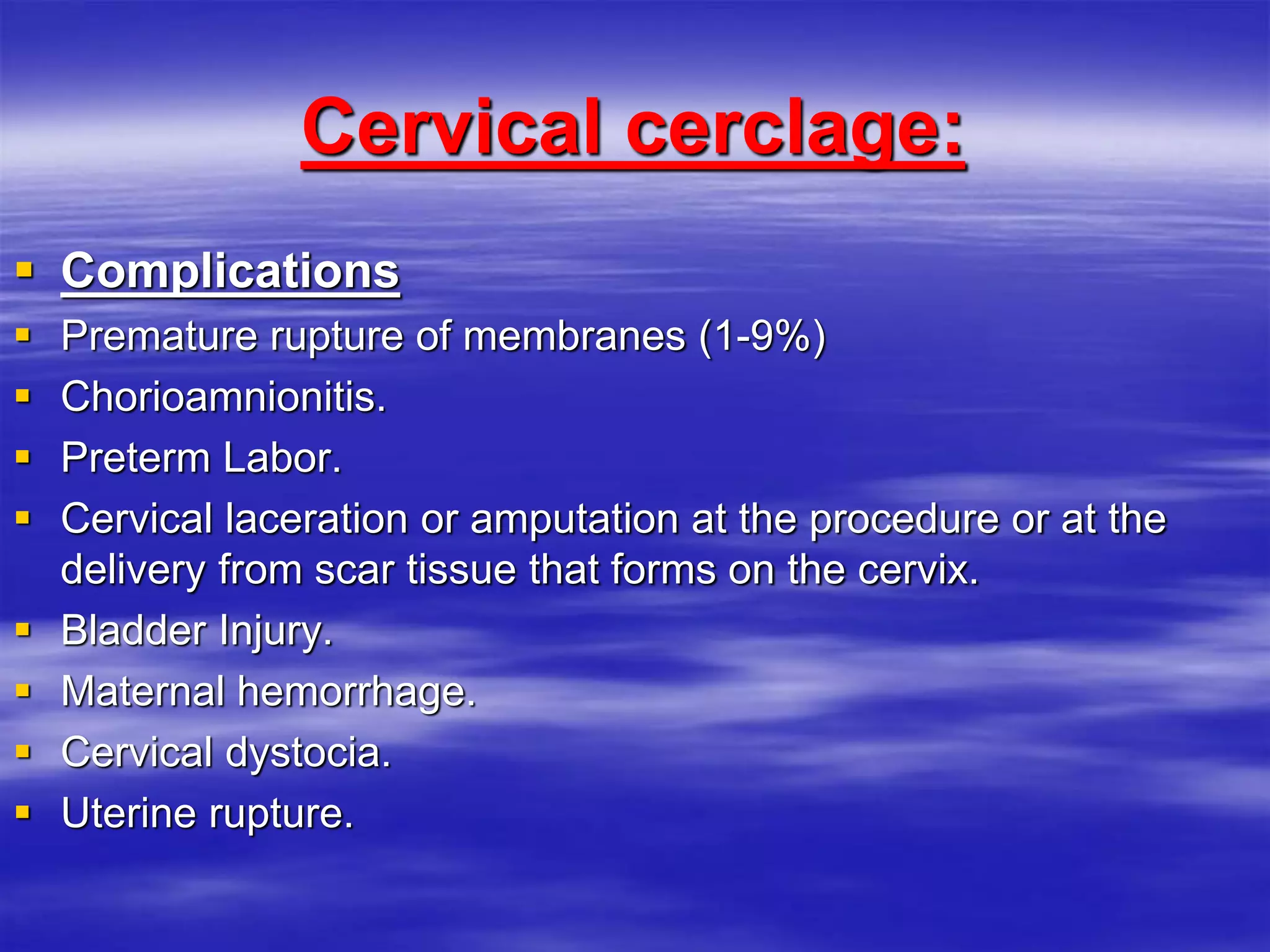
 Complications
 Premature rupture of membranes (1-9%)
 Chorioamnionitis.
 Preterm Labor.
 Cervical laceration or amputation at the procedure or at the
delivery from scar tissue that forms on the cervix.
 Bladder Injury.
 Maternal hemorrhage.
 Cervical dystocia.
 Uterine rupture.
Treatment of Bartholin’s cysts
and abscesses:
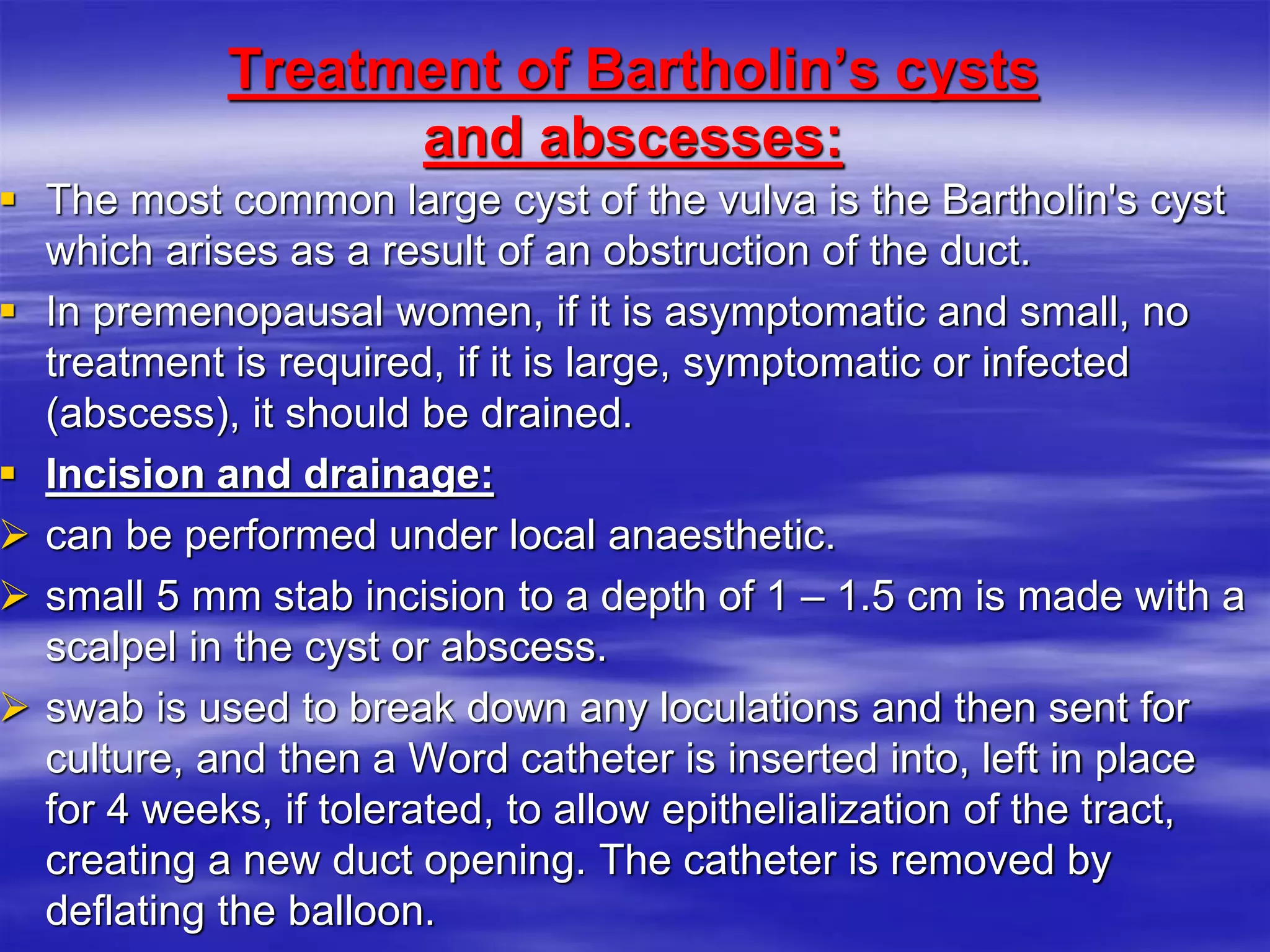
 The most common large cyst of the vulva is the Bartholin's cyst
which arises as a result of an obstruction of the duct.
 In premenopausal women, if it is asymptomatic and small, no
treatment is required, if it is large, symptomatic or infected
(abscess), it should be drained.
 Incision and drainage:
 can be performed under local anaesthetic.
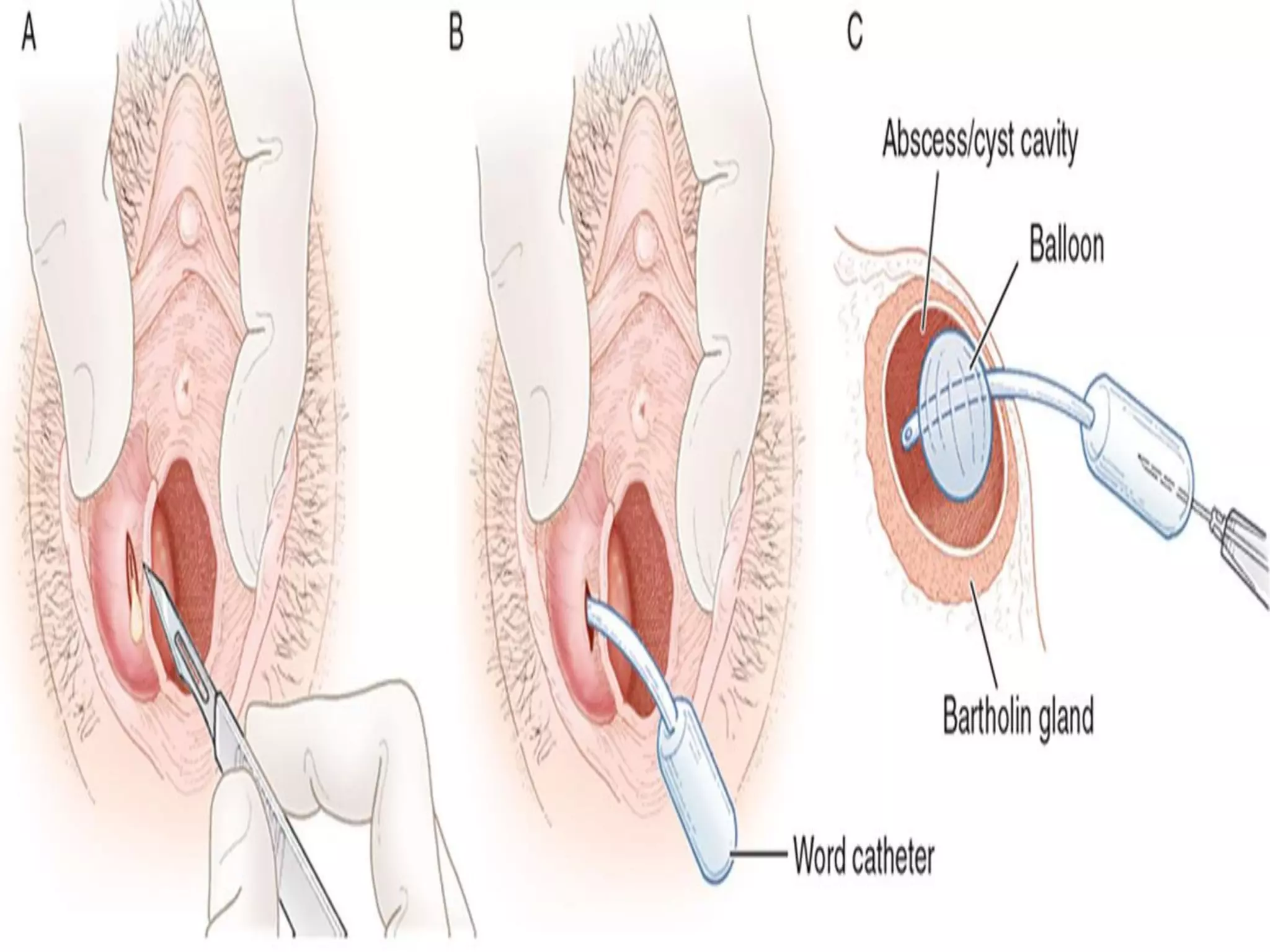
 small 5 mm stab incision to a depth of 1 – 1.5 cm is made with a
scalpel in the cyst or abscess.
 swab is used to break down any loculations and then sent for
culture, and then a Word catheter is inserted into, left in place
for 4 weeks, if tolerated, to allow epithelialization of the tract,
creating a new duct opening. The catheter is removed by
deflating the balloon.
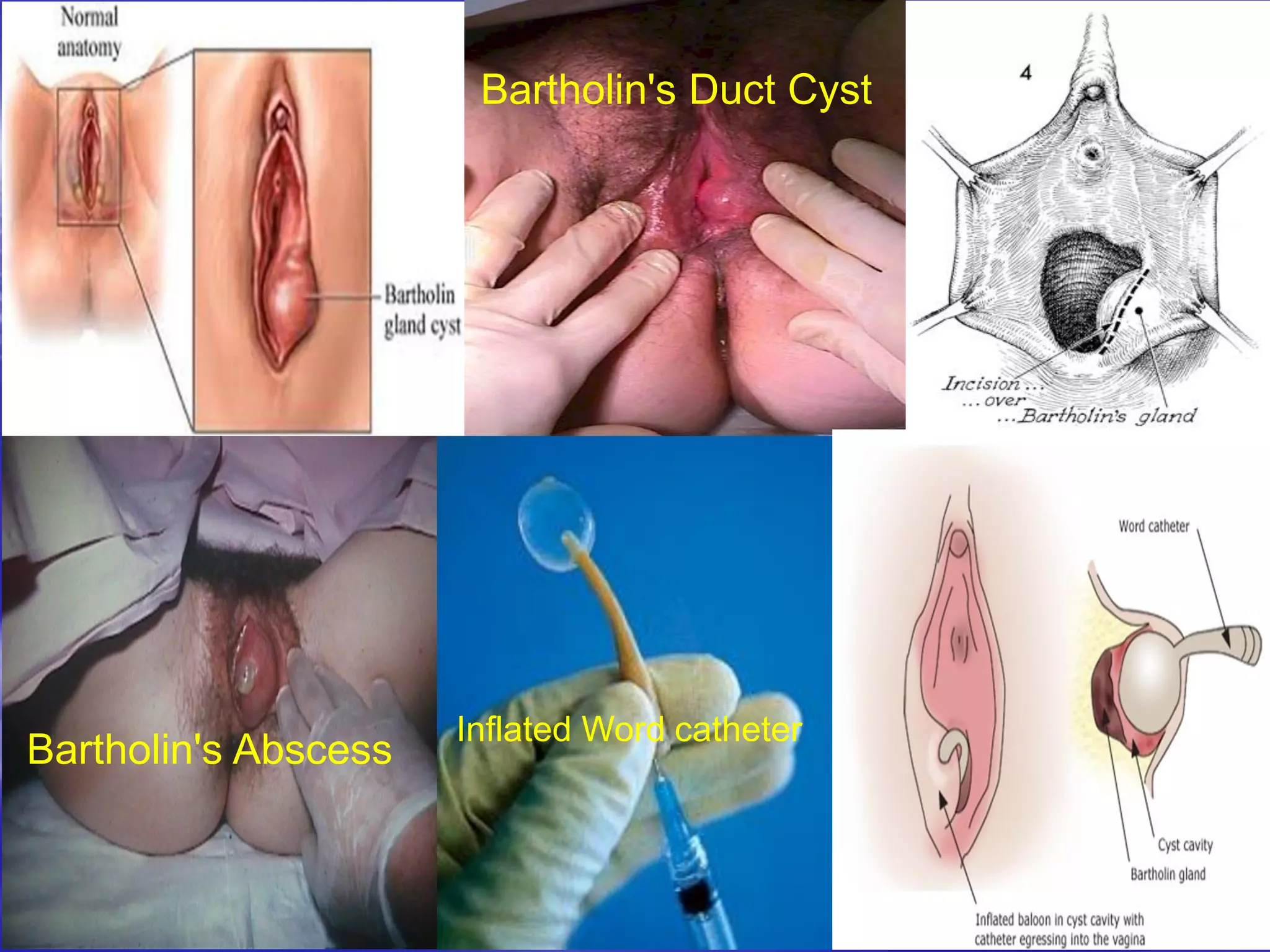
Bartholin's Duct Cyst
Bartholin's Abscess
Inflated Word catheter
Treatment of Bartholin’s cysts
and abscesses:
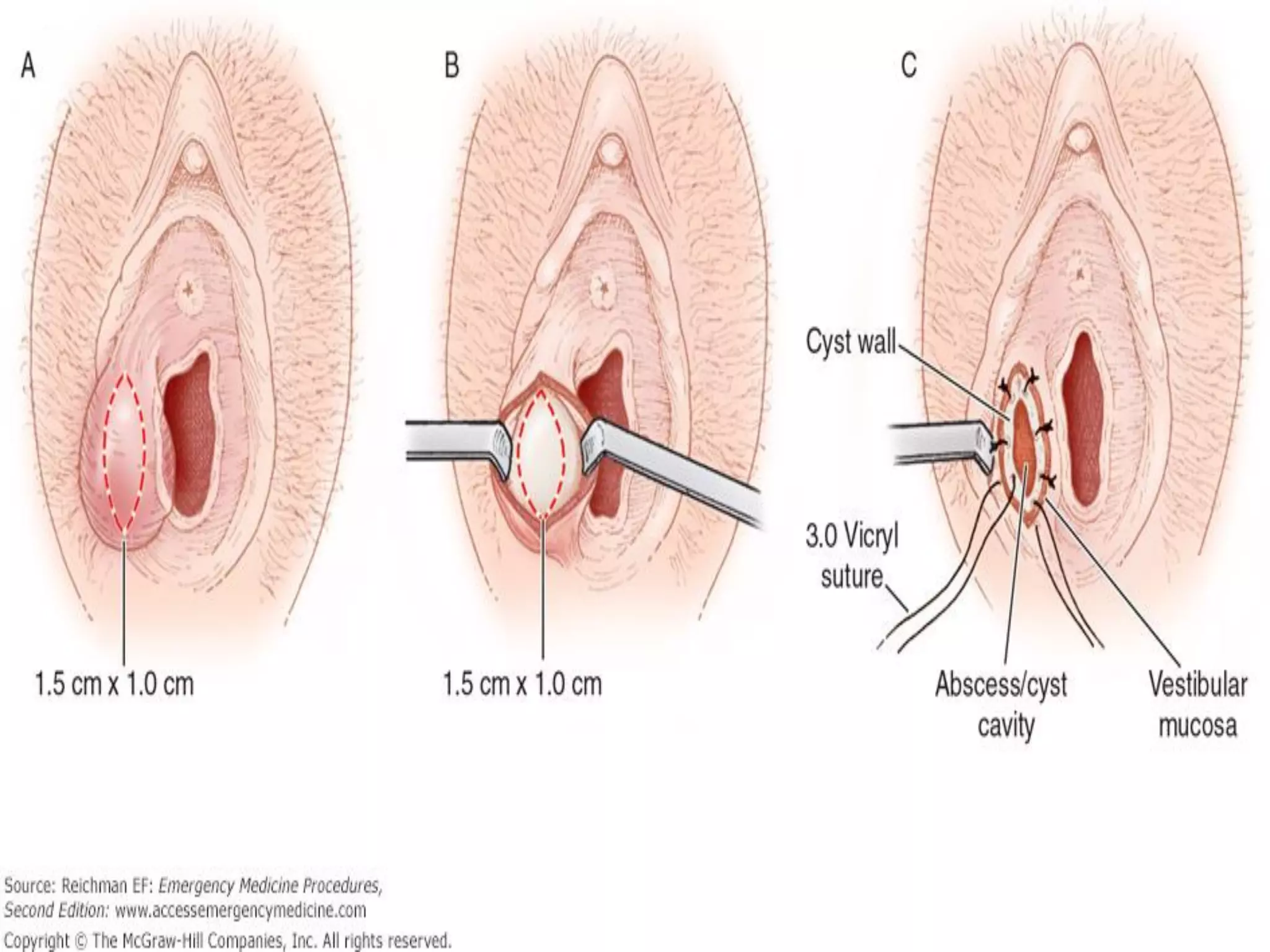
 Marsupialization:
 Cyst or abscess recurrences despite the use of a gauze wick
or Word catheter necessitate marsupialization, can be performed
under local or general anaesthetic.
 A 1 – 1.5 cm cruciate incision is carried through into the cyst,
releasing its contents. The four segments of skin and cyst wall
formed by the incision are excised leaving a circular opening.
 cyst wall is sutured using interrupted stitches to the skin edge
allowing free drainage of its secretions to the exterior.
 The new tract will slowly shrink over time and epithelialize
forming a new duct orifice.
Treatment of Bartholin’s cysts
and abscesses:
 Complications of marsupialization:
1. Dyspareunia.
2. Hematoma.
3. Infection.
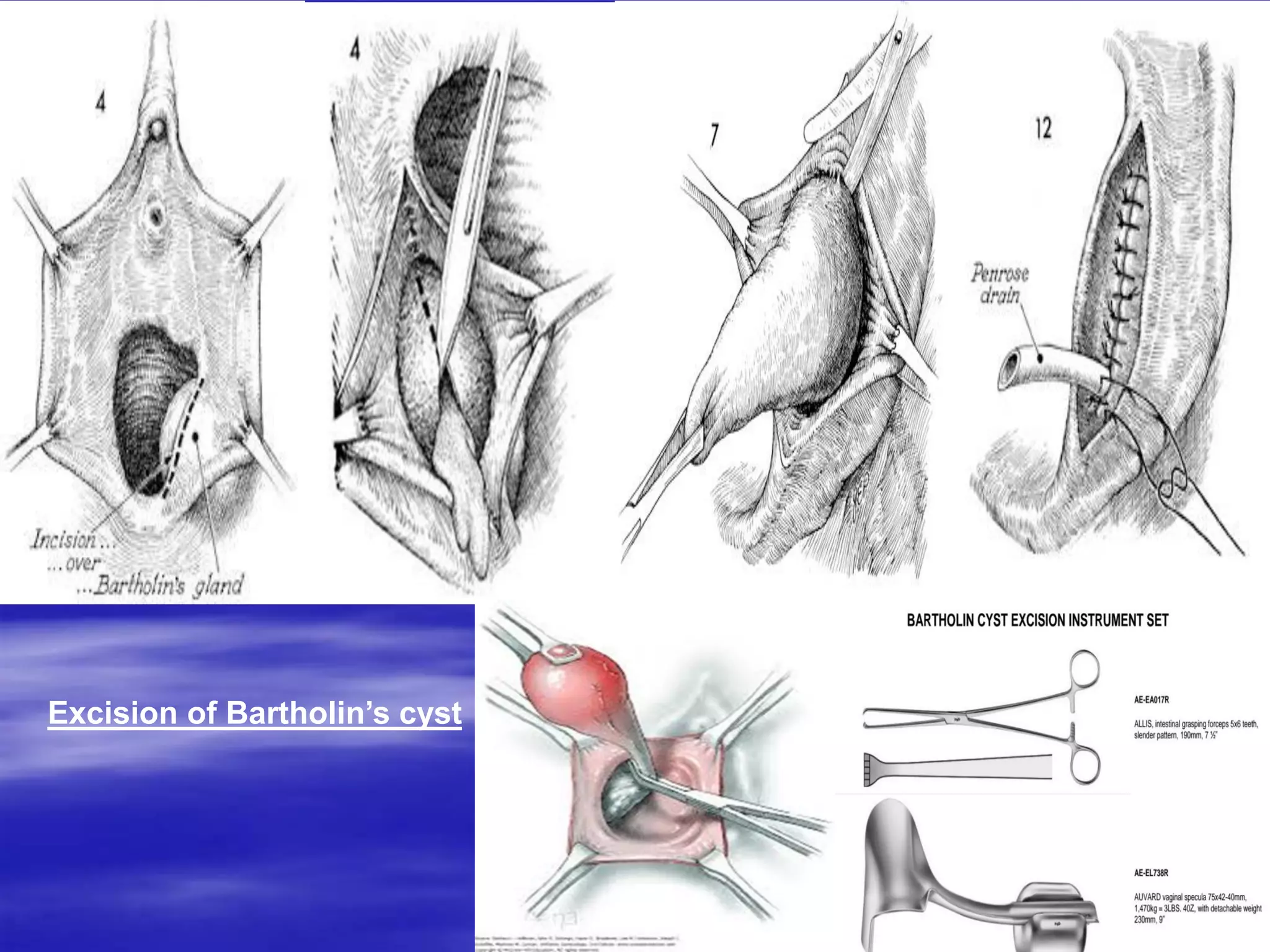
 Excision : cyst that recurs despite repeated incision or
marsupialization or one suspicious of malignancy should be
excised, skin incision followed by enucleation of the cyst,
obliteration of the cavity and skin closure.
Excision of Bartholin’s cyst
Hysterectomy. History:
 Vaginal hysterectomy dates back to ancient times, first
performed by Themison of Athens 20 years before the birth of
Christ.
 There are many reports of its use in the middle ages.
 The first abdominal hysterectomy was performed by Charles
Clay in Manchester, England in 1843; unfortunately the
diagnosis was wrong and the patient died in the immediate
post-operative period.
 In 1853 Walter Burnham from Lowell, Massachusetts achieved
the first successful abdominal hysterectomy although again the
diagnosis was wrong!
 Early procedures were performed without anaesthesia with a
mortality of about 70 %, mainly due to sepsis from leaving a
long ligature to encourage the drainage of pus.
Hysterectomy. History:
 Thomas Keith from Scotland realized the danger of this practice
and merely cauterized the cervical stump and allowed it to fall
internally, thereby bringing the mortality down to about 8 %.
 Hysterectomy became safer with the introduction of anaesthesia,
antibiotics and antisepsis, blood transfusions and intravenous
therapy.
 During the 1930s, Richardson introduced the total abdominal
hysterectomy to avoid sero-sanguineous discharge from the
cervical remnant and the risk of cervical carcinoma developing in
the stump.
 First total laparoscopic hysterectomy by Harry Reich in Kingston,
Pennsylvania in 1988.
Hysterectomy
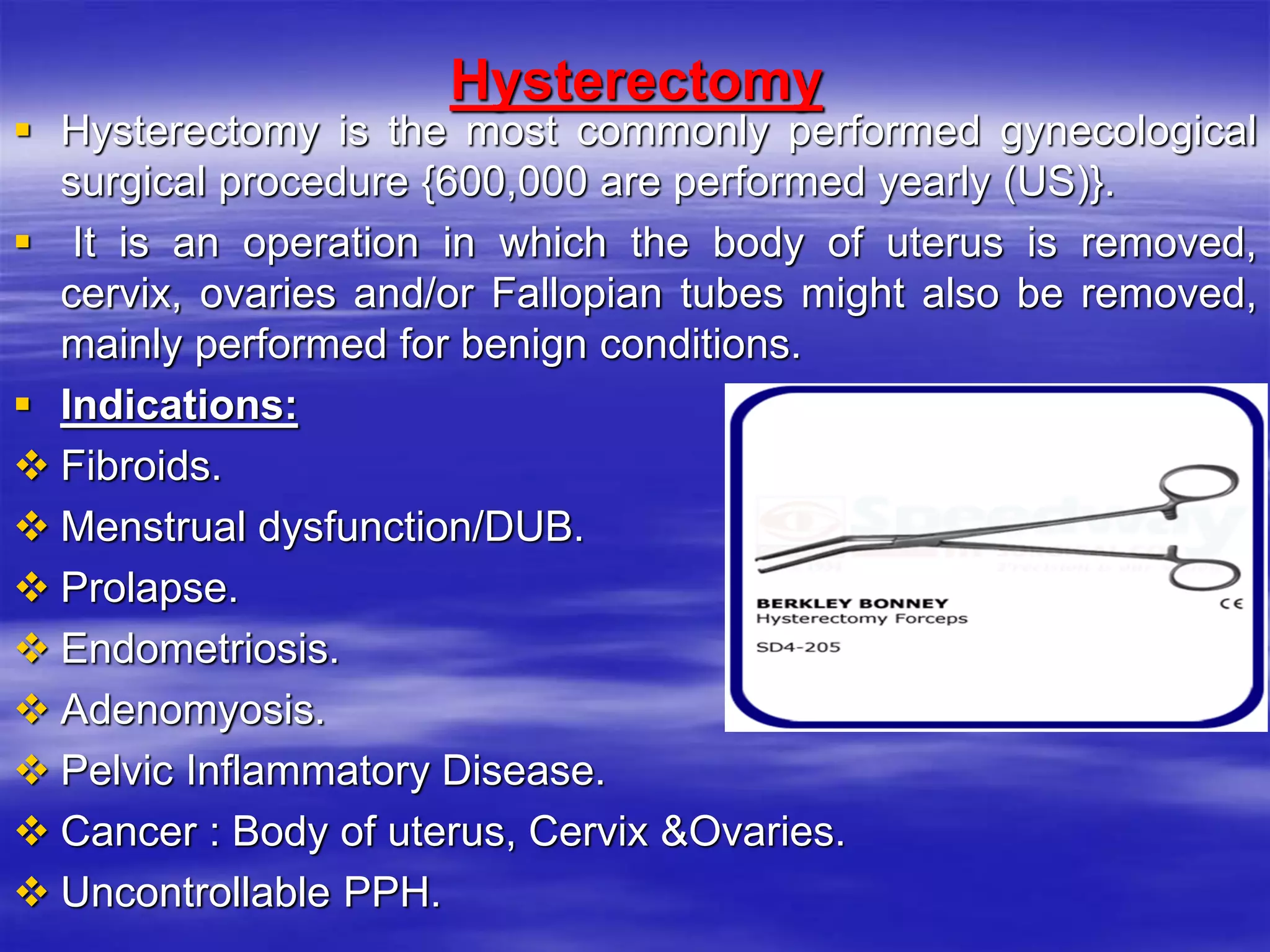
 Hysterectomy is the most commonly performed gynecological
surgical procedure {600,000 are performed yearly (US)}.
 It is an operation in which the body of uterus is removed,
cervix, ovaries and/or Fallopian tubes might also be removed,
mainly performed for benign conditions.
 Indications:
 Fibroids.
 Menstrual dysfunction/DUB.
 Prolapse.
 Endometriosis.
 Adenomyosis.
 Pelvic Inflammatory Disease.
 Cancer : Body of uterus, Cervix &Ovaries.
 Uncontrollable PPH.
Hysterectomy
 Although some indications remain controversial, high patient
satisfaction levels and increasing safety of the procedure
have been reported.
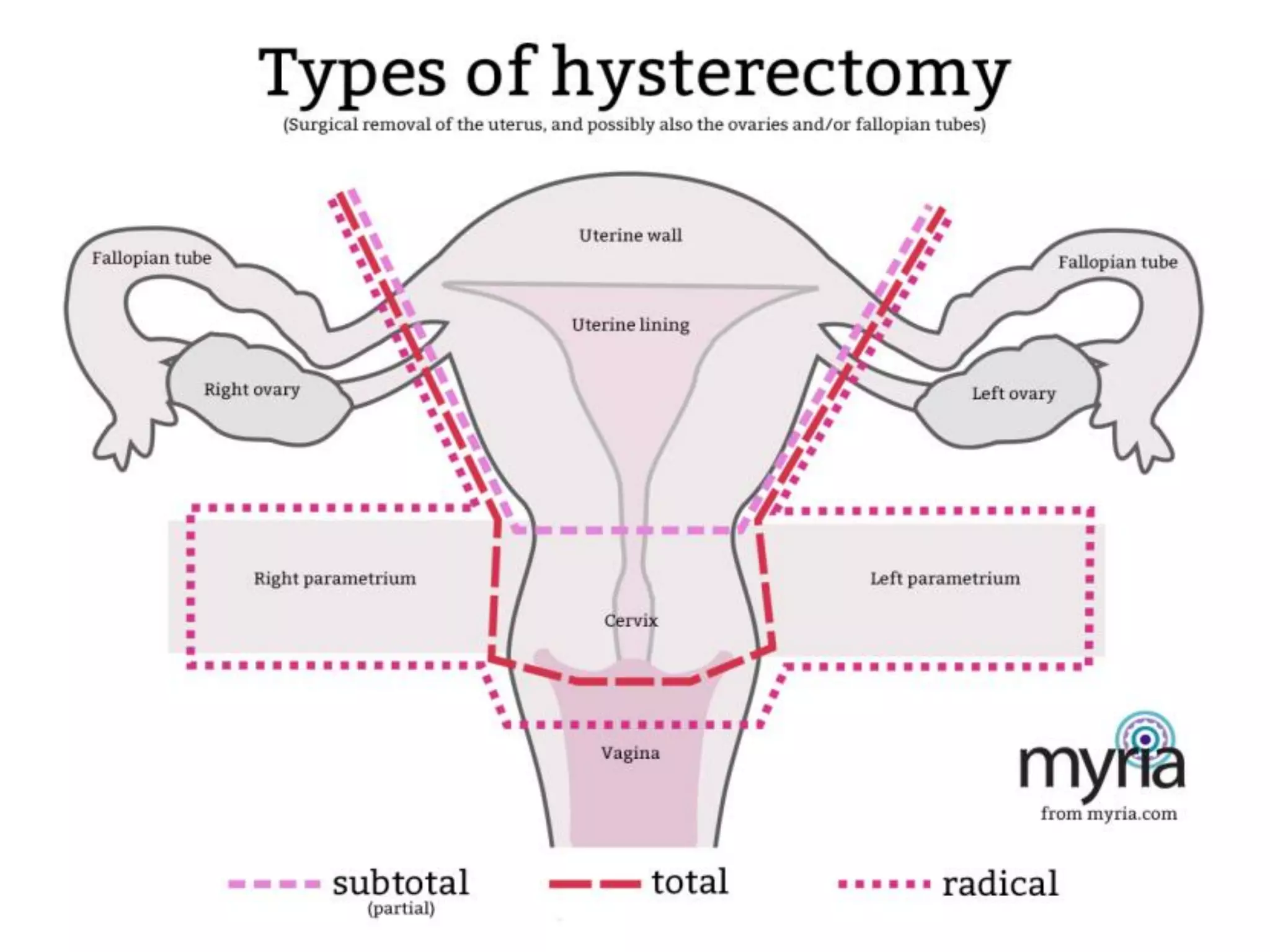
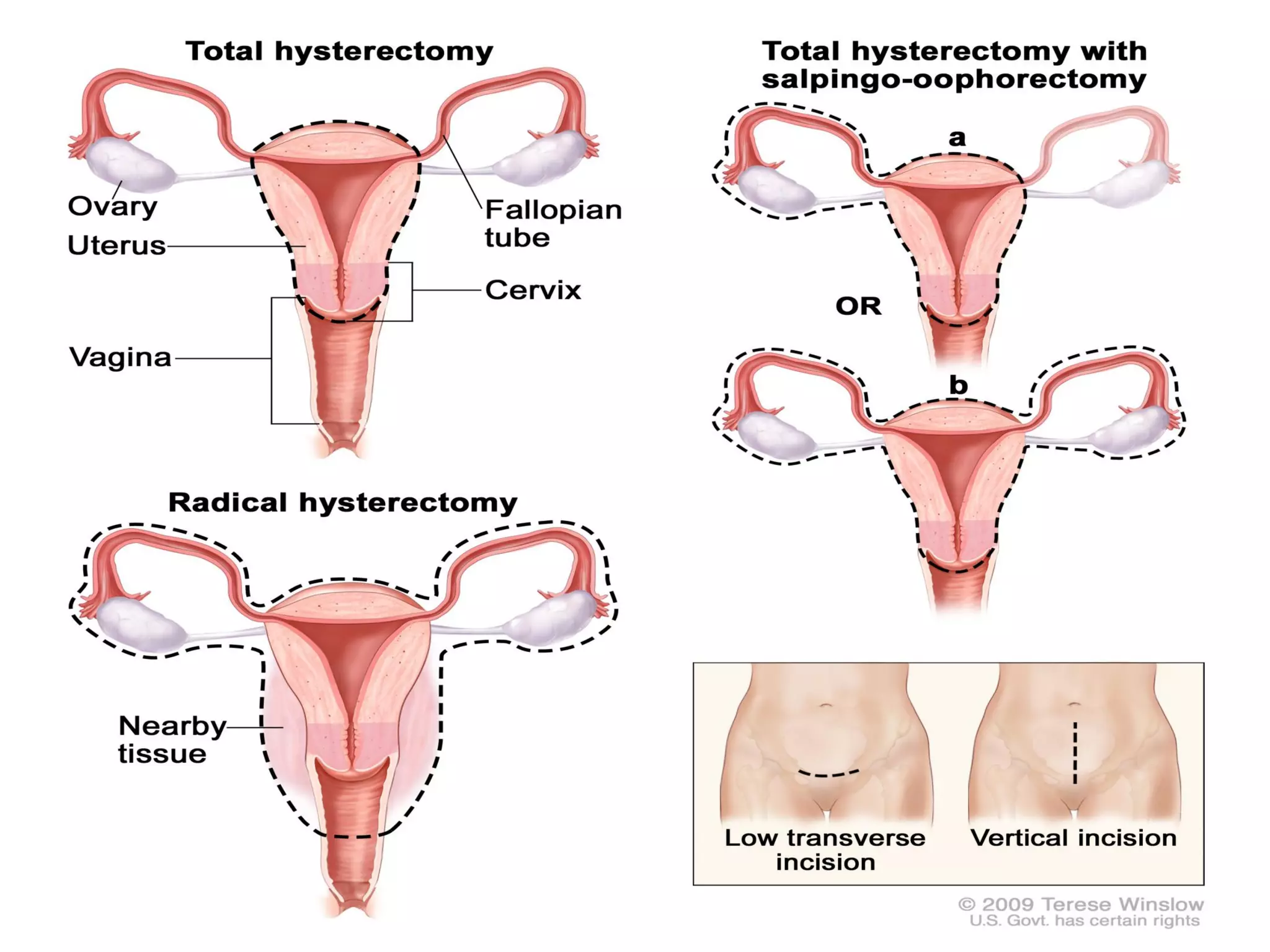
 Types:
 Abdominal Hysterectomy: (Total: Uterine body and cervix
Subtotal: Uterine body only, Hysterectomy with BSO),
Radical (or Wertheim Hysterectomy): total hysterectomy with
pelvic lymph nodes, paracervical tissue and upper 1/3 vagina).
 Vaginal Hysterectomy
 Laparoscopic Hysterectomy
Abdominal Hysterectomy
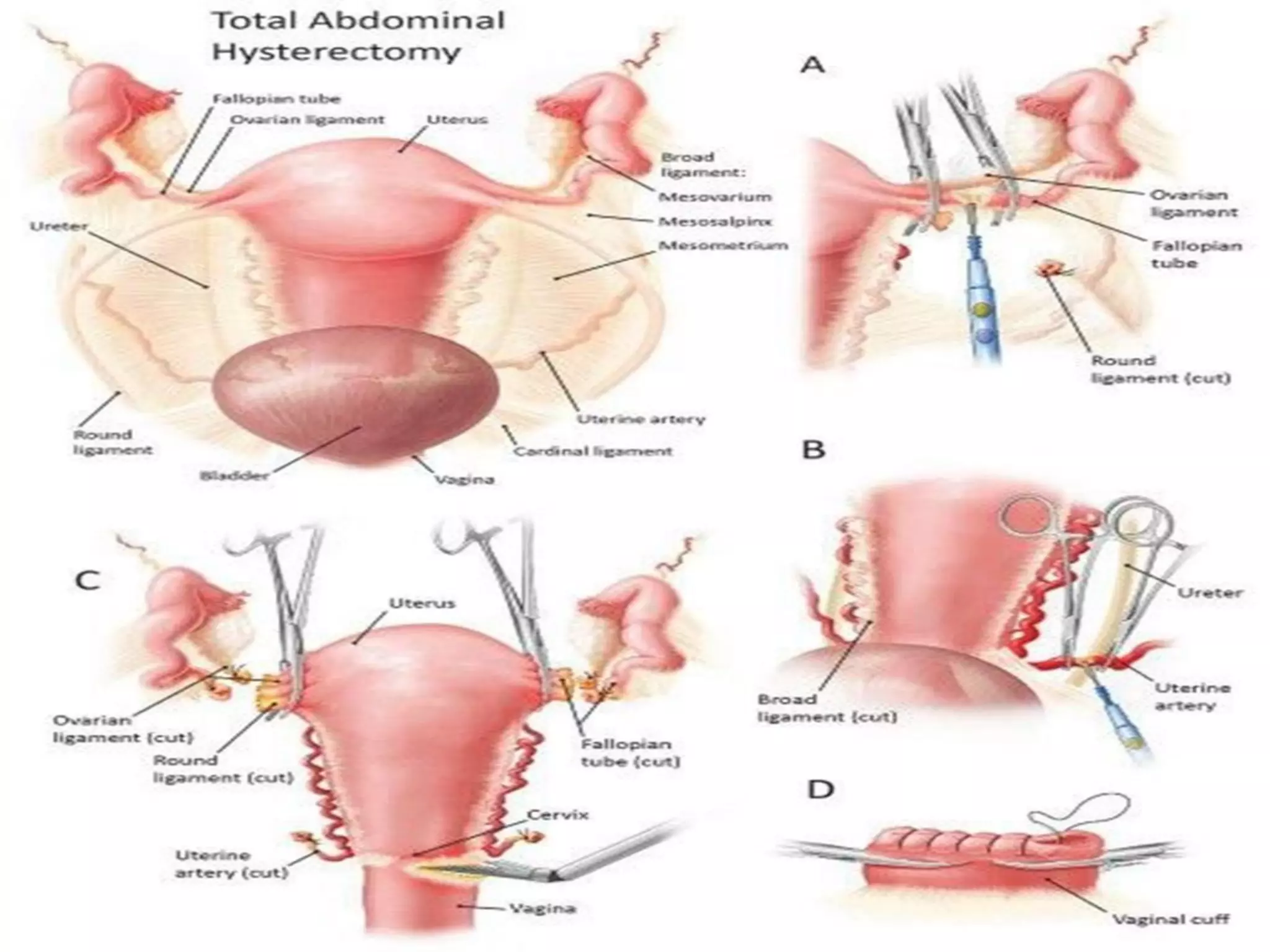
Abdominal Hysterectomy Technique:
 1-Incision choice - transverse or vertical: depends on:
 Need for exploration of the upper abdomen.
Size of the uterus.
Presence of prior incisions.
Desired cosmetic results.
 Exploration of the upper abdominal organs especially the
liver ,spleen and para-aortic lymph nodes.
 The abdominal viscera are packed up with towels.
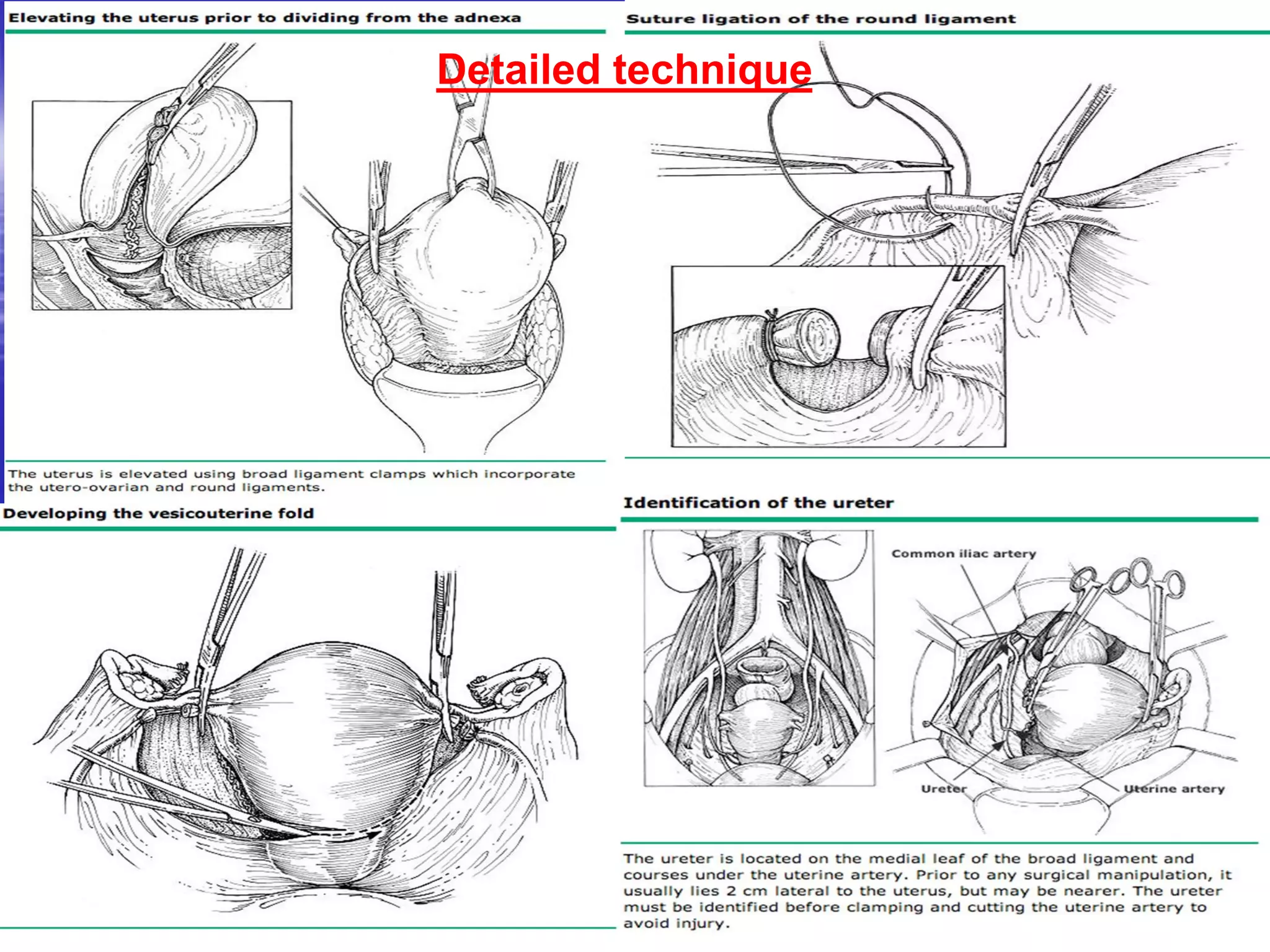
 Both round ligaments are clamped incised and ligated.
 The vesico-uterine fold of peritoneum is incised transversely
between the incised round ligaments and the bladder is
reflected inferiorly.
:Abdominal Hysterectomy Technique
 The two layers of the broad ligaments are separated and the
ureters are explored and identified.
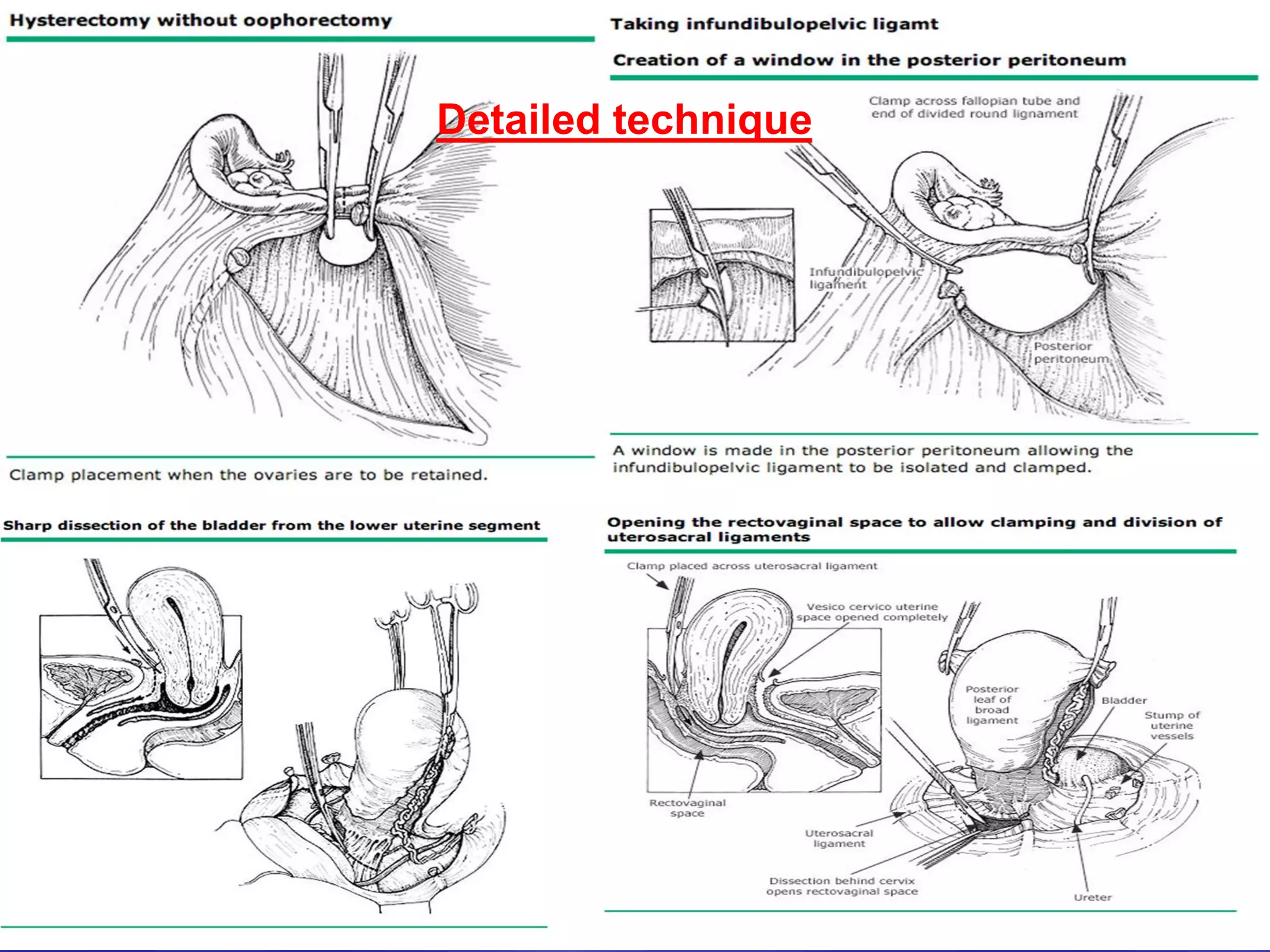
 The infundibulo pelvic ligaments with the ovarian vessels are
clamped, cut and ligated if the adnexa are to be removed.
 The broad lig. incised towards the uterus exposing the uterine
vessels.
 The uterine vessels are clamped at the level of internal cervical
os, incised and ligated on each side.
 Medial to the ligated uterine vessels , the cardinal lig. on each
side is clamped incised and ligated.
Abdominal Hysterectomy Technique:
 Posteriorly , the peritoneum between the uterosacral lig is
incised transversely and the rectum is freed from the posterior
aspect of the cervix & upper vagina after the uterosacral lig. are
clamped , incised & ligate.
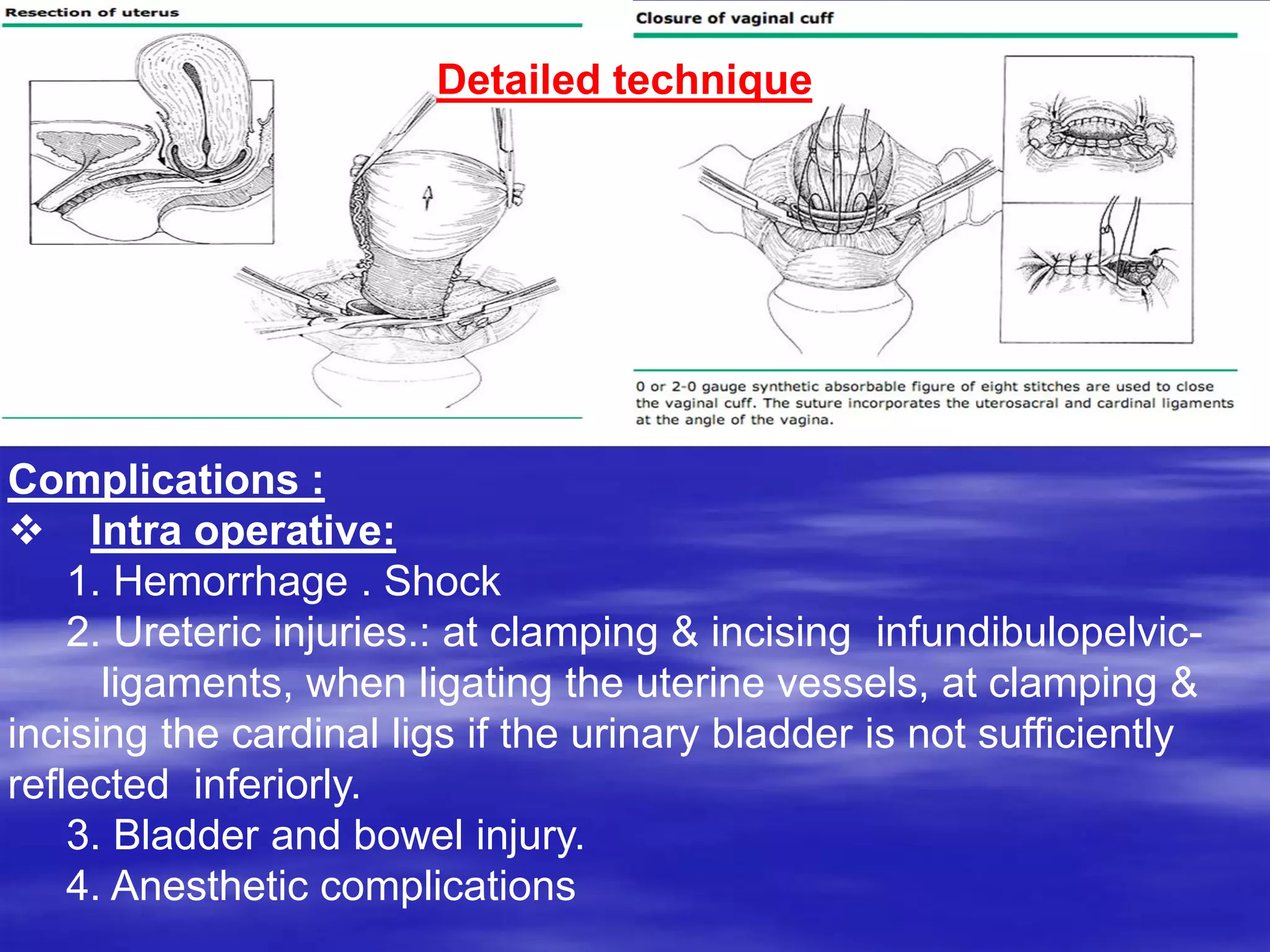
 The total uterus is removed by cutting across the vagina just
below the cervix .
 Vaginal cuff is closed with absorbable sutures, incorporating
the cardinal & uterosacral ligs into each lateral angle to avoid
latter development of vault prolapse.
Detailed technique
Detailed technique
Detailed technique
Complications :
 Intra operative:
1. Hemorrhage . Shock
2. Ureteric injuries.: at clamping & incising infundibulopelvic-
ligaments, when ligating the uterine vessels, at clamping &
incising the cardinal ligs if the urinary bladder is not sufficiently
reflected inferiorly.
3. Bladder and bowel injury.
4. Anesthetic complications
 Post operative:
1. wound infection. Wound dehiscence.
2. UTI .
3. Thrombophlebitis and thromboembolism.
4. Ureterovaginal fistula ( 5 – 21 days ).
5. Menopausal symptoms.
6. Depression or Sexual Dysfunction.
7. Incisional hernia.
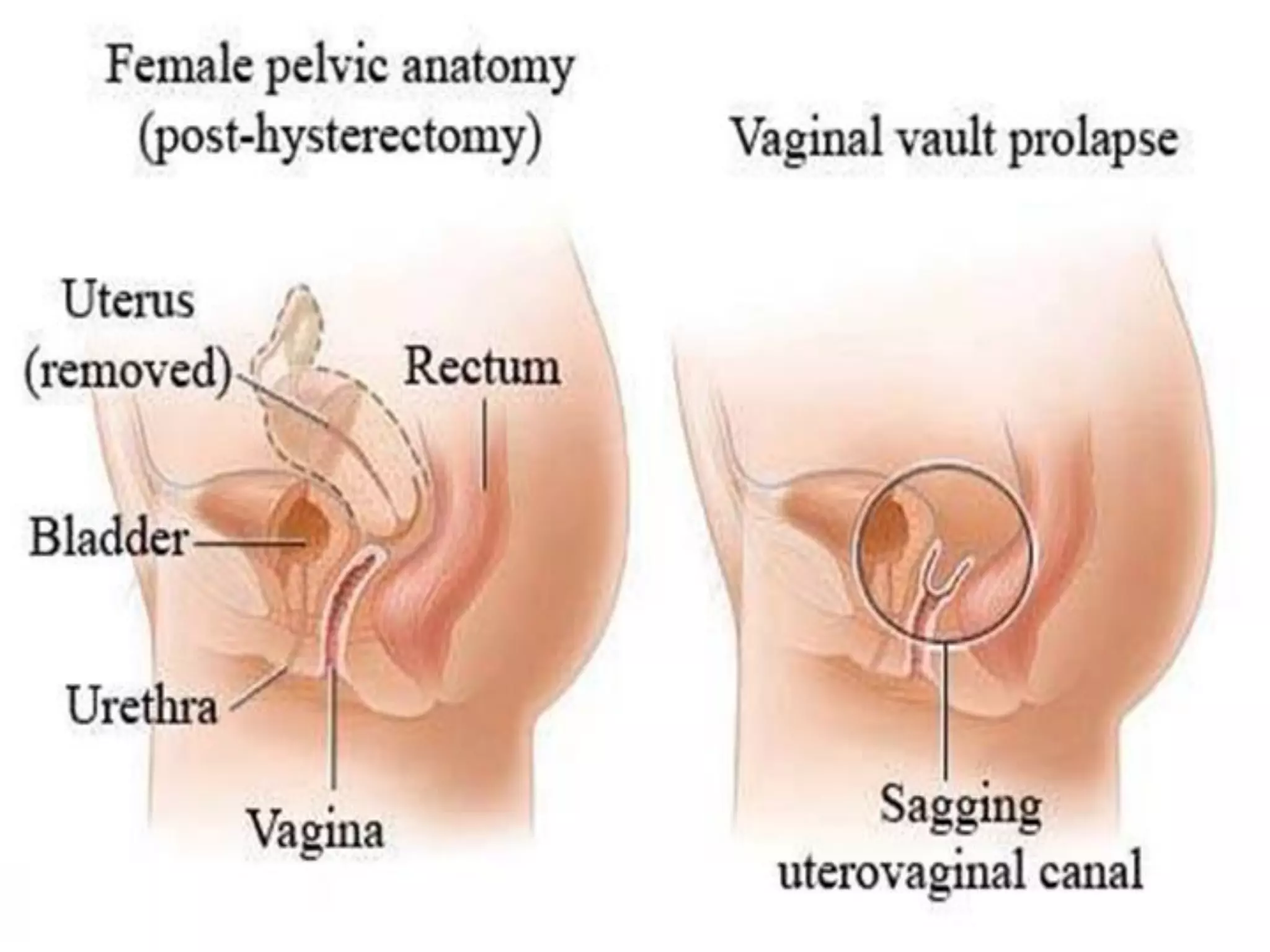
8. vaginal vault prolapse.
Abdominal hysterectomy. Postoperative care:
 IV fluids for the first 24 hours to ensure that the patient remains
well hydrated.
 Antibiotic cover.
 Early feeding of a simple diet, chewing gum, coffee, can
stimulate the bowel and decrease the length of hospitalization.
 LMWH to prevent thromboembolism.
 Deep breathing to prevent atelectasis.
 Ambulation is encouraged.
 Control of postoperative pain.
 Avoid heavy lifting for 4-6 weeks to minimize stress on the
healing fascia.
 Vaginal intercourse is also discouraged 4-6 weeks .
Abdominal hysterectomy:
 Advantages of subtotal hysterectomy:
 It is easier and quicker than total hysterectomy.
 Bladder injury less.
 Less pelvic infection.
 The cervix left to act as a support for vagina.
 Advantages of total hysterectomy:
 Provides better drainage of the operative area.
 If the cervix is lacerated or infected, the source of irritant
discharge is removed.
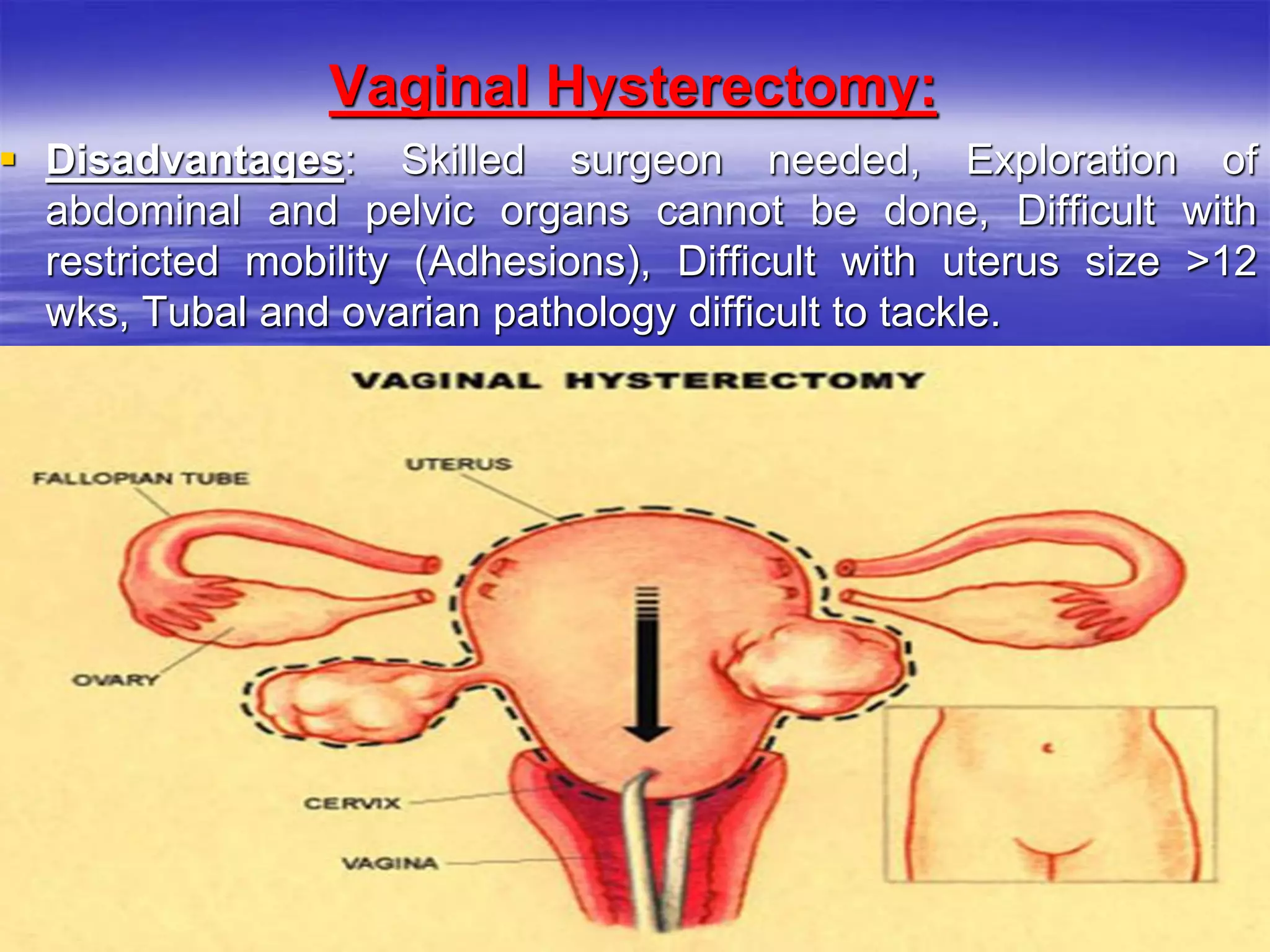
Vaginal Hysterectomy
 Uterus is removed through the vagina.
 Ovaries and fallopian tubes may be removed as well.
 May be performed if the uterus is not greatly enlarged and if the
reason for the surgery is not related to cancer (NDVH).
 Incision site at inner vagina.
 Hospital stay 1-3 days.
 Recovery time 4-6 weeks.
 Indications: Pelvic organ prolapse, AUB, Fibroids, Cervical
abnormalities, Endometrial hyperplasia, Chronic pelvic pain.
 Advantages: Absence of an abdominal scar, Early resumption
of activity, Less post operative complications, Less post
operative pain, Less morbidity and mortality, Can be done
effectively in obese patients. Lower incidence of intestinal
complication. Nulliparous women can be considered candidates
for vaginal hysterectomy.
Vaginal Hysterectomy:
 Disadvantages: Skilled surgeon needed, Exploration of
abdominal and pelvic organs cannot be done, Difficult with
restricted mobility (Adhesions), Difficult with uterus size >12
wks, Tubal and ovarian pathology difficult to tackle.
I
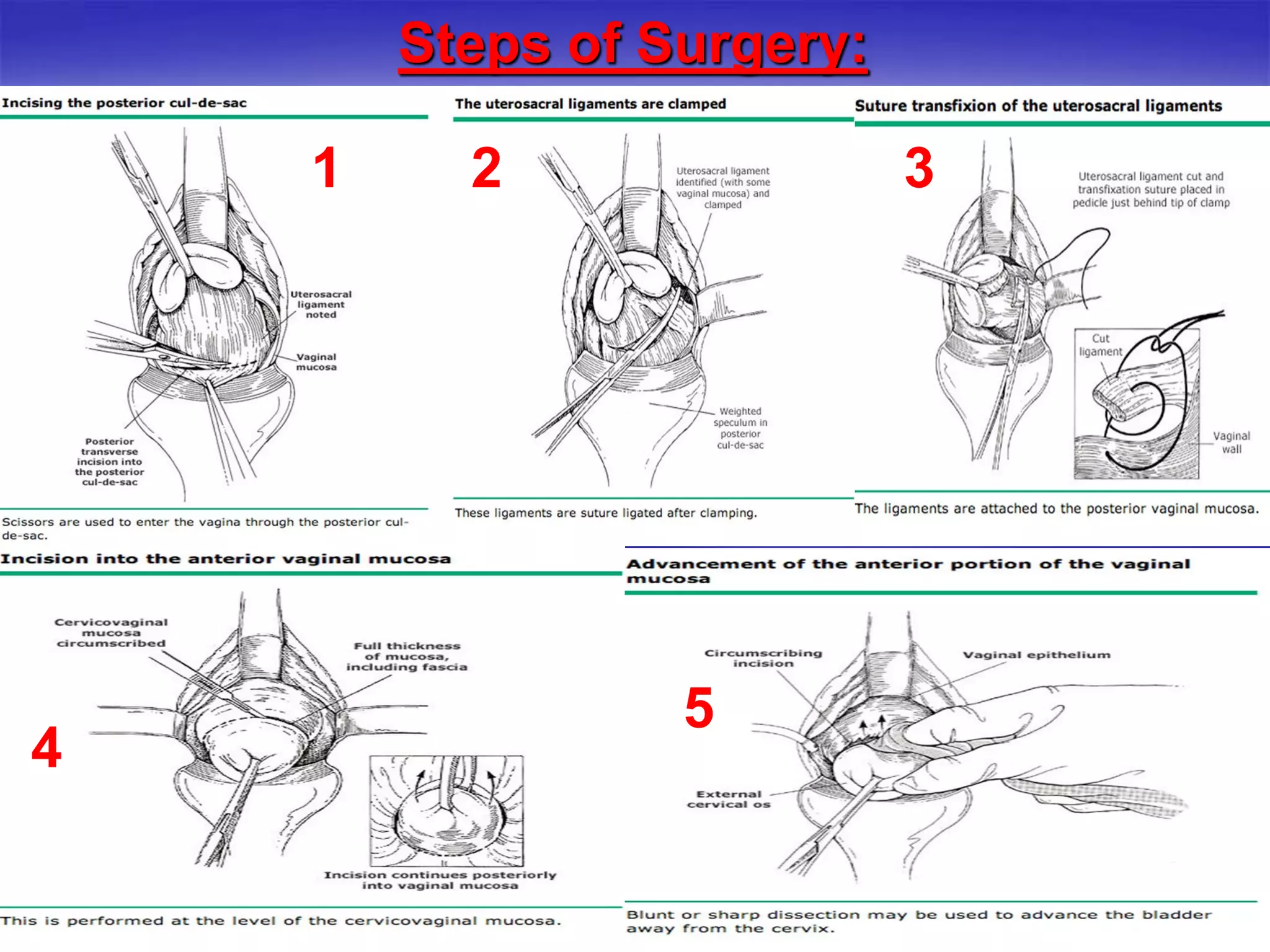
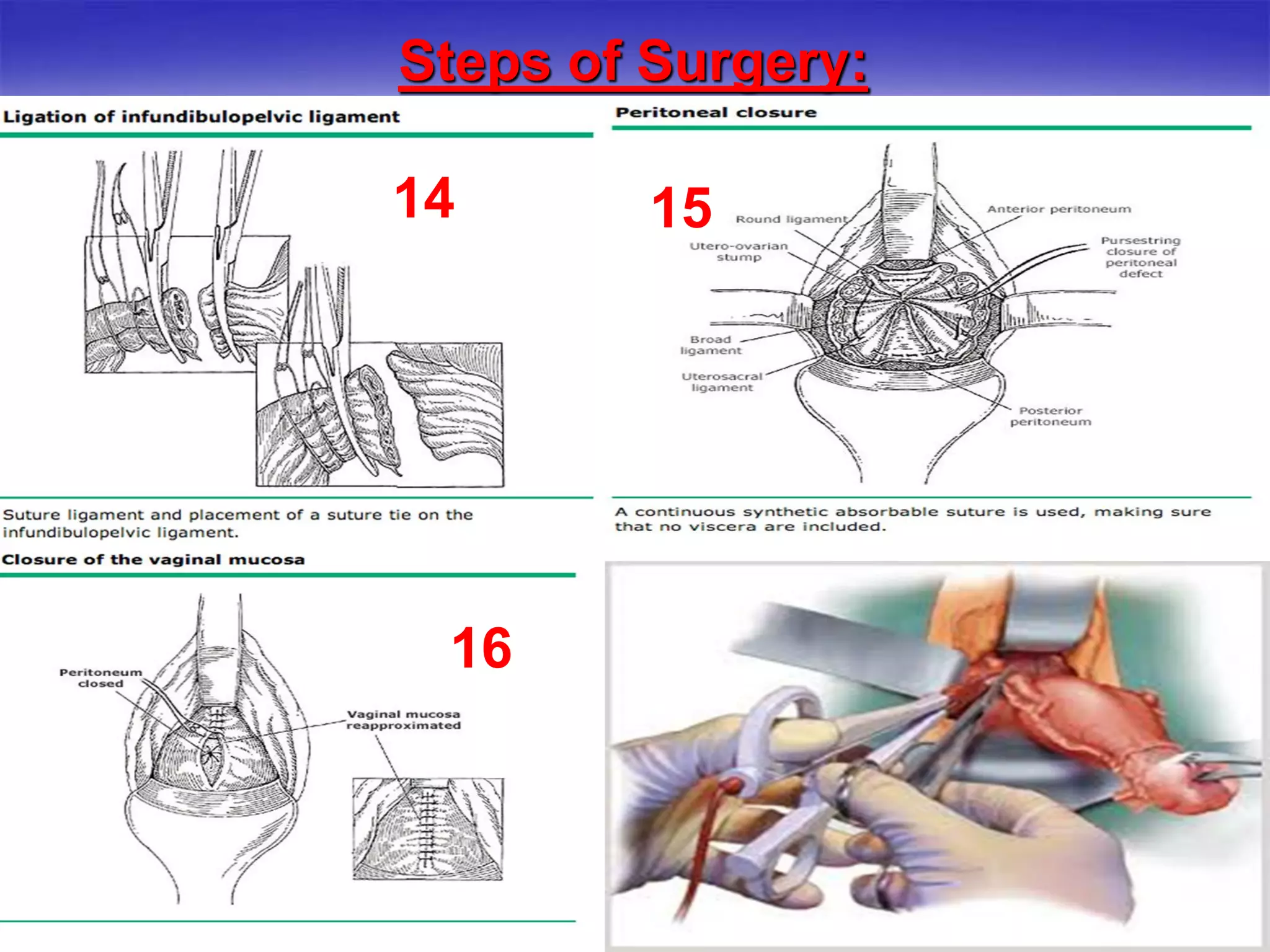
Steps of Surgery:
1
222
2 3
22
4
5
5
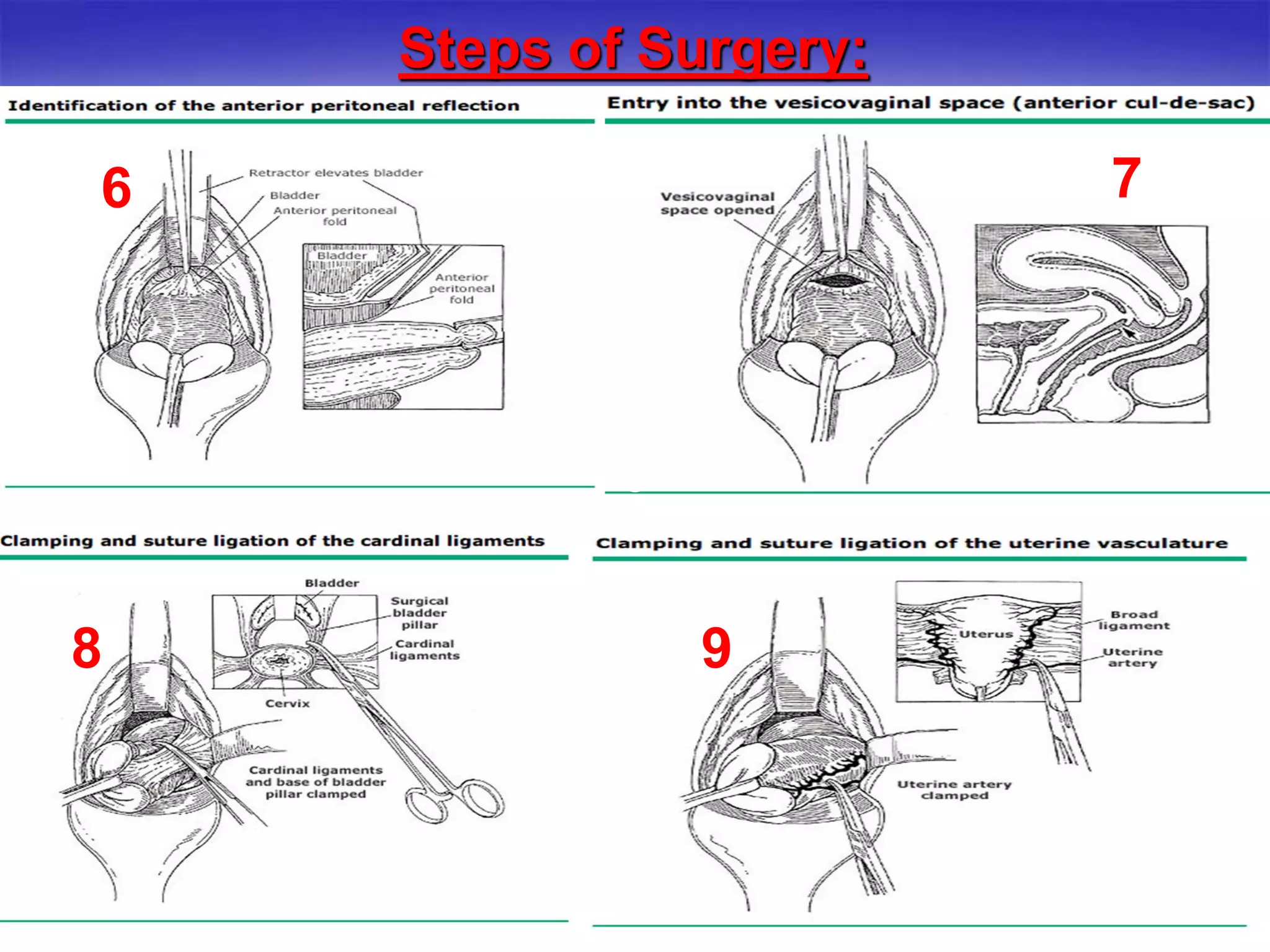
Steps of Surgery:
6 7
5
8 9
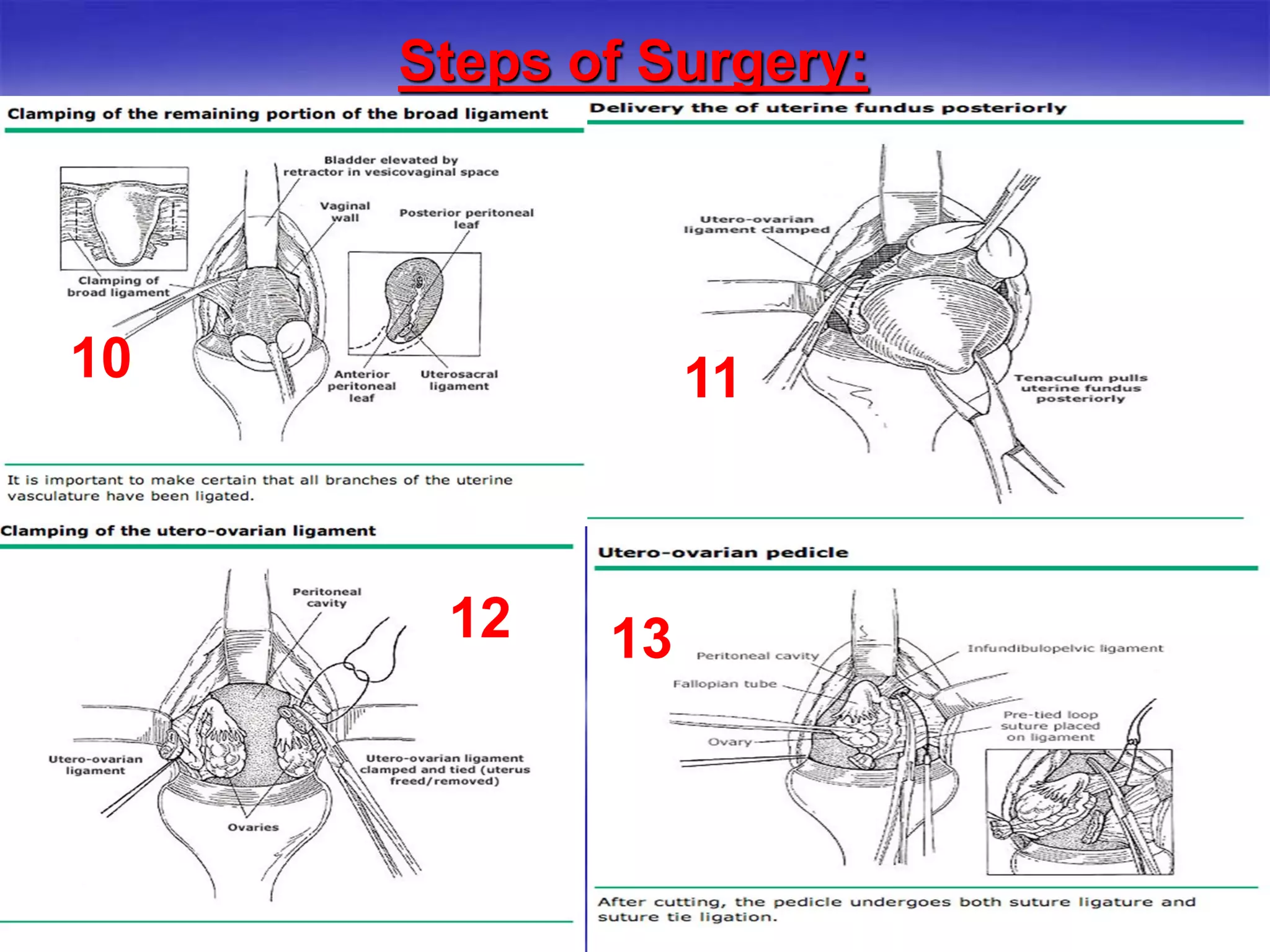
Steps of Surgery:
10 11
12
5
13
Steps of Surgery:
5
14
15
15
55
16
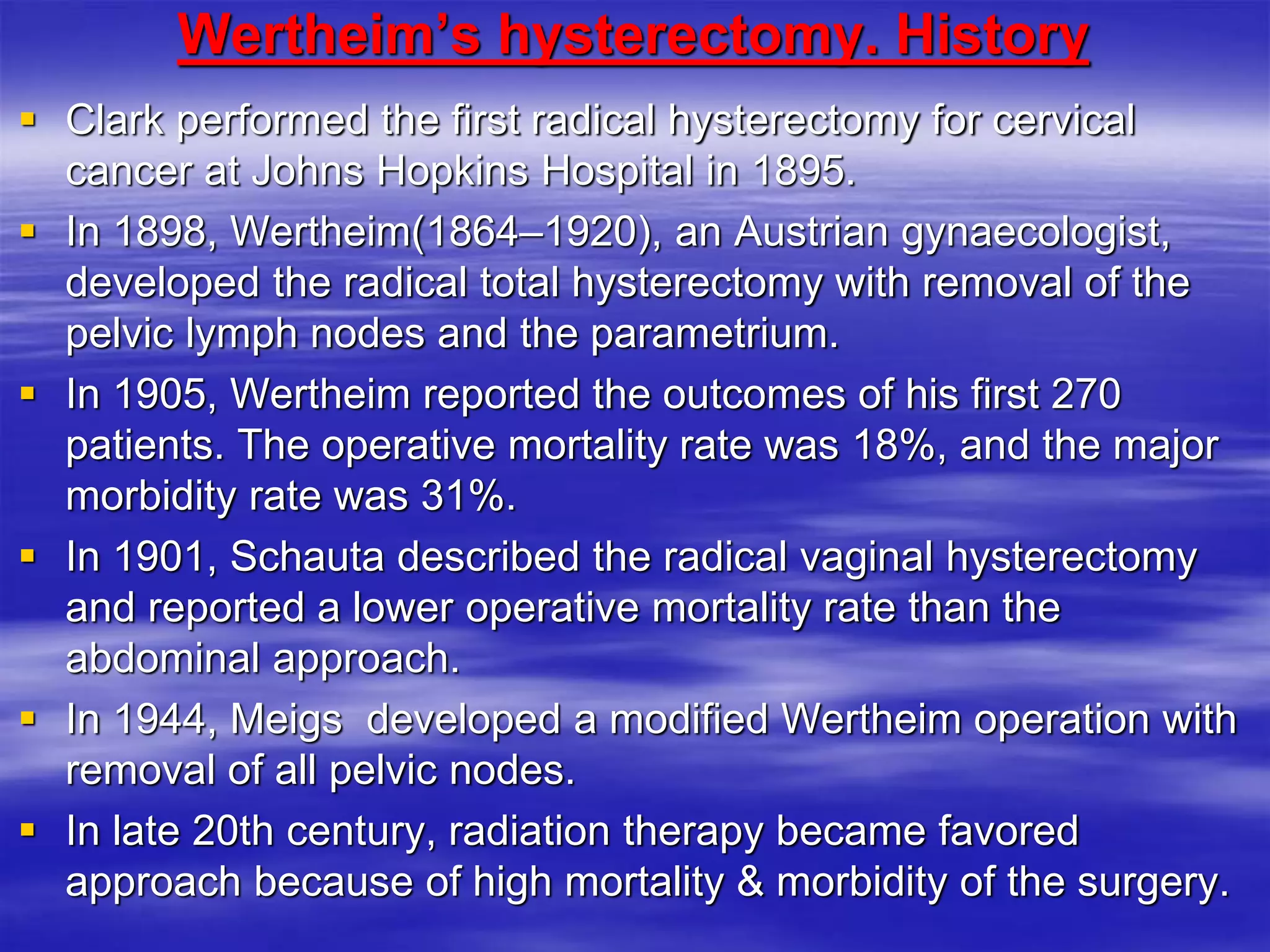
Wertheim’s hysterectomy. History
 Clark performed the first radical hysterectomy for cervical
cancer at Johns Hopkins Hospital in 1895.
 In 1898, Wertheim(1864–1920), an Austrian gynaecologist,
developed the radical total hysterectomy with removal of the
pelvic lymph nodes and the parametrium.
 In 1905, Wertheim reported the outcomes of his first 270
patients. The operative mortality rate was 18%, and the major
morbidity rate was 31%.
 In 1901, Schauta described the radical vaginal hysterectomy
and reported a lower operative mortality rate than the
abdominal approach.
 In 1944, Meigs developed a modified Wertheim operation with
removal of all pelvic nodes.
 In late 20th century, radiation therapy became favored
approach because of high mortality & morbidity of the surgery.
Wertheim’s hysterectomy
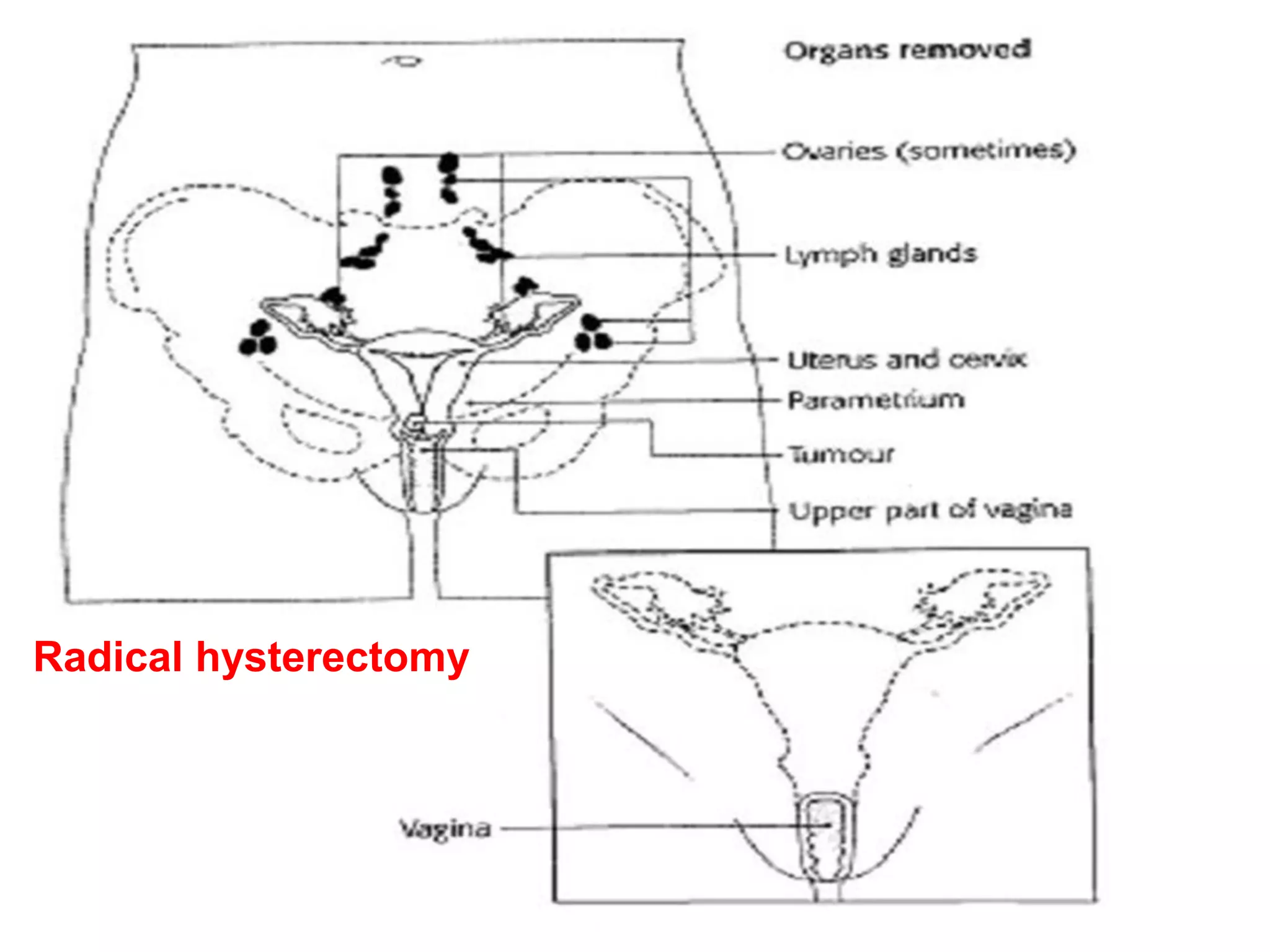
 Radical hysterectomy refers to the excision of the uterus en
bloc with the parametrium, fallopian tubes, ovaries, upper 1/3
to 1/2 of the vagina, and bilateral pelvic lymph node dissection.
Thorough knowledge of pelvic anatomy necessary, (careful
dissection of ureters and mobilization of both bladder and
rectum from the vagina). Care must be taken with the
vasculature of the pelvic side walls and the venous plexuses at
the lateral corners of the bladder to avoid excessive blood
loss.
 Indications:
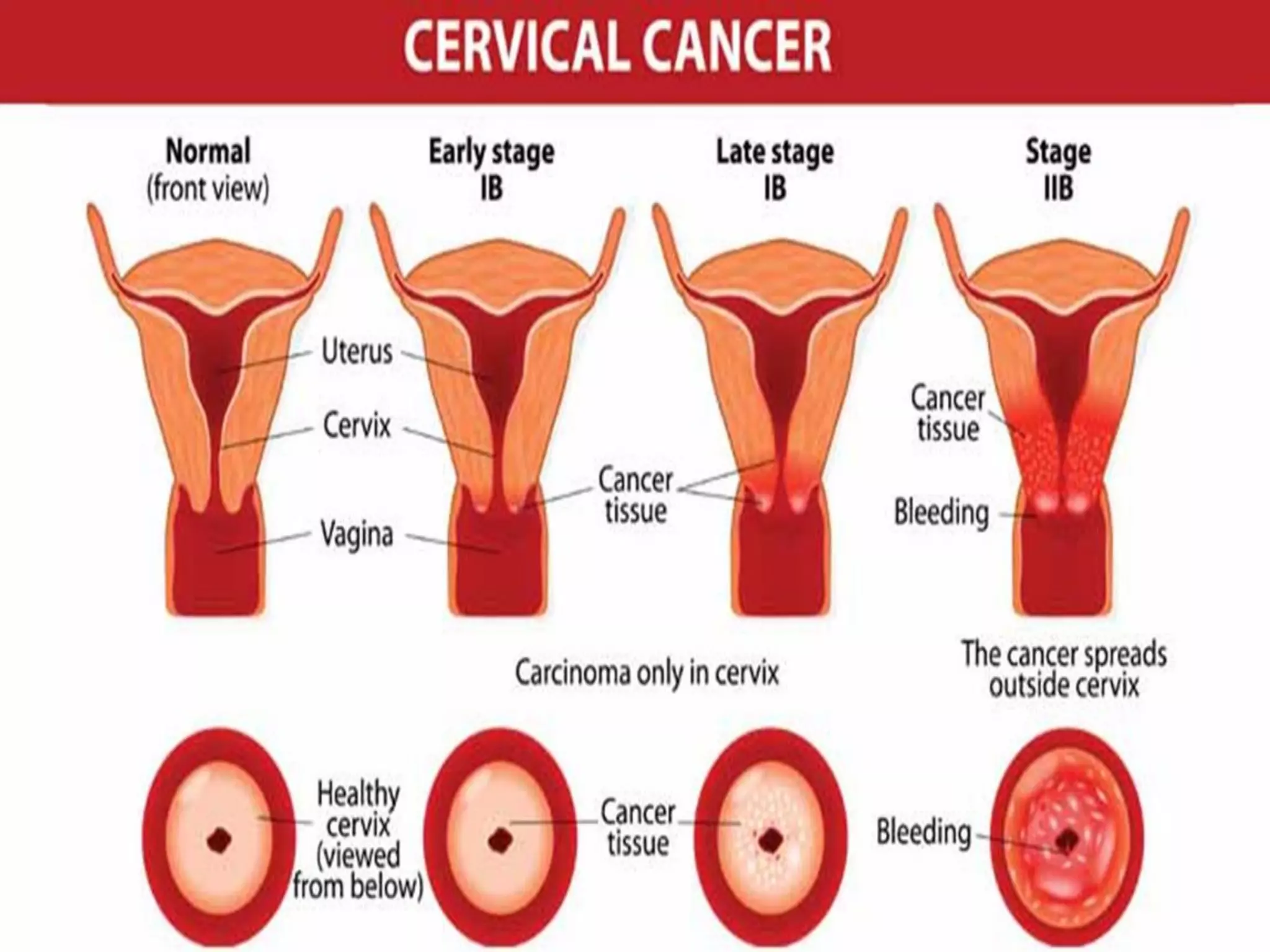
 Stage IB or IIA cancer of the cervix.
 Patients with stage II adenocarcinoma of endometrium in
whom radical surgery seems feasible.
Radical hysterectomy
Wertheim’s hysterectomy Complications:
 Bladder dysfunction due to extensive dissection, and
lymphocyst formation ( because of interruption of efferent
pelvic lymphatics resulting in lymphedema) are most common
complications.
 Infection.
 Deep venous thrombosis and pulmonary embolism.
Laparoscopic Hysterectomy
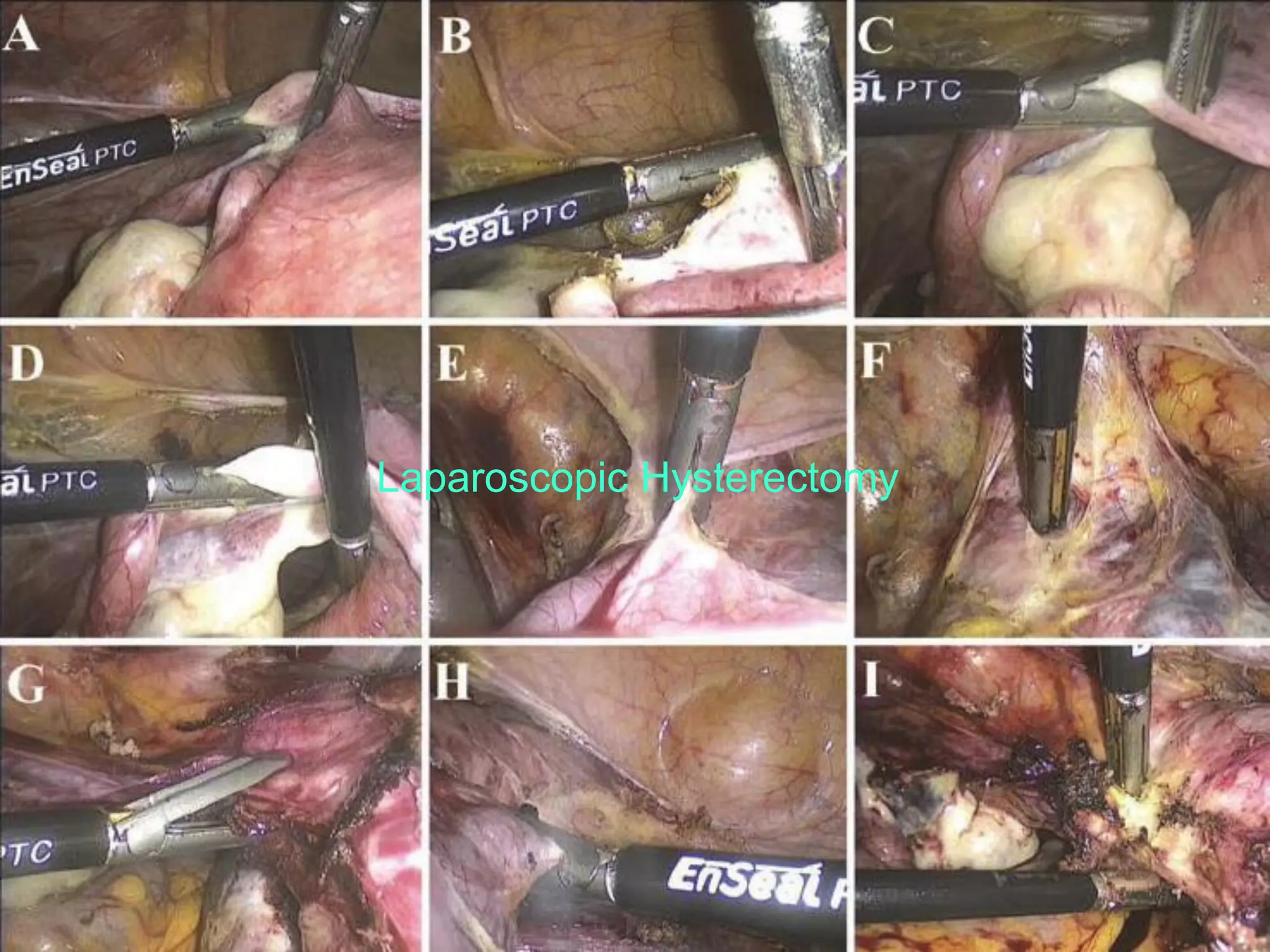
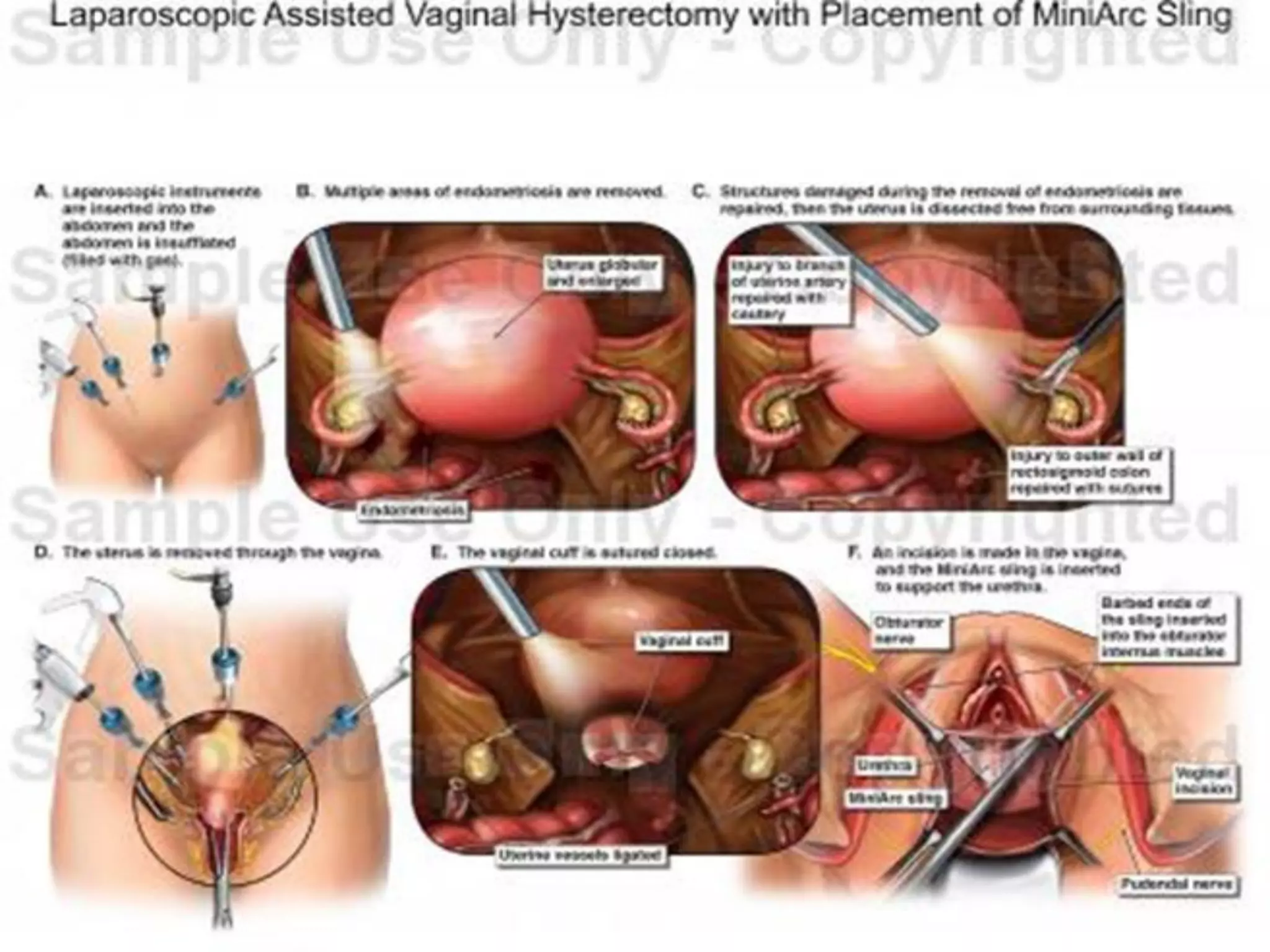
 Laparoscopic ligation of the ovarian arteries and veins with
the removal of the uterus vaginally or abdominally, ( along
with laparoscopic closure of the vaginal cuff).
 Uterus removed abdominally using morcellation techniques,
this technique is not used if cancer suspected.
 The laparoscope is often reinserted after closure of the vaginal
cuff to inspect the abdomen and vaginal cuff for adequate
hemostasis at the end of the procedure.
 This procedure requires adequate uterine descent to safely
complete the vaginal portion.
 Relatively lesser blood loss.
 Shorter hospital stay, Better cosmetic & patient acceptance.
 Fewer abdominal wall infections when compared with
abdominal hysterectomies.
Laparoscopic Hysterectomy:
 Laparoscopic hysterectomy took longer than abdominal or
vaginal hysterectomy (median time of 84 vs. 50 minutes, and 72
vs. 39 minutes)
 Urinary tract injuries (bladder plus ureteral injuries) appeared to
be more likely in patients undergoing laparoscopic
hysterectomy.
 laparoscopic hysterectomy was not cost effective relative to
vaginal hysterectomy.
 Both laparoscopic assisted vaginal hysterectomy and vaginal
hysterectomy are more cost-effective than abdominal
hysterectomy.
 When vaginal hysterectomy is contraindicated or predicted to be
difficult, the laparoscopic approach should be considered.
Laparoscopic Hysterectomy:
 Potential indications for laparoscopic assistance to
facilitate hysterectomy via the vaginal approach:
 Need for adhesiolysis.
 Need for treatment of endometriosis.
 Need for management of large leiomyoma(s) to facilitate
uterine extraction.
 Need for ligation of the infundibulopelvic ligaments to
facilitate oophorectomy.
Laparoscopic Hysterectomy:
 Superior laparoscopic magnification of an image is achieved
with robotic systems - surgical precision.
 Rotational movement of the robotic hands facilitates
manipulation of tissues and suturing.
 “Tasks like adhesiolysis, suturing, and knot tying were
enhanced with the robotic suturing system” .
 “Robot-assisted laparoscopic hysterectomy appeared to
provide a tool for overcoming surgical limitations seen with
conventional laparoscopy.
Myomectomy
 Name of Victor Bonney(1872–1953 ) will always be associated
with the development of myomectomy so as to preserve uterine
function.
 He demonstrated that Myomas could be removed, the uterus
preserved and successful pregnancies achieved.
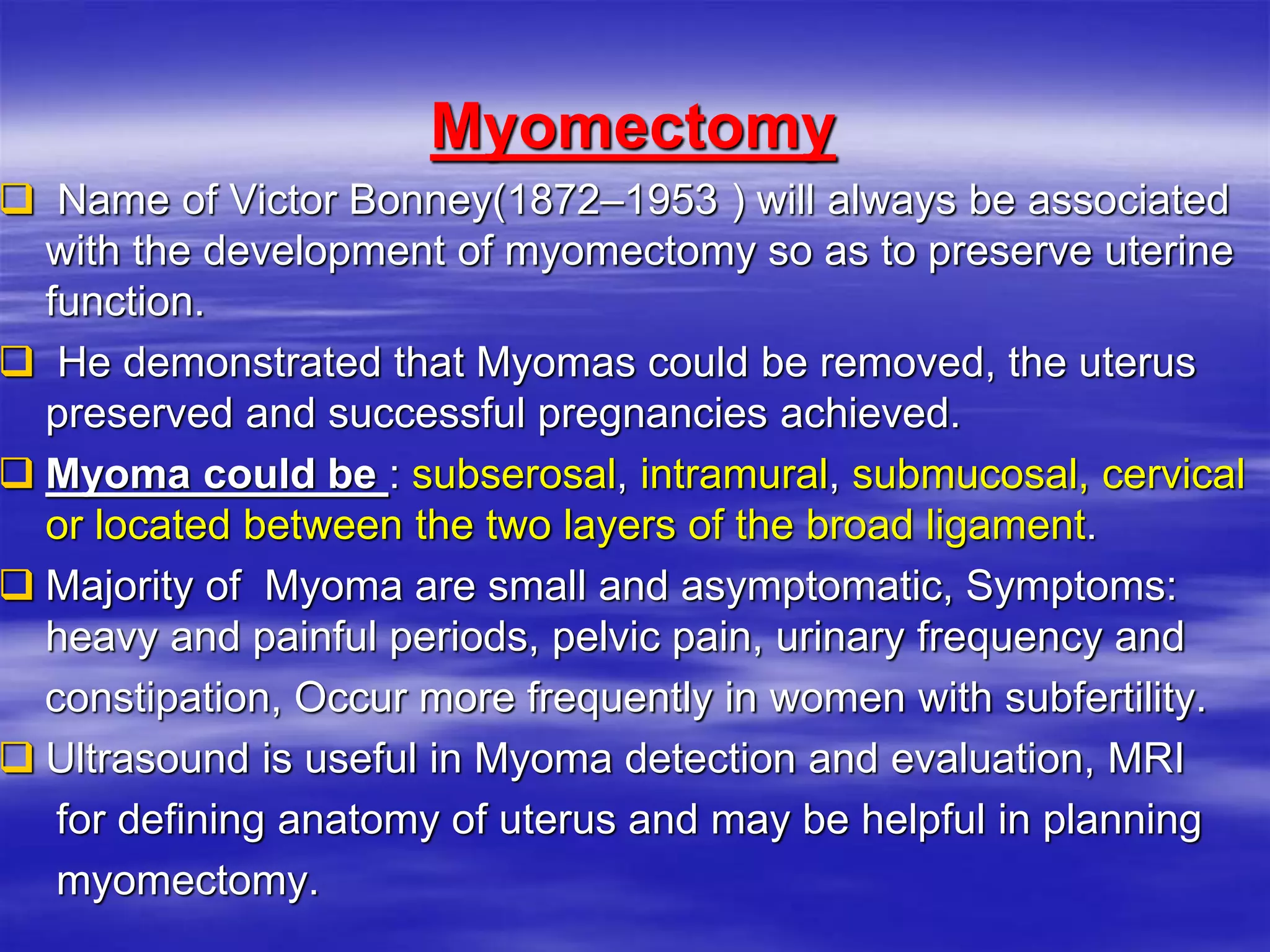
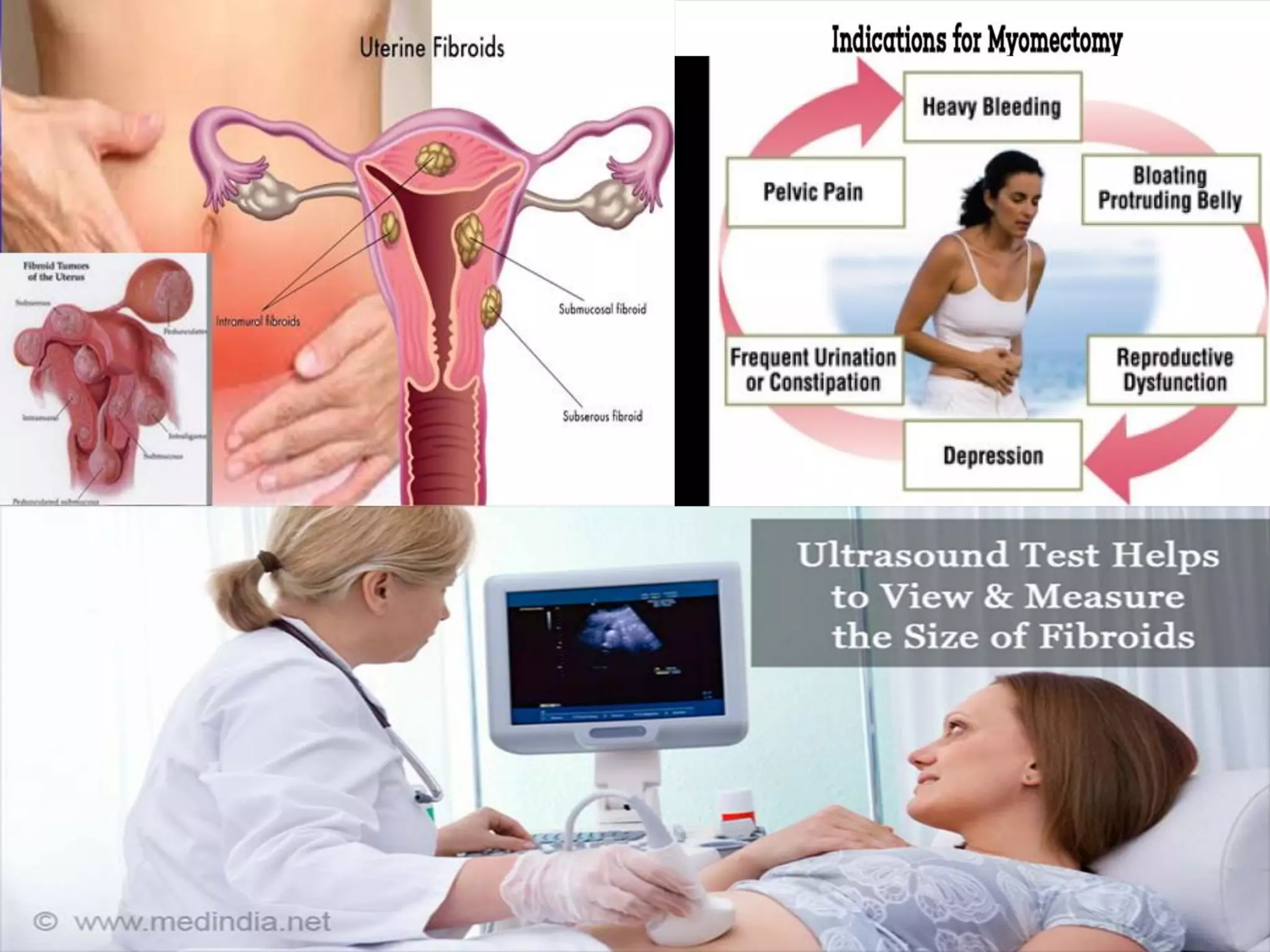
 Myoma could be : subserosal, intramural, submucosal, cervical
or located between the two layers of the broad ligament.
 Majority of Myoma are small and asymptomatic, Symptoms:
heavy and painful periods, pelvic pain, urinary frequency and
constipation, Occur more frequently in women with subfertility.
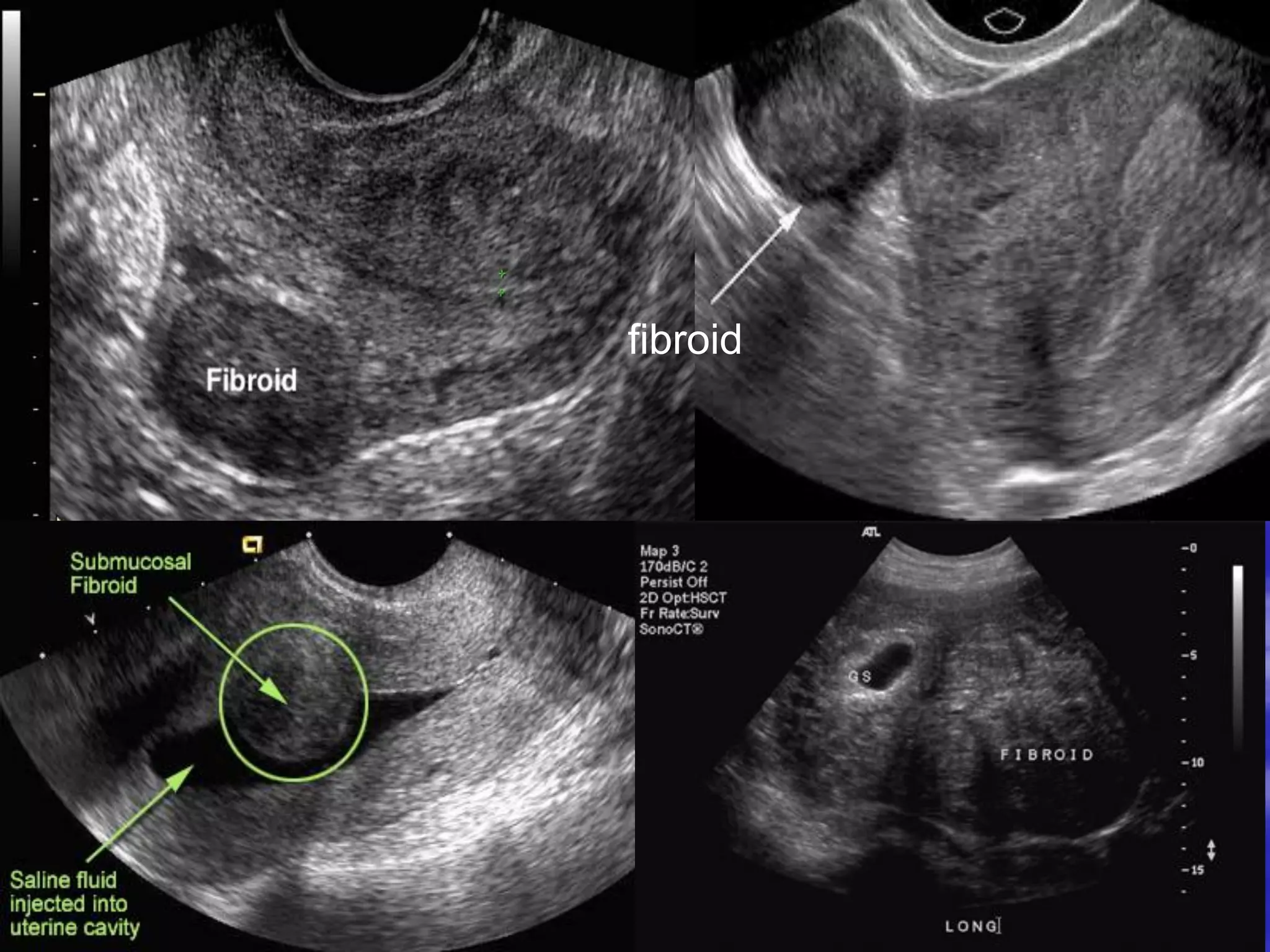
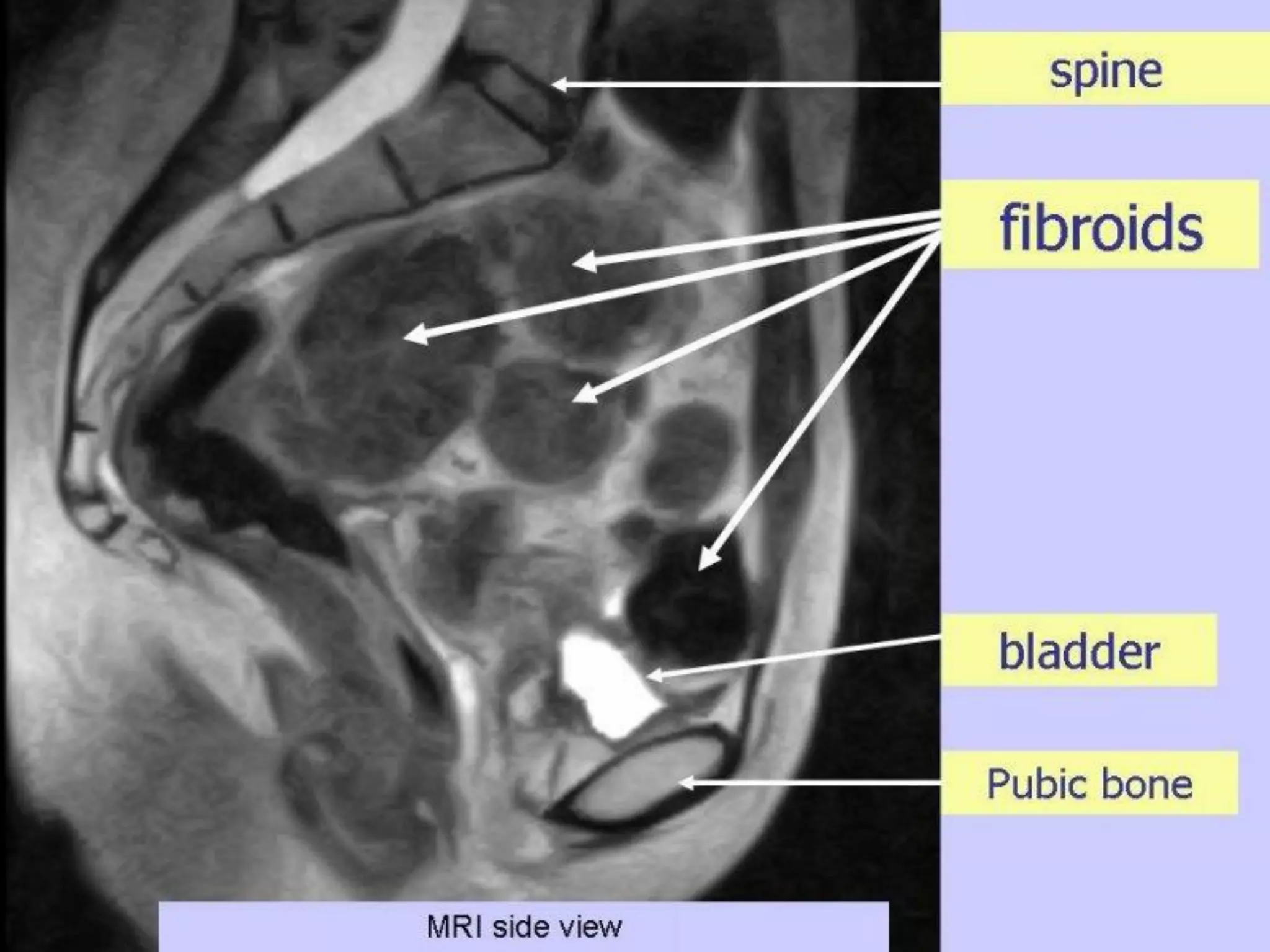
 Ultrasound is useful in Myoma detection and evaluation, MRI
for defining anatomy of uterus and may be helpful in planning
myomectomy.
Myomectomy
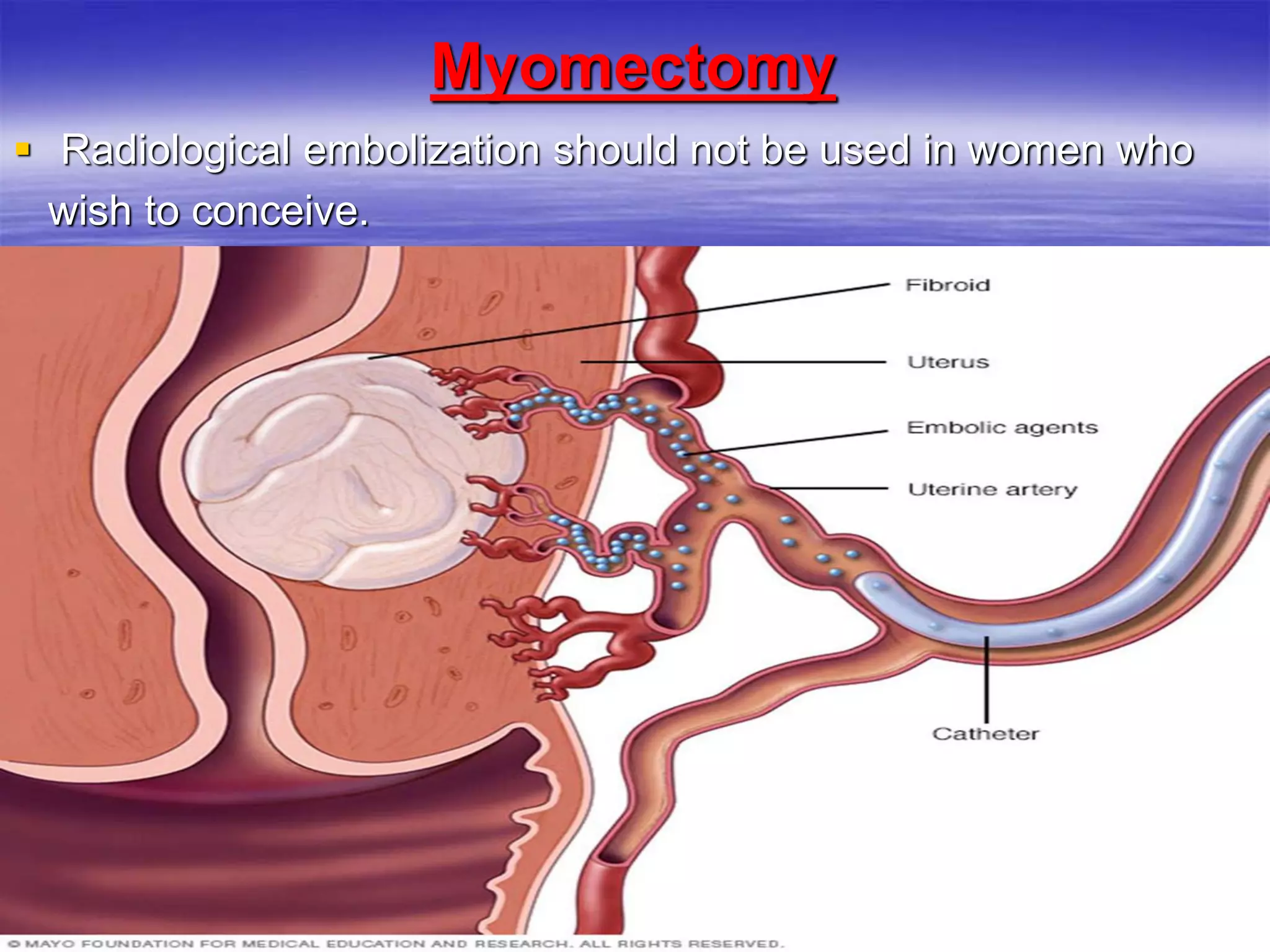
 Radiological embolization should not be used in women who
wish to conceive.
Myomectomy
 For women wishing to conceive, myomectomy is the treatment
of choice with the laparoscopic approach being used for
pedunculated and subserosal Myomas and the hysteroscopic
approach for submucosal.
 Open myomectomy:
 Patient can be pretreated with GnRH agonists prior to surgery
to reduce the size of the fibroids, or more effectively by
Cabergoline: (A.M. Elbareg, M.O. Elmahashi, F.M. Essadi:
(Effectiveness of dopamine agonist, ‎Cabergoline (Dostinex),
treatment on uterine myoma regression in comparison to ‎effect
of gonadotrophin-releasing hormone analogue (Zoladex)).
Fertility and ‎Sterility, 2013, 100, 3 Supplement, S33.‎)
Myomectomy
 But most effectively by the combination of Letrozole with
Cabergoline:{Aisha M Elbareg: ‎‎(‎Effectiveness of Letrozole
combined with ‎Cabergoline on Uterine Myoma Regression in
comparison to the effect ‎of Cabergoline alone).Fertility and
Sterility, September 2018, Volume ‎‎110, Issue 4, Supplement,
Pages e61–e62}‎,
 Midline incision for large fibroids, with adequate exposure to the
pelvic sidewall, or most appropriate incision for uterus size
and location and size of the fibroids.
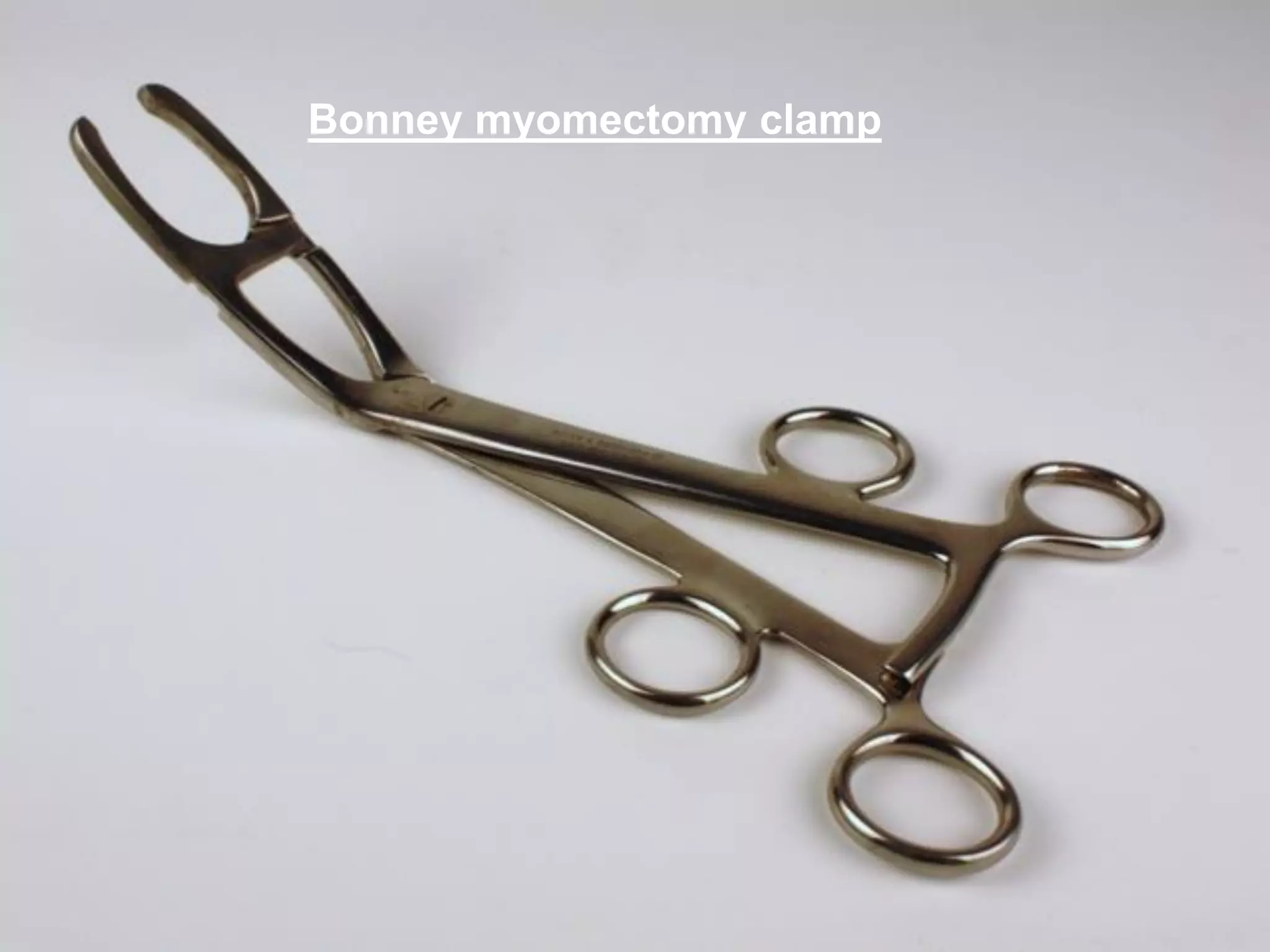
 Haemostasis: Bonney myomectomy clamp, Uterine and
ovarian tourniquet, Temporary atraumatic vascular clamp,
Vasopressin and other agents (injection of diluted vasopressin
(20 units in 50 mL of normal saline) into the bed of fibroid.
Bonney myomectomy clamp
Myomectomy:
 Haemostasis: The combination of Tranexamic acid with
misoprostol has been found to be an effective option in
achieving Haemostasis:(F. Essadi, A. Elbareg, M.O. Elmahashi:
(TRANEXAMIC ACID (TXA) USE ‎COMBINED WITH MISOPROSTOL IN
PATIENTS UNDERGOING ‎MYOMECTOMY IN MISURATA, LIBYA).
International Journal of ‎Obstetrics & Gynecology, 2015, Volume 131,
Supplement 5, Pages E72-‎E313.‎
 The lower an incision is made in the uterus, the stronger will be
the subsequent scar. The ‘ false capsule ’, the junction between
the fibroid and normal myometrium, should be identified and
with a combination of blunt and sharp dissection the fibroid can
be ‘ shelled ’ out.
 When removing multiple fibroids, the surgeon should avoid
multiple incisions of the uterus and avoid entering the
endometrial cavity.
Myomectomy:
 Obliterating the cavity : The cavity should be obliterated
methodically using interrupted Vicryl sutures, in layers until the
space is obliterated, and the serosal surface should be repaired
with interrupted sutures, adhesive barrier over the incision line
to avoid adhesion formation.
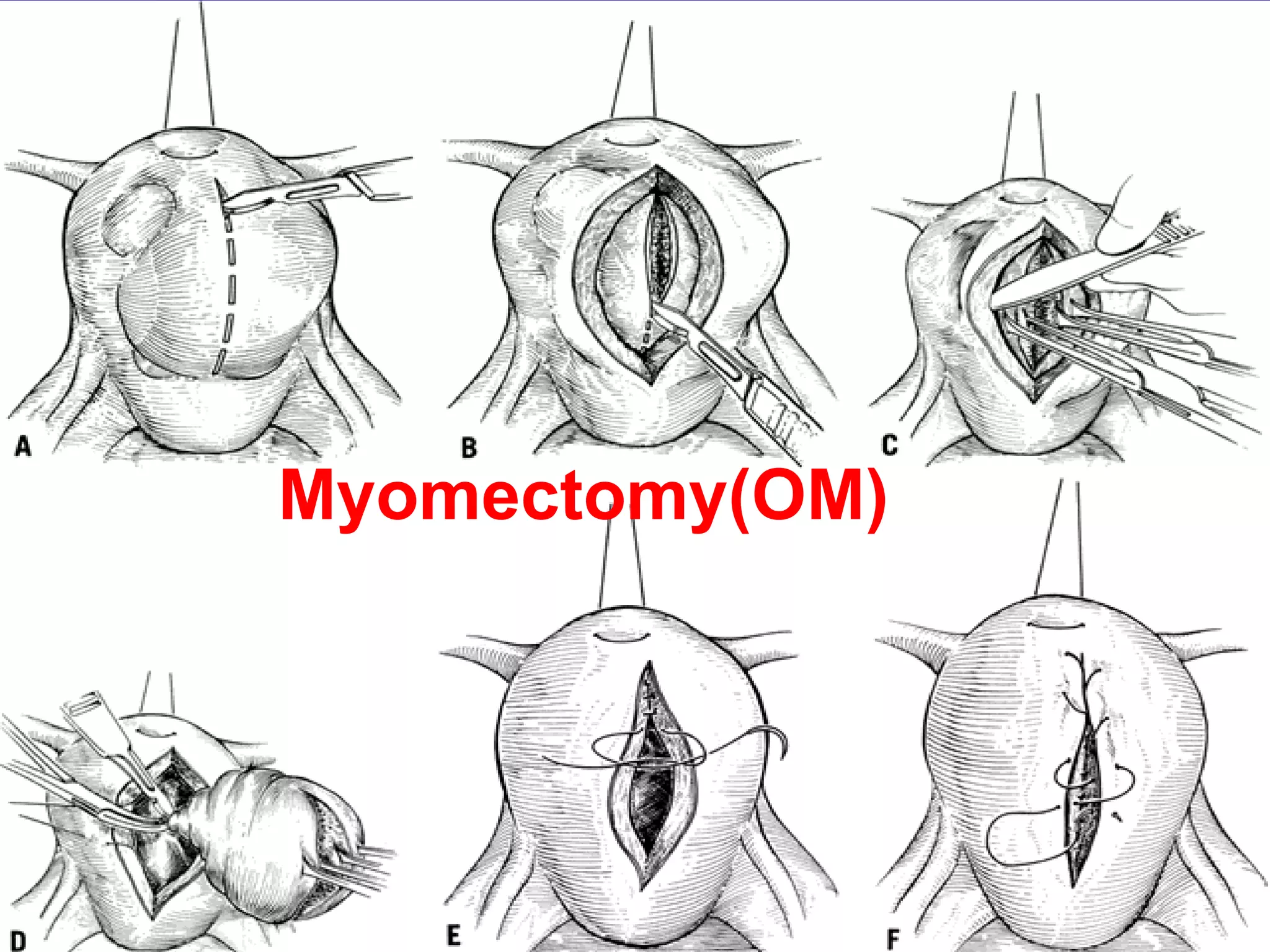
Myomectomy(OM)
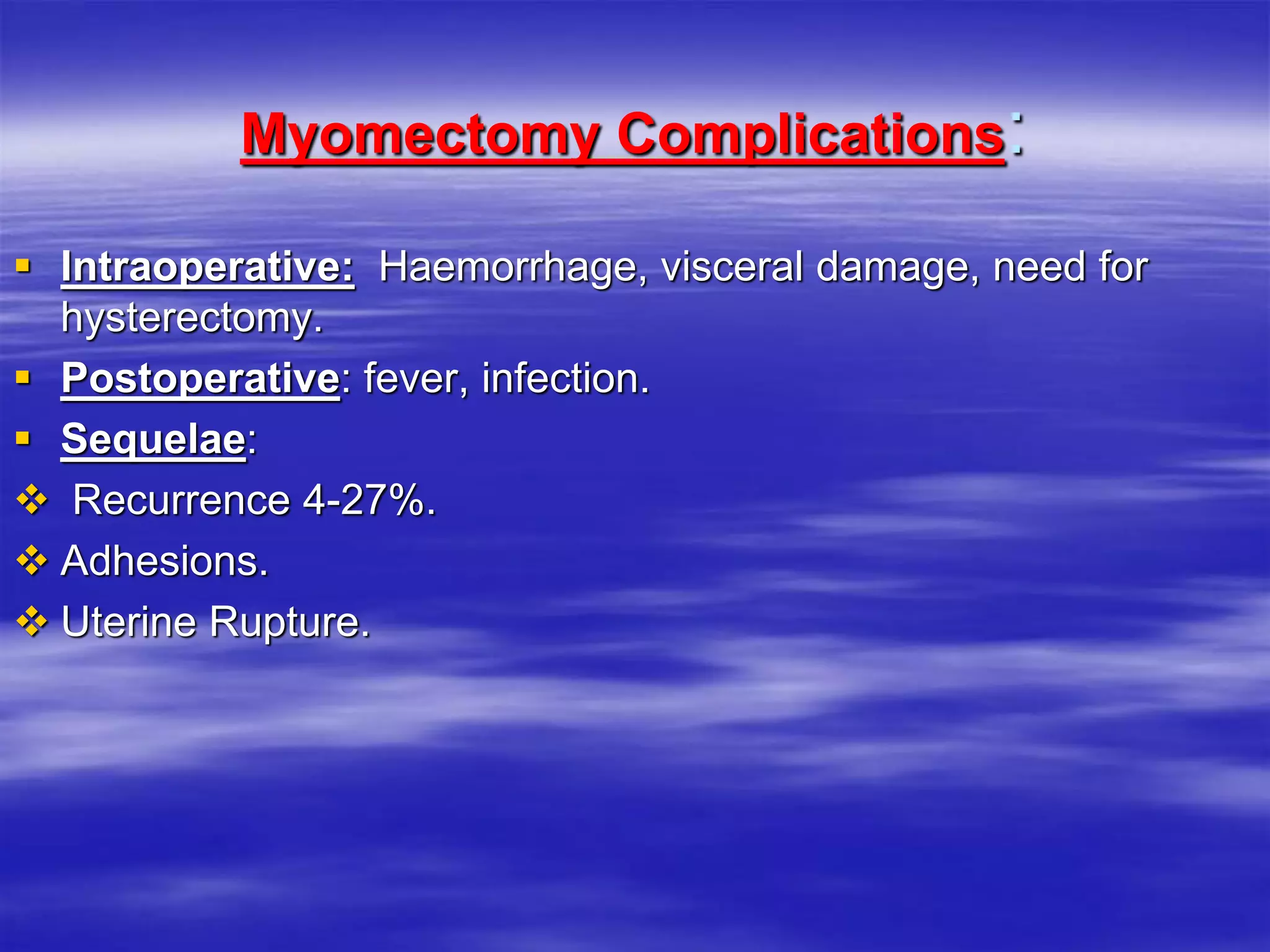
:Myomectomy Complications
 Intraoperative: Haemorrhage, visceral damage, need for
hysterectomy.
 Postoperative: fever, infection.
 Sequelae:
 Recurrence 4-27%.
 Adhesions.
 Uterine Rupture.
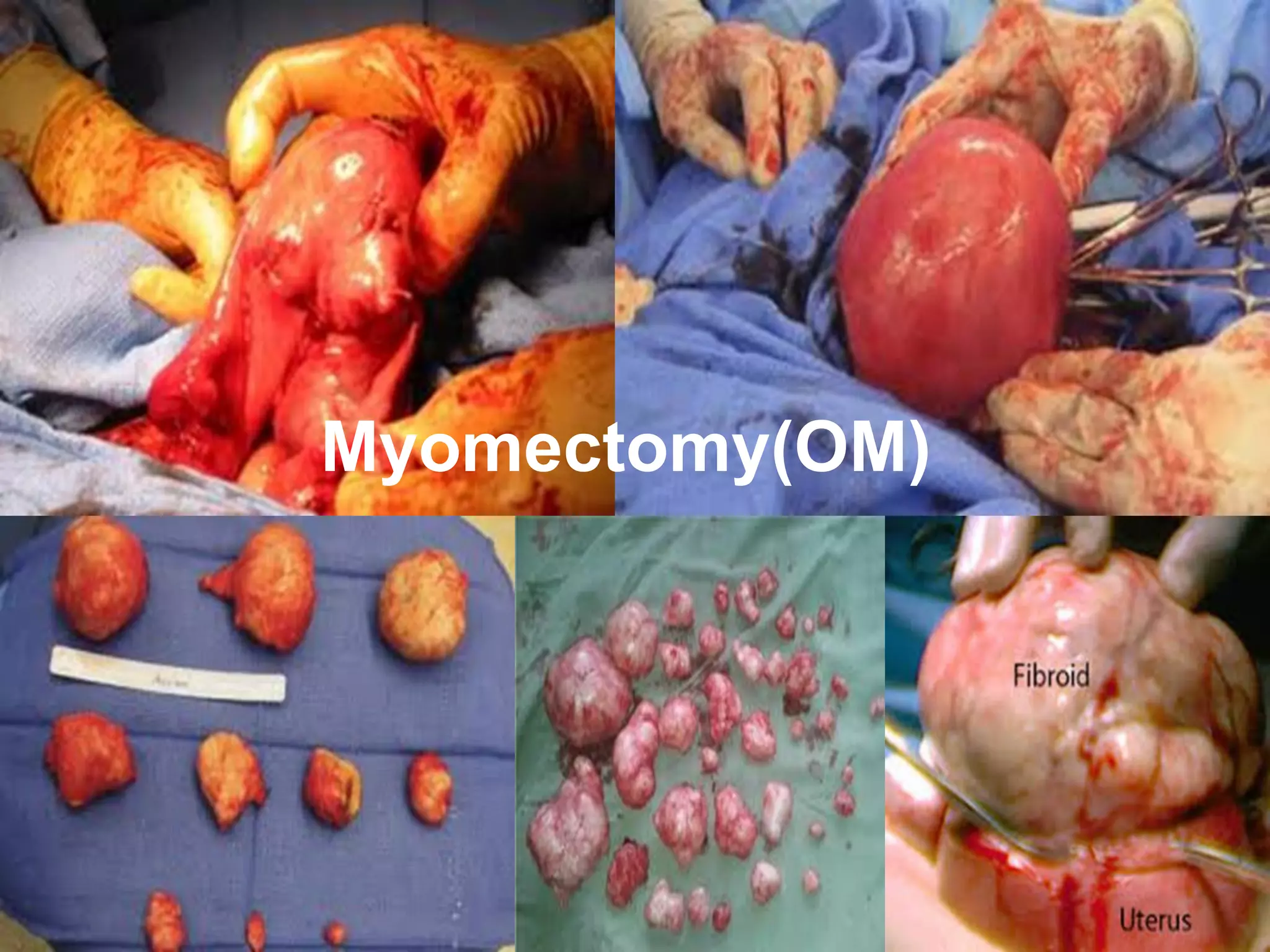
Myomectomy(OM)
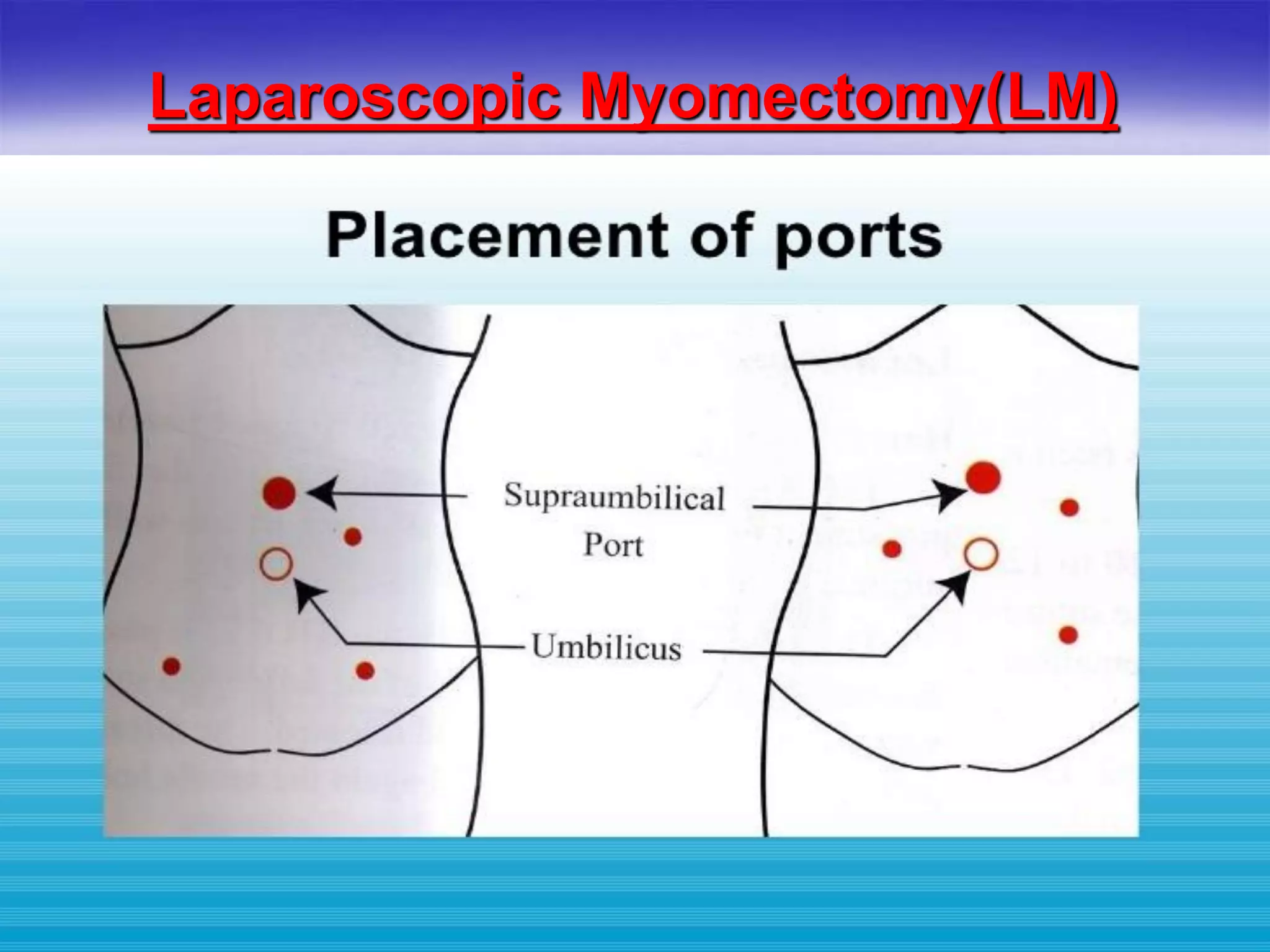
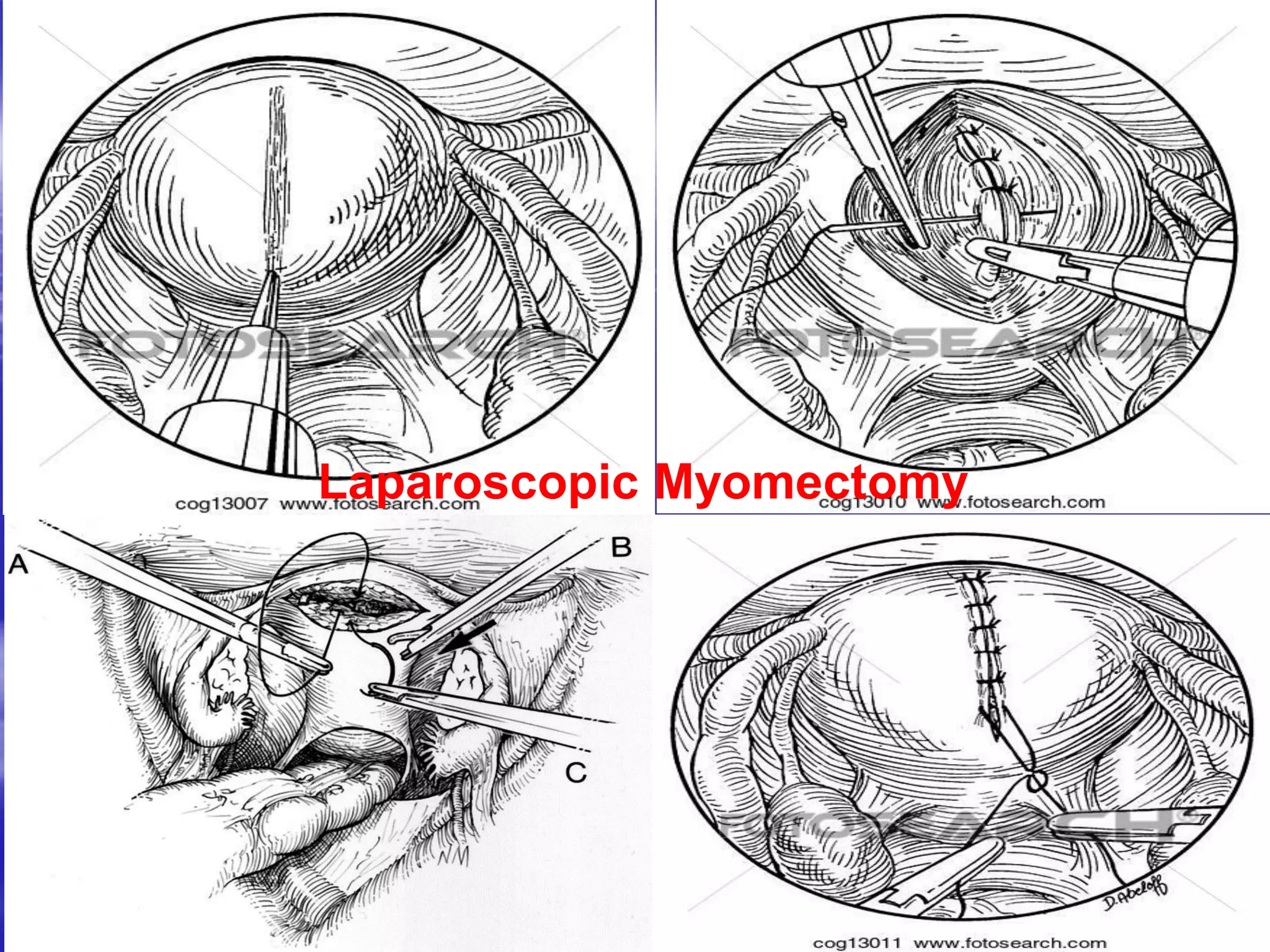
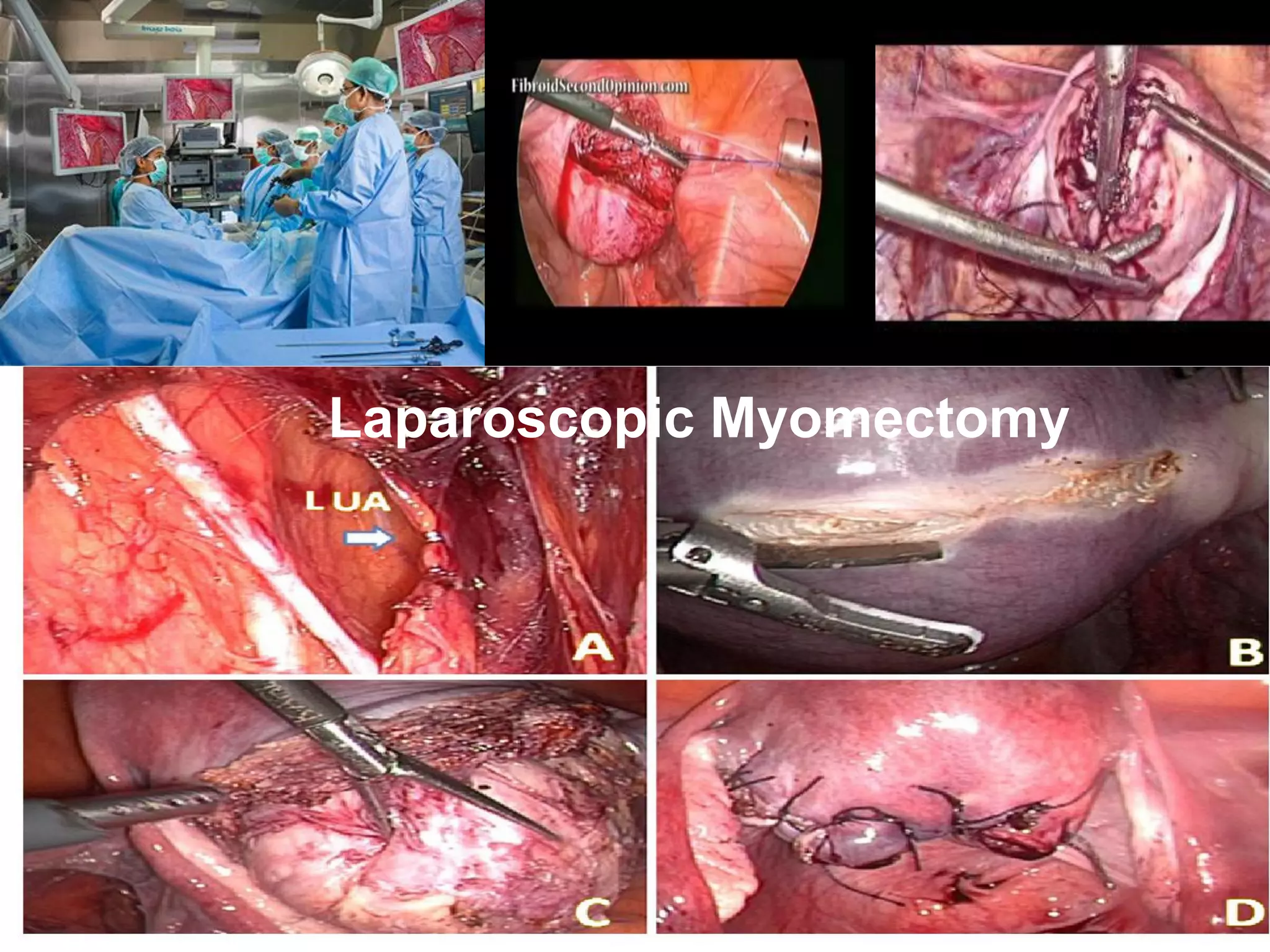
Laparoscopic Myomectomy(LM):
 It was first described at 1979 by Semm exclusively for
subserous myoma. From the beginning of 1990s the technique
was developed to include extraction of intramural myoma.
 Preoperative evaluation : TAS, TVS, Doppler assement, MRI.,
Diagnostic hysteroscopy, In selected cases, Correction of
anemia, Size of myoma < 10 cm, Number ≤ 3.
 Limitations: special equipment & skill required, difficult in broad
ligament & cervical, size >8 cm, number >3, separate incisions
needed, closure of dead space and hemostasis difficult, weak
scar, increasing operating time and blood loss, morcellator
issues!!,conversion to laparotomy(5-40%, because of size, ant.
location), recurrence rate higher.
Recurrence of uterine myoma after
myomectomy:
 It has been found that the LM yielded a higher recurrence rate
than OM, likely a result of manual myoma removal in OM,
which is a more exhaustive extraction of smaller myoma
masses than performed in LM. In other words, fewer residual
myoma masses after OM contribute to a lower postoperative
recurrence rate (Recurrence of uterine myoma after myomectomy:
Open myomectomy versus laparoscopic myomectomy). Yasushi
Kotani et al, J. Obstet. Gynaecol. Res. 2017.
fibroid
Laparoscopic Myomectomy(LM):
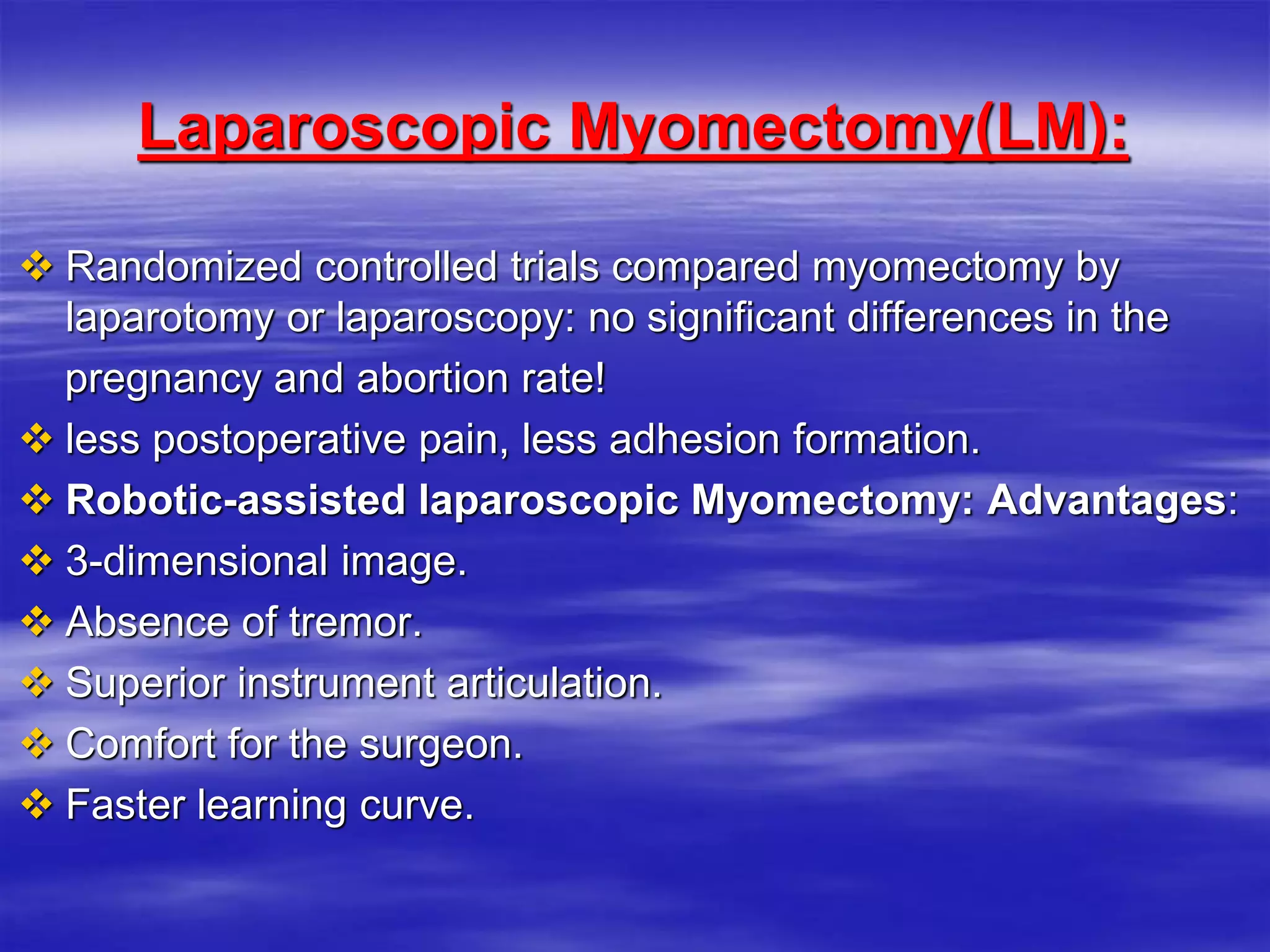
 Randomized controlled trials compared myomectomy by
laparotomy or laparoscopy: no significant differences in the
pregnancy and abortion rate!
 less postoperative pain, less adhesion formation.
 Robotic-assisted laparoscopic Myomectomy: Advantages:
 3-dimensional image.
 Absence of tremor.
 Superior instrument articulation.
 Comfort for the surgeon.
 Faster learning curve.
Laparoscopic Myomectomy(LM)
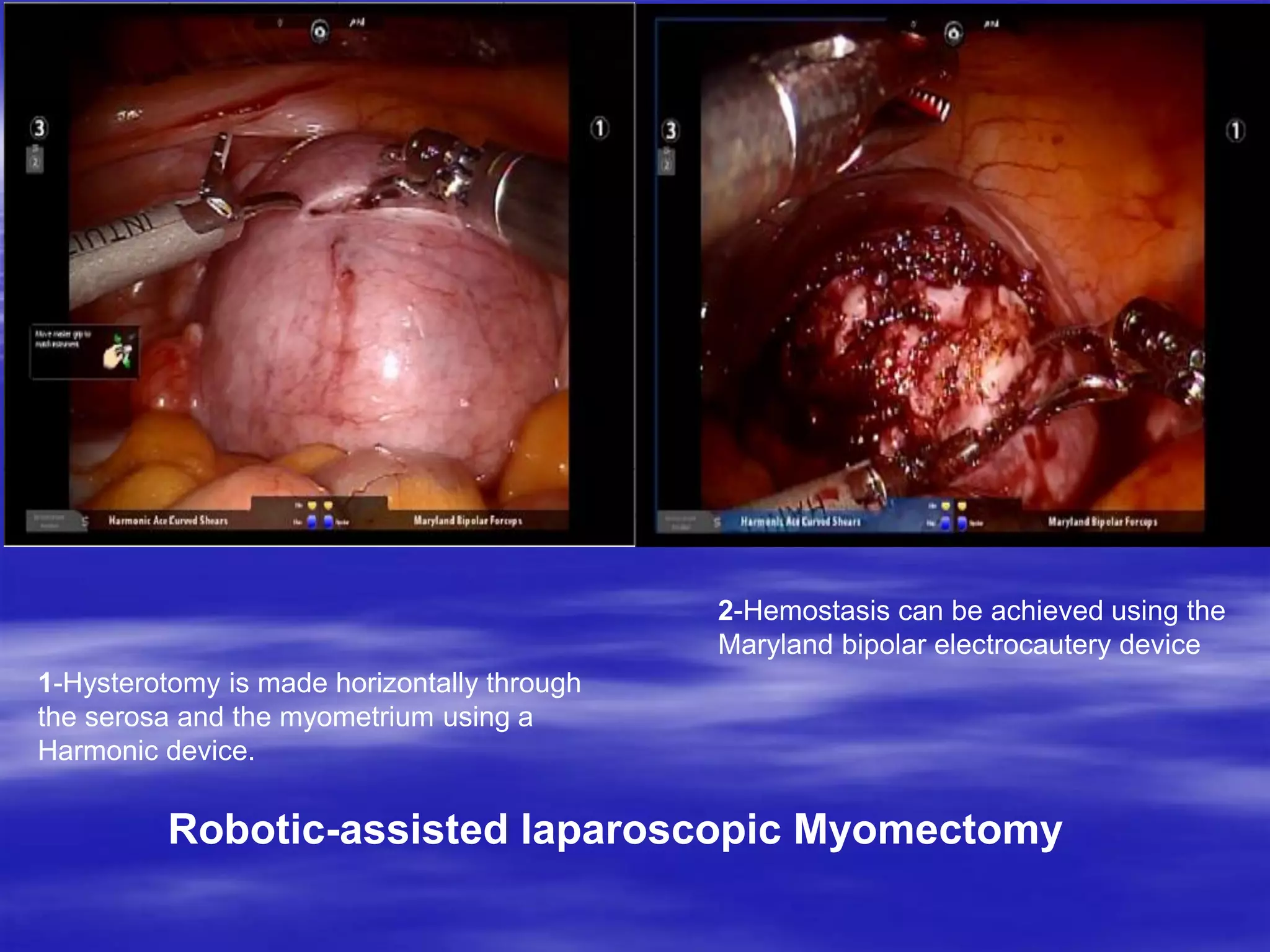
1-Hysterotomy is made horizontally through
the serosa and the myometrium using a
Harmonic device.
2-Hemostasis can be achieved using the
Maryland bipolar electrocautery device
Robotic-assisted laparoscopic Myomectomy
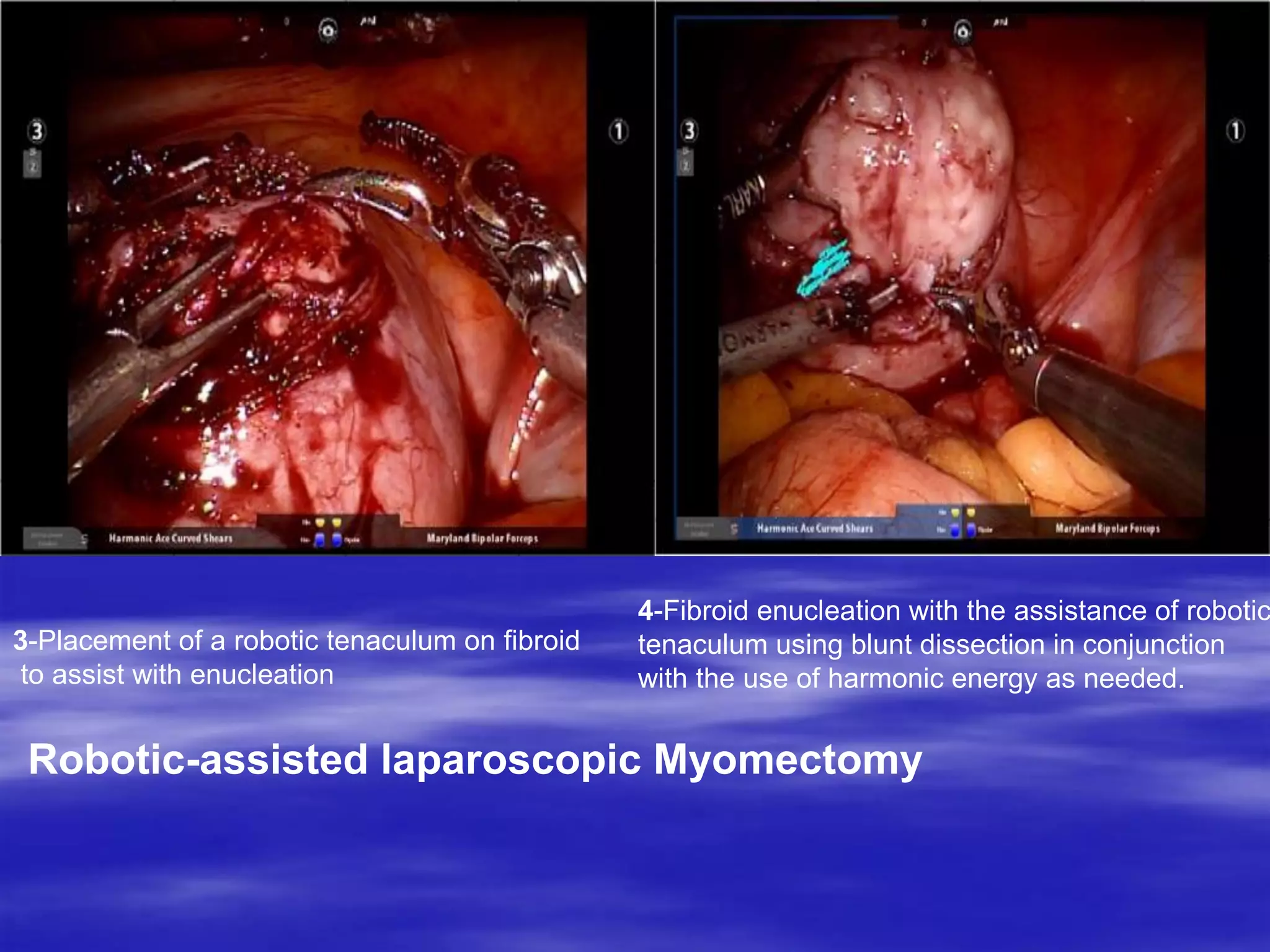
3-Placement of a robotic tenaculum on fibroid
to assist with enucleation
4-Fibroid enucleation with the assistance of robotic
tenaculum using blunt dissection in conjunction
with the use of harmonic energy as needed.
Robotic-assisted laparoscopic Myomectomy
Laparoscopic Myomectomy
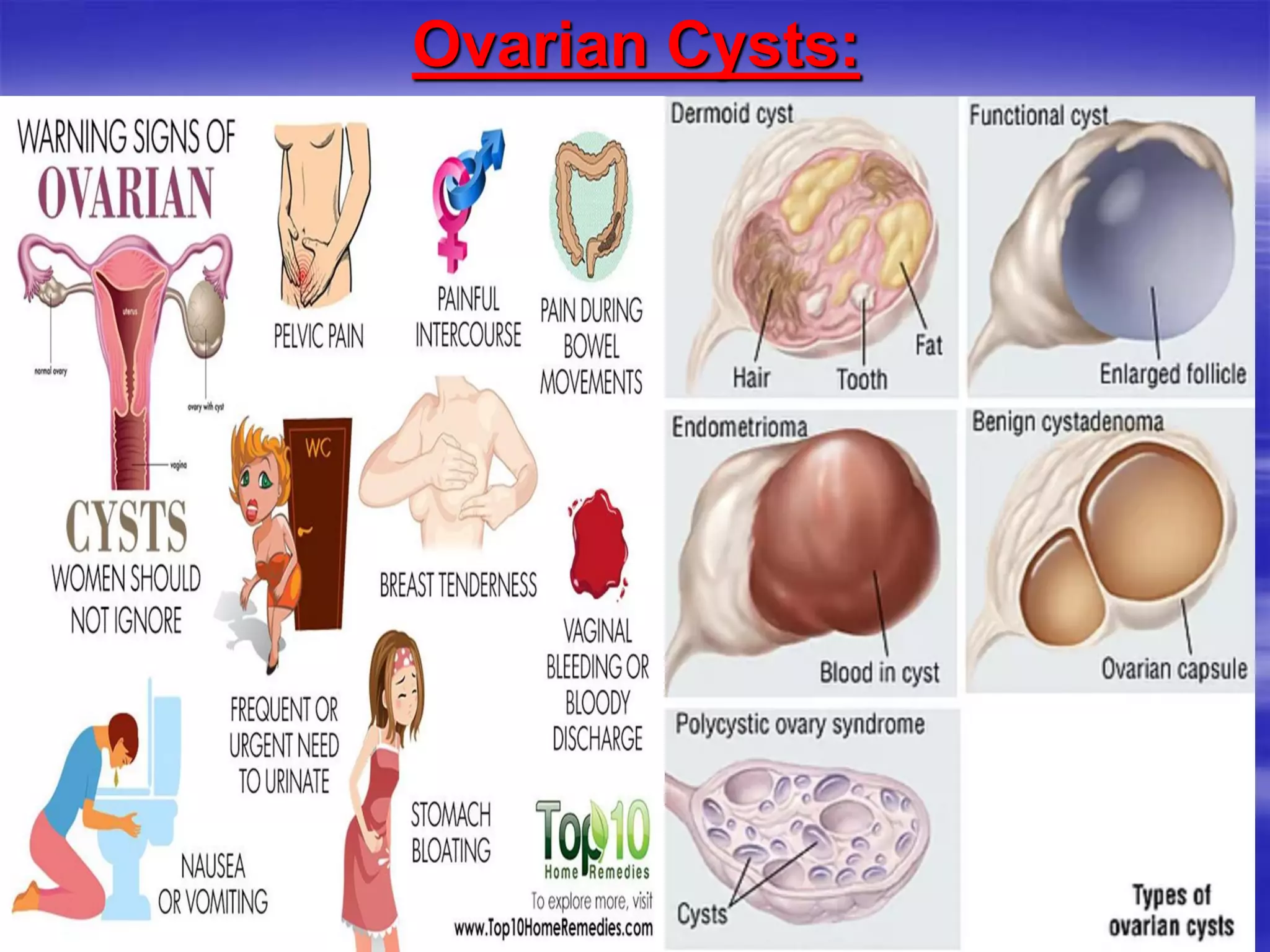
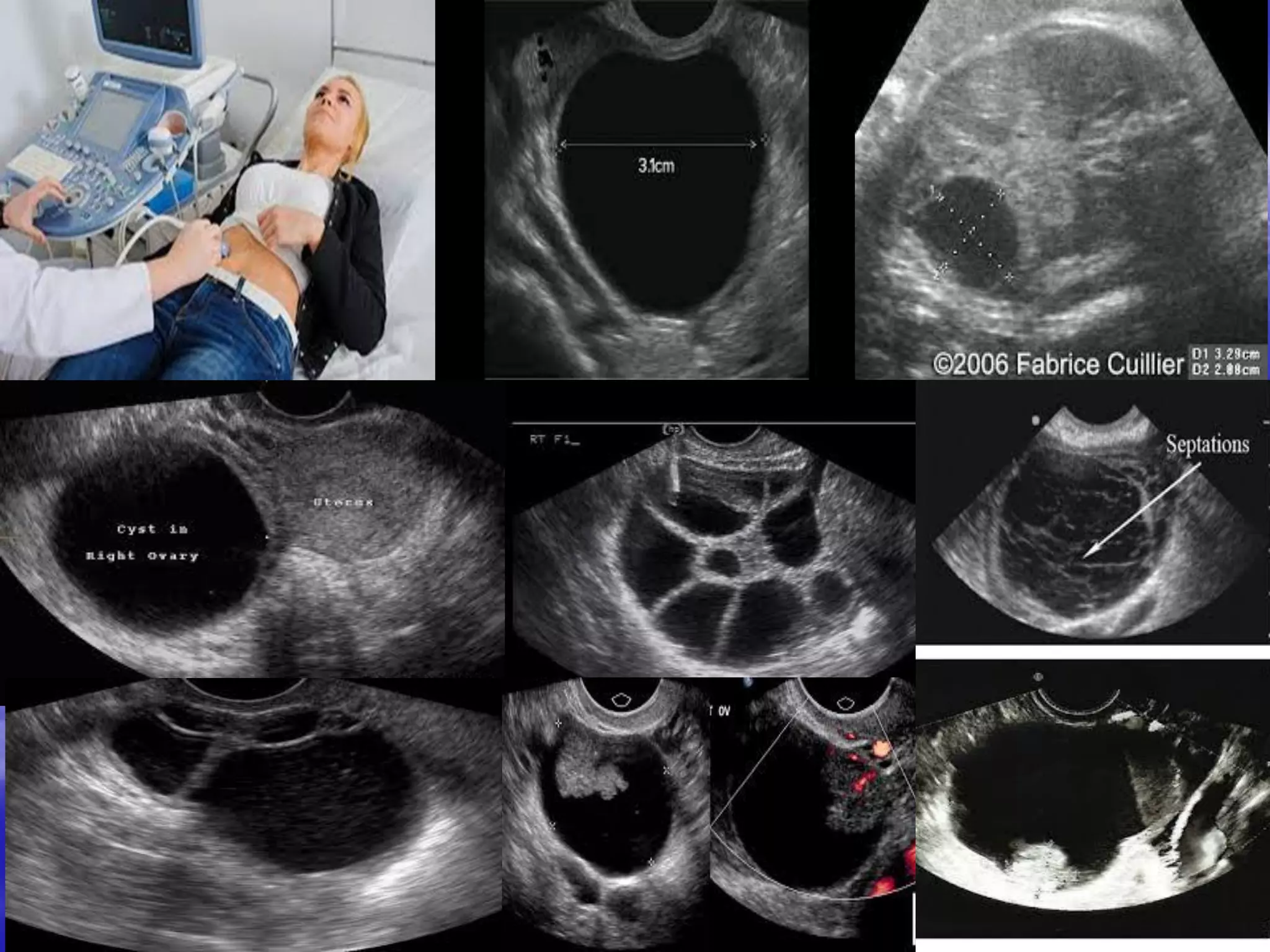
Ovarian Cysts:
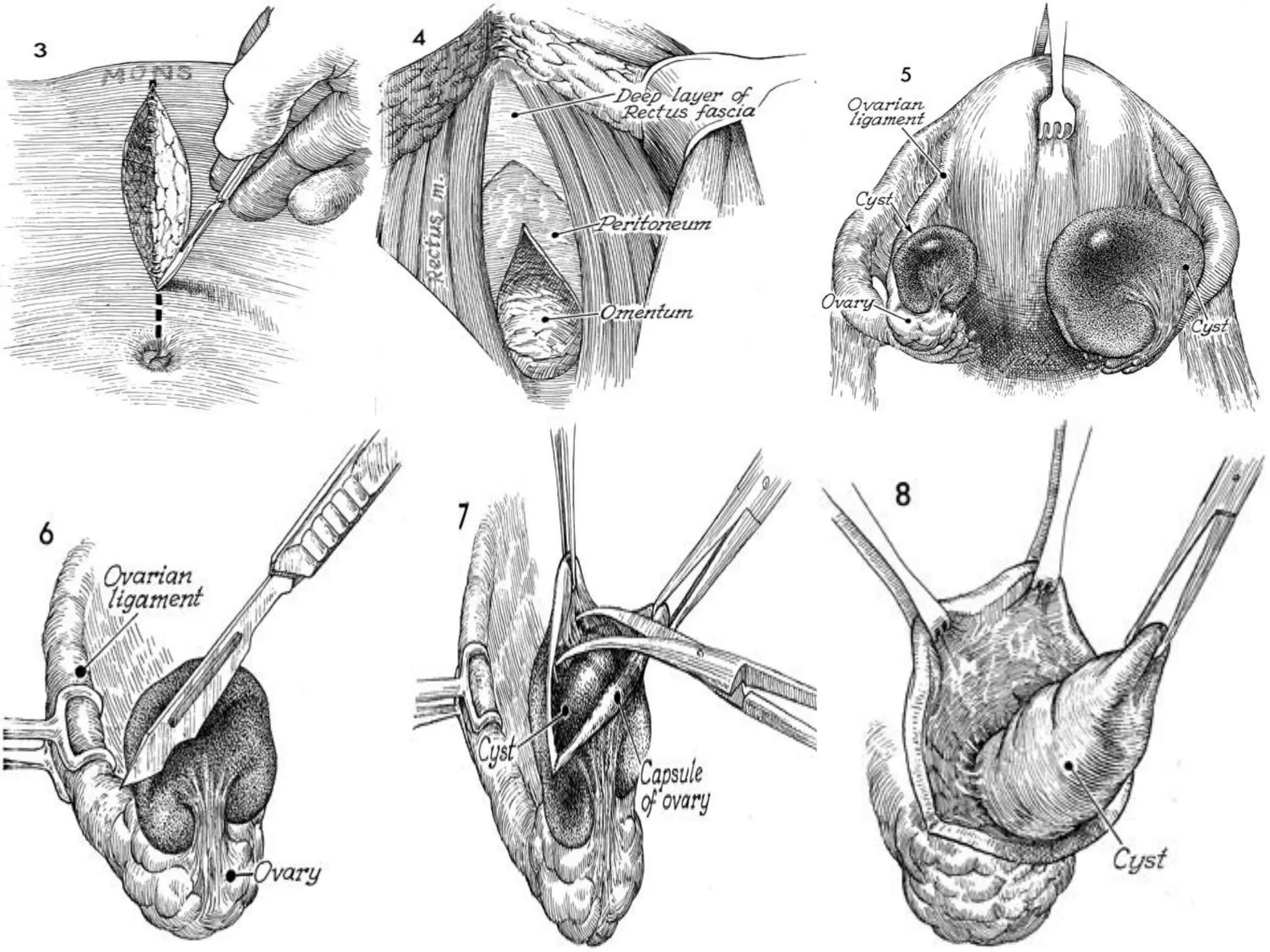
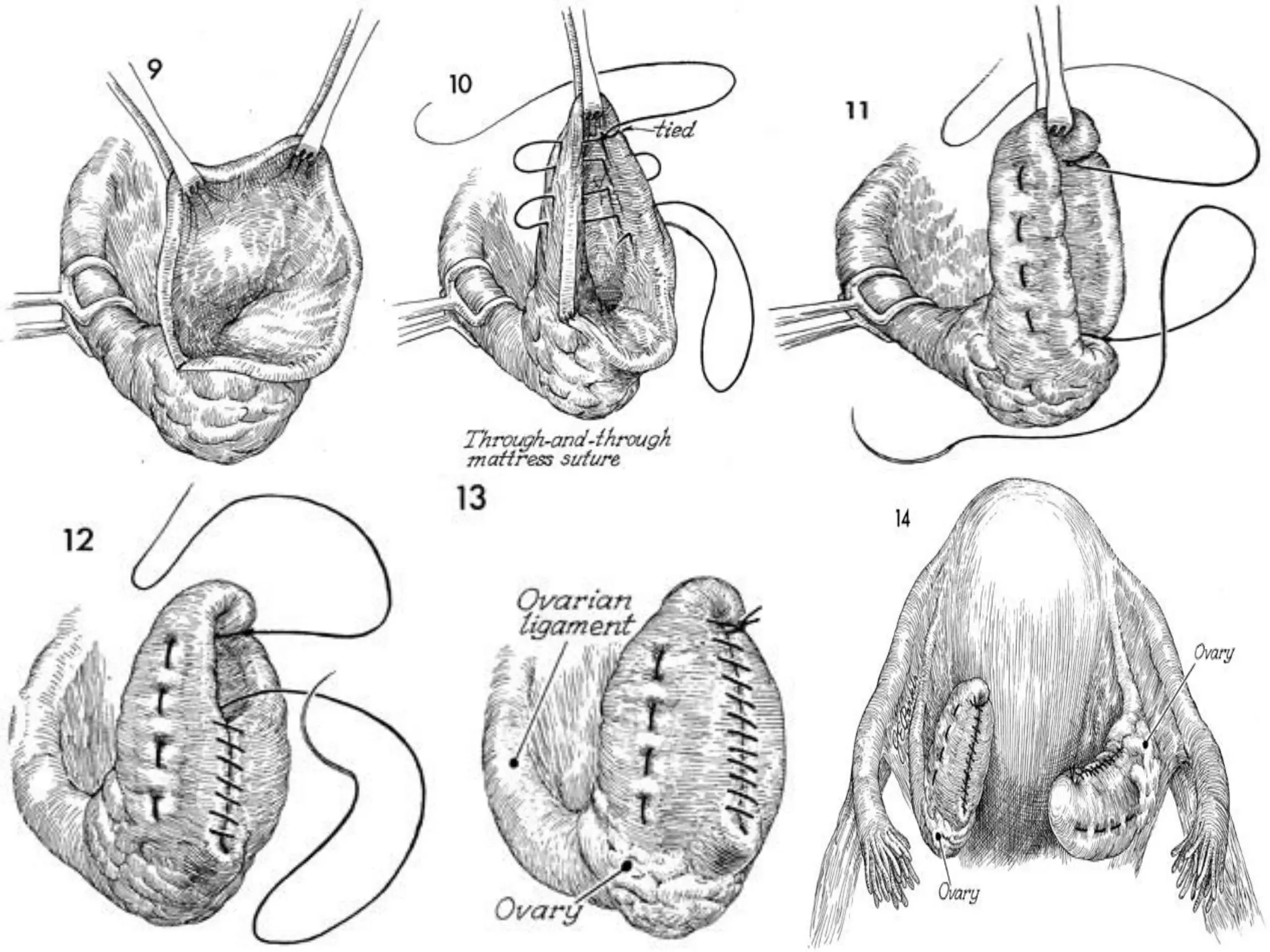
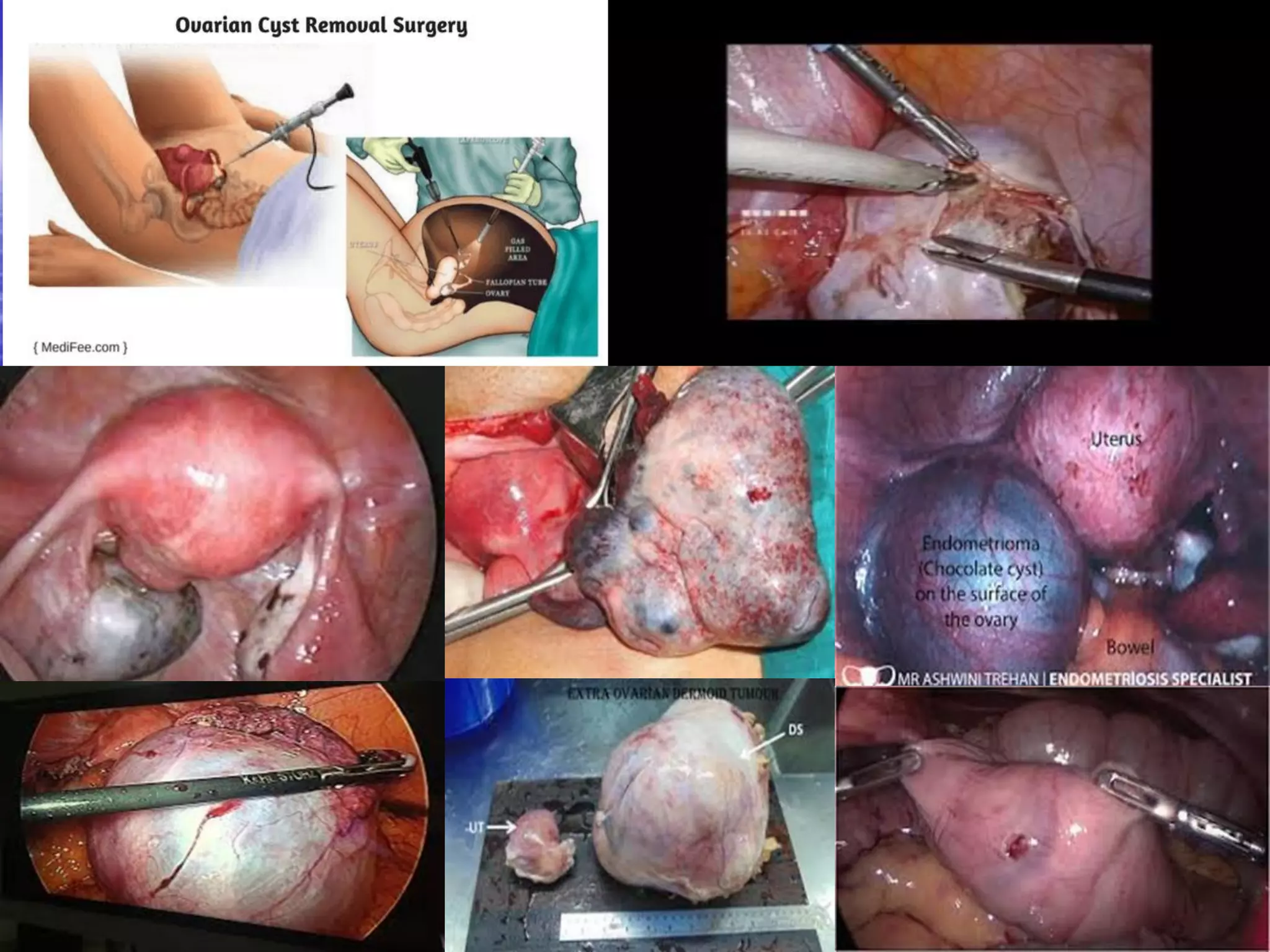
Ovarian Cystectomy:
 Enucleation of a cyst from the ovary is frequently carried out for
benign cysts in women below age of 40.
 The incision into the ovarian capsule must be made very
carefully to prevent rupture of cyst.
 Once the cyst is enucleated, the ovary is carefully reconstructed
with good hemostasis to avoid ovarian hematoma.
 Ovarian cystectomy can be carried out via open abdomen or
laparoscopically.
Ovarian Cystectomy
Hysteroscopy:
 History:
 In 1869, Panteleoni of Ireland manage to visualize the uterine
cavity of a woman using a cystoscope.
 In 1879 , Max Nirze used lens to magnify the area to be
illuminated.
 1893-Morris described a thin silver plated tube of brass 9mm,
used a head mirror to throw light inside the uterus so was able to
observe the endometrium and the tubal ostia.
 1898- Duplay and Clado used battery light source & silver nitrate.
 1925- Rubin used water to distend uterus and to wash lens, he
also used Co2 .
 1952-Hopkins used cold light source.
 1980-Hamou idealized the microhysteroscopy with panoramic
vision and of contact.
Hysteroscopy
 Types: Flexible hysteroscopes (less pain during outpatient
hysteroscopy), & Rigid hysteroscopes: may provide better
images, fewer failed procedures, quicker examination, time and
reduced cost.
 Benefits:
 Direct visualization of uterine pathology.
 No X-ray exposure.
 Insertion under visualization- reduce the risk of perforation.
 See and treat the pathology.
 Hysteroscopy- Contraindication:
 Menstruation, abnormal bleeding.
 Amenorrhea= ?? Pregnancy.(Ideally Post menstrual Period).
 Acute pelvic infection.
Hysteroscopy- complications:
 Anaesthesia related.
 Distension media related.
 Surgery: False passage, uterine perforation, hemorrhage.
 Delayed complication: infection, adhesion formation.
 Failure of resolution of presenting symptom.
 Incorrect positioning of the patient may result in:
 Nerve injuries.
 Back injuries.
 Damage to soft tissues.
 Deep venous thrombosis (DVT).
Hysteroscopy Indications:
 DIAGNOSTIC :
 Unexplained abnormal Uterine bleeding (AUB) .
 Peri and post menopausal bleeding.
 Selected infertility cases.
 Abnormal HSG.
 Unexplained Infertility.
 Recurrent pregnancy loss.
 Therapeutic:
 IUD removal.
 Biopsy of intrauterine lesions.
 Hemangioma and A-V malformations.
 Resection of uterine septum.
 Sterilization (Essure).
Hysteroscopy Indications:
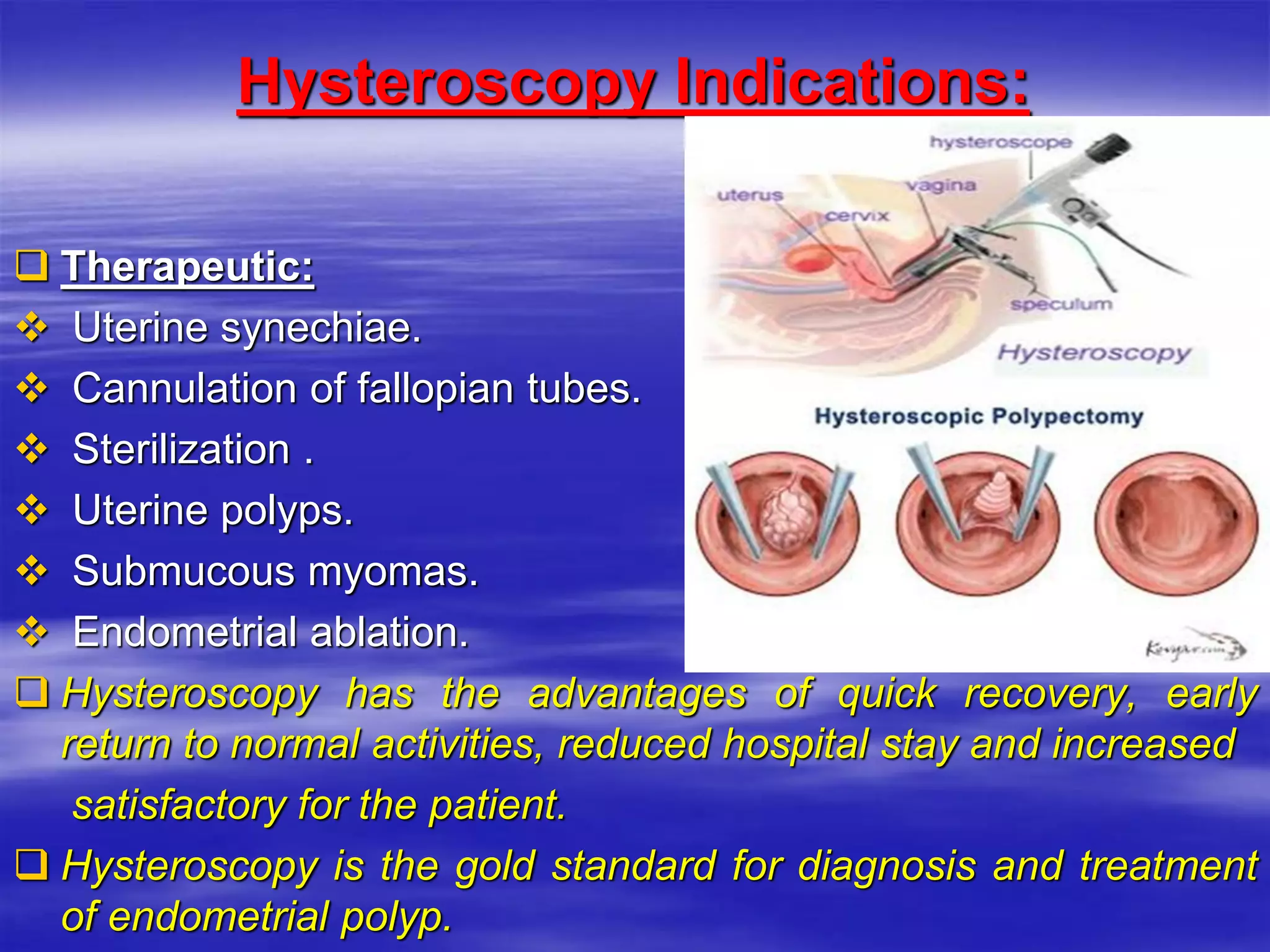
 Therapeutic:
 Uterine synechiae.
 Cannulation of fallopian tubes.
 Sterilization .
 Uterine polyps.
 Submucous myomas.
 Endometrial ablation.
 Hysteroscopy has the advantages of quick recovery, early
return to normal activities, reduced hospital stay and increased
satisfactory for the patient.
 Hysteroscopy is the gold standard for diagnosis and treatment
of endometrial polyp.
Hysteroscopy. Uterine distention
medium:
 GASEOUS : CO2
 LIQUID: NS, Ringer lactate, (32% dextran 70), Glycine,
Sorbitol, Mannitol.
 1-CO2, only gaseous medium used, easy to infuse,
inexpensive, readily available, rapidly absorbed and released,
Disadvantages : may produce bubbling, a leak in system may not be
noticed for some time, specific machine is required for electronic calibration
of the CO2 flow rate and pressure, use of a laser : smoke and fumes !
2-Fluid media: symmetric distension of uterus with fluid, ability
to flush blood, mucus , bubbles & small tissue fragments, pressure
of 75 mm hg is usually adequate for uterine distension, low and
high viscosity media are used,(1.5%Glycine, used in operative
hysteroscopy using monopolar resectoscope).
Hysteroscopy. Uterine distention medium:
 Normal saline : Used in diagnostic hysteroscopy, Operative
hysteroscopy using bipolar electrode.
 Prevention of Fluid Overload:
 Using appropriate distension media and delivery systems.
 Keeping operating times to a minimum.
 Avoiding entering the vascular channels.
 Keeping fluid pressures below 80mmHg and gas pressures
below 100mmHg.
 The procedure must be abandoned if the deficit rises to 2 liters
or there is evidence of venous congestion..
 There is an excessive absorption of distension media in
approximately 0.5% of women undergoing operative
hysteroscopy, and in around 5% of those having a
hysteroscopic myomectomy.
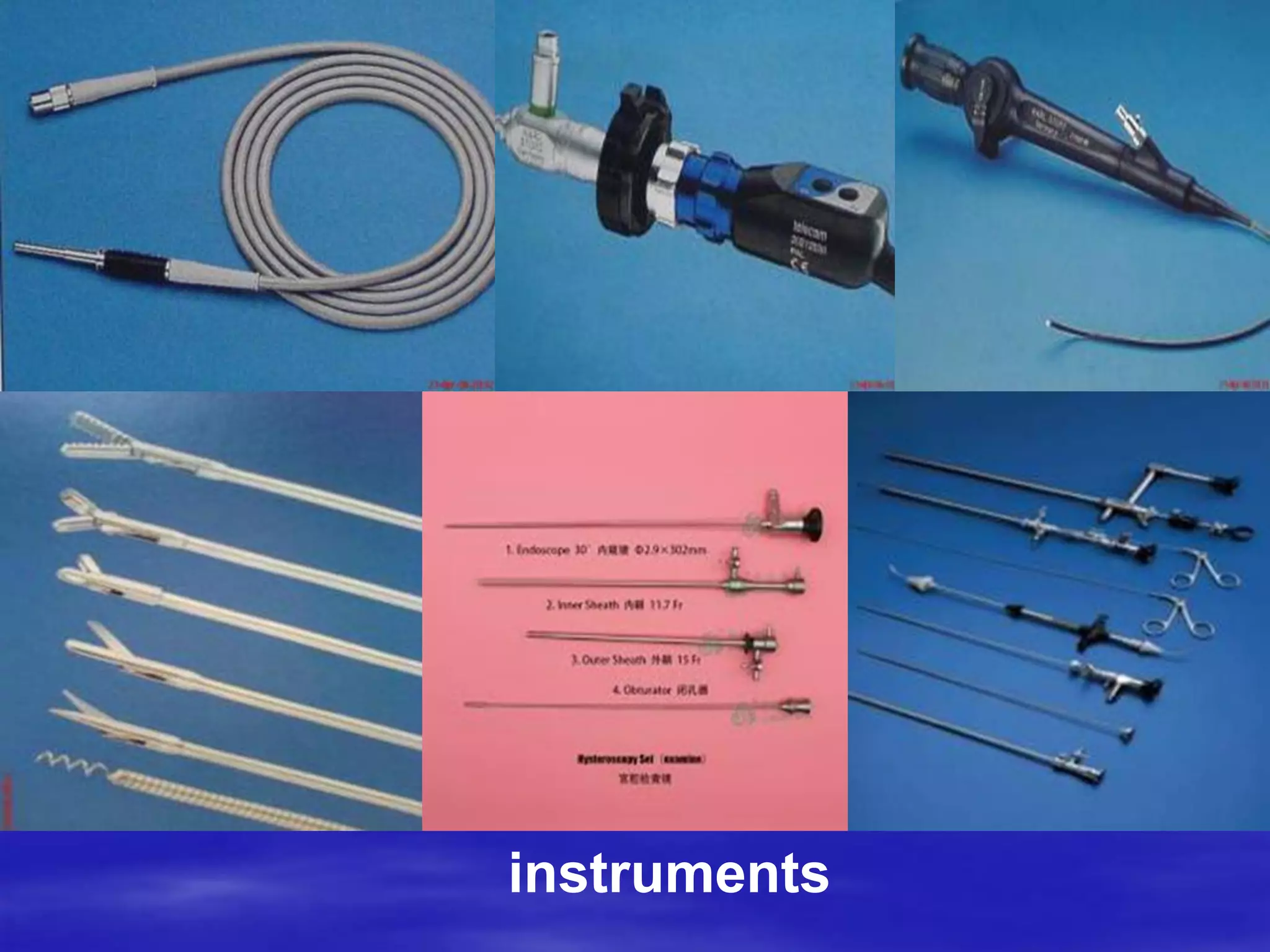
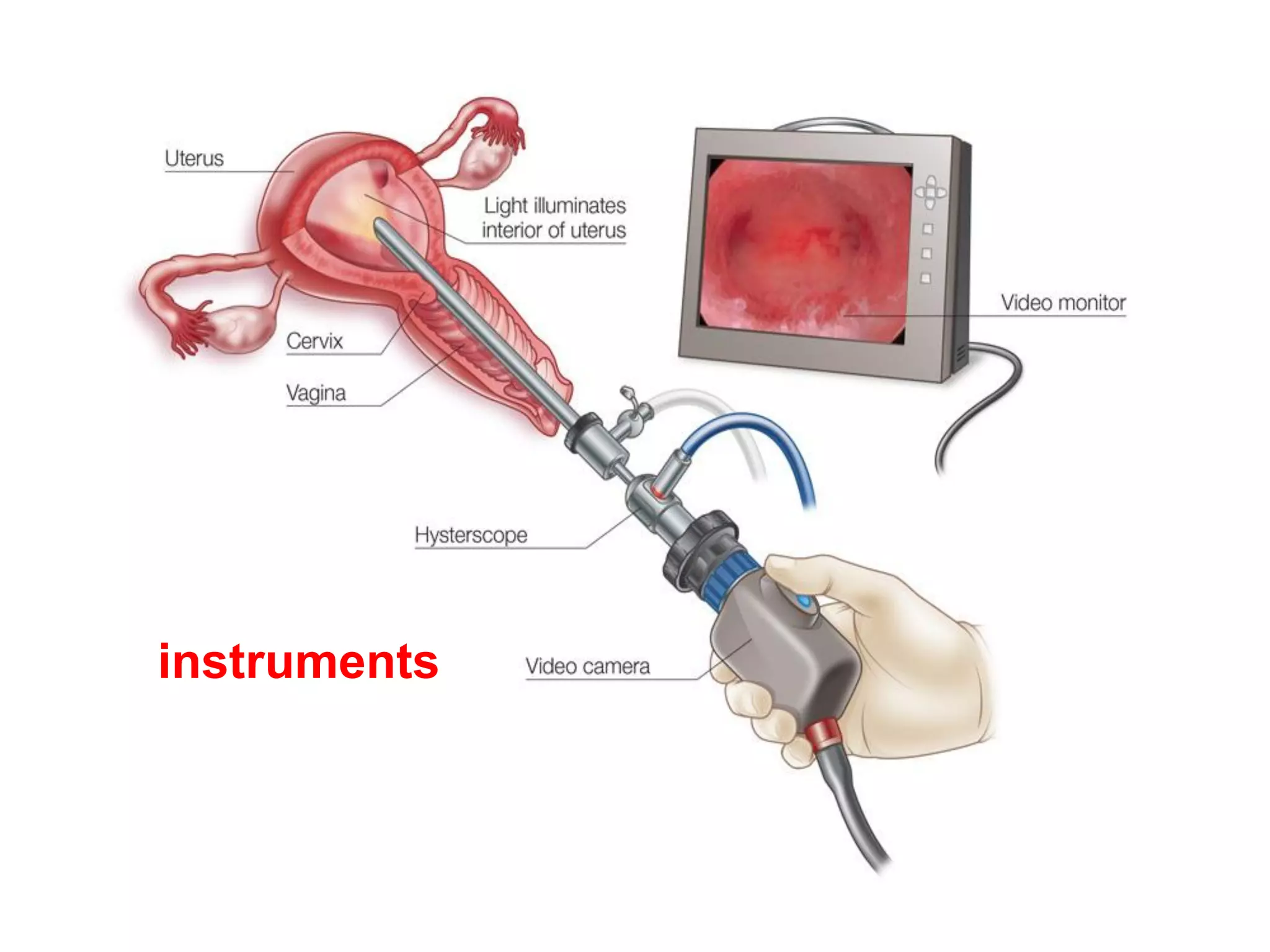
instruments
instruments
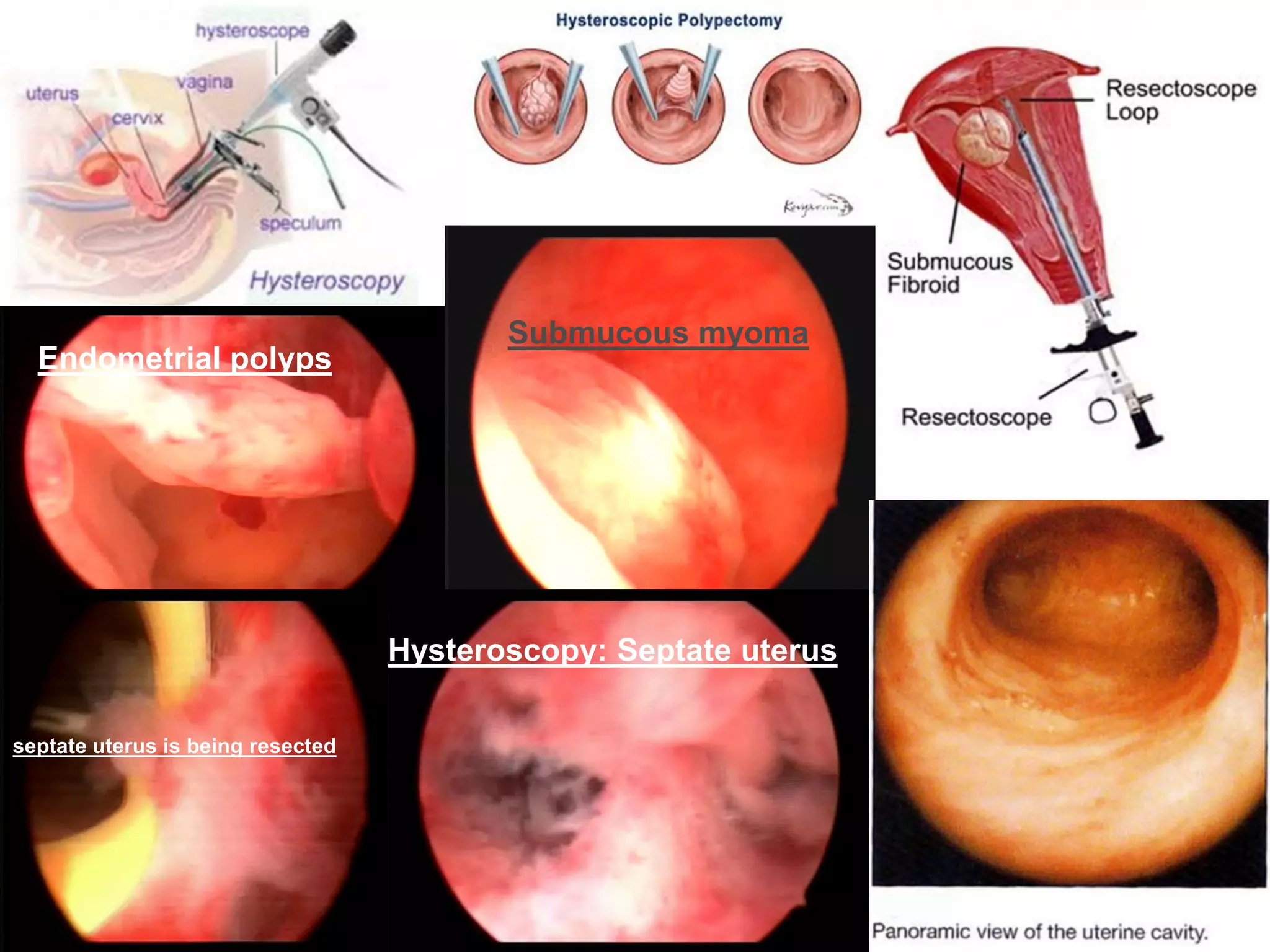
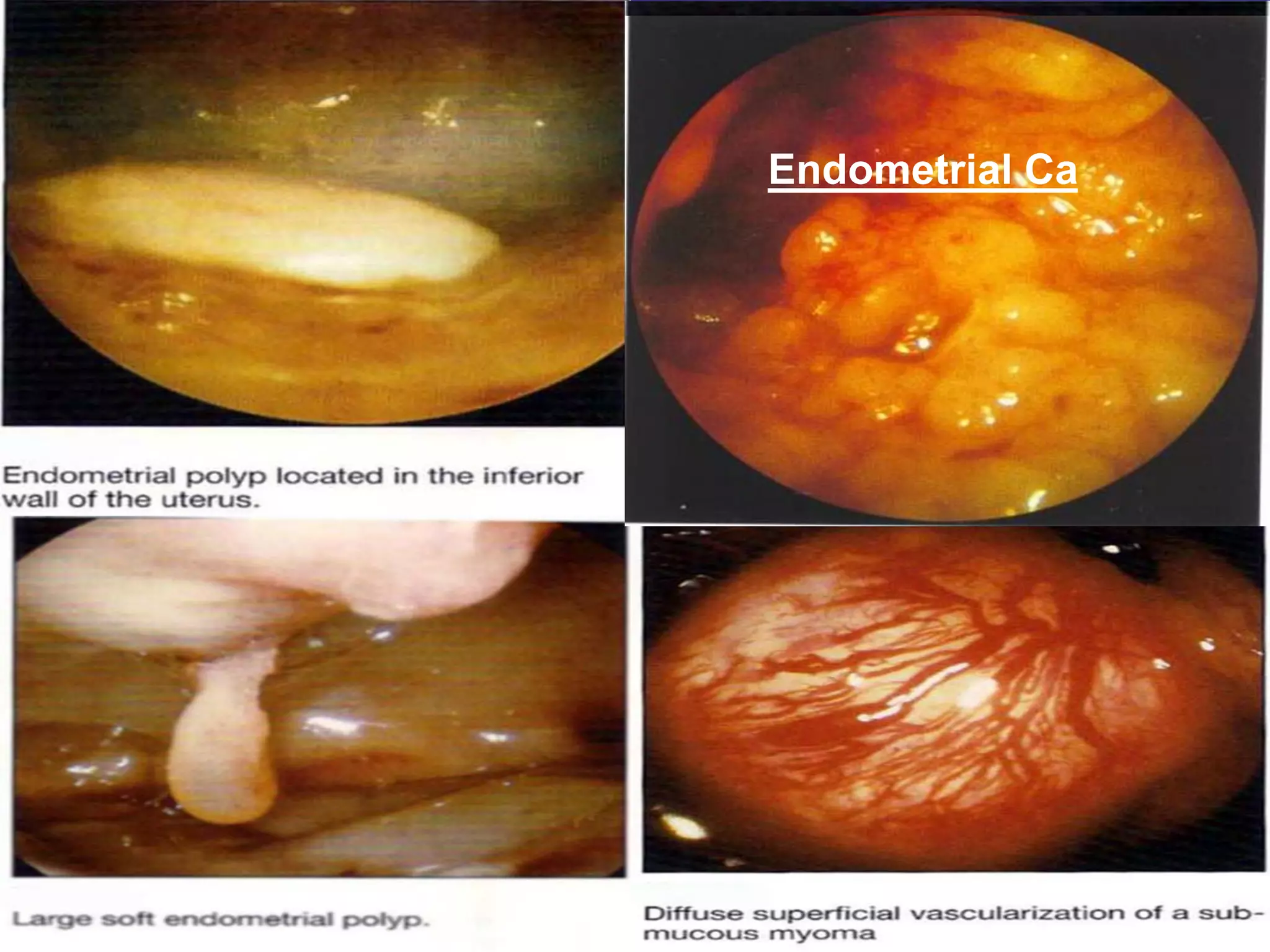
Submucous myoma
Endometrial polyps
Hysteroscopy: Septate uterus
septate uterus is being resected
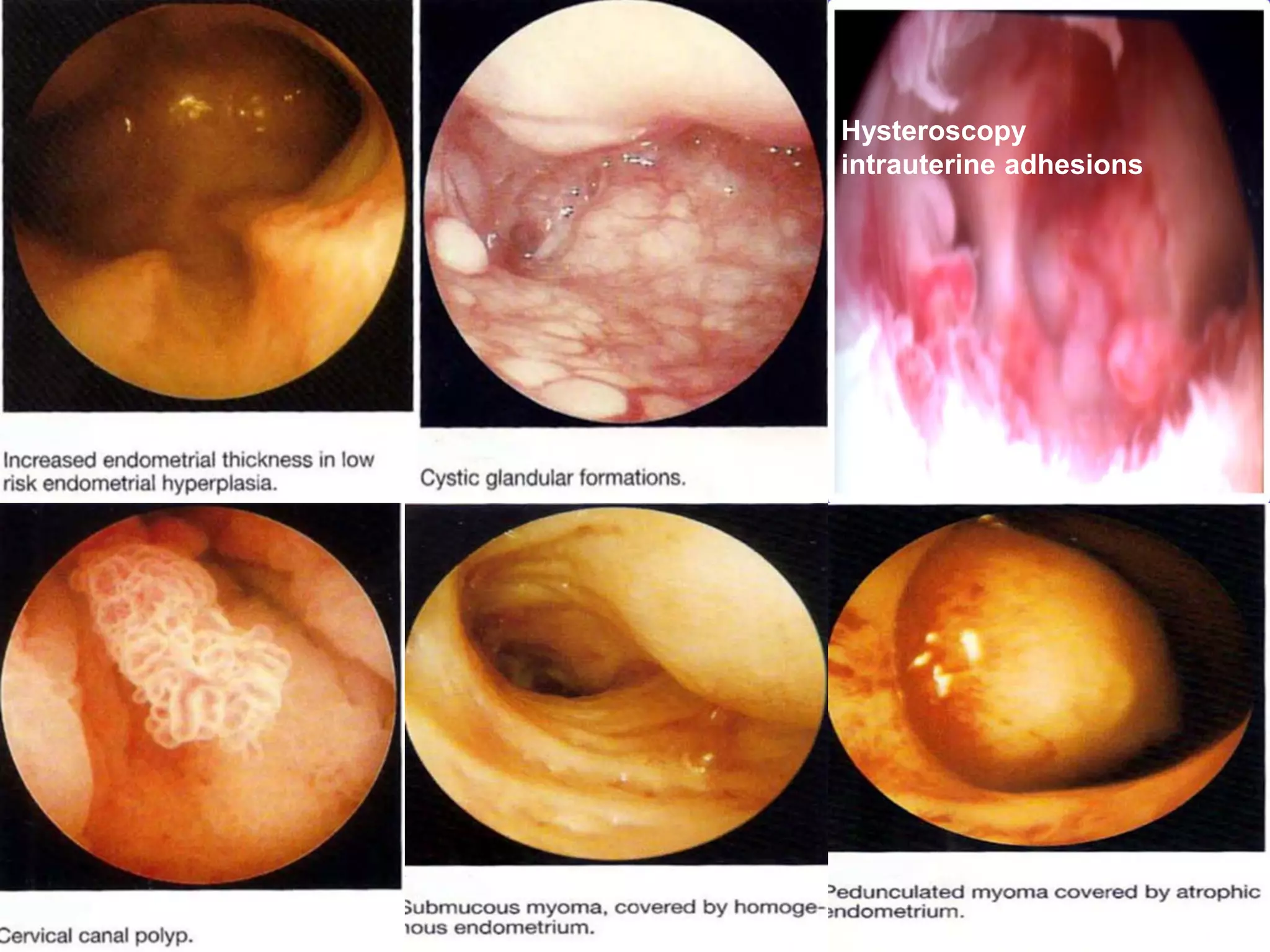
Hysteroscopy
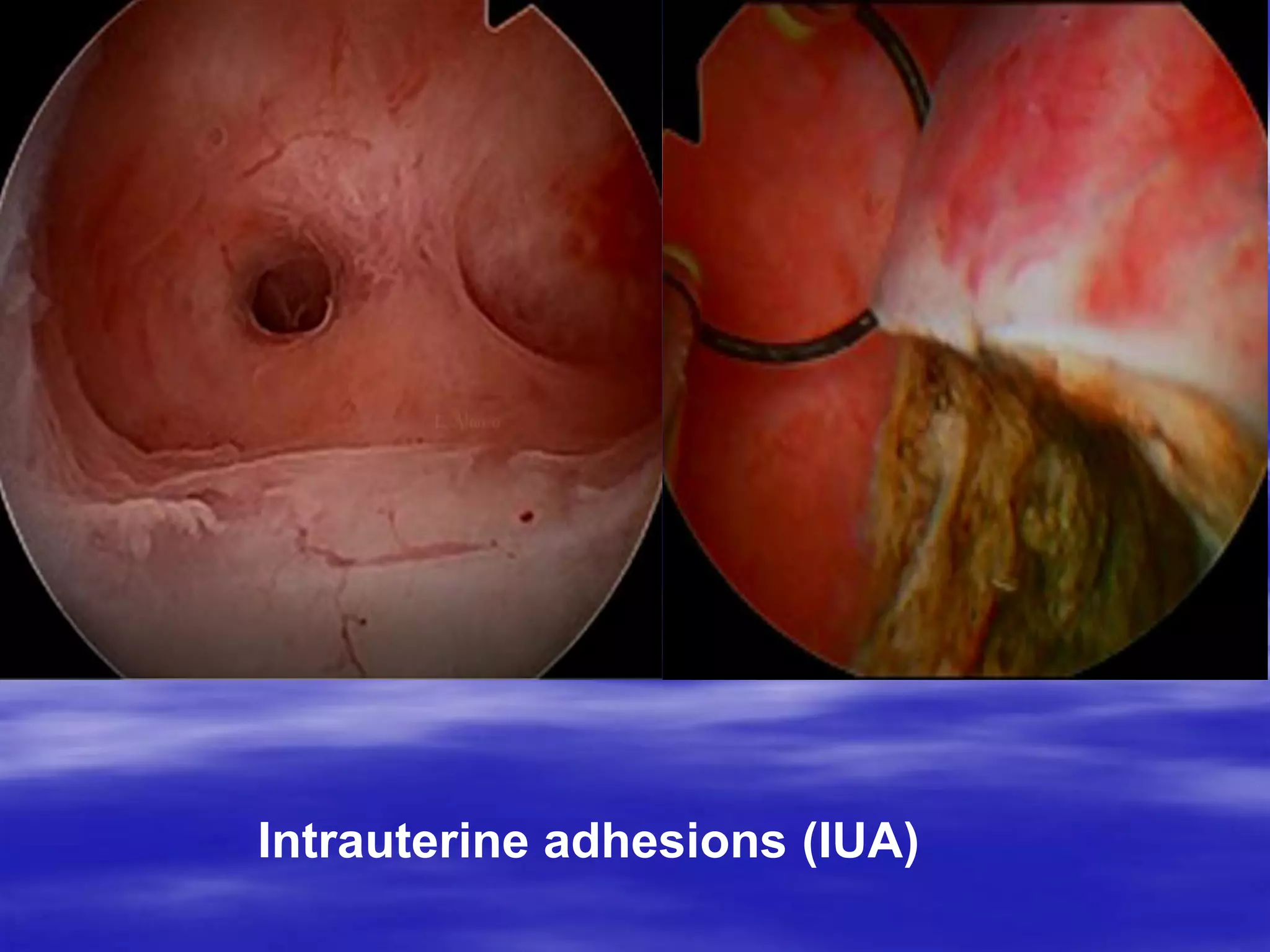
intrauterine adhesions
Endometrial Ca
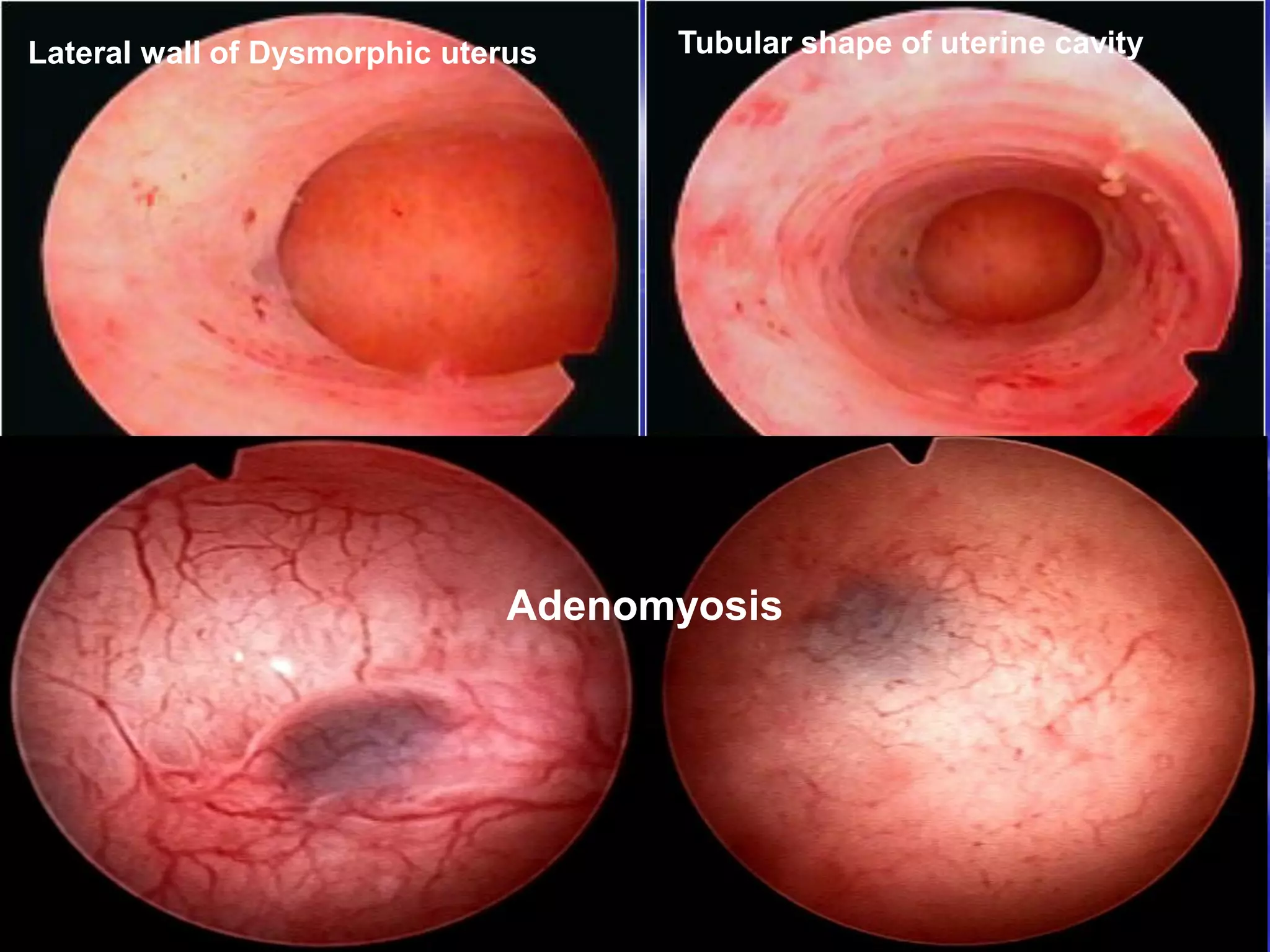
Adenomyosis
Lateral wall of Dysmorphic uterus Tubular shape of uterine cavity
Intrauterine adhesions (IUA)
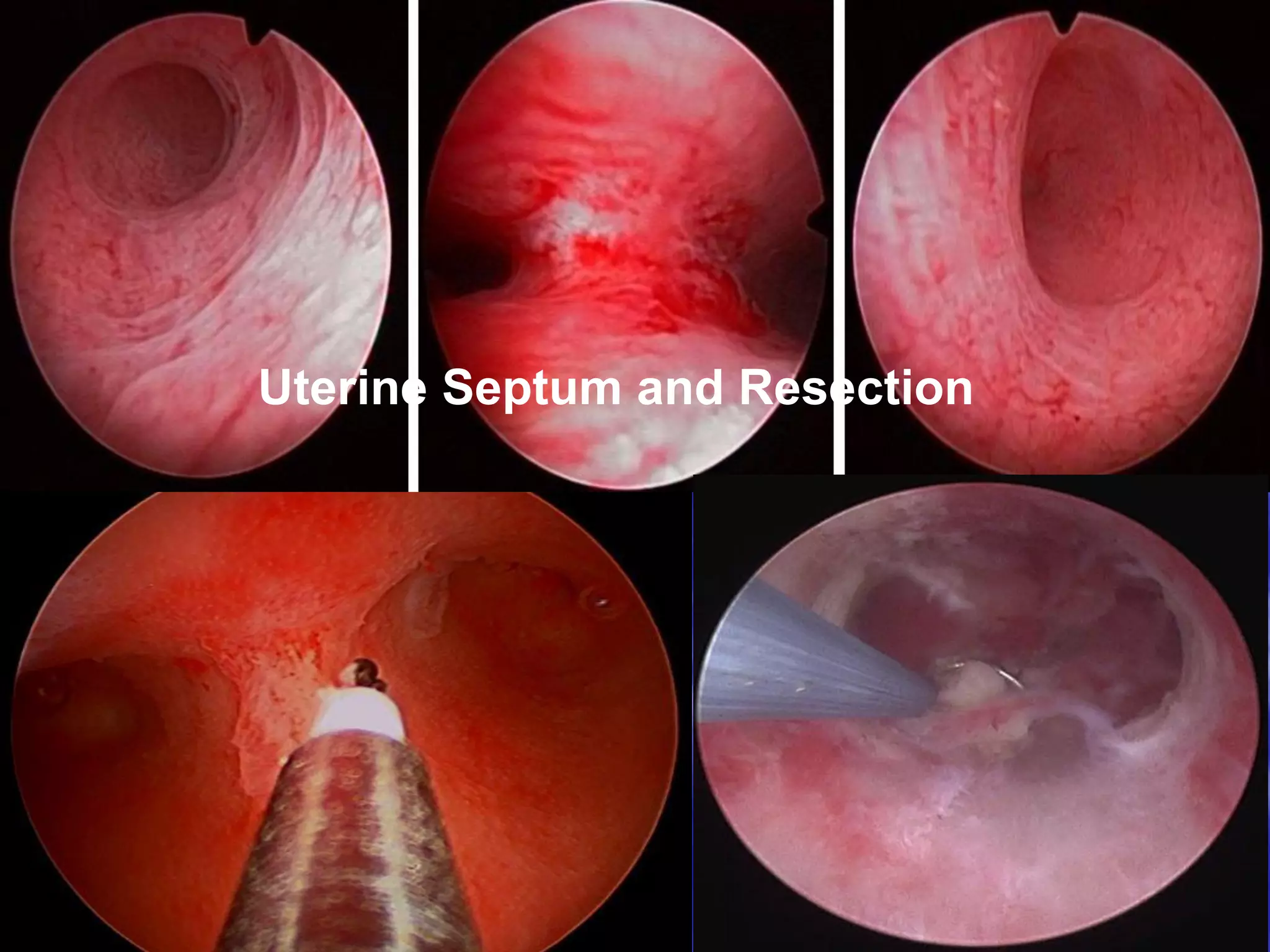
Uterine Septum and Resection
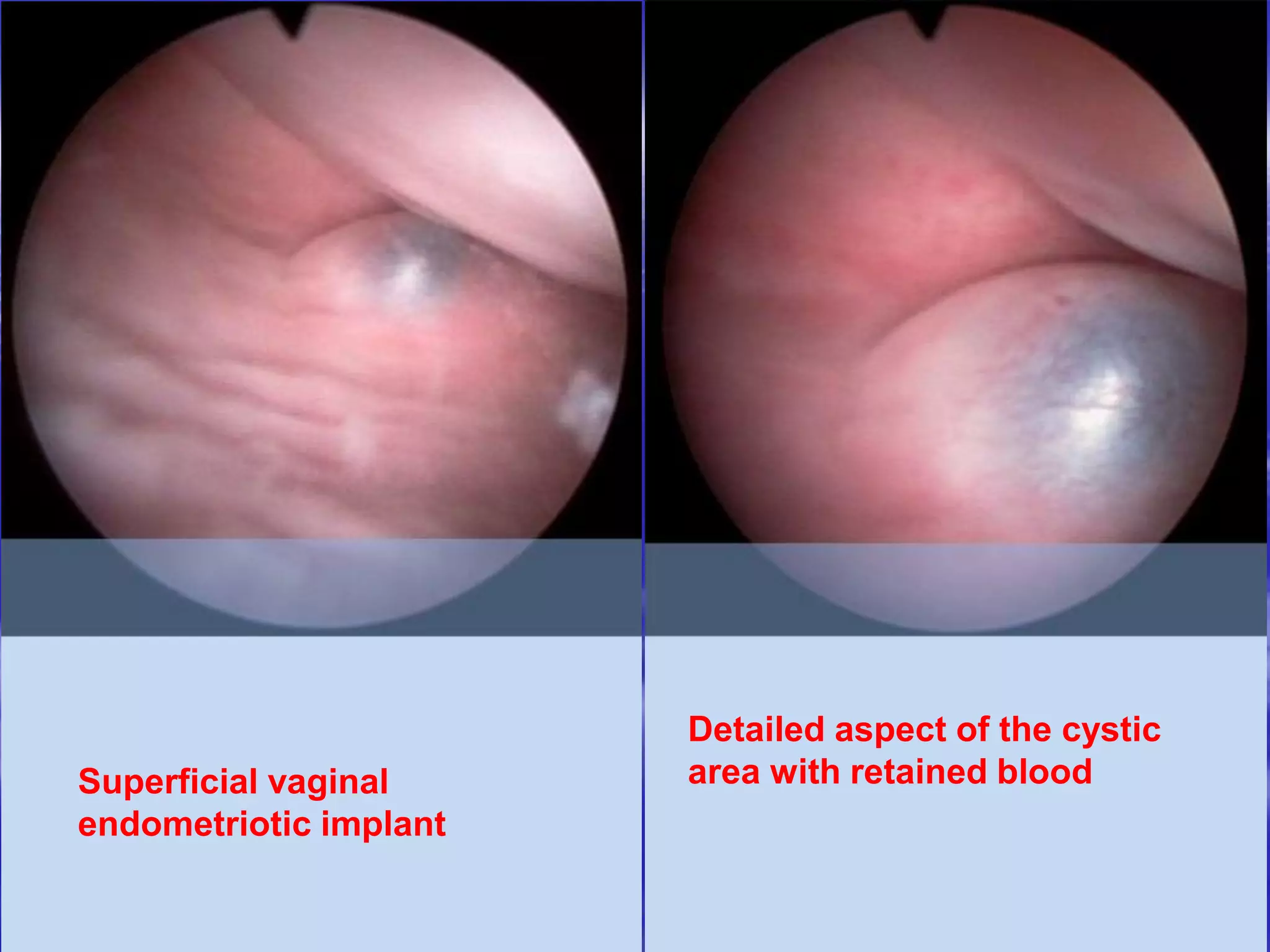
Superficial vaginal
endometriotic implant
Detailed aspect of the cystic
area with retained blood
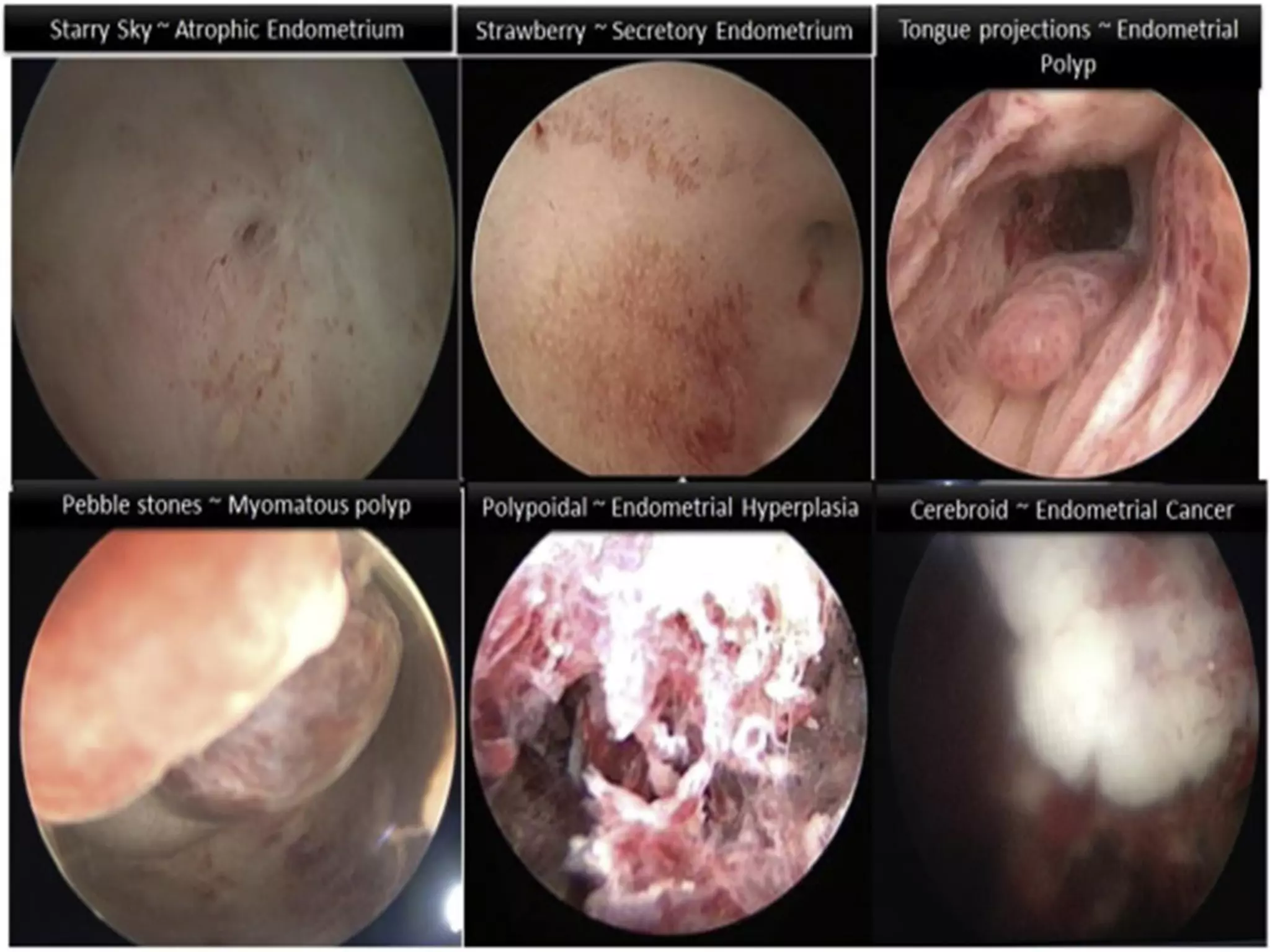
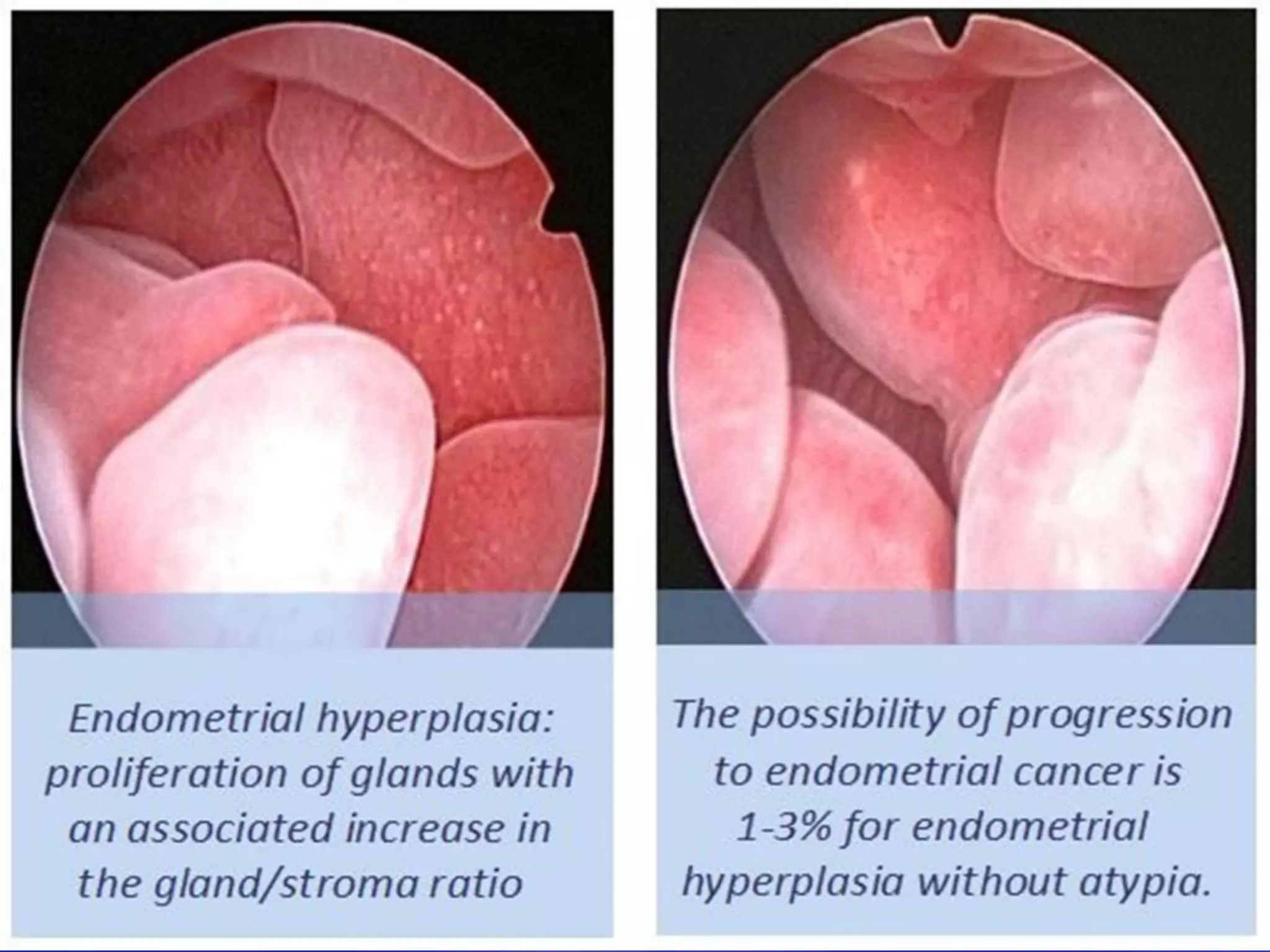
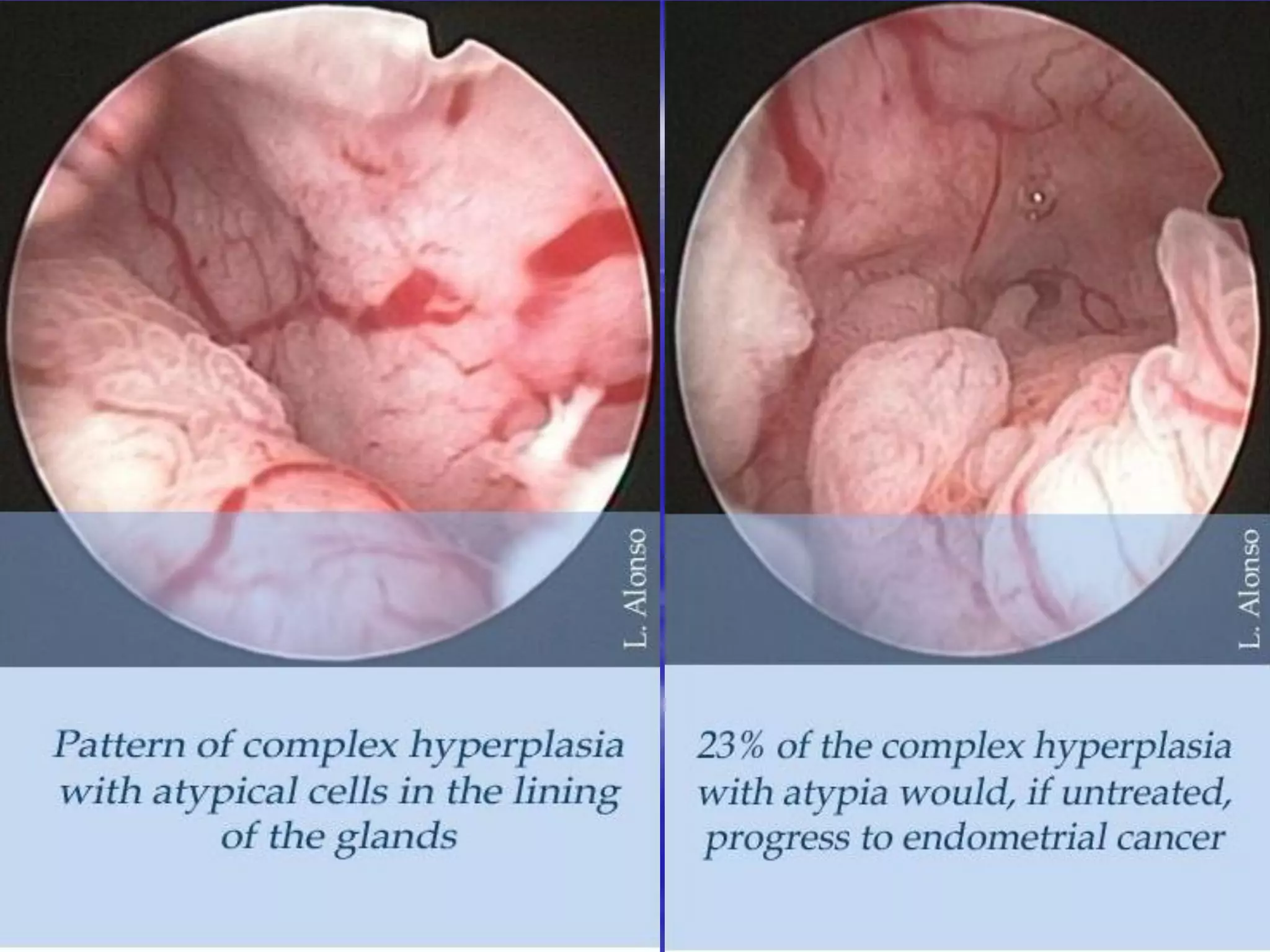
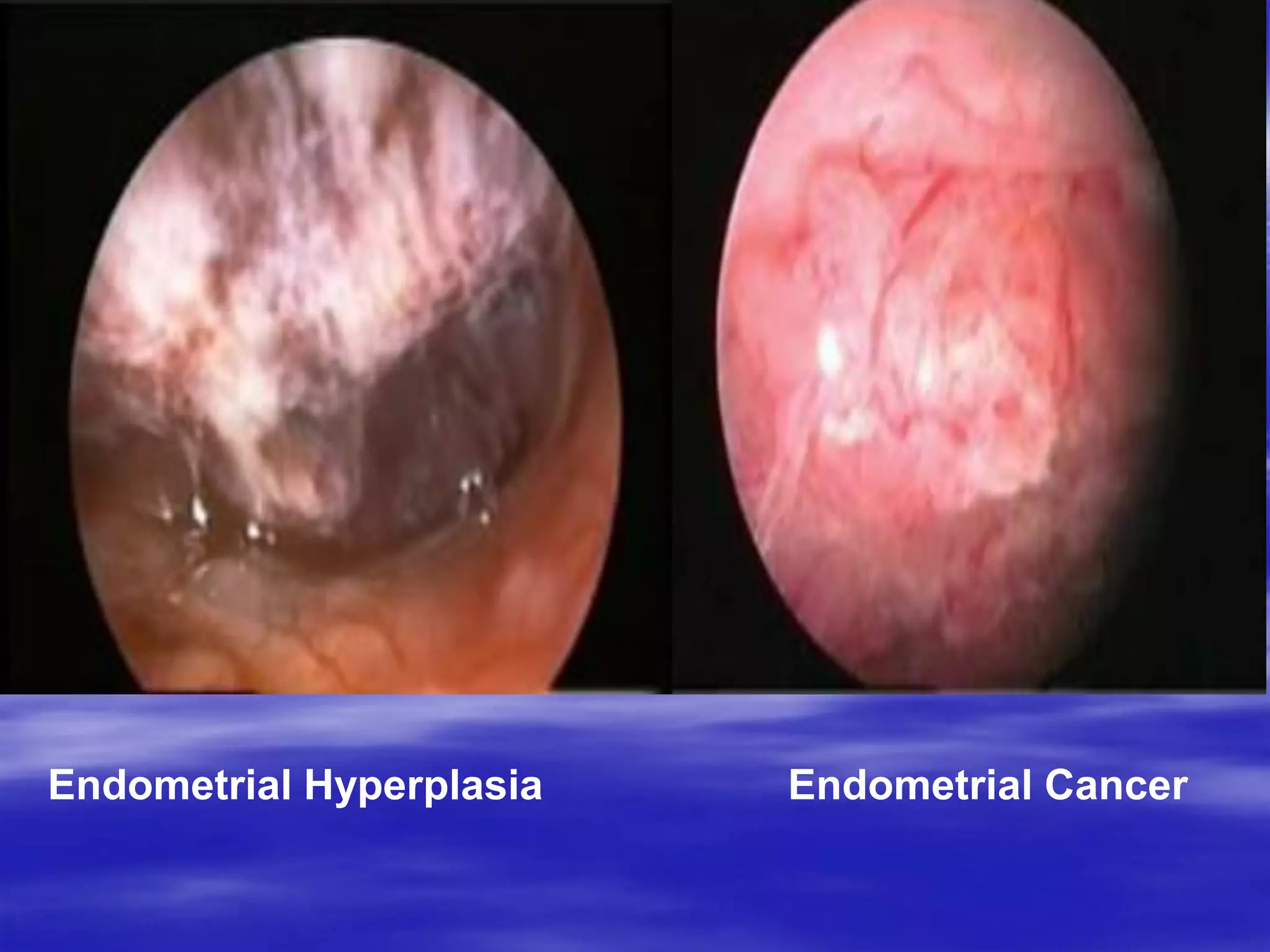
Endometrial CancerEndometrial Hyperplasia
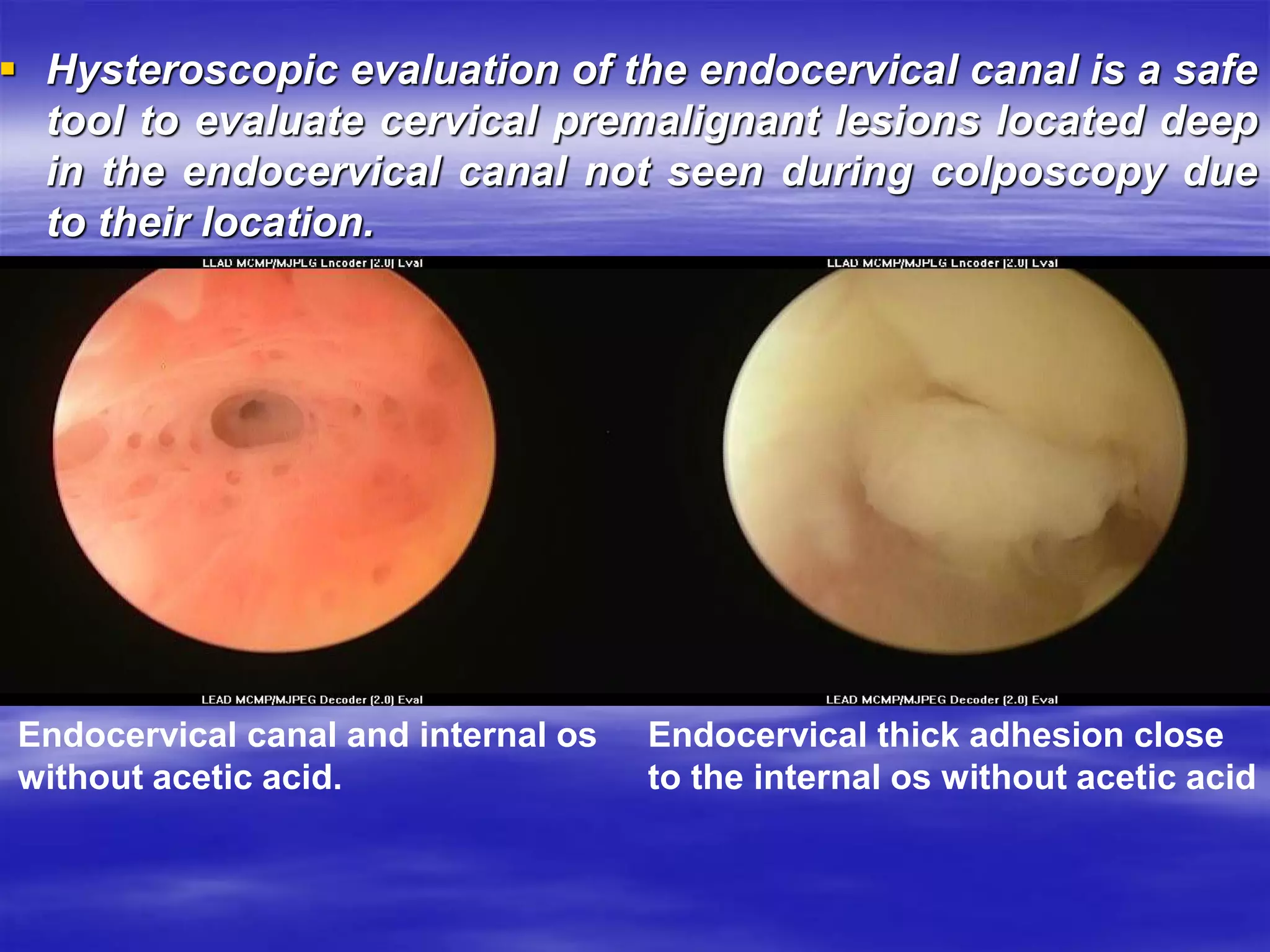
 Hysteroscopic evaluation of the endocervical canal is a safe
tool to evaluate cervical premalignant lesions located deep
in the endocervical canal not seen during colposcopy due
to their location.
Endocervical canal and internal os
without acetic acid.
Endocervical thick adhesion close
to the internal os without acetic acid
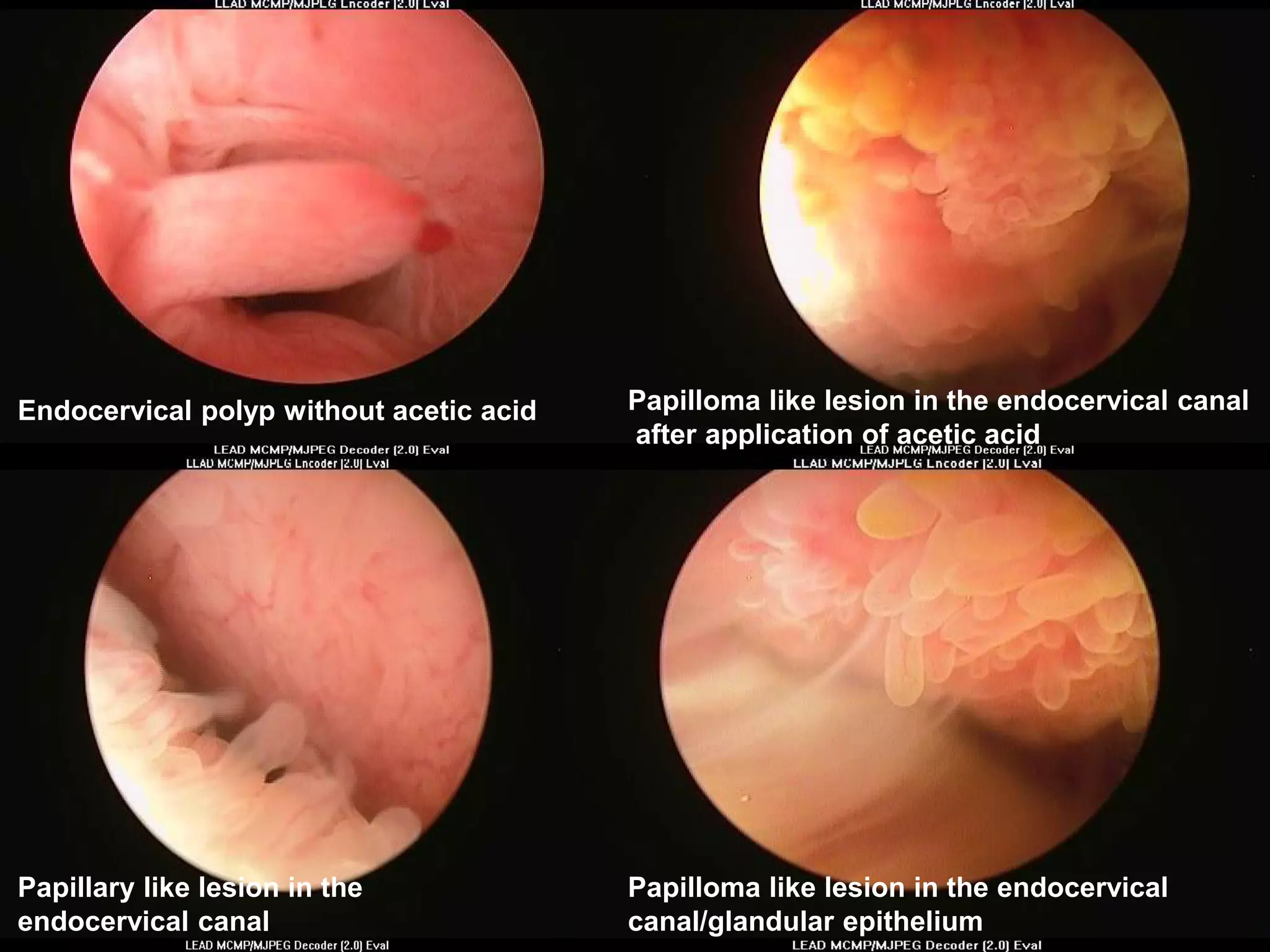
Endocervical polyp without acetic acid Papilloma like lesion in the endocervical canal
after application of acetic acid
Papillary like lesion in the
endocervical canal
Papilloma like lesion in the endocervical
canal/glandular epithelium
Hysteroscopy, (Our Experience):
 Cervical Preparation: misoprostol, Aisha M. Elbareg, Mohamed
El Sirkasi, Fathi M. Essadi, Mohamed O. ‎Elmahashi, Ishag Adam: (Vaginal
Misoprostol for Cervical Priming before ‎Operative Hysteroscopy in Misurata
Hospital, Libya). Sudan Journal of ‎Medical Sciences, 2015, Vol 10, Issue 2,
pages: 53-56.‎
 Uses in evaluation of endometrial pathology: Aisha M Elbareg,
Mohamed El Sirkasi, Mohamed O Elmahashi, Fathi M ‎Essadi: (Evaluation
of intrauterine pathology: Efficacy of diagnostic hysteroscopy ‎in comparison
to histopathological examination). Reproductive System & ‎Sexual Disorders
Journal, 2015, Volume 4, Issue 2, 1000149.‎
 Uses in unexplained Infertility: Aisha M. Elbareg, Fathi M.
Essadi, Kamal I. Anwar, Mohamed O. Elmehashi: ‎‎(Value of hysteroscopy in
management of unexplained infertility). Asian Pacific ‎Journal of
Reproduction, 2014, 3(4): 295-298.‎
Hysteroscopy, (Our Experience):
 Recurrent Miscarriages: Elbareg AM, Essadi FM, Elmehashi MO,
Anwar KI, Adam I: (Hysteroscopy ‎in Libyan Women with Recurrent
Miscarriages). Sudan Journal of Medical ‎Sciences, 2014, Vol 9, Issue 4,
pages: 239-244. ‎
 Endometrial Resection in the Management of AUB: ‎Elbareg
AM, Essadi FM, Anwar KI, Elmahashi MO, Adam I: (The Efficacy
of ‎Hysteroscopic Endometrial Resection in the Management of Abnormal
Uterine ‎Bleeding Among Libyan Women). Sudan Journal of Medical
Sciences, 2014, ‎Volume 9, Issue 3, pages: 157-162.‎
 MANAGEMENT OF ENDOMETRIAL POLYPS ‎:A. Elbareg , F.
Essadi , M. Elmahashi, K. Anwar: (EFFECTIVENESS OF ‎HYSTEROSCOPY
IN THE MANAGEMENT OF ENDOMETRIAL POLYPS ‎AMONG
PREMENOPAUSAL LIBYAN PATIENTS WITH ABNORMAL ‎UTERINE
BLEEDING). International Journal of Obstetrics & ‎Gynecology, 2015,
Volume 131, Supplement 5, Pages E72-E313.‎
Hysteroscopy, (Our Experience):
 PREVENTION OF POSTOPERATIVE INTRAUTERINE
ADHESIONS : ‎A.M. Elbareg: (VALUE OF HERBAL MEDICINE IN
PREVENTION OF ‎POSTOPERATIVE INTRAUTERINE ADHESIONS
(MISURATA ‎EXPERIENCE). Fertility and Sterility, 2015, Vol. Volume 104,
Issue 3, ‎Supplement, Page e176.‎
 Infertility management: 1- Elbareg, AM, Elmahashi, MO, ELfortia, IM,
Essadi, FM: (Is Hysteroscopy ‎Justified In Infertile Women?), Abstract Book
of the MEFS 19th Annual ‎Meeting, Dubai,2012, page:8.‎
 2-Aisha M Elbareg, Fathi M Essadi: (Impact Of Routine Hysteroscopy (HS)
Prior ‎To Intrauterine Insemination (IUI) On Pregnancy Rates (PR) Among
Infertile ‎Couples At Al-Amal Hospital, Misurata, Libya). Journal of Pregnancy
and ‎Reproduction), 2017, Volume 1(issue 4): 1-4.‎
 UTERINE PATHOLOGY IN VIRGIN WOMEN: Aisha M Elbareg:
(EFFECTIVENESS OF HYSTEROSCOPY IN THE ‎MANAGEMENT OF
UTERINE PATHOLOGY IN WOMEN WITH AN INTACT ‎HYMEN). Abstract
Book of the 19th World Congress on IVF in conjunction with ‎‎6th Society of
Reproductive Medicine and Surgery Congress October 4 - 8, 2017, ‎Antalya,
Turkey, page: 66‎
Hysteroscopy, (Our Experience):
 TRANSCERVICAL RESECTION OF UTERINE SEPTUM ‎:
 Aisha M Elbareg, Fathi Essadi: (EFFECTIVENESS OF
HYSTEROSCOPIC ‎TRANSCERVICAL RESECTION OF UTERINE
SEPTUM (HTCRS) IN ‎IMPEOVEMENT OF REPRODUCTIVE OUTCOMES:
MISURATA ‎EXPERIENCE). International Journal of Research Studies in
Medical ‎and Health Sciences, 2017, Volume 2, Issue 10, PP 1-7.‎
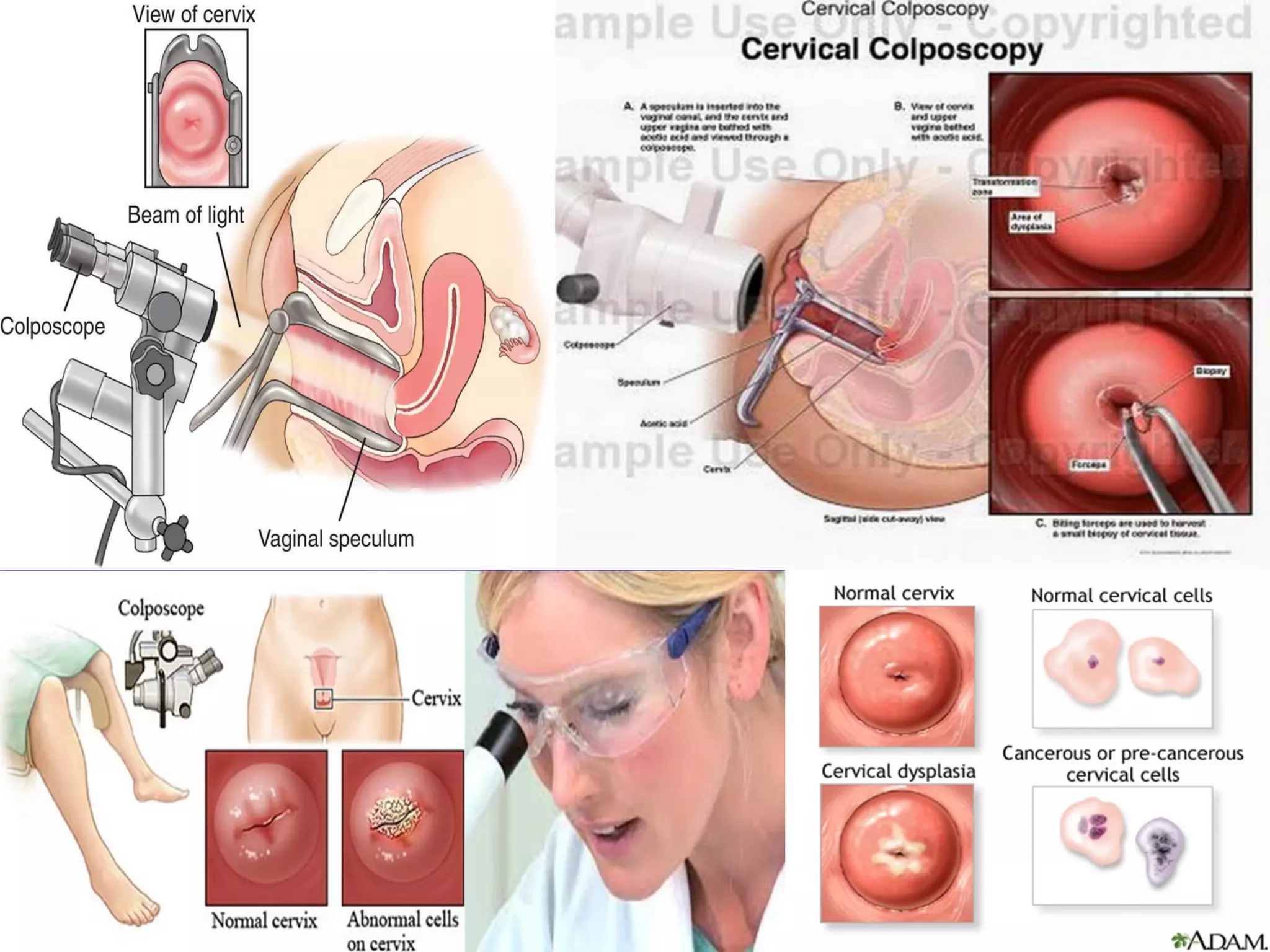
COLPOSCOPY
 Colposcopy was pioneered in Germany by Dr. Hinselmann during the
1920’s. In 30’s and 40’s breakthroughs were made regarding which
appearances were more likely to progress to invasive carcinoma.
Papanicolaou and Traut revolutionized screening of cervical cancer with
cytology. During the 60’s colposcopy made a resurgence. Today colposcopy
has been accepted as a diagnostic tool in evaluating abnormal pap.
 Indications:
 Epithelial cell abnormalities detected by cervical cytology.
 Suspicious cervical lesions.
 Vulvar or vaginal Neoplasia.
 History of in-utero DES exposure.
 Sexual partner of patients with genital tract Neoplasia.
 Oncogenic Human Papillomavirus.
 Unexplained vaginal bleeding.
 Post–coital bleeding.
Colposcopy:
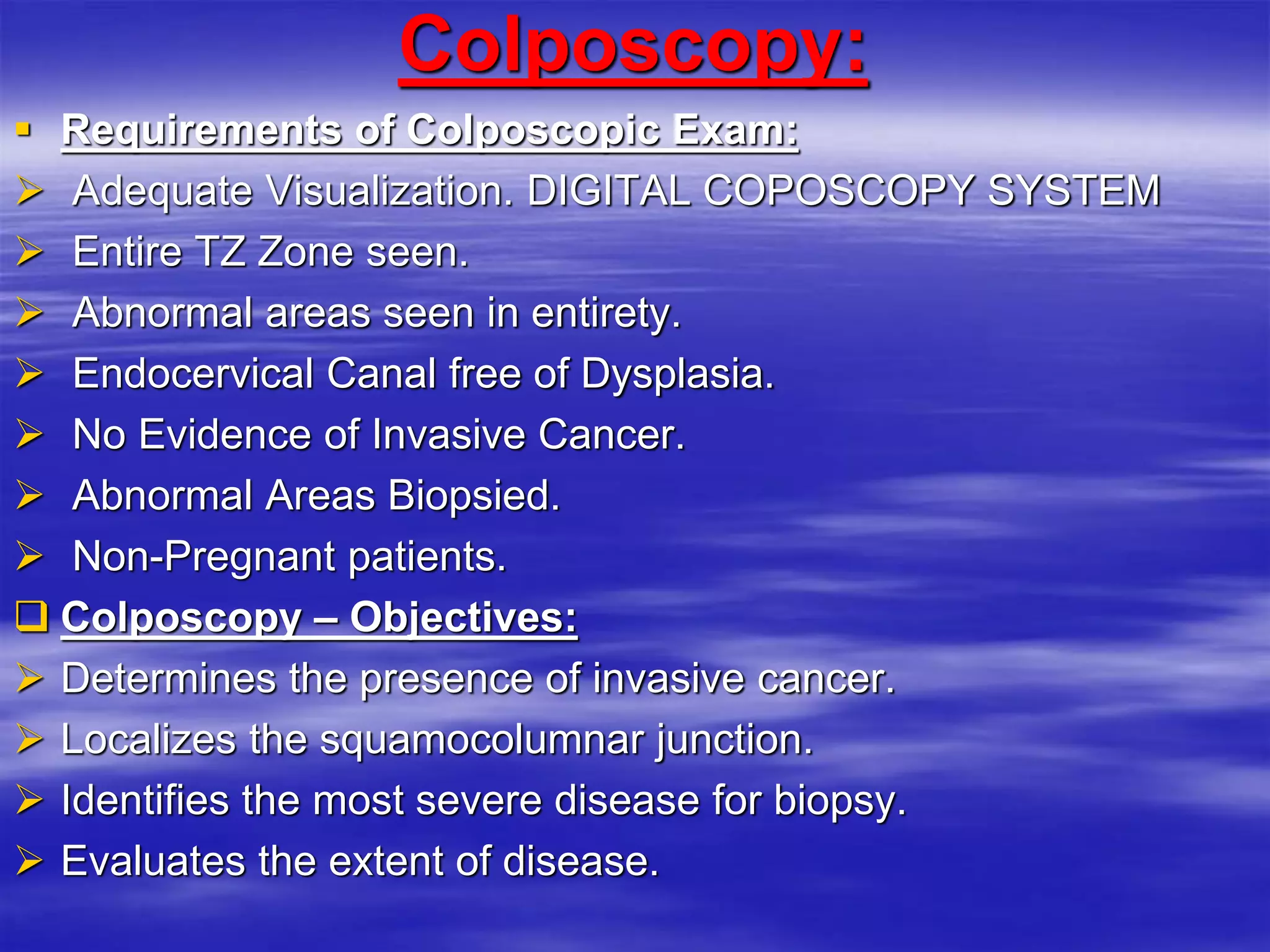
 Requirements of Colposcopic Exam:
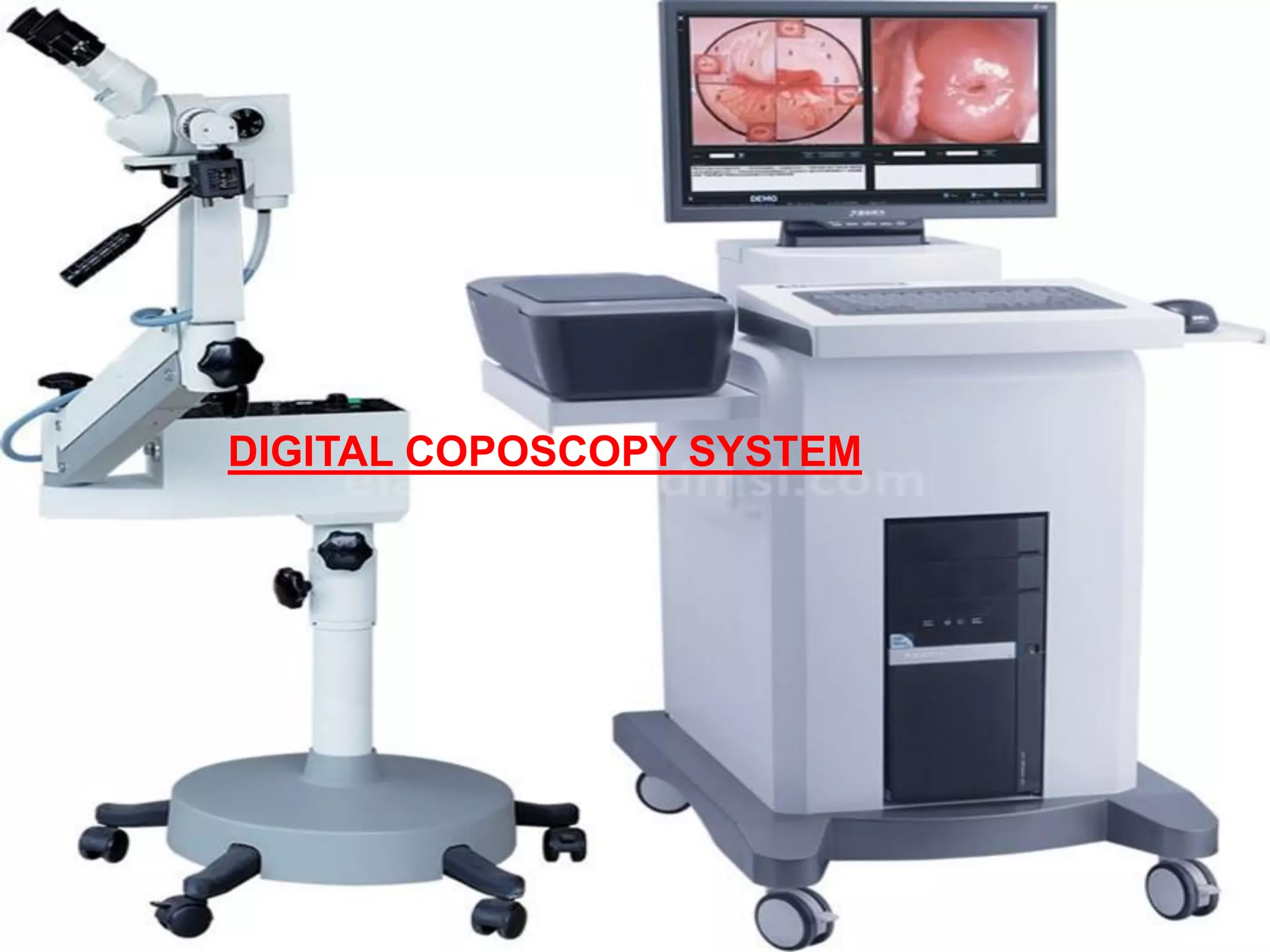
 Adequate Visualization. DIGITAL COPOSCOPY SYSTEM
 Entire TZ Zone seen.
 Abnormal areas seen in entirety.
 Endocervical Canal free of Dysplasia.
 No Evidence of Invasive Cancer.
 Abnormal Areas Biopsied.
 Non-Pregnant patients.
 Colposcopy – Objectives:
 Determines the presence of invasive cancer.
 Localizes the squamocolumnar junction.
 Identifies the most severe disease for biopsy.
 Evaluates the extent of disease.
Colposcopy:
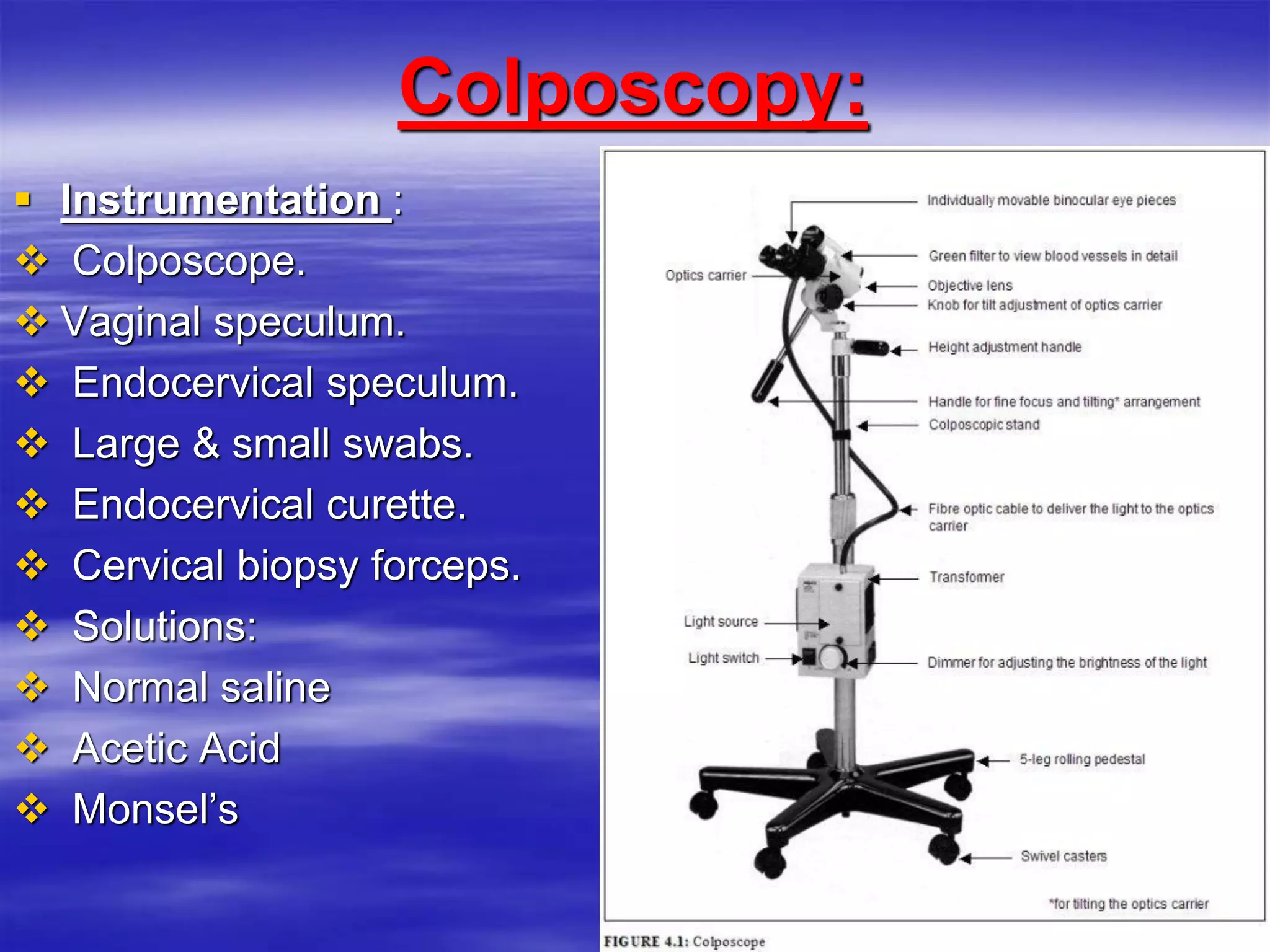
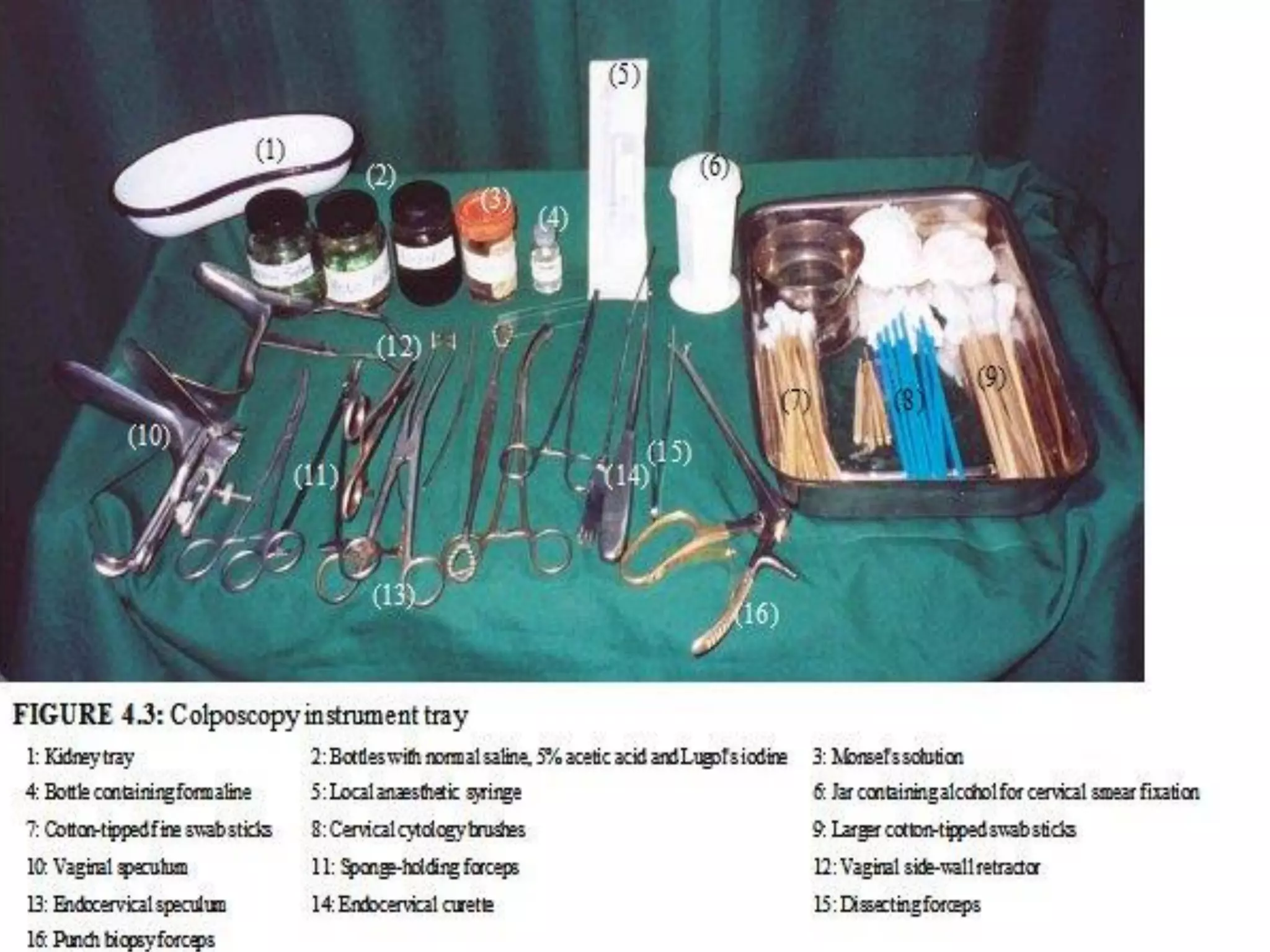
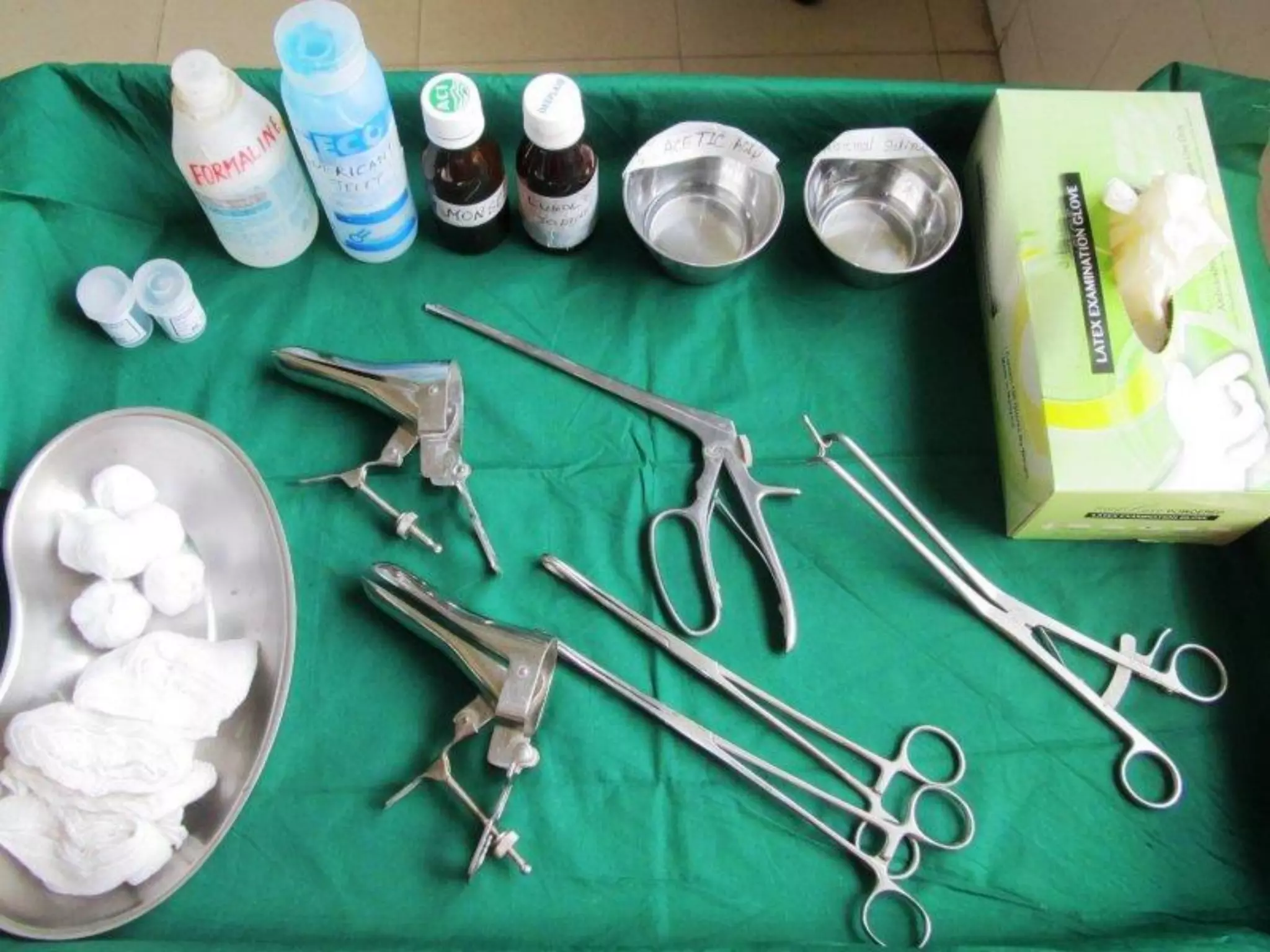
 Instrumentation :
 Colposcope.
 Vaginal speculum.
 Endocervical speculum.
 Large & small swabs.
 Endocervical curette.
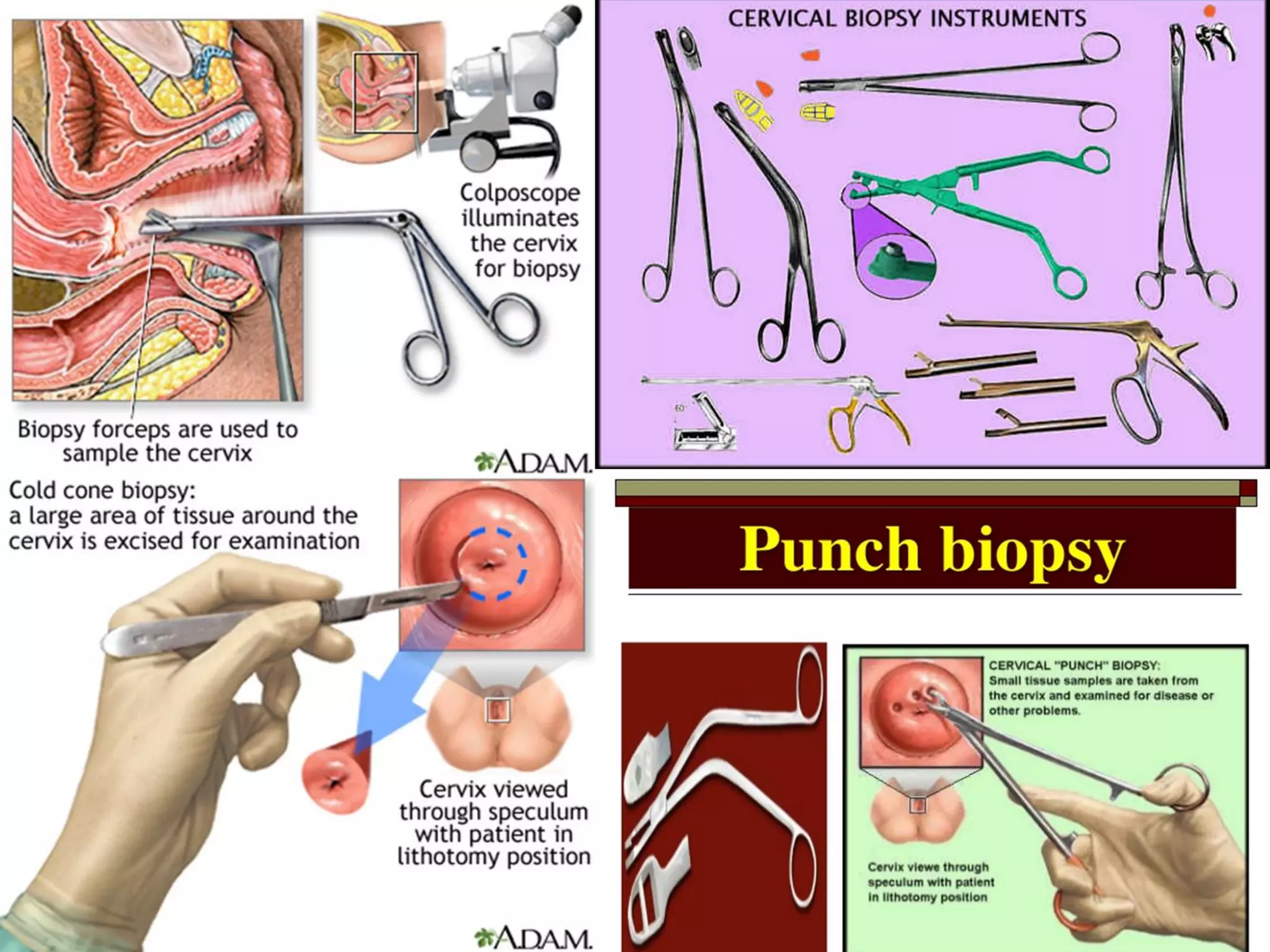
 Cervical biopsy forceps.
 Solutions:
 Normal saline
 Acetic Acid
 Monsel’s
DIGITAL COPOSCOPY SYSTEM
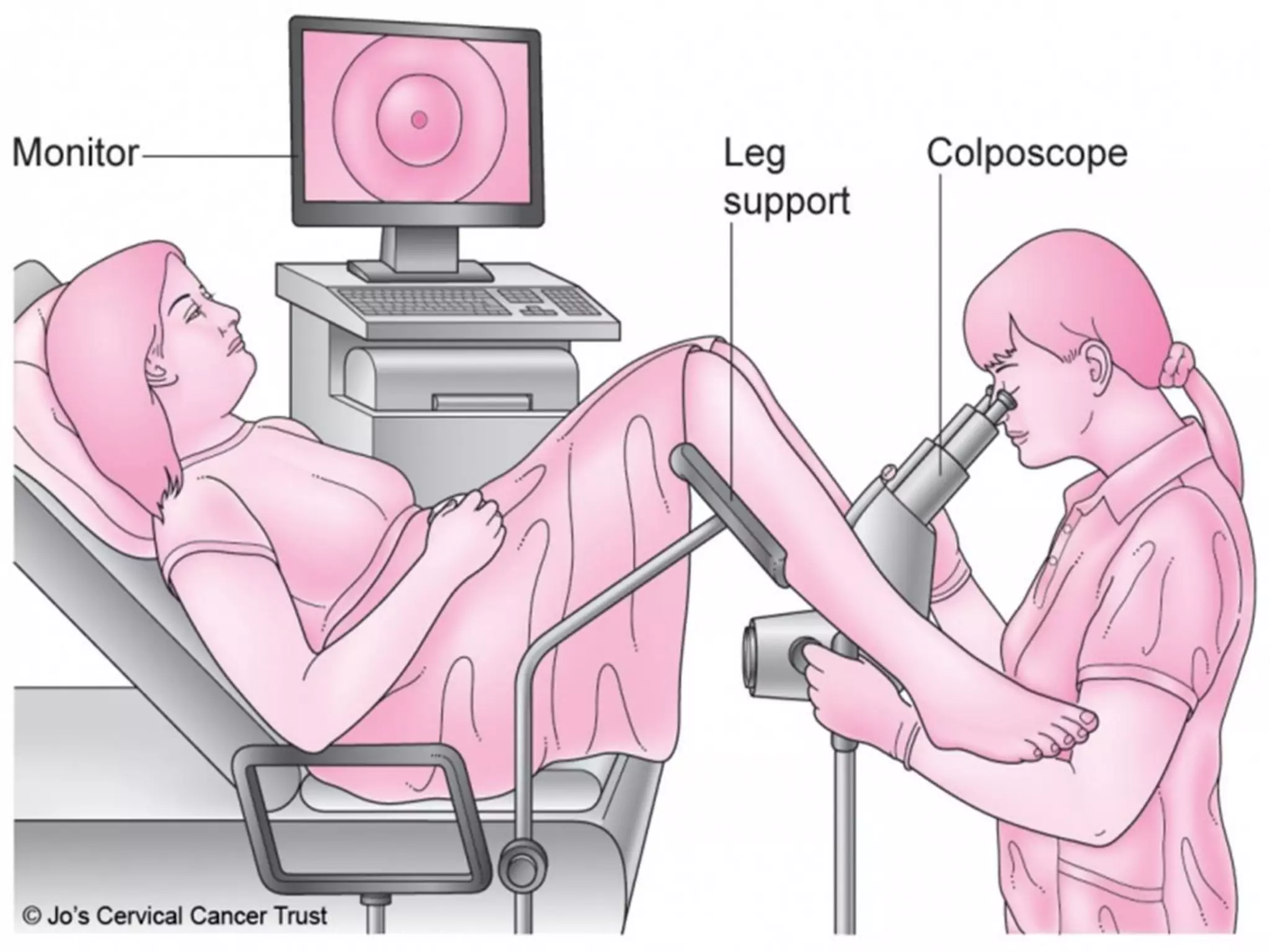
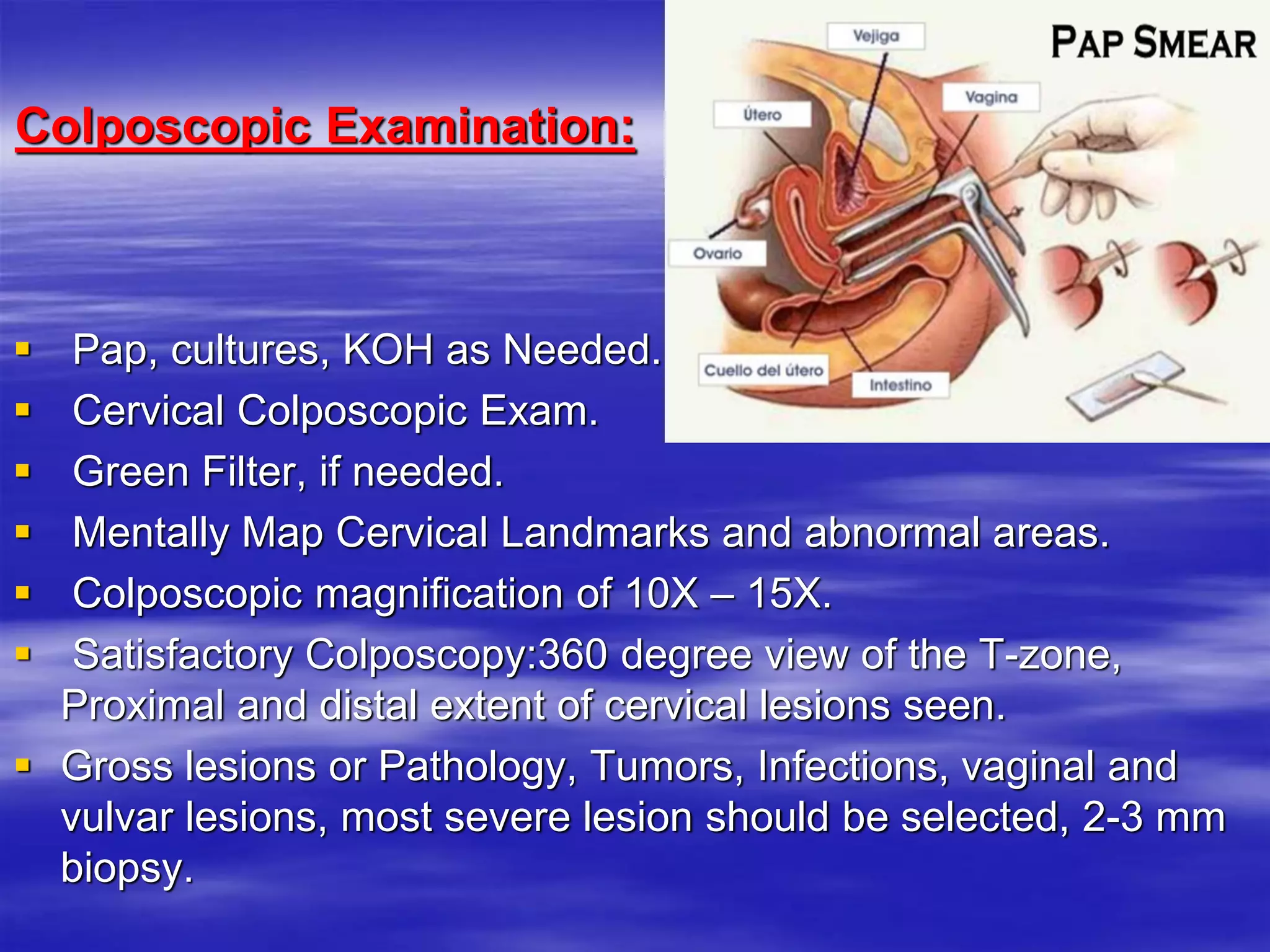
Colposcopic Examination:
 Pap, cultures, KOH as Needed.
 Cervical Colposcopic Exam.
 Green Filter, if needed.
 Mentally Map Cervical Landmarks and abnormal areas.
 Colposcopic magnification of 10X – 15X.
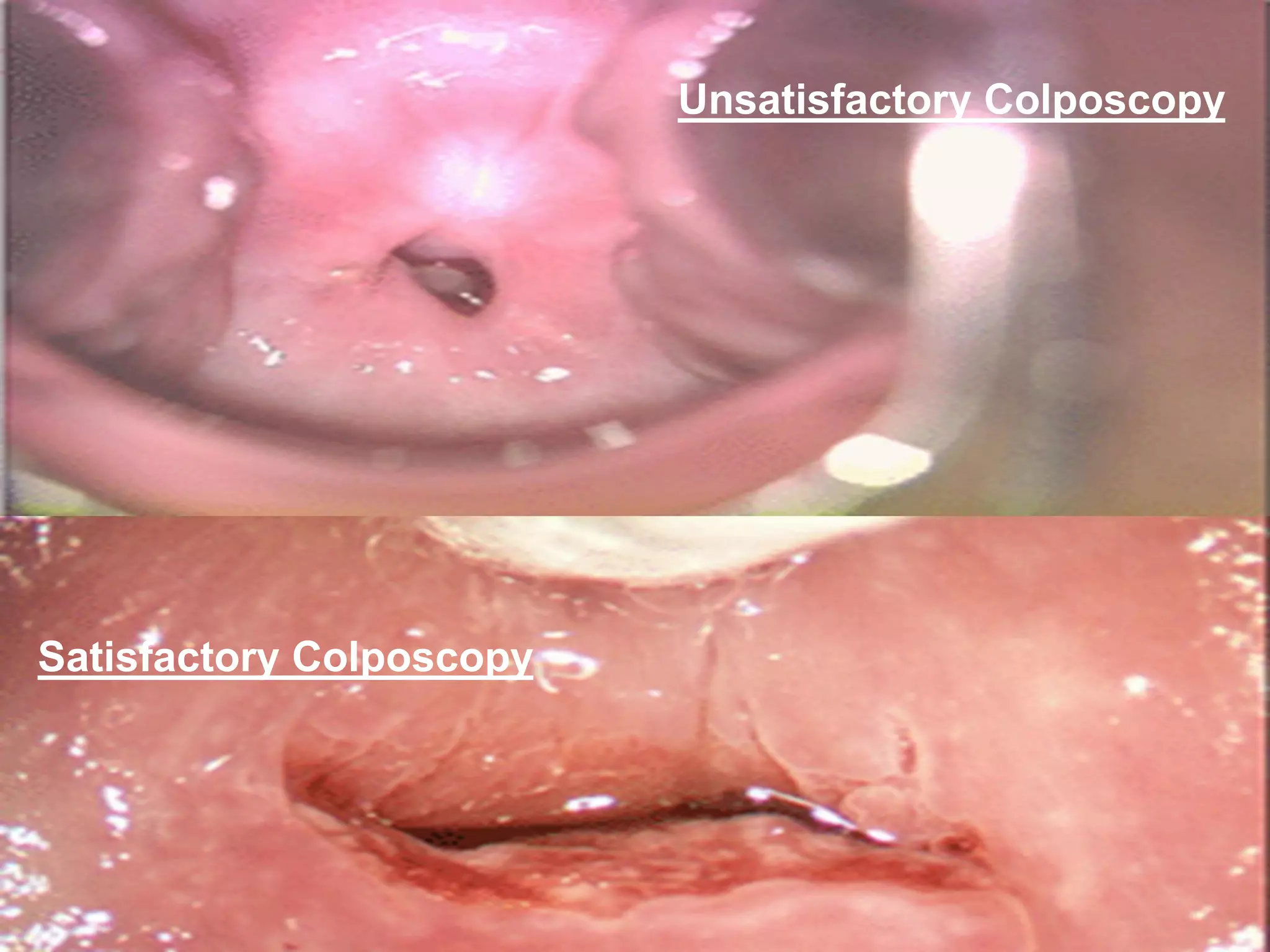
 Satisfactory Colposcopy:360 degree view of the T-zone,
Proximal and distal extent of cervical lesions seen.
 Gross lesions or Pathology, Tumors, Infections, vaginal and
vulvar lesions, most severe lesion should be selected, 2-3 mm
biopsy.
Unsatisfactory Colposcopy
Satisfactory Colposcopy
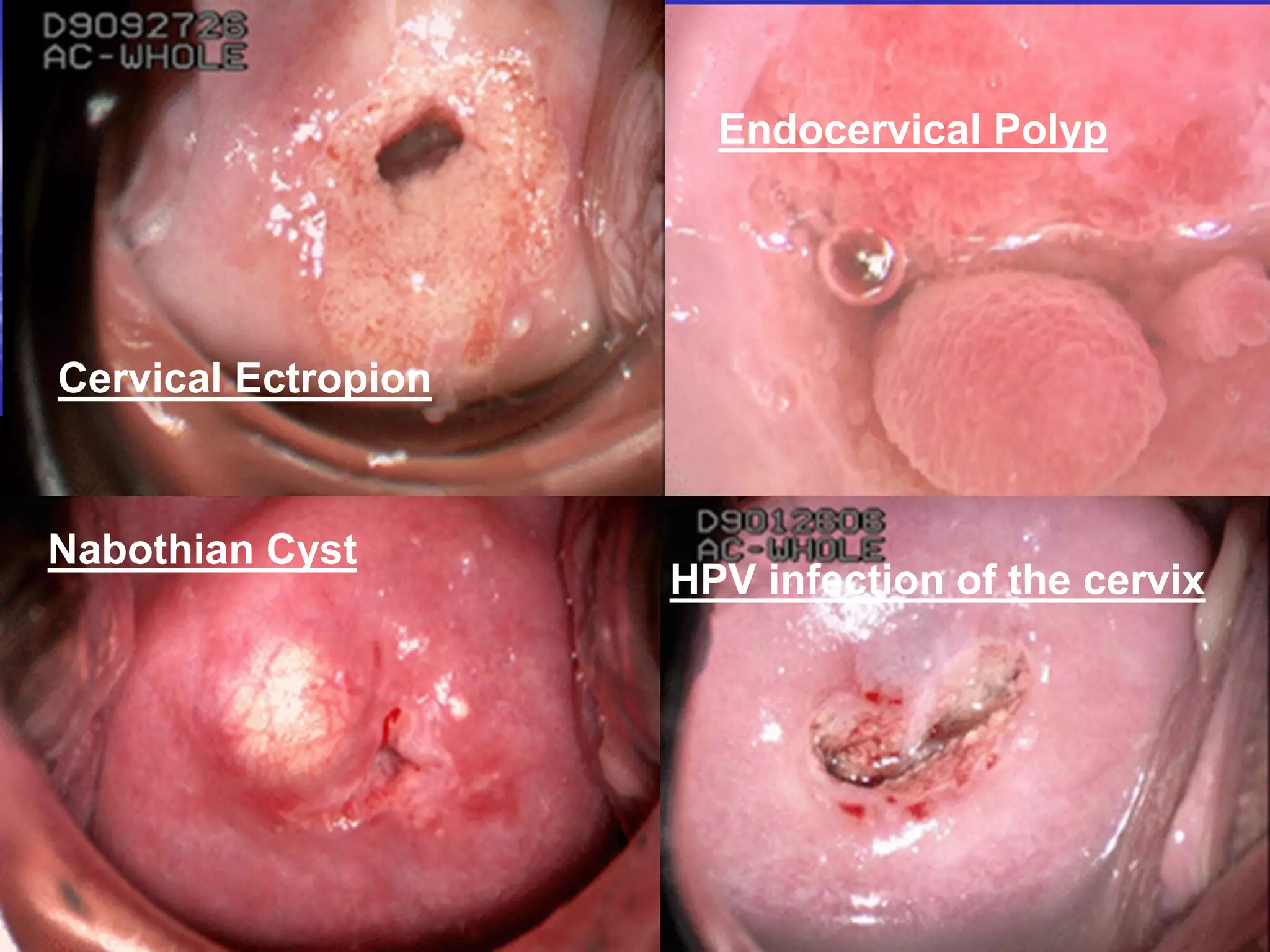
Cervical Ectropion
Nabothian Cyst
Endocervical Polyp
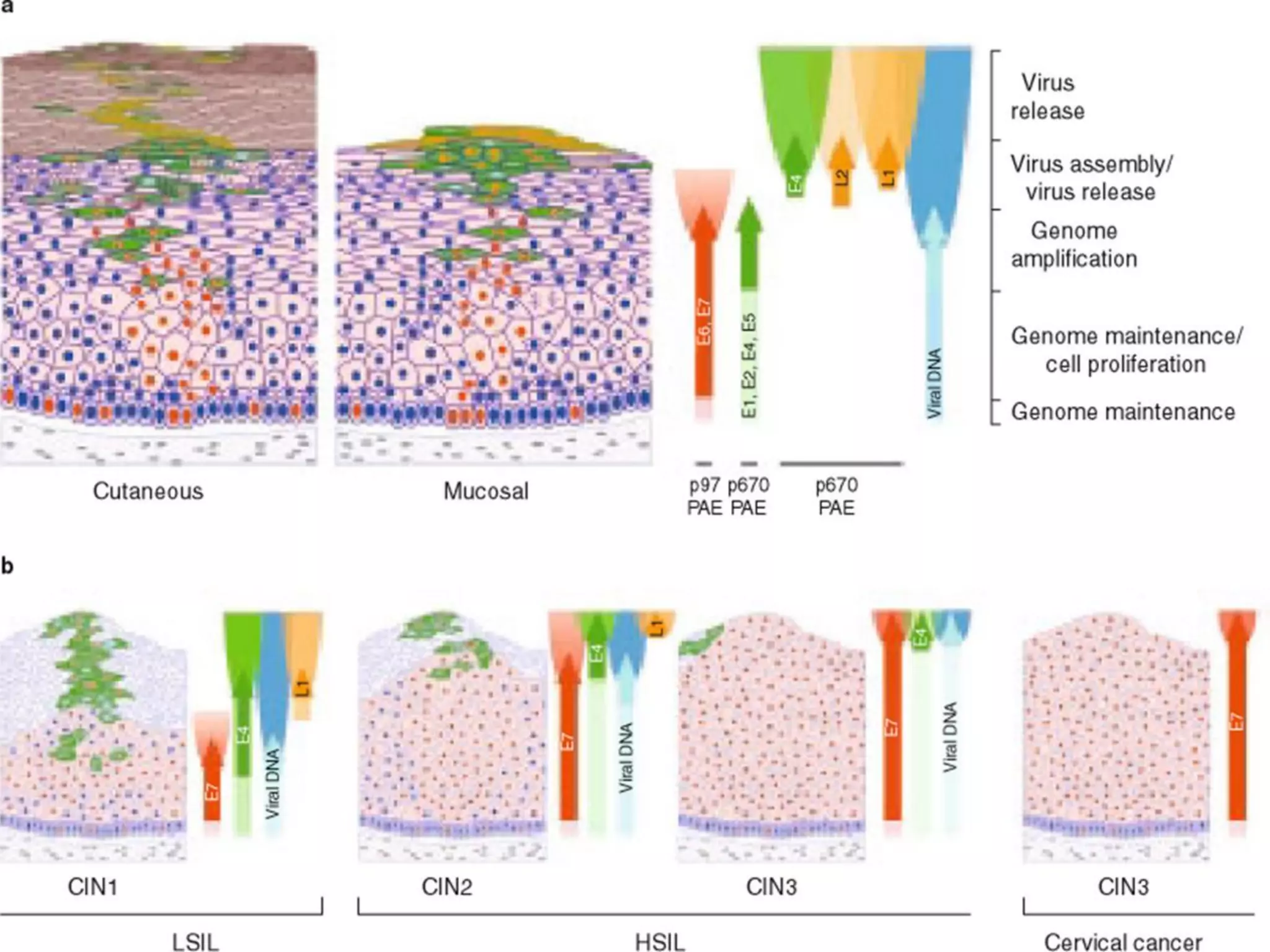
HPV infection of the cervix
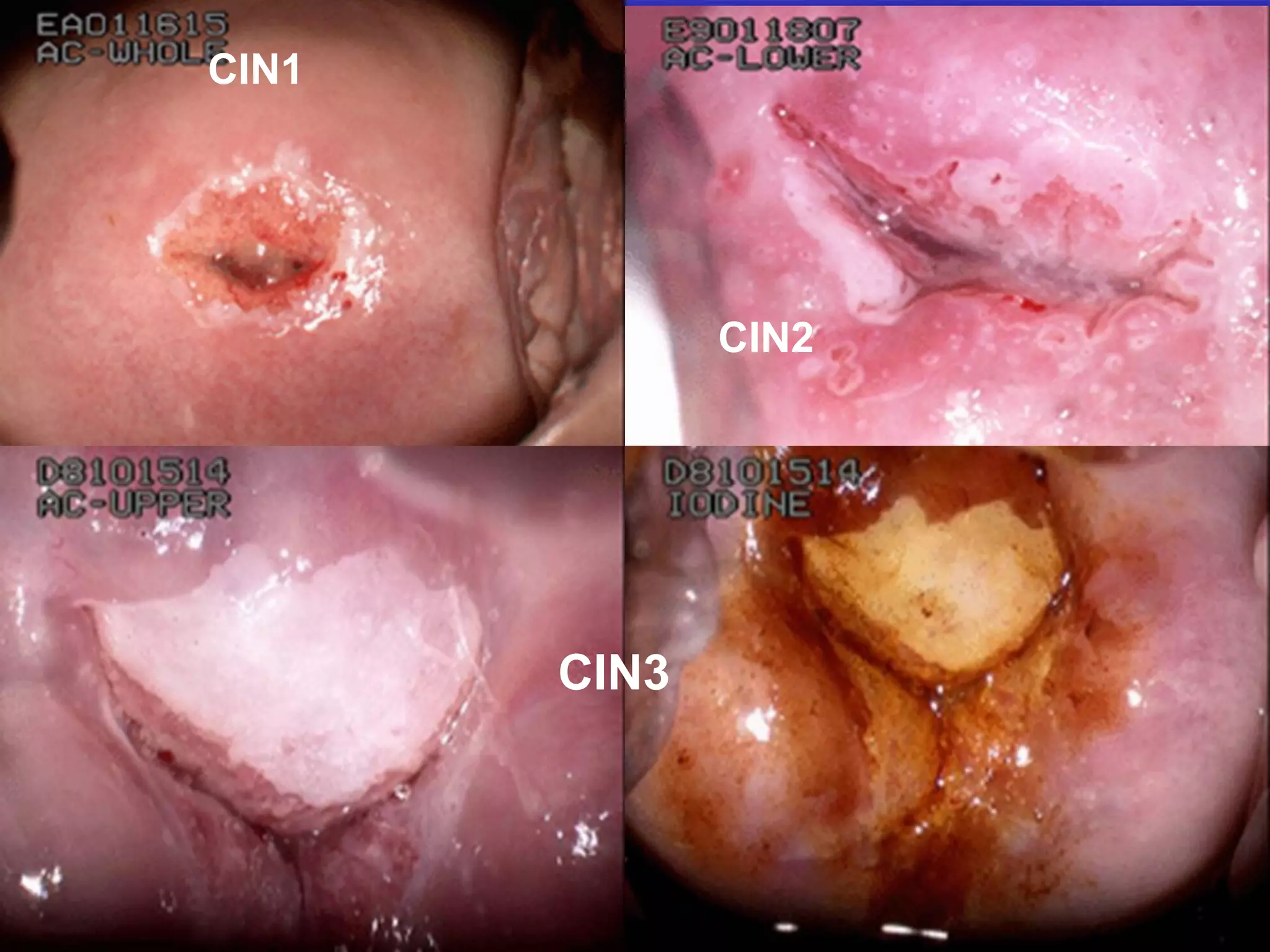
CIN1
CIN2
CIN3
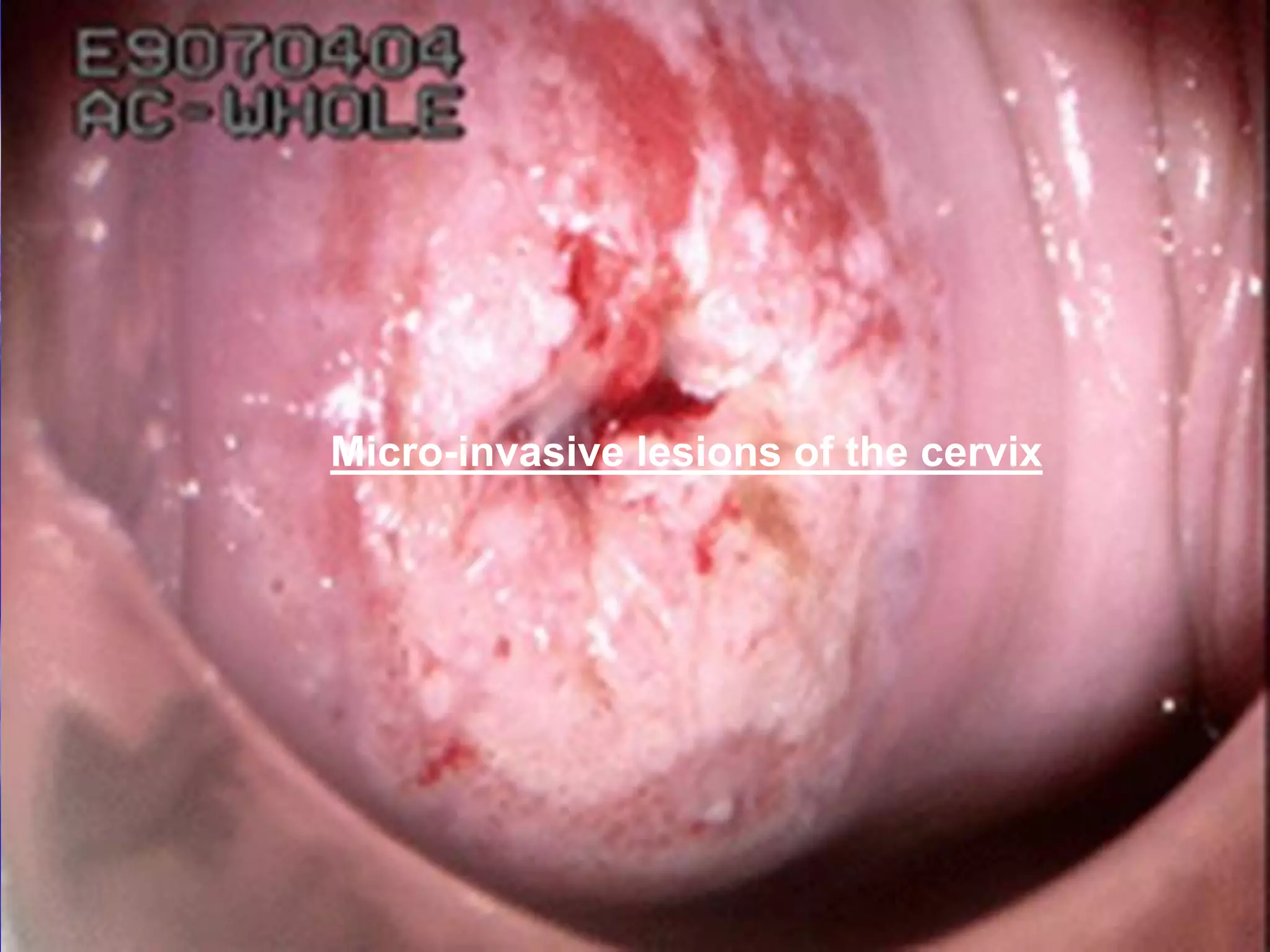
Micro-invasive lesions of the cervix
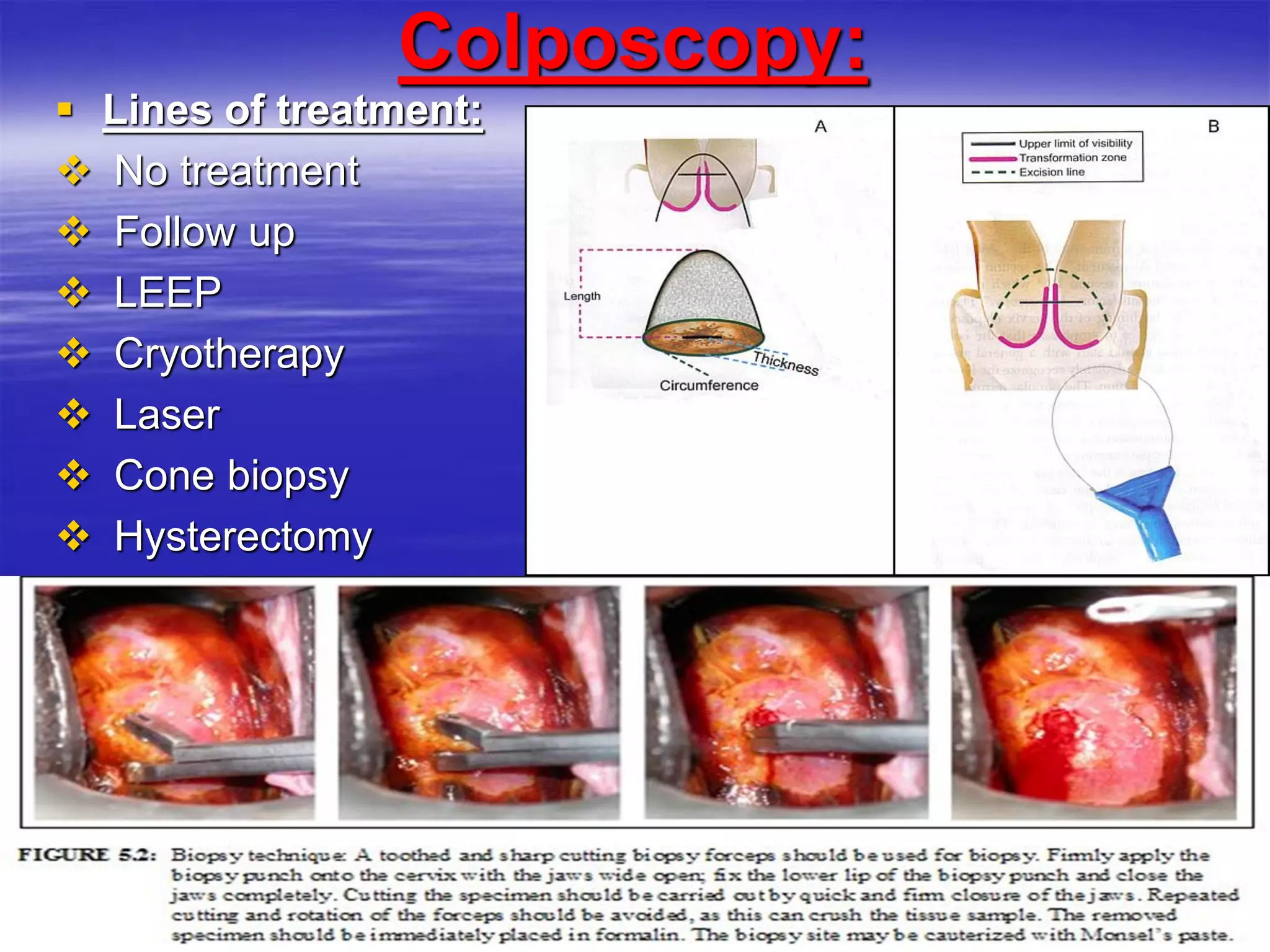
Colposcopy:
 Lines of treatment:
 No treatment
 Follow up
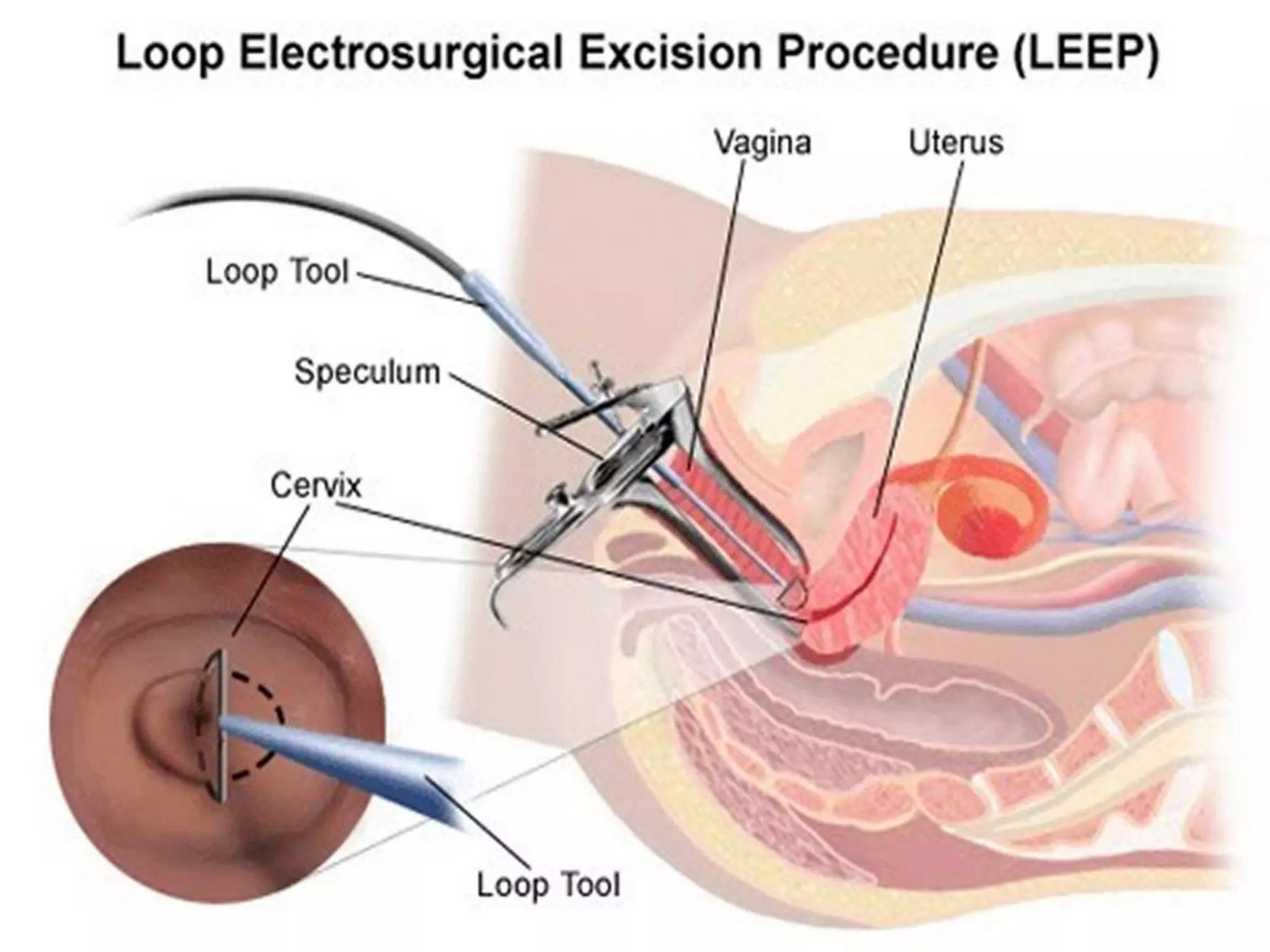
 LEEP
 Cryotherapy
 Laser
 Cone biopsy
 Hysterectomy
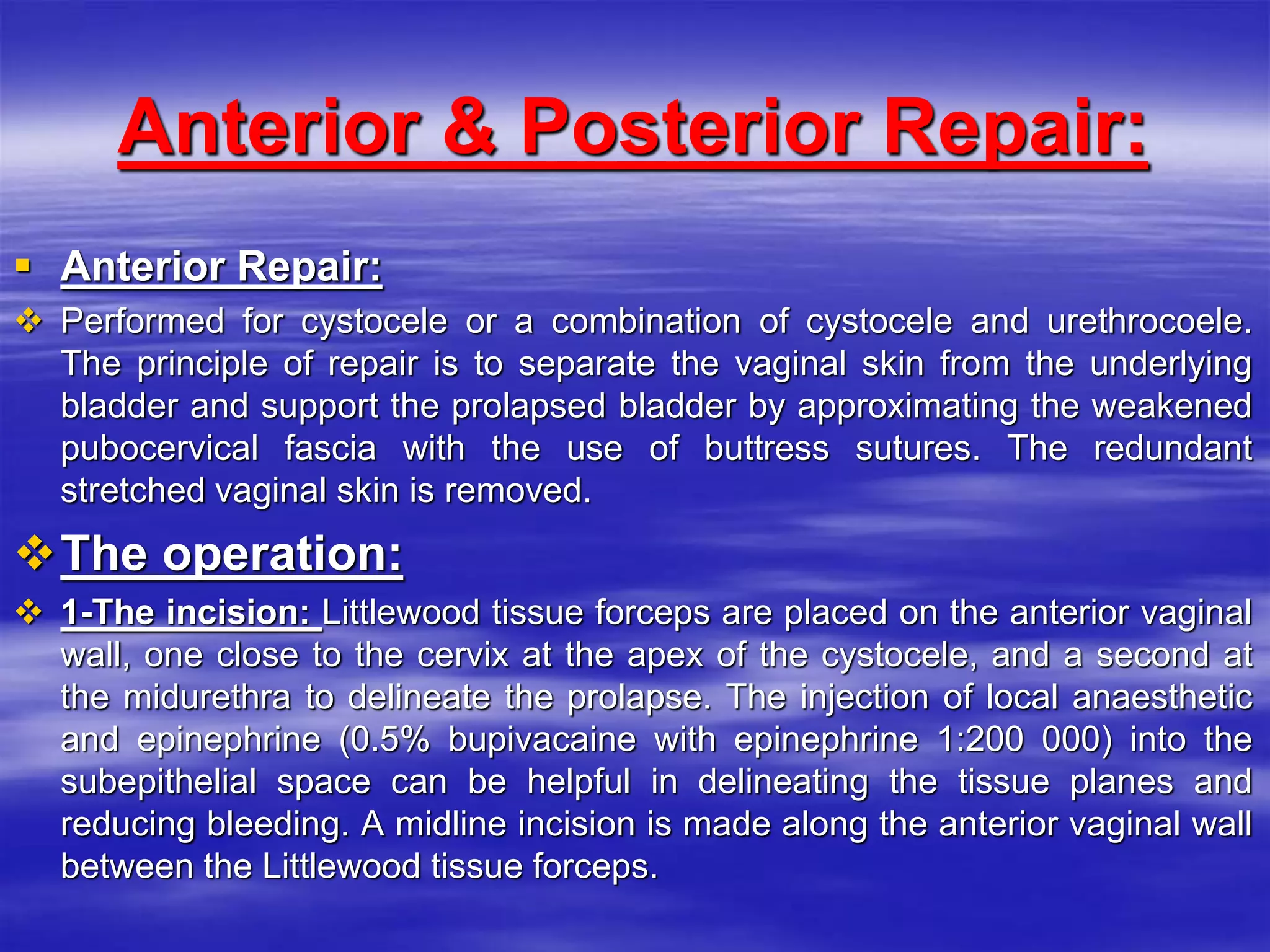
Anterior & Posterior Repair:
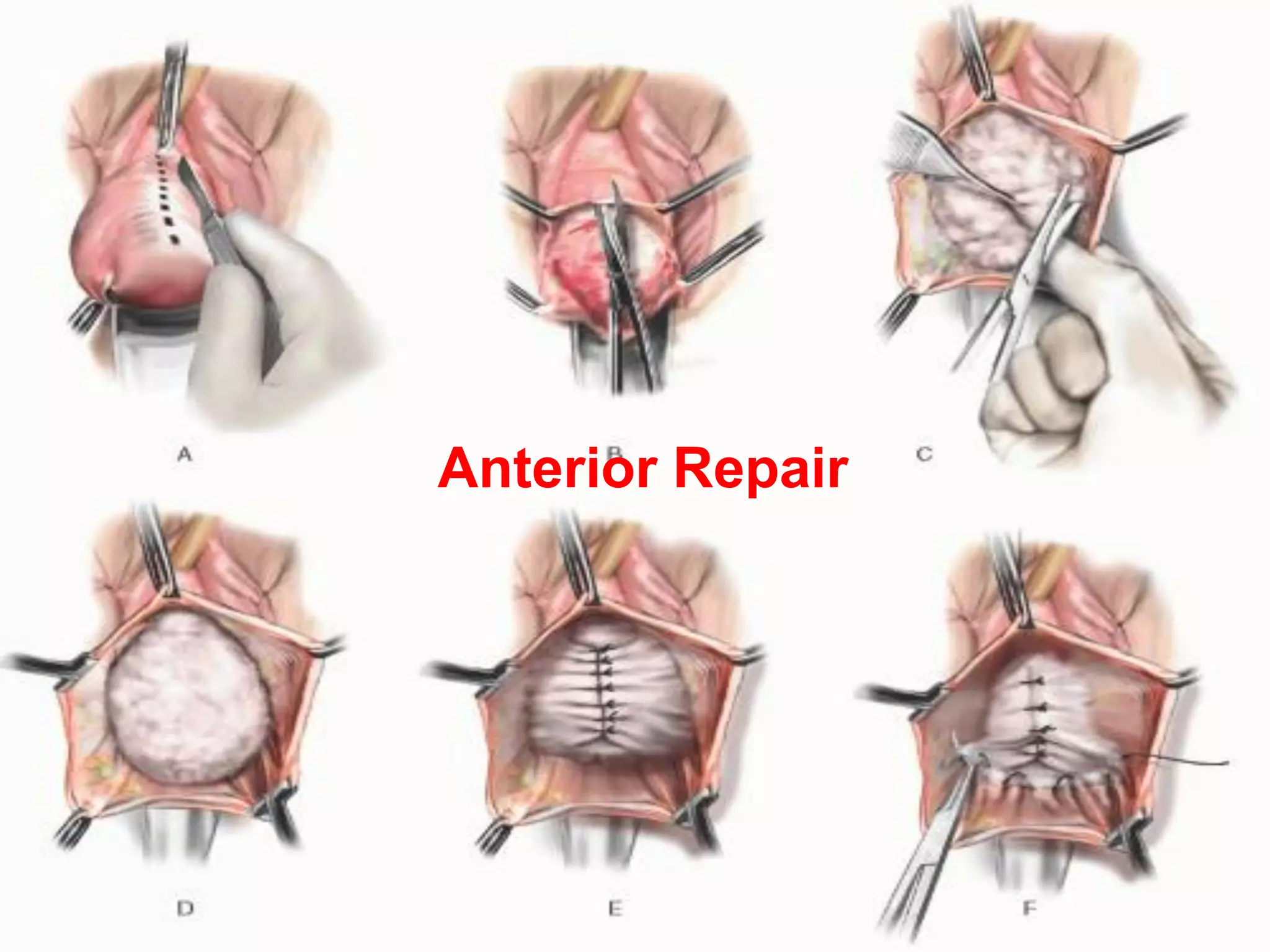
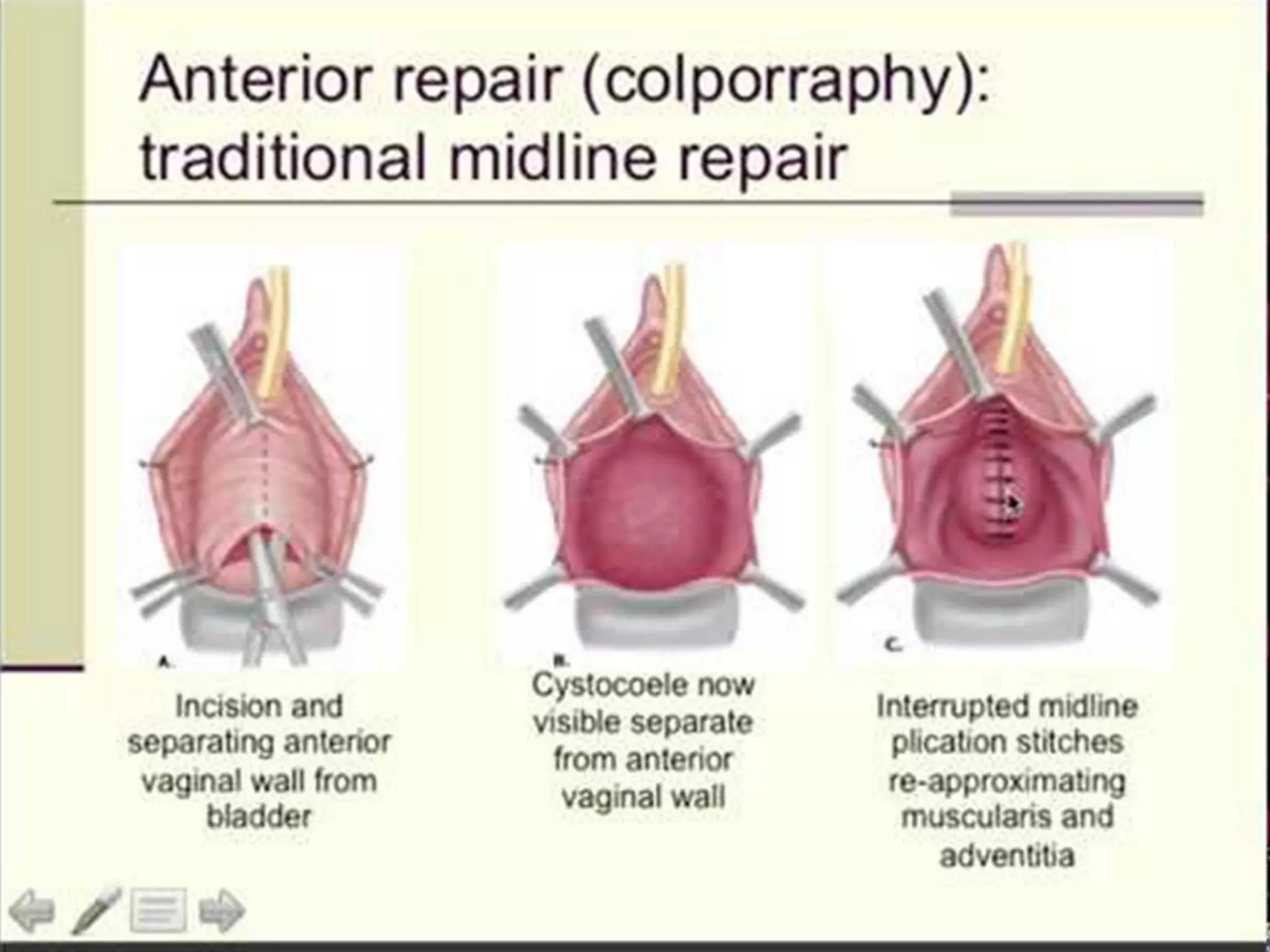
 Anterior Repair:
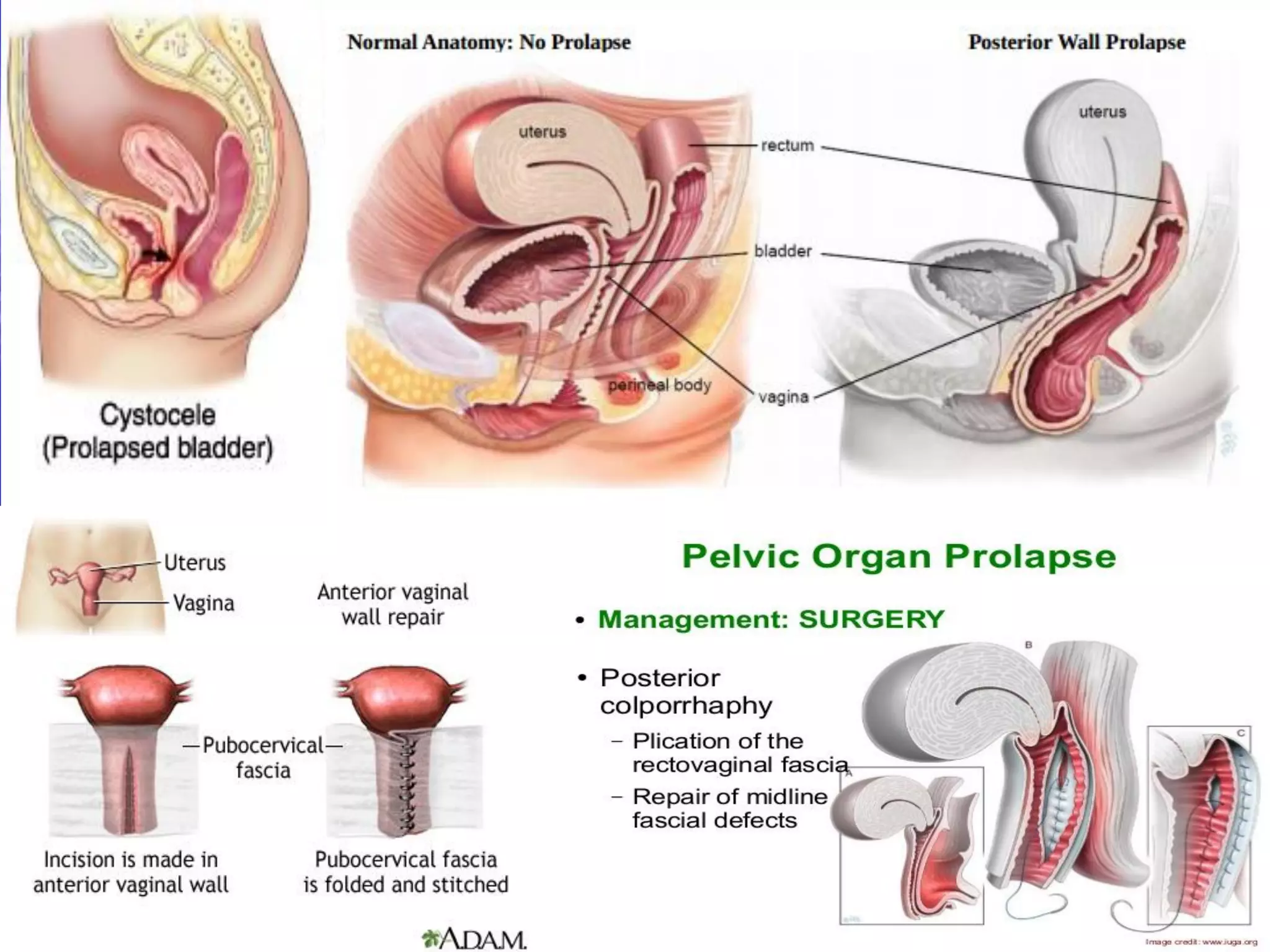
 Performed for cystocele or a combination of cystocele and urethrocoele.
The principle of repair is to separate the vaginal skin from the underlying
bladder and support the prolapsed bladder by approximating the weakened
pubocervical fascia with the use of buttress sutures. The redundant
stretched vaginal skin is removed.
The operation:
 1-The incision: Littlewood tissue forceps are placed on the anterior vaginal
wall, one close to the cervix at the apex of the cystocele, and a second at
the midurethra to delineate the prolapse. The injection of local anaesthetic
and epinephrine (0.5% bupivacaine with epinephrine 1:200 000) into the
subepithelial space can be helpful in delineating the tissue planes and
reducing bleeding. A midline incision is made along the anterior vaginal wall
between the Littlewood tissue forceps.
Anterior & Posterior Repair:
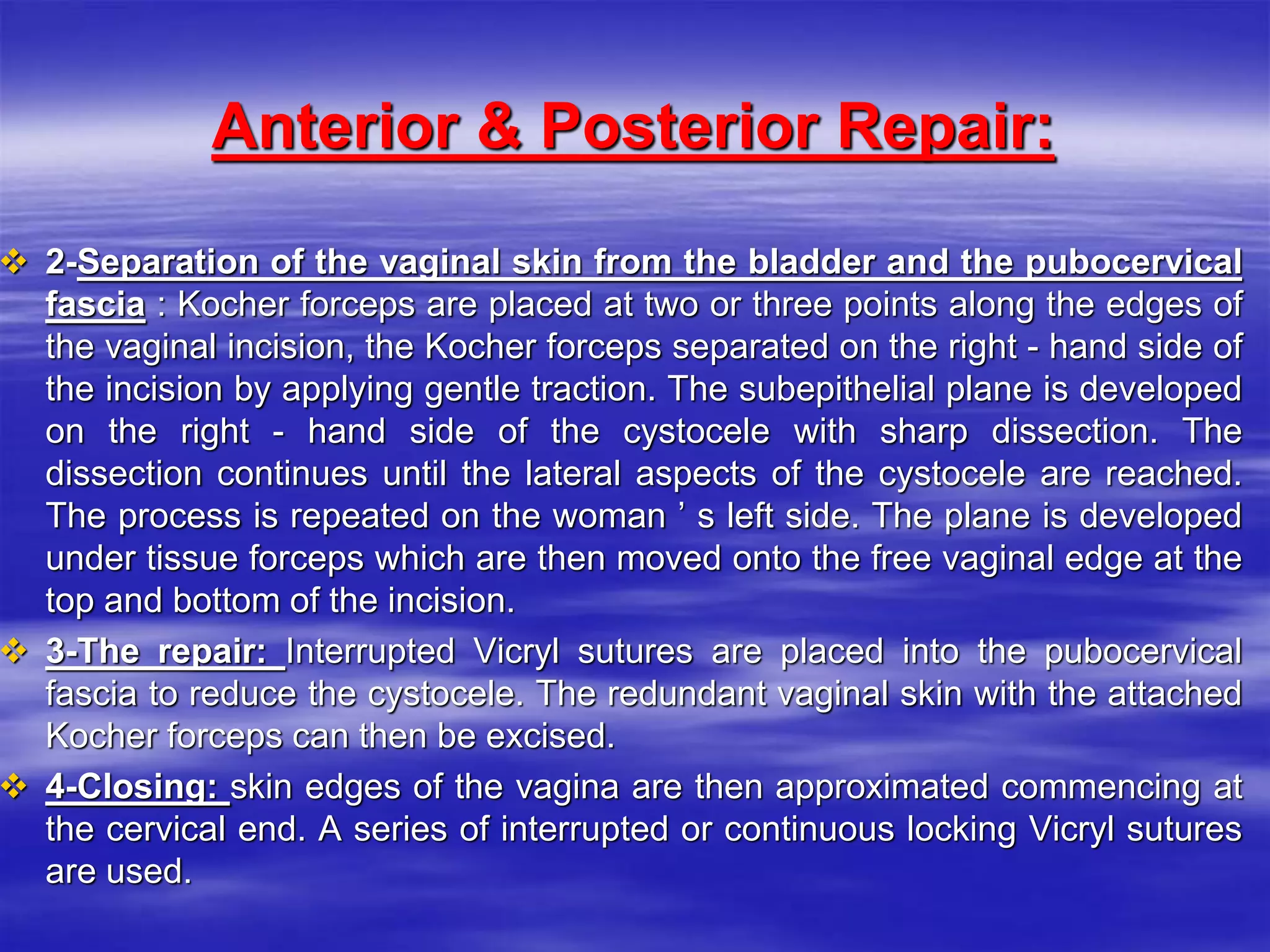
 2-Separation of the vaginal skin from the bladder and the pubocervical
fascia : Kocher forceps are placed at two or three points along the edges of
the vaginal incision, the Kocher forceps separated on the right - hand side of
the incision by applying gentle traction. The subepithelial plane is developed
on the right - hand side of the cystocele with sharp dissection. The
dissection continues until the lateral aspects of the cystocele are reached.
The process is repeated on the woman ’ s left side. The plane is developed
under tissue forceps which are then moved onto the free vaginal edge at the
top and bottom of the incision.
 3-The repair: Interrupted Vicryl sutures are placed into the pubocervical
fascia to reduce the cystocele. The redundant vaginal skin with the attached
Kocher forceps can then be excised.
 4-Closing: skin edges of the vagina are then approximated commencing at
the cervical end. A series of interrupted or continuous locking Vicryl sutures
are used.
Anterior & Posterior Repair:
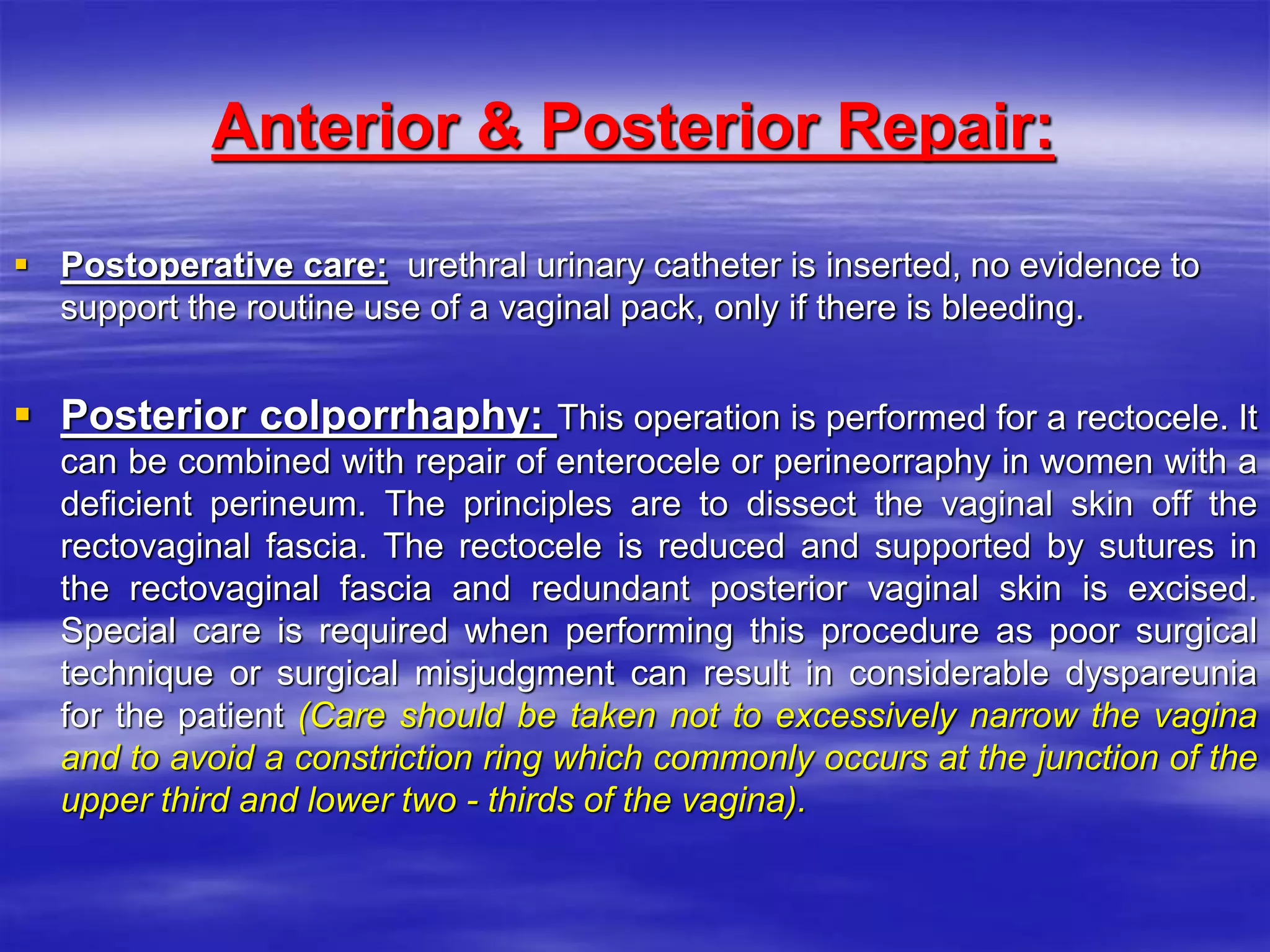
 Postoperative care: urethral urinary catheter is inserted, no evidence to
support the routine use of a vaginal pack, only if there is bleeding.
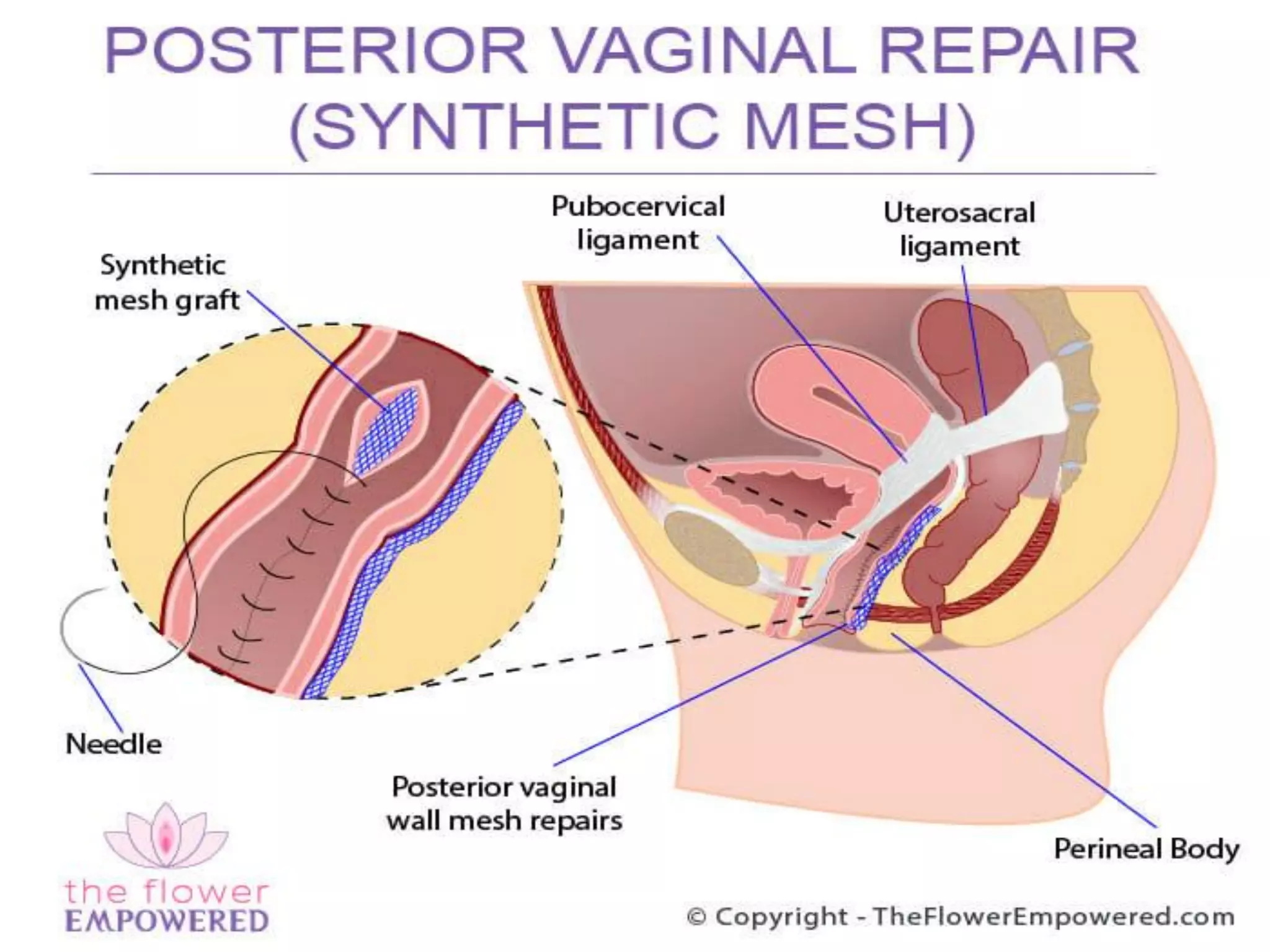
 Posterior colporrhaphy: This operation is performed for a rectocele. It
can be combined with repair of enterocele or perineorraphy in women with a
deficient perineum. The principles are to dissect the vaginal skin off the
rectovaginal fascia. The rectocele is reduced and supported by sutures in
the rectovaginal fascia and redundant posterior vaginal skin is excised.
Special care is required when performing this procedure as poor surgical
technique or surgical misjudgment can result in considerable dyspareunia
for the patient (Care should be taken not to excessively narrow the vagina
and to avoid a constriction ring which commonly occurs at the junction of the
upper third and lower two - thirds of the vagina).
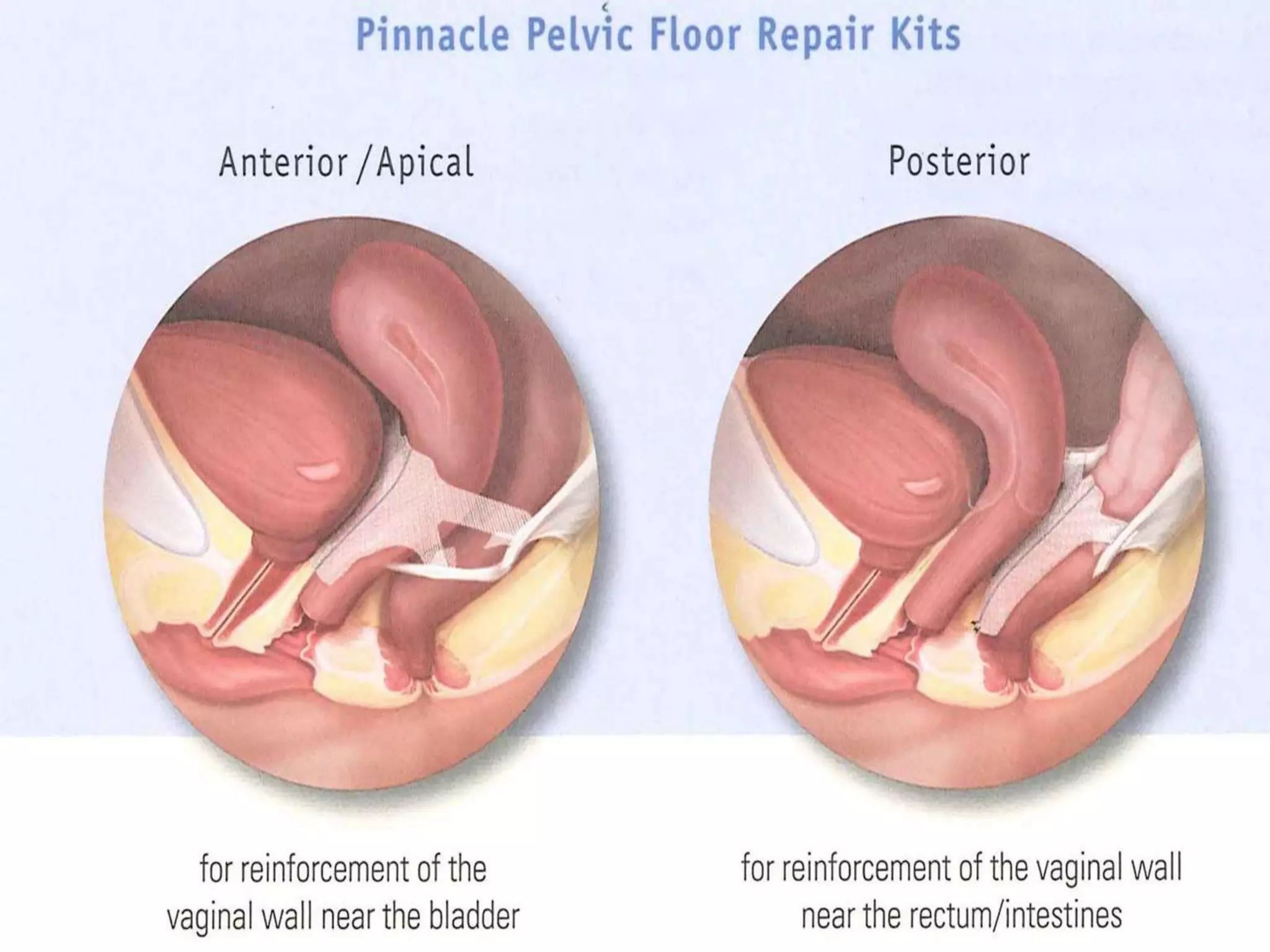
Anterior Repair
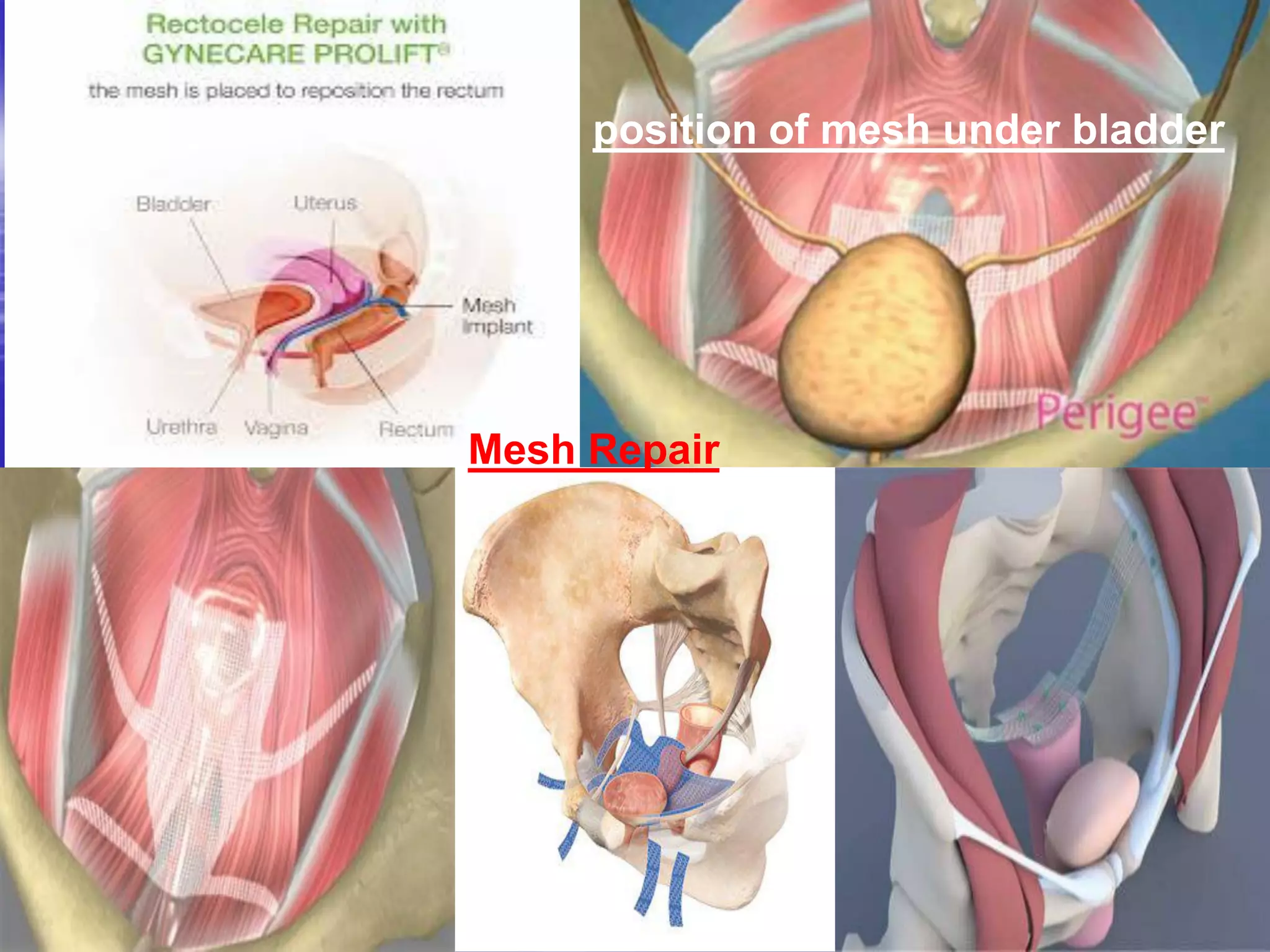
Mesh Repair
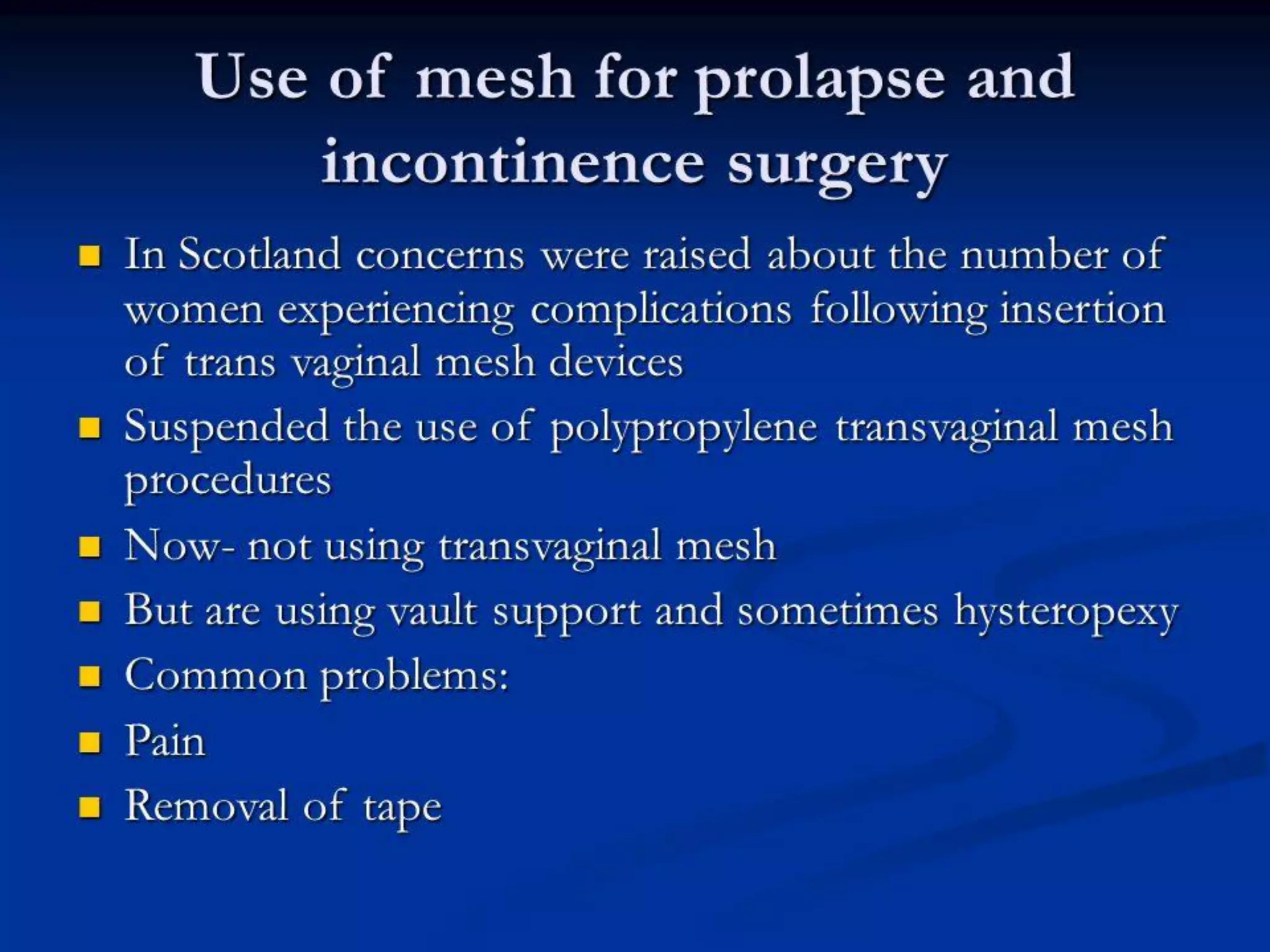
position of mesh under bladder
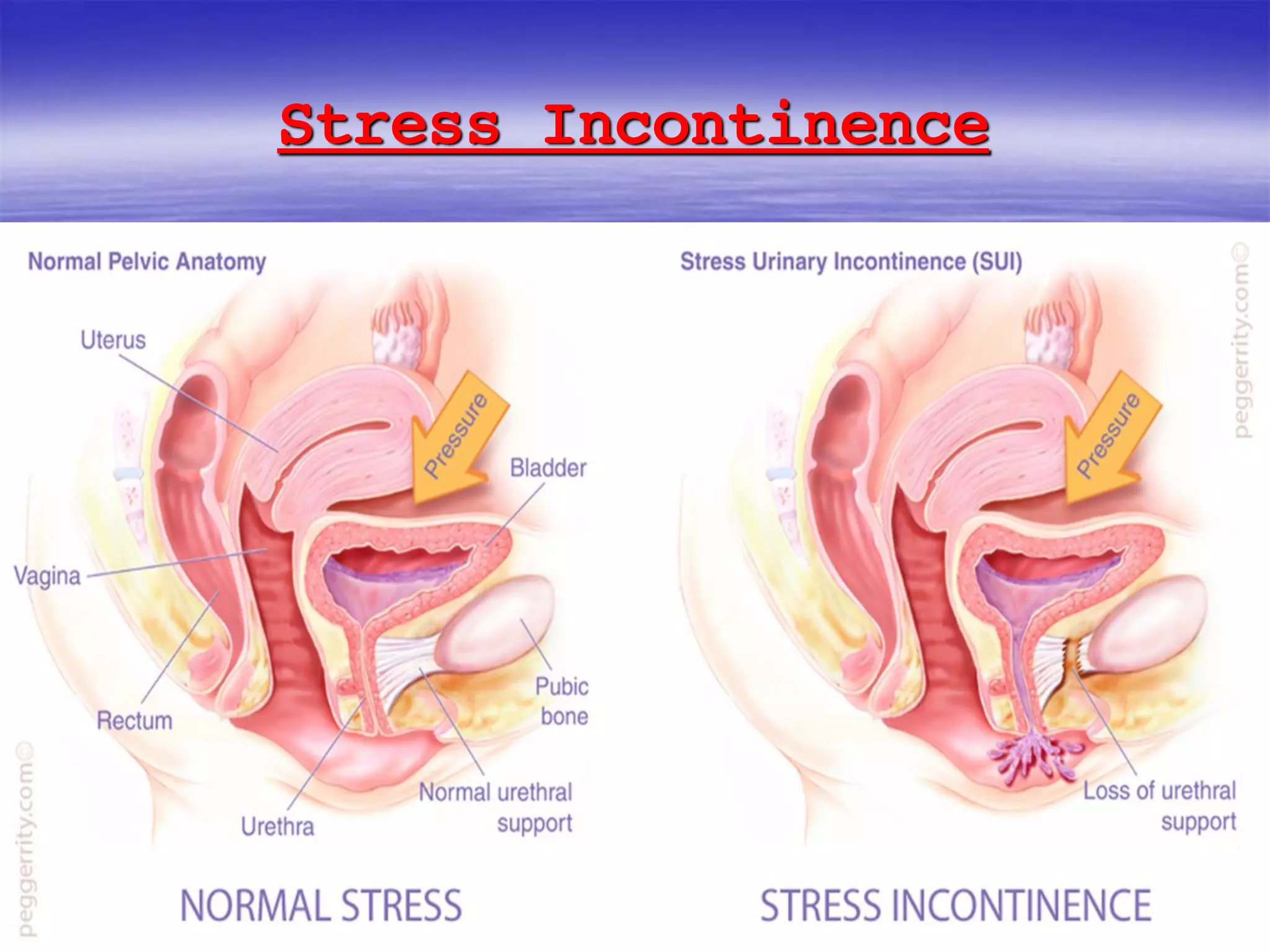
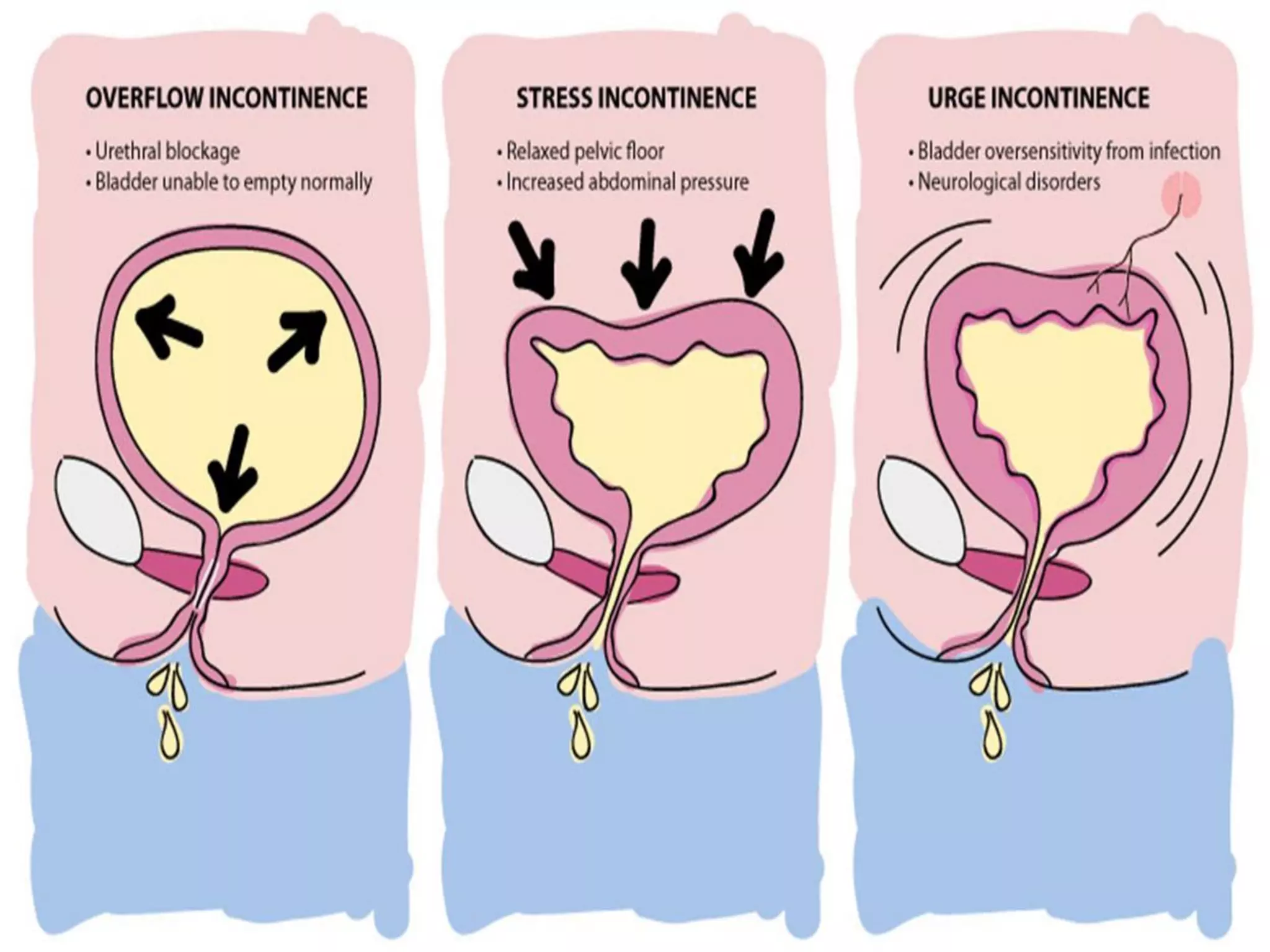
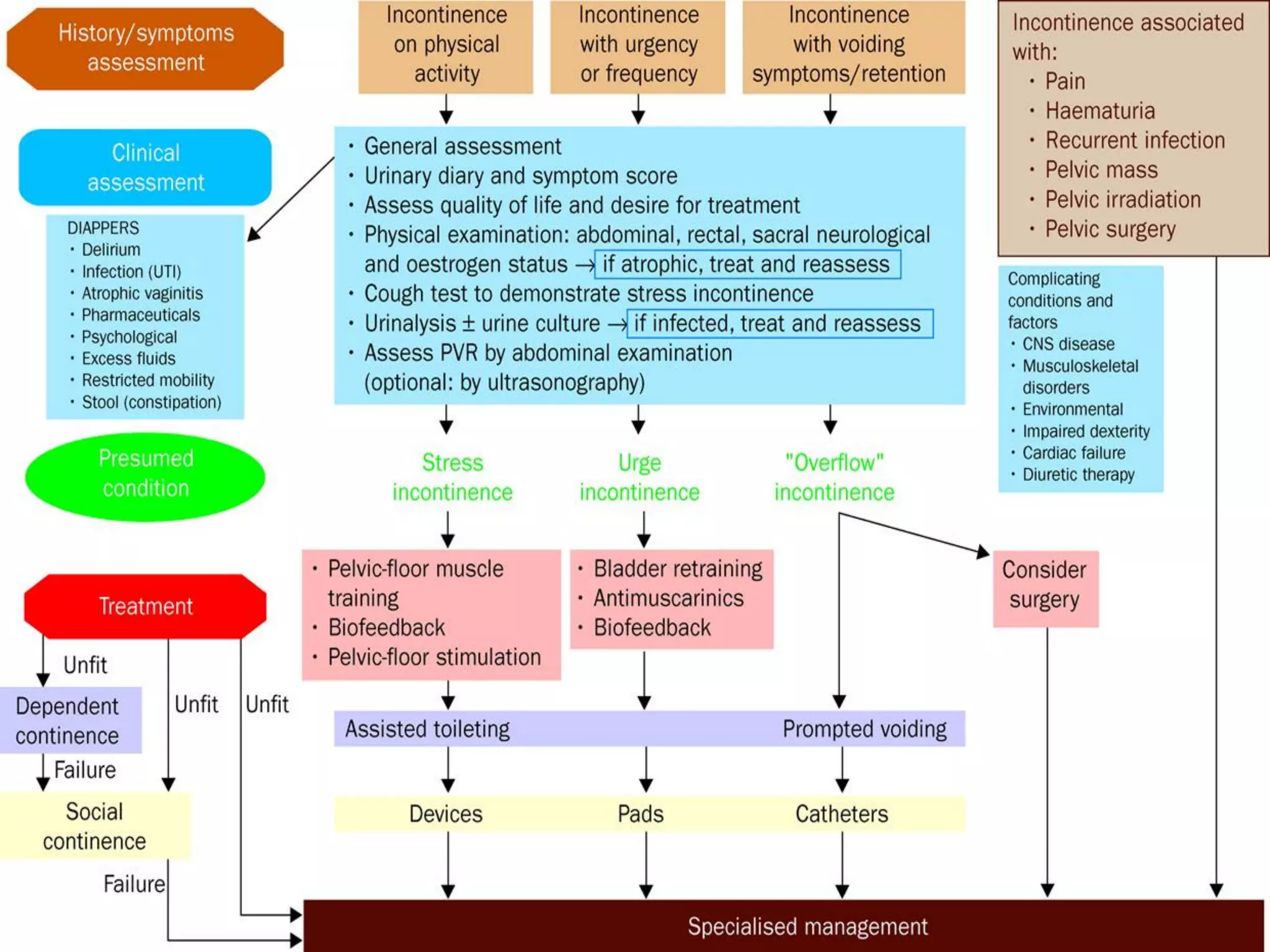
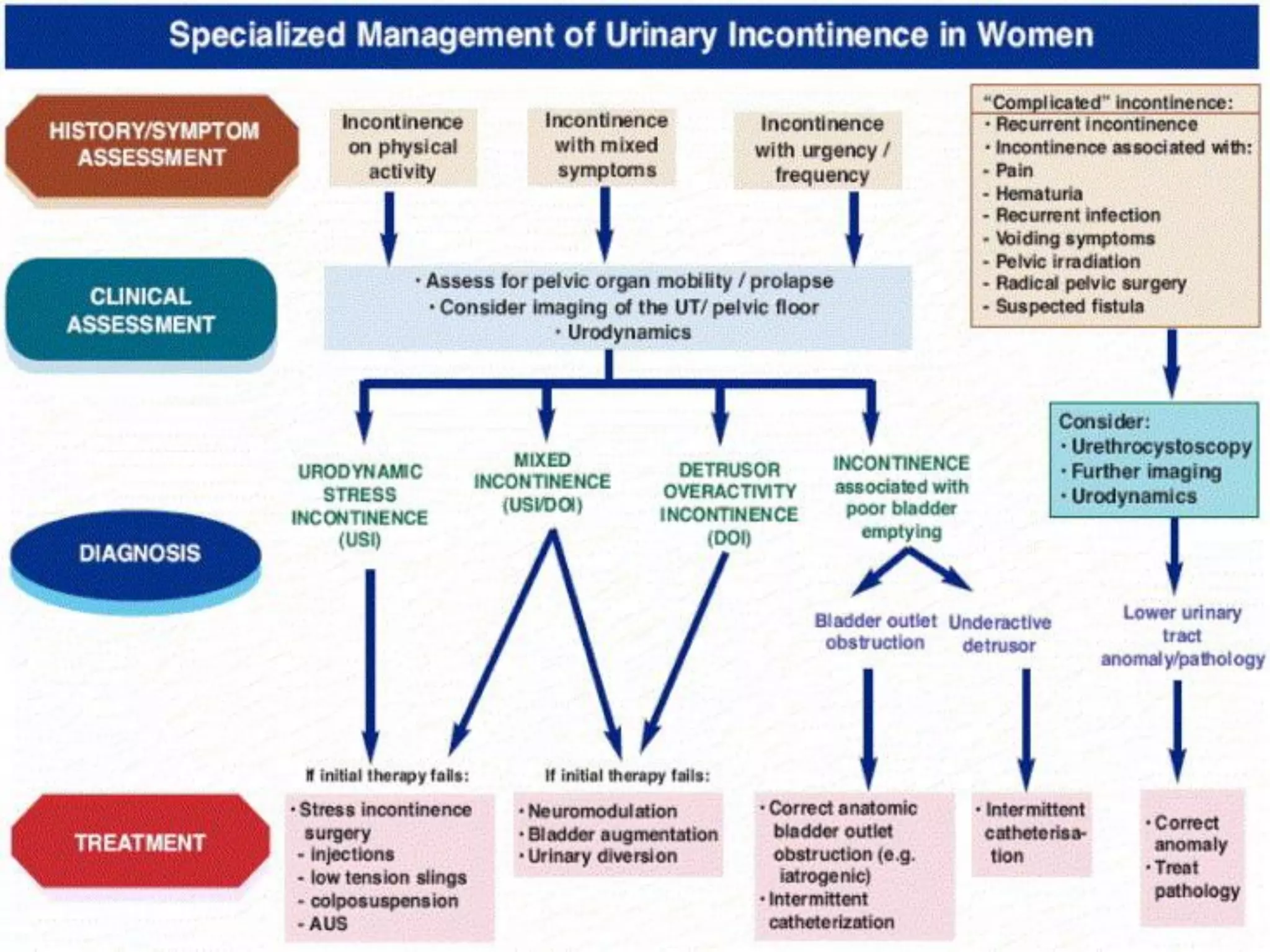
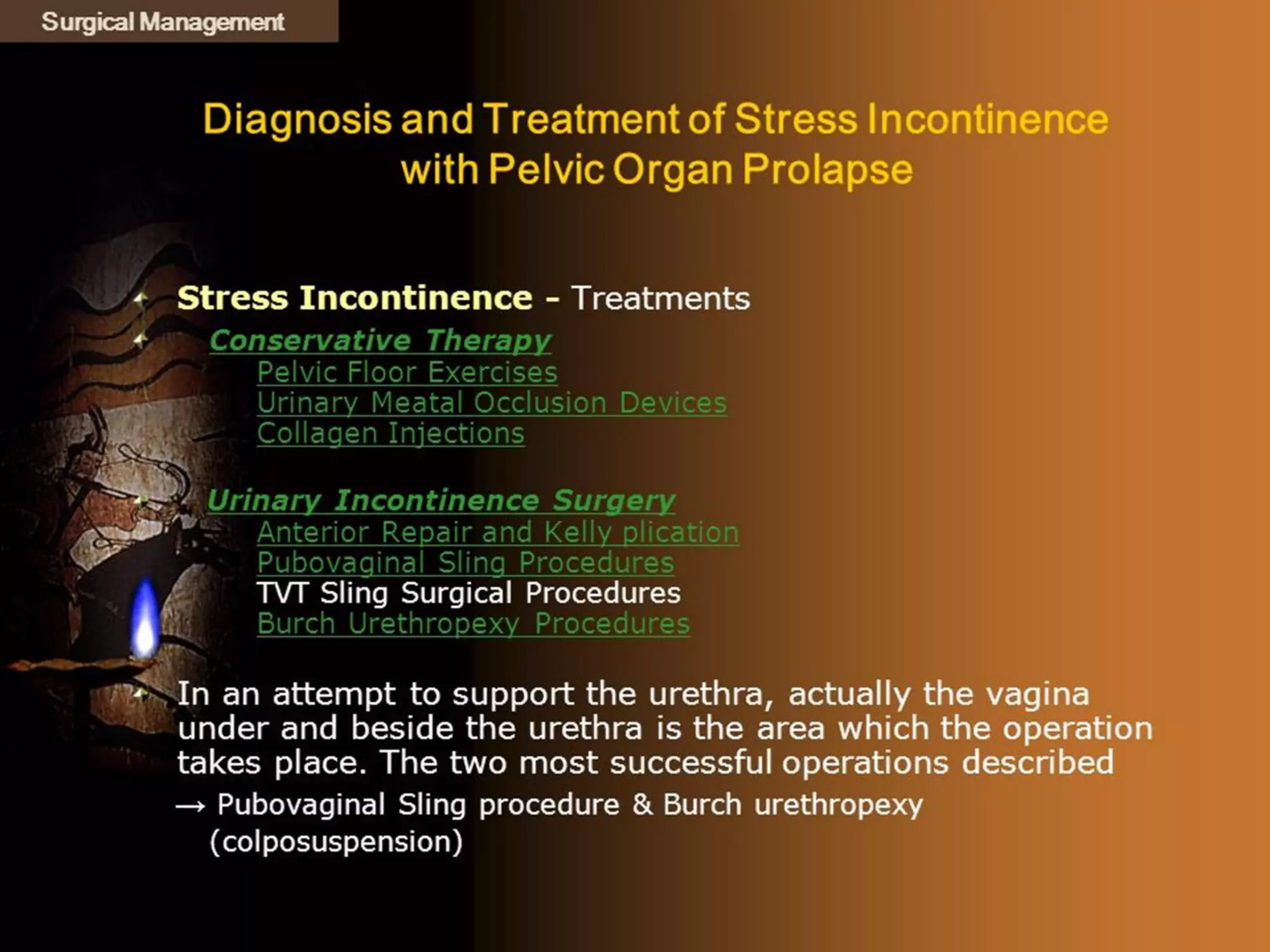
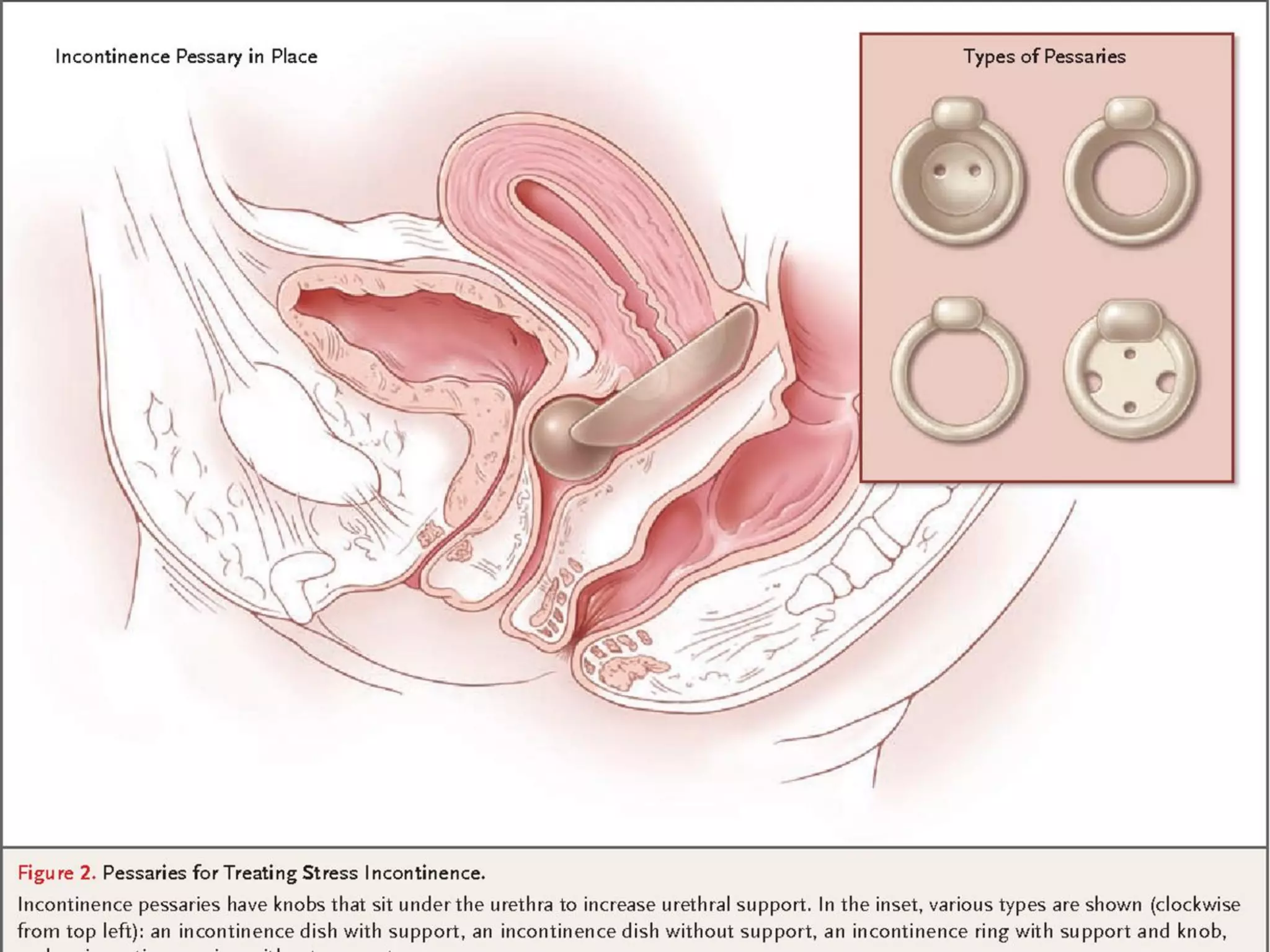
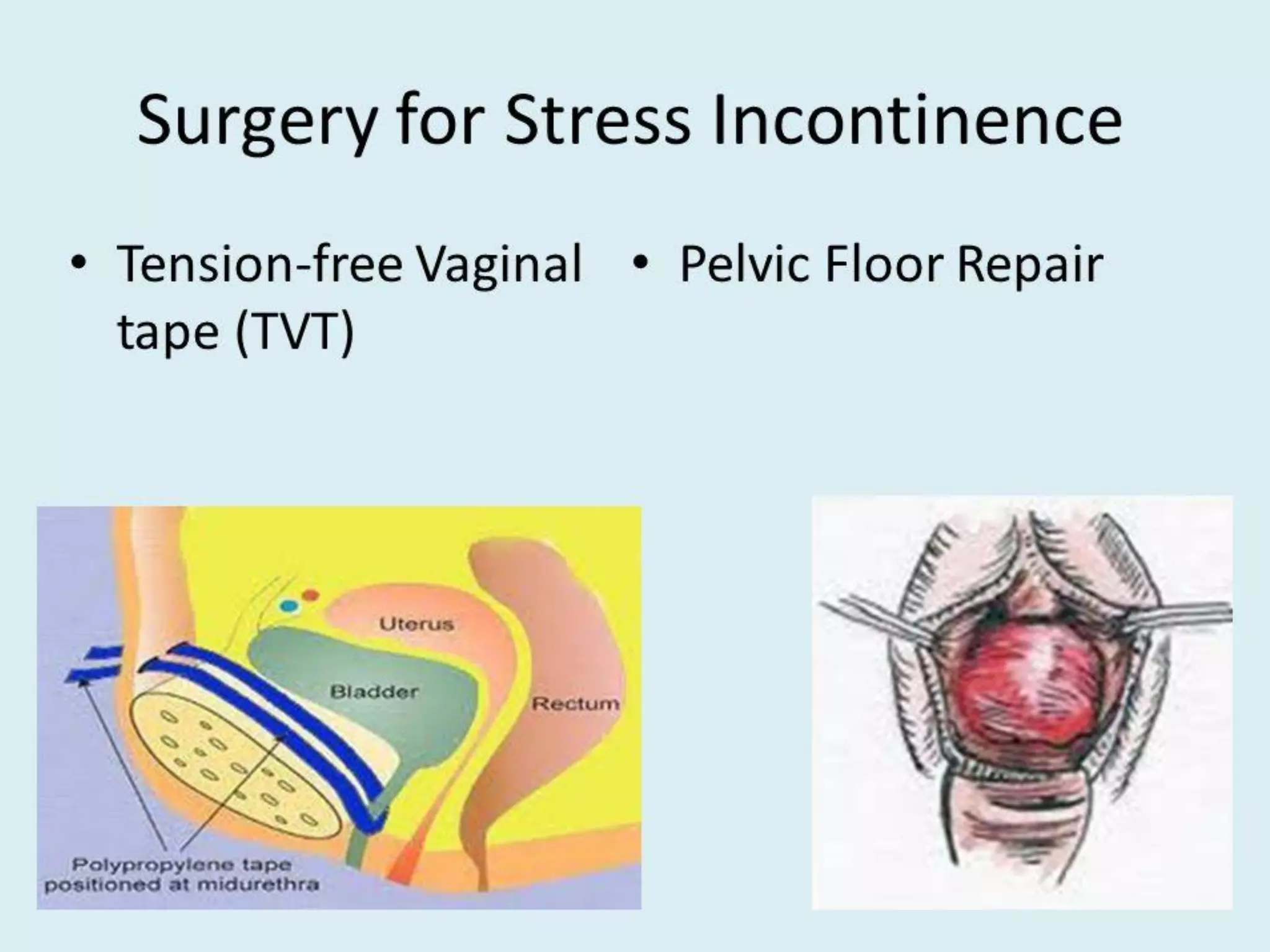
Stress Incontinence
THANK YOU
THANK YOU
Thank You

Lecture by PROF.DR. AISHA ELBAREG {common gynecologic surgical-procedures}.

  • 1.
    Common Gynecological SurgicalProcedures Associate Clinical Professor Dr Aisha M Elbareg, MD, PhD Senior Consultant Obstetrician & Gynecologist Faculty of Medicine, MisurataUniversity, Libya aishaelbareg@med.misuratau.edu.ly
  • 2.
    Aim of thisLecture  Become aware of the principles of common gynecologic surgical procedures.  Become familial with the instruments that used in these procedures.  Be aware of the indications, complications and it’s management of each procedure.
  • 3.
  • 5.
    Anatomy Reminder!  FemaleReproductive System:  Uterus: thick, muscular organ of (3 segments: fundus, lower segment and cervix & 3 layers: serosa, myometrium and endometrium), derived from fusion of müllerian ducts which also form the upper 2/3 of the vagina and the fallopian tubes).  Vagina: between bladder & rectum, Wall consists of three coats, upper end of the vagina surrounding the cervix (fornix).  Fallopian tubes: 10-14 cm in length &<1 cm in diameter.  Ligamentous Support: Round Ligament (Fibrous and muscle tissue), Broad Ligament (Double reflection of the peritoneum), Cardinal Ligament (at the base of the broad ligament), Uterosacral Ligaments (minor cervical support, attach to the 1st - 5th sacral vertebrae).
  • 8.
    Anatomy Reminder!  Ovaries:adjacent to the iliac vessels and the ureters, supported by: the ovarian ligaments (attaching to the posteriolateral aspect of the uterus) & the infundibulo-pelvic ligament (reflections of the broad ligament) attaching them to the lateral pelvis.  Bladder and Rectum: (Bladder is anterior to the uterus, ureters insert in to the inferior bladder at the trigone, path in the pelvis is essential for dissection in gynecologic surgery).Rectum, Lies posterior to the uterus following the curvature of the sacrum.
  • 10.
    Anatomy Reminder!  Ureter:In the pelvis runs medial to and parallel with the internal iliac artery. Uterine artery crosses over the ureter (water under the bridge), remaining 2-3cm passes through the cardinal ligament into the bladder.  Blood Supply: mainly from the internal iliac artery (branch from the common iliac), additional supply : ovarian arteries, the inferior mesenteric artery, and the external iliac artery. Internal iliac --> anterior and posterior divisions, the later rarely seen in pelvic surgery
  • 13.
    Anatomy Reminder!  Anteriordivision: Uterine, Vaginal, Superior, Middle, and Inferior Vesicals, Middle and Inferior Rectal, Obturator, Inferior gluteal, Internal Pudendal, Obliterated umbilical arteries.  During retroperitoneal surgery the primary branches identified are : Superior vesical artery, Uterine artery, Obturator artery.  Ovarian arteries: originate directly from the aorta, inferior to the renal arteries.  Ovarian veins: Left drains into the left renal vein, Right drains directly into the inferior vena cava
  • 16.
    Anatomy Reminder! Lymph Drainage: Cervical Cancer: drains 1st to the parametrial nodes--> obturator nodes --> pelvic nodes --> para-aortic.  Uterine Cancer: drains 1st to the pelvic nodes or para-aortic.  Ovarian Cancer: can metastasize to either the pelvic or para- aortic nodes.  Pelvic Support: pelvic diaphragm is retroperitoneal and supports all the viscera, composed of (Levator ani group: puborectalis, pubococcygeus, and ileococcygeus), Coccygeous muscles
  • 18.
    Anatomy Reminder!  ExternalFemale Structures:  Mons Pubis  Labia Majora  Labia Minora  Clitoris  Vestibule.  Perineum
  • 19.
    List of GynaecologicalOperations 1-Minor Operations:  Diagnostic curettage including Polypectomy, Endometrial Ablation  Therapeutic abortions (suction evacuation).  Evacuation of retained products of conception (including suction evacuation for missed/incomplete abortion).  Marsupialization.  Cervical cerclage.  Other minor vulval operations(including evacuation of vulval hematoma, vulval biopsy).  Endometrial biopsy.  Resuturing of abdominal wound.
  • 20.
    List of GynaecologicalOperations 2-Major Operations:  Total hysterectomy +/- bilateral/unilateral salpingo- oophorectomy.  Subtotal hysterectomy.  Myomectomy.  Ovarian cystectomy.  Oophorectomy/salpingo-oophorectomy  Salpingectomy.  Surgery for stress incontinence.  Adhesiolysis/tuboplasty.  Wertheim’s hysterectomy
  • 21.
    List of GynaecologicalOperations  Vaginal hysterectomy.  Repair of prolapse.  Vulvectomy.
  • 22.
    List of GynaecologicalOperations 3-Endoscopic Procedures: Diagnostic laparoscopy, Laparoscopic sterilization, Other laparoscopic procedures, Diagnostic hysteroscopy, Endometrial resection, hysteroscopic Polypectomy. 4-Colposcopy Related Procedures. 5-Assisted Reproduction Procedures.
  • 23.
    Preoperative Care  Purposeof Preoperative Care:  To make the correct diagnosis.  To decide on the need of surgery and its correct selection.  Investigations to: confirm the diagnosis, fitness for anaesthesia and surgery.  Preoperative Investigations:  BP check up.  Complete blood count. Hb should be at least 10 g .  Urinalysis.  Fasting and post-prandial blood sugar estimations.  Kidney function tests.  Liver function tests.
  • 24.
    Preoperative Care  PreoperativeInvestigations:  Serum electrolytes.  Viral Screen.  X-ray chest.  ECG and stress test whenever indicated.  Intravenous pyelography (IVP) in case of cancer cervix and urinary fistulae.  Blood group and Rh factor.  Bleeding time and clotting time.  Confirmation of clinical diagnosis by ultrasound, CT and MRI.  Thyroid function tests if required.
  • 25.
    Preoperative Care  PreoperativePreparation:  The woman should not take any food or liquid at least 12 hrs before surgery.  Woman on any drug needs counselling. Oral contraceptive pills should be stopped 4 weeks before surgery. These can cause thromboembolism. Aspirin is also best avoided as it can cause bleeding.  Smoking and alcohol should be stopped few days before.  Prophylactic heparin in a high-risk pt. for thromboembolism.  Bowel preparation.  Proper counselling and informed consent should be obtained in writing.  Prophylactic Antibiotics.
  • 26.
    1-( Dilatation &Curettage) D & C:  It is the most common minor gynecologic surgical procedure, used as diagnostic or therapeutic.(Dilatation of the cervix : preliminary to curettage, Prior to hysteroscopy, Insertion of IUD in stenotic cervix). Indications: 1. Abnormal uterine bleeding. 2. Postmenopausal bleeding. 3-Endometrial hyperplasia with heavy bleeding . 4. Removal of endometrial polyps or small pedunculated myomas. 5. Dilatation & evacuation in inevitable and missed abortion. 4. Removal of missed intrauterine IUCD. 5.To detect ovulation & its defects in infertility
  • 27.
    Indications: 6. Cervical stenosis. 7.Spasmodic dysmenorrhea. 8. Drainage of pyometra or haematometra. 9. Fractional curettage. 10.Molar pregnancy. 11.Postabortive or postpartum bleeding. 12.Insertion of IUD in stenotic cervix.
  • 28.
  • 29.
    Technique  1.Evacuate thebladder.  2.Anesthesia.  3.Vaginal speculum & grasp the cervix.  4.Sounding.  5.Dilate the cervix.  6.Curette.
  • 31.
  • 33.
    Complications:  1.Cervical laceration. 2.Cervical incompetence.  3.Perforation of the uterus: it is not uncommon complication, it occurs in: * RVF uterus. * pregnancy. * postmenopausal with endometrial carcinoma.  4.Spread of infection.  5. Asherman's syndrome.  6.Persistence of bleeding: missing of an endometrial polyp or remnants of conception.
  • 34.
    Perforation of theuterus  Diagnosis: Sound, dilator or curette is passed beyond the pre- determined length of the uterus.  Management:  1.Avoiding the part where perforation occurred (no necessarily to stop).  2.Observation: hemorrhage, peritonitis.  3.Laparotomy: intestine is exposed for possible injury, uterine wound is sutured, peritoneal cavity is lavaged & drained.
  • 35.
  • 36.
    Asherman's syndrome (Uterinesynechiae)  First case of intrauterine adhesion was published in1894 by Heinrich Fritsch.  In 1948 , a full description of this syndrome was carried out by Joseph Asherman's ( journal of obstetric and gynecology of the British Empire).  Characterized by the bands of fibrous tissue (scar tissue) inside the uterine cavity and/or endocervix.  Usually secondary to intrauterine surgery or infection.  incidence significantly influenced by the number of abortions performed, (miscarriage curettage: 66.7%), (Postpartum curettage: 21.5%).
  • 37.
    Asherman's syndrome (Uterinesynechiae)  Associated with high rate of infertility, Recurrent miscarriage, poor implantation following in vitro fertilization, preterm labour , and abnormal placentation (placenta previa , placenta accreta).  Diagnosis by Hysteroscopy, sonohysterography (SHG) with 2D or 3D sonar and HSG.  Prevention by avoiding unnecessarily intrauterine instrumentation and application of IUCD, Uterine balloon stent, Foley’s catheter, or Anti-adhesion barriers following intrauterine surgery.  Treatment: Hysteroscopic Surgery.
  • 38.
  • 39.
  • 40.
  • 41.
  • 42.
    Endometrial Ablation  Endometrialablation is primarily designed for the treatment of abnormal or dysfunctional uterine bleeding (AUB/DUB).  As a day case or outpatient procedure. It is the complete destruction of the endometrium down to the basal layer, resulting in fibrosis of the uterine cavity and amenorrhea(30%), patient satisfaction rates are over 70%.  Indicated in women who have heavy menstrual bleeding that is impacting her life or benign lesions as small submucous myomas or endometrial polyps and without other problems that require hysterectomy.  Performed with a resectoscope (a hysteroscope with built in loop using a high frequency electric current to cut or coagulate tissues, involving the use of fluid for distention and irrigation).
  • 43.
    Advantages of Endometrialablation compared to hysterectomy:  Shorter time (30 min).  Can be done under local anesthesia- cervical block +/- sedation which also allow office setting.  Day case procedure, no hospital stay.  Lower cost.  Lower morbidity, Back to regular activities next day.
  • 44.
    Endometrial Ablation –contraindications:  Pregnancy or desire to future pregnancy.  Active urogenital or pelvic infection.  Suspected or documented premalignant or malignant condition of the uterus. Others:  Large uterine cavity > 12 cm, hydrosalpnix.  History of classical cesarean section.  History of a transmural myomectomy.  Uterine anomalies.
  • 45.
    :Endometrial Ablation  Endometrialpreparation:  A preoperative treatment of GnRH agonists can be given to prepare (thinning) the endometrium.  Progesterone can also be used.  Curettage or aspiration of the endometrium before surgery if not possible to submit the patient to an appropriate pharmacological therapy.  Endometrial suppression treatment course is useful even in the postoperative phase.
  • 46.
    Failure of endometrialablation:  Adenomyosis.  Bulky uterus: >12mm.  Curettage, immediately prior to ablation.  No preoperative endometrial suppression.
  • 47.
    Non-hysteroscopic Global EndometrialAblation (GEA):  Balloon ablation.  Cavaterm thermal balloon ablation.  Radio frequency probe.  Unipolar electrodes.  Bipolar electrodes.  Microwave endometrial ablation (MEA).  Hydrothermal ablation (HTA) microsulis.  Diode laser photodynamic therapy.  Photodynamic therapy.  Cryo surgery.
  • 48.
    ThermaChoice Balloon Ablation: Young women with uterus of normal size and heavy bleeding.  Can be offered to mentally disabled, bed ridden, paralysis, medically unfit like too obese, hypertensive, diabetes, renal failure, terminal cancer patient.  The procedure can be done under local anaesthesia or short general anaesthesia can be used in apprehensive patient. No need for cervical dilation prior to insertion of the catheter. .
  • 49.
  • 50.
  • 51.
    Complications of Endometrial Ablation: Uterine perforation.  Hemorrhage. Vault and wound hematoma. Cyclical pain.  Infections as endometritis & PID.  Bowel or urinary tract injury. urinary retention  Cervical lacerations & stenosis.  Distention medium hazards as: -gas embolism. - fluid overload. - anaphylactic shock.  Treatment failure.  long term: Recurrence of symptoms, Pregnancy, Cancer.
  • 52.
    Cervical cerclage:  CervicalIncompetence painless mid-trimester loss of apparently normal fetuses occurs recurrently and the cervix accepts a 8-9 mm dilator without resistance in the non- pregnant interval, that could be treated by prophylactic cervical cerclage  History: 1-1955 Shirodkar – an operation for recurrent miscarriage that restores the internal cervical sphincter, performed at 14w, bladder dissection & Mersilene tape, removed at 37w. 2-1957 McDonald – No bladder dissection, cervix is closed using 3 or 4 bites with the needle to create a purse string around the cervix with nylon or any similar monofilament suture.
  • 53.
    Cervical cerclage:  Indications: Prophylactic (elective): Suspected cervical incompetence, Cerclage at 14 weeks, removed around 37 weeks.  Urgent (therapeutic):Asymptomatic women with sonographic evidence of cervical shortening and/or funneling may also benefit from cervical cerclage.  Emergency (salvage) cervical (prior to 28 weeks)  Contraindications: 1.Uterine contractions. 2.Uterine bleeding. 3.Chorioamnionitis. 4.Premature rupture of membranes. 5.Fetal anomaly incompatible with life.
  • 54.
  • 56.
    Cervical cerclage:  Preoperativeevaluation:  Cerclage should generally be delayed until 14 weeks so that early abortions due to other factors will be completed.  Obvious cervical infection should be treated, cultures for gonorrhea, chlamydia, and group B streptococci are recommended.  Sonography to confirm a living fetus and to exclude major fetal anomalies.  For at least a week before and after surgery no sexual intercourse.  In advanced pregnancy, more likely surgical intervention will stimulate preterm labor or membrane rupture.
  • 58.
  • 62.
    Cervical cerclage:  Complications Premature rupture of membranes (1-9%)  Chorioamnionitis.  Preterm Labor.  Cervical laceration or amputation at the procedure or at the delivery from scar tissue that forms on the cervix.  Bladder Injury.  Maternal hemorrhage.  Cervical dystocia.  Uterine rupture.
  • 63.
    Treatment of Bartholin’scysts and abscesses:  The most common large cyst of the vulva is the Bartholin's cyst which arises as a result of an obstruction of the duct.  In premenopausal women, if it is asymptomatic and small, no treatment is required, if it is large, symptomatic or infected (abscess), it should be drained.  Incision and drainage:  can be performed under local anaesthetic.  small 5 mm stab incision to a depth of 1 – 1.5 cm is made with a scalpel in the cyst or abscess.  swab is used to break down any loculations and then sent for culture, and then a Word catheter is inserted into, left in place for 4 weeks, if tolerated, to allow epithelialization of the tract, creating a new duct opening. The catheter is removed by deflating the balloon.
  • 64.
    Bartholin's Duct Cyst Bartholin'sAbscess Inflated Word catheter
  • 66.
    Treatment of Bartholin’scysts and abscesses:  Marsupialization:  Cyst or abscess recurrences despite the use of a gauze wick or Word catheter necessitate marsupialization, can be performed under local or general anaesthetic.  A 1 – 1.5 cm cruciate incision is carried through into the cyst, releasing its contents. The four segments of skin and cyst wall formed by the incision are excised leaving a circular opening.  cyst wall is sutured using interrupted stitches to the skin edge allowing free drainage of its secretions to the exterior.  The new tract will slowly shrink over time and epithelialize forming a new duct orifice.
  • 68.
    Treatment of Bartholin’scysts and abscesses:  Complications of marsupialization: 1. Dyspareunia. 2. Hematoma. 3. Infection.  Excision : cyst that recurs despite repeated incision or marsupialization or one suspicious of malignancy should be excised, skin incision followed by enucleation of the cyst, obliteration of the cavity and skin closure.
  • 69.
  • 70.
    Hysterectomy. History:  Vaginalhysterectomy dates back to ancient times, first performed by Themison of Athens 20 years before the birth of Christ.  There are many reports of its use in the middle ages.  The first abdominal hysterectomy was performed by Charles Clay in Manchester, England in 1843; unfortunately the diagnosis was wrong and the patient died in the immediate post-operative period.  In 1853 Walter Burnham from Lowell, Massachusetts achieved the first successful abdominal hysterectomy although again the diagnosis was wrong!  Early procedures were performed without anaesthesia with a mortality of about 70 %, mainly due to sepsis from leaving a long ligature to encourage the drainage of pus.
  • 71.
    Hysterectomy. History:  ThomasKeith from Scotland realized the danger of this practice and merely cauterized the cervical stump and allowed it to fall internally, thereby bringing the mortality down to about 8 %.  Hysterectomy became safer with the introduction of anaesthesia, antibiotics and antisepsis, blood transfusions and intravenous therapy.  During the 1930s, Richardson introduced the total abdominal hysterectomy to avoid sero-sanguineous discharge from the cervical remnant and the risk of cervical carcinoma developing in the stump.  First total laparoscopic hysterectomy by Harry Reich in Kingston, Pennsylvania in 1988.
  • 72.
    Hysterectomy  Hysterectomy isthe most commonly performed gynecological surgical procedure {600,000 are performed yearly (US)}.  It is an operation in which the body of uterus is removed, cervix, ovaries and/or Fallopian tubes might also be removed, mainly performed for benign conditions.  Indications:  Fibroids.  Menstrual dysfunction/DUB.  Prolapse.  Endometriosis.  Adenomyosis.  Pelvic Inflammatory Disease.  Cancer : Body of uterus, Cervix &Ovaries.  Uncontrollable PPH.
  • 73.
    Hysterectomy  Although someindications remain controversial, high patient satisfaction levels and increasing safety of the procedure have been reported.  Types:  Abdominal Hysterectomy: (Total: Uterine body and cervix Subtotal: Uterine body only, Hysterectomy with BSO), Radical (or Wertheim Hysterectomy): total hysterectomy with pelvic lymph nodes, paracervical tissue and upper 1/3 vagina).  Vaginal Hysterectomy  Laparoscopic Hysterectomy
  • 75.
  • 76.
    Abdominal Hysterectomy Technique: 1-Incision choice - transverse or vertical: depends on:  Need for exploration of the upper abdomen. Size of the uterus. Presence of prior incisions. Desired cosmetic results.  Exploration of the upper abdominal organs especially the liver ,spleen and para-aortic lymph nodes.  The abdominal viscera are packed up with towels.  Both round ligaments are clamped incised and ligated.  The vesico-uterine fold of peritoneum is incised transversely between the incised round ligaments and the bladder is reflected inferiorly.
  • 77.
    :Abdominal Hysterectomy Technique The two layers of the broad ligaments are separated and the ureters are explored and identified.  The infundibulo pelvic ligaments with the ovarian vessels are clamped, cut and ligated if the adnexa are to be removed.  The broad lig. incised towards the uterus exposing the uterine vessels.  The uterine vessels are clamped at the level of internal cervical os, incised and ligated on each side.  Medial to the ligated uterine vessels , the cardinal lig. on each side is clamped incised and ligated.
  • 78.
    Abdominal Hysterectomy Technique: Posteriorly , the peritoneum between the uterosacral lig is incised transversely and the rectum is freed from the posterior aspect of the cervix & upper vagina after the uterosacral lig. are clamped , incised & ligate.  The total uterus is removed by cutting across the vagina just below the cervix .  Vaginal cuff is closed with absorbable sutures, incorporating the cardinal & uterosacral ligs into each lateral angle to avoid latter development of vault prolapse.
  • 80.
  • 81.
  • 82.
    Detailed technique Complications : Intra operative: 1. Hemorrhage . Shock 2. Ureteric injuries.: at clamping & incising infundibulopelvic- ligaments, when ligating the uterine vessels, at clamping & incising the cardinal ligs if the urinary bladder is not sufficiently reflected inferiorly. 3. Bladder and bowel injury. 4. Anesthetic complications
  • 83.
     Post operative: 1.wound infection. Wound dehiscence. 2. UTI . 3. Thrombophlebitis and thromboembolism. 4. Ureterovaginal fistula ( 5 – 21 days ). 5. Menopausal symptoms. 6. Depression or Sexual Dysfunction. 7. Incisional hernia. 8. vaginal vault prolapse.
  • 84.
    Abdominal hysterectomy. Postoperativecare:  IV fluids for the first 24 hours to ensure that the patient remains well hydrated.  Antibiotic cover.  Early feeding of a simple diet, chewing gum, coffee, can stimulate the bowel and decrease the length of hospitalization.  LMWH to prevent thromboembolism.  Deep breathing to prevent atelectasis.  Ambulation is encouraged.  Control of postoperative pain.  Avoid heavy lifting for 4-6 weeks to minimize stress on the healing fascia.  Vaginal intercourse is also discouraged 4-6 weeks .
  • 85.
    Abdominal hysterectomy:  Advantagesof subtotal hysterectomy:  It is easier and quicker than total hysterectomy.  Bladder injury less.  Less pelvic infection.  The cervix left to act as a support for vagina.  Advantages of total hysterectomy:  Provides better drainage of the operative area.  If the cervix is lacerated or infected, the source of irritant discharge is removed.
  • 86.
    Vaginal Hysterectomy  Uterusis removed through the vagina.  Ovaries and fallopian tubes may be removed as well.  May be performed if the uterus is not greatly enlarged and if the reason for the surgery is not related to cancer (NDVH).  Incision site at inner vagina.  Hospital stay 1-3 days.  Recovery time 4-6 weeks.  Indications: Pelvic organ prolapse, AUB, Fibroids, Cervical abnormalities, Endometrial hyperplasia, Chronic pelvic pain.  Advantages: Absence of an abdominal scar, Early resumption of activity, Less post operative complications, Less post operative pain, Less morbidity and mortality, Can be done effectively in obese patients. Lower incidence of intestinal complication. Nulliparous women can be considered candidates for vaginal hysterectomy.
  • 87.
    Vaginal Hysterectomy:  Disadvantages:Skilled surgeon needed, Exploration of abdominal and pelvic organs cannot be done, Difficult with restricted mobility (Adhesions), Difficult with uterus size >12 wks, Tubal and ovarian pathology difficult to tackle. I
  • 88.
  • 89.
  • 90.
  • 91.
  • 94.
    Wertheim’s hysterectomy. History Clark performed the first radical hysterectomy for cervical cancer at Johns Hopkins Hospital in 1895.  In 1898, Wertheim(1864–1920), an Austrian gynaecologist, developed the radical total hysterectomy with removal of the pelvic lymph nodes and the parametrium.  In 1905, Wertheim reported the outcomes of his first 270 patients. The operative mortality rate was 18%, and the major morbidity rate was 31%.  In 1901, Schauta described the radical vaginal hysterectomy and reported a lower operative mortality rate than the abdominal approach.  In 1944, Meigs developed a modified Wertheim operation with removal of all pelvic nodes.  In late 20th century, radiation therapy became favored approach because of high mortality & morbidity of the surgery.
  • 95.
    Wertheim’s hysterectomy  Radicalhysterectomy refers to the excision of the uterus en bloc with the parametrium, fallopian tubes, ovaries, upper 1/3 to 1/2 of the vagina, and bilateral pelvic lymph node dissection. Thorough knowledge of pelvic anatomy necessary, (careful dissection of ureters and mobilization of both bladder and rectum from the vagina). Care must be taken with the vasculature of the pelvic side walls and the venous plexuses at the lateral corners of the bladder to avoid excessive blood loss.  Indications:  Stage IB or IIA cancer of the cervix.  Patients with stage II adenocarcinoma of endometrium in whom radical surgery seems feasible.
  • 96.
  • 97.
    Wertheim’s hysterectomy Complications: Bladder dysfunction due to extensive dissection, and lymphocyst formation ( because of interruption of efferent pelvic lymphatics resulting in lymphedema) are most common complications.  Infection.  Deep venous thrombosis and pulmonary embolism.
  • 98.
  • 99.
  • 100.
  • 101.
    Laparoscopic Hysterectomy  Laparoscopicligation of the ovarian arteries and veins with the removal of the uterus vaginally or abdominally, ( along with laparoscopic closure of the vaginal cuff).  Uterus removed abdominally using morcellation techniques, this technique is not used if cancer suspected.  The laparoscope is often reinserted after closure of the vaginal cuff to inspect the abdomen and vaginal cuff for adequate hemostasis at the end of the procedure.  This procedure requires adequate uterine descent to safely complete the vaginal portion.  Relatively lesser blood loss.  Shorter hospital stay, Better cosmetic & patient acceptance.  Fewer abdominal wall infections when compared with abdominal hysterectomies.
  • 102.
    Laparoscopic Hysterectomy:  Laparoscopichysterectomy took longer than abdominal or vaginal hysterectomy (median time of 84 vs. 50 minutes, and 72 vs. 39 minutes)  Urinary tract injuries (bladder plus ureteral injuries) appeared to be more likely in patients undergoing laparoscopic hysterectomy.  laparoscopic hysterectomy was not cost effective relative to vaginal hysterectomy.  Both laparoscopic assisted vaginal hysterectomy and vaginal hysterectomy are more cost-effective than abdominal hysterectomy.  When vaginal hysterectomy is contraindicated or predicted to be difficult, the laparoscopic approach should be considered.
  • 104.
    Laparoscopic Hysterectomy:  Potentialindications for laparoscopic assistance to facilitate hysterectomy via the vaginal approach:  Need for adhesiolysis.  Need for treatment of endometriosis.  Need for management of large leiomyoma(s) to facilitate uterine extraction.  Need for ligation of the infundibulopelvic ligaments to facilitate oophorectomy.
  • 105.
    Laparoscopic Hysterectomy:  Superiorlaparoscopic magnification of an image is achieved with robotic systems - surgical precision.  Rotational movement of the robotic hands facilitates manipulation of tissues and suturing.  “Tasks like adhesiolysis, suturing, and knot tying were enhanced with the robotic suturing system” .  “Robot-assisted laparoscopic hysterectomy appeared to provide a tool for overcoming surgical limitations seen with conventional laparoscopy.
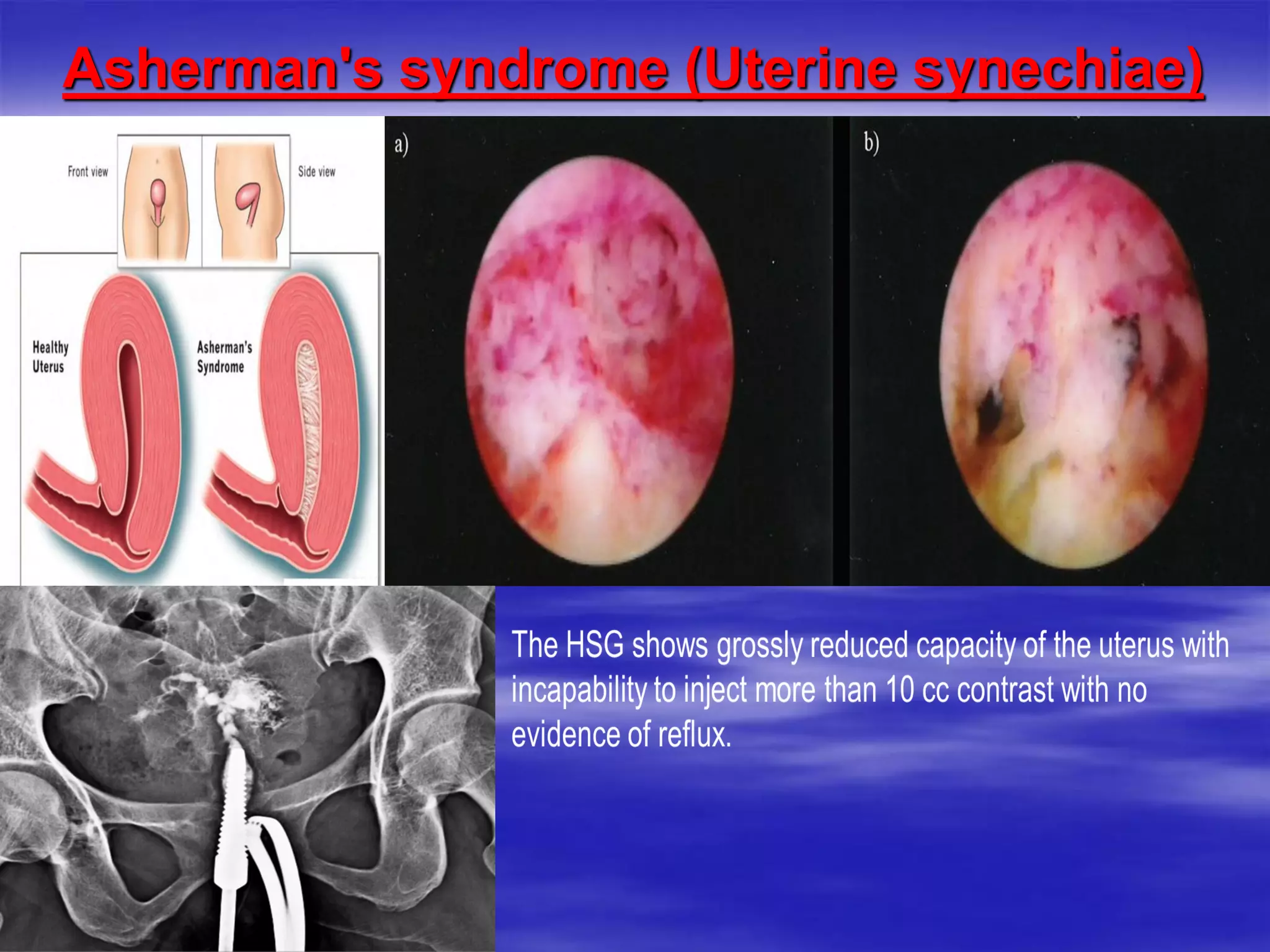
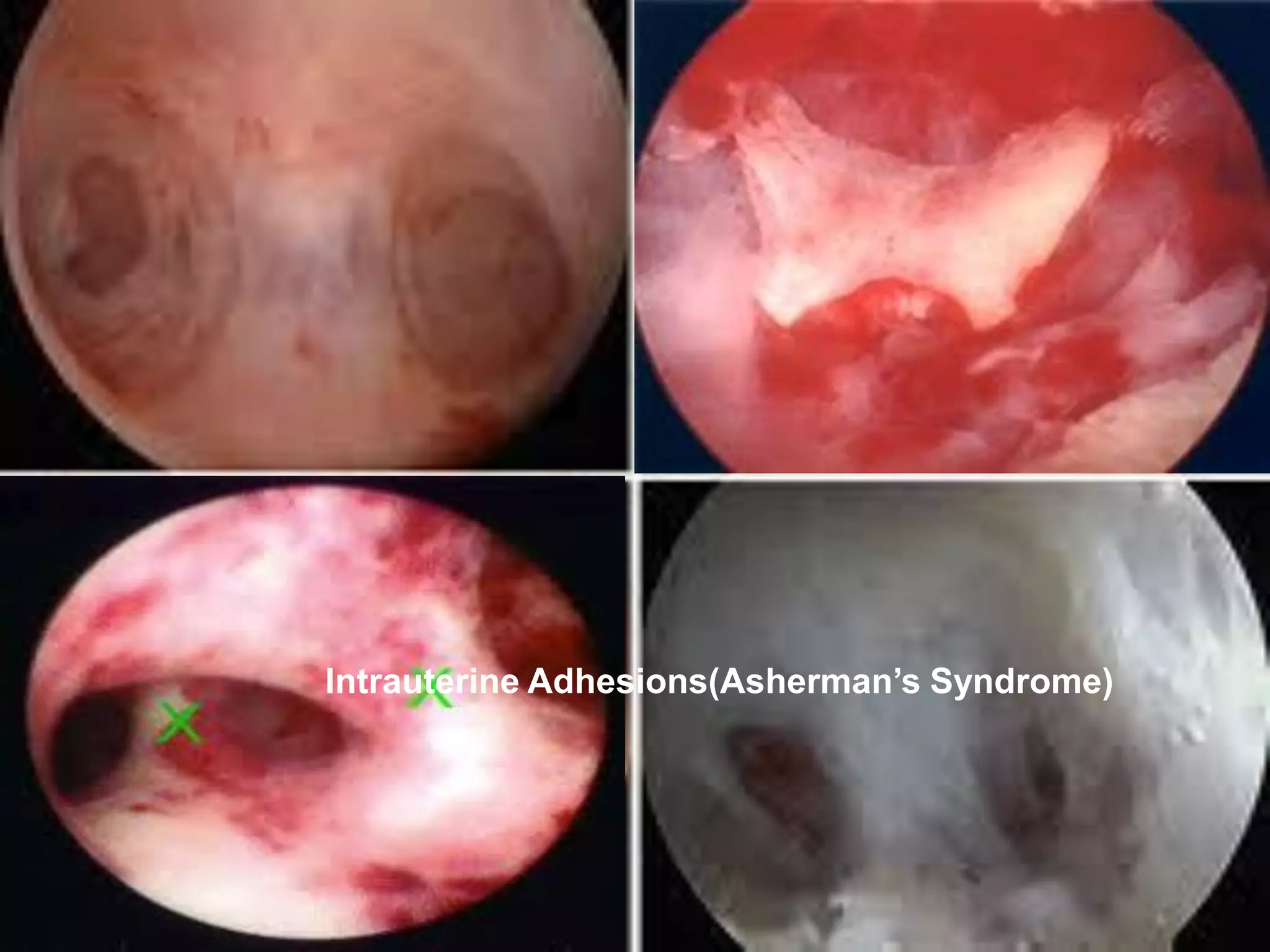
  • 106.
    Myomectomy  Name ofVictor Bonney(1872–1953 ) will always be associated with the development of myomectomy so as to preserve uterine function.  He demonstrated that Myomas could be removed, the uterus preserved and successful pregnancies achieved.  Myoma could be : subserosal, intramural, submucosal, cervical or located between the two layers of the broad ligament.  Majority of Myoma are small and asymptomatic, Symptoms: heavy and painful periods, pelvic pain, urinary frequency and constipation, Occur more frequently in women with subfertility.  Ultrasound is useful in Myoma detection and evaluation, MRI for defining anatomy of uterus and may be helpful in planning myomectomy.
  • 108.
    Myomectomy  Radiological embolizationshould not be used in women who wish to conceive.
  • 109.
    Myomectomy  For womenwishing to conceive, myomectomy is the treatment of choice with the laparoscopic approach being used for pedunculated and subserosal Myomas and the hysteroscopic approach for submucosal.  Open myomectomy:  Patient can be pretreated with GnRH agonists prior to surgery to reduce the size of the fibroids, or more effectively by Cabergoline: (A.M. Elbareg, M.O. Elmahashi, F.M. Essadi: (Effectiveness of dopamine agonist, ‎Cabergoline (Dostinex), treatment on uterine myoma regression in comparison to ‎effect of gonadotrophin-releasing hormone analogue (Zoladex)). Fertility and ‎Sterility, 2013, 100, 3 Supplement, S33.‎)
  • 110.
    Myomectomy  But mosteffectively by the combination of Letrozole with Cabergoline:{Aisha M Elbareg: ‎‎(‎Effectiveness of Letrozole combined with ‎Cabergoline on Uterine Myoma Regression in comparison to the effect ‎of Cabergoline alone).Fertility and Sterility, September 2018, Volume ‎‎110, Issue 4, Supplement, Pages e61–e62}‎,  Midline incision for large fibroids, with adequate exposure to the pelvic sidewall, or most appropriate incision for uterus size and location and size of the fibroids.  Haemostasis: Bonney myomectomy clamp, Uterine and ovarian tourniquet, Temporary atraumatic vascular clamp, Vasopressin and other agents (injection of diluted vasopressin (20 units in 50 mL of normal saline) into the bed of fibroid.
  • 111.
  • 112.
    Myomectomy:  Haemostasis: Thecombination of Tranexamic acid with misoprostol has been found to be an effective option in achieving Haemostasis:(F. Essadi, A. Elbareg, M.O. Elmahashi: (TRANEXAMIC ACID (TXA) USE ‎COMBINED WITH MISOPROSTOL IN PATIENTS UNDERGOING ‎MYOMECTOMY IN MISURATA, LIBYA). International Journal of ‎Obstetrics & Gynecology, 2015, Volume 131, Supplement 5, Pages E72-‎E313.‎  The lower an incision is made in the uterus, the stronger will be the subsequent scar. The ‘ false capsule ’, the junction between the fibroid and normal myometrium, should be identified and with a combination of blunt and sharp dissection the fibroid can be ‘ shelled ’ out.  When removing multiple fibroids, the surgeon should avoid multiple incisions of the uterus and avoid entering the endometrial cavity.
  • 113.
    Myomectomy:  Obliterating thecavity : The cavity should be obliterated methodically using interrupted Vicryl sutures, in layers until the space is obliterated, and the serosal surface should be repaired with interrupted sutures, adhesive barrier over the incision line to avoid adhesion formation.
  • 114.
  • 115.
    :Myomectomy Complications  Intraoperative:Haemorrhage, visceral damage, need for hysterectomy.  Postoperative: fever, infection.  Sequelae:  Recurrence 4-27%.  Adhesions.  Uterine Rupture.
  • 116.
  • 117.
    Laparoscopic Myomectomy(LM):  Itwas first described at 1979 by Semm exclusively for subserous myoma. From the beginning of 1990s the technique was developed to include extraction of intramural myoma.  Preoperative evaluation : TAS, TVS, Doppler assement, MRI., Diagnostic hysteroscopy, In selected cases, Correction of anemia, Size of myoma < 10 cm, Number ≤ 3.  Limitations: special equipment & skill required, difficult in broad ligament & cervical, size >8 cm, number >3, separate incisions needed, closure of dead space and hemostasis difficult, weak scar, increasing operating time and blood loss, morcellator issues!!,conversion to laparotomy(5-40%, because of size, ant. location), recurrence rate higher.
  • 118.
    Recurrence of uterinemyoma after myomectomy:  It has been found that the LM yielded a higher recurrence rate than OM, likely a result of manual myoma removal in OM, which is a more exhaustive extraction of smaller myoma masses than performed in LM. In other words, fewer residual myoma masses after OM contribute to a lower postoperative recurrence rate (Recurrence of uterine myoma after myomectomy: Open myomectomy versus laparoscopic myomectomy). Yasushi Kotani et al, J. Obstet. Gynaecol. Res. 2017.
  • 119.
  • 121.
    Laparoscopic Myomectomy(LM):  Randomizedcontrolled trials compared myomectomy by laparotomy or laparoscopy: no significant differences in the pregnancy and abortion rate!  less postoperative pain, less adhesion formation.  Robotic-assisted laparoscopic Myomectomy: Advantages:  3-dimensional image.  Absence of tremor.  Superior instrument articulation.  Comfort for the surgeon.  Faster learning curve.
  • 122.
  • 123.
    1-Hysterotomy is madehorizontally through the serosa and the myometrium using a Harmonic device. 2-Hemostasis can be achieved using the Maryland bipolar electrocautery device Robotic-assisted laparoscopic Myomectomy
  • 124.
    3-Placement of arobotic tenaculum on fibroid to assist with enucleation 4-Fibroid enucleation with the assistance of robotic tenaculum using blunt dissection in conjunction with the use of harmonic energy as needed. Robotic-assisted laparoscopic Myomectomy
  • 125.
  • 126.
  • 127.
  • 129.
    Ovarian Cystectomy:  Enucleationof a cyst from the ovary is frequently carried out for benign cysts in women below age of 40.  The incision into the ovarian capsule must be made very carefully to prevent rupture of cyst.  Once the cyst is enucleated, the ovary is carefully reconstructed with good hemostasis to avoid ovarian hematoma.  Ovarian cystectomy can be carried out via open abdomen or laparoscopically.
  • 133.
  • 134.
    Hysteroscopy:  History:  In1869, Panteleoni of Ireland manage to visualize the uterine cavity of a woman using a cystoscope.  In 1879 , Max Nirze used lens to magnify the area to be illuminated.  1893-Morris described a thin silver plated tube of brass 9mm, used a head mirror to throw light inside the uterus so was able to observe the endometrium and the tubal ostia.  1898- Duplay and Clado used battery light source & silver nitrate.  1925- Rubin used water to distend uterus and to wash lens, he also used Co2 .  1952-Hopkins used cold light source.  1980-Hamou idealized the microhysteroscopy with panoramic vision and of contact.
  • 135.
    Hysteroscopy  Types: Flexiblehysteroscopes (less pain during outpatient hysteroscopy), & Rigid hysteroscopes: may provide better images, fewer failed procedures, quicker examination, time and reduced cost.  Benefits:  Direct visualization of uterine pathology.  No X-ray exposure.  Insertion under visualization- reduce the risk of perforation.  See and treat the pathology.  Hysteroscopy- Contraindication:  Menstruation, abnormal bleeding.  Amenorrhea= ?? Pregnancy.(Ideally Post menstrual Period).  Acute pelvic infection.
  • 136.
    Hysteroscopy- complications:  Anaesthesiarelated.  Distension media related.  Surgery: False passage, uterine perforation, hemorrhage.  Delayed complication: infection, adhesion formation.  Failure of resolution of presenting symptom.  Incorrect positioning of the patient may result in:  Nerve injuries.  Back injuries.  Damage to soft tissues.  Deep venous thrombosis (DVT).
  • 137.
    Hysteroscopy Indications:  DIAGNOSTIC:  Unexplained abnormal Uterine bleeding (AUB) .  Peri and post menopausal bleeding.  Selected infertility cases.  Abnormal HSG.  Unexplained Infertility.  Recurrent pregnancy loss.  Therapeutic:  IUD removal.  Biopsy of intrauterine lesions.  Hemangioma and A-V malformations.  Resection of uterine septum.  Sterilization (Essure).
  • 138.
    Hysteroscopy Indications:  Therapeutic: Uterine synechiae.  Cannulation of fallopian tubes.  Sterilization .  Uterine polyps.  Submucous myomas.  Endometrial ablation.  Hysteroscopy has the advantages of quick recovery, early return to normal activities, reduced hospital stay and increased satisfactory for the patient.  Hysteroscopy is the gold standard for diagnosis and treatment of endometrial polyp.
  • 139.
    Hysteroscopy. Uterine distention medium: GASEOUS : CO2  LIQUID: NS, Ringer lactate, (32% dextran 70), Glycine, Sorbitol, Mannitol.  1-CO2, only gaseous medium used, easy to infuse, inexpensive, readily available, rapidly absorbed and released, Disadvantages : may produce bubbling, a leak in system may not be noticed for some time, specific machine is required for electronic calibration of the CO2 flow rate and pressure, use of a laser : smoke and fumes ! 2-Fluid media: symmetric distension of uterus with fluid, ability to flush blood, mucus , bubbles & small tissue fragments, pressure of 75 mm hg is usually adequate for uterine distension, low and high viscosity media are used,(1.5%Glycine, used in operative hysteroscopy using monopolar resectoscope).
  • 140.
    Hysteroscopy. Uterine distentionmedium:  Normal saline : Used in diagnostic hysteroscopy, Operative hysteroscopy using bipolar electrode.  Prevention of Fluid Overload:  Using appropriate distension media and delivery systems.  Keeping operating times to a minimum.  Avoiding entering the vascular channels.  Keeping fluid pressures below 80mmHg and gas pressures below 100mmHg.  The procedure must be abandoned if the deficit rises to 2 liters or there is evidence of venous congestion..  There is an excessive absorption of distension media in approximately 0.5% of women undergoing operative hysteroscopy, and in around 5% of those having a hysteroscopic myomectomy.
  • 141.
  • 142.
  • 143.
    Submucous myoma Endometrial polyps Hysteroscopy:Septate uterus septate uterus is being resected
  • 144.
  • 145.
  • 147.
    Adenomyosis Lateral wall ofDysmorphic uterus Tubular shape of uterine cavity
  • 148.
  • 149.
  • 152.
    Superficial vaginal endometriotic implant Detailedaspect of the cystic area with retained blood
  • 153.
  • 154.
     Hysteroscopic evaluationof the endocervical canal is a safe tool to evaluate cervical premalignant lesions located deep in the endocervical canal not seen during colposcopy due to their location. Endocervical canal and internal os without acetic acid. Endocervical thick adhesion close to the internal os without acetic acid
  • 155.
    Endocervical polyp withoutacetic acid Papilloma like lesion in the endocervical canal after application of acetic acid Papillary like lesion in the endocervical canal Papilloma like lesion in the endocervical canal/glandular epithelium
  • 156.
    Hysteroscopy, (Our Experience): Cervical Preparation: misoprostol, Aisha M. Elbareg, Mohamed El Sirkasi, Fathi M. Essadi, Mohamed O. ‎Elmahashi, Ishag Adam: (Vaginal Misoprostol for Cervical Priming before ‎Operative Hysteroscopy in Misurata Hospital, Libya). Sudan Journal of ‎Medical Sciences, 2015, Vol 10, Issue 2, pages: 53-56.‎  Uses in evaluation of endometrial pathology: Aisha M Elbareg, Mohamed El Sirkasi, Mohamed O Elmahashi, Fathi M ‎Essadi: (Evaluation of intrauterine pathology: Efficacy of diagnostic hysteroscopy ‎in comparison to histopathological examination). Reproductive System & ‎Sexual Disorders Journal, 2015, Volume 4, Issue 2, 1000149.‎  Uses in unexplained Infertility: Aisha M. Elbareg, Fathi M. Essadi, Kamal I. Anwar, Mohamed O. Elmehashi: ‎‎(Value of hysteroscopy in management of unexplained infertility). Asian Pacific ‎Journal of Reproduction, 2014, 3(4): 295-298.‎
  • 157.
    Hysteroscopy, (Our Experience): Recurrent Miscarriages: Elbareg AM, Essadi FM, Elmehashi MO, Anwar KI, Adam I: (Hysteroscopy ‎in Libyan Women with Recurrent Miscarriages). Sudan Journal of Medical ‎Sciences, 2014, Vol 9, Issue 4, pages: 239-244. ‎  Endometrial Resection in the Management of AUB: ‎Elbareg AM, Essadi FM, Anwar KI, Elmahashi MO, Adam I: (The Efficacy of ‎Hysteroscopic Endometrial Resection in the Management of Abnormal Uterine ‎Bleeding Among Libyan Women). Sudan Journal of Medical Sciences, 2014, ‎Volume 9, Issue 3, pages: 157-162.‎  MANAGEMENT OF ENDOMETRIAL POLYPS ‎:A. Elbareg , F. Essadi , M. Elmahashi, K. Anwar: (EFFECTIVENESS OF ‎HYSTEROSCOPY IN THE MANAGEMENT OF ENDOMETRIAL POLYPS ‎AMONG PREMENOPAUSAL LIBYAN PATIENTS WITH ABNORMAL ‎UTERINE BLEEDING). International Journal of Obstetrics & ‎Gynecology, 2015, Volume 131, Supplement 5, Pages E72-E313.‎
  • 158.
    Hysteroscopy, (Our Experience): PREVENTION OF POSTOPERATIVE INTRAUTERINE ADHESIONS : ‎A.M. Elbareg: (VALUE OF HERBAL MEDICINE IN PREVENTION OF ‎POSTOPERATIVE INTRAUTERINE ADHESIONS (MISURATA ‎EXPERIENCE). Fertility and Sterility, 2015, Vol. Volume 104, Issue 3, ‎Supplement, Page e176.‎  Infertility management: 1- Elbareg, AM, Elmahashi, MO, ELfortia, IM, Essadi, FM: (Is Hysteroscopy ‎Justified In Infertile Women?), Abstract Book of the MEFS 19th Annual ‎Meeting, Dubai,2012, page:8.‎  2-Aisha M Elbareg, Fathi M Essadi: (Impact Of Routine Hysteroscopy (HS) Prior ‎To Intrauterine Insemination (IUI) On Pregnancy Rates (PR) Among Infertile ‎Couples At Al-Amal Hospital, Misurata, Libya). Journal of Pregnancy and ‎Reproduction), 2017, Volume 1(issue 4): 1-4.‎  UTERINE PATHOLOGY IN VIRGIN WOMEN: Aisha M Elbareg: (EFFECTIVENESS OF HYSTEROSCOPY IN THE ‎MANAGEMENT OF UTERINE PATHOLOGY IN WOMEN WITH AN INTACT ‎HYMEN). Abstract Book of the 19th World Congress on IVF in conjunction with ‎‎6th Society of Reproductive Medicine and Surgery Congress October 4 - 8, 2017, ‎Antalya, Turkey, page: 66‎
  • 159.
    Hysteroscopy, (Our Experience): TRANSCERVICAL RESECTION OF UTERINE SEPTUM ‎:  Aisha M Elbareg, Fathi Essadi: (EFFECTIVENESS OF HYSTEROSCOPIC ‎TRANSCERVICAL RESECTION OF UTERINE SEPTUM (HTCRS) IN ‎IMPEOVEMENT OF REPRODUCTIVE OUTCOMES: MISURATA ‎EXPERIENCE). International Journal of Research Studies in Medical ‎and Health Sciences, 2017, Volume 2, Issue 10, PP 1-7.‎
  • 160.
    COLPOSCOPY  Colposcopy waspioneered in Germany by Dr. Hinselmann during the 1920’s. In 30’s and 40’s breakthroughs were made regarding which appearances were more likely to progress to invasive carcinoma. Papanicolaou and Traut revolutionized screening of cervical cancer with cytology. During the 60’s colposcopy made a resurgence. Today colposcopy has been accepted as a diagnostic tool in evaluating abnormal pap.  Indications:  Epithelial cell abnormalities detected by cervical cytology.  Suspicious cervical lesions.  Vulvar or vaginal Neoplasia.  History of in-utero DES exposure.  Sexual partner of patients with genital tract Neoplasia.  Oncogenic Human Papillomavirus.  Unexplained vaginal bleeding.  Post–coital bleeding.
  • 163.
    Colposcopy:  Requirements ofColposcopic Exam:  Adequate Visualization. DIGITAL COPOSCOPY SYSTEM  Entire TZ Zone seen.  Abnormal areas seen in entirety.  Endocervical Canal free of Dysplasia.  No Evidence of Invasive Cancer.  Abnormal Areas Biopsied.  Non-Pregnant patients.  Colposcopy – Objectives:  Determines the presence of invasive cancer.  Localizes the squamocolumnar junction.  Identifies the most severe disease for biopsy.  Evaluates the extent of disease.
  • 164.
    Colposcopy:  Instrumentation : Colposcope.  Vaginal speculum.  Endocervical speculum.  Large & small swabs.  Endocervical curette.  Cervical biopsy forceps.  Solutions:  Normal saline  Acetic Acid  Monsel’s
  • 165.
  • 170.
    Colposcopic Examination:  Pap,cultures, KOH as Needed.  Cervical Colposcopic Exam.  Green Filter, if needed.  Mentally Map Cervical Landmarks and abnormal areas.  Colposcopic magnification of 10X – 15X.  Satisfactory Colposcopy:360 degree view of the T-zone, Proximal and distal extent of cervical lesions seen.  Gross lesions or Pathology, Tumors, Infections, vaginal and vulvar lesions, most severe lesion should be selected, 2-3 mm biopsy.
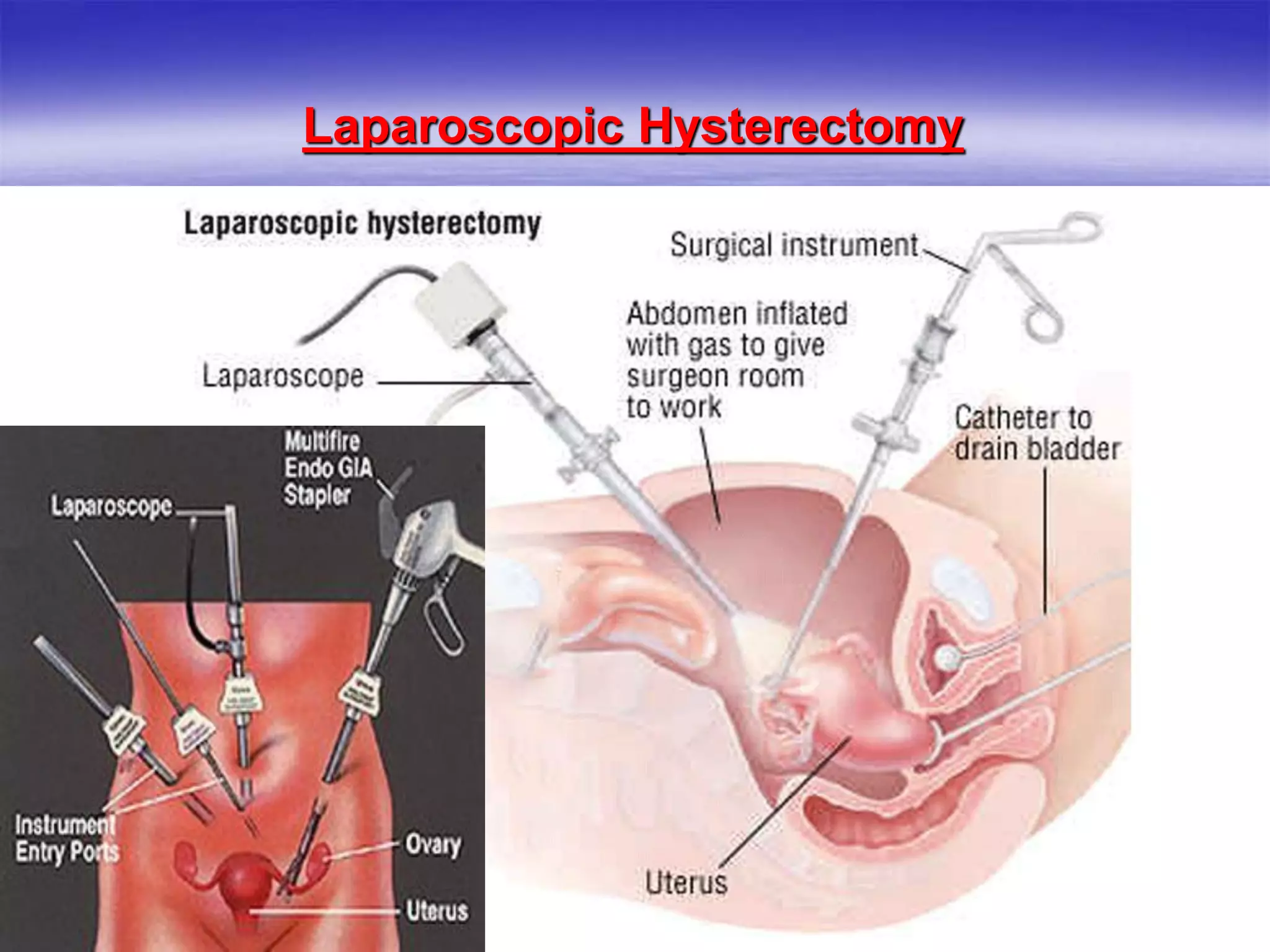
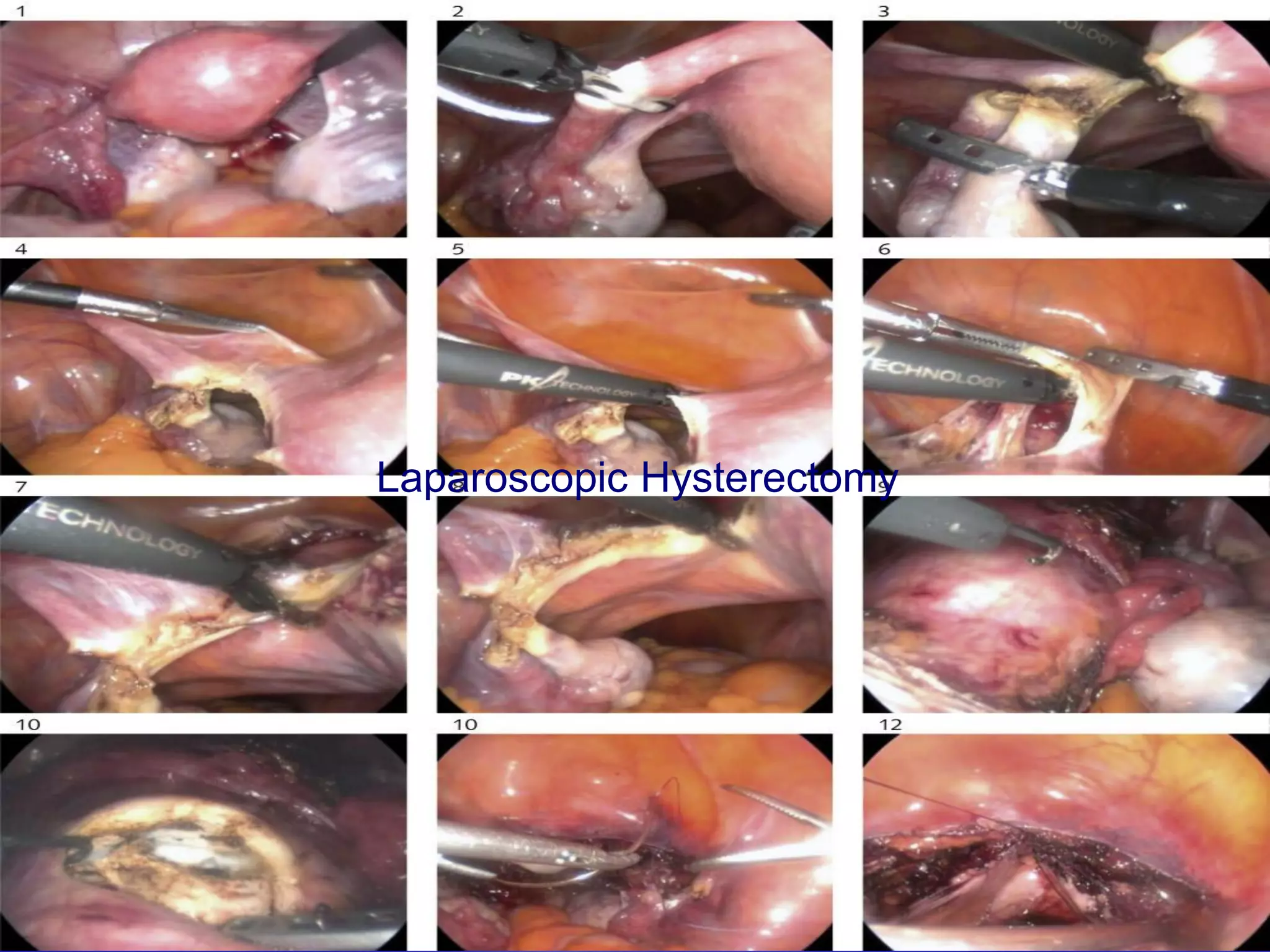
  • 171.
  • 173.
    Cervical Ectropion Nabothian Cyst EndocervicalPolyp HPV infection of the cervix
  • 174.
  • 175.
  • 176.
    Colposcopy:  Lines oftreatment:  No treatment  Follow up  LEEP  Cryotherapy  Laser  Cone biopsy  Hysterectomy
  • 181.
    Anterior & PosteriorRepair:  Anterior Repair:  Performed for cystocele or a combination of cystocele and urethrocoele. The principle of repair is to separate the vaginal skin from the underlying bladder and support the prolapsed bladder by approximating the weakened pubocervical fascia with the use of buttress sutures. The redundant stretched vaginal skin is removed. The operation:  1-The incision: Littlewood tissue forceps are placed on the anterior vaginal wall, one close to the cervix at the apex of the cystocele, and a second at the midurethra to delineate the prolapse. The injection of local anaesthetic and epinephrine (0.5% bupivacaine with epinephrine 1:200 000) into the subepithelial space can be helpful in delineating the tissue planes and reducing bleeding. A midline incision is made along the anterior vaginal wall between the Littlewood tissue forceps.
  • 182.
    Anterior & PosteriorRepair:  2-Separation of the vaginal skin from the bladder and the pubocervical fascia : Kocher forceps are placed at two or three points along the edges of the vaginal incision, the Kocher forceps separated on the right - hand side of the incision by applying gentle traction. The subepithelial plane is developed on the right - hand side of the cystocele with sharp dissection. The dissection continues until the lateral aspects of the cystocele are reached. The process is repeated on the woman ’ s left side. The plane is developed under tissue forceps which are then moved onto the free vaginal edge at the top and bottom of the incision.  3-The repair: Interrupted Vicryl sutures are placed into the pubocervical fascia to reduce the cystocele. The redundant vaginal skin with the attached Kocher forceps can then be excised.  4-Closing: skin edges of the vagina are then approximated commencing at the cervical end. A series of interrupted or continuous locking Vicryl sutures are used.
  • 183.
    Anterior & PosteriorRepair:  Postoperative care: urethral urinary catheter is inserted, no evidence to support the routine use of a vaginal pack, only if there is bleeding.  Posterior colporrhaphy: This operation is performed for a rectocele. It can be combined with repair of enterocele or perineorraphy in women with a deficient perineum. The principles are to dissect the vaginal skin off the rectovaginal fascia. The rectocele is reduced and supported by sutures in the rectovaginal fascia and redundant posterior vaginal skin is excised. Special care is required when performing this procedure as poor surgical technique or surgical misjudgment can result in considerable dyspareunia for the patient (Care should be taken not to excessively narrow the vagina and to avoid a constriction ring which commonly occurs at the junction of the upper third and lower two - thirds of the vagina).
  • 185.
  • 187.
    Mesh Repair position ofmesh under bladder
  • 190.
  • 198.